R E S P I R A T I O N
T Y P E S O F R E S P I R A T I O N : A E R O B I C & A N A E R O B I C
S T R U C T U R E & F U N C T I O N S O F T H E R E S P I R A T O R Y
S Y S T E M
B R E A T H I N G : I N H A L A T I O N A N D E X H A L A T I O N
G A S E X C H A N G E I N T H E L U N G S
Breathing & Respiration
What is Respiration?
 Respiration is a chemical reaction that happens in
all living cells, including plant cells and animal cells.
It is the way that energy is released from glucose so
that all the other chemical processes needed for life
can happen.
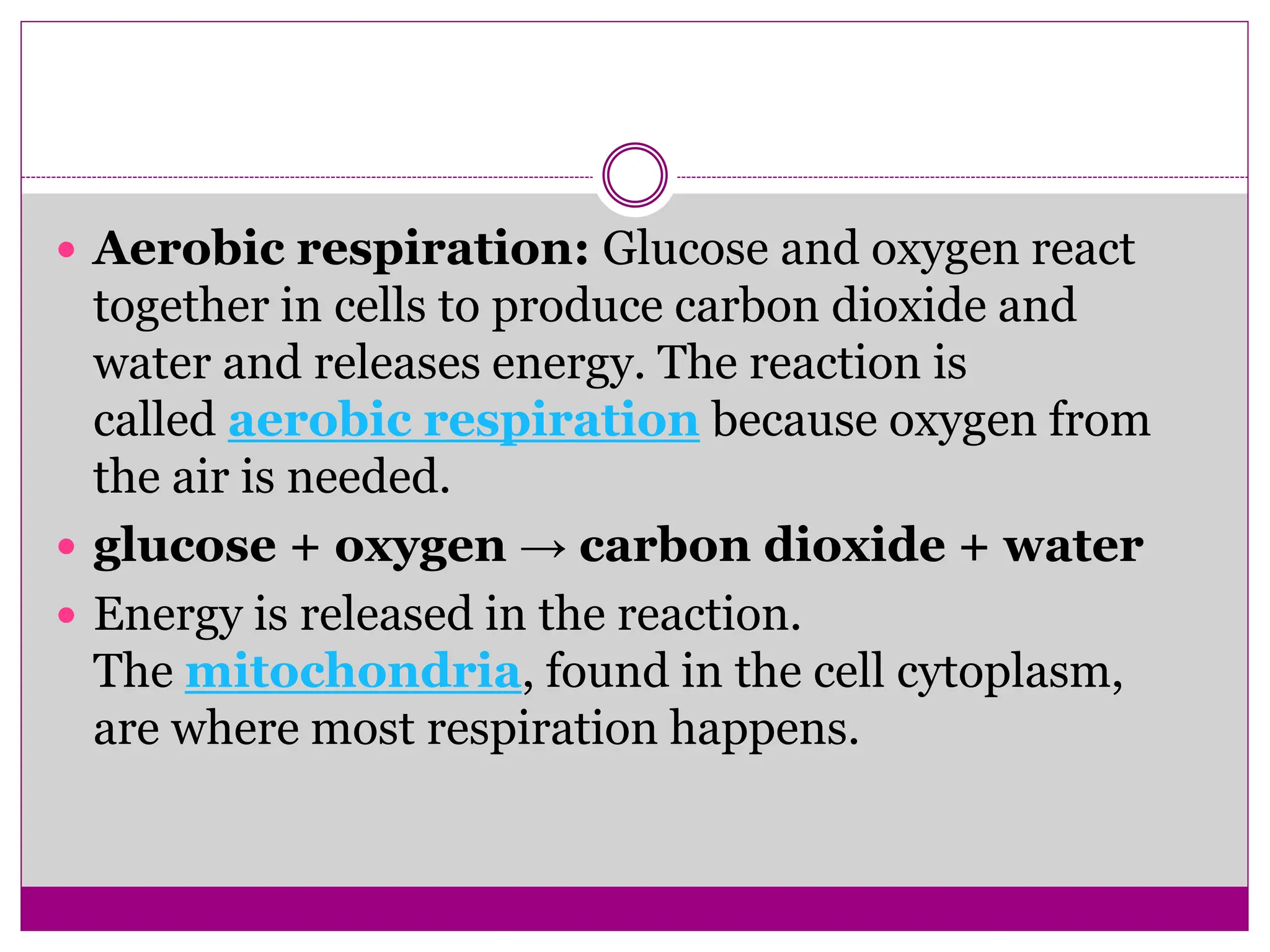
 Aerobic respiration: Glucose and oxygen react
together in cells to produce carbon dioxide and
water and releases energy. The reaction is
called aerobic respiration because oxygen from
the air is needed.
 glucose + oxygen → carbon dioxide + water
 Energy is released in the reaction.
The mitochondria, found in the cell cytoplasm,
are where most respiration happens.
 Anaerobic respiration: During hard exercise, not
enough oxygen can reach your muscle cells. So,
aerobic respiration is replaced with anaerobic
respiration. This does not need oxygen for it to
happen.
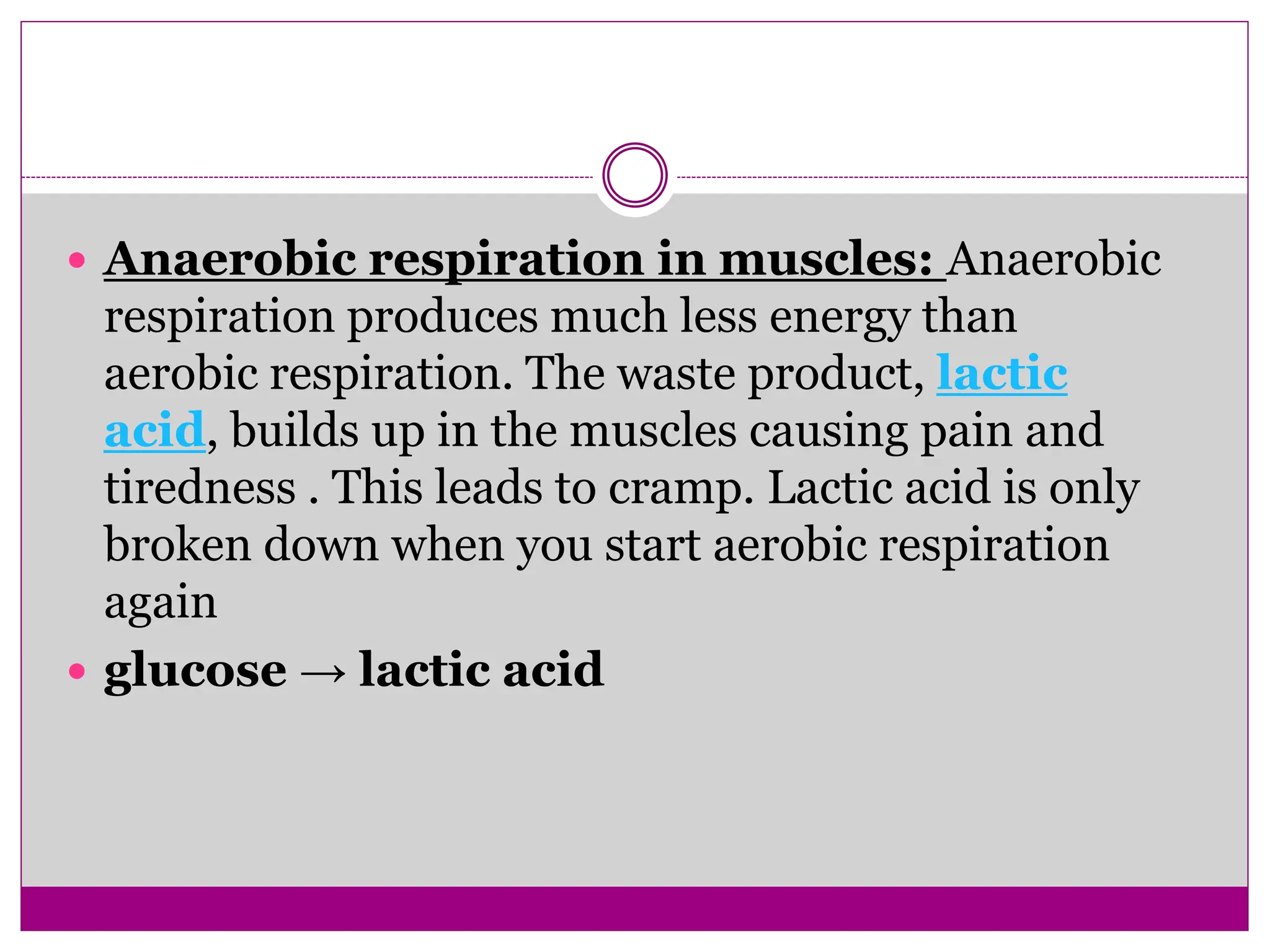
 Anaerobic respiration in muscles: Anaerobic
respiration produces much less energy than
aerobic respiration. The waste product, lactic
acid, builds up in the muscles causing pain and
tiredness . This leads to cramp. Lactic acid is only
broken down when you start aerobic respiration
again
 glucose → lactic acid
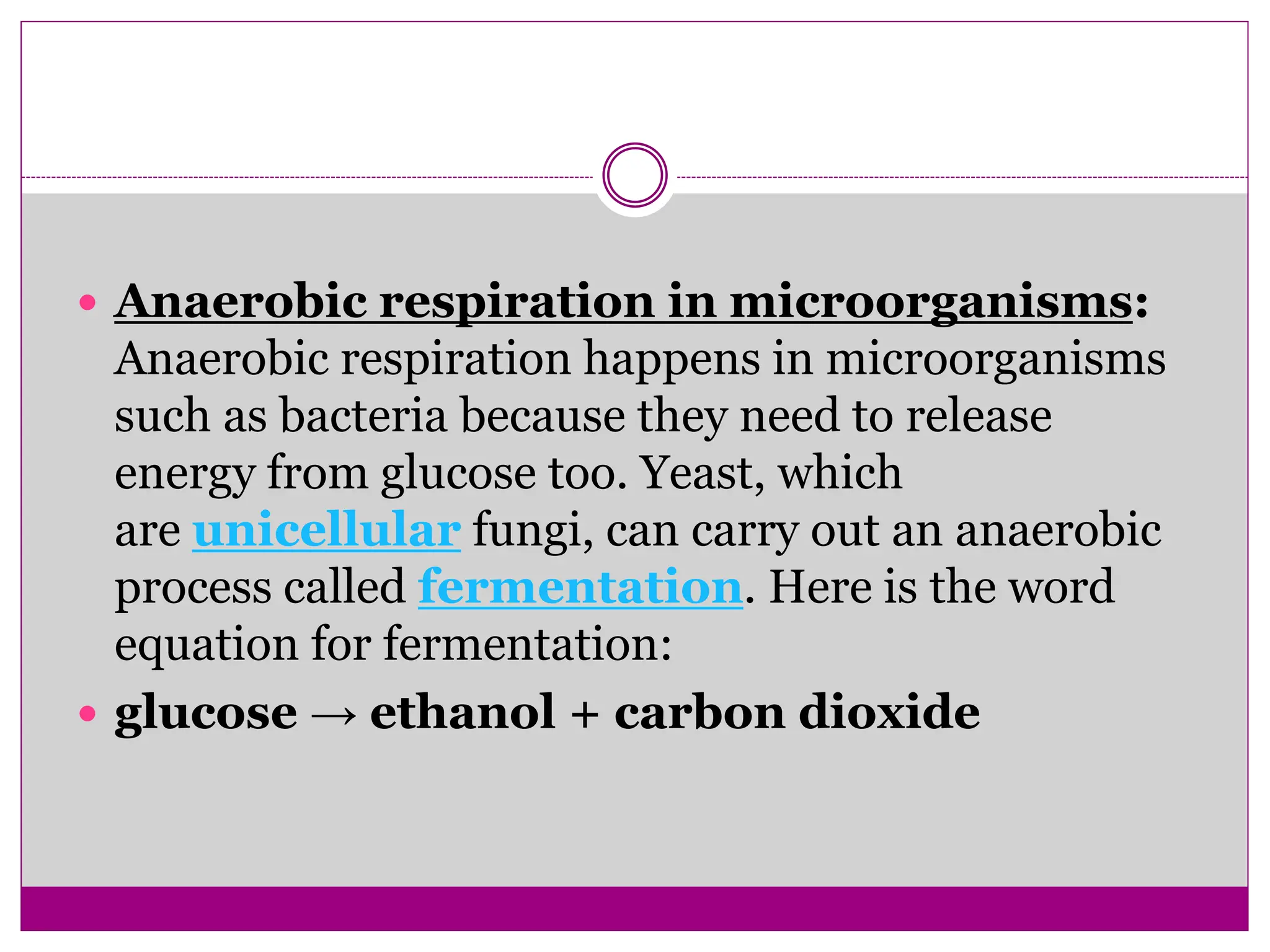
 Anaerobic respiration in microorganisms:
Anaerobic respiration happens in microorganisms
such as bacteria because they need to release
energy from glucose too. Yeast, which
are unicellular fungi, can carry out an anaerobic
process called fermentation. Here is the word
equation for fermentation:
 glucose → ethanol + carbon dioxide
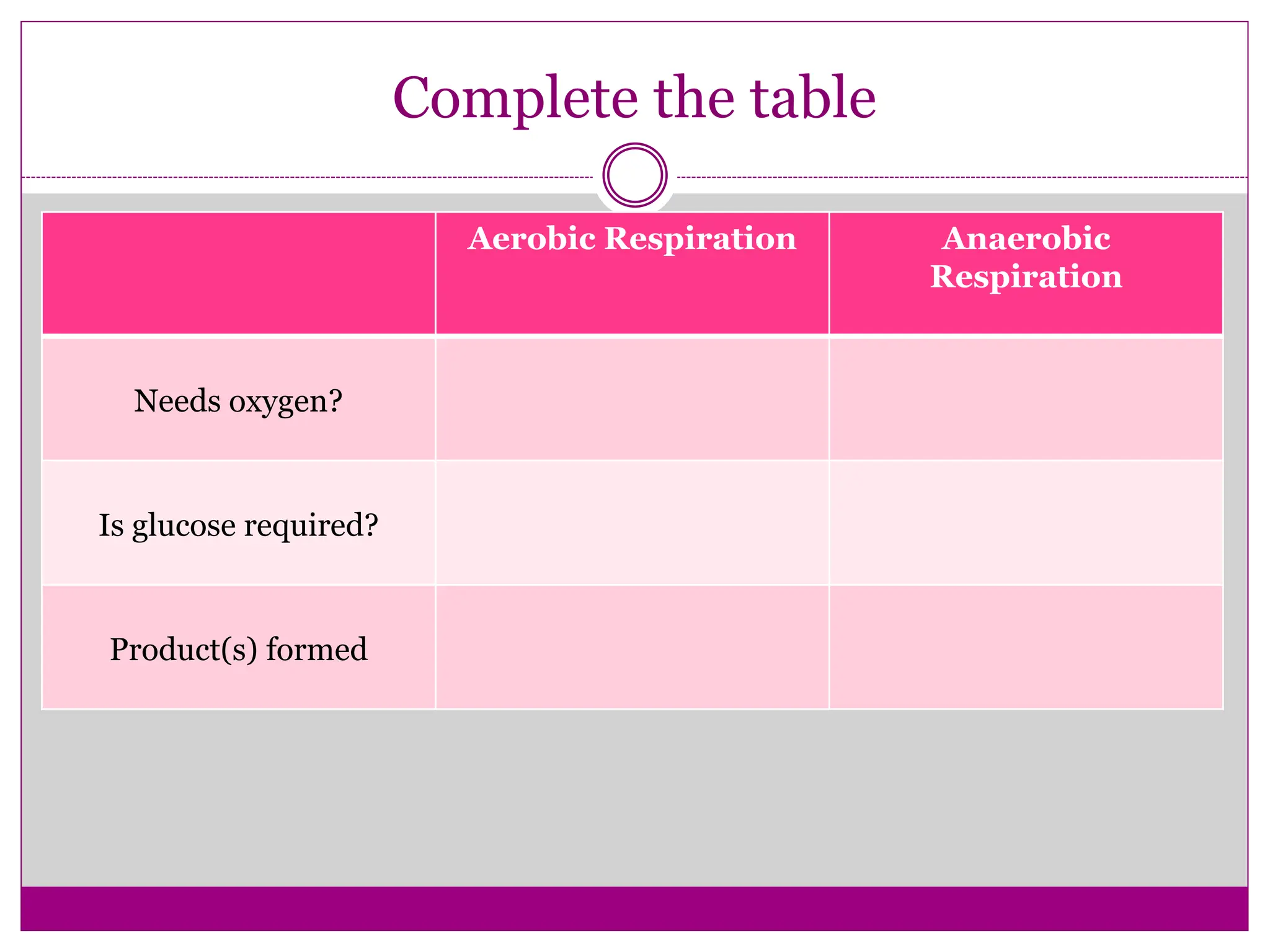
Complete the table
Aerobic Respiration Anaerobic
Respiration
Needs oxygen?
Is glucose required?
Product(s) formed
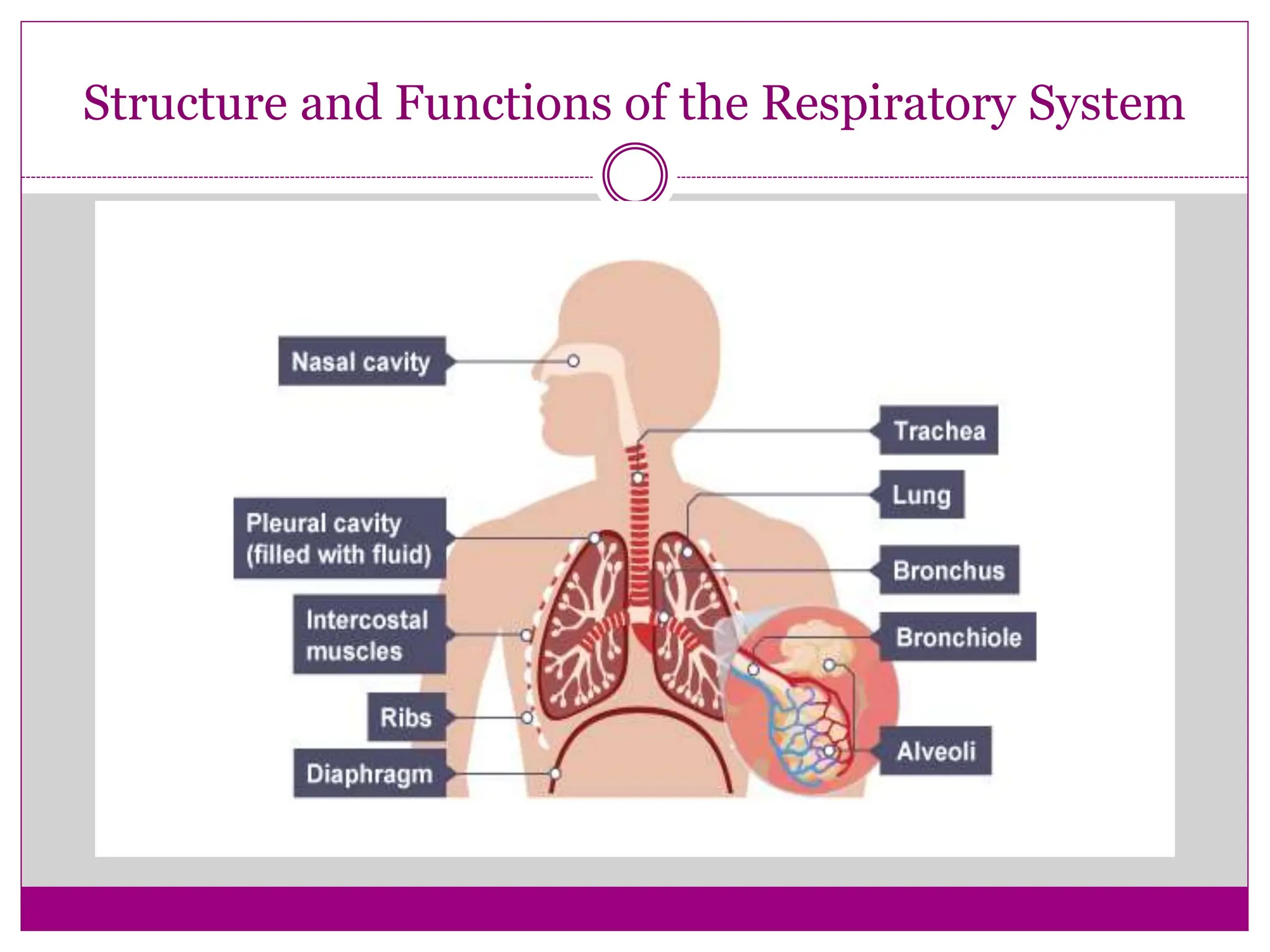
Structure and Functions of the Respiratory System
 Nose & Mouth: Air can enter the body through either
nose or mouth.
 It is better to breathe through the nose because the
structure allows the air to become warm, moist and
filtered before it gets to the lungs.
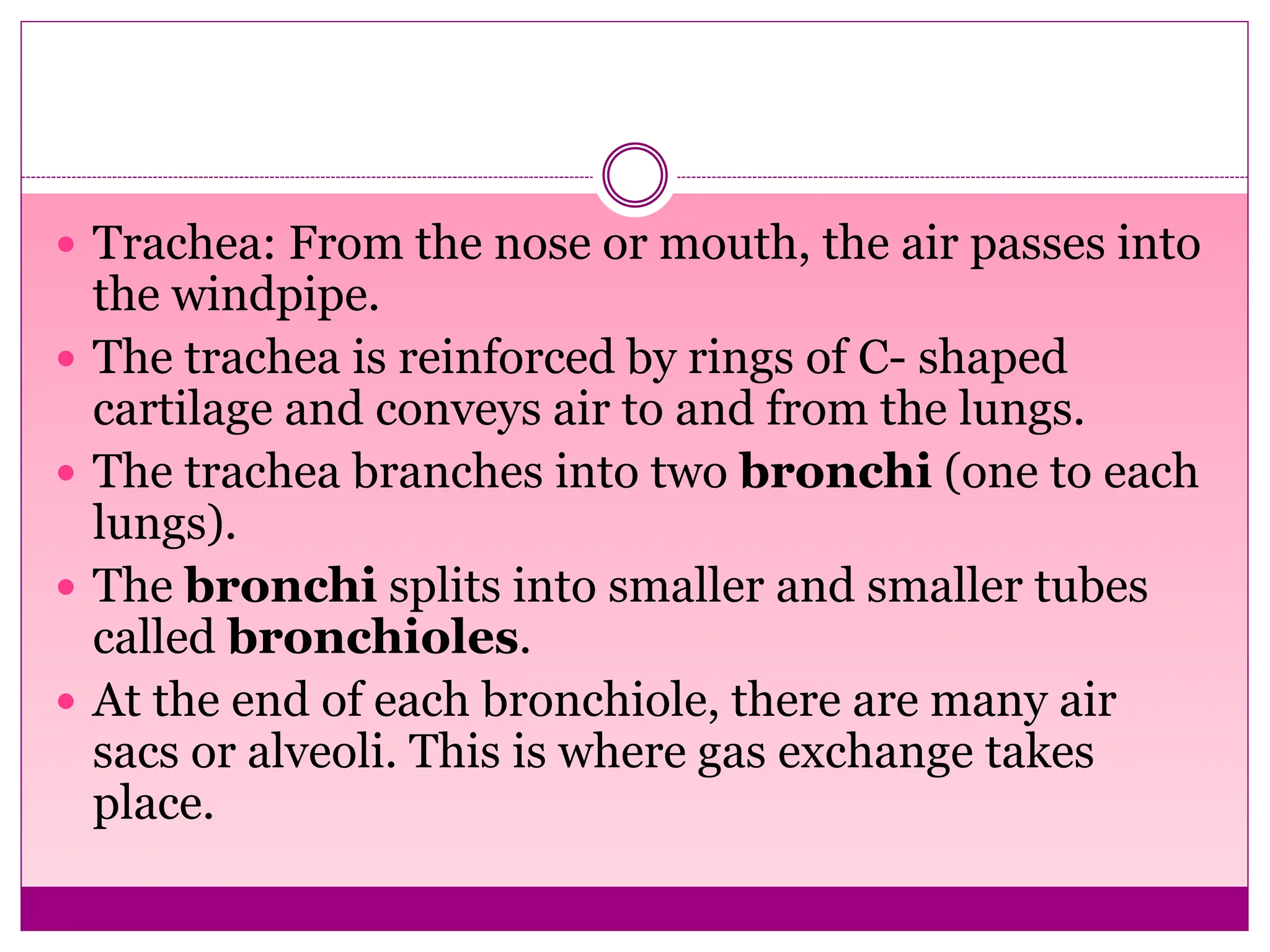
 The respiratory tract is lined with a thin layer of cells.
Some of theses cells, called goblet cells, produce mucus.
It also has cells which have tiny hair-like projections
called cilia. The cilia moves back and forth to trap dust
and bacteria. The dust and bacteria gets trapped in the
cilia and mucus, and is pushed towards the throat so that
it can be swallowed.
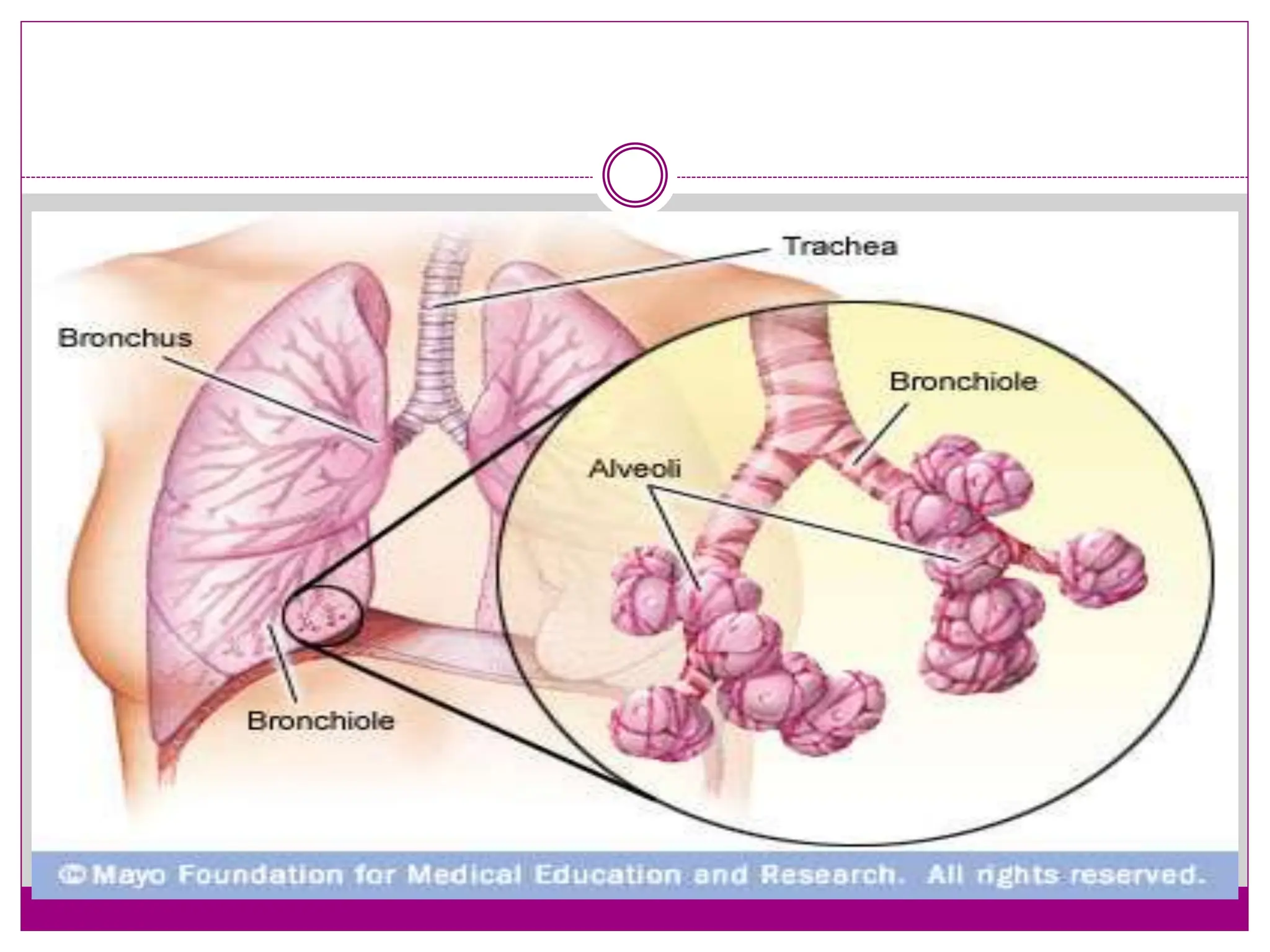
 Trachea: From the nose or mouth, the air passes into
the windpipe.
 The trachea is reinforced by rings of C- shaped
cartilage and conveys air to and from the lungs.
 The trachea branches into two bronchi (one to each
lungs).
 The bronchi splits into smaller and smaller tubes
called bronchioles.
 At the end of each bronchiole, there are many air
sacs or alveoli. This is where gas exchange takes
place.
 PLEURAL MEMBRANE: Allow the lungs to move easily
during ventilation.
 RIBCAGE: Provide a moveable cage to enclose and
protect the lungs.
 INTERCOSTAL MUSCLES: Allow the ribcage to change
in volume for ventilation to happen.
 DIAPHRAGM: Works with the intercostal muscles to
allow ventillation to happen. It also separates the lungs
from the abdominal cavity.
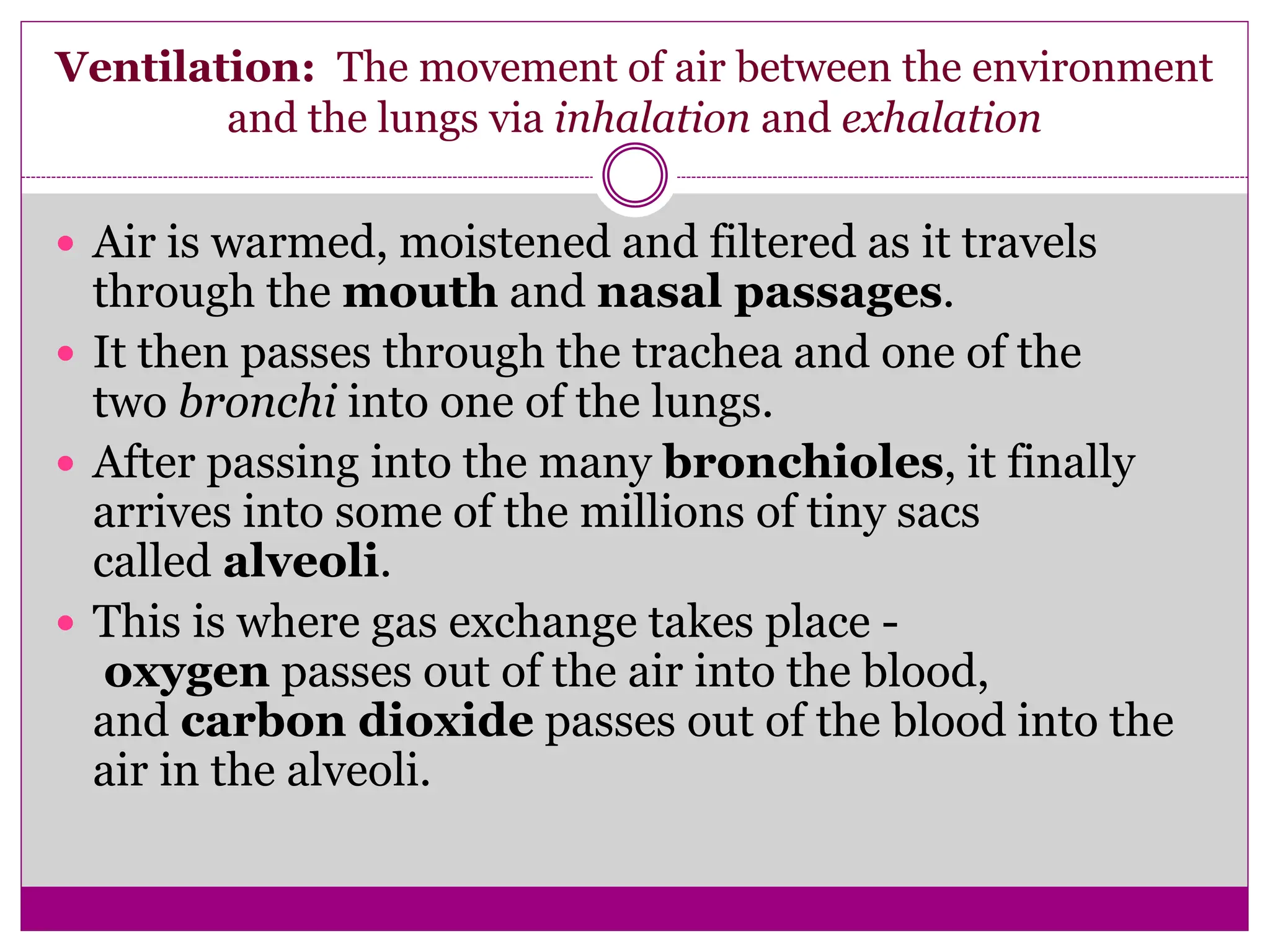
Ventilation: The movement of air between the environment
and the lungs via inhalation and exhalation
 Air is warmed, moistened and filtered as it travels
through the mouth and nasal passages.
 It then passes through the trachea and one of the
two bronchi into one of the lungs.
 After passing into the many bronchioles, it finally
arrives into some of the millions of tiny sacs
called alveoli.
 This is where gas exchange takes place -
oxygen passes out of the air into the blood,
and carbon dioxide passes out of the blood into the
air in the alveoli.
Breathing in: Inhalation
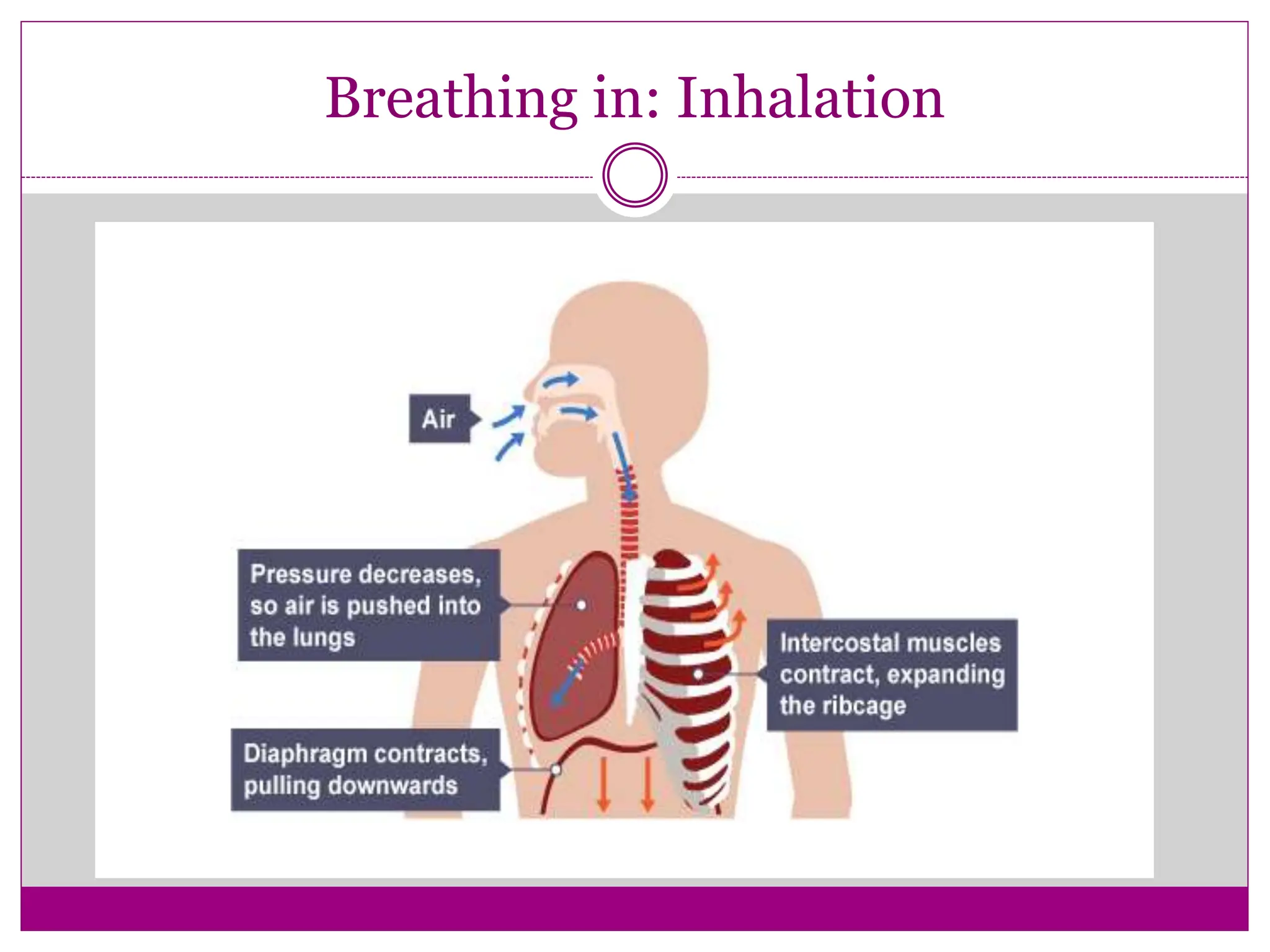
 The internal intercostal muscles relax and the
external intercostal muscles contract, pulling the
ribcage upwards and outwards
 The diaphragm contracts, pulling downwards
 Lung volume increases and the air pressure inside
decreases
 Air is pushed into the lungs
Breathing in: Inhalation
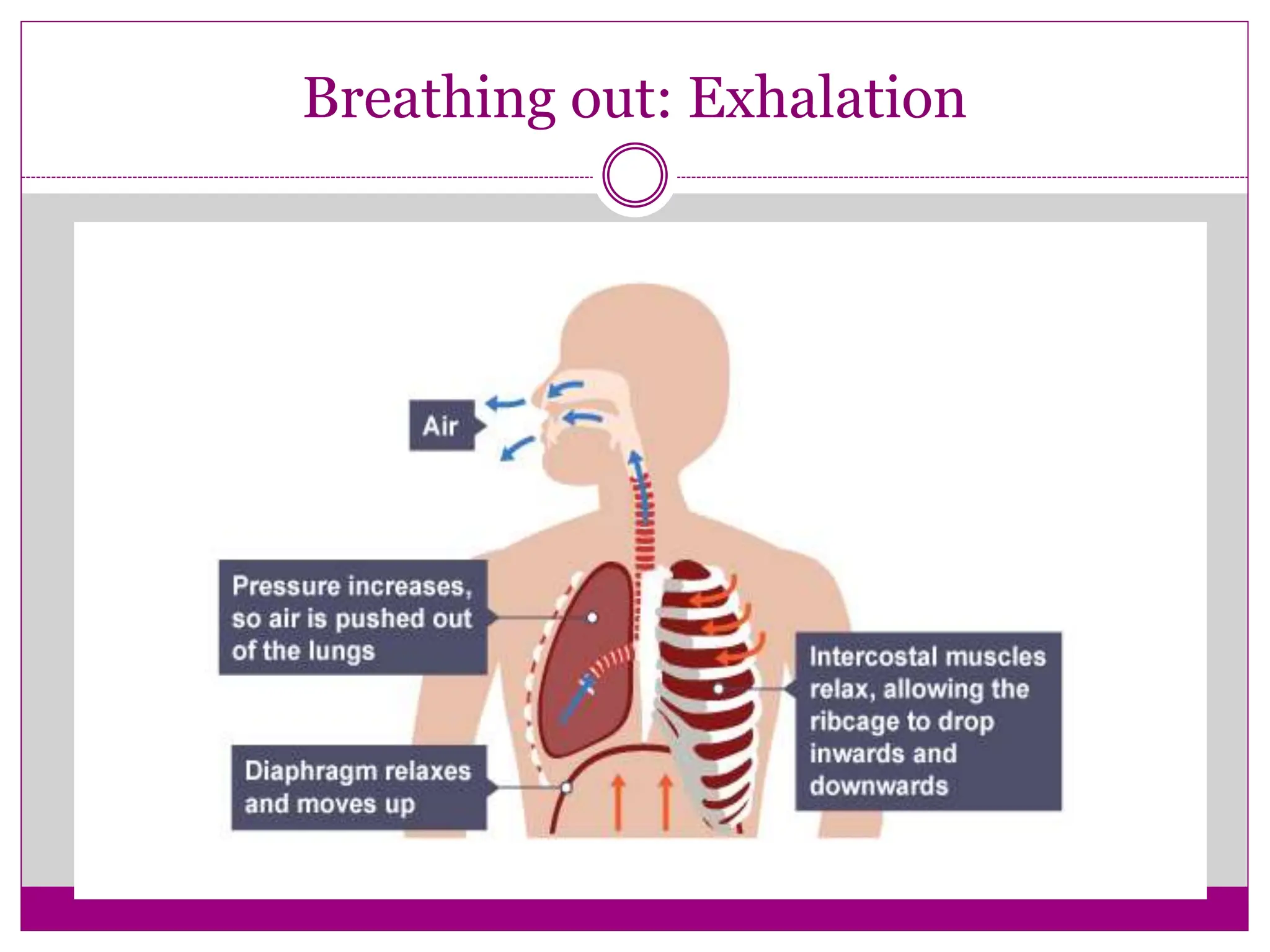
Breathing out: Exhalation
 The external intercostal muscles relax and the
internal intercostal muscles contract, pulling the
ribcage downwards and inwards
 The diaphragm relaxes, moving back upwards
 Lung volume decreases and the air pressure inside
increases
 Air is pushed out of the lungs
Breathing out: Exhalation
GAS EXCHANGE IN THE LUNGS
Gas exchange in the lungs happens in the alveoli.
Some of the features of alveoli include:
 thin walls (just one cell thick)
 large surface area
 moist surface
 many blood capillaries
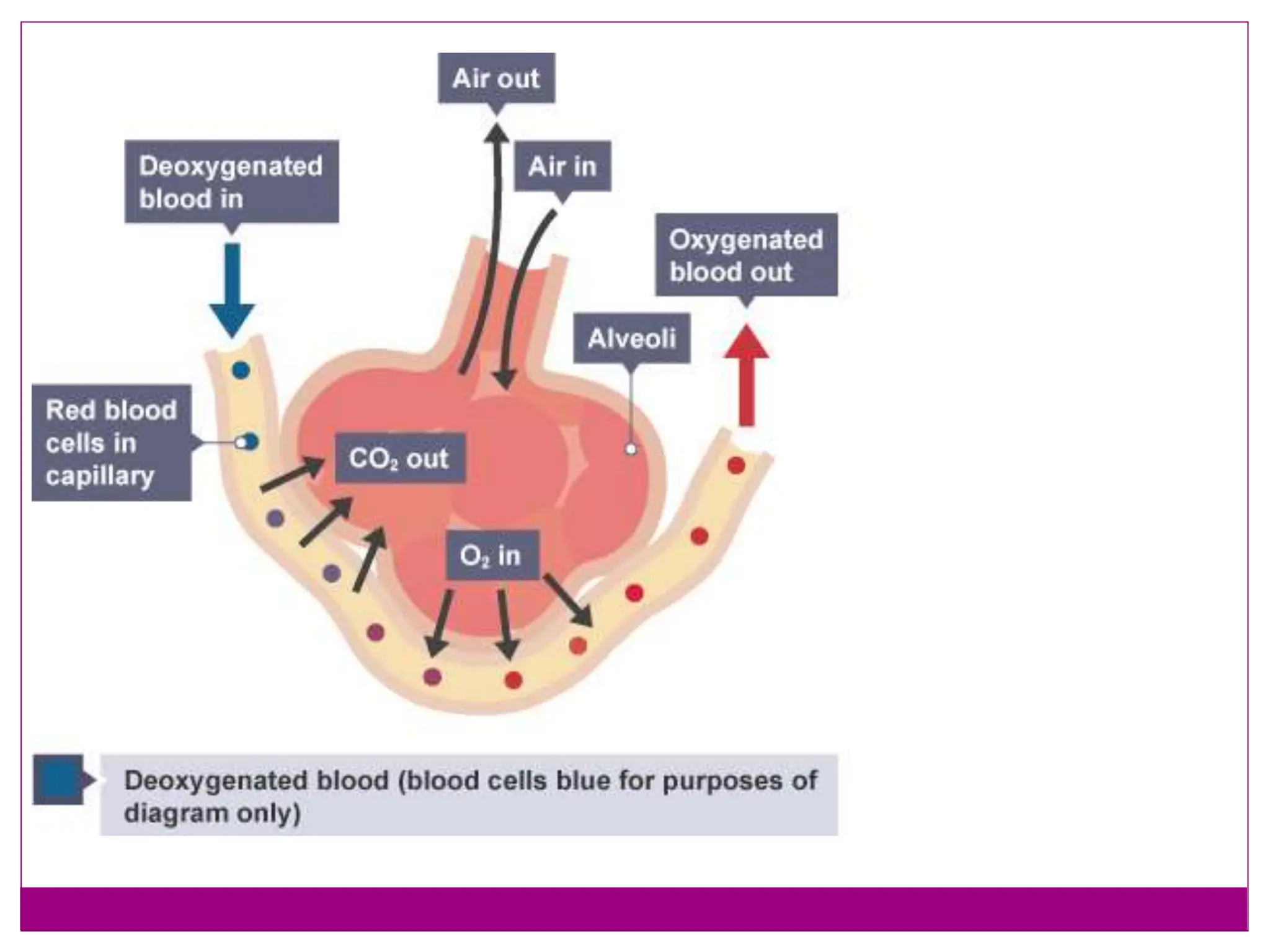
Gas exchange in the alveolus
 The gases move by diffusion from where they have a
high concentration to where they have a low
concentration: Oxygen diffuses from the air in
the alveoli into the blood. Carbon dioxide diffuses
from the blood into the air in the alveoli.
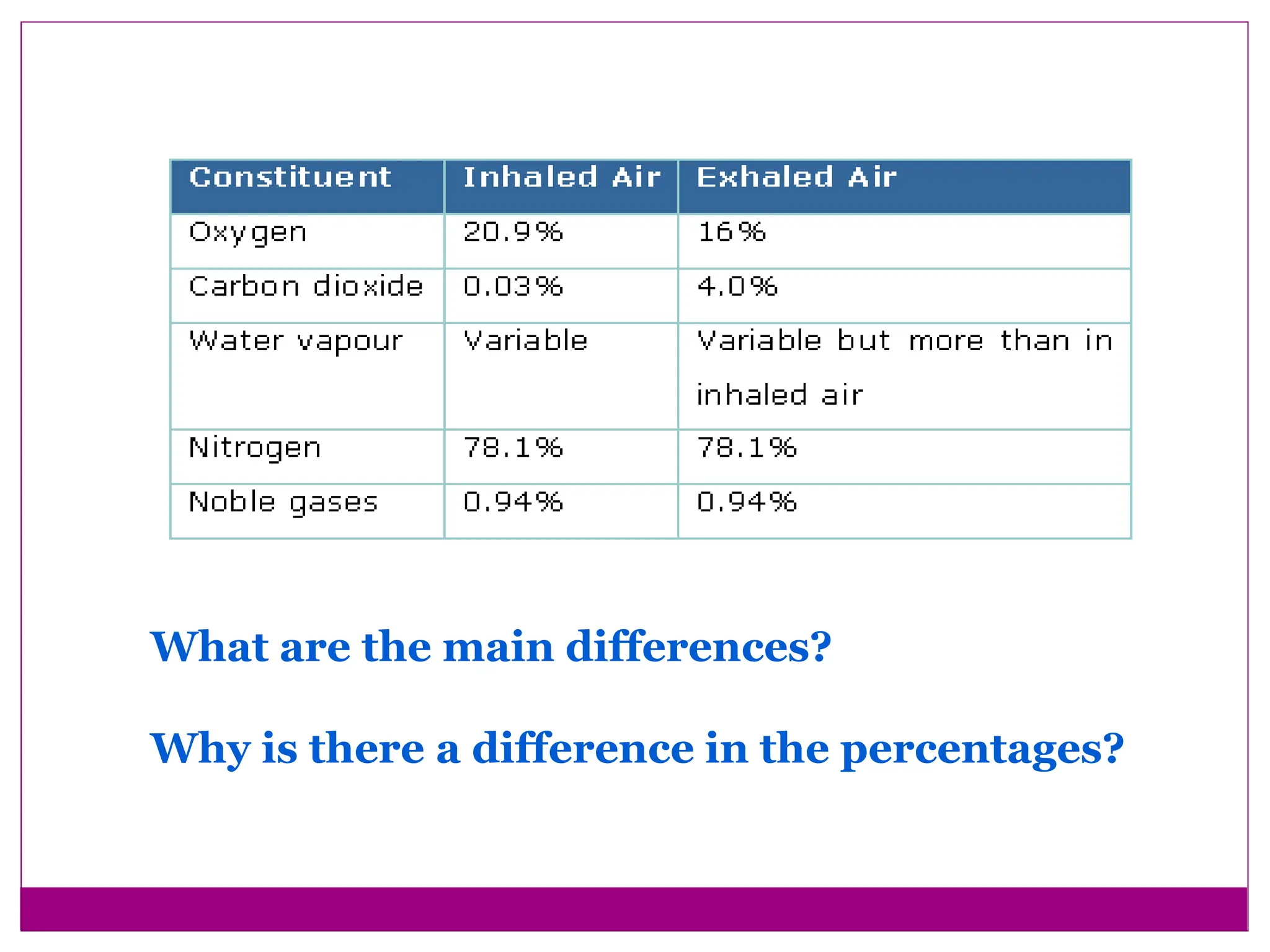
What are the main differences?
Why is there a difference in the percentages?
 During exercise there is an increase in physical
activity and muscle cells respire more than they do
when the body is at rest.
 Exercise increases the rate and depth of breathing
 The heart rate increases during exercise. The rate
and depth of breathing increases - this makes sure
that more oxygen is absorbed into the blood, and
more carbon dioxide is removed from it.
Effects of exercise on breathing
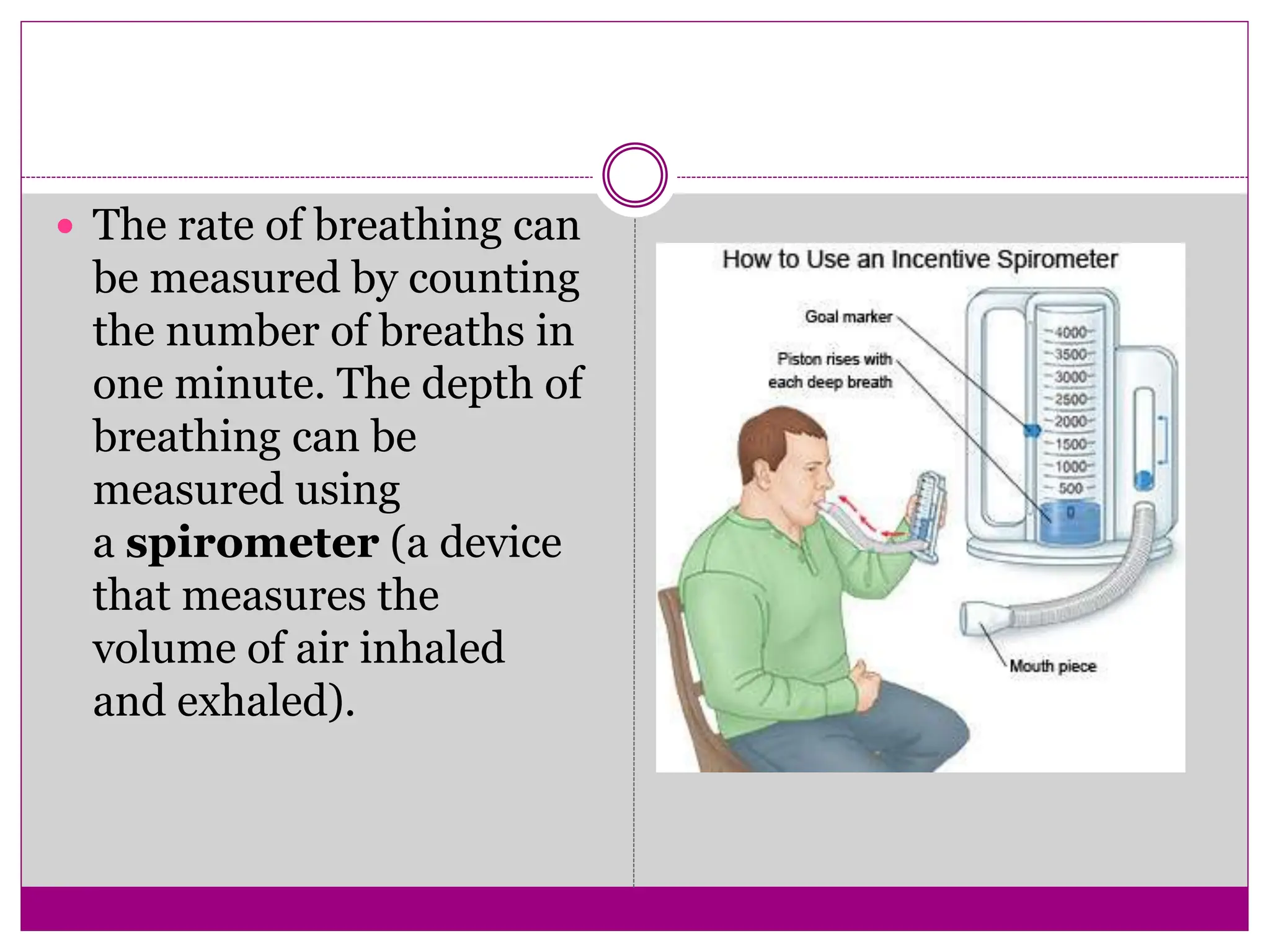
 The rate of breathing can
be measured by counting
the number of breaths in
one minute. The depth of
breathing can be
measured using
a spirometer (a device
that measures the
volume of air inhaled
and exhaled).
 Vital capacity: The maximum volume of air that can
be expelled from the lungs after taking the deepest
possible breath.
 Tidal Volume: The amount of air we breathe out
when you are resting.
 Importance of Tidal volume & vital capacity:
To test lung function.
Effects of Smoking
 Smoking can cause lung disease, heart disease and
certain cancers.
 Nicotine is the addictive substance in tobacco. It quickly
reaches the brain and creates a dependency so that
smokers become addicted.
 Effects on the air passages
 Sticky mucus in the lungs traps pathogens. The mucus
is normally swept out of the lungs by the cilia on
the lining of the trachea, bronchi and bronchioles.
However, cigarette smoke contains harmful chemicals
that damage these cells, leading to a build-up of mucus
and a smoker’s cough. Smoke irritates the bronchi,
causing bronchitis.
Effects of Smoking
 Effects on the alveoli
 Smoke damages the walls of the alveoli. The alveoli walls break down
and join together, forming larger air spaces than normal. This reduces
the efficiency of gas exchange, so people with the lung
disease emphysema (a type of COPD or chronic obstructive
pulmonary disease) carry less oxygen in their blood and find even mild
exercise difficult.
 Carbon monoxide
 Carbon monoxide, CO, combines with the haemoglobin in red blood
cells. This reduces the ability of the blood to carry oxygen, putting
strain on the circulatory system and increasing the risk
of coronary heart disease and strokes.
 Lung cancer
 Carcinogens are substances that cause cancer. Tobacco smoke contains
many carcinogens, including tar. Smoking increases the risk of lung
cancer, and cancer of the mouth, throat and oesophagus.

Breathing and Respiration.with values of related to respiratory system

  • 1.
    R E SP I R A T I O N T Y P E S O F R E S P I R A T I O N : A E R O B I C & A N A E R O B I C S T R U C T U R E & F U N C T I O N S O F T H E R E S P I R A T O R Y S Y S T E M B R E A T H I N G : I N H A L A T I O N A N D E X H A L A T I O N G A S E X C H A N G E I N T H E L U N G S Breathing & Respiration
  • 2.
    What is Respiration? Respiration is a chemical reaction that happens in all living cells, including plant cells and animal cells. It is the way that energy is released from glucose so that all the other chemical processes needed for life can happen.
  • 3.
     Aerobic respiration:Glucose and oxygen react together in cells to produce carbon dioxide and water and releases energy. The reaction is called aerobic respiration because oxygen from the air is needed.  glucose + oxygen → carbon dioxide + water  Energy is released in the reaction. The mitochondria, found in the cell cytoplasm, are where most respiration happens.
  • 4.
     Anaerobic respiration:During hard exercise, not enough oxygen can reach your muscle cells. So, aerobic respiration is replaced with anaerobic respiration. This does not need oxygen for it to happen.
  • 5.
     Anaerobic respirationin muscles: Anaerobic respiration produces much less energy than aerobic respiration. The waste product, lactic acid, builds up in the muscles causing pain and tiredness . This leads to cramp. Lactic acid is only broken down when you start aerobic respiration again  glucose → lactic acid
  • 6.
     Anaerobic respirationin microorganisms: Anaerobic respiration happens in microorganisms such as bacteria because they need to release energy from glucose too. Yeast, which are unicellular fungi, can carry out an anaerobic process called fermentation. Here is the word equation for fermentation:  glucose → ethanol + carbon dioxide
  • 7.
    Complete the table AerobicRespiration Anaerobic Respiration Needs oxygen? Is glucose required? Product(s) formed
  • 8.
    Structure and Functionsof the Respiratory System
  • 9.
    Structure and Functionsof the Respiratory System  Nose & Mouth: Air can enter the body through either nose or mouth.  It is better to breathe through the nose because the structure allows the air to become warm, moist and filtered before it gets to the lungs.  The respiratory tract is lined with a thin layer of cells. Some of theses cells, called goblet cells, produce mucus. It also has cells which have tiny hair-like projections called cilia. The cilia moves back and forth to trap dust and bacteria. The dust and bacteria gets trapped in the cilia and mucus, and is pushed towards the throat so that it can be swallowed.
  • 11.
     Trachea: Fromthe nose or mouth, the air passes into the windpipe.  The trachea is reinforced by rings of C- shaped cartilage and conveys air to and from the lungs.  The trachea branches into two bronchi (one to each lungs).  The bronchi splits into smaller and smaller tubes called bronchioles.  At the end of each bronchiole, there are many air sacs or alveoli. This is where gas exchange takes place.
  • 12.
     PLEURAL MEMBRANE:Allow the lungs to move easily during ventilation.  RIBCAGE: Provide a moveable cage to enclose and protect the lungs.  INTERCOSTAL MUSCLES: Allow the ribcage to change in volume for ventilation to happen.  DIAPHRAGM: Works with the intercostal muscles to allow ventillation to happen. It also separates the lungs from the abdominal cavity.
  • 14.
    Ventilation: The movementof air between the environment and the lungs via inhalation and exhalation  Air is warmed, moistened and filtered as it travels through the mouth and nasal passages.  It then passes through the trachea and one of the two bronchi into one of the lungs.  After passing into the many bronchioles, it finally arrives into some of the millions of tiny sacs called alveoli.  This is where gas exchange takes place - oxygen passes out of the air into the blood, and carbon dioxide passes out of the blood into the air in the alveoli.
  • 15.
    Breathing in: Inhalation The internal intercostal muscles relax and the external intercostal muscles contract, pulling the ribcage upwards and outwards  The diaphragm contracts, pulling downwards  Lung volume increases and the air pressure inside decreases  Air is pushed into the lungs
  • 16.
  • 17.
    Breathing out: Exhalation The external intercostal muscles relax and the internal intercostal muscles contract, pulling the ribcage downwards and inwards  The diaphragm relaxes, moving back upwards  Lung volume decreases and the air pressure inside increases  Air is pushed out of the lungs
  • 18.
  • 19.
    GAS EXCHANGE INTHE LUNGS Gas exchange in the lungs happens in the alveoli. Some of the features of alveoli include:  thin walls (just one cell thick)  large surface area  moist surface  many blood capillaries
  • 21.
    Gas exchange inthe alveolus  The gases move by diffusion from where they have a high concentration to where they have a low concentration: Oxygen diffuses from the air in the alveoli into the blood. Carbon dioxide diffuses from the blood into the air in the alveoli.
  • 22.
    What are themain differences? Why is there a difference in the percentages?
  • 23.
     During exercisethere is an increase in physical activity and muscle cells respire more than they do when the body is at rest.  Exercise increases the rate and depth of breathing  The heart rate increases during exercise. The rate and depth of breathing increases - this makes sure that more oxygen is absorbed into the blood, and more carbon dioxide is removed from it. Effects of exercise on breathing
  • 24.
     The rateof breathing can be measured by counting the number of breaths in one minute. The depth of breathing can be measured using a spirometer (a device that measures the volume of air inhaled and exhaled).
  • 25.
     Vital capacity:The maximum volume of air that can be expelled from the lungs after taking the deepest possible breath.  Tidal Volume: The amount of air we breathe out when you are resting.  Importance of Tidal volume & vital capacity: To test lung function.
  • 26.
    Effects of Smoking Smoking can cause lung disease, heart disease and certain cancers.  Nicotine is the addictive substance in tobacco. It quickly reaches the brain and creates a dependency so that smokers become addicted.  Effects on the air passages  Sticky mucus in the lungs traps pathogens. The mucus is normally swept out of the lungs by the cilia on the lining of the trachea, bronchi and bronchioles. However, cigarette smoke contains harmful chemicals that damage these cells, leading to a build-up of mucus and a smoker’s cough. Smoke irritates the bronchi, causing bronchitis.
  • 27.
    Effects of Smoking Effects on the alveoli  Smoke damages the walls of the alveoli. The alveoli walls break down and join together, forming larger air spaces than normal. This reduces the efficiency of gas exchange, so people with the lung disease emphysema (a type of COPD or chronic obstructive pulmonary disease) carry less oxygen in their blood and find even mild exercise difficult.  Carbon monoxide  Carbon monoxide, CO, combines with the haemoglobin in red blood cells. This reduces the ability of the blood to carry oxygen, putting strain on the circulatory system and increasing the risk of coronary heart disease and strokes.  Lung cancer  Carcinogens are substances that cause cancer. Tobacco smoke contains many carcinogens, including tar. Smoking increases the risk of lung cancer, and cancer of the mouth, throat and oesophagus.