How Crowdsourcing your Brain Cells  can Change the World Heather Leson
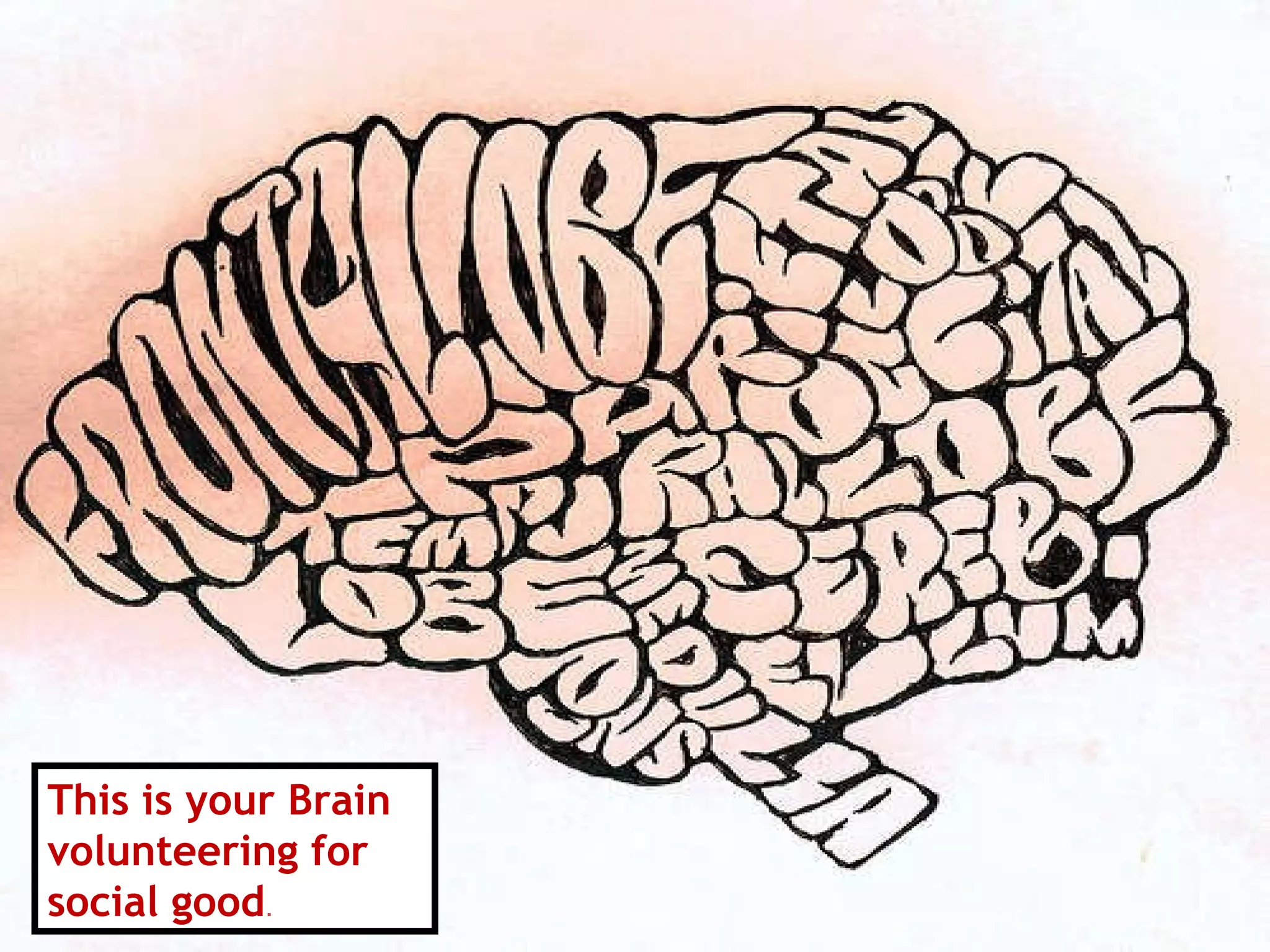
This is your Brain  volunteering for  social good .
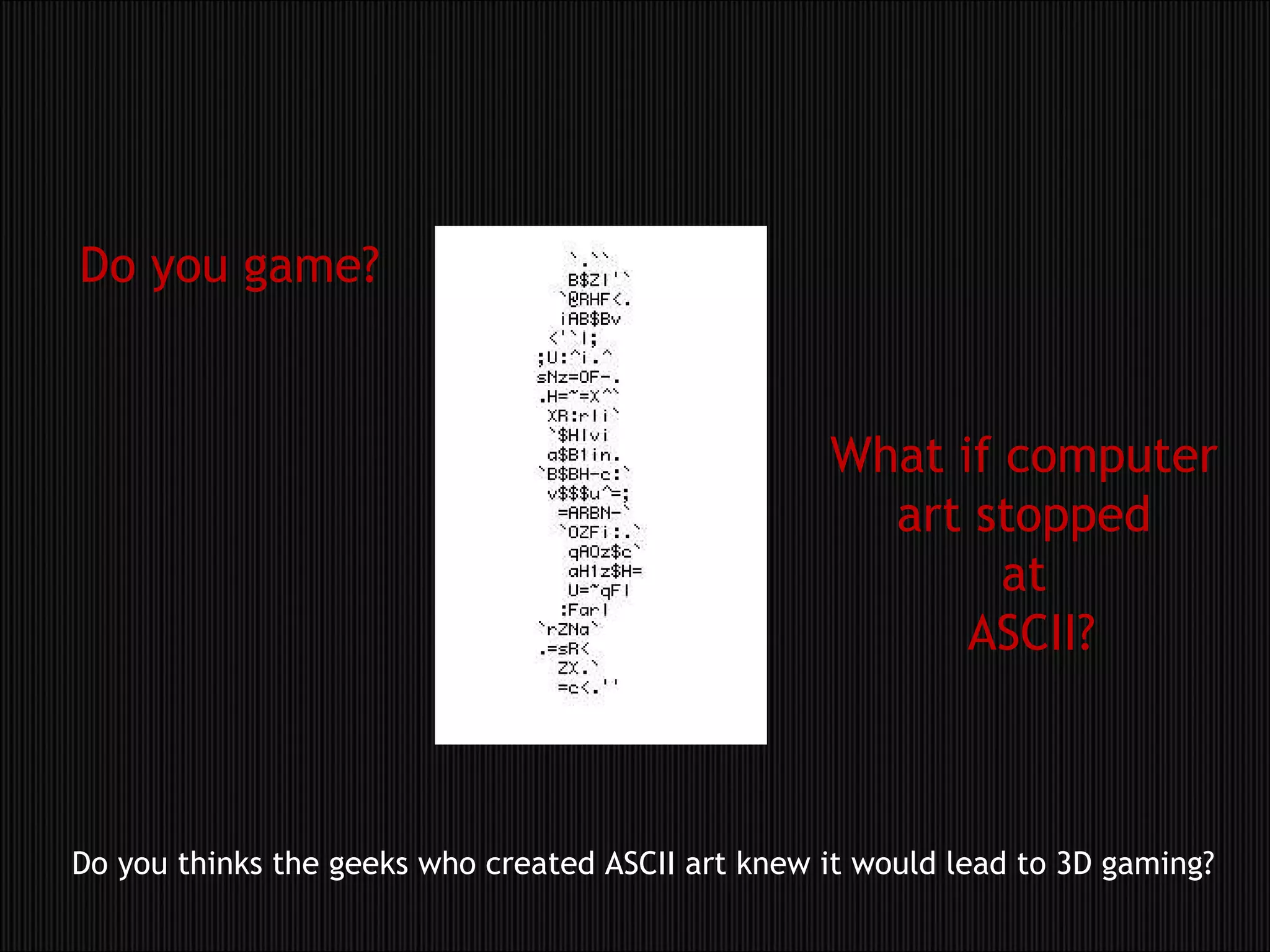
What if computer  art stopped  at  ASCII? Do you game? Do you thinks the geeks who created ASCII art knew it would lead to 3D gaming?
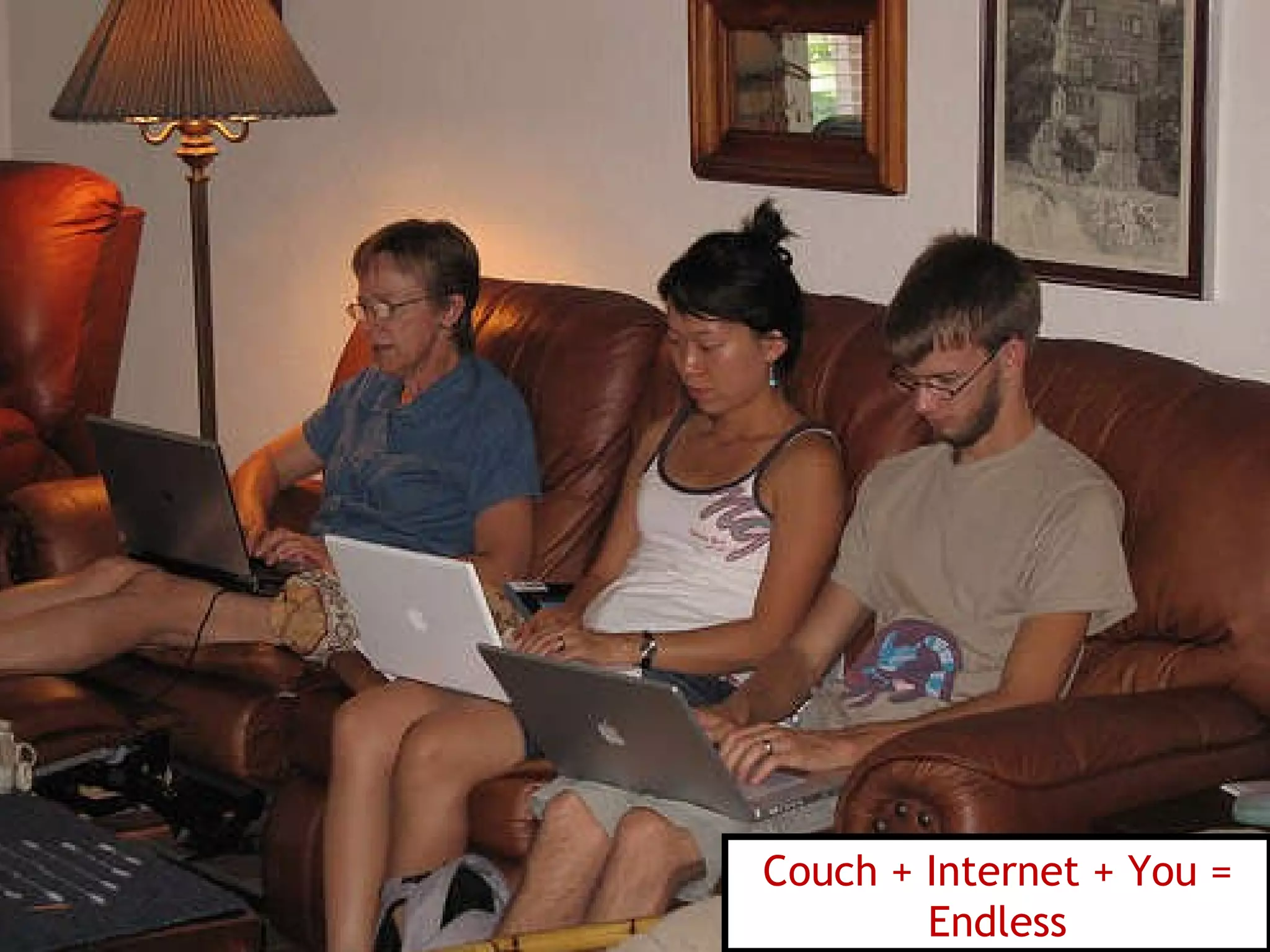
Couch + Internet + You = Endless
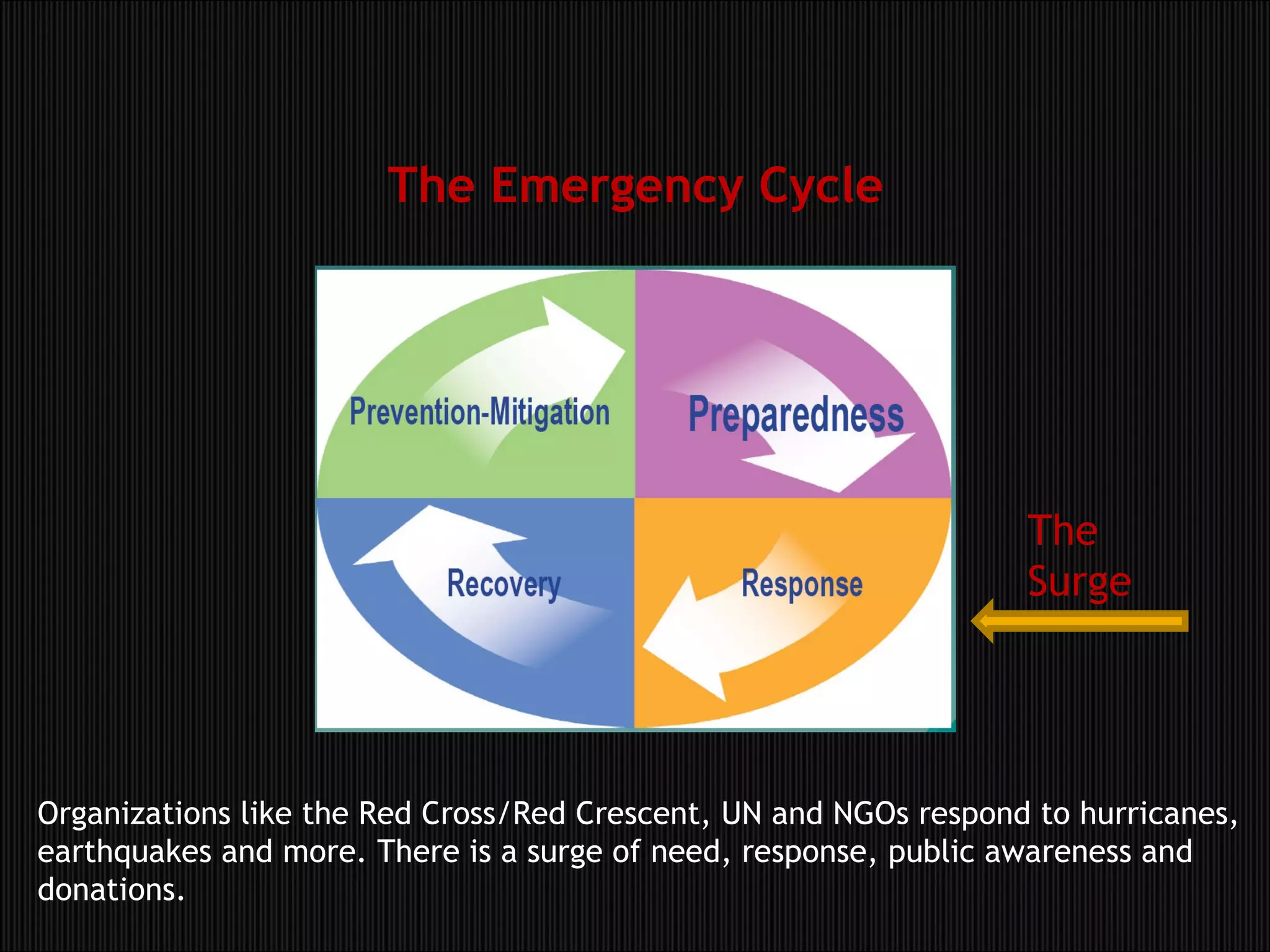
The Emergency Cycle The Surge Organizations like the Red Cross/Red Crescent, UN and NGOs respond to hurricanes, earthquakes and more. There is a surge of need, response, public awareness and donations.
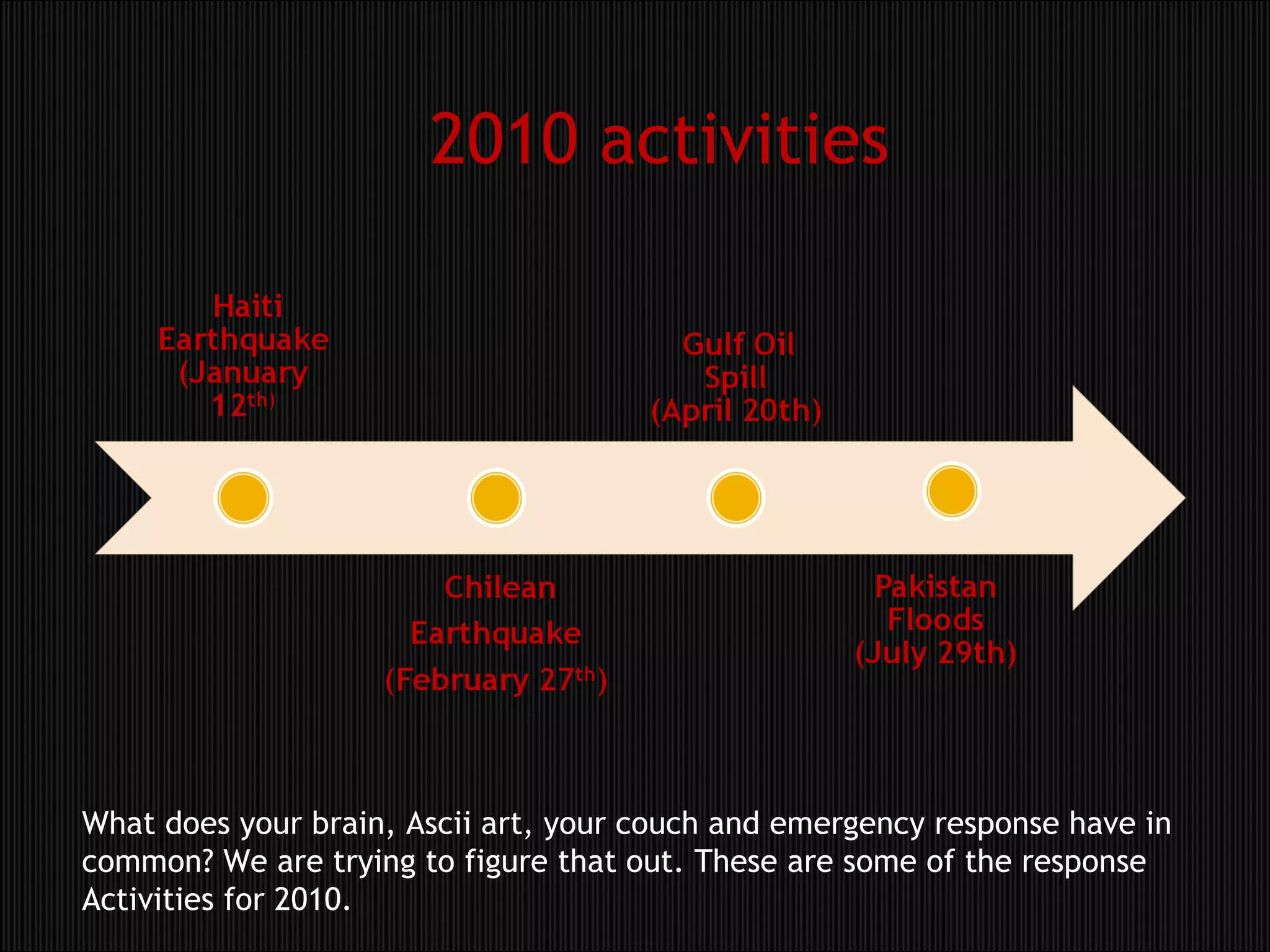
2010 activities What does your brain, Ascii art, your couch and emergency response have in common? We are trying to figure that out. These are some of the response  Activities for 2010.
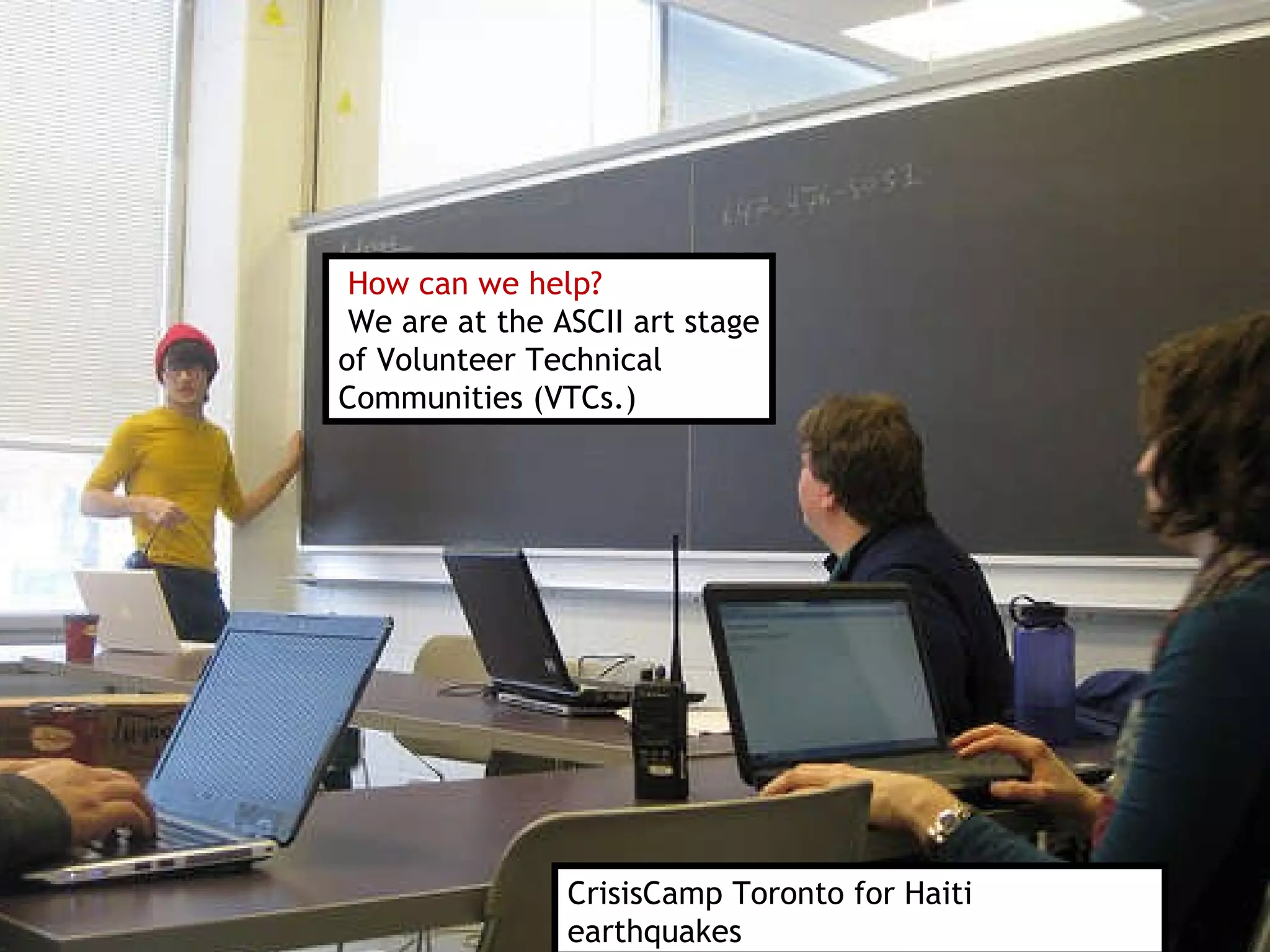
CrisisCamp Toronto for Haiti earthquakes How can we help? We are at the ASCII art stage of Volunteer Technical  Communities (VTCs.)
Crisis Commons is a global network of volunteers who use creative problem solving and open technologies to help people and communities in times and places of crisis. Crisis Commons members create organized response events called CrisisCamps. Volunteers learn, share and mentor by interacting  with like-minded innovators from around the world. Their collaborative contributions use all available Internet tools and resources. Join a CrisisCamp: In person or virtually (http://crisiscommons.org) We are one of many Volunteer Technical Communities.
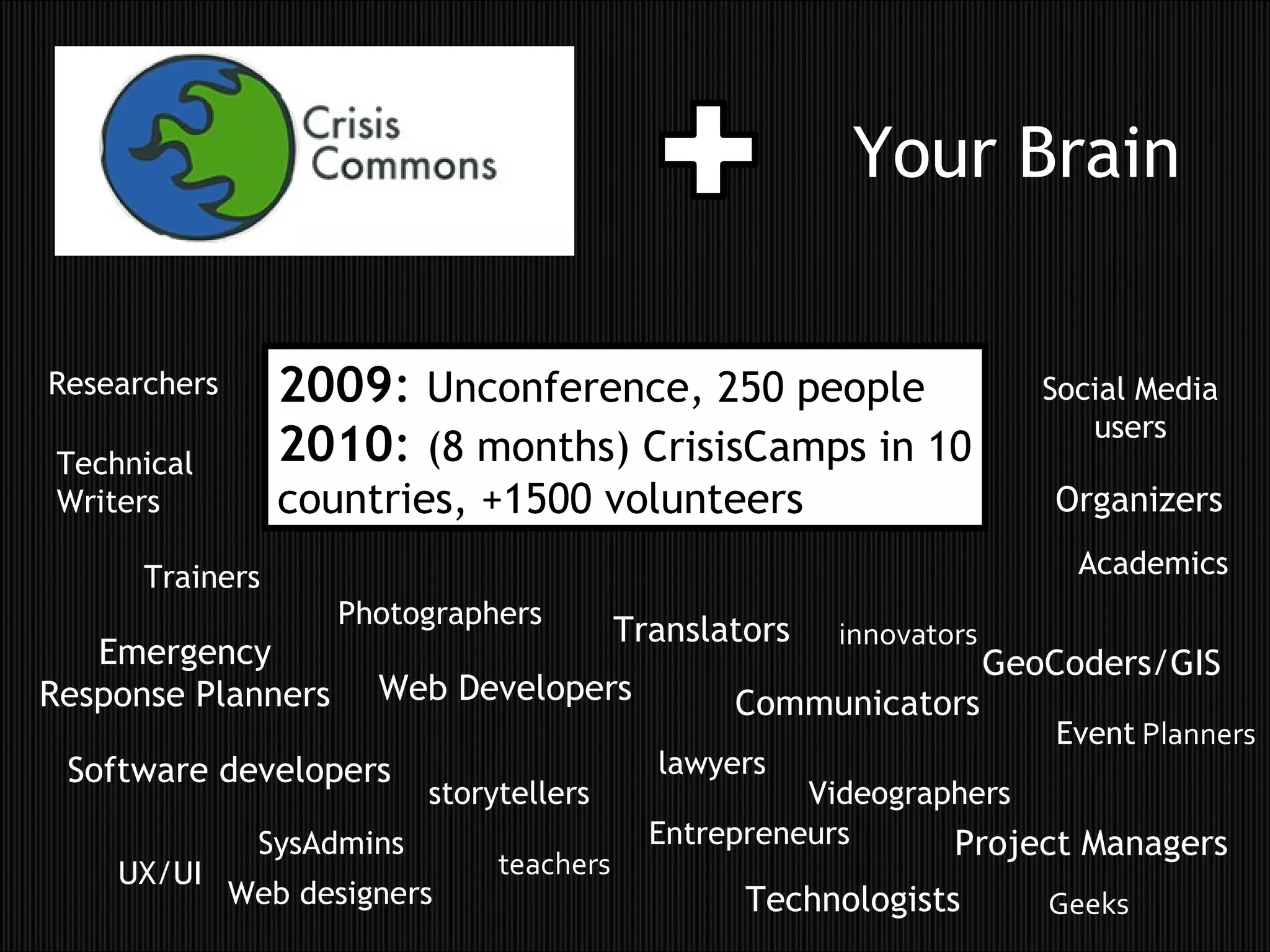
Web Developers Social Media users Organizers Software developers Emergency Response Planners GeoCoders/GIS Communicators Technologists Trainers Project Managers Your Brain Translators 2009 :  Unconference, 250 people 2010 :  (8 months) CrisisCamps in 10 countries, +1500 volunteers UX/UI Technical  Writers Entrepreneurs storytellers Videographers Academics lawyers Researchers Event  Planners teachers Geeks Web designers Photographers innovators SysAdmins
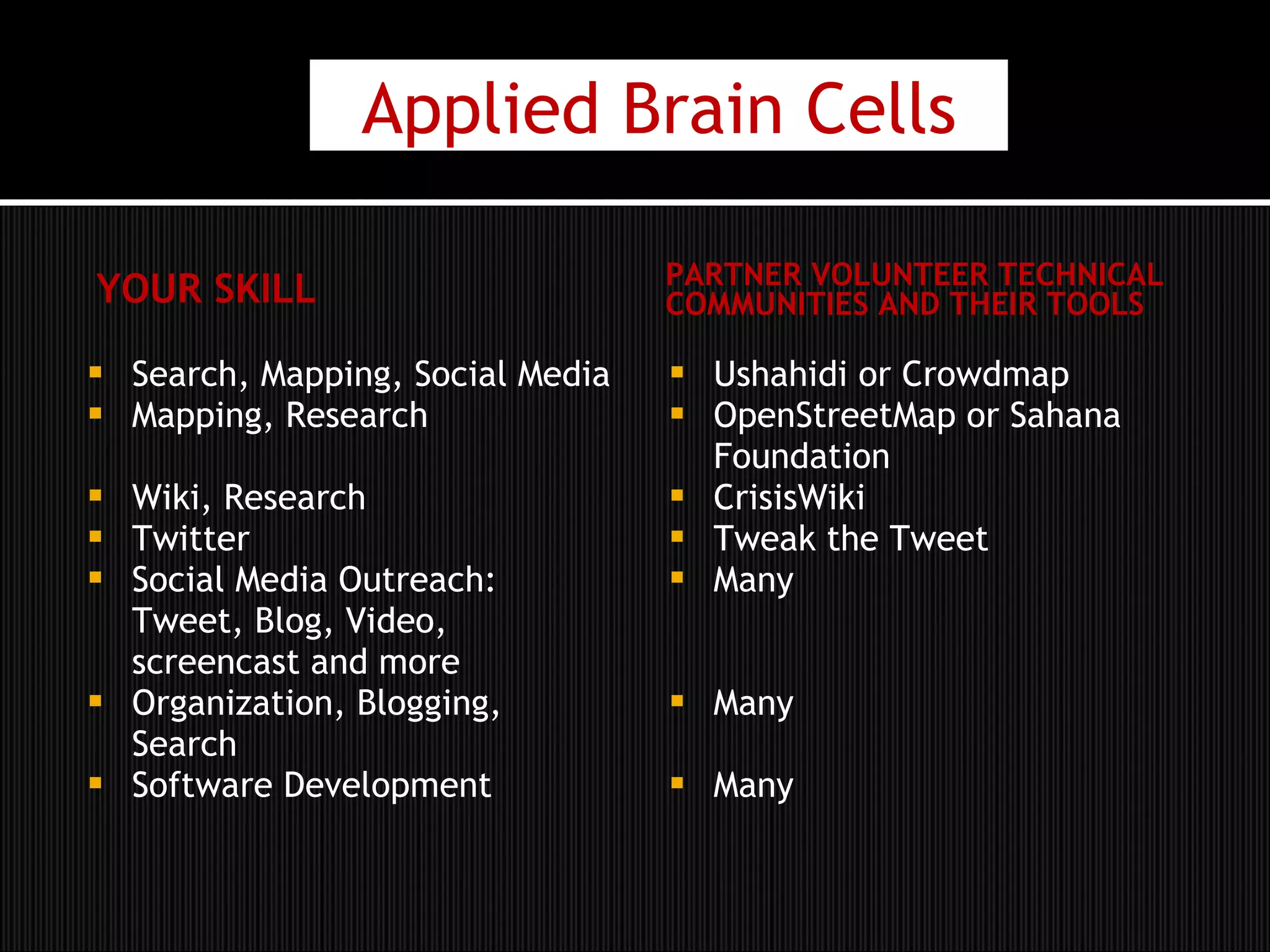
YOUR SKILL Search, Mapping, Social Media Mapping, Research  Wiki, Research Twitter  Social Media Outreach: Tweet, Blog, Video, screencast and more Organization, Blogging, Search Software Development PARTNER VOLUNTEER TECHNICAL COMMUNITIES AND THEIR TOOLS Ushahidi or Crowdmap  OpenStreetMap or Sahana Foundation  CrisisWiki Tweak the Tweet Many Many Many Applied Brain Cells
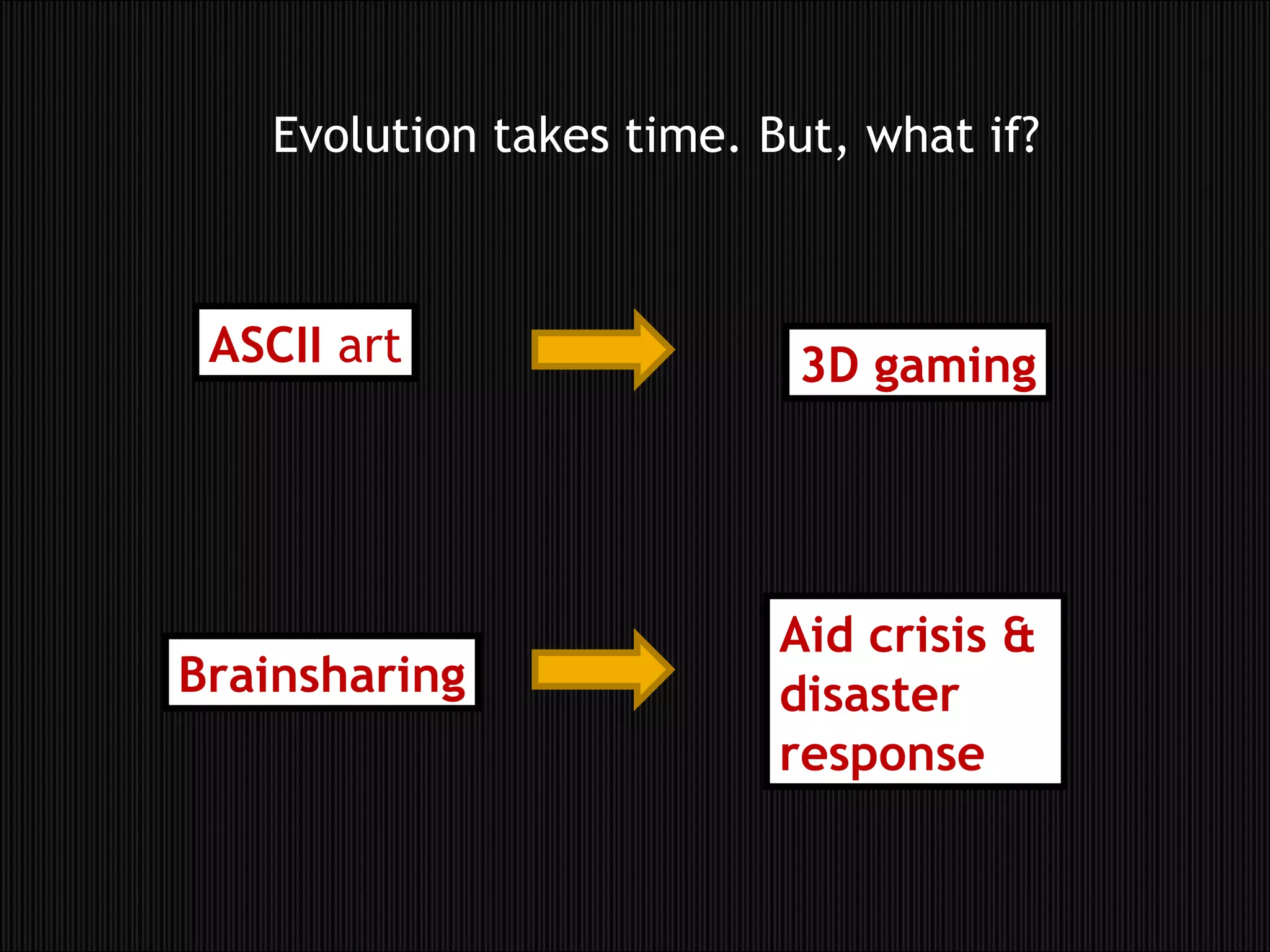
ASCII  art 3D gaming Brainsharing Aid crisis &  disaster response Evolution takes time. But, what if?
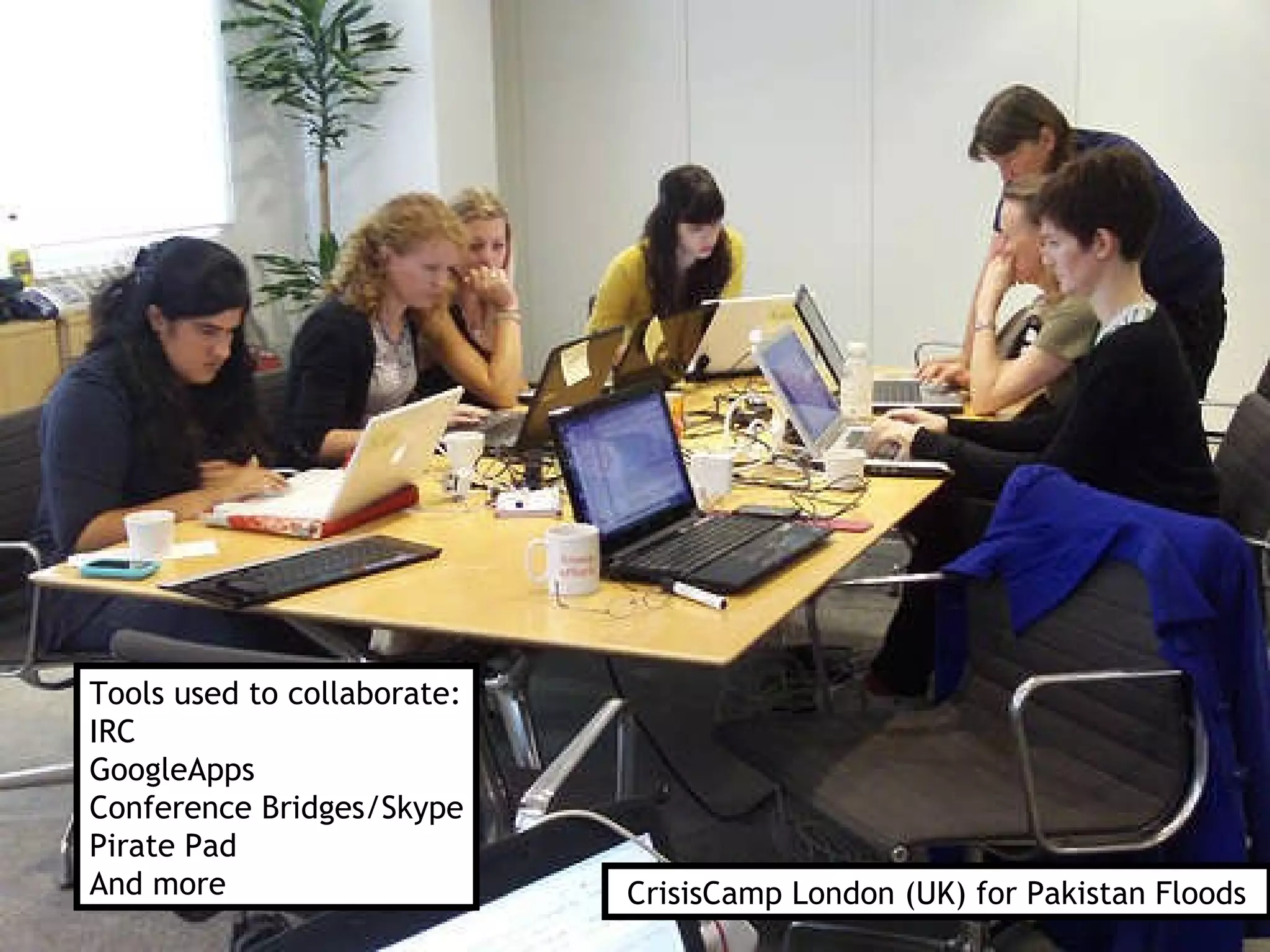
CrisisCamp London (UK) for Pakistan Floods Tools used to collaborate: IRC GoogleApps Conference Bridges/Skype Pirate Pad  And more
What if you read a text message (SMS) and could help an aid worker?  + Text message  + short code   + Report  + Read, search, document and categorize + Map Mobile phones are global .
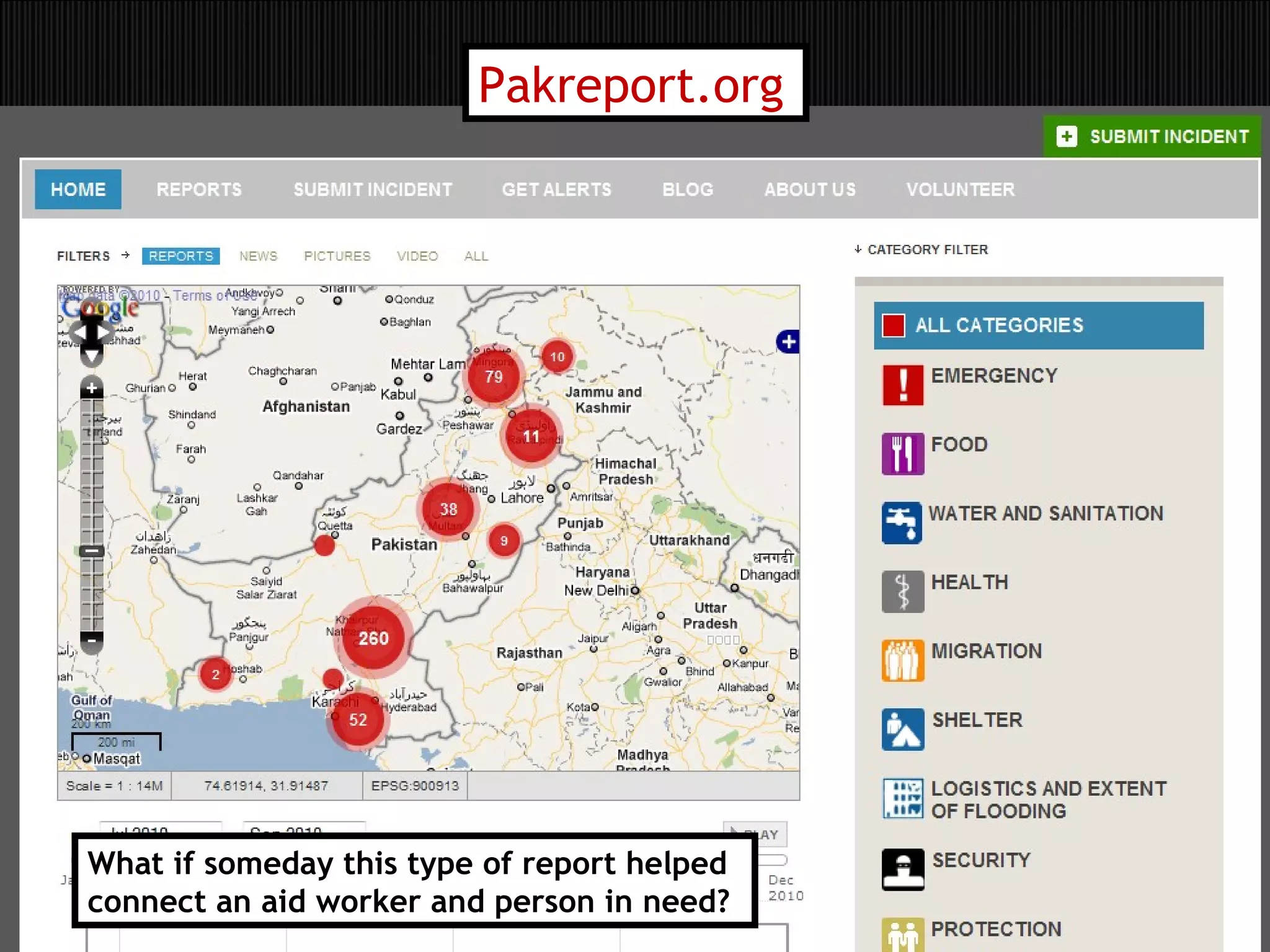
Pakreport.org   What if someday this type of report helped  connect an aid worker and person in need?
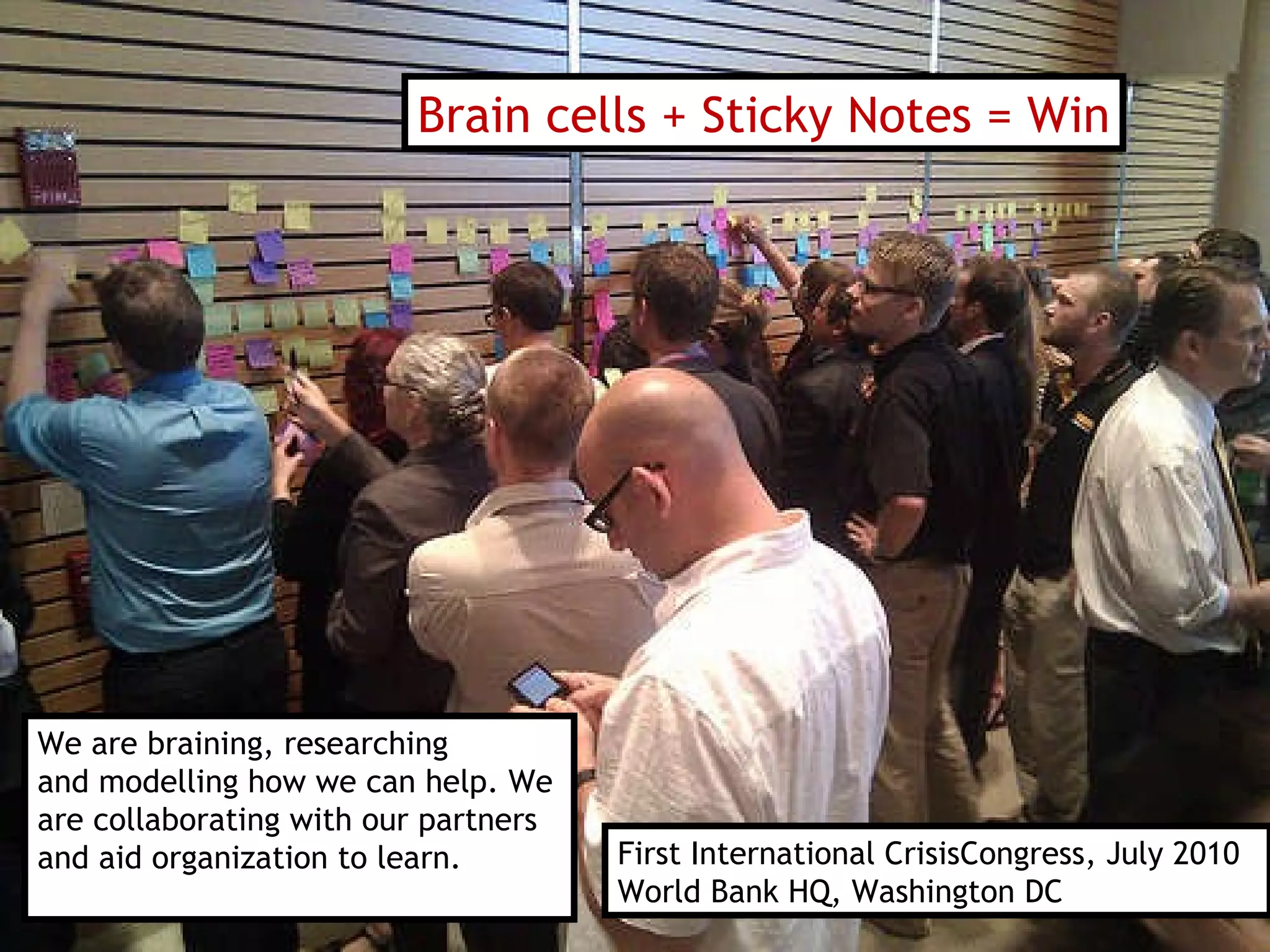
First International CrisisCongress, July 2010 World Bank HQ, Washington DC  Brain cells + Sticky Notes = Win We are braining, researching and modelling how we can help. We are collaborating with our partners  and aid organization to learn.
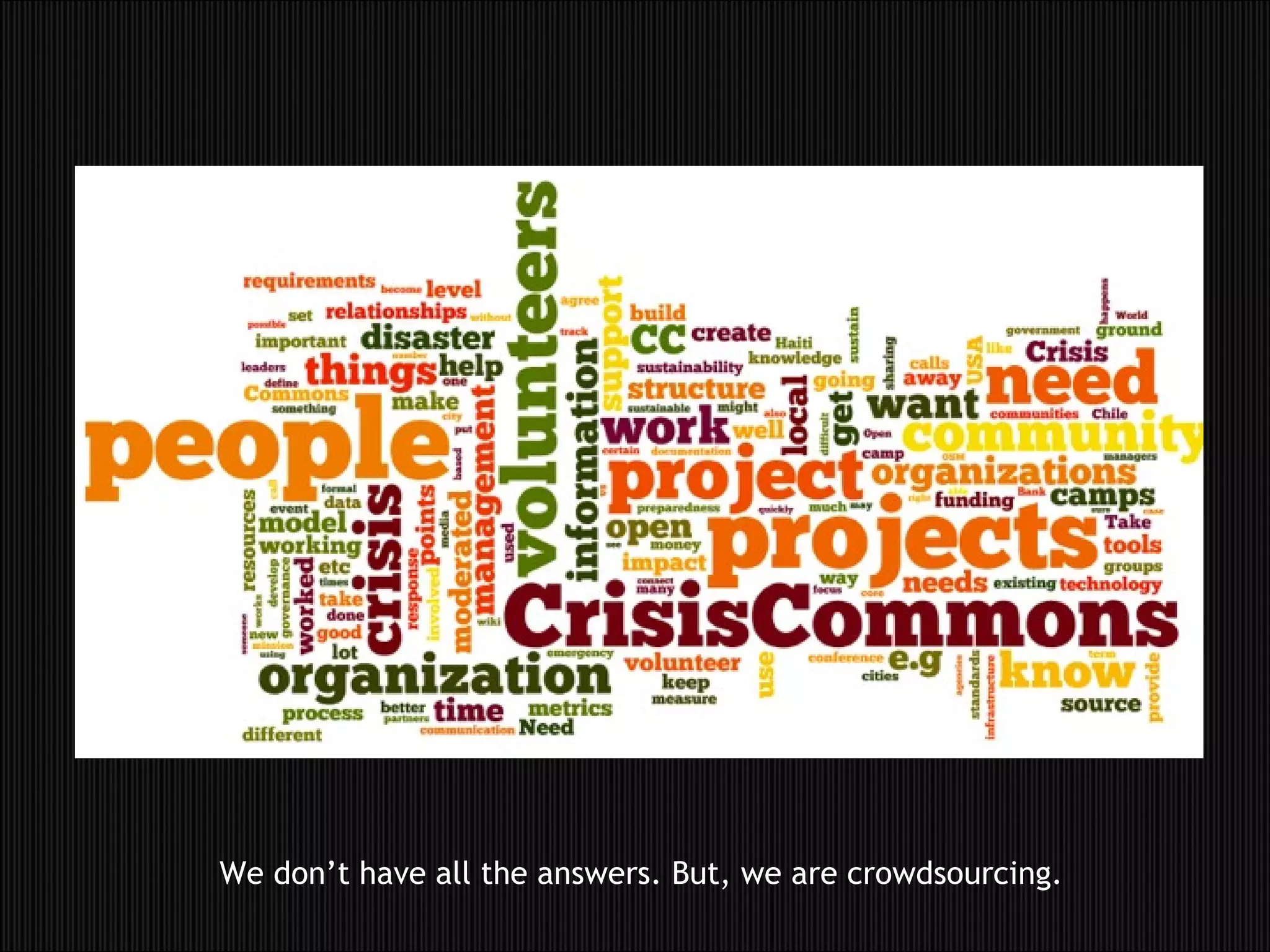
We don’t have all the answers. But, we are crowdsourcing.
We are modelling a new type of aid with  volunteer technical communities. Donate money to the Non-Governmental Organizations. Then, share your knowledge and time.
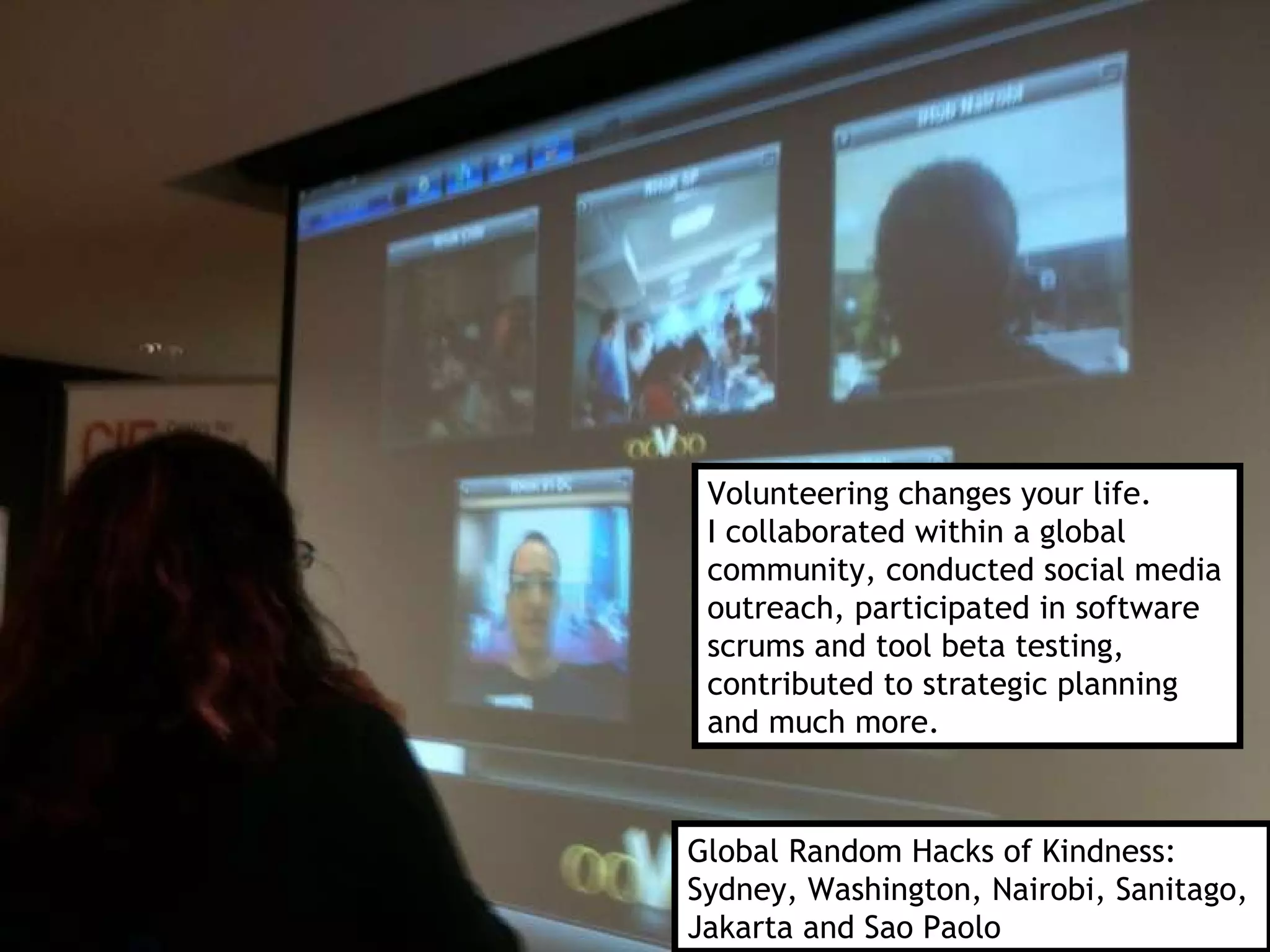
Global Random Hacks of Kindness:  Sydney, Washington, Nairobi, Sanitago, Jakarta and Sao Paolo Volunteering changes your life.  I collaborated within a global  community, conducted social media outreach, participated in software scrums and tool beta testing,  contributed to strategic planning and much more.
Join us: CrisisCamp Marathon weekend for Pakistan starts Friday, September 3, 2010.  and Global CrisisCamp Day of Learning Saturday, September 25, 2010 Virtual Volunteers welcome! Contact CrisisCamp and CrisisCommons Crisiscommons.org Google Group    CrisisCommons & crisiscampto Twitter              @CrisisCampTO @crisiscamp E-mail               CrisisCampTO@gmail.com
Thanks and Photo credits: Contact  Heather at textontechs dot com @heatherleson Brain – Labguest (Flickr) Ascii man – Pix Jockey (Flickr) Couch Surfers – khym54 (Flickr) CrisisCamp Toronto- Brian Chick (Flickr) CrisisCamp London (UK)- Spike (Flickr) CrisisCommons Congress – Pedro Fuentes, CrisisCamp Chile (Flickr) Congress Wordle- Chiara, CrisisCommons, Washington DC RHoK – Martin Biemel, CrisisCamp Sydney (Flickr) I hope you’ll consider how your brain sharing can change  the world with crisis response...someday.

Brainsharing: How Crowdsourcing Your Brain Cells Can Change the World

  • 1.
    How Crowdsourcing yourBrain Cells can Change the World Heather Leson
  • 2.
    This is yourBrain volunteering for social good .
  • 3.
    What if computer art stopped at ASCII? Do you game? Do you thinks the geeks who created ASCII art knew it would lead to 3D gaming?
  • 4.
    Couch + Internet+ You = Endless
  • 5.
    The Emergency CycleThe Surge Organizations like the Red Cross/Red Crescent, UN and NGOs respond to hurricanes, earthquakes and more. There is a surge of need, response, public awareness and donations.
  • 6.
    2010 activities Whatdoes your brain, Ascii art, your couch and emergency response have in common? We are trying to figure that out. These are some of the response Activities for 2010.
  • 7.
    CrisisCamp Toronto forHaiti earthquakes How can we help? We are at the ASCII art stage of Volunteer Technical Communities (VTCs.)
  • 8.
    Crisis Commons isa global network of volunteers who use creative problem solving and open technologies to help people and communities in times and places of crisis. Crisis Commons members create organized response events called CrisisCamps. Volunteers learn, share and mentor by interacting with like-minded innovators from around the world. Their collaborative contributions use all available Internet tools and resources. Join a CrisisCamp: In person or virtually (http://crisiscommons.org) We are one of many Volunteer Technical Communities.
  • 9.
    Web Developers SocialMedia users Organizers Software developers Emergency Response Planners GeoCoders/GIS Communicators Technologists Trainers Project Managers Your Brain Translators 2009 : Unconference, 250 people 2010 : (8 months) CrisisCamps in 10 countries, +1500 volunteers UX/UI Technical Writers Entrepreneurs storytellers Videographers Academics lawyers Researchers Event Planners teachers Geeks Web designers Photographers innovators SysAdmins
  • 10.
    YOUR SKILL Search,Mapping, Social Media Mapping, Research Wiki, Research Twitter Social Media Outreach: Tweet, Blog, Video, screencast and more Organization, Blogging, Search Software Development PARTNER VOLUNTEER TECHNICAL COMMUNITIES AND THEIR TOOLS Ushahidi or Crowdmap OpenStreetMap or Sahana Foundation CrisisWiki Tweak the Tweet Many Many Many Applied Brain Cells
  • 11.
    ASCII art3D gaming Brainsharing Aid crisis & disaster response Evolution takes time. But, what if?
  • 12.
    CrisisCamp London (UK)for Pakistan Floods Tools used to collaborate: IRC GoogleApps Conference Bridges/Skype Pirate Pad And more
  • 13.
    What if youread a text message (SMS) and could help an aid worker? + Text message + short code + Report + Read, search, document and categorize + Map Mobile phones are global .
  • 14.
    Pakreport.org What if someday this type of report helped connect an aid worker and person in need?
  • 15.
    First International CrisisCongress,July 2010 World Bank HQ, Washington DC Brain cells + Sticky Notes = Win We are braining, researching and modelling how we can help. We are collaborating with our partners and aid organization to learn.
  • 16.
    We don’t haveall the answers. But, we are crowdsourcing.
  • 17.
    We are modellinga new type of aid with volunteer technical communities. Donate money to the Non-Governmental Organizations. Then, share your knowledge and time.
  • 18.
    Global Random Hacksof Kindness: Sydney, Washington, Nairobi, Sanitago, Jakarta and Sao Paolo Volunteering changes your life. I collaborated within a global community, conducted social media outreach, participated in software scrums and tool beta testing, contributed to strategic planning and much more.
  • 19.
    Join us: CrisisCampMarathon weekend for Pakistan starts Friday, September 3, 2010. and Global CrisisCamp Day of Learning Saturday, September 25, 2010 Virtual Volunteers welcome! Contact CrisisCamp and CrisisCommons Crisiscommons.org Google Group    CrisisCommons & crisiscampto Twitter              @CrisisCampTO @crisiscamp E-mail               CrisisCampTO@gmail.com
  • 20.
    Thanks and Photocredits: Contact Heather at textontechs dot com @heatherleson Brain – Labguest (Flickr) Ascii man – Pix Jockey (Flickr) Couch Surfers – khym54 (Flickr) CrisisCamp Toronto- Brian Chick (Flickr) CrisisCamp London (UK)- Spike (Flickr) CrisisCommons Congress – Pedro Fuentes, CrisisCamp Chile (Flickr) Congress Wordle- Chiara, CrisisCommons, Washington DC RHoK – Martin Biemel, CrisisCamp Sydney (Flickr) I hope you’ll consider how your brain sharing can change the world with crisis response...someday.

Editor's Notes

  • #3 Spend time thinking about your brains. How do you use your cognitive surplus? If there are millions of hours of free labour available, how can we leverage that for volunteering for social good?
  • #4 I wonder if the geeks creating ascii art decades ago would know that their imagination of art and technology would lead to this to 3D games.
  • #5 We all have laptops and smartphones. I like my couch time too. Last night I talked with a colleague in Sydney via skype, used a free open source collaborative tool called pirate pad to organize some ideas with her, and then set up an eventbrite for Bangkok, Thailand. From my couch. (correction: I mention in the Ignite video that my colleague was from Papua New Guinea. She actually represents this area with the World Bank rather than lives there.)
  • #6 Folks like the Red Cross/Red Crescent, the UN and non-governmental organizations plan for emergencies such as hurricanes, earthquakes and more. When these incident happen, there is a surge of media, response activity, needs, donations and public awareness.
  • #7 So What do your brain, Ascii art, your couch and emergence response have in common? Well, we are trying to figure that space out. Social media and crisis response/crisis data is a full of thinking. Just look at the events of 2010 so far.
  • #8 Each of these crises have organized people online via social media. We are using our braincells to try a new type of aid. We are asking the question : If I am a geek or a tech and know social media/software development, how can I help? We are in the ASCii art stage of volunteer technical communities. Many of you apply your social media talents to business. The Non-profit and NGO sector is also undergoing massive change.
  • #9 CrisisCommons is a group of people trying to model our brain cells to help the helpers. We create CrisisCamps, volunteer and collaborate across cities, skills and timezones. Some of us volunteer from home, some in person. We are just one of many volunteer technical communities trying to make a difference in this area.
  • #10 CrisisCommons started at an unconference after Gov 2.0 in Washington DC. They had 250 people. Now, there’s been over 1500 volunteers. Each volunteer contributes different skills and time. Each volunteer is building this idea forward. How can I help and what if my skills could be crowdsourced during a crisis?
  • #11 Now we are modeling with our friends and partners of other volunteer technical communities. We know that if we crowdsource on during the surge times we can make a difference. Look at all the skills and applied social media. Each of these communities does far more than the skills listed, but this is to give you an overview of how you can apply your talents and knowledge.
  • #12 Each of you knows how to do most of these things. Apply them in new ways and using your knowledge and learning capability. Just like Ascii art evolved to 3d gaming, we think that brainsharing can help manage information during emergencies.
  • #13 Most of the volunteers started with the earthquake in haiti. We mobilized on twitter, facebook and our blogs. Then, we used conference bridges, skype, etherpad/pirate pad, google apps, and any online tool (open source or not) that we could to try and manage information and share. We started out volunteering on projects and software development.
  • #14 So, let me give you a light example. We know that mobile phones and text messaging is a global phenomenon. We know that mobile plus location plus imagery. How do these things work with aid? It is actually fairly easy to learn.
  • #15 We are using visualization to tell a story using people’s SMS reports from Pakistan. What if someday this type of map’s detail was crowdsourced and helped an aid organization determine where to deliver water and do it from your couch?
  • #16 Back to brains. The Crisiscommons community is very young. But, we are throwing as much brain power as we can at this. How to help aid organizations during the crisis surge? What works for virtual volunteers and CrisisCamps? How should we organize or not organize?
  • #17 We don’t have all the answers. With each crisis we are adding another layer of learning and knowledge. But, most of all: we are trying. It is a crowdsourcing brain layer cake.
  • #18 We know that we can change aid with knowledge, time and crowdpower. It used to be that we could only watch tv during a crisis and donate money. Locally we can lend a hand, but how do we do this globally. I say to you: log on and join from your couch.
  • #19 On january 12 th – the date of the Haitian earthquake. the volunteer crowd. The rewards have been: collaborating within a global community and using social media for good. I’ve been a mentor and been mentored. I have worked on marketing plans, software scrums, tool beta testing, strategic governance and open source projects.
  • #20 We have a number of CrisisCamp volunteers here today. Wave your hands. Please ask them questions. They are part of a global community of volunteers who leverage their networks. We have a global event with Bangkok, Sydney, Toronto and London this weekend. And on September 25 th , we’ll have a training day for all those methods.
  • #21 So Contact the @CrisisCamp global team or your local Crisiscamp or me. We’d love it if you joined us. And, most of all I hope you’ll consider how your brain sharing can change the world with crisis response...someday. We are hacking away. Thank you.