Expanding Capacity and Capability:
Inclusion of Participatory Culture, Technology and Open Data
                     in Crisis Management

                  Centers for Disease Control and Prevention
     Emergency Risk Communications Embedment Meeting (#cdcem #smem)
                                 June 28, 2011
                               Atlanta, Georgia

                             Heather Blanchard
                        Co Founder, CrisisCommons
                          www.crisiscommons.org
                        heather@crisiscommons.org
                         Twitter/Skype: @poplifegirl

      Notes from Heather Blanchard: https://docs.google.com/document/d/
     1Uhm5GAV60VCxaIktE8dqrA7MR6wgKw-TN17bwfX26lI/edit?hl=en_US
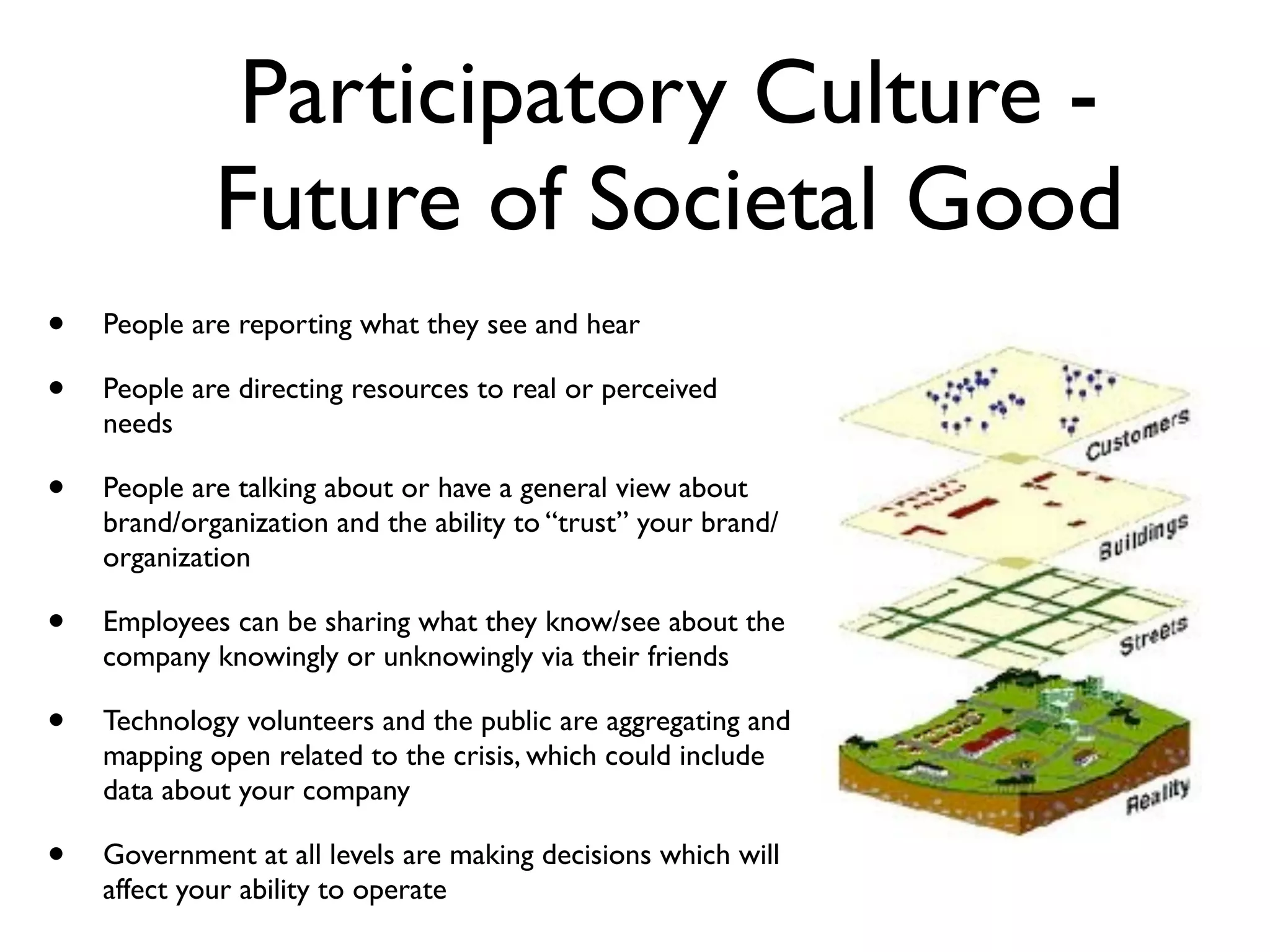
Participatory Culture -
             Future of Societal Good
•   People are reporting what they see and hear

•   People are directing resources to real or perceived
    needs

•   People are talking about or have a general view about
    brand/organization and the ability to “trust” your brand/
    organization

•   Employees can be sharing what they know/see about the
    company knowingly or unknowingly via their friends

•   Technology volunteers and the public are aggregating and
    mapping open related to the crisis, which could include
    data about your company

•   Government at all levels are making decisions which will
    affect your ability to operate
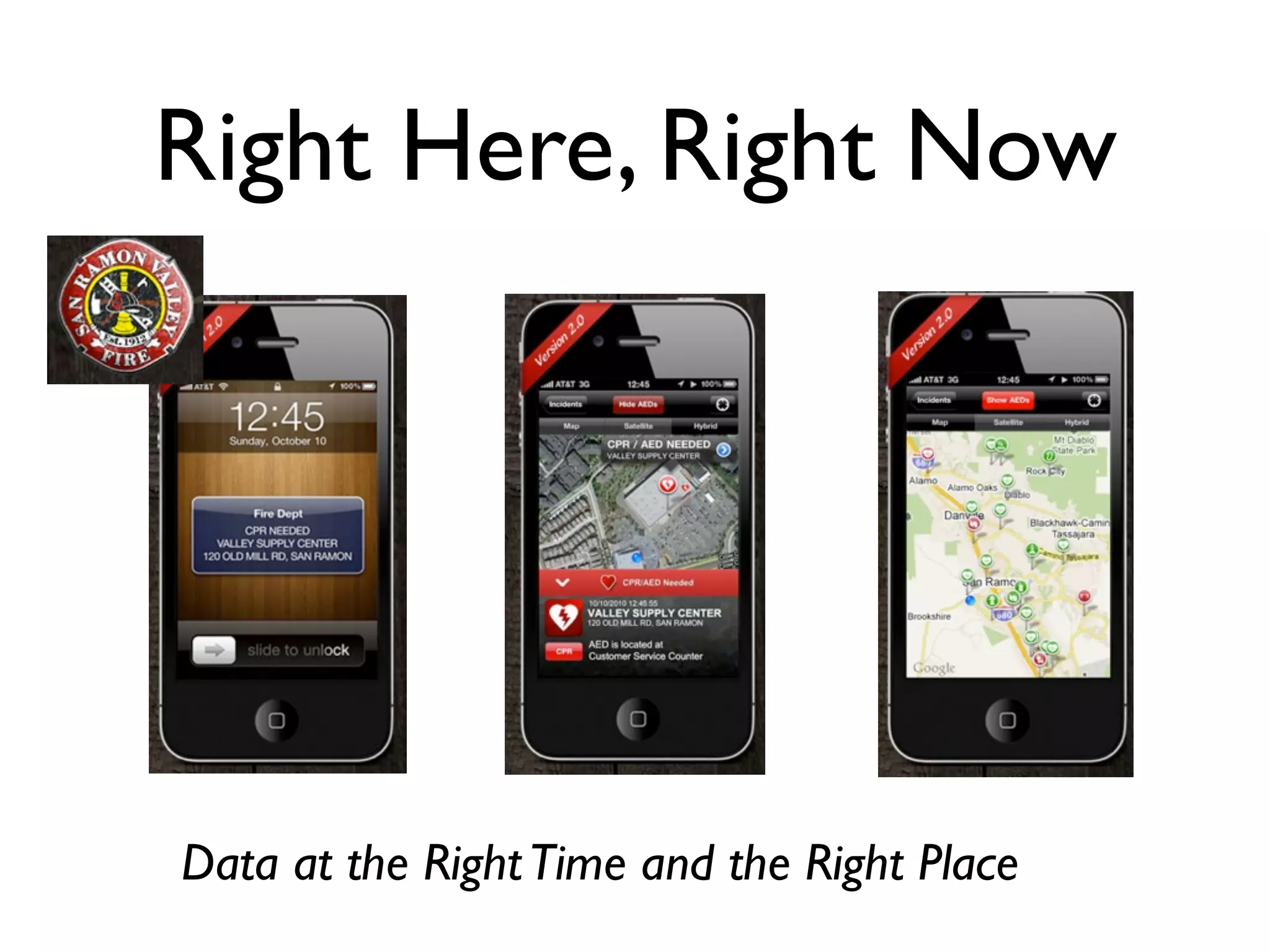
Right Here, Right Now


Data at the Right Time and the Right Place
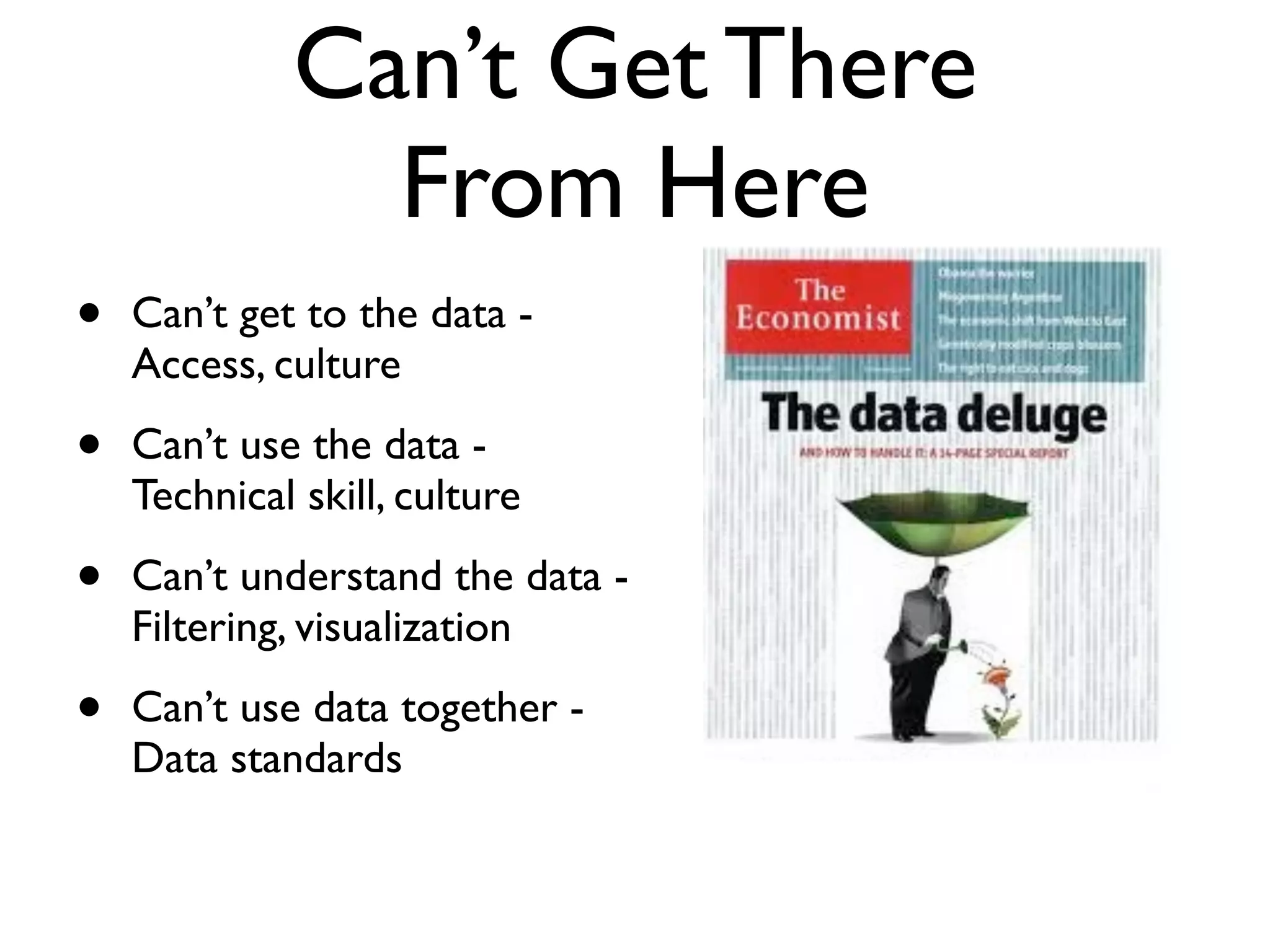
Can’t Get There
               From Here
•   Can’t get to the data -
    Access, culture

•   Can’t use the data -
    Technical skill, culture

•   Can’t understand the data -
    Filtering, visualization

•   Can’t use data together -
    Data standards
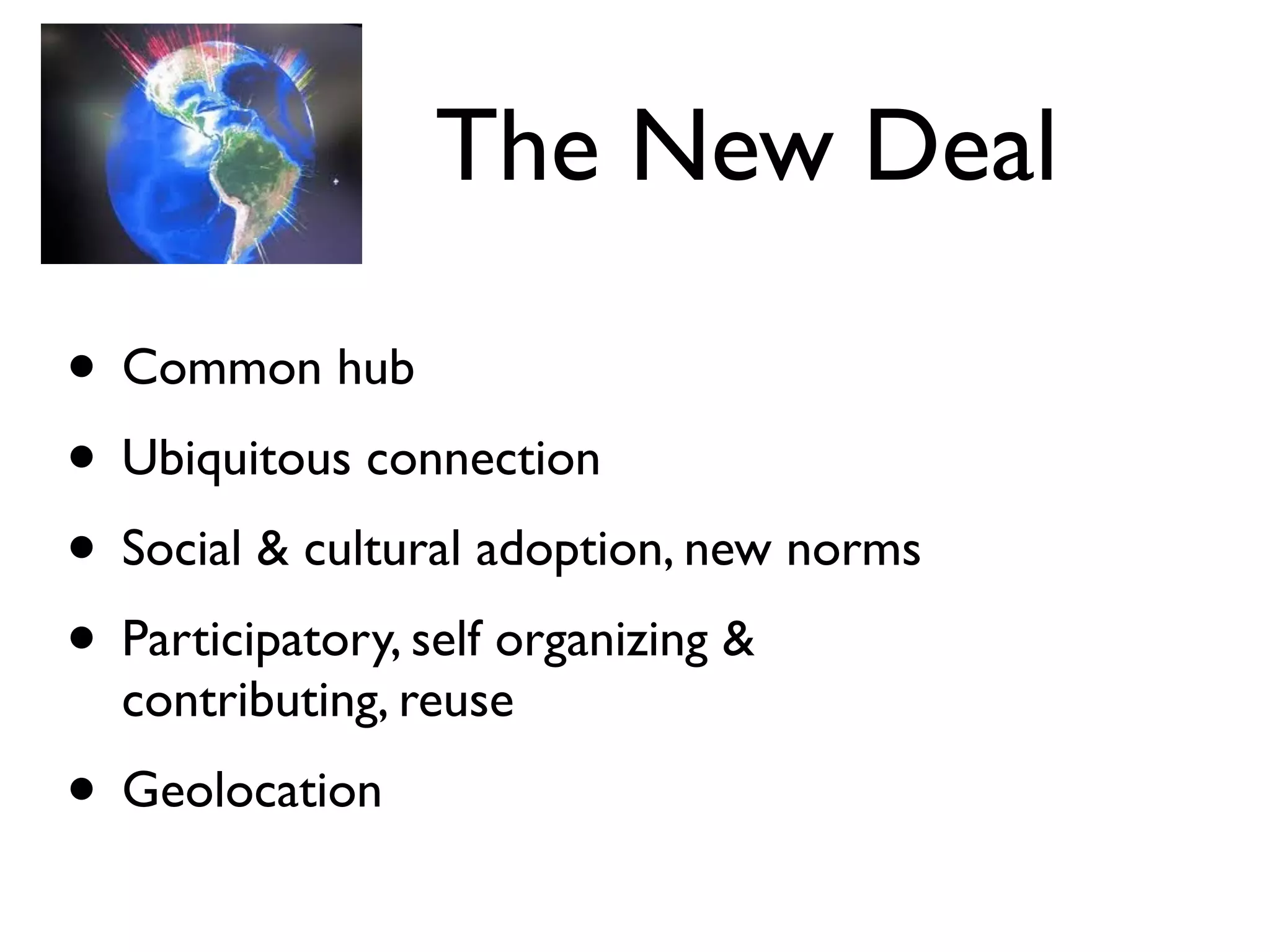
The New Deal

• Common hub
• Ubiquitous connection
• Social & cultural adoption, new norms
• Participatory, self organizing &
  contributing, reuse
• Geolocation
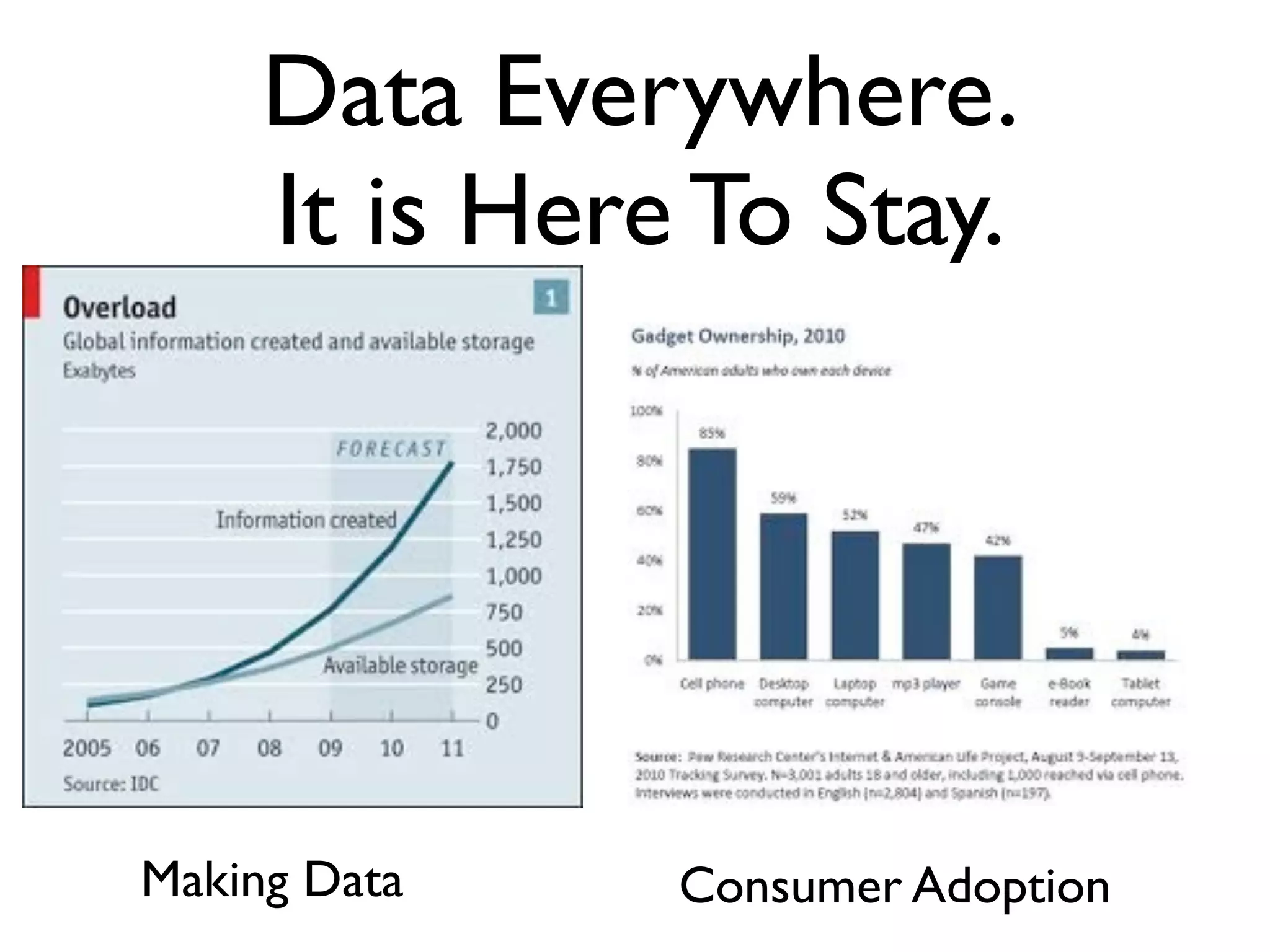
Data Everywhere.
     It is Here To Stay.


Making Data    Consumer Adoption
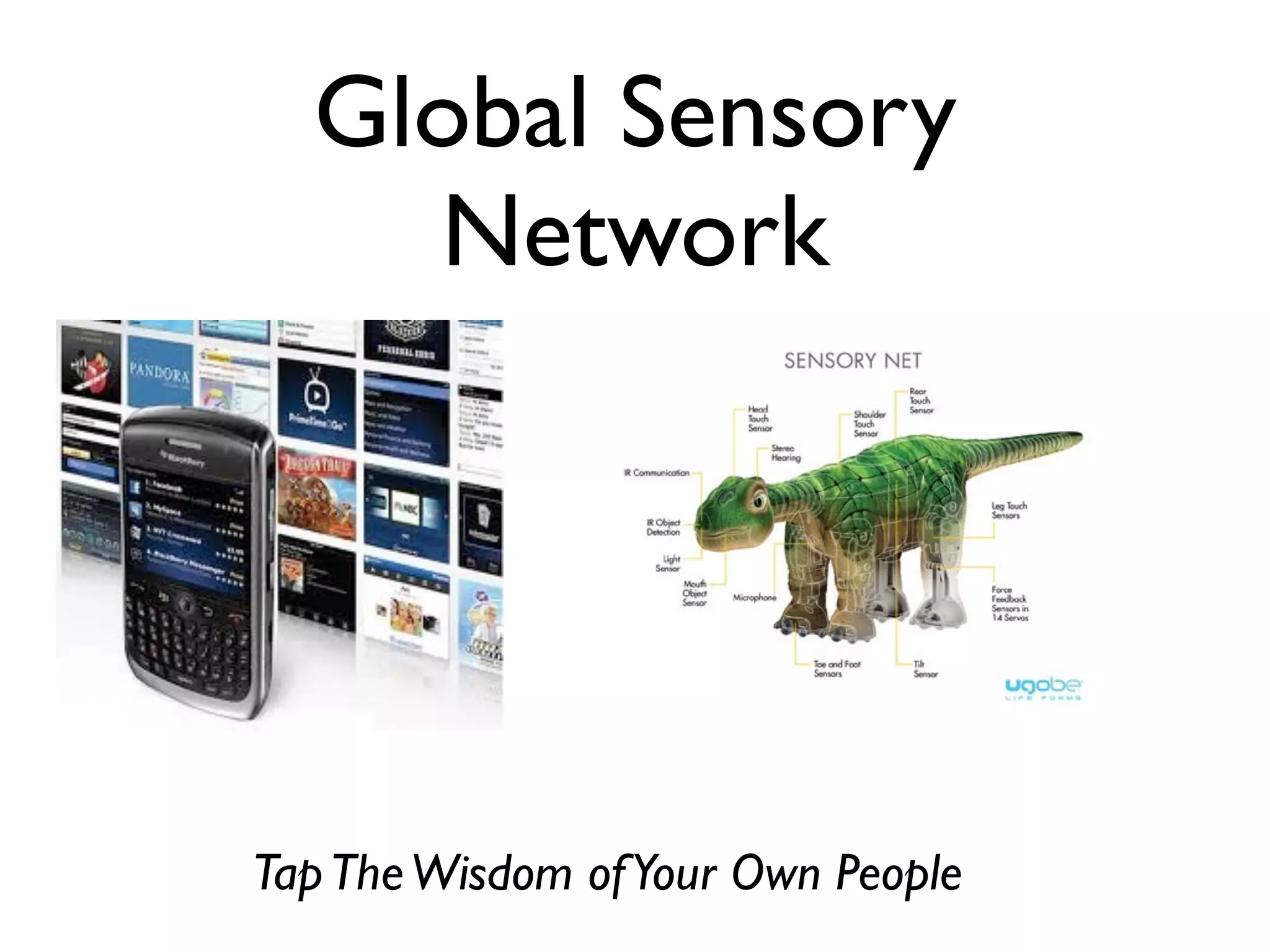
Global Sensory
    Network


Tap The Wisdom of Your Own People
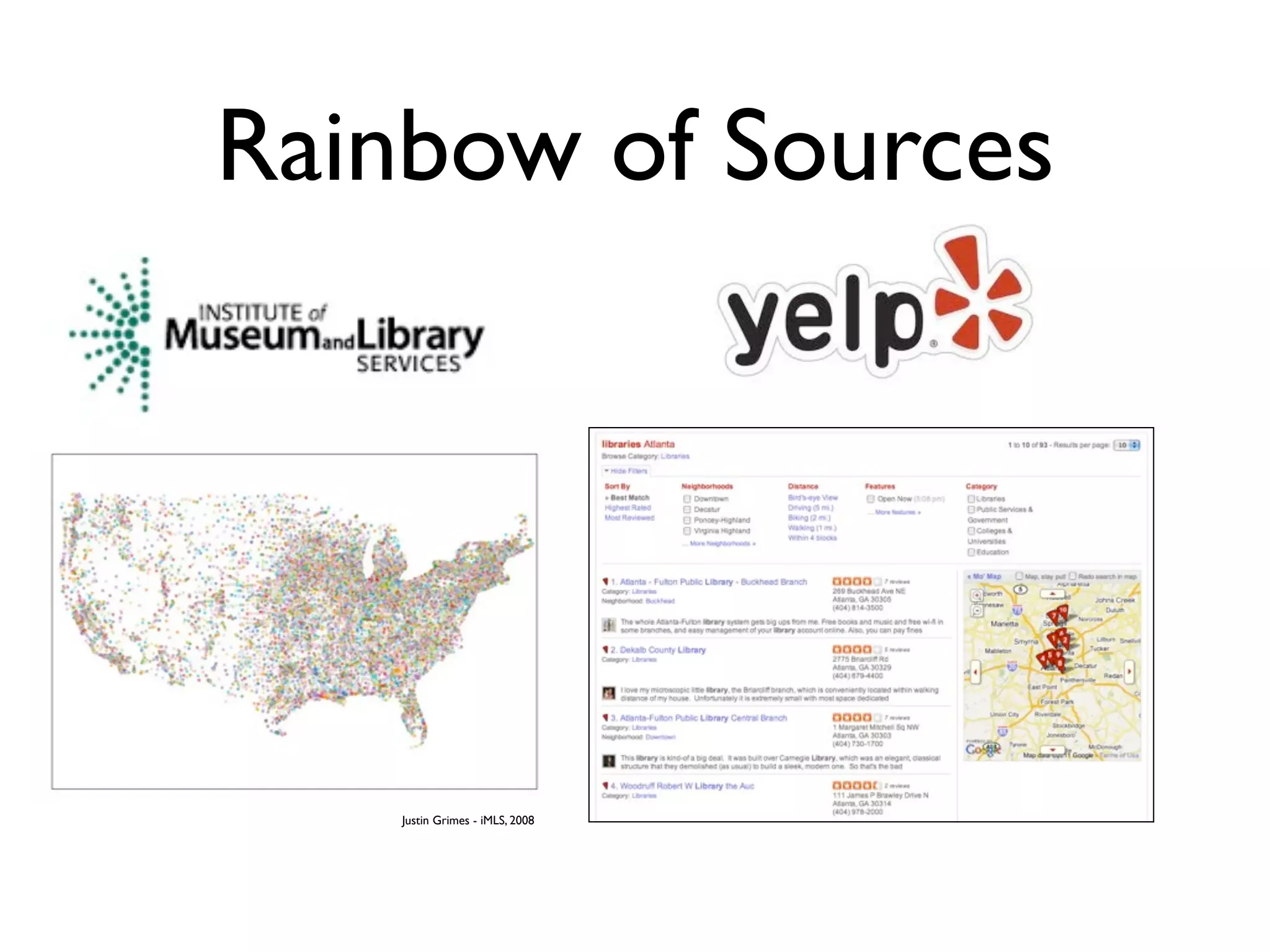
Rainbow of Sources


    Justin Grimes - iMLS, 2008
Our Story
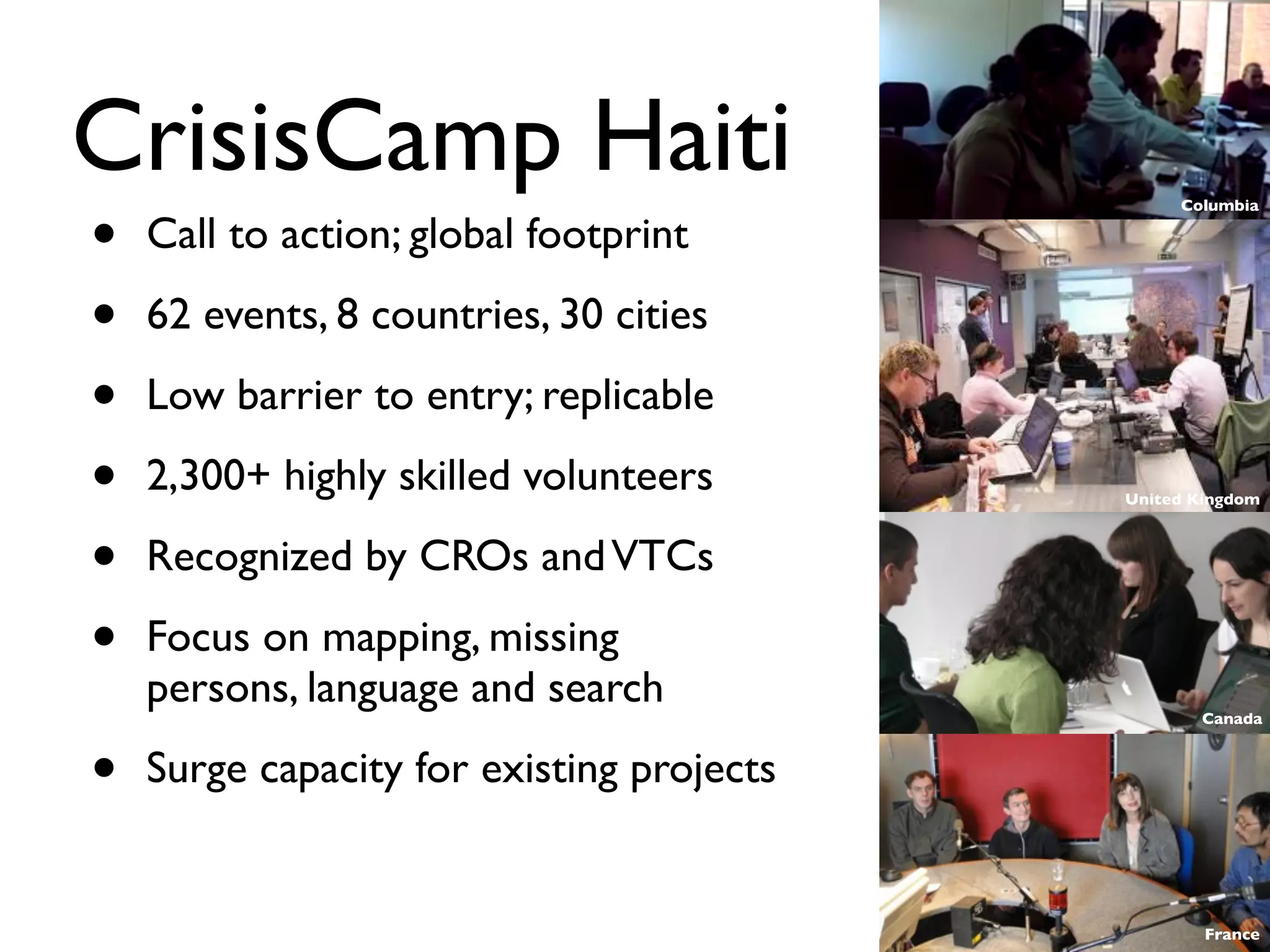
CrisisCamp Haiti
•
                                                Columbia

    Call to action; global footprint

•   62 events, 8 countries, 30 cities

•   Low barrier to entry; replicable

•   2,300+ highly skilled volunteers       United Kingdom


•   Recognized by CROs and VTCs

•   Focus on mapping, missing
    persons, language and search                  Canada


•   Surge capacity for existing projects


                                                   France
What We Learned
•   Disasters can create opportunities for innovation, rules
    relax, people are willing to be open to solutions from
    anywhere

•   Disasters galvanize participatory culture = “crisis crowd”

•   Disasters can benefit from existing programs with
    training and leadership have the best change in effectively
    harness the emerging crisis crowd into their existing
    community

•   Disaster response requests need to originate from the
    local area/field
Potential of
Technology Volunteers
• Post-Disaster Basemap: OpenStreetMap
• Remote Building Assessment: GEO-CAN
• Monitoring: Big Idea with the Gulf Coast
  Oil Spill
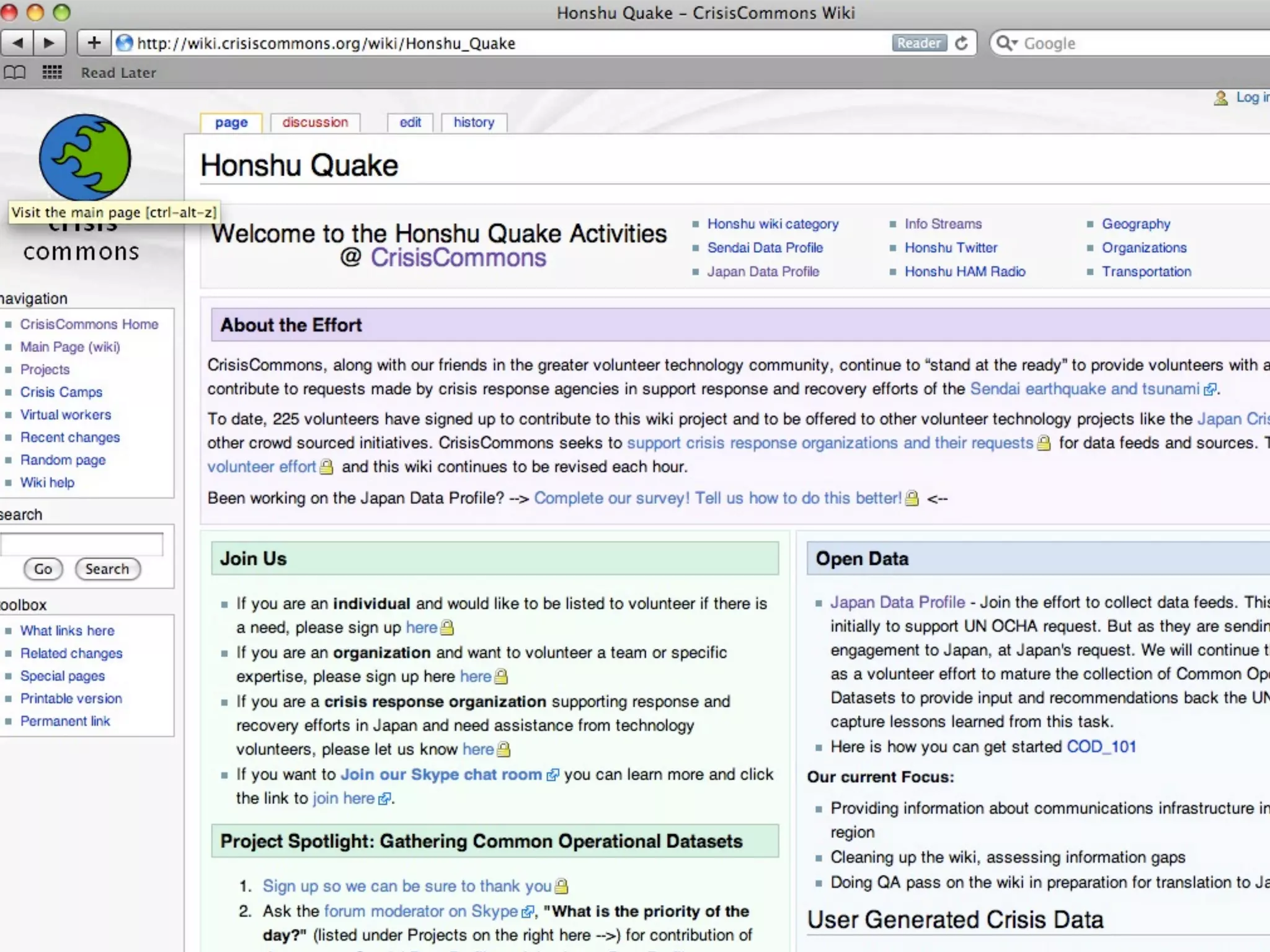
• Crisis Content/Trends: Japan Earthquake
Key is Data,
             Not Platform
• Many emergency management/civil authorities don’t
  have access to tools and resources or partnerships
  they need to harness additional capability/capacity
• Sometimes if there are resources, its limited to one
  person
• Little focus on data preparedness; process
• Focus on data (and its availability) not platforms
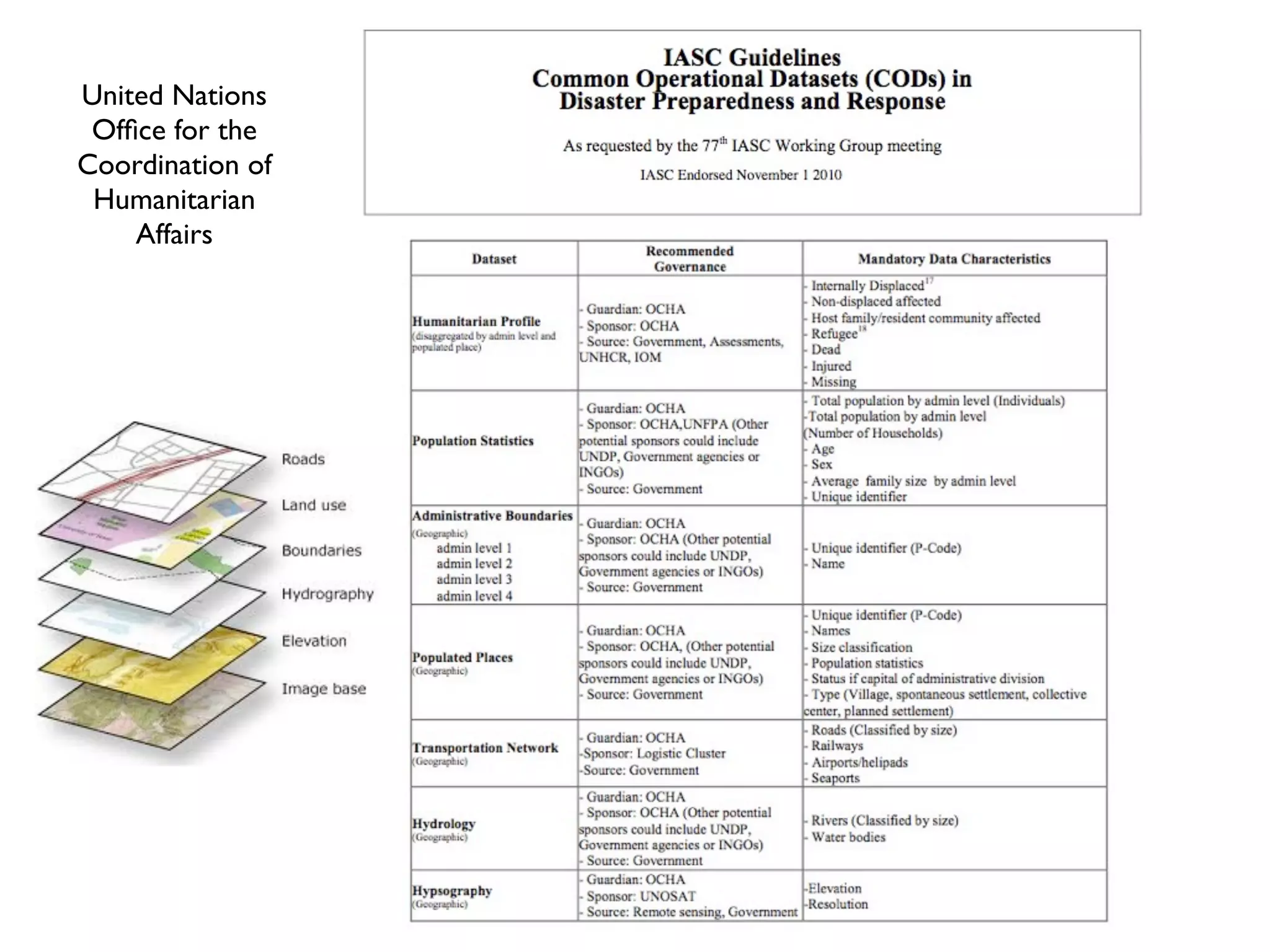
United Nations
 Office for the
Coordination of
 Humanitarian
    Affairs
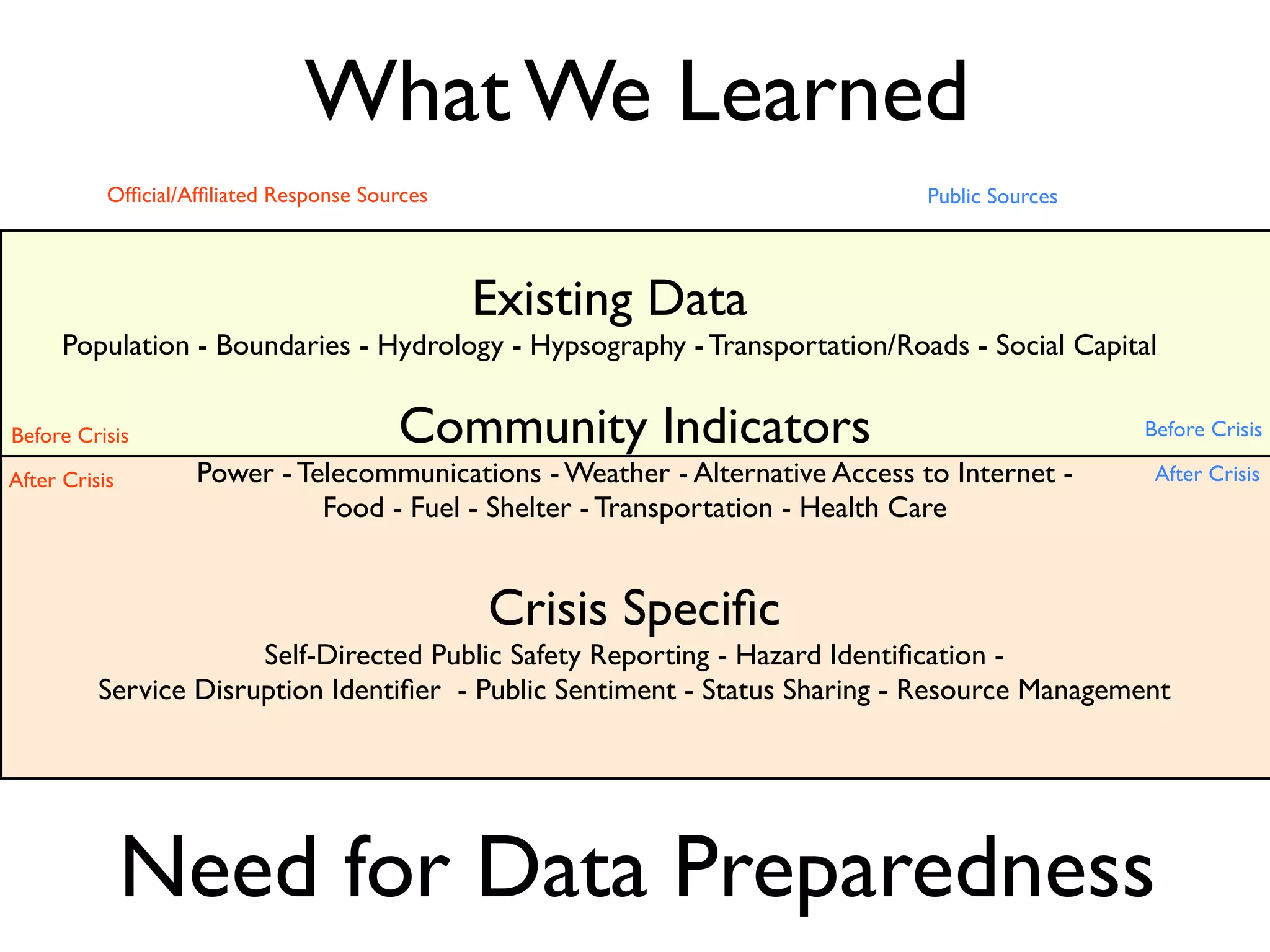
What We Learned
           Official/Affiliated Response Sources                                  Public Sources


                                                Existing Data
      Population - Boundaries - Hydrology - Hypsography - Transportation/Roads - Social Capital

Before Crisis                            Community Indicators                                   Before Crisis

After Crisis        Power - Telecommunications - Weather - Alternative Access to Internet -      After Crisis
                              Food - Fuel - Shelter - Transportation - Health Care


                                                Crisis Specific
                       Self-Directed Public Safety Reporting - Hazard Identification -
          Service Disruption Identifier - Public Sentiment - Status Sharing - Resource Management


               Need for Data Preparedness
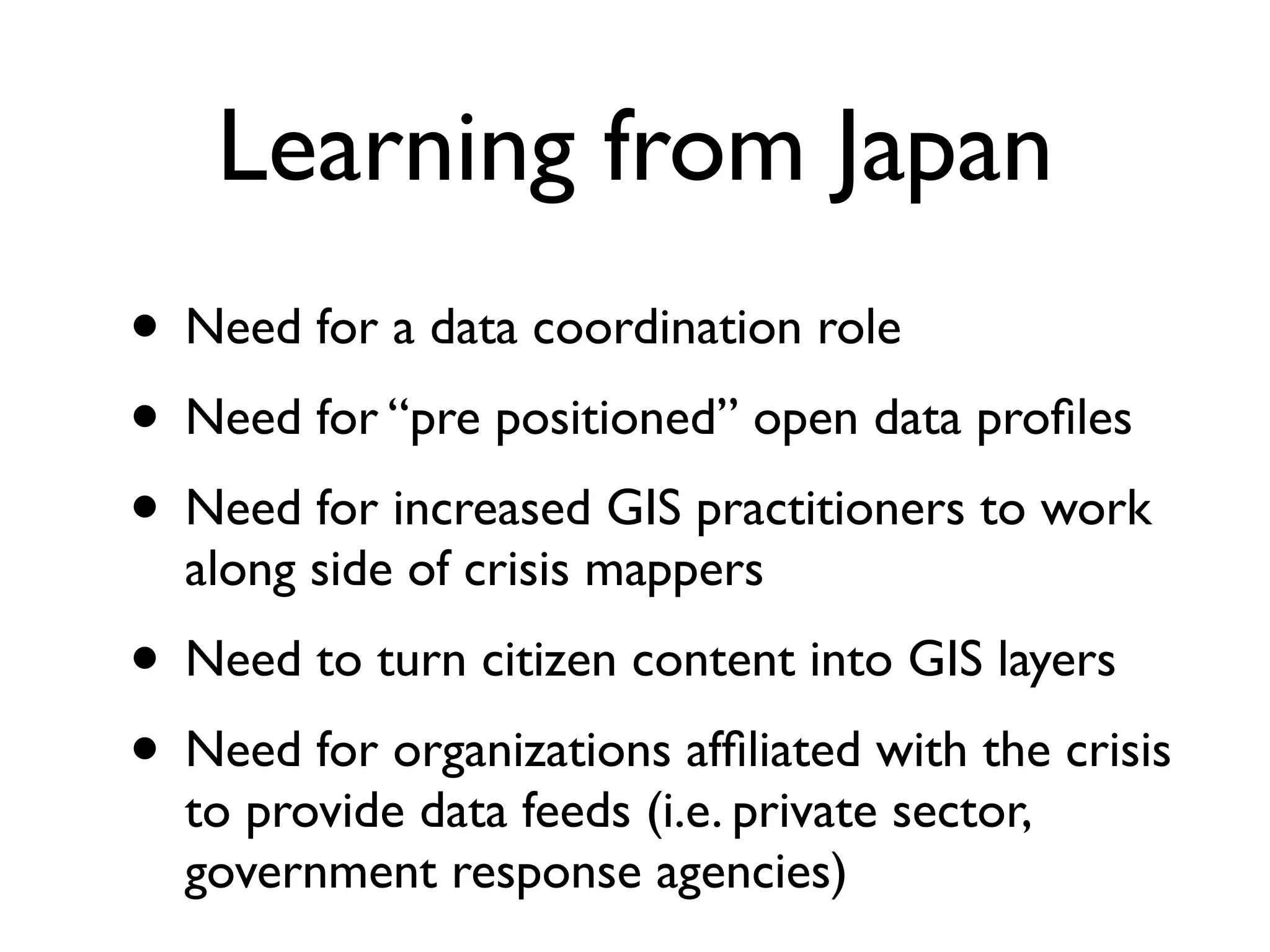
Learning from Japan
• Need for a data coordination role
• Need for “pre positioned” open data profiles
• Need for increased GIS practitioners to work
  along side of crisis mappers
• Need to turn citizen content into GIS layers
• Need for organizations affiliated with the crisis
  to provide data feeds (i.e. private sector,
  government response agencies)
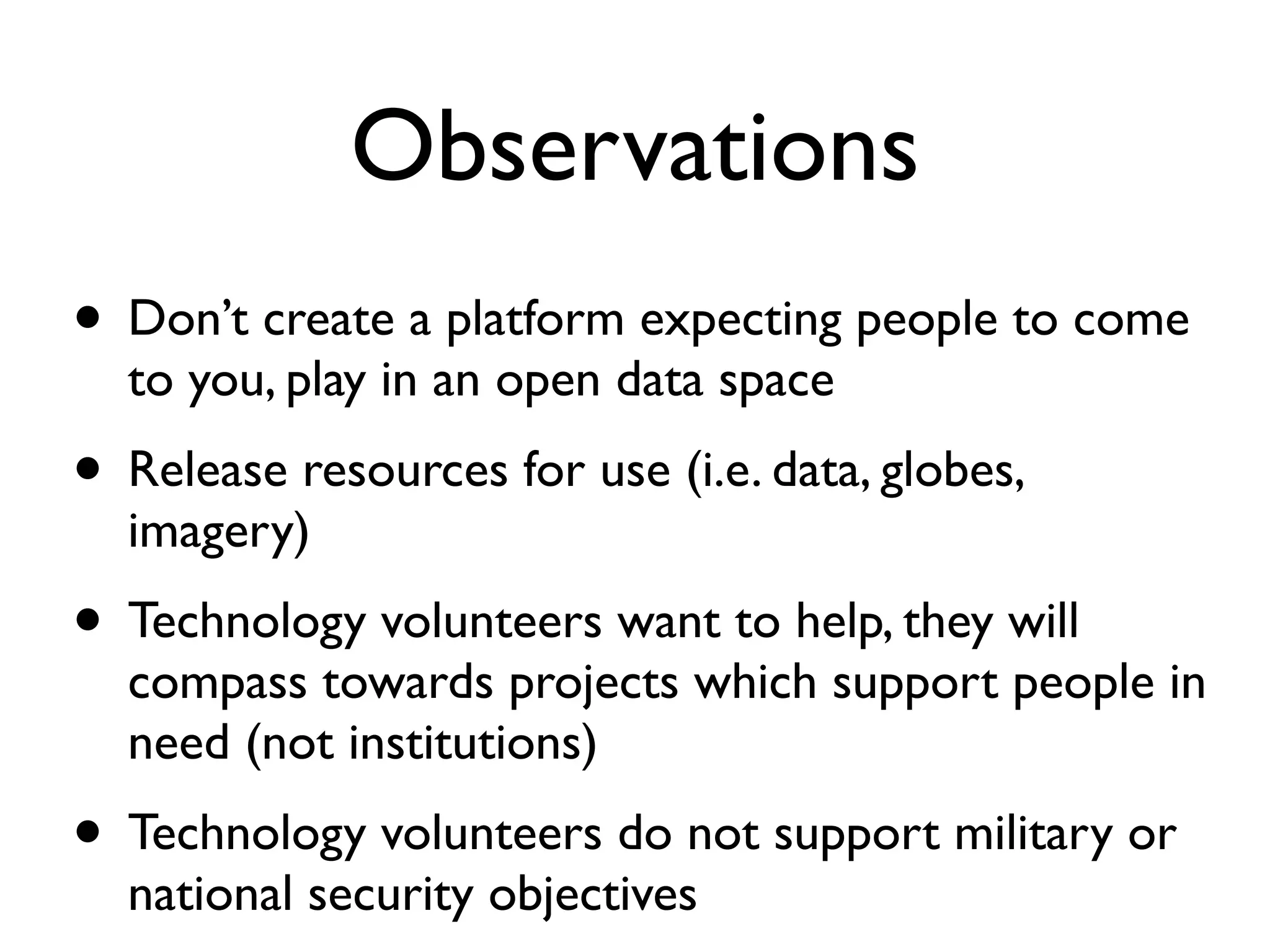
Observations
• Don’t create a platform expecting people to come
  to you, play in an open data space
• Release resources for use (i.e. data, globes,
  imagery)
• Technology volunteers want to help, they will
  compass towards projects which support people in
  need (not institutions)
• Technology volunteers do not support military or
  national security objectives
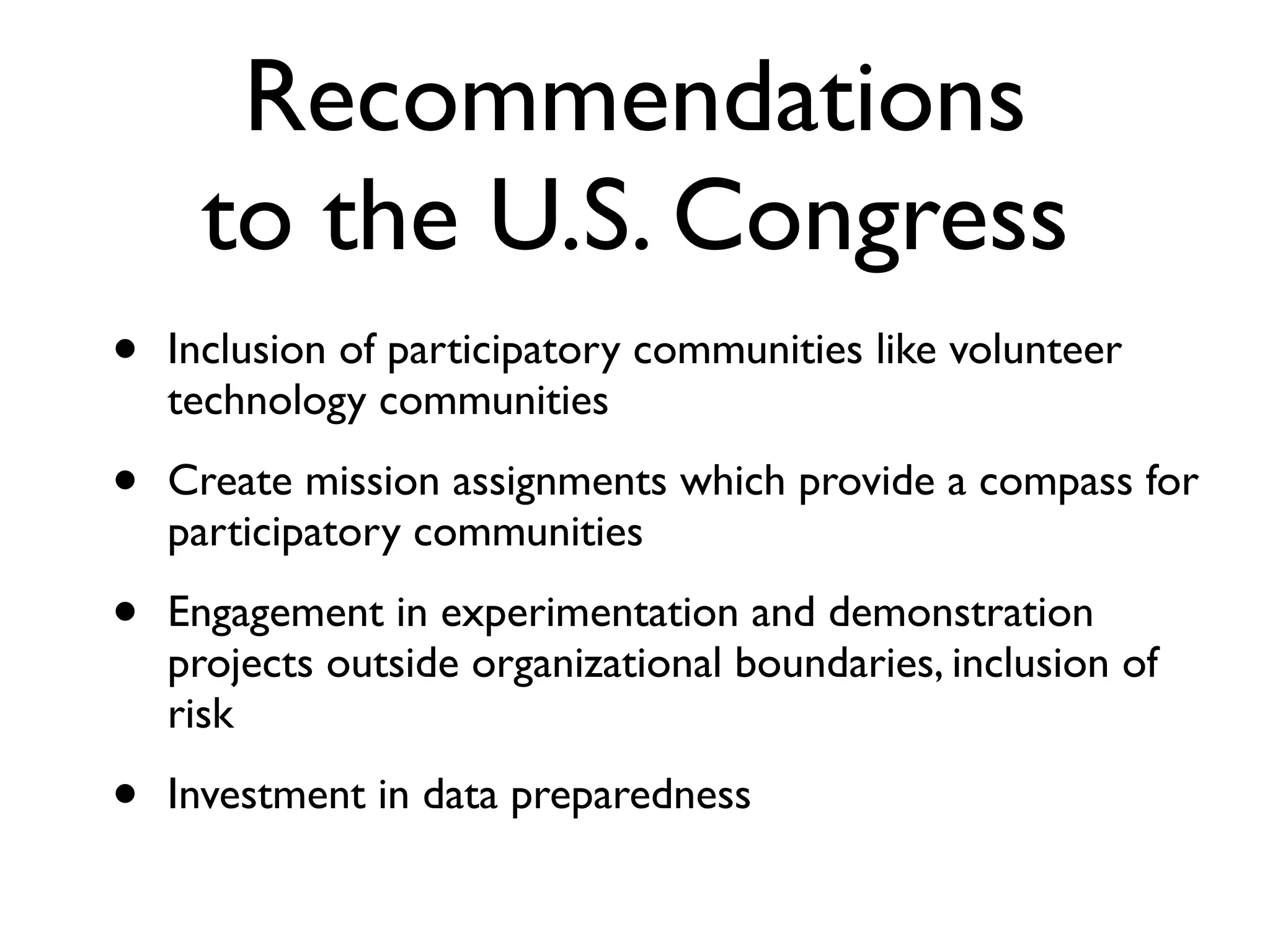
Recommendations
     to the U.S. Congress
•   Inclusion of participatory communities like volunteer
    technology communities

•   Create mission assignments which provide a compass for
    participatory communities

•   Engagement in experimentation and demonstration
    projects outside organizational boundaries, inclusion of
    risk

•   Investment in data preparedness
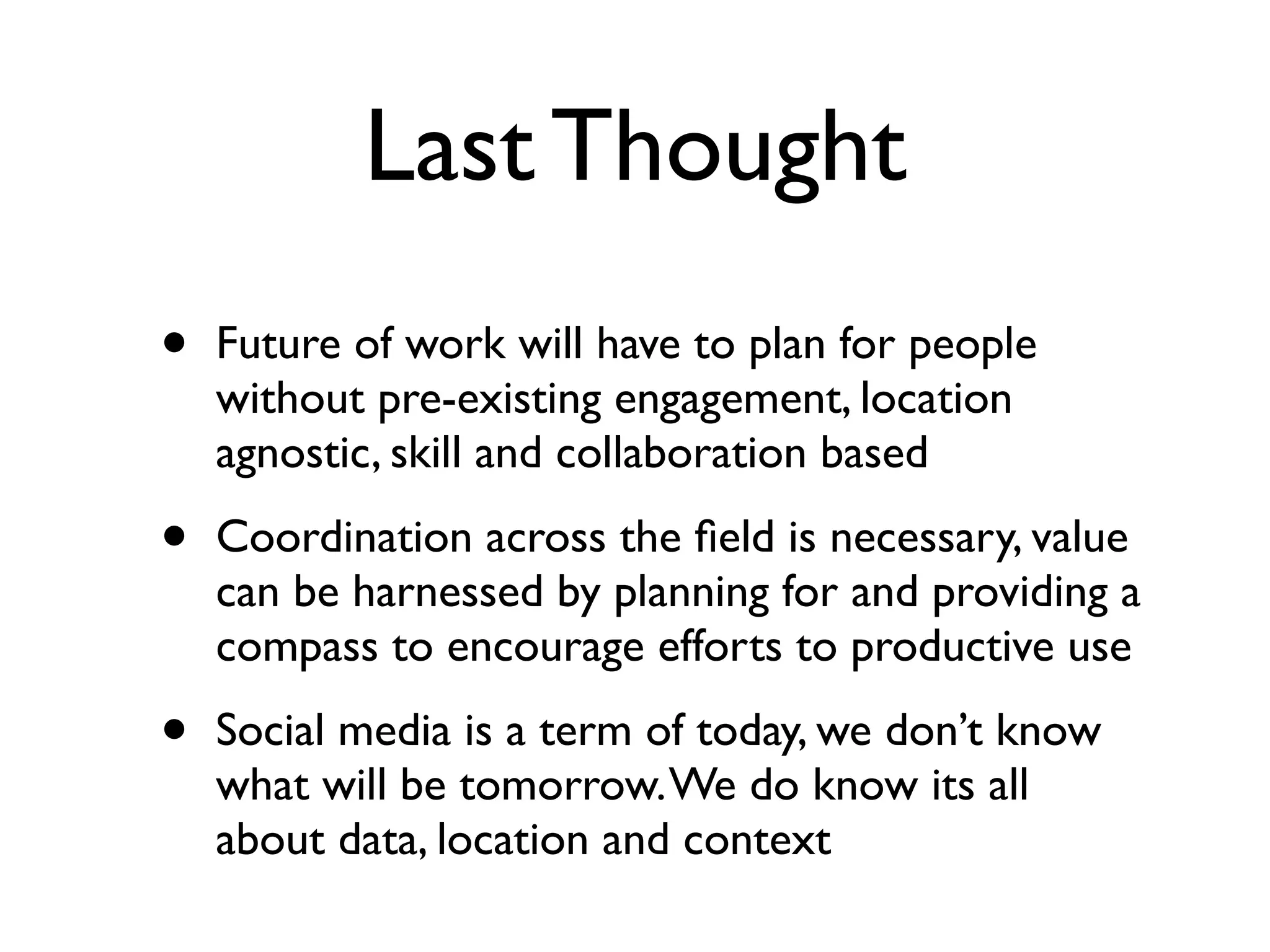
Last Thought
•   Future of work will have to plan for people
    without pre-existing engagement, location
    agnostic, skill and collaboration based

•   Coordination across the field is necessary, value
    can be harnessed by planning for and providing a
    compass to encourage efforts to productive use

•   Social media is a term of today, we don’t know
    what will be tomorrow. We do know its all
    about data, location and context
Questions?
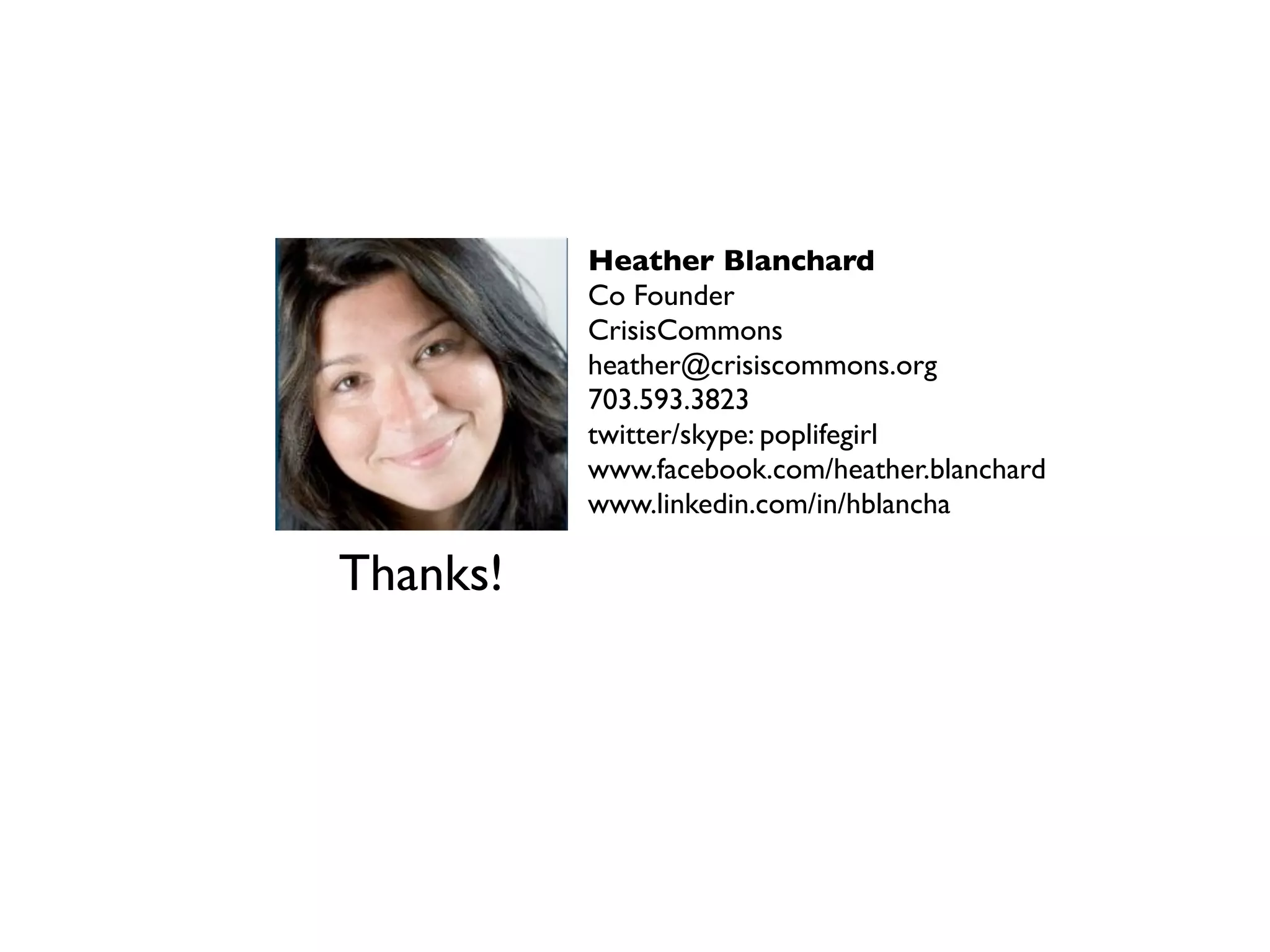
Heather Blanchard
          Co Founder
          CrisisCommons
          heather@crisiscommons.org
          703.593.3823
          twitter/skype: poplifegirl
          www.facebook.com/heather.blanchard
          www.linkedin.com/in/hblancha

Thanks!

Emergency Risk Communication

  • 1.
    Expanding Capacity andCapability: Inclusion of Participatory Culture, Technology and Open Data in Crisis Management Centers for Disease Control and Prevention Emergency Risk Communications Embedment Meeting (#cdcem #smem) June 28, 2011 Atlanta, Georgia Heather Blanchard Co Founder, CrisisCommons www.crisiscommons.org heather@crisiscommons.org Twitter/Skype: @poplifegirl Notes from Heather Blanchard: https://docs.google.com/document/d/ 1Uhm5GAV60VCxaIktE8dqrA7MR6wgKw-TN17bwfX26lI/edit?hl=en_US
  • 2.
    Participatory Culture - Future of Societal Good • People are reporting what they see and hear • People are directing resources to real or perceived needs • People are talking about or have a general view about brand/organization and the ability to “trust” your brand/ organization • Employees can be sharing what they know/see about the company knowingly or unknowingly via their friends • Technology volunteers and the public are aggregating and mapping open related to the crisis, which could include data about your company • Government at all levels are making decisions which will affect your ability to operate
  • 3.
    Right Here, RightNow Data at the Right Time and the Right Place
  • 4.
    Can’t Get There From Here • Can’t get to the data - Access, culture • Can’t use the data - Technical skill, culture • Can’t understand the data - Filtering, visualization • Can’t use data together - Data standards
  • 5.
    The New Deal •Common hub • Ubiquitous connection • Social & cultural adoption, new norms • Participatory, self organizing & contributing, reuse • Geolocation
  • 6.
    Data Everywhere. It is Here To Stay. Making Data Consumer Adoption
  • 7.
    Global Sensory Network Tap The Wisdom of Your Own People
  • 8.
    Rainbow of Sources Justin Grimes - iMLS, 2008
  • 9.
  • 10.
    CrisisCamp Haiti • Columbia Call to action; global footprint • 62 events, 8 countries, 30 cities • Low barrier to entry; replicable • 2,300+ highly skilled volunteers United Kingdom • Recognized by CROs and VTCs • Focus on mapping, missing persons, language and search Canada • Surge capacity for existing projects France
  • 11.
    What We Learned • Disasters can create opportunities for innovation, rules relax, people are willing to be open to solutions from anywhere • Disasters galvanize participatory culture = “crisis crowd” • Disasters can benefit from existing programs with training and leadership have the best change in effectively harness the emerging crisis crowd into their existing community • Disaster response requests need to originate from the local area/field
  • 12.
    Potential of Technology Volunteers •Post-Disaster Basemap: OpenStreetMap • Remote Building Assessment: GEO-CAN • Monitoring: Big Idea with the Gulf Coast Oil Spill • Crisis Content/Trends: Japan Earthquake
  • 13.
    Key is Data, Not Platform • Many emergency management/civil authorities don’t have access to tools and resources or partnerships they need to harness additional capability/capacity • Sometimes if there are resources, its limited to one person • Little focus on data preparedness; process • Focus on data (and its availability) not platforms
  • 14.
    United Nations Officefor the Coordination of Humanitarian Affairs
  • 16.
    What We Learned Official/Affiliated Response Sources Public Sources Existing Data Population - Boundaries - Hydrology - Hypsography - Transportation/Roads - Social Capital Before Crisis Community Indicators Before Crisis After Crisis Power - Telecommunications - Weather - Alternative Access to Internet - After Crisis Food - Fuel - Shelter - Transportation - Health Care Crisis Specific Self-Directed Public Safety Reporting - Hazard Identification - Service Disruption Identifier - Public Sentiment - Status Sharing - Resource Management Need for Data Preparedness
  • 17.
    Learning from Japan •Need for a data coordination role • Need for “pre positioned” open data profiles • Need for increased GIS practitioners to work along side of crisis mappers • Need to turn citizen content into GIS layers • Need for organizations affiliated with the crisis to provide data feeds (i.e. private sector, government response agencies)
  • 18.
    Observations • Don’t createa platform expecting people to come to you, play in an open data space • Release resources for use (i.e. data, globes, imagery) • Technology volunteers want to help, they will compass towards projects which support people in need (not institutions) • Technology volunteers do not support military or national security objectives
  • 19.
    Recommendations to the U.S. Congress • Inclusion of participatory communities like volunteer technology communities • Create mission assignments which provide a compass for participatory communities • Engagement in experimentation and demonstration projects outside organizational boundaries, inclusion of risk • Investment in data preparedness
  • 20.
    Last Thought • Future of work will have to plan for people without pre-existing engagement, location agnostic, skill and collaboration based • Coordination across the field is necessary, value can be harnessed by planning for and providing a compass to encourage efforts to productive use • Social media is a term of today, we don’t know what will be tomorrow. We do know its all about data, location and context
  • 21.
  • 22.
    Heather Blanchard Co Founder CrisisCommons heather@crisiscommons.org 703.593.3823 twitter/skype: poplifegirl www.facebook.com/heather.blanchard www.linkedin.com/in/hblancha Thanks!

Editor's Notes