Facilitate CBT
Training
Bread and Pastry
Production NC II
Shelamie P. Banzon
BREAD AND PASTRY PRODUCTION NC II
TVET TRAINER
Prayer
Attendance
Data Gathering
1. Learner’s
Characteristics
2. Self-Assessment
Checklist
500311105 Participate in Workplace
Communication
500311106 Work in a Team Environment
500311107 Practice Career Professionalism
500311108 Practice Occupational Health and
Safety Procedures
BASIC COMPETENCIES
COMMON
COMPETENCIES
TRS311201 Develop and Update Industry
Knowledge
TRS311202 Observe Workplace Hygiene
Procedures
TRS311203 Perform Computer Operations
TRS311204 Perform workplace and Safety
Practices
TRS311205 Provide Effective Costumer
Service
CORE COMPETENCIES
TRS741379 Prepare and Produce Bakery
Products
TRS741380 Prepare and Produce Pastry
Products
TRS741342 Prepare and Present Gateaux,
Tortes and Cakes
TRS741344 Present and Display Petits fours
TRS741343 Present Desserts
CBT
• is an approach to teaching and
learning more often used in
learning concrete skills than
abstract learning. It differs from
other non-related approaches in
that the unit of learning is
extremely fine grained.
The training is based on curriculum developed from the
competency standard.
Learning is competency-based or modular in structure.
Training delivery is individualized and self-paced.
Training is based on work that must be performed.
Training materials are directly related to the competency
standards and the curriculum.
Assessment of learners is based in the collection of
evidences of work performance based on industry or
organizational required standards.
Training is based both on and off the job components.
The system allows Recognition of Prior Learning (RPL).
The system allows for the learners to enter and exit
programs at different times and levels and to receive an
award for competencies at any point.
Approved training programs are nationally accredited.
 Serves as a team member to determine what is to be learned
 Stimulates trainees’ motivation.
 Manages learning: a consultation rather than a provider of information; a
facilitator of the of the facilitator of the learning
 Diagnose and solves learning problems
 Evaluates student achievement
 Assist learners to obtain individualized rewards
 Assist each trainee in designing a personalized plan of study.
 Installs confidence in the learner by providing experiences where learners
may succeed
 Serves as a model for desirable work habits, attitudes and tasks
performance in the occupational field
 Spends more time interacting with students on a 1:1 or small group basis
 Helps those students who really need help
 Accepts responsibility along with the student for the tasks learned or not
learned.
o Trainees may select what they want to learn and when they want to learn it, within reason.
o Trainees learn at their own rate within program guidelines. They may speed up, slow down,
stop or even repeat a task.
o Trainees may request to receive credit for what they already know. This is done either through
pre-testing or through a review o a task list completed at another training site.
o Trainees may choose how they want to learn-individually, on a one-to-one basis, in small group,
in large groups or with audio-visuals.
o Trainees are responsible for what they learn and when they learn it.
o Trainees decide when they are ready to perform each task or demonstrate mastery of learning
to a job-like level of proficiency before receiving credit for the task.
o Trainees help develop personalized prescription for learning worked out cooperatively and
based upon what the students already knows, his preference for learning, learning style and
other needs.
o Trainees compete against press job standards and not against other students and are graded
on achievement of the standards or criteria of each task.
o Trainees know “up front”, before instruction begins what they are expected to know and do to
complete the program.
o Trainees evaluate their own progress to see how well they are doing.
o Trainees move freely in the workshop, laboratory and or training center.
o Trainees know they will be rated mainly on performance, while paper and pencil tests will be
used mainly to check their knowledge of the task.
o Trainees learn according to their interest, needs and abilities–not according to teacher timelines
and expediency.
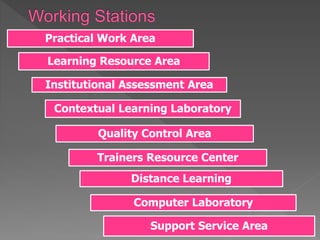
Practical Work Area
Learning Resource Area
Institutional Assessment Area
Contextual Learning Laboratory
Quality Control Area
Trainers Resource Center
Distance Learning
Computer Laboratory
Support Service Area
Venus Hera Athena B. Lee
Bread and Pastry Production NC II
BPP NC II.pptx
BPP NC II.pptx
BPP NC II.pptx

BPP NC II.pptx

  • 2.
    Facilitate CBT Training Bread andPastry Production NC II
  • 3.
    Shelamie P. Banzon BREADAND PASTRY PRODUCTION NC II TVET TRAINER
  • 4.
  • 5.
  • 6.
  • 8.
    500311105 Participate inWorkplace Communication 500311106 Work in a Team Environment 500311107 Practice Career Professionalism 500311108 Practice Occupational Health and Safety Procedures BASIC COMPETENCIES
  • 9.
    COMMON COMPETENCIES TRS311201 Develop andUpdate Industry Knowledge TRS311202 Observe Workplace Hygiene Procedures TRS311203 Perform Computer Operations TRS311204 Perform workplace and Safety Practices TRS311205 Provide Effective Costumer Service
  • 10.
    CORE COMPETENCIES TRS741379 Prepareand Produce Bakery Products TRS741380 Prepare and Produce Pastry Products TRS741342 Prepare and Present Gateaux, Tortes and Cakes TRS741344 Present and Display Petits fours TRS741343 Present Desserts
  • 11.
    CBT • is anapproach to teaching and learning more often used in learning concrete skills than abstract learning. It differs from other non-related approaches in that the unit of learning is extremely fine grained.
  • 13.
    The training isbased on curriculum developed from the competency standard. Learning is competency-based or modular in structure. Training delivery is individualized and self-paced. Training is based on work that must be performed. Training materials are directly related to the competency standards and the curriculum. Assessment of learners is based in the collection of evidences of work performance based on industry or organizational required standards. Training is based both on and off the job components. The system allows Recognition of Prior Learning (RPL). The system allows for the learners to enter and exit programs at different times and levels and to receive an award for competencies at any point. Approved training programs are nationally accredited.
  • 14.
     Serves asa team member to determine what is to be learned  Stimulates trainees’ motivation.  Manages learning: a consultation rather than a provider of information; a facilitator of the of the facilitator of the learning  Diagnose and solves learning problems  Evaluates student achievement  Assist learners to obtain individualized rewards  Assist each trainee in designing a personalized plan of study.  Installs confidence in the learner by providing experiences where learners may succeed  Serves as a model for desirable work habits, attitudes and tasks performance in the occupational field  Spends more time interacting with students on a 1:1 or small group basis  Helps those students who really need help  Accepts responsibility along with the student for the tasks learned or not learned.
  • 15.
    o Trainees mayselect what they want to learn and when they want to learn it, within reason. o Trainees learn at their own rate within program guidelines. They may speed up, slow down, stop or even repeat a task. o Trainees may request to receive credit for what they already know. This is done either through pre-testing or through a review o a task list completed at another training site. o Trainees may choose how they want to learn-individually, on a one-to-one basis, in small group, in large groups or with audio-visuals. o Trainees are responsible for what they learn and when they learn it. o Trainees decide when they are ready to perform each task or demonstrate mastery of learning to a job-like level of proficiency before receiving credit for the task. o Trainees help develop personalized prescription for learning worked out cooperatively and based upon what the students already knows, his preference for learning, learning style and other needs. o Trainees compete against press job standards and not against other students and are graded on achievement of the standards or criteria of each task. o Trainees know “up front”, before instruction begins what they are expected to know and do to complete the program. o Trainees evaluate their own progress to see how well they are doing. o Trainees move freely in the workshop, laboratory and or training center. o Trainees know they will be rated mainly on performance, while paper and pencil tests will be used mainly to check their knowledge of the task. o Trainees learn according to their interest, needs and abilities–not according to teacher timelines and expediency.
  • 20.
    Practical Work Area LearningResource Area Institutional Assessment Area Contextual Learning Laboratory Quality Control Area Trainers Resource Center Distance Learning Computer Laboratory Support Service Area
  • 35.
    Venus Hera AthenaB. Lee Bread and Pastry Production NC II

Editor's Notes