Bots Don’t Buy:
How to Create Facebook
Ads for Humans, Not Bots
Ashley Ward
Corporate Speaker & Evangelist @ SEMrush
Previous Social Media Agency Owner
Facebook Advertiser
Content Marketing Specialist
If We’re Selling to Humans, Why Do We Write Like Advertisers?
Let’s Start With the Bots
Even though we want to create ads made for humans, and not
bots, we still need to know how the bots work.. aka the
Facebook Algorithm
@AshleyMadhatter
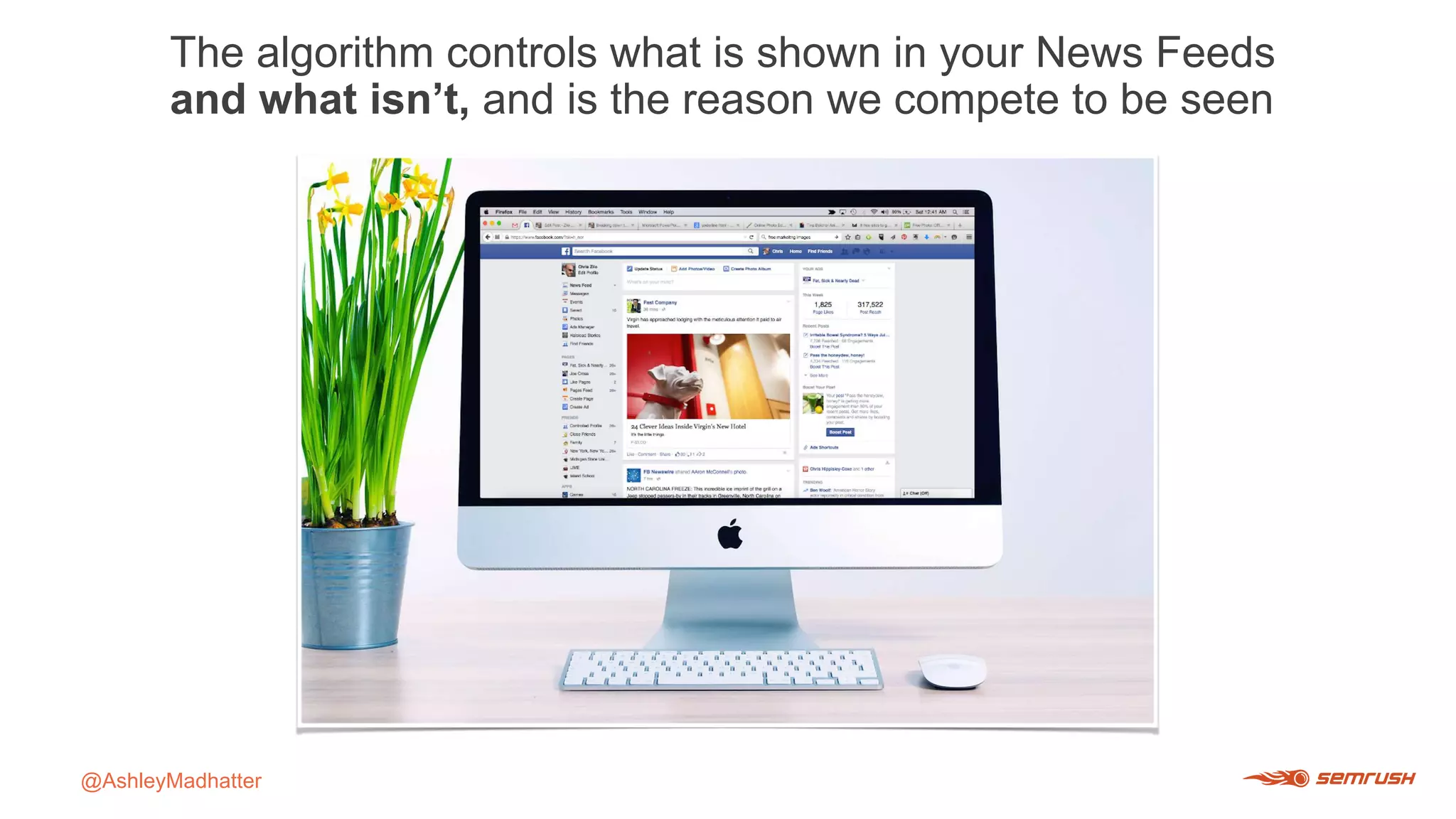
The algorithm controls what is shown in your News Feeds
and what isn’t, and is the reason we compete to be seen
@AshleyMadhatter
7
News Feed
Dissection
@AshleyMadhatter
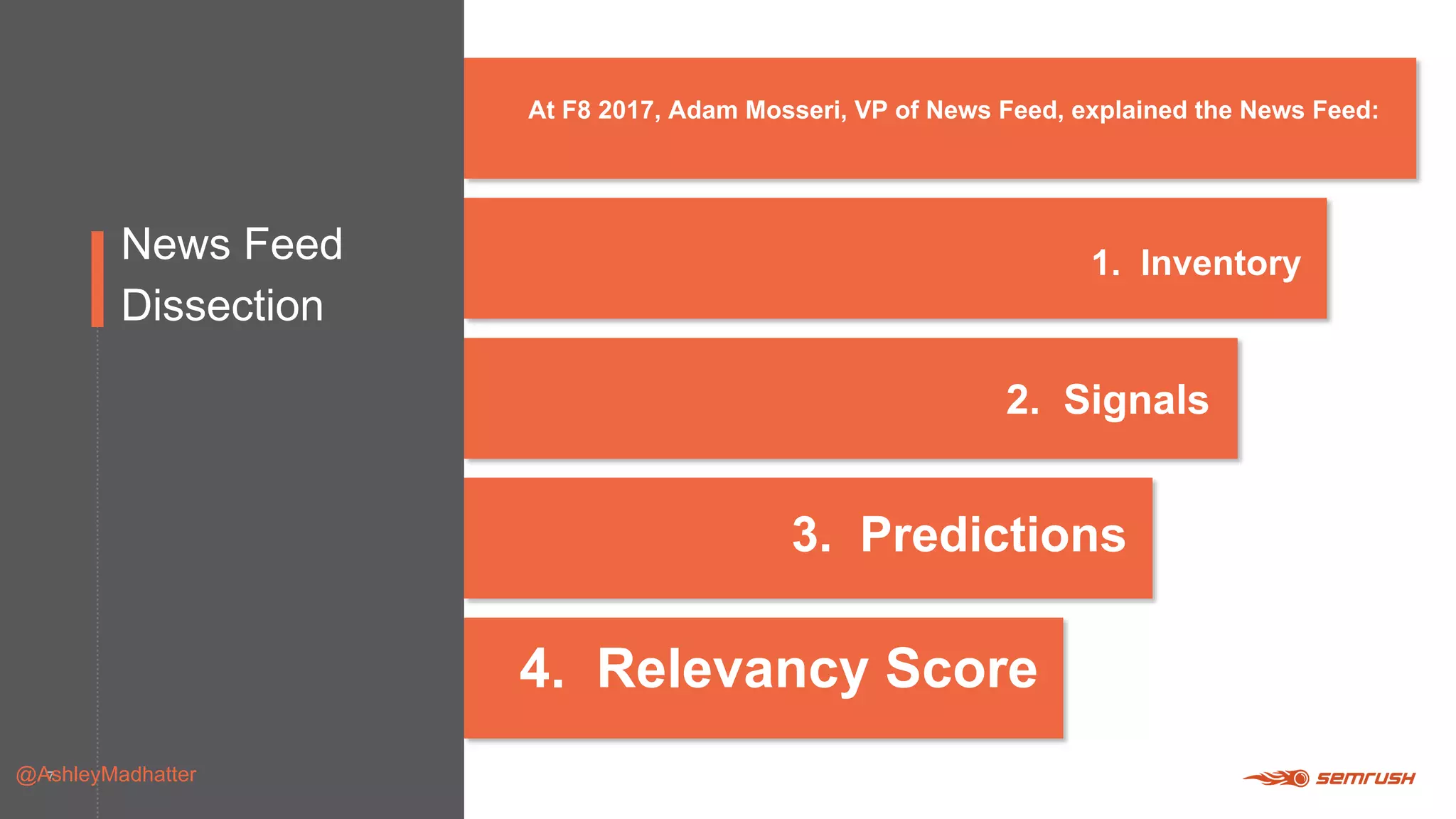
At F8 2017, Adam Mosseri, VP of News Feed, explained the News Feed:
1. Inventory
2. Signals
3. Predictions
4. Relevancy Score
0 Relevancy Means Your Post is Not Worthy to Be Shown
@AshleyMadhatter
@AshleyMadhatter
We need to create advertisements with a
relevancy score of 7 or higher
So, if Facebook Has Everything Figured Out w/Scoring
Why Should We Care About the Human Aspect?
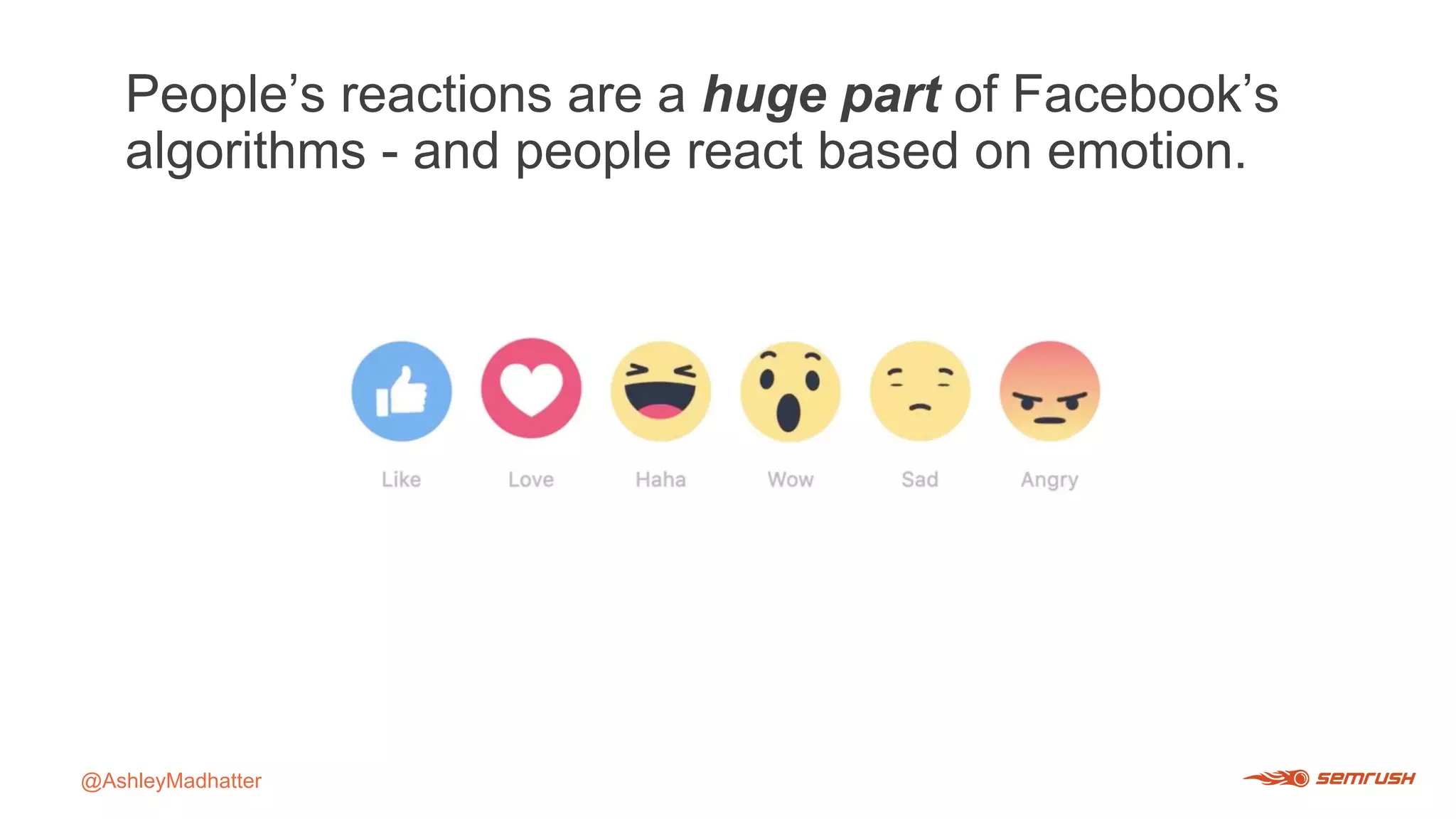
People’s reactions are a huge part of Facebook’s
algorithms - and people react based on emotion.
@AshleyMadhatter
@AshleyMadhatter
Ads that generated an emotional response saw a 23% lift
in sales volume according to a 2016 Nielson report
Satisfy Both
Humans and
Bots
@AshleyMadhatter
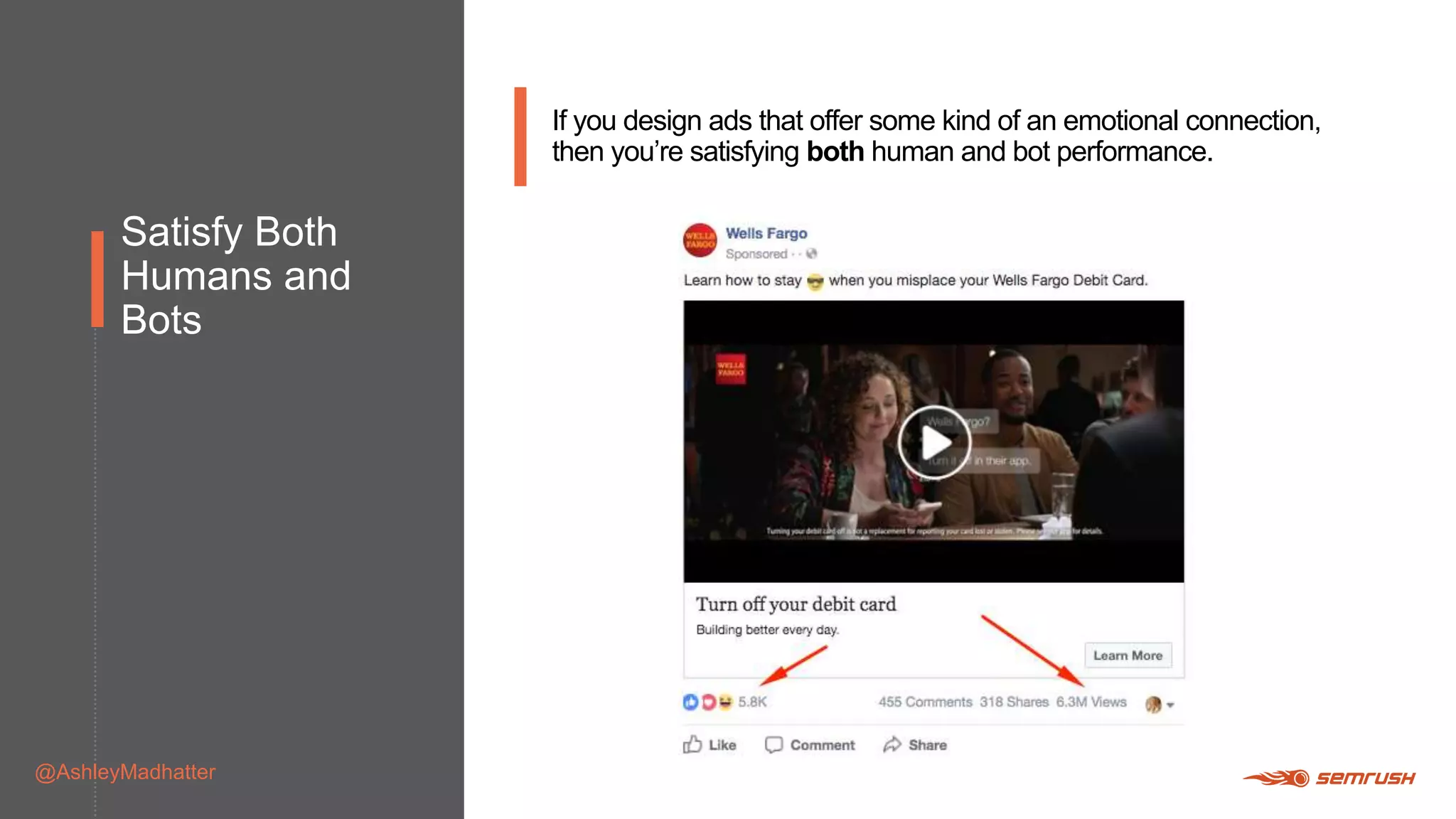
If you design ads that offer some kind of an emotional connection,
then you’re satisfying both human and bot performance.
Let’s Look at an Example of This…
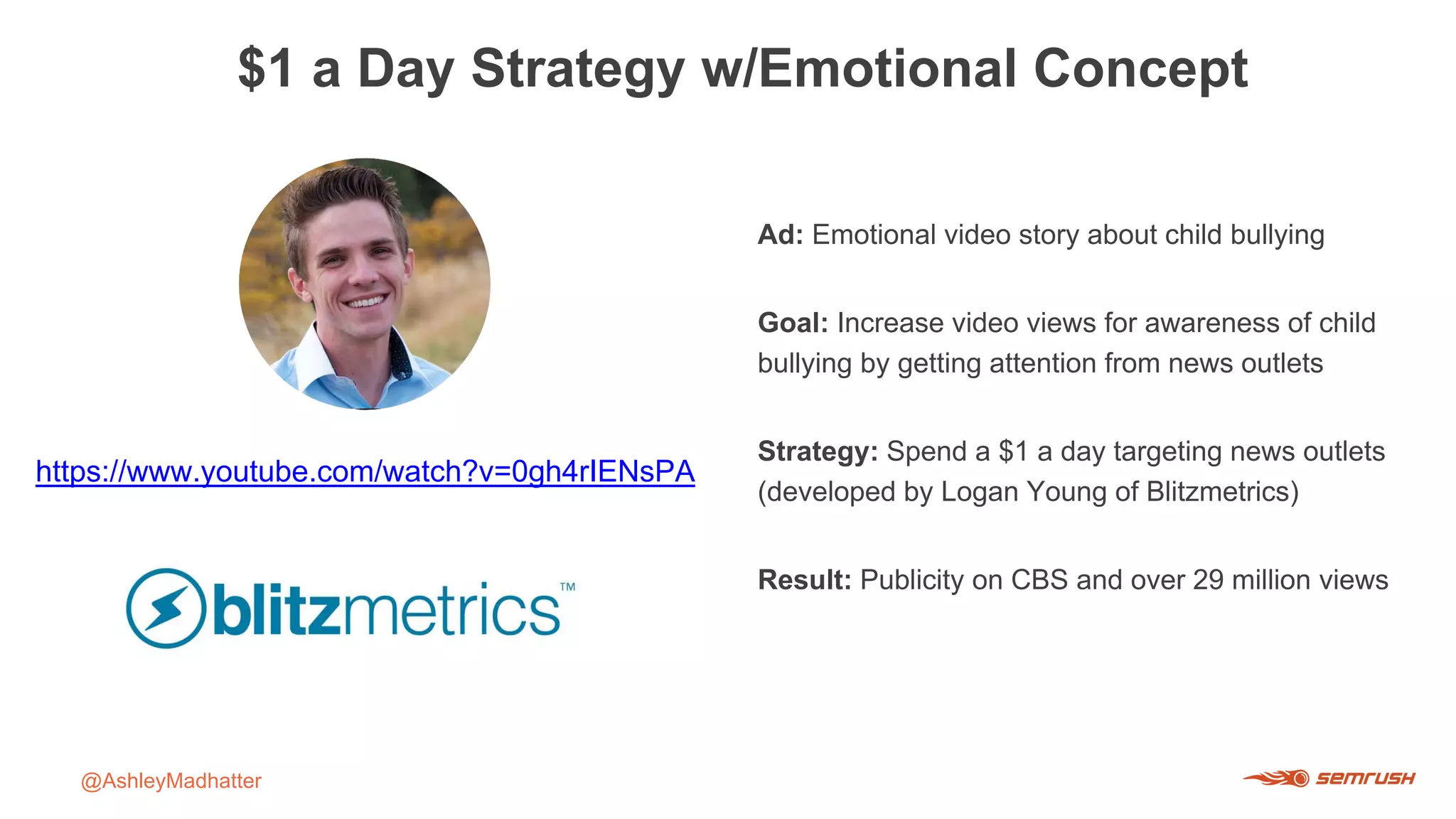
$1 a Day Strategy w/Emotional Concept
@AshleyMadhatter
https://www.youtube.com/watch?v=0gh4rIENsPA
Ad: Emotional video story about child bullying
Goal: Increase video views for awareness of child
bullying by getting attention from news outlets
Strategy: Spend a $1 a day targeting news outlets
(developed by Logan Young of Blitzmetrics)
Result: Publicity on CBS and over 29 million views
Know Your
Human
@AshleyMadhatter
How Can We Mimic This and Tap into The Human Connection
with Facebook Ads?
Let’s Break Apart the Basics… #1 Targeting
Targeting
@AshleyMadhatter
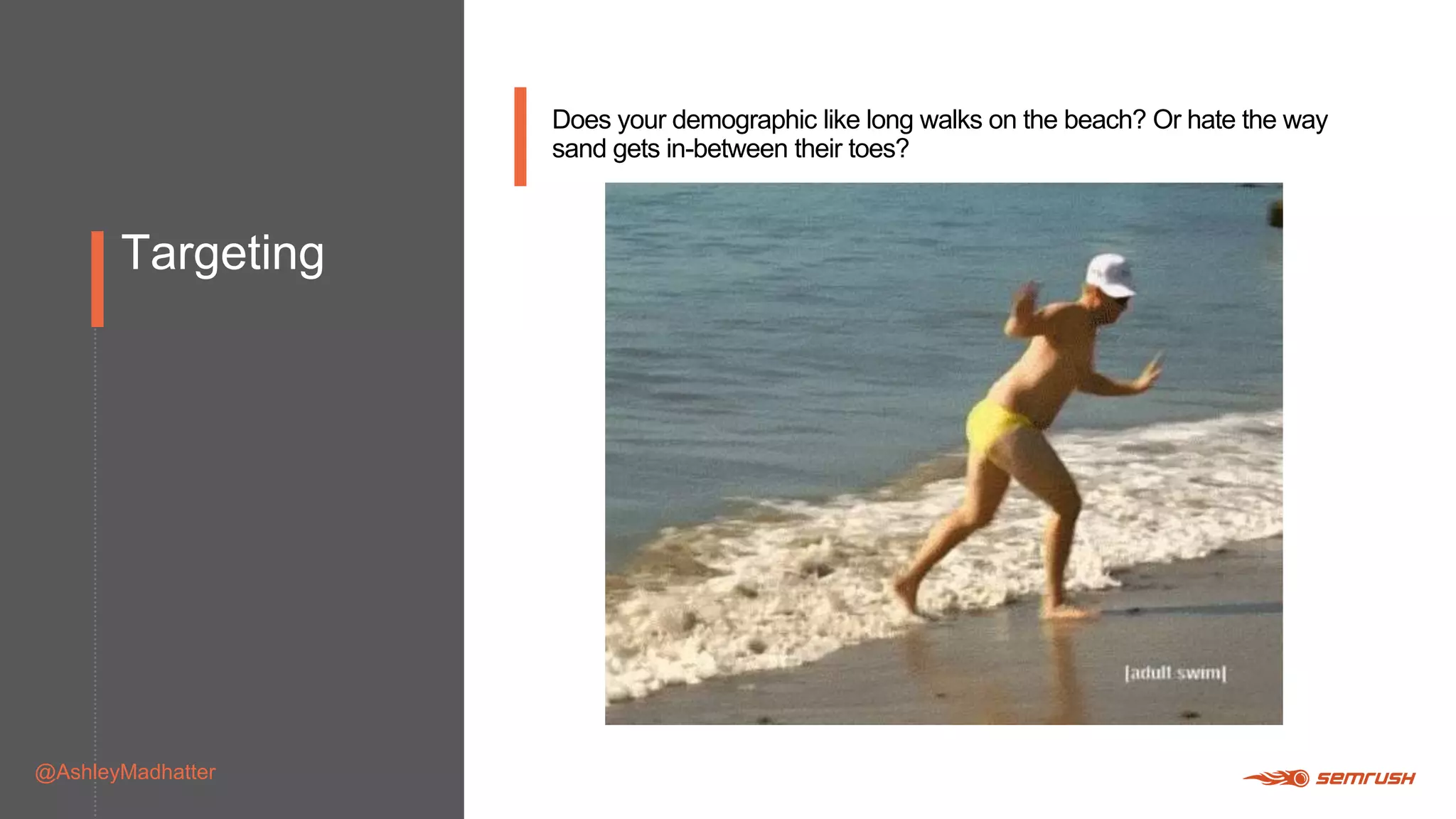
Does your demographic like long walks on the beach? Or hate the way
sand gets in-between their toes?
Targeting
@AshleyMadhatter
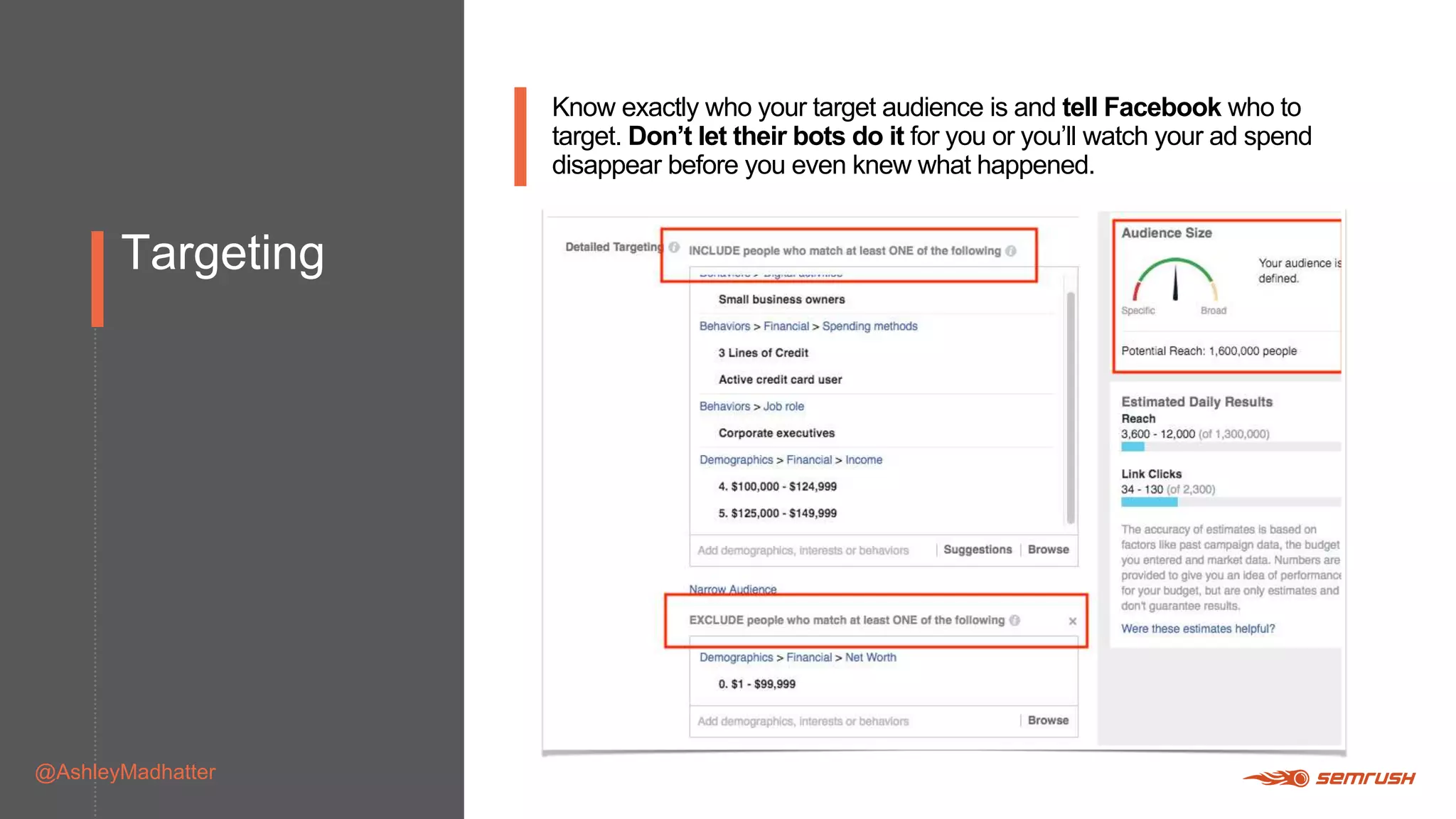
Know exactly who your target audience is and tell Facebook who to
target. Don’t let their bots do it for you or you’ll watch your ad spend
disappear before you even knew what happened.
Targeting
@AshleyMadhatter
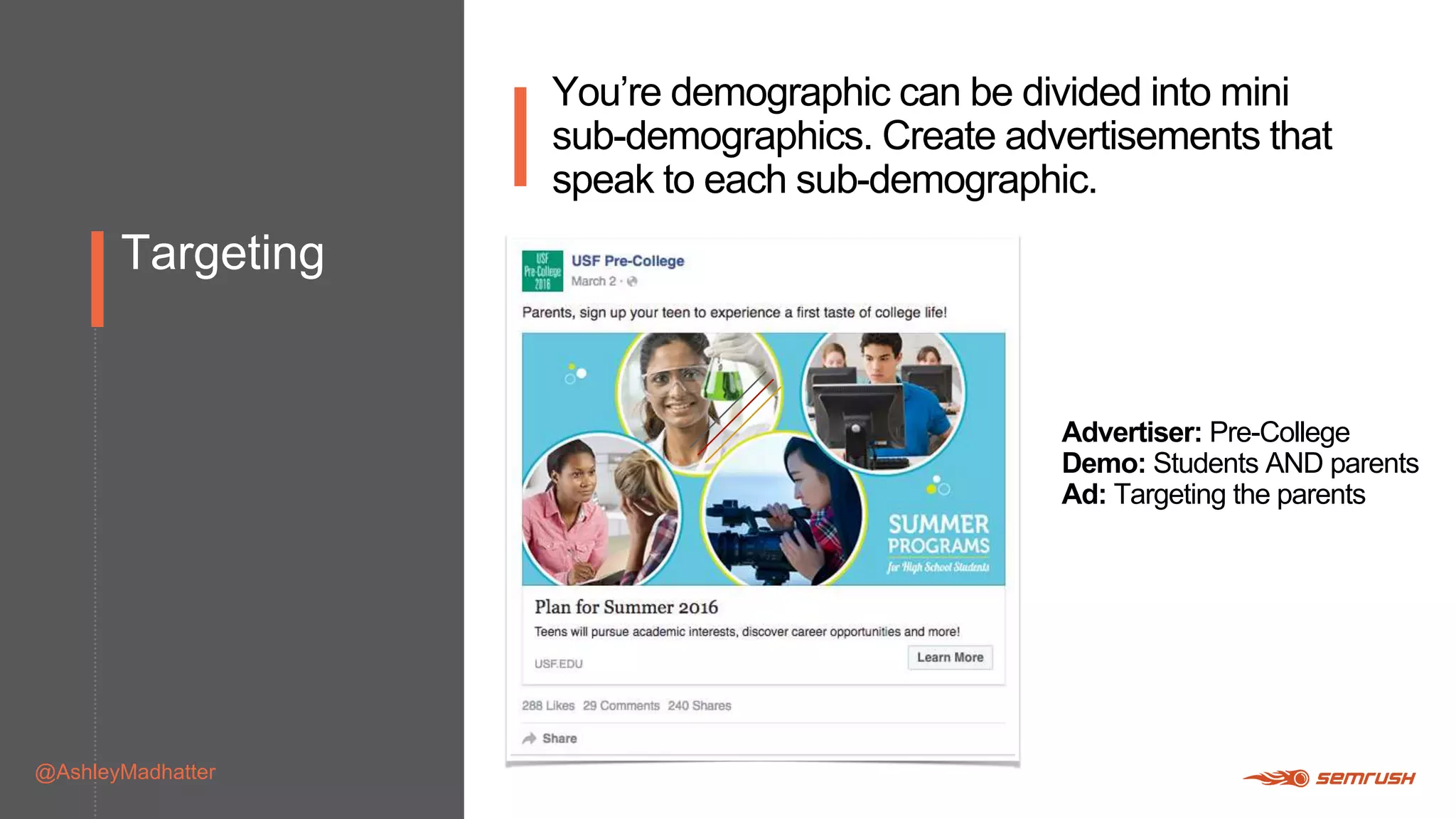
You’re demographic can be divided into mini
sub-demographics. Create advertisements that
speak to each sub-demographic.
Advertiser: Pre-College
Demo: Students AND parents
Ad: Targeting the parents
Location
Location
@AshleyMadhatter
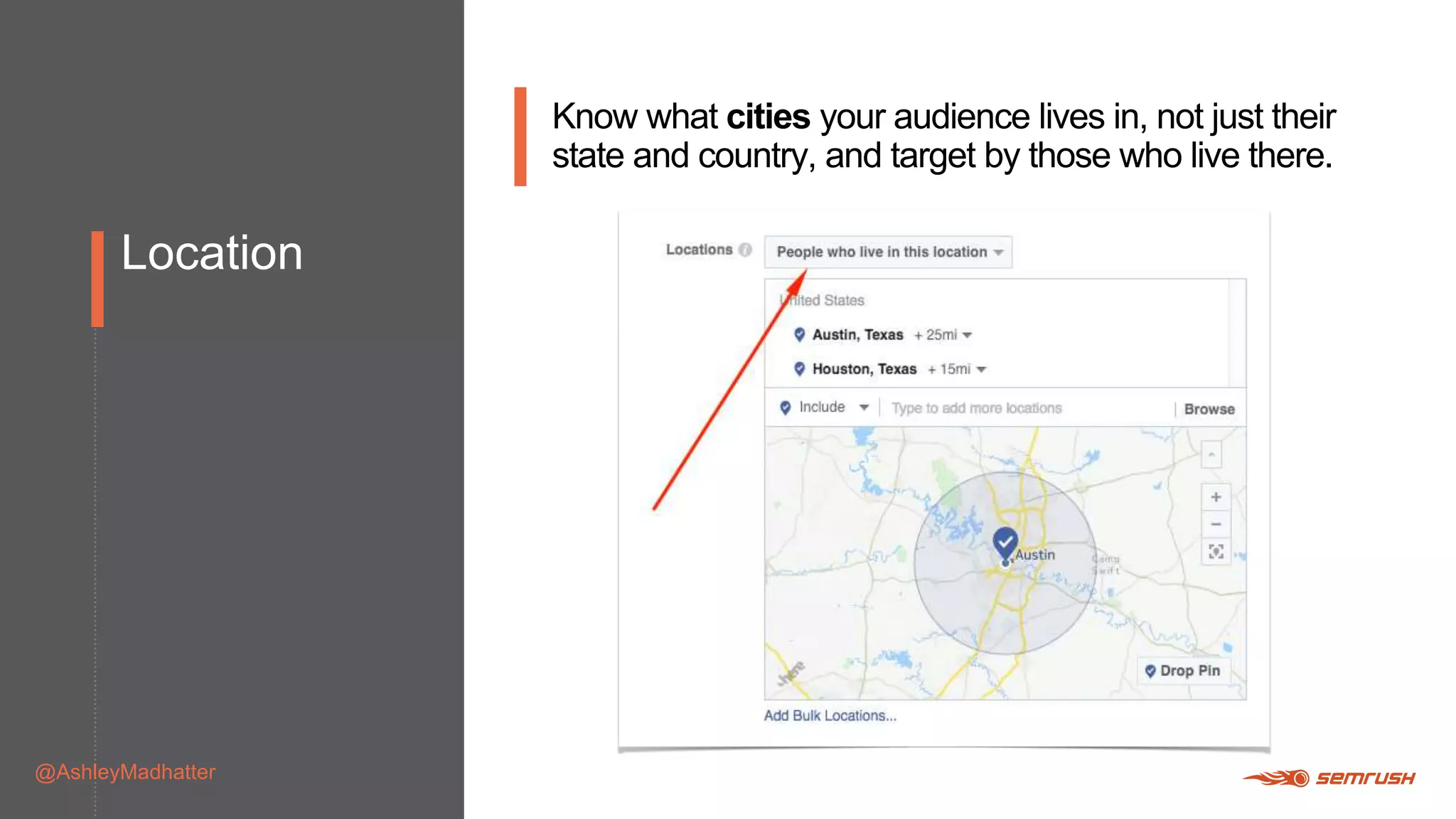
Know what cities your audience lives in, not just their
state and country, and target by those who live there.
Location
@AshleyMadhatter
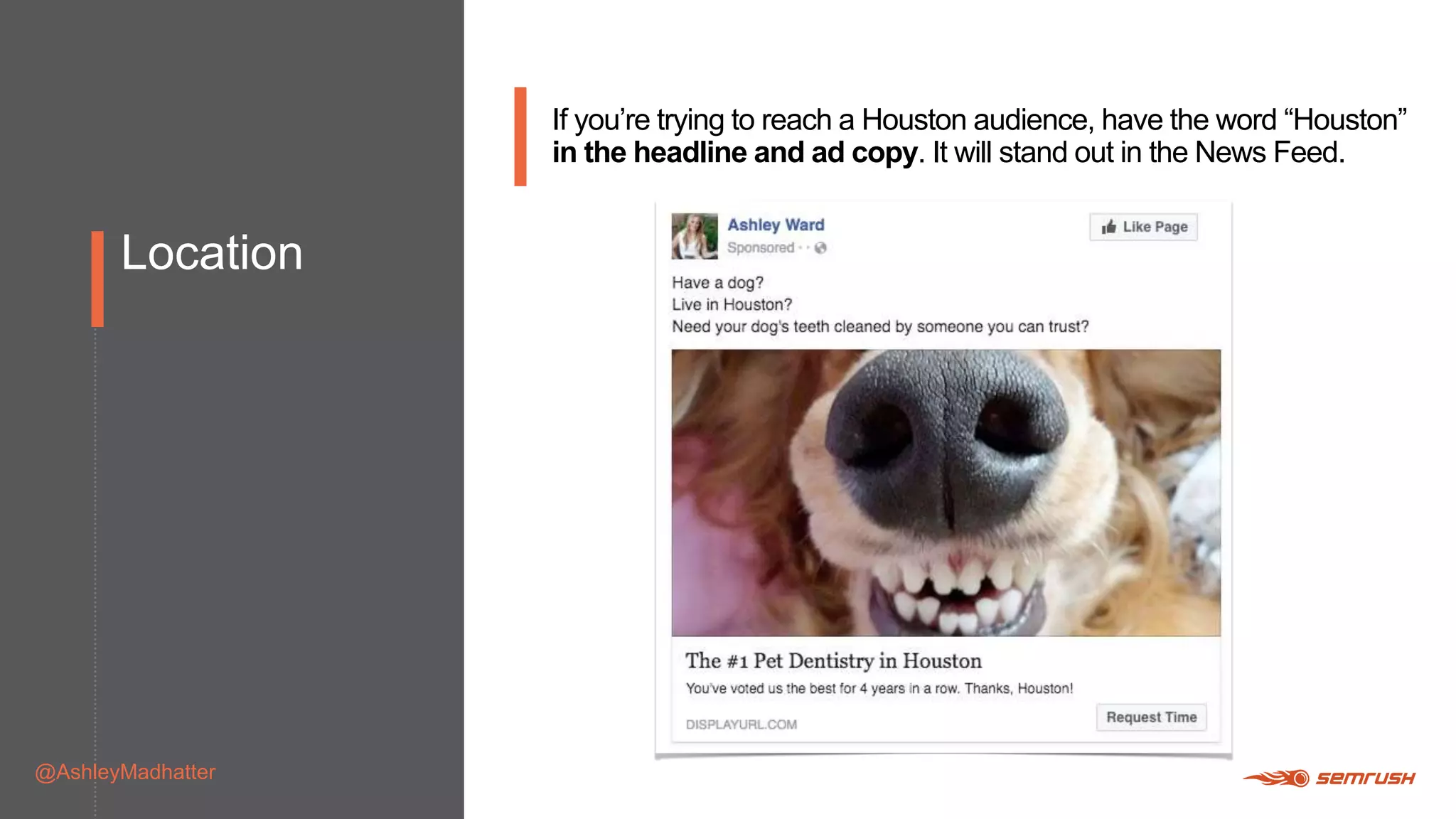
If you’re trying to reach a Houston audience, have the word “Houston”
in the headline and ad copy. It will stand out in the News Feed.
Content Relevancy
Content
Relevancy
@AshleyMadhatter
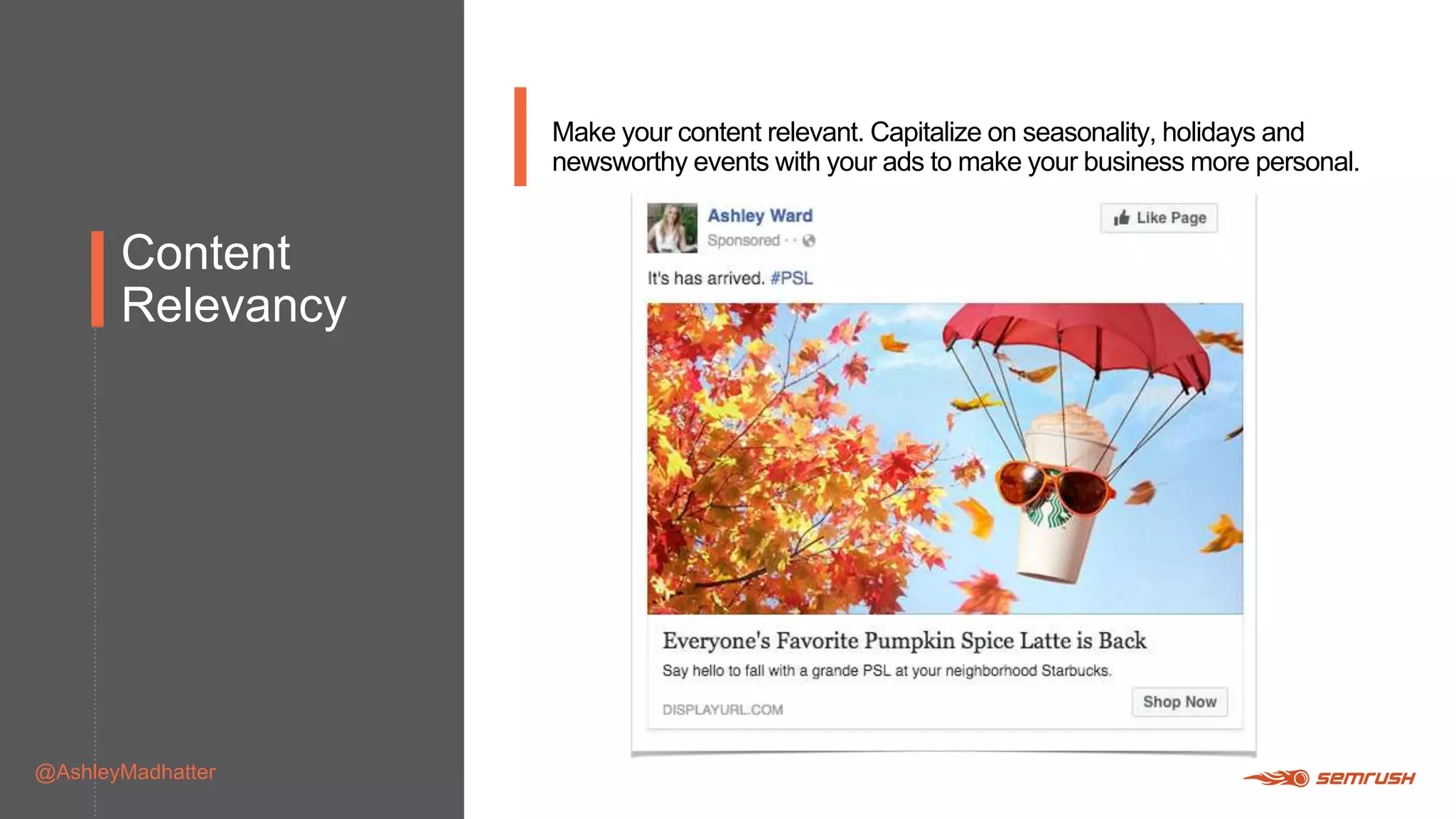
Make your content relevant. Capitalize on seasonality, holidays and
newsworthy events with your ads to make your business more personal.
Emotional Connections ;) :) :( >.<
Emotional
Connections
@AshleyMadhatter
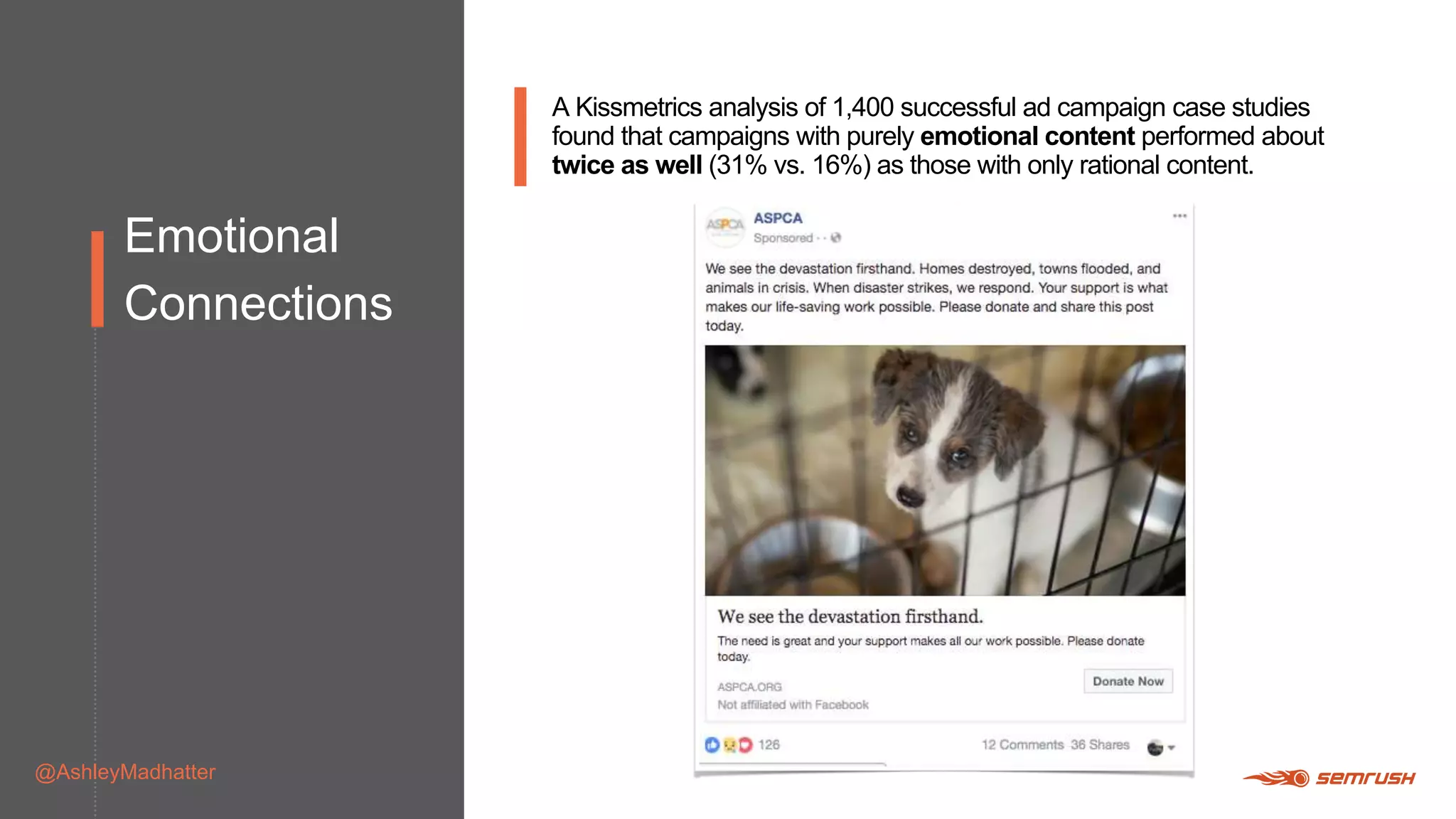
A Kissmetrics analysis of 1,400 successful ad campaign case studies
found that campaigns with purely emotional content performed about
twice as well (31% vs. 16%) as those with only rational content.
Emotional
Connections
@AshleyMadhatter
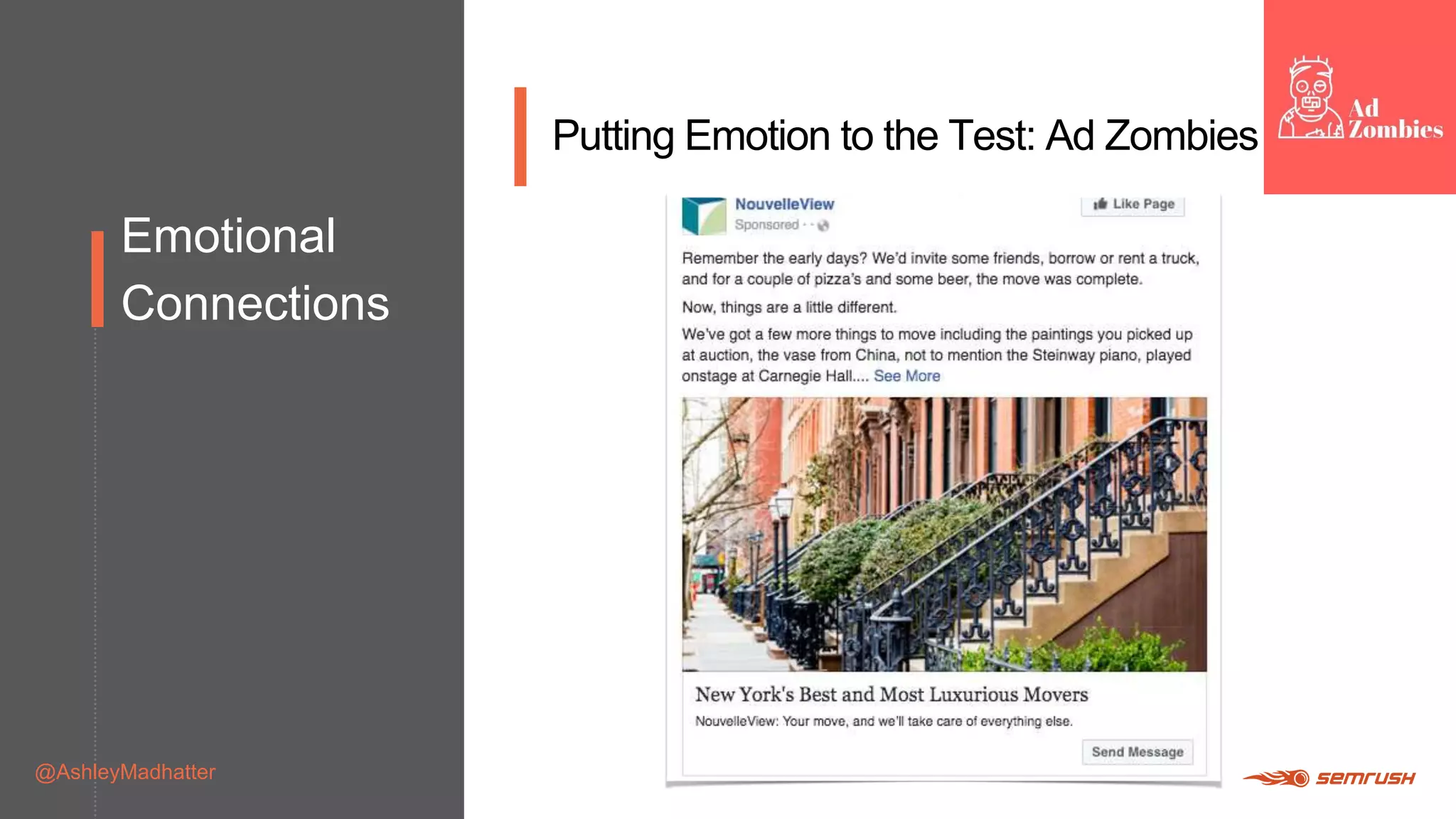
Putting Emotion to the Test: Ad Zombies
7 Key Takeaways (get your notes ready)
@AshleyMadhatter
Draw people in through positive emotions.
They work much better than the more dramatic
emotions like anger, sadness.
1.
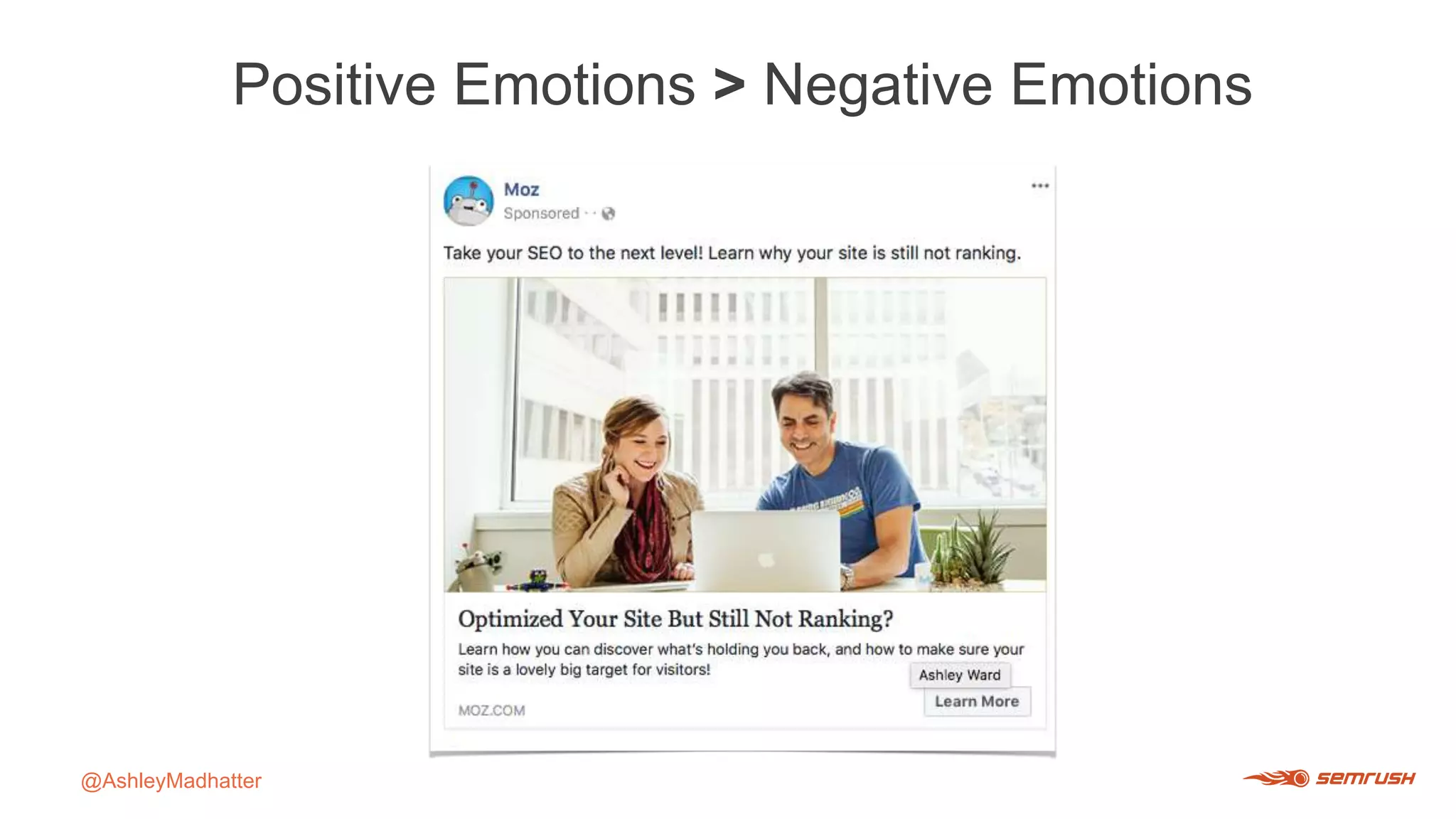
Positive Emotions > Negative Emotions
@AshleyMadhatter
@AshleyMadhatter
Another great emotion to play on is FOMO.
Add a deadline, almost sold out, tag a friend, to your copy.
2.
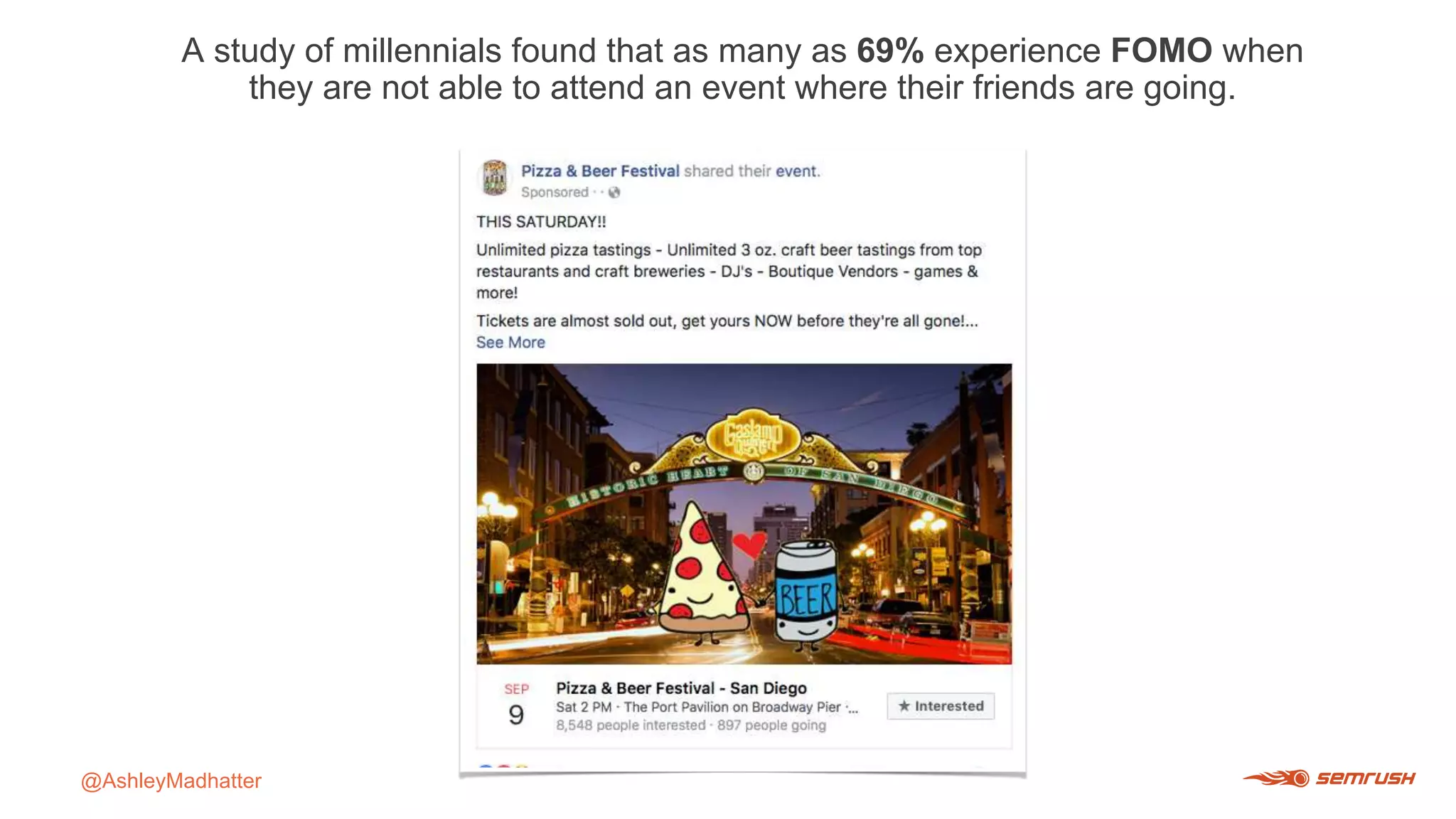
A study of millennials found that as many as 69% experience FOMO when
they are not able to attend an event where their friends are going.
@AshleyMadhatter
@AshleyMadhatter
Avoid using the color blue.
3.
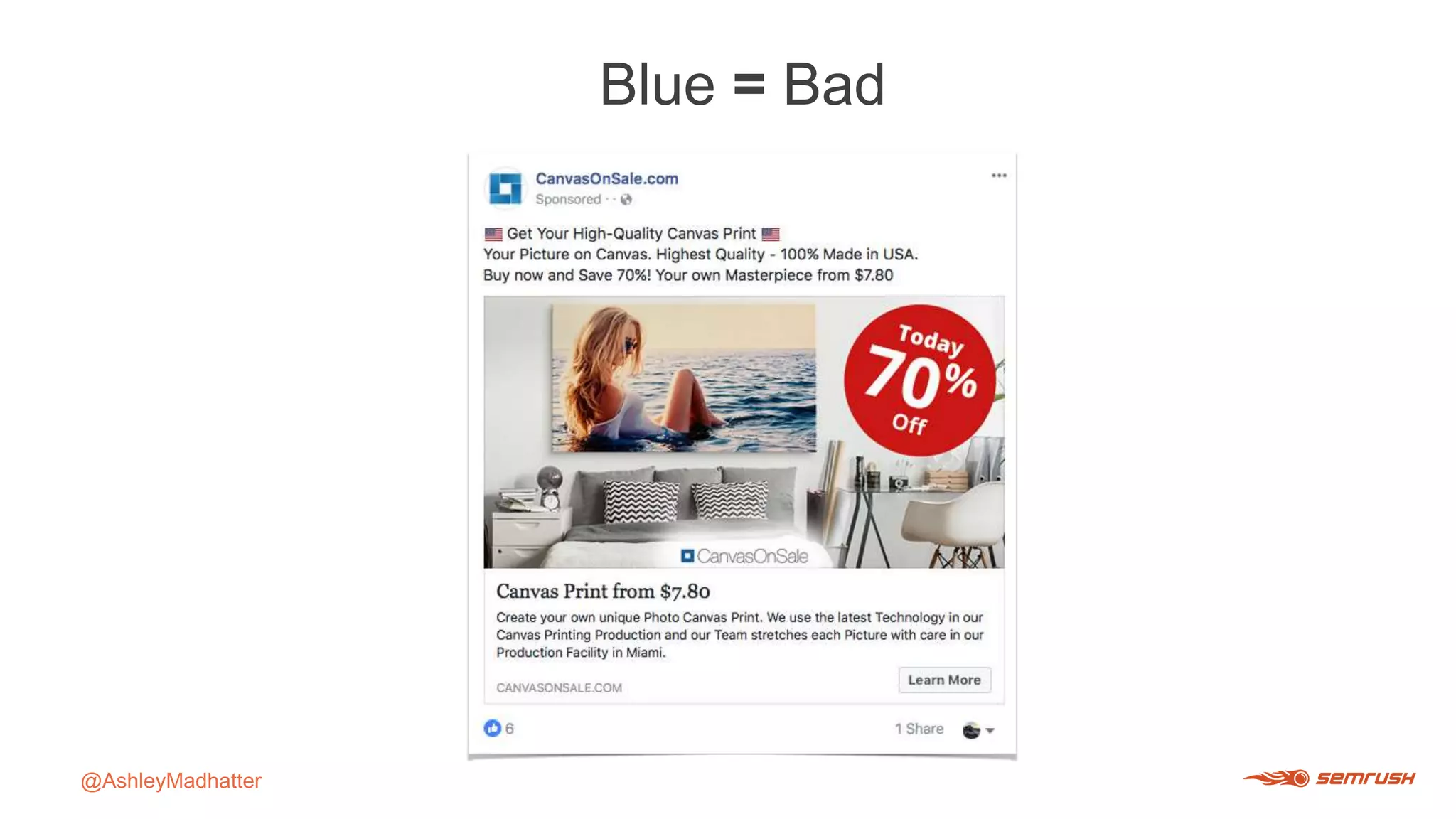
Blue = Bad
@AshleyMadhatter
@AshleyMadhatter
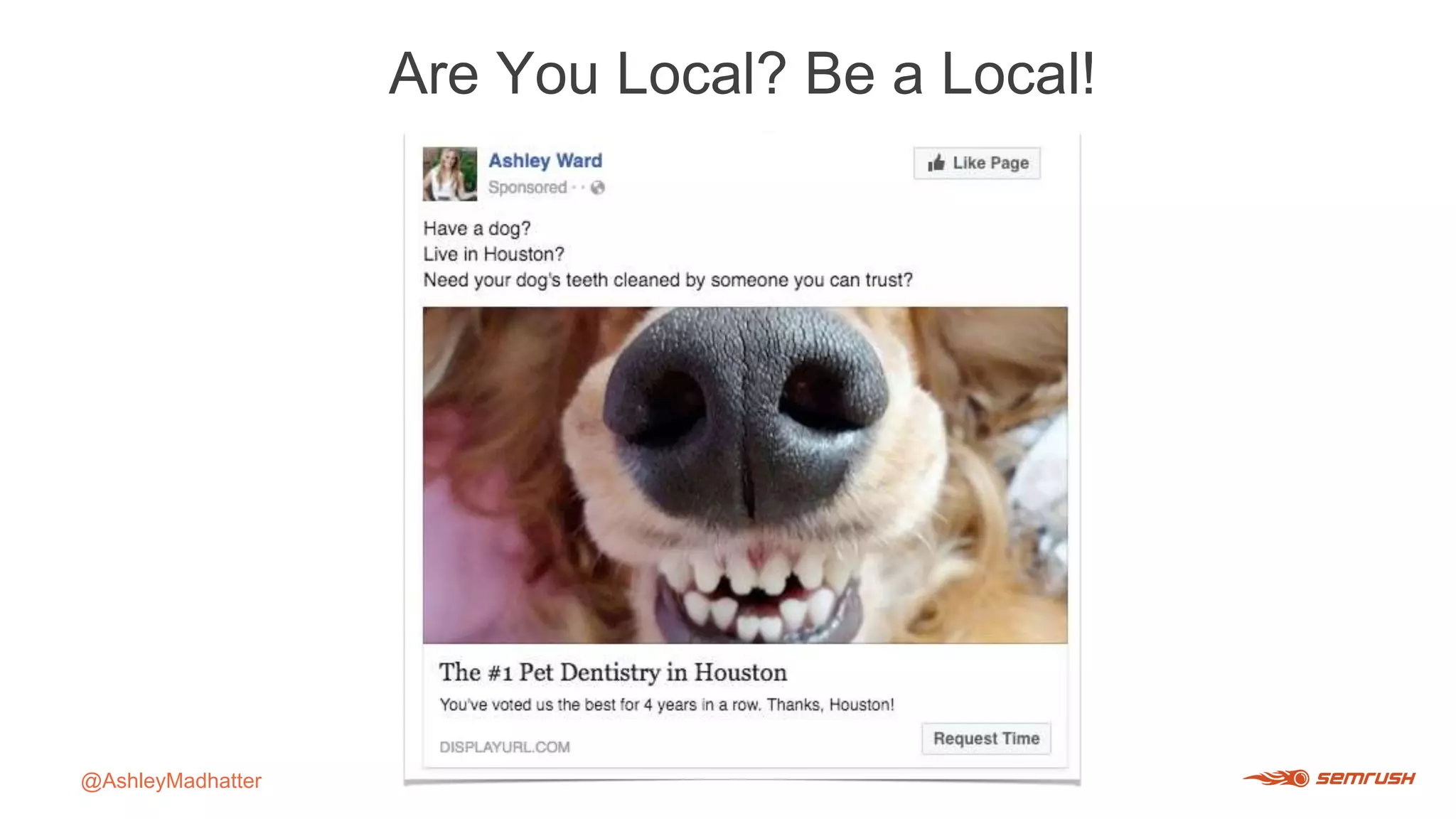
State the location in your ad copy.
4.
Are You Local? Be a Local!
@AshleyMadhatter
@AshleyMadhatter
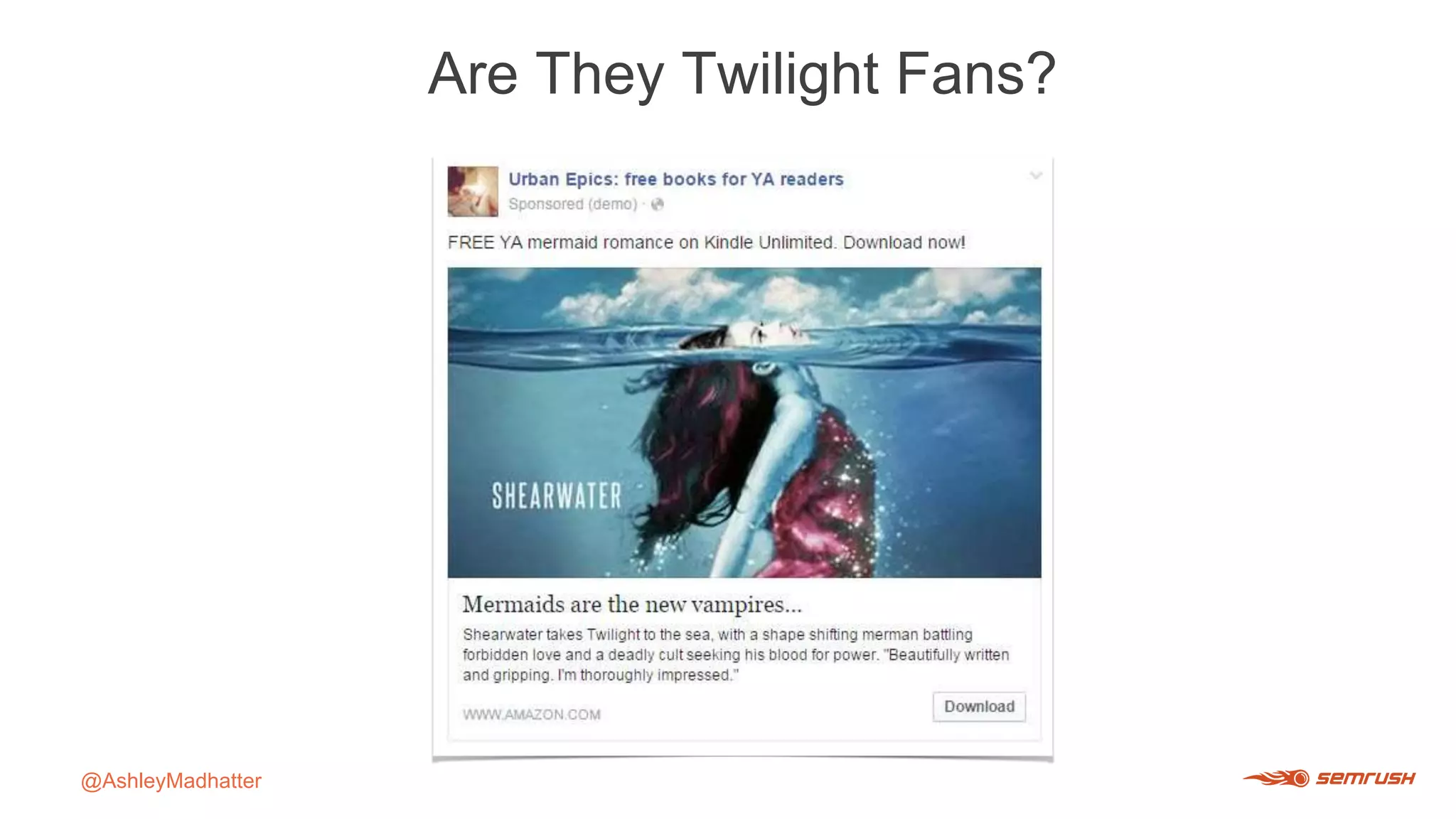
Talk like your demographic does. Use words and topics that your
demographic does in their everyday language.
5.
Are They Twilight Fans?
@AshleyMadhatter
@AshleyMadhatter
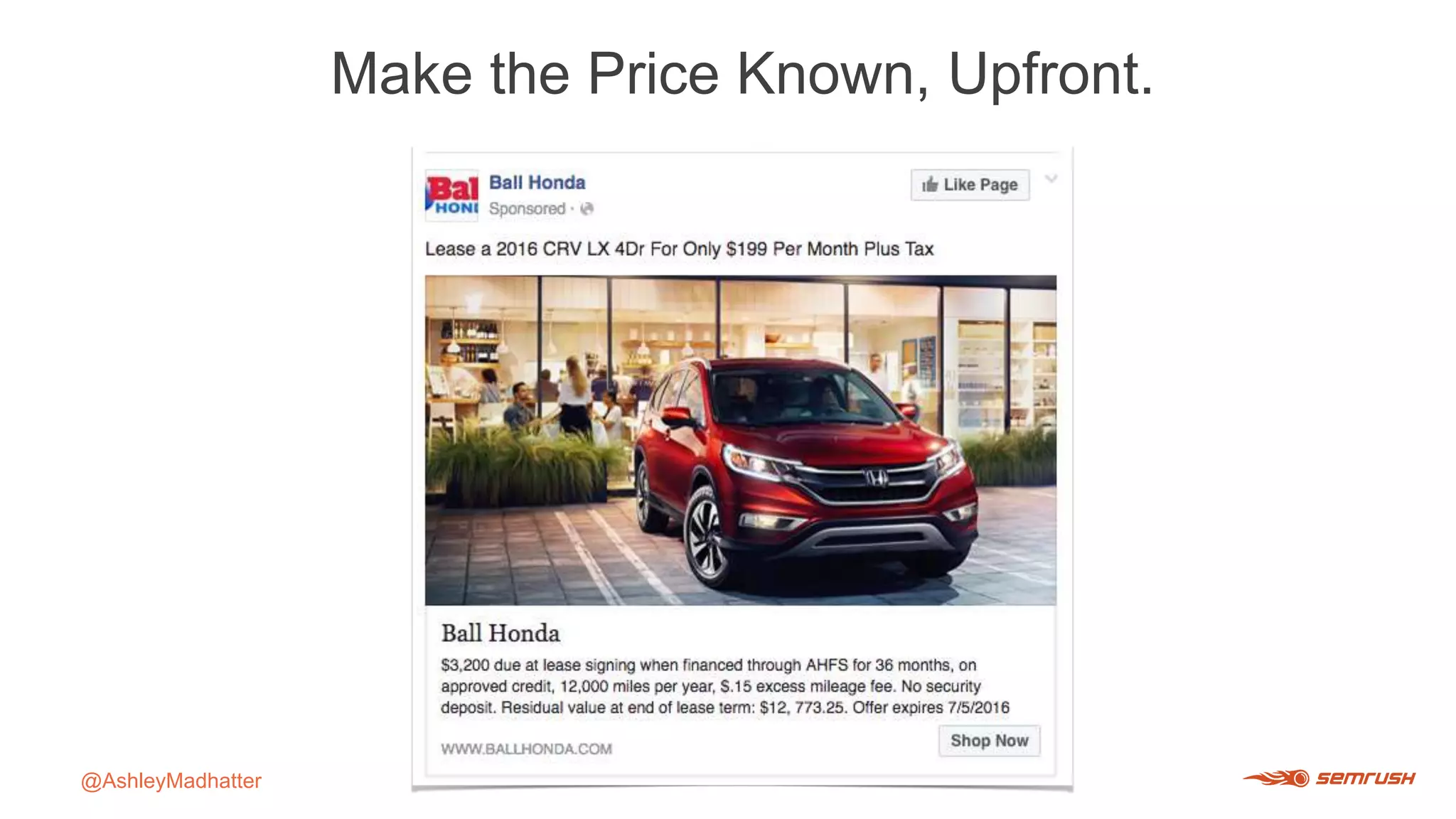
If you’re selling a product or service to a low or middle class
demographic, include the price in the ad copy. If you don’t you’re
expensive and out of reach.
6.
Make the Price Known, Upfront.
@AshleyMadhatter
@AshleyMadhatter
Your demographic is a community of it’s own.
Draw to the idea of community to engage your demographic.
7.
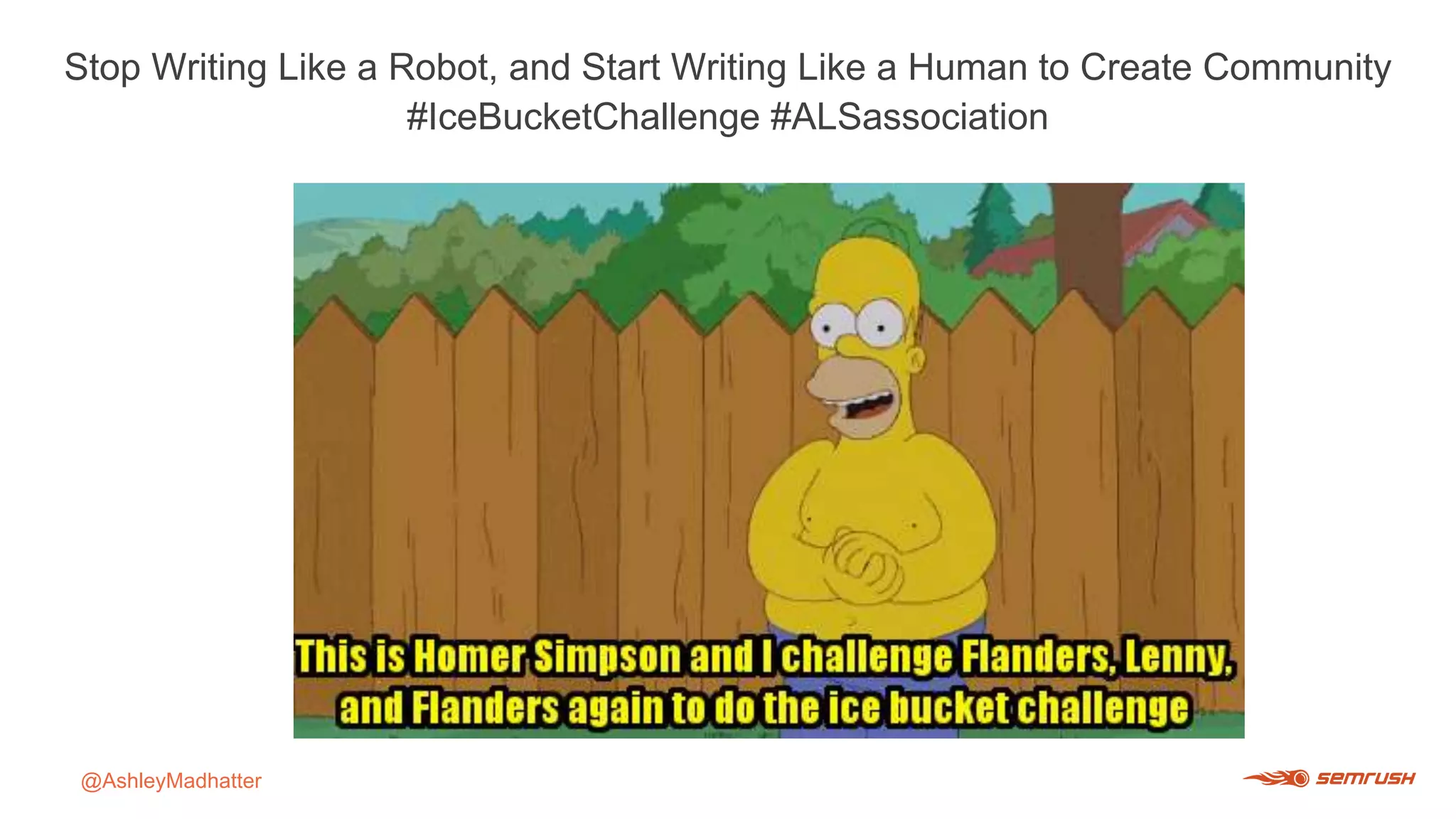
Stop Writing Like a Robot, and Start Writing Like a Human to Create Community
#IceBucketChallenge #ALSassociation
@AshleyMadhatter
Thank you!
bitly.com/is17deck
@AshleyMadhatter
Ashley.Ward@SEMrush.com
—> www.SEMrush.com <—

Bots Don’t Buy: 
How to Create Facebook Ads for Humans, Not Bots

Editor's Notes

  • #6 Even though we want to create ads directed towards humans and not bots, we still need to have a basic understanding of how the bots work, aka the Facebook Algorithm
  • #7 Back in the day, Facebook showed just about all of our posts to everyone. Now, we have to literally compete to be seen.
  • #8 let’s look at how the news feed is created by the “bots” before we look at how we can reach the emotional aspect of an ad. First, there is inventory (This is all of the stories posted by friends and pages. When you first sign up for facebook this is a small inventory because you don’t have pages you're following or friends, yet, but as you continue to like new pages and add new friends, this inventory grows) Signals (Facebook has hundreds of thousands of “signals” that choses how to rank your content, such as who posted a story, what phone a user is on, time zone, bandwidth availability, and more. Predictions (Facebook takes a guess and makes a prediction of how likely you are to engage with that post - like, comment, share. ) Score (Facebook then assigns a Relevance Score 0-10 and is given based on the above 3 factors. 10 making a post extremely relevant to a demographic and for sure shown in the News Feed.
  • #12  People react based on emotion - how something makes them feel and how it relates to them. Bots don’t have emotion, though they try, and may one day. But for now, we need to be humans and think like humans when we advertise.
  • #14 If you design ads that YOUR people can relate to, have some kind of emotional component with, then you’re satisfying both human and bot performance.
  • #16 Here’s an example of a video that was posted and then boosted at only $1 a day. He used the dollar a day strategy to promote the issue of child bully. This dollar a day strategy is developed by Logan Young of Blitzmetrics and he was able to use this strategy to promote his ad to news sources and get on CBS, which helped his video receive well over 29 million views.
  • #17 By knowing your human and posting content made just for them
  • #19 Let’s start with Targeting. Does your demographic like long walks on the beach? Or hate the way sand gets in-between their toes? Recent home buyer, recently married, new car buyer, what income bracket are they in? What income bracket are they definitely not in - Facebook gives you the option to include and exclude audience types - don’t forget to exclude vital audience types for your ads.
  • #20 The only time it makes sense to leave your targeting open is if you have no idea who your demo is yet and want to let Facebook do some of the research for you. You’ll need a pretty budget for something like this, and at the very least target by country so facebook doesn't spend your budget in areas that don’t even relate.
  • #21 When it comes to facebook ads, you’re not looking to mass produce advertisements, cross your fingers, and hope it works. You need to create several different types of ads that fit very specific target markets. For example, if part of your demographic is women, ages 30 to 45, and have a child in kindergarden you’re ad creative needs to speak directly to them and not to the other part of your demographic that is moms with a newborn ages 25 to 30
  • #24 Include the city in the ad copy if you are targeting locally. Yes, for a bigger corporation with multiple locations, that means creating tons and tons of duplicate ads only changing the location targeting and ad copy to include the specific city, but that’s what Power Editor is for.
  • #26 Is there anything that you can connect with regarding the time period? What month or season are we moving into that you can include in the ad copy or graphic?
  • #29 The emotional aspect of this is so vital that I wanted to test this, and also give Ad Zombies a shot to see what kind of ad copy they could come up with, fresh, new ideas. When sending me fresh new ad copy ideas, it was interesting to find that they went straight to the emotional aspect for this luxury moving company in New York.
  • #33 You can do this by putting a deadline, saying something is almost sold out.. Etc. FOMO is a great emotional tease to get me to engage with an ad (tagging peers and friends, signing up, etc.) screenshot of ad
  • #34 You can do this by putting a deadline, saying something is almost sold out.. Etc. FOMO is a great emotional tease to get me to engage with an ad
  • #35 As humans, our eyes can only process so much information at a time and with your Facebook Ad, you want that information processed. Blue is Facebook, the platform’s primary color. Use colors outside of the blue spectrum to make your ad stand out, such as red
  • #37 If you need to target a specific city, region, or state do so, but also cite that city, region, or state name in the ad copy
  • #39 Is there a specific type of slang your demographic commonly uses or a commonly known topic they would be familiar with?
  • #41 You should be targeting them by income level to begin with, don't’ make them work any extra to find out the cost. Cost is a big factor for this type of demographic. Make it clear and upfront so they become a warm lead when they do engage and request more info:
  • #44 Who here participated in the ice bucket challenge? The #icebucketchallenge was a great way to raise money for ASL Association. What made it so successful was that it involved the community on all levels. Anyone was able to participate regardless of background, income levels, location and feel included (both us little people and the big celebrities). Find ways with your ads to provide a community feel, whether with a call to action like the #icebucketchallenge or by having a video ad featuring multiple people that all belong to a specific type of “community” aka demographic.