BotNet Detection Techniques
By
Team Firefly
Technical Support For System Errors
And Security Issues

Cyber Security Awareness Program

On Friday, October 18, 2013
Outline
 Introduction to Botnet
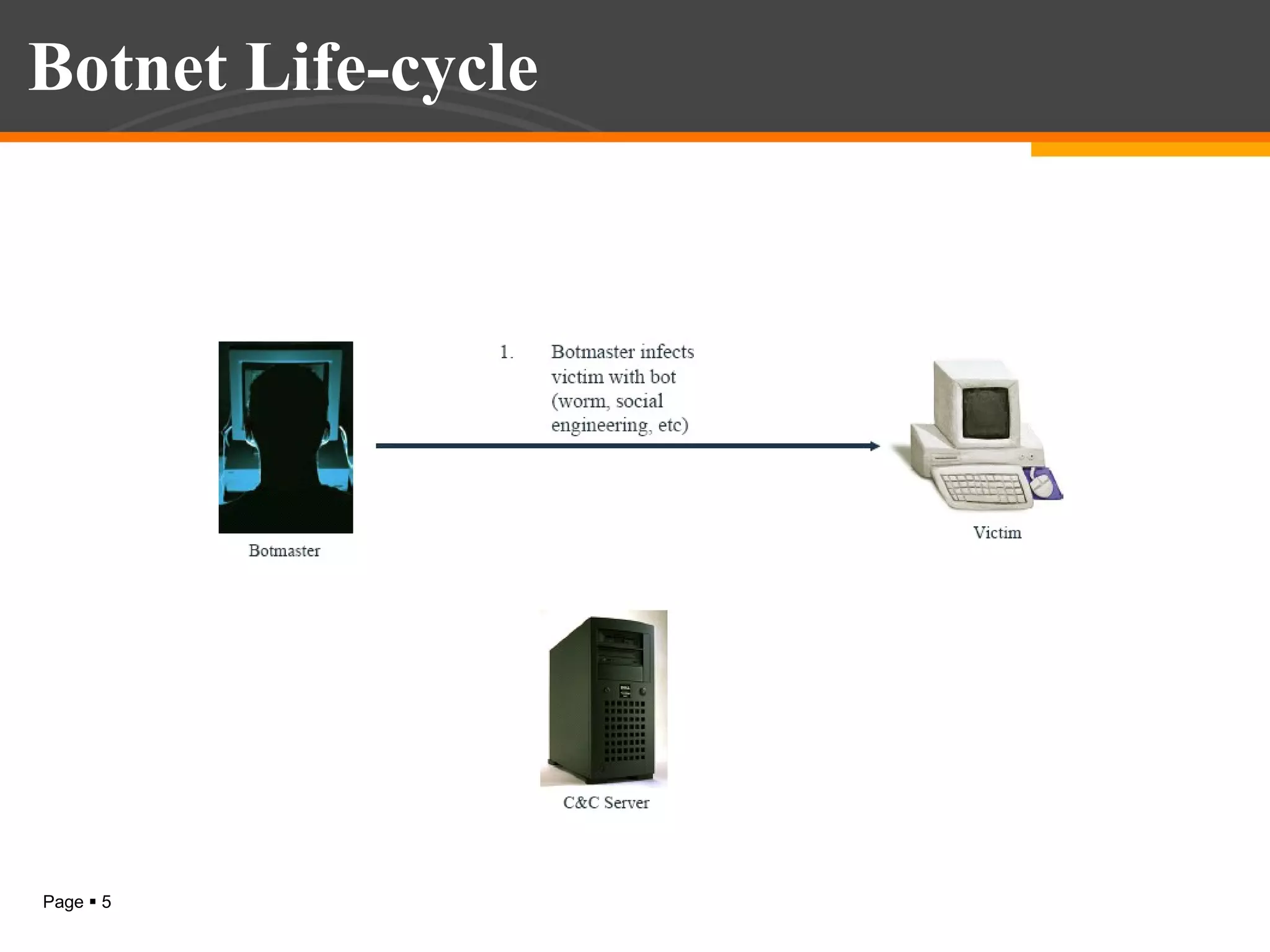
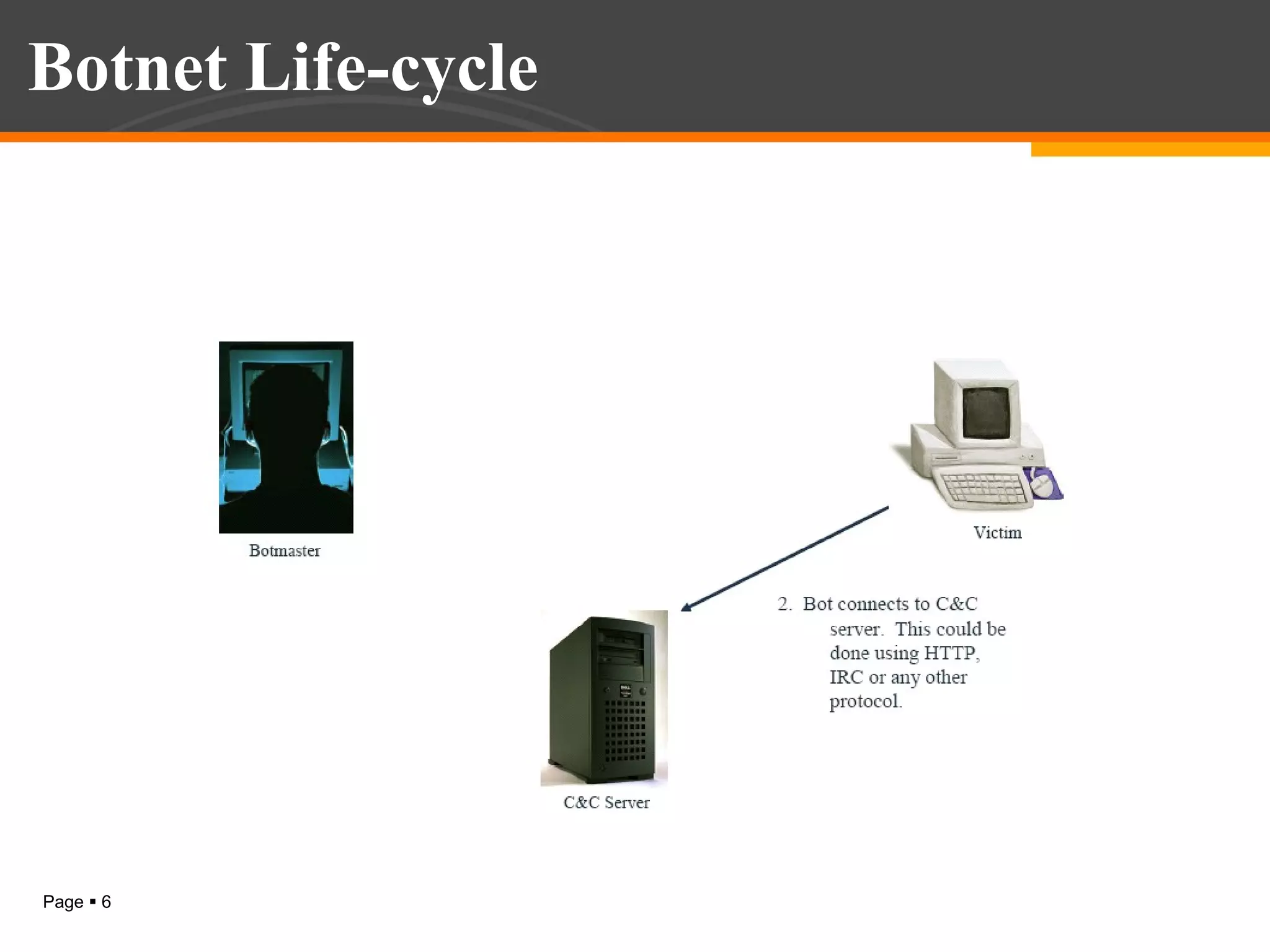
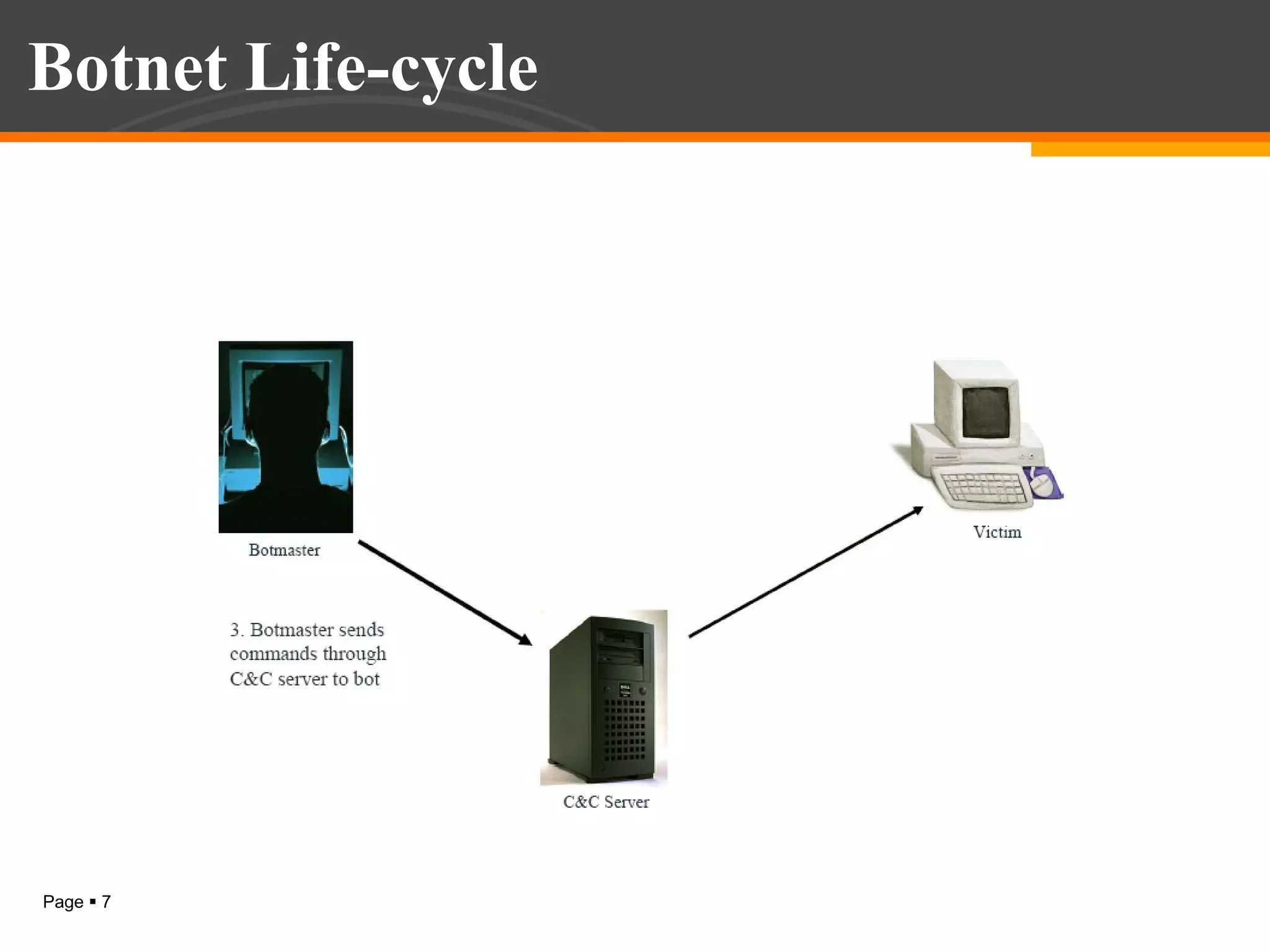
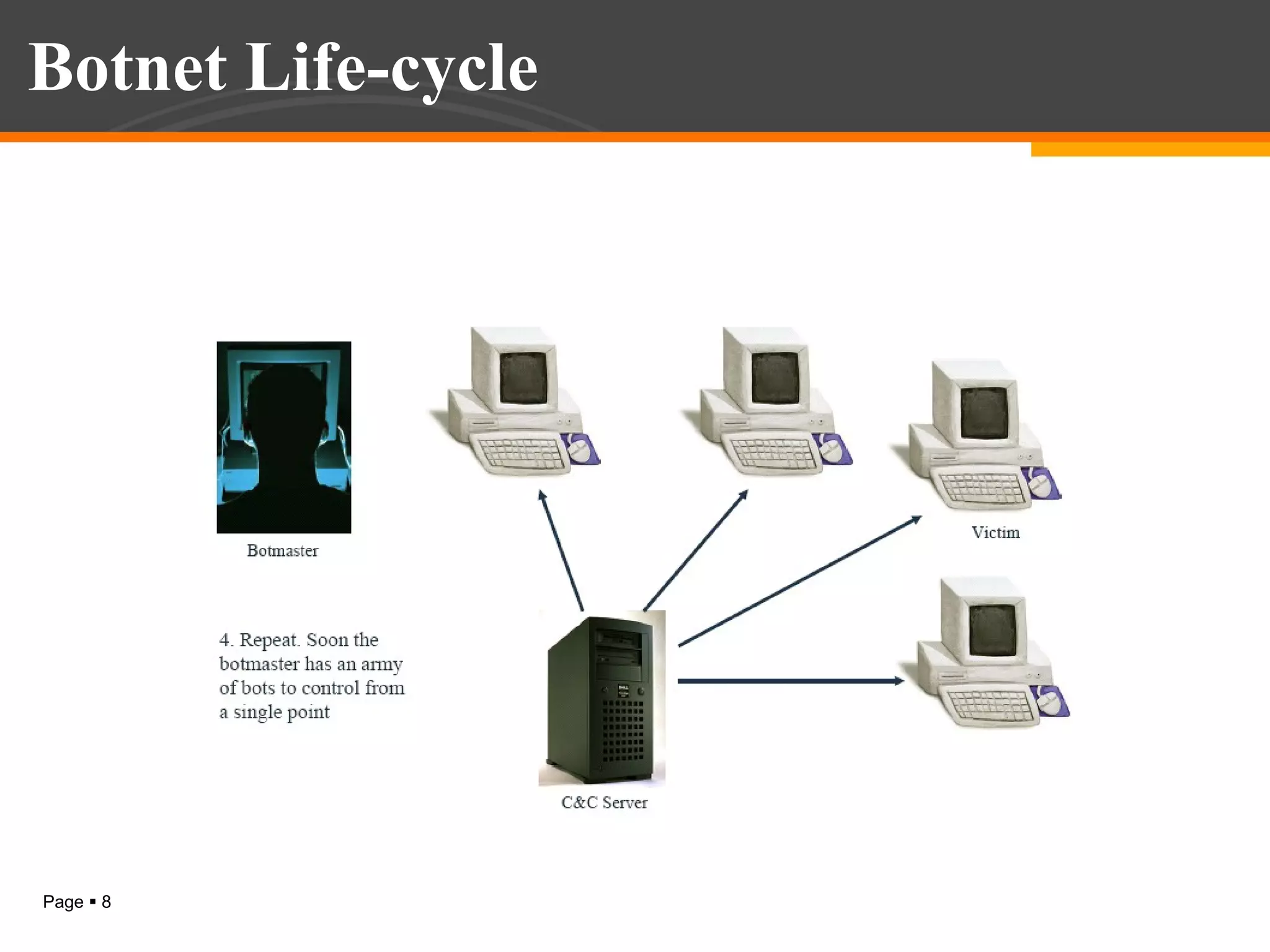
 Botnet Life-cycle
 Botnet in Network Security
 Botnet Uses
 Botnet Detection
 Preventing Botnet Infection
 Botnet Research
 Conclusion
 References
Page  2
Introduction to Botnet
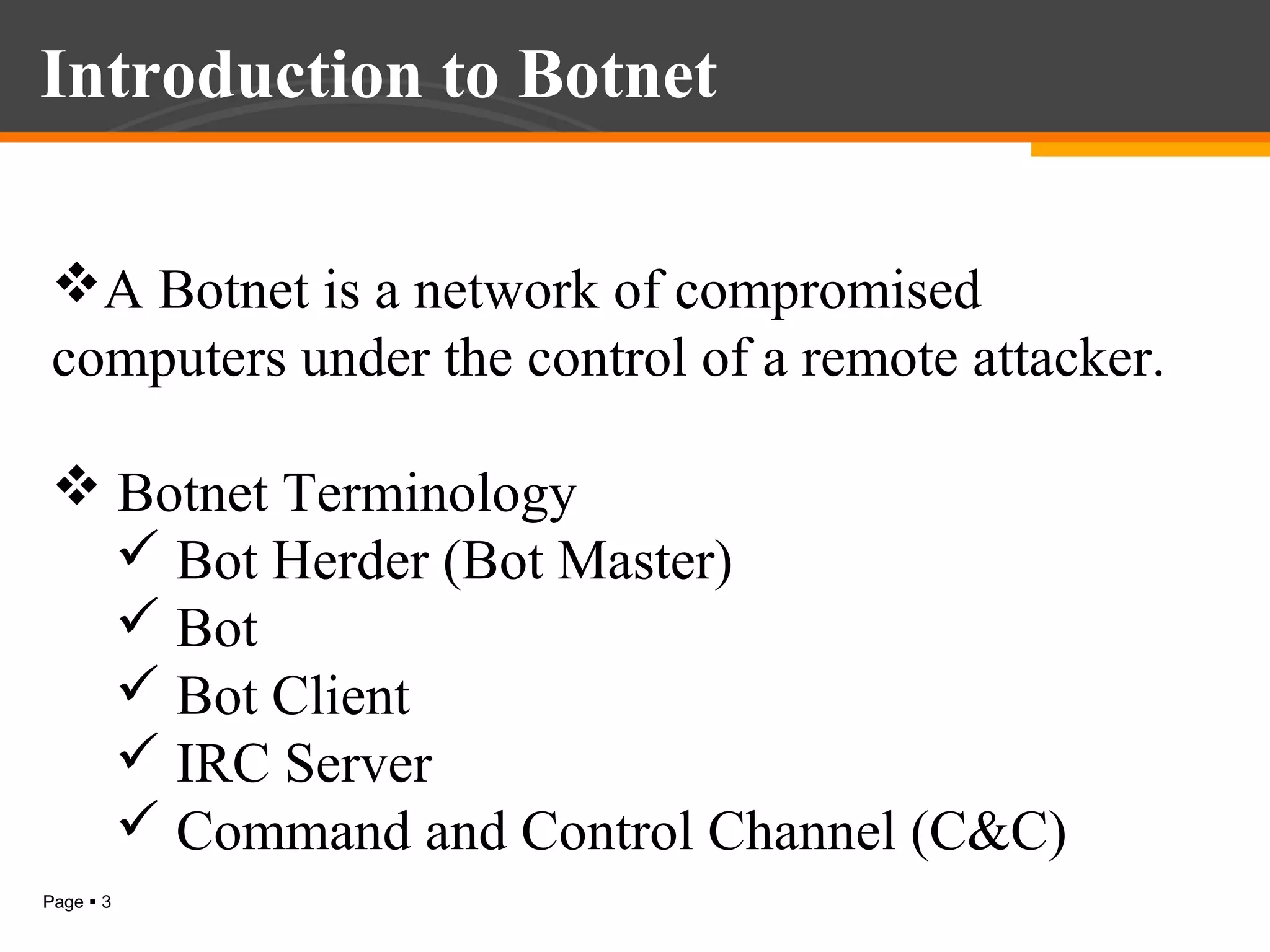
A Botnet is a network of compromised
computers under the control of a remote attacker.
 Botnet Terminology
 Bot Herder (Bot Master)
 Bot
 Bot Client
 IRC Server
 Command and Control Channel (C&C)
Page  3
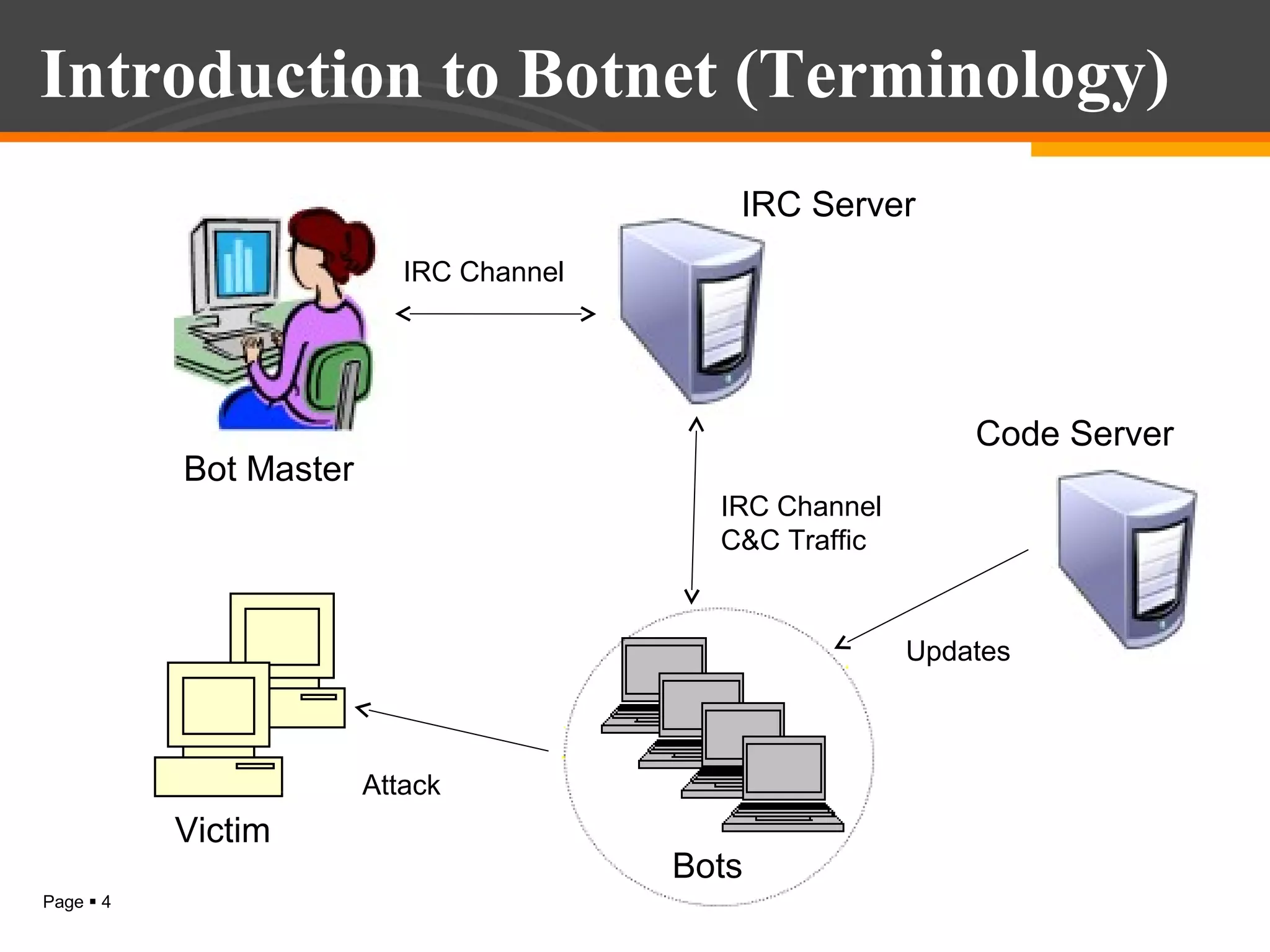
Introduction to Botnet (Terminology)
IRC Server
IRC Channel

Code Server

Bot Master
IRC Channel
C&C Traffic

Updates

Attack

Victim
Page  4

Bots
Botnet Life-cycle

Page  5
Botnet Life-cycle

Page  6
Botnet Life-cycle

Page  7
Botnet Life-cycle

Page  8
Botnet In Network Security
 Internet users are getting infected by bots
 Many times corporate and end users are trapped in botnet attacks
 Today 16-25% of the computers connected to the internet are
members of a botnet
 In this network bots are located in various locations
 It will become difficult to track illegal activities
 This behavior makes botnet an attractive tool for intruders and
increase threat against network security

Page  9
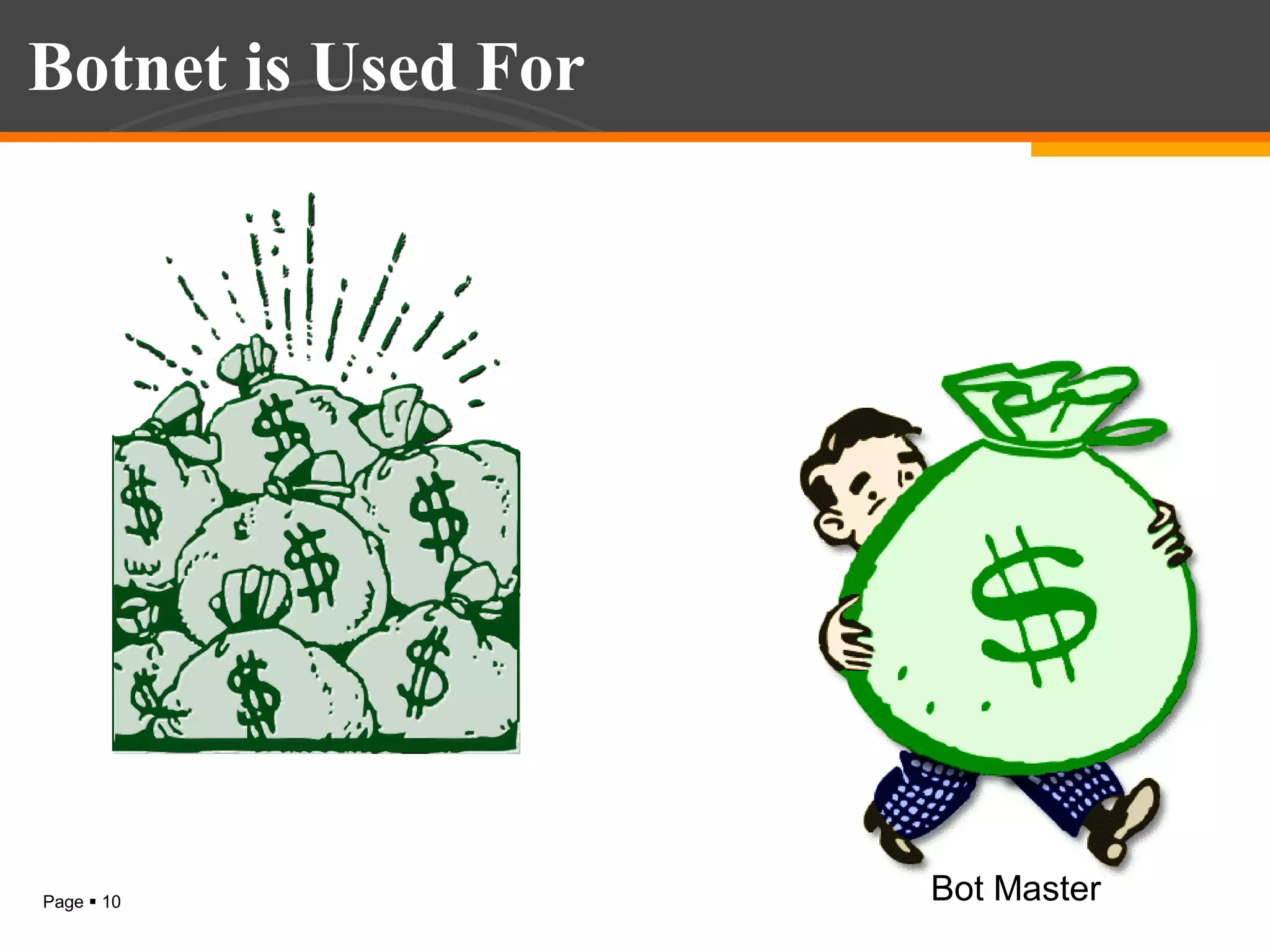
Botnet is Used For

Page  10

Bot Master
How Botnet is Used?
 Distributed Denial of Service (DDoS) attacks
 Sending Spams
 Phishing (fake websites)
 Addware (Trojan horse)
 Spyware (keylogging, information harvesting)
 Click Fraud
So It is really Important to Detect this attack
Page  11
Botnet Detection
Two approaches for botnet detection based on
 Setting up honeynets
 Passive traffic monitoring
 Signature based
 Anomaly based
 DNS based
 Mining based
Page  12
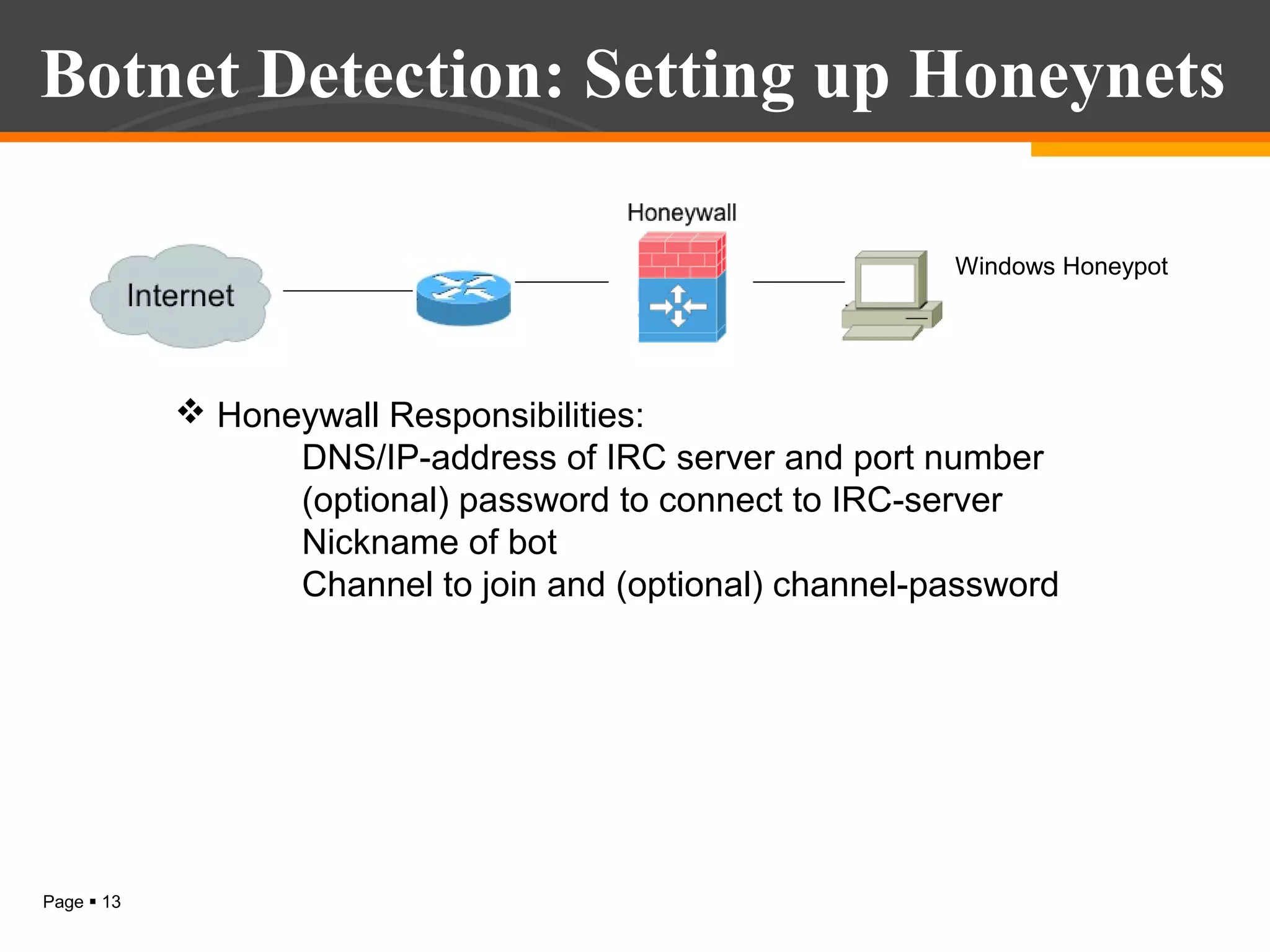
Botnet Detection: Setting up Honeynets
Windows Honeypot

 Honeywall Responsibilities:
DNS/IP-address of IRC server and port number
(optional) password to connect to IRC-server
Nickname of bot
Channel to join and (optional) channel-password

Page  13
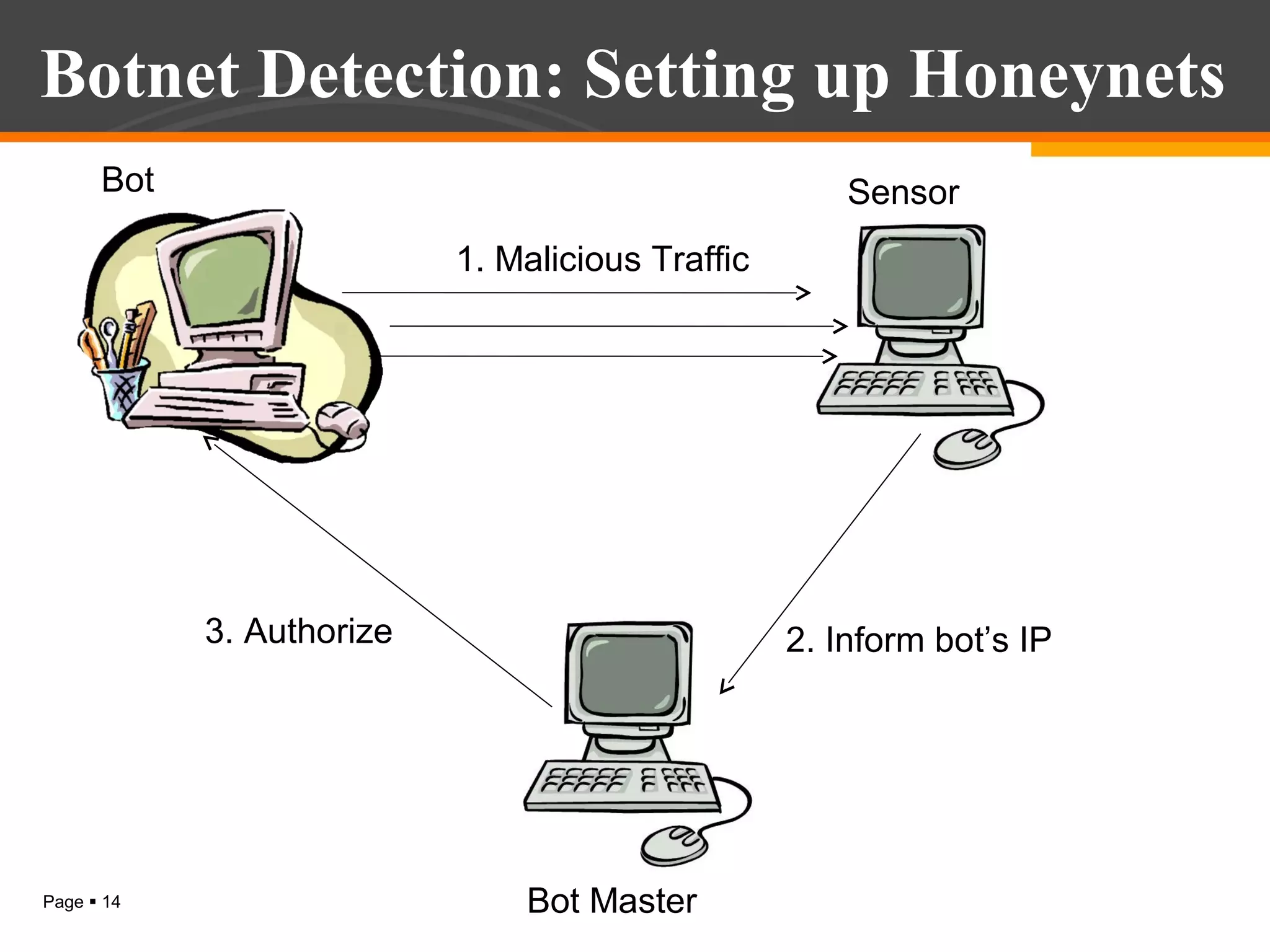
Botnet Detection: Setting up Honeynets
Bot

Sensor
1. Malicious Traffic

3. Authorize

Page  14

2. Inform bot’s IP

Bot Master
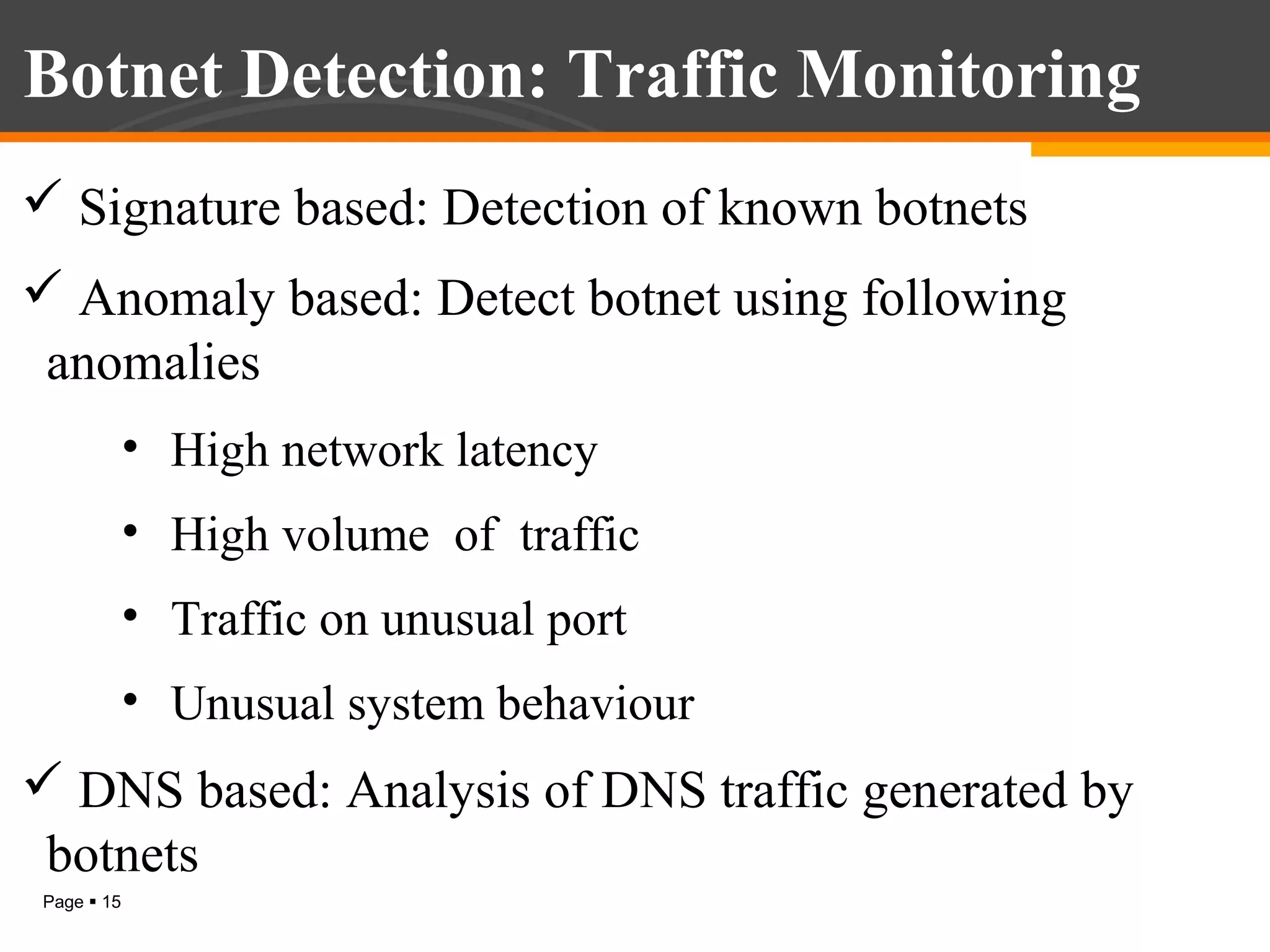
Botnet Detection: Traffic Monitoring
 Signature based: Detection of known botnets
 Anomaly based: Detect botnet using following
anomalies
• High network latency
• High volume of traffic
• Traffic on unusual port
• Unusual system behaviour

 DNS based: Analysis of DNS traffic generated by
botnets
Page  15
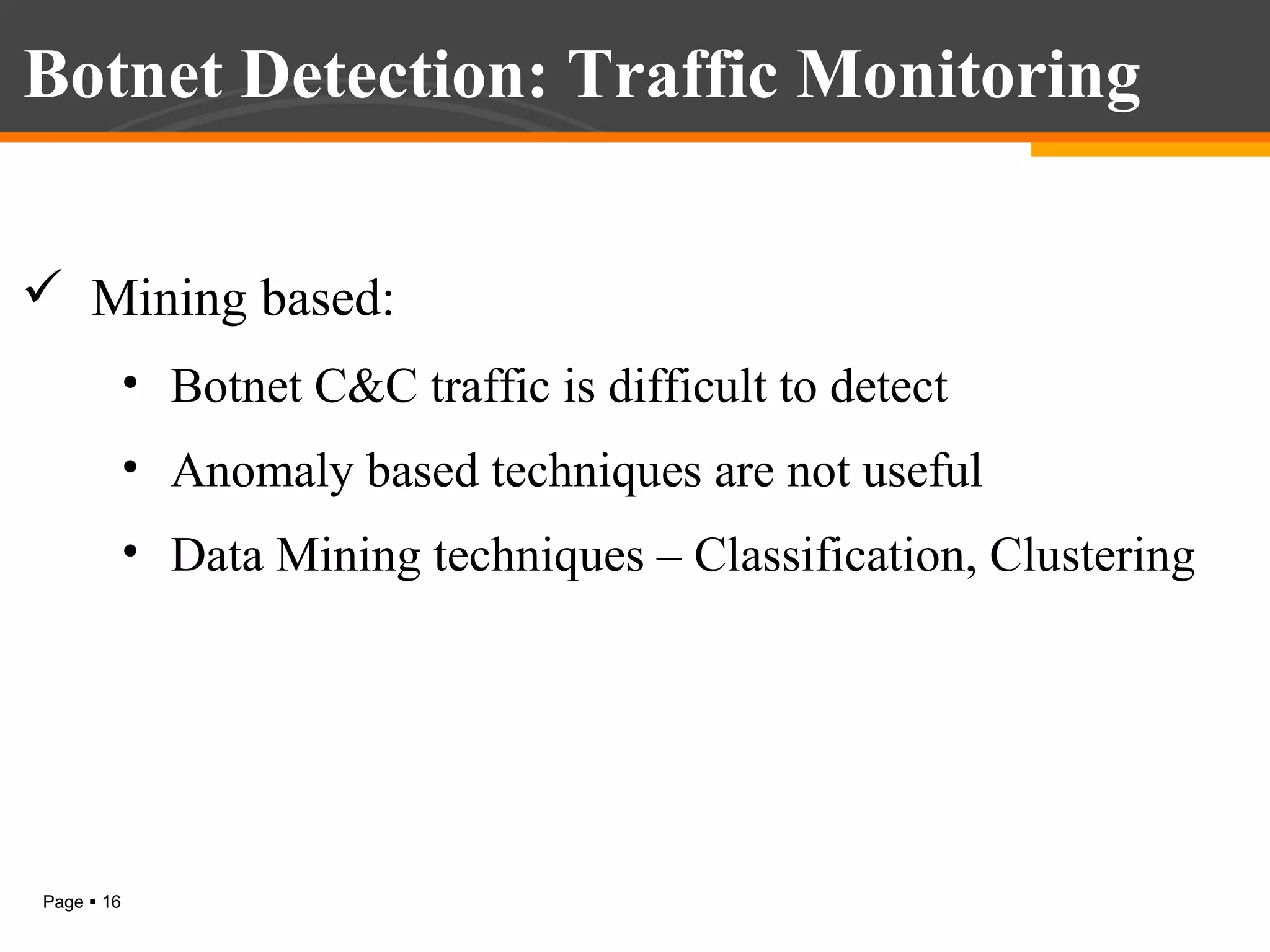
Botnet Detection: Traffic Monitoring
 Mining based:
• Botnet C&C traffic is difficult to detect
• Anomaly based techniques are not useful
• Data Mining techniques – Classification, Clustering

Page  16
Botnet Detection
 Determining the source of a botnet-based attack is challenging:
 Traditional approach:
 Every zombie host is an attacker
 Botnets can exist in a benign state for an arbitrary amount of
time before they are used for a specific attack
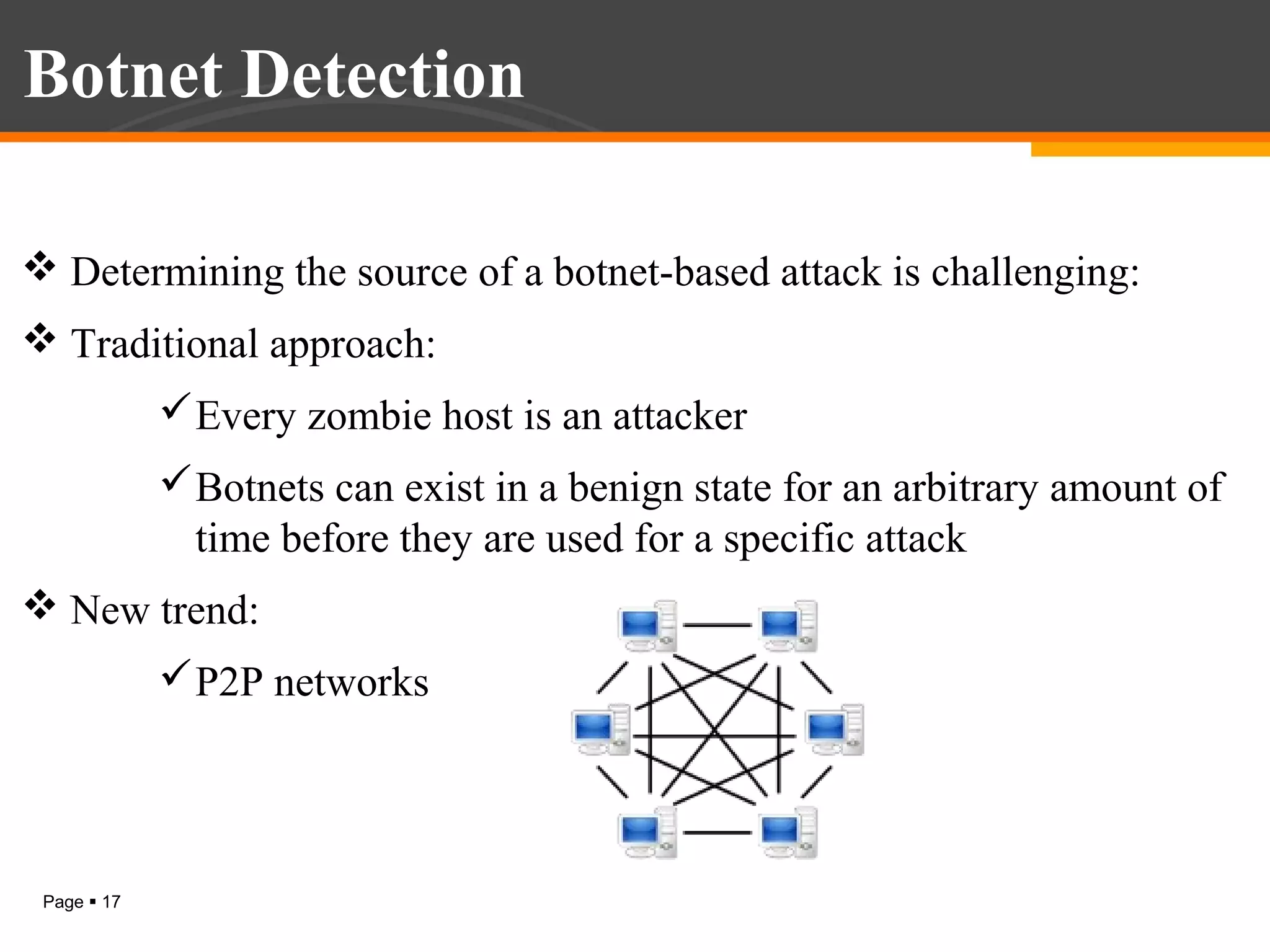
 New trend:
 P2P networks

Page  17
Preventing Botnet Infections
 Use a Firewall
 Patch regularly and promptly
 Use Antivirus (AV) software
 Deploy an Intrusion Prevention System (IPS)
 Implement application-level content filtering
 Define a Security Policy and
 Share Policies with your users systematically
Page  18
Botnet Research
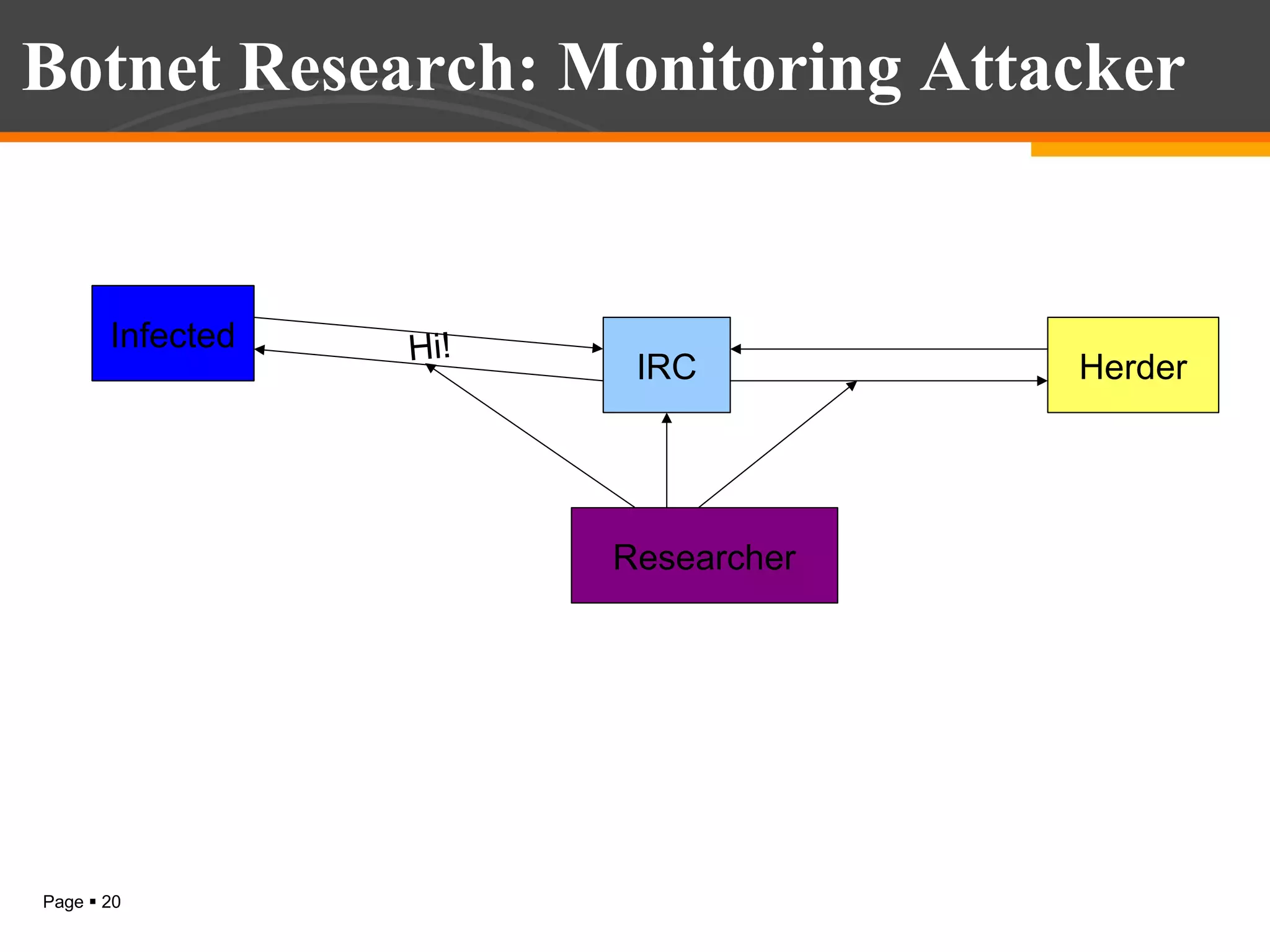
 Logging onto herder IRC server to get info
 Passive monitoring
Either listening between infected machine and
herder or spoofing infected PC
 Active monitoring: Poking around in the IRC server
 Sniffing traffic between bot & control channel

Page  19
Botnet Research: Monitoring Attacker

Infected

Hi!

IRC

Researcher

Page  20

Herder
Conclusion
 Botnets pose a significant and growing threat against cyber
security
 It provides key platform for many cyber crimes (DDOS)
 As network security has become integral part of our life and
botnets have become the most serious threat to it
 It is very important to detect botnet attack and find the solution
for it
Page  21
References
B. Saha and A, Gairola, “Botnet: An overview,” CERT-In White PaperCIWP-2005-05, 2005
 Peer to Peer Botnet detection for cyber-security: A data mining approach - ACM Portal
Mohammad M. Masud, Jing Gao, Latifur Khan, Jiawei Han, Bhavani Thuraisingham
 A Survey of Botnet and Botnet Detection Feily, M.; Shahrestani, A.; Ramadass, S.;
Emerging Security Information, Systems and Technologies, 2009. SECURWARE '09. Third
International Conference on Digital Object Publication Year: 2009 , Page(s): 268 – 273 IEEE
CONFERENCES
 Honeynet-based Botnet Scan Traffic Analysis Zhichun Li, Anup Goyal, and Yan Chen
Northwestern University, Evanston, IL 60208
 Detecting Botnets Using Command and Control Traffic AsSadhan, B.; Moura, J.M.F.;
Lapsley, D.; Jones, C.; Strayer, W.T.; Network Computing and Applications, 2009. NCA
2009. Eighth IEEE International Symposium. Publication Year: 2009 , Page(s): 156 – 162
IEEE CONFERENCES
 Spamming botnets: signatures and characteristics Yinglian Xie, Fang Yu

Page  22
Page  23
Page  24

Botnet Detection Techniques

  • 1.
    BotNet Detection Techniques By TeamFirefly Technical Support For System Errors And Security Issues Cyber Security Awareness Program On Friday, October 18, 2013
  • 2.
    Outline  Introduction toBotnet  Botnet Life-cycle  Botnet in Network Security  Botnet Uses  Botnet Detection  Preventing Botnet Infection  Botnet Research  Conclusion  References Page  2
  • 3.
    Introduction to Botnet ABotnet is a network of compromised computers under the control of a remote attacker.  Botnet Terminology  Bot Herder (Bot Master)  Bot  Bot Client  IRC Server  Command and Control Channel (C&C) Page  3
  • 4.
    Introduction to Botnet(Terminology) IRC Server IRC Channel Code Server Bot Master IRC Channel C&C Traffic Updates Attack Victim Page  4 Bots
  • 5.
  • 6.
  • 7.
  • 8.
  • 9.
    Botnet In NetworkSecurity  Internet users are getting infected by bots  Many times corporate and end users are trapped in botnet attacks  Today 16-25% of the computers connected to the internet are members of a botnet  In this network bots are located in various locations  It will become difficult to track illegal activities  This behavior makes botnet an attractive tool for intruders and increase threat against network security Page  9
  • 10.
    Botnet is UsedFor Page  10 Bot Master
  • 11.
    How Botnet isUsed?  Distributed Denial of Service (DDoS) attacks  Sending Spams  Phishing (fake websites)  Addware (Trojan horse)  Spyware (keylogging, information harvesting)  Click Fraud So It is really Important to Detect this attack Page  11
  • 12.
    Botnet Detection Two approachesfor botnet detection based on  Setting up honeynets  Passive traffic monitoring  Signature based  Anomaly based  DNS based  Mining based Page  12
  • 13.
    Botnet Detection: Settingup Honeynets Windows Honeypot  Honeywall Responsibilities: DNS/IP-address of IRC server and port number (optional) password to connect to IRC-server Nickname of bot Channel to join and (optional) channel-password Page  13
  • 14.
    Botnet Detection: Settingup Honeynets Bot Sensor 1. Malicious Traffic 3. Authorize Page  14 2. Inform bot’s IP Bot Master
  • 15.
    Botnet Detection: TrafficMonitoring  Signature based: Detection of known botnets  Anomaly based: Detect botnet using following anomalies • High network latency • High volume of traffic • Traffic on unusual port • Unusual system behaviour  DNS based: Analysis of DNS traffic generated by botnets Page  15
  • 16.
    Botnet Detection: TrafficMonitoring  Mining based: • Botnet C&C traffic is difficult to detect • Anomaly based techniques are not useful • Data Mining techniques – Classification, Clustering Page  16
  • 17.
    Botnet Detection  Determiningthe source of a botnet-based attack is challenging:  Traditional approach:  Every zombie host is an attacker  Botnets can exist in a benign state for an arbitrary amount of time before they are used for a specific attack  New trend:  P2P networks Page  17
  • 18.
    Preventing Botnet Infections Use a Firewall  Patch regularly and promptly  Use Antivirus (AV) software  Deploy an Intrusion Prevention System (IPS)  Implement application-level content filtering  Define a Security Policy and  Share Policies with your users systematically Page  18
  • 19.
    Botnet Research  Loggingonto herder IRC server to get info  Passive monitoring Either listening between infected machine and herder or spoofing infected PC  Active monitoring: Poking around in the IRC server  Sniffing traffic between bot & control channel Page  19
  • 20.
    Botnet Research: MonitoringAttacker Infected Hi! IRC Researcher Page  20 Herder
  • 21.
    Conclusion  Botnets posea significant and growing threat against cyber security  It provides key platform for many cyber crimes (DDOS)  As network security has become integral part of our life and botnets have become the most serious threat to it  It is very important to detect botnet attack and find the solution for it Page  21
  • 22.
    References B. Saha andA, Gairola, “Botnet: An overview,” CERT-In White PaperCIWP-2005-05, 2005  Peer to Peer Botnet detection for cyber-security: A data mining approach - ACM Portal Mohammad M. Masud, Jing Gao, Latifur Khan, Jiawei Han, Bhavani Thuraisingham  A Survey of Botnet and Botnet Detection Feily, M.; Shahrestani, A.; Ramadass, S.; Emerging Security Information, Systems and Technologies, 2009. SECURWARE '09. Third International Conference on Digital Object Publication Year: 2009 , Page(s): 268 – 273 IEEE CONFERENCES  Honeynet-based Botnet Scan Traffic Analysis Zhichun Li, Anup Goyal, and Yan Chen Northwestern University, Evanston, IL 60208  Detecting Botnets Using Command and Control Traffic AsSadhan, B.; Moura, J.M.F.; Lapsley, D.; Jones, C.; Strayer, W.T.; Network Computing and Applications, 2009. NCA 2009. Eighth IEEE International Symposium. Publication Year: 2009 , Page(s): 156 – 162 IEEE CONFERENCES  Spamming botnets: signatures and characteristics Yinglian Xie, Fang Yu Page  22
  • 23.
  • 24.

Editor's Notes