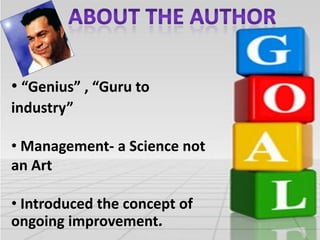
• “Genius” , “Guru to
industry”
• Management- a Science not
an Art
• Introduced the concept of
ongoing improvement.
• Net Profit
• Return On Investment
• Cash Flow
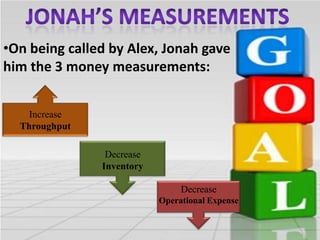
•On being called by Alex, Jonah gave
him the 3 money measurements:
Increase
Throughput
Decrease
Inventory

Decrease
Operational Expense
•Gathers focus group for
operational solutions
•Several concepts which are
polar opposites from general
business operations.
•Jonah reveals that a balanced
plant is where the capacity of
every resource is balanced
exactly with demand from the
market.
•A series of events

•Predictive information that
cannot be determined precisely.
•Interlinked.
•Alex takes his son, David, on a
hike with his Boy Scout troop.
•Uses this hike to understand the
two phenomena.

•Used to understand theory of
bottlenecks later.
•Final throughput-measured by rate
of slowest operation.
•Inventory should be minimized.
•Operational expense must be
conserved.
•Bottleneck - Capacity = or <
than the demand placed upon it
•Non-bottleneck - Capacity is >
than the demand placed upon it.
•Maximum speed = speed of the
slowest operation

•Bottlenecks must be identified
and improved if the process is to
be improved.
•Allows management to take action
to alleviate the constraint in the
future
•Reduce cycle time
•Improve manufacturing cycle
efficiency (MCE)
•Make sure bottleneck time is not
wasted
•Take the load off the bottlenecks
•Quality controls
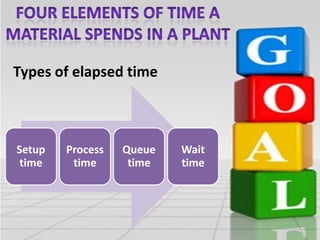
Types of elapsed time

Setup
time

Process
time

Queue
time

Wait
time
• 15% increase on sales promised
• Cutting the batch sizes to half.
• Gets his plants improvement
marketed
• Manages a huge contract
• Accomplishes an increase of
about 17%
• Promoted to the division head.
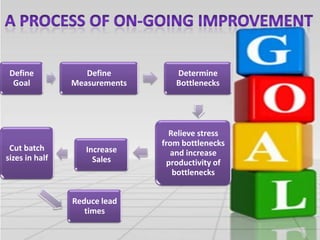
Define
Goal

Cut batch
sizes in half

Define
Measurements

Increase
Sales

Reduce lead
times

Determine
Bottlenecks

Relieve stress
from bottlenecks
and increase
productivity of
bottlenecks
• Minimum one constraint at a
time in a system
• Over time constraints may
change
• The 5 focusing steps of theory of
constraints are:
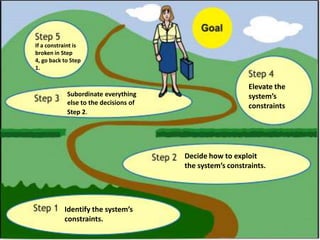
If a constraint is
broken in Step
4, go back to Step
1.

Subordinate everything
else to the decisions of
Step 2.

Elevate the
system’s
constraints

Decide how to exploit
the system’s constraints.

Identify the system’s
constraints.
• Improves capacity decisions in
the short-run
• Avoids build up of inventory
• Improves communication
between departments
•Negative impact on nonconstrained areas
•Ignores long-run considerations
•Not a substitute for other
accounting methods
• Global principles of
manufacturing
•Helps to bring order and avoid
chaos
•Not only applicable to
manufacturing world
• Each concept and theory
elongated
•Extremely technical
•Lots of thinking required.
Difficult to read at one go

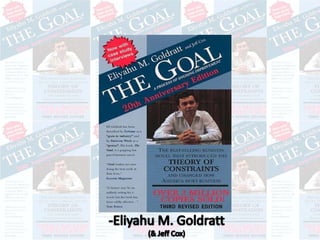
Book review the goal

  • 2.
    • “Genius” ,“Guru to industry” • Management- a Science not an Art • Introduced the concept of ongoing improvement.
  • 5.
    • Net Profit •Return On Investment • Cash Flow
  • 6.
    •On being calledby Alex, Jonah gave him the 3 money measurements: Increase Throughput Decrease Inventory Decrease Operational Expense
  • 7.
    •Gathers focus groupfor operational solutions •Several concepts which are polar opposites from general business operations.
  • 8.
    •Jonah reveals thata balanced plant is where the capacity of every resource is balanced exactly with demand from the market.
  • 9.
    •A series ofevents •Predictive information that cannot be determined precisely. •Interlinked.
  • 10.
    •Alex takes hisson, David, on a hike with his Boy Scout troop. •Uses this hike to understand the two phenomena. •Used to understand theory of bottlenecks later.
  • 11.
    •Final throughput-measured byrate of slowest operation. •Inventory should be minimized. •Operational expense must be conserved.
  • 12.
    •Bottleneck - Capacity= or < than the demand placed upon it •Non-bottleneck - Capacity is > than the demand placed upon it.
  • 13.
    •Maximum speed =speed of the slowest operation •Bottlenecks must be identified and improved if the process is to be improved.
  • 14.
    •Allows management totake action to alleviate the constraint in the future •Reduce cycle time •Improve manufacturing cycle efficiency (MCE)
  • 15.
    •Make sure bottlenecktime is not wasted •Take the load off the bottlenecks •Quality controls
  • 17.
    Types of elapsedtime Setup time Process time Queue time Wait time
  • 18.
    • 15% increaseon sales promised • Cutting the batch sizes to half. • Gets his plants improvement marketed
  • 19.
    • Manages ahuge contract • Accomplishes an increase of about 17% • Promoted to the division head.
  • 20.
    Define Goal Cut batch sizes inhalf Define Measurements Increase Sales Reduce lead times Determine Bottlenecks Relieve stress from bottlenecks and increase productivity of bottlenecks
  • 21.
    • Minimum oneconstraint at a time in a system • Over time constraints may change • The 5 focusing steps of theory of constraints are:
  • 22.
    If a constraintis broken in Step 4, go back to Step 1. Subordinate everything else to the decisions of Step 2. Elevate the system’s constraints Decide how to exploit the system’s constraints. Identify the system’s constraints.
  • 23.
    • Improves capacitydecisions in the short-run • Avoids build up of inventory • Improves communication between departments
  • 24.
    •Negative impact onnonconstrained areas •Ignores long-run considerations •Not a substitute for other accounting methods
  • 25.
    • Global principlesof manufacturing •Helps to bring order and avoid chaos •Not only applicable to manufacturing world
  • 26.
    • Each conceptand theory elongated •Extremely technical •Lots of thinking required. Difficult to read at one go