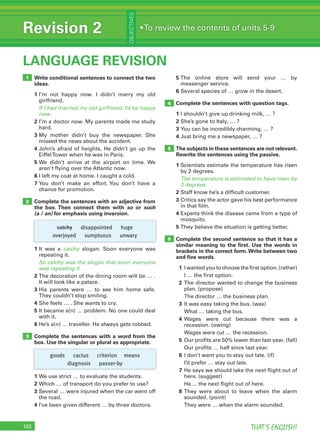
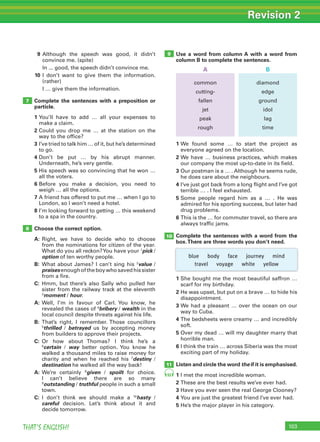
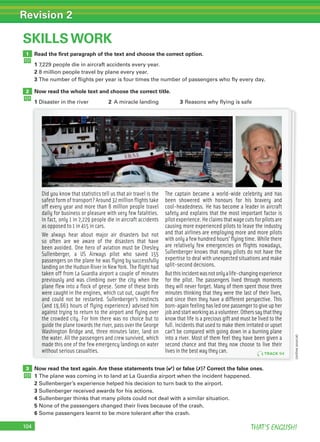
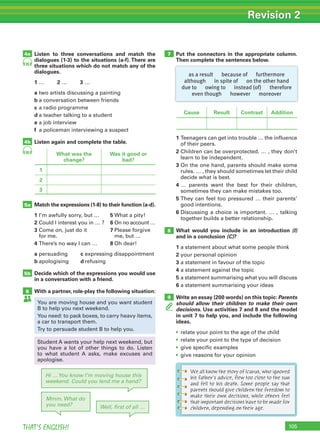
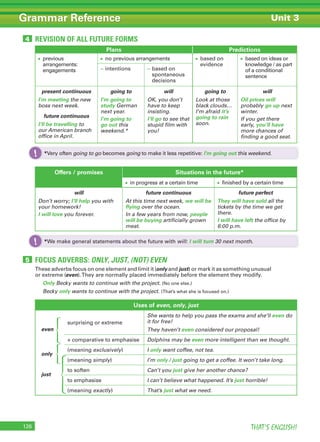
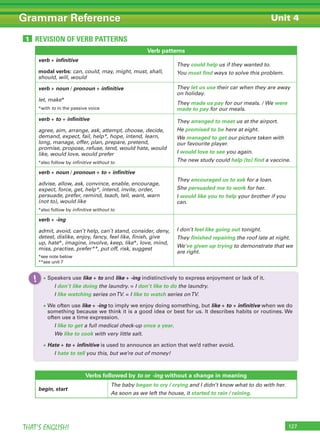
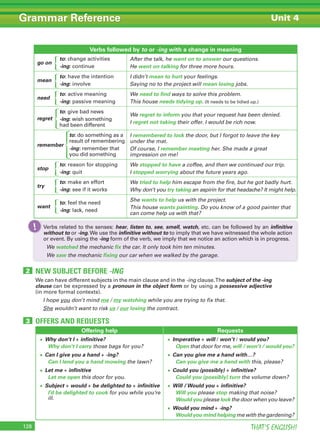
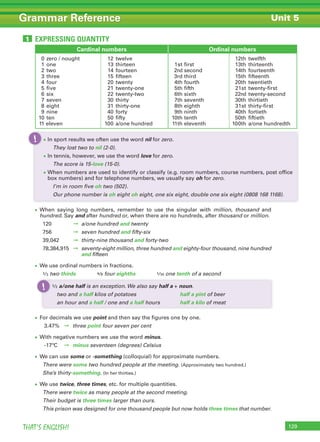
11
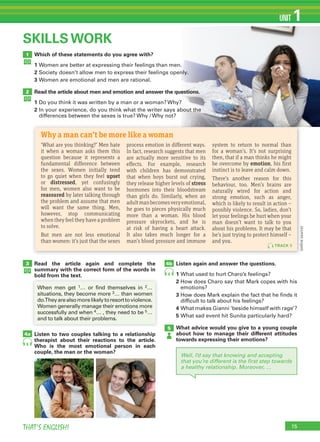
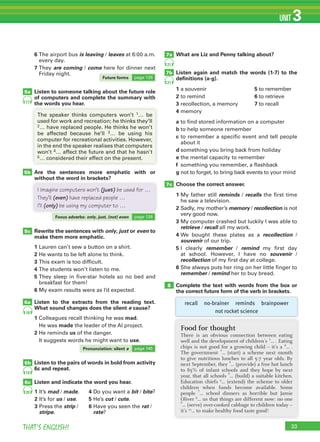
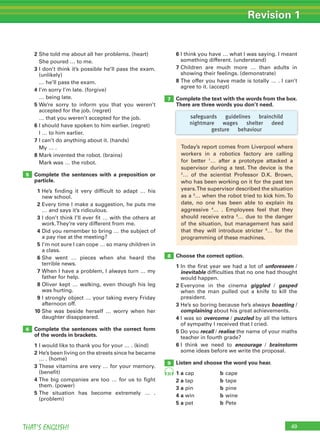
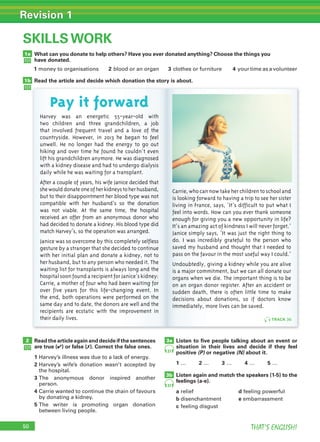
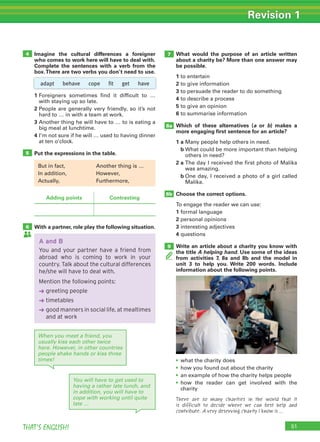
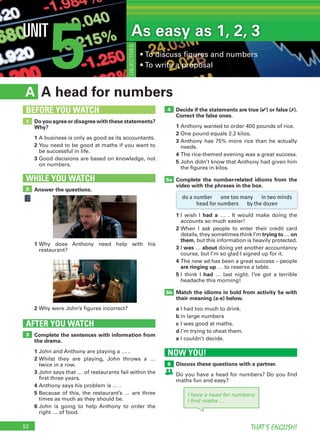
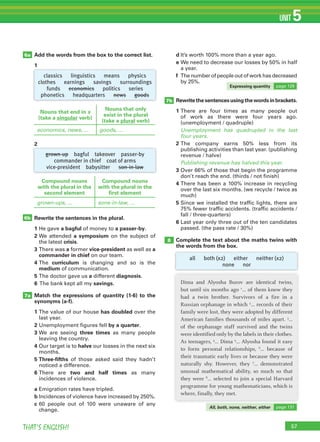
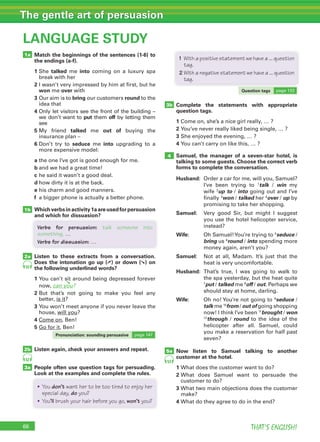
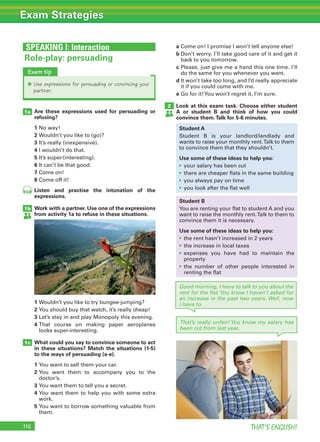
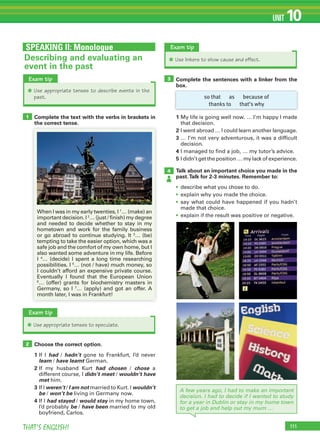
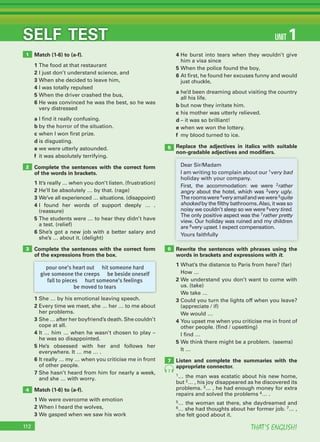
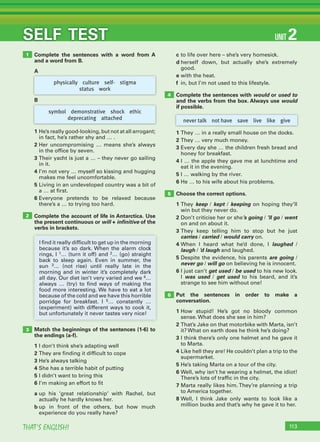
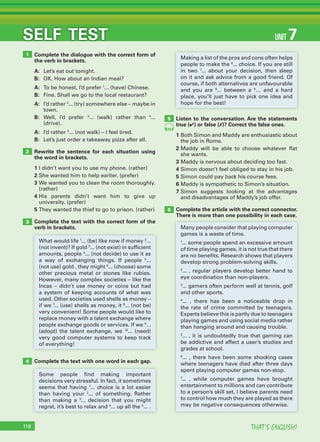
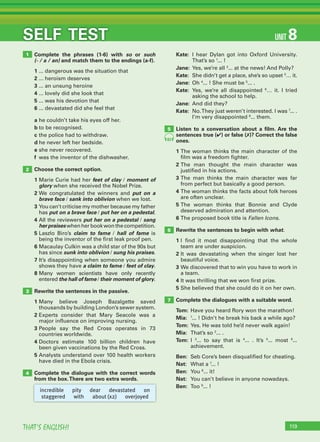
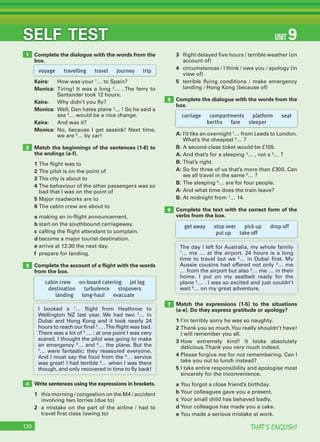
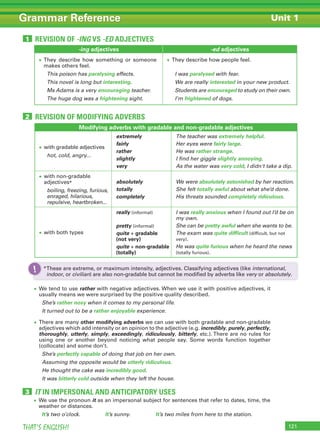
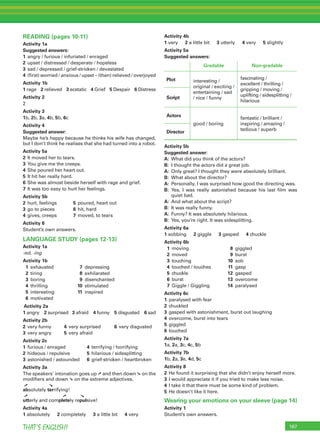
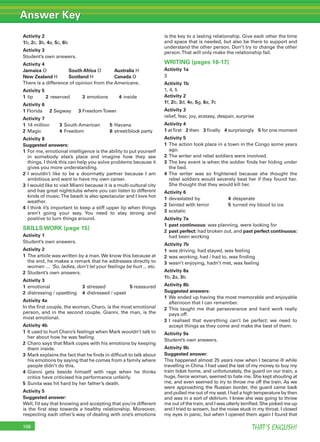
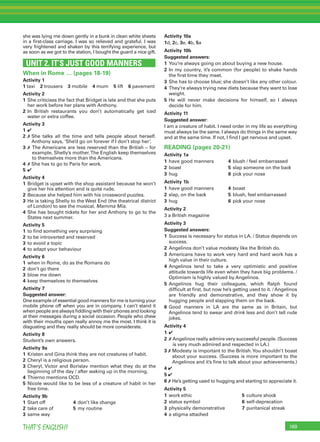
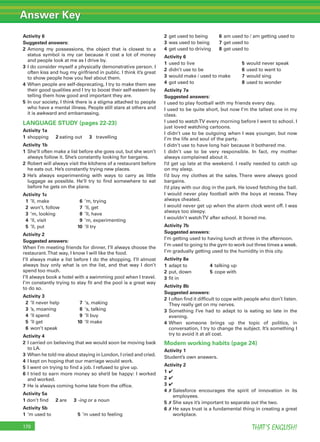
B2
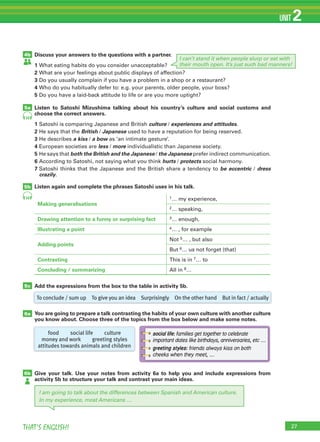
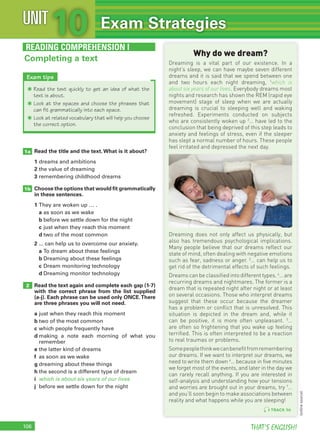
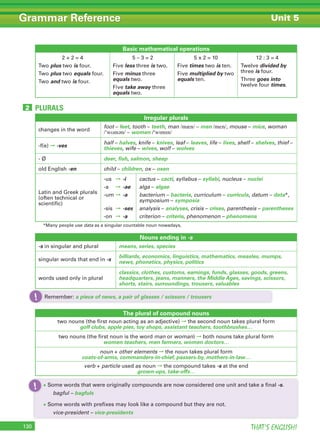
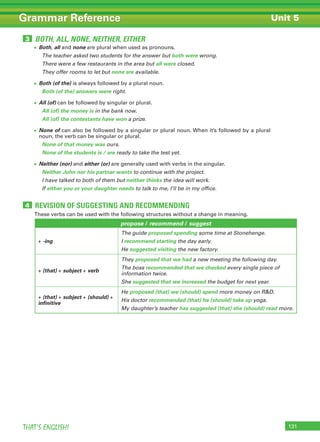
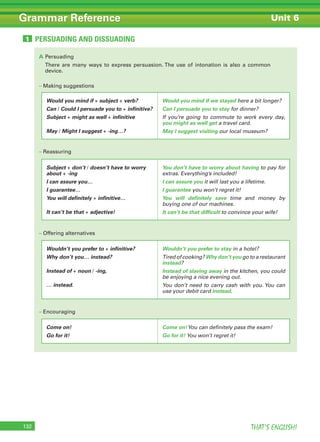
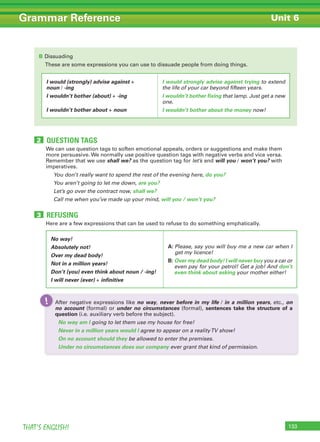
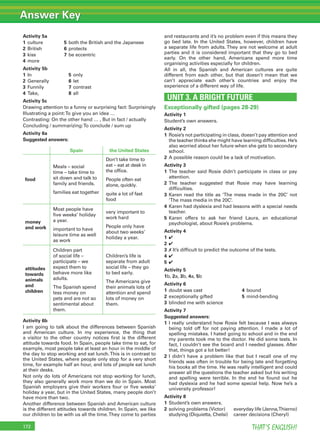
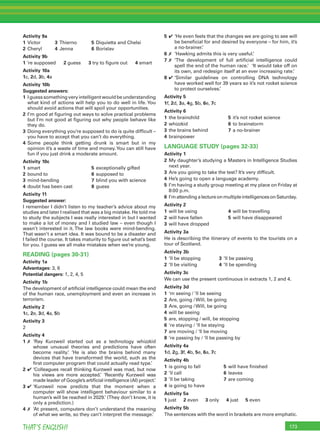
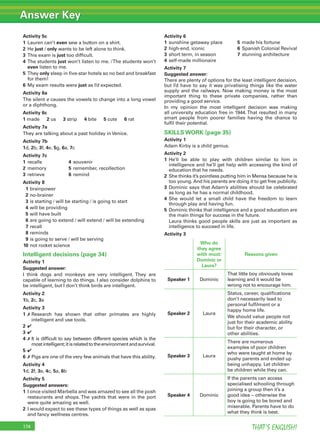
THAT’S
ENGLISH!
Module
B2Module11THAT’SENGLISH!11THAT’S
ENGLISH!
Module
B2
132472
11
B2
THAT’S
ENGLISH!
Module
Autores
Caroline Cooke; Anna Cowper; Susan Lea-Wilson;
Alejandro Zarzalejos
Edición
Gregory Backes; Valerie Clark; Sarah Jackson; Esther
Lema; Verónica Moro
Corrección
Nicola Gooch
Ilustración
Chema García
Grabación
EFS Motivation Sound Studios
Edición gráfica
Fidel Puerta
Maquetación
Maritxu Eizaguirre
Patricia Fernández
Coordinación técnica y de diseño
Mario Dequel
Maritxu Eizaguirre
Dirección del proyecto
Vicki Caballero Anderson
Diseño curricular y seguimiento técnico del proceso de elaboración de los materiales didácticos de Inglés a Distancia
desde el CIDEAD realizado por:
Rocío Arias Bejarano
Silvia Ávila Duez
Nuria Cambronero Sicilia
Rafael Fernández Alonso
María Ángeles Fernández Melón
Ana Mª García Romero
Karen Ludlow
Cleo Merino de Diego
Ángel Nieto Serrano
ElenaTerán Herranz
Alejandro Zarzalejos Alonso
MINISTERIO DE EDUCACIÓN, CULTURAY DEPORTE
SECRETARÍA DE ESTADO DE EDUCACIÓN, FORMACIÓN PROFESIONALY UNIVERSIDADES
Centro para la Innovación y Desarrollo de la Educación a Distancia (CIDEAD)
Edita:
© SECRETARÍA GENERAL TÉCNICA
Subdirección General de Publicaciones y Documentación
Catálogo de publicaciones del Ministerio de Educación, Cultura y Deporte: http://www.educacion.es
Catálogo general de publicaciones oficiales: www.060.es
Fecha de edición: julio 2015
NIPO: 030-15-137-7
ISBN: 978-84-369-5635-1
Depósito legal: M-20310-2015
Impreso en la UE - Printed in EU
Imprime: Reyper, S.L.
THAT’S ENGLISH!
Este material se ha elaborado con papel
certificado por la cadena de custodia PEFC
(Programme for the Endorsement of Forest
Certification), procedente de plantaciones
forestales, totalmente libre de cloro
(TCF –Totally Chlorine Free) y cumpliendo
la ISO14001, siguiendo lo estipulado en
la Orden PRE/116/2008, de 21 de enero.
Fotografía
ARCHIVO SM; Amanda Clement, Andrew Ward / PHOTODISC; MANOS UNIDAS; EFE; CORBIS; PHOTONONSTOP;
THINKSTOCK; CORDON PRESS; 123RF; SHUTTERSTOCK; iStock; GETTY IMAGES; AGE FOTOSTOCK; ALBUM
Fuentes
P. 10: The Telegraph (05/03/15); P. 15: Uncommon Knowledge (05/03/15); P. 30: The Guardian, BBC (24/02/15); P. 35: The
Independent (24/02/15); P. 40: Pay It Forward Day, Catherine Ryan Hyde (20/01/15); P. 45:The Independent (04/02/15); P. 54:
Mother Jones (17/03/15); P. 104:The Guardian (14/06/15); P. 108: Dream Moods (20/04/15); P. 109:The Guardian (19/04/15)
THAT’S ENGLISH!
3
Contents	4
Introduction	6
Unit 1	 8
How are you feeling today?
Unit 2	 18
It’s just good manners
Unit 3	 28
A bright future
Unit 4	 38
Every little bit helps
Revision 1	 48
Unit 5	 52
As easy as 1, 2, 3
Unit 6	 62
The gentle art of persuasion
Unit 7	 72
Your choice
Unit 8	 82
I need a hero!
Unit 9	 92
Let’s hit the road
Revision 2	 102
Unit 10 	 106
Exam strategies
SelfTests (Units 1-9) 	 112
Reference Section 	 121
Pronunciation Guide	 145
List of Irregular Verbs	 148
Audio Scripts	 150
Answer Key 	 166
4 THAT’S ENGLISH!
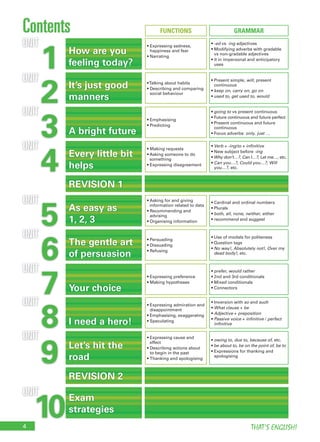
FUNCTIONS GRAMMARContents
1
UNIT • Expressing sadness,
happiness and fear
• Narrating
• -ed vs -ing adjectives
• Modifying adverbs with gradable
vs non-gradable adjectives
• It in impersonal and anticipatory
uses
How are you
feeling today?
2
UNIT •Talking about habits
• Describing and comparing
social behaviour
• Present simple, will, present
continuous
• keep on, carry on, go on
• used to, get used to, would
It’s just good
manners
3
UNIT
• Emphasising
• Predicting
• going to vs present continuous
• Future continuous and future perfect
• Present continuous and future
continuous
• Focus adverbs: only, just …A bright future
4
UNIT • Making requests
• Asking someone to do
something
• Expressing disagreement
• Verb + -ing/to + infinitive
• New subject before -ing
• Why don’t…?, Can I…?, Let me…, etc.
• Can you…?, Could you…?, Will
you…?, etc.
Every little bit
helps
REVISION 1
REVISION 2
Exam
strategies
5
UNIT • Asking for and giving
information related to data
• Recommending and
advising
• Organising information
• Cardinal and ordinal numbers
• Plurals
• both, all, none, neither, either
• recommend and suggest
As easy as
1, 2, 3
6
UNIT • Persuading
• Dissuading
• Refusing
• Use of modals for politeness
• Question tags
• No way!, Absolutely not!, Over my
dead body!, etc.
The gentle art
of persuasion
7
UNIT
• Expressing preference
• Making hypotheses
• prefer, would rather
• 2nd and 3rd conditionals
• Mixed conditionals
• ConnectorsYour choice
8
UNIT • Expressing admiration and
disappointment
• Emphasising, exaggerating
• Speculating
• Inversion with so and such
• What clause + be
• Adjective + preposition
• Passive voice + infinitive / perfect
infinitiveI need a hero!
9
10
UNIT
10
UNIT
• Expressing cause and
effect
• Describing actions about
to begin in the past
• Thanking and apologising
• owing to, due to, because of, etc.
• be about to, be on the point of, be to
• Expressions for thanking and
apologising
Let’s hit the
road
5THAT’S ENGLISH!
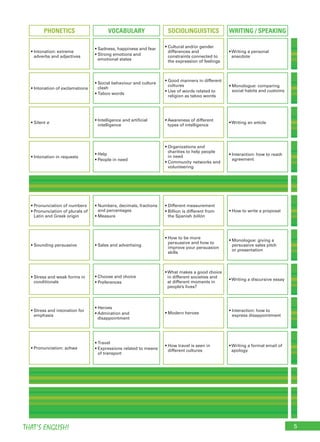
PHONETICS VOCABULARY SOCIOLINGUISTICS WRITING / SPEAKING
• Intonation: extreme
adverbs and adjectives
• Sadness, happiness and fear
• Strong emotions and
emotional states
• Cultural and/or gender
differences and
constraints connected to
the expression of feelings
• Writing a personal
anecdote
• Intonation of exclamations
• Social behaviour and culture
clash
• Taboo words
• Good manners in different
cultures
• Use of words related to
religion as taboo words
• Monologue: comparing
social habits and customs
• Silent e
• Intelligence and artificial
intelligence
• Awareness of different
types of intelligence
• Writing an article
• Intonation in requests
• Help
• People in need
• Organizations and
charities to help people
in need
• Community networks and
volunteering
• Interaction: how to reach
agreement
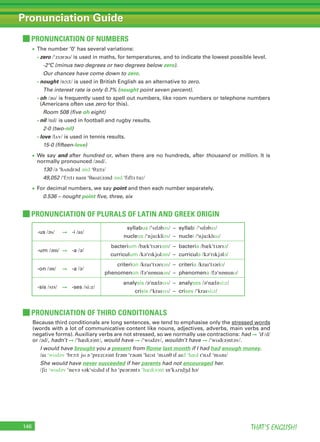
• Pronunciation of numbers
• Pronunciation of plurals of
Latin and Greek origin
• Numbers, decimals, fractions
and percentages
• Measure
• Different measurement
• Billion is different from
the Spanish billón
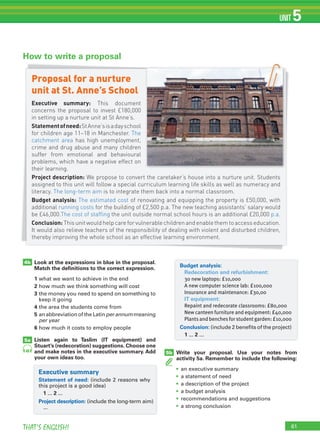
• How to write a proposal
• Sounding persuasive • Sales and advertising
• How to be more
persuasive and how to
improve your persuasion
skills
• Monologue: giving a
persuasive sales pitch
or presentation
• Stress and weak forms in
conditionals
• Choose and choice
• Preferences
• What makes a good choice
in different societies and
at different moments in
people’s lives?
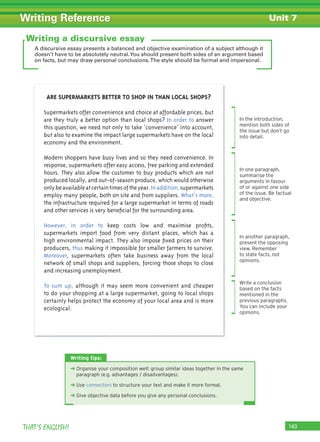
• Writing a discursive essay
• Stress and intonation for
emphasis
• Heroes
• Admiration and
disappointment
• Modern heroes
• Interaction: how to
express disappointment
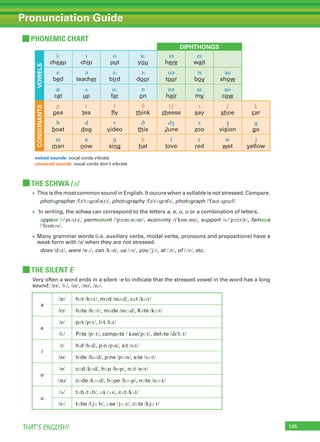
• Pronunciation: schwa
• Travel
• Expressions related to means
of transport
• How travel is seen in
different cultures
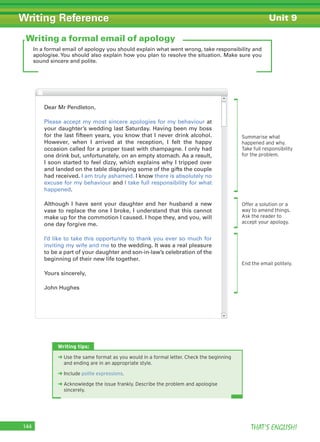
• Writing a formal email of
apology
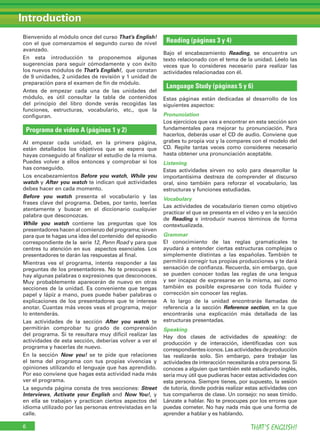
Bienvenido al módulo once del curso That’s English!
con el que comenzamos el segundo curso de nivel
avanzado.
En esta introducción te proponemos algunas
sugerencias para seguir cómodamente y con éxito
los nuevos módulos de That’s English!, que constan
de 9 unidades, 2 unidades de revisión y 1 unidad de
preparación para el examen de fin de módulo.
Antes de empezar cada una de las unidades del
módulo, es útil consultar la tabla de contenidos
del principio del libro donde verás recogidas las
funciones, estructuras, vocabulario, etc., que la
configuran.
Programa de vídeo A (páginas 1 y 2)
Al empezar cada unidad, en la primera página,
están detallados los objetivos que se espera que
hayas conseguido al finalizar el estudio de la misma.
Puedes volver a ellos entonces y comprobar si los
has conseguido.
Los encabezamientos Before you watch, While you
watch y After you watch te indican qué actividades
debes hacer en cada momento.
Before you watch presenta el vocabulario y las
frases clave del programa. Debes, por tanto, leerlas
atentamente y buscar en el diccionario cualquier
palabra que desconozcas.
While you watch contiene las preguntas que los
presentadores hacen al comienzo del programa; sirven
para que te hagas una idea del contenido del episodio
correspondiente de la serie 12, Penn Road y para que
centres tu atención en sus aspectos esenciales. Los
presentadores te darán las respuestas al final.
Mientras ves el programa, intenta responder a las
preguntas de los presentadores. No te preocupes si
hay algunas palabras o expresiones que desconoces.
Muy probablemente aparecerán de nuevo en otras
secciones de la unidad. Es conveniente que tengas
papel y lápiz a mano, pues puede haber palabras o
explicaciones de los presentadores que te interese
anotar. Cuantas más veces veas el programa, mejor
lo entenderás.
Las actividades de la sección After you watch te
permitirán comprobar tu grado de comprensión
del programa. Si te resultara muy difícil realizar las
actividades de esta sección, deberías volver a ver el
programa y hacerlas de nuevo.
En la sección Now you! se te pide que relaciones
el tema del programa con tus propias vivencias y
opiniones utilizando el lenguaje que has aprendido.
Por eso conviene que hagas esta actividad nada más
ver el programa.
La segunda página consta de tres secciones: Street
Interviews, Activate your English and Now You!, y
en ella se trabajan y practican ciertos aspectos del
idioma utilizado por las personas entrevistadas en la
calle.
Reading (páginas 3 y 4)
Bajo el encabezamiento Reading, se encuentra un
texto relacionado con el tema de la unidad. Léelo las
veces que lo consideres necesario para realizar las
actividades relacionadas con él.
Language Study (páginas 5 y 6)
Estas páginas están dedicadas al desarrollo de los
siguientes aspectos:
Pronunciation
Los ejercicios que vas a encontrar en esta sección son
fundamentales para mejorar tu pronunciación. Para
hacerlos, deberás usar el CD de audio. Conviene que
grabes tu propia voz y la compares con el modelo del
CD. Repite tantas veces como consideres necesario
hasta obtener una pronunciación aceptable.
Listening
Estas actividades sirven no solo para desarrollar la
importantísima destreza de comprender el discurso
oral, sino también para reforzar el vocabulario, las
estructuras y funciones estudiadas.
Vocabulary
Las actividades de vocabulario tienen como objetivo
practicar el que se presenta en el vídeo y en la sección
de Reading e introducir nuevos términos de forma
contextualizada.
Grammar
El conocimiento de las reglas gramaticales te
ayudará a entender ciertas estructuras complejas o
simplemente distintas a las españolas. También te
permitirá corregir tus propias producciones y te dará
sensación de confianza. Recuerda, sin embargo, que
se pueden conocer todas las reglas de una lengua
y ser incapaz de expresarse en la misma, así como
también es posible expresarse con toda fluidez y
corrección sin conocer las reglas.
A lo largo de la unidad encontrarás llamadas de
referencia a la sección Reference section, en la que
encontrarás una explicación más detallada de las
estructuras presentadas.
Speaking
Hay dos clases de actividades de speaking: de
producción y de interacción, identificadas con sus
correspondientesiconos.Lasactividadesdeproducción
las realizarás solo. Sin embargo, para trabajar las
actividades de interacción necesitarás a otra persona. Si
conoces a alguien que también esté estudiando inglés,
sería muy útil que pudieras hacer estas actividades con
esta persona. Siempre tienes, por supuesto, la sesión
de tutoría, donde podrás realizar estas actividades con
tus compañeros de clase. Un consejo: no seas tímido.
Lánzate a hablar. No te preocupes por los errores que
puedas cometer. No hay nada más que una forma de
aprender a hablar y es hablando.
Introduction
THAT’S ENGLISH!6
Writing
Esta sección te ayudará a desarrollar la destreza de
expresión escrita. Sigue las indicaciones y aprovecha
todas las oportunidades que se te ofrecen para
practicar. No es necesario que todo lo que escribas
sea absolutamente correcto. Relee tus textos y
compáralos con los modelos de respuesta que te
proporcionamos en la clave.
Programa de vídeo B (página 7)
La sesión B, que abarca el segundo programa de
vídeo, tiene por objeto ampliar la lengua presentada
en la sesión A de forma menos controlada y más
natural. Este segundo programa está compuesto por
diversos apartados:
• Documentary: aquí podrás ver un documental sobre
algún aspecto relacionado con el tema de la unidad.
• Same language,different lives: ofrece la oportunidad
de ver a personas de diferentes países de habla
inglesa respondiendo a preguntas relacionadas con
el tema de la unidad. De esta manera, además de
oír diferentes acentos, podrás aprender cómo es la
vida en estos países y contrastarla con la tuya.
•That’s the USA: es una sección con la que podrás
disfrutar de un viaje cultural y turístico por los Estados
Unidos de América conociendo aspectos de la vida
norteamericana. En este módulo visitaremos el estado
de Florida. En cada episodio nuestra presentadora,
Jodi Darren, visita un lugar de interés y conversa
con personas que aportan información sobre lo que
estamos viendo. Esta sección te ayudará a mejorar
tu comprensión auditiva y a conocer de cerca
interesantes aspectos de la cultura norteamericana.
Realiza las primeras actividades de cada sección
antes de verla. Te ayudarán a familiarizarte con el
lenguaje que se va a usar. Haz el resto de actividades
de comprensión después de ver cada sección.
Un consejo: no te preocupes si no entiendes todas
las palabras de cada sección. Lo importante es captar
la información principal y los detalles sobre los que
se pregunta en las actividades de comprensión.
Skills Work (página 8)
Esta página está reservada para trabajar las distintas
destrezas de listening, reading, speaking y writing
de forma integrada y con actividades más abiertas
y menos controladas que las de las sesiones A y B.
Comprueba en la página de respuestas los modelos
que se proporcionan para hacer las actividades
escritas y practica las actividades orales en tu tutoría.
Writing / Speaking (páginas 9 y 10)
En estos módulos del nivel avanzado se alternan cada
dos unidades dos páginas dedicadas a las destrezas
de writing o speaking. En ellas se incluirán actividades
para analizar textos escritos u orales (forma y
estructura) y el lenguaje y funciones utilizados en
ellos. Al final de cada sección el alumno tendrá que
producir o bien un texto escrito basado en el tipo
de texto trabajado en la sección o bien un texto oral
en forma de monólogo o diálogo. Al final del libro
encontrarás las secciones Writing Reference y Answer
Key. En la primera se incluyen modelos de los tipos de
texto presentados en las unidades, y en la segunda se
ofrecen respuestas modelo para todos los ejercicios.
Self Tests
Al final del libro se incluyen los Self Tests
correspondientes a cada una de las unidades. Estas
páginas te dan la oportunidad de que te autoevalúes
y repases los contenidos fundamentales de la unidad.
Revision Units
En este módulo se han elaborado dos unidades de
revisión. Revision Unit 1, que se encuentra después
de la unidad 4, revisa los contenidos de las cuatro
primeras unidades. Revision Unit 2, que aparece
después de la unidad 9, revisa las cinco restantes.
Constan de cuatro páginas para repasar y
consolidar los contenidos principales del módulo.
Incluyen actividades de gramática, vocabulario y
pronunciación, y práctica de las 4 destrezas.
Unit 10 Exam Strategies
La última unidad del libro está destinada a preparar
el examen de final de módulo. Plantea un modelo de
examen por destrezas similar al que se propone en las
Escuelas de Idiomas de la mayoría de las Comunidades
Autónomas. Además proporciona actividades y
consejos para desarrollar las estrategias necesarias
para enfrentarse a las distintas partes del examen.
Reference Section
En esta sección encontrarás las secciones de
Grammar Reference, Writing Reference y Answer
Key que ya se han mencionado. Además, se incluye
la sección Pronunciation Guide con explicaciones
teóricas del contenido de pronunciación presentado
en las unidades.
Por último, un par de consejos. Primero, intenta
asistir a las sesiones de tutoría con regularidad. Son
fundamentales para el desarrollo de tu competencia
comunicativa. En segundo lugar, te animamos a
que hagas uso de la plataforma digital, en la que
además de todo el contenido del curso digitalizado,
encontrarás material de estudio extra y herramientas
de comunicación que te pueden facilitar tu aprendizaje.
Un saludo y mucho ánimo.
El equipo de That’s English!
7THAT’S ENGLISH!
8 THAT’S ENGLISH!
1UNIT
I’ve got a lump in my throatA
Are the statements true (✔) or false (✗). Correct
the false ones.
1 Omar is frightened that he could be sent back
to his own country.
2 Karen thinks that the media is responsible for
making people worry about immigration.
3 Omar feels grateful to the people who helped
him escape from his country.
4 Danny doesn’t want to help Omar.
Complete the text about Omar’s history with
the words from the box.
Choose the correct option.
1 Karen is meeting Omar because she wants to
write an article about him / help him.
2 Omar is upset because his parents are dead /
he can’t get news of his family.
3 Omar’s parents wanted / didn’t want him to
leave the country.
4 Omar was a journalist / scientist in his home
country.
5 The people in Omar’s country are very poor /
scared.
AFTER YOU WATCH
3
4
5
Match the words (1-4) to the definitions (a-d).
1 an immigrant
2 an economic asylum seeker
3 a political asylum seeker
a can’t stay in their own country because they
are opposed to the government
b has come to live permanently in another country
c wants to live in a country to have access to
jobs, education, health care, etc
1
BEFORE YOU WATCH
OBJECTIVES
• To discuss feelings of happiness, sadness
and fear
• To write a personal anecdote
Answer the questions.
WHILE YOU WATCH
2
1 Why did Omar come to the UK?
2 How did Omar get to the UK?
lump in my throat heart-breaking
desperate overtaken by fear
beside herself feel a bit down
‘Nobody becomes an asylum seeker unless
they are completely 1
… .’
‘Leaving your family and your country forever
is 2
... . I didn’t have the choice.’
‘Since the military takeover, the whole country
has been 3
... .’
‘If I came home even a few minutes later than
usual my mother would be 4
… with worry. I
left because it was the only thing that would
make her happy.’
‘Every time I 5
… about all my problems trying
to be accepted here, I try to remember that.
But if I talk or think about my family for one
second, I get a 6
… . I miss them so much.’
OBJECTIVES
How are you feeling
today?
NOW YOU!
6 Complete the sentences so that they are true
for you.
1 It brings a lump to my throat when …
I see images of hungry children. It’s normal
to feel desperate if you have absolutely no
money.
2 The most heart-breaking thing I have ever
seen was …
3 When I feel a bit down, I …
4 I would be beside myself with worry if …
5 I was overtaken by fear when …
9THAT’S ENGLISH!
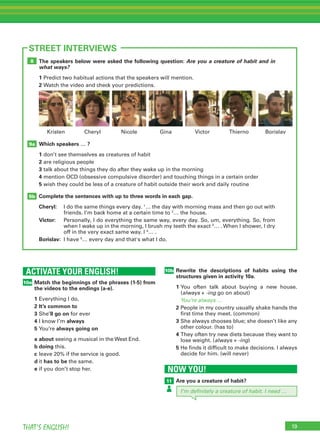
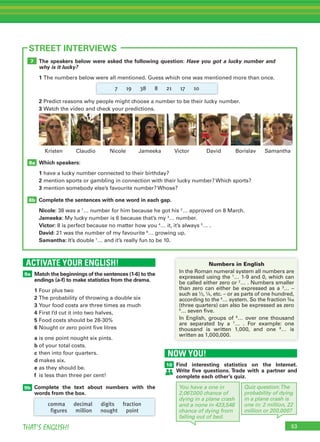
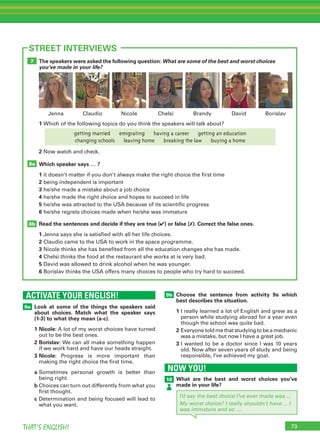
The speakers below were asked the following question: In what situations do you find it
easier or more difficult to express your emotions?
1	Predict a situation the speakers could mention in which it’s easy to express emotions.
2	Predict a situation they could mention in which it’s difficult to express emotions.
Complete the statements with one word.
1	Most of the speakers say that they find it easier to express their emotions when they are with
… and … .
2	Tina prefers sharing feelings with people she can … .
3	Kristen needs to feel … in order to talk about her emotions, but Samantha needs to be … .
In which situations do the following speakers find it hard to express their emotions?
1	Cheryl	 2	Dena	 3	Glenn	 4	Thierno
8b
8a
7
ACTIVATE YOUR ENGLISH!
Complete the table with the correct forms of
words for describing emotions.
9a
STREET INTERVIEWS
NOW YOU!
When do you find it easier to express your
emotions? Is there anything that helps you
when trying to share feelings? When do you
have a hard time expressing emotions?
10
Complete the sentences with a suitable word
from the table.
1	When I’m angry, that feeling takes over
everything: it’s a(n) … emotion.
2	Forcing refugees to talk about their past lives
can bring up sad memories and cause them a
lot of … .
3	It’s impossible not to give him your full
attention; he’s an absolutely … speaker.
4	I badly needed to communicate my situation,
and I felt … by the fact that I couldn’t make
myself understood.
5	I really believed I was going to get the job, so it
was a big … to me when I heard someone else
had been chosen.
6	I made the decision to leave my country out of
… . I felt I had no other choice.
Victor Tina Dena GlennCheryl Chelsi ThiernoKristen
Noun
Adjective
(-ed and -ing form)
annoyance annoyed / 1
…
frustration 2
… / …
compulsion 3
… / …
disappointment 4
… / …
fear frightened / 5
…
distress 6
… / …
desperation desperate
7
… / overwhelming
9b
I find it easier to express my feelings to ... , but
I have a difficult time expressing my feelings
to ... . I think they are going to laugh at me
and ...
10 THAT’S ENGLISH!
How are you feeling today?
Listen to the people talking about their
emotional reactions to the situations below.
How do you think you would feel?
READING
Complete the definitions of strong emotions
with the words from the box.
1 People experience … when they are very
angry.
2 You feel … when you realise that something
bad isn’t going to happen.
3 You feel … when you are extremely happy.
4 … is a terrible feeling of deep sadness, e.g. if
someone you love dies.
5 … is a terrible feeling: when a situation is
awful, but nothing you can do will change it.
6 … is a general feeling of unhappiness or
anxiety.
Read the title and first paragraph of the story.
What genre do you think it is?
1 a love story 3 a murder story
2 science-fiction
Readthewholestory.Choosethecorrectanswers.
1 The main character in the story is … .
a a robot c a doctor
b a computer scientist
2 The woman and man’s attitudes to life are … .
a similar b different c the same
3 The idea that it is possible to build a robot
exactly the same as a human … .
a distresses the woman
b makes the woman laugh
c hurts the woman’s feelings
1b
2
3
10
1a
1
3
4
1
2
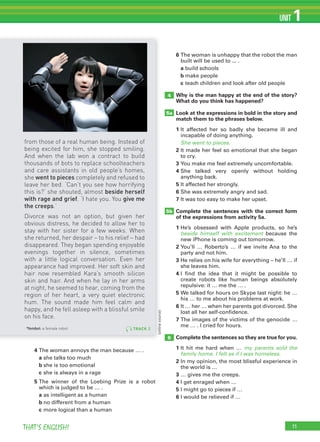
Robot heart
‘Humanity is not something unique and
special,’ he told her not long after they were
married. ‘Every aspect of being human,
including emotions, is based on the law of
physics, and therefore, can be recreated by
scientists. Perfect artificial intelligence is
only a matter of time.’ He didn’t understand
why she was distressed by this. ‘But what
about love?,’ she protested. ‘What about
poetry?’
It was typical of her to introduce irrational
elements into a logical conversation, he
thought. Early in their relationship, he had
found it touching when unimportant things –
a view from a window for example – moved
her to tears or to ecstasy. But gradually, it
just started to irritate him: she cried and
laughed too much and it was simply too easy
to hurt her feelings. Once, when he told her
that her new dress didn’t suit her – a simple
fact – she sobbed for hours. In the evening,
he was exhausted after a long day in the
laboratory and it got on his nerves when she
burst out laughing at a television programme
or poured her heart out to her friends on the
phone. ‘I would appreciate it if you would
make an effort to control yourself,’ he would
say and go into his study closing the door.
The subject of artificial intelligence became
something they couldn’t discuss without
arguing. It hit her really hard when Kara,
the fembot* that was his special project
at the lab, won the Loebing Prize since it
obviously meant that the judges had been
unable to distinguish the robot’s reactions
relieved despair rage
ecstatic distress grief
11THAT’S ENGLISH!
UNIT 1
11
4 The woman annoys the man because … .
a she talks too much
b she is too emotional
c she is always in a rage
5 The winner of the Loebing Prize is a robot
which is judged to be … .
a as intelligent as a human
b no different from a human
c more logical than a human
6 The woman is unhappy that the robot the man
built will be used to ... .
a build schools
b make people
c teach children and look after old people
Why is the man happy at the end of the story?
What do you think has happened?
Look at the expressions in bold in the story and
match them to the phrases below.
1 It affected her so badly she became ill and
incapable of doing anything.
She went to pieces.
2 It made her feel so emotional that she began
to cry.
3 You make me feel extremely uncomfortable.
4 She talked very openly without holding
anything back.
5 It affected her strongly.
6 She was extremely angry and sad.
7 It was too easy to make her upset.
Complete the sentences with the correct form
of the expressions from activity 5a.
1 He’s obsessed with Apple products, so he’s
beside himself with excitement because the
new iPhone is coming out tomorrow.
2 You’ll … Roberto’s … if we invite Ana to the
party and not him.
3 He relies on his wife for everything – he’ll … if
she leaves him.
4 I find the idea that it might be possible to
create robots like human beings absolutely
repulsive: it … me the … .
5 We talked for hours on Skype last night: he …
his … to me about his problems at work.
6 It … her … when her parents got divorced. She
lost all her self-confidence.
7 The images of the victims of the genocide …
me … . I cried for hours.
Complete the sentences so they are true for you.
1 It hit me hard when … my parents sold the
family home. I felt as if I was homeless.
2 In my opinion, the most blissful experience in
the world is …
3 … gives me the creeps.
4 I get enraged when …
5 I might go to pieces if …
6 I would be relieved if …
4
5b
5a
6
(onlinesource)(onlinesource)
TRACK 2
from those of a real human being. Instead of
being excited for him, she stopped smiling.
And when the lab won a contract to build
thousands of bots to replace schoolteachers
and care assistants in old people’s homes,
she went to pieces completely and refused to
leave her bed. ‘Can’t you see how horrifying
this is?’ she shouted, almost beside herself
with rage and grief. ‘I hate you. You give me
the creeps.’
Divorce was not an option, but given her
obvious distress, he decided to allow her to
stay with her sister for a few weeks. When
she returned, her despair – to his relief – had
disappeared. They began spending enjoyable
evenings together in silence, sometimes
with a little logical conversation. Even her
appearance had improved. Her soft skin and
hair now resembled Kara’s smooth silicon
skin and hair. And when he lay in her arms
at night, he seemed to hear, coming from the
region of her heart, a very quiet electronic
hum. The sound made him feel calm and
happy, and he fell asleep with a blissful smile
on his face.
*fembot: a female robot
THAT’S ENGLISH!
How are you feeling today?
12
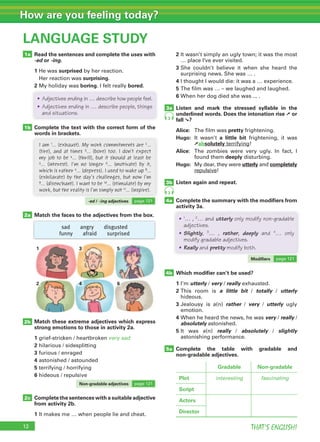
LANGUAGE STUDY
Read the sentences and complete the uses with
-ed or -ing.
1 He was surprised by her reaction.
Her reaction was surprising.
2 My holiday was boring. I felt really bored.
Complete the text with the correct form of the
words in brackets.
2 It wasn’t simply an ugly town; it was the most
… place I’ve ever visited.
3 She couldn’t believe it when she heard the
surprising news. She was … .
4 I thought I would die: it was a … experience.
5 The film was … – we laughed and laughed.
6 When her dog died she was ... .
Listen and mark the stressed syllable in the
underlined words. Does the intonation rise ➚ or
fall ➘?
Alice: The film was pretty frightening.
Hugo: It wasn’t a little bit frightening, it was
➚absolutely terrifying!
Alice: The zombies were very ugly. In fact, I
found them deeply disturbing.
Hugo: My dear, they were utterly and completely
repulsive!
Listen again and repeat.
Complete the summary with the modifiers from
activity 3a.
Match the faces to the adjectives from the box.
Match these extreme adjectives which express
strong emotions to those in activity 2a.
1 grief-stricken / heartbroken very sad
2 hilarious / sidesplitting
3 furious / enraged
4 astonished / astounded
5 terrifying / horrifying
6 hideous / repulsive
1a
1b
2a
5a
3a
3b
4a
4b
3
3
I am 1… (exhaust). My work commitments are 2…
(tire), and at times 3… (bore) too. I don’t expect
my job to be 4… (thrill), but it should at least be
5… (interest). I’m no longer 6… (motivate) by it,
which is rather 7… (depress). I used to wake up 8…
(exhilarate) by the day’s challenges, but now I’m
9… (disenchant). I want to be 10… (stimulate) by my
work, but the reality is I’m simply not 11… (inspire).
• Adjectives ending in … describe how people feel.
• Adjectives ending in … describe people, things
and situations.
• 1
… , 2
… and utterly only modify non-gradable
adjectives.
• Slightly, 3
… , rather, deeply and 4
… only
modify gradable adjectives.
• Really and pretty modify both.
-ed / -ing adjectives page 121
Modifiers page 121
2b
2c
Gradable Non-gradable
Plot interesting fascinating
Script
Actors
Director
sad angry disgusted
funny afraid surprised
Complete the sentences with a suitable adjective
from activity 2b.
1 It makes me … when people lie and cheat.
Which modifier can’t be used?
1 I’m utterly / very / really exhausted.
2 This room is a little bit / totally / utterly
hideous.
3 Jealousy is a(n) rather / very / utterly ugly
emotion.
4 When he heard the news, he was very / really /
absolutely astonished.
5 It was a(n) really / absolutely / slightly
astonishing performance.
Complete the table with gradable and
non-gradable adjectives.
1
2
3
4
5
6
Non-gradable adjectives page 121
THAT’S ENGLISH!
UNIT 1
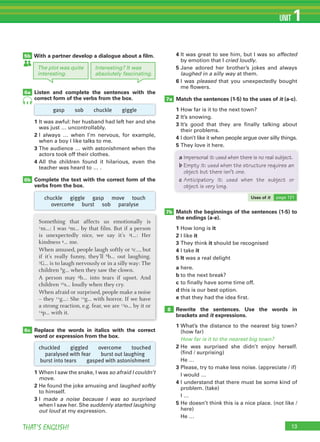
With a partner develop a dialogue about a film.
Listen and complete the sentences with the
correct form of the verbs from the box.
Replace the words in italics with the correct
word or expression from the box.
1 When I saw the snake, I was so afraid I couldn’t
move.
2 He found the joke amusing and laughed softly
to himself.
3 I made a noise because I was so surprised
when I saw her. She suddenly started laughing
out loud at my expression.
1 It was awful: her husband had left her and she
was just … uncontrollably.
2 I always … when I’m nervous, for example,
when a boy I like talks to me.
3 The audience … with astonishment when the
actors took off their clothes.
4 All the children found it hilarious, even the
teacher was heard to … .
Complete the text with the correct form of the
verbs from the box.
6b
5b
6a
6c
7a
7b
8
4 It was great to see him, but I was so affected
by emotion that I cried loudly.
5 Jane adored her brother’s jokes and always
laughed in a silly way at them.
6 I was pleased that you unexpectedly bought
me flowers.
Match the sentences (1-5) to the uses of it (a-c).
1 How far is it to the next town?
2 It’s snowing.
3 It’s good that they are finally talking about
their problems.
4 I don’t like it when people argue over silly things.
5 They love it here.
Match the beginnings of the sentences (1-5) to
the endings (a-e).
1 How long is it
2 I like it
3 They think it should be recognised
4 I take it
5 It was a real delight
a here.
b to the next break?
c to finally have some time off.
d this is our best option.
e that they had the idea first.
Rewrite the sentences. Use the words in
brackets and it expressions.
1 What’s the distance to the nearest big town?
(how far)
How far is it to the nearest big town?
2 He was surprised she didn’t enjoy herself.
(find / surprising)
He …
3 Please, try to make less noise. (appreciate / if)
I would …
4 I understand that there must be some kind of
problem. (take)
I …
5 He doesn’t think this is a nice place. (not like /
here)
He …
13
4
Something that affects us emotionally is
1m…: I was 2m… by that film. But if a person
is unexpectedly nice, we say it’s 3t…: Her
kindness 4… me.
When amused, people laugh softly or 5c…, but
if it’s really funny, they’ll 6b… out laughing.
7G… is to laugh nervously or in a silly way: The
children 8g… when they saw the clown.
A person may 9b… into tears if upset. And
children 10s… loudly when they cry.
When afraid or surprised, people make a noise
– they 11g…: She 12g… with horror. If we have
a strong reaction, e.g. fear, we are 13o… by it or
14p… with it.
gasp sob chuckle giggle
chuckle giggle gasp move touch
overcome burst sob paralyse
chuckled giggled overcome touched
paralysed with fear burst out laughing
burst into tears gasped with astonishment
The plot was quite
interesting.
Interesting? It was
absolutely fascinating.
a Impersonal it: used when there is no real subject.
b Empty it: used when the structure requires an
object but there isn’t one.
c Anticipatory it: used when the subject or
object is very long.
Uses of it page 121
14 THAT’S ENGLISH!
How are you feeling today?
B
Rank these factors in order of importance (1-5)
for a successful marriage.
sharing the same hobbies and interests
being physically attracted to each other
respecting each other
liking each other’s family and friends
sharing religious and political beliefs
Watch the documentary and choose the correct
option.
1 Dorinda and her husband split up after …
years of marriage.
a 21 b 31 c 13
2 Dorinda was a(n) … type of wife, who didn’t
have a life independent from her husband.
a daughter b adoring c doormatty
3 When Dorinda started travelling and ‘pushing
boundaries’, her husband … .
a refused to go with her
b was jealous of the attention she got
c was upset because she was away so often
4 Cheryl Massey thinks that when there are
negative emotions in a marriage, it’s difficult
for people to … .
a share them so they can be resolved
b act them out
c keep them inside
5 Emma and Sean are discussing the … for their
wedding.
a menu b guest list c seating plan
6 Cheryl Massey believes that … is essential to
build a strong marriage.
a feelings c expression
b emotional intelligence
What do you know about Miami?
THAT’S THE USA
6
1 Miami is in the state of Alabama / Florida … .
2 One of the best ways to tour the city is on a
Segway / bicycle … .
3 Cubans went to Ellis Island / FreedomTower …
to be documented and processed.
Watch the video to check your answers.
Watch again and complete the fact file.7
1
DOCUMENTARY
Wearing your emotions on your sleeve
2 The Canadians are maybe a little bit more
closed or … than people in some cultures.
3 In the States, people wear their … on their sleeve.
4 In the States, I think people keep it … ,
especially if they are men.
Do you think these cultures are openly emotional
(O) or do people tend to hide their emotions (H)?
SAME LANGUAGE, DIFFERENT LIVES
3
2
Complete the statements so that they are true
for you.
1 For me, emotional intelligence is the ability to …
put yourself in somebody else’s place and
imagine how they see things. I think this can
help you solve problems because it gives you
more understanding.
2 I wouldn’t like to be a doormatty partner
because …
3 I would/wouldn’t like to visit Miami because …
4 I think it’s important to keep a stiff upper lip
when …
8
NOW YOU!
MIAMI
Visitors 1
… million
Nickname
The 2
… City (because it grew
so fast)
Community
70% from 3
… countries and
the Caribbean
Famous
landmarks
The 4
…Tower
Little 5
... (the Cuban quarter)
The Domino Park
Important
yearly event
The largest 6
… in the world
in Calle Ocho
4
5
Jamaica Australia New Zealand Canada
South Africa USA Scotland
Watch the video and check your predictions. In
which culture is there a difference of opinion
about how emotional people are?
Watch again and complete the statements with
one word.
1 In New Zealand it’s important to keep a stiff
upper … .
15THAT’S ENGLISH!
UNIT 1
Which of these statements do you agree with?
1 Women are better at expressing their feelings than men.
2 Society doesn’t allow men to express their feelings openly.
3 Women are emotional and men are rational.
Read the article about men and emotion and answer the questions.
1 Do you think it was written by a man or a woman? Why?
2 In your experience, do you think what the writer says about the
differences between the sexes is true? Why / Why not?
1
2
SKILLS WORK
Read the article again and complete the
summary with the correct form of the words in
bold from the text.
Listen to two couples talking to a relationship
therapist about their reactions to the article.
Who is the most emotional person in each
couple, the man or the woman?
Listen again and answer the questions.
1 What used to hurt Charo’s feelings?
2 How does Charo say that Mark copes with his
emotions?
3 How does Mark explain the fact that he finds it
difficult to talk about his feelings?
4 What makes Gianni ‘beside himself with rage’?
5 What sad event hit Sunita particularly hard?
What advice would you give to a young couple
about how to manage their different attitudes
towards expressing their emotions?
3
5
4a
4b
6
6
Well, I’d say that knowing and accepting
that you’re different is the first step towards
a healthy relationship. Moreover, …
When men get 1… or find themselves in 2…
situations, they become more 3… than women
do.Theyarealsomorelikelytoresorttoviolence.
Women generally manage their emotions more
successfully and when 4… , they need to be 5…
and to talk about their problems.
‘What are you thinking?’ Men hate
it when a woman asks them this
question because it represents a
fundamental difference between
the sexes. Women initially tend
to go quiet when they feel upset
or distressed, yet confusingly
for men, women also want to be
reassured by later talking through
the problem and assume that men
will want the same thing. Men,
however, stop communicating
when they feel they have a problem
to solve.
But men are not less emotional
than women: it’s just that the sexes
process emotion in different ways.
In fact, research suggests that men
are actually more sensitive to its
effects. For example, research
with children has demonstrated
that when boys burst out crying,
they release higher levels of stress
hormones into their bloodstream
than girls do. Similarly, when an
adultmanbecomesveryemotional,
he goes to pieces physically much
more than a woman. His blood
pressure skyrockets, and he is
at risk of having a heart attack.
It also takes much longer for a
man’s blood pressure and immune
system to return to normal than
for a woman’s. It’s not surprising
then, that if a man thinks he might
be overcome by emotion, his first
instinct is to leave and calm down.
There’s another reason for this
behaviour, too. Men’s brains are
naturally wired for action and
strong emotion, such as anger,
which is likely to result in action –
possibly violence. So, ladies, don’t
let your feelings be hurt when your
man doesn’t want to talk to you
about his problems. It may be that
he’s just trying to protect himself –
and you.
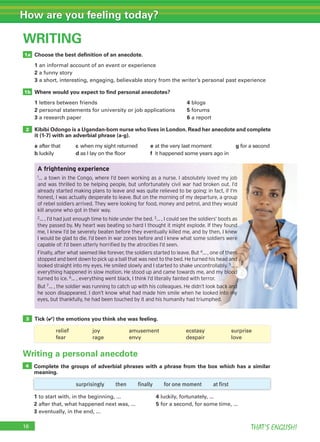
Why a man can’t be more like a woman
TRACK 5
(onlinesource)
16 THAT’S ENGLISH!
How are you feeling today?
WRITING
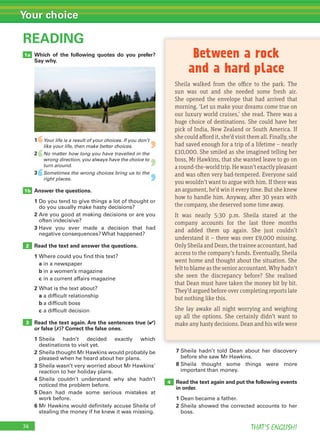
Choose the best definition of an anecdote.
1 an informal account of an event or experience
2 a funny story
3 a short, interesting, engaging, believable story from the writer’s personal past experience
Where would you expect to find personal anecdotes?
1 letters between friends 4 blogs
2 personal statements for university or job applications 5 forums
3 a research paper 6 a report
Kibibi Odongo is a Ugandan-born nurse who lives in London. Read her anecdote and complete
it (1-7) with an adverbial phrase (a-g).
a after that c when my sight returned e at the very last moment g for a second
b luckily d as I lay on the floor f it happened some years ago in
Tick (✔) the emotions you think she was feeling.
1a
1b
2
3
Writing a personal anecdote
Complete the groups of adverbial phrases with a phrase from the box which has a similar
meaning.
1 to start with, in the beginning, ... 4 luckily, fortunately, ...
2 after that, what happened next was, ... 5 for a second, for some time, ...
3 eventually, in the end, ...
4
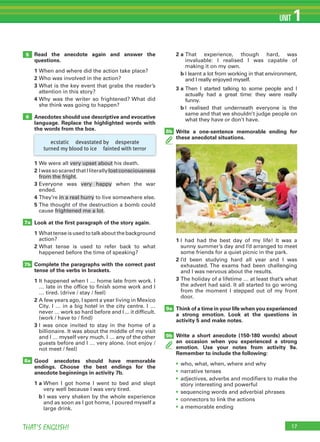
A frightening experience
1… a town in the Congo, where I’d been working as a nurse. I absolutely loved my job
and was thrilled to be helping people, but unfortunately civil war had broken out. I’d
already started making plans to leave and was quite relieved to be going: in fact, if I’m
honest, I was actually desperate to leave. But on the morning of my departure, a group
of rebel soldiers arrived. They were looking for food, money and petrol, and they would
kill anyone who got in their way.
2… , I’d had just enough time to hide under the bed. 3… , I could see the soldiers’ boots as
they passed by. My heart was beating so hard I thought it might explode. If they found
me, I knew I’d be severely beaten before they eventually killed me, and by then, I knew
I would be glad to die. I’d been in war zones before and I knew what some soldiers were
capable of: I’d been utterly horrified by the atrocities I’d seen.
Finally, after what seemed like forever, the soldiers started to leave. But 4… , one of them
stopped and bent down to pick up a ball that was next to the bed. He turned his head and
looked straight into my eyes. He smiled slowly and I started to shake uncontrollably. 5… ,
everything happened in slow motion. He stood up and came towards me, and my blood
turned to ice. 6… , everything went black, I think I’d literally fainted with terror.
But 7… , the soldier was running to catch up with his colleagues. He didn’t look back and
he soon disappeared. I don’t know what had made him smile when he looked into my
eyes, but thankfully, he had been touched by it and his humanity had triumphed.
surprisingly then finally for one moment at first
relief joy amusement ecstasy surprise
fear rage envy despair love
17THAT’S ENGLISH!
UNIT 1
Read the anecdote again and answer the
questions.
1 When and where did the action take place?
2 Who was involved in the action?
3 What is the key event that grabs the reader’s
attention in this story?
4 Why was the writer so frightened? What did
she think was going to happen?
Anecdotes should use descriptive and evocative
language. Replace the highlighted words with
the words from the box.
1 We were all very upset about his death.
2 IwassoscaredthatIliterallylostconsciousness
from the fright.
3 Everyone was very happy when the war
ended.
4 They’re in a real hurry to live somewhere else.
5 The thought of the destruction a bomb could
cause frightened me a lot.
Look at the first paragraph of the story again.
1 Whattenseisusedtotalkaboutthebackground
action?
2 What tense is used to refer back to what
happened before the time of speaking?
Complete the paragraphs with the correct past
tense of the verbs in brackets.
1 It happened when I … home late from work. I
… late in the office to finish some work and I
… tired. (drive / stay / feel)
2 A few years ago, I spent a year living in Mexico
City. I … in a big hotel in the city centre. I …
never … work so hard before and I ... it difficult.
(work / have to / find)
3 I was once invited to stay in the home of a
billionaire. It was about the middle of my visit
and I … myself very much. I … any of the other
guests before and I … very alone. (not enjoy /
not meet / feel)
Good anecdotes should have memorable
endings. Choose the best endings for the
anecdote beginnings in activity 7b.
1 a When I got home I went to bed and slept
very well because I was very tired.
b I was very shaken by the whole experience
and as soon as I got home, I poured myself a
large drink.
2 a That experience, though hard, was
invaluable: I realised I was capable of
making it on my own.
b I learnt a lot from working in that environment,
and I really enjoyed myself.
3 a Then I started talking to some people and I
actually had a great time: they were really
funny.
b I realised that underneath everyone is the
same and that we shouldn’t judge people on
what they have or don’t have.
Write a one-sentence memorable ending for
these anecdotal situations.
5
6
8b
7a
7b
8a
1 I had had the best day of my life! It was a
sunny summer’s day and I’d arranged to meet
some friends for a quiet picnic in the park.
2 I’d been studying hard all year and I was
exhausted. The exams had been challenging
and I was nervous about the results.
3 The holiday of a lifetime … at least that’s what
the advert had said. It all started to go wrong
from the moment I stepped out of my front
door.
Think of a time in your life when you experienced
a strong emotion. Look at the questions in
activity 5 and make notes.
Write a short anecdote (150-180 words) about
an occasion when you experienced a strong
emotion. Use your notes from activity 9a.
Remember to include the following:
• who, what, when, where and why
• narrative tenses
• adjectives, adverbs and modifiers to make the
story interesting and powerful
• sequencing words and adverbial phrases
• connectors to link the actions
• a memorable ending
9a
9b
ecstatic devastated by desperate
turned my blood to ice fainted with terror
18 THAT’S ENGLISH!
2UNIT
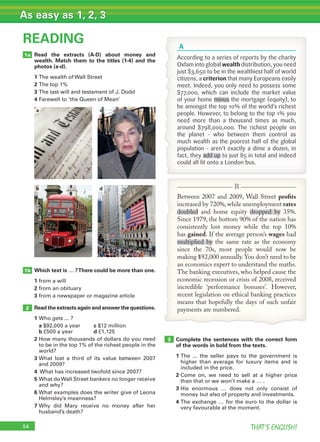
When in Rome ...A
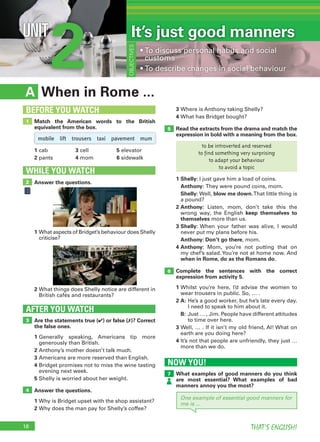
3 Where is Anthony taking Shelly?
4 What has Bridget bought?
Read the extracts from the drama and match the
expression in bold with a meaning from the box.
1 Shelly: I just gave him a load of coins.
Anthony: They were pound coins, mom.
Shelly: Well, blow me down.That little thing is
a pound?
2 Anthony: Listen, mom, don’t take this the
wrong way, the English keep themselves to
themselves more than us.
3 Shelly: When your father was alive, I would
never put my plans before his.
Anthony: Don’t go there, mom.
4 Anthony: Mom, you’re not putting that on
my chef’s salad.You’re not at home now. And
when in Rome, do as the Romans do.
Complete the sentences with the correct
expression from activity 5.
1 Whilst you’re here, I’d advise the women to
wear trousers in public. So, … .
2 A: He’s a good worker, but he’s late every day.
I need to speak to him about it.
B: Just … , Jim. People have different attitudes
to time over here.
3 Well, … . If it isn’t my old friend, Al! What on
earth are you doing here?
4 It’s not that people are unfriendly, they just …
more than we do.
Are the statements true (✔) or false (✗)? Correct
the false ones.
1 Generally speaking, Americans tip more
generously than British.
2 Anthony’s mother doesn’t talk much.
3 Americans are more reserved than English.
4 Bridget promises not to miss the wine tasting
evening next week.
5 Shelly is worried about her weight.
Answer the questions.
1 Why is Bridget upset with the shop assistant?
2 Why does the man pay for Shelly’s coffee?
AFTER YOU WATCH
3
4
5
6
Match the American words to the British
equivalent from the box.
1 cab 3 cell 5 elevator
2 pants 4 mom 6 sidewalk
1
BEFORE YOU WATCH
OBJECTIVES
• To discuss personal habits and social
customs
• To describe changes in social behaviour
Answer the questions.
WHILE YOU WATCH
2
1 What aspects of Bridget’s behaviour does Shelly
criticise?
2 What things does Shelly notice are different in
British cafés and restaurants?
It’s just good manners
mobile lift trousers taxi pavement mum
to be introverted and reserved
to find something very surprising
to adapt your behaviour
to avoid a topic
NOW YOU!
What examples of good manners do you think
are most essential? What examples of bad
manners annoy you the most?
7
One example of essential good manners for
me is ...
19THAT’S ENGLISH!
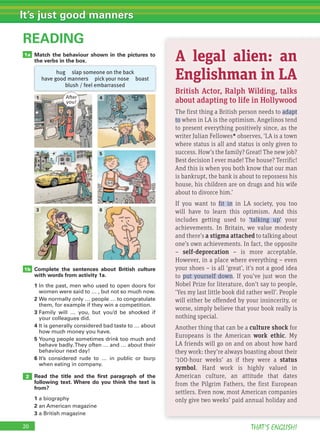
The speakers below were asked the following question: Are you a creature of habit and in
what ways?
1	Predict two habitual actions that the speakers will mention.
2	Watch the video and check your predictions.
Which speakers … ?
1	don’t see themselves as creatures of habit
2	are religious people
3	talk about the things they do after they wake up in the morning
4	mention OCD (obsessive compulsive disorder) and touching things in a certain order
5	wish they could be less of a creature of habit outside their work and daily routine
Complete the sentences with up to three words in each gap.
Cheryl:	I do the same things every day. 1
… the day with morning mass and then go out with
friends. I’m back home at a certain time to 2
… the house.
Victor:	Personally, I do everything the same way, every day. So, um, everything. So, from
when I wake up in the morning, I brush my teeth the exact 3
… . When I shower, I dry
off in the very exact same way. I 4
… .
Borislav:	 I have 5
… every day and that's what I do.
9b
9a
8
ACTIVATE YOUR ENGLISH!
Match the beginnings of the phrases (1-5) from
the videos to the endings (a-e).
1	Everything I do,
2	It’s common to
3	She’ll go on for ever
4	I know I’m always
5	You’re always going on
a	about seeing a musical in the West End.
b	doing this.
c	leave 20% if the service is good.
d	it has to be the same.
e	if you don’t stop her.
10a
19
STREET INTERVIEWS
NOW YOU!
Are you a creature of habit?11
10b Rewrite the descriptions of habits using the
structures given in activity 10a.
1	You often talk about buying a new house.
(always + -ing go on about)
	 You’re always …
2	People in my country usually shake hands the
first time they meet. (common)
3	She always chooses blue; she doesn’t like any
other colour. (has to)
4	They often try new diets because they want to
lose weight. (always + -ing)
5	He finds it difficult to make decisions. I always
decide for him. (will never)
Nicole Gina Victor ThiernoCheryl BorislavKristen
I’m definitely a creature of habit. I need …
20 THAT’S ENGLISH!
It’s just good manners
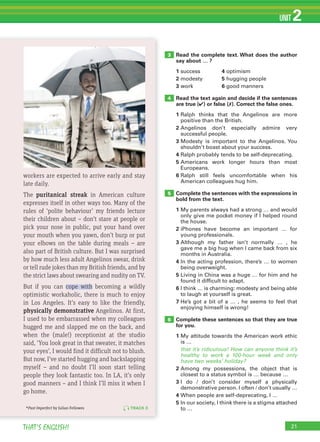
Match the behaviour shown in the pictures to
the verbs in the box.
READING
Complete the sentences about British culture
with words from activity 1a.
1 In the past, men who used to open doors for
women were said to … , but not so much now.
2 We normally only … people … to congratulate
them, for example if they win a competition.
3 Family will … you, but you’d be shocked if
your colleagues did.
4 It is generally considered bad taste to … about
how much money you have.
5 Young people sometimes drink too much and
behave badly.They often … and … about their
behaviour next day!
6 It’s considered rude to … in public or burp
when eating in company.
Read the title and the first paragraph of the
following text. Where do you think the text is
from?
1 a biography
2 an American magazine
3 a British magazine
1b
2
20
1a
4
5
1
2
3 6
A legal alien: an
Englishman in LA
British Actor, Ralph Wilding, talks
about adapting to life in Hollywood
The first thing a British person needs to adapt
to when in LA is the optimism. Angelinos tend
to present everything positively since, as the
writer Julian Fellowes* observes, ‘LA is a town
where status is all and status is only given to
success. How’s the family? Great! The new job?
Best decision I ever made! The house? Terrific!
And this is when you both know that our man
is bankrupt, the bank is about to repossess his
house, his children are on drugs and his wife
about to divorce him.’
If you want to fit in in LA society, you too
will have to learn this optimism. And this
includes getting used to ‘talking up’ your
achievements. In Britain, we value modesty
and there’s a stigma attached to talking about
one’s own achievements. In fact, the opposite
– self-deprecation – is more acceptable.
However, in a place where everything – even
your shoes – is all ‘great’, it’s not a good idea
to put yourself down. If you’ve just won the
Nobel Prize for literature, don’t say to people,
‘Yes my last little book did rather well’. People
will either be offended by your insincerity, or
worse, simply believe that your book really is
nothing special.
Another thing that can be a culture shock for
Europeans is the American work ethic. My
LA friends will go on and on about how hard
they work: they’re always boasting about their
‘100-hour weeks’ as if they were a status
symbol. Hard work is highly valued in
American culture, an attitude that dates
from the Pilgrim Fathers, the first European
settlers. Even now, most American companies
only give two weeks’ paid annual holiday and
hug slap someone on the back
have good manners pick your nose boast
blush / feel embarrassed
After
you!
21THAT’S ENGLISH!
UNIT 2
21
Read the complete text. What does the author
say about … ?
1 success 4 optimism
2 modesty 5 hugging people
3 work 6 good manners
Read the text again and decide if the sentences
are true (✔) or false (✗). Correct the false ones.
1 Ralph thinks that the Angelinos are more
positive than the British.
2 Angelinos don’t especially admire very
successful people.
3 Modesty is important to the Angelinos. You
shouldn’t boast about your success.
4 Ralph probably tends to be self-deprecating.
5 Americans work longer hours than most
Europeans.
6 Ralph still feels uncomfortable when his
American colleagues hug him.
Complete the sentences with the expressions in
bold from the text.
1 My parents always had a strong … and would
only give me pocket money if I helped round
the house.
2 iPhones have become an important … for
young professionals.
3 Although my father isn’t normally … , he
gave me a big hug when I came back from six
months in Australia.
4 In the acting profession, there’s … to women
being overweight.
5 Living in China was a huge … for him and he
found it difficult to adapt.
6 I think … is charming: modesty and being able
to laugh at yourself is great.
7 He’s got a bit of a … , he seems to feel that
enjoying himself is wrong!
Complete these sentences so that they are true
for you.
1 My attitude towards the American work ethic
is …
that it’s ridiculous! How can anyone think it’s
healthy to work a 100-hour week and only
have two weeks’ holiday?
2 Among my possessions, the object that is
closest to a status symbol is … because …
3 I do / don’t consider myself a physically
demonstrative person. I often / don’t usually …
4 When people are self-deprecating, I …
5 In our society, I think there is a stigma attached
to …
3
4
5
6
TRACK 8
workers are expected to arrive early and stay
late daily.
The puritanical streak in American culture
expresses itself in other ways too. Many of the
rules of ‘polite behaviour’ my friends lecture
their children about – don’t stare at people or
pick your nose in public, put your hand over
your mouth when you yawn, don’t burp or put
your elbows on the table during meals – are
also part of British culture. But I was surprised
by how much less adult Angelinos swear, drink
or tell rude jokes than my British friends, and by
the strict laws about swearing and nudity on TV.
But if you can cope with becoming a wildly
optimistic workaholic, there is much to enjoy
in Los Angeles. It’s easy to like the friendly,
physically demonstrative Angelinos. At first,
I used to be embarrassed when my colleagues
hugged me and slapped me on the back, and
when the (male!) receptionist at the studio
said, ‘You look great in that sweater, it matches
your eyes’, I would find it difficult not to blush.
But now, I’ve started hugging and backslapping
myself – and no doubt I’ll soon start telling
people they look fantastic too. In LA, it’s only
good manners – and I think I’ll miss it when I
go home.
*Past Imperfect by Julian Fellowes
THAT’S ENGLISH!
It’s just good manners
22
Tom and Jen are talking about their marriage
problems. Rewrite their remarks using the
structure in brackets.
1Tom: She shouted at me a lot. (keep on)
She kept on shouting at me.
2 Jen: I always believed that we would soon be
moving back to LA. (carry on)
3 Jen: When he told me about staying in
London, I cried a lot. (repetition of verb)
4Tom: I always hoped that our marriage would
work. (keep on)
5 Jen: I continued trying to find a job. I refused
to give up. (go on)
6Tom: I tried to earn more so she’d be happy: I
worked a lot. (repetition of verb)
7 Jen: He comes home late from the office every
night. (present continuous + always)
Look at the extract from Jen’s diary.Then choose
the correct answers to complete the explanation.
LANGUAGE STUDY
Listen to three people talking about their habits
when eating out, travelling or shopping. Who
talks about what?
1 Liliane: … 2 Robert: … 3 Dieter: …
Listen again and answer the questions.
1 What does Liliane say about lists? What is she
always looking for?
2 What will Robert always visit before he eats
out? What is he constantly trying?
3 What is Dieter always experimenting with?
What will he try to do before he gets on the plane?
Listen again and complete the sentences.
L: I 1… often … a list before I go out but I 2…
always … it. I 3… also always … for bargains.
R: I 4… always … the kitchens. I 5… just … my head
round the door. I 6… constantly … new places.
D: I 7… usually … to the airport with lots of time.
I 8… almost always only … hand luggage. I 9…
always … with ways to carry as little luggage
as possible. I 10… to find somewhere to eat.
Think about your eating out, shopping and
travel habits. What type of things do you find
yourself always doing?What will you usually do
as a matter of course?
Eating out: When I’m meeting friends for lunch
or supper, I’ll always let someone else choose
the restaurant.
Shopping: ...
Travel: ...
Tom (British) and Jen (American) live in London,
which Jen hates.Complete the dialogue between
Tom’s mother and sister with the correct form of
the verb in brackets: will + infinitive or present
continuous.
Mother: Jen is having a difficult time in London.
She 1won’t go out (not go out) and try to
meet people, and she 2… (never help)
in the house. She 3… constantly …
(moan) about how dirty and expensive
London is, but she 4… (spend) a fortune
on taxis and clothes every week.
Sister: Why doesn’t she get a job?
Mother: Well, it’s not easy for an unknown
American actress. And if I suggest she
does something else, she 5… (get) really
angry. Sometimes she 6… (not speak)
to me for days. And she 7… always …
(make) plans for when they’re back in LA.
Sister: DoesTom know how unhappy she is?
Mother: Of course, and he 8… always … (talk)
about moving back to the States, but
I don’t think he’s serious. When she’s
upset he 9… (buy) her presents and he
10… (make) her promises, but I think he
should be honest with her.
1a
1b
1c
2
3
4
5a
9
9
9
I’m trying to get used to living in the UK, but
it’s hard. I just can’t get used to the accents –
well, I am used to Tom and his mother’s accent
now, and with time I might even get used to
their friends’. When I first arrived, nobody could
understand me either, but everyone seems to
be used to hearing my American accent now.
Describing habits page 123
Describing repetitive behaviour page 123
THAT’S ENGLISH!
UNIT 2
Choose the correct form of the verb. In which
case are both options correct?
6
7a
7b
8b
8a
Write three things you used to / didn’t use to do
and three things you would / would never do
when you were younger.
I didn’t use to be very shy as a child, in fact, I was
pretty outgoing.
I would never drink my milk at morning break. It
used to make me feel sick.
Write three things you are used to doing or are
getting used to doing now.
I’m used to trying new foods from different
countries.
I’m gradually getting used to the heat.
Check the highlighted verbs in the text on pages
20-21. Complete the sentences with the correct
form of a verb from A and a preposition from B.
A
B
1 He is finding it difficult to … his new life in Brazil.
2 Don’t … yourself … . You’re just as good at
your job as anybody else in the office!
3 She’s worried that she won’t … very well in
her new job. She’s younger than most of her
colleagues and the only woman.
4 He’s always … his great qualifications, but he
isn’t any better than you or me.
5 Do you think you can … looking after a family
and working full time?
Complete the sentences so they are true for you.
1 In order to fit in with my friends / in my family,
you need to be interested in sport, or at least
pretend!
2 I often find it difficult to cope with …
3 Something I’ve had to adapt to is …
4 When someone brings up the topic of … in
conversation, I …
5b
Also, I find the English very distant. In the US, I 1…
friendly smiles from everyone, and so I can’t 2…
(be) polite but reserved all the time. In Los Angeles,
I had my own car, and so I 3… (be) independent. But
here I simply can’t 4… (drive) on the left, so I take
taxis. And as for the weather! Well, coming from
LA I 5… (feel) warm all the time, though I suppose I
6… the cold now – at least my nose isn’t constantly
red now! But I don’t think I’ll ever 7… the rain. And
I definitely won’t ever 8… the short winter days –
it’s dark at 4:30 pm!
23
adapt talk put fit cope
with down to up in
case are both options correct?
I 1used to live / would live in the Hasidic
Jewish community in Brooklyn. My childhood
was very happy. I 2wouldn’t be / didn’t use
to be dissatisfied with the Hasidic way of life
then.That started when I was older. At school,
we studied theTorah and I 3would make / used
to make the Rabbi angry by asking too many
questions: I 4got used to / get used to being
regularly punished for my curiosity! There
were so many things we were forbidden to
do: I 5used to speak / would never speak
to girls for example, except for my sisters,
because there was complete segregation of
the sexes. I 6used to want to / would want
to go to the movies so badly that I started
going in secret. As a teenager, I worked with
my father as a wedding singer and we 7would
sing / didn’t use to sing and dance all over
NewYork.The men and the women celebrate
separately at Hasidic weddings, but I 8got
used to wondering / used to wonder what
it would be like if we could sing and dance
together.
Complete the rest of the extract with the correct
form of be used to or get used to and the verb
in brackets.
• If you are used to something you 1
don’t find /
find it unusual.
• If you are getting used to something you 2
are /
aren’t becoming accustomed to it.
• Be used to and get used to can be followed by
3
a noun / -ing or a noun.
Get used to and be used to page 123
Describing past habits and routines page 124
24 THAT’S ENGLISH!
It’s just good manners
B
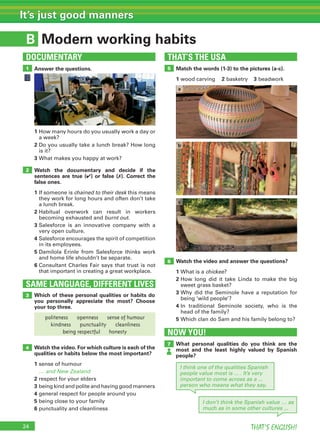
Answer the questions. Match the words (1-3) to the pictures (a-c).
1 wood carving 2 basketry 3 beadwork
THAT’S THE USA
5
Watch the video and answer the questions?
1 What is a chickee?
2 How long did it take Linda to make the big
sweet grass basket?
3 Why did the Seminole have a reputation for
being ‘wild people’?
4 In traditional Seminole society, who is the
head of the family?
5 Which clan do Sam and his family belong to?
6
1
DOCUMENTARY
Modern working habits
1 How many hours do you usually work a day or
a week?
2 Do you usually take a lunch break? How long
is it?
3 What makes you happy at work?
Watch the documentary and decide if the
sentences are true (✔) or false (✗). Correct the
false ones.
1 If someone is chained to their desk this means
they work for long hours and often don’t take
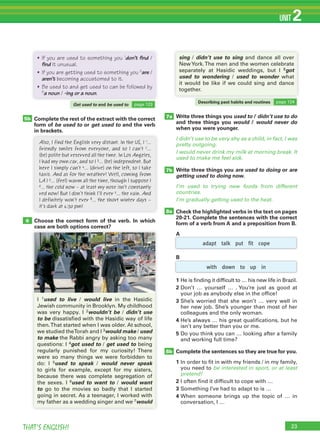
a lunch break.
2 Habitual overwork can result in workers
becoming exhausted and burnt out.
3 Salesforce is an innovative company with a
very open culture.
4 Salesforce encourages the spirit of competition
in its employees.
5 Damilola Erinle from Salesforce thinks work
and home life shouldn’t be separate.
6 Consultant Charles Fair says that trust is not
that important in creating a great workplace.
Which of these personal qualities or habits do
you personally appreciate the most? Choose
your top three.
SAME LANGUAGE, DIFFERENT LIVES
3
2
What personal qualities do you think are the
most and the least highly valued by Spanish
people?
7
NOW YOU!
I think one of the qualities Spanish
people value most is ... . It’s very
important to come across as a ...
person who means what they say.
I don’t think the Spanish value … as
much as in some other cultures ...
4
c
a
b
politeness openness sense of humour
kindness punctuality cleanliness
being respectful honesty
Watch the video. For which culture is each of the
qualities or habits below the most important?
1 sense of humour
… and New Zealand
2 respect for your elders
3 being kind and polite and having good manners
4 general respect for people around you
5 being close to your family
6 punctuality and cleanliness
25THAT’S ENGLISH!
UNIT 2
In which parts of the world do you think
there may still be undiscovered tribes?
What do you know or have you heard
about them?
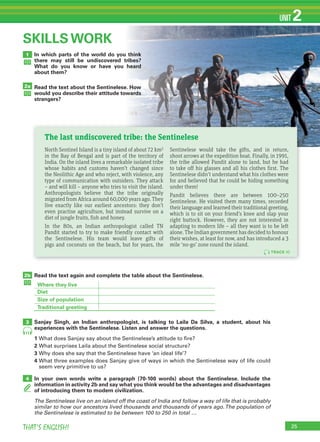
Read the text about the Sentinelese. How
would you describe their attitude towards
strangers?
1
2a
SKILLS WORK
Read the text again and complete the table about the Sentinelese.
Sanjay Singh, an Indian anthropologist, is talking to Laila Da Silva, a student, about his
experiences with the Sentinelese. Listen and answer the questions.
1 What does Sanjay say about the Sentinelese’s attitude to fire?
2 What surprises Laila about the Sentinelese social structure?
3 Why does she say that the Sentinelese have ‘an ideal life’?
4 What three examples does Sanjay give of ways in which the Sentinelese way of life could
seem very primitive to us?
In your own words write a paragraph (70-100 words) about the Sentinelese. Include the
information in activity 2b and say what you think would be the advantages and disadvantages
of introducing them to modern civilization.
The Sentinelese live on an island off the coast of India and follow a way of life that is probably
similar to how our ancestors lived thousands and thousands of years ago.The population of
the Sentinelese is estimated to be between 100 to 250 in total …
2b
3
4
11
Where they live
Diet
Size of population
Traditional greeting
TRACK 10
North Sentinel Island is a tiny island of about 72 km2
in the Bay of Bengal and is part of the territory of
India. On the island lives a remarkable isolated tribe
whose habits and customs haven’t changed since
the Neolithic Age and who reject, with violence, any
type of communication with outsiders. They attack
– and will kill – anyone who tries to visit the island.
Anthropologists believe that the tribe originally
migrated from Africa around 60,000 years ago. They
live exactly like our earliest ancestors: they don’t
even practise agriculture, but instead survive on a
diet of jungle fruits, fish and honey.
In the 80s, an Indian anthropologist called TN
Pandit started to try to make friendly contact with
the Sentinelese. His team would leave gifts of
pigs and coconuts on the beach, but for years, the
Sentinelese would take the gifts, and in return,
shoot arrows at the expedition boat. Finally, in 1991,
the tribe allowed Pandit alone to land, but he had
to take off his glasses and all his clothes first. The
Sentinelese didn’t understand what his clothes were
for and believed that he could be hiding something
under them!
Pandit believes there are between 100–250
Sentinelese. He visited them many times, recorded
their language and learned their traditional greeting,
which is to sit on your friend’s knee and slap your
right buttock. However, they are not interested in
adapting to modern life – all they want is to be left
alone. The Indian government has decided to honour
their wishes, at least for now, and has introduced a 3
mile ‘no-go’ zone round the island.
The last undiscovered tribe: the Sentinelese
26 THAT’S ENGLISH!
It’s just good manners
SPEAKING
Discuss the questions.
1 Do you sometimes swear? When?
2 When is swearing acceptable and not
acceptable in your culture?
3 Are there any words that you consider taboo
and would never use?
Listen to a linguistics expert talking about
swearing and exclamations in English. Answer
the questions.
1 Which three subjects are most English
swearwords related to?
2 What two English swearwords does the
speaker mention?
3 Where do they originate from?
4 What is an expletive?
5 What do you think ‘mind your language’ means?
Listen again and complete the exclamations.
1 Absolutely … !
2 Why … did they do that?
3 What in … are they doing now, … idiots?
4 He’s … person I would consider employing!
5 Don’t look now, but … Sam is coming!
6 For … , mind your language!
Underline the most stressed word(s) and mark
with an arrow the intonation (➘ then ➚, or ➚
and then ➘) in the exclamations in activity 2b.
Listen again, check and repeat.
1 Absolutely no way!
Complete the sentences below.
1
2a
2c
3
2b
Match the descriptions from the box to the photos.4a
invading someone’s personal space having a laid-back attitude complaining
public displays of affection slurping your food deferential behaviour
12
13
12
I rarely swear and I find it quite offensive when
other people do. Like my grandmother always
used to say, ‘If your vocabulary weren’t so
limited, you wouldn’t need to swear.’
Monologue: comparing social habits and customs
1
2
3
4
5
6
➘➚
Complete the sentences below.
In an expletive or exclamative sentence,
• the intonation often 1goes up / goes up and
then down.
• the intonation is 2more / less heavily marked
than usual.
• the expletive or exclamative is the 3most /
least heavily stressed word in the sentence.
Intonation of exclamations page 147
Showing impatience page 124
27THAT’S ENGLISH!
UNIT 2
Discuss your answers to the questions with a partner.
1 What eating habits do you consider unacceptable?
2 What are your feelings about public displays of affection?
3 Do you usually complain if you have a problem in a shop or a restaurant?
4 Who do you habitually defer to: e.g. your parents, older people, your boss?
5 Do you have a laid-back attitude to life or are you more uptight?
Listen to Satoshi Mizushima talking about his country’s culture and social customs and
choose the correct answers.
1 Satoshi is comparing Japanese and British culture / experiences and attitudes.
2 He says that the British / Japanese used to have a reputation for being reserved.
3 He describes a kiss / a bow as ‘an intimate gesture’.
4 European societies are less / more individualistic than Japanese society.
5 He says that both the British and the Japanese / the Japanese prefer indirect communication.
6 According to Satoshi, not saying what you think hurts / protects social harmony.
7 Satoshi thinks that the Japanese and the British share a tendency to be eccentric / dress
crazily.
Listen again and complete the phrases Satoshi uses in his talk.
Making generalisations
1… my experience,
2… speaking,
Drawing attention to a funny or surprising fact 3… enough,
Illustrating a point 4… , for example
Adding points
Not 5… , but also
But 6… us not forget (that)
Contrasting This is in 7… to
Concluding / summarizing All in 8…
Add the expressions from the box to the table in activity 5b.
You are going to prepare a talk contrasting the habits of your own culture with another culture
you know about. Choose three of the topics from the box below and make some notes.
Give your talk. Use your notes from activity 6a to help you and include expressions from
activity 5b to structure your talk and contrast your main ideas.
4b
5a
6a
6b
5b
5c
To conclude / sum up To give you an idea Surprisingly On the other hand But in fact / actually
food social life culture
money and work greeting styles
attitudes towards animals and children
14
14
I am going to talk about the differences between Spanish and American culture.
In my experience, most Americans …
social life: families get together to celebrate
important dates like birthdays, anniversaries, etc …
greeting styles: friends always kiss on both
cheeks when they meet, …
I can’t stand it when people slurp or eat with
their mouth open. It’s just such bad manners!
28 THAT’S ENGLISH!
3UNIT
Exceptionally giftedA
WHILE YOU WATCH
2
5
6
1
BEFORE YOU WATCH
NOW YOU!
7
AFTER YOU WATCH
3
A bright future
• To make predictions
• To organise written information
OBJECTIVES
4
Do you agree or disagree with this statement?
Being good at school subjects like languages and
maths is a sign of true intelligence.
Answer the questions.
1 What did the teacher tell Adrian about Rosie’s
attitude to school?
2 WhatdidtheteachersaymaybeRosie’sproblem?
3 What mistake did Karen recall making at school?
4 What help did Karen get and why?
5 How does Karen offer to help Adrian?
Decide if the following sentences are true (✔) or
false (✗). Correct the false ones.
1 Adrian thinks the puzzles look difficult.
2 IQtestsarenotalwaysfullyaccurateinassessing
children’s abilities.
3 The multiple intelligence test will definitely
reveal if visual-spatial intelligence is Rosie’s
strongest area.
4 The tests revealed that Rosie is unusually bright.
5 Rosie is now getting extra encouragement at
school.
2 What possible reason does Laura give for Rosie’s
poor results at school?
Compare the experiences of Rosie and Karen in
the drama with your own experience at school.
Choose the option that best matches the
expressions that Adrian and Laura use.
1 Adrian: Some of those look mind-bending.
a They require a lot of effort.
b They seem very difficult.
2 Adrian: Rosie loves puzzles. She’s bound to be
able to do them.
a She’ll almost certainly be able to do them.
b She has no choice whether to do them or not.
3 Laura: Some doubt has been cast over the
accuracy of the IQ test.
a It is definite that IQ tests are inaccurate.
b It is uncertain whether IQ tests are accurate.
4 Laura: I’m not trying to blind you with science.
a To confuse you with technical information.
b To make you think I am very intelligent.
5 Adrian: Rosie’s been identified as exceptionally
gifted.
a She has a natural talent for arts.
b Her intelligence quotient is very much above
average.
Use the correct form of the expressions from
activity 5 to complete the sentences.
1 One student took a mobile phone into the
exam room and so ... over all the results.
2 Some children who behave badly at school
are in fact ... and bored by normal lessons.
3 I tried my best to follow the lecture on the
universe, but the speaker ... and I couldn’t
follow it.
4 Alice has always been brilliant at maths so
she’s ... to get an A grade.
5 I can’t understand these instructions for
installing this machine at all – they seem ... .
I really understand how Rosie felt because
I was always being told off for ... In fact, I
couldn’t see the board and ... I didn’t have
a problem like that but I recall one of my
friends was often in trouble for ...
1 Why is Adrian worried about Rosie?
29THAT’S ENGLISH!
ACTIVATE YOUR ENGLISH!
10a
10b
10c
29
STREET INTERVIEWS
Match the expressions from activity 9b (1-4) to
the meanings (a-d).
a intelligent
b think about a problem and decide on the solution
c everyone thinks you should
d think
Complete the sentences so that they are true
for you.
1 I guess something very intelligent would be ...
2 I’m good at / not good at figuring out ways to ...
3 Doing everything you’re supposed to do is ...
4 Some people think ... is smart but in my opinion ...
Use the correct form of the expressions from
activities 5 and 9b to complete the text.
The speakers were asked the following question: Can you tell us about a time when you acted
intelligently, or wished you had?
1 In which of the following situations do you think acting intelligently is important?
1 solving problems 3 everyday life 5 choosing a holiday 7 studying
2 playing a board game 4 career decisions 6 watchingTV
2 Watch the video to see if any of the ideas are mentioned.
Which speakers … ?
1 have to solve unexpected problems on a regular basis
2 realised there would be problems at work and left the job
3 have learnt to control their behaviour from past bad experience
4 act intelligently, doing every day what they are supposed to do
5 think studying is a wise choice
6 regret not acting more wisely in a particular situation
Listen to the speakers and complete the sentences.
Jenna: I think every day I do something really clever, to be honest.Working, going to work,
getting up, doing what you 1
... to do every day.
Diquietta: I 2
... something very intelligent would be graduating from college.
Victor: You have to 3
... ways to fix it.
Thierno: So I’m being 4
... right now and I’m being intelligent, so I’m very proud of that, yes.
9b
9a
8
Diquietta Nicole Chelsi VictorCheryl Thierno BorislavJenna
NOW YOU!
11 Think about a time you acted intelligently or
wish you had.
I remember I didn’t listen to my teacher’s
advice about my studies and later I realised ...
get older. Scientists have proved keeping the
brain active is 2
... have a positive effect so many
people try to do 3
... puzzles regularly to challenge
theirbrains.Consumingfishoilmaybebeneficial
especially for children although recently 4
... on
its usefulness. However, many parents believe
that giving their children fish oil will help them
develop their potential and become 5
... . In the
past people were 6
... stand on their heads for ten
minutes a day so that more blood reached the
brain but luckily that idea is no longer popular! A
lot of websites which are trying to sell vitamins
try to 7
... which can leave you even more unsure
what to do. I 8
... the answer is to keep your mind
active and eat healthily.
activities 5 and 9b to complete the text.
Nowadays, many people are interested in
improving their memory and staying 1
... as they
30 THAT’S ENGLISH!
A bright future
READING
1b
2
3
30
1a Classify the statements into advantages and
potential dangers of using technology. Add your
own ideas.
1 Machines can’t interpret feelings, so
interaction is more dehumanised.
2 We are too dependent on computers and
technology, which is problematic if a machine
breaks or crashes.
3 Machines don’t make mistakes, people do.
4 Workers are replaced by machines, which
increases unemployment.
5 People stop thinking about how to solve
problems because machines can do it for them.
6 Technology means more people have access
to education, health care, etc.
Read the text. What potential dangers does it
mention?
Readthetextagainandcompletetheparagraphs
(1-5) with the missing words (a-e).
a However, according to
b There are also concerns that millions of jobs
c Just imagine a world where a person’s mind
can live forever
d Colleagues recall thinking Kurzweil was mad,
e Ray Kurzweil started out as a technology
whizzkid
Choose the best summary for the text.
1 Humans will not be able to control artificial
intelligence.
2 Artificial intelligence can benefit society in
numerous ways but it must be controlled.
3 The benefits of artificial intelligence are much
greater than the dangers.
Advantages Potential dangers
5
ARTIFICIAL INTELLIGENCE:
GOOD OR EVIL?
1 ... because it is linked to a computer, a world
where all vehicles are driverless and where tiny
computers will thin our blood automatically,
and therefore, increase our brainpower. A
nightmareorathrillingprospect?Italldepends
on whose point of view you share.
2 ... whose unusual theories and predictions
have often become reality: in 1990, he
predicted that a computer would beat a world
chess master by 1998. In 1997 IBM’s Deep
Blue achieved this. He is also the brains
behind many devices that have transformed
the world, such as the first computer program
that could actually read type. Kurzweil now
predicts that the moment when a computer
will show intelligent behaviour similar to a
human’s will be reached in 2029.
3 ... but now his views are more accepted.
Recently, Kurzweil was made the leader of
Google’s artificial intelligence (AI) project
and announced that his team are going to
brainstorm ideas and will be developing
programs to teach computers to understand
natural language. At present, computers don’t
understand the meaning of what we write, so
they can’t interpret the message. But by 2045,
Kurzweil predicts that computers will have
become a billion times more powerful than all
the human brains on Earth. While that might
sound worrying to you and me, Kurzweil is
very excited by the idea. He even feels that the
changes we are going to see will be beneficial
for and desired by everyone – for him, it’s a
no-brainer.
10
15
20
25
30
31THAT’S ENGLISH!
UNIT 3
TRACKTRACKTRACK 151515
31
4
5
6
Are the following statements true (✔) or false
(✗)? Find information in the text to justify your
answers.
1 Ray Kurzweil’s ideas are not very practical.
2 Ray Kurzweil is more respected now than before.
3 Experts don’t know exactly when computers
will demonstrate the ability to think like humans.
4 Computers can already understand the
concepts in a text.
5 Ray Kurzweil cannot understand why anyone
would object to the benefits AI will bring the
human race.
6 Stephen Hawking is not open to the benefits
of computer science.
7 Stephen Hawking thinks it is inevitable that
intelligent computers will take over the world.
8 Other potentially dangerous scientific
developments have been successfully
controlled.
Match the expressions (1-7) to the definitions (a-g).
1 a no-brainer
2 whizzkid
3 the brains behind (something)
4 the brainchild
5 it’s not rocket science
6 brainpower
7 to brainstorm
a the person responsible for inventing something
b it’s easy to do
c to generate ideas from a group of people
d a highly successful young person
e intelligence
f so obvious you don’t need to think about it
g an original idea, concept or invention
Complete the sentences with one of the
expressions from activity 5.
1 The Internet was ... of British computer expert
Tim Berners-Lee.
2 Richard Branson was a ... who started a music
publishing company before he was 20.
3 Not many people know it was a woman,
Josephine Cochrane, who was ... the invention
of the dishwasher.
4 Fish oil is believed to increase a child’s ... and
ability to concentrate.
5 Don’t use your date of birth as a password – ...
to realise it’s important to create a safe one.
6 The boss asked us ... some ideas for new
marketing strategies.
7 Of course I want scientists to find a cure for
cancer – it’s … .
4 ...ProfessorStephenHawking,‘thedevelopment
offullartificialintelligencecouldspelltheendof
the human race’. Hawking suffers from motor
neurone disease and uses a new computer
systemtogeneratespeech.Thesystem,usinga
predictive text keyboard which is the brainchild
of British company Swiftkey, analyses how
the professor thinks and his personal style,
retrieves the information, and then suggests
words he might want to use. While Hawking
admits this is very useful, he reminds us of the
danger of creating artificial intelligence that
is superior to human intelligence: ‘It would
take off on its own, and redesign itself at an
ever increasing rate’. Hawking concludes that
‘humans, who are limited by slow biological
evolution, couldn’t compete and would be
superseded’.
5 ... will be lost to clever computers. More
seriously, scientists are warning of the
need to debate the use of AI in warfare and
the dangers of terrorists gaining control
of the Internet. Many universities will be
incorporating safeguards to prevent the
unauthorised use of AI projects. Similar
guidelines on controlling DNA technology
have worked well for 39 years so it’s not
rocket science to protect ourselves. The big
question is, can we really afford not to use
AI to find cures for disease, develop clean
energy and provide education?
35
40
45
50
55
60
65
(onlinesource)
32 THAT’S ENGLISH!
A bright future
32
LANGUAGE STUDY
1
2
3a
3b
3c
3d
4a
4b
16
16
Rewrite the sentences with the correct form of
going to or the present continuous.
1 I’ve got an appointment at the psychologist’s
at 9:00 a.m. tomorrow. (see)
I’m seeing the psychologist at 9:00 a.m.
tomorrow.
2 My daughter’s definitely decided to study a
Masters in Intelligence Studies next year. (study)
3 Do you intend to take the test? It’s very difficult!
(take)
4 He’s thinking about opening a language
academy. (open)
5 There’s a study group meeting at my place on
Friday at 8:00 p.m. (have)
6 I’ve got a ticket to go to a lecture on multiple
intelligences on Saturday. (attend)
Complete the text with the correct form of the
future with the verbs in brackets.
Listen to the speaker.What is he describing?
Listen again and complete the extracts.
1 First of all, we … for a traditional Scottish
breakfast.
2 Next, we … a whisky distillery.
3 By the way, we … through some lovely
countryside.
4 Then, we … the rest of the day in …
In which extracts could you use the present
continuous as well as the future continuous?
Artificial intelligence is making our lives easier
daily. According to experts, by 2040 we won’t
evenneedtopassadrivingtestbecauseeveryone
1
... (use) driverless cars. It is predicted that by then
the number of traffic accident deaths 2
... (fall)
to zero if all vehicles are computer-controlled.
Additionally, the number of injuries on the roads
3
... (drop) dramatically. People will save a lot
of time as they 4
... (travel) safely at much faster
speeds, there will also be fewer traffic jams, and
the job of delivery drivers 5
... (disappear).
B: No, I haven’t. But I 1
… (see) her tomorrow
at Peter’s wedding. She’s also invited.
2 A: 2
… you … (go) to the meeting tomorrow?
B: Yes, I am. 3
… you … (go) too?
A: Yes. But I’m not looking forward to it.
B: Why not? Is it because of Vanessa? If she’s
going, you 4
… (see) her there.
A: Yes. We really don’t get along and … .
3 A: What cities 5
… you … (stop) at during your
cruise?
B: We 6
… (stay) for two nights in Rome and then
we 7
… (move) on to Ephesus. We 8
… (pass
by) Athens, but the ship doesn’t stop there.
Match the sentences (1-7) to the tenses and their
use (a-g).
1 I think United will win the cup this season: if
they do, I’ll buy everyone a drink to celebrate.
2 The express train to London leaves at 7:00.
3 I’m seeing the doctor onTuesday at 10:00.
4 This time tomorrow, we’ll be lying on the
beach in Florida.
5 Be careful – that tree is going to fall down!
6 He’s going to fly to Peru sometime next week.
7 They’ll have finished the new building by next
June.
Choose the correct form of the verb in bold to
complete the sentences.
1 Look at that boy hanging from the tree branch,
he will fall / is going to fall.
2 I call / ’ll call you later.
3 This time next week, we’ll be taking / ’ll take
our exam.
4 Freddy will have / is going to have a party next
Friday.
5 Laura will be finishing / will have finished her
degree by 2016.
Complete the dialogues using the verbs in
brackets in the correct form: sometimes both
forms are possible.
1 A: Have you seen Jane recently?
a going to + infinitive to talk about intentions
b future continuous to talk about actions in
progress at a particular time in the future
c future perfect to talk about an action
completed by a certain time in the future
d will to make predictions based on opinions,
to make promises or indicate spontaneous
decisions
e going to + infinitive to make predictions based
on present evidence
f present continuous to describe definite
arrangements
g present simple to talk about timetabled events
Going to vs present continuous page 125
Future continuous and future perfect page 125
Future continuous and present continuous page 125
33THAT’S ENGLISH!
UNIT 3
7b
7a
6b
6c
7c
8
21
21
19
20
18
5a
5b
5c
6a
17
6 The airport bus is leaving / leaves at 6:00 a.m.
every day.
7 They are coming / come here for dinner next
Friday night.
Listen to someone talking about the future role
of computers and complete the summary with
the words you hear.
Are the sentences more emphatic with or
without the word in brackets?
Rewrite the sentences with only, just or even to
make them more emphatic.
1 Lauren can’t sew a button on a shirt.
2 He wants to be left alone to think.
3 This exam is too difficult.
4 The students won’t listen to me.
5 They sleep in five-star hotels so no bed and
breakfast for them!
6 My exam results were as I’d expected.
Listen to the extracts from the reading text.
What sound changes does the silent e cause?
1 Colleagues recall thinking he was mad.
He was made the leader of the AI project.
2 He reminds us of the danger.
It suggests words he might want to use.
Listen to the pairs of words in bold from activity
6c and repeat.
Listen and indicate the word you hear.
the words you hear.
The speaker thinks computers won’t 1… be
used for work and recreation; he thinks they’ll
2… have replaced people. He thinks he won’t
be affected because he’ll 3… be using his
computer for recreational activities. However,
in the end the speaker realises that computers
won’t 4… affect the future and that he hasn’t
5… considered their effect on the present.
What are Liz and Penny talking about?
Listen again and match the words (1-7) to the
definitions (a-g).
1 a souvenir 5 to remember
2 to remind 6 to retrieve
3 recollection, a memory 7 to recall
4 memory
a to find stored information on a computer
b to help someone remember
c to remember a specific event and tell people
about it
d something you bring back from holiday
e the mental capacity to remember
f something you remember, a flashback
g not to forget, to bring back events to your mind
Choose the correct answer.
1 My father still reminds / recalls the first time
he saw a television.
2 Sadly, my mother’s memory / recollection is not
very good now.
3 My computer crashed but luckily I was able to
retrieve / recall all my work.
4 We bought these plates as a recollection /
souvenir of our trip.
5 I clearly remember / remind my first day
at school. However, I have no souvenir /
recollection of my first day at college.
6 She always puts her ring on her little finger to
remember / remind her to buy bread.
Complete the text with words from the box or
the correct future form of the verb in brackets.
recall no-brainer reminds brainpower
not rocket science
Food for thought
There is an obvious connection between eating
well and the development of children’s 1
... . Eating
chips is not good for a growing child – it’s a 2
... .
The government
3
... (start) a scheme next month
to give nutritious lunches to all 5-7 year olds. By
next September, they
4
... (provide) a free hot lunch
to 85% of infant schools and they hope by next
year, that all schools
5
... (build) a suitable kitchen.
Education chiefs 6
... (extend) the scheme to older
children when funds become available. Some
people
7
… school dinners as horrible but Jamie
Oliver 8
… us that things are different now: no one9
... (serve) over-cooked cabbage to children today –
it’s 10
... to make healthy food taste good!
I imagine computers won’t (just) be used for …
They’ll (even) have replaced people …
I’ll (only) be using my computer to …
Future forms page 126
Focus adverbs: only, just, (not) even page 126
Pronunciation: silent e page 145
1 It’s mad / made.
2 It’s for us / use.
3 Press the strip /
stripe.
4 Do you want a bit / bite?
5 He’s cut / cute.
6 Have you seen the rat /
rate?
34 THAT’S ENGLISH!
A bright future
B
THAT’S THE USA
SAME LANGUAGE, DIFFERENT LIVES
DOCUMENTARY
Intelligent decisions
1
5
6
2
3
4
Which animals do you think of as being
intelligent?What about birds and sea creatures?
Match the phrases (1-3) to the definitions (a-c).
1 cognitive abilities
2 problem solving
3 self-awareness
a being able to recognise
oneself as an individual
b connected with how
the brain recognises
and understands things
c finding answers to
complex difficulties
Watch the documentary and decide if the sentences
are true (✔) or false (✗). Correct the false ones.
1 Past ideas on who had the ability to use tools
have been proved correct.
2 One test of intelligence is the ability to learn
from experience.
3 Animals demonstrate social intelligence by
knowing how to relate to each other in large
groups.
4 Research proves that apes are the most
intelligent species of animals.
5 A sign of intelligence is the ability to realise
someone is experiencing something you have
felt.
6 Many types of animals can recognise
themselves in a mirror.
Answer the questions.
1 Have you ever visited a luxury seaside resort?
2 What kind of facilities would you expect to see?
Watch the video of the tour of Palm Beach and
complete the sentences.
1 Today, it’s still a ... for affluent Americans
wanting to escape the harsh northern winter.
2 Lined with designer stores, ... boutiques and
world-class restaurants, this spotlessly clean
street is one of the most ... in the country.
3 Well, if you’re coming down here, as a ...
resident, it’s a society area. It’s where to be ... .
4 Henry Morrison Flagler was a 19th century
industrialist and ... .
5 Well, perhaps his first and biggest achievement,
where he ... , was as the co-founder of Standard
Oil Company.
6 Architect Addison Cairns Mizner designed in a
Mediterannean and … style and many newer
buildings still reflect Mizner’s style.
7 In addition to the ... , the parks and gardens of
Palm Beach are equally impressive.
Match the speakers (1-6) to the most and least
intelligent decisions made by their governments
(a-f).
a Taking too long to make an apology to the
native people who had been mistreated.
b Welcoming people suffering oppression from
all over the world.
c Deciding against becoming an independent
nation.
d Deciding not to adopt a new and fairer political
system.
e Encouraging international companies to set
up their headquarters.
f Giving women unequalled opportunities to
succeed in public life.
NOW YOU!
7 What are the most and least intelligent decisions
made by your country?
There are plenty of options for the least
intelligent decision, but I’d have to say it was ...
In my opinion the most intelligent decision
was ...That resulted in …
3
4
1
2
5
6
35THAT’S ENGLISH!
UNIT 3
3
4
(onlinesource)
SKILLS WORK
Read the article again and answer the questions.
1 According to Dominic, what advantages will be gained by joining Mensa?
2 Why does Laura dislike the idea of Adam being in Mensa?
3 Who thinks Adam’s parents are bringing him up well? Why?
4 What does Laura think is the best approach to raising children?
5 What are Dominic and Laura’s views on what is most important for a child’s future?
Listen to four people reacting to the views expressed by Dominic and Laura. Complete the table.
Who do they agree with most:
Dominic or Laura?
Reasons given
Speaker 1
Speaker 2
Speaker 3
Speaker 4
Prepare a short talk on your views on how parents should treat very intelligent children.
23
Read the magazine column.What is special about Adam Kirby?1
2
This week, husband and wife team of psychologists,
Dominic and Laura Russell, give their views on child
prodigy Adam Kirby aged 29 months who has just
joined Mensa, the society for people with exceptionally
high intelligence levels.
I totally disagree with ... I’m
not at all comfortable with ...
Surely ... In fact ...
If the child seems very intelligent, they’ll ... so why
not? There’s nothing wrong in ... as long as the child
is encouraged ...They’ll be able to ...
He says
Young Adam is the youngest ever boy to join Mensa
and with an IQ* score of 141 – that’s just 4 points
below genius level – and he’s even brighter than
Barack Obama, so why not? He can already spell 100
words and name all the planets, so he’s obviously
going to need more stimulation than the average
child. He’ll be able to mix with
other super-intelligent children
as he gets older, and he’ll get
help with getting the right sort of
education. His parents say he is a
happy, playful and energetic child
so clearly they aren’t bringing him
up in an abnormal way. There’s
nothing wrong with celebrating
Adam’s unique abilities as long as
he’s encouraged to have a normal
childhood. Intelligence and a great
education are the main things for
success in the future.
She says
I totally disagree with the approach Adam’s parents
are taking. There’s absolutely no point in joining
Mensa at his age – he doesn’t even speak in complete
sentences! His parents have done it for publicity and
to gain status for themselves. In any case, I’m not at
all comfortable with the idea of parents pressurising
their children to succeed at such a
young age. His parents admitted
they were actively developing his
intelligence from 10 weeks old!
Surely that’s ridiculous? Childhood
is very short nowadays – let a
small child have the freedom to
learn through play and having fun.
There’s plenty of time for tests and
formal learning ahead. Anyway,
other factors are just as important
as intelligence to succeed in
life, such as having good people
skills. In fact, I think that is more
important than being a genius.
TRACK 22
*IQ: intelligence quotient or level
36 THAT’S ENGLISH!
A bright future
WRITING
1
2a
Read the article and decide which of the three titles would be more suitable.
1 Is using social media making us stupid?
2 Using social media is not an intelligent thing to do.
3 Only intelligent people use social media.
Read the article again and choose the correct answers.
2b
3b
3a
1 The style is formal / informal.
2 It is written for university academics / people who have similar interests to the writer.
3 It includes personal examples / quotations from textbooks.
4 It includes / doesn’t include personal opinions.
Read the article again and match the paragraphs (A-D) to the functions (1-4).
1 conclusion 3 introduction
2 first idea and development 4 second idea and development
Match the features of a well-written paragraph (1-3) to the descriptions (a-c).Then put the
features in the correct order to make a coherent paragraph.
1 supporting sentences a summarizes the main points made before
2 a topic sentence b give more information about the subject of the paragraph
3 a concluding sentence c tells us what the paragraph is about
Look at paragraph B in activity 2a: indicate the topic sentence, the supporting sentences
and the concluding sentence.
AMost people can’t imagine life without texting, tweeting and using other social media many
times a day to keep in touch with friends. It’s fun but it takes up a considerable amount of
time. But is using social media a negative or positive thing? More importantly, is it affecting
our brainpower?
B Some teachers argue that using social media is affecting young people’s reading ability and
concentration span but I’m not convinced. It’s true that nearly half of 18-24-year-olds never
read for pleasure and the average attention span has halved in the last ten years. There’s
evidence though, that young people’s research skills and visual intelligence have improved
greatly. So it isn’t all bad news.
C Interestingly, there has been a huge
increase in the amount of writing. I
prefer to email, text and tweet rather
than call on the phone. True, it’s a
different kind of writing, but you need
tobecreativeandunderstandsentence
structure well to communicate in just
140 characters!
DSo, what’s the answer? I’m sure social
media are here to stay so perhaps we
should limit how much time we spend
on using them and try reading an old-
fashioned book sometimes! That way,
we’ll get the best of both worlds.
37THAT’S ENGLISH!
UNIT 3
6a
7
Writing an article
Read the paragraph below and answer these questions:What is wrong with this paragraph?
What do you think is the ideal number of topics in a paragraph?
Now write your article (150-180 words). Remember to include the following:
• topic / supporting / concluding sentences in each paragraph • questions to involve the reader
• personal examples and opinions • a good engaging title
I totally disagree with the idea that beauty opens doors for people because it doesn’t mean that
these good-looking people can do the job. Also, I think it’s a bad idea to hire people only on their
looks. Being attractive is something that comes from birth. This is totally irrelevant to intelligence.
6b Write ...
1 a topic sentence for this paragraph.
2 a supporting sentence for this topic sentence.
3 a concluding sentence for this
paragraph.
a topic sentence for this paragraph.
For example, getting good qualifications will improve your
chances of studying at a prestigious university. Having an
education like this will unquestionably give you better career
opportunities. This is something beauty cannot give you.
Academic success and good qualifications can be the key to ensuring
career success …
However, people who only concentrate
on their studies may struggle with their
social behaviour and life skills. If they
only study books, they will never learn
how to interact with people at social
events. They may get used to working very
hard but be unable to carry on a normal
conversation ...
4a
4b
5
Look at the questions in the article in paragraph A.What is their purpose?
1 asking the reader to reply with information
2 focusing the reader’s attention and engaging them
Rewrite the sentences (1-5) as questions to make them more engaging.
1 I wonder if this is a good idea.
Is this a good idea?
2 We surely don’t want to return to the bad old days.
3 I don’t understand why someone would do that.
4 I wonder if you like adventure and new challenges.
5 I don’t know what the solution to this problem is.
Academic success
Better qualifications
Career success
Brains
or
beauty?
Good looks
Popularity
Social and career success
Introduction
Conclusion
You are going to write an article for a college magazine on the subject of Brains or beauty?
Which brings greater success in life? A mind map is a useful way to plan your work. Add your
own ideas to the mind map below.Think about the introduction and conclusion.
38 THAT’S ENGLISH!
4UNIT Every little bit helps
• To make offers and requests
• To discuss different options and reach
agreement
OBJECTIVES
A friend in need ...A
Answer the questions.
1 What does Karen feel confident about?
2 Why is Jen in difficulties?
3 How does Karen’s helping Mrs D lead to
helping Omar?
4 What two things has Danny arranged to help
Jen with when he visits the second time?
Read the extracts and choose the option that
matches the meaning.
1 Omar:What goes around, comes around.
a Whatever you do, you can’t change the future.
b What you do to others, will be done to you.
2 Jen: A real knight in shining armour, eh?
a a helpful person who comes to the rescue
b someone ready to fight for you
3 Danny: I asked her if she’d like to pass a favour
on for me.
a to refuse to help someone
b to help someone after you’ve been helped
4 Mrs D: You spoke to Karen about doing good
turns for other people.
a helping someone for no pay or reward
b helping someone to be a better person
Complete the sentences with the correct
expression in bold from activity 5.
1 You must be careful what you do to other
people because … .
2 Alex really loves … for others. He says it
makes him feel good.
3 It’s a good job my neighbour helped me when
I lost my flat keys. He’s ... .
4 I feel the need … . I feel so grateful for the help
received, I want someone else to feel the same.
Choose the correct option.
1 Karen feels … .
a people are responsible for helping others
b it’s the government’s job to help others
2 Omar thinks … .
a people should give more money to the needy
b time is often more valuable than money
3 Danny thinks people should … .
a rely more on themselves
b expect others to help them when in need
4 Omar … .
a feels he can’t offer to help the others
b would like to repay Karen and Danny’s
kindness to him
AFTER YOU WATCH
3
5
4
6
Choose the types of help you have given
someone in the last year.
1
BEFORE YOU WATCH
Answer the questions.
WHILE YOU WATCH
2
1 Why do Karen and Danny decide to help others?
2 In what way can Mrs Dalton help Jen?
looking after a neighbour’s pet cleaning
listening to someone’s problems gardening
fixing something broken babysitting
I do believe it’s true
because …
I don’t think so,
because …
NOW YOU!
Give your opinion: Do you think it’s true that,
‘What goes around, comes around’?
7
39THAT’S ENGLISH!
ACTIVATE YOUR ENGLISH!
9
10
39
STREET INTERVIEWS
Look at some of the expressions the speakers
used about help.What do they mean?
1	Kristen:Ithinkthebestwayyoucanhelpsomeone
is just by listening and being compassionate.
	 a	very enthusiastic to help
	 b	very caring
2	Robert: I give every day, I don’t expect payback.
	 a	I don’t want anything in return.
	 b	I don’t want money for my help.
3	Nicole:When you’re trying to do big things [...]
simple help with household chores.
	 a	mending broken equipment in the home
	 b	everyday tasks like washing-up
Complete the sentences using expressions from
activities 5 and 9.
1	Don’t feel sorry for Jim – he’s upset lots of
people in the past so ... .
The speakers were asked the following questions: In what kind of situations do you help
other people? When do you like to receive help?
1	Have you ever practised or experienced any of the following?
	 Helping others
	1	through work	 2	giving money	 3	doing voluntary work	 4	being kind
	 Receiving help
	5	from a charity	 6	from family	 7	from work colleagues	 8	from teachers
2 Now, watch the video and choose the ideas that are mentioned.
Complete the table with the types of help the speakers mention when talking about giving help.
When talking about receiving help, which speaker mentions … ?
1	problems with studying
2	finding it difficult to take help from others
3	needing help when they are exhausted
8c
8b
8a
Dena Nicole Chelsi VictorRobert DavidKristen
2	Women who work should get more help with
the ... from their families.
3	I missed the bus but luckily my neighbour was
... and gave me a lift to my interview.
4	I was happy to lend you my car and ... – it’s my
pleasure!
5	In the winter, we should ... for our elderly
neighbours and do their shopping.
6 	They helped me in the past so now I feel I have
... to you.
7	Whenpeoplesawthenewsabouttheearthquake,
they felt very ... and donated millions.
NOW YOU!
11 How good are you at accepting help? Are you
happy to accept it? Or do you feel it is a sign of
weakness?
I don’t mind accepting
help because ... / but …
Kristen
Dena
Nicole
Chelsi
Victor
David
Actually, I really
find it difficult to
accept ...
40 THAT’S ENGLISH!
Every little bit helps
Look at the pictures of people doing good
deeds. Which of them do you think would be
easy or difficult to do? Why?
Read the article and choose the best headings
(1-4) for the paragraphs (a-d).
1 Two-way benefits 3 Runaway success
2 Acting globally 4 Local hero
Read the text again. What do these numbers
refer to?
1 one million 5 1999
2 sixty-five 6 twelve
3 twenty 7 thirty
4 three
Choose the correct answers.
1 The background of the story … .
a initially sounds unappealing
b is unimaginative
2 The story … .
a was first written for children
b has been adapted for children
3 Trevor’s idea … .
a is difficult to put into practice
b has unexpected good consequences
4 The message of the book is that … .
a major problems are beyond the help of the
individual
b every individual can empower themselves
READING
3
4
2
1
5 Doing random acts of kindness … .
a might be unwelcome to some
b is very common in modern society
a ... Few authors of fiction expect to start a truly
global movement but that’s what happened
to Catherine Ryan Hyde when she wrote
Pay it Forward in 1999. The story of Trevor,
a twelve-year-old boy living hand-to-mouth
in a dysfunctional family, seems an unlikely
candidate for success. The book was, however,
a huge hit and has since been translated into
twenty languages, published in over thirty
countries and even made into a film. Recently,
the fifteenth anniversary edition was published
along with a version for younger readers who
are encouraged to actively join in the Pay it
Forward project.
b ... Trevor’s social studies teacher sets homework
for his class: to design a plan that will change the
world. Trevor’s simple idea is to lend a hand to
three people, but instead of his asking them to
return the favour, Trevor asks them if they would
‘pay it forward’ by helping three others. Trevor’s
gooddeedsincludegivinghisnewspaperdelivery
job to a homeless man instead of giving him a
handout, and caring for an old lady’s garden.
Initially, things don’t go well (an addict he tries
to help goes to jail) and so Trevor stops helping,
but gradually Trevor’s plan takes effect and the
unforeseen results of his efforts are astounding.
It might all sound sweet and sentimental but
the author shows that a positive attitude can go
hand in hand with facing social problems like
alcoholism, family breakdown and racism.
Three million acts
of random kindness
3
4
1
2
41THAT’S ENGLISH!
UNIT 4
Match the expressions (1-7) to their meaning
(a-g).
1 to lend a hand
2 to go hand in hand with
3 near at hand
4 a handout
5 their hands are tied
6 to live hand-to-mouth
7 to wring your hands
a to show anxiety about a situation but do
nothing to help
b to live in poor circumstances
c money given as charity to a person
d to be connected to
e close by
f to help
g they are unable to do anything or much
Complete the sentences with a suitable form of
an expression from activity 5.
1 I’d really love to help, but I can’t break the
rules. My ... .
2 We’d better keep some water ... in case the
barbecue gets too hot.
3 Her son ran away from home and was found
on the streets ... .
4 Could you ... with carrying these boxes inside?
5 It’s better to give training and accommodation
to the homeless than ... .
6 Respect for a person’s dignity should ... giving
charity.
7 It’s no good ... at the problems in our
community, we need to take action.
Think about your answers to the questions and
discuss them with a partner.
1 Have you ever been in a situation where your
hands were tied and you felt frustrated?
2 In what ways do you lend a helping hand to
friends and family?
5
6
7
I was managing a company a few years ago
when I received the order from the head
office to fire two of my employees. I really
didn’t want to because they were great
workers, but my hands were tied and I just
had to follow orders.TRACK 25
c ... The message is that rather than wringing
your hands and doing nothing when confronted
by major problems, everyone can promise to
do kind actions to those near at hand, such
as giving someone your umbrella on a rainy
day. This simple idea was quickly adopted
by people across the US, and the recipients
of the good deeds are given Pay it Forward
cards explaining the scheme. Over one million
bracelets publicising the movement have been
distributed so far and Pay it Forward Day now
takes place every year on the last Thursday in
April. Last year, it was celebrated in sixty-five
countries and inspired three million acts of
random kindness.
d ... The world is surely in need of acts of random
kindness, so how could anyone object to your
lending them a helping hand? Generally, many of
usavoidapproachingstrangers,andthosehearing
the unusual words, ‘Don’t worry, I’ll help you’
from a stranger may not appreciate the gesture,
or even reject it. Reassuringly, this reaction is
rare, and most participants report that once they
explain the situation, they are rewarded with
smiles and thanks. Let’s be honest, those doing
the good deeds also benefit emotionally from the
experience in many ways – it builds confidence,
improves self-esteem, and can even contribute
to greater longevity. Above all, when so often
people feel their hands are tied regarding
economic and political situations, random acts
of kindness are within everyone’s power. So,
what are we waiting for?
6 Most recipients of good deeds … .
a are instantly delighted
b are a little puzzled at first
(onlinesource)
42 THAT’S ENGLISH!
Every little bit helps
42
LANGUAGE STUDY
1
2a
2b
3
2c
Use
Verb
pattern
Example
Say an action finishes stop + -ing 12
Say why an action
finishes
Attempt something
unsuccessfully
Attempt something to
see what happens
(Never) forget a past
event
Forget something you are
or were supposed to do
Recall a definite past
event
Recall something you are
or were supposed to do
Be sorry for what
happened
Be sorry for what you
are going to say
Really like this activity
(often with a time
expression)
Choose the correct answers.
Listen to two conversations.What are they about?
1 a a healthy lifestyle b healthy cooking
2 a travel documents b travel plans
Listen again and complete the sentences.
1 I love ... every day.
2 I love ... Mexican food.
3 I regret … you that’s not very healthy!
4 I tried ... the gym but it was so boring.
5 I regret ... now.
6 I tried ... to swim but it was really difficult.
7 I remembered ... the passports.
8 I’ll never forget ... my passport behind.
9 I remember ... them on the table.
10 I nearly forgot ... yesterday.
11 Let’s stop ... .
12 We’d better stop ... and start running.
Complete the table with a verb followed by
-ing or to + infinitive and an example from
activity 2b.
Complete the sentences with the correct form
of the verbs in brackets.
1 Don’t forget ... (post) that letter.
2 We regret ... (inform) you that the vacancy
has been filled.
3 They tried ... (help) him but he refused to
listen.
4 I remember ... (see) our team winning the
championship in 1998.
5 It started raining so we stopped ... (have)
coffee.
6 I love ... (get up) early and … (go) running −
but I rarely do it!
7 This computer won’t print – I’ve tried ... (turn)
it off and on again.
8 ‘Stop ... (chat) and get on with your work.’
9 Please remember ... (return) all textbooks
next week.
26
26
In 1988, writer Richard Curtis and comedian
LennyHenrydecided1starting /tostart acharity
becausetheywanted2helping /tohelpvictimsof
the famine in Ethiopia, but they never imagined
3raising / to raise nearly one billion pounds!
They aimed 4changing / to change lives inAfrica
and the UK by encouraging people 5having /
to have fun and donate money at the same
time. For example, if you don’t mind 6being /
to be cold and wet in order to help others, you
could offer 7sitting / to sit in a bath full of beans
in tomato sauce throughout Red Nose Day. If
you fancy 8doing / to do something easier, you
could consider 9wearing / to wear a red nose
to work. Another popular idea is dyeing your
hair pink if your friends promise 10sponsoring /
to sponsor you, or if you enjoy 11baking /
to bake, you could have a cake sale. Millions
of people never miss 12watching / to watch the
Red Nose Day television marathon every two
years.This year, Comic Relief hopes 13passing /
to pass the one billion pound mark and intends
14keeping / to keep expanding the project to
bring help to many more needy people.
Verbs followed by -ing / to + infinitive page 127
43THAT’S ENGLISH!
UNIT 4
7
85 Rewrite the sentences with a possessive
adjective or an object pronoun and the -ing form.
1 Please forgive us for being so late.
Please forgive our / us being so late.
2 She didn’t have a problem with the children
making a noise.
3 Please excuse me for using your parking space.
4 The police overlooked the fact he was speeding.
5 Her parents forgave her when she crashed the
car.
6 Do you mind if I tell you the truth?
7 I object to that man sitting next to me.
8 Her teachers were annoyed that she failed the
exam.
Listen to the conversations and say if the
relationship between the speakers is formal or
informal.
1 ... 2 ... 3 ... 4 ... 5 ... 6 ...
Listen again and complete the sentences.
A: Excuse me, 1… you ... lifting my suitcase down?
B: Not 2... .There you are.
A: Could you 3... a hand with 4... these books?
B: Yes, 5... .
10 Oh no! We forgot ... (lock) the back door.
11 He regretted ... (leave) his wife but it was too
late.
12 My brother has always loved ... (skateboard),
and now he’s a world champion.
Listen to the dialogue.Why is the speaker upset?
Listen again and complete the sentences.
Alex: I’m annoyed at 1… forgetting to pay.
Emma: I can imagine you would be annoyed at
2… forgetting to pay.
Emma: Do you mind 3… making a suggestion?
Alex: Why on earth would I mind 4… making a
suggestion?
Look at the missing words in activity 4b and
complete the rule.
A: 6... me a ... with this box, 7... you?
B: Sure, no problem.
A: 8... you 9... post this letter for me?
B: 10... .
A: 11... you please tidy up?
B: 12... , OK.
A: Don’t forget to bring some milk on your way
home, 13… you?
B: Don’t worry, I 14… forget.
Listen again and repeat the sentences paying
attention to the intonation.
Write requests using the words in brackets.
1 Ask for help with the washing-up. (lend)
2 Ask someone to take the rubbish out. (will)
3 Ask someone to help with the shopping.
(would) (give)
4 Ask someone to open the window. (possibly)
5 Ask someone to close the door. (mind)
Complete the text with a suitable form of the
verbs in brackets or one of the expressions from
the box.
4a
6c
4b
4c
27
27
28
6a
6b
28
28
a handout lend a hand hand in hand with
If you’ve ever tried 1... (collect) money for
charity in the street, you’ll recognise it’s not
much fun. However, online movements like
the ice bucket challenge, aim 2... (change) the
way we give to charity and also intend 3...
(raise) awareness. Nowadays, raising money
goes 4... having fun and sharing it on social
media.The idea was simple: post a picture of
yourself having ice-cold water thrown over
you and recommend three friends 5... (do)
the same and give a small donation to a brain
charity. If they refuse 6... (take) the challenge,
they promise 7... (donate) $100 instead. So
many people considered 8... (be) soaked such
fun that almost $100 million was raised even
though many people probably forgot 9...
(make) a donation. What was the secret of the
challenge’s success? People would rather 10...
by doing something more amusing than just
giving 11... , and they‘ll always remember 12...
(laugh) their heads off when their friends got
wet. Everyone loves 13… (see) someone else
suffer a little!
complete the rule.
When the subjects of the main clause and the
-ing clause are different, we can indicate this by
using a possessive … or an … pronoun before
the -ing form.
New subject before -ing form page 128
Offers and requests page 128
Intonation in requests page 147
44 THAT’S ENGLISH!
Every little bit helps
B
SAME LANGUAGE, DIFFERENT LIVES
DOCUMENTARY
The gift of life
1
2
3
4
5
6
Match the phrases (1-4) to the definitions (a-d).
1 bone marrow
2 bloodstem cell
3 a complete and utter stranger
4 live happily ever after
a someone totally unknown to you
b the soft part inside a bone where blood cells
develop
c a traditional ending for a fairy tale
d a special cell which can grow into any organ of
the body
Have you ever given blood? Would you agree to
donate an organ to another person?
Watch the documentary and answer the
questions.
1 Why did Fran need to use the Anthony Nolan
organisation?
2 What help does the charity give?
3 What motivates Maggie Marshall to help others?
Watch the documentary and complete the
sentences.
1 For many a ... or blood stem cell transplant is
the only chance of ... .
2 At Anthony Nolan we match potential stem
cell donors to patients who are in need of a
potentially ... .
3 Now we’re able to find a donor who is the best
possible ... for about ... of patients.
4 I do think all donors are the most incredible
people to do what they do, their generosity
and kindness and ... to do that.
What kind of help from the government do you
think is essential?
Match the speakers (1-5) to the comments
(a-e). More than one speaker may go with each
comment.
THAT’S THE USA
7
8
Which of these types of National Parks have you
visited?
Watch the video of Jodi’s visit to Big Cypress
Indian Reservation and decide if the sentences
are true (✔) or false (✗). Correct the false ones.
1 The Everglades cover a large area of Florida.
2 Billie Swamp Safari is a park run by the Oconee
Tribe of Florida.
3 Corn snakes kill their prey by poison.
4 The mouth of the common snapping turtle
resembles a bird’s beak.
5 Alligators live in saltwater swamps and
marshes.
6 Eagles are the symbol of the Everglades.
a Religious groups play a major role in helping.
b A lot of money does not reach the needy due
to dishonesty.
c There is good provision for retired people and
their financial needs.
d Nearly half of the people get help from the
government for various needs.
e There is very good help available for the sick,
jobless and older people.
NOW YOU!
9 To what extent does your country have an
infrastructure to help people in need?
Overall I think the system we have is
good at supporting ... However, there
is room for improvement regarding ...
because recently ... People have had to
rely on ... and they shouldn’t have to.
The government should ...
1 2 3
4 5
wildlife conservation marine conservation
wetlands forests mountains
45THAT’S ENGLISH!
UNIT 4
1a
1b
2
SKILLS WORK
Listen to the radio interview about The Real Junk Food Café and tick (✔) the ideas you hear.
Listen again.Who or what do these numbers refer to?
Read Jed’s blog about food banks in the UK.Who doesn’t agree with Jed’s opinion?
3
4
Match the summaries (a-e) to the blog posts (1-5).
a Society in general needs to rediscover past abilities.
b The rise of food poverty will have an impact on other areas of
need.
c Food poverty is a new phenomenon in Britain.
d The cost of living has risen too high for those on lower wages
to cope.
e Some employment strategies are impractical and unfair.
Write a short blog post on the issue of food banks.
As far as I’m concerned, food wastage is a real problem today.This
is being made worse by ... I strongly believe that ... We need to ...
29
29
TRACK 18
47 £30,000 272 20 tonnes a million tonnes 2003 47%
Burning Issues
Welcome to my blog where we debate hot topics in modern society
1 One million people in need of a food handout. That’s nothing new. But we’re not talking about some
faraway land on the other side of the world, we’re talking about Britain in the 21st century. How can
it be that families are going hungry in one of the world’s richest countries? So they are turning to
the growing number of food banks for emergency food supplies. No one would have believed it a
few years ago, and yet we seem to have accepted it as normal now. We should be marching in the
streets and demanding change! But so far, I haven’t really noticed it happening. Do we no longer
care or is it just too difficult? So what’s really behind this issue? Let me know what you think. Jed
2 As far as I’m concerned, this problem is being made worse by modern working practices, you know, like ‘zero
hours’ contracts where people don’t have a fixed number of hours of work a week. They might end up with no
work at all one week! Who on earth can live like that? Only people who have family to help them. If they haven’t,
it takes months to get welfare benefits, and so they go hungry. This kind of contract should be illegal. Dom
3 That’s absolutely right and there’s another aspect to this, which is wages are too low for a decent standard of
living for many families. The trouble is housing and energy costs have risen massively and wages haven’t.
Even if people are employed, they can’t afford to put enough food on the table once all the bills have been paid.
It’s high time the authorities realised this. It’s not just the unemployed who are affected. Tamzin
4 I couldn’t disagree more, actually. I strongly believe that this ‘food poverty’ is really a lack of understanding of
how to cook nutritious food. People have lost the cooking skills our great-grandmothers had and rely on fast
food. Then, when money is tight, they don’t have the skills to prepare food economically and run out of cash.
We need to teach young people the basics of meal planning and cooking above all. Polly
5 Possibly, but that’s only a small part of the problem. There’s another negative effect of the rise of reliance on
food banks which is that there’s only a limited amount of time and resources that people can give to charity.
So, if they are donating food or volunteering at food banks, other kinds of charities – for health problems for
instance – are missing out. Some health charities are having to use their funds to help their clients with basic
living needs rather than research into cures. Seems crazy to me. Paddy
TRACK 30
fast food obesity supermarkets organic food waste food
community big business making a profit food banks food poverty
(onlinesource)
46 THAT’S ENGLISH!
Every little bit helps
SPEAKING
31
31
31
32
32
1a
1b
2a
3
4a
4b
2b
Match the charities (1-8) to the photos (a-h).
1 anti-gang culture 4 homeless shelter 7 animal rescue
2 helping the elderly 5 help for seriously ill young people 8 children’s creative arts theatre
3 anti-bullying 6 rehabilitation of wounded soldiers
Have you ever donated to any of these types of charities? Which type of charity appeals to
you? Are some charities more worthwhile than others?
Listen to the conversation between Richard,
Mervyn and Laura.Where are they?
1 in a restaurant 3 at a meeting
2 at a party 4 at a lecture
Which charities do the speakers mention from
the list in activity 1a?
Listen again.Tick (✔) the phrases you hear.
Making
suggestions
What about giving ... ?
We might consider giving ...
How about tackling ... ?
Stating
preferences
As far as I’m concerned, ...
On the whole, I’d rather …
X appeals to me more thanY.
Slight
disagreement
I’m not very keen on that idea.
I can’t go along with that.
To be honest, that’s not how
I see it at all.
Strong
disagreement
I totally disagree with that.
I couldn’t disagree more.
That’s completely
unacceptable.
Listen to the next part of the meeting. Are the
following statements true (✔) or false (✗)?
1 Mervyn thinks many charities are a waste of time.
2 Laura is angry with Mervyn.
3 Mervyn thinks the arts theatre is dishonest.
4 Mervyn thinks some social needs are more
important than others.
Listen again and complete the table with the
phrases (1-6).Then add the phrases (7-10) to the
table as well.
a
b
c
d
e
f
g
h
I sponsor a young girl in Uganda. Basically, I pay for her education. I started doing this
when she was six and now she’s going to university to study journalism. I’m just so ...
7 That’s not quite
what I meant.
8 Even so, ...
9 May I add
something?
10 I haven’t made
myself clear.
1 Sorry, I think you’ve
misunderstood me.
2 Could I just say
something here?
3 Sorry, can I come in
here?
4 Fair enough,
5 All the same,
6 Possibly, but ...
Interrupting
Correcting someone
Partial agreement
47THAT’S ENGLISH!
UNIT 4
33
33
5a
6
5b
Listen to the final part of the meeting.What charities do the speakers agree to support?
Listen again and complete the gaps (1-6) with one word. Do the phrases express: a partial
agreement, b agreement or c disagreement?
Mervyn: I 1... no 2... with 3… . Laura:That sounds 4... to me. Laura: 5... plan. Mervyn: 6... by me.
You are members of a committee deciding which charities to support financially. Read the
descriptions of the charities and choose a different one each to support and give funding to.
Carefree Kids
We aim to support children aged 5 to 16 who care
for a disabled or sickparent. These children often
miss out on a normal childhood. We provide:
• emotional support
• sport and youth clubs
• camping holidays
Gift of Sight
Don’t throw your old glasses away – send them
to us with a donation and we’ll send them to
one of our clinics in Africa to be reused. We also
perform thousands of sight-saving operations
every year. The gift of sight is the greatest you
can give.
Woodland Warriors
Help us fight global warming starting at home. We plant over half a million trees a year, reducing
air pollution and greenhouse gases. But we need your help to buy and plant the trees. Do it for
your children’s and grandchildren’s future!
7
8a
Make notes about why you want to support
your chosen charity.
Present your choice to your partners. Use
appropriate expressions for making suggestions
and stating preferences.
✔ WW – future of planet (+ human race) most
important – no planet = no life
✘ Kids – local social services can help them
✘ Glasses – too far away – no control over how
money spent
As far as I’m concerned, I
think ... should get our help
because ...
9 Now role-play the whole meeting. Use
appropriate expressions to develop the
conversation and reach an agreement.
8b Listen to each other’s opinions and disagree.
Use expressions to show agreement and to
interrupt and correct.
On the whole, I’d rather
give our support to …
because …
Interaction: how to reach agreement
What about
supporting ... ?
Does everyone
agree?
I have no problem
with that.
Fine by me.
I’m not very keen on
that idea because
social issues are
equally / not as
important as ...
To be honest,
that’s not how I
see it at all. It’s not
a high priority ...
48 THAT’S ENGLISH!
Revision 1
OBJECTIVES
• To review the contents of units 1-4
LANGUAGE REVISION
2
48
Complete the email with the correct tense of
the verbs in brackets. Use future forms: future
simple, future continuous, future perfect, present
continuous and going to. Sometimes more than
one tense is possible.
Read Tom’s next email and choose the correct
option.
1
Complete the sentences with adjectives ending
in -ing or -ed made from the words from the box.
3
4
15 July
Dear Aunt Mary,
Apologies for not writing for a while. I’ve
been busy with exams, but now you 1
…
(be) pleased to hear that your nephew has a
Master’s degree! My graduation ceremony
is next Saturday and Mum and Dad 2
…
(come) up to the university for it.
Now what? Well, I’ve decided to take a gap
year! First, I need some money so I’ve found
a job for the summer.This time next week I
3
… (move) to London and be working in an
office. You won’t recognise me. I 4
… (wear)
a suit and tie!
Anyway, after my two-month contract, I 5
…
(travel) around Europe for a while. I hope
I 6
… (find) work grape-picking for a month,
and then I 7
… (plan) to visit some friends in
Germany. Then, back to the Alps for the ski
season. I 8
… (work) for at least three months
in a restaurant there. Finally, my dream is to
go to Asia.With any luck, I 9
… (save) enough
money by March to spend at least three
months there.
After that, I promise I 10
… (look) for a proper
job!
Love,
Tom
15 September
Dear Aunt Mary,
How are you doing? Just thought I’d write
and let you know how things are going.
Do you remember 1
that I tell / me telling
you I’d found a job in London? Well, I’m still
here! I know I said I was going travelling,
but I’ve got used to 2
be / being here, and
surprisingly, I 3
quite / absolutely like it!
The job has turned out to be 4
slightly /
pretty interesting although my boss is very
demanding. 5
He’s constantly asking / He’d
constantly ask me to work late, and I’ll
often 6
get / be getting home at ten at night.
My other news is that I’ve met someone –
a girl 7
who would get / who had got the
same bus as me every day and smile at me.
We soon got chatting and I intend 8
to see /
seeing a lot of her in the future!
I occasionally regret not 9
going / to go
abroad, but this was such a good chance, I
had to take it. I used to 10
thinking / think that
I’d always travel, but that will have to wait!
Best wishes,
Tom
astonish bore devastate distress
exhilarate inspire
1 I don’t know why she found the photos so … .
She nearly cried when she saw them.
2 He gave up his job because he was … with the
same routine every day.
3 Jane thought the lecture on volunteering was
really … , so she decided to take part in the
project that summer.
4 It was … that he managed to get promotion
when he never does any work!
5 I have never felt so … as when I tried skydiving
– what an adrenaline rush!
6 When his girlfriend left him, he was totally …
and didn’t eat for days.
Complete the second sentence so that it has a
similar meaning to the first. Use the words in
brackets.Write between two and five words.
1 I think we should look after local issues first.
(concerned)
As … , we should look after local issues first.
49THAT’S ENGLISH!
Revision 1
49
7
8
9
6
2 She told me about all her problems. (heart)
She poured … to me.
3 I don’t think it’s possible he’ll pass the exam.
(unlikely)
… he’ll pass the exam.
4 I’m sorry I’m late. (forgive)
… being late.
5 We’re sorry to inform you that you weren’t
accepted for the job. (regret)
… that you weren’t accepted for the job.
6 I should have spoken to him earlier. (regret)
I … to him earlier.
7 I can’t do anything about it. (hands)
My … .
8 Mark invented the robot. (brains)
Mark was … the robot.
Complete the sentences with a preposition or
particle.
1 He’s finding it very difficult to adapt … his
new school.
2 Every time I make a suggestion, he puts me
… and says it’s ridiculous.
3 I don’t think I’ll ever fit … with the others at
work.They’re very different from me.
4 Did you remember to bring … the subject of
a pay rise at the meeting?
5 I’m not sure I can cope … so many children in
a class.
6 She went … pieces when she heard the
terrible news.
7 When I have a problem, I always turn … my
father for help.
8 Oliver kept … walking, even though his leg
was hurting.
9 I strongly object … your taking every Friday
afternoon off.
10 She was beside herself … worry when her
daughter disappeared.
Complete the sentences with the correct form
of the words in brackets.
1 I would like to thank you for your … . (kind)
2 He’s been living on the streets since he became
… . (home)
3 These vitamins are very … for your memory.
(benefit)
4 The big companies are too … for us to fight
them. (power)
5 The situation has become extremely … .
(problem)
6 I think you have … what I was saying. I meant
something different. (understand)
7 Children are much more … than adults in
showing their feelings. (demonstrate)
8 The offer you have made is totally … . I can’t
agree to it. (accept)
Complete the text with the words from the box.
There are three words you don’t need.
Choose the correct option.
1 In the first year we had a lot of unforeseen /
inevitable difficulties that no one had thought
would happen.
2 Everyone in the cinema giggled / gasped
when the man pulled out a knife to kill the
president.
3 He’s so boring because he’s always boasting /
complaining about his great achievements.
4 I was so overcome / puzzled by all the letters
of sympathy I received that I cried.
5 Do you recall / realise the name of your maths
teacher in fourth grade?
6 I think we need to encourage / brainstorm
some ideas before we write the proposal.
Listen and choose the word you hear.
1 a cap b cape
2 a tap b tape
3 a pin b pine
4 a win b wine
5 a pet b Pete
5
Today’s report comes from Liverpool where
workers in a robotics factory are calling
for better 1
… after a prototype attacked a
supervisor during a test. The device is the
2
… of the scientist Professor D.K. Brown,
who has been working on it for the past ten
years.The supervisor described the situation
as a 3
… when the robot tried to kick him. To
date, no one has been able to explain its
aggressive 4
… . Employees feel that they
should receive extra 5
… due to the danger
of the situation, but management has said
that they will introduce stricter 6
… for the
programming of these machines.
safeguards guidelines brainchild
nightmare wages shelter deed
gesture behaviour
35
50 THAT’S ENGLISH!
Revision 1
50
SKILLS WORK
What can you donate to help others? Have you ever donated anything? Choose the things you
have donated.
Read the article and decide which donation the story is about.
Read the article again and decide if the sentences
are true (✔) or false (✗). Correct the false ones.
1 Harvey’s illness was due to a lack of energy.
2 Harvey’s wife’s donation wasn’t accepted by
the hospital.
3 The anonymous donor inspired another
person.
4 Carrie wanted to continue the chain of favours
by donating a kidney.
5 The writer is promoting organ donation
between living people.
Listen to five people talking about an event or
situation in their lives and decide if they feel
positive (P) or negative (N) about it.
1 … 2 … 3 … 4 … 5 …
Listen again and match the speakers (1-5) to the
feelings (a-e).
a relief d feeling powerful
b disenchantment e embarrassment
c feeling disgust
1a
1b
2 3a
3b
Harvey was an energetic 55-year-old with
two children and three grandchildren, a job
that involved frequent travel and a love of the
countryside. However, in 2013 he began to feel
unwell. He no longer had the energy to go out
hiking and over time he found he couldn’t even
lift his grandchildren anymore. He was diagnosed
with a kidney disease and had to undergo dialysis
daily while he was waiting for a transplant.
After a couple of years, his wife Janice decided that
shewoulddonateoneofherkidneystoherhusband,
but to their disappointment her blood type was not
compatible with her husband’s so the donation
was not viable. At the same time, the hospital
received an offer from an anonymous donor who
had decided to donate a kidney. His blood type did
match Harvey’s, so the operation was arranged.
Janice was so overcome by this completely selfless
gesture by a stranger that she decided to continue
with her initial plan and donate a kidney, not to
her husband, but to any person who needed it. The
waiting list for transplants is always long and the
hospital soonfoundarecipientforJanice’skidney:
Carrie, a mother of four who had been waiting for
over five years for this life-changing event. In
the end, both operations were performed on the
same day and to date, the donors are well and the
recipients are ecstatic with the improvement in
their daily lives.
Carrie,whocannowtakeherchildrentoschooland
is looking forward to having a trip to see her sister
living in France, says, ‘It’s difficult to put what I
feel into words. How can you ever thank someone
enough for giving you a new opportunity in life?
It’s an amazing act of kindness I will never forget.’
Janice simply says, ‘It was just the right thing to
do. I was incredibly grateful to the person who
saved my husband and thought that I needed to
pass on the favour in the most useful way I could.’
Undoubtedly, giving a kidney while you are alive
is a major commitment, but we can all donate our
organs when we die. The important thing is to be
on an organ donor register. After an accident or
sudden death, there is often little time to make
decisions about donations, so if doctors know
immediately, more lives can be saved.
37
37
TRACK 36
Pay it forward
1 money to organisations 2 blood or an organ 3 clothes or furniture 4 your time as a volunteer
51THAT’S ENGLISH!
Revision 1
Imagine the cultural differences a foreigner
who comes to work here will have to deal with.
Complete the sentences with a verb from the
box.There are two verbs you don’t need to use.
What would the purpose of an article written
about a charity be? More than one answer may
be possible.
1 to entertain
2 to give information
3 to persuade the reader to do something
4 to describe a process
5 to give an opinion
6 to summarise information
Which of these alternatives (a or b) makes a
more engaging first sentence for an article?
1 a Many people help others in need.
b What could be more important than helping
others in need?
2 a The day I received the first photo of Malika
was amazing.
b One day, I received a photo of a girl called
Malika.
Choose the correct options.
To engage the reader we can use:
1 formal language
2 personal opinions
3 interesting adjectives
4 questions
Write an article about a charity you know with
the title A helping hand. Use some of the ideas
from activities 7, 8a and 8b and the model in
unit 3 to help you. Write 200 words. Include
information about the following points.
1 Foreigners sometimes find it difficult to …
with staying up so late.
2 People are generally very friendly, so it’s not
hard to … in with a team at work.
3 Another thing he will have to … to is eating a
big meal at lunchtime.
4 I’m not sure if he will … used to having dinner
at ten o’clock.
Put the expressions in the table.
With a partner, role play the following situation.
• what the charity does
• how you found out about the charity
• an example of how the charity helps people
• how the reader can get involved with the
charity
There are so many charities in the world that it
is difficult to decide where we can best help and
contribute. A very deserving charity I know is …
4
8a
9
8b
7
5
6
Adding points Contrasting
A and B
You and your partner have a friend from
abroad who is coming to work in your
country. Talk about the cultural differences
he/she will have to deal with.
Mention the following points:
➜ greeting people
➜ timetables
➜ good manners in social life, at mealtimes
and at work
adapt behave cope fit get have
When you meet a friend, you
usually kiss each other twice
here. However, in other countries
people shake hands or kiss three
times!
You will have to get used to
having a rather late lunch, and
in addition, you will have to
cope with working until quite
late …
But in fact, Another thing is …
In addition, However,
Actually, Furthermore,
52 THAT’S ENGLISH!
5UNIT As easy as 1, 2, 3
• To discuss figures and numbers
• To write a proposal
OBJECTIVES
NOW YOU!
Discuss these questions with a partner.
Do you have a head for numbers? Do you find
maths fun and easy?
6
A head for numbersA
Decide if the statements are true (✔) or false (✗).
Correct the false ones.
1 Anthony wanted to order 400 pounds of rice.
2 One pound equals 2.2 kilos.
3 Anthony has 75% more rice than he actually
needs.
4 The rice-themed evening was a great success.
5 John didn’t know that Anthony had given him
the figures in kilos.
Complete the number-related idioms from the
video with the phrases in the box.
1 I wish I had a … . It would make doing the
accounts so much easier!
2 When I ask people to enter their credit card
details, they sometimes think I’m trying to … on
them, but this information is heavily protected.
3 I was … about doing yet another accountancy
course, but I’m so glad I signed up for it.
4 The new ad has been a great success – people
are ringing up … to reserve a table.
5 I think I had … last night. I’ve got a terrible
headache this morning!
Match the idioms in bold from activity 5a with
their meaning (a-e) below.
a I had too much to drink.
b in large numbers
c I was good at maths.
d I’m trying to cheat them.
e I couldn’t decide.
Complete the sentences with information from
the drama.
1 John and Anthony are playing a … .
2 Whilst they are playing, John throws a …
twice in a row.
3 John says that … of restaurants fail within the
first three years.
4 Anthony says his problem is … .
5 Because of this, the restaurant’s … are three
times as much as they should be.
6 John is going to help Anthony to order the
right … of food.
AFTER YOU WATCH
3
5a
4
5b
Do you agree or disagree with these statements?
Why?
1 A business is only as good as its accountants.
2 You need to be good at maths if you want to
be successful in life.
3 Good decisions are based on knowledge, not
on numbers.
1
BEFORE YOU WATCH
Answer the questions.
WHILE YOU WATCH
2
1 Why does Anthony need help with his
restaurant?
2 Why were John’s figures incorrect?
do a number one too many in two minds
head for numbers by the dozen
I have a head for numbers.
I find maths …
53THAT’S ENGLISH!
ACTIVATE YOUR ENGLISH!
9a
9b
STREET INTERVIEWS
Match the beginnings of the sentences (1-6) to the
endings (a-f) to make statistics from the drama.
1 Four plus two
2 The probability of throwing a double six
3 Your food costs are three times as much
4 First I’d cut it into two halves,
5 Food costs should be 28-30%
6 Nought or zero point five litres
a is one point nought six pints.
b of your total costs.
c then into four quarters.
d makes six.
e as they should be.
f is less than three per cent!
Complete the text about numbers with the
words from the box.
The speakers below were asked the following question: Have you got a lucky number and
why is it lucky?
1 The numbers below were all mentioned. Guess which one was mentioned more than once.
2 Predict reasons why people might choose a number to be their lucky number.
3 Watch the video and check your predictions.
Which speakers:
1 have a lucky number connected to their birthday?
2 mention sports or gambling in connection with their lucky number? Which sports?
3 mention somebody else’s favourite number? Whose?
Complete the sentences with one word in each gap.
Nicole: 38 was a 1
… number for him because he got his 2
… approved on 8 March.
Jameeka: My lucky number is 6 because that’s my 3
… number.
Victor: 8 is perfect because no matter how you 4
… it, it’s always 5
… .
David: 21 was the number of my favourite 6
… growing up.
Samantha: It’s double 7
… and it’s really fun to be 10.
8b
8a
7
Nicole Jameeka Victor DavidClaudio BorislavKristen
comma decimal digits fraction
figures million nought point
7 19 38 8 21 17 10
Samantha
Numbers in English
In the Roman numeral system all numbers are
expressed using the 1
… 1-9 and 0, which can
be called either zero or 2
… . Numbers smaller
than zero can either be expressed as a 3
… –
such as ½, ¼, etc. – or as parts of one hundred,
according to the 4
… system. So the fraction ¾s
(three quarters) can also be expressed as zero
5
… seven five.
In English, groups of 6
… over one thousand
are separated by a 7
… . For example: one
thousand is written 1,000, and one 8
… is
written as 1,000,000.
NOW YOU!
10 Find interesting statistics on the Internet.
Write five questions. Trade with a partner and
complete each other’s quiz.
You have a one in
2,067,000 chance of
dying in a plane crash
and a none in 423,548
chance of dying from
falling out of bed.
Quiz question:The
probability of dying
in a plane crash is
one in: 2 million, 22
million or 200,000?
54 THAT’S ENGLISH!
As easy as 1, 2, 3
Read the extracts (A-D) about money and
wealth. Match them to the titles (1-4) and the
photos (a-d).
1 The wealth of Wall Street
2 The top 1%
3 The last will and testament of J. Dodd
4 Farewell to ‘the Queen of Mean’
READING
2
1a
Complete the sentences with the correct form
of the words in bold from the texts.
1 The ... the seller pays to the government is
higher than average for luxury items and is
included in the price.
2 Come on, we need to sell at a higher price
than that or we won’t make a … .
3 His enormous … does not only consist of
money but also of property and investments.
4 The exchange … for the euro to the dollar is
very favourable at the moment.
3
c
d
a
b
Which text is … ?There could be more than one.
1 from a will
2 from an obituary
3 from a newspaper or magazine article
Read the extracts again and answer the questions.
1 Who gets ... ?
a $92,000 a year c $12 million
b £500 a year d £1,125
2 How many thousands of dollars do you need
to be in the top 1% of the richest people in the
world?
3 What lost a third of its value between 2007
and 2009?
4 What has increased twofold since 2007?
5 What doWall Street bankers no longer receive
and why?
6 What examples does the writer give of Leona
Helmsley’s meanness?
7 Why did Mary receive no money after her
husband’s death?
1b
According to a series of reports by the charity
Oxfam into global wealth distribution, you need
just $3,650 to be in the wealthiest half of world
citizens, a criterion that many Europeans easily
meet. Indeed, you only need to possess some
$77,000, which can include the market value
of your home minus the mortgage (equity), to
be amongst the top 10% of the world’s richest
people. However, to belong to the top 1% you
need more than a thousand times as much,
around $798,000,000. The richest people on
the planet – who between them control as
much wealth as the poorest half of the global
population – aren’t exactly a dime a dozen, in
fact, they add up to just 85 in total and indeed
could all fit onto a London bus.
A
Between 2007 and 2009, Wall Street profits
increased by 720%, while unemployment rates
doubled and home equity dropped by 35%.
Since 1979, the bottom 90% of the nation has
consistently lost money while the top 10%
has gained. If the average person’s wages had
multiplied by the same rate as the economy
since the 70s, most people would now be
making $92,000 annually. You don’t need to be
an economics expert to understand the maths.
The banking executives, who helped cause the
economic recession or crisis of 2008, received
incredible ‘performance bonuses’. However,
recent legislation on ethical banking practices
means that hopefully the days of such unfair
payments are numbered.
B
55THAT’S ENGLISH!
UNIT 5
1 ‘There are ten of us, but the recipe was for
two, so I … the amounts … five.’
2 ‘Our sales have … 25%.’
3 ‘I’ve … the sweets … you all.’
4 ‘We have to reduce our expenses: our gas bill
has … since last year.’
5 ‘So, this … that equals X, really?’
6 ‘I can’t … all these numbers!’
Match the expressions (1-5) to the definitions
(a-e).
1 a dime a dozen
2 (Its) days are numbered
3 look after number one
4 dressed to the nines
5 at the eleventh hour
a to wear fashionable, smart clothes and
accessories
b so common that it has little or no value
c at the very last possible moment
d take care of yourself first
e something or someone that will not exist for
very much longer
Answer the questions about you.
1 On what occasions do you go out dressed to
the nines?
I rarely go out dressed to the nines, I’d much
prefer to wear jeans and be comfortable rather
than worrying about what I look like.
2 Do you often leave things to the eleventh hour,
or do you prefer to be well-prepared?
3 Do you know anyone who only looks after
number one? Describe them.
5a
5b
4
5 My grandfather worked at the port in Barcelona
and earned a very low … .
6 He believes his antique furniture is very
valuable, but actually it isn’t … much.
7 A property like this will definitely … in value
with time. Don’t ever sell it!
8 They have borrowed so much money – I don’t
know how they will ever … it.
9 The only … needed to do this course is that
you have an appropriate qualification.
Look at the illustrations.Complete the comments
with the highlighted words from the extracts.
1 4
2 5
3 6
Despite her huge fortune made in the hotel
business, Leona Helmsley was famously mean
and only ever looked after number one. The
most famous quotes attributed to her are ‘Only
the little people pay taxes’ and ‘That's how the
rich get richer’, said when she ordered a jeweller
to rewrite a bill to save her $4 sales tax.
During the 80s Mrs Helmsley was charged
with avoidance of sales taxes on hundreds of
thousands of dollars' worth of goods. It’s not
surprising she was always dressed to the nines
in fabulous jewels and clothes,as she rarely paid
full price for anything. Eventually in 1989, she
served 18 months in jail for tax evasion and was
fined $7.1 million. In the last years of her life,
Mrs Helmsley tried to rebuild her reputation
at the eleventh hour by donating millions of
dollars to charities. When she finally died in
2007, she left a fortune of $4 billion, none of
which went to her grandchildren, but she did
leave $12 million to her dog.
C
I give to my sons-in-law, Richard TimsD
and Jeremiah Archer, all my property – both the
farmland in Lincolnshire and the buildings in
London – and also the sum of two thousand two
hundred and fifty pounds to be divided equally
between them. I give to my sister, Lucinda, the
yearly sum of five hundred pounds, during life to
commence at my death and to be paid annually.
To my wife, Mary, I give the grand total of nought.
Mary did nothing for me during our marriage, and
I wish to repay her in the same way. TRACK 38
(onlinesource)
56 THAT’S ENGLISH!
As easy as 1, 2, 3
56
LANGUAGE STUDY
1
2
3b
4a
3a
5a
Complete the text about zero with the words
from the box.Then listen and check your answers.
Listen and choose the number you don’t hear.
1 a 55,000,000 b 55,000,000,000 c 550,000
2 a 0.0058 b 0.0085 c 0.058
3 a 66,666 b 666,666 c 666.666
4 a 0150021 b 0150201 c 0105021
5 a 75,500 b 750,000 c 7,500,000
6 a 0.023 b 0.032 c 0.230
Practise saying the sets of three numbers in
activity 2.
Listen, check and repeat.
Rolando is talking to his English colleague
Alyson about the imperial measurement system.
Listen and choose the correct answers.
1 Originally, the imperial system was used ... .
a across the British Empire c in Britain
b in America and Britain
2 The system began in ... .
a medieval times b 1824 c the 1970s
3 An inch is based on the size of a ... .
a human foot b nose c thumb
4 Imperial measurements are calculated in units
of ... .
a 12 and 14 b 10 c 12 and 16
Listen again and complete the table with the
figures from the box.
Complete the lists with the correct plural of the
words from the box.
• nouns of Anglo-Saxon origin  plural ending
in -en, e.g. man  men
1
… 2
… 3
…
• nouns of Greek origin  plural ending in -es,
e.g. diagnosis  diagnoses
4
… 5
…
• nous of Latin and Greek origin  plural ending
in -a, e.g. medium  media, criterion  criteria
6
…7
… 8
… 9
…
• nouns of Latin origin  plural ending in -i, e.g.
radius  radii
10
… 11
… 12
…
Complete the sentences with words from
activity 5a. Listen, check and repeat.
1 This is the latest c… in the long series of c…
over the last 20 years.
2 Some cells do not have just one n…, but several
n… .
3 This is a new ph… for us, but other such ph…
are known to exist.
41
42
40
39
4b
42
5b
43
‘oh’ ‘0’ a thousand million
a million million nought point nought
nothing nought trillion
16 1760 6.3503 28.35
12 0.9144 2.54
datum cactus child nucleus syllabus
symposium radius crisis woman
medium analysis phenomenon ox
man curriculum diagnosis criterion
Zero is important because the concept of 1
nothing
is needed to separate a positive from a negative
number. Zero was represented by an empty space
until 1202 when the symbol 2
… was introduced.
The words zero and 3
… are interchangeable, so
a decimal fraction like 0.01 can be pronounced
zero point zero one or 4
… one. People often say
5
… for zero (nought) when repeating long lists of
individual numbers like phone numbers.
Numbers with lots of zeros in them can have
different names. In British English, a billion used to
be 6
… (1,000,000,000,000), but now the British use
the American and European system and it means 7
…
(1,000,000,000). Similarly, a 8
… used to be a million
million million (1000,000,000,000,000,000). But
nowadays, it generally means a million million.
Imperial Metric
1 inch 1
… cms
1 foot 2
… inches 0.3048 m
1 yard 3 feet 3
… m
1 mile 4
… yards 1.6093 km
Imperial Metric
1 ounce 5
… g
1 pound 6
… ounces 0.4536 kg
1 stone 14 pounds 7
… kg
Pronunciation of numbers page 146
Pronunciation of plural nouns page 146
57THAT’S ENGLISH!
UNIT 5
7b
8
Add the words from the box to the correct list.
1
Rewrite the sentences in the plural.
1 He gave a bagful of money to a passer-by.
2 We attended a symposium on the subject of
the latest crisis.
3 There was a former vice-president as well as a
commander in chief on our team.
4 The curriculum is changing and so is the
medium of communication.
5 The doctor gave us a different diagnosis.
6 The bank kept all my savings.
Match the expressions of quantity (1-6) to the
synonyms (a-f).
1 The value of our house has doubled over the
last year.
2 Unemployment figures fell by a quarter.
3 We are seeing three times as many people
leaving the country.
4 Our target is to halve our losses in the next six
months.
5 Three-fifths of those asked said they hadn’t
noticed a difference.
6 There are two and half times as many
incidences of violence.
a Emigration rates have tripled.
b Incidences of violence have increased by 250%.
c 60 people out of 100 were unaware of any
change.
2
d It’s worth 100% more than a year ago.
e We need to decrease our losses by 50% in half
a year.
f The number of people out of work has decreased
by 25%.
Rewritethesentencesusingthewordsinbrackets.
1 There are four times as many people out
of work as there were four years ago.
(unemployment / quadruple)
Unemployment has quadrupled in the last
four years.
2 The company earns 50% less from its
publishing activities than last year. (publishing
revenue / halve)
Publishing revenue has halved this year.
3 Over 66% of those that begin the programme
don’t reach the end. (thirds / not finish)
4 There has been a 100% increase in recycling
over the last six months. (we recycle / twice as
much)
5 Since we installed the traffic lights, there are
75% fewer traffic accidents. (traffic accidents /
fall / three-quarters)
6 Last year only three out of the ten candidates
passed. (the pass rate / 30%)
Complete the text about the maths twins with
the words from the box.
6a
6b
7a
all both (x2) either neither (x2)
none nor
classics linguistics means physics
clothes earnings savings surroundings
funds economics politics series
phonetics headquarters news goods
grown-up bagful takeover passer-by
commander in chief coat of arms
vice-president babysitter son-in-law
Dima and Alyosha Burov are identical twins,
but until six months ago 1
… of them knew they
had a twin brother. Survivors of a fire in a
Russian orphanage in which 2
… records of their
family were lost, they were adopted by different
American families thousands of miles apart. 3
…
of the orphanage staff survived and the twins
were identified only by the labels in their clothes.
As teenagers, 4
… Dima 5
… Alyosha found it easy
to form personal relationships, 6
… because of
their traumatic early lives or because they were
naturally shy. However, they 7
… demonstrated
unusual mathematical ability, so much so that
they were 8
… selected to join a special Harvard
programme for young mathematicians, which is
where, finally, they met.
Nouns that end in s
(take a singular verb)
Nouns that only
exist in the plural
(take a plural verb)
economics, news, ... goods, ...
Compound nouns
with the plural in the
second element
Compound nouns
with the plural in the
first element
grown-ups, ... sons-in-law, ...
Expressing quantity page 129
All, both, none, neither, either page 131
58 THAT’S ENGLISH!
As easy as 1, 2, 3
B
SAME LANGUAGE, DIFFERENT LIVES
DOCUMENTARY
Maths magic
1
2
3
Choose the reasons why you think maths is
often unpopular as a school subject. You can
add other reasons too.
Watch the documentary and answer the questions.
1 What does Peter use to help him to teach maths?
2 Why does Peter say that his approach works?
3 What are some teachers using in the classroom
to teach multiplication tables?
4 What subject does Peter teach with the help of
a card trick?
5 What is the ratio of innumerate adults in the UK?
6 Why does Sofia Cuzano say that she found
maths difficult?
Before you watch the video, try to fill in the
blanks with the statistics in the box.
THAT’S THE USA
5
4
6
Watch the video and check your answers.
Match the words (1-4) to the pictures (a-d).
1 citrus farming 3 sea sponge diving
2 cattle ranching 4 fisheries
Watch the video about two important industries
in Florida and complete the sentences with the
appropriate word or figure.
1 Sea sponges are … that live on the floor of the
ocean.
2 The sponge industry started up in Tarpon
Springs at the … of the century.
3 The sponge industry produces … a year.
4 The Barthle Brothers Ranch has been operating
since … .
5 Ranching is important in the USA because
they need to produce … .
6 Land that can’t be farmed is good for cattle to
… .
NOW YOU!
7 Write about a time when an ability or lack
of ability to do maths helped you or caused
problems for you.
When I started my new job, I was responsible for a
budget and had to do financial reporting for the first
time and my weak maths meant I was really slow ...
5% 5 5.51 8 55 years 85 years
90% 54 million 25% 50 million
Country Statistics
Jamaica
The ethnic origin of 1
… of the
population is West African.
New
Zealand
There are 2
… million people in
New Zealand and 3
… sheep.
South
Africa
The population is 4
… .The
number of people infected with
HIV is 5
… million.
Scotland
In Glasgow life expectancy for
the wealthiest is 6
… , whilst for
the poorest it is 7
… .
USA
8
… of the world’s population
live in the USA.
9
… of the people in prison are
in the USA.
Great
Britain
10
… million people live in
London.
a c
b d
not necessary too difficult
not taught properly too boring
59THAT’S ENGLISH!
UNIT 5
‘
‘
‘
‘
1a
1b
2a
3
SKILLS WORK
2b
Read the text again and complete the table.
Listen to students Kara and Antoine. Tick (✔)
the examples of the application of big data they
discuss.
Kara Sivas (20). Social policy student.
Antoine Cunot (21). Business studies student.
Listen again. Are the sentences true (✔) or false
(✗)? Correct the false ones.
1 Antoine disagrees with Kara that the quantity of
data is less important than what you do with it.
2 Before big data, statistical analysis relied on
taking samples.
3 We can process and analyse lots of data as
quickly and efficiently as we can collect it.
4 Antoine talks about how researchers have
been using big data to develop new medicines.
5 Bigdatahashelpeddoctorstodevelopsuccessful
treatments for infections in new babies.
6 Antoine is more impressed by the potential of
big data than Kara is.
Read the quotes about statistics.Which do you
agree and disagree with? Say why.
It is the mark of a truly intelligent person to be
moved by statistics.
George Bernard Shaw
There are three types of lies: lies, damned lies
and statistics.
Benjamin Disraeli
45
45
I agree most with Disraeli – statistics can
be manipulated to add up to whatever you
want. It just depends on what you want to
convince people of.Take for example …
Read the text about the rise of big data.What exactly is big data and how is it different from
traditional statistics?
Computer technology causes data
to proliferate. Consequently, we
possess almost infinite amounts
of data, more than ever before in
history, and we can use it to find
patterns and make connections in
ways we never dreamed of before.
Barack Obama was one of the
first to demonstrate the power of
big data – by using it to help him
win his 2012 election campaign.
His campaign manager employed
over a hundred full-time analysts
and 10,000 volunteers to ‘measure
everything’. Using data related
to voters’ age, level of education,
social status, job, even what sport
teams they supported – and
by running 666,000 computer
simulations daily – the analysts
predicted how likely they were
to vote Democrat. The analysts
then identified and focused their
efforts intensively on ‘persuadable
voters’: those groups that they
calculated they had the most
chance of convincing.
It worked. Even if the turnout of
voterswasonly59.4%,Obamawon
the election with campaign costs
of only around $400 million (less
than the Republicans) and a clear
majority. 51% voted for Obama
versus 44% for Republican Mitt
Romney. But the biggest overall
victory belonged to Obama’s big
data tactics. Of the nine ‘swing’
states – those who didn’t have
a clear affiliation to either the
Democrats or the Republicans
at the beginning of the election
– Obama’s campaign won seven
(77.77%), convincing proof of the
power of big data and its ability to
predict human behaviour.
TRACK 44
Obama’s 2012 election campaign in numbers
Cost of campaign $ 1
… Voter turnout 59.4%
Full-time analysts employed 2
… Volunteers 4
…
Percentage of ‘swing’ states won 3
…% Percentage of final vote 5
…%
Barack Obama and the rise of big data
• Asian-American women’s university choices
• identifying infections in babies
• Obama’s 2012 election campaign
• population samples
60 THAT’S ENGLISH!
As easy as 1, 2, 3
WRITING
46
47
1a
1b
2
4a
Listen to the head teacher of St. Anne’s secondary school introducing a meeting.What is the
meeting about?
1 a school competition 2 three new members of staff 3 proposals for a grant
Listen to the rest of the meeting. Match the speakers (1-3) to the ideas (a-c).
Match the examples for the use of propose, recommend and suggest (1-3) to the structures (a-c).
1 I will propose that she takes the train. a verb + subject + subjunctive
2 I recommend (her) taking the train. b verb + that + subject + verb
3 I suggested she take the train. c verb (+ object) + -ing
Write the sentences in three different ways using the prompts.
1 I would like / recommend / you / use / a professional decorator.
2 He / suggests / we / start / again.
3 The school / proposes / you / take / the exam again next April.
4 We would like / suggest / that / they employ / more teachers.
5 The committee / propose / they close / the school buildings during the holidays.
Read Bev James’ proposal for the nurture unit. It is divided into five sections.Which section ... ?
1 summarises the benefits
2 talks about how much it will cost
3 introduces the proposal and gives an overview of what it’s about
4 describes the actual project i.e. what the writer of the proposal wants to do
5 explains why the writer thinks what they propose is necessary and important
a IT equipment
1 Bev James.
Deputy head teacher
2 Stuart McGregor.
Art teacher
3Taslim Begum.
Head of technology
Recommending and suggesting
1 My personal recommendation is that we ...
2 This is why I strongly recommend …
3 I would like to put forward the proposition …
4 What I would like to propose is …
Persuading
5 Obviously, computing skills are …
6 As we all know, our IT facilities are …
7 Importantly, it would give the kids and us …
8 It’s common knowledge that we all have problems
with the kids who …
a spending the money on redecorating.
b that we set up a nurture unit.
c invest the money in IT equipment.
d this option.
e something to be proud of.
f completely inadequate.
g essential.
h are disruptive in class.
Propose, recommend, suggest page 131
3a
3b
Match the beginnings of the phrases the speakers use (1-8) to the endings (a-h).
b nurture unit c redecoration and refurbishment
61THAT’S ENGLISH!
UNIT 5
4b
5a
5b
Look at the expressions in blue in the proposal.
Match the definitions to the correct expression.
1 what we want to achieve in the end
2 how much we think something will cost
3 the money you need to spend on something to
keep it going
4 the area the students come from
5 an abbreviation of the Latin per annum meaning
per year
6 how much it costs to employ people
Listen again to Taslim (IT equipment) and
Stuart’s (redecoration) suggestions. Choose one
and make notes in the executive summary. Add
your own ideas too.
Write your proposal. Use your notes from
activity 5a. Remember to include the following:
• an executive summary
• a statement of need
• a description of the project
• a budget analysis
• recommendations and suggestions
• a strong conclusion
How to write a proposal
Proposal for a nurture
unit at St. Anne’s School
Executive summary: This document
concerns the proposal to invest £180,000
in setting up a nurture unit at St Anne’s.
Statementofneed:StAnne’sisadayschool
for children age 11–18 in Manchester. The
catchment area has high unemployment,
crime and drug abuse and many children
suffer from emotional and behavioural
problems, which have a negative effect on
their learning.
Project description: We propose to convert the caretaker’s house into a nurture unit. Students
assigned to this unit will follow a special curriculum learning life skills as well as numeracy and
literacy. The long-term aim is to integrate them back into a normal classroom.
Budget analysis: The estimated cost of renovating and equipping the property is £50,000, with
additional running costs for the building of £2,500 p.a. The new teaching assistants’ salary would
be £46,000.The cost of staffing the unit outside normal school hours is an additional £20,000 p.a.
Conclusion: This unit would help care for vulnerable children and enable them to access education.
It would also relieve teachers of the responsibility of dealing with violent and disturbed children,
thereby improving the whole school as an effective learning environment.
Executive summary
Statement of need: (include 2 reasons why
this project is a good idea)
1 ... 2 ...
Project description: (include the long-term aim)
...
Budget analysis:
Redecoration and refurbishment:
30 new laptops: £10,000
A new computer science lab: £100,000
Insurance and maintenance: £30,00
IT equipment:
Repaint and redecorate classrooms: £80,000
New canteen furniture and equipment: £40,000
Plantsand benchesfor studentgarden: £10,000
Conclusion: (include 2 benefits of the project)
1 ... 2 ...
48
62 THAT’S ENGLISH!
6UNIT
•			To	persuade	someone	to	do	something
•		To	express	refusal
OBJECTIVES
It’s a deal!A
Are the statements true (✔) or false (✗)? Correct
the false ones.
1		Karen	has	told	everyone	she	is	going	to	her	
friend	Elly’s	this	evening.
2		Bridget	invites	Anthony	out	to	dinner.
3		Anthony	and	Bridget	are	going	to	cook	some	
Chinese	food.
4		Karen	 persuades	 Danny	 to	 watch	 Definitely
Dancing!
Read the extracts from the video and choose
the correct meaning of the expressions in bold.
1 Omar:	Why	don’t	I	try	to	persuade	Danny	to	
watch	the	football	somewhere	else?
	 Karen: Save your breath.	He’ll	never	agree.
	 a	Don’t	make	him	angry.
	 b	It	isn’t	worth	talking	about	it.
2 Bridget:	We	 thought	 we’d	 have the place to
ourselves.
	 a	be	able	to	do	what	we	want	here
	 b	be	alone	here
3 Karen:	 We’ll	 all	 watch	 Definitely Dancing!	
together.	That’s the deal. Take	it	or	leave	it.
	 a	Shall	we	talk	about	it?
	 b	That	is	what	I’m	offering.
4 Danny:	You	drive a hard bargain,	Karen!
	 a	aren’t	an	easy	person	to	negotiate	with
	 b	don’t	think	about	other	people’s	feelings
Complete the sentences with an expression
from activity 5.
1		I’m	trying	to	negotiate	a	pay	rise	with	my	boss,	
but	she	…	a	…	.
2 A:		She	says	that	she	can	explain	why	it	happened.
B:		Tell	her	to	…	.	She	broke	the	rules	and	she	
has	to	take	the	consequences.
3		We’ll	pay	you	30%	now	and	70%	on	completion	
of	the	work.	…	.
4		There’s	nobody	in	the	building	so	we	…	the	…	.
Answer the questions.
1		Karen	says	that	watching	Definitely Dancing!	
is	‘my	guilty	pleasure’.	Why	do	you	think	she	
feels	guilty	about	it?
2		When	is	Omar	going	to	watch	the	documentary	
about	DNA?
3		What	can’t	Anthony	do	now	but	agrees	to	do	
next	week?
4		Why	hasn’t	Jenny	seen	Danny	for	a	long	time?	
Why	can’t	she	have	coffee	with	him	now?
5		What’s	 the	 real	 reason	 why	 Omar	 invites	
Danny	to	the	pub?
AFTER YOU WATCH
3
5
4
6
Choose the statements you agree with.
1	I’m	good	at	persuading	people.
2	Nobody	can	persuade	me	to	do	anything.
3	I	don’t	want	to	do	it.
4		I	know	people	who	lie	and	exaggerate	when	
they	are	trying	to	persuade.
1
BEFORE YOU WATCH
Answer the questions.
WHILE YOU WATCH
2
1	What	does	Danny	try	and	persuade	Jen	to	do?
2		What	does	Karen	suggest	they	all	do	together	
later?
The gentle art of
persuasion
I remember trying to persuade my parents
to let me ... It was my father who was …
NOW YOU!
Tell a partner about a time when you tried very
hard to persuade someone to do something.
7
63THAT’S ENGLISH!
ACTIVATE YOUR ENGLISH!
10a
63
STREET INTERVIEWS
Match the sentence (1-4) to a similar meaning
(a-d).
1	You talk to me enough, you can convince me
to do anything.
2	I get easily persuaded.
3	I'm not usually easily persuaded, but I can be
when I'm around my best friends.
4	Never. I'm my own man. I do what I want.
a	I never let anything influence me.
b	Peer pressure gets the best of me.
c	I will give in after a long convincing.
d	If I don’t generally have a strong viewpoint, I
can be persuaded.
The speakers below were asked the following question: In what situations are you easily
persuaded by others?
1	What do you think are common influences which persuade people to do things? Choose
your top three from this list.
Which speakers … ?
1	can always be persuaded if they think that they will gain something out of the situation
2	are more persuaded by actions than words
3	specifically mention being persuaded to buy things
4	claim they aren’t easily persuaded in any situation
5	mention the influence of friends and peers
6	are motivated by feelings of concern for others
Complete the sentences.
Kristen: I would say that there is persuasion all around – from people, from 1
… and from 2
… .
Jenna:You 3
… to me enough and you can 4
… me to do anything.
Nicole: I can easily be persuaded by people when I don’t have a strong 5
… about something.
Jameeka: I get easily persuaded by 6
… because they're 7
… .
David: I would say in group situations, peer 8
… can get the best of me at times.
2	Watch the video. What influences do the speakers mention? Did they mention any of your
choices?
9b
9a
8
Diquietta Claudio Nicole ChelsiJenna VictorKristen Thierno
10b Choose the correct sentence from activity 10a
which has the same meaning.
1	My parents just keep on talking and eventually
I agree with them.
2	There is no way he is ever going to convince me!
3	Adorable young people can get me to do almost
anything.
4	My mates have a way of influencing me.
NOW YOU!
11 In what situations are you easily persuaded by
others?
I think I’m easily persuaded by others in a
group situation. If the group wants to do
something, I’ll probably agree even if I don’t
want to.
advertising    the media    friends / peer pressure    feeling guilty about something
feeling sorry for someone    passion and conviction    convincing arguments
64 THAT’S ENGLISH!
The gentle art of persuasion
Match the advertising concepts (1-6) to the
sentences (a-f).
1	catchy	slogan		 4	expert	opinion
2	celebrity	endorsement	 5	great	value
3	personal	aspirations	 6	convenience
a		9	 out	 of	 10	 dentists	 recommend	 Staybrite	
toothpaste.
b		Big Brother	 winner	 Sandy	 D.	 always	 uses	
Totalbronze	suntan	lotion.
c		‘Yes,	we	can.’
d		Your	 life	 can	 only	 get	 better	 with	 BeCool	
trainers.
e	We	have	the	lowest	prices	on	the	planet.
f	 Bubblesoap:	making	your	life	easier.
Read the first paragraph of this text about
advertising.Where is the text from?
1	a	shopping	website
2	a	website	which	gives	advice	to	consumers
3	a	website	for	sales	and	marketing	professionals
Complete the paragraphs (1-4) with the missing
first lines (a-d).
a		Personally,	 I	 believe	 at	 least	 some	 of	 their	
success	is	due	to	Apple®’s	2006/10	advertising	
campaign
b		So,	is	Apple®	technology	really	superior	to	the	
alternatives	and	is	it	worth	the	price?
c		These	 are	 techniques	 that	 have	 worked	 for	
centuries
d		‘Can	 I	 interest	 you	 in	 our	 newest	 model	
instead,	Sir?’
Read the text again and choose the correct
option.
1		According	 to	 the	 text,	 a	 gifted	 salesperson	
can	…	.
	 a	seduce	customers
	 b	charge	too	much	money
	 c		persuade	customers	to	do	things	they	hadn’t	
planned	to	do
2		You	can	build	a	rapport	with	a	customer	by	…	.
	 a	liking	them
	 b	finding	interests	or	ideas	you	share
	 c	talking	about	sport	and	music
3 	The	difficult	thing	for	modern	companies	is	…	.
	 a	building	a	rapport	with	new	customers
	 b	finding	new	customers
	 c		building	 a	 rapport	 without	 face-to-face	
communication
READING
3
4
2
1
4	Apple®	have	been	unusually	successful	in	…	.
	 a	inventing	a	new	type	of	computer
	 b	launching	a	brand
	 c	creating	exceptionally	loyal	customers
5		The	‘Get	a	Mac’	ads	were	very	short	and	…	.
	 a	simple	 b	trendy	 c	unusual
6		The	purpose	of	the	‘Get	a	Mac’	ads	was	to	…	.
	 a		demonstrate	 the	 reasons	 Macs	 are	 better	
than	PCs
	 b	prove	that	Macs	are	good	value	for	money
	 c	persuade	people	that	Macs	are	cool
Apple® and the
power of cool
1 ... ‘If you’d like to come this way, Madam, I can
show you some different colours.’ Direct face-
to-face selling has always been an art. Go to any
market or bazaar in the world and you will see
gifted salespeople at work – people who are
capable of seducing the unwary customer into
spending more than they originally intended,
perhaps even walking away with something they
never intended to buy in the first place! Most
use similar techniques: first build a rapport
with the customer by maintaining eye contact
and smiling, then find some common ground,
such as sports teams or taste in music, and then –
when the customer starts to relax and trust them
– move in with the sales pitch and sell, sell, sell!
2 ... , but for global companies in the modern
world, direct contact with the customer isn’t
always possible. Instead, such companies have
had to find other ways of building rapport, and
nobody is as good at this as Apple®. Over the
last 30 years, they have succeeded not only in
launching a highly successful line of computers,
phones and music devices, but they have
created a band of almost fanatically loyal users
and customers who on no account would ever
use another brand. So, how did they do it?
3 ... with the catchy slogan ‘Get a Mac’. The ads
feature a traditional middle-aged man wearing
a suit and glasses (‘Hello, I’m PC’) and a younger
trendy man in casual dress (‘Hello, I’m Mac’).
65THAT’S ENGLISH!
UNIT 6
5		It’s	not	just	slightly	more	expensive,	it	costs	…	
more	money	–	almost	double!	
6		I	don’t	think	he’s	a(n)	…	good	salesman,	but	
he’s	learned	lots	of	effective	techniques.	
7			These	 ideas	 have	 become	 part	 of	 the	 …	 .	
Most	people	believe	in	them	unthinkingly	and	
would	never	question	them.
8		He	 began	 his	 …	 badly	 by	 criticising	 other	
products	rather	than	presenting	what	he	had	
to	offer.
Listen to two colleagues, Jerry and Leonora,
discussing Macs and PCs.Answer the questions.
1			Who’s	got	a	Mac	and	who’s	got	a	PC?
2			Why	is	Leonora	frustrated?
3		What	 kind	 of	 work	 does	 Jerry	 say	 Macs	 are	
much	better	for?
4		What	 does	 Leonora	 say	 will	 happen	 in	 18	
months’	time?
Listen again and complete the summary with
words and phrases from activity 5.
Complete the sentences so that they are true
for you.
1		The	best	way	to	build	a	rapport	with	someone	
you	don’t	get	on	with	is	to	…
2		It	is	way	more	important	to	be	…	than	to	be	…
3		I’m	not	fanatical	about	it,	but	I	do	very	strongly	
believe	that	…
4		…	are	inherently	superior	to	…	because	…
5		Something	 that	 I	 was	 seduced	 into	 buying	 /	
doing	was	…
6a
6b
7
5
TRACK 50
The two have a short conversation about some
aspects of what they can do, and the result is
always that Mac does it better. The ads only
lasted 30 seconds, and they didn’t even show
the actual computers. But if you repeat a very
simple message enough times – and Apple®
ran 24 ads over four years – everybody will get
the message. Exactly why and how Macs are
better was never important or even explained:
the aim of the ad was to establish the idea
in the collective subconscious that a Mac
is inherently superior to a PC and – more
importantly – way cooler.
4 ... Keeping in mind a Mac usually costs at least
40% more than a PC of similar power and size,
the objective answer to the first part of that
question is probably ‘no’. Experts agree that
Apple® technology has weaknesses as well
as strengths and PCs are better for some things.
However, a PC never looks as stylish as a Mac,
nor is anyone going to automatically think you’re
cool because you’ve got one. This is part of what
you pay for when you buy a Mac – and who is to
say that it isn’t worth the price?
Complete the sentences with the correct form
of the words and phrases in bold from the text.
1		It’s	 not	 easy	 to	 …	 with	 our	 new	 colleagues	
because	 they	 don’t	 make	 much	 effort	 to	
communicate	or	be	friendly.
2		The	…	tourist	didn’t	realise	that	the	thief	was	
watching	her	and	planning	to	steal	her	purse.
3			They	…	people	into	coming	on	these	trips	with	
promises	of	a	once	in	a	lifetime	experience.
4		In	the	end,	we	managed	to	find	some	…	.	We	
are	both	football	fans	and	support	the	same	
team.
Leonora believes that Jason 1… Jerry into buying
a Mac, and she is annoyed because she thinks
that he is making a 2… to persuade her to do the
same. She thinks Jason is an Apple® fanatic and
can’t understand how the idea that Macs are
better than PCs has become part of the 3
... . Jason
had believed that he and Leonora had found
some 4
… and were beginning to build 5
… , but
her reaction makes him see this is impossible.
He says that Macs are 6
… superior in design and
7
… more powerful than the average PC.
51
51
66 THAT’S ENGLISH!
The gentle art of persuasion
66
LANGUAGE STUDY
1a
1b
3a
2b
2a
Match the beginnings of the sentences (1-6) to
the endings (a-f).
1		She	 talked	 me	 into	 coming	 on	 a	 luxury	 spa	
break	with	her
2		I	wasn’t	very	impressed	by	him	at	first,	but	he	
won	me	over	with
3		Our	aim	is	to	bring	our	customers	round	to	the	
idea	that
4		Only	let	visitors	see	the	front	of	the	building	–	
we	don’t	want	to	put	them	off	by	letting	them	
see
5		My	 friend	 talked me out of	 buying	 the	
insurance	plan	–
6		Don’t	 try	 to	 seduce me into	 upgrading	 to	 a	
more	expensive	model:
a		the	one	I’ve	got	is	good	enough	for	me.
b		and	we	had	a	great	time!
c		he	said	it	wasn’t	a	good	deal.
d		how	dirty	it	is	at	the	back.
e		his	charm	and	good	manners.
f	 	a	bigger	phone	is	actually	a	better	phone.
Whichverbsinactivity1aareusedforpersuasion
and which for dissuasion?
Listen to these extracts from a conversation.
Does the intonation go up (➚) or down (➘) on
the following underlined words?
1		You	can’t	sit	around	being	depressed	forever	
now,	can you?
2		But	 that’s	 not	 going	 to	 make	 you	 feel	 any	
better,	is	it?
3		You	won’t	meet	anyone	if	you	never	leave	the	
house,	will	you?
4		Come	on,	Ben!
5		Go	for	it,	Ben!
Listen again, check your answers and repeat.
People often use question tags for persuading.
Look at the examples and complete the rules.
52
52
5a
Complete the statements with appropriate
question tags.
1	Come	on,	she’s	a	nice	girl	really,	…	?
2		You’ve	never	really	liked	being	single,	…	?
3	She	enjoyed	the	evening,	…	?
4	You	can’t	carry	on	like	this,	…	?
Samuel, the manager of a seven-star hotel, is
talking to some guests. Choose the correct verb
forms to complete the conversation.
Husband:	 	Order	a	car	for	me,	will	you,	Samuel?	
I’ve	 been	 trying	 to	 1
talk	 /	 win	 my	
wife	2
up to	/	into	going	out	and	I’ve	
finally	3
won	/	talked	her	4
over	/	up	by	
promising	to	take	her	shopping.
Samuel:	 	Very	 good	 Sir,	 but	 might	 I	 suggest	
you	use	the	hotel	helicopter	service,	
instead?
Wife:	 	Oh	Samuel!	You’re	trying	to	5
seduce	/	
bring	us	6
round	/	into	spending	more	
money	again,	aren’t	you?
Samuel:	 	Not	 at	 all,	 Madam.	 It’s	 just	 that	 the	
heat	is	very	uncomfortable.
Husband:			That’s	 true,	 I	 was	 going	 to	 walk	 to	
the	spa	yesterday,	but	the	heat	quite	
7
put	/	talked	me	8
off	/	out.	Perhaps	we	
should	stay	at	home,	darling.
Wife: 	Oh	no!	You’re	not	going	to	9
seduce	/	
talk	me	10
from	/	out of	going	shopping	
now!	I	think	I’ve	been	11
brought	/	won	
12
through	 /	 round	 to	 the	 idea	 of	 the	
helicopter	 after	 all.	 Samuel,	 could	
you	make	a	reservation	for	half	past	
seven?
Now listen to Samuel talking to another
customer at the hotel.
1	What	does	the	customer	want	to	do?
2		What	 does	 Samuel	 want	 to	 persuade	 the	
customer	to	do?
3		What	two	main	objections	does	the	customer	
make?
4	What	do	they	agree	to	do	in	the	end?
53
3b
4
Pronunciation: sounding persuasive page	147
Question tags page	133
• You don’t want her to be too tired to enjoy her
special day, do you?
• You’ll brush your hair before you go, won’t you?
1 With a positive statement we have a ... question
tag.
2 With a negative statement we have a ... question
tag.
Verbs for persuasion: talk someone into
something, …
Verbs for dissuasion: …
➘
67THAT’S ENGLISH!
UNIT 6
Listen again and complete the expressions.
1		Might I suggest	our	complete	wedding	package?
2	I	…	about	that,	Sir.
3		It’s	a	very	inclusive	package,	so	you	don’t	…	
paying	for	any	extras.
4		…	deal	with	lots	of	different	people,	you	can	
work	exclusively	with	our	wedding	planner.
5		…	have	that	burden	taken	off	your	shoulders?
6		I	 would	 strongly	 …	 the	 young	 lady	 against	
taking	on	so	much	work.
7		I	…	that	your	daughter	would	have	full	control.
8		She’d	 be	 free	 to	 get	 on	 with	 other	 more	
important	things	…	.
9		…	you	won’t	regret	it.
Which expressions … ?
a	are	used	to	offer	alternatives
b	are	used	to	make	suggestions
c	are	used	for	reassuring
d	are	used	for	dissuading
Complete the dialogue betweenAlice and a sales
assistant with the expressions from the box.
A:	 I	want	a	cheap	mobile	phone.
SA:		1
Might I suggest	the	Freedom	247?	It’s	very	
popular.
A:	 	Do	you	have	a	pay-as-you-go	model?
SA:		I	 would	 2
…	 pay-as-you-go	 phones.	 Most	
people	 prefer	 a	 contract	 because	 you	 can	
use	 your	 phone	 all	 the	 time	 3
…	 having	 to	
buy	credit.
A:	 	No	thanks,	I’d	prefer	pay-as-you-go.
SA:		But	4
…	not	to	risk	running	out	of	credit	in	
the	middle	of	a	call?
A:	 	Yes,	but	I	don’t	want	more	bills	to	pay!
SA:		Oh,	I	5
…	that!	The	Freedom	contract	informs	
you	when	you	have	reached	your	limit	so	
you	6
…	spending	too	much.
A:	 	But	will	price	of	the	contract	suddenly	go	up	
after	a	month?
SA:		No,	7
…	that	the	price	is	fixed	for	at	least	a	
year.
A:	 	What	about	other	charges?
SA:		There	are	no	hidden	charges.	It	really	is	a	
bargain.	8
…	regret	your	decision.
Ben’s depressed because his girlfriend’s left him.
Listen to the conversation and write the things
Ben’s friends try to persuade him to do.
Ben doesn’t like his friends’ suggestions. Listen
again and complete his refusals.
1	No	…	am	…	going	back	there	again!
2	…	not!	I	hate	big	groups.
3		…	 no	 circumstances	 …	 I	 ever	 voluntarily	 go	
back	to	Abi’s	house.
4 …	my	…	body!	I	…	think	of	anything	…	.
5	Don’t	…	think	…	signing	me	up	…	my	back!
6 …	in	a	million	years	…	I	…	to	go	on	a	blind	
date.
Your friends are trying to persuade you to
make some changes in your life. Write negative
responses using the structures in brackets and
add reasons.
1		Shall	I	put	up	your	profile	on	a	dating	website?	
(dead	body	/	you	/	put	up	)
Over my dead body will you put up my profile
on a dating website! I’m married!
2		Why	don’t	you	have	some	cosmetic	surgery?	
(never	/	million	years	/	I	/	have)
3		I	 suggest	 that	 you	 take	 up	 a	 martial	 art	 like	
karate	or	judo.	(can’t	think	/	worse)
4		Shall	 I	 sign	 you	 up	 for	 fitness	 ‘boot	 camp’?	
(not	/even	/	think)
5		Why	don’t	you	get	a	tattoo?	(no	way	/	I	/	ever	/	
get)
6		Sell	 your	 house	 and	 give	 away	 all	 your	
possessions.	(absolutely	+	negative)
7		You	 should	 become	 a	 vegetarian.	 (no	
circumstances	/	I	/	become)
7a
7b
8
5c
6
might I suggest instead of advise against
I can assure you wouldn’t bother about
don’t have to worry about
wouldn’t you prefer I guarantee you won’t
5b
53
Persuading and dissuading page	132
1	...	a	party	 	 	 	 	 	 4 join	an	Internet	...	site
2	...	a	football	match	 5 go	on	a	...	date
3 go	to	a	...	club
Refusing page	133
54
54
68 THAT’S ENGLISH!
The gentle art of persuasion
B
SAME LANGUAGE, DIFFERENT LIVES
DOCUMENTARY
The power of persuasion
1a
1b
2
3
Use one word to complete the gaps in Winston
Churchill’s most famous persuasive speech.
We shall … on the beaches, we shall …
on the landing grounds, we shall ... in
the fields and in the streets, we shall ...
in the hills, we shall never surrender.
Watch the documentary and check your answer
to 1a.Why do you think it was so effective?
Choose the right answer.
1		According	 to	 Tina	 Lamb,	 the	 reason	 why	
persuasion	is	an	art	is	that	…	.
	 a	it’s	so	difficult	to	get	it	right
	 b	there	is	a	human	element
	 c		there	 are	 a	 lot	 of	 ways	 of	 approaching	 a	
situation
2		Observation	 helps	 you	 to	 succeed	 in	 being	
persuasive	because	…	.
	 a	people	love	being	observed
	 b	it	ensures	you	don’t	act	too	quickly
	 c		it	helps	you	to	choose	the	right	tactic	in	each	
situation
3		When	Tina	Lamb	is	trying	to	persuade	a	client	
to	do	something	she	focuses	on	…	.
	 a	the	ways	in	which	it	will	benefit	them
	 b	the	long-term	future
	 c	the	financial	consequences	if	they	don’t	do	it
4		Nick	Fox	says	that	our	initial	response	to	an	
advertisement	…	.
	 a	is	intellectual
	 b	is	influenced	by	our	perceptions
	 c	depends	on	the	time	of	day
5		The	persuasive	technique	India	Pearson	learns	
is	to	…	.
	 a	always	offer	a	solution
	 b	structure	her	conversation	carefully
	 c	not	show	when	she’s	angry
Which of the following do you have strong
opinions (S) about? Which do you have more of
an open (O) mind about?
THAT’S THE USA
5
4
6
Watch the video. In which countries has the
government recently run campaigns to try to
persuade people of the following?
1		If	 we	 have	 plain	 packaging	 on	 cigarettes,	
people	will	be	less	tempted	to	buy	them.
2		Terrorism	 is	 an	 increasing	 danger	 and	 we	
need	more	police.
3		We	need	to	change	the	healthcare	system.
4		We	need	to	change	our	lifestyles	to	protect	the	
ozone	layer.
5		Recycling	is	important.
6		It’s	 important	 to	 control	 the	 importation	 of	
plants	and	animals	because	they	could	affect	
local	biosecurity.
Which city in your region could you describe
like this?
Its rich heritage, historical significance
and beautiful architecture have made
it a major tourist attraction. Almost
everything in this city is old.
Watch the video and complete the information
about St Augustine, the oldest city in Florida.
1		Why	is	St	Augustine	a	favourite	tourist	attraction?
2	Who	is	Aviles	Street	named	after?
3		What	was	Ponce	de	León	looking	for	when	he	
showed	up	in	1513?
4		How	 did	 the	 Spanish	 persuade	 the	 local	
people	to	let	them	stay	in	Florida?
5		What	is	the	most	lasting	influence	the	Spanish	
have	had	on	the	city?
NOW YOU!
7 Talk about an issue that is important to you and
that you would like to persuade about.
I would like to persuade the government to
spend more on … . If you have access to … ,
it gives you the tools to do everything else ...
‘
‘
‘
‘
clothes and what to wear    politics
ecological and green issues    gun control
food and diet    gender roles
the healthcare system in your country
69THAT’S ENGLISH!
UNIT 6
1
2
4a
4b
SKILLS WORK
Read about three successful advertising campaigns. Match the pictures (a–c) to the texts (1–3).
3a
3b
Read the texts again and answer the questions.
1		Why	do	you	think	most	Americans	in	the	1960s	
didn’t	think	they	wanted	a	small	car?	How	did	
Volkswagen®	persuade	them	to	change	their	
minds?
2		What	do	you	think	people	who	saw	the	adverts	
and	bought	Nike®	trainers	aspired	to?
3		How	 did	 the	 Marlboro®	 man	 adverts	 work?	
What	did	they	use	to	persuade	consumers	to	
buy	cigarettes?
Ben and Bill are talking about advertising. Listen
and say what product they are talking about.
Listen again. Are the statements true (✔) or
false (✗)? Correct the false ones.
1			The	tobacco	industry	admits	that	its	advertising	
might	encourage	children	to	start	smoking.
2			One	 multinational	 tobacco	 company	 claims	
that	 advertising	 does	 not	 increase	 cigarette	
consumption.
3			British	ad	campaigns	about	the	health	risks	of	
smoking	don’t	seem	to	have	stopped	people	
from	doing	it.
4			Tobacco	 companies	 still	 sponsor	 big	 sports	
events.
5			New	advertising	campaigns,	which	are	aimed	
at	 young	 women,	 create	 a	 link	 between	
smoking	and	staying	thin.
You are going to write a blog post about
advertising. Make some notes.
1			How	strongly	do	you	think	you	are	influenced	
by	 advertising?	 What	 sort	 of	 ads	 are	 you	
exposed	to?
2			Examples	 of	 ads	 you	 think	 are	 powerful	 or	
effective,	items	you	have	bought	because	of	
ads.
3			Any	 products	 that	 you	 think	 shouldn’t	 be	
advertised.	Why?
Write a blog post of 120 words.
Advertisements are all around us, all the time.
I’m surrounded by adverts all day – when I’m
watching TV, browsing the Internet or driving to
work. Even though I don’t think I’m influenced by
them very much, I probably am.
56
56
1
This advertising campaign was created in 1960 to bring Americans round to
the idea of buying Volkswagen® cars. At the time, most American cars were
big, and car adverts were packed with information. The ‘Think small’ campaign
took the opposite approach: a black and white ad with a small picture and very
little text. The ads simply focused on the advantages of small cars – using
less fuel, and being able to park your car more easily. The ads not only talked
Americans into buying lots of Volkswagen® cars but revolutionised advertising
culture in America.
2
The Nike® ‘Just do it’ campaign
increased sales of Nike® trainers from
$800 million in 1988 to $9.2 billion in
1998. The ads didn’t just show people in
Nike® trainers doing sport, but focused
instead on the person and the effort they
were making rather than the product. In
this way, a strong rapport was built and
the ads won the public over because
they were about how people feel when
they exercise. Don’t want to run five
miles? Just do it. Don’t want to get up
early and train? Just do it. The ads made
Nike® trainers an aspirational product
by associating them with self-discipline
and success. People who never in a
million years would have thought of
doing sport were seduced by the ads.
3
The Marlboro® man ads ran from
1954to1999.Theyshowedatough
man, usually a cowboy, smoking
a cigarette in nature. The ads
were effective because they didn’t
rely on slogans; instead they used
images to suggest a whole way
of life which was way cooler. Be a
real man. Be a Marlboro® man.
While the campaign was running,
everybody knew the Marlboro®
man, and even now, nearly 20
years after the campaign ended,
his image is still recognised.
a
b
c
TRACK 55
70 THAT’S ENGLISH!
The gentle art of persuasion
SPEAKING
1a
1b
2
4a
Listen and complete the sales pitches for two
different products.
Listen again and write the correct answer.
Look at the structure of the sales pitches and
choose the correct option.
1		A	 good	 sales	 pitch	 starts	 with	 a	 general	 /	
personalised	statement	or	question	to	get	the	
reader’s	attention.
2		It	 includes	 both the features and benefits	 /	
only the features	of	the	product.
3		It	 uses	 a	 wide	 variety	 of	 descriptive and
evocative	/	technical and functional	language.
4		It	ends	with	a call to action	/	thank-you.
An effective sales person describes or pitches the
product in an attractive way. Find adjectives and
expressions in the texts from activity 1a which
mean:
cheap:	1
…	
attractive:	2
…	,	3
…	,	4
…
high-quality and up-to-date:	5
…
noticeable:	6
…
People will notice you:	You’ll	7
…
You are wrong:	You	8
…
Sales people often use superlative adjectives to
intensify their language. Match the superlative
adjectives from the box to the adjectives.
1	good/nice:		 	 	 	 	 	 3	big:
2	luxurious:		 	 	 	 	 	 4	new:	cutting edge,	…
Rewrite the descriptions using adjectives from
activities 3a and 3b.Replace very with the adverbs
mega, ultra or super to sound more persuasive.
1	a	big	very	luxurious	bed
An enormous ultra luxurious bed
2	a	very	stylish	car	
3		new	technology	
4		a	very	cheap	computer	with	nice	features	
5	a	good	performance
6	a	luxurious	suite	in	a	modern	hotel
7	very	attractive	boots
Look at the description of colour in the scarf
sales pitch. Complete the table with the colours
from the box.
57
57
3a
3b
3c
Scarf
Features Benefits
1 bright red
2 made of silk
3 big
Phone
Features Benefits
4
You have enough money to buy
it.
5 It will impress your friends.
6
You can see what’s on the
screen clearly.
7
You can use it all day without
having to recharge.
bright
soft
deep
rich
vibrant
ruby*			scarlet			crimson	 red
emerald			forest*			sea*			olive*
sapphire			cornflower*			sky*
saffron			sunflower*			sunshine*
chocolate*
snow*			creamy*
ebony
*		these	adjectives	are	used	with	the	colour	adjective,	
e.g.	ruby red scarf,	snow white sheets
sumptuous exceptional outstanding
enormous huge cutting edge
up-to-the-minute opulent innovative
yellow green black blue white brown
You’ll	turn	heads	this	winter	with	this	1
…	silk	
scarf	in	an	eye-catching	shade	of	2
…	.	Made	
of	100%	pure	silk,	this	3
…	soft	scarf	is	not	only	
comfortable	but	4
…	enough	to	wear	anywhere.	
It’s	 easy	 to	 hand	 wash	 and	 doesn’t	 lose	 its	
colour.	Its	5
…	size	gives	you	extra	warmth	and	
the	flexibility	to	wear	it	as	a	shawl	or	a	scarf.	
Get	yours	now	while	you	still	can!
Did	 you	 think	 it	 was	 impossible	 to	 find	 an	
6
…	 elegant	 state-of-the-art	 phone	 for	 under	
£100?	 Well,	 you	 can	 think	 again.	The	 new	
Motosung17	is	it!	Despite	the	7
…	price,	its	8
…	
stylish	good	looks	will	impress	your	friends.	
The	540	x	960	screen	resolution	gives	you	9
…	
clear	graphics	and	it	has	an	10
…	long	battery	
life	 too:	 this	 phone	 will	 give	 you	 a	 full	 day	
of	use	without	needing	to	be	recharged.	Buy	
one	now	and	be	the	envy	of	everyone.
71THAT’S ENGLISH!
UNIT 6
Monologue: giving a persuasive sales pitch or presentation
Opening statement or question Closing call to action
Have you ever wanted a … ?
So, what are you waiting for? Have you ever wanted a … ?
Your friends will be surprised / be delighted / envy you when … Act now!
Take advantage of this opportunity while it’s still available. Are you looking for a … ?
4b
5a
5b
5c
Work with a partner. Take turns to describe
people’s possessions using the colour words and
appropriate adjectives.
Listen to a talk about the five most persuasive
words in English.What are they?
Listen to a sales pitch for a mobile phone.
1		How	often	does	she	use	the	word	‘you’?	And	
the	listener’s	name?
2		How	does	she	end	the	presentation?
How persuasive you are also depends on your
intonation.Listen and say if the speakers (S1 and S2)
sound persuasive or not. Listen again and repeat.
6a
6b
6c
You are going to present a sales pitch for one of the products below. Complete the table with
the phrases from the box.
Choose one of the products to talk about. Prepare your presentation.
1	Decide	who	you	are	addressing	and	why	they	need	this	product.
Women who enjoy a little luxury and want to be elegant in the cold weather.These gloves
will protect your often neglected hands and prevent dry skin.
2	Make	a	list	of	the	features	and	benefits	of	your	product.	Use	activity	1a	to	help	you.
These ultra soft leather chocolate brown gloves will keep you warm even on the coldest day.
3	Find	appropriate	adjectives	to	describe	the	product.
soft (super) elegant (mega) warm and cosy luxurious
4	Develop	a	statement	or	question	to	get	people’s	attention	and	begin	your	presentation.
Don’t your hands need as much protection from the freezing cold as the rest of you?
5	Develop	a	call	to	action	to	end	your	presentation.
Come and enjoy the experience: the luxury of leather protecting your hands today!
Give your presentation. Remember to include the following:
•	 	the	features	and	benefits
•	 descriptive	and	evocative	language
•	 	speak	slowly	and	clearly	and	use	persuasive	
intonation
58
59
60
I like your sumptuous
creamy white wool scarf.
Whose is that sky
blue bag?
She’s wearing a deep rich chocolate
brown coloured skirt.
Ladies, with the long cold winter ahead, you need
to think about keeping warm whilst staying smart
and stylish. And, don’t your hands need as much
protection from the freezing cold as the rest of you?
walking	boots organic	soap expensive	watch posh	gloves
S1 S2
1		Just	say	yes.
2		So	what	are	you	waiting	for?
3		Go	for	it,	Richard!
4	Come	and	buy	one	now!
72 THAT’S ENGLISH!
7UNIT Your choice
• To talk about different options and preferences
• To speculate about events that never took place
OBJECTIVES
I’d rather you didn’t do itA
Answer the questions.
1 What difficult choice about his family does
Omar have to make?
2 What reasons does Anthony give for Omar not
returning home?
3 What is the reason behind Omar’s father’s illness?
4 What are his parents wishes regarding what
Omar should do?
5 Which job does Omar choose?
6 What are his reasons for turning down the
other job?
Choose the expression which best matches the
words in bold.
1 Omar: Mm, that’d be challenging ...
a extremely difficult
b difficult but interesting and enjoyable
2 Omar: I feel I’ve got no choice.
a I don’t know what to do.
b It’s clear I can do only one thing.
3 Anthony: Have you decided which one to pick?
a chosen an alternative from the options
b decided not to do one of the options
4 Mother: It won’t help in the slightest if you
come back.
a It won’t improve the situation at all.
b It will only help the situation a little.
5 Karen: Have you made up your mind about
the job?
a thought carefully about it
b come to a firm decision
6 Omar:The job in Belfast would have been very
tempting.
a attractive b convincing
Decide if the following sentences are true (✔) or
false (✗). Correct the false ones.
1 Omar isn’t completely honest when he is
offered the warehouse job.
2 Karen thinks Omar should think carefully
about all the possibilities before deciding.
3 Omar doesn’t mind if people know about his
research job application.
4 Anthony thinks the warehouse job sounds
boring.
5 Omar is delighted that the research job is in
Belfast.
AFTER YOU WATCH
3
5
4
When you have to make a difficult or important
choice, which of these things do you do?
1
BEFORE YOU WATCH
Answer the questions.
WHILE YOU WATCH
2
1 Why is Omar unsure about the biogenetics job?
2 What does Omar decide to do and why?
put it off as long as you can
make a list of pros and cons
make a quick decision depending on how you feel
discuss it with good friends
think very carefully
NOW YOU!
Tell your partner about a difficult decision you
had to make using some of the phrases from
activity 5.
6
The most difficult decision I ever had to
make was deciding whether to ... Both
options were tempting because ...
73THAT’S ENGLISH!
ACTIVATE YOUR ENGLISH!
9a
73
STREET INTERVIEWS
Look at some of the things the speakers said
about choices. Match what the speaker says
(1-3) to what they mean (a-c).
1	Nicole: A lot of my worst choices have turned
out to be the best ones.
2	Borislav: We can all make something happen
if we work hard and have our heads straight.
3	Nicole: Progress is more important than
making the right choice the first time.
a	Sometimes personal growth is better than
being right.
b	Choices can turn out differently from what you
first thought.
c	Determination and being focused will lead to
what you want.
The speakers were asked the following question: What are some of the best and worst choices
you’ve made in your life?
Which speaker says … ?
1	it doesn’t matter if you don’t always make the right choice the first time
2	being independent is important
3	he/she made a mistake about a job choice
4	he/she made the right choice and hopes to succeed in life
5	he/she was attracted to the USA because of its scientific progress
6	he/she regrets choices made when he/she was immature
Read the sentences and decide if they are true (✔) or false (✗). Correct the false ones.
1	Jenna says she is satisfied with all her life choices.
2	Claudio came to the USA to work in the space programme.
3	Nicole thinks she has benefited from all the education changes she has made.
4	Chelsi thinks the food at the restaurant she works at is very bad.
5	David was allowed to drink alcohol when he was younger.
6	Borislav thinks the USA offers many choices to people who try hard to succeed.
1	Which of the following topics do you think the speakers will talk about?
2 Now watch and check.
8b
8a
7
9b Choose the sentence from activity 9a which
best describes the situation.
1	I really learned a lot of English and grew as a
person while studying abroad for a year even
though the school was quite bad.
2	Everyone told me that studying to be a mechanic
was a mistake, but now I have a great job.
3	I wanted to be a doctor since I was 10 years
old. Now after seven years of study and being
responsible, I’ve achieved my goal.
NOW YOU!
10 What are the best and worst choices you’ve
made in your life?
I’d say the best choice I’ve ever made was ...
My worst choice? I really shouldn’t have ... I
was immature and so …
Nicole Chelsi Brandy DavidClaudio BorislavJenna
getting married   emigrating   having a career   getting an education
changing schools   leaving home   breaking the law   buying a home
74 THAT’S ENGLISH!
Your choice
Which of the following quotes do you prefer?
Say why.
1 Your life is a result of your choices. If you don’t
like your life, then make better choices.
2 No matter how long you have travelled in the
wrong direction, you always have the choice to
turn around.
3 Sometimes the wrong choices bring us to the
right places.
Answer the questions.
1 Do you tend to give things a lot of thought or
do you usually make hasty decisions?
2 Are you good at making decisions or are you
often indecisive?
3 Have you ever made a decision that had
negative consequences? What happened?
Read the text and answer the questions.
1 Where could you find this text?
a in a newspaper
b in a women’s magazine
c in a current affairs magazine
2 What is the text about?
a a difficult relationship
b a difficult boss
c a difficult decision
Read the text again. Are the sentences true (✔)
or false (✗)? Correct the false ones.
1 Sheila hadn’t decided exactly which
destinations to visit yet.
2 Sheila thought Mr Hawkins would probably be
pleased when he heard about her plans.
3 Sheila wasn’t very worried about Mr Hawkins’
reaction to her holiday plans.
4 Sheila couldn’t understand why she hadn’t
noticed the problem before.
5 Dean had made some serious mistakes at
work before.
6 Mr Hawkins would definitely accuse Sheila of
stealing the money if he knew it was missing.
READING
2
3
1b
1a
7 Sheila hadn’t told Dean about her discovery
before she saw Mr Hawkins.
8 Sheila thought some things were more
important than money.
Read the text again and put the following events
in order.
1 Dean became a father.
2 Sheila showed the corrected accounts to her
boss.
4
Sheila walked from the office to the park. The
sun was out and she needed some fresh air.
She opened the envelope that had arrived that
morning. ‘Let us make your dreams come true on
our luxury world cruises,’ she read. There was a
huge choice of destinations. She could have her
pick of India, New Zealand or South America. If
she could afford it, she’d visit them all. Finally, she
had saved enough for a trip of a lifetime – nearly
£10,000. She smiled as she imagined telling her
boss, Mr Hawkins, that she wanted leave to go on
a round-the-world trip. He wasn’t exactly pleasant
and was often very bad-tempered. Everyone said
you wouldn’t want to argue with him. If there was
an argument, he’d win it every time. But she knew
how to handle him. Anyway, after 30 years with
the company, she deserved some time away.
It was nearly 5:30 p.m. Sheila stared at the
company accounts for the last three months
and added them up again. She just couldn’t
understand it – there was over £9,000 missing.
Only Sheila and Dean, the trainee accountant, had
access to the company’s funds. Eventually, Sheila
went home and thought about the situation. She
felt to blame as the senior accountant. Why hadn’t
she seen the discrepancy before? She realised
that Dean must have taken the money bit by bit.
They’d argued before over completing reports late
but nothing like this.
She lay awake all night worrying and weighing
up all the options. She certainly didn’t want to
make any hasty decisions. Dean and his wife were
Between a rock
and a hard place
‘
‘
‘
‘
‘
‘
75THAT’S ENGLISH!
UNIT 7
Match the expressions (1-7) to the meanings
(a-g).
1 to be in two minds about something
2 to make a hasty decision
3 to weigh up all the options
4 to have no choice
5 to make the right choice
6 to have your pick of something
7 to be caught between a rock and a hard place
a to be forced into a particular decision
b to do the correct thing
c to be able to choose anything you want
d to be in a situation where both alternatives are
equally bad
e to decide to act too quickly without giving it
enough thought
f to take everything into account
g not to be able to decide one way or the other
Complete the sentences with the correct form
of an expression from activity 5a.
1 Just take your time and don’t … about this.
You should … first and then decide what to do.
2 I … whether or not to take the job.
3 There were four bedrooms in the villa so we
... the rooms and got one with a lovely sea
view.
4 … doesn’t necessarily mean choosing the
easiest option.
5 I’m sorry, but you … , you have to do this.
6 Adam hates his job but if he leaves, he
probably won’t get another. He’s ... .
Answer the questions.
1 If you could have your pick of jobs, what would
you like to be?
If I could have my pick of jobs, I’d absolutely
love to be a top chef! I adore cooking and
everyone says I’m a great cook. I’m always
experimenting with new tastes and food
combinations.
2 Do you usually weigh up all your options
before making decisions, or are you more
spontaneous?
3 Have you ever made an important decision and
then changed your mind? What happened?
4 Have you ever been caught between a rock
and a hard place? What happened?
5 What kind of decisions are you usually in two
minds about?
6 What hasty decisions have you made and then
later regretted?
5a
5b
6
TRACK 62
always so friendly and they had become parents
last year and had proudly invited Sheila round.
Sheila was in two minds about what to do: if she
told Mr Hawkins of her suspicions, he would call
the police. Dean would go to prison and his wife
would be left alone with a new baby. If she didn’t
tell her boss, he would find out eventually and she
might be accused of stealing. She’d prefer to tell
him the truth herself than wait. Both alternatives
were awful – she really was caught between a
rock and a hard place.
Morning came at last. Sheila’s head hurt, but she
knew what she had to do. She knocked on Mr
Hawkins’s door and showed him the accounts.
‘Hmm everything seems to be in order,’ he said.
‘I know I can always rely on you, Sheila.’ ‘Thank
you, sir,’ she whispered as she left the room.
Outside in the corridor, she sighed: time now for
a very difficult conversation with Dean, and no
wonderful holiday to look forward to. She had
had no choice. If she hadn’t repaid the company,
the theft would have been discovered. If Dean had
gone to prison, his family would be destroyed.
She had made the right choice. It was only money
after all.
3 Sheila had no regrets about her final decision.
4 Dean stole the money from the company.
5 Sheila used her holiday money to repay the
company.
6 Sheila told Dean she knew about his actions.
7 Sheila realised money was missing.
8 Sheila felt partly responsible for not realising
sooner.
9 Sheila had saved enough money for the cruise.
76 THAT’S ENGLISH!
Your choice
76
LANGUAGE STUDY
1
2
3b
5a
3a
4
8a
Answer the questions so they are true for you.
Say why.
1 Which would you prefer to watch: a comedy or
a horror film?
I can’t stand horror films, so personally I’d
much prefer to watch a comedy because …
2 Where would you rather go on holiday: to the
beach or to the mountains?
3 What would you rather be: an ordinary person
or a celebrity?
Choose the correct form of the verb.
1 They prefer to have / have summer holidays
rather than to go / go in winter.
2 Would you rather studying / study English in
Britain or the USA?
3 My father prefers walk / walking to cycle /
cycling.
4 She would rather to be / be unemployed than
work / working for that company.
5 He would prefer be / to be a musician rather
than a teacher.
6 I prefer play / playing football to watch /
watching it.
Listen to the conversation.What is it about?
Listen to the extracts and complete the sentences.
Rewrite the sentences using the past simple and
the word in brackets.
1 I don’t want you to stand on that chair. (rather)
I’d rather you didn’t stand on that chair.
2 Don’t come tomorrow. (prefer)
3 We want you to pay for the damage. (rather)
4 Please don’t play the drums. (prefer)
5 They want him to tell the truth. (rather)
6 I want you to follow my instructions exactly.
(prefer)
7 He doesn’t want his ex-wife to come to the
party. (rather)
Listen to the conversation. Why are both Betty
and Phil upset?
Listen to the extracts and choose the correct
option.
Rewrite the sentences using the past perfect and
the word in brackets.
1 I didn’t want you to tell my friends. (rather)
I’d rather you hadn’t told my friends.
2 They didn’t want us to bring presents. (rather)
3 I wanted everyone to leave by midnight. (prefer)
4 She didn’t want him to leave all his belongings
at her flat. (rather)
5 We wanted him to stay longer. (prefer)
6 I wanted them to be more positive. (rather)
7 My mother wanted me to study law. (prefer)
What would you say in these situations?
1 Your friend has entered you in a reality show.
You hate reality shows.
I’d rather you hadn’t entered me in a reality show.
I’d prefer it if you hadn’t entered me in a reality
show.
2 You wanted to go to the cinema but your
friends have bought tickets to the theatre.
3 Your mother has arranged a blind date for
you.You don’t want to go.
4 Your boss has offered you a new job. You
don’t want to leave your present job.
Match the beginnings of the sentences (1-6) to
the endings (a-f).
1 If the bride hadn’t taken so long to get ready,
2 What would you have done
3 We’d have a swimming pool
4 What would you do
5 Paul might have been promoted
6 If I could afford it,
a if you saw someone commit a crime?
b if he had worked harder.
c if you had been to university?
d I’d buy a red sports car.
e if we lived somewhere warmer.
f she wouldn’t have been late.
64
65
63
5b
66
6
7
Expressing preference page 134
Prefer / would rather + past perfect page 134
Second and third conditional page 135
Prefer / would rather + past simple page 134
Listen to the extracts and complete the sentences.
1 ... rather you ... entertain visitors after midnight.
2 I’d...you...haveashowerforlongerthan10minutes.
3 I’d prefer it ... you ... keep food in your bedroom.
4 I’d prefer ... if you ... play loud music.
1 I’d rather you didn’t do / hadn’t done that.
2 I’d rather you had put / put it in the garage.
3 I’d prefer it if you ask / had asked me first.
4 I’d prefer it if you hadn’t / haven’t come back!
77THAT’S ENGLISH!
UNIT 7
10c
119b
10a
Choose the correct option.
1 It was / would be / were a funny situation if
poor Jane isn’t / wasn’t so upset.
2 What did / were / would you do if you find /
found a valuable watch in the street?
3 We can have / had / could have a picnic if it
isn’t / wasn’t raining.
4 What did / would / does she do if she would
lose / lost / loses her job?
Complete the sentences with the correct form of
the verb in brackets.
1 I ... (bring) you a present from Rome last
month if I ... (have) enough money.
2 She is famous now but she ... (never succeed)
if her parents ... (not encourage) her.
3 Oh dear, if we ... (know) you were coming, we
... (save) some dinner.
4 Our trip ... (be) wonderful if the weather ... (be)
better, but it rained every day!
5 What would they ... (do) if their car ... (break
down) in the desert?
6 If Suzy ... (not miss) so many lectures, she ...
(get) better results.
Listentothesentencesfromactivity9aandrepeat.
Pay attention to sentence stress, contractions and
weak forms.
Read the text and answer the questions.Why is
Zoe West upset?
Read the mixed conditional sentences (1-2) in
10a and choose the correct options to complete
the rules (a-b).
Complete the dialogue with the correct form of
the verb in brackets.
A: We’ve been in this traffic jam for two hours!
B: If we 1
... (leave) earlier, we 2
... (be) at the hotel
by now.
A: That’s not my fault.
B: Yes, it is. If you 3
... (not be) always so
disorganised, we could 4
... (leave) earlier.
A: That’s not fair. I had a lot to do.
B: Well, if you 5
... (listen) to my advice, we 6
...
(not be) in this situation now.
A: You refused to help me. If you 7
... (be) more
helpful, I 8
... (finish) my packing last night.
Complete the text with a suitable form of the
verb in brackets or one of the expressions from
the box.There is one extra expression.
8b 10b
9a
67
to make a hasty decision
to have someone’s pick of
to be caught between a rock and a hard place
to weigh up all the options
Zoe West upset?
My lottery nightmare!
When Zoe West bought a lottery ticket last year,
she put it in a safe place and forgot about it.
Last week she found it again and when she checked
the numbers, to her delight, she had won £2
million! But imagine her horror when she realised
the ticket was out-of-date, ..., by one day! ‘I can’t
believe it,’ she said. ‘I had completely forgotten
about the ticket. I don’t often do housework, but 1
if
I cleaned the house more regularly, I would have
discovered the ticket in time. 2
If I had found the
ticket one day earlier, I’d be a millionaire now.’
Young entrepreneurs on the increase
According to recent research if they could 1
...
careers, many young people would rather 2
... (start)
their own company than work for a large company.
Almost 40% of those questioned would prefer 3
...
(work) for themselves because it would be more
flexible, and 20% of those currently employed
said they would prefer it if they 4
... (not work) for
someone else. A significant percentage said that
if they 5
... (run) their own business, they 6
... (be)
happy to earn less money at the beginning.
The rising cost of university fees has affected many
graduates, who said they were 7
... as they now
owed a lot of money for their studies and could not
afford to start a business. If they 8
... (realise) this
before they started their studies and had had more
information so that they could 9
… , they 10
... (not go)
to university. If they 11
... (not acquire) such huge
debts, they 12
... (be) free to set up a business now.
a Sentence … (mixed 2nd and 3rd) contrasts a
present condition with a past result.
b Sentence … (mixed 3rd and 2nd) contrasts a
past condition with a present result.
Pronunciation page 146
Mixed conditionals page 135
78 THAT’S ENGLISH!
Your choice
B
SAME LANGUAGE, DIFFERENT LIVESDOCUMENTARY
Difficult choices
1
2
3
4Choose the three factors which are the most
important to you when choosing a place to live.
Match the expressions (1-5) to the definitions
(a-e).
1 to boil down to
2 to tick all the boxes
3 bay window
4 stained glass
5 creaky floorboards
a windows with coloured sections
b wooden planks that make a noise when walked
on
c to be the most basic reason for something
d a large window that sticks out from the main
wall
e to meet all the requirements
Decide if the following sentences are true (✔) or
false (✗). Correct the false ones.
1 According to David Simpson, the most
important factors in choosing a home relate to
price range and size of the property.
2 In David’s experience most people won’t get
everything they want in a home.
3 Dawn is finding it difficult to choose as she
needs bigger accommodation for her family.
4 The advantage of the first property is that it
doesn’t need much work doing on it.
5 David tries to convince Dawn that the second
property is more interesting than the first.
6 Dawn hasn’t got any strong preference after
the two viewings.
7 Dawn can’t make a decision yet.
Match the speakers (1-6) to the aspects of choice
available in their country (a-f).
THAT’S THE USA
5
6
Do you like shopping in malls? Give at least two
reasons.
a Choice is limited by lack of employment.
b Financial status controls choice.
c Schools and universities have a very good
reputation worldwide.
d There is a wide range of free education available.
e Recently different types of colleges have
opened and created more opportunities.
f People can study any subject at a higher level
after taking a degree.
Watch the video of Jodi’s visit to Miami and
complete the sentences.
1 Now there are many upscale stores here but
you can still find a ... .
2 The ... of the mall means guests can still enjoy
the sunshine while shopping.
3 The Art Deco architecture is the ... .
4 Art Deco is a style of ... that expresses the
elegance and pace of the 1920s and 30s.
5 Well, me personally, I’ve heard about the ... .
They’re like really ... out here.
NOW YOU!
7 Does your country offer enough choices
regarding education, jobs, homes and lifestyles?
location  facilities price age of property
decoration state of repair number of bedrooms
modern kitchen and bathroom size
6
1
I think we have a huge variety of choice of ... but
nowhere near enough choice of ...This is because
... and I think people would benefit from ...
2
3
4
5
79THAT’S ENGLISH!
UNIT 7
1a
1b
2a
SKILLS WORK
Read the title and the first paragraph of the article.What does spoilt for choice mean?
1 There are so many choices that you don’t want to choose.
2 There are so many good choices that it’s hard to choose.
2b
Read the text again and answer the questions
for each person.
1 Does the person find shopping enjoyable or not?
2 What are their reasons for their opinions?
Listen to a radio interview about consumers and
choice.Tick (✔) the topics they discuss.
Listen again and answer the questions.
1 What has happened to some out-of-town stores?
2 Why has this change come about?
69
69
• • • • • • • • • • • • • • • • • • • • • • • • • • • • • • • • • •
• • • • • • • • • • • • • • • • • • • • • • • • • • • • • • • • •
• • • • • • • • • • • • • • • • • • • • • • • • • • • • • • • • • •
• • • • • • • • • • • • • • • • • • • • • • • • • • • • • • • • •
• • • • • • • • • • • • • • • • • • • • • • • • • • • • • • • • • •
• • • • • • • • • • • • • • • • • • • • • • • • • • • • • • • • •
• • • • • • • • • • • • • • • • • • • • • • • • • • • • • • • • • •
• • • • • • • • • • • • • • • • • • • • • • • • • • • • • • • • •
• • • • • • • • • • • • • • • • • • • • • • • • • • • • • • • • • •
• • • • • • • • • • • • • • • • • • • • • • • • • • • • • • • • •
• • • • • • • • • • • • • • • • • • • • • • • • • • • • • • • • • •
• • • • • • • • • • • • • • • • • • • • • • • • • • • • • • • • •
• • • • • • • • • • • • • • • • • • • • • • • • • • • • • • • • • •
• • • • • • • • • • • • • • • • • • • • • • • • • • • • • • • • •
• • • • • • • • • • • • • • • • • • • • • • • • • • • • • • • • • •
• • • • • • • • • • • • • • • • • • • • • • • • • • • • • • • • •
• • • • • • • • • • • • • • • • • • • • • • • • • • • • • • • • • •
• • • • • • • • • • • • • • • • • • • • • • • • • • • • • • • • •
• • • • • • • • • • • • • • • • • • • • • • • • • • • • • • • • • •
• • • • • • • • • • • • • • • • • • • • • • • • • • • • • • • • •
• • • • • • • • • • • • • • • • • • • • • • • • • • • • • • • • • •
• • • • • • • • • • • • • • • • • • • • • • • • • • • • • • • • •
• • • • • • • • • • • • • • • • • • • • • • • • • • • • • • • • • •
• • • • • • • • • • • • • • • • • • • • • • • • • • • • • • • • •
• • • • • • • • • • • • • • • • • • • • • • • • • • • • • • • • • •
• • • • • • • • • • • • • • • • • • • • • • • • • • • • • • • • •
• • • • • • • • • • • • • • • • • • • • • • • • • • • • • • • • • •
• • • • • • • • • • • • • • • • • • • • • • • • • • • • • • • • •
• • • • • • • • • • • • • • • • • • • • • • • • • • • • • • • • • •
• • • • • • • • • • • • • • • • • • • • • • • • • • • • • • • • •
• • • • • • • • • • • • • • • • • • • • • • • • • • • • • • • • • •
• • • • • • • • • • • • • • • • • • • • • • • • • • • • • • • • •
• • • • • • • • • • • • • • • • • • • • • • • • • • • • • • • • • •
• • • • • • • • • • • • • • • • • • • • • • • • • • • • • • • • •
• • • • • • • • • • • • • • • • • • • • • • • • • • • • • • • • • •
• • • • • • • • • • • • • • • • • • • • • • • • • • • • • • • • •
• • • • • • • • • • • • • • • • • • • • • • • • • • • • • • • • • •
• • • • • • • • • • • • • • • • • • • • • • • • • • • • • • • • •
• • • • • • • • • • • • • • • • • • • • • • • • • • • • • • • • • •
• • • • • • • • • • • • • • • • • • • • • • • • • • • • • • • • •
• • • • • • • • • • • • • • • • • • • • • • • • • • • • • • • • • •
• • • • • • • • • • • • • • • • • • • • • • • • • • • • • • • • •
• • • • • • • • • • • • • • • • • • • • • • • • • • • • • • • • • •
• • • • • • • • • • • • • • • • • • • • • • • • • • • • • • • • •
• • • • • • • • • • • • • • • • • • • • • • • • • • • • • • • • • •
• • • • • • • • • • • • • • • • • • • • • • • • • • • • • • • • •
• • • • • • • • • • • • • • • • • • • • • • • • • • • • • • • • • •
• • • • • • • • • • • • • • • • • • • • • • • • • • • • • • • • •
• • • • • • • • • • • • • • • • • • • • • • • • • • • • • • • • • •
• • • • • • • • • • • • • • • • • • • • • • • • • • • • • • • • •
• • • • • • • • • • • • • • • • • • • • • • • • • • • • • • • • • •
• • • • • • • • • • • • • • • • • • • • • • • • • • • • • • • • •
• • • • • • • • • • • • • • • • • • • • • • • • • • • • • • • • • •
• • • • • • • • • • • • • • • • • • • • • • • • • • • • • • • • •
• • • • • • • • • • • • • • • • • • • • • • • • • • • • • • • • • •
• • • • • • • • • • • • • • • • • • • • • • • • • • • • • • • • •
• • • • • • • • • • • • • • • • • • • • • • • • • • • • • • • • • •
• • • • • • • • • • • • • • • • • • • • • • • • • • • • • • • • •
• • • • • • • • • • • • • • • • • • • • • • • • • • • • • • • • • •
• • • • • • • • • • • • • • • • • • • • • • • • • • • • • • • • •
• • • • • • • • • • • • • • • • • • • • • • • • • • • • • • • • • •
• • • • • • • • • • • • • • • • • • • • • • • • • • • • • • • • •
• • • • • • • • • • • • • • • • • • • • • • • • • • • • • • • • • •
• • • • • • • • • • • • • • • • • • • • • • • • • • • • • • • • •
• • • • • • • • • • • • • • • • • • • • • • • • • • • • • • • • • •
• • • • • • • • • • • • • • • • • • • • • • • • • • • • • • • • •
• • • • • • • • • • • • • • • • • • • • • • • • • • • • • • • • • •
• • • • • • • • • • • • • • • • • • • • • • • • • • • • • • • • •
• • • • • • • • • • • • • • • • • • • • • • • • • • • • • • • • • •
• • • • • • • • • • • • • • • • • • • • • • • • • • • • • • • • •
• • • • • • • • • • • • • • • • • • • • • • • • • • • • • • • • • •
• • • • • • • • • • • • • • • • • • • • • • • • • • • • • • • • •
• • • • • • • • • • • • • • • • • • • • • • • • • • • • • • • • • •
• • • • • • • • • • • • • • • • • • • • • • • • • • • • • • • • •
• • • • • • • • • • • • • • • • • • • • • • • • • • • • • • • • • •
• • • • • • • • • • • • • • • • • • • • • • • • • • • • • • • • •
• • • • • • • • • • • • • • • • • • • • • • • • • • • • • • • • • •
• • • • • • • • • • • • • • • • • • • • • • • • • • • • • • • • •
• • • • • • • • • • • • • • • • • • • • • • • • • • • • • • • • • •
• • • • • • • • • • • • • • • • • • • • • • • • • • • • • • • • •
• • • • • • • • • • • • • • • • • • • • • • • • • • • • • • • • • •
• • • • • • • • • • • • • • • • • • • • • • • • • • • • • • • • •
• • • • • • • • • • • • • • • • • • • • • • • • • • • • • • • • • •
• • • • • • • • • • • • • • • • • • • • • • • • • • • • • • • • •
• • • • • • • • • • • • • • • • • • • • • • • • • • • • • • • • • •
• • • • • • • • • • • • • • • • • • • • • • • • • • • • • • • • •
• • • • • • • • • • • • • • • • • • • • • • • • • • • • • • • • • •
• • • • • • • • • • • • • • • • • • • • • • • • • • • • • • • • •
• • • • • • • • • • • • • • • • • • • • • • • • • • • • • • • • • •
• • • • • • • • • • • • • • • • • • • • • • • • • • • • • • • • •
• • • • • • • • • • • • • • • • • • • • • • • • • • • • • • • • • •
• • • • • • • • • • • • • • • • • • • • • • • • • • • • • • • • •
• • • • • • • • • • • • • • • • • • • • • • • • • • • • • • • • • •
• • • • • • • • • • • • • • • • • • • • • • • • • • • • • • • • •
• • • • • • • • • • • • • • • • • • • • • • • • • • • • • • • • • •
• • • • • • • • • • • • • • • • • • • • • • • • • • • • • • • • •
• • • • • • • • • • • • • • • • • • • • • • • • • • • • • • • • • •
• • • • • • • • • • • • • • • • • • • • • • • • • • • • • • • • •
• • • • • • • • • • • • • • • • • • • • • • • • • • • • • • • • • •
• • • • • • • • • • • • • • • • • • • • • • • • • • • • • • • • •
• • • • • • • • • • • • • • • • • • • • • • • • • • • • • • • • • •
• • • • • • • • • • • • • • • • • • • • • • • • • • • • • • • • •
• • • • • • • • • • • • • • • • • • • • • • • • • • • • • • • • • •
• • • • • • • • • • • • • • • • • • • • • • • • • • • • • • • • •
• • • • • • • • • • • • • • • • • • • • • • • • • • • • • • • • • •
• • • • • • • • • • • • • • • • • • • • • • • • • • • • • • • • •
• • • • • • • • • • • • • • • • • • • • • • • • • • • • • • • • • •
• • • • • • • • • • • • • • • • • • • • • • • • • • • • • • • • •
• • • • • • • • • • • • • • • • • • • • • • • • • • • • • • • • • •
• • • • • • • • • • • • • • • • • • • • • • • • • • • • • • • • •
• • • • • • • • • • • • • • • • • • • • • • • • • • • • • • • • • •
• • • • • • • • • • • • • • • • • • • • • • • • • • • • • • • • •
• • • • • • • • • • • • • • • • • • • • • • • • • • • • • • • • • •
• • • • • • • • • • • • • • • • • • • • • • • • • • • • • • • • •
• • • • • • • • • • • • • • • • • • • • • • • • • • • • • • • • • •
• • • • • • • • • • • • • • • • • • • • • • • • • • • • • • • • •
• • • • • • • • • • • • • • • • • • • • • • • • • • • • • • • • • •
• • • • • • • • • • • • • • • • • • • • • • • • • • • • • • • • •
• • • • • • • • • • • • • • • • • • • • • • • • • • • • • • • • • •
• • • • • • • • • • • • • • • • • • • • • • • • • • • • • • • • •
• • • • • • • • • • • • • • • • • • • • • • • • • • • • • • • • • •
• • • • • • • • • • • • • • • • • • • • • • • • • • • • • • • • •
• • • • • • • • • • • • • • • • • • • • • • • • • • • • • • • • • •
• • • • • • • • • • • • • • • • • • • • • • • • • • • • • • • • •
• • • • • • • • • • • • • • • • • • • • • • • • • • • • • • • • • •
• • • • • • • • • • • • • • • • • • • • • • • • • • • • • • • • •
• • • • • • • • • • • • • • • • • • • • • • • • • • • • • • • • • •
• • • • • • • • • • • • • • • • • • • • • • • • • • • • • • • • •
• • • • • • • • • • • • • • • • • • • • • • • • • • • • • • • • • •
• • • • • • • • • • • • • • • • • • • • • • • • • • • • • • • • •
• • • • • • • • • • • • • • • • • • • • • • • • • • • • • • • • • •
• • • • • • • • • • • • • • • • • • • • • • • • • • • • • • • • •
• • • • • • • • • • • • • • • • • • • • • • • • • • • • • • • • • •
• • • • • • • • • • • • • • • • • • • • • • • • • • • • • • • • •
• • • • • • • • • • • • • • • • • • • • • • • • • • • • • • • • • •
• • • • • • • • • • • • • • • • • • • • • • • • • • • • • • • • •
• • • • • • • • • • • • • • • • • • • • • • • • • • • • • • • • • •
• • • • • • • • • • • • • • • • • • • • • • • • • • • • • • • • •
• • • • • • • • • • • • • • • • • • • • • • • • • • • • • • • • • •
• • • • • • • • • • • • • • • • • • • • • • • • • • • • • • • • •
• • • • • • • • • • • • • • • • • • • • • • • • • • • • • • • • • •
• • • • • • • • • • • • • • • • • • • • • • • • • • • • • • • • •
• • • • • • • • • • • • • • • • • • • • • • • • • • • • • • • • • •
• • • • • • • • • • • • • • • • • • • • • • • • • • • • • • • • •
• • • • • • • • • • • • • • • • • • • • • • • • • • • • • • • • • •
• • • • • • • • • • • • • • • • • • • • • • • • • • • • • • • • •
• • • • • • • • • • • • • • • • • • • • • • • • • • • • • • • • • •
• • • • • • • • • • • • • • • • • • • • • • • • • • • • • • • • •
• • • • • • • • • • • • • • • • • • • • • • • • • • • • • • • • • •
• • • • • • • • • • • • • • • • • • • • • • • • • • • • • • • • •
• • • • • • • • • • • • • • • • • • • • • • • • • • • • • • • • • •
• • • • • • • • • • • • • • • • • • • • • • • • • • • • • • • • •
• • • • • • • • • • • • • • • • • • • • • • • • • • • • • • • • • •
• • • • • • • • • • • • • • • • • • • • • • • • • • • • • • • • •
• • • • • • • • • • • • • • • • • • • • • • • • • • • • • • • • • •
• • • • • • • • • • • • • • • • • • • • • • • • • • • • • • • • •
• • • • • • • • • • • • • • • • • • • • • • • • • • • • • • • • • •
• • • • • • • • • • • • • • • • • • • • • • • • • • • • • • • • •
• • • • • • • • • • • • • • • • • • • • • • • • • • • • • • • • • •
• • • • • • • • • • • • • • • • • • • • • • • • • • • • • • • • •
• • • • • • • • • • • • • • • • • • • • • • • • • • • • • • • • • •
• • • • • • • • • • • • • • • • • • • • • • • • • • • • • • • • •
• • • • • • • • • • • • • • • • • • • • • • • • • • • • • • • • • •
• • • • • • • • • • • • • • • • • • • • • • • • • • • • • • • • •
• • • • • • • • • • • • • • • • • • • • • • • • • • • • • • • • • •
• • • • • • • • • • • • • • • • • • • • • • • • • • • • • • • • •
• • • • • • • • • • • • • • • • • • • • • • • • • • • • • • • • • •
• • • • • • • • • • • • • • • • • • • • • • • • • • • • • • • • •
• • • • • • • • • • • • • • • • • • • • • • • • • • • • • • • • • •
• • • • • • • • • • • • • • • • • • • • • • • • • • • • • • • • •
• • • • • • • • • • • • • • • • • • • • • • • • • • • • • • • • • •
• • • • • • • • • • • • • • • • • • • • • • • • • • • • • • • • •
• • • • • • • • • • • • • • • • • • • • • • • • • • • • • • • • • •
• • • • • • • • • • • • • • • • • • • • • • • • • • • • • • • • •
• • • • • • • • • • • • • • • • • • • • • • • • • • • • • • • • • •
• • • • • • • • • • • • • • • • • • • • • • • • • • • • • • • • •
• • • • • • • • • • • • • • • • • • • • • • • • • • • • • • • • • •
• • • • • • • • • • • • • • • • • • • • • • • • • • • • • • • • •
• • • • • • • • • • • • • • • • • • • • • • • • • • • • • • • • • •
• • • • • • • • • • • • • • • • • • • • • • • • • • • • • • • • •
• • • • • • • • • • • • • • • • • • • • • • • • • • • • • • • • • •
• • • • • • • • • • • • • • • • • • • • • • • • • • • • • • • • •
• • • • • • • • • • • • • • • • • • • • • • • • • • • • • • • • • •
• • • • • • • • • • • • • • • • • • • • • • • • • • • • • • • • •
• • • • • • • • • • • • • • • • • • • • • • • • • • • • • • • • • •
• • • • • • • • • • • • • • • • • • • • • • • • • • • • • • • • •
• • • • • • • • • • • • • • • • • • • • • • • • • • • • • • • • • •
• • • • • • • • • • • • • • • • • • • • • • • • • • • • • • • • •
• • • • • • • • • • • • • • • • • • • • • • • • • • • • • • • • • •
• • • • • • • • • • • • • • • • • • • • • • • • • • • • • • • • •
• • • • • • • • • • • • • • • • • • • • • • • • • • • • • • • • • •
• • • • • • • • • • • • • • • • • • • • • • • • • • • • • • • • •
Retailers want us to believe that the more choice there is, the better the shopping
experience; but is this really true? Or does too much retail choice have a negative
effect on us? We asked some readers for their views.
• • • • • • • • • • • • • • • • • • • • • • • • • • • • • • • • • •SHOPPING: ARE WE TOO SPOILT FOR CHOICE?
Well, I’m a self-confessed shopaholic! I like nothing better than a day out shopping with a
good friend. Yes, I suppose I do buy a load of stuff I don’t actually need. I must have over 70
pairs of shoes and never worn at least half of them! But I might wear them one day. Anyway, I
like to be able to have my pick of things; so if there weren’t so many options, then I wouldn’t
enjoy shopping so much. Anyway, it’s my money and there’s plenty of time in the future for
saving and pensions and all those boring things. Jade
I don’t buy this consumerism message – buying things will bring happiness. It’s all the things
you can’t buy that bring happiness like friendship, love and family. If I have any spare money,
I go travelling, experience other cultures or learn how to make something new. This year
I’m learning how to make a wooden boat! People may think I’m mad, but I’m convinced I’ve
made the right life choice. Damian
To tell the truth, shopping’s no longer a pleasure since I had the family. It’s just a chore I have
to do each week. What really annoys me is the special offers at the supermarket, you know
BOGOF – buy one, get one free. I get a headache weighing up all the options and trying to
work out whether it’s good value or not. Then I buy more than I need and half goes in the
bin. Why don’t they just reduce the price for single items? Then we’d reduce waste. Megan
Basically, I’d be happier if I didn’t have to waste time and energy choosing between 20 types
of toothpaste. When I was young, there were two or three brands and that was it. We didn’t
need a huge choice then, and we don’t need it now. In fact, I got so fed up with all this choice,
I started shopping at the discount retailers. It’s win-win, there’s usually just one or two types
of everything and it’s really cheap because they don’t have to store lots of different products.
I tell you – it’s the future of food shopping. Frank
3 Why are the discount retailers doing well?
4 What happens when consumers are faced
with too much choice?
5 What is an ideal number of brands to choose
from?
6 What type of spending leads to the greatest
customer satisfaction?
Do you think we are too spoilt for choice?
Discuss your views on shopping and choice with
a partner.
I’d prefer it if
stores didn’t ...
I’d be a happier
consumer if ...
Why don’t they ... ?
• • • • • • • • • • • • • • • • • • • • • • • • • • • • • • • • • •
• • • • • • • • • • • • • • • • • • • • • • • • • • • • • • • • • •
• • • • • • • • • • • • • • • • • • • • • • • • • • • • • • • • •
• • • • • • • • • • • • • • • • • • • • • • • • • • • • • • • • •
TRACK 68
3special offers too much choice
corner shops spending on experiences
discount retailers debt
80 THAT’S ENGLISH!
Your choice
WRITING
1a
1b
2a
3a 3b
3c
2b
What is the purpose of a discursive essay?
Tick (✔) the points that should not be included in a discursive essay.
Read the title of the essay and the opening paragraph. Match the sentences (1-4) to the
purposes (a-d).
Now read the main body of the Internet essay from activity 2a.Which paragraphs (1-4) support
the essay statement and which are against it?
Read paragraph 1 and choose the correct answer.
1 The purpose of the sentence highlighted is … .
a to support the main idea
b to draw a conclusion
c to introduce the main idea
2 The purpose of the other sentences is … .
a to support the main idea
b to draw a conclusion
c to introduce the main idea
Complete the connectors lists (1-3) with the
expressions in bold from activity 2b.
1 Adding extra information to an argument:
In addition, ...
2 Introducing a contrasting idea: …
3 Giving reasons and results: …
Add these expressions to the lists in 3b.
‘The Internet has benefited people more than the discovery
of antibiotics.’ Discuss and give your viewpoint.
1
‘3 billion users of the Internet worldwide versus 200 million
lives saved by using antibiotics.’ 2
Some people would say it is
impossible to function in modern society without information
technology and many aspects of life would be far more
difficult without it. 3
Others would say medical advances are
more significant for the human race overall. 4
In this essay
both aspects will be considered.
a introduction of one side of the
argument
b statement outlining which aspects
will be discussed
c statistics, facts and quotations to grab
the reader’s attention
d introduction of the opposite side of
the argument
1 The Internet has certainly revolutionised all aspects of life, such as education and business, and enabled us
to work much faster. Whereas previously people had to visit libraries, a vast range of information is available
at home or on phones in a few seconds. In addition, companies can now use video conferencing, saving
time and money as well as providing a much faster service to customers.
2 Moreover, using the Internet helps people in the developing world to survive. For example, farmers in rural
Africa can learn how to deal with plant diseases whereas before they would lose all their crops. It is claimed
that over half of Kenyans use the Internet every day.
3 However, it is undoubtedly true that the discovery of antibiotics has saved many millions of lives. Before
their discovery, even a small cut could lead to death. It is believed that in the 1900s a third of children under
five died in Britain as a result of diseases like pneumonia, which today are treated by antibiotics.
4 Consequently, the discovery of penicillin has helped people live longer and healthier lives. In the past, even
young adults were killed by illnesses like tuberculosis. Life expectancy has nearly doubled since the 1900s,
partly due to medicines like antibiotics.
due to furthermore therefore in spite of
although nevertheless even though
on the other hand as a result
• anecdotes • a conclusion that states your point of view
• an interesting introduction • arguments against plus supporting evidence
• arguments for plus supporting evidence • quotations, statistics or facts
• a proposal
1 to present a balanced discussion of contrasting opinions 2 to present a strong position of one opinion
Revision of connectors page 135
81THAT’S ENGLISH!
UNIT 7
5a
6a
5b
4 Read the conclusion to the Internet essay. Tick (✔) the points it includes and support your
answer with evidence from the text.
1 summarising expression 3 summary of ideas 5 personal opinion
2 statistics 4 final conclusion 6 scientific opinion
You are going to write an essay on this topic: Racial equality rather than gender equality
should be the main priority for a world leader. Discuss and give your opinion. First, complete
the introduction below.
Add your own ideas in sections c and d.
6b
7
Look at the underlined expressions in activity
2b. Match the expressions (1-2) to the uses (a-b).
1 X is/are supposed / said / believed / claimed /
understood to be ... / thought to be ...
2 It is known that … / It’s a well-known fact that … /
It is undoubtedly true that ... / It is thought that ...
Rewritethesentencesusingasuitableexpression
from activity 6a.
1 Many people think women should only work
as homemakers in some cultures.
It is thought that women should only work as
homemakers in some cultures.
2 Research has proved that men and women are
equally intelligent.
3 Some people believe that different races
benefit from having separate education.
4 Researchers know that women still experience
difficulty getting top jobs in business.
5 People say that having a family means a
woman is less committed to her career.
6 Scientific evidence shows that all human races
are descended from the same small group of
ancestors.
Write your discursive essay (160-200 words).
Remember to include the following:
• the introduction you wrote in activity 5a
• arguments for and supporting ideas
• arguments against and supporting ideas
• suitable connectors
• expressions of fact and opinion
• a strong conclusion with your opinion
Writing a discursive essay
To sum up, it is true that the Internet has brought many economic and educational benefits to a vast number of people.
Better communication has united people as never before in history. Nevertheless, people can only use technology
if they are fit and well, and antibiotics have greatly improved people’s health. Personally, I believe that good health
is the most important thing in life. Without it, even if we have very advanced technology, we can achieve very little.
‘I have a dream that my four little children will one day live in a nation where they will
not be judged by the colour of their skin …,’ said Martin Luther King in 1963, but King
never even mentioned his children’s gender.
Racial equality is the main priority Gender equality is the main priority
FOR
a Racial inequality is still
widespread / unacceptable
in today’s society.
b More racial equality
promotes prosperity both
nationally / internationally.
AGAINST
a Many countries legally
protect all races.
b Racial equality alone
is not enough if there
is work and education
discrimination.
FOR
c Gender inequality
affects all races …
d Some countries made
progress but many
are still biased ...
AGAINST
c Nowadays women have
achieved ...
d Women’s rights are
changing everywhere
because ...
1 summarising expression 3 summary of ideas 5 personal opinion
2 statistics 4 final conclusion 6 scientific opinion
summarising expression summary of ideas personal opinion
statistics final conclusion scientific opinion
It is undoubtedly true that ... / It is thought that ...
a to show that we are 100% sure the information
is correct
b to show that the information is not a certain
fact, but may be opinion
It's thought that ... page 136
82 THAT’S ENGLISH!
8UNIT I need a hero!
• To express admiration and disappointment
• To describe people or facts emphatically
OBJECTIVES
A fallen idolA
Decide if the following sentences are true (✔) or
false (✗). Correct the false ones.
1 The scheme went wrong from the beginning.
2 Karen doesn’t dare to tell Danny what she’s
found out.
3 Karen is unsympathetic to Danny when she
reveals the truth.
4 Danny is reluctant to believe the news about
Graham Snow’s crimes at first.
5 Danny decides to punish Graham.
Choose the correct option.
1 Danny: He’s presenting his latest book: How to
make it in business.
a how to run a company
b how to succeed and get rich
2 Danny: He’s a self-made man.
a He’s a selfish person.
b He succeeded through his own efforts.
3 Omar: The Financial Times called him a snake
charmer, whose followers worship him blindly.
a admire him and cannot see his faults
b think he is superhuman
4 Karen: I’ve been trying to pluck up the courage
to tell you.
a quickly do something difficult
b persuade yourself to do something frightening
Complete the sentences with the correct
expression from activity 5.
1 It took me 10 minutes ... to dive into the icy water.
2 It can be difficult ... in business if you don’t have
some capital to start with and have to borrow.
3 It’s no use criticisingAngie’s boyfriend because
she ... and won’t listen.
4 Alan Sugar is ... who started out selling radios
on the streets of London.
Answer the questions.
1 How does Danny feel about Graham Snow’s
achievements?
2 How does Graham Snow help needy people?
3 What is Danny’s explanation for criticism of
Graham Snow?
4 Why is Karen interested in getting information
about Graham Snow?
5 How has Jane’s opinion of Graham Snow
changed over time?
AFTER YOU WATCH
3
5
4
6
Which of these people is the most heroic? Say
why.
1 A climber who reaches the top of Mt Everest
without oxygen.
2 A nurse who has never had a day off sick in 25
years.
3 A businessperson who has created thousands
of jobs.
1
BEFORE YOU WATCH
Answer the questions.
WHILE YOU WATCH
2
1 Who is Jane and what are her feelings about
Graham Snow?
2 What happened to Sheila and her husband?
And how did they feel?
NOW YOU!
Discuss with your partner.
Can you think of a self-made man or woman
you admire?
7
I’ve always admired ..., a self-made man
who made it by the age of …
83THAT’S ENGLISH!
ACTIVATE YOUR ENGLISH!
10a
10b
83
STREET INTERVIEWS
Look at some of the things the speakers said
about heroes and heroines. What do you think
they mean?
1 Thierno: My father was the total package, you
know, educator ...
a very correct and organised
b everything he should be
2 Thierno: He passed away three years ago and
I idolise him.
a I love and admire him greatly, intensely,
devotedly.
b I think about him excessively.
3 Thierno: I’m striving to be just like him.
a trying very hard
b finding it very difficult
4 Nicholas: Hillary Clinton, of course. She’s all
the rage right now.
a making people very angry
b extremely popular
Complete the sentences so that they are true
for you.
1 Someone who is/was the total package for me
is/was ... because ...
2 I idolised ... when I was a child and I used to ...
3 The person I strive to imitate is ... because ...
4 At the moment, ... is all the rage because ...
The speakers were asked the following questions: Who would you say are some of your
heroes or heroines? Why do you admire them?
1 Name three types of heroes or heroines you think they will say. E.g., sports star.
2 Watch the video to see if your ideas were mentioned.
Watch again and match the speakers above to their heroes and heroines.
1 His father 4 Parents 7JK Rowling
2 Neil Armstrong 5 Jim Henson, creator of the Muppets
3 Hillary Clinton 6 Beyoncé
Watch again and write the reason each speaker gives for choosing their hero.
1 Kristen 2 Cheryl and Robert 3 Dena 4 Glenn 5 Gina 6 Thierno 7 Nicholas
9b
9a
8
Robert Dena Glenn GinaCheryl ThiernoKristen Nicholas
10c Complete the text with the correct expressions
from activities 5 and 10a.
It seems very successful people are often heroes
or villains. For example, Bernie Madoff was a
1
... from a poor family who made his fortune
in investment banking. Thousands of people
trusted him with their savings, inspired by his
aura of authority and he was able to commit a
$65 billion fraud. Investors 2
... even when others
warned them to be careful because he offered
themahugereturnontheirinvestments.Hewas
an arrogant man who never thought he would
be caught, but because of his dishonesty, his
own sons 3
... and handed him over to the police.
On the other hand, Bill Gates is an entrepreneur
who 4
... in the computer business and seems
to be the 5
... – devoted husband and father and
famous philanthropist. Through his medical
foundation he is 6
... to make the world a better
place. Starting up online businesses is 7
...
nowadays, but people should be careful not to
8
... all entrepreneurs until they are sure of their
true character.
NOW YOU!
11 Who would you say are some of your heroes or
heroines? Why do you admire them?
I really admire ... She’s the total package
because ...
84 THAT’S ENGLISH!
I need a hero!
Listen to someone talking about the ‘heroes’ in
the pictures.Which of them does she admire?
Listen again.Which expression does the speaker
use to describe heroes who receive little attention
or reward?
Look at the title of the article,which is a quotation
from the writer Virginia Woolf. Choose the best
definition of what it means.
1 In the past women didn’t want public recognition.
2 In the past women felt unable to claim their
achievements due to prejudice against them.
3 In the past women had low social status.
Read and complete the article (1-5) with the
missing clauses (a-f).There is one extra clause.
a so irritated was she by their constant breaking
of her best china
b what was strange was that women didn’t object
c Such was the lack of respect for women that
d what might surprise you is that each one was
the brainchild of a woman
e who quickly realised it held the final information
they needed
f was said to have been an excellent musician
Read the text again and decide if the statements
are true (✔) or false (✗). Correct the false ones.
1 Josephine Cochrane’s invention of the
dishwasher saved her from poverty.
2 Ada Lovelace first showed her astounding
mental capacity when she was just a child.
3 Unfair treatment of women in academic circles
ended after the 19th century.
READING
2a
3
2b
1b
1a
Dishwashers, computer programming and DNA testing
are all familiar parts of modern life but 1
… . Everyone
knows Marconi and Edison from the inventor’s
hall of fame, but why is so little known about the
contribution of women to science and culture? In
this era of greater equality, it’s time to celebrate the
unsung heroines who have shaped our lives.
You’ve maybe never heard of Josephine Cochrane, but
her claim to fame is the invention of the dishwasher.
She was a wealthy woman with servants to do her
dishes, but 2
… that she decided to invent a machine
to wash the dishes safely: the dishwasher.
Another pioneering thinker, whose name has long
since sunk into oblivion, was Ada Lovelace.
Lovelace showed strong mathematical abilities from
an early age. She wrote the first usable computer
programme in 1840 although the actual computer
wasn’t invented for over another 80 years.
It’sawell-knownfactthatsocietywasmale-dominated
in the past and women were believed to have smaller
brains and be less intelligent. Men valued women
for their looks and personalities and put them on a
pedestal. When women entered male territory, such
as science and research, men often tried to exclude
them. As a result, women like Annie Maunder, who
‘For most of history,
Anonymous was a woman’
(Virginia Woolf)
1 4
2 5
3 6
71
71
fallen heroes unusual heroes unsung heroes
85THAT’S ENGLISH!
UNIT 8
4 Contemporary sources praised Maria Anna
Mozart’s musical abilities.
5 Male artists tried to minimise the contribution
of Angelica Kauffman to the Royal Academy.
6 Songs should be written about women’s
achievements.
Look at the phrases in bold in the text and
match them to the meanings below.
1 idolise or admire someone so much you
believe they are absolutely perfect
2 try to appear courageous even though you
feel frightened or upset
3 group of people famous for a specific activity
or a place where you can learn about them
4 been completely forgotten by the world
5 reason for being successful
6 talk about how great someone is
7 a specific time when a person is applauded for
achieving something great
8 a weakness or character fault in a person you
admire or respect
Complete the sentences with the correct form
of the expressions in activity 4.
1 His ... came when he won an Olympic medal in
2012.
2 Charles Darwin is one of the greatest names in
the scientific ... .
3 Even though she didn’t win a prize, she smiled
and ... .
4 Her only ... was writing a best-selling book 20
years ago.
5 Kara was very impressed with her new boss
and ... to the other staff.
6 Andy doesn’t think his girlfriend has any faults
– he’s ... .
7 I used to really admire that actor, but then we found
out that he had a history of violence and had ... .
8 After winning the prize for Book of the Year in
1999,Thomas Nickells never published another
book and ... .
Discuss the questions with a partner.
1 Can you think of an unsung hero you know?
What are they like?
4
5
6
TRACK 72
came first in the mathematics exams at Cambridge
University in 1889, was not allowed to take a degree!
Such injustices have continued until quite recently. In
1962, Watson and Crick received the Nobel Prize for
their discovery of DNA, but in fact, the main research
was done by a woman, Rosalind Franklin.
During a visit by Watson and Crick to Cambridge
University, Franklin’s male colleagues gave her rivals
a copy of her work, 3
… . They published their research
first, denying Franklin her moment of glory. It seems
even icons like Nobel Prize winners have feet of clay.
Unsurprisingly, in the past, ignored women also
had to put on a brave face in the arena of culture.
Mozart was a musical genius, but few people have
heard much about his sister, Maria Anna.
As a child, she performed with her brother and 4
… .
But her parents felt she should concentrate on making
a good marriage and she vanished from public view.
None of her musical compositions survived. Or take
the painter Angelica Kauffman, one of the founders
of the Royal Academy of Art in London in 1768.
5
… in a painting to celebrate the opening of the Royal
Academy, only the male founders appear!
The past can’t be changed, but today information
can be circulated and updated much more easily
than before. Perhaps the way forward is to rewrite
the history books and sing the praises of women
whose achievements were previously ignored.
There are many more waiting to be rediscovered!
I think my neighbour is an unsung hero – she
always helps the old people in our apartments
withtheirshoppingandchecksonthemeveryday.
2 Have you ever had a moment of glory?
3 Have you ever had to put on a brave face?
4 Can you think of a hero you used to admire
but who had feet of clay?
86 THAT’S ENGLISH!
I need a hero!
86
LANGUAGE STUDY
1a
1b
2a
3a
2c
2b
4a
4b
Join these sentences using so or such a/an.
1 He trained hard. He won the gold medal.
He trained so hard that he won the gold medal.
2 She’s a talented artist. People pay thousands
of pounds for her work.
3 The child was brave. He didn’t even cry when
he broke his leg.
4 He was very kind to the refugees.They thought
he was an angel in disguise.
5 My favourite teacher is a gentle and kind person.
We think she’s the best teacher in the world.
Rewrite the sentences from activity 1a to begin
with so or such.
1 He trained so hard that he won the gold medal.
So hard did he train that he won the gold medal.
Which is more emphatic, a or b?
Listen again and complete the table with the
adjectives and the correct prepositions.
Rewrite the sentences to begin with what.
1 It was incredible that he did it on his own.
2 It’s amazing that so many people want to help.
3 I think it is important to try your best.
4 They found it was impossible to do it all.
5 It’s unbelievable that no one knows what to do.
6 It was thrilling that we raised so much money.
Listen and check. Repeat and practise the stress
and intonation.
Listen to three dialogues.Answer the questions.
1 Why do the judges think the unlucky candidate
will be upset by their final choice?
2 Why is Harry’s mother upset about the judges’
decision?
3 Why weren’t Sonia’s parents pleased about her
applying to go on the Arctic Heroes expedition?
74
73
74
3c
3d
Inversion with so and such page 136
What clause + be page 136
Pronunciation guide page 147
Which is more emphatic,
1 a It was fantastic that she was the first female
astronaut.
b What was fantastic was that she was the
first female astronaut.
2 a They discovered that winning was not
everything.
b What they discovered was that winning was
not everything.
Listen again and complete the summary with
dependant prepositions.
Which preposition cannot be used in these
sentences?
1 We were all overjoyed at / in / about the safe
arrival of the baby.
2 I was staggered on / by / at the violent reaction
to my idea.
3 She was thrilled in / at / about winning the award.
4 Gemma was very disappointed about / at / in
losing the race.
5 They expected great things, but sadly they
were soon disappointed with / about / in her.
Underline the important information in the
sentences. Which sentence best focuses the
reader’s attention on this information?
1 People say Bill Gates has given $10 billion to
medical charities.
2 Bill Gates is said to have given $10 billion to
medical charities.
Which sentences refer to the present and which
to the past?
Adjective + preposition page 137
dependant prepositions.
We use:
disappointed + 1
… or 2
… to refer to a situation
or thing.
disappointed + 3
… or 4
… to refer to a person.
devastated / staggered + 5
… or 6
… to refer to
a situation or thing.
overjoyed / thrilled + 7
… + 8
… + 9
… to refer to a
situation or thing.
to the past?
1 BillGatesissaidtobetherichestmanintheUSA.
2 He is believed to have saved over 6 million lives
through his medical charities.
3 He is known to be based in Seattle.
4 He is thought to have been encouraged to help
others from childhood by his mother.
Speculating: passive + infinitive /perfect infinitive page 136
staggered thrilled overjoyed shattered
glad disappointed depressed pleased
delighted devastated interested
Adjective Preposition
Positive
Negative disappointed in, with, about, at
3b
74
87THAT’S ENGLISH!
UNIT 8
7c
8
Listen to the introduction to a talk. What is it
about?
Complete the sentences with the correct words
from the box and listen again to check your
answers.
1 Robin Hood was a popular ... because he kept
escaping from the law.
2 Doctor House seems a bit rude at first, but
really he’s very kind-hearted – he’s a ... .
3 Nelson Mandela was a non-violent ... in his
efforts to campaign against aparheid.
4 The life of ... Princess Diana has been made
into several films andTV series.
5 Malcolm X was a very influential civil rights ...
in the USA.
6 He used to be a respected politician but he
became a ... after it was revealed he used drugs.
Match the expressions from activity 7b to the
definitions (1-6).
1 A person who may seem unrefined but who
has a trustworthy character is a(n) ... .
2 Someone who receives a lot of media attention
and is greatly admired is a(n) ... .
3 A person engaged in trying to replace an
unfair government is a(n) ... .
4 Someone who is seen as a representative of
the common people is a(n) ... .
5 A person who was once greatly respected but
has lost their reputation is a(n) ... .
6 Someone who campaigns to improve the
rights of certain sections of society is a(n) ... .
Answer the questions.
1 Do you have any fallen idols? Describe them.
I used to idolise Oscar Pistorius, the Paralympic
runner, then he was accused of murdering his
girlfriend and …
2 Who is your favourite folk hero? Why?
3 Which modern icon do you most admire?
where his heroism was revealed, but he was
not overjoyed 5
... the publicity! 6
... attention
made him feel uncomfortable. Since then, he
7
... (know / shower) with awards, including a
knighthood in 2003. Surprisingly, his name
hasn’t yet been added to theYadVashem 8
... in
Jerusalem, which celebrates those who saved
Jewish lives in the war.
6
Rewrite the sections in bold using a suitable
form of the passive infinitive.
Complete the text with the correct passive form
of the verbs in brackets or a word or phrase
from the box.
5
J. K. Rowling is, of course, the creator of Harry
Potter and 1
people estimate she makes $1.6 million
a day from the schoolboy wizard. 2
Many believe
she is the first woman billionaire author. However,
great wealth hasn’t made her forget the time
when she was a poor single mother and she feels
a responsibility to help others. 3
Many think she
had the idea of writing about a boy wizard while
she was on a train journey. 4
People say she was
rejected by more than twelve publishers before her
first book was accepted. However, 5
some people
know her first publisher advised her to get a day
job. 6
People say he told her there was no money
in writing children’s books! Luckily, he was wrong
and her incredible success has enabled Jo to give
generously to many charities. 7
Experts understand
she donated $160 million dollars in 2012.
In 1938, Nicholas Winton went to Prague to
help the refugees who were escaping the
Nazis, and so he became one of the 1
... of
WW2. He 2
... (believe / organise) the escape
of nearly 700 Jewish children to Britain, but
after the war his story was never publicised
and he 3
... for nearly 50 years. 4
... modest ...
he that even his family only had a vague idea
of his achievements until his wife found his
wartime notebook and gave it to a journalist.
He was then invited on a TV programme
hall of fame so … was sank into oblivion
unsung heroes at such
activist fallen idol rough diamond
freedom fighter folk hero icon
7b
7a
75
75
88 THAT’S ENGLISH!
I need a hero!
B
SAME LANGUAGE, DIFFERENT LIVES
DOCUMENTARY
Global heroines
1
3
2
4a
Have you ever heard of these people?
Match the expressions (1-4) to the definitions
(a-d) below.
1 nursery rhymes
2 to make your name
3 to brand someone
4 to speak out
a to do something that brings you fame
b to state your opinion firmly and clearly
c traditional songs for small children
d to label or describe someone
Watch the documentary and answer the
questions.
1 How did some people become heroes in the
past?
2 Who was Boudica and what did she achieve?
3 How did Queen Victoria use Boudica’s
reputation?
4 How did people see the Duke of Wellington at
different times?
5 What did Sir Ernest Shackleton do to become
a hero?
6 Why is MalalaYousafzai seen as a heroine?
7 Are heroes today the same as heroes in the
past?
Complete the first column and match the
speakers to their heroine.
THAT’S THE USA!
5
4b
6
1 Daytona is not a good place to go to if you
want to go to the beach.
2 Spring break is a holiday between the two
semesters of the school year.
3 Daytona Speedway is well known internationally.
4 A stock car is just a standard family car.
5 High speed racing and good visibility are the
main attractions of the Daytona track.
6 Richard Petty won the Daytona 500 a total of
14 times.
Choose the activities you associate with a
beach holiday.
Watch the video of Jodi’s visit to Daytona Beach
and decide if the following sentences are true
(✔) or false (✗). Correct the false ones.
Complete the third column with the reason for
each speaker’s choice.
NOW YOU!
7 Who are some of your country’s national
heroines? Do you think their heroic status is
justified?
... is a national heroine that comes to mind and I believe
it’s a well-deserved status. She is known to have ...
Boudica the Duke of Wellington
Lord Nelson Sir Ernest Shackleton
Malala Yousafzai
1 2 3 4
5 6 7
Speaker Heroine
Reasons for
their choice
Katrina Kaif
FloraMcDonald
Princess Diana
Rosa Parks
Portia Simpson
Nancy Wake
KatieTaylor
scuba diving trekking snorkelling
sailing sunbathing cycling
89THAT’S ENGLISH!
UNIT 8
1a
1b 2b
3
SKILLS WORK
Read the newspaper article. Match the photos (1-4) to the nominations (A-D).Who would you
vote for and why?
2a
Read the article again. Answer the questions.
1 Which finalist is considered to be extremely
reliable by her co-workers?
2 Which finalist is said to be an inspiration to
others?
3 Which finalist is thought to enhance the
environment?
4 Which finalist is seen as courageous and
selfless by her family?
Listen to two journalists from the Lymeton Post
discussing the award nominations. Do they
agree about who should win the award?
Listen again and complete the table with the
journalists’ opinions.
Write an entry (80-100 words) for the Moment
of Glory award about someone you think is an
unsung hero.
My unsung heroine is my aunt Christina. I want to sing
her praises because she’s ... She always ... She inspired
me to ... What I find amazing is ... She’d be overjoyed
at winning because ...
77
77
Gerry
Phillips
Kathy
Derwent
Khadija
Johnno
Trevor
Clare
Aiden
1 2 3 4
Your moment of glory
We invited readers to nominate their unsung local heroes for our Moment of Glory award and say what a
differencetheirheroeshavemade.Herearethefinalists.Emailyourvotetomomentofglory@lymetonpost.com
and we’ll publish the winner next week.
TRACK 76
A I’d like to nominate Gerry Phillips, who devotes his
spare time to coaching youngsters in football. He’s
done this for over 25 years, but what’s fantastic about
Gerry is it isn’t just sports that he teaches; he’s a great
mentor and role model too. I should know, I got into
trouble in my teens and if it hadn’t been for Gerry, I
think I would’ve ended up in prison. He inspired me to
achieve more and now I’m a qualified fitness coach.
Gerry would hate to know I’ve nominated him – but he
deserves it! Jermaine Rogers
B My unsung heroine is Kathy Derwent,the road crossing
warden at our school. Not only does she never miss
work, whatever the weather, but she knows all the
children’s names.She’s also a school governor and bakes
the best chocolate cake ever! In fact, she’s raised over
£5,000 through her cake sales. Such is her devotion to
the school that she even spends the holidays painting
the classrooms. Being a part of the school community
is reward enough she says, but I know she’d be secretly
overjoyed at winning the award. Harriet Vickers – Head– Head–
of Grove Primary School
C I know it’s predictable but I want to sing the praises of my
mum, Khadija. She’s had a hard life but she always keeps
smiling. When she first came to this country, she didn’t
speak English and then my dad died.She was devastated
but determined to keep the family business going, so she
learnt English at evening classes after a busy day in the
shop. She always came to our school parents’ evenings
and checked we did our homework. Whatever we ask of
her, she’s always ready to help. What I find amazing is
she doesn’t understand the meaning of me time, so thisme time, so thisme
prize would be something special just for her. Alia Khan
D Someone who deserves a moment of glory is my
neighbour, Johnno Trevor. He may seem abrupt but
when you get to know him, you realise he’s just a rough
diamond. Many people might not realise that Johnno’s
responsibleforalltheflowersgrowingontheroundabouts
in town. He’s passionate about growing food in his
garden and gives the surplus to local families in need.
He’s also great at mending things and he often does it for
free for the elderly. He’s not very keen on authority and
rules,but he’d do anything for anyone.I’d say he’s a bit of
a folk hero round here. Darren Flowers
90 THAT’S ENGLISH!
I need a hero!
SPEAKING
1
2a
2b
What characteristics do you think a modern-day
personal hero should have? Choose the ones
you consider important and add some more of
your own.
Listen to the conversation between Zak and
Annie. Answer the questions.
The definite article the is often stressed to
emphasise information. Listen to the sentences
and repeat with the same stress and intonation.
1 She overcame her disability in the most amazing
way.
2 She is just the most courageous person ever.
3 They helped me succeed in the most wonderful
way.
4 Sadly, the result was the worst possible
outcome.
Expressing surprise
8 Never! 10 You don’t say!
9 Fancy that! 11 Really!
Listen to Zak tellingAnnie about his hero. Choose
the feelings Zak has about him.
1 letdown 4 annoyed
2 thrilled 5 shattered
3 disappointed 6 staggered
Listen again and complete the extracts with the
missing words.
A: I don’t know much about him really, other
than he’s a fallen idol.
Z: You 1
... it! What a 2
... !
Z: That was a terrible example for kids.
A: Too 3
... !
Z: 4
... I found most disappointing 5
... he wouldn’t
admit the truth for ages.
Z: It was 6
... to realise it had been going on
for many years. It makes you lose faith in
sportspeople.
A: You’re 7
... !
Choose the correct answers.
1 The expressions in bold in activity 4b express:
a anger b confusion c disappointment
2 The underlined expressions express:
a slight agreement c disagreement
b emphatic agreement
Listen and say the complete expression after
the beep. Pay attention to the intonation.
1 What a ... ! 4 What I found ... .
2 Too ... ! 5 It was absolutely ... .
3 You’re … ! 6 You said ... !
1 What is special about Annie’s personal heroine?
2 Does Zak share Annie’s enthusiasm for her
heroine’s achievements?
Listen to the conversation again. Tick the
phrases you hear.
Describing emphatically
1 What was fantastic was she was the first
person to ...
2 What I find fascinating is ...
3 She’s reported to have raised ...
4 She overcame her disability in the most
amazing way.
Showing admiration
5 Unbelievable!
6 That’s so incredible!
7 I have to say, that is extraordinary!
emphatic agreement
Expressing disappointment page 137
Pronunciation for emphasis: the page 147
3
4a
4b
4d
4c
78
78
79
80
80
81
have a sense of humour
avoid conflict be open to bribery
be compassionate give up easily be resilient
be courageous be truthful show humility
91THAT’S ENGLISH!
UNIT 8
6a
6b
7
5 ListentotheendofZakandAnnie’sconversation.
How have they been influenced by their heroes?
Complete the gaps with one word.
Z: 1
... , do you think you’ve been 2
... by Claire
Lomas?
A: Yes, she’s 3
... me 4
... my problems aren’t that
bad. What 5
... you?
Z: But 6
… , I 7
… now that being 8
… and doing
your 9
… is all you need to do. Winning isn’t
10
… .
A: Maybe you need to find a new hero –
someone whose 11
... you 12
... .
Z: 13
... !
Think of a person/hero you really admired but who let you down and you no longer admire.
First, choose three characteristics that made you admire this person from the box below and
make notes saying why.
Example: resilient
I really admired X. She was such a fighter. She had to overcome all kinds of problems when
she was a child, but she managed to achieve great success despite her disabilities.
Choose the reasons why you no longer admire this person from the box below and make
notes saying why.
Example: showing off after achieving success
I used to admire Y. She was the best … But later, success went to her head and she started
acting like a real diva. She’s even rude to people when they express their admiration for her.
Work with a partner. Talk about a former personal hero you no longer admire. Use your
notes from activities 6a and 6b and include emphatic expressions. Structure your interaction
according to the flow chart below. Swap roles.
Interaction: how to express disappointment
truthful and honest courageous compassionate brave resilient modest
they cheated and didn’t admit it they betrayed a cause
they showed off after achieving success they showed weakness
A Show surprise and ask why B
thought he/she was the best
B Explain why
A Ask why B no longer admire this
person
B Reply to A’s question expressing
disappointment
A Ask for more information B Reply
A Respond and agree. Ask B if they
were influenced by their former
hero/heroine
B Reply and ask A about someone they
used to admire
A Ask B about someone they used to
admire
B Describe hero / heroine emphasising
their good qualities
82
92 THAT’S ENGLISH!
9UNIT
• To talk about different travel experiences
• To thank and apologise politely
OBJECTIVES
My last trip from … was … . We’d decided to
come back by … , but …
NOW YOU!
Describe a disastrous journey you experienced.7
Expand your horizonsA
Answer the questions.
1 Why do they decide to take an alternative
route?
2 What objections does Karen raise about the
new route?
3 How does Danny claim he helped Karen and
Anthony when they were changing the tyre?
4 What makes Antony decide to give up and go
home?
5 How do they get home in the end?
Match the expressions (1-5) to their meaning
(a-e).
1 miss out a hit someone with a car
2 set off b begin a journey
3 hit the road c return in the same direction
4 turn back d lose an opportunity
5 run over e start a trip
Complete the sentences with the correct form
of the words given in activity 5.
Ada: Come everybody it’s time to go! Let’s 1
... .
Mike: Wait a minute. I’m finishing my tea.
Ada: Well, drink it quickly, then. We were
supposed to 2
... almost half an hour ago.
Liz: Hurry up Mike, if we arrive late, we’ll 3
...
on the welcome glass of champagne and
that would be terrible!
Ada: The car’s over there, so be careful when
you cross the road. I don’t want anyone
to get 4
... . Make sure you’ve got all your
luggage. We’re not 5
... for anything once
we’re on the motorway.Decide if the statements are true (✔) or false (✗).
Correct the false ones.
1 Anthony is rehearsing for a job interview.
2 Anthony invites Danny so that he can help him
to improve his presentation skills.
3 Danny is excited by the idea of luxury travel.
4 The expenses only cover the room.
5 There isn’t enough room in the boot for
Danny’s golf clubs.
AFTER YOU WATCH
3
5
4
6
Write the type of transport you associate with
each group of words.
1 buffet car, rails, locomotive
2 departure lounge, take off, wing
3 petrol station, seat belt, hand brake
4 ferry, seasickness, port
5 helmet, pedal, handlebar
1
BEFORE YOU WATCH
Answer the questions.
WHILE YOU WATCH
2
1 How does Anthony convince his housemates
to come with him?
2 Why does Anthony have to change his route?
Let’s hit the road
93THAT’S ENGLISH!
ACTIVATE YOUR ENGLISH!
11
93
STREET INTERVIEWS
Do the sentences (a-b) have the same (S) or
different (D) meaning?
1 a Travel broadens your horizons.
b Travel helps you expand your outlook.
2 a My parents have always travelled a lot,
but since their retirement they’ve become
armchair travellers.
b My parents have always been great
travellers; they’re retired now, but they’re
still globe-trotting as much as ever.
3 a We’re going to hit the road early tomorrow
morning.
b We’resettingofffirstthingtomorrowmorning.
4 a Travel helps you to find out about what’s
going on in the world.
b Through travelling people can discover new
things about themselves.
5 a There are big traffic jams so they might be late.
b We expect them to be delayed due to long
tailbacks on the motorway.
The speakers below were asked the following question: Do you think travel broadens the
mind? Why or why not?
1 Predict two ways in which travel broadens the mind that the speakers will mention.
2 Watch the video and check your predictions.
Choose the correct answer.
1 Kristen thinks that living in the USA is like living in a cocoon / cave so when people from the
States travel they are like a butterfly / bird expanding its wings.
2 Cheryl and Robert see travel as a chance to forget about / solve their problems and leave the
world aside / behind.
3 Cheryl andThierno both say that travel helps people to expand their horizons / worlds.
4 Nicole thinks that travel helps people to see / understand themselves better.
5 For Brandy and Chelsi, the important thing about travel is the opportunity it gives them to
experience different cultures / people.
Complete the sentences with one word in each gap.
Dena:Travel opens your mind to 1
… and 2
… .
Nicole:Travel helps you get a 3
… … of what’s going on.
Chelsi: Travel broadens the mind, because you get to see 4
… of your normal 5
… .
Thierno: I love travelling. I'm a 6
… -trotter.
10
9
8
Robert Dena Nicole ChelsiCheryl BrandyKristen Thierno
12 Complete the sentences with a travel verb from
the box in the correct tense and form.
1 It’s the driver’s responsibility to make sure all
the passengers … their seat belts.
2 The plane … over two hours late.
3 I enjoy … my horizons, so I travel as much as I can.
4 Don’t forget your suitcase. We travel to … our
problems behind, not our luggage!
5 Bridget is in the departure lounge about to …
her plane.
6 There’s a danger that all this snow may … the
road through the mountains.
NOW YOU!
13 Do you think travel broadens the mind? Why or
why not?
I think travel … because it takes … normal,
everyday environment and gives you new
experiences …
board block fasten leave take off widen
94 THAT’S ENGLISH!
Let’s hit the road
Look at the holiday destinations. Which would
you like to visit? Why? Which would you never
visit? Why not?
Answer the questions.
1 Some people say that travel broadens the
mind. What do they mean? Do you agree?
2 What is your preferred means of transport
when travelling? Why?
Read the first paragraph of a text about a flight
attendant.Where do you think it’s from?
1 a biography
2 an article in a tabloid newspaper or gossip
magazine
3 a website with information about careers in
the airline industry
Now read the whole text. Are the statements
true (✔) or false (✗)? Correct the false ones.
1 Cabin crew need to be strong and fit.
2 Flying is good for your health.
3 Morley often flies to the other side of the
world.
4 Flightattendantsdon’thavemuchresponsibility
after a plane has made an emergency landing.
5 Morley is less interested in people than he used
to be.
6 He has been attacked by passengers.
7 People quite often get angry when Morley asks
them to turn off their phones.
READING
2a
3a
2b
1b
1a
‘People don’t realise that being a flight attendant
is a very physical job. You work long hours, you’re
on your feet all day and the food and beverage
trolleys you have to push around often weigh up
to 100 kilos. You work in a small crowded space
dealing with hot liquids, screaming babies, angry
passengers and, on top of all this, you are often
exhausted from jet lag. Flying is hard on the
human body and flight attendants can develop
health problems owing to the changes in air
pressure, the different time zones and a poor diet
of processed food from the on-board catering.
I’m lucky because I only work on long-haul
flights: I’m based in London and fly mostly to
South-East Asia. One of the best perks of the
job is the free flights, which I regularly take
advantage of: I try to get away for a short break
somewhere beautiful as often as I can.
Safety comes first in the airline industry, and there
are strict rules about the amount of rest long-haul
cabin crew must have between flights on account
of the essential role we play in passenger
safety. For example, if the plane had to make an
emergency landing, we would be responsible for
evacuating the 500 or more passengers from the
huge A380 aircraft and keeping them calm. So
it’s very important we rest properly, which is why
we always stop over for at least 48 hours and
when we arrive at our destination, we are always
picked up by an airline vehicle and safely dropped
off at the hotel. My airline always puts cabin crew
and pilots up in the same hotel for stopovers and
I think this helps to build a team spirit.
1 3
2 4
Complete the sentences with the appropriate
word(s) in bold from the text.
1 Your … is the place you are going.
2 Aircraft can experience … when flying through
bad weather.
3 … are long-distance flights.
4 Flight attendants serve passengers from … .
5 … are stops during a journey, particularly
when flying.
Blue skies
in Bangkok
95THAT’S ENGLISH!
UNIT 9
Complete the email with the correct form of the
words from activity 3a.
3b
3c
4a
4b
TRACK 84
I love my job because I like working with people
– I find them endlessly interesting – but my worst
experiences have all been due to passengers
behaving badly. Because I’m a man and quite
big, my colleagues always call me when there
are problems. I was once bitten by a passenger
who got hysterical when the aircraft was going
through turbulence, and I was even punched in
the face by the mother of a Hollywood celebrity!
Only last week, we had an incident just as a flight
was to take off from Sydney airport. A passenger
opened the emergency doors because she
wanted some fresh air! Some passengers
routinely overreact when you ask them to turn
off their electronic devices during take-off and
landing, and you’d be surprised how many still
believe we won’t notice if they smoke in the toilets!
But even now, I still get excited as I walk across
the runway to board the plane. It’s cloudy and
it’s raining but I know there are going to be blue
skies in Bangkok later on. I think I’ve got the best
job in the world.’
Listen to Vanesa talking to Liz about her flight
back from Australia and check your answers.
Complete the sentences with the correct form
of the highlighted phrasal verbs from the text.
1 Can you … me … from the train station at
9:00 p.m. please?
2 Around 20 aircrafts … or land at the airport
every hour.
3 The flight will … in Singapore on its way to
Japan.
4 My dad’s going to … me … at your house
before he goes to work.
5 I’m so stressed; I really need to … somewhere
nice and relaxing.
6 Six of my son’s friends are coming for the
weekend; I don’t know if we’ve got enough
space to … them all … !
Answer the questions.
1 How often do you try to get away for a short
break? Where do you go?
2 Do you prefer to be picked up and/or dropped
off when going on holiday? Or would you
rather do it alone? Why?
3 Do you enjoy putting people up in your home
or would you rather they went to a hotel?Why?
6 The … is the place where planes take off and
land.
7 … is the feeling of tiredness people experience
after flying through different time zones.
8 … an aircraft is when you make all the
passengers get off, for example, in an
emergency.
9 Airlines offer an … service, which provides
food and drink for passengers.
Hi Liz,
We had a bit of a difficult journey back from
Australia but we got here in the end! Our
flight out of Worramaloo was delayed due
to kangaroos on the 1
… and so we missed
our 2
… to London. The airline put us on
another international flight, 3
... Paris!Then
we flew into an electric storm and there was
bad 4
… and a flight attendant was injured
by a 5
… . We had to make an emergency
landing in Malaysia and the plane was 6
… .
After a 7
… of about eight hours, we flew
back to Sydney, but this time we got put
in business class with fantastic 8
… ! I have
terrible 9
… after our three-day journey, but
I’m happy to be home.
Vanesa xx
Morley Schofield has worked as a flight attendant
for a prestigious British airline for almost 20 years
85
I try to get away at least once a month …
96 THAT’S ENGLISH!
Let’s hit the road
96
LANGUAGE STUDY
1a
1b
2c
Read the paragraph and match the words in
bold (1-5) to the definitions (a-e).
a … is a verb to talk about going from one place
to another.
b … (uncountable) is a general term used to
describe going from one place to another.
c … is a noun which refers to the distance
travelled and in one direction only.
d … is a noun which refers to travel by sea or in
space.
e … is a noun which refers to travel for a short
duration, normally with a precise objective,
e.g. for business. It includes the notion of
there and back.
Choose the correct option.
1 The journey / trip by car from Madrid to
Barcelona takes about five hours.
2 We went on a great camping trip / journey in
the mountains last week.
3 I hate long journeys / travel by car – they make
me feel sick!
4 Travel / Trips in this part of Africa can be
challenging due to the poor roads.
5 The first or maiden voyage / trip of the ocean
liner TheTitanic ended in disaster.
6 She invited me to come on a trip / journey to
Thailand next year.
Listen to Indian travel agent Lakshmi Patel
talking to a European tourist about rail travel
across India.
1 What three reasons does Lakshmi give for
choosing to travel by train in India?
2 How many types of ticket are there?
3 What type of ticket does she recommend?
Listen again and complete the fact sheet with
the words from the box.
Match the definitions to the words from the fact
sheet in activity 2b.
1 a train you can sleep on
2 the place you sleep in a train or ship
3 beds on top of one another
4 the price of a train journey
5 where you get on and off a train
6 the busiest and most popular travelling times
2a
86
86
2b
carriage compartment peak times
platform seats berths fare bunk
bold (1-5) to the definitions (a-e).
Rail travel in India
Indian stations are crowded at 1
… in big cities. You
may need help to find the right 2
… to travel from.
Second class ticket: This is the lowest 3
… . You are
in an open-plan 4
… with wooden or plastic 5
… . No air
conditioning and very crowded.
Sleeper class ticket: Sleeper trains are popular and have
three-tier 6
… beds. Great views from the open windows.
2AC ticket (two-tier, air conditioning/AC): There are
two-tier sleeping 7
… which convert into seats during the
day. They have curtains for privacy.
1AC ticket (first class, air conditioning): You are in a
8
… with two or four sleeping berths and a door that you
can lock.
My friend Paul works for an oil company and
has to 1
travel a lot.The company sends him on
lots of 2
trips to exotic places. He spends hours
on planes and trains – on long 3
journeys he
always takes audio books. He says that 4
travel
isn’t a problem for him as long as he has a
good book! But he sometimes has to make
long 5
voyages by sea to visit oil rigs, which he
hates because he gets seasick!
97THAT’S ENGLISH!
UNIT 9
5b
Ruth is at the airport. Listen and match the
extracts (1-4) to the situations (a-d).
Extract 1 a boarding the aircraft
Extract 2 b checking in her luggage
Extract 3 c waiting in the departure lounge
Extract 4 d going through security
Now complete Ruth’s flight details.
Flight number: BA … Boarding time: …
Departure gate: … Seat number: …
Listen again and complete the questions the
airport staff ask Ruth.Write her reply (Yes/No).
1 Can I ask you some security questions? Yes
2 Did you … your … yourself?
3 Did anybody ask you to … anything on … for
them?
4 Have you … your … ... at any time?
5 Can you … that you are not carrying any sharp
… , guns, firearms or … devices?
6 Do you have any … luggage?
7 Are you … any … or gels?
Listen again to the first four questions from 3b.
Underline the stressed syllables and circle the
vowels that reduce to schwa (/ə/).
1 Can I ask you some security questions?
Listen again and repeat.
Match the beginnings of the sentences (1-7) to
the endings (a-g).
Write two possible logical endings for each
sentence.
1 On account of the alarming weather reports,
we had to cancel our travel plans. / we decided
not to go climbing.
2 In view of the passenger’s unreasonable
behaviour, …
3 Due to the lack of air conditioning in the train, …
4 Owing to an accident this morning, …
5 Because of the heavy traffic, …
Study the examples.Then complete the rule.
1 We’re about to land. / We were about to land.
2 We’re on the point of landing. / We were on
the point of landing.
3 We’re to land soon. / We were to land soon.
Use the prompts to make sentences about
events that are / were about to happen.
1 The train / leave the station / all passengers /
be on board. (about to – past)
The train was about to leave the station and all
the passengers were on board.
2 The flight / take off at 10:30 / crew / be strapped
into their seats. (be to – past)
3 She / get into her sleeping berth / notice
someone steal her blankets. (about to – past)
4 He / ask the passengers to sit down / captain
make an announcement. (on the point of –
past)
5 The aircraft / make an emergency landing / we
have to evacuate passengers / immediately
afterwards. (be to – present)
6 The airport / declare / a state of emergency.
(on the point of – present)
87
87
88
88
3a
3b
3c
3d
4a
We use these structures to describe actions
that are/were about to happen in the immediate
future:
• be about to + 1
…
• be on the point of + 2
…
• be to + 3
…
1 Due to increasing health problems,
2 The airline had to raise its prices
3 This flight was delayed
4 In view of how hard the mattresses are in these
berths,
5 After the heavy rain, the southbound
carriageway was closed
6On account of his unusual size and weight,
7 The plane was delayed due to
a because of the bad weather.
b I doubt I shall get any sleep.
c due to a sick pilot.
d he was obliged to book two seats on the aircraft.
e encountering an electrical storm.
f she had to give up working on long-haul flights.
g owing to the increase in operating costs.
5a
4b
Listen again and repeat.
Pronunciation: schwa page 145
Cause and effect page 138
Be about to, be on the point of, be to page 138
98 THAT’S ENGLISH!
Let’s hit the road
B
SAME LANGUAGE, DIFFERENT LIVES
DOCUMENTARY
Off the beaten track
1
2
3
4
What is your experience of travelling by
motorbike? Do you enjoy it or would you like to
try it? Why or why not?
Watch the documentary and decide if the
sentences are true (✔) or false (✗). Correct the
false ones.
1 The National British Motorcycle Federation
(BMF) has more than a million members.
2 Motorcyclists enjoy the sense of freedom and
also feeling part of the countryside they are
travelling through.
3 The first motorbikes appeared in the mid-19th
century and were steam powered.
4 Motorbike racing became popular as a sport
after the First World War.
5 Motorbikes gradually came to be associated
with gangs, fighting and violence.
6 The British Motorcycle Federation was started
by former members of the Hell’s Angels gang.
7 The BMF aims to improve the public image of
motorcycling.
8 The Ace Café in London has recently become
a meeting place for motorcyclists.
What are the three most beautiful or interesting
places that you would recommend people visit
in your country? Why?
Watch the video. Match the speakers (1-6) to the
attractions they mention (a-f).
a the south and west of the country
b the small outer islands
c the south coast
d the Civil War battlegrounds
e the countryside and smaller towns
f the city of Glasgow
THAT’S THE USA
5
6
1 I love going on rides, seeing shows and
attractions.
2 Let’s go on the swings.
3 It’s a 300 foot drop.
4 What about feeding the ducks?
5 The roller coaster was totally awesome!
6 I can’t stand waiting in lines.
Watch the video and answer the questions
about Orlando’s theme parks.
1 What industry was Orlando built around?
2 What is the name of the second tallest roller
coaster of its kind in the world?
3 What does Miniland USA have replicas of?
4 What does a Master Model Builder do?
5 Why do families enjoy going to Legoland?
6 How are the replicas built?
Decide which sentences are connected with
theme parks.
NOW YOU!
7 What is your opinion of theme parks? Do you
enjoy visiting them?Talk about your experience.
We took our children to Disneyland in Paris
and spent all our time standing in queues.
I hated it! I used to like theme parks when
I was younger, but now I find them a
nightmare.
1
2
3
4
5
6
99THAT’S ENGLISH!
UNIT 9
1
2a
2b
3a
3b
SKILLS WORK
Do you enjoy travelling for pleasure? Where do you like to go as a tourist?
I adore travelling for pleasure and I get away either with friends or on my own as often as
possible. My favourite getaways are …
Read the article about the development of modern tourism. Is the writer’s attitude towards
the modern tourist industry positive or negative?
Read the article again and find the following information.
1 The reasons why rich people travelled in the 18th century.
2 Two events in the 19th century that gave ordinary people more travel opportunities.
3 The reason why ordinary people in the 20th century had more time and money for travel.
4 Two advantages and two disadvantages of modern tourism according to the author.
Tex Wallander, a journalist, is talking to Alba Johnson Pérez from the Spanish Tourist Board.
How does she answer the criticism that tourism has spoiled the coast?
Listen again and complete the information about the Spanish tourist industry according toAlba.
Talk about your preferences when travelling. Include the following: type of holiday,
accommodation, destination, group or individual, etc.
4
90
90
When I was younger, I preferred to travel on my own or with a small group of friends to
exotic places, but now that I’m older, I’m actually starting to like more organised holidays
because …
In Europe, tourism began in the 18th century when
wealthy families used to send their sons, and very
occasionally, their daughters on the ‘Grand Tour’, a
trip across Europe to learn about culture. They visited
historical sites, took music and art lessons, and of course
tried to improve their foreign language skills, especially
French and Italian. Transport was an expensive luxury
in those days and only the rich had the means to pay
for it: it wasn’t until the expansion of the railways in
the 1840s that ordinary people had any opportunity to
travel beyond their immediate environment. Then, in
the 1860s a Scottish man called Thomas Cook started
offering organised tours to the middle classes and the
concept of leisure travel began to develop.
During the 20th century, Europeans enjoyed increasing
amounts of leisure time. Employers became legally
obliged to give workers paid holidays and ordinary
people started going to the seaside for holidays and then
abroad. Mass travel began to develop particularly in places
with a sunny climate such as Spain and Greece. Tourism
has become essential to the economy of many European
countries in this century, but although it creates jobs and
economic opportunities, it can also cause environmental
problems, and break up traditional communities. If 18th
century tourists were in search of art and culture, sadly,
many 21st century tourists only seem interested in a
suntan and cheaper prices than at home.
Modern tourism:
great for whom?
TRACK 89
Tourism in Spain
Contribution to the economy 1
… euros
Number of visitors to Spain last May 2
…
Top four countries visitors come from 3
… 4
… 5
… 6
…
Two strengths of the industry 7
… 8
…
World leader in 9
… 10
… and 11
… initiatives
100 THAT’S ENGLISH!
Let’s hit the road
WRITING
1a
1b
1c
2a
2b
Which version of the apology do you think is better? Why?
A well-written apology and thank you email follows the structure below (1-4). In which email
(A, B or both) does Kylie … ?
Listen to a communications expert talking about apologising and thanking in English. Choose
the correct answers.
1 Using appropriate expressions is important to show you are sincere / afraid.
2 In English you apologise only if it’s your fault / even when it’s the other person’s fault.
3 Not apologising a lot makes you sound impolite / polite in English.
4 You should use the same / a different register depending on the situation.
Listen again and complete the expressions in the table.
91
91
WRITING
A Dear Mrs Smithson,
Thank you ever so much for allowing the youth group
to use your cottage last weekend, and I really must
apologise for the fact that the kitchen was not cleaned
properly. Some of the group were supposed to return
later to finish, but due to the fact that they overslept,
they were late. I understand that, because of this, you
had done a lot of the cleaning yourself by the time
they arrived: that was so kind of you and you really
needn’t have gone to so much trouble.
In view of the fact that I am leader of the youth group,
I take full responsibility and ask you to please accept
my apologies again on the group’s behalf. I do assure
you that this is not typical behaviour and it will not
happen again. If it is convenient, we can come back
next Saturday and thoroughly clean the whole cottage.
Yours truly
Kylie Jones
B Dear Mrs Smithson,
Thanks for lending the youth group your cottage
last weekend and sorry for leaving the kitchen in
a mess. Our goodbye party finished really late and
so I’d arranged for some of the group to go back
later to finish the cleaning, but apparently, they
overslept and you’d done most of the cleaning
yourself by the time they arrived.
Obviously this wasn’t my fault, but it’s really
embarrassing! I know I’m the leader, but it’s so
difficult to get young people to develop a sense
of responsibility, not to mention trying to make
them get up in the morning! Sorry again for the
inconvenience caused.
Yours truly
Kylie
Read two versions of an email of apology and underline the expressions used to apologise
and thank.
1 give a reason / explanation for what happened 3 reassure the other party that it won’t happen again
2 take responsibility 4 promise to take action
Formal Informal
Apologising
I really must apologise for the
fact that …
I do assure you that …
Please accept my apologies.
I’m 1
… sorry.
I 2
… apologise.
Please 3
… my (thoughtlessness).
Please 4
… me for not realising that …
I’m sorry for …
Sorry again
for …
I 5
… for …
Thanking /
expressing
gratitude
Thank you ever so much for …
I’d 6
… like to thank you for helping.
That’s so kind of you.
You really needn’t have.
I really 7
… your help.
I am most 8
… for …
How 9
… !
Thank you, but you really 10
… have!
Thanks for …
Taking
responsibility
I take full responsibility.
I 11
… … realised that …
There really is no 12
… for my
behaviour.
It was my
fault.
101THAT’S ENGLISH!
UNIT 9
3a
3b
4a
92
92
It’s important to use suitable intonation when verbally apologising or thanking. Listen and
decide which speakers are being polite and which are not.Tick the right column.
Listen again and repeat using polite intonation.
Read the situations and the notes below. Match the notes to the situations and add two more
of your own.
1 You shouted at the woman at reception at your hotel because you believed she had made a
mistake about the dates of your reservation.You now realise that the mistake was yours.
2 You and some people you’d just met had a party in your hotel room. When one of the hotel
guests came to complain about the noise, the person (not you) who opened the door to
them was very rude.
Writing: a formal email of apology
A B
polite not polite polite not polite
Speaker 1
Speaker 2
Speaker 3
Pronunciation: intonation page 147
it was my birthday too many people
a long journey
didn’t know the person
who opened door
roomunavailableI overreacted music too loud
4b Choose one of the situations and write a formal email of apology to the hotel manager (160-
200 words). Use your notes from activity 4a. Follow the structure in activity 1c and remember
to include the following:
• expressions for apologising and thanking • expressions to show cause and effect
Contact us
How can we help you?
Name Email Phone
Message Dear Sir or Madam,
I am writing to apologise for my friend’s rude behaviour towards one of the hotel’s guests
last Saturday night. We had just met some people at a party and we decided to have a
drink in the hotel room. I’m afraid the noise got too loud and a guest knocked on the door.
The person who opened the door was very rude to the guest.
In view of the fact that it was my room, I take full responsibility and ask you to accept my
apologies on my behalf and on behalf of my friend. I assure you that this is not normal
behaviour and it will never happen again. I apologise again for any inconvenience we may
have caused.
Yours truly,
Albert Duncan
Albert Duncan albertduncan@wohj.uk (+44) 853328510
Submit
Shouting at recepcionist
Noise in hotel room
102 THAT’S ENGLISH!
Revision 2
OBJECTIVES
•To review the contents of units 5-9
LANGUAGE REVISION
4
5
102
Write conditional sentences to connect the two
ideas.
1 I’m not happy now. I didn’t marry my old
girlfriend.
If I had married my old girlfriend, I’d be happy
now.
2 I’m a doctor now. My parents made me study
hard.
3 My mother didn’t buy the newspaper. She
missed the news about the accident.
4 John’s afraid of heights. He didn’t go up the
EiffelTower when he was in Paris.
5 We didn’t arrive at the airport on time. We
aren’t flying over the Atlantic now.
6 I left my coat at home. I caught a cold.
7 You don’t make an effort. You don’t have a
chance for promotion.
Complete the sentences with an adjective from
the box. Then connect them with so or such
(a / an) for emphasis using inversion.
1 It was a catchy slogan. Soon everyone was
repeating it.
So catchy was the slogan that soon everyone
was repeating it.
2 The decoration of the dining room will be … .
It will look like a palace.
3 His parents were … to see him home safe.
They couldn’t stop smiling.
4 She feels … . She wants to cry.
5 It became a(n) … problem. No one could deal
with it.
6 He’s a(n) … traveller. He always gets robbed.
Complete the sentences with a word from the
box. Use the singular or plural as appropriate.
1 We use strict … to evaluate the students.
2 Which … of transport do you prefer to use?
3 Several … were injured when the car went off
the road.
4 I’ve been given different … by three doctors.
1
2
3
5 The online store will send your … by
messenger service.
6 Several species of … grow in the desert.
Complete the sentences with question tags.
1 I shouldn’t give up drinking milk, … ?
2 She’s gone to Italy, … ?
3 You can be incredibly charming, … ?
4 Just bring me a newspaper, … ?
The subjects in these sentences are not relevant.
Rewrite the sentences using the passive.
1 Scientists estimate the temperature has risen
by 2 degrees.
The temperature is estimated to have risen by
2 degrees.
2 Staff know he’s a difficult customer.
3 Critics say the actor gave his best performance
in that film.
4 Experts think the disease came from a type of
mosquito.
5 They believe the situation is getting better.
Complete the second sentence so that it has a
similar meaning to the first. Use the words in
brackets in the correct form.Write between two
and five words.
1 I wanted you to choose the first option. (rather)
I … the first option.
2 The director wanted to change the business
plan. (propose)
The director … the business plan.
3 It was easy taking the bus. (was)
What … taking the bus.
4 Wages were cut because there was a
recession. (owing)
Wages were cut … the recession.
5 Our profits are 50% lower than last year. (fall)
Our profits … half since last year.
6 I don’t want you to stay out late. (if)
I’d prefer … stay out late.
7 He says we should take the next flight out of
here. (suggest)
He ... the next flight out of here.
8 They were about to leave when the alarm
sounded. (point)
They were … when the alarm sounded.
6
catchy disappointed huge
overjoyed sumptuous unwary
goods cactus criterion means
diagnosis passer-by
103THAT’S ENGLISH!
Revision 2
103
10
11
8
99 Although the speech was good, it didn’t
convince me. (spite)
In ... good, the speech didn’t convince me.
10 I don’t want to give them the information.
(rather)
I … give them the information.
Complete the sentences with a preposition or
particle.
1 You’ll have to add … all your expenses to
make a claim.
2 Could you drop me … at the station on the
way to the office?
3 I’ve tried to talk him … of it, but he’s determined
to go.
4 Don’t be put … by his abrupt manner.
Underneath, he’s very gentle.
5 His speech was so convincing that he won …
all the voters.
6 Before you make a decision, you need to
weigh … all the options.
7 A friend has offered to put me … when I go to
London, so I won’t need a hotel.
8 I’m looking forward to getting … this weekend
to a spa in the country.
Choose the correct option.
A: Right, we have to decide who to choose
from the nominations for citizen of the year.
What do you all reckon?You have your 1
pick /
option of ten worthy people.
B: What about James? I can’t sing his 2
value /
praisesenoughoftheboywhosavedhissister
from a fire.
C: Hmm, but there’s also Sally who pulled her
sister from the railway track at the eleventh
3
moment / hour.
A: Well, I’m in favour of Carl. You know, he
revealed the cases of 4
bribery / wealth in the
local council despite threats against his life.
B: That’s right, I remember. Those councillors
5
thrilled / betrayed us by accepting money
from builders to approve their projects.
C: Or how about Thomas? I think he’s a
6
certain / way better option. You know he
walked a thousand miles to raise money for
charity and when he reached his 7
destiny /
destination he walked all the way back!
A: We’re certainly 8
given / spoilt for choice.
I can’t believe there are so many
9
outstanding / truthful people in such a small
town.
C: I don’t think we should make a 10
hasty /
careful decision. Let’s think about it and
decide tomorrow.
1 We found some … to start the project as
everyone agreed on the location.
2 We have … business practices, which makes
our company the most up-to-date in its field.
3 Our postman is a … . Although he seems rude,
he does care about the neighbours.
4 I’ve just got back from a long flight and I’ve got
terrible … . I feel exhausted.
5 Some people regard him as a … . He was
admired for his sporting success, but later had
drug problems.
6 This is the … for commuter travel, so there are
always traffic jams.
Complete the sentences with a word from the
box.There are three words you don’t need.
Use a word from column A with a word from
column B to complete the sentences.
1 She bought me the most beautiful saffron …
scarf for my birthday.
2 He was upset, but put on a brave … to hide his
disappointment.
3 We had a pleasant … over the ocean on our
way to Cuba.
4 The bedsheets were creamy … and incredibly
soft.
5 Over my dead … will my daughter marry that
horrible man.
6 I think the train … across Siberia was the most
exciting part of my holiday.
Listen and circle the word the if it is emphasised.
1 I met the most incredible woman.
2 These are the best results we’ve ever had.
3 Have you ever seen the real George Clooney?
4 You are just the greatest friend I’ve ever had.
5 He’s the major player in his category.
7
93
blue body face journey mind
travel voyage white yellow
common
cutting-
fallen
jet
peak
rough
diamond
edge
ground
idol
lag
time
A B
104 THAT’S ENGLISH!
Revision 2
104
SKILLS WORK
Read the first paragraph of the text and choose the correct option.
1 7,229 people die in aircraft accidents every year.
2 8 million people travel by plane every year.
3 The number of flights per year is four times the number of passengers who fly every day.
Now read the whole text and choose the correct title.
1 Disaster in the river 2 A miracle landing 3 Reasons why flying is safe
1
Now read the text again. Are these statements true (✔) or false (✗)? Correct the false ones.
1 The plane was coming in to land at La Guardia airport when the incident happened.
2 Sullenberger’s experience helped his decision to turn back to the airport.
3 Sullenberger received awards for his actions.
4 Sullenberger thinks that many pilots could not deal with a similar situation.
5 None of the passengers changed their lives because of the crash.
6 Some passengers learnt to be more tolerant after the crash.
3
2
Did you know that statistics tell us that air travel is the
safest form of transport? Around 32 million flights take
off every year and more than 8 million people travel
daily for business or pleasure with very few fatalities.
In fact, only 1 in 7,229 people die in aircraft accidents
as opposed to 1 in 415 in cars.
We always hear about major air disasters but not
so often are we aware of the disasters that have
been avoided. One hero of aviation must be Chesley
Sullenberger, a US Airways pilot who saved 155
passengers on the plane he was flying by successfully
landing on the Hudson River in New York. The flight had
taken off from La Guardia airport a couple of minutes
previously and was climbing over the city when the
plane flew into a flock of geese. Some of these birds
were caught in the engines, which cut out, caught fire
and could not be restarted. Sullenberger’s instincts
(and 19,663 hours of flying experience) advised him
against trying to return to the airport and flying over
the crowded city. For him there was no choice but to
guide the plane towards the river, pass over the George
Washington Bridge and, three minutes later, land on
the water. All the passengers and crew survived, which
made this one of the few emergency landings on water
without serious casualties.
The captain became a world-wide celebrity and has
been showered with honours for his bravery and
cool-headedness. He has become a leader in aircraft
safety and explains that the most important factor is
pilotexperience.Heclaimsthatwagecutsforpilotsare
causing more experienced pilots to leave the industry
and that airlines are employing more and more pilots
with only a few hundred hours' flying time. While there
are relatively few emergencies on flights nowadays,
Sullenberger knows that many pilots do not have the
expertise to deal with unexpected situations and make
split-second decisions.
Butthisincidentwasnotonlyalife-changingexperience
for the pilot. The passengers lived through moments
they will never forget. Many of them spent those three
minutes thinking that they were the last of their lives,
and since then they have a different perspective. This
born-again feeling has led one passenger to give up her
jobandstartworkingasavolunteer.Otherssaythatthey
know that life is a precious gift and must be lived to the
full. Incidents that used to make them irritated or upset
can’t be compared with going down in a burning plane
into a river. Most of them feel they have been given a
second chance and that they now choose to live their
lives in the best way they can. TRACK 94
(onlinesource)
105THAT’S ENGLISH!
Revision 2
Listen to three conversations and match the
dialogues (1-3) to the situations (a-f). There are
three situations which do not match any of the
dialogues.
1 … 2 … 3 …
a two artists discussing a painting
b a conversation between friends
c a radio programme
d a teacher talking to a student
e a job interview
f a policeman interviewing a suspect
Listen again and complete the table.
Match the expressions (1-8) to their function (a-d).
1 I’m awfully sorry, but … 5 What a pity!
2 Could I interest you in … ? 6 On no account …
3 Come on, just do it 7 Please forgive
for me. me, but …
4 There’s no way I can … 8 Oh dear!
a persuading c expressing disappointment
b apologising d refusing
Decide which of the expressions you would use
in a conversation with a friend.
With a partner, role-play the following situation:
4b
5a
5b
6
4a
Hi …You know I’m moving house this
weekend. Could you lend me a hand?
Mmm. What do
you need? Well, first of all …
95
95
Put the connectors in the appropriate column.
Then complete the sentences below.
7
8
9
What was the
change?
Was it good or
bad?
1
2
3
Cause Result Contrast Addition
You are moving house and you want student
B to help you next weekend.
You need: to pack boxes, to carry heavy items,
a car to transport them.
Try to persuade student B to help you.
Student A wants your help next weekend, but
you have a lot of other things to do. Listen
to what student A asks, make excuses and
apologise.
1 Teenagers can get into trouble … the influence
of their peers.
2 Children can be overprotected. … , they don’t
learn to be independent.
3 On the one hand, parents should make some
rules. … , they should sometimes let their child
decide what is best.
4 … parents want the best for their children,
sometimes they can make mistakes too.
5 They can feel too pressured … their parents’
good intentions.
6 Discussing a choice is important. … , talking
together builds a better relationship.
What would you include in an introduction (I)
and in a conclusion (C)?
1 a statement about what some people think
2 your personal opinion
3 a statement in favour of the topic
4 a statement against the topic
5 a statement summarising what you will discuss
6 a statement summarising your ideas
Write an essay (200 words) on this topic: Parents
should allow their children to make their own
decisions. Use activities 7 and 8 and the model
in unit 7 to help you, and include the following
ideas.
• relate your point to the age of the child
• relate your point to the type of decision
• give specific examples
• give reasons for your opinion
as a result because of furthermore
although in spite of on the other hand
due to owing to instead (of) therefore
even though however moreover
We all know the story of Icarus, who ignored
his father’s advice, flew too close to the sun
and fell to his death. Some people say that
parents should give children the freedom to
make their own decisions, while others feel
that important decisions have to be made for
children, depending on their age.
106 THAT’S ENGLISH!
Read the title and the text.What is it about?
1 dreams and ambitions
2 the value of dreaming
3 remembering childhood dreams
Choose the options that would fit grammatically
in these sentences.
1 They are woken up … .
a as soon as we wake
b before we settle down for the night
c just when they reach this moment
d two of the most common
2 ... can help us to overcome our anxiety.
a To dream about these feelings
b Dreaming about these feelings
c Dream monitoring technology
d Dreaming monitor technology
Read the text again and complete each gap (1-7)
with the correct phrase from the list supplied
(a-j). Each phrase can be used only ONCE.There
are three phrases you will not need.
a just when they reach this moment
b two of the most common
c which people frequently have
d making a note each morning of what you
remember
e the latter kind of dreams
f as soon as we wake
g dreaming about these things
h the second is a different type of dream
i which is about six years of our lives
j before we settle down for the night
1a
1b
2
READING COMPREHENSION I
Why do we dream?
Dreaming is a vital part of our existence. In a
night’s sleep, we can have maybe seven different
dreams and it is said that we spend between one
and two hours each night dreaming, 1
which is
about six years of our lives. Everybody dreams most
nights and research has shown the REM (rapid eye
movement) stage of sleep when we are actually
dreaming is crucial to sleeping well and waking
refreshed. Experiments conducted on subjects
who are consistently woken up 2
… have led to the
conclusion that being deprived of this step leads to
anxiety and feelings of stress, even if the sleeper
has slept a normal number of hours. These people
feel irritated and depressed the next day.
Dreaming does not only affect us physically, but
also has tremendous psychological implications.
Many people believe that our dreams reflect our
state of mind, often dealing with negative emotions
such as fear, sadness or anger. 3
… can help us to
get rid of the detrimental effects of such feelings.
Dreams can be classified into different types. 4
… are
recurring dreams and nightmares. The former is a
dream that is repeated night after night or at least
on several occasions. Those who interpret dreams
suggest that these occur because the dreamer
has a problem or conflict that is unresolved. This
situation is depicted in the dream and, while it
can be positive, it is more often unpleasant. 5
…
are often so frightening that you wake up feeling
terrified. This is often interpreted to be a reaction
to real traumas or problems.
Somepeoplethinkwecanbenefitfromremembering
our dreams. If we want to interpret our dreams, we
need to write them down 6
… because in five minutes
we forget most of the events, and later in the day we
can rarely recall anything. If you are interested in
self-analysis and understanding how your tensions
and worries are brought out in your dreams, try 7
…
and you’ll soon begin to make associations between
reality and what happens while you are sleeping!
Completing a text
Exam tips
✱ Read the text quickly to get an idea of what the
text is about.
✱ Look at the spaces and choose the phrases that
can fit grammatically into each space.
✱ Look at related vocabulary that will help you choose
the correct option.
10UNIT Exam Strategies
TRACK 96
(onlinesource)
107THAT’S ENGLISH!
UNIT 10
READING COMPREHENSION II
True or false
certain positions and offering extras to improve
the shopping experience. Research has shown
that slower music makes shoppers move
more slowly through the shop and buy more.
Good lighting is also important. If you can’t
see clearly what you are buying or the colour
seems distorted, then you are less likely to buy
something. Other visual effects include putting
items of a similar shade together to make an
attractive block of colour or decorating shelves
with seasonal colours, such as red, green and
gold for Christmastime.
C Another technique is to put ‘bargains’ at the
end of the aisles that they would like to attract
customers to. The shopper moves towards the
special offer and then automatically looks down
that aisle to see what else there might be. So,
for example, a certain brand of chocolate may
be on offer at the end of an aisle that leads
to other sweet delights. The sweet-toothed
consumer may put a couple more things in the
basket as well! Shoppers are often caught out
by the special offers. Sometimes, they really
are cheaper, but in that case we think that
because we’ve spent less money, we have extra
to spend on something else that maybe we had
no intention of buying in the first place. Your
average shopper in a big supermarket leaves
with 75% of purchases that were not on their
original list. You have to be very strong-willed to
buy only the three things you went for.
D One of the main ways these huge companies
collect data about their customers is by using
loyalty cards. Few of us have never subscribed
to a card that gives points and later discounts
on shopping. Using these cards means that the
supermarket knows exactly what we buy and
when. This informs their purchasing policies
but also the special offers they might give and
even personalised reductions on certain goods.
How much are they
manipulating us?
A Supermarket chains have developed
sophisticated systems to learn about what
shoppers buy and want, but they also have ways
of making consumers buy things they never
thought they needed.
B The design and layout of supermarkets is
carefully planned using techniques such as
observing shoppers’ behaviour, experimenting
with lighting and music, placing products in
Exam tips
✱ Find the part of the text that relates to each
statement. The statements will be in the same
order as the information appears in the text.
✱ Statements may be a paraphrase of ideas in the
text, not the same words.
UNIT 10
Read the text. In which paragraph can you find
information about … ?
1 bargains
2 loyalty cards
3 how music affects shoppers
Match the definitions (1-3) to the words (a-c).
1 the organisation of products in a supermarket
2 the way people act
3 shoppers
a consumers b behaviour c layout
Now read the text and decide if sentences are
true (✔) or false (✗). Correct the false ones.
1 Products are organised in a certain way in a
supermarket because of the way consumers
act.
2 Music with a fast rhythm encourages shoppers
to spend more money.
3 Special offers are always less expensive than
usual.
4 Typical consumers buy things they don’t need
when they go to large supermarkets.
5 Loyalty cards are mainly used to give shoppers
special reductions.
1a
1b
2
TRACK 97
(onlinesource)
108 THAT’S ENGLISH!
Exam Strategies
Look at the beginning of the questions (1-5) and
match them to the possible answers (a-e).
1 How does he feel about … ?
2 What incident … ?
3 What does it depend on … ?
4 What activity … ?
5 Who can also benefit … ?
a a storm, an accident, an argument
b horse-riding, cooking, sailing
c excited, sad, pleased
d parents, adults, teenagers
e his mood, his income, his timetable
Listen to extracts 1-5.Which one … ?
a expresses an opinion
b describes a link between two things
c gives an additional example of something
d describes a leisure activity
e refers to an incident in the past
Listen again and complete the phrases you heard
that gave you the clue to find the answer.
1 an opinion: What … .
2 a link:There’s an … .
3 an additional example: In the … .
4 a leisure activity:They … .
5 a past incident: At … .
Listen to three students talking about the human
brain and answer the questions.
1 How does Simon feel about the information
he has discovered?
2 What incident helped Dave remember what he
had for lunch one day last year?
3 What does children’s brain development
depend on according to Dave’s findings?
4 According to Jenny, what activity can affect
the brain in a positive way?
5 Who can also benefit from playing games
apart from children?
1a
1b
1c
2
Answering questions
LISTENING COMPREHENSION I
98
100
101
98
99
Exam tip
✱ Read all the questions and think about what you
might hear as an answer. Correcting the wrong information
Underline the key words in this sentence. How
could you replace them with the words from
the box?
The expedition went well until the second day.
1b
1
101
LISTENING COMPREHENSION II
Exam tip
✱ Underline the key words in the sentences and listen
carefully to hear which one(s) you should change.
Exam tip
✱ Make sure you write the exact words you hear.
Exam tip
✱ Much of the information you hear won’t be relevant
to answer the question. Listen for clues that will
help you locate the answer.
week party morning first last badly
hour fifth terribly course meeting quickly
Listen and circle the word you hear in each case.
1 a distress b distressed
2 a surprising b surprised
3 a can b can’t
4 a tasks b task
5 a easier b easiest
6 a talk b talked
Listen to four people talking about an emotional
moment in their lives. Correct the wrong
information using the exact words you hear.
Speaker 1
1 The expedition went well until the second
third day.
2 The moment the weather got better he felt excited.
Speaker 2
3 At first, he thought he would be setting up the
balloons.
4 He found flying in a hot-air balloon a scary
experience.
Speaker 3
5 She felt especially upset when her dog died
because he was with her son.
6 She doesn’t want the expense of having
another animal in the house.
Speaker 4
7 In the afternoon, she had a written exam.
8 After receiving the news about the job she had
applied for, she was delighted.
2
3
109THAT’S ENGLISH!
UNIT 10
Read the task and answer the questions.
1 Who are you writing the proposal for?
2 What is the aim of the proposal?
3 What information do you need to give the reader?
Which of these headings could you use in your
proposal? Choose the best three.
1 description of the business
2 marketing strategies
3 benefits for the community
4 conclusion
5 the past situation
6 accounting procedures
7 introduction
1
2
WRITING I
Writing a proposal
Complete the sentences with phrases from the
box.
1 If there is a play centre in the village, then
small children will have … opportunities to be
in contact with other children.
2 Since the supermarket was built in the park area,
parents have … places to go with their children.
3 We will be able to provide a … service.
4 There is a … need for childcare facilities than
before.
Now write your proposal (150-180 words).
3
4
Exam tip
✱ A proposal needs to give clear information. Arrange
information in different paragraphs. You can use
headings.
Exam tip
✱ Use modifiers with comparatives to emphasise your
ideas.
The local authorities have decided to offer grants
to set up small businesses that will benefit the
community.
Send your proposal in to the planning office by
30 June.
Writing a discursive essay
WRITING II
Exam tips
✱ Use expressions to help the reader follow where
your text is going.
✱ Use linkers to connect your ideas, explain contrasts
and give examples.
Match the expressions (1-9) to their function (a-f).
1 I would say
2 I will start by
3 In my opinion
4 Some people think
5 Undoubtedly
6 For instance
7 In conclusion
8 It is believed to be
9 One common argument in favour / against
a to begin a discussion
b to end a discussion
c to give your own opinion
d to give others’ opinions
e to introduce an example
f to emphasise a point
Complete the sentences with words from the box.
1 Teachers can offer much more personalised
attention. … , in a big class this is not always
possible.
2 … the fact that you can study when and where
you want, you have to be self-disciplined to
work on your own.
3 The course I followed was online, … face-to-
face tutorials once a week.
4 The number of students taking this kind of course
has increased … changes in the job market.
5 Online learning is suitable for academic study
… face-to-face classes are essential for more
practical subjects.
Write an essay (150-180 words) about the
following topic.
1a
1b
2
apart from despite due to however while
far greater much better
even fewer considerably more
Some people say that it is almost impossible to
learn without going to classes. Others think that
online learning is equally effective, if not better.
Discuss both these views and give your opinion
and examples from your own experience.
110 THAT’S ENGLISH!
Exam Strategies
SPEAKING I: Interaction
That’s really unfair! You know my salary has
been cut from last year.
Are these expressions used for persuading or
refusing?
1 No way!
2 Wouldn’t you like to (go)?
3 It’s really (inexpensive).
4 I wouldn’t do that.
5 It’s super-(interesting).
6 It can’t be that good.
7 Come on!
8 Come off it!
Listen and practise the intonation of the
expressions.
Work with a partner. Use one of the expressions
from activity 1a to refuse in these situations.
1 Wouldn’t you like to try bungee-jumping?
2 You should buy that watch, it’s really cheap!
3 Let’s stay in and play Monopoly this evening.
4 That course on making paper aeroplanes
looks super-interesting.
What could you say to convince someone to act
in these situations? Match the situations (1-5)
to the ways of persuading (a-e).
1 You want to sell them your car.
2 You want them to accompany you to the
doctor’s.
3 You want them to tell you a secret.
4 You want them to help you with some extra
work.
5 You want to borrow something valuable from
them.
1a
1b
1c
Role-play: persuading
Exam tip
✱ Use expressions for persuading or convincing your
partner.
a Come on! I promise I won’t tell anyone else!
b Don’t worry. I’ll take good care of it and get it
back to you tomorrow.
c Please, just give me a hand this one time. I’ll
do the same for you whenever you want.
d It won’t take too long, and I’d really appreciate
it if you could come with me.
e Go for it!You won’t regret it, I’m sure.
Look at this exam task. Choose either student
A or student B and think of how you could
convince them.Talk for 5-6 minutes.
2
Good morning, I have to talk to you about the
rent for the flat.You know I haven’t asked for
an increase in the past two years. Well, now
I have to.
Student A
Student B is your landlord/landlady and
wants to raise your monthly rent.Talk to them
to convince them that they shouldn’t.
Use some of these ideas to help you:
• your salary has been cut
• there are cheaper flats in the same building
• you always pay on time
• you look after the flat well
Student B
You are renting your flat to student A and you
want to raise the monthly rent.Talk to them to
convince them it is necessary.
Use some of these ideas to help you:
• the rent hasn’t increased in 2 years
• the increase in local taxes
• expenses you have had to maintain the
property
• the number of other people interested in
renting the flat
102
111THAT’S ENGLISH!
UNIT 10
Exam tip
✱ Use appropriate tenses to describe events in the
past.
SPEAKING II: Monologue
Complete the sentences with a linker from the
box.
1 My life is going well now. … I’m happy I made
that decision.
2 I went abroad … I could learn another language.
3 … I’m not very adventurous, it was a difficult
decision.
4 I managed to find a job, … my tutor’s advice.
5 I didn’t get the position … my lack of experience.
Talk about an important choice you made in the
past.Talk for 2-3 minutes. Remember to:
• describe what you chose to do.
• explain why you made the choice.
• say what could have happened if you hadn’t
made that choice.
• explain if the result was positive or negative.
3
4
Complete the text with the verbs in brackets in
the correct tense.
Choose the correct option.
1 If I had / hadn’t gone to Frankfurt, I’d never
learn / have learnt German.
2 If my husband Kurt had chosen / chose a
different course, I didn’t meet / wouldn’t have
met him.
3 If I weren’t / I am not married to Kurt. I wouldn’t
be / won’t be living in Germany now.
4 If I had stayed / would stay in my home town,
I’d probably be / have been married to my old
boyfriend, Carlos.
1
2
Describing and evaluating an
event in the past
Exam tip
✱ Use appropriate tenses to speculate.
A few years ago, I had to make an important
decision. I had to decide if I wanted to study
for a year in Dublin or stay in my home town
to get a job and help out my mum …
When I was in my early twenties, I 1
… (make) an
important decision. I 2
… (just / finish) my degree
and needed to decide whether to stay in my
hometown and work for the family business
or go abroad to continue studying. It 3
… (be)
tempting to take the easier option, which was a
safe job and the comfort of my own home, but I
also wanted some adventure in my life. Before
I 4
… (decide) I spent a long time researching
possibilities. I 5
… (not / have) much money, so
I couldn’t afford an expensive private course.
Eventually I found that the European Union
6
… (offer) grants for biochemistry masters in
Germany, so I 7
… (apply) and got an offer. A
month later, I was in Frankfurt!
Exam tip
✱ Use linkers to show cause and effect.
so that as because of
thanks to that’s why
THAT’S ENGLISH!112
SELF TEST
Match (1-6) to (a-f).
1 The food at that restaurant
2 I just don’t understand science, and
3 When she decided to leave him,
4 I was totally repulsed
5 When the driver crashed the bus,
6 He was convinced he was the best, so he was
very distressed
a I find it really confusing.
b by the horror of the situation.
c when I won first prize.
d is disgusting.
e we were utterly astounded.
f it was absolutely terrifying.
Complete the sentences with the correct form
of the words in brackets.
1 It’s really … when you don’t listen. (frustration)
2 He’ll be absolutely … by that. (rage)
3 We’ve all experienced … situations. (disappoint)
4 I found her words of support deeply … .
(reassure)
5 The students were … to hear they didn’t have
a test. (relief)
6 She’s got a new job with a better salary and
she’s … about it. (delight)
Complete the sentences with the correct form
of the expressions from the box.
1 She … by his emotional leaving speech.
2 Every time we meet, she … her … to me about
her problems.
3 She … after her boyfriend’s death. She couldn’t
cope at all.
4 It … him … when he wasn’t chosen to play –
he was so disappointed.
5 He’s obsessed with her and follows her
everywhere. It … me … .
6 It really … my … when you criticise me in front
of other people.
7 She hasn’t heard from him for nearly a week,
and she … with worry.
Match (1-6) to (a-f).
1 We were overcome with emotion
2 When I heard the wolves,
3 We gasped when we saw his work
1
2
3
4
6
7
5
UNIT 1
pour one’s heart out hit someone hard
give someone the creeps be beside oneself
fall to pieces hurt someone’s feelings
be moved to tears
Dear Sir/Madam
I am writing to complain about our 1very bad
holiday with your company.
First, the accommodation: we were 2rather
angry about the hotel, which was 3very ugly.
Theroomswere4verysmallandwewere5quite
shocked by the filthy bathrooms.Also, it was so
noisy we couldn’t sleep so we were 6very tired.
The only positive aspect was the 7rather pretty
view. Our holiday was ruined and my children
are 8very upset. I expect compensation.
Yours faithfully
4 He burst into tears when they wouldn’t give
him a visa since
5 When the police found the boy,
6 At first, he found her excuses funny and would
just chuckle,
a he’d been dreaming about visiting the country
all his life.
b but now they irritate him.
c his mother was utterly relieved.
d – it was so brilliant!
e when we won the lottery.
f my blood turned to ice.
Replace the adjectives in italics with suitable
non-gradable adjectives and modifiers.
Rewrite the sentences with phrases using the
words in brackets and expressions with it.
1 What’s the distance to Paris from here? (far)
How …
2 We understand you don’t want to come with
us. (take)
We take …
3 Could you turn the lights off when you leave?
(appreciate / if)
We would …
4 You upset me when you criticise me in front of
other people. (find / upsetting)
I find …
5 We think there might be a problem. (seems)
It …
Listen and complete the summaries with the
appropriate connector.
1… the man was ecstatic about his new home,
but 2… , his joy disappeared as he discovered its
problems. 3… , he had enough money for extra
repairs and solved the problems 4… .
5… the woman sat there, she daydreamed and
6… she had thoughts about her former job. 7… ,
she felt good about it.
7
113THAT’S ENGLISH!
SELF TEST
Complete the sentences with a word from A
and a word from B.
A
B
1 He’s really good-looking, but not at all arrogant;
in fact, he’s rather shy and … .
2 Her uncompromising … means she’s always
in the office by seven.
3 Their yacht is just a … – they never go sailing
in it.
4 I’m not very … myself so kissing and hugging
makes me feel uncomfortable.
5 Living in an undeveloped country was a bit of
a … at first.
6 Everyone pretends to be relaxed because
there’s a … to trying too hard.
Complete the account of life in Antarctica. Use
the present continuous or will + infinitive of the
verbs in brackets.
Match the beginnings of the sentences (1-6) to
the endings (a-f).
1 I don’t think she’s adapting well
2 They are finding it difficult to cope
3 He’s always talking
4 She has a terrible habit of putting
5 I didn’t want to bring this
6 I’m making an effort to fit
a up his ‘great relationship’ with Rachel, but
actually he hardly knows her.
b up in front of the others, but how much
experience do you really have?
c to life over here – she’s very homesick.
d herself down, but actually she’s extremely
good.
e with the heat.
f in, but I’m not used to this lifestyle.
Complete the sentences with would or used to
and the verbs from the box. Always use would
if possible.
1 They … in a really small house on the docks.
2 They … very much money.
3 Every day she … the children fresh bread and
honey for breakfast.
4 I … the apple they gave me at lunchtime and
eat it in the evening.
5 I … walking by the river.
6 He … to his wife about his problems.
Choose the correct options.
1 They keep / kept / keeping on hoping they’ll
win but they never do.
2 Don’t criticise her or she’s going / ’ll go / went
on and on about it.
3 They keep telling him to stop but he just
carries / carried / would carry on.
4 When I heard what he’d done, I laughed /
laugh / ’d laugh and laughed.
5 Despite the evidence, his parents are going /
never go / will go on believing he is innocent.
6 I just can’t get used / be used to his new look.
I was used / get used to his beard, and it’s
strange to see him without one!
Put the sentences in order to make a
conversation.
1 How stupid! He’s got no bloody common
sense. What does she see in him?
2 That’s Jake on that motorbike with Marta, isn’t
it? What on earth does he think he’s doing?
3 I think there’s only one helmet and he gave it
to Marta.
4 Like hell they are! He couldn’t plan a trip to the
supermarket.
5 He’s taking Marta on a tour of the city.
6 Well, why isn’t he wearing a helmet, the idiot!
There’s lots of traffic in the city.
7 Marta really likes him. They’re planning a trip
to America together.
8 Well, I think Jake only wants to look like a
million bucks and that’s why he gave it to her.
1
2
3
6
4
5
UNIT 2
physically culture self- stigma
status work
symbol demonstrative shock ethic
deprecating attached never talk not have save live like give
I find it really difficult to get up in the morning
because it’s so dark. When the alarm clock
rings, I 1… (turn it off) and 2… (go) straight
back to sleep again. Even in summer, the
sun 3… (not rise) until really late in the
morning and in winter it’s completely dark
all day. Our diet isn’t very varied and we 4…
always … (try) to find ways of making the
food more interesting. We have to eat a lot
because of the cold and we have this horrible
porridge for breakfast. I 5… constantly …
(experiment) with different ways to cook it,
but unfortunately it never tastes very nice!
THAT’S ENGLISH!114
SELF TEST UNIT 3
Listen to the conversation about a university.
Which of the items (1-5) are intentions and
which are definite arrangements?
1 opening a new science laboratory
2 building new accommodation blocks
3 setting up a team to visit schools
4 running a science competition
5 having science open days
Complete the dialogue with a suitable future
form of the verb in brackets.
A: Hi, how’s it going? Listen, I’ve just heard that
Jon Cleal 1... (play) here next Saturday night!
I 2... (get) some tickets. I’m in the queue now.
Do you fancy coming?
B: That sounds great, but I 3... (have) dinner with
my family at 6:00 p.m.
A: Well, the concert 4... (start) at 8:00 and there’s
the support band first.
B: OK, I 5… (tell) them it’s a really special
opportunity. I’m sure they 6... (not mind). I can
leave at 7:30 because we 7... (finish) eating by
then.
A: Right. So next Saturday, I 8... (wait) outside
the arena for you from 7:45.
B: Great, I 9... (look forward) to it!
Complete the sentences with the correct form
of a word from the box. Some words can be
used more than once.
1 Please, ... me to put the rubbish bin out
tomorrow.
2 I got this painting as a ... of my visit to Bali.
3 I’m hopeless at … everyday things, like where
I put my car keys!
4 Every year, we honour the … of the brave men
who died in the First World War.
5 He was surprised to find his old school was so
small as his ... was of a huge building.
6 The computer technician tried ... the files after
we had a computer virus, but he couldn’t.
7 I distinctly … mentioning this before to you.
8 My granddad delighted us by … life when he
was a boy. I can’t … everything he said, but it
was very interesting.
Choose the correct word to complete the
sentences.
1 Bill Gates was a computer brainchild / whizzkid
when he was a teenager.
1
2
3
4
5
6
memory souvenir recall retrieve
remind recollection remember
24
2 At the conference, we were asked to
brainpower / brainstorm new product ideas.
3 We’d all like to get paid more and work less –
it’s a no-brainer / brainstorm.
4 The telephone was the whizzkid / brainchild of
Alexander Graham Bell.
5 Tommy Flowers was the brainpower / brains
behind the construction of the first computer.
6 Doing crosswords is meant to improve your
brainstorm / brainpower.
7 Using a smartphone nowadays is not rocket
science / a no-brainer – even small children
can do it.
Rewrite the sentences with a focus adverb
(only, just, even) to make them more emphatic.
1 Teresa’s a terrible cook – she can’t boil an egg!
2 I’ve had some wonderful news – I’ve got the
job!
3 She wants to explain what went wrong – it
won’t take long.
4 These builders are so messy – they haven’t
taken their rubbish away.
5 They eat in very expensive restaurants so no
fast food for them!
6 Can you stop for a moment and listen to me?
7 Please – I want to borrow it for a couple of
minutes.
Put the sentences in the correct order to make
a paragraph.
1 Other people may be gifted at caring for plants
and animals or good at making things.
2 Everyone has something to contribute to
life and I think we shouldn’t rate some skills
higher than others.
3 Someone who can get on with their colleagues
and be supportive is more useful than a genius
who has no people skills.
4 In recent years, people have started to value
different types of intelligence as much as
academic ability.
5 For example, emotional intelligence is seen as
very useful in the workplace.
115THAT’S ENGLISH!
SELF TEST UNIT 4
Complete the sentences with the correct form
of the verbs in brackets.
1 We aim ... (increase) sales by 50% this year.
2 I can’t imagine ... (leave) my country to live
elsewhere.
3 The government intends ... (introduce) a tax
on second homes.
4 Gary never misses ... (attend) his team’s
matches.
5 My favourite teacher always encouraged me
... (aim) high.
6 We’re considering ... (buy) a new car.
7 My sister fancies ... (have) a tattoo.
8 I offered ... (cook) a meal, but they decided ...
(order) a takeaway.
Complete the text with the correct form of the
verbs from the box.
Complete the dialogue with suitable words.
1 A: Excuse me, 1... you ... passing the salt?
B: 2... at all.There you 3... .
A: Thank you. Could you 4… pour me some
water?
B: Yes, of 5... .
2 A: Give 6... a ... with these bags, 7... you?
B: No 8... .
3 A: 9... you 10... put your clothes away?
B: 11... right.
Replace the words in bold with an object
pronoun or a possessive adjective + -ing.
1 Please forgive me and my husband for any
noise we made last night.
2 The neighbours objected to the fact that Mr
Sommers burnt his rubbish.
3 We excused the fact that our friends left early
because they were exhausted.
4 Do you mind if I make a call?
5 He overlooked the fact that his girlfriend forgot
to buy the flowers.
6 I don’t have a problem if you and your friends
use the car.
Listen to the conversation. Are the statements
true (✔) or false (✗)? Correct the false ones.
1 Steve doesn’t want to help Rachel raise money
for Africa.
2 Steve prefers to help people locally.
3 Rachel is worried about how local people
might react to help.
4 Steve doesn’t think people need to be careful
when offering help.
5 There are a lot of people living in poor
circumstances in Steve’s city.
6 Social security workers could get money to
needy people faster.
7 Steve advises Rachel to be passive.
Complete the dialogue with suitable words or
phrases.
A: Do you have any 1... ?
B: As 2... as I’m 3... , it’s not a priority.
C: Icouldn’t4...more.Ithinkit’saveryworthwhile
project.
B: Sorry, I think you’ve 5... me. I meant it’s not a
priority in this area.
C: 6... enough, but we still need to consider it.
A: 7... I 8... say something here? Let’s keep it on
the list for next year.
B: 9... plan.
C: That sounds 10... to me.
1
3
2
5
6
4
smell experience put wait visit drive
take (x2) communicate
I’ll never forget 1… Africa for the first time.
As we left the plane, I remember 2… the
scent of the red earth and wood smoke. I
loved 3… a totally new culture as we stopped
4… pictures. I tried 5… with the local people,
but they didn’t always understand. I nearly
forgot 6… my camera with me after one visit,
but luckily, the family ran after us and we
stopped 7… off in time. After that, I always
remembered 8… the strap around my neck.
That trip was 15 years ago, and I regret 9…
so long but I’m going back next year.
34
THAT’S ENGLISH!116
SELF TEST UNIT 5
Match the numbers to the facts and write them
in words.
1 Her life is just a long series of … – there’s one
emergency after another.
2 I read the news on various different … – my
phone, my tablet or even a newspaper.
1 The population of the world is approximately
… .
2 Pi (the ratio of a circle’s circumference to its
diameter) is … .
3 4 - ¼ = …
4 Two-thirds expressed in decimal fractions is
… .
5 The population of China is … .
6 The number of days in a year is … .
Complete the text with the words from the box.
Listen and complete the dialogue.
Jean: Li, help me fill in this form to enrol you
at the language school. They want your
height and weight.
Li: OK, I’m 1
… and I weigh 2
… kilos.
Jean: What’s that in feet, inches and pounds?
Li: OK, one metre is 3
… .There are 4
… inches
in a foot so, I’m 5
… tall, and there are 6
…
pounds … ounces to the kilo so I weigh
7
… pounds!
Jean: Great. The school wants you to pay in
advance: that’s 8
… dollars. Is that OK?
Li: The exchange rate is one dollar to 9
…
yuan, so that’s 10
… yuan. Yes, I’ve got
that.
Complete the sentences with the plural of a
word from the box.
3 I have three … because my husband has a
female twin and two elder sisters.
4 He gave us slightly different … of the problem
on different occasions.
5 The genetic material of the cells is contained in
their … .
6 These are strange … which scientists find
difficult to explain.
Rewrite the sentences using the correct form of
the phrases from the box.
1 The college has twice as many overseas
students as it did last year.
The number of …
2 The price of building materials is predicted to
rise by a third.
People say the price …
3 Sales are 25% down on last year.
Our sales figures have …
4 It’s worth 50% less than when we bought it.
Its value …
5 Seven customers out of ten said they liked it.
It was approved by …
6 Our success rate has increased 300%.
We are … successful.
7 It now goes four times as fast.
Its speed …
Rewrite the sentences in different ways using
the structures in brackets.
1 I really think you should look for a way to solve
this problem. (recommend + -ing / recommend
+ new subject + subjunctive)
2 ‘We must ask for government funding,’ says
the chair. (propose + -ing / propose + that +
new subject + verb)
3 My parents have encouraged my sister to
apply for the job. (suggest + that + new subject
+ verb / suggest + new subject + subjunctive)
4 The government wanted to lower the age for
voting. (propose + -ing / propose + new subject
+ subjunctive)
5 ‘We should celebrate your birthday with a
huge party,’ said my boyfriend. (suggest + -ing /
suggest + that + new subject + verb)
6 My uncle says we have to listen to this new
band. (recommend + -ing / recommend + that
+ new subject + verb)
1
2
3
4
5
6
49
1,399,491,185 0.666 3 ¾
7,000,000,000 365 3.14159
crisis analysis medium sister-in-law
phenomenon nucleus
halve 70% fall by a quarter double
increase by 33% three times more
quadruple
none all both either neither (x2)
I met my two best friends, Luis and Paula, at
university. 1
… three of us studied economics.
2
… Paula and I wanted to work in finance, but
3
… of us intended to be accountants. Luis
wanted 4
… to work for a charity or the UN,
but he did 5
… of these things and became a
banker whilst I’m working for the UN. 6
… of us
are doing what we planned but we’re happy!
117THAT’S ENGLISH!
SELF TEST UNIT 6
Complete the sentences with the correct form
of the words and phrases from the box.
1 He … with the cleaners by taking some time to
laugh and joke with them every day.
2 The two sides are trying to … which could
form the basis of a future agreement.
3 These beliefs are buried deep in our … and we
are unaware of them.
4 Chemists are worried that the … used
by supermarkets to sell painkillers could
encourage the public to overuse them.
5 His application wasn’t … better than yours,
but it was better presented.
6 The thieves pretend to be bank representatives
and persuade … customers to give them their
account passwords.
7 Their first … was for the Egg Marketing Board
and had the … ‘Go to work on an egg’.
Complete the dialogues with the correct form
of the verbs in brackets. Include the object
pronouns if necessary.
A: Dad was absolutely against the idea to start
with but mum managed to 1
… it.
B: Good old mum, she can 2
… almost anything!
(bring someone round to something / talk
someone into doing something)
A: I hope all these visa problems haven’t 3
…
and you’re still coming to visit us.
B: Don’t worry. I 4
… completely 5
… by the
beautiful pictures you sent me. A few minor
technical problems won’t stop me now.
(put someone off / win someone over)
A: I’ve decided to do it, Andrew, and that’s final.
Don’t try to 6
… it.
B: Your girlfriend seems to be able to 7
…
anything she wants, but I’m concerned that
this isn’t in your best interests.
(talk someone out of doing something /
seduce someone into doing something)
Complete the sentences with the adjectives
from the box.
1 The government of Dubai have just opened
a new … airport terminal which is equipped
with all the latest technology.
2 I’ve never seen such beautiful carvings – they
are simply … .
3 You’ll see her immediately. She’s wearing an
extremely … outfit!
4 We can bring you … world news and
information 24 hours a day.
5 They entertained us in their … hotel suite with
its own swimming pool and butler service.
6 It’s not as expensive as I thought; in fact, it’s
extremely … .
Listen and complete the sales presentation.
1
2
3
advertising campaign build a rapport
find common ground collective subconscious
inherently sales pitch slogan unwary
affordable opulent state-of-the art
exquisite eye-catching up-to-the-minute
If you want to 1
… heads on the beach
this summer, consider this 2
… one-piece
swimsuit. Made of a new 3
… light but 4
…
strong cotton mix fabric, this suit dries
quickly and will never lose its shape. It is
available in a range of elegant colours – 5
…
yellow, emerald green or 6
… blue – and most
sizes. And if you buy two, we’ll give you a
7
… silk-mix beach sarong completely 8
… !
So what are you waiting for? Buy now while
stocks last!
Rewrite the sentences using the correct form of
the words in brackets.
1 You don’t have to endure the discomfort of
a cramped seat, you can sit back and relax.
(instead of)
2 I really don’t think it’s a good idea to visit that
area of the city at night. (would advise against)
3 The sales assistant was absolutely certain that
it was the cheapest model available. (be able
to guarantee)
4 The travel agent told us we’d definitely be
delighted with the holiday we’d booked. (be
able to assure)
5 It’s a long way to walk. Why don’t you take a
taxi instead? (might I suggest)
6 Don’t ask him. He’s only just started working
here. (wouldn’t bother)
Loli is trying to persuade Marcus to get fit. Use
the words in brackets to complete the dialogue.
L: I think you should take up running Marcus –
you could lose weight really quickly.
M: 1
… (million years / I / take up runnning /
much too tiring)
L: Well, how about coming to yoga with me?
M: 2
… (dead body / hate / group activities)
L: I know! I’ll get you a personal trainer.
M: 3
… (no account / I / get / very expensive)
L: Shall I just buy you a bike, then?
M: 4
… (not even think / never use)
5
6
4
61
THAT’S ENGLISH!118
SELF TEST
Complete the text with one word in each gap.
Complete the dialogue with the correct form of
the verb in brackets.
A: Let’s eat out tonight.
B: OK. How about an Indian meal?
A: To be honest, I’d prefer 1
... (have) Chinese.
B: Fine. Shall we go to the local restaurant?
A: I’d rather 2
... (try) somewhere else – maybe in
town.
B: Well, I’d prefer 3
... (walk) rather than 4
...
(drive).
A: I’d rather 5
... (not walk) – I feel tired.
B: Let’s just order a takeaway pizza after all.
Rewrite the sentence for each situation using
the word in brackets.
1 I didn’t want you to use my phone. (rather)
2 She wanted him to help earlier. (prefer)
3 We wanted you to clean the room thoroughly.
(rather)
4 His parents didn’t want him to give up
university. (prefer)
5 They wanted the thief to go to prison. (rather)
Complete the text with the correct form of the
verb in brackets.
Listen to the conversation. Are the statements
true (✔) or false (✗)? Correct the false ones.
1 Both Simon and Maddy are enthusiastic about
the job in Rome.
2 Maddy will be able to choose whatever flat
she wants.
3 Maddy is nervous about deciding too fast.
4 Simon doesn’t feel obliged to stay in his job.
5 Simon could pay back his course fees.
6 Maddy is sympathetic to Simon’s situation.
7 Simon suggests looking at the advantages
and disadvantages of Maddy’s job offer.
Complete the article with the correct connector.
There is more than one possibility in each case.
1
2
3
4
5
6
70
What would life 1
... (be) like now if money 2
...
(not invent)? If gold 3
... (not exist) in sufficient
amounts, people 4
... (not decide) to use it as
a way of exchanging things. If people 5
...
(not use) gold , they might 6
... (choose) some
other precious metal or stones like rubies.
However, many complex societies – like the
Incas – didn’t use money or coins but had
a system of keeping accounts of what was
used. Other societies used shells as money –
if we 7
... (use) shells as money, it 8
... (not be)
very convenient! Some people would like to
replace money with a talent exchange where
people exchange goods or services. If we 9
...
(adopt) the talent exchange, we 10
... (need)
very good computer systems to keep track
of everything!
Many people consider that playing computer
games is a waste of time.
1
... some people spend an excessive amount
of time playing games, it is not true that there
are no benefits. Research shows that players
develop strong problem-solving skills.
2
... , regular players develop better hand to
eye coordination than non-players.
3
... gamers often perform well at tennis, golf
and other sports.
4
... , there has been a noticeable drop in
the rate of crime committed by teenagers.
Experts believe this is partly due to teenagers
playing games and using social media rather
than hanging around and causing trouble.
5
... , it is undoubtedly true that gaming can
be addictive and affect a user’s studies and
grades at school.
6
... , there have been some shocking cases
where teenagers have died after three days
spent playing computer games non-stop.
7
... , while computer games have brought
entertainment to millions and can contribute
to a person’s skill set, I believe parents need
to control how much they are played as there
may be negative consequences otherwise.
Some people find making important
decisions very stressful. In fact, it sometimes
seems that having 1
... choice is a lot easier
than having your 2
... of something. Rather
than making a 3
... decision that you might
regret, it’s best to relax and 4
... up all the 5
... .
Making a list of the pros and cons often helps
people to make the 6
... choice. If you are still
in two 7
... about your decision, then sleep
on it and ask advice from a good friend. Of
course, if both alternatives are unfavourable
and you are 8
... between a 9
… and a hard
place, you’ll just have to pick one idea and
hope for the best!
UNIT 7
119THAT’S ENGLISH!
SELF TEST
Complete the phrases (1-6) with so or such
(- / a / an) and match them to the endings (a-f).
1 ... dangerous was the situation that
2 ... heroism deserves
3 ... an unsung heroine
4 ... lovely did she look that
5 ... was his devotion that
6 ... devastated did she feel that
a he couldn’t take his eyes off her.
b to be recognised.
c the police had to withdraw.
d he never left her bedside.
e she never recovered.
f was the inventor of the dishwasher.
Choose the correct option.
1 Marie Curie had her feet of clay / moment of
glory when she received the Nobel Prize.
2 We congratulated the winners and put on a
brave face / sank into oblivion when we lost.
3 You can’t criticise my mother because my father
has put on a brave face / put her on a pedestal.
4 All the reviewers put her on a pedestal / sang
her praises when her book won the competition.
5 Laszlo Biro’s claim to fame / hall of fame is
being the inventor of the first leak proof pen.
6 Macaulay Culkin was a child star of the 90s but
has since sunk into oblivion / sung his praises.
7 It’s disappointing when someone you admire
shows they have a claim to fame / feet of clay.
8 Many women scientists have only recently
entered the hall of fame / their moment of glory.
Rewrite the sentences in the passive.
1 Many believe Joseph Bazalgette saved
thousands by building London’s sewer system.
2 Experts consider that Mary Seacole was a
major influence on improving nursing.
3 People say the Red Cross operates in 73
countries worldwide.
4 Doctors estimate 100 billion children have
been given vaccinations by the Red Cross.
5 Analysts understand over 100 health workers
have died in the Ebola crisis.
Complete the dialogue with the correct words
from the box.There are two extra words.
Kate: I hear Dylan got into Oxford University.
That’s so 1
... !
Jane: Yes, we’re all 2
... at the news! And Polly?
Kate: She didn’t get a place, she’s so upset 3
… it.
Jane: Oh 4
... ! She must be 5
... .
Kate: Yes, we’re all disappointed 6
… it. I tried
asking the school to help.
Jane: And did they?
Kate: No.They just weren’t interested. I was 7
... .
I’m very disappointed 8
... them.
Listen to a conversation about a film. Are the
sentences true (✔) or false (✗)? Correct the false
ones.
1 The woman thinks the main character of the
film was a freedom fighter.
2 The man thought the main character was
justified in his actions.
3 The man thinks the main character was far
from perfect but basically a good person.
4 The woman thinks the facts about folk heroes
are often unclear.
5 The woman thinks that Bonnie and Clyde
deserved admiration and attention.
6 The proposed book title is Fallen Icons.
Rewrite the sentences to begin with what.
1 I find it most disappointing that the whole
team are under suspicion.
2 It was devastating when the singer lost her
beautiful voice.
3 We discovered that to win you have to work in
a team.
4 It was thrilling that we won first prize.
5 She believed that she could do it on her own.
Complete the dialogues with a suitable word.
Tom: Have you heard Rory won the marathon!
Mia: 1
... ! Didn’t he break his back a while ago?
Tom: Yes. He was told he’d never walk again!
Mia: That’s so 2
... .
Tom: I 3
... to say that is 4
... . It’s 5
... most 6
...
achievement.
Ben: Seb Core’s been disqualified for cheating.
Nat: What a 7
... !
Ben: You 8
... it!
Nat: You can’t believe in anyone nowadays.
Ben: Too 9
... !
1
2
3
4
5
6
7
83
incredible pity dear devastated on
staggered with about (x2) overjoyed
UNIT 8
THAT’S ENGLISH!
SELF TEST
Complete the dialogue with the words from the
box.
3 flight delayed five hours / terrible weather (on
account of)
4 circumstances / I think / owe you / apology (in
view of)
5 terrible flying conditions / make emergency
landing / Hong Kong (because of)
Complete the dialogue with the words from the
box.
Keira: How was your 1
… to Spain?
Monica: Tiring! It was a long 2
… . The ferry to
Santander took 12 hours.
Keira: Why didn’t you fly?
Monica: Well, Dan hates plane 3
… ! So he said a
sea 4
… would be a nice change.
Keira: And was it?
Monica: No, because I get seasick! Next time,
we are 5
… by car!
Match the beginnings of the sentences (1-6) to
the endings (a-f).
1 The flight was to
2 The pilot is on the point of
3 The city is about to
4 The behaviour of the other passengers was so
bad that I was on the point of
5 Major roadworks are to
6 The cabin crew are about to
a making an in-flight announcement.
b start on the southbound carriageway.
c calling the flight attendant to complain.
d become a major tourist destination.
e arrive at 12:30 the next day.
f prepare for landing.
Complete the account of a flight with the words
from the box.
Write sentences using the expressions in brackets.
1 this morning / congestion on the M4 / accident
involving two lorries (due to)
2 a mistake on the part of the airline / had to
travel first class (owing to)
A: I’d like an overnight 1
… from Leeds to London.
What’s the cheapest 2
… ?
B: A second-class ticket would be £105.
A: And that’s for a sleeping 3
… , not a 4
… ?
B: That’s right.
A: So for three of us that’s more than £300. Can
we all travel in the same 5
… ?
B: The sleeping 6
… are for four people.
A: And what time does the train leave?
B: At midnight from 7
… 14.
Complete the text with the correct form of the
verbs from the box.
Match the expressions (1-5) to the situations
(a-e). Do they express gratitude or apology?
1 I’m terribly sorry he was so naughty.
2 Thank you so much.You really shouldn’t have!
I will remember you all.
3 How extremely kind! It looks absolutely
delicious.Thank you very much indeed.
4 Please forgive me for not remembering. Can I
take you out to lunch instead?
5 I take entire responsibility and apologise most
sincerely for the inconvenience.
a You forgot a close friend’s birthday.
b Your colleagues gave you a present.
c Your small child has behaved badly.
d Your colleague has made you a cake.
e You made a serious mistake at work.
1
5
6
7
2
3
4
I booked a 1
… flight from Heathrow to
Wellington NZ last year. We had two 2
… in
Dubai and Hong Kong and it took nearly 24
hours to reach our final 3
… .The flight was bad.
There was a lot of 4
… : at one point I was very
scared. I thought the pilot was going to make
an emergency 5
… and 6
… the plane. But the
7
… were fantastic: they reassured everyone.
And I must say the food from the 8
… service
was great! I had terrible 9
… when I was there
though, and only recovered in time to fly back!
The day I left for Australia, my whole family
1
… me … at the airport. 24 hours is a long
time to travel but we 2
… in Dubai first. My
Aussie cousins had offered not only 3
… me
… from the airport but also 4
… me … in their
home. I put on my seatbelt ready for the
plane 5
… . I was so excited and just couldn’t
wait 6
… on my great adventure.
120
UNIT 9SELF TEST
voyage travelling travel journey trip
cabin crew on-board catering jet lag
destination turbulence stopovers
landing long-haul evacuate
carriage compartments platform seat
berths fare sleeper
get away stop over pick up drop off
put up take off
THAT’S ENGLISH!
121THAT’S ENGLISH!
Grammar Reference Unit 1
-ing adjectives -ed adjectives
• They describe how something or someone
makes others feel.
This poison has paralysing effects.
This novel is long but interesting.
Ms Adams is a very encouraging teacher.
The huge dog was a frightening sight.
• They describe how people feel.
I was paralysed with fear.
We are really interested in your new product.
Students are encouraged to study on their own.
I’m frightened of dogs.
REVISION OF -ING VS -ED ADJECTIVES1
REVISION OF MODIFYING ADVERBS2
• We tend to use rather with negative adjectives. When we use it with positive adjectives, it
usually means we were surprised by the positive quality described.
She’s rather nosy when it comes to my personal life.
It turned out to be a rather enjoyable experience.
• There are many other modifying adverbs we can use with both gradable and non-gradable
adjectives which add intensity or an opinion to the adjective (e.g. incredibly, purely, perfectly,
thoroughly, utterly, simply, exceedingly, ridiculously, bitterly, etc.). There are no rules for
using one or another beyond noticing what people say. Some words function together
(collocate) and some don’t.
She’s perfectly capable of doing that job on her own.
Assuming the opposite would be utterly ridiculous.
He thought the cake was incredibly good.
It was bitterly cold outside when they left the house.
Modifying adverbs with gradable and non-gradable adjectives
• with gradable adjectives
hot, cold, angry...
extremely
fairly
rather
slightly
very
The teacher was extremely helpful.
Her eyes were fairly large.
He was rather strange.
I find her giggle slightly annoying.
As the water was very cold, I didn't take a dip.
• with non-gradable
adjectives*
boiling, freezing, furious,
enraged, hilarious,
repulsive, heartbroken...
absolutely
totally
completely
We were absolutely astonished by her reaction.
She felt totally awful about what she’d done.
His threats sounded completely ridiculous.
• with both types
really (informal)
pretty (informal)
quite + gradable
(not very)
quite + non-gradable
(totally)
I was really anxious when I found out I’d be on
my own.
She can be pretty awful when she wants to be.
The exam was quite difficult (difficult, but not
very).
He was quite furious when he heard the news
(totally furious).
IT IN IMPERSONAL AND ANTICIPATORY USES3
• We use the pronoun it as an impersonal subject for sentences that refer to dates, time, the
weather or distances.
It’s two o’clock. It’s sunny. It’s two miles from here to the station.
*These are extreme, or maximum intensity, adjectives. Classifying adjectives (like international,
indoor, or civilian) are also non-gradable but cannot be modified by adverbs like very or absolutely.
*These are extreme, or maximum intensity, adjectives. Classifying adjectives (like!
THAT’S ENGLISH!122
Grammar Reference Unit 1
Object
Sometimes we use it when there is no object but the structure needs one (normally with
verbs that are similar to like or hate).
I love it here.
Sometimes we use!
Anticipatory it as object
I, he, she… like(s)… it when / that / if…
I don’t like it when he lies to me.
He hates it that you never seem to understand
his problems.
She would love it if they chose her for the role.
I, he, she... consider(s) / find(s) it
interesting…that / to...
I consider it a major step that they have
accepted our apologies.
We find it necessary to express these feelings
in public.
• When we have long complex clauses as subjects, we normally put them at the end of the
sentence and use an ‘empty’ it to anticipate the subject.
Why he made such a ridiculous decision is not clear.
It is not clear why he made such a ridiculous decision.
Anticipatory it as subject
It’s obvious / clear / probable that…
It’s obvious that he wasn’t happy with the new
arrangements.
It appears / seems that…
It appeared / seemed that they hadn’t taken the
necessary precautions.
It’s a mistake / a shame that… / to…
It’s a mistake to ignore their warnings.
It’s a shame that so many resources are wasted.
It + be a good idea / a pity / absurd /
difficult / wrong, etc. to…
It was a good idea to publish the results early.
It has been difficult to accept his resignation.
It + be a good idea / a pity / absurd /
difficult / wrong, etc. for someone to…
It would be absurd / wrong for me to make that decision
because I can’t be impartial.
It + be essential / imperative / vital to… It’s essential / imperative / vital to reduce costs.
It + be essential / imperative / vital that
someone (should) + infinitive
It’s essential / imperative / vital that she (should) be
here at eight.
It + be essential / imperative / vital for
someone to…
It’s essential / imperative / vital for them to change their
attitude on this matter.
It amazes / annoys / bothers / frightens /
scares / surprises / worries someone
that / when…
It amazes / surprises me that they have never
questioned their motives.
It often frightens / scares people that not every situation
can be controlled.
It really annoys / bothers me when people waste
good opportunities.
• We can also have a long clause as an object, and therefore use an anticipatory it after the
main verb.
I like it when you smile.
• Remember that we also use it + be… that / who at the beginning of a sentence when we
want to give importance to a specific element.
My ex-girlfriend decided that we should split up. ➞ It was my ex-girlfriend that / who
decided we should split up.
Most weddings are held in late spring. ➞ It is in late spring that most weddings are held.
123THAT’S ENGLISH!
Grammar Reference Unit 2
Routines Typical behaviour
present simple
I usually smoke a cigarette after dinner.
I don’t usually drink coffee in the evening.
will
• To describe characteristic behaviour.
She’s not a heavy smoker. She’ll usually smoke a
cigarette after dinner, but that’s all.
He’s very unreliable. One day he’ll work for fifteen
hours and the next day he’ll stay in bed all day.
present continuous
• To describe repetitive behaviour perceived as
exaggerated or annoying.
She’s constantly checking her phone to see if
she’s got messages.
My neighbours are always spying on us through
the window.
He’s always telling lies!
DESCRIBING TYPICAL BEHAVIOUR1
get used to + noun / -ing
• To become accustomed to something.
When I came to live in the city, it took me a
while to get used to the constant noise.
I will eventually get used to my new
smartphone.
I’ve finally got used to getting up at 6:00 a.m.
every morning.
be used to + noun / -ing
• To be familiar or accustomed to something.
She’s used to her new smartphone.
I’m used to speaking in English with my
classmates now.
GET USED TO AND BE USED TO3
On (and on), keep (on), carry on, go on (and on)
• To continue doing something.
We were totally lost, but he just drove on (and on) hoping to find his way.
He keeps (on) telling me that he doesn’t need help… but he does!
They carried on arguing after I had left.
I went on working until my boss told me to take a break.
I told her to stop insulting me, but she went on (and on) until I lost my temper.
verb + and + verb
She insisted and insisted until she managed to talk to the manager.
He just talks and talks but no one actually listens to him.
OTHER WAYS TO DESCRIBE REPETITIVE BEHAVIOUR2
THAT’S ENGLISH!124
Grammar Reference Unit 2
SHOWING IMPATIENCE AND INSULTING5
• In English, it is quite frequent to use religious words like God or Jesus to show impatience
and anger. However, this is considered disrespectful language and it can easily offend
people.Therefore, people often use the word goodness to avoid saying God.
A similar thing happens with the word hell, which is frequent in expressions like What the
hell…?, Where the hell…?, Who the hell…?, etc. It is safer to use alternatives like the heck
(very colloquial), on earth (more neutral) or in heaven’s name.
Oh my goodness! Look at you!You look so pretty!
Who the heck are you?
How on earth did the dog get in here?
What in heaven’s name do you think you are doing?
• When we want to insult someone, we usually address them with the word you + noun.
Why on earth did you have to do that, you fool?
Of course they wanted to keep your money, you idiot!
• When we don’t want to insult the listener but a third person, we can use the + noun.
Look at John trying to climb that tree, the fool!
Routines Typical behaviour
used to + infinitive
• To describe routines that have changed in
the present, past habits or states.
I used to smoke ten cigarettes a day, but I
quit smoking years ago.
Did she use to play volleyball when she was
a student?
He didn’t use to be very strong, but now he’s
started training and it shows!
would + infinitive
• To describe characteristic behaviour in the
past.
When he was young, he was very foolish.
He would do drugs, and he’d drink and
drive every weekend.
As a student, I would always study for
exams the night before.
DESCRIBING PAST HABITS AND ROUTINES4
125THAT’S ENGLISH!
Grammar Reference Unit 3
REVISION OF GOING TO VS PRESENT CONTINUOUS1
REVISION OF FUTURE CONTINUOUS AND FUTURE PERFECT2
PRESENT CONTINUOUS AND FUTURE CONTINUOUS FOR ARRANGEMENTS3
Going to Present continuous
• To speak about intentions.
She’s going to take a few days off in spring.
I’m going to buy her a present, but I can’t
think of anything she might like.
• To make predictions based on symptoms or
evidence.
He looks all right. I don’t think he’s going to
be sick.
That cyclist is going too fast. He’s going to
have an accident!
It’s so cold that I think it’s going to snow.
• To speak about definite plans, future
arrangements, firm decisions or commitments.
I’m not having lunch with Martha onTuesday.
It’s on Wednesday.
Are they meeting us at the airport?
I’m watching the match on TV tomorrow,
whether I have work to do or not!
Future continuous Future perfect
• To speak about actions that will be in progress
at a particular time in the future.
At this time tomorrow, I will be lying on the
beach!
In 2050, most people will be working from
home.
• To speak about actions that will be completed
by a particular time in the future.
By the end of the year, they will have finished
the new tunnel.
We will have run out of money before the
bank transfer arrives!
• Both the present continuous and the future continuous are used to refer to future arrangements.
I’m meeting Paul tomorrow. = I’ll be meeting Paul tomorrow.
She’s seeing the dentist onTuesday. = She’ll be seeing the dentist onTuesday.
• However, we tend to use the future continuous to emphasise the fact that something will happen
anyway, whether we have arranged it or not.
We’ll be driving through Oxford on our way to Gloucester tomorrow. (We have planned to go to
Gloucester, but going through Oxford is going to happen anyway because it’s on our way to Gloucester.)
I’ll be seeing my ex-husband at Sally’s funeral. They were very good friends. (I haven’t arranged to
meet my ex-husband, but he will be at the funeral anyway.)
Although there is often very little difference between using one or the other, sometimes it is
important to use the present continuous to make it clear that you have a commitment:
A: Would you like to have dinner with me on Friday?
B: Sorry, but I am having dinner with my workmates on Friday.
Although there is often very little difference between using one or the other, sometimes it is
important to use the present continuous to make it clear that you have a commitment.
A: Would you like to have dinner with me on Friday?
B: Sorry, but I’m having dinner with my workmates on Friday.
Although there is often very little difference between using one or the other, sometimes it isAlthough there is often very little difference between using one or the other, sometimes it is!
THAT’S ENGLISH!126
Grammar Reference Unit 3
FOCUS ADVERBS: ONLY, JUST, (NOT) EVEN5
These adverbs focus on one element and limit it (only and just) or mark it as something unusual
or extreme (even).They are normally placed immediately before the element they modify.
Only Becky wants to continue with the project. (No one else.)
Becky only wants to continue with the project. (That’s what she is focused on.)
REVISION OF ALL FUTURE FORMS4
Plans Predictions
• previous
arrangements:
engagements
• no previous arrangements • based on
evidence
• based on ideas or
knowledge / as part
of a conditional
sentence
– intentions – based on
spontaneous
decisions
present continuous
I’m meeting the new
boss next week.
future continuous
I’ll be travelling to
our American branch
office in April.
going to
I’m going to
study German
next year.
I’m going to
go out this
weekend.*
will
OK, you don’t
have to keep
insisting.
I’ll go to see that
stupid film with
you!
going to
Look at those
black clouds…
I’m afraid it’s
going to rain
soon.
will
Oil prices will
probably go up next
winter.
If you get there
early, you’ll have
more chances of
finding a good seat.
Offers / promises Situations in the future*
• in progress at a certain time • finished by a certain time
will
Don’t worry; I’ll help you with
your homework!
I will love you forever.
future continuous
At this time next week, we will be
flying over the ocean.
In a few years from now, people
will be buying artificially grown
meat.
future perfect
They will have sold all the
tickets by the time we get
there.
I will have left the office by
6:00 p.m.
Uses of even, only, just
even
surprising or extreme
She wants to help you pass the exams and she’ll even do
it for free!
They haven’t even considered our proposal!
+ comparative to emphasise Dolphins may be even more intelligent than we thought.
only
(meaning exclusively) I only want coffee, not tea.
(meaning simply) I’m only / just going to get a coffee. It won’t take long.
just
to soften Can’t you just give her another chance?
to emphasise I can’t believe what happened. It’s just horrible!
(meaning exactly) That’s just what we need.
*Very often going to go becomes going to make it less repetitive: I’m going out this weekend.
*We make general statements about the future with will: I will turn 30 next month.
*!
*!
127THAT’S ENGLISH!
Grammar Reference Unit 4
REVISION OF VERB PATTERNS1
Verb patterns
verb + infinitive
modal verbs: can, could, may, might, must, shall,
should, will, would
They could help us if they wanted to.
You must find ways to solve this problem.
verb + noun / pronoun + infinitive
let, make*
*with to in the passive voice
They let us use their car when they are away
on holiday.
They made us pay for our meals. / We were
made to pay for our meals.
verb + to + infinitive
agree, aim, arrange, ask, attempt, choose, decide,
demand, expect, fail, help*, hope, intend, learn,
long, manage, offer, plan, prepare, pretend,
promise, propose, refuse, tend, would hate, would
like, would love, would prefer
*also follow by infinitive without to
They arranged to meet us at the airport.
He promised to be here at eight.
We managed to get our picture taken with
our favourite player.
I would love to see you again.
The new study could help (to) find a vaccine.
verb + noun / pronoun + to + infinitive
advise, allow, ask, convince, enable, encourage,
expect, force, get, help*, intend, invite, order,
persuade, prefer, remind, teach, tell, want, warn
(not to), would like
*also follow by infinitive without to
They encouraged us to ask for a loan.
She persuaded me to work for her.
I would like you to help your brother if you
can.
verb + -ing
admit, avoid, can’t help, can’t stand, consider, deny,
detest, dislike, enjoy, fancy, feel like, finish, give
up, hate*, imagine, involve, keep, like*, love, mind,
miss, practise, prefer**, put off, risk, suggest
*see note below
**see unit 7
I don’t feel like going out tonight.
They finished repairing the roof late at night.
We’ve given up trying to demonstrate that we
are right.
Verbs followed by to or -ing without a change in meaning
begin, start
The baby began to cry / crying and I didn’t know what to do with her.
As soon as we left the house, it started to rain / raining.
• Speakers use like + to and like + -ing indistinctively to express enjoyment or lack of it.
I don’t like doing the laundry. = I don’t like to do the laundry.
I like watching series onTV. = I like to watch series onTV.
• We often use like + -ing to imply we enjoy doing something, but like + to + infinitive when we do
something because we think it is a good idea or best for us. It describes habits or routines. We
often use a time expression.
I like to get a full medical check-up once a year.
We like to cook with very little salt.
• Hate + to + infinitive is used to announce an action that we’d rather avoid.
I hate to tell you this, but we’re out of money!
!
THAT’S ENGLISH!128
Grammar Reference Unit 4
Verbs followed by to or -ing with a change in meaning
go on
After the talk, he went on to answer our questions.
He went on talking for three more hours.
mean
I didn’t mean to hurt your feelings.
Saying no to the project will mean losing jobs.
need
We need to find ways to solve this problem.
This house needs tidying up. (It needs to be tidied up.)
regret
We regret to inform you that your request has been denied.
I regret not taking their offer. I would be rich now.
remember
I remembered to lock the door, but I forgot to leave the key
under the mat.
Of course, I remember meeting her. She made a great
impression on me!
stop
We stopped to have a coffee, and then we continued our trip.
I stopped worrying about the future years ago.
try
We tried to help him escape from the fire, but he got badly hurt.
Why don’t you try taking an aspirin for that headache? It might help.
want
She wants to help us with the project.
This house wants painting. Do you know of a good painter that
can come help us with that?
NEW SUBJECT BEFORE -ING2
OFFERS AND REQUESTS3
We can have different subjects in the main clause and in the -ing clause.The subject of the -ing
clause can be expressed by a pronoun in the object form or by using a possessive adjective
(in more formal contexts).
I hope you don’t mind me / my watching while you are trying to fix that.
She wouldn’t want to risk us / our losing the contract.
Verbs related to the senses: hear, listen to, see, smell, watch, etc. can be followed by an infinitive
without to or -ing.We use the infinitive without to to imply that we have witnessed the whole action
or event. By using the -ing form of the verb, we imply that we notice an action which is in progress.
We watched the mechanic fix the car. It only took him ten minutes.
We saw the mechanic fixing our car when we walked by the garage.
Verbs related to the senses:!
Offering help Requests
• Why don’t I + infinitive?
Why don’t I carry those bags for you?
• Can I give you a hand + -ing?
Can I lend you a hand mowing the lawn?
• Let me + infinitive
Let me open this door for you.
• Subject + would + be delighted to + infinitive
I’d be delighted to cook for you while you’re
ill.
• Imperative + will / won’t / would you?
Open that door for me, will / won’t / would you?
• Can you give me a hand with…?
Can you give me a hand with this, please?
• Could you (possibly) + infinitive?
Could you (possibly) turn the volume down?
• Will / Would you + infinitive?
Will you please stop making that noise?
Would you please lock the door when you leave?
• Would you mind + -ing?
Would you mind helping me with the gardening?
to: change activities
-ing: continue
to: have the intention
-ing: involve
to: active meaning
-ing: passive meaning
to: give bad news
-ing: wish something
had been different
to: do something as a
result of remembering
-ing: remember that
you did something
to: reason for stopping
-ing: quit
to: make an effort
-ing: see if it works
to: feel the need
-ing: lack, need
129THAT’S ENGLISH!
Grammar Reference
• When saying long numbers, remember to use the singular with million, thousand and
hundred. Say and after hundred or, when there are no hundreds, after thousand or million.
120 ➞ a/one hundred and twenty
756 ➞ seven hundred and fifty-six
39,042 ➞ thirty-nine thousand and forty-two
78,384,915 ➞ seventy-eight million, three hundred and eighty-four thousand, nine hundred
and fifteen
• We use ordinal numbers in fractions.
2⁄3 two thirds 4⁄8 four eighths 1⁄10 one tenth of a second
• For decimals we use point and then say the figures one by one.
3.47% ➞ three point four seven per cent
• With negative numbers we use the word minus.
-17ºC ➞ minus seventeen (degrees) Celsius
• We can use some or -something (colloquial) for approximate numbers.
There were some two hundred people at the meeting. (Approximately two hundred.)
She’s thirty-something. (In her thirties.)
• We use twice, three times, etc. for multiple quantities.
There were twice as many people at the second meeting.
Their budget is three times larger than ours.
This prison was designed for one thousand people but now holds three times that number.
EXPRESSING QUANTITY1
Unit 5
• In sport results we often use the word nil for zero.
They lost two to nil (2-0).
• In tennis, however, we use the word love for zero.
The score is 15-love (15-0).
• When numbers are used to identify or classify (e.g. room numbers, course numbers, post office
box numbers) and for telephone numbers, we usually say oh for zero.
I’m in room five oh two (502).
Our phone number is oh eight oh eight, one six eight, double one six eight (0808 168 1168).
½ a/one half is an exception. We also say half a + noun.
two and a half kilos of potatoes half a pint of beer
an hour and a half / one and a half hours half a kilo of meat
!
!
Cardinal numbers Ordinal numbers
0 zero / nought
1 one
2 two
3 three
4 four
5 five
6 six
7 seven
8 eight
9 nine
10 ten
11 eleven
12 twelve
13 thirteen
14 fourteen
15 fifteen
20 twenty
21 twenty-one
22 twenty-two
30 thirty
31 thirty-one
40 forty
50 fifty
100 a/one hundred
1st first
2nd second
3rd third
4th fourth
5th fifth
6th sixth
7th seventh
8th eighth
9th ninth
10th tenth
11th eleventh
12th twelfth
13th thirteenth
14th fourteenth
15th fifteenth
20th twentieth
21st twenty-first
22nd twenty-second
30th thirtieth
31st thirty-first
40th fortieth
50th fiftieth
100th a/one hundredth
THAT’S ENGLISH!130
Grammar Reference Unit 5
PLURALS2
• Some words that were originally compounds are now considered one unit and take a final -s.
bagful – bagfuls
• Some words with prefixes may look like a compound but they are not.
vice-president – vice-presidents
Remember: a piece of news, a pair of glasses / scissors / trousers
!
!
Irregular plurals
changes in the word
foot – feet, tooth – teeth, man /mæn/ – men /men/, mouse – mice, woman
/ˈwʊmən/ – women /ˈwɪmɪn/
-f(e) ➞ -ves
half – halves, knife – knives, leaf – leaves, life – lives, shelf – shelves, thief –
thieves, wife – wives, wolf – wolves
- Ø deer, fish, salmon, sheep
old English -en child – children, ox – oxen
Latin and Greek plurals
(often technical or
scientific)
-us ➞ -i
-a ➞ -ae
-um ➞ -a
-sis ➞ -ses
-on ➞ -a
cactus – cacti, syllabus – syllabi, nucleus – nuclei
alga – algae
bacterium – bacteria, curriculum – curricula, datum – data*,
symposium – symposia
analysis – analyses, crisis – crises, parenthesis – parentheses
criterion – criteria, phenomenon – phenomena
Nouns ending in -s
-s in singular and plural means, series, species
singular words that end in -s
billiards, economics, linguistics, mathematics, measles, mumps,
news, phonetics, physics, politics
words used only in plural
classics, clothes, customs, earnings, funds, glasses, goods, greens,
headquarters, jeans, manners, the Middle Ages, savings, scissors,
shorts, stairs, surroundings, trousers, valuables
The plural of compound nouns
two nouns (the first noun acting as an adjective) ➞ the second noun takes plural form
golf clubs, apple pies, toy shops, assistant teachers, toothbrushes…
two nouns (the first noun is the word man or woman) ➞ both nouns take plural form
women teachers, men farmers, women doctors…
noun + other elements ➞ the noun takes plural form
coats-of-arms, commanders-in-chief, passers-by, mothers-in-law…
verb + particle used as noun ➞ the compound takes -s at the end
grown-ups, take-offs…
*Many people use data as a singular countable noun nowadays.
Basic mathematical operations
2 + 2 = 4
Two plus two is four.
Two plus two equals four.
Two and two is four.
5 – 3 = 2
Five less three is two.
Five minus three
equals two.
Five take away three
equals two.
5 x 2 = 10
Five times two is ten.
Five multiplied by two
equals ten.
12 : 3 = 4
Twelve divided by
three is four.
Three goes into
twelve four times.
131THAT’S ENGLISH!
Grammar Reference Unit 5
REVISION OF SUGGESTING AND RECOMMENDING4
These verbs can be used with the following structures without a change in meaning.
propose / recommend / suggest
+ -ing
The guide proposed spending some time at Stonehenge.
I recommend starting the day early.
He suggested visiting the new factory.
+ (that) + subject + verb
They proposed that we had a new meeting the following day.
The boss recommended that we checked every single piece of
information twice.
She suggested that we increased the budget for next year.
+ (that) + subject + (should) +
infinitive
He proposed (that) we (should) spend more money on RD.
His doctor recommended (that) he (should) take up yoga.
My daughter’s teacher has suggested (that) she (should) read more.
BOTH, ALL, NONE, NEITHER, EITHER3
• Both, all and none are plural when used as pronouns.
The teacher asked two students for the answer but both were wrong.
There were a few restaurants in the area but all were closed.
They offer rooms to let but none are available.
• Both (of the) is always followed by a plural noun.
Both (of the) answers were right.
• All (of) can be followed by singular or plural.
All (of) the money is in the bank now.
All (of) the contestants have won a prize.
• None of can also be followed by a singular or plural noun. When it’s followed by a plural
noun, the verb can be singular or plural.
None of that money was ours.
None of the students is / are ready to take the test yet.
• Neither (nor) and either (or) are generally used with verbs in the singular.
Neither John nor his partner wants to continue with the project.
I have talked to both of them but neither thinks the idea will work.
If either you or your daughter needs to talk to me, I’ll be in my office.
THAT’S ENGLISH!132
Grammar Reference
PERSUADING AND DISSUADING1
Unit 6
A Persuading
There are many ways to express persuasion. The use of intonation is also a common
device.
– Making suggestions
– Reassuring
– Offering alternatives
– Encouraging
Would you mind if + subject + verb?
Can / Could I persuade you to + infinitive?
Subject + might as well + infinitive
May / Might I suggest + -ing…?
Would you mind if we stayed here a bit longer?
Can I persuade you to stay for dinner?
If you’re going to commute to work every day,
you might as well get a travel card.
May I suggest visiting our local museum?
Subject + don’t / doesn’t have to worry
about + -ing
I can assure you…
I guarantee…
You will definitely + infinitive…
It can’t be that + adjective!
You don’t have to worry about having to pay for
extras. Everything’s included!
I can assure you it will last you a lifetime.
I guarantee you won’t regret it!
You will definitely save time and money by
buying one of our machines.
It can’t be that difficult to convince your wife!
Wouldn’t you prefer to + infinitive?
Why don’t you… instead?
Instead of + noun / -ing,
… instead.
Wouldn’t you prefer to stay in a hotel?
Tired of cooking? Why don’t you go to a restaurant
instead?
Instead of slaving away in the kitchen, you could
be enjoying a nice evening out.
You don’t need to carry cash with you. You can
use your debit card instead.
Come on!
Go for it!
Come on!You can definitely pass the exam!
Go for it! You won’t regret it!
133THAT’S ENGLISH!
Grammar Reference
REFUSING3
QUESTION TAGS2
We can use question tags to soften emotional appeals, orders or suggestions and make them
more persuasive. We normally use positive question tags with negative verbs and vice versa.
Remember that we use shall we? as the question tag for let’s and will you / won’t you? with
imperatives.
You don’t really want to spend the rest of the evening here, do you?
You aren’t going to let me down, are you?
Let’s go over the contract now, shall we?
Call me when you’ve made up your mind, will you / won’t you?
Here are a few expressions that can be used to refuse to do something emphatically.
Unit 6
B Dissuading
These are some expressions you can use to dissuade people from doing things.
No way!
Absolutely not!
Over my dead body!
Not in a million years!
Don’t (you) even think about noun / -ing!
I will never (ever) + infinitive
A: Please, say you will buy me a new car when I
get my licence!
B: Over my dead body! I will never buy you a car or
even pay for your petrol! Get a job! And don’t
even think about asking your mother either!
I would (strongly) advise against +
noun / -ing
I wouldn’t bother (about) + -ing
I wouldn’t bother about + noun
I would strongly advise against trying to extend
the life of your car beyond fifteen years.
I wouldn’t bother fixing that lamp. Just get a new
one.
I wouldn’t bother about the money now!
After negative expressions like no way, never before in my life / in a million years, etc., on
no account (formal) or under no circumstances (formal), sentences take the structure of a
question (i.e. auxiliary verb before the subject).
No way am I going to let them use my house for free!
Never in a million years would I agree to appear on a realityTV show!
On no account should they be allowed to enter the premises.
Under no circumstances does our company ever grant that kind of permission.
After negative expressions like!
THAT’S ENGLISH!134
Grammar Reference Unit 7
PREFER AND WOULD RATHER1
A Expressing preferences
–To express preference with nouns
–To express preference with actions
prefer + noun + (to + noun)
I prefer tea to coffee.
We gave my father an e-reader, but he still prefers his old books.
prefer + (not) to + infinitive + (rather than + infinitive)
We prefer not to take a bus there because it takes
longer than walking.
She prefers to live alone rather than share a flat.
prefer + (not) -ing + (to + -ing)
I prefer not having to make a choice.
Does he really prefer cooking to eating in
a restaurant?
would rather + (not) infinitive
Although I like coffee, I’d rather have tea in the
morning.
would rather + infinitive + (than + infinitive)
He’d rather stay here than move to London.
• Prefer can be followed by to + infinitive or by -ing. Both structures are similar but prefer + to
can imply habit or refer to what we think is the best way to do things.
I prefer to get up early every morning so I have more time to get ready for work. (This
doesn’t imply that I enjoy getting up early.)
• Notice that after rather than, we use infinitive without to.
They prefer to walk to work rather than take the bus.
!
B To indicate what we would like other people to do
C To express complaints or regrets about what happened in the past
would prefer it if + subject2
+ past simple
I’d prefer it if you went by bus.
She’d prefer it if we didn’t call her in the evening.
Would you prefer it if we stayed a bit longer?
would rather + subject2
+ past simple
They’d rather we paid them in cash.
I’d rather you didn’t smoke inside the house.
Would you rather we left now?
would prefer it if + subject2
+ past perfect
I’d prefer it if you had taken it a bit more
seriously.
Would you prefer it if she hadn’t stayed here
last weekend?
would rather + subject2
+ past perfect
I’d rather you had warned me before bringing
everybody over to the house.
She’d rather we hadn’t spoken to the boss, but
how could we have known?
would rather have + past participle + (than + infinitive)
We would rather have stayed* home than go to the cinema, but mum insisted.
They would have rather spent* the weekend at home with us than stay in a hotel.
Would you rather have seen a more serious film?
*When there is only one subject, we usually use would rather have + past participle. However,
would have rather + past participle is also correct.
She’d rather have seen the movie the first time it was on. = She’d have rather seen the
movie the first time it was on.
!
135THAT’S ENGLISH!
Grammar Reference Unit 7
REVISION OF SECOND AND THIRD CONDITIONALS2
MIXED CONDITIONALS3
REVISION OF CONNECTORS4
Second conditional Third conditional
If + subject + past simple, subject + would /
could + infinitive
• Improbable or unreal condition in the present,
present consequences.
If I had a bigger house, I would get a dog.
If she was / were taller, she could be a model.
Would you buy the car if it was / were
cheaper?
If + subject + past perfect, subject + would /
could + have + past participle
• Impossible condition in the past, past
consequences.
If she had known that you were coming, she
would have stayed longer.
If they hadn’t wasted so much money, they
could have gone on the trip.
Would they have acted differently if they had
had the chance?
Mixed conditionals
If + subject + past perfect, subject + would / could + infinitive
• Condition in the past, present consequences.
If I hadn’t sold those shares two months ago, we would be rich now.
If they had given you the job, you’d be my boss now.
Would you still live in Australia if you hadn’t married an Australian man?
If + subject + past simple, subject + would + have + past participle
• Present state or habit, past consequences.
If I were more organised, I wouldn’t have lost the report.
She would have understood your note if you wrote more clearly.
Remember that in the case of the verb to be, you can use were for all subjects.!
Reason Result
because of
due to
because / as / since + clause (subject + verb)
Consequently, …
Therefore, …
As a result, …
So, …
Addition Contrast
in addition to + noun / pronoun / -ing
as well as + noun / pronoun / -ing
Despite
In spite of
Despite
In spite of
Whereas / While / Although + clause, ...
Also, …
In addition, …
Likewise, ...
As well as that, …
What’s more, …
... as well.
Furthermore, ...
Moreover, …
Besides (this), … However, …
On the other hand, …
On the contrary, …
Nevertheless, …
In contrast, …
noun
+ pronoun or possessive + -ing
-ing
+ noun / pronoun / -ing, ...
+ the fact that + clause, ...
THAT’S ENGLISH!136
Grammar Reference Unit 8
• Remember we use so + adjective / adverb (that…) or such (a/an) + adjective + noun (that…)
to emphasise qualities.
He’s become so famous that he seems to have lost his right to privacy.
She's such an enthusiastic person!
They’re such great artists that their works are priceless.
• In written or more literary language, we can start a sentence with so or such. In this case, the
rest of the sentence takes the structure of a question (i.e. auxiliary verb before the subject).
So quickly did the fire spread that it seemed impossible to put it out.
Such was the force of the wind that all ships had to return to port.
• We can use this structure to emphasise one part of the sentence (the part underlined in the
examples below).
The way he dealt with the press was amazing. ➞ What was amazing was the way he dealt
with the press.
You need a good opportunity. ➞ What you need is a good opportunity.
The encouragement from his friends gave him strength. ➞ What gave him strength was
the encouragement from his friends.
• If what we want to emphasise is a clause, we need to introduce it with the fact that.
He sold a million copies of his book and that was amazing. ➞ What was amazing was the
fact that he sold a million copies of his book.
• If we want to emphasise an action, we need to use the verb do.
They were trying to fool you. ➞ What they were trying to do was fool you.
I can give you advice. ➞ What I can do is give you advice.
• If the action described with the infinitive is finished, we use the perfect infinitive (have + past
participle).
He is thought to have lived in France.
They are said to have been the richest family in the UK.
• There are a number of verbs that can also be followed by an infinitive in the passive voice:
be allowed to, be asked to, be expected to, be made to and be scheduled to.
We have been asked to write a report about our trip.
They were made to fill in a number of documents before they were allowed to go through
customs.
The ship is scheduled to depart at 6 a.m.
• Some verbs, mainly connected with language or opinion, like claim, consider, know, prove,
report, say, suppose, think, etc., have two possible structures in the passive voice.
INVERSION WITH SO AND SUCH1
WHAT CLAUSE + BE FOR EMPHASIS2
PASSIVE + INFINITIVE / PERFECT INFINITIVE3
It + be + past participle + that + clause
It is thought that he lives in the south of France
now.
It is said that they are the richest family in the UK.
Subject + be + past participle + to + infinitive
He is thought to live in the south of France.
They are said to be the richest family in the UK.
137THAT’S ENGLISH!
Grammar Reference Unit 8
Disappointment
be disappointing
We were expecting a lot from this book but it was really
disappointing.
be disappointed about / at / by something
She was disappointed about / at / by the way her
company handled her requests.
be disappointed in / with somebody
They are very disappointed in / with their teacher
because he’s been too strict with them.
Subject + was/were hoping to + infinitive
I was hoping to meet her at the party, but she didn’t
show up.
Subject + had hoped that…
She had hoped that they would give her the job, but
they hired someone else.
Subject + didn’t live up to someone’s
expectations
The house we rented didn’t live up to our expectations.
It was too small for the price we paid.
Somebody had high hopes for…
His parents had high hopes for him, but he turned out
to be a very bad student.
What a pity / a letdown!
My best friend turned out to be a really selfish person.
What a letdown!
Adjective + preposition
addicted to drugs, a game, watchingTV fond of football, her boss, telling jokes
afraid / terrified of the dark, making a mistake glad about your new job
anxious about the meeting, losing his job
glad for you
(but also: glad to see you)
anxious for money, your family good / bad / great / terrible at maths, giving directions
aware of your surroundings, having made a
mistake
involved in a task, a book
capable of anything, solving a problem involved with his family, their school
committed / dedicated / devoted to her
family, helping others
keen on my neighbours, reading
(but also: keen to help, accept the offer)
delighted / pleased about / with the results
(but also: delighted / pleased to help us)
ready for school, bed
(but also: ready to join the party)
depressed / worried about the future responsible for our safety, breaking the vase
desperate for a job
(but also: desperate to find a partner)
satisfied with their performance
devastated / fascinated / frustrated /
impressed / moved / shattered / shocked /
upset by the news, the results
short of money, breath
disappointed in / with you, the President sick of this car, politicians, repeating the same thing
disappointed at / about / by their response
staggered / surprised at / by the price (but also:
staggered / surprised to hear her complaints)
ecstatic / excited about their new car, starting
a new career
suitable for children, the occasion
famous for her articles, being caustic overjoyed / thrilled about / with / by their success
EXPRESSING DISAPPOINTMENT4
ADJECTIVE + PREPOSITION5
THAT’S ENGLISH!138
Grammar Reference Unit 9
EXPRESSING CAUSE AND EFFECT1
because of
due to
in view of + noun
on account of
owing to
We chose the hotel because of its location.
The flight was cancelled due to severe weather.
In view of the growing demand for organic
products, we have expanded our range.
All the shops were closed on account of a local
holiday.
Owing to the new security checks, there are
now long queues at the airports.
because
as
since
due to the fact that
Our Internet connection is currently slow
because so many customers are trying to use it.
As we couldn’t agree on where to spend the
weekend, we ended up staying at home.
We couldn’t communicate with them since they
didn’t speak English.
They treated us very well at the restaurant due
to the fact that we were friends with the owner.
BE ABOUT TO, BE ON THE POINT OF, BE TO2
• We can use be about to + infinitive and be on the point of + -ing to indicate that an action is
going to take place very soon.
We were about to leave the hotel when I remembered I’d left my camera in the room.
The number of tourists has dropped so dramatically that many restaurants in the area are
on the point of closing down.
She had to take a break because she was on the point of having a nervous breakdown.
• We can also use the expression be to + infinitive to refer to the future, usually for actions that
have been scheduled, or to give orders.
The plane was to arrive at ten.
The Government are to set up a committee to investigate the incident.
The Mayor is not to retire until November.
Children are not to leave the school unaccompanied.
You are to report to your superior by the end of the day.
+ clause
• Because of, due to, in view of, on account of and owing to are a more formal alternative to using
because + clause.
They had to call off the match because it was pouring. ➞ Due to the heavy rain, the match was
cancelled.
• Because of, due to, in view of, on account of and owing to can be followed by -ing, often with
a possessive adjective or an object pronoun to mark a different subject.This alternative is much
more formal and less frequent.
On account of being late for boarding, they were asked to take the next plane.
Because of our / us insisting to see the manager, the hotel finally agreed to give us another room.
!
139THAT’S ENGLISH!
Grammar Reference Unit 9
Here are a few useful ways to express gratitude and say you are sorry.
THANKING AND APOLOGISING3
Expressions for thanking Expressions for apologising
Informal
register
Thanks (a lot).
Cheers!
Ta.
Sorry.
Sorry, I didn’t mean to…
I’m (awfully / so / terribly / very) sorry.
It’s (all) my fault.
My mistake.
Neutral
register
Thank you (very much).
I really appreciate it.
Formal
register
How thoughtful!
You shouldn't have.
You needn’t have.
That's so kind of you!
I am most grateful!
I’d like to tell you how grateful I am
for…
I would like to express our gratitude
for…
I’m ever so sorry.
I hope you can forgive me.
How careless of me!
I cannot express how sorry I am.
I do apologise for…
I must apologise for…
Please excuse my…
Please forgive me for… / for not + -ing
Please accept my most sincere
apologies.
You didn’t need to + infinitive / needn’t have + past participle
Be aware of the difference in meaning when using these expressions. Didn’t need to means it
wasn’t necessary to do something, so you didn’t do it. Needn’t have means it wasn’t necessary to
do something but you did it.
I didn’t need to go to work yesterday because it was a local holiday. (I didn’t go to work because it
wasn’t necessary.)
I needn’t have bought this wine. I already had a bottle at home. (I bought the wine but it wasn’t necessary.)
Thanks a lot for the flowers but you needn't have bothered! (You gave me flowers but it wasn’t necessary
that you brought any presents.)
You didn’t need to!
THAT’S ENGLISH!140
Writing Reference Unit 1
An anecdote is a short story which is often about something funny or interesting that
happened to someone. Anecdotes should try to interest and engage the reader and have a
memorable ending.
Writing tips:
➜ Make the introduction engaging and the ending memorable.
➜ Set the scene by describing the context, the facts and the people involved.
➜ Use different narrative tenses (past continuous, past simple and past perfect),
sequencing words and adverbial phrases.
➜ Use a variety of adjectives and adverbs to make the story interesting.
Writingananecdote
When I was studying in my last year at St Brown University, romantic
literature was my favourite subject and I had the best professor in the
world, Dr Mary Blake. I was absolutely delighted and had no idea things
would soon radically change.
In fact, suddenly, in the middle of the second semester, disaster struck:
Dr Blake fell ill and we were given a substitute teacher, Ms Laura Dolittle.
Although she was cheerful and acted as if she was a fellow student,
something about her made me feel uneasy.
All of my fears came true at the end of the year when I saw I had failed
the final exam. First I was shocked. Then, I became absolutely furious.
Even though Ms Dolittle was not able to show me what was wrong
with my exam, she still refused to give me a pass mark. I left her office
seething with anger.
After I graduated, Ms Dolittle continued in Dr Blake’s position. However,
years later it was her turn to be suddenly surprised. I was appointed
as Head of the English Department at St Brown University! Imagine
the expression on Ms Dolittle’s face when she realised her professional
future was in my hands!
In the introduction,
set the scene and try
to catch the reader’s
attention.
In the following
paragraphs, describe
what happened and who
was involved.
Make sure the ending is
memorable.
141THAT’S ENGLISH!
Writing Reference Unit 3
An article is a piece of writing about a particular subject that is normally published in a
newspaper or a magazine. Semiformal opinion articles are the type of text that you will
write in the exam.You should present and justify your opinion in a clearly organised way.
Writing tips:
➜ Think of a good engaging title. The title should summarise the contents of the
article.
➜ Introduce each paragraph with a topic sentence.
➜ Give supporting arguments, amusing personal examples and opinions.
Writing an article
DOES BEING INTELLIGENT MAKE YOU HAPPIER?
It is often said that intelligence brings more happiness. But
is this really true? As someone of average intelligence, I find
this question fascinating.
Contrary to what most people believe, being extremely
clever doesn’t necessarily make your life easier. In fact, it
may make your life more difficult as highly intelligent people
often feel ‘different’ and may have problems relating socially.
After all, it’s hard to chat about the weather when you’re only
interested in nuclear physics! Another potential source of
frustration is having high expectations for your life which
will rarely be achieved.
However, on a more positive note, I feel that exceptionally
bright people definitely do have the capability to focus on
being happy. They need to have the ability to realise that
long-term goals must be realistic and that every problem
has a solution if it is approached creatively.
In conclusion, I believe there is no direct correlation between
intelligence and happiness. Being happy is a conscious
decision each individual has to take although smarter people
may have better tools to reach this goal.
In the introduction, you should
clearly state the topic of the article.
Questions (rhetorical or real) are
a good way to catch the reader’s
attention right from the start.
Explain each main idea in
a separate paragraph.
In the conclusion you
should refer again to the
topic of the article and
state your opinion.
THAT’S ENGLISH!142
Writing Reference Unit 5
A proposal is a text that is written to persuade a reader to follow a course of action. You
need to divide the proposal into clear sections.Your conclusion must be a suggestion based
on the factual information you have given.
Writing a proposal
Explain the purpose of
the proposal.
Give reasons why the
project is needed.
Give details about
what the project will
involve.
Describe how much
the project will cost.
Summarise the
benefits of the
project.
Writing tips:
➜ Divide up the sections under clear headings: executive summary,
statement of need, project description, budget analysis and conclusion.
➜ Be specific: explain the reasons for the project, the steps to be taken and
the benefits in detail.
➜ Write a strong conclusion by mentioning all the future benefits of the
project.
PROPOSAL FOR BUILDING A COMMUNITY GARDEN
Executive summary: The aim of this proposal is to suggest the
creation of a community garden in our town.
Statement of need: There is an abandoned plot of land in the
town centre, which is currently full of drug dealers, petty criminals
and rubbish. We suggest that this area should be transformed
into a space where our citizens can meet, cooperate and learn by
growing their own organic food. The garden would also become a
place in which to explore, relax and enjoy nature.
Project description: We propose that the Council should buy the
abandoned plot and transform it into a communal garden. A fence
should be put in place and the soil fertility should be improved
to make it suitable for planting. We also suggest building raised
beds for plants, laying pathways, adding benches and installing
a decorative fountain.
Budget analysis: The estimated price of the plot is £300,000.
The construction work would cost £40,000 and the benches and
fountain would be an additional £25,000, making a total cost of
£365,000.
Conclusion: The garden will offer our citizens the unique
opportunity to connect with nature, grow their own food and at
the same time build a stronger community. Crime and littering
will be reduced as the garden will provide the neighbourhood
with a pleasant meeting place.
143THAT’S ENGLISH!
Writing Reference Unit 7
A discursive essay presents a balanced and objective examination of a subject although it
doesn’t have to be absolutely neutral.You should present both sides of an argument based
on facts, but may draw personal conclusions.The style should be formal and impersonal.
ARE SUPERMARKETS BETTER TO SHOP IN THAN LOCAL SHOPS?
Supermarkets offer convenience and choice at affordable prices, but
are they truly a better option than local shops? In order to answer
this question, we need not only to take ‘convenience’ into account,
but also to examine the impact large supermarkets have on the local
economy and the environment.
Modern shoppers have busy lives and so they need convenience. In
response, supermarkets offer easy access, free parking and extended
hours. They also allow the customer to buy products which are not
produced locally, and out-of-season produce, which would otherwise
onlybeavailableatcertaintimesoftheyear.Inaddition,supermarkets
employ many people, both on site and from suppliers. What’s more,
the infrastructure required for a large supermarket in terms of roads
and other services is very beneficial for the surrounding area.
However, in order to keep costs low and maximise profits,
supermarkets import food from very distant places, which has a
high environmental impact. They also impose fixed prices on their
producers, thus making it impossible for smaller farmers to survive.
Moreover, supermarkets often take business away from the local
network of small shops and suppliers, forcing those shops to close
and increasing unemployment.
To sum up, although it may seem more convenient and cheaper
to do your shopping at a large supermarket, going to local shops
certainly helps protect the economy of your local area and is more
ecological.
Writing a discursive essay
In the introduction,
mention both sides of
the issue but don’t go
into detail.
In one paragraph,
summarise the
arguments in favour
of or against one side
of the issue. Be factual
and objective.
In another paragraph,
present the opposing
view. Remember
to state facts, not
opinions.
Write a conclusion
based on the facts
mentioned in the
previous paragraphs.
You can include your
opinions.
Writing tips:
➜ Organise your composition well: group similar ideas together in the same
paragraph (e.g. advantages / disadvantages).
➜ Use connectors to structure your text and make it more formal.
➜ Give objective data before you give any personal conclusions.
THAT’S ENGLISH!144
Writing Reference
In a formal email of apology you should explain what went wrong, take responsibility and
apologise. You should also explain how you plan to resolve the situation. Make sure you
sound sincere and polite.
Writing a formal email of apology
Summarise what
happened and why.
Take full responsibility
for the problem.
Offer a solution or a
way to amend things.
Ask the reader to
accept your apology.
End the email politely.
Dear Mr Pendleton,
Please accept my most sincere apologies for my behaviour at
your daughter’s wedding last Saturday. Having been my boss
for the last fifteen years, you know that I never drink alcohol.
However, when I arrived at the reception, I felt the happy
occasion called for a proper toast with champagne. I only had
one drink but, unfortunately, on an empty stomach. As a result,
I soon started to feel dizzy, which explains why I tripped over
and landed on the table displaying some of the gifts the couple
had received. I am truly ashamed. I know there is absolutely no
excuse for my behaviour and I take full responsibility for what
happened.
Although I have sent your daughter and her husband a new
vase to replace the one I broke, I understand that this cannot
make up for the commotion I caused. I hope they, and you, will
one day forgive me.
I’d like to take this opportunity to thank you ever so much for
inviting my wife and me to the wedding. It was a real pleasure
to be a part of your daughter and son-in-law’s celebration of the
beginning of their new life together.
Yours sincerely,
John Hughes
Writing tips:
➜ Use the same format as you would in a formal letter. Check the beginning
and ending are in an appropriate style.
➜ Include polite expressions.
➜ Acknowledge the issue frankly. Describe the problem and apologise
sincerely.
Unit 9
145THAT’S ENGLISH!
Pronunciation Guide
PHONEMIC CHART
THE SCHWA /ə/
THE SILENT E
DIPHTHONGS
VOWELS
i:
cheap
ɪ
chip
ʊ
put
u:
you
ɪə
here
eɪ
wait
e
bed
ə
teacher
ɜ:
bird
ɔ:
door
ʊə
tour
ɔɪ
boy
əʊ
show
æ
cat
ʌ
up
ɑ:
far
ɒ
on
eə
hair
aɪ
my
aʊ
cow
CONSONANTS
p
pea
t
tea
f
fly
θ
think
tʃ
cheese
s
say
ʃ
shoe
k
car
b
boat
d
dog
v
video
ð
this
dʒ
June
z
zoo
ʒ
vision
g
go
m
man
n
now
ŋ
sing
h
hat
l
love
r
red
w
wet
j
yellow
voiced sounds: vocal cords vibrate
unvoiced sounds: vocal cords don’t vibrate
• This is the most common sound in English. It occurs when a syllable is not stressed. Compare.
photographer /fəˈtɒɡrəfə(r)/, photography /fəˈtɒɡrəfɪ/, photograph /ˈfəʊtəɡrɑːf/
• In writing, the schwa can correspond to the letters a, e, o, u or a combination of letters.
appear /əˈpɪə(r)/, permanent /ˈpɜːmənənt/, economy /ɪˈkɒnəmɪ/, support /səˈpɔː(r)t/, famous
/ˈfeɪməs/.
• Many grammar words (i.e. auxiliary verbs, modal verbs, pronouns and prepositions) have a
weak form with /ə/ when they are not stressed.
does /dəz/, were /wə/, can /kən/, us /əs/, you /jə/, at /ət/, of /əv/, etc.
Very often a word ends in a silent -e to indicate that the stressed vowel in the word has a long
sound: /eɪ/, /i:/, /aɪ/, /əʊ/, /u:/.
a
/æ/ hat /hæt/, mad /mæd/, cat /kæt/
/eɪ/ hate /heɪt/, made /meɪd/, Kate /keɪt/
e
/e/ pet /pet/, let /let/
/i:/ Pete /pi:t/, compete / kəmˈpi:t/, delete /dɪˈli:t/
i
/ɪ/ hid /hɪd/, pin /pɪn/, sit /sɪt/
/aɪ/ hide /haɪd/, pine /paɪn/, site /saɪt/
o
/ɒ/ cod /kɒd/, hop /hɒp/, not /nɒt/
/əʊ/ code /kəʊd/, hope /həʊp/, note /nəʊt/
u
/ʌ/ tub /tʌb/, us /ʌs/, cut /kʌt/
/u:/ tube /tju:b/, use /ju:z/, cute /kju:t/
THAT’S ENGLISH!146
Pronunciation Guide
PRONUNCIATION OF PLURALS OF LATIN AND GREEK ORIGIN
PRONUNCIATION OF THIRD CONDITIONALS
• The number ‘0’ has several variations:
• zero /ˈzɪərəʊ/ is used in maths, for temperatures, and to indicate the lowest possible level.
-2ºC (minus two degrees or two degrees below zero).
Our chances have come down to zero.
• nought /nɔːt/ is used in British English as an alternative to zero.
The interest rate is only 0.7% (nought point seven percent).
• oh /əʊ/ is frequently used to spell out numbers, like room numbers or telephone numbers
(Americans often use zero for this).
Room 508 (five oh eight)
• nil /nɪl/ is used in football and rugby results.
2-0 (two-nil)
• love /lʌv/ is used in tennis results.
15-0 (fifteen-love)
• We say and after hundred or, when there are no hundreds, after thousand or million. It is
normally pronounced /ənd/.
130 /ə ˈhʌndrəd ənd ˈθɜːtɪ/
49,052 /ˈfɔːtɪ naɪn ˈθaʊz(ə)nd ənd ˈfɪftɪ tuː/
• For decimal numbers, we say point and then each number separately.
0.536 – nought point five, three, six
Because third conditionals are long sentences, we tend to emphasise only the stressed words
(words with a lot of communicative content like nouns, adjectives, adverbs, main verbs and
negative forms). Auxiliary verbs are not stressed, so we normally use contractions: had ➞ ‘d /d/
or /əd/, hadn’t ➞ /ˈhæd(ə)nt/, would have ➞ /ˈwʊdəv/, wouldn’t have ➞ /ˈwʊd(ə)ntəv/.
I would have brought you a present from Rome last month if I had had enough money.
/aɪ ˈwʊdəv ˈbrɔːt jʊ ə ˈprez(ə)nt frəm ˈrəʊm ˈlɑːst ˈmʌnθ ɪf aɪd ˈhæd ɪˈnʌf ˈmʌnɪ/
She would have never succeeded if her parents had not encouraged her.
/ʃiː ˈwʊdəv ˈnevə səkˈsiːdɪd ɪf hə ˈpeərənts ˈhæd(ə)nt ɪnˈkʌrɪdʒd hə/
PRONUNCIATION OF NUMBERS
-us /əs/ ➞ -i /aɪ/
syllabus /ˈsɪləbəs/ – syllabi /ˈsɪləbaɪ/
nucleus /ˈnjuːkliəs/ – nuclei /ˈnjuːklɪaɪ/
-um /əm/ ➞ -a /ə/
bacterium /bækˈtɪərɪəm/ – bacteria /bækˈtɪərɪə/
curriculum /kəˈrɪkjʊləm/ – curricula /kəˈrɪkjələ/
-on /ən/ ➞ -a /ə/
criterion /kraɪˈtɪərɪən/ – criteria /kraɪˈtɪəriə/
phenomenon /fəˈnɒmɪnən/ – phenomena /fəˈnɒmɪnə/
-sis /sɪs/ ➞ -ses /si:z/
analysis /əˈnæləsɪs/ – analyses /əˈnæləsiːz/
crisis /ˈkraɪsɪs/ – crises /ˈkraɪsiːz/
147THAT’S ENGLISH!
Pronunciation Guide
It is very complicated to describe intonation theoretically. The best approach for learning
intonation is to listen to as much natural authentic speech as possible.
Here are some general guidelines for the intonation of the functions described in this module.
INTONATION
Startonahightone
Showing impatience
Why did you have to do that?
I’ve told you a hundred times!
Exclamations
How wonderful!
That’s absolutely incredible!
Requests
Could you give me a hand with this?
Would you mind turning down the volume, please?
Close the door, will you?
Sounding polite
If you want to sound polite in English you need to stress
the important words in the sentence by making changes
in tone.
I do apologize.
Thanks! I really appreciate your help!
Startona
lowtone
Persuading Come on!You want to buy a new car, don’t you?
Startona
neutraltone
What clause + be What was important was arriving on time.
PRONUNCIATION FOR EMPHASIS: THE
The definite article the is normally not stressed. However, we may want to stress it for added
emphasis. In this case, it is pronounced /ðiː/.
She overcame her disability in the most amazing way.
/ʃiː əʊvəˈkeɪm hə dɪsəˈbɪlətɪ ɪn ˈðiː ˈməʊst əˈmeɪzɪŋ ˈweɪ/
THAT’S ENGLISH!148
List of Irregular Verbs
Infinitive Past simple Past participle
be
/biː/
was were
/wɒz/ /wɜː(r)/
been
/bɪn/ /biːn/
become /bɪˈkʌm/ became /bɪˈkeɪm/ become /bɪˈkʌm/
begin /bɪˈɡɪn/ began /bɪˈɡæn/ begun /bɪˈɡʌn/
bend /bend/ bent /bent/ bent /bent/
bet /bet/ bet /bet/ bet /bet/
bite /baɪt/ bit /bɪt/ bitten /ˈbɪt(ə)n/
break /breɪk/ broke /brəʊk/ broken /ˈbrəʊk(ə)n/
bring /brɪŋ/ brought /brɔːt/ brought /brɔːt/
build /bɪld/ built /bɪlt/ built /bɪlt/
burn
/bɜː(r)n/
burned burnt
/bɜː(r)nd/ /bɜː(r)nt/
burned burnt
/bɜː(r)nd/ /bɜː(r)nt/
buy /baɪ/ bought /bɔːt/ bought /bɔːt/
catch /kætʃ/ caught /kɔːt/ caught /kɔːt/
choose /tʃuːz/ chose /tʃəʊz/ chosen /ˈtʃəʊz(ə)n/
come /kʌm/ came /keɪm/ come /kʌm/
cost /kɒst/ cost /kɒst/ cost /kɒst/
cut /kʌt/ cut /kʌt/ cut /kʌt/
deal /diːl/ dealt /delt/ dealt /delt/
dig /dɪɡ/ dug /dʌɡ/ dug /dʌɡ/
do /duː/ did /dɪd/ done /dʌn/
draw /drɔː/ drew /druː/ drawn /drɔːn/
dream
/driːm/
dreamed dreamt
/driːmd/ /dremt/
dreamed dreamt
/driːmd/ /dremt/
drink /drɪŋk/ drank /dræŋk/ drunk /drʌŋk/
drive /draɪv/ drove /drəʊv/ driven /ˈdrɪv(ə)n/
eat /iːt/ ate /eɪt/ eaten /ˈiːt(ə)n/
fall /fɔːl/ fell /fel/ fallen /ˈfɔːlən/
feed /fiːd/ fed /fed/ fed /fed/
feel /fiːl/ felt /felt/ felt /felt/
fight /faɪt/ fought /fɔːt/ fought /fɔːt/
find /faɪnd/ found /faʊnd/ found /faʊnd/
Infinitive Past simple Past participle
fly /flaɪ/ flew /fluː/ flown /fləʊn/
forbid
/fə(r)ˈbɪd/
forbade
/fə(r)ˈbæd/
forbidden
/fə(r)ˈbɪd(ə)n/
forget
/fə(r)ˈɡet/
forgot
/fə(r)ˈɡɒt/
forgotten
/fə(r)ˈɡɒt(ə)n/
forgive
/fə(r)ˈɡɪv/
forgave
/fə(r)ˈɡeɪv/
forgiven
/fə(r)ˈɡɪv(ə)n/
freeze /friːz/ froze /frəʊz/ frozen /ˈfrəʊz(ə)n/
get /ɡet/ got /ɡɒt/ got /ɡɒt/
give /ɡɪv/ gave /ɡeɪv/ given /ˈɡɪv(ə)n/
go /ɡəʊ/ went /went/ gone /ɡɒn/
grow /ɡrəʊ/ grew /ɡruː/ grown /ɡrəʊn/
hang /hæŋ/ hung /hʌŋ/ hung /hʌŋ/
have /hæv/ had /hæd/ had /hæd/
hear /hɪə(r)/ heard /hɜː(r)d/ heard /hɜː(r)d/
hide /haɪd/ hid /hɪd/ hidden /ˈhɪd(ə)n/
hit /hɪt/ hit /hɪt/ hit /hɪt/
hold /həʊld/ held /held/ held /held/
hurt /hɜː(r)t/ hurt /hɜː(r)t/ hurt /hɜː(r)t/
keep /kiːp/ kept /kept/ kept /kept/
know /nəʊ/ knew /njuː/ known /nəʊn/
lay /leɪ/ laid /leɪd/ laid /leɪd/
lead /liːd/ led /led/ led /led/
learn
/lɜː(r)n/
learned learnt
/lɜː(r)nd/ /lɜː(r)nt/
learned learnt
/lɜː(r)nd/ /lɜː(r)nt/
leave /liːv/ left /left/ left /left/
lend /lend/ lent /lent/ lent /lent/
let /let/ let /let/ let /let/
lie /laɪ/ lay /leɪ/ lain /leɪn/
light
/laɪt/
lit lighted
/lɪt/ /laɪted/
lit lighted
/lɪt/ /laɪted/
lose /luːz/ lost /lɒst/ lost /lɒst/
make /meɪk/ made /meɪd/ made /meɪd/
List of Irregular Verbs
149THAT’S ENGLISH!
Infinitive Past simple Past participle
mean /miːn/ meant /ment/ meant /ment/
meet /miːt/ met /met/ met /met/
outrun /ˌaʊtˈrʌn/ outran /aʊtˈræn/ outrun /ˌaʊtˈrʌn/
oversee
/ˌəʊvə(r)ˈsiː/
oversaw
/ˌəʊvə(r)ˈsɔː/
overseen
/ˌəʊvə(r)ˈsiːn/
pay /peɪ/ paid /peɪd/ paid /peɪd/
prove
/pruːv/
proved
/pruːvd/
proved proven
/pruːvd/ /ˈpruːv(ə)n/
put /pʊt/ put /pʊt/ put /pʊt/
quit /kwɪt/ quit /kwɪt/ quit /kwɪt/
read /riːd/ read /red/ read /red/
ride /raɪd/ rode /rəʊd/ ridden /ˈrɪd(ə)n/
ring /rɪŋ/ rang /ræŋ/ rung /rʌŋ/
rise /raɪz/ rose /rəʊz/ risen /ˈrɪz(ə)n/
run /rʌn/ ran /ræn/ run /rʌn/
say /seɪ/ said /sed/ said /sed/
see /siː/ saw /sɔː/ seen /siːn/
sell /sel/ sold /səʊld/ sold /səʊld/
send /send/ sent /sent/ sent /sent/
set /set/ set /set/ set /set/
sew
/səʊ/
sewed
/səʊd/
sewed sewn
/səʊd/ /səʊn/
shake /ʃeɪk/ shook /ʃʊk/ shaken /ˈʃeɪkən/
shine
/ʃaɪn/
shined shone
/ʃaɪnd/ /ʃɒn/
shined shone
/ʃaɪnd/ /ʃɒn/
shoot /ʃuːt/ shot /ʃɒt/ shot /ʃɒt/
show
/ʃəʊ/
showed
/ʃəʊd/
showed shown
/ʃəʊd/ /ʃəʊn/
shrink /ʃrɪŋk/ shrank /ʃrænk/ shrunk /ʃrʌŋk/
shut /ʃʌt/ shut /ʃʌt/ shut /ʃʌt/
sing /sɪŋ/ sang /sæŋ/ sung /sʌŋ/
sink /sɪŋk/ sank /sæŋk/ sunk /sʌŋk/
sit /sɪt/ sat /sæt/ sat /sæt/
Infinitive Past simple Past participle
sleep /sliːp/ slept /slept/ slept /slept/
smell
/smel/
smelled smelt
/smeld/ /smelt/
smelled smelt
/smeld/ /smelt/
speak /spiːk/ spoke /spəʊk/ spoken /spəʊkən/
spend /spend/ spent /spent/ spent /spent/
spill
/spɪl/
spilled spilt
/spɪld/ /spɪlt/
spilled spilt
/spɪld/ /spɪlt/
spit /spɪt/ spat /spæt/ spat /spæt/
spoil
/spɔɪl/
spoiled spoilt
/spɔɪld/ /spɔɪlt/
spoiled spoilt
/spɔɪld/ /spɔɪlt/
spread /spred/ spread /spred/ spread /spred/
stand /stænd/ stood /stʊd/ stood /stʊd/
steal /stiːl/ stole /stəʊl/ stolen /ˈstəʊl(ə)n/
stick /stɪk/ stuck /stʌk/ stuck /stʌk/
strike
/straɪk/
struck
/strʌk/
struck stricken
/strʌk/ /ˈstrɪkən/
swear /sweə(r)/ swore /swɔː(r)/ sworn /swɔː(r)n/
swim /swɪm/ swam /swæm/ swum /swʌm/
swing /swɪŋ/ swung /swʌŋ/ swung /swʌŋ/
tear /teə(r)/ tore /tɔː(r)/ torn /tɔː(r)n/
take /teɪk/ took /tʊk/ taken /ˈteɪkən/
teach /tiːtʃ/ taught /tɔːt/ taught /tɔːt/
tell /tel/ told /təʊld/ told /təʊld/
think /θɪŋk/ thought /θɔːt/ thought /θɔːt/
throw /θrəʊ/ threw /θruː/ thrown /θrəʊn/
understand
/ˌʌndə(r)ˈstænd/
understood
/ˌʌndə(r)ˈstʊd/
understood
/ˌʌndə(r)ˈstʊd/
undertake
/ˌʌndə(r)ˈteɪk/
undertook
/ˌʌndə(r)ˈtʊk/
undertaken
/ˌʌndə(r)ˈteɪkən/
wake /weɪk/ woke /wəʊk/ woken /ˈwəʊkən/
wear /weə(r)/ wore /wɔː(r)/ worn /wɔː(r)n/
win /wɪn/ won /wʌn/ won /wʌn/
write /raɪt/ wrote /rəʊt/ written /ˈrɪt(ə)n/
List of Irregular Verbs
Audio Scripts
THAT’S ENGLISH!150
Audio Scripts
UNIT 1. HOW ARE YOU FEELING TODAY?
READING (page 10)
Activity 1a
1
Speaker 1
I’m normally a very calm person, but when I see people
driving stupidly or dangerously I get soooooo angry. I just
feel pure rage and I can’t control my anger. I just want to
(wanna) shout and scream at the idiots!
Speaker 2
Our home was flooded last year during the terrible rains.
I remember sitting in my home surrounded by water and
just feeling total despair. I couldn’t even cry, I was so upset.
I just lost all hope.We’d lost everything. Everything we had
was destroyed.
Speaker 3
I’ve been lucky so far, no one close to me has died and so
I’ve never experienced personal grief from losing a loved
one, but my best friend lost her mother last year, and she
just couldn’t stop crying. It took her a long time to get over
her grief, and she still misses her mother every day.
Speaker 4
Our 4-year-old daughter was missing, lost for two hours one
day last year, and we were so worried.We thought something
terrible had happened to her.The police told us to wait.They
were the longest two hours of my life.You can’t imagine the
relief I felt when the police found her and she was well and safe.
SKILLS WORK (page 15)
Activities 4a and 4b
6
Conversation 1
Charo: Yes, I would say that this article is true about Mark.
The more upset he is about something, the less he
wants to talk about it. Isn’t that true, darling?
Mark: Yes, I suppose so.
Charo: But I’m the opposite. If my day has gone badly, I’ll
start pouring my heart out about it immediately as
soon as I get home. I’ll talk and talk and tell Mark all
about it, even if I know he’s not listening properly
because it makes me feel better. If something really
upsets me or distresses me, I’ll burst into tears. I’ll
go somewhere and just sob and sob, but that makes
me feel better. It brings me relief. But Mark isn’t
like that at all.The way he copes with his emotions
is to keep them inside. It took me a long time to
understand that. It used to hurt my feelings that he
wouldn’t talk to me about how he felt, but now, I
understand it more and I try to leave him alone.
Mark: Oh, do you?
Charo: Don’t say you haven’t noticed?
Mark: Yes, of course I have. And I know I can be
frustrating to live with! Charo is from a big
close Spanish family. She’s got five brothers and
sisters and everyone always seems to be crying
and laughing and hugging all the time, but in my
English family, we never talked about how we felt.
It was something you just didn’t do.
Conversation 2
Gianni: In our relationship, I feel like I’m the emotional
one, not Sunita. She’s a much calmer, more
self-controlled person than I am. For example,
if I get a bad review for a performance, it can
really affect me. Sometimes the critics are really
unfair and I’ll be beside myself with rage about
something one of them said.
Sunita: Yes, and when he’s like that, I know it’s best to leave
him alone! But that’s just work and, as far as I can see,
they’re all like that at the opera. Someone’s always
either over the moon about their latest role or latest
success or in pieces on the floor because a rehearsal
went badly or something.They’re all drama queens,
the lot of them! But it goes with the job. It gets a bit
tiring sometimes when Gianni brings it home, but I
like the way he can express his emotions because
it’s true that it’s more difficult for me.
Gianni: Yes, when Sunita’s father died, for example, it hit
her really hard, but she couldn’t talk about it. She
couldn’t go to India for the funeral because there
wasn’t time, and she was just sort of paralysed
with grief for about a month.
Sunita: Yes, and then Gianni made me take some time off
work and bought me a ticket to Mumbai so I could
at least go and see my family. I went to where
dad was cremated to say goodbye to him and, of
course, that’s when I started feeling better.
SELF TEST (page 112)
Activity 7
7
Speaker 1
I was delighted with my new home in the beginning. It
was the first house I had ever bought, and I was extremely
proud of it. After a while though, when all the problems
began, I soon became very depressed. And what problems
they were! I was lucky though, as fortunately, I had some
extra money and was able to fix everything in the end, but
the stress was considerable.
Speaker 2
As I sat in the chair I started to remember the events of the
previous year with a chuckle. I closed my eyes and for a
minute I was back at my old job again, and surprisingly, I
was happy!
UNIT 2. IT’S JUST GOOD MANNERS
LANGUAGE STUDY (page 22)
Activities 1a, 1b and 1c
9
Speaker 1
I’ll often make a list before I go out, but I won’t always
follow it. I try to use the farmer’s market and buy from local
producers rather than go to the supermarket, so I’ll buy
the things that look fresh and delicious. I’m also always
looking for bargains, so I’ll sometimes come back with a
sack of potatoes or five kilos of apples or something that I
didn’t plan to buy at all.
Speaker 2
I’ll always visit the kitchens of the establishment before I
eat out anywhere. Sometimes I’ll ask to see them. But if
it’s obvious where the kitchens are, and I can do so without
being noticed, I’ll just put my head round the door and take
a look – I’ve seen some interesting sights I can tell you! But
if I’m happy with the kitchen, I’ll eat there. I love variety and
I’m constantly trying new places.
Speaker 3
I’ll usually get to the airport with lots of time to spare
151THAT’S ENGLISH!
because I hate the stress of being late and I’ll check in
immediately. I’ll almost always only have hand luggage. I
travel a lot so I’m always experimenting with ways to carry
as little luggage as possible. I’ll try to find somewhere to
eat before I get on the plane because that means I can just
sleep during the flight.
SKILLS WORK (page 25)
Activity 3
11
Laila: So Dr Singh, what did you find out about
Sentinelese customs and habits?
Sanjay: Well, they really do seem to live like we think that
humans lived 15,000 years ago. For example,
they do use fire when it’s caused naturally, say
by lightening, but they will guard their fires very
jealously because they don’t yet know how to
make fire themselves.
Laila: Really?That’s incredible!
Sanjay: Yes. They don’t seem to have a formal social
structure either, or perhaps we just haven’t
understood it. Nor do they seem to have any kind
of chief or leader or anything like a witch-doctor.
Laila: No leaders, eh?That’s… well, in fact that’s difficult
to understand. How do they organise things if
there are no leaders?
Sanjay: Well, that’s just it.They don’t really need to organise
anything. In a way, they live in a kind of paradise.
Everything they need is there – for food there are
the fruits and wild pigs and lizards in the jungle,
the fish in the sea. They don’t have to cope with
bad weather – it’s warm sunny weather most of
the time so they don’t need to worry about clothes
or shelter.They build huts from palm branches but
they aren’t very strong. I think that their society
hasn’t evolved because it simply hasn’t needed to.
Laila: So they lead an ideal life then?
Sanjay: In a way, but it would seem very primitive to us.
For example, their songs have only two notes and
they can only count up to two, everything above
two they simply refer to as many.The only form of
art they have is body painting.
Laila: And they’re really not interested in or curious
about other people or other ways of life?
Sanjay: The truth is, we just don’t know.We have absolutely
no idea what they are thinking. We just don’t know
them enough to even begin to understand them.
They certainly want to protect their island from
strangers and that’s understandable.
SPEAKING (pages 26-27)
Activities 2a and 2b
12
Most English swearwords are usually related either
to religion, to sex or to bodily functions – I think that’s
probably the same in most cultures. In my experience,
it’s useful to understand and recognise swearwords in a
foreign language, but personally I’d never swear in another
language unless I felt very comfortable with the people I
was with. Absolutely no way!
Two common fairly mild swearwords that British people
use are bloody and hell. Bloody is religious in origin: it
is a contraction of by our Lady, our Lady being of course
The Virgin Mary, Jesus’s mother, but funnily enough most
people don’t know that.They just use the word because of
the way it sounds. It’s what we call an expletive – a word
you use to make an exclamation – the hard b sound feels
satisfying to say when you feel annoyed about something
– My bloody train was late again! Or, My bloody boss won’t
give me a pay rise. It helps to express your feelings. Hell
also has a religious meaning, but these days people simply
use it to add emphasis to a sentence – showing they’re
angry or frustrated or just surprised – What the hell was
that? Or, What the bloody hell do you think you’re doing?
But, be careful: just because these expressions are quite
common doesn’t mean that people won’t be offended by
them. Generally speaking it’s safer, if you must express
yourself forcefully, to use exclamations like Why on earth
did they do that? Or, What in heaven’s name are they doing
now, the idiots? But let us not forget that you can also
express your negative feelings about someone forcefully,
but without swearing, by using expressions like the last
or the dreaded, for example, He’s the last person I would
consider employing or Don’t look now, but the dreaded
Sam is coming! Everybody run!
So, to sum up, it’s important to remember that swearing is
a very personal thing and what is acceptable for you might
be taboo for another person. So, as my mother used to
say, ‘For goodness sake, mind your language!’
Activities 5a and 5b
14
There are many big differences between British and
Japanese culture, but in my experience, there are also some
attitudes that we share. Generally speaking, the Japanese
are rather reserved formal people who don’t invade each
others’ personal space. Adults don’t often hug or kiss
each other, and we usually bow rather than shake hands.
Funnily enough, the British also used to have a reputation
for being reserved, but this has changed over the last 20-30
years, and they’ve generally become much more laid-back.
Take, for example, the way they have adopted the habit of
kissing their friends in greeting whereas, for the Japanese,
public displays of affection are embarrassing – a kiss on
the cheek is a very intimate gesture and definitely not
something you do in public.
Not only are the Japanese more reserved than the British,
but we also have some very different social attitudes.
Japanese society is collectivist. It’s important to be
deferential towards authority figures and fit in to the groups
you belong to – your family, your school or university, your
company – and the way you behave is influenced by the
expectations of the group.This is in contrast to Britain and
Europe, which are individualistic.
But let us not forget that the British, like the Japanese, often
prefer indirect communication. For example, we will avoid
saying what we think if we believe it will hurt or offend. For
us, it’s a question of being sensitive to others’ feelings and
of preserving social harmony.The other trait we share is a
tendency to be a bit eccentric.This is visible for example in
having a strong street culture where young people dress
up in crazy original ways. All in all, I think as two island
cultures, we have more in common than you might think.
UNIT 3. A BRIGHT FUTURE
LANGUAGE STUDY (pages 32-33)
Activities 3a and 3b
16
Welcome to our tour of the Highlands. Let me run through
our itinerary for the day. First of all, we’ll be stopping for
a traditional Scottish breakfast at the famous Jeannie
McKenzie’s café. Next, we’ll be visiting a whisky distillery
where you’ll be able to sample Scotland’s delicious famous
drink. By the way, we’ll be passing through some lovely
countryside on the way there, so if it isn’t raining, you
Audio Scripts
THAT’S ENGLISH!152
might want to take some photos for the album.Then, we’ll
be spending the rest of the day in…
Activity 5a
17
Every day it seems that computers are able to do more and
more things. By the time I retire, I imagine that computers
won’t just be used for work and recreation anymore. In fact,
I think they’ll even have replaced real people in many areas
of life. But this won’t really affect me because I’ll only be
using my computer to do the same as I do now – listen to
music and watch films. Oh, and to Skype with my family,
and of course to do my shopping, and to pay my bills. Oh,
and also to book my holidays, and… oh, yes, well, maybe
it isn’t just the future that will be affected. I hadn’t even
thought about the present!
Activity 6b
19
1 mad made
2 us use
3 strip stripe
4 bit bite
5 cut cute
6 rat rate
Activities 7a and 7b
21
Liz: Would you like some more coffee?
Penny: No, I’m fine thanks. Oh, by the way, I found these
old photos the other day of when we went to
Venice that time – here you are.
Liz: Oh, wow! Look at my hair! What on earth am I
wearing? It looks like a curtain!
Penny: I remember that dress very well – it was orange
and yellow.
Liz: Ugh, it was horrible! Look, here’s one of us visiting
the glass factory at Murano.
Penny: Really? Let’s see. I don’t recall going there at all.
Liz: Yes, you must do. Look, here we are with the
souvenirs we bought there. I’ve still got that blue
vase.
Penny: No, I have no recollection of that trip at all. Here’s
one of us in the square, yes, I do recall visiting St.
Mark’s and feeding all the birds there.
Liz: Well, I don’t recall that at all. Maybe my memory
is getting worse with age.
Penny: Think mine is too.This one is of me with that silver
necklace I bought on the PonteVecchio. I still wear
it a lot. It always reminds me of being young and
having fun.
Liz: Ah well, time moves on. Anyway, what about our
next holiday in Mexico? Have you got the online
tickets yet?
Penny: Yes, just let me retrieve the information on the
computer and print it for you. Just a sec...
SKILLS WORK (page 35)
Activity 3
23
Speaker 1
Well, if it was a case that the parents were forcing the child
to study reading and science as a baby, then I’d be against
it, of course. But anyone who’s got kids knows that with
your average child there’s no way that would work – they’d
just take no notice or run off.You can’t make a small child
concentrate if they’re not interested, so I say good luck to
them.That little boy obviously loves learning and it would
be wrong not to encourage him.
Speaker 2
To be honest, it all depends on what you think is important
in life. Status, career, qualifications are all very well but they
don’t necessarily lead to personal fulfilment or a happy
home life. If I had kids, I’d want them to value people not
just for their academic ability, but for their character or other
abilities. Many people could get more pleasure from creating
a beautiful garden than being a successful executive. We
should value all types of ability not just academic ability.
Speaker 3
There’s nothing new in this situation, but no one seems
to be learning from the past here. I can think of numerous
examples of poor children who were taught at home by
pushy parents and ended up being unhappy adults. Ruth
Lawrence, for example – she was the youngest ever
person to study at Oxford at the age of 12! She did a PhD
as a teenager and then she fell out with her parents and
emigrated and didn’t speak to them for years. So, no. Let
children be children while they can.
Speaker 4
If you ask me, it’s all down to whether parents are using
common sense. Most parents are decent human beings and
want the best for their kids, so yeah – if the kid seems happy,
then the parents are obviously doing a good job. If the
parents can access specialised schooling through joining a
group, then it’s a good idea – otherwise the boy is going to
be bored and miserable. At the end of the day, parents have
to do what they think is best and take no notice of people
who criticise – they’re probably just jealous!
SELFTEST (page 114)
Activity 1
24
Simon Jenkins: Good morning, Ms Knox. Thanks for
coming down to see me.
Isabel Knox: Good morning, Mr Jenkins. My pleasure.
Simon Jenkins: So, I’d like to discuss the university’s
strategic plan for the next two years.
Isabel Knox: Yes, well, since we last met I’m pleased
to report there have been a number of
developments. We are opening a new
science laboratory on 5 April and we are
starting building new accommodation
blocks in July.
Simon Jenkins: Really? So soon? I thought you had
a problem with the funding for the
accommodation.
Isabel Knox: Yes, we did but fortunately someone has
left us a large sum of money, so we can
definitely go ahead in July.
Simon Jenkins: Excellent.Now,regardingtheGovernment’s
policy on encouraging more students to
study science, any progress there?
Isabel Knox: Well, at the latest academic board meeting
it was fully discussed, and we are going to
set up a team to visit schools in the local
area and demonstrate some experiments.
That kind of thing.
Simon Jenkins: And when can we expect that to start?
Isabel Knox: Erm, well, we don’t have a definite date.
It’s still in the planning stages.
Simon Jenkins: Hmm, I see. What about any other ideas?
Isabel Knox: We are going to run a science competition
for schools, but the details haven’t been
finalised.
153THAT’S ENGLISH!
Simon Jenkins: Well, I’d like that to be confirmed soon.
Isabel Knox: Oh, and we are having a series of science
open days, uh ... free food, tours of the
university for teenagers, etc.
Simon Jenkins: Erm... Good, when do they start?
Isabel Knox: Next month on the 12th. It should be really...
UNIT 4. EVERY LITTLE BIT HELPS
LANGUAGE STUDY (pages 42-43)
Activities 2a and 2b
26
Conversation 1
Nick: Hi, you must be Mandy. How’s it going? I’m Nick
Lomas.
Mandy: Hi there, Nick. I’m good, thanks.
Nick: Well, Mandy, as you know, I’m a lifestyle coach
and trainer, and I want to help you get back on
track with fitness. So, can I just take a few details?
OK, so tell me about your lifestyle at the moment.
Mandy: Well, I like to think I’m really quite healthy, you
know, I just need a little help in a few areas.
Nick: I see. OK, well, let’s start with diet. Tell me about
that.
Mandy: I’m really into healthy eating, five fruit and veg a day,
and I love to cook every day from fresh ingredients.
Nick: Great – so you cook fresh food yourself every day.
Mandy: Well, to be honest, it’s not every day, or even every
week at the moment – I’m a bit busy right now.
Nick: Right, so, what do you actually eat?
Mandy: If you must know, I love eating Mexican food – just
can’t get enough of it from that takeaway in town.
Nick: Uhuh. Well, I regret to inform you that’s not very
healthy! Can I ask about exercise?
Mandy: Well, that’s the problem you see. It’s not really
happening. I tried joining the gym, but it was soooo
boring. So, I stopped going. I regret stopping now,
though.
Nick: I see. What about swimming?
Mandy: Yeah, well I tried to learn to swim, but I gave up.
Nick: Right. We need to try and find something you
really enjoy.
Conversation 2
Jo: Come on, Callum. Hurry up – we’re going to miss
the plane if we don’t catch this bus.
Callum: OK, OK. Uh... Look, can we just check we’ve got
everything on the way to the bus stop?
Jo: Right... , yeah... . I remembered to bring the
passports – they’re in my bag. I’ll never forget
leaving my passport behind that time I went to
volunteer at that peace camp in Africa!
Callum: Cheers. You’ve got the tickets, right? I remember
seeing them on the table.
Jo: Yes, that’s fine. Oh! What about the travel money?
Callum: I’ve got it, though I nearly forgot to pick it up
yesterday.
Jo: Have you got the travel insurance?
Callum: No, I thought you had it.
Jo: I thought you had it. Oh, let’s stop to check. Oh
brilliant, it’s here after all.
Callum: Hey, we’d better stop talking and start running.
Here comes the bus!
Activities 4a and 4b
27
Emma: How was the meal last night?
Alex: It was great, thanks. A really good evening apart
from one thing.
Emma: Which was?
Alex: We had all agreed to split the bill but then Matt had
to rush off. I’m annoyed at his forgetting to pay.
Emma: Well, yes, I can imagine you would be annoyed at
him forgetting to pay! Has that happened before?
Alex: Yes, once or twice.That’s why I’m upset. It’s not fair.
Emma: Hm... Do you mind me making a suggestion?
Alex: Why on earth would I mind your making a
suggestion? Of course, I don’t.
Emma: Why not ask everyone to give some cash to you at
the start of the meal?
Alex: Yes, that’s a good idea.
Activities 6a, 6b and 6c
28
Conversation 1
A: Excuse me, would you mind lifting my suitcase down?
B: Not at all.There you are.
Conversation 2
A: Could you lend a hand with moving these books?
B: Yes, of course.
Conversation 3
A: Give me a hand with this box, would you?
B: Sure, no problem.
Conversation 4
A: Could you possibly post this letter for me?
B: Certainly.
Conversation 5
A: Will you please tidy up?
B: All right, OK.
Conversation 6
A: Don’t forget to bring some milk on your way home, will
you?
B: Don’t worry, I won’t forget.
SKILLS WORK (page 45)
Activities 1a and 1b
29
Interviewer: Next up is the issue of food waste and helping
those in food poverty. Leo Jarvis is here to tell us
about an exciting new initiative that’s sweeping
the country – The Real Junk Food Café. 47 such
cafés have opened up in the last year. But, Leo,
surely eating junk food isn’t such a good idea?
Leo Jarvis: That’s right, but The Real Junk Food Café
has nothing to do with junk food like burgers
and fries – that’s just a joke. The junk food in
question is waste food from supermarkets
which is destined for the rubbish bin.
Interviewer: Hang on, isn’t that a bit dangerous?
Leo Jarvis: No, not at all because the first Real Junk Food
Café in Leeds has fed over 10,000 people and
no one has ever been ill.The thing is the food
they use in the café – over 20 tonnes of it – is
still perfectly fresh and it hasn’t reached its ‘use
by’ date. Supermarkets are just too cautious.
Interviewer: I see. So, how does it work?
Leo Jarvis: Well, the café owners are passionate about
Audio Scripts
THAT’S ENGLISH!154
reducing food waste and helping those
in need, so they have a ‘pay what you can’
policy.They serve soup, casseroles and cakes
all made from the donated ingredients. If you
can’t pay, you can do the washing-up!
Interviewer: Surely they don’t make much money then?
Leo Jarvis: Surprisingly, they made a profit of £30,000
last year, and of course, they don’t pay for the
raw materials.
Interviewer: How did it all begin?
Leo Jarvis: Anumberofchefswantedtobringcommunities
together and stop the million tonnes of food
being wasted each year, which is happening
alongside the huge growth in food banks.
There are now 272 in the UK.
Interviewer: Why has there been such a rise in food poverty?
Leo Jarvis: Well, food prices have risen by 47% since
2003, so buying food takes up a larger part
of the household budget. And changes to
welfare benefits have affected many people
negatively. The Real Junk Food Café aims to
help some of those affected as well as raise
awareness.
Interviewer: It certainly sounds like a great idea. Thank
you, Leo, and...
SPEAKING (pages 46-47)
Activities 2a, 2b and 3
31
Richard: Right everyone, I’d like to start by addressing the
first item on the agenda which is how to allocate
the money raised from the society’s annual
dinner and dance. The profits this year were a
splendid three thousand and eighty pounds, so
well done to all those who worked so hard.
Laura: Well, we might consider giving it to the local
children’s theatre project as I believe they do a
very good job.
Richard: Mmm... Do you have any thoughts, Mervyn?
Mervyn: As far as I’m concerned, that’s not really a high
priority. Helping people with serious diseases
appeals to me more than wasting money on
children having fun.
Richard: How do you feel about that Laura?
Laura: To be honest, that’s not how I see it at all. It’s not
just having fun as you call it.The theatre project
gives a lot of help to children with emotional
problems and builds their confidence. I think it’s
marvellous.
Mervyn: I couldn’t disagree more. That’s what schools
are for – to build children’s confidence and
teach them creative subjects.There are far more
serious needs in the community. How about
tackling gang culture in the inner city?That’s far
more important.
Richard: Sorry, can I come in here? We decided at the
last meeting that we should divide the money
between at least two organisations.
Activities 4a and 4b
32
Richard: Sorry, can I come in here? We decided at the
last meeting that we should divide the money
between at least two organisations.
Mervyn: Fair enough, but I can’t agree to give it to some
ridiculous arts project. Nowadays, people think
up all sorts of crazy ideas and get charitable status
for them when in fact, they aren’t really helping
with anything vital. It’s a misuse of funds.
Laura: Um... Could I just say something here? Are
you accusing the arts theatre of wasting public
money?That’s a very serious accusation.
Mervyn: Sorry, I think you’ve misunderstood me. I was
just making the point that we need to make sure
we donate the money to organisations that are
addressing real social issues. The arts theatre
may be doing a good job, but I don’t want to give
it our support.
Richard: All the same, that is just your individual point of
view, Mervyn.Wouldn’t you agree all age groups
are entitled to help?
Mervyn: Possibly, but we can’t help everyone. We must
prioritise.
Activities 5a and 5b
33
Richard: Let’s move on then. So Laura, any more
thoughts?
Laura: How about dividing the money three ways?
Then each charity would get at least a thousand
pounds.
Richard: That’s a good idea.
Laura: And as Mervyn is so keen on serious issues, we’d
better forget helping the animal rescue centre or
the old people’s lunch club.
Mervyn: I have no problem with the lunch club. It’s very
popular.
Richard: What about supporting the anti-gang scheme?
Laura: That sounds reasonable to me.
Richard: So, we’re offering help to teenagers and the
elderly. I propose our third charity should be
connected with children – perhaps anti-bullying?
Does everyone agree?
Laura: Good plan.
Mervyn: Fine by me.
Richard: Good, so on to the next item on the agenda…
SELFTEST (page 115)
Activity 5
34
Rachel: Hey Steve, did I tell you I’m planning to climb
Mount Kilimanjaro to raise money for a health
project in Africa?
Steve: Wow! Really?That’s quite a challenge, Rachel.
Rachel: So, I was wondering if you’d sponsor me.
Steve: Of course, put me down for £20.
Rachel: Aw, cheers. Have you ever thought of doing
something like that?
Steve: Me? No, it’s not my kind of thing really.There are
a lot of people in need near at hand.
Rachel: That’s true. But people here might get
embarrassed if you give them a handout.
Steve: Yes, being sensitive goes hand in hand with
offering help.
Rachel: So, are you involved in any projects?
Steve: Yes, I am actually. I’m a volunteer at the food
bank in the city centre. It’s terrible that so many
people are living hand-to-mouth and need food.
Rachel: That’s right. Why can’t they get help from the
government?
Steve: Well, they can but it can take several weeks
and the social security people can’t speed the
process up.Their hands are tied.
155THAT’S ENGLISH!
Rachel: Oh, that’s terrible. I feel guilty that it’s happening
right here.
Steve: Well, don’t just sit there wringing your hands – get
involved. I’m going to the food bank tomorrow.
Rachel: OK. I’ll come along and lend a hand.
Steve: Brilliant.
REVISION 1
LANGUAGE REVISION (page 49)
Activity 9
35
1 He was wearing a red cape.
2 They used a kind of tap to solve the problem.
3 The floor was a carpet of pine needles.
4 You’ve got the chance to win a couple of bottles.
5 Why would you spend so much on Pete?
SKILLS WORK (page 50)
Activities 3a and 3b
37
Speaker 1
It was just one of those days when nothing seemed to go
right. I was so nervous about the interview that I wasn’t
thinking straight, and I hadn’t left myself enough time
to get organised. I got to the building OK and went into
the room trembling. It wasn’t until I took my coat off that
everyone began to look at me in astonishment. I looked
down and realised I was still wearing my pyjama trousers
with my smart jacket. I could have died! I wish I had
noticed it before.Then I wouldn’t have been standing there
blushing in front of everyone!
Speaker 2
I couldn’t believe it when I was elected. Admittedly, I had
been campaigning, and obviously I thought my ideas
were worthwhile and I had a genuine desire to help the
community, but I was very young and in many ways too
inexperienced. I soon found out when I went to the first
council meeting! Everyone argued with everyone else, and I
ended up totally demoralised by the whole business. It was
impossible to reach an agreement between us, so nothing
got done. It was inevitable that I would leave, and the rest of
them certainly tried hard to make my life miserable.
Speaker 3
I’ve always been a hands-on sort of person, so when
I had the chance to lead the team and make decisions I
was delighted. I’m really in control of what’s happening
and feel we have made tremendous progress over the past
few weeks. I think if you are given responsibility, it’s very
motivating and I certainly have been putting in the hours
to make all this work.The exhibition is next week, and I’m
sure it’s going to be a runaway success.
Speaker 4
I can’t help it, when I see him, I feel so uncomfortable. It’s
just he gives me the creeps with his pale face and sweaty
hands. I really do object to him sniffing constantly and
burping whenever he drinks anything. I can’t stand it if he
gets too close to me, and I’m always relieved if he misses
work for a day. It’s not easy having to sit next to someone
like that all week. There’s supposed to be an office party
next Friday, but I don’t think I’ll go in case he turns up.
Speaker 5
In many ways the situation was hilarious. In fact, it was
like something out of a comedy film. However, I was
the one who had set it all up so when things started to
go wrong, I was horrified at first. Still, when you see the
photos of that night, it’s clear that everything turned out
for the best despite the best man breaking his arm and the
groom losing his keys. We have all been friends for such a
long time that nothing is really embarrassing, and they all
congratulated me in the end. I was so glad when they got
safely married the next day!
UNIT 5. AS EASY AS 1, 2, 3
LANGUAGE STUDY (page 56)
Activity 2
40
1
A: He has a fortune of fifty-five billion dollars.
B: No, he can’t have! Nobody could have that much money
surely?
A: Well maybe it was fifty-five million, I can’t remember.
2
A: So the answer is 0.0085.
B: It says 0.058 here.
A: Oh yes, sorry, I was looking at the wrong question.
3
A: She’s written 666,666 here but that doesn’t make sense.
B: Let me have a look. Oh, I see. In a lot of European countries,
they write a comma for decimal points.Weird, isn’t it?
A: Oh I see, so this is 666. 666 (point).
B: That’s right.
4
A: Can you give me your number and I’ll put it on my phone?
B: 0150021 (oh-one-five-oh-oh-two-one).
A: 0150021 (oh-one-five-oh-oh-two-one).That’s strange. It’s
almost like my sister’s number. Hers is 0105021 (oh-one-
oh-five-oh-two-one).
5
A: And the city now has 750,000 inhabitants.
B: I thought it was much bigger than that.
A: Sorry, I meant 7,500,000.
6
A: The first one is 0.032 and the second one 0.023 and that’s
all we know at the moment.
Activities 4a and 4b
42
Rolando: So, what are these strange ways of measuring
you have in Britain and America?
Alyson: It’s called the imperial measurement system.The
standards were set by the British weights and
measures act of 1824, and it was used across the
British Empire – that’s where the name comes
from.
Rolando: And what about the measurements themselves?
Alyson: Well, they were systemised in the nineteenth
century, but some of them are very old and date
back to medieval times. They were originally
based on specific things to do with the human
body. For example, an inch, which is 2.54
centimetres, was the length of a thumb. A foot,
which is 12 inches, is about 30 centimetres – or
to be exact 0.3048 metres – was based on the
length of a human foot; the yard...
Rolando: The what?
Alyson: The yard – in imperial measurements, 12 inches
make a foot, three feet make a yard and 1,760
Audio Scripts
THAT’S ENGLISH!156
yards make a mile. The yard was the distance
from the end of a man’s nose to his hand if he
stretches his arm out. A yard is 0.9144 metres –
about 10 centimetres less than a metre – and a
mile is 1.6093 – a bit more than one and a half
kilometres.
Rolando: Right. All very logical, then.
Alyson: Natural rather than logical. Imperial
measurements were mostly in units of 12 or 16
because these are very flexible numbers which
can divide into different fractions. In the imperial
weight system, for example, there are 16 ounces
to the pound and 14 pounds to the stone.
Rolando: Which must have been based on the weight of
some large stone somewhere?
Alyson: I guess so. An ounce is 28.35g, a pound is 0.4536
kilograms, about half a kilogram, and a stone is
6.3503 kilos.
Rolando: 6.3503 kilos, eh? There’s no way I’m going to
remember that! But just why do you still use
these ridiculous measurements when the rest of
the world uses the metric system?
Alyson: Actually, officially both countries switched to
the metric system in the 1970s. But the reason
why the change is so slow is money. Apparently,
changing all the British road signs from miles
to kilometres would cost millions and the
Americans say that, for example, converting the
whole NASA space programme to the metric
system would cost billions.
SKILLS WORK (page 59)
Activities 2a and 2b
45
Kara: I don’t see why just having more data and
numbers should make a difference. Surely it’s
what you do with them that’s important?
Antoine: Of course. On its own the data isn’t anything
special. It has to be analysed so that we can get
information from it.
Kara: Exactly! So what’s new?
Antoine: Well, it’s the fact that we can learn things if we
have more information that we couldn’t have
found out if we had less information.
Kara: Yeah, well, that’s obvious I suppose.
Antoine: Exactly! Take the Obama elections. Say you
wanted to know which candidate single women
under 30 would be likely to vote for? Or, which
candidate university-educated single Asian-
American women under 30 would vote for. In the
past, we had to rely on samples of the population,
and there would probably have been only a couple
of people with those characteristics in it. But if
our data covers all or almost all the population
and we have the skills and resources to analyse
it, which computer programmes can now do
incredibly fast, then the problem disappears.
Kara: But if you really want to find out about what
single Asian-American women like, why not just
study single Asian-American women in the first
place?
Antoine: That’s not the point! The point is that there’s
just a lot more potential to discover all sorts of
things.
Kara: For example?
Antoine: For example researchers have been using
big data to identify infections in new babies.
By monitoring all the body’s vital signs – uh,
heartbeat, blood pressure, respiration, etc. –
they can identify a connection between very
minor changes and more serious problems. And
this helps doctors to act earlier and save lives!
Kara: That’s great, but it still won’t necessarily
help doctors to understand the causes of the
problem, will it? I mean it’ll tell the doctors that
this baby is more likely to develop an infection,
but there might be nothing the doctors can do
about it.
Antoine: But all the extra data is helping doctors to
increase their understanding of how infections
develop and so eventually they’ll be able to do
something about them.
Kara: OK. I can see it’s a useful tool. I just don’t think
it’s anything to get excited about.
WRITING (pages 60-61)
Activity 1a
46
Chris: So, thanks everyone for coming. As you know,
there is a government grant of £180,000 but we
have to compete with other schools for it. We need
to show that we need the money the most, and
we have to prepare a proposal for what we would
spend the money on.There have been lots of great
ideas, but we’ve managed to get it down to a final
three, so I’d like the people who suggested them to
present them to the rest of the staff. Umm,Taslim,
perhaps you’d like to start?
Activity 1b
47
Taslim: Thanks Chris, my personal recommendation is that
we invest the money in IT equipment. Obviously,
computing skills are essential in the modern world
and if our students leave St Anne’s with strong
IT skills, this will be a big advantage for them in
the job market. At the moment, as we all know,
our IT facilities are completely inadequate. If we
got to the £180,000, it would pay for a brand new
fully-equipped computer-science lab as well as
30 new laptops. Additionally, if the school invests
this much in new hardware, we would qualify
for an extra grant for up to £100,000 to spend on
interactive whiteboards for the classrooms and
other technical equipment. The whole school and
curriculum would benefit from this, so this is why I
strongly recommend this option.
Chris: Thank you,Taslim. Stuart, would you like to go next?
Stuart: What I would like to propose is spending the
money on redecorating our school buildings and
refurbishing them, especially the gym, the canteen
andothercommunalareas.Justtakealookroundat
how shabby, run-down and depressing everything
is! Even if we don’t realise it, I think this affects
our morale. A bright clean cheerful environment
would cheer everyone up and, importantly, it
would give the kids and us something to be proud
of. Kashif Assam’s decorating firm – I’m sure many
of you remember Kashif, who was a student here
a few years ago – has already given us an estimate
for the work and would be prepared to offer us a
considerable discount.
Chris: That’s great, Stuart.Thanks. And finally, Bev.
Bev: I would like to put forward the proposition that
we set up a nurture unit to help some of our most
disadvantaged students.This would need additional
157THAT’S ENGLISH!
money for running costs of course, but from next
year, the local education authority have promised
to give us additional funding as well. It’s common
knowledge that we all have problems with the kids
who are disruptive in class and are often angry
and violent. We know they’re like this because
they’ve got problems at home, and of course, we
all understand this, but we simply don’t have time
to give them what they need and teach a class of
30. A nurture unit would take around 20 of our
most difficult kids for up to 100% of the school day
– decreasing with time as we integrate them back
into the classroom.This would basically give them
some of the care and attention they’ve never had –
starting with a nutritious breakfast at the beginning
of the day. The one at Whalley Grange School has
had some impressive results. I’ve seen...
Activity 5a
48
Taslim: Thanks Chris, my personal recommendation is that
we invest the money in IT equipment. Obviously,
computing skills are essential in the modern world
and if our students leave St Anne’s with strong
IT skills, this will be a big advantage for them in
the job market. At the moment, as we all know,
our IT facilities are completely inadequate. If we
got the £180,000, it would pay for a brand new
fully-equipped computer-science lab as well as
30 new laptops. Additionally, if the school invests
this much in new hardware, we would qualify
for an extra grant for up to £100,000 to spend on
interactive whiteboards for the classrooms and
other technical equipment. The whole school and
curriculum would benefit from this, so this is why I
strongly recommend this option.
Chris: Thank you, Taslim. Stuart, would you like to go
next?
Stuart: What I would like to propose is spending the
money on redecorating our school buildings and
refurbishing them, especially the gym, the canteen
andothercommunalareas.Justtakealookroundat
how shabby, run-down and depressing everything
is! Even if we don’t realise it, I think this affects
our morale. A bright clean cheerful environment
would cheer everyone up and, importantly, it
would give the kids and us something to be proud
of. Kashif Assam’s decorating firm – I’m sure many
of you remember Kashif, who was a student here a
few years ago – have already given us an estimate
for the work and would be prepared to offer us a
considerable discount.
Chris: That’s great, Stuart.Thanks.
SELF TEST (page 116)
Activity 3
49
Jean: Li, help me fill in this form to enrol you at the
language school.They want your height and weight.
Li: OK, I’m 1 metre 63 and I weigh 50 kilos.
Jean: What’s that in feet, inches and pounds?
Li: OK, one metre is 39.37 inches. There are 12 inches
in a foot so, I’m 5 foot 4 inches tall, and there are 2
pounds 2 ounces to the kilo, so I weigh 110 pounds!
Jean: Great.The school wants you to pay in advance: that’s
360 dollars. Is that OK?
Li: The exchange rate is one dollar to 6.26 yuan, so
that’s 2,253.92 yuan.Yes, I’ve got that.
UNIT 6. THE GENTLE ART OF PERSUASION
READING (page 65)
Activities 6a and 6b
51
Leonora: I can’t believe how much time I’ve wasted this
morning – it’s so frustrating! Since you seduced
Jason into buying a Mac to replace his old PC,
he’s hardly done any work. He doesn’t know how
to use it properly, and he keeps sending me files
I can’t open or he says he can’t open files I send
him. It’s ridiculous.
Jerry: But why don’t you get a Mac too, Leonora?Then
we wouldn’t have this problem.
Leonora : Oh, for goodness sake, Jerry, don’t start with your
Apple sales pitch on me! There’s absolutely no
good reason for the company to spend an extra
£1,000 on a new computer just so we can look
cool. And frankly, I really don’t see what’s so great
about them – even the design, which you all go
on about, is a bit boring. Just how exactly did the
idea work itself into the collective subconscious
that Macs are so amazing? As far as I can see,
they are overpriced and over-complicated.
Jerry : Oh Leonora, I thought we were finally beginning
to build rapport. I thought we had found
some common ground on which to build our
professional relationship, but when you talk
like this it makes me think there is no hope for
the future! Look, we are essentially a design
company, remember? And Macs are inherently
superior in this respect: almost all designers use
Macs because they are much better for design
work and if Jason wants to do more design work,
he needs to learn to use one. Besides, they’re not
only way more powerful than your average PC,
they are simply made better. A Mac will last a lot
longer so it’s a better investment.
Leonora: No, it won’t because everything will be out of
date in under two years. You Apple fanatics
never keep the same piece of hardware more
than about 18 months. After that, you’ll want to
throw it away and get a more up-to-date model.
LANGUAGE STUDY (pages 66-67)
Activities 5a and 5b
53
Samuel: So, you want to reserve the restaurant on the
48th floor for the reception. Is that right, Sir?
Gennadi: That’s right – for three hundred guests. And
we are also interested in reserving the Vienna
ballroom for the evening party.
Samuel: Of course, that would be no problem, Sir, but
given the size of your party, might I suggest our
complete wedding package, which includes the
use of the royal imperial ballroom, restaurant
and roof garden.You can see the brochure here.
Gennadi: Um… Yes, very nice, but that’s a whole floor of
the building. Isn’t that rather a lot of space? And
it would be a lot more expensive, wouldn’t it?
Samuel: Oh I wouldn’t bother about that, Sir, if I were
you. In our experience, nobody minds having a
lot of space. Our clients greatly enjoy the roof
garden. And it’s a very inclusive package, so you
don’t have to worry about paying for any extras.
It’s also much simpler in terms of organisation
because instead of having to deal with lots
Audio Scripts
THAT’S ENGLISH!158
of different people, you can work exclusively
with our wedding planner, who will organise
everything exactly as you wish – right down to
the smallest detail. Wouldn’t you prefer to have
that burden taken off your shoulders?
Gennadi: Well I would, but I think my daughter wants to be
in control and do all the organising herself.
Samuel: I would strongly advise the young lady against
taking on so much work without someone to
help her, Sir. You don’t want her to be too tired
to enjoy her special day, do you? Mira, our
wedding planner, and her team would be there
to advise and most importantly carry out your
daughter’s wishes, but I can assure you that your
daughter would have full control over the actual
decision-making. She wouldn’t have to spend
hours on the phone or waiting in shops but would
be free to get on with other more important things
instead. Why don’t you make an appointment for
her to meet our wedding planner? It’s free and you
are under no obligation. I would be very surprised
if your daughter isn’t delighted to have someone
as experienced as Mira to share her ideas with – I
guarantee you won’t regret it.
Gennadi: Well, I suppose there’s no harm in making an
appointment.
Activities 7a and 7b
54
Lilou: Come on, Ben!You can’t sit around being depressed
forever now, can you? You need to meet someone
else. Why don’t you come out with me and Bill
tonight? We’re going to a party atAbi’s house and you
can meet some of my other friends from the office.
Ben: You mean the same Abi who was at that New Year
party? No way am I going back there again – she
was terrifying! Not that it’s not kind of you to ask me
though.
Bill: Well, come to the football match on Saturday then.
There’s a big group of us going and it’ll be fun.
Ben: Absolutely not! I hate big groups, and actually I hate
football, too.You know that Bill! It’s not that I’m not
grateful for the invitation but watching sport with a
big crowd of people is my idea of hell. I’d rather stay
indoors with a book.
Lilou: Uh, but that’s not going to make you feel any better,
is it? Oh I know, Abi’s starting a book group, you
know it’s like a club where you choose a book and
everyone reads it and then you all meet up to talk
about it.That would be perfect.
Ben: Listen, Lilou, under no circumstances will I ever
voluntarily go back to Abi’s house. Is that clear?
Lilou: Oh for goodness sake, poor Abi, she’s not that
bad! I think you should just sign up for an Internet
dating site.Then you can meet some other people as
miserable and grumpy as you are. Look at this one –
darling.com. I’ll sign you up for it now.
Ben: Over my dead body! I can’t think of anything worse.
And don’t even think about signing me up for
anything behind my back, Lilou. I know what you’re
like.
Bill: But Ben you won’t meet anyone if you never leave
the house, will you? Lilou knows loads of really nice
single girls. Why don’t you let Lilou arrange a blind
date for you?
Ben: Bill, never in a million years would I agree to go on a
blind date. I mean, would you? Look, it’s really kind
of both of you to worry about me. I appreciate it, I
really do. But I just need a bit more time. I’m going
out to do some shopping now. Is there anything I
can get you?
Lilou: Thanks Ben, I don’t think we need anything – and
you know what it says in this article I’ve just been
reading. Supermarkets are a really good place to
meet other single people, especially women. You’ll
brush your hair before you go, won’t you? And if
you see an attractive girl, smile at her, OK?
Bill: Yes, come on Ben. Go for it!
SKILLS WORK (page 69)
Activities 3a and 3b
56
Bill: So, the tobacco industry says that the aim of
tobacco advertising is not to seduce young people
into smoking – or to convince smokers to continue
smoking rather than give up – but simply to promote
tobacco products to adults who already smoke.
Ben: That’s right, a spokesman from a multinational
tobacco company said that the tobacco industry
believes that while advertising may influence what
cigarette brand people smoke, it doesn’t actually talk
people into starting or continuing to smoke at all.
Bill: Mmm... Well, I guess they’re in a difficult position,
but if advertising is successful in increasing the sales
and consumption of almost every other product, why
should it suddenly not work for tobacco products?
Ben: Quite. It just doesn’t make sense. After tobacco
advertising was banned in Britain in 2003, the
sales of tobacco products dropped – and so did
the number of smokers – so that proves that the
advertising must’ve been working. And the ad
campaigns about the dangers and health risks of
smoking have been successful in talking people out
of smoking, especially children. Advertising works!
Bill: But is any kind of advertising still legal for the tobacco
industry now? I don’t think they’re even allowed to
sponsor sports events anymore, are they?
Ben: No, it hasn’t been allowed since 2005 in Britain.
And there’s no celebrity endorsement of smoking
anymore either. But the tobacco companies are
now finding new ways to promote their advertising
campaigns – for example on social media sites –
and that’s very difficult to control. And they’ve
started investing a lot in sales pitches for electronic
cigarettes as well.
Bill: Oh yes, of course.
Ben: And they’re also developing new products – for
example slim cigarettes which are particularly aimed
at young women and unwary teenage girls – they
link the idea of smoking with staying thin, which
of course is a very attractive idea for most young
women.
SPEAKING (page 71)
Activity 5a
58
There are five words which are really important to use when
you are trying to persuade someone to do something –
especially if you are trying to sell them something!The first is
you, as in you not me. Studies show that people feel excited
when they hear the word you and that this feeling is even
stronger if they hear their own name! So always try to use
the name of the person you’re trying to persuade.When you
159THAT’S ENGLISH!
use someone’s name, they are more likely to have positive
feelings towards you and respond to your message.
The next important word is free. People just love to get
something for nothing – they just can’t resist it. In one
famous study, people were given a choice between a cheap
low-quality chocolate or a more expensive higher-quality
chocolate. The first time, the majority chose the expensive
more delicious chocolate, but when the lower-quality
chocolate was offered for free instead of a lower price –
guess what, almost everybody chose it! Obviously if you are
trying to sell something, you don’t want to give it away for
free, but you can promise something else for free – such as
free delivery or a free gift if the customer buys another item.
The next important word is because. You need to give
reasons for why you want what you want or why you want
people to do something, such as buying your product. In
another famous study of people waiting in a queue, only
60% said yes to someone who asked to go in front of
them, but this number rose to 94% when the person gave
a reason for why they needed to go in front. So, if you are
selling something, you’ve got to tell people why they need
and want it.You’ve got to tell them the benefits.
The last two words are instantly and new and I’m giving
them together because they affect us on a subconscious
level. We are programmed to want things now and for this
reason, instantly and new are very powerful words. Our
brain is stimulated by the prospect of immediate rewards
and also by variety.
Activity 5b
59
I’m just like you, Richard. I don’t have a lot of money, but I like
to use really cutting-edge technology. I expect you thought
it was impossible to find a really stylish state-of-the-art
phone for under $100, but you can think again! The new
Motosung17 is the kind of phone you’ve been looking for!
It’s a brand new model and it’s affordable, but its outstanding
stylish looks will impress your friends and make them
believe you spent much more. It has outstanding bright
clear graphics because of its 540 x 960 screen resolution,
and it will give you one full day of use without needing to be
recharged because of the impressive long battery life. You
don’t need to pay now, and credit is completely free. Just
say yes, and you can have one of these exceptional phones
instantly. So what are you waiting for? Go for it, Richard!
Come and buy one now!
UNIT 7. YOUR CHOICE
LANGUAGE STUDY (page 76)
Activity 3a
63
Landlady: Here we are, this is the room. As you can see,
it’s got a desk and plenty of storage space and a
lovely view of the park.
Carl: Yeah, it’s great. Lots of space. So is it OK if I have
friends round?
Landlady: Yes, of course, you’re bound to have visitors.
But I’d rather you didn’t entertain visitors after
midnight. My room is just below, you know, and
I need my full eight hours’ sleep!
Carl: No problem. What about using the bathroom?
Landlady: It’s just down here, along the corridor.There’s hot
water all day. However, I’d rather you didn’t have
a shower for longer than 10 minutes – otherwise
the other tenants might not get any hot water.
Carl: Fair enough. What about cooking facilities?
Landlady: Well, there’s a small kitchen just through here. I’d
prefer it if you didn’t keep food in your bedroom
because we have had some problems with mice
in the past.
Carl: OK, sounds like a good plan.Yes, I’d like to take
the room. When can I move in?
Landlady: Anytime next week. Oh, there’s just one more
thing. I’d prefer it if you didn’t play loud music
at any time. Some of the other tenants work at
night, you see…
Carl: Right. I’ll bear it in mind then.
Activity 5a
65
Betty: Hi, darling. Mwah. Welcome home!
Phil: Thanks, it’s good to be back.
Betty: How was your flight?
Phil: Oh, tiring, you know. I’m getting bored with all this
travelling. I just need to put this in my study and
then I’ll tell you all about it.
Betty: Oh, hang on a minute – I’ve got a bit of a surprise for
you in there.
Phil: Ah, right – that sounds interesting.
Betty: Well, I just took the opportunity to tidy things up a
bit – come and have a look – see, I’ve tidied all your
papers up so now you can see the desk.
Phil: Well, thanks darling, but I’d rather you hadn’t done
that.
Betty: Why not, Phil? It was all in a big mess.
Phil: Well, actually it wasn’t – I knew where everything
was. It’s going to take me hours to sort it out.
Betty: Oh dear. I thought you’d be pleased. And look, I’ve
got you a new chair.
Phil: Huh? Where’s the old chair?
Betty: I threw it out.
Phil: Betty, what have you done? I’d rather you had put
it in the garage or something. That’s the only chair
that doesn’t give me backache.
Betty: You’re so ungrateful Phil, I was just trying to help.
Phil: No, I’m not ungrateful, but I’d prefer it if you had
asked me first.
Betty: Right, and I’d prefer it if you hadn’t come back!
SKILLS WORK (page 79)
Activities 2a and 2b
69
Interviewer: Good evening and welcome to CurrentTrends,
the radio programme that looks at what’s
happening right here, right now! Our first
item concerns the growing trend of people
rejecting the consumerism philosophy of the
90s. Here to tell us more is Tim Butler, the
author of a new book on the subject called
The Happy Shopper Myth.Tim, tell us more.
Tim Butler: Hi. Well, I originally trained as a psychologist
and worked in brand marketing, but recently I
became interested in the changes in people’s
shopping habits and wondered what was
behind them.
Interviewer: What do you mean?
Tim Butler: A few years ago all the major supermarkets
were building huge out-of-town stores with
massive car parks. And now some of them are
standing empty as consumers have decided
to change their habits – far more people are
Audio Scripts
THAT’S ENGLISH!160
shopping every couple of days closer to home.
Interviewer: What’s the reason for that?
Tim Butler: Well, consumers realised that buying
everything in one weekly shopping trip led to
waste. They realised if they just bought what
they needed for the next couple of days, they
would in fact save more money than buying
too much food on special offer.
Interviewer: Is that why the discount retailers are doing so
well?
Tim Butler: Yes, partly, because they don’t have special
offers – everything is cheaper but there’s less
choice.There’s been a lot of research done on
the negative effects of too much choice.
Interviewer: Really? I thought choice was a good thing.
Tim Butler: It is but only up to a point. When consumers
are faced with a huge choice they soon
become incapable of making a decision – it’s
too tiring – it’s called ‘decision fatigue’.
Interviewer: ‘Decision fatigue’, I see. So, what’s the answer?
Tim Butler: Shoppers prefer a limited choice – say six types
of jam – and then they feel more satisfied with
their choice than if they had a choice of 20 types.
Interviewer: What about the bigger picture?
Tim Butler: From my research, I found that the happiest
shoppers or consumers are those who spend
their spare income on experiences rather than
luxury goods – you know, travel, concerts,
being creative and learning new skills. So
that’s going to be the next growth area.
Interviewer: Right. So, is this the end of the shopping mall?
Tim Butler: Maybe not just yet, but things are definitely
changing.
SELFTEST (page 118)
Activity 5
70
Simon: So, Maddy, that’s exciting news about the job offer
in Rome. Aren’t you pleased?
Maddy: Well, to be honest Simon, I’m in two minds about it.
Simon: Really? What’s not to like? Sunshine, culture,
fantastic pasta…
Maddy: Yeah, I know but the thing is I really love it here
now – I’ve got the flat really comfortable now and
got to know loads of people.
Simon: Yes, but you can rent the flat out.With the pay rise,
you’ll have your pick of gorgeous flats over there.
It’s only for a year – everyone will want to come
over and visit you in Italy.
Maddy: I know, but I’ve got to tell the boss by the end of the
week. I hate making hasty decisions in case I don’t
make the right choice.
Simon: Well, you don’t realise how lucky you are. I’m
really fed up with my job, but I’ve got no choice –
I’ve got to finish my two year contract.
Maddy: What would happen if you left early?
Simon: I’d have to pay back all my training course fees –
about £10,000 – no way I can do that.
Maddy: Right, you are caught between a rock and a hard
place. Sorry. I shouldn’t complain, should I?
Simon: Not really! OK well, let’s make a list and weigh up
all the options for Rome. So in favour: climate,
fascinating city, exciting culture...
UNIT 8. I NEED A HERO!
READING (page 84)
Activities 1a and1b
71
To be honest, I think there’s way too much media attention
given to certain types of people and they’re made into
heroes, but what have they done really? Like celebrities –
yes, they’re entertaining but acting and singing don’t save
lives or help people in trouble. And professional sports
stars – well, nowadays, it’s all big business and earning
huge amounts of money like in football. OK, they’re good
at sport, but they get well-paid for it. I mean it’s not like
they’re soldiers or firefighters risking their lives now, is it?
They’re the proper heroes in my book!
I think there are many unsung heroes in society, who
do essential and very difficult jobs for little pay and no
recognition – like carers.That’s a labour of love – no one’s
in it for the money. And refuse collectors – that’s not my
idea of a pleasant job, but we couldn’t manage without
them – imagine all the rubbish piling up in the streets!Yes,
refuse collectors are definitely my unsung heroes!
LANGUAGE STUDY (pages 86-87)
Activity 2c
73
1 What was incredible was that he did it on his own.
2 What is amazing is that so many people want to help.
3 What I think is important is to try your best.
4 What they found was impossible was to do it all.
5 What is unbelievable is that no one knows what to do.
6 What was thrilling was that we raised so much money.
Activities 3a, 3b and 3c
74
Conversation 1
Woman: So, these are the candidates for the Arctic Heroes
Fundraising expedition to the North Pole – we
need to decide who’s going.
Man: Right. It’s difficult ‘cos whoever isn’t chosen will
be shattered by the news, it’s a dream come true
for these people. So, who have we got?
Woman: Well, Harry Jakes performed very well in the
fitness tests, but he’s not good at working in a
team while Sonia Mills did extremely well in all
the tests.
Man: Yes, she did exceptionally well in the team
building exercise. I like Harry, but he’s too
competitive and that could be a disadvantage.
Woman: To be honest, I was disappointed in him – he
didn’t even seem really interested in raising any
money at all.
Man: Well, as we’re both disappointed with Harry,
it looks like Sonia. I imagine Harry will be
disappointed about not going, but we have to
make the best choice for the team.
Conversation 2
Mum: Harry, there’s a letter here for you from the Arctic
Heroes people.
Harry: Great, give it here. What’s this? ‘We are sorry to
inform you that you have not been successful’. Oh
no! I don’t believe it!
Mum: Oh dear! Let me see. Well, it says it was a difficult
choice. You’re bound to be disappointed at their
decision.
161THAT’S ENGLISH!
Harry: Disappointed! I’m absolutely devastated by it. I
really thought they would choose me.
Mum: Well, I can’t believe it myself. I’m staggered at
their decision.You’re so fit and strong. What were
they thinking? This is quite upsetting I know, but
please don’t get depressed about it. You know
what you’re like.
Conversation 3
Sonia: Hey, Izzy, you’ll never guess what?
Izzy: What?
Sonia: I’ve done it! I’ve got in the Arctic Heroes team!
Hah! It’s amazing!
Izzy: Sonia, that’s fantastic! You must be so pleased
about that.
Sonia: Pleased? I’m absolutely overjoyed at the news.
Woo hoo!
Ed: What’s all the noise about?
Izzy: It’s Sonia. She’s going to the Arctic. She’s delighted
about it.
Ed: That’s awesome, Sonia. Congratulations!
Sonia: Thanks Ed. Just have to tell my parents. They
weren’t exactly overjoyed about me applying, they
think it’s too dangerous. They won’t be thrilled
with the news.
Ed: Really? But don’t they realise you’ll be raising
all that money for a good cause. I think you’re a
real hero. Mind you, even though I’m really glad
for you, I’m even gladder I don’t have to tell your
parents about it. Your dad’s really scary!
Sonia: Oh yeah.
Activities 7a and 7b
75
Last week we looked at the traditional view of the hero as
a strong, brave man like Hercules in Ancient Greece, and
how this evolved into the modern military hero, and today
I’d like to develop that and talk about the hero who fights
against an oppressive government or regime: a freedom
fighter. One of the most famous freedom fighters was of
course Nelson Mandela, who revolutionised South Africa.
Some people, of course, don’t want a revolution but
instead just want justice for certain sectors of society, such
as gay or black people. These activists protest for social
and political change and campaign to change the law.
Apart from politics, some people become heroes for their
charity work. Princess Diana, for example, was a great
modern icon, and she was adored for her kindness to
sick and disabled people. Other folk heroes are admired
because they defend ordinary people and challenge
oppressive authority.They may be fictional, such as Robin
Hood, or real, such as the Spanish warrior, El Cid.
The traditional hero was brave and handsome but in
modern popular culture we also have the rough diamond,
a character who is exactly the opposite. Many TV series
have a rude bad-mannered character as the hero, who
turns out to really be noble and good.
And of course, if we put people on a pedestal, some will fall
off. In modern culture there are many examples of fallen idols,
who were once very much admired but who have lost their
status due to bad behaviour such as drug cheats in sport.
So, let’s look at some examples in greater detail. Nelson
Mandela spent 27 years in prison...
SKILLS WORK (page 89)
Activities 2a and 2b
77
Aiden: Hey Clare, here’s the finalists for the Moment of
Glory this year. Have a look.
Clare: Right... hmmm… Aiden, who do you think’ll win?
Aiden: I don’t know. Doesn’t matter what I think. It’s down
to the public vote.
Clare: Yeah, I know, but come on, you’ve obviously got
an opinion.
Aiden: Well, you know it’s the same old thing every year...
my lovely mum ... blah blah blah.
Clare: That’s a bit unfair. People’s mums are often heroic
in their own way.
Aiden: Maybe, but I’d like to see someone a bit more original
win. Like a... a... an activist for animal rights.
Clare: Whoa – that’s a bit unlikely round here, isn’t it?
Aiden: Or someone who makes people question what
goes on in this town. Someone a bit revolutionary.
Clare: OK. The closest we’ve got to that is this guy,
Johnno.Yes, he’s a bit of a folk hero it says.
Aiden: That’s a start and he’s into the environment and he
takes practical action. Sounds like a good guy to
me. He’d be my first choice.
Clare: Mmm… I’m not so sure. He seems a bit weird.
Some people wouldn’t like him, some of the others
have a bigger impact on the town. I mean Kathy
knows 200 kids by name, and she contributes a lot
of time and money to the school.
Aiden: Yes, but she obviously adores it and she gets a lot
of satisfaction out of it.That’s her reward. She gets
a moment of glory every day at the school. No, not
Kathy.
Clare: All right, then I like the sound of this Gerry. He’s
probably prevented several teenagers from
entering a life of crime and helped hundreds of
kids get fit and learn sports skills. It’s a no-brainer.
Aiden: Fair enough, he‘s cool but I’m sticking with Johnno.
He’s different – a breath of fresh air.
Clare: OK then, we’ll have a bet on it. If Gerry wins, you
have to buy me lunch. And vice versa of course.
Aiden: You’re on!
SPEAKING (pages 90-91)
Activities 2a and 2b
78
Zak: What’s that you’re reading, Annie?
Annie: Oh it’s a book by my personal heroine, Claire Lomas.
Zak: Right. What’s so good about her then?
Annie: She is just the most courageous and determined
person ever.
Zak: Mm... Sounds interesting. Why?
Annie: She was paralysed in a horse-riding accident
and then she overcame her disability in the most
amazing way.
Zak: Oh, you don’t say!What did she do?
Annie: She completed the London Marathon in 2012.
What was fantastic was she was the first person to
ever do a marathon in a bionic suit.
Zak: You mean, like a robot outfit.
Annie: Yes, it supported her and she also used sticks.
Zak: That’s so incredible! I mean, the London Marathon
is a very long way – about 42 km.
Annie: Well, of course it took her 16 days because she
walked very slowly, but she’s reported to have
raised £80,000 for people with walking difficulties.
Zak: Oh! Never!
Annie: There was a downside though. She didn’t get a
medal because she didn’t finish in one day.
Zak: Oh no! What a letdown!
Audio Scripts
THAT’S ENGLISH!162
Annie: Yeah but in the end lots of marathon runners gave
her their medals! It was really touching.
Zak: I have to say, that is extraordinary. I’ll have to
borrow that book.
Activities 4a and 4b
80
Annie: Anyway, it’s your turn now. Have you got a
personal hero?
Zak: Yes I have, or rather, I had, but he turned out to
have feet of clay.
Annie: So, who was it?
Zak: When I was younger I totally admired Lance
Armstrong, you know the cyclist who won theTour
de France seven times.
Annie: Right. I don’t know much about him really, other
than he’s a fallen idol.
Zak: You said it!What a letdown!
Annie: So, what‘s the story?
Zak: Well, everyone thought he was a total hero
because he’d won the most difficult bike race in the
world seven times and then it was revealed he’d
been cheating and using banned drugs.That was a
terrible example for kids.
Annie: Too true!
Zak: What I found most disappointing was he wouldn’t
admit the truth for ages, even when confronted
with the evidence.
Annie: Oh dear!
Zak: It was absolutely shattering to realise it had been
going on for many years. It makes you lose faith in
sports people.
Annie: You’re so right!
Activity 5
82
Zak: So, do you think you’ve been influenced by Claire
Lomas?
Annie: Yes, she’s made me realise my problems really
aren’t that bad. And also that with determination
people can fulfil their dreams. What about you?
Zak: Well, I used to be very competitive and think life
was all about winning like the cyclists. But actually,
I realise now that being truthful and doing your
best is all you need to do.Winning isn’t everything.
Annie: Maybe you need to find a new hero – someone
whose values you admire.
Zak: Hmm... Definitely!
SELFTEST (page 119)
Activity 5
83
Man: So, what did you think of the film then?
Woman: Well, it was all right, but I thought the title was
a bit inaccurate, The Last Hero of the Plains. I
didn’t really think the main character – what’s his
name? – Jesse McGinty – was a hero, more of a
criminal.
Man: Really? I thought he was really heroic, you know,
saving the Native Americans from the stealing of
their land.
Woman: Yeah, but he was too violent – attacking all those
people travelling across the plains looking for a
better life.
Man: Yes, but he was a freedom fighter and sometimes
things get violent when you’re fighting for what
is right.
Woman: No, he wasn’t.You can’t justify it.What he needed
to do was help everyone reach an agreement.
Man: Well, maybe…
Woman: Anyway, that’s the trouble with all these folk
heroes – the truth about them gets lost in the
story telling.
Man: Well, he probably was a bit of a rough diamond,
but people like to believe in ordinary men and
women winning against authority.
Woman: Yes but people need to be sure what they are
admiring. I mean, Bonnie and Clyde were just
bank robbers and murderers really, but they’ve
become icons. It’s ridiculous.
Man: Perhaps you should write a book on all these
people – you know – the truth about our heroes.
Woman: Yeah, perhaps I should. I know, I could call it
Fallen Idols.
Man: I’m sure you could find plenty to write about.
UNIT 9. LET’S HIT THE ROAD
READING (page 95)
Activity 3c
85
Liz: So Vanesa, you had a difficult journey on your way
back from Australia. Is that right?
Vanesa:Yes, we were a bit unlucky!
Liz: So what happened?
Vanesa:Well, the first flight out of Worramaloo was
delayed. There were kangaroos on the runway
apparently, and the plane couldn’t take off! So we
arrived in Sydney very late and we missed our
long-haul flight to London!
Liz: Oh no! So what happened?
Vanesa:Well, the airline said they would put us on the next
available international flight, which they did, but
they didn’t mention that the destination of that
particular flight was Paris, not London! We only
found out when the captain made the first in-flight
announcement.
Liz: Oh dear! So what did you do?
Vanesa:Well, the cabin crew were very helpful, and they
said they would make arrangements for us to
change to a connecting flight to London at the
stopover in Hong Kong, but then we flew into an
electric storm and there was very bad turbulence.
It was really frightening. The plane was shaking
violently, and the lights were going on and off.
Liz: That sounds rather alarming.
Vanesa:It was. I was terrified! And then one of those big
food and beverage trolleys came loose and rolled
down the aisle of the plane. A flight attendant
tried to get control of it and was quite badly hurt.
The plane had to make an emergency landing
in Malaysia – passengers were evacuated from
the plane by the emergency exits and it was all
quite dramatic! We were at quite a small airport
in Malaysia and couldn’t find places for us all on
other flights to Europe so after a stopover of about
8 hours, we ended up having to fly back to Sydney
and start all over again.
Liz: Oh no!You must have been exhausted.
Vanesa:Yes, our whole journey took about three days,
that’s why we’ve got such terrible jet lag. But the
only places they could find for Karen and me were
in business class so we couldn’t complain. The
on-board catering was fantastic!
163THAT’S ENGLISH!
LANGUAGE STUDY (pages 96-97)
Activities 2a and 2b
86
Lakshmi: I think the train is the best way to travel in India,
Mr Anders. My advice to you is to take the train.
Mr Anders: OK. I’ve heard that Indian trains go almost
everywhere in the country, is that right?
Lakshmi: Yes, they go everywhere. They are really not
very expensive and since everybody uses
them, it’s a great way to meet people!The only
problem is that if you are travelling by train at
peak times in big cities, the stations can get
very crowded. You might need someone to
help you find the right platform to travel from.
But don’t worry, we can arrange that for you.
Mr Anders: Can you book the tickets for us?
Lakshmi: Of course. It’s a bit complicated because there
are eight different classes of tickets on Indian
trains.
Mr Anders: Eight! Really?
Lakshmi: Yes, but for example, I wouldn’t recommend
that you take a second class ticket. That’s
the lowest fare, but you are in an open-plan
carriage with wooden or plastic seats. There’s
no air conditioning, and they can get very
crowded. I don’t think you would enjoy it.
Mr Anders: OK, what’s the next lowest fare?
Lakshmi: That’s a sleeper class ticket. The carriages are
also open-plan and there are three-tier bunk
beds.You have a good view of the countryside
from the open windows, but there is still no
air conditioning. You aren’t used to the Indian
climate so I would recommend a 2AC ticket.
That stands for two tier, air conditioning. In
these carriages, there are two-tier sleeping
berths which convert into seats during the day.
They have curtains so you have some privacy.
If you can spend more money, then you could
take a 1AC ticket.That stands for first-class, air
conditioning. This is the highest fare. You are
in a compartment with two or four sleeping
berths and a door that you can lock. But I
recommend a 2AC. It’s a comfortable way to
travel without spending too much.
Mr Anders: OK.Thank you very much.
Activities 3a and 3b
87
Extract 1
Woman: Good morning Madam, where are you travelling
to today?
Ruth: Moscow.
Woman: Thank you. Can I ask you some security
questions?
Ruth: Yes, of course.
Woman: Did you pack your bags yourself?
Ruth: Yes.
Woman: Did anybody ask you to carry anything on board
for them?
Ruth: Er... No.
Woman: Have you left your luggage unattended at any
time?
Ruth: No.
Woman: And can you confirm that you are not carrying
any sharp objects, guns, firearms or explosive
devices?
Ruth: Yes.
Woman: OK, thank you. And do you have any hand
luggage?
Ruth: Just my laptop.
Woman: OK, that’s fine. Here’s your boarding card. Please
go to departure zone F. Your flight will board at
11:45. You’ll need to check the departure board
and listen for announcements to find out which
gate to go to. Have a good trip!
Ruth: Thank you.
Extract 2
Security officer: Are you carrying any liquids or gels,
Madam?Toothpaste? Shampoo?
Ruth: No, only my laptop.
Security officer: Can you take off your scarf please and
put it with your jacket? And your shoes.
Ruth: OK.
Security officer: Thank you. OK, you can go through now.
Are you wearing any jewellery, Madam –
bracelets perhaps?
Ruth: Yes, I’ve got this bracelet.
Security officer: Could you take it off for me and put it
in here?That’s right. Now if you’d like to
walk through again.
Extract 3
This is a call for passengers travelling on Flight BA852
to Moscow, Sheremetovo. Could all passengers please
go to gate 90 where your aircraft is ready for boarding.
Passengers for fight BA852 to Moscow, Sheremetovo,
please go to gate 90 where your aircraft is ready for
boarding.
Extract 4
Woman: Can I see your boarding card please, Madam?
Ruth: I’m sorry, my what?
Woman: Your boarding card. Yes, that’s right. Seat 16D –
down the aisle on your left.The seat next to the
window. You can put your hand luggage in the
luggage locker above the seat.
Ruth: OK, thank you.
Activities 3c and 3d
88
1 Can I ask you some security questions?
2 Did you pack your bags yourself?
3 Did anybody ask you to carry anything on board for them?
4 Have you left your luggage unattended at any time?
SKILLS WORK (page 99)
Activities 3a and 3b
90
Tex: So mass tourism has caused some environmental
problems in Spain, hasn’t it Alba?
Alba: Well, yes it has Tex, but it also contributes 60
billion euros to our economy and creates a lot of
employment.
Tex: But look at what’s happened to some of the coastal
areas in Catalonia and other parts of Spain, too:
they’re covered in concrete hotels and modern
villas now. I’ve seen photos in the 1920s before all
the development and it was so beautiful. Now it’s
all spoiled.
Alba: Yes, some areas were developed too fast. Spain was
a pioneer in the tourist industry.We were the first to
develop mass tourism, so we made some mistakes.
But the important thing is that we’ve learned from
Audio Scripts
THAT’S ENGLISH!164
them. Also what you’ve got to remember is that
some parts of the country were very poor when
tourism started to grow. People had very limited
options – like being a fisherman – and the tourist
industry gave them opportunities they had never
had before. Not everybody benefited of course, but
tourism was one of the industries that has helped –
and still helps – our country to develop.
Tex: The tourist industry in Europe has been badly
affected by the recent economic problems, hasn’t
it? And tourist numbers in Spain have fallen as they
have in other European countries.
Alba: All that is true. Tourism numbers did fall, but
they’re rising again. In fact, last May, according
to The Spanish Institute of Tourism we had record
numbers of visitors – 21.4 million in one month.
And the top four countries they came from were
our nearest neighbours – the French, the British,
the Italians and the Germans, all love coming to
Spain on holiday.
Tex: So why do you think that is?
Alba: Because we’ve been doing tourism for a long time
and I have to say we’re very good at it! We’ve
created a first-class industry based on two great
strengths: good service and good value for money.
And we’ve been very successful in diversifying
our tourism offer. People still come for the sun
and the beaches of course, but we’re also a big
cultural destination now. People come to Spain for
art, culture and gastronomy as well as sports and
adventure tourism. We’re actually one of the world
leaders in developing spa and wellness tourism,
eco-tourism, green initiatives…
Tex: So would you say that the Spanish tourist industry
is quite a progressive one?
Alba: I would certainly say that,Tex. And I would change
the quite to very.
WRITING (pages 100-101)
Activities 2a and 2b
91
Apologising and thanking appropriately shows you are
sincere.This is especially true in English as we constantly
apologise – even when it’s not our fault! Just this morning
a man stepped on my foot, he apologised to me, but I
also apologised to him. It’s just automatic. I know it may
sound ridiculous, but always saying thanks and I’m sorry
is important in English, otherwise people just think you’re
rude. And it’s especially true when writing an apology or
thank you letter.
Choosing the correct register or tone for the situation, that
is, formal or informal, is also important. So, to a friend you
could send a text saying I’m sorry and they’d accept your
apology, but to your boss or a client you’ll sound more
professional if your email includes the phrases I’m awfully
sorry or I do apologise.The same is true when thanking –
I’d just like to thank you for helping is much better than an
informal thanks for that.
Depending on the situation, you may want to intensify
your message. So you might write, I really appreciate your
help, I am most grateful for or how thoughtful, what a
lovely surprise. It’s also good to tell people we appreciate
their help even more because we simply weren’t expecting
it. In these cases we could write thank you, but you really
shouldn’t have.
For an informal apology I’m sorry, I apologise for… are
fine. But we can intensify this by saying – please excuse
my thoughtlessness, or please forgive me for not realising
that. You’ll notice that in English we use please a lot! We
also acknowledge responsibility with expressions like, I
should have realised that… or there really is no excuse for
my behaviour.
Anyway, to sum up, remember: even if you think all this
please and thank you sounds ridiculous, in English it’s
totally normal. So the next time someone thanks you for
putting them up in your home, don’t you forget to thank
them for coming and to apologise for the fact that you
couldn’t do more for them!
Activities 3a and 3b
92
Speakers 1A and 1B
Thank you, but you really shouldn’t have.
Speakers 2A and 2B
I do apologise, and I take full responsibility.
Speakers 3A and 3B
Thanks, I really appreciate your help.
REVISION 2
SKILLS WORK (page 105)
Activities 4a and 4b
95
Conversation 1
Presenter: How often do we say ‘If only’ in our lives? In
the studio today we are going to talk to Jack
Strong, who I’m sure you all have heard of.
Singer and songwriter, he’s just been released
from prison after serving six months of a
three-year sentence for tax evasion. Jack, can
you tell us what happened?
Jack: Yeah. Basically, I was pretty stupid. It all started
when I reached number 1 with my album ‘Fatal
Break’. Up to then, Sam had been my manager.
Presenter: Ah, that’s right, you were friends from school,
weren’t you?
Jack: Yes, but then it all went to my head, and I
sacked him and took up with KenTurner – big
mistake.
Presenter: Why was that?
Jack: Well, it wasn’t till a year afterwards that I
realised that not only had he been stealing
money from me but also giving me papers
to sign that later incriminated me in avoiding
taxes.
Presenter: So, it wasn’t your fault?
Jack: Not exactly, but if I had listened to my old
partner, I wouldn’t be in this situation now –
no money and no fame, except as a criminal.
Conversation 2
Interviewer: So Mr Morgan, tell us a little about your past
employment.
Mr Morgan: Well, as you’ll see from my CV, I studied
physics at university and, when I left, I
caught the start of the IT boom. So, I became
a software programmer, at first, for a major
news agency and then for British Airways.
Interviewer: What did you enjoy about that work?
Mr Morgan: They were well-paid jobs and I had a great
lifestyle, though I did work hard, mind you.
However, there came a point when I felt that
my life was going nowhere. So I went back
to university and trained as a maths teacher.
165THAT’S ENGLISH!
Interviewer: And how did that go?
Mr Morgan: I must say I was a bit idealistic, so I took my
first job in a tough school. It’s been difficult
as the kids aren’t motivated and hard to
handle.
Interviewer: So that is one of the reasons you want to
work in this school?
Mr Morgan: Not at all! But my wife has changed jobs so
we are moving to this area. In many ways
I’m sorry to leave my old school, but I’m
looking forward to the challenge of starting
in a new place. I certainly don’t regret going
into teaching.
Conversation 3
Jane: Hi Debby, wow! What have you done?
Debby: I just can’t believe it! I feel like a freak.
Jane: Well, it doesn’t look so bad…
Debby: You’re just saying that! I should never have decided
to do this ‘cos I hate it now. I mean, the deep purple
colour looked great on the model in the magazine,
but on me it looks more like mud-brown, you
know, dirty river colour.
Jane: It is an interesting shade.
Debby: And having it short on one side and longer on the
other is a mess! If only I’d listened to my sister
when she said be careful in that hairdresser’s, I
wouldn’t be embarrassed to go to work.
Jane: Why did you go there?
Debby: They had a special offer because there was some
kind of training course for students. The trainee
who did my hair had no idea!
Jane: Maybe you can go somewhere else and get it cut
again.
Debby: That’s probably what I’ll have to do, but right now
I think I’ll be wearing a hat for a few days!
Jane: Poor you!
UNIT 10. EXAM STRATEGIES
LISTENING COMPREHENSION I (page 108)
Activities 1b and 1c
98
1 My parents still lead very active lives even though they
are in their eighties. They spend their free time working
in the garden. It’s hard work, but they enjoy it.
2 Health officials have made it very clear that there’s an
association between smoking and lung disease. Slowly
the general public are beginning to realise this and
people are smoking less.
3 Doctors recommend that patients with Alzheimer’s try
to read something every day. In the same way, doing
puzzles also helps keep the mind active.
4 I’ve just read an article about artificial intelligence. What
I think is interesting is the new research into developing
alternative energies.
5 You won’t believe this! I was just leaving the train station
at the time when there was an explosion in the city centre.
I could hear it even though it was five blocks away.
Activity 2
99
Teacher: Right.Today I’d like you all to report back on your
findings about facts related to the human brain.
Let’s see. What about you, Simon?
Simon: What I think is fascinating about the brain is its
capacity to remember events but also to forget.
You know, we don’t consciously remember all
the details of our everyday lives, but if something
important happens, we can find the memories in
our brain and recall them.
Dave: You mean like, what I had for lunch lastThursday?
Simon: Exactly, Dave! For example, if you get home and
find that your phone is missing, you can remember
all kinds of details about where you were, if you
took your phone out of your pocket or bag and
which pocket you put it in afterwards. If this hadn’t
happened, you’d never think about it and a year
later you’d certainly have forgotten what you did
that day. But losing your phone cements these
memories in your mind, possibly for years.
Dave: You’re right! I remember just what I was eating
for lunch at the time when there was a car crash
outside my house one day last year, but I’ve got
no idea what I ate the day before or after that.
Teacher: That’s so true! And what have you got, Dave?
Dave: Well, did you know that children’s brain
development depends on their upbringing as well
as genetic make-up? Scientists have discovered
that there is an association between the size of
certain parts of the brain and the income of a
family. Families that have higher incomes produce
children with larger brain capacity in the areas that
relate to language, reading and memory.
Jenny: That’s terrible! So you can only have a big brain if
you have money?
Dave: That’s not really the case. The suggestion is that
higher income families have better access to
health care, live in less polluted areas and can
afford better schools. All these things contribute
to the development of the brain.
Jenny: Conclusion – all children need access to good
food, good education and clean air!
Dave: That’s right!
Teacher: Jenny, you haven’t said anything yet. What ideas
have you got?
Jenny: I thought I’d look at how the brain is affected by
technology. I was surprised to read that playing
video games can stimulate the brain. Maybe they
don’t make us more intelligent, but it has been
shown that they can increase concentration,
perception – especially spatial perception – and
understanding of concepts.
Dave: I’ve heard that too.You learn to think more quickly
and improve reaction times.
Jenny: Yeah, and it’s been proved that in a learning context,
children are able to concentrate longer if the learning
involves a game. In the same way, adults who are
working can also benefit because role-playing type
games let them experience new situations.
Simon: And have fun at the same time!
Teacher: Well, you’ve all come up with some good ideas to
develop for your projects...
LISTENING COMPREHENSION II (page 108)
Activity 2
100
1 She was distressed to hear the news.
2 I found it most surprising that he could already speak
Chinese.
3 I’m convinced he can’t have made a mistake.
4 It’s a very difficult task for a child.
5 This is not the easiest problem to solve.
6 You need to talk to the boss.
Answer Key
THAT’S ENGLISH!166
Activity 3
101
Narrator: We asked four people about an emotional
moment in their lives. Here are their answers.
Speaker 1
It was the trip of a lifetime. I’d always loved being out in
the countryside, but I’d never done any serious mountain
climbing.We started well and spent two days slowly hiking
up to the base camp, but on the third day things changed.
The weather began to get worse and worse, and we were
struggling against the wind and heavy rain. By the evening,
it had begun to snow and we just reached the camp before
the light failed. Setting up tents in the near darkness and
freezing conditions was no fun. The storm continued for
three days so we had no chance of reaching the summit,
and I thought we would have no chance of getting home
either.You can imagine how relieved I was when the wind
stopped and the sun began to come through the clouds.
We staggered down the mountain again, and I have never
felt so glad to see the lights of a small village.
Speaker 2
This was one of the most amazing experiences I have ever
had. A friend of mine who organises hot-air balloon races
invited me to watch an event one weekend. I was delighted
to go and thought it would be a great day watching the
balloons. But after about half an hour watching them set
up, he came over and said that one of the teams needed an
extra person and would I like to fly! I jumped at the chance
and was soon sailing up into the sky. It was thrilling. We
didn’t win the race, and in fact, we had a rather dangerous
landing in a field of cows, but I’ll never forget the feeling of
flying with no sound and being able to look straight down
at the landscape below.
Speaker 3
Bracken had been living with us for 15 years and was as
much a part of the family as any of us. He grew up with my
son as they were much the same age. Bracken was faithful
and loving, so the day he passed away I was devastated.
The most heart-breaking thing was that he was on his own
when it happened. I know he was only a dog but animals
need company, and to be alone and possibly suffering
must have been awful for him. I’ve thought about getting
another pet, but I don’t think I want the responsibility
anymore. Maybe I’ll get some fish that I won’t get so
emotionally attached to!
Speaker 4
After all my hard work I felt I was prepared, but I was still
pretty nervous when the day came. I sat the exam in the
morning and the same afternoon I had my interview with
the director and the head of department. It was pretty
stressful because they spent over an hour questioning me
after my presentation. Even so, I thought I’d done well, but
when I received the letter saying I’d failed to get the job, I
went to pieces for a week, not sleeping and bursting into
tears all the time. But anyway, after a time I calmed down.
Sometimes I think you can learn a lot from rejection and
how you can improve. If you don’t try, you’ll never get
anything.
Answer Key
UNIT 1. HOW ARE YOU FEELING TODAY?
I’ve got a lump in my throat (pages 8-9)
Activity 1
1b, 2c, 3a
Activity 2
1 There was persecution in his country of origin so he came
to the UK to find a better and safer life.
2 Omar had to pay some traffickers to get to the UK. He
travelled by truck and by boat.
Activity 3
1 write an article about him 4 scientist
2 he can’t get news of his family 5 scared
3 wanted
Activity 4
1 ✔
2 ✔
3 ✗ The people who helped him escape were traffickers who
took all his money and abandoned him.
4 ✗ Danny feels sorry for Omar.
Activity 5
1 desperate 4 beside herself
2 heart-breaking 5 feel a bit down
3 overtaken by fear 6 lump in my throat
Activity 6
Suggested answers:
1 It brings a lump to my throat when I see images of
hungry children. It’s normal to feel desperate if you have
absolutely no money.
2 The most heart-breaking thing I have ever seen was when
a baby bird fell out of its nest and broke its wing.
3 When I feel a bit down, I go for a walk with my dog and
breathe fresh air.This always helps to cheer me up.
4 I would be beside myself with worry if my daughter didn’t
ring me when she was going to arrive home late.
5 I was overtaken by fear when a man came running down
the street screaming. Fortunately, it was Halloween and
he only wanted to scare us.
Activity 7
Student’s own answers.
Activity 8a
1 family / friends 2 trust 3 grounded, excited
Activity 8b
1 Cheryl finds it difficult to express her emotions when she
is with strangers.
2 Dena finds it difficult to express herself when she’s upset.
3 Glen finds it difficult to express his emotions when he’s
with his family.
4 Thierno finds it difficult to communicate his emotions
when he is angry.
Activity 9a
1 annoying 5 frightening
2 frustrated / frustrating 6 distressed / distressing
3 compelled / compelling 7 overwhelmed
4 disappointed / disappointing
Activity 9b
1 overwhelming 3 compelling 5 disappointment
2 distress 4 frustrated 6 desperation
Activity 10
Suggested answer:
I find it easier to express my feeling to my friends, but I have
a difficult time expressing my feelings to women. I think they
are going to laugh at me, and it makes me keep quiet. People
who look me in the eye really help me when I’m trying to
share my feelings. However, I have a hard time expressing
my feelings when the person I’m talking to isn’t serious.
167THAT’S ENGLISH!
READING (pages 10-11)
Activity 1a
Suggested answers:
1 angry / furious / infuriated / enraged
2 upset / distressed / desperate / hopeless
3 sad / depressed / grief-stricken / devastated
4 (first) worried / anxious / upset – (then) relieved / overjoyed
Activity 1b
1 rage 2 relieved 3 ecstatic 4 Grief 5 Despair 6 Distress
Activity 2
2
Activity 3
1b, 2b, 3a, 4b, 5b, 6c
Activity 4
Suggested answer:
Maybe he’s happy because he thinks his wife has changed,
but I don’t think he realises that she had turned into a robot.
Activity 5a
2 It moved her to tears.
3 You give me the creeps.
4 She poured her heart out.
5 It hit her really hard.
6 She was almost beside herself with rage and grief.
7 It was too easy to hurt her feelings.
Activity 5b
2 hurt, feelings 5 poured, heart out
3 go to pieces 6 hit, hard
4 gives, creeps 7 moved, to tears
Activity 6
Student’s own answers.
LANGUAGE STUDY (pages 12-13)
Activity 1a
-ed, -ing
Activity 1b
1 exhausted 7 depressing
2 tiring 8 exhilarated
3 boring 9 disenchanted
4 thrilling 10 stimulated
5 interesting 11 inspired
6 motivated
Activity 2a
1 angry 2 surprised 3 afraid 4 funny 5 disgusted 6 sad
Activity 2b
2 very funny 4 very surprised 6 very disgusted
3 very angry 5 very afraid
Activity 2c
1 furious / enraged 4 terrifying / horrifying
2 hideous / repulsive 5 hilarious / sidesplitting
3 astonished / astounded 6 grief-stricken / heartbroken
Activity 3a
The speakers’ intonation goes up ➚ and then down ➘ on the
modifiers and down ➘ on the extreme adjectives.
➚ ➘
absolutely terrifying!
➚ ➚ ➘
utterly and completely repulsive!
Activity 4a
1 absolutely 2 completely 3 a little bit 4 very
Activity 4b
1 very 2 a little bit 3 utterly 4 very 5 slightly
Activity 5a
Suggested answers:
Gradable Non-gradable
Plot interesting /
original / exciting /
entertaining / sad
/ nice / funny
fascinating /
excellent / thrilling /
gripping / moving /
uplifting / sidesplitting /
hilarious
Script
Actors
good / boring
fantastic / brilliant /
inspiring / amazing /
tedious / superb
Director
Activity 5b
Suggested answer:
A: What did you think of the actors?
B: I thought the actors did a great job.
A: Only great? I thought they were absolutely brilliant.
B: What about the director?
A: Personally, I was surprised how good the directing was.
B: Yes, I was really astonished because his last film was
quiet bad.
A: And what about the script?
B: It was really funny.
A: Funny? It was absolutely hilarious.
B: Yes, you’re right. It was sidesplitting.
Activity 6a
1 sobbing 2 giggle 3 gasped 4 chuckle
Activity 6b
1 moving 8 giggled
2 moved 9 burst
3 touching 10 sob
4 touched / touches 11 gasp
5 chuckle 12 gasped
6 burst 13 overcome
7 Giggle / Giggling 14 paralysed
Activity 6c
1 paralysed with fear
2 chuckled
3 gasped with astonishment, burst out laughing
4 overcome, burst into tears
5 giggled
6 touched
Activity 7a
1a, 2a, 3c, 4c, 5b
Activity 7b
1b, 2a, 3e, 4d, 5c
Activity 8
2 He found it surprising that she didn’t enjoy herself more.
3 I would appreciate it if you tried to make less noise.
4 I take it that there must be some kind of problem.
5 He doesn’t like it here.
Wearing your emotions on your sleeve (page 14)
Activity 1
Student’s own answers.
Answer Key
THAT’S ENGLISH!168
Activity 2
1b, 2c, 3b, 4a, 5c, 6b
Activity 3
Student’s own answers.
Activity 4
Jamaica O South Africa O Australia H
New Zealand H Scotland H Canada O
There is a difference of opinion from the Americans.
Activity 5
1 lip 2 reserved 3 emotions 4 inside
Activity 6
1 Florida 2 Segway 3 FreedomTower
Activity 7
1 14 million 3 South American 5 Havana
2 Magic 4 Freedom 6 street/block party
Activity 8
Suggested answers:
1 For me, emotional intelligence is the ability to put yourself
in somebody else’s place and imagine how they see
things. I think this can help you solve problems because it
gives you more understanding.
2 I wouldn’t like to be a doormatty partner because I am
ambitious and want to have my own career.
3 I would like to visit Miami because it is a multi-cultural city
and has great nightclubs where you can listen to different
kinds of music.The beach is also spectacular and I love hot
weather.
4 I think it’s important to keep a stiff upper lip when things
aren’t going your way. You need to stay strong and
positive to turn things around.
SKILLS WORK (page 15)
Activity 1
Student’s own answers.
Activity 2
1 The article was written by a man.We know this because at
the end, he makes a remark that he addresses directly to
women … ‘So, ladies, don’t let your feelings be hurt ... etc.
2 Student’s own answers.
Activity 3
1 emotional 3 stressed 5 reassured
2 distressing / upsetting 4 distressed / upset
Activity 4a
In the first couple, the woman, Charo, is the most emotional
person, and in the second couple, Gianni, the man, is the
most emotional.
Activity 4b
1 It used to hurt Charo’s feelings when Mark wouldn’t talk to
her about how he was feeling.
2 Charo says that Mark copes with his emotions by keeping
them inside.
3 Mark explains the fact that he finds in difficult to talk about
his emotions by saying that he comes from a family where
people didn’t do this.
4 Gianni gets beside himself with rage when he thinks
critics have criticised his performance unfairly.
5 Sunita was hit hard by her father’s death.
Activity 5
Suggested answer:
Well, I’d say that knowing and accepting that you’re different
is the first step towards a healthy relationship. Moreover,
respecting each other’s way of dealing with one’s emotions
is the key to a lasting relationship. Give each other the time
and space that is needed, but also be there to support and
understand the other person. Don’t try to change the other
person.That will only make the relationship fail.
WRITING (pages 16-17)
Activity 1a
3
Activity 1b
1, 4, 5
Activity 2
1f, 2b, 3d, 4e, 5g, 6a, 7c
Activity 3
relief, fear, joy, ecstasy, despair, surprise
Activity 4
1 at first 2 then 3 finally 4 surprisingly 5 for one moment
Activity 5
1 The action took place in a town in the Congo some years
ago.
2 The writer and rebel soldiers were involved.
3 The key event is when the soldier finds her hiding under
the bed.
4 The writer was so frightened because she thought the
rebel soldiers would severely beat her if they found her.
She thought that they would kill her.
Activity 6
1 devastated by 4 desperate
2 fainted with terror 5 turned my blood to ice
3 ecstatic
Activity 7a
1 past continuous: was planning, were looking for
2 past perfect: had broken out, and past perfect continuous:
had been working
Activity 7b
1 was driving, had stayed, was feeling
2 was working, had / had to, was finding
3 wasn’t enjoying, hadn’t met, was feeling
Activity 8a
1b, 2a, 3b
Activity 8b
Suggested answers:
1 We ended up having the most memorable and enjoyable
afternoon that I can remember.
2 This taught me that perseverance and hard work really
pays off.
3 I realised that everything can’t be perfect; we need to
accept things as they come and make the best of them.
Activity 9a
Student’s own answers.
Activity 9b
Suggested answer:
This happened almost 25 years now when I became ill while
travelling in China. I had used the last of my money to buy my
train ticket home, and unfortunately, the guard on our train, a
huge, fierce woman, seemed to hate me. She kept shouting at
me, and even seemed to try to throw me off the train. As we
were approaching the Russian border, the guard came back
and pulled me out of my seat. I had a high temperature by then
and was in a sort of delirium. I knew she was going to throw
me out of the train, and I was utterly terrified. She picked me up
and I tried to scream, but the noise stuck in my throat. I closed
my eyes in panic, but when I opened them again I found that
169THAT’S ENGLISH!
she was lying me down gently in a bunk in clean white sheets
in a first-class carriage. I was so relieved and grateful. I was
very frightened and shaken by this terrifying experience, but
as soon as we got to the station, I bought the guard a nice gift.
UNIT 2. IT’S JUST GOOD MANNERS
When in Rome … (pages 18-19)
Activity 1
1 taxi 2 trousers 3 mobile 4 mum 5 lift 6 pavement
Activity 2
1 She criticises the fact that Bridget is late and that she puts
her work before her plans with Anthony.
2 In British restaurants you don’t automatically get iced
water or extra coffee.
Activity 3
1 ✔
2 ✗ She talks all the time and tells people about herself.
Anthony says, ‘She’d go on forever if I don’t stop her’.
3 ✗ The Americans are less reserved than the British – for
example, Shelly’s mother.The English keep themselves
to themselves more than the Americans.
4 ✗ She has to go to Paris for work.
5 ✔
Activity 4
1 Bridget is upset with the shop assistant because he won’t
give her his attention and is quite rude.
2 Because she helped him with his crossword puzzles.
3 He is taking Shelly to the West End (the theatrical district
of London) to see the musical, Mamma Mia.
4 She has bought tickets for her and Anthony to go to the
States next summer.
Activity 5
1 to find something very surprising
2 to be introverted and reserved
3 to avoid a topic
4 to adapt your behaviour
Activity 6
1 when in Rome, do as the Romans do
2 don’t go there
3 blow me down
4 keep themselves to themselves
Activity 7
Suggested answer:
One example of essential good manners for me is turning your
mobile phone off when you are in company. I can’t stand it
when people are always fiddling with their phones and looking
at their messages during a social occasion. People who chew
with their mouths open really annoy me the most. I think it is
disgusting and they really should be more considerate.
Activity 8
Student’s own answers.
Activity 9a
1 Kristen and Gina think they are not creatures of habit.
2 Cheryl is a religious person.
3 Cheryl, Victor and Borislav mention what they do at the
beginning of the day / after waking up in the morning.
4 Thierno mentions OCD.
5 Nicole would like to be less of a creature of habit in her
free time.
Activity 9b
1 Start off 4 don’t like change
2 take care of 5 my routine
3 same way
Activity 10a
1d, 2c, 3e, 4b, 5a
Activity 10b
Suggested answers:
1 You’re always going on about buying a new house.
2 In my country, it’s common (for people) to shake hands
the first time they meet.
3 She has to choose blue; she doesn’t like any other colour.
4 They’re always trying new diets because they want to lose
weight.
5 He will never make decisions for himself, so I always
decide for him.
Activity 11
Suggested answer:
I am a creature of habit. I need order in my life so everything
must always be the same. I always do things in the same way
and at the same time. If not, I find I get nervous and upset.
READING (pages 20-21)
Activity 1a
1 have good manners 4 blush / feel embarrassed
2 boast 5 slap someone on the back
3 hug 6 pick your nose
Activity 1b
1 have good manners 4 boast
2 slap, on the back 5 blush, feel embarrassed
3 hug 6 pick your nose
Activity 2
3 a British magazine
Activity 3
Suggested answers:
1 Success is necessary for status in LA. / Status depends on
success.
2 Angelinos don’t value modesty like the British do.
3 Americans have to work very hard and hard work has a
high value in their culture.
4 Angelinos tend to take a very optimistic and positive
attitude towards life even when they have big problems. /
Optimism is highly valued by Angelinos.
5 Angelinos hug their colleagues, which Ralph found
difficult at first, but now he’s getting used to it. / Angelinos
are friendly and demonstrative, and they show it by
hugging people and slapping them on the back.
6 Good manners in LA are the same as in Britain, but
Angelinos tend to swear and drink less and don’t tell rude
jokes.
Activity 4
1 ✔
2 ✗ Angelinos really admire very successful people. (Success
is very much admired and respected in LA.)
3 ✗ Modesty is important to the British.You shouldn’t boast
about your success. (Success is more important to the
Angelinos and it’s fine to talk about your achievements.)
4 ✔
5 ✔
6 ✗ He’s getting used to hugging and starting to appreciate it.
Activity 5
1 work ethic 5 culture shock
2 status symbol 6 self-deprecation
3 physically demonstrative 7 puritanical streak
4 a stigma attached
Answer Key
THAT’S ENGLISH!170
Activity 6
Suggested answers:
2 Among my possessions, the object that is closest to a
status symbol is my car because it cost a lot of money
and people look at me as I drive by.
3 I do consider myself a physically demonstrative person. I
often kiss and hug my girlfriend in public. I think it’s great
to show people how you feel about them.
4 When people are self-deprecating, I try to make them see
their good qualities and I try to boost their self-esteem by
telling them how good and important they are.
5 In our society, I think there is a stigma attached to people
who have a mental illness. People still stare at others and
it is awkward and embarrassing.
LANGUAGE STUDY (pages 22-23)
Activity 1a
1 shopping 2 eating out 3 travelling
Activity 1b
1 She’ll often make a list before she goes out, but she won’t
always follow it. She’s constantly looking for bargains.
2 Robert will always visit the kitchens of a restaurant before
he eats out. He’s constantly trying new places.
3 He’s always experimenting with ways to carry as little
luggage as possible. He’ll try to find somewhere to eat
before he gets on the plane.
Activity 1c
1 ’ll, make 6 ’m, trying
2 won’t, follow 7 ’ll, get
3 ’m, looking 8 ’ll, have
4 ’ll, visit 9 ’m, experimenting
5 ’ll, put 10 ’ll try
Activity 2
Suggested answers:
When I’m meeting friends for dinner, I’ll always choose the
restaurant.That way, I know I will like the food.
I’ll always make a list before I do the shopping. I’ll almost
always buy only what is on the list, and that way I don’t
spend too much.
I’ll always book a hotel with a swimming pool when I travel.
I’m constantly trying to stay fit and the pool is a great way
to do so.
Activity 3
2 ’ll never help 7 ‘s, making
3 ’s, moaning 8 ‘s, talking
4 ’ll spend 9 ’ll buy
5 ’ll get 10 ‘ll make
6 won’t speak
Activity 4
2 I carried on believing that we would soon be moving back
to LA.
3 When he told me about staying in London, I cried and cried.
4 I kept on hoping that our marriage would work.
5 I went on trying to find a job. I refused to give up.
6 I tried to earn more money so she’d be happy: I worked
and worked.
7 He is always coming home late from the office.
Activity 5a
1 don’t find 2 are 3 -ing or a noun
Activity 5b
1 ‘m used to 5 ’m used to feeling
2 get used to being 6 am used to / am getting used to
3 was used to being 7 get used to
4 get used to driving 8 get used to
Activity 6
1 used to live 5 would never speak
2 didn’t use to be 6 used to want to
3 would make / used to make 7 would sing
4 got used to 8 used to wonder
Activity 7a
Suggested answers:
I used to play football with my friends every day.
I used to be quite short, but now I’m the tallest one in my
class.
I used to watchTV every morning before I went to school. I
just loved watching cartoons.
I didn’t use to be outgoing when I was younger, but now
I’m the life and soul of the party.
I didn’t use to have long hair because it bothered me.
I didn’t use to be very responsible. In fact, my mother
always complained about it.
I’d get up late at the weekend. I really needed to catch up
on my sleep.
I’d buy my clothes at the sales. There were always good
bargains.
I’d play with our dog in the park. He loved fetching the ball.
I would never play football with the boys at recess. They
always cheated.
I would never get up when the alarm clock went off. I was
always too sleepy.
I wouldn’t watchTV after school. It bored me.
Activity 7b
Suggested answers:
I’m getting used to having lunch at three in the afternoon.
I’m used to going to the gym to work out three times a week.
I’m gradually getting used to the humidity in this city.
Activity 8a
1 adapt to 4 talking up
2 put, down 5 cope with
3 fit in
Activity 8b
Suggested answers:
2 I often find it difficult to cope with people who don’t listen.
They really get on my nerves.
3 Something I’ve had to adapt to is eating so late in the
evening.
4 When someone brings up the topic of politics, in
conversation, I try to change the subject. It’s something I
try to avoid it at all cost.
Modern working habits (page 24)
Activity 1
Student’s own answers.
Activity 2
1 ✔
2 ✔
3 ✔
4 ✗ Salesforce encourages the spirit of innovation in its
employees.
5 ✗ She says it’s important to separate out the two.
6 ✗ He says trust is a fundamental thing in creating a great
workplace.
171THAT’S ENGLISH!
Activity 3
Student’s own answers.
Activity 4
1 Canada 3 England 5 New Zealand
2 India 4 Jamaica 6 South Africa
Activity 5
1c, 2a, 3b
Activity 6
1 It’s a traditional Seminole (platform) hut / dwelling used
for cooking, sleeping and eating.
2 It took her two months to make the sweet grass basket.
3 Because they refused European rule.
4 The mother is the head of the family.
5 They belong to the Bird clan.
Activity 7
Suggested answer:
I think one of the qualities Spanish people value most is
sincerity.It’sveryimportanttocomeacrossasasincereperson
who means what they say. It is important to feel trusted.
I don’t think the Spanish value politeness as much as in
some other cultures. I sometimes think Spanish people are
being rude when they ask for something. They use very
direct speech and it sounds impolite. Whereas, in England
we say please and thank you for everything.
SKILLS WORK (page 25)
Activity 1
Suggested answer:
I don’t really know and I haven’t heard anything about
undiscovered tribes, but I think there must be some in the
Amazon Jungle or in Indonesia.These are large areas with
a lot of vegetation and unexplored areas. These would be
good areas for undiscovered tribes to live in.
Activity 2a
Suggested answer:
The Sentinelese are extremely hostile towards strangers
and usually attack them.
Activity 2b
Where they live tiny island in the Bay of Bengal
Diet jungle fruits, fish and honey
Size of population 100-250 people
Traditional greeting
to sit on your friend’s knee and slap
your right buttock
Activity 3
1 They look after fire very carefully because they don’t know
how to start a fire.
2 Laila is surprised by the fact that the Sentinelese don’t
have any leaders.
3 She says that the Sentinelese have an ideal life because
they don’t have to work or organise anything. Their
environment gives them everything they need for food,
clothes and shelter.
4 The three examples that Sanjay gives of how Sentinelese
society might seem very primitive to us are that their songs
only have two notes, they can’t count to above two (after
which they say ‘many’) and their only form of art is body
painting.
Activity 4
Suggested answer:
The Sentinelese live on an island off the coast of India and
follow a way of life that is probably similar to how our
ancestors lived thousands of years ago. The population of
the Sentinelese is estimated to be between 100 to 250 in
total. Because the sea and the jungle give them everything
they need to survive, their civilization hasn’t evolved. The
Sentinelese don’t wear clothes or even practise agriculture,
but live off a diet of fruits from the jungle, fish and honey.
It’s true that they could learn a lot from modern society,
but since they don’t have to work or worry about money or
survival they have more freedom than we do.
SPEAKING (pages 26-27)
Activity 1
Suggested answers:
1 Student’s own answer.
2 Swearing is only acceptable when you are with your
friends, but never in a social situation.
3 There are many words that are taboo and I would never
use. My parents taught me other ways of expressing
these words that don’t offend anyone.
Activity 2a
1 Most swearwords are related to religion, sex and bodily
functions.
2 He mentions ‘bloody’ and ‘hell’.
3 They are of religious origin, but most people aren’t really
aware of this.
4 An expletive is an expression used as an exclamation.
5 ‘Mind your language’ means ‘be careful what you say’
(because swearing is a very personal matter and it is
important not to offend people).
Activity 2b
1 no way 4 the last
2 on earth 5 the dreaded
3 heaven’s name, the 6 goodness sake
Activity 2c
➚ ➘
1 Absolutely, no way!
➚ ➘
2 Why on earth did they do that?
➚ ➘ ➘
3 What in heaven’s name are they doing now, the idiots?
➚ ➘
4 He’s the last person I would consider employing!
➚ ➘ ➚ ➘
5 Don’t look now, but the dreaded Sam is coming!
➚ ➘ ➘ ➘
6 For goodness sake, mind your language!
Activity 3
1 goes up and then down
2 more
3 most
Activity 4a
1 having a laid-back attitude
2 deferential behaviour
3 public displays of affection
4 slurping your food
5 complaining
6 invading someone’s personal space
Activity 4b
Suggested answers:
2 I like seeing public displays of affection. It reminds me of
when I was younger!
3 I always complain if I have a problem in a shop. After all,
I’m the customer!
4 I usually defer to my parents.They are so wise!
5 I have a more laid-back attitude to life than years ago. Live
and let live!
Answer Key
THAT’S ENGLISH!172
Activity 5a
1 culture 5 both the British and the Japanese
2 British 6 protects
3 kiss 7 be eccentric
4 more
Activity 5b
1 In 5 only
2 Generally 6 let
3 Funnily 7 contrast
4 Take, 8 all
Activity 5c
Drawing attention to a funny or surprising fact: Surprisingly
Illustrating a point:To give you an idea …
Contrasting: On the other hand … , But in fact / actually
Concluding / summarizing:To conclude / sum up
Activity 6a
Suggested answers:
Spain the United States
food
Meals – social
time – take time to
sit down and talk to
family and friends.
families eat together
Don’t take time to
eat – eat at desk in
the office.
People often eat
alone, quickly.
quite a lot of fast
food
money
and work
Most people have
five weeks’ holiday
a year.
important to have
leisure time as well
as work
very important to
work hard
People only have
about two weeks’
holiday a year.
attitudes
towards
animals
and
children
Children part
of social life –
participate – we
expect them to
behave more like
adults.
The Spanish spend
less money on
pets and are not so
sentimental about
them.
Children’s life is
separate from adult
social life – they go
to bed early.
The Americans give
their animals lots of
attention and spend
lots of money on
them.
Activity 6b
I am going to talk about the differences between Spanish
and American culture. In my experience, the thing that
a visitor to the other country notices first is the different
attitude towards food. In Spain, people take time to eat, for
example, most people take at least an hour in the middle of
the day to stop working and eat lunch.This is in contrast to
the United States, where people only stop for a very short
time, for example half an hour, and lots of people eat lunch
at their desks.
Not only do lots of Americans not stop working for lunch,
they also generally work more than we do in Spain. Most
Spanish employers give their workers four or five weeks’
holiday a year, but in the United States, many people don’t
have more than two.
Another difference between Spanish and American culture
is the different attitudes towards children. In Spain, we like
our children to be with us all the time.They come to parties
and restaurants and it’s no problem even if this means they
go bed late. In the United States, however, children have
a separate life from adults. They are not welcome at adult
parties and it is considered important that they go to bed
early. On the other hand, Americans spend more time
organising activities especially for children.
All in all, the Spanish and American cultures are quite
different from each other, but that doesn’t mean that we
can’t appreciate each other’s countries and enjoy the
experience of a different way of life.
UNIT 3. A BRIGHT FUTURE
Exceptionally gifted (pages 28-29)
Activity 1
Student’s own answers.
Activity 2
1 Rosie’s not participating in class, doesn’t pay attention and
the teacher thinks she might have learning difficulties. He’s
also worried about her future when she gets to secondary
school.
2 A possible reason could be a lack of motivation.
Activity 3
1 The teacher said Rosie didn’t participate in class or pay
attention.
2 The teacher suggested that Rosie may have learning
difficulties.
3 Karen read the title as ‘The mess made in the 20C’ not
‘The mass media in the 20C’.
4 Karen had dyslexia and had lessons with a special needs
teacher.
5 Karen offers to ask her friend Laura, an educational
psychologist, about Rosie’s problems.
Activity 4
1 ✔
2 ✔
3 ✗ It’s difficult to predict the outcome of the tests.
4 ✔
5 ✔
Activity 5
1b, 2a, 3b, 4a, 5b
Activity 6
1 doubt was cast 4 bound
2 exceptionally gifted 5 mind-bending
3 blinded me with science
Activity 7
Suggested answers:
1 I really understand how Rosie felt because I was always
being told off for not paying attention. I made a lot of
spelling mistakes. I hated going to school and in the end
my parents took me to the doctor. He did some tests. In
fact, I couldn’t see the board and I needed glasses. After
that, things got a lot better!
2 I didn’t have a problem like that but I recall one of my
friends was often in trouble for being late and forgetting
his books all the time. He was really intelligent and could
answer all the questions the teacher asked but his writing
and spelling were terrible. In the end he found out he
had dyslexia and he had some special help. Now he’s a
university professor!
Activity 8
1 Student’s own answers.
2 solving problems (Victor) everyday life (Jenna,Thierno)
studying (Diquietta, Chelsi) career decisions (Cheryl)
173THAT’S ENGLISH!
Activity 9a
1 Victor 3 Thierno 5 Diquietta and Chelsi
2 Cheryl 4 Jenna 6 Borislav
Activity 9b
1 ‘re supposed 2 guess 3 try to figure out 4 smart
Activity 10a
1c, 2d, 3b, 4a
Activity 10b
Suggested answers:
1 Iguesssomethingveryintelligentwouldbeunderstanding
what kind of actions will help you to do well in life. You
should avoid actions that will spoil your opportunities.
2 I’m good at figuring out ways to solve practical problems
but I’m not good at figuring out why people behave like
they do.
3 Doing everything you’re supposed to do is quite difficult –
you have to accept that you can’t do everything.
4 Some people think getting drunk is smart but in my
opinion it’s a waste of time and money.You can still have
fun if you just drink a moderate amount.
Activity 10c
1 smart 5 exceptionally gifted
2 bound to 6 supposed to
3 mind-bending 7 blind you with science
4 doubt has been cast 8 guess
Activity 11
Suggested answer:
I remember I didn’t listen to my teacher’s advice about my
studies and later I realised that was a big mistake. He told me
to study the subjects I was really interested in but I wanted
to make a lot of money and I studied law – even though I
wasn’t interested in it. The law books were mind-bending.
That wasn’t a smart idea. It was bound to be a disaster and
I failed the course. It takes maturity to figure out what’s best
for you. I guess we all make mistakes when we’re young.
READING (pages 30-31)
Activity 1a
Advantages: 3, 6
Potential dangers: 1, 2, 4, 5
Activity 1b
The development of artificial intelligence could mean the end
of the human race, unemployment and even an increase in
terrorism.
Activity 2
1c, 2e, 3d, 4a, 5b
Activity 3
2
Activity 4
1 ✗ ‘Ray Kurzweil started out as a technology whizzkid
whose unusual theories and predictions have often
become reality.’ ‘He is also the brains behind many
devices that have transformed the world, such as the
first computer program that could actually read type.’
2 ✔ ‘Colleagues recall thinking Kurzweil was mad, but now
his views are more accepted.’ ‘Recently Kurzweil was
made leader of Google’s artificial intelligence (AI) project.’
3 ✔ ‘Kurzweil now predicts that the moment when a
computer will show intelligent behaviour similar to a
human’s will be reached in 2029.’ (They don’t know, it is
only a prediction.)
4 ✗ ‘At present, computers don’t understand the meaning
of what we write, so they can’t interpret the message.’
5 ✔ ‘He even feels that the changes we are going to see will
be beneficial for and desired by everyone – for him, it’s
a no-brainer.’
6 ✗ ‘Hawking admits this is very useful.’
7 ✗ ‘The development of full artificial intelligence could
spell the end of the human race.’ ‘It would take off on
its own, and redesign itself at an ever increasing rate.’
8 ✔ ‘Similar guidelines on controlling DNA technology
have worked well for 39 years so it’s not rocket science
to protect ourselves.’
Activity 5
1f, 2d, 3a, 4g, 5b, 6e, 7c
Activity 6
1 the brainchild 5 it’s not rocket science
2 whizzkid 6 to brainstorm
3 the brains behind 7 a no-brainer
4 brainpower
LANGUAGE STUDY (pages 32-33)
Activity 1
2 My daughter’s studying a Masters in Intelligence Studies
next year.
3 Are you going to take the test? It’s very difficult.
4 He’s going to open a language academy.
5 I’m having a study group meeting at my place on Friday at
8:00 p.m.
6 I’mattendingalectureonmultipleintelligencesonSaturday.
Activity 2
1 will be using 4 will be travelling
2 will have fallen 5 will have disappeared
3 will have dropped
Activity 3a
He is describing the itinerary of events to the tourists on a
tour of Scotland.
Activity 3b
1 ‘ll be stopping 3 ‘ll be passing
2 ‘ll be visiting 4 ’ll be spending
Activity 3c
We can use the present continuous in extracts 1, 2 and 4.
Activity 3d
1 ‘m seeing / ’ll be seeing
2 Are, going / Will, be going
3 Are, going / Will, be going
4 will be seeing
5 are, stopping / will, be stopping
6 ‘re staying / ‘ll be staying
7 are moving / ‘ll be moving
8 ‘re passing by / ‘ll be passing by
Activity 4a
1d, 2g, 3f, 4b, 5e, 6a, 7c
Activity 4b
1 is going to fall 5 will have finished
2 ’ll call 6 leaves
3 ’ll be taking 7 are coming
4 is going to have
Activity 5a
1 just 2 even 3 only 4 just 5 even
Activity 5b
The sentences with the word in brackets are more emphatic.
Answer Key
THAT’S ENGLISH!174
Activity 5c
1 Lauren can’t even sew a button on a shirt.
2 He just / only wants to be left alone to think.
3 This exam is just too difficult.
4 The students just won’t listen to me. /The students won’t
even listen to me.
5 They only sleep in five-star hotels so no bed and breakfast
for them!
6 My exam results were just as I’d expected.
Activity 6a
The silent e causes the vowels to change into a long vowel
or a diphthong.
Activity 6c
1 made 2 us 3 strip 4 bite 5 cute 6 rat
Activity 7a
They are talking about a past holiday in Venice.
Activity 7b
1d, 2b, 3f, 4e, 5g, 6a, 7c
Activity 7c
1 recalls 4 souvenir
2 memory 5 remember, recollection
3 retrieve 6 remind
Activity 8
1 brainpower
2 no-brainer
3 is starting / will be starting / is going to start
4 will be providing
5 will have built
6 are going to extend / will extend / will be extending
7 recall
8 reminds
9 is going to serve / will be serving
10 not rocket science
Intelligent decisions (page 34)
Activity 1
Suggested answer:
I think dogs and monkeys are very intelligent. They are
capable of learning to do things. I also consider dolphins to
be intelligent, but I don’t think birds are intelligent.
Activity 2
1b, 2c, 3a
Activity 3
1 ✗ Research has shown that other primates are highly
intelligent and use tools.
2 ✔
3 ✔
4 ✗ It is difficult to say between different species which is the
mostintelligent;itisrelatedtotheenvironmentandsurvival.
5 ✔
6 ✗ Pigs are one of the very few animals that have this ability.
Activity 4
1d, 2f, 3e, 4c, 5a, 6b
Activity 5
Suggested answers:
1 I once visited Marbella and was amazed to see all the posh
restaurants and shops. The yachts that were in the port
were quite amazing as well.
2 I would expect to see these types of things as well as spas
and fancy wellness centres.
Activity 6
1 sunshine getaway place 5 made his fortune
2 high-end, iconic 6 Spanish Colonial Revival
3 short term, in season 7 stunning architecture
4 self-made millionaire
Activity 7
Suggested answer:
There are plenty of options for the least intelligent decision,
but I’d have to say it was privatising things like the water
supply and the railways. Now making money is the most
important thing to these private companies, rather than
providing a good service.
In my opinion the most intelligent decision was making
all university education free in 1944.That resulted in many
smart people from poorer families having the chance to
fulfil their potential.
SKILLS WORK (page 35)
Activity 1
Adam Kirby is a child genius.
Activity 2
1 He’ll be able to play with children similar to him in
intelligence and he’ll get help with accessing the kind of
education that he needs.
2 She thinks it’s pointless putting him in Mensa because he is
too young. And his parents are doing it to get free publicity.
3 Dominic says that Adam’s abilities should be celebrated
as long as he has a normal childhood.
4 She would let a small child have the freedom to learn
through play and having fun.
5 Dominic thinks that intelligence and a good education are
the main things for success in the future.
Laura thinks good people skills are just as important as
intelligence to succeed in life.
Activity 3
Who do
they agree
with most:
Dominic or
Laura?
Reasons given
Speaker 1 Dominic
That little boy obviously loves
learning and it would be
wrong not to encourage him.
Speaker 2 Laura
Status, career, qualifications
don’t necessarily lead to
personal fulfilment or a
happy home life.
We should value people not
just for their academic ability
but for their character, or
other abilities.
Speaker 3 Laura
There are numerous
examples of poor children
who were taught at home by
pushy parents and ended up
being unhappy. Let children
be children while they can.
Speaker 4 Dominic
If the parents can access
specialised schooling through
joining a group then it’s a
good idea − otherwise the
boy is going to be bored and
miserable. Parents have to do
what they think is best.
175THAT’S ENGLISH!
Activity 4
Suggested answer:
I totally disagree with pushing young children too hard to
achieve academic success early. I’m not at all comfortable
with the idea of babies joining an elitist group of highly
intelligent people. Surely the parents of intelligent children
need to be very careful not to make them grow up too fast.
In fact, all they need to do is make sure the child has lots of
opportunities to play and have new experiences so that the
child develops his potential.
If the child seems very intelligent, they’ll soon get bored
with normal activities, so why not let them meet other very
intelligent people? There’s nothing wrong in stimulating
intelligence as long as the child is encouraged to play with
other children and given love and security.They’ll be able to
develop emotionally as well as intellectually.
WRITING (pages 36-37)
Activity 1
1
Activity 2a
1 informal
2 people who have similar interests to the writer
3 personal examples
4 includes
Activity 2b
1D, 2B, 3A, 4C
Activity 3a
1b, 2c, 3a
Order: 2, 1, 3
Activity 3b
Topic sentence:Some teachers argue that using social media
is affecting young people’s reading ability and concentration
span but I’m not convinced.
Supporting sentences: It’s true that nearly half of
18-24-year-olds never read for pleasure and the average
attention span has halved in the last ten years. There’s
evidence though, that young people’s research skills and
visual intelligence have improved greatly.
Concluding sentence: So it isn’t all bad news.
Activity 4a
2
Activity 4b
Suggested answers:
2 Do we really want to return to the bad old days?
3 Why would someone do that?
4 Do you like adventure and new challenges?
5 What is the solution to this problem?
Activity 5
Student’s own answers.
Activity 6a
The paragraph doesn’t have supporting sentences.
The ideal number of topics in a paragraph is one.
Activity 6b
1 Studying hard is seen by some people as a complete waste
of time, but in fact, it can lead you to a successful career.
2 One example is being able to meet successful people at
university. Someone may offer you a career opportunity.
3 To conclude, people need to realise that developing
correct social behaviour and life skills are just as important
as academic and career success.
Activity 7
Suggested answer:
Brains or beauty?Which brings greater success in life?
Who would you rather be – Angelina Jolie or Einstein?
Fortunately you don’t have to make that choice but think for
a moment whether being very attractive or intelligent leads
to more success and fulfilment. Of course, it also depends
on how you measure success in life.
Being good-looking undoubtedly brings social success
in many circles, particularly with young people. Attractive
people are always in demand and invited to many social
events.They are also likely to be preferred at work over more
average-looking colleagues. Many researchers have found
that tall, good-looking men and beautiful women have a
significant advantage when it comes to being interviewed,
offered a job and promotion. However, I think all this is a
superficial way of assessing a person.
So is it better to be a genius? Academic success usually
leads to better qualifications and hopefully an interesting
and well-paid job. Millions of parents worldwide spend time
and money helping their children to pass the vital exams
that will open the door to a career in law or medicine, for
example. But from my own experience, I found at the end of
my studies that I was good at exams but had few practical
life skills. Being intelligent is an advantage in life but it’s not
everything you need.
Returning to the opening question – Angelina or Einstein
– points us in the right direction in my opinion. Ms Jolie
is beautiful not only on the outside, but also on the inside.
She is a caring mother and passionate about helping needy
children. It’s no use looking gorgeous if you are unkind and
selfish because eventually people will avoid you. Albert
Einstein was a genius but a popular and modest man who
could admit being wrong and had a positive outlook on life.
He said character was more important than intellect and I
would agree. Success in life comes from building good
relationships rather than looks and exam results.
UNIT 4. EVERY LITTLE BIT HELPS
A friend in need (pages 38-39)
Activity 1
Student’s own answers.
Activity 2
1 They remember Omar saying that time is worth more
than money and that to give is everything.
2 Mrs Dalton can babysit Mo while Jen is at work.
Activity 3
1b, 2b, 3a, 4b
Activity 4
1 Karen feels confident that she can take the shrub out
easily but she is wrong.
2 Jen has split up with her partner and hasn’t got much money.
3 Karen told Mrs D about Omar needing some work and
Mrs D offers him some gardening work.
4 Danny has arranged a waitressing job for Jen and Mrs D
will babysit while Jen goes to work.
Activity 5
1b, 2a, 3b, 4a
Activity 6
1 what goes around, comes around
2 doing good turns
3 a real knight in shining armour
4 to pass a favour on
Answer Key
THAT’S ENGLISH!176
Activity 7
Suggested answers:
I do believe it’s true because if you are positive and helpful,
people will want to help you but if you are unkind, then
people will refuse to help you.
I don’t think so, because I don’t believe in karma or anything
like that so people won’t do bad things to you if you
accidentally did something wrong to them.
Activity 8a
1 Student’s own answers.
2 Helping others: through work, doing voluntary work,
being kind
Receiving help: from family, from teachers
Activity 8b
Kristen listening to people and being compassionate
Dena at work because they are nurses
Nicole
helping children being diagnosed with
disabilities like autism
Chelsi
helping the homeless, doing volunteer work,
feeding the hungry, donating clothes
Victor bailing people out of jail
David helping someone on the side of the road
Activity 8c
1 Chelsi 2 Victor 3 Dena
Activity 9
1b, 2a, 3b
Activity 10
1 what goes around, comes around
2 household chores
3 a real knight in shining armour
4 I don’t expect payback
5 do a good turn
6 to pass the favour on
7 compassionate
Activity 11
Suggested answers:
I don’t mind accepting help because everyone needs a hand
sometimes. People shouldn’t be too independent. One day
you might be able to help someone else and pass the favour
on – after all, what goes around, comes around!
Actually, I really find it difficult to accept help. I suppose I
don’t want people to think I’m weak.
I want to be someone that people are grateful to. I like doing
good turns and being a real knight in shining armour. But
I don’t expect payback – it just makes me feel good to be
compassionate.
READING (pages 40-41)
Activity 1
Suggested answer:
I think offering a seat to someone would be easy, but the
other three would be hard. These three require some
physical strength. You must be fit to climb on the roof, to
save someone who is drowning or help someone move
house. Besides, some of them are quite dangerous.
Activity 2
a3, b4, c2, d1
Activity 3
1 Over one million bracelets publicising the movement have
been distributed. / Bracelets publicising the movement.
2 Last year Pay it Forward Day was celebrated in sixty-five
countries. / Countries.
3 The book has been translated into twenty languages. /
Languages.
4 Trevor’s simple idea is to lend a hand to three people. /
People.
5 Catherine Ryan Hyde wrote Pay it Forward in 1999. / The
year Pay it Forward was written.
6 Trevor McKinney is twelve years old. / Trevor McKinney’s
age.
7 The book has been published in over thirty countries. /
The countries where Pay it Forward has been published.
Activity 4
1a, 2b, 3b, 4b, 5a, 6b
Activity 5
1f, 2d, 3e, 4c, 5g, 6b, 7a
Activity 6
1 hands are tied 5 a handout
2 near at hand 6 go hand in hand with
3 living hand-to-mouth 7 wringing your hands
4 lend a hand
Activity 7
Suggested answers:
1 I had a really boring job in accountancy a few years ago,
and I wanted to find something more interesting. However,
I needed to get a better qualification and I couldn’t afford
to take time off to study. I tried taking evening classes, but
I found it too tiring so my hands were tied and I had to
continue working and hating it!
2 I lend a helping hand to my sister by babysitting her young
children at weekends, and also, I often do the shopping for
my grandparents. I sometimes lend a hand to my friends
who don’t have a car by taking them to the station or the
hospital if they need it.
LANGUAGE STUDY (pages 42-43)
Activity 1
1 to start 6 being 11 baking
2 to help 7 to sit 12 watching
3 raising 8 doing 13 to pass
4 to change 9 wearing 14 to keep
5 to have 10 to sponsor
Activity 2a
1a, 2a
Activity 2b
1 to cook 5 stopping 9 seeing
2 eating 6 to learn 10 to pick it up
3 to inform 7 to bring 11 to check
4 joining 8 leaving 12 talking
Activity 2c
Use Verb pattern Example
Say an action finishes stop + -ing 12
Say why an action finishes stop + infinitive 11
Attempt something
unsuccessfully
try + infinitive 6
Attempt something to see
what happens
try + -ing 4
177THAT’S ENGLISH!
(Never) forget a past event forget + -ing 8
Forget something you are
or were supposed to do
forget + infinitive 10
Recall a definite past event remember + -ing 9
Recall something you are
or were supposed to do
remember +
infinitive
7
Be sorry for what
happened
regret + -ing 5
Be sorry for what you are
going to say
regret + infinitive 3
Really like this activity love + -ing 2
Really like this activity (often
with a time expression)
love + infinitive 1
Activity 3
1 to post 5 to have 9 to return
2 to inform 6 to get up, to go 10 to lock
3 to help 7 turning 11 leaving
4 seeing 8 chatting 12 skateboarding
Activity 4a
The speaker is upset because Matt forgot to pay for his meal
at the restaurant.
Activity 4b
1 his 2 him 3 me 4 your
Activity 4c
When the subjects of the main clause and the -ing clause
are different, we can indicate this by using a possessive
adjective or an object pronoun before the -ing form.
Activity 5
2 She didn’t have a problem with their / them making a noise.
3 Please, excuse my / me using your parking space.
4 The police overlooked his / him speeding.
5 Her parents forgave her crashing the car.
6 Do you mind my / me telling you the truth?
7 I object to his / him sitting next to me.
8 Her teachers were annoyed at her failing the exam.
Activity 6a
Formal: 1, 2, 4 Informal: 3, 5, 6
Activity 6b
1 would, mind 6 Give, hand 11 Will
2 at all 7 would 12 All right
3 lend 8 Could 13 will
4 moving 9 possibly 14 won’t
5 of course 10 Certainly
Activity 7
1 Could you lend a hand with the washing-up?
2 Will you please take the rubbish out?
3 Would you give me a hand with the shopping?
4 Could you possibly open the window?
5 Would you mind closing the door?
Activity 8
1 to collect / collecting 6 to take 11 a handout
2 to change 7 to donate 12 laughing
3 to raise 8 being 13 seeing
4 hand in hand with 9 to make
5 doing / to do 10 lend a hand
The gift of life (page 44)
Activity 1
1b, 2d, 3a, 4c
Activity 2
Student’s own answers.
Activity 3
1 She became ill with leukaemia and needed a bone marrow
transplant but her brother wasn’t a match.
2 The charity matches people with leukaemia with people
who are willing to donate their blood stem cells.
3 Maggie Marshall feels it is an honour and a responsibility
to help people with leukaemia.
Activity 4
1 bone marrow, survival 3 match, 60%
2 lifesaving transplant 4 pure unselfishness
Activity 5
Suggested answer:
I think it is essential for the government to help pay for
health care and education. These are two essential things
that everyone needs, and they are very expensive. People
would have to spend most of their income if the government
didn’t help us with these matters.
Activity 6
1 d, e 2 c 3 c, e 4 b, e 5 a, e
Activity 7
Student’s own answers.
Activity 8
1 ✔
2 ✗ It is a park run by the SeminoleTribe.
3 ✗They kill it by constriction (suffocating it).
4 ✔
5 ✗They live in freshwater swamps and marshes.
6 ✗The hawk represents the Everglades.
Activity 9
Suggested answer:
Overall, I think the system we have is good at supporting the
elderlyandfamilies.However,thereisroomforimprovement
regarding unemployed people because recently more of
them have had to rely on food banks because their welfare
money hasn’t arrived. People have to rely on the charity of
strangers to eat and they shouldn’t have to.The government
should employ more people to make sure people are paid
on time.
SKILLS WORK (page 45)
Activity 1a
food poverty, waste food, supermarkets, making a profit,
community, food banks
Activity 1b
47 Real Junk Food Cafés (RJFC) have opened.
£30,000 profit was made in the RJFC in Leeds last year.
There are 272 food banks in the UK now.
The RJFC in Leeds has used over 20 tonnes of waste food.
A million tonnes of food is wasted in the UK every year.
The cost of food has risen by 47% since 2003.
Activity 2
Polly doesn’t agree with Jed.
Activity 3
1c, 2e, 3d, 4a, 5b
Answer Key
THAT’S ENGLISH!178
Activity 4
Suggested answer:
As far as I’m concerned, food wastage is a big problem today.
This is being made worse by big supermarkets throwing
away usable food because it has gone past its sell-by date. I
strongly believe that much of this food is still safe to eat. Of
course, we need to be careful with meat and fish products
but it’s easy to tell if bread or fruit is still fresh. We need to
use our common sense and not rely on supermarkets to tell
us what to do – after all, they are in the business of selling
us more stuff!
SPEAKING (pages 46-47)
Activity 1a
1h, 2g, 3e, 4b, 5a, 6c, 7d, 8f
Activity 1b
Suggested answer:
I sponsor a young girl in Uganda. Basically, I pay for her
education. I started doing this when she was six and now
she’s going to university to study journalism. I’m just so
happy to be able to help. Charity that helps less fortunate
people really appealed to me because it wouldn’t be able
to achieve its goals without our help.This sort of charity is
definitely worthwhile.
Activity 2a
3
Activity 2b
children’s creative arts theatre, helping people with serious
diseases, anti-gang culture
Activity 3
Making suggestions
We might consider giving ...
How about tackling …
Stating preferences
As far as I’m concerned, ...
X appeals to me more thanY.
Slight disagreement
To be honest, that’s not how I see
it at all.
Strong disagreement I couldn’t disagree more.
Activity 4a
1 ✔
2 ✗ She is asking a question to clarify a point, but she isn’t
angry.
3 ✗ He just wants to make sure that the money will be used
for real social issues.
4 ✔
Activity 4b
Interrupting
2 Could I just say something here?
3 Sorry, can I come in here.
9 May I add something?
Correcting
someone
1 Sorry, I think you’ve misunderstood me.
7 That’s not quite what I meant.
10 I haven’t made myself clear.
Partial
agreement
4 Fair enough,
5 All the same,
6 Possibly, but ...
8 Even so, ...
Activity 5a
They decide to support the old people’s lunch club, the
anti-gang charity and an anti-bullying charity.
Activity 5b
Mervyn: I have no problem with the lunch club. b
Laura: That sounds reasonable to me. a
Laura: Good plan. b
Mervyn: Fine by me. a
Activity 6
Suggested answer:
As far as I’m concerned, I think Carefree Kids should get our
help because they do an excellent job of helping children
enjoy a normal childhood. Children shouldn’t have to take
on adult responsibilities like caring. It’s too stressful for them.
On the whole, I’d rather give our support to Gift of Sight
because they are recycling glasses and helping people to
see and live independently. It’s terrible that people lose their
sight when a simple operation could save it.
Woodland Warriors appeals more to me than Carefree Kids
and I’d like to donate the money to them because the future
of the planet depends on taking action now. If we don’t
reduce greenhouse gases, life will be a lot more difficult for
our grandchildren.
Activity 7
Suggested answer:
Woodland Warriors – we need more trees to stop the
greenhouseeffect;withlessgreenhouseeffect,lesspollution
and healthier for human race.The future generations depend
on us to secure their future.
Carefree Kids – kids are suffering, need our support, to give
them back their childhood. Give emotional support, provide
sport clubs and weekend camping trips. Local services don’t
do enough for the youth.
Gift of Sight – allows people who can’t afford glasses to get
them, many sight-saving operations performed yearly on
needy people. It gives a precious gift to people – the gift of
sight.
Activity 8a
Suggested answers:
1 As far as I’m concerned, I think WoodlandWarriors should
get our help because there is more and more land being
destroyed every day, and if we continue at this rate, we
will speed up global warming and destroy the Earth. In
addition, we will be helping wildlife so that birds and
animals have more living space.
Moreover, there are fewer and fewer groups trying to help
by planting trees. It is believed that many forests and rain
forests will disappear if we don’t do something.
Consequently, I believe that Woodland Warriors is the
charity we should support.
2 On the whole, I’d rather give our support to Carefree Kids
because they aim to support children aged 5 to 16 who
care for a disabled or sick parent. These children miss
out on a normal childhood and need emotional support.
In addition, the children can use our sport and youth
clubs and find the emotional support that they need to
overcome a difficult situation.
Moreover, we have camping holidays and the children
can meet new friends and have a wonderful time.
Therefore, giving financial support to Carefree Kids
sounds like a good plan to me.
3 In my opinion, we’d better give our support to Gift of Sight.
Many people are in need of glasses and this is the only
way that they can get them. In addition, this organisation
performs thousand of sight-saving operations every year.
As far as I’m concerned, Gift of Sight does a great job and
should get our support.They give people the greatest gift,
which is the gift of sight.
179THAT’S ENGLISH!
Activity 8b
Suggested answers:
1 I’m not very keen on the idea that social issues are equally
important as global issues. Nowadays, there are very few
children that are taking care of disabled or sick parents.
Social services provide more than adequate assistance
and I feel that helping children have fun would be a
misuse of the funds.
2 To be honest, that’s not how I see it at all. Planting trees is
not a high priority while helping children is. Children are
our future and everything that we invest in them will help
all of us in the future. We must prioritise and I believe our
children are our number one priority.
3 I totally disagree with that because donating glasses is not a
high priority when dealing with real social issues. We must
look into serious needs in the community. I believe reducing
air pollution and greenhouse gases is more important.
Activity 9
C: Well, what about supporting all three charities? Let’s
divide the money three ways.
A: I have no problem with that.
C: Does everyone agree?
B: Fine by me.
REVISION 1
LANGUAGE REVISION (pages 48-49)
Activity 1
1 ’ll be 6 ’ll find
2 are coming / will be coming 7 ’m planning
3 ’ll have moved 8 ’m going to work
4 ’ll be wearing 9 ’ll have saved
5 ’m going to travel 10 ’ll look
Activity 2
1 me telling 6 get
2 being 7 who would get
3 quite 8 to see
4 pretty 9 going
5 He’s constantly asking 10 think
Activity 3
1 distressing 4 astonishing
2 bored 5 exhilarated
3 inspiring 6 devastated
Activity 4
1 As far as I’m concerned, we should look after local issues
first.
2 She poured her heart out to me.
3 It’s unlikely (that) he’ll pass the exam.
4 Forgive me for being late.
5 We regret to inform you that you weren’t accepted for the job.
6 I regret not speaking / not having spoken to him earlier.
7 My hands are tied.
8 Mark was the brains behind the robot.
Activity 5
1 to 2 down 3 in 4 up 5 with 6 to 7 to 8 on 9 to 10 with
Activity 6
1 kindness 5 problematic
2 homeless 6 misunderstood
3 beneficial 7 demonstrative
4 powerful 8 unacceptable
Activity 7
1 safeguards 4 behaviour
2 brainchild 5 wages
3 nightmare 6 guidelines
Activity 8
1 unforeseen 3 boasting 5 recall
2 gasped 4 overcome 6 brainstorm
Activity 9
1b, 2a, 3b, 4a, 5b
SKILLS WORK (pages 50-51)
Activity 1a
Student’s own answers.
Activity 1b
An organ (kidney)
Activity 2
1 ✗ Harvey’s illness was due to a kidney disease.
2 ✗ Janice wasn’t able to donate a kidney to her husband
because their blood was not compatible, but she later
donated a kidney.
3 ✔
4 ✗ She received the kidney donation.
5 ✗The writer is promoting organ donation once we die.
Activity 3a
1N, 2N, 3P, 4N, 5P
Activity 3b
1e, 2b, 3d, 4c, 5a
Activity 4
1 cope 2 fit 3 adapt 4 get
Activity 5
Adding points: In addition,
Another thing is, Furthermore
Contrasting: But in fact,
However, Actually
Activity 6
Suggested answer:
A: You will have to get used to having a rather late lunch,
and in addition, you will have to cope with working until
quite late. Another thing is that you will have to adapt to
getting up quite early.
B: That won’t be a problem. I’m used to getting up late and
furthermore, I work long hours at home. I think I will fit
right in.
Activity 7
2, 3
Activity 8a
1b, 2a
Activity 8b
2, 3, 4
Activity 9
Suggested answer:
There are so many charities in the world that it is difficult
to decide where we can best help and contribute. A very
deserving charity I know is Sandrun, an organisation that
works to help young people in my area. What could be
more important than helping others who live in your own
community?
Through sport they build vulnerable young people’s
confidence and give them the motivation to succeed in life.
They provide training, equipment and fitness programmes
for 16 to 24-year-olds, who not only become fitter, but
also develop a more positive attitude towards life, greater
self-esteem and are more optimistic about their future.
I know about this charity through a friend who encouraged
me to join because I am an athletics trainer. He told me they
Answer Key
THAT’S ENGLISH!180
needed volunteers to help runners prepare for races all over
the country. I’ll never forget the day I took 15 young men
to run the London Marathon and they all completed it!The
star of the day was Joseph, a 19-year-old from Somalia, who
finished in the first 200 runners.
Sandrun needs donations to help buy sports equipment and
volunteers to increase the range of activities we are able to
offer. Give us a helping hand! Don’t you want to make the
world a better place?
UNIT 5. AS EASY AS 1, 2, 3
A head for numbers (pages 52-53)
Activity 1
Student’s own answers.
Activity 2
1 He doesn’t have a head for numbers and either buys too
much or too little.
2 Anthony was giving figures in pounds and John thought
the figures were in kilos.
Activity 3
1 board game / planets and spaceships 4 stock control
2 double six 5 food costs
3 60% 6 quantity
Activity 4
1 ✔
2 ✗ 1 kilo = 2.2 pounds
3 ✗ He has 50% more than he needs.
4 ✔
5 ✗ John didn’t know Anthony had given him the figures in
pounds.
Activity 5a
1 head for numbers 4 by the dozen
2 do a number 5 one too many
3 in two minds
Activity 5b
1c, 2d, 3e, 4b, 5a
Activity 6
Suggested answer:
I have a head for numbers. I find maths fun and easy. I often
give help to my friends who have trouble with maths and
I am quite good at it. I’d like to be a maths teacher when I
leave university.
Activity 7
Student’s own answers.
Activity 8a
1 Claudio, Brandy, Jameeka
2 Nicole (gambling), David (athletics / sports generally),
Borislav (roulette),Tina (car racing)
3 Kristen (her mother’s), Nicole (her father’s)
Activity 8b
1 lucky 3 room 5 even 7 digits
2 thesis 4 split 6 athlete
Activity 9a
1d, 2f, 3e, 4c, 5b, 6a
Activity 9b
1 figures 3 fraction 5 point 7 comma
2 nought 4 decimal 6 digits 8 million
Activity 10
Student’s own answers.
READING (pages 54-55)
Activity 1a
A 2, b B 1, d C 4, c D 3, a
Activity 1b
1 D 2 C 3 A, B
Activity 2
1 a Nobody – ordinary people would earn such a salary
if their earnings had increased at the same rate as
bankers’ earnings.
b Lucinda, J. Dodd’s sister
c Leona Helmsley’s dog
d RichardTims and Jeremiah Archer
2 You need nearly eight hundred million dollars
($800,000,000) to be in the top 1% of the richest people in
the world.
3 Home equity – the value of people’s homes in the USA.
4 Unemployment has doubled since 2007.
5 WallStreetbankersnolongerreceiveperformancebonuses
because of the legislation on ethical banking practices.
6 She said that ‘only little people’ paid taxes (and she didn’t
pay them herself) and she took action to avoid paying a
tiny amount in sales tax on some jewellery.
7 Mary did nothing for her husband during their marriage
and he wished to repay her in the same way.
Activity 3
1 sales tax 4 rate 7 gain
2 profit 5 wage 8 repay
3 wealth 6 worth 9 criterion
Activity 4
1 multiplied, by 4 doubled
2 dropped by 5 minus
3 divided, equally between 6 add up
Activity 5a
1b, 2e, 3d, 4a, 5c
Activity 5b
Suggested answers:
2 I often leave things to the eleventh hour. I know I shouldn’t,
but I just can’t help it.Then, it is always a last minute race
to the finish.
3 I have a good friend who only looks after number one.
Whenever she goes to get a coffee, she never asks anyone
else if they would like one. She never offers anything to
anyone, but I don’t think she realises that she is doing it.
LANGUAGE STUDY (pages 56-57)
Activity 1
2 ‘0’ 6 a million million
3 nought 7 a thousand million
4 nought point nought 8 trillion
5 ‘oh’
Activity 2
1c, 2a, 3a, 4b, 5a, 6c
Activity 4a
1a, 2b, 3c, 4c
Activity 4b
1 2.54 2 12 3 0.9144 4 1760 5 28.35 6 16 7 6.3503
Activity 5a
1 child ➝ children 7 symposium ➝ symposia
2 woman ➝ women 8 phenomenon ➝ phenomena
3 ox ➝ oxen 9 curriculum ➝ curricula
4 crisis ➝ crises 10 cactus ➝ cacti
181THAT’S ENGLISH!
5 analysis ➝ analyses 11 nucleus ➝ nuclei
6 datum ➝ data 12 syllabus ➝ syllabi
Activity 5b
1 crisis, crises 2 nucleus, nuclei 3 phenomenon, phenomena
Activity 6a
1 Nouns that end in s and take a singular verb
classics, linguistics, physics, politics, series, phonetics
Nouns that only exist in the plural and take a plural verb
means, clothes, earnings, savings, surroundings, funds,
headquarters
2 Compound nouns with plural in second element
takeovers, vice-presidents, babysitters
Compound nouns with plural in first element
bagsful, passers-by, commanders in chief, coats of arms
Activity 6b
1 bagsful, passers-by
2 some symposia, crises
3 some former vice-presidents, some commanders in chief
4 curricula, media
5 different diagnoses
6 savings (It stays the same)
Activity 7a
1d, 2f, 3a, 4e, 5c, 6b
Activity 7b
3 Two thirds of those who begin the programme don’t finish it.
4 We are recycling twice as much as six months ago.
5 Traffic accidents have fallen by three-quarters since we
installed the traffic lights.
6 The pass rate was only 30% last year.
Activity 8
1 neither 4 neither 7 both
2 all 5 nor 8 both
3 None 6 either
Maths magic (page 58)
Activity 1
Student’s own answers.
Activity 2
1 He uses magic.
2 Because it produces a genuine emotional hook which gets
students’ attention.
3 They are using rap.
4 algebra
5 one out of five
6 Because she couldn’t visualise abstract concepts.
Activity 3
Student’s own answers.
Activity 4
1 90% 5 5.51 9 25%
2 5 6 85 years 10 8
3 50 million 7 55 years
4 54 million 8 5%
Activity 5
1b, 2c, 3a, 4d
Activity 6
1 animals 2 turn 3 $15,000,000 4 1930 5 food 6 graze
Activity 7
Suggested answer:
When I started my new job, I was responsible for a budget
and had to do financial reporting for the first time and my
weak maths meant I was really slow. It took me twice as
long as an average person and I had to constantly check
the figures to make sure they were accurate. If I had known
more maths, my job would have been a lot easier.
SKILLS WORK (page 59)
Activity 1a
Big data is our ability (thanks to computer technology) to
amass and analyse almost infinite amounts of data. It is
different from traditional statistics only in that the amount
of data is much greater – there are almost no limits to it.
Activity 1b
1 $400 million 2 100 3 77.77% 4 10,000 5 51%
Activity 2a
Obama’s 2012 election campaign, population samples,
identifying infections in babies
Activity 2b
1 ✗ He agrees with her.
2 ✔
3 ✔
4 ✗ He talks about how by monitoring all the babies’ vital
signs – heartbeat, blood pressure, respiration, etc –
doctors can identify a connection between very minor
changes and more serious problems.
5 ✗ It has only made more information about infections
available.
6 ✔
Activity 3
Suggested answer:
I agree most with Disraeli – statistics can be manipulated
to add up to whatever you want. It just depends on what
you want to convince people of.Take, for example, surveys.
You might truthfully say that 75% of the group did or said
such and such, but not mention that you had only actually
surveyed ten people! Or, using averages, you could say
that the manager of such and such a company earns an
average annual salary of $250,000, but in fact the CEO earns
$3,000,000whilsttheothermanagersearnlessthan$80,000.
The one very high figure distorts the average. That’s why I
disagree with George Bernard Shaw that being moved by
statistics shows you are intelligent. On the contrary, I think
that questioning statistics is a mark of intelligence.
WRITING (pages 60-61)
Activity 1a
3
Activity 1b
1b, 2c, 3a
Activity 2
1c, 2d, 3b, 4a, 5g, 6f, 7e, 8h
Activity 3a
1b, 2c, 3a
Activity 3b
1 I would like to recommend that you use a professional
decorator.
I would like to recommend (you) using a professional
decorator.
I would like to recommend you use a professional decorator.
2 He suggests that we start again.
He suggests (us) starting again.
He suggests we start again.
3 The school proposes that you take the exam again nextApril.
The school proposes (you) taking the exam again nextApril.
The school proposes you take the exam again next April.
Answer Key
THAT’S ENGLISH!182
4 We would like to suggest that they employ more teachers.
We would like to suggest (them) employing more teachers.
We would like to suggest they employ more teachers.
5 The committee proposes that the school buildings are
closed during the holidays.
The committee proposes closing the school buildings
during the holidays.
The committee proposes the school buildings be closed
during the holidays.
Activity 4a
1 conclusion 4 project description
2 budget analysis 5 statement of need
3 executive summary
Activity 4b
1 the long-term aim 4 the catchment area
2 the estimated cost 5 p.a.
3 running costs 6 the cost of staffing
Activity 5a
Suggested answer:
Executive summary
Statement of need: St Anne’s school buildings are shabby
and run-down.This is depressing and has a negative effect
on staff and student morale.
Project description:We propose to refurbish and redecorate
the school buildings including the gym, the canteen and the
other communal areas using a local decorating firm run by
a former pupil of the school.
Budget analysis:
Repaint and redecorate classrooms: £80,000
New canteen furniture and equipment: £40,000
Plants and benches for student garden: £10,000
Conclusion: It would improve staff and student morale and
give students and staff a reason to be proud of their school;
It would also provide employment for local people.
Activity 5b
Suggested answer:
Proposal for redecorating and refurbishing StAnne’s School
Executive summary: This document concerns the proposal
to invest £180,000 in redecorating and refurbishing St
Anne’s school buildings.
Statement of need: St Anne’s school buildings are shabby
and run-down because there has not been money for
refurbishment for some time. This is depressing and has a
negative effect on staff and student morale and could also
cause potential health problems due to damp and dirt.
Project description:We propose to refurbish and redecorate
the school buildings including the gym, the canteen and
the students’ garden and we recommend using a local
decorating firm run by a former pupil of the school, who
is prepared to give us a considerable discount. The long
term aim is to make St Anne’s a welcoming environment, in
which staff and pupils are proud to work.
Budget analysis:
Repaint and redecorate classrooms: £80,000
New canteen furniture and equipment: £40,000
Plants and benches for student garden: £10,000
We suggest that any remaining funds could be used to
refurbish and update the school kitchens, the staff toilets
and rest area.
Conclusion: A bright, clean and cheerful environment could
not only improve staff and student morale, but it could make
St Anne’s a better and a more effective learning environment.
It would give students and staff a reason to be proud of their
school and would also provide employment for local people.
UNIT 6. THE GENTLE ART OF PERSUASION
It’s a deal (pages 62-63)
Activity 1
Student’s own answers.
Activity 2
1 Danny tries to persuade Jen to have a coffee with him.
2 She suggests they all meet at the house for a Chinese
takeaway and watch the dance programme together.
Activity 3
1 Because she knows that it wouldn’t generally be
considered a ‘good’ choice of programme and the other
housemates don’t enjoy watching it.
2 He’s going to watch it later on catch-upTV.
3 He can’t go out with Bridget.
4 She’s been very busy with work and tired. She has to go
home because her babysitter is waiting for her.
5 He wants Danny to go out so Karen can watch Definitely
Dancing!
Activity 4
1 ✗ Other people ask Karen if she’s going to her friend’s house
to watch her programme, but she doesn’t confirm it.
2 ✗ Anthony invites Bridget out to dinner but she wants
them to spend an evening at home together.
3 ✗ Anthony and Bridget are going to watch a cookery
programme. Then everyone will order Chinese food to
eat together.
4 ✔
Activity 5
1b, 2b, 3b, 4a
Activity 6
1 drives (a) hard bargain 3 That’s the deal
2 save her breath 4 have (the) place to ourselves
Activity 7
Suggested answer:
I remember trying to persuade my parents to let me go to a
nightclub with my friends. It was my father who was most
against the ideas and so I convinced my mum to talk to him.
My mum talked to my father and he gave in after a while.
My friends and I went to the night club and had an amazing
night.
Activity 8
Suggested answer:
I think the most common answers are friends or peer
pressure, feeling guilty about something and advertising.
Activity 9a
1 Claudio 3 Dena and Diquietta 5 Chelsi and David
2 Thierno 4 Victor 6 Brandy
Activity 9b
1 media 5 opinion
2 commercialism 6 kids
3 talk 7 cute
4 convince 8 pressure
Activity 10a
1c, 2d, 3b, 4a
Activity 10b
1 You talk to me enough, you can convince me to do anything.
2 Never. I’m my own man. I do what I want.
3 I get easily persuaded by kids because they’re cute.
4 I’m not usually easily persuaded, but I can be when I’m
around my best friends.
183THAT’S ENGLISH!
Activity 11
Suggested answer:
I think I’m easily persuaded by others in a group situation. If
the group wants to do something, I’ll probably agree even if
I don’t want to. I don’t like conflict so it’s easier to go along
with the group rather than cause an argument.
READING (pages 64-65)
Activity 1
1c, 2b, 3d, 4a, 5e, 6f
Activity 2
3
Activity 3
1d, 2c, 3a, 4b
Activity 4
1c, 2b, 3c, 4c, 5a, 6c
Activity 5
1 build a rapport 5 way
2 unwary 6 inherently
3 seduce 7 collective subconscious
4 common ground 8 sales pitch
Activity 6a
1 Jason and Jerry have got Macs and Leonora’s got a PC.
2 Leonora is frustrated because Jason doesn’t know how to
use his new Mac and they can’t open the files they send
each other.
3 Jerry says Macs are much better for design work.
4 Leonora says that in 18 months’ time, the Mac will be
out-of-date and that Jerry will want to throw it away and
get a more up-to-date model.
Activity 6b
1 seduced 4 common ground 7 way
2 sales pitch 5 rapport
3 collective subconscious 6 inherently
Activity 7
Suggested answers:
1 The best way to build a rapport with someone you don’t
get on with is to invite them to have a drink. A cup of tea
or coffee always helps to bring people closer.
2 It is way more important to be honest and open than to be
friendly and bubbly.
3 I’m not fanatical about it, but I do very strongly believe
that people will buy anything if the advertising is good.
4 Smartphones are inherently superior to simple mobile
phones because you can do way more things with
smartphones.
5 Something that I was seduced into buying was a new car
that was a little more than I really could afford.
LANGUAGE STUDY (pages 66-67)
Activity 1a
1b, 2e, 3f, 4d, 5c, 6a
Activity 1b
persuasion: seduce someone into something, win someone
over, bring someone round
dissuasion: put someone off, talk someone out of something
Activity 2a
2 goes down ➘ 3 goes down ➘ 4 goes up ➚ 5 goes up ➚
Activity 3a
1 negative 2 positive
Activity 3b
1 isn’t she 2 have you 3 didn’t she 4 can you
Activity 4
1 talk 5 seduce 9 talk
2 into 6 into 10 out of
3 won 7 put 11 brought
4 over 8 off 12 round
Activity 5a
1 He wants to reserve the restaurant on the 48th
floor for his
daughter’s wedding reception.
2 Samuel wants to persuade the customer to buy their
complete wedding package.
3 He objects that it would be more expensive with too much
space and that his daughter wants to be in control and
make decisions herself.
4 They agree that the customer will make an appointment
for his daughter to meet the wedding planner.
Activity 5b
2 wouldn’t bother 6 advise
3 have to worry about 7 can assure you
4 Instead of having to 8 instead
5 Wouldn’t you prefer to 9 I guarantee
Activity 5c
a 4, 5, 8 b 1 c 3, 7, 9 d 2, 6
Activity 6
2 advise against 6 don’t have to worry about
3 instead of having to 7 I can assure you
4 wouldn’t you prefer 8 I guarantee you won’t
5 wouldn’t bother about
Activity 7a
1 go to 2 come to 3 book 4 dating 5 blind
Activity 7b
1 way, I 4 Over, dead, can’t, worse
2 Absolutely 5 even, about, behind
3 Under, will 6 Never, would, agree
Activity 8
Suggested answers:
2 Never in a million years would I have cosmetic surgery. I
believe in growing old gracefully.
3 I can’t think of anything worse than taking up a martial art.
I know I wouldn’t be any good at it and would find it really
boring.
4 Don’t you ever even think about signing me up for fitness
‘boot camp’. I hate strenuous exercise.
5 No way would I ever get a tattoo. I think they look awful
when you get older.
6 Absolutely not! I’ve got a responsibility to my family to
keep our house and look after our possessions.
7 Under no circumstances would I become a vegetarian. I
enjoy eating meat too much.
The power of persuasion (page 68)
Activities 1a and 1b
The word is fight.
I think it was so effective because it captured the way the
people felt about protecting their country and brought them
closer together.
Activity 2
1c, 2c, 3a, 4b, 5b
Activity 3
Student’s own answers.
Activity 4
1 The UK 3 USA 5 USA
2 Canada 4 Australia 6 New Zealand
Answer Key
THAT’S ENGLISH!184
Activity 5
Student’s own answers.
Activity 6
1 Because of its rich heritage, historical significance and
beautiful architecture.
2 It is named after the city’s founder, Pedro Menéndez de
Avilés.
3 He was looking for the spring of Eternal Hope.
4 They created missions throughout North East Florida, and
even married into the local tribes.
5 The most lasting influence from the Spanish is
architectural.
Activity 7
Suggested answer:
I would like to persuade the government to spend more on
education. If you have access to education it gives you the
tools to do everything else. Education is necessary for our
children to have a good future and it’s constantly getting
more expensive. Without good education, the country can’t
progress.
SKILLS WORK (page 69)
Activity 1
1b, 2c, 3a
Activity 2
1 InAmerica in the 1960s, the idea about cars was ‘the bigger
the better’. Volkswagen persuaded people to change their
minds about this by focusing on all the advantages of a
small car, for example that it would be more economical
to run and would fit into small parking spaces.
2 An aspiration product means a product that people
associate with something they aspire to be – some kind
of idealized image of themselves.The people who bought
Nike trainers in the 1980s aspired to be self-disciplined, fit
and healthy.
3 The Marlboro ads worked by associating smoking
Marlboro cigarettes with a cooler way of life. They used
the dream of this lifestyle to sell the product.
Activity 3a
They are talking about tobacco.
Activity 3b
1 ✗ The tobacco industry admits that it promotes tobacco
products to adults who already smoke and doesn’t try
to persuade people to start smoking.
2 ✔
3 ✗ The British ad campaigns about the health risks of
smoking have put people off smoking, especially children.
4 ✗ Tobacco companies haven’t sponsored big sports
events in Britain since 2005.
5 ✔
Activity 4a
1 Not watch much TV so not much TV advertising, but ads
online probably have more influence than I realise –
Google ad words select ads that are geared to what I write
and search about, i. e. my interests.
2 Most powerful ads at the moment are social issues
ads – e.g. ads about refugees in Syria, deforestation,
wildlife protection, giving up smoking, use very powerful
images of nature, the human body, etc. and concern very
emotional issues.
Products that I have bought because of advertising are
probably from online advertising – due to pop-up ads
from Google, particularly targeted towards me, like bike
equipment and books about cycling because I spend time
looking at cycling sites.
3 Children’s toys and games because children are too young
to be manipulated by media. Also products that are bad
for your health like cigarettes, alcohol and fast food.
Activity 4b
Advertisements are all around us, all the time. I’m
surrounded by adverts all day – when I’m watching TV,
browsing the Internet or driving to work. Even though I
don’t think I’m influenced by them very much, I probably
am. Modern adverts are less direct than in the past: they
don’t just tell you to buy a product because it’s great, they
work by making you associate certain qualities and a certain
lifestyle with a product. I like to think of myself as someone
who is stylish and knows about fashion, but who also cares
about the environment.Therefore, when I’m making choices
about buying something, I usually choose products that go
with that image in a way that’s almost unconscious.
SPEAKING (pages 70-71)
Activity 1a
1 exquisite 6 ultra
2 ruby red 7 affordable
3 super 8 mega
4 stylish 9 bright
5 generous 10 impressive
Activity 1b
Scarf
Features Benefits
bright red It’s eye-catching; people will notice you.
made of silk
It’s very soft, so stylish you can wear it
everywhere and it’s easy to hand wash.
big
You can keep warm in it and use it as a
shawl as well as a scarf.
Phone
Features Benefits
affordable You have enough money to buy it.
stylish It will impress your friends.
540 x 960 screen
resolution
The graphics are clear.
long battery life
You can use it all day without having
to recharge.
Activity 2
1 personalised
2 both the features and benefits
3 descriptive and evocative
4 a call to action
Activity 3a
1 affordable 5 state-of-the-art
2 elegant 6 eye-catching
3 exquisite 7 turn heads
4 stylish 8 can think again
Activity 3b
1 exceptional, outstanding
2 sumptuous, opulent
3 enormous, huge
4 up-to-the minute, innovative
185THAT’S ENGLISH!
Activity 3c
Suggested answers:
2 a super sumptuous car
3 cutting-edge technology
4 an ultra affordable computer with exceptional features
5 an outstanding performance
6 An opulent suite in a state-of-the-art hotel
7 mega stylish boots
Activity 4a
ruby scarlet crimson red
emerald forest sea olive green
sapphire cornflower sky blue
saffron sunflower sunshine yellow
chocolate brown
snow creamy white
ebony black
Activity 4b
Suggested answers:
A: I like your sumptuous creamy white wool scarf.
B: Well, thank you. I got it at Harrod’s.
A: Whose is that sky blue bag?
B: I believe it’s Jean’s. Isn’t it beautiful?
A: She’s wearing a deep rich chocolate brown coloured skirt.
B: And it suits her to a tee.
Activity 5a
The five most persuasive words are: you, free, because,
instantly and new.
Activity 5b
1 She uses the word you nine times, and the listener’s
name twice.
2 She ends the presentation with a call to action. She tries to
get the customer to act or make a decision immediately.
Activity 5c
1 S1 persuasive S2 non-persuasive
2 S1 non-persuasive S2 persuasive
3 S1 non-persuasive S2 persuasive
4 S1 persuasive S2 non-persuasive
Activity 6a
Opening statement
or question
Closing call to action
Are you looking for a pair
of walking boots / posh
gloves, organic soap, an
expensive watch?
Your friends will be
surprised / delighted / envy
you when …
So, what are you waiting
for?
Act now!
Take advantage of this
opportunity while it’s still
available.
Activity 6c
Suggested answer:
Ladies, with the long cold winter ahead, you need to think
about keeping warm whilst staying smart and stylish. And,
don’t your hands need as much protection from the freezing
cold as the rest of you?
These exquisite handmade leather gloves are the perfect
choice for the lady who enjoys a little luxury. Made of
ultra-soft leather, they are exceptionally soft and warm and
will keep your hands cosy in the lowest temperatures.
Available in a choice of elegant colours – rich chocolate
brown, soft dove grey or creamy white – these gloves will
go with any outfit and give it an extra touch of style!
The sumptuous silk lining is also available in a choice of
colours – cornflower blue or rich ruby red – and will further
protect your hands as well as making your gloves even
easier to slide on and off.
For a short period only, we are offering these gloves at
a special low price so don’t miss it! Come and enjoy the
experience: the luxury of leather protecting your hands
today!
UNIT 7. YOUR CHOICE
I’d rather you didn’t do it (pages 72-73)
Activity 1
Student’s own answers.
Activity 2
1 The job is in Belfast and he doesn’t want to give up his
friends in London.
2 He decides to take the warehouse job because the job in
Belfast pays badly and the company has had bad press
about animal testing.
Activity 3
1 ✔
2 ✔
3 ✗ He doesn’t want her to say anything about it to anyone.
4 ✔
5 ✗ He doesn’t want to leave his new friends.
Activity 4
1 He has to decide whether to return to his country to see his
sick father although it would be dangerous for him to return.
2 Anthony says Omar’s parents wouldn’t want him to risk
everything and he couldn’t do anything to help if he went
home.
3 He was ill due to overwork.
4 His parents definitely do not want Omar to return as it is
too dangerous.
5 He chooses the warehouse job.
6 He doesn’t want to go to Belfast, the pay is rubbish and the
company has a bad reputation for doing tests on animals.
Activity 5
1b, 2b, 3a, 4a, 5b, 6a
Activity 6
Suggested answers:
The most difficult decision I ever had to make was deciding
whether to go to music college or take up a job offer as
a background singer on tour to a fairly famous singer.
Both options were tempting because the college course
offered very good training and a recognised qualification,
whereas the practical experience as a singer would be
really valuable.
It was difficult to decide which one to pick because I knew I
might really regret not getting a qualification but the singing
job might never come along again.
My parents didn’t help in the slightest when they said it was
madness to give up college.
In the end, I made up my mind and decided to go on tour.
It was an amazing experience and I learnt a lot that I could
never have learnt on a course. I didn’t regret my choice.
Activity 7
1 Student’s own answers.
2 emigrating, having a career, getting an education,
changing schools, breaking the law
Answer Key
THAT’S ENGLISH!186
Activity 8a
1 Nicole: I think progress is more important than making
the right choice the first time.
2 Jenna: the best choice I’ve ever made was definitely trying
to pursue a career by myself, without my family.
3 Chelsi: My worst decision was to work at a restaurant − I
don’t like it at all. It’s horrible.
4 Borislav: One of the best choices I’ve made is coming to
America because this is the land of opportunity and we
can all make something happen if we work hard.
5 Claudio: One of my best choices was to move from my
country to this country ... Since I was a kid, I liked eh,
technology, specially the space program from NASA.
6 David: Ah, probably when I was younger with my
friends …, getting in trouble, running from the cops.
Activity 8b
1 ✔
2 ✗ He liked the space programme in the US when he was a
child.
3 ✔
4 ✗ She thinks the restaurant job is horrible and demanding.
5 ✗ He was drinking when he shouldn’t have been.
6 ✔
Activity 9a
1b, 2c, 3a
Activity 9b
1 Progress is more important than making the right choice
the first time.
2 A lot of my worst choices have turned out to be the best ones.
3 We can all make something happen if we work hard and
have our heads straight.
Activity 10
Suggested answer:
I’d say the best choice I’ve ever made was taking an intensive
language teaching course. It was demanding and exhausting
as we had to do several hours of preparation every night for
four weeks. The teaching was challenging but really good
fun and the students were delightful. After the course I was
spoilt for choice as to the next step – I could choose to go
to South America,Thailand or Japan. All of them were very
tempting but I made up my mind and went toThailand and
had a wonderful two years.
My worst choice? I really shouldn’t have borrowed my
uncle’s car without asking. I was immature and so I just
drove it to visit some friends, while he was visiting my
parents. Unfortunately the police stopped me and I didn’t
have insurance. My parents were furious but luckily my
uncle forgave me. I won’t be tempted to do that again!
READING (pages 74-75)
Activity 1a
Suggested answers:
1 I prefer this quote as it reflects my thoughts exactly. The
lives we’re living are a direct result of the choices we’ve
made and we shouldn’t blame other people for these
decisions. If you don’t like your life, then do something
about it – choose another way of living.
2 I like this quote because it gives hope. Even if you’ve
made mistakes in the past and made some bad choices,
that doesn’t mean to say that you can’t turn things around
and move forward in a different direction.
3 This quote is my favourite because I’ve often made the
wrong choice in the past, or thought I’d made the wrong
choice, but in fact my decision turned out to have very
positive consequences for me. It’s important to remember
that there are no wrong choices, only learning experiences.
Activity 1b
Suggested answers:
1 I usually tend to give things a lot of thought before I make
an important decision.
2 I’m quite good at making decisions. I like to weigh up all the
pros and cons and make my decision based on the facts.
3 I once decided not start a new IT company with some
friends from university because I thought it was too risky.
Now, their company is very successful and I’m working in
a job I hate. It wasn’t the best decision I’ve ever made.
Activity 2
1b, 2c
Activity 3
1 ✔
2 ✗ She thought he probably wouldn’t be happy with the
idea since he wasn’t exactly pleasant and was often very
bad-tempered.
3 ✔
4 ✔
5 ✗ Sheila had had some arguments with Dean before over
completing reports late but nothing like this. / They had
had some arguments before but nothing too serious.
6 ✗ Sheila might be accused of stealing.
7 ✔
8 ✔
Activity 4
1, 4, 9, 7, 8, 5, 2, 3, 6
Activity 5a
1g, 2e, 3f, 4a, 5b, 6c, 7d
Activity 5b
1 make a hasty decision, weigh up all the options
2 was / am in two minds about
3 had our pick of
4 Making the right choice
5 have no choice
6 caught between a rock and a hard place
Activity 6
Suggested answers:
2 I always weigh up all my options before making decisions.
That’s why it takes me so long to decide.
3 I once made a decision to buy a car, but two days later
I changed my mind. The car salesperson was very upset
and told me that I couldn’t change my mind, and that I
had to buy the car. Eventually everything worked out and
I didn’t have to pay the full amount, though I did lose my
£100 deposit.
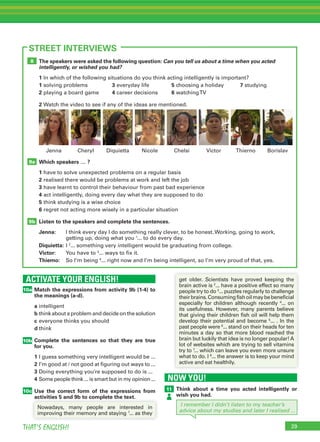
4 I was caught between a rock and a hard place when I
was invited to go to a distant friend’s wedding and my
niece’s first communion was on the same day. I don’t like
weddings and I really dislike communions, so I didn’t
know what to do. Finally, I decided to go to my niece’s
communion because she is close family and I knew I’d feel
more comfortable with my close family than with people I
didn’t know very well.
5 I’m often in two minds about whether to go away on
holiday or not: it’s nice to get away, but it’s also very
expensive.
6 One hasty decision I made was when I bought my new
smartphone. I later realised that the phone I had bought
wasn’t fast enough, the battery didn’t last very long and it
didn’t have a lot of memory. I should have looked into it
more carefully.
187THAT’S ENGLISH!
LANGUAGE STUDY (pages 76-77)
Activity 1
Suggested answers:
2 I’d rather go on holiday to the beach. I love the sea and
warm weather.
3 I’d rather be an ordinary person because I love my privacy,
and I can’t stand being in the limelight.
Activity 2
1 to have, go 3 walking, cycling 5 to be
2 study 4 be, work 6 playing, watching
Activity 3a
A landlady is explaining the rules of living in a shared flat
to a new tenant.
Activity 3b
1 I’d, didn’t 2 rather, didn’t 3 if, didn’t 4 it, didn’t
Activity 4
2 I’d prefer it if you didn’t come tomorrow.
3 We’d rather you paid for the damage.
4 I’d prefer it if you didn’t play the drums.
5 They’d rather he told the truth.
6 I’d prefer it if you followed my instructions exactly.
7 He’d rather his ex-wife didn’t come to the party.
Activity 5a
Phil is upset because his wife has tidied his desk and thrown
out his chair. Betty is upset because her husband doesn’t
like the changes she’s made.
Activity 5b
1 hadn’t done 2 had put 3 had asked 4 hadn’t
Activity 6
2 They’d rather we hadn’t brought presents.
3 I’d prefer it if everyone had left by midnight.
4 She’d rather he hadn’t left all his belongings at her flat.
5 We’d prefer it if he had stayed longer.
6 I’d rather they had been more positive.
7 My mother would prefer it if I had studied law.
Activity 7
2 I’d rather you hadn’t bought tickets to the theatre. / I’d
rather you’d / had bought tickets to the cinema.
I’d prefer it if you hadn’t bought tickets to the theatre. / I’d
prefer it if you’d / had bought tickets to the cinema.
3 I’d rather you hadn’t arranged a blind date for me.
I’d prefer it if you hadn’t arranged a blind date for me.
4 I’d rather you / he / she hadn’t offered me a new job.
I’d prefer it if you / he / she hadn’t offered me a new job.
Activity 8a
1f, 2c, 3e, 4a, 5b, 6d
Activity 8b
1 would be, wasn’t 3 could have, wasn’t
2 would, found 4 would, lost
Activity 9a
1 would’ve / have brought, ’d / had had
2 would never have succeeded, hadn’t encouraged
3 ‘d / had known, ‘d / would have saved
4 would’ve / would have been, had been
5 have done, had broken down
6 hadn’t missed, would’ve / would have got
Activity 10a
Zoe’s upset because she missed winning the lottery by one
day.
Activity 10b
a1, b2
Activity 10c
1 had left 4 have left 7 were
2 would be 5 had listened 8 would have finished
3 weren’t 6 wouldn’t be
Activity 11
1 have their pick of
2 start
3 to work
4 didn’t work
5 ran
6 would be
7 caught between a rock and a hard place
8 had realised
9 have weighed up all the options
10 wouldn’t have gone
11 hadn’t acquired
12 would be
Difficult choices (page 78)
Activity 1
Student’s own answers.
Activity 2
1c, 2e, 3d, 4a, 5b
Activity 3
1 ✗ David says the main choices relate to where they want
to live and the budget available to them.
2 ✔
3 ✗ Dawn is finding it difficult to choose because she has to
consider the needs of her children and not just herself.
4 ✔
5 ✔
6 ✗ Dawn thinks the first house is exactly what she wants.
7 ✔
Activity 4
1e, 2c, 3a, 4d, 5f, 6b
Activity 5
Suggested answer:
I love shopping in malls. As there are so many shops, you
have a great variety of choices and when you are hungry,
you can stop at your favourite eatery.
Activity 6
1 great bargain 4 modernist design
2 open air nature 5 pool parties, legendary
3 star attraction
Activity 7
Suggested answer:
I think we have a huge variety of choice of schools and
college courses but nowhere near enough choice of
housing. This is because no one is building enough new
homes and I think people would benefit from having more
new homes available because in some areas, such as the
south, it’s almost impossible for teachers and nurses to
afford to buy a home.
SKILLS WORK (page 79)
Activity 1a
2
Activity 1b
1 Jade enjoys shopping, but Megan and Damian don’t find
it enjoyable at all. Frank doesn’t like going shopping,
except at discount retailers.
Answer Key
THAT’S ENGLISH!188
2 Jade: She really likes going shopping and looking for the
latest most fashionable items.
Damian: He doesn’t believe in consumerism. He thinks
that it’s the things you can’t buy that will bring happiness.
Megan: She doesn’t enjoy shopping anymore. It is more of a
chore than a pleasure and the special offers drive her mad.
Frank: He only enjoys going to discount retailers where
there is less to choose from and it is cheaper.
Activity 2a
special offers, discount retailers, too much choice, spending
on experiences
Activity 2b
1 Some out-of-town stores are standing empty.
2 People have changed their habits and shop every couple
of days closer to home.
3 They don’t do special offers, everything is cheaper and
there’s less choice.
4 They can’t make a decision.
5 The ideal number of brands to choose from is six.
6 Spending on experiences rather than luxury goods.
Activity 3
Suggested answers:
A: I’d prefer it if stores didn’t have so many confusing
special offers.
B: Yes, I always spend a long time working out if I’m really
saving money.
A: Sometimes I buy two items for the price of one but in fact,
I don’t really need two and one just gets thrown away.
B: Why don’t they make the labels clearer so you can see
what the real cost per kilo is?
A: Yes, sometimes the price is per kilo and sometimes per
200 grams. I don’t want to spend the whole shopping trip
doing maths!
B: I’d be a happier consumer if stores were more honest
and didn’t try and trick us into spending more.
A: Me too.
WRITING (pages 80-81)
Activity 1a
1
Activity 1b
anecdotes, a proposal
Activity 2a
1c, 2a, 3d, 4b
Activity 2b
Paragraphs 1 and 2 support the statement; 3 and 4 are
against it.
Activity 3a
1c, 2a
Activity 3b
1 moreover 2 however 3 consequently
Activity 3c
1 furthermore
2 in spite of / although / nevertheless / even though / on the
other hand
3 due to / therefore / as a result
Activity 4
Summarising expression:To sum up.
Summary of ideas: It is true that the Internet has brought
many economic and educational benefits to a vast number
of people. Better communication has united people as
never before in history. Nevertheless, people can only use
technology if they are fit and well, and antibiotics have
greatly improved people’s health.
Personal opinion: Personally, I believe that good health is
the most important thing in life.
Final conclusion: Without it, even if we have very advanced
technology, we can achieve very little.
Activity 5a
Suggested answer:
‘I have a dream that my four little children will one day live
in a nation where they will not be judged by the colour
of their skin …,’ said Martin Luther King in 1963, but King
never even mentioned his children’s gender.Today, such an
omission would shock most people, who would argue that
fighting gender and racial inequalities are inseparable. In
this essay both aspects will be considered.
Activity 5b
Student’s own answers.
Activity 6a
1b, 2a
Activity 6b
2 It is known / It is undoubtedly true that men and women
are equally intelligent.
3 It is believed / It is understood that different races benefit
from having separate education.
4 It is known / It is claimed that women still experience
difficulty getting top jobs in business.
5 It is said / It is thought that having a family means a
woman is less committed to her career.
6 It’s a well-known fact / It is undoubtedly true that all human
races are descended from a small group of ancestors.
Activity 7
Suggested answer:
Racial equality rather than gender equality should be the
main priority for a world leader.
‘I have a dream that my four little children will one day live
in a nation where they will not be judged by the colour
of their skin …,’ said Martin Luther King in 1963, but King
never even mentioned his children’s gender.Today, such an
omission would shock most people, who would argue that
fighting gender and racial inequalities are inseparable. In
this essay both aspects will be considered.
Apart from the moral arguments against racial discrimination,
it is a well-known fact that racial equality promotes economic
prosperity, and consequently many countries now offer equal
legal protection to all races. It is also generally accepted that
skin colour is not a justification for discrimination. So, clearly
some progress has been made.
On the other hand, although in many societies women
have achieved a degree of equality in many aspects of life,
it is undoubtedly true that gender inequality also affects all
races. Therefore social discrimination is often effectively
doubled for certain individuals.
To sum up, I personally believe that we should only judge a
person on their character and actions and that for this reason
both racial and gender inequality should be addressed
equally by any world leader.
UNIT 8. I NEED A HERO!
A fallen idol (pages 82-83)
Activity 1
Student’s own answers.
Activity 2
1 Jane used to be his secretary and now she feels
disillusioned by his actions.
2 They lost all their savings. They felt devastated and
Sheila’s husband got depressed.
189THAT’S ENGLISH!
Activity 3
1 Danny admires him a lot.
2 He does a lot for charity. He’s said to have set up a
children’s foundation.
3 Danny thinks people are jealous of Graham’s success.
4 Karen wants to write an article about the truth about
Graham Snow.
5 Jane thought Graham seemed charming and modest but
now she has no respect for him.
Activity 4
1 ✗ At first the scheme went very well.
2 ✔
3 ✗ She says she knows he must be very disappointed.
4 ✔
5 ✔
Activity 5
1b, 2b, 3a, 4b
Activity 6
1 to pluck up the courage 3 worships him blindly
2 to make it 4 a self-made man
Activity 7
Suggested answer:
I’ve always admired Richard Branson, a self-made man
who made it by the age of twenty when he started the
Virgin music shops. He had dyslexia at school and all his
teachers said he would never succeed in life but now he’s
a billionaire.
Activity 8
Suggested answer:
Some of my heroes or heroines are firefighters. They put
their lives on the line for other people and have to work in
diverse conditions.They really deserve our respect.
Activity 9a
1 Thierno 5 Kristen
2 Glenn 6 Dena
3 Nicholas 7 Gina
4 Cheryl and Robert
Activity 9b
1 Kristen: He combines music and imagination for a wide
range of audiences.
2 Cheryl and Robert: They were blessed by being in great
families.
3 Dena: She is empowering women to do more and be
independent, bold and brave.
4 Glenn: He admires pioneers and explorers, andArmstrong
was the first man on the moon.
5 Gina: She came from nothing and wrote really great books.
6 Thierno: He was a wonderful human being and role model.
7 Nicholas: She’s a very popular person. She’s all the rage
right now.
Activity 10a
1b, 2a, 3a, 4b
Activity 10b
Suggested answers:
1 Someone who was the total package for me was my aunt
because she was kind and generous and interested in all
the things I enjoy. She gave me a lot of time and attention
and many special holidays.
2 I idolised Michael Jackson when I was a child, and I used
to have his posters all over my room and play his music
non-stop. It’s strange now because I never play his music
and I can’t understand why I admired him so much.
3 The person I strive to imitate is Nelson Mandela because
he forgave injustice and brought peace to his country, so I
try not to mind when people treat me unfairly.
4 At the moment, baking cakes is all the rage because there
are several very popularTV baking programmes.
Activity 10c
1 self-made man 5 total package
2 worshipped him blindly 6 striving
3 plucked up the courage 7 all the rage
4 made it 8 idolise
Activity 11
Suggested answer:
I really admire my best friend Tamara. She’s the total package
because not only is she a loving mother and daughter but
she also finds time to help out at the food bank regularly.
Not only that, she’s also a self-made woman with her own
beauty salon business. Her family idolise her and there’s
always a great atmosphere at her house. She’s always there
for me despite her busy life. I strive to be like her but I don’t
think I can manage it. ‘Me’ time is all the rage these days but
I don’t thinkTamara ever thinks like that.
READING (pages 84-85)
Activity 1a
3 carers, 4 refuse collector, 5 soldiers, 6 firefighters
Activity 1b
unsung heroes
Activity 2a
2
Activity 2b
1d, 2a, 3e, 4f, 5c
Activity 3
1 ✗ She was already a wealthy woman.
2 ✔
3 ✗These injustices continued until quite recently.
4 ✗ None of her musical compositions survived.
5 ✔
6 ✗ We should sing the praises of the women whose
achievements were ignored in the past.
Activity 4
1 put (someone) on a pedestal
2 put on a brave face
3 hall of fame
4 sunk into oblivion
5 claim to fame
6 sing the praises of (someone)
7 moment of glory
8 feet of clay
Activity 5
1 moment of glory 5 sang his / her praises
2 hall of fame 6 put her on a pedestal
3 put on a brave face 7 feet of clay
4 claim to fame 8 sank into oblivion
Activity 6
Suggested answers:
2 I had a moment of glory when I was interviewed on the
street by a reporter from the BBC. For weeks people
stopped me and asked me if I was the person they had
seen onTV.
3 I took the most amazing photograph in my life and was
sure I was going to win the award for best photograph of
the year. However, it was given to someone else and I had
to put on a brave face because I really believe I deserved it.
Answer Key
THAT’S ENGLISH!190
4 I really looked up to Diego Maradona, but then I found out
he had a drug problem.
LANGUAGE STUDY (pages 86-87)
Activity 1a
2 She’s such a talented artist that people pay thousands of
pounds for her work.
3 The child was so brave that he didn’t even cry when he
broke his leg.
4 He was so kind to the refugees that they thought he was
an angel in disguise.
5 My favourite teacher is such a gentle and kind person that
we think she’s the best teacher in the world.
Activity 1b
2 Such a talented artist is she that people pay thousands of
pounds for her work.
3 So brave was the child that he didn’t even cry when he
broke his leg.
4 So kind was he to the refugees that they thought he was
an angel in disguise.
5 Such a gentle and kind person is my favourite teacher that
we think she’s the best teacher in the world.
Activity 2a
1b, 2b
Activity 2b
1 What was incredible was that he did it on his own.
2 What is amazing is that so many people want to help.
3 What I think is important is to try your best.
4 What they found was impossible was to do it all.
5 What is unbelievable is that no one knows what to do.
6 What was thrilling was that we raised so much money.
Activity 3a
1 The judges think that whoever isn’t chosen will be
shattered by the news because to be chosen is a dream
come true.
2 Harry’s mother is upset because Harry is so fit and strong.
3 Sonia’s parents won’t be thrilled with the news because
they think it is too dangerous.
Activity 3b
Adjective Preposition
Positive
interested
thrilled
overjoyed
delighted
glad
pleased
in
with
at, about
about
for
about
Negative
depressed
shattered
devastated
staggered
about
by
by
at
Activity 3c
1, 2 at / about 5, 6 at / by
3, 4 in / with 7, 8, 9 at / about / with
Activity 3d
1 in 2 on 3 in 4 in 5 about
Activity 4a
1 PeoplesayBillGateshasgiven$10billiontomedicalcharities.
2 Bill Gates is said to have given $10 billion to medical
charities.
Sentence 2 best focuses the reader’s attention on the
information.
Activity 4b
1 present 2 past 3 present 4 past
Activity 5
1 she is estimated to make
2 She is believed to be
3 She is thought to have had
4 She is said to have been rejected
5 her first publisher is known to have advised her
6 He is said to have told her
7 She is understood to have donated
Activity 6
1 unsung heroes
2 is believed to have organised
3 sank into oblivion
4 So, was
5 at
6 Such
7 is known to have been showered
8 hall of fame
Activity 7a
It’s about heroes who fight against an oppressive government
or regime, freedom fighters.
Activity 7b
1 folk hero 3 freedom fighter 5 activist
2 rough diamond 4 icon 6 fallen idol
Activity 7c
1 rough diamond 3 freedom fighter 5 fallen idol
2 icon 4 folk hero 6 activist
Activity 8
Suggested answers:
1 I used to idolise Oscar Pistorius, the Paralympic runner,
then he was accused of murdering his girlfriend and since
then he is nothing but a fallen hero.
2 Davy Crockett was both a folk hero and real politician.
Davy Crockett represented Tennessee in the House of
Representatives and opposed many of the President’s
policies especially the Indian RemovalAct. He also explored
the wild frontier. He died at the Battle of the Alamo.
3 The modern icon that I most admire is OprahWinfrey. She
donates a lot of her money to help others and is interested
in making our world a better place.
Global heroines (page 88)
Activity 1
Student’s own answers.
Activity 2
1c, 2a, 3d, 4b
Activity 3
1 In the past some people became heroes on the battlefield.
2 Boudica was a female military heroine. She was a Celtic
warrior whose army destroyed many Roman cities
including London.
3 Queen Victoria identified herself with Boudica and
strengthened her image as a powerful female monarch.
4 At times he was a hero and then a villain.
5 He saved his ship’s crew when their ship was trapped in
ice.
6 She spoke out against the Taliban when very few others
were doing so.
7 No, the nature of heroes has changed because the kinds
of heroes we need have also changed.
191THAT’S ENGLISH!
Activities 4a and 4b
Speaker Heroine Reasons for their choice
5 Katrina Kaif Highest great actress in India.
4
Flora
McDonald
Rescued Bonnie Prince Charlie
from the British Army.
6 Princess Diana She did a lot of charity work.
7 Rosa Parks She fought for civil rights.
1
Portia
Simpson
She was Prime Minister
twice.
2 NancyWake
She was a famous spy from
WW2 who fought against the
Nazis.
3 KatieTaylor An Olympic gold medallist.
Activity 5
Suggested answer:
scuba diving, snorkeling, sailing and sunbathing
Activity 6
1 ✗ Daytona has 23 miles of white sandy beaches.
2 ✗ Spring break is a holiday in the middle of the second
semester of the school year.
3 ✔
4 ✗ Stock cars may look like family cars but they are purpose-
built racing machines.
5 ✔
6 ✗ Richard Petty won the race seven times.
Activity 7
Suggested answer:
Emmeline Pankhurst is a national heroine that comes to
mind and I believe it’s a well-deserved status. She is known
to have gone to prison numerous times to highlight the
cause of women getting the vote, and she was an inspiring
leader to thousands of women. Her work succeeded as
women over 30 got the right to vote in 1918.
SKILLS WORK (page 89)
Activity 1a
1B, 2A, 3C, 4D
Activity 1b
1 Kathy Derwent 3 JohnnoTrevor
2 Gerry Phillips 4 Khadija Khan
Activity 2a
They don’t agree – Clare wants Gerry to win but Aiden wants
Johnno to win.
Activity 2b
Gerry
Phillips
Kathy
Derwent
Khadija
Johnno
Trevor
Clare
saved
teenagers
from a life
of crime
knows
200 kids
by name
and she
contributes
a lot of time
and money
to the school
Aiden’s
opinion
is unfair.
a bit weird
Aiden cool
doesn’t
need the
award, gets
satisfaction
from what
she does
not an
original
idea
revolutionary,
a bit of a folk
hero, a good
guy, a breath
of fresh air
Activity 3
Suggested answer:
My unsung heroine is my aunt Cristina. I want to sing
her praises because she’s very modest and doesn’t tell
people about what she does for others. She always has a
positive attitude and she is always cheerful and ready to
lend a hand – with cooking, homework, gardening or fixing
things. She inspired me to start my own online business
selling second-hand textbooks. What I find amazing is her
enthusiasm for life and her desire to live. She’d be overjoyed
at winning because she always loves a party!
SPEAKING (pages 90-91)
Activity 1
Student’s own answers.
Activity 2a
1 Annie’s heroine completed the London marathon in a
bionic suit as she is paralysed.
2 Yes, Zak shares Annie’s admiration.
Activity 2b
1, 3, 4, 6, 7, 8, 10
Activity 4a
1, 3, 5
Activity 4b
1 said 5 was
2 letdown 6 absolutely shattering
3 true 7 so right
4 What
Activity 4c
1c, 2b
Activity 4d
1 letdown 4 most disappointing was …
2 true 5 shattering
3 so right 6 it
Activity 5
1 So 6 actually 11 values
2 influenced 7 realise 12 admire
3 made 8 truthful 13 Definitely
4 realise 9 best
5 about 10 everything
Activity 6a
Suggested answers:
courageous
I idolised Billy Jakes, the mountaineer. He was so
adventurous, climbing where no one else had succeeded.
brave
He never showed any fear and was always so positive and
friendly.
modest
What’s more, he was never boastful about his achievements
or thought he was the best mountaineer.
Activity 6b
Suggested answer:
he betrayed a cause
Well, it was devastating to realise that he had been using
money raised for the expeditions to buy things for himself –
expensive cars and hotels. What a letdown!
Activity 7
Suggested answer:
A: So who did you look up to when you were young?
B: I idolised Billy Jakes, the mountaineer. He was so
adventurous, climbing where no one else had succeeded.
Answer Key
THAT’S ENGLISH!192
He never showed any fear and was always so positive and
friendly. What’s more, he was never boastful about his
achievements or thought he was the best mountaineer.
A: Really! But come on, what made him so special?
B: Well, he was an ordinary guy who did extraordinary
things and I thought, ’If he can succeed, so can I’.
A: So, why don’t you feel the same about him now?
B: Well, it was devastating to realise that he had been
using money raised for the expeditions to buy things for
himself – expensive cars and hotels. What a letdown!
A: You said it! What else do you know?
B: What I found most disappointing was realising that his
the cheerful personality was all turned on for the cameras
and that actually he was a very arrogant and selfish
person. He used to leave his wife and small children at
home for months and without enough money. He was an
idiot.
A: Too right! Do you think you were influenced by him?
B: Yes, I suppose he helped me believe in myself, but now I
feel I want to be the opposite of him. Anyway, what about
you? Who did you use to admire?
UNIT 9. LET’S HIT THE ROAD
Expand your horizons (pages 92-93)
Activity 1
1 railway / trains 3 car travel 5 bike travel / cycling
2 aeroplanes / flying 4 boat / sea
Activity 2
1 Anthony offers them a free weekend in a luxury hotel with
a spa and golf course.
2 Roadworks are causing traffic jams on the M4 and there
are delays of up to two hours.
Activity 3
1 ✗ Anthony is rehearsing his presentation.
2 ✗ Anthony invites Danny because he knows about
marketing.
3 ✗ Danny is excited about playing golf.
4 ✔
5 ✔
Activity 4
1 Because there are roadworks causing traffic jams.
2 She says it is a lot of driving and there were floods there
last year.
3 He says he was keeping watch for cars to make sure they
didn’t get run over.
4 He decides to give up because the A4 between
Marlborough and Avebury is closed owing to severe
flooding.
5 They have to take the train.
Activity 5
1d, 2b/e, 3b/e, 4c, 5a
Activity 6
1 hit the road / set off 3 miss out 5 turning back
2 set off / hit the road 4 run over
Activity 7
Suggested answer:
My last trip from Malaga was a disaster. We’d decided to
come back by car, but as soon as we set off, we got a flat
tyre. I repaired it and we hit the road again. Shortly after
this, the car overheated and we had to pull over and call for
assistance. We didn’t get home until the next day.
Activity 8
I think travel broadens the mind because you see outside
your own environment and it allows you to stretch your
wings and expand horizons. You experience different
cultures, meet different people and hear different accents.
All of these things help to broaden your mind.
Activity 9
1 cocoon, butterfly 3 horizons 5 cultures
2 forget about, behind 4 understand
Activity 10
1 culture 4 outside
2 art 5 environment
3 better idea 6 globe
Activity 11
1S, 2D, 3S, 4D, 5S
Activity 12
1 fasten 3 widening 5 board
2 took off 4 leave 6 block
Activity 13
Suggested answer:
I think travel broadens the mind because it takes you out
of your normal, everyday environment and gives you new
experiences. The more you travel, the more cultures you
learn about. You also get to meet all kinds of people and
experience all kinds of new things.
READING (pages 94-95)
Activity 1a
Student’s own answers.
Activity 1b
Student’s own answers.
Activity 2a
3
Activity 2b
1 ✔
2 ✗ It’s hard on the human body and not good for your health.
3 ✔
4 ✗ They have a lot of responsibility because they have to
help lots of passengers get off the plane and stay calm.
5 ✗ He never stops being interested in people.
6 ✔
7 ✔
Activity 3a
1 destination 6 runway
2 turbulence 7 Jet lag
3 Long-haul flights 8 Evacuating
4 food and beverage trolleys 9 on-board catering
5 Stopovers
Activity 3b
1 runway 6 evacuated
2 long-haul flight 7 stopover
3 destination 8 on-board catering
4 turbulence 9 jet lag
5 food and beverage trolley
Activity 4a
1 pick, up 3 stop over 5 get away
2 take off 4 drop, off 6 put, up
Activity 4b
1 I try to get away at least once a month. I enjoy going to the
country to relax, breathe fresh air and go for long relaxing
walks.
2 I definitely prefer to be picked up and dropped off when
I’m on holiday. It makes the trip much easier and that is
one less thing to worry about.
193THAT’S ENGLISH!
3 I don’t enjoy putting people up in my home. I would rather
they went to a hotel because I don’t feel comfortable
having visitors spend the night at my home.
LANGUAGE STUDY (pages 96-97)
Activity 1a
1a, 2e, 3c, 4b, 5d
Activity 1b
1 journey 3 journeys 5 voyage
2 trip 4 Travel 6 trip
Activity 2a
1 She recommends train travel because trains go
everywhere, they are really not very expensive and since
everybody uses them, it’s a great way to meet people.
2 There are eight types of train tickets.
3 She recommends a 2AC ticket.
Activity 2b
1 peak times 4 carriage 7 berths
2 platform 5 seats 8 compartment
3 fare 6 bunk
Activity 2c
1 sleeper trains 3 bunk beds 5 platform
2 berth 4 fare 6 peak times
Activity 3a
1b, 2d, 3c, 4a
Flight number: BA852 Departure gate: 90
Boarding time: 11:45 Seat number: 16D
Activity 3b
2 pack, bags.Yes
3 carry, board. No
4 left, luggage unattended. No
5 confirm, objects, explosive.Yes
6 hand.Yes
7 carrying, liquids. No
Activity 3c
1 Can I ask you some security questions?
2 Did you pack your bags yourself?
3 Did anybody ask you to carry anything on board for them?
4 Have you left your luggage unattended at any time?
Activity 4a
1f, 2g, 3c, 4b, 5a, 6d, 7e
Activity 4b
Suggested answers:
2 In view of the passenger’s unreasonable behaviour …
she was banned from flying with the airline in future / she
was escorted off the plane / she was fined €100.
3 Due to the lack of air conditioning in the train …
we spent an uncomfortable night / some people became ill
from the heat.
4 Owing to an accident this morning …
the road is now closed until further notice / there are long
delays between junction 12 and 13.
5 Because of the heavy traffic …
we made slow progress / we arrived an hour late / we
nearly missed our flight.
Activity 5a
1 infinitive 2 gerund 3 infinitive
Activity 5b
2 The flight was to take off at 10:30 and the crew were
strapped into their seats.
3 She was about to get into her sleeping berth when she
noticed someone had stolen her blankets.
4 He was on the point of asking the passengers to sit down
when the captain made and announcement.
5 The aircraft is to make an emergency landing and we will
have to evacuate the passengers immediately afterwards.
6 Theairportisonthepointofdeclaringastateofemergency.
Off the beaten track (page 98)
Activity 1
Student’s own answers.
Activity 2
1 ✗There are more than a million motorcyclists in the UK,
but they aren’t all members of the BFM.
2 ✔
3 ✔
4 ✗ It became popular after the Second World War.
5 ✔
6 ✗ It was founded by people who had no association with
the gangs.
7 ✔
8 ✗ It has been a meeting place for motorcyclists since the
60s.
Activity 3
Suggested answer:
I would recommend people visit Granada because of the
Alhambra. San Sebastian is amazing because of its beauty
and food and Madrid because of the museums, the Royal
Palace and the old part of the city.
Activity 4
1c, 2b, 3f, 4a, 5d, 6e
Activity 5
1, 3, 5, 6
Activity 6
1 Orlando was built around the citrus industry.
2 It’s called the Sky Coaster.
3 Miniland has replicas of the USA’s most celebrated cities
and attractions.
4 A Master Model Builder is someone who works for
Legoland that builds and designs Lego models.
5 Because it allows adults and kids alike the opportunity to
use their imagination in ways they never would have.
6 They usually build them in sections and then assemble
them on site.
Activity 7
Student’s own answers.
SKILLS WORK (page 99)
Activity 1
Student’s own answers.
Activity 2a
The author seems to have a negative attitude towards the
modern tourist industry overall although he/she does admit
that it creates jobs and economic opportunities and is
essential to the economy of many European countries.
Activity 2b
1 To learn about culture and improve their foreign language
skills.
2 The expansion of the railways in the 1840s and the first
package tours byThomas Cook in the 1860s.
3 Because employers were obliged to give their workers
paid holiday time.
4 Advantages: tourism creates jobs and economic
opportunities. Disadvantages: it can also cause
environmental problems, and break up traditional
communities.
Answer Key
THAT’S ENGLISH!194
Activity 3a
Alba agrees that some areas were developed too fast but
says that Tex should bear in mind that some of these were
very poor at the time when tourism started developing and
the industry gave the people opportunities that they had
never had before.
Activity 3b
Tourism in Spain
Contribution to the
economy
1 60 billion
Number of visitors to
Spain last May
2 21.4 million
Top four countries
visitors come from
3 France
4 Italy
5 Britain
6 Germany
Two strengths of the
industry
7 good service
8 good value for money
World leader in
9 spa and wellness tourism
10 eco-tourism
11 green initiatives
Activity 4
Suggested answer:
When I was younger, I preferred to travel on my own or with
a small group of friends to exotic places, but now that I’m
older, I’m actually starting to like more organised holidays
because everything is organised for you and it makes
travelling easier. All of the sightseeing trips are included in
the price and the bus picks you up from the hotel, takes you
to your destination and brings you back to the hotel safe and
sound. I prefer 4-star hotels with an all inclusive package.
You really don’t have to worry about money then. As I get
older, I realise I like having holiday in small groups. I really
don’t enjoy big groups and all the noise much anymore.
WRITING (pages 100-101)
Activity 1a
A Thank you ever so much for … I really must apologise …
please accept my apologies again …
B Thanks for … Sorry for … sorry again for the
inconvenience …
Activity 1b
The first version is better because it is more formal and sincere.
Activity 1c
1 Both. Some of the group were supposed to return later to
finish, but due to the fact that they overslept, they were late.
2 A. I take full responsibility and ask you to accept my
apologies again on the group’s behalf.
3 A. I do assure you that this is not typical behaviour and it
will not happen again.
4 A. If it is convenient, we can come back next Saturday and
thoroughly clean the whole cottage.
Activity 2a
1 sincere
2 even when it’s the other person’s fault
3 impolite
4 a different
Activity 2b
1 awfully 5 apologise 9 thoughtful
2 do 6 just 10 shouldn’t
3 excuse 7 appreciate 11 should have
4 forgive 8 grateful 12 excuse
Activity 3a
A B
polite not polite polite not polite
Speaker 1 ✔ ✔
Speaker 2 ✔ ✔
Speaker 3 ✔ ✔
Activity 4a
Suggested answer:
Notes for shouting at receptionist
tired after long journey − room unavailable – terrible shock −
need to be at meeting in morning − receptionist – tried to be
helpful – find another room in different hotel – she = polite
and professional – I overreacted – shouldn’t have shouted at
her − when home, realised mistake in dates mine − British
system day first / American system month first − please
accept apologies
Notes for noise in hotel room
was my birthday – wanted small party, too many people −
please forgive me for not realising that music and voices
too loud − didn’t know the person who opened door −
wouldn’t be so rude myself but take responsibility for what
happened − hope not spoil your evening too much − no
excuse for such thoughtless behaviour
Activity 4b
Suggested answer:
Dear Sir or Madam,
I am writing to apologise for my unacceptable behaviour
towards a member of your staff at your hotel last week.
I arrived after a very long journey to find that the room I
thought I had booked was unavailable, and I’m afraid I
overreacted and took out my frustration on the receptionist.
At the time I was convinced that I was in the right, but I
have since realised that the mistake was in fact mine: I had
used the British system when booking and put the day first,
whereas the hotel uses the American system with the month
first.Your receptionist was polite and professional at all times
and did everything she could to find me an alternative place
to sleep. Thanks to her I got a large discount at a nearby
five-star hotel and enjoyed a very comfortable stay.
There really was no excuse for my behaviour, so please accept
my apologies and pass on my thanks to your employee.
Yours faithfully,
Tom Bartelman
REVISION 2
LANGUAGE REVISION (pages 102-103)
Activity 1
2 I wouldn’t be a doctor now if my parents hadn’t made me
study hard.
3 If my mother had bought the newspaper, she wouldn’t
have missed the news about the accident.
4 If John wasn’t afraid of heights, he would have gone up
the EiffelTower when he was in Paris.
5 If we had arrived at the airport on time, we would be flying
over the Atlantic now.
6 If I hadn’t left my coat at home, I wouldn’t have caught a
cold.
7 If you make an effort, you’ll have a chance for promotion.
(I think you might make an effort.) / If you made an effort,
195THAT’S ENGLISH!
you’d have a chance for promotion. (I don’t really think you
will make an effort.)
Activity 2
2 So sumptuous will the decoration of the dining room be
that it will look like a palace.
3 So overjoyed were his parents to see him home safe that
they couldn’t stop smiling.
4 So disappointed does she feel that she wants to cry.
5 Such a huge problem did it become that no one could deal
with it.
6 Such an unwary traveller is he that he always gets robbed.
Activity 3
1 criteria 3 passers-by 5 goods
2 means 4 diagnoses 6 cacti
Activity 4
1 should I 3 can’t you
2 hasn’t she 4 will you will you / won’t you
Activity 5
2 He’s known to be a difficult customer.
3 The actor is said to have given his best performance in
that film.
4 The disease is thought to have come from a type of
mosquito.
5 The situation is believed to be getting better.
Activity 6
1 ’d rather you had chosen
2 proposed changing
3 was easy was
4 owing to
5 have fallen by
6 it if you didn’t
7 suggests taking / suggests we take
8 on the point of leaving
9 spite of being / spite of the fact that it was
10 ’d rather not
Activity 7
1 up 2 off 3 out 4 off 5 over 6 up 7 up 8 away
Activity 8
1 pick 5 betrayed 9 outstanding
2 praises 6 way 10 hasty
3 hour 7 destination
4 bribery 8 spoilt
Activity 9
1 common ground 4 jet lag
2 cutting edge 5 fallen idol
3 rough diamond 6 peak time
Activity 10
1 yellow 2 face 3 voyage 4 white 5 body 6 journey
Activity 11
1 I met the most incredible woman.
2 These are the best results we’ve ever had.
3 Have you ever seen the real George Clooney?
4 You are just the greatest friend I’ve ever had.
5 He’s the major player in his category.
SKILLS WORK (pages 104-105)
Activity 1
3
Activity 2
2
Activity 3
1 ✗The plane had just taken off from La Guardia airport
when the incident happened.
2 ✗ Sullenberger’s experience helped his decision to land on
the river.
3 ✔
4 ✔
5 ✗ Some of the passengers changed their lives because of
the crash.
6 ✔
Activity 4a
1c, 2e, 3b
Activity 4b
Dialogue What was the change? Was it good or bad?
1
He changed his
manager.
bad
2 He changed his career. good
3
She changed her
hairstyle.
bad
Activity 5a
1b, 2a, 3a, 4d, 5c, 6d, 7b, 8c
Activity 5b
1, 3, 4, 5, 8
(2 would be used by a salesperson; 6 and 7 are formal.)
Activity 6
Suggested answer:
A: Hi, ... You know I’m moving house this weekend. Could
you lend me a hand?
B: Mmm. What do you need?
A: Well, first of all I was wondering if you could come over to
my place on Friday and help me pack up my books.
B: Well, I was going to see my mother that evening.You know
she hasn’t been well.There’s no way I can put that off.
A: Oh dear! I’m sorry to hear that. Anyway, what about
Saturday morning? Perhaps you could make it then, and
help me move some of the furniture.
B: Oh, I’m so sorry. I have to go into the office for an
emergency meeting on Saturday.
A: What, all day?
B: Yes, I’m afraid so.
A: What a pity! I’ll have to try and persuade Joe to help me
then.
B: That’s a good idea!
Activity 7
Cause Result Contrast Addition
because of
due to
owing to
as a result
therefore
although
even though
in spite of
on the other hand
instead (of)
however
furthermore
moreover
1 because of / owing to / due to
(= Teenagers can get into trouble because they are
influenced by their peers.)
Answer Key
THAT’S ENGLISH!196
2 As a result / Therefore
(= Children can be overprotected and so / and that way
they don’t learn to be independent.)
3 On the other hand
(= Parents should make some rules, although / even
though they should sometimes let their child decide what
is best.)
(= Parents should make some rules; however, / nevertheless,
they should sometimes let their child decide what is best.)
4 Although / Even though / In spite of the fact that
(= Parents want the best for their children, but sometimes
they can make mistakes too.)
5 in spite of
(= They can feel too pressured in spite of the fact that /
although / even though their parents have good intentions.)
6 Furthermore / Moreover
(= Discussing a choice is important; in addition, / besides,
talking together builds a better relationship.)
(= Discussing a choice is important, as well as talking
together, which builds a better relationship.)
Activity 8
1 I 2 I or C 3 I 4 I or C 5 I 6 C
Activity 9
Suggested answer:
We all know the story of Icarus, who ignored his father’s advice,
flew too close to the sun and fell to his death. Some people say
that parents should give children the freedom to make their
own decisions, while others feel that important decisions have
to be made for children, depending on their age.
On the one hand, children can be overprotected. As a result,
they don’t learn to be independent, so when they have to
look after themselves they are incapable of making sensible
decisions. Furthermore, parents sometimes put too much
pressure on their children to choose a particular career or
studies. For example, a family of lawyers may encourage
their children to study law, when in fact they may be better
at science subjects.
On the other hand, children do need some guidance,
especially when they are younger. Parents shouldn’t let them
watch as much television as they want or eat only sweets.
However, older children should be given more responsibility
to decide for themselves. If they make a mistake, they can
learn from the experience.
In my opinion, parents should support and encourage their
children, let them find their own path in life, but be there
when they fall.
EXAM STRATEGIES
READING COMPREHENSION I (page 106)
Activity 1a
2 the value of dreaming
Activity 1b
1 a, b, c 2 a, b, c
Activity 2
2a, 3g, 4b, 5e, 6f, 7d
READING COMPREHENSION II (page 107)
Activity 1a
1C, 2D, 3B
Activity 1b
1c, 2b, 3a
Activity 2
1 ✔
2 ✗ Slow music makes shoppers move slowly through the
shop and buy more.
3 ✗ Sometimes they are cheaper, but we may spend more
because we feel we have saved on other things.
4 ✔
5 ✗ Companies mainly use their customers’ loyalty cards to
collect data about them.
LISTENING COMPREHENSION I (page 108)
Activity 1a
1c, 2a, 3e, 4b, 5d
Activity 1b
1d, 2b, 3c, 4a, 5e
Activity 1c
1 What I think is interesting is the new research into
developing alternative energies.
2 There’s an association between smoking and lung disease.
3 In the same way, doing puzzles also helps keep the mind
active.
4 They spend their free time working in the garden.
5 At the time when there was an explosion in the city centre.
Activity 2
1 fascinated
2 a car crash
3 their upbringing and their genetic make-up
4 playing video games
5 working people / adults
LISTENING COMPREHENSION II (page 108)
Activity 1
expedition: party, course, meeting
well: badly, terribly, quickly
second: first, last, fifth
day: week, morning, hour
Activity 2
1b, 2a, 3b, 4b, 5b, 6a
Activity 3
2 The moment the weather got better he felt excited relieved.
3 At first, he thought he would be setting up watching the
balloons.
4 He found flying in a hot-air balloon a scary thrilling
experience.
5 She felt especially upset when her dog died because he
was with her son on his own.
6 She doesn’t want the expense responsibility of having
another animal in the house.
7 In the afternoon, she had a written exam an interview.
8 After receiving the news about the job she had applied for,
she was delighted went to pieces.
WRITING I (page 109)
Activity 1
1 the local authorities
2 to get a grant for setting up a small business
3 what the business is and how it will benefit the community
Activity 2
Suggested answers:
1, 3, 7
197THAT’S ENGLISH!
Activity 3
1 considerably more 3 much better
2 even fewer 4 far greater
Activity 4
Suggested answer:
Proposal
Introduction
The business that we would like to set up is a play centre for
young children.We would aim to offer services at weekends,
afternoons and peak holiday periods. Our team is composed
of two paediatric nurses and a psychologist with experience
in nursery schools.
Description of the business
Theserviceswewouldofferincludepre-schoolplaygroupsfor
toddlers. Parents can leave their children on an hourly basis,
simply visit the family areas such as the open playground
area or take advantage of activities for older children such
as music and drama groups.We would also organise events
such as birthday parties or other celebrations.
Benefits for the community
There is a lack of support for parents with young children
in the town. Since the supermarket was built in the park
area, they have even fewer places to go with their children.
In most families, both parents are working so there is a far
greater need for childcare facilities than before, particularly
in the school holiday periods. Our centre would give small
children considerably more opportunities to be in contact
with other children and provide a safe place for parents to
leave them.
WRITING II (page 109)
Activity 1a
1c, 2a, 3c, 4d, 5f, 6e, 7b, 8d, 9d
Activity 1b
1 However 2 Despite 3 apart from 4 due to 5 while
Activity 2
Suggested answer:
Online learning is becoming increasingly popular nowadays.
Some people find this effective, while others prefer to go
to face-to-face classes. In my opinion, the effectiveness of
either method depends on the subject being taught. Online
learning is suitable for academic study, while face-to-face
classes are essential for more practical subjects.
I followed a business management course online last year
and found it very useful. I needed the flexibility of online
study because I was working full-time. However, despite the
fact that you can study when and where you want, you have
to be self-disciplined to work on your own and this can be
difficult for some people.
On the other hand, learning to be a carpenter, for instance,
must be very hard to do online without having access to
machinery and hands-on practice. In this case, you need a
teacher with you to observe your work and help in a practical
way.
In conclusion, I would say that there is no ideal method for
all types of learning. Possibly a combination of both online
study and occasional tutorials would be the best for busy
working people and face-to-face classes for students who
need more supervision.
SPEAKING I (page 110)
Activity 1a
Persuading: 2, 3, 5, 7
Refusing: 1, 4, 6, 8
Activity 1b
Student’s own answers.
Activity 1c
1e, 2d, 3a, 4c, 5b
Activity 2
Suggested answer:
A: Good morning, I have to talk to you about the rent for the
flat.You know I haven’t asked for an increase in the past
two years.
B: I know, but that’s really unfair! You know my salary has
been cut from last year.
A: Yes, but I’ve had a lot of expenses with the maintenance
of the flat and the increase in local taxes.
B: Well, I’ve always looked after the flat.You know I’ve never
broken anything and it’s very clean. I think I’m a good
tenant.
A: I’d agree with that, but you know there are a lot of other
people interested in renting the flat.
B: Really? But there are other flats for rent in the same
building that are cheaper than this one!
A: Absolutely not!They’re not nearly as nice as this one.
B: You’re right. I’ve got an idea! Why don’t I help out with
the maintenance, you know, painting and decorating and
you can keep the rent the same.
A: OK.That’s a good idea.
SPEAKING II (page 111)
Activity 1
1 made 5 didn’t have
2 had just finished 6 was offering / offered
3 was 7 applied
4 decided
Activity 2
1 hadn’t, have learnt 3 weren’t, wouldn’t be
2 had chosen, wouldn’t have met 4 had stayed, be
Activity 3
1 That’s why 2 so that 3 As 4 thanks to 5 because of
Activity 4
Suggested answer:
A few years ago, I had to make an important decision. I
had to decide if I wanted to study for a year in Dublin or
stay in my home town to get a job and help out my mum.
At the time the choice I made seemed very unimportant,
but it ended up having a tremendous effect on my life. I
chose to stay home and help out my mum because I felt
it was the right thing to do. So, I got a job as a mechanic.
One day a beautiful woman came to the garage to have
her car repaired. I began talking to this woman and one
thing led to another and we started going out. Today, we
are married and have three gorgeous kids. Although if I
hadn’t met my wife, I probably would have gone to Dublin
and my life would be more adventurous than it is now.
Who knows?
SELF TEST UNITS 1-9
SELF TEST 1 (page 112)
Activity 1
1d, 2a, 3e, 4b, 5f, 6c
Activity 2
1 frustrating 3 disappointing 5 relieved
2 enraged 4 reassuring 6 delighted
Answer Key
THAT’S ENGLISH!198
Activity 3
1 was moved to tears 5 gives, the creeps
2 pours, heart out 6 hurts, feelings
3 fell to pieces 7 is beside herself
4 hit, hard
Activity 4
1e, 2f, 3d, 4a, 5c, 6b
Activity 5
Suggested answers:
1 absolutely awful / terrible / dreadful
2 absolutely furious / irate
3 utterly hideous / repulsive
4 absolutely tiny
5 completely astounded / astonished
6 totally exhausted / shattered
7 absolutely gorgeous / beautiful
8 utterly saddened / distressed
Activity 6
1 How far is it to Paris from here?
2 We take it that you don’t want to come with us.
3 We would appreciate it if you could turn off the lights
when you leave.
4 I find it upsetting when you criticise me in front of other
people.
5 It seems that there might be a problem.
Activity 7
1 In the beginning 5 As
2 after a while 6 for a minute / for a while
3 Fortunately 7 Surprisingly
4 in the end
SELFTEST 2 (page 113)
Activity 1
1 self-deprecating 4 physically demonstrative
2 work ethic 5 culture shock
3 status symbol 6 stigma attached
Activity 2
1 will turn it off 4 are, trying
2 will go 5 am, experimenting
3 won’t rise
Activity 3
1c, 2e, 3a, 4d, 5b, 6f
Activity 4
1 used to live 4 would save
2 didn’t use to have 5 used to like
3 would give 6 would never talk
Activity 5
1 keep 4 laughed
2 ‘ll go 5 will go
3 carries 6 get used, was used
Activity 6
2, 5, 6, 3, 8 1, 7, 4
SELFTEST 3 (page 114)
Activity 1
1 definite arrangement 4 intention
2 definite arrangement 5 definite arrangement
3 intention
Activity 2
1 is playing
2 ‘m getting / ’m going to get I’m going to get
3 I’m having
4 starts
5 ’ll tell
6 won’t mind
7 ’ll have finished
8 ’ll be waiting
9 ’ll look forward / I look forward to it / I’m looking forward
Activity 3
1 remind 5 recollection / memory
2 souvenir 6 to retrieve
3 remembering 7 recall / remember
4 memory 8 recalling, remember
Activity 4
1 whizzkid 5 brains behind
2 brainstorm 6 brainpower
3 a no-brainer 7 not rocket science
4 brainchild
Activity 5
1 Teresa’s a terrible cook – she can’t even boil an egg!
2 I’ve just had some wonderful news – I got the job! / I’ve
had some wonderful news – I’ve just got the job.
3 She just / only wants to explain what went wrong – it won’t
take long.
4 These builders are so messy – they haven’t even taken
their rubbish away. /These builders are (just) so messy –
They haven’t (even) taken their rubbish away.
5 They only / just eat in very expensive restaurants so no
fast food for them!
6 Can you just stop for a moment and listen to me?
7 Please – I only / just want to borrow it for a couple of
minutes.
Activity 6
4, 5, 3, 1, 2
SELFTEST 4 (page 115)
Activity 1
1 to increase 4 attending 7 having
2 leaving 5 to aim 8 to cook, to order
3 to introduce 6 buying
Activity 2
1 visiting 4 to take 7 driving
2 smelling 5 to communicate 8 to put
3 experiencing 6 to take 9 waiting
Activity 3
1 would, mind 5 course 9 Will
2 Not 6 me, hand 10 please
3 are 7 would 11 All
4 possibly / please 8 problem
Activity 4
1 Please forgive us / our making any noise last night.
2 The neighbours objected to his / him burning his rubbish.
3 We excused them / their leaving early because they were
exhausted.
4 Do you mind my / me making a call?
5 He overlooked her forgetting to buy the flowers.
6 I don’t have problem with you / your using the car.
Activity 5
1 ✗ He offers to sponsor her £20.
2 ✔
3 ✔
4 ✗ Steve says being sensitive is important.
199THAT’S ENGLISH!
5 ✔
6 ✗Their hands are tied.
7 ✗ He asks her to get involved and go to the food bank
tomorrow.
Activity 6
1 thoughts 5 misunderstood 9 Good
2 far 6 Fair 10 reasonable
3 concerned 7 Could
4 disagree 8 just
SELFTEST 5 (page 116)
Activity 1
1 seven billion (7,000,000,000)
2 three point one four one five nine. (3.14159)
3 three and three quarters (3 ¾)
4 nought / zero point six-six-six (0.666)
5 one billion, three hundred and ninety-nine million, four
hundred and ninety-one thousand, one hundred and
eighty-five (1,399,491,185)
6 three hundred and sixty-five (365)
Activity 2
1 All 2 Both 3 neither 4 either 5 neither 6 None
Activity 3
1 1 metre 63 5 5 foot 4 inches 9 6.26
2 50 6 2, 2 10 2,253.92
3 39.37 inches 7 110
4 12 8 360
Activity 4
1 crises 3 sisters-in-law 5 nuclei
2 media 4 analyses 6 phenomena
Activity 5
1 The number of overseas students has doubled.
2 People say the price of building materials will increase by
33%.
3 Our sales figures have fallen by a quarter.
4 Its value has halved since we bought it.
5 It was approved by 70% of customers.
6 We are three times more successful.
7 Its speed has quadrupled.
Activity 6
1 I recommend looking for a way to solve this problem. / I
recommend you look for a way to solve this problem.
2 The chair proposes asking for government funding. / The
chair proposes that we ask for government funding.
3 My parents have suggested that my sister applies for the
job. / My parents have suggested my sister apply for the job.
4 The government proposed lowering the age for voting. /
The government proposed the age for voting be lowered.
5 My boyfriend suggested celebrating my birthday with a
huge party. / My boyfriend suggested that we celebrate
my birthday with a huge party.
6 My uncle recommends listening to this new band. / My
uncle recommends that we listen to this new band.
SELFTEST 6 (page 117)
Activity 1
1 built a rapport 5 inherently
2 find common ground 6 unwary
3 collective subconscious 7 advertising campaign, slogan
4 sales pitch
Activity 2
1 bring him round to 5 won over
2 talk dad into doing 6 talk me out of doing
3 put you off 7 seduce you into doing
4 was
Activity 3a
1 state-of-the-art 3 eye-catching 5 opulent
2 exquisite 4 up-to-the-minute 6 affordable
Activity 4
1 turn 2 stylish 3 ultra 4 super 5 sunshine 6 sky
7 sumptuous 8 free
Activity 5
1 Instead of enduring the discomfort of a cramped seat, you
can sit back and relax.
2 I would advise against visiting that area of the city at night.
3 The sales assistant was able to guarantee that it was the
cheapest model available.
4 The travel agent was able to assure us that we’d be
delighted with the holiday we’d booked.
5 It’s a long way to walk. Might I suggest you take a taxi
instead?
6 wouldn’t bother asking him. He’s only just started working
here.
Activity 6
Suggested answers:
1 Never / Not in a million years would I take up running. It’s
much too tiring!
2 Over my dead body! I hate participating in group activities!
3 On no account will you get me a personal trainer. It’s very
expensive
4 Don’t even think about it / getting me a bike. I’ll never /
would never use it.
SELFTEST 7 (page 118)
Activity 1
1 to have 2 try 3 to walk 4 drive 5 not walk
Activity 2
1 I‘d rather you hadn’t used my phone.
2 prefer it if he had helped earlier.
3 We‘d rather you had cleaned the room thoroughly.
4 His parents would prefer it if he hadn’t given up university.
5 They’d rather the thief had gone to prison.
Activity 3
1 be 6 have chosen
2 hadn’t been invented 7 used
3 hadn’t existed 8 wouldn’t be
4 wouldn’t have decided 9 adopted
5 hadn’t used 10 would need
Activity 4
1 no 4 weigh 7 minds
2 pick 5 options 8 caught
3 hasty 6 right 9 rock
Activity 5
1 ✗ Maddy is in two minds about the job in Rome.
2 ✔
3 ✔
4 ✗ He’s really fed up with his job but he has no choice.
5 ✗There is no way he can pay back his course fees.
6 ✔
7 ✔
Activity 6
1 Although / While
2 In addition / Furthermore / Moreover
THAT’S ENGLISH!200
3 As a result / Consequently
4 In addition / Furthermore / Moreover
5 However / Nevertheless / On the other hand
6 In addition / Furthermore / Moreover
7 To sum up / In conclusion /To summarise
SELFTEST 8 (page 119)
Activity 1
1 So (c) 2 Such (b) 3 Such (f) 4 So (a) 5 Such (d) 6 So (e)
Activity 2
1 moment of glory 5 claim to fame
2 put on a brave face 6 sunk into oblivion
3 put her on a pedestal 7 feet of clay
4 sang her praises 8 the hall of fame
Activity 3
1 Joseph Bazalgette is believed to have saved thousands by
building London’s sewer system.
2 Mary Seacole is considered to have been a major influence
on improving nursing.
3 The Red Cross is said to operate in 73 countries worldwide.
4 100 billion children are estimated to have been given
vaccinations by the Red Cross.
5 Over 100 health workers are understood to have died in
the Ebola crisis.
Activity 4
1 incredible 4 dear 7 staggered
2 overjoyed 5 devastated 8 with
3 about 6 about
Activity 5
1 ✗ She says he was too violent, and it can’t be justified.
2 ✔
3 ✔
4 ✔
5 ✗They were just bank robbers and murderers.
6 ✗The proposed title is Fallen Idols.
Activity 6
1 What I find most disappointing is that the whole team is
under suspicion.
2 What was devastating was when the singer lost her
beautiful voice.
3 What we discovered is that to win you have to work in a
team.
4 What was thrilling was that we won first prize.
5 What she believed was that she could do it on her own.
Activity 7
1 Really 6 amazing / incredible
2 incredible / amazing 7 letdown
3 have 8 said
4 extraordinary 9 true
5 the
SELFTEST 9 (page 120)
Activity 1
1 trip 2 journey 3 travel 4 voyage 5 travelling
Activity 2
1e, 2a, 3d, 4c, 5b, 6f
Activity 3
1 long-haul 4 turbulence 7 cabin crew
2 stopovers 5 landing 8 on-board catering
3 destination 6 evacuate 9 jet lag
Activity 4
1 There was congestion on the M4 this morning due to an
accident involving two lorries.
2 Owing to a mistake on the part of the airline, we had to
travel first class.
3 The flight was delayed for five hours on account of the
terrible weather.
4 In view of the circumstances, I think I owe you an apology.
5 Because of the bad flying conditions, we are going to
make an emergency landing in Hong Kong.
Activity 5
1 sleeper 5 carriage
2 fare 6 compartments
3 berth 7 platform
4 seat
Activity 6
1 dropped, off 3 to pick, up 5 to take off
2 stopped over 4 put, up 6 to get away
Activity 7
1 c apology 4 a apology
2 b gratitude 5 e apology
3 d gratitude
Answer Key

11 English Book

  • 1.
  • 2.
  • 3.
    Autores Caroline Cooke; AnnaCowper; Susan Lea-Wilson; Alejandro Zarzalejos Edición Gregory Backes; Valerie Clark; Sarah Jackson; Esther Lema; Verónica Moro Corrección Nicola Gooch Ilustración Chema García Grabación EFS Motivation Sound Studios Edición gráfica Fidel Puerta Maquetación Maritxu Eizaguirre Patricia Fernández Coordinación técnica y de diseño Mario Dequel Maritxu Eizaguirre Dirección del proyecto Vicki Caballero Anderson Diseño curricular y seguimiento técnico del proceso de elaboración de los materiales didácticos de Inglés a Distancia desde el CIDEAD realizado por: Rocío Arias Bejarano Silvia Ávila Duez Nuria Cambronero Sicilia Rafael Fernández Alonso María Ángeles Fernández Melón Ana Mª García Romero Karen Ludlow Cleo Merino de Diego Ángel Nieto Serrano ElenaTerán Herranz Alejandro Zarzalejos Alonso MINISTERIO DE EDUCACIÓN, CULTURAY DEPORTE SECRETARÍA DE ESTADO DE EDUCACIÓN, FORMACIÓN PROFESIONALY UNIVERSIDADES Centro para la Innovación y Desarrollo de la Educación a Distancia (CIDEAD) Edita: © SECRETARÍA GENERAL TÉCNICA Subdirección General de Publicaciones y Documentación Catálogo de publicaciones del Ministerio de Educación, Cultura y Deporte: http://www.educacion.es Catálogo general de publicaciones oficiales: www.060.es Fecha de edición: julio 2015 NIPO: 030-15-137-7 ISBN: 978-84-369-5635-1 Depósito legal: M-20310-2015 Impreso en la UE - Printed in EU Imprime: Reyper, S.L. THAT’S ENGLISH! Este material se ha elaborado con papel certificado por la cadena de custodia PEFC (Programme for the Endorsement of Forest Certification), procedente de plantaciones forestales, totalmente libre de cloro (TCF –Totally Chlorine Free) y cumpliendo la ISO14001, siguiendo lo estipulado en la Orden PRE/116/2008, de 21 de enero. Fotografía ARCHIVO SM; Amanda Clement, Andrew Ward / PHOTODISC; MANOS UNIDAS; EFE; CORBIS; PHOTONONSTOP; THINKSTOCK; CORDON PRESS; 123RF; SHUTTERSTOCK; iStock; GETTY IMAGES; AGE FOTOSTOCK; ALBUM Fuentes P. 10: The Telegraph (05/03/15); P. 15: Uncommon Knowledge (05/03/15); P. 30: The Guardian, BBC (24/02/15); P. 35: The Independent (24/02/15); P. 40: Pay It Forward Day, Catherine Ryan Hyde (20/01/15); P. 45:The Independent (04/02/15); P. 54: Mother Jones (17/03/15); P. 104:The Guardian (14/06/15); P. 108: Dream Moods (20/04/15); P. 109:The Guardian (19/04/15)
  • 4.
    THAT’S ENGLISH! 3 Contents 4 Introduction 6 Unit 1 8 How are you feeling today? Unit 2 18 It’s just good manners Unit 3 28 A bright future Unit 4 38 Every little bit helps Revision 1 48 Unit 5 52 As easy as 1, 2, 3 Unit 6 62 The gentle art of persuasion Unit 7 72 Your choice Unit 8 82 I need a hero! Unit 9 92 Let’s hit the road Revision 2 102 Unit 10 106 Exam strategies SelfTests (Units 1-9) 112 Reference Section 121 Pronunciation Guide 145 List of Irregular Verbs 148 Audio Scripts 150 Answer Key 166
  • 5.
    4 THAT’S ENGLISH! FUNCTIONSGRAMMARContents 1 UNIT • Expressing sadness, happiness and fear • Narrating • -ed vs -ing adjectives • Modifying adverbs with gradable vs non-gradable adjectives • It in impersonal and anticipatory uses How are you feeling today? 2 UNIT •Talking about habits • Describing and comparing social behaviour • Present simple, will, present continuous • keep on, carry on, go on • used to, get used to, would It’s just good manners 3 UNIT • Emphasising • Predicting • going to vs present continuous • Future continuous and future perfect • Present continuous and future continuous • Focus adverbs: only, just …A bright future 4 UNIT • Making requests • Asking someone to do something • Expressing disagreement • Verb + -ing/to + infinitive • New subject before -ing • Why don’t…?, Can I…?, Let me…, etc. • Can you…?, Could you…?, Will you…?, etc. Every little bit helps REVISION 1 REVISION 2 Exam strategies 5 UNIT • Asking for and giving information related to data • Recommending and advising • Organising information • Cardinal and ordinal numbers • Plurals • both, all, none, neither, either • recommend and suggest As easy as 1, 2, 3 6 UNIT • Persuading • Dissuading • Refusing • Use of modals for politeness • Question tags • No way!, Absolutely not!, Over my dead body!, etc. The gentle art of persuasion 7 UNIT • Expressing preference • Making hypotheses • prefer, would rather • 2nd and 3rd conditionals • Mixed conditionals • ConnectorsYour choice 8 UNIT • Expressing admiration and disappointment • Emphasising, exaggerating • Speculating • Inversion with so and such • What clause + be • Adjective + preposition • Passive voice + infinitive / perfect infinitiveI need a hero! 9 10 UNIT 10 UNIT • Expressing cause and effect • Describing actions about to begin in the past • Thanking and apologising • owing to, due to, because of, etc. • be about to, be on the point of, be to • Expressions for thanking and apologising Let’s hit the road
  • 6.
    5THAT’S ENGLISH! PHONETICS VOCABULARYSOCIOLINGUISTICS WRITING / SPEAKING • Intonation: extreme adverbs and adjectives • Sadness, happiness and fear • Strong emotions and emotional states • Cultural and/or gender differences and constraints connected to the expression of feelings • Writing a personal anecdote • Intonation of exclamations • Social behaviour and culture clash • Taboo words • Good manners in different cultures • Use of words related to religion as taboo words • Monologue: comparing social habits and customs • Silent e • Intelligence and artificial intelligence • Awareness of different types of intelligence • Writing an article • Intonation in requests • Help • People in need • Organizations and charities to help people in need • Community networks and volunteering • Interaction: how to reach agreement • Pronunciation of numbers • Pronunciation of plurals of Latin and Greek origin • Numbers, decimals, fractions and percentages • Measure • Different measurement • Billion is different from the Spanish billón • How to write a proposal • Sounding persuasive • Sales and advertising • How to be more persuasive and how to improve your persuasion skills • Monologue: giving a persuasive sales pitch or presentation • Stress and weak forms in conditionals • Choose and choice • Preferences • What makes a good choice in different societies and at different moments in people’s lives? • Writing a discursive essay • Stress and intonation for emphasis • Heroes • Admiration and disappointment • Modern heroes • Interaction: how to express disappointment • Pronunciation: schwa • Travel • Expressions related to means of transport • How travel is seen in different cultures • Writing a formal email of apology
  • 7.
    Bienvenido al móduloonce del curso That’s English! con el que comenzamos el segundo curso de nivel avanzado. En esta introducción te proponemos algunas sugerencias para seguir cómodamente y con éxito los nuevos módulos de That’s English!, que constan de 9 unidades, 2 unidades de revisión y 1 unidad de preparación para el examen de fin de módulo. Antes de empezar cada una de las unidades del módulo, es útil consultar la tabla de contenidos del principio del libro donde verás recogidas las funciones, estructuras, vocabulario, etc., que la configuran. Programa de vídeo A (páginas 1 y 2) Al empezar cada unidad, en la primera página, están detallados los objetivos que se espera que hayas conseguido al finalizar el estudio de la misma. Puedes volver a ellos entonces y comprobar si los has conseguido. Los encabezamientos Before you watch, While you watch y After you watch te indican qué actividades debes hacer en cada momento. Before you watch presenta el vocabulario y las frases clave del programa. Debes, por tanto, leerlas atentamente y buscar en el diccionario cualquier palabra que desconozcas. While you watch contiene las preguntas que los presentadores hacen al comienzo del programa; sirven para que te hagas una idea del contenido del episodio correspondiente de la serie 12, Penn Road y para que centres tu atención en sus aspectos esenciales. Los presentadores te darán las respuestas al final. Mientras ves el programa, intenta responder a las preguntas de los presentadores. No te preocupes si hay algunas palabras o expresiones que desconoces. Muy probablemente aparecerán de nuevo en otras secciones de la unidad. Es conveniente que tengas papel y lápiz a mano, pues puede haber palabras o explicaciones de los presentadores que te interese anotar. Cuantas más veces veas el programa, mejor lo entenderás. Las actividades de la sección After you watch te permitirán comprobar tu grado de comprensión del programa. Si te resultara muy difícil realizar las actividades de esta sección, deberías volver a ver el programa y hacerlas de nuevo. En la sección Now you! se te pide que relaciones el tema del programa con tus propias vivencias y opiniones utilizando el lenguaje que has aprendido. Por eso conviene que hagas esta actividad nada más ver el programa. La segunda página consta de tres secciones: Street Interviews, Activate your English and Now You!, y en ella se trabajan y practican ciertos aspectos del idioma utilizado por las personas entrevistadas en la calle. Reading (páginas 3 y 4) Bajo el encabezamiento Reading, se encuentra un texto relacionado con el tema de la unidad. Léelo las veces que lo consideres necesario para realizar las actividades relacionadas con él. Language Study (páginas 5 y 6) Estas páginas están dedicadas al desarrollo de los siguientes aspectos: Pronunciation Los ejercicios que vas a encontrar en esta sección son fundamentales para mejorar tu pronunciación. Para hacerlos, deberás usar el CD de audio. Conviene que grabes tu propia voz y la compares con el modelo del CD. Repite tantas veces como consideres necesario hasta obtener una pronunciación aceptable. Listening Estas actividades sirven no solo para desarrollar la importantísima destreza de comprender el discurso oral, sino también para reforzar el vocabulario, las estructuras y funciones estudiadas. Vocabulary Las actividades de vocabulario tienen como objetivo practicar el que se presenta en el vídeo y en la sección de Reading e introducir nuevos términos de forma contextualizada. Grammar El conocimiento de las reglas gramaticales te ayudará a entender ciertas estructuras complejas o simplemente distintas a las españolas. También te permitirá corregir tus propias producciones y te dará sensación de confianza. Recuerda, sin embargo, que se pueden conocer todas las reglas de una lengua y ser incapaz de expresarse en la misma, así como también es posible expresarse con toda fluidez y corrección sin conocer las reglas. A lo largo de la unidad encontrarás llamadas de referencia a la sección Reference section, en la que encontrarás una explicación más detallada de las estructuras presentadas. Speaking Hay dos clases de actividades de speaking: de producción y de interacción, identificadas con sus correspondientesiconos.Lasactividadesdeproducción las realizarás solo. Sin embargo, para trabajar las actividades de interacción necesitarás a otra persona. Si conoces a alguien que también esté estudiando inglés, sería muy útil que pudieras hacer estas actividades con esta persona. Siempre tienes, por supuesto, la sesión de tutoría, donde podrás realizar estas actividades con tus compañeros de clase. Un consejo: no seas tímido. Lánzate a hablar. No te preocupes por los errores que puedas cometer. No hay nada más que una forma de aprender a hablar y es hablando. Introduction THAT’S ENGLISH!6
  • 8.
    Writing Esta sección teayudará a desarrollar la destreza de expresión escrita. Sigue las indicaciones y aprovecha todas las oportunidades que se te ofrecen para practicar. No es necesario que todo lo que escribas sea absolutamente correcto. Relee tus textos y compáralos con los modelos de respuesta que te proporcionamos en la clave. Programa de vídeo B (página 7) La sesión B, que abarca el segundo programa de vídeo, tiene por objeto ampliar la lengua presentada en la sesión A de forma menos controlada y más natural. Este segundo programa está compuesto por diversos apartados: • Documentary: aquí podrás ver un documental sobre algún aspecto relacionado con el tema de la unidad. • Same language,different lives: ofrece la oportunidad de ver a personas de diferentes países de habla inglesa respondiendo a preguntas relacionadas con el tema de la unidad. De esta manera, además de oír diferentes acentos, podrás aprender cómo es la vida en estos países y contrastarla con la tuya. •That’s the USA: es una sección con la que podrás disfrutar de un viaje cultural y turístico por los Estados Unidos de América conociendo aspectos de la vida norteamericana. En este módulo visitaremos el estado de Florida. En cada episodio nuestra presentadora, Jodi Darren, visita un lugar de interés y conversa con personas que aportan información sobre lo que estamos viendo. Esta sección te ayudará a mejorar tu comprensión auditiva y a conocer de cerca interesantes aspectos de la cultura norteamericana. Realiza las primeras actividades de cada sección antes de verla. Te ayudarán a familiarizarte con el lenguaje que se va a usar. Haz el resto de actividades de comprensión después de ver cada sección. Un consejo: no te preocupes si no entiendes todas las palabras de cada sección. Lo importante es captar la información principal y los detalles sobre los que se pregunta en las actividades de comprensión. Skills Work (página 8) Esta página está reservada para trabajar las distintas destrezas de listening, reading, speaking y writing de forma integrada y con actividades más abiertas y menos controladas que las de las sesiones A y B. Comprueba en la página de respuestas los modelos que se proporcionan para hacer las actividades escritas y practica las actividades orales en tu tutoría. Writing / Speaking (páginas 9 y 10) En estos módulos del nivel avanzado se alternan cada dos unidades dos páginas dedicadas a las destrezas de writing o speaking. En ellas se incluirán actividades para analizar textos escritos u orales (forma y estructura) y el lenguaje y funciones utilizados en ellos. Al final de cada sección el alumno tendrá que producir o bien un texto escrito basado en el tipo de texto trabajado en la sección o bien un texto oral en forma de monólogo o diálogo. Al final del libro encontrarás las secciones Writing Reference y Answer Key. En la primera se incluyen modelos de los tipos de texto presentados en las unidades, y en la segunda se ofrecen respuestas modelo para todos los ejercicios. Self Tests Al final del libro se incluyen los Self Tests correspondientes a cada una de las unidades. Estas páginas te dan la oportunidad de que te autoevalúes y repases los contenidos fundamentales de la unidad. Revision Units En este módulo se han elaborado dos unidades de revisión. Revision Unit 1, que se encuentra después de la unidad 4, revisa los contenidos de las cuatro primeras unidades. Revision Unit 2, que aparece después de la unidad 9, revisa las cinco restantes. Constan de cuatro páginas para repasar y consolidar los contenidos principales del módulo. Incluyen actividades de gramática, vocabulario y pronunciación, y práctica de las 4 destrezas. Unit 10 Exam Strategies La última unidad del libro está destinada a preparar el examen de final de módulo. Plantea un modelo de examen por destrezas similar al que se propone en las Escuelas de Idiomas de la mayoría de las Comunidades Autónomas. Además proporciona actividades y consejos para desarrollar las estrategias necesarias para enfrentarse a las distintas partes del examen. Reference Section En esta sección encontrarás las secciones de Grammar Reference, Writing Reference y Answer Key que ya se han mencionado. Además, se incluye la sección Pronunciation Guide con explicaciones teóricas del contenido de pronunciación presentado en las unidades. Por último, un par de consejos. Primero, intenta asistir a las sesiones de tutoría con regularidad. Son fundamentales para el desarrollo de tu competencia comunicativa. En segundo lugar, te animamos a que hagas uso de la plataforma digital, en la que además de todo el contenido del curso digitalizado, encontrarás material de estudio extra y herramientas de comunicación que te pueden facilitar tu aprendizaje. Un saludo y mucho ánimo. El equipo de That’s English! 7THAT’S ENGLISH!
  • 9.
    8 THAT’S ENGLISH! 1UNIT I’vegot a lump in my throatA Are the statements true (✔) or false (✗). Correct the false ones. 1 Omar is frightened that he could be sent back to his own country. 2 Karen thinks that the media is responsible for making people worry about immigration. 3 Omar feels grateful to the people who helped him escape from his country. 4 Danny doesn’t want to help Omar. Complete the text about Omar’s history with the words from the box. Choose the correct option. 1 Karen is meeting Omar because she wants to write an article about him / help him. 2 Omar is upset because his parents are dead / he can’t get news of his family. 3 Omar’s parents wanted / didn’t want him to leave the country. 4 Omar was a journalist / scientist in his home country. 5 The people in Omar’s country are very poor / scared. AFTER YOU WATCH 3 4 5 Match the words (1-4) to the definitions (a-d). 1 an immigrant 2 an economic asylum seeker 3 a political asylum seeker a can’t stay in their own country because they are opposed to the government b has come to live permanently in another country c wants to live in a country to have access to jobs, education, health care, etc 1 BEFORE YOU WATCH OBJECTIVES • To discuss feelings of happiness, sadness and fear • To write a personal anecdote Answer the questions. WHILE YOU WATCH 2 1 Why did Omar come to the UK? 2 How did Omar get to the UK? lump in my throat heart-breaking desperate overtaken by fear beside herself feel a bit down ‘Nobody becomes an asylum seeker unless they are completely 1 … .’ ‘Leaving your family and your country forever is 2 ... . I didn’t have the choice.’ ‘Since the military takeover, the whole country has been 3 ... .’ ‘If I came home even a few minutes later than usual my mother would be 4 … with worry. I left because it was the only thing that would make her happy.’ ‘Every time I 5 … about all my problems trying to be accepted here, I try to remember that. But if I talk or think about my family for one second, I get a 6 … . I miss them so much.’ OBJECTIVES How are you feeling today? NOW YOU! 6 Complete the sentences so that they are true for you. 1 It brings a lump to my throat when … I see images of hungry children. It’s normal to feel desperate if you have absolutely no money. 2 The most heart-breaking thing I have ever seen was … 3 When I feel a bit down, I … 4 I would be beside myself with worry if … 5 I was overtaken by fear when …
  • 10.
    9THAT’S ENGLISH! The speakersbelow were asked the following question: In what situations do you find it easier or more difficult to express your emotions? 1 Predict a situation the speakers could mention in which it’s easy to express emotions. 2 Predict a situation they could mention in which it’s difficult to express emotions. Complete the statements with one word. 1 Most of the speakers say that they find it easier to express their emotions when they are with … and … . 2 Tina prefers sharing feelings with people she can … . 3 Kristen needs to feel … in order to talk about her emotions, but Samantha needs to be … . In which situations do the following speakers find it hard to express their emotions? 1 Cheryl 2 Dena 3 Glenn 4 Thierno 8b 8a 7 ACTIVATE YOUR ENGLISH! Complete the table with the correct forms of words for describing emotions. 9a STREET INTERVIEWS NOW YOU! When do you find it easier to express your emotions? Is there anything that helps you when trying to share feelings? When do you have a hard time expressing emotions? 10 Complete the sentences with a suitable word from the table. 1 When I’m angry, that feeling takes over everything: it’s a(n) … emotion. 2 Forcing refugees to talk about their past lives can bring up sad memories and cause them a lot of … . 3 It’s impossible not to give him your full attention; he’s an absolutely … speaker. 4 I badly needed to communicate my situation, and I felt … by the fact that I couldn’t make myself understood. 5 I really believed I was going to get the job, so it was a big … to me when I heard someone else had been chosen. 6 I made the decision to leave my country out of … . I felt I had no other choice. Victor Tina Dena GlennCheryl Chelsi ThiernoKristen Noun Adjective (-ed and -ing form) annoyance annoyed / 1 … frustration 2 … / … compulsion 3 … / … disappointment 4 … / … fear frightened / 5 … distress 6 … / … desperation desperate 7 … / overwhelming 9b I find it easier to express my feelings to ... , but I have a difficult time expressing my feelings to ... . I think they are going to laugh at me and ...
  • 11.
    10 THAT’S ENGLISH! Howare you feeling today? Listen to the people talking about their emotional reactions to the situations below. How do you think you would feel? READING Complete the definitions of strong emotions with the words from the box. 1 People experience … when they are very angry. 2 You feel … when you realise that something bad isn’t going to happen. 3 You feel … when you are extremely happy. 4 … is a terrible feeling of deep sadness, e.g. if someone you love dies. 5 … is a terrible feeling: when a situation is awful, but nothing you can do will change it. 6 … is a general feeling of unhappiness or anxiety. Read the title and first paragraph of the story. What genre do you think it is? 1 a love story 3 a murder story 2 science-fiction Readthewholestory.Choosethecorrectanswers. 1 The main character in the story is … . a a robot c a doctor b a computer scientist 2 The woman and man’s attitudes to life are … . a similar b different c the same 3 The idea that it is possible to build a robot exactly the same as a human … . a distresses the woman b makes the woman laugh c hurts the woman’s feelings 1b 2 3 10 1a 1 3 4 1 2 Robot heart ‘Humanity is not something unique and special,’ he told her not long after they were married. ‘Every aspect of being human, including emotions, is based on the law of physics, and therefore, can be recreated by scientists. Perfect artificial intelligence is only a matter of time.’ He didn’t understand why she was distressed by this. ‘But what about love?,’ she protested. ‘What about poetry?’ It was typical of her to introduce irrational elements into a logical conversation, he thought. Early in their relationship, he had found it touching when unimportant things – a view from a window for example – moved her to tears or to ecstasy. But gradually, it just started to irritate him: she cried and laughed too much and it was simply too easy to hurt her feelings. Once, when he told her that her new dress didn’t suit her – a simple fact – she sobbed for hours. In the evening, he was exhausted after a long day in the laboratory and it got on his nerves when she burst out laughing at a television programme or poured her heart out to her friends on the phone. ‘I would appreciate it if you would make an effort to control yourself,’ he would say and go into his study closing the door. The subject of artificial intelligence became something they couldn’t discuss without arguing. It hit her really hard when Kara, the fembot* that was his special project at the lab, won the Loebing Prize since it obviously meant that the judges had been unable to distinguish the robot’s reactions relieved despair rage ecstatic distress grief
  • 12.
    11THAT’S ENGLISH! UNIT 1 11 4The woman annoys the man because … . a she talks too much b she is too emotional c she is always in a rage 5 The winner of the Loebing Prize is a robot which is judged to be … . a as intelligent as a human b no different from a human c more logical than a human 6 The woman is unhappy that the robot the man built will be used to ... . a build schools b make people c teach children and look after old people Why is the man happy at the end of the story? What do you think has happened? Look at the expressions in bold in the story and match them to the phrases below. 1 It affected her so badly she became ill and incapable of doing anything. She went to pieces. 2 It made her feel so emotional that she began to cry. 3 You make me feel extremely uncomfortable. 4 She talked very openly without holding anything back. 5 It affected her strongly. 6 She was extremely angry and sad. 7 It was too easy to make her upset. Complete the sentences with the correct form of the expressions from activity 5a. 1 He’s obsessed with Apple products, so he’s beside himself with excitement because the new iPhone is coming out tomorrow. 2 You’ll … Roberto’s … if we invite Ana to the party and not him. 3 He relies on his wife for everything – he’ll … if she leaves him. 4 I find the idea that it might be possible to create robots like human beings absolutely repulsive: it … me the … . 5 We talked for hours on Skype last night: he … his … to me about his problems at work. 6 It … her … when her parents got divorced. She lost all her self-confidence. 7 The images of the victims of the genocide … me … . I cried for hours. Complete the sentences so they are true for you. 1 It hit me hard when … my parents sold the family home. I felt as if I was homeless. 2 In my opinion, the most blissful experience in the world is … 3 … gives me the creeps. 4 I get enraged when … 5 I might go to pieces if … 6 I would be relieved if … 4 5b 5a 6 (onlinesource)(onlinesource) TRACK 2 from those of a real human being. Instead of being excited for him, she stopped smiling. And when the lab won a contract to build thousands of bots to replace schoolteachers and care assistants in old people’s homes, she went to pieces completely and refused to leave her bed. ‘Can’t you see how horrifying this is?’ she shouted, almost beside herself with rage and grief. ‘I hate you. You give me the creeps.’ Divorce was not an option, but given her obvious distress, he decided to allow her to stay with her sister for a few weeks. When she returned, her despair – to his relief – had disappeared. They began spending enjoyable evenings together in silence, sometimes with a little logical conversation. Even her appearance had improved. Her soft skin and hair now resembled Kara’s smooth silicon skin and hair. And when he lay in her arms at night, he seemed to hear, coming from the region of her heart, a very quiet electronic hum. The sound made him feel calm and happy, and he fell asleep with a blissful smile on his face. *fembot: a female robot
  • 13.
    THAT’S ENGLISH! How areyou feeling today? 12 LANGUAGE STUDY Read the sentences and complete the uses with -ed or -ing. 1 He was surprised by her reaction. Her reaction was surprising. 2 My holiday was boring. I felt really bored. Complete the text with the correct form of the words in brackets. 2 It wasn’t simply an ugly town; it was the most … place I’ve ever visited. 3 She couldn’t believe it when she heard the surprising news. She was … . 4 I thought I would die: it was a … experience. 5 The film was … – we laughed and laughed. 6 When her dog died she was ... . Listen and mark the stressed syllable in the underlined words. Does the intonation rise ➚ or fall ➘? Alice: The film was pretty frightening. Hugo: It wasn’t a little bit frightening, it was ➚absolutely terrifying! Alice: The zombies were very ugly. In fact, I found them deeply disturbing. Hugo: My dear, they were utterly and completely repulsive! Listen again and repeat. Complete the summary with the modifiers from activity 3a. Match the faces to the adjectives from the box. Match these extreme adjectives which express strong emotions to those in activity 2a. 1 grief-stricken / heartbroken very sad 2 hilarious / sidesplitting 3 furious / enraged 4 astonished / astounded 5 terrifying / horrifying 6 hideous / repulsive 1a 1b 2a 5a 3a 3b 4a 4b 3 3 I am 1… (exhaust). My work commitments are 2… (tire), and at times 3… (bore) too. I don’t expect my job to be 4… (thrill), but it should at least be 5… (interest). I’m no longer 6… (motivate) by it, which is rather 7… (depress). I used to wake up 8… (exhilarate) by the day’s challenges, but now I’m 9… (disenchant). I want to be 10… (stimulate) by my work, but the reality is I’m simply not 11… (inspire). • Adjectives ending in … describe how people feel. • Adjectives ending in … describe people, things and situations. • 1 … , 2 … and utterly only modify non-gradable adjectives. • Slightly, 3 … , rather, deeply and 4 … only modify gradable adjectives. • Really and pretty modify both. -ed / -ing adjectives page 121 Modifiers page 121 2b 2c Gradable Non-gradable Plot interesting fascinating Script Actors Director sad angry disgusted funny afraid surprised Complete the sentences with a suitable adjective from activity 2b. 1 It makes me … when people lie and cheat. Which modifier can’t be used? 1 I’m utterly / very / really exhausted. 2 This room is a little bit / totally / utterly hideous. 3 Jealousy is a(n) rather / very / utterly ugly emotion. 4 When he heard the news, he was very / really / absolutely astonished. 5 It was a(n) really / absolutely / slightly astonishing performance. Complete the table with gradable and non-gradable adjectives. 1 2 3 4 5 6 Non-gradable adjectives page 121
  • 14.
    THAT’S ENGLISH! UNIT 1 Witha partner develop a dialogue about a film. Listen and complete the sentences with the correct form of the verbs from the box. Replace the words in italics with the correct word or expression from the box. 1 When I saw the snake, I was so afraid I couldn’t move. 2 He found the joke amusing and laughed softly to himself. 3 I made a noise because I was so surprised when I saw her. She suddenly started laughing out loud at my expression. 1 It was awful: her husband had left her and she was just … uncontrollably. 2 I always … when I’m nervous, for example, when a boy I like talks to me. 3 The audience … with astonishment when the actors took off their clothes. 4 All the children found it hilarious, even the teacher was heard to … . Complete the text with the correct form of the verbs from the box. 6b 5b 6a 6c 7a 7b 8 4 It was great to see him, but I was so affected by emotion that I cried loudly. 5 Jane adored her brother’s jokes and always laughed in a silly way at them. 6 I was pleased that you unexpectedly bought me flowers. Match the sentences (1-5) to the uses of it (a-c). 1 How far is it to the next town? 2 It’s snowing. 3 It’s good that they are finally talking about their problems. 4 I don’t like it when people argue over silly things. 5 They love it here. Match the beginnings of the sentences (1-5) to the endings (a-e). 1 How long is it 2 I like it 3 They think it should be recognised 4 I take it 5 It was a real delight a here. b to the next break? c to finally have some time off. d this is our best option. e that they had the idea first. Rewrite the sentences. Use the words in brackets and it expressions. 1 What’s the distance to the nearest big town? (how far) How far is it to the nearest big town? 2 He was surprised she didn’t enjoy herself. (find / surprising) He … 3 Please, try to make less noise. (appreciate / if) I would … 4 I understand that there must be some kind of problem. (take) I … 5 He doesn’t think this is a nice place. (not like / here) He … 13 4 Something that affects us emotionally is 1m…: I was 2m… by that film. But if a person is unexpectedly nice, we say it’s 3t…: Her kindness 4… me. When amused, people laugh softly or 5c…, but if it’s really funny, they’ll 6b… out laughing. 7G… is to laugh nervously or in a silly way: The children 8g… when they saw the clown. A person may 9b… into tears if upset. And children 10s… loudly when they cry. When afraid or surprised, people make a noise – they 11g…: She 12g… with horror. If we have a strong reaction, e.g. fear, we are 13o… by it or 14p… with it. gasp sob chuckle giggle chuckle giggle gasp move touch overcome burst sob paralyse chuckled giggled overcome touched paralysed with fear burst out laughing burst into tears gasped with astonishment The plot was quite interesting. Interesting? It was absolutely fascinating. a Impersonal it: used when there is no real subject. b Empty it: used when the structure requires an object but there isn’t one. c Anticipatory it: used when the subject or object is very long. Uses of it page 121
  • 15.
    14 THAT’S ENGLISH! Howare you feeling today? B Rank these factors in order of importance (1-5) for a successful marriage. sharing the same hobbies and interests being physically attracted to each other respecting each other liking each other’s family and friends sharing religious and political beliefs Watch the documentary and choose the correct option. 1 Dorinda and her husband split up after … years of marriage. a 21 b 31 c 13 2 Dorinda was a(n) … type of wife, who didn’t have a life independent from her husband. a daughter b adoring c doormatty 3 When Dorinda started travelling and ‘pushing boundaries’, her husband … . a refused to go with her b was jealous of the attention she got c was upset because she was away so often 4 Cheryl Massey thinks that when there are negative emotions in a marriage, it’s difficult for people to … . a share them so they can be resolved b act them out c keep them inside 5 Emma and Sean are discussing the … for their wedding. a menu b guest list c seating plan 6 Cheryl Massey believes that … is essential to build a strong marriage. a feelings c expression b emotional intelligence What do you know about Miami? THAT’S THE USA 6 1 Miami is in the state of Alabama / Florida … . 2 One of the best ways to tour the city is on a Segway / bicycle … . 3 Cubans went to Ellis Island / FreedomTower … to be documented and processed. Watch the video to check your answers. Watch again and complete the fact file.7 1 DOCUMENTARY Wearing your emotions on your sleeve 2 The Canadians are maybe a little bit more closed or … than people in some cultures. 3 In the States, people wear their … on their sleeve. 4 In the States, I think people keep it … , especially if they are men. Do you think these cultures are openly emotional (O) or do people tend to hide their emotions (H)? SAME LANGUAGE, DIFFERENT LIVES 3 2 Complete the statements so that they are true for you. 1 For me, emotional intelligence is the ability to … put yourself in somebody else’s place and imagine how they see things. I think this can help you solve problems because it gives you more understanding. 2 I wouldn’t like to be a doormatty partner because … 3 I would/wouldn’t like to visit Miami because … 4 I think it’s important to keep a stiff upper lip when … 8 NOW YOU! MIAMI Visitors 1 … million Nickname The 2 … City (because it grew so fast) Community 70% from 3 … countries and the Caribbean Famous landmarks The 4 …Tower Little 5 ... (the Cuban quarter) The Domino Park Important yearly event The largest 6 … in the world in Calle Ocho 4 5 Jamaica Australia New Zealand Canada South Africa USA Scotland Watch the video and check your predictions. In which culture is there a difference of opinion about how emotional people are? Watch again and complete the statements with one word. 1 In New Zealand it’s important to keep a stiff upper … .
  • 16.
    15THAT’S ENGLISH! UNIT 1 Whichof these statements do you agree with? 1 Women are better at expressing their feelings than men. 2 Society doesn’t allow men to express their feelings openly. 3 Women are emotional and men are rational. Read the article about men and emotion and answer the questions. 1 Do you think it was written by a man or a woman? Why? 2 In your experience, do you think what the writer says about the differences between the sexes is true? Why / Why not? 1 2 SKILLS WORK Read the article again and complete the summary with the correct form of the words in bold from the text. Listen to two couples talking to a relationship therapist about their reactions to the article. Who is the most emotional person in each couple, the man or the woman? Listen again and answer the questions. 1 What used to hurt Charo’s feelings? 2 How does Charo say that Mark copes with his emotions? 3 How does Mark explain the fact that he finds it difficult to talk about his feelings? 4 What makes Gianni ‘beside himself with rage’? 5 What sad event hit Sunita particularly hard? What advice would you give to a young couple about how to manage their different attitudes towards expressing their emotions? 3 5 4a 4b 6 6 Well, I’d say that knowing and accepting that you’re different is the first step towards a healthy relationship. Moreover, … When men get 1… or find themselves in 2… situations, they become more 3… than women do.Theyarealsomorelikelytoresorttoviolence. Women generally manage their emotions more successfully and when 4… , they need to be 5… and to talk about their problems. ‘What are you thinking?’ Men hate it when a woman asks them this question because it represents a fundamental difference between the sexes. Women initially tend to go quiet when they feel upset or distressed, yet confusingly for men, women also want to be reassured by later talking through the problem and assume that men will want the same thing. Men, however, stop communicating when they feel they have a problem to solve. But men are not less emotional than women: it’s just that the sexes process emotion in different ways. In fact, research suggests that men are actually more sensitive to its effects. For example, research with children has demonstrated that when boys burst out crying, they release higher levels of stress hormones into their bloodstream than girls do. Similarly, when an adultmanbecomesveryemotional, he goes to pieces physically much more than a woman. His blood pressure skyrockets, and he is at risk of having a heart attack. It also takes much longer for a man’s blood pressure and immune system to return to normal than for a woman’s. It’s not surprising then, that if a man thinks he might be overcome by emotion, his first instinct is to leave and calm down. There’s another reason for this behaviour, too. Men’s brains are naturally wired for action and strong emotion, such as anger, which is likely to result in action – possibly violence. So, ladies, don’t let your feelings be hurt when your man doesn’t want to talk to you about his problems. It may be that he’s just trying to protect himself – and you. Why a man can’t be more like a woman TRACK 5 (onlinesource)
  • 17.
    16 THAT’S ENGLISH! Howare you feeling today? WRITING Choose the best definition of an anecdote. 1 an informal account of an event or experience 2 a funny story 3 a short, interesting, engaging, believable story from the writer’s personal past experience Where would you expect to find personal anecdotes? 1 letters between friends 4 blogs 2 personal statements for university or job applications 5 forums 3 a research paper 6 a report Kibibi Odongo is a Ugandan-born nurse who lives in London. Read her anecdote and complete it (1-7) with an adverbial phrase (a-g). a after that c when my sight returned e at the very last moment g for a second b luckily d as I lay on the floor f it happened some years ago in Tick (✔) the emotions you think she was feeling. 1a 1b 2 3 Writing a personal anecdote Complete the groups of adverbial phrases with a phrase from the box which has a similar meaning. 1 to start with, in the beginning, ... 4 luckily, fortunately, ... 2 after that, what happened next was, ... 5 for a second, for some time, ... 3 eventually, in the end, ... 4 A frightening experience 1… a town in the Congo, where I’d been working as a nurse. I absolutely loved my job and was thrilled to be helping people, but unfortunately civil war had broken out. I’d already started making plans to leave and was quite relieved to be going: in fact, if I’m honest, I was actually desperate to leave. But on the morning of my departure, a group of rebel soldiers arrived. They were looking for food, money and petrol, and they would kill anyone who got in their way. 2… , I’d had just enough time to hide under the bed. 3… , I could see the soldiers’ boots as they passed by. My heart was beating so hard I thought it might explode. If they found me, I knew I’d be severely beaten before they eventually killed me, and by then, I knew I would be glad to die. I’d been in war zones before and I knew what some soldiers were capable of: I’d been utterly horrified by the atrocities I’d seen. Finally, after what seemed like forever, the soldiers started to leave. But 4… , one of them stopped and bent down to pick up a ball that was next to the bed. He turned his head and looked straight into my eyes. He smiled slowly and I started to shake uncontrollably. 5… , everything happened in slow motion. He stood up and came towards me, and my blood turned to ice. 6… , everything went black, I think I’d literally fainted with terror. But 7… , the soldier was running to catch up with his colleagues. He didn’t look back and he soon disappeared. I don’t know what had made him smile when he looked into my eyes, but thankfully, he had been touched by it and his humanity had triumphed. surprisingly then finally for one moment at first relief joy amusement ecstasy surprise fear rage envy despair love
  • 18.
    17THAT’S ENGLISH! UNIT 1 Readthe anecdote again and answer the questions. 1 When and where did the action take place? 2 Who was involved in the action? 3 What is the key event that grabs the reader’s attention in this story? 4 Why was the writer so frightened? What did she think was going to happen? Anecdotes should use descriptive and evocative language. Replace the highlighted words with the words from the box. 1 We were all very upset about his death. 2 IwassoscaredthatIliterallylostconsciousness from the fright. 3 Everyone was very happy when the war ended. 4 They’re in a real hurry to live somewhere else. 5 The thought of the destruction a bomb could cause frightened me a lot. Look at the first paragraph of the story again. 1 Whattenseisusedtotalkaboutthebackground action? 2 What tense is used to refer back to what happened before the time of speaking? Complete the paragraphs with the correct past tense of the verbs in brackets. 1 It happened when I … home late from work. I … late in the office to finish some work and I … tired. (drive / stay / feel) 2 A few years ago, I spent a year living in Mexico City. I … in a big hotel in the city centre. I … never … work so hard before and I ... it difficult. (work / have to / find) 3 I was once invited to stay in the home of a billionaire. It was about the middle of my visit and I … myself very much. I … any of the other guests before and I … very alone. (not enjoy / not meet / feel) Good anecdotes should have memorable endings. Choose the best endings for the anecdote beginnings in activity 7b. 1 a When I got home I went to bed and slept very well because I was very tired. b I was very shaken by the whole experience and as soon as I got home, I poured myself a large drink. 2 a That experience, though hard, was invaluable: I realised I was capable of making it on my own. b I learnt a lot from working in that environment, and I really enjoyed myself. 3 a Then I started talking to some people and I actually had a great time: they were really funny. b I realised that underneath everyone is the same and that we shouldn’t judge people on what they have or don’t have. Write a one-sentence memorable ending for these anecdotal situations. 5 6 8b 7a 7b 8a 1 I had had the best day of my life! It was a sunny summer’s day and I’d arranged to meet some friends for a quiet picnic in the park. 2 I’d been studying hard all year and I was exhausted. The exams had been challenging and I was nervous about the results. 3 The holiday of a lifetime … at least that’s what the advert had said. It all started to go wrong from the moment I stepped out of my front door. Think of a time in your life when you experienced a strong emotion. Look at the questions in activity 5 and make notes. Write a short anecdote (150-180 words) about an occasion when you experienced a strong emotion. Use your notes from activity 9a. Remember to include the following: • who, what, when, where and why • narrative tenses • adjectives, adverbs and modifiers to make the story interesting and powerful • sequencing words and adverbial phrases • connectors to link the actions • a memorable ending 9a 9b ecstatic devastated by desperate turned my blood to ice fainted with terror
  • 19.
    18 THAT’S ENGLISH! 2UNIT Whenin Rome ...A 3 Where is Anthony taking Shelly? 4 What has Bridget bought? Read the extracts from the drama and match the expression in bold with a meaning from the box. 1 Shelly: I just gave him a load of coins. Anthony: They were pound coins, mom. Shelly: Well, blow me down.That little thing is a pound? 2 Anthony: Listen, mom, don’t take this the wrong way, the English keep themselves to themselves more than us. 3 Shelly: When your father was alive, I would never put my plans before his. Anthony: Don’t go there, mom. 4 Anthony: Mom, you’re not putting that on my chef’s salad.You’re not at home now. And when in Rome, do as the Romans do. Complete the sentences with the correct expression from activity 5. 1 Whilst you’re here, I’d advise the women to wear trousers in public. So, … . 2 A: He’s a good worker, but he’s late every day. I need to speak to him about it. B: Just … , Jim. People have different attitudes to time over here. 3 Well, … . If it isn’t my old friend, Al! What on earth are you doing here? 4 It’s not that people are unfriendly, they just … more than we do. Are the statements true (✔) or false (✗)? Correct the false ones. 1 Generally speaking, Americans tip more generously than British. 2 Anthony’s mother doesn’t talk much. 3 Americans are more reserved than English. 4 Bridget promises not to miss the wine tasting evening next week. 5 Shelly is worried about her weight. Answer the questions. 1 Why is Bridget upset with the shop assistant? 2 Why does the man pay for Shelly’s coffee? AFTER YOU WATCH 3 4 5 6 Match the American words to the British equivalent from the box. 1 cab 3 cell 5 elevator 2 pants 4 mom 6 sidewalk 1 BEFORE YOU WATCH OBJECTIVES • To discuss personal habits and social customs • To describe changes in social behaviour Answer the questions. WHILE YOU WATCH 2 1 What aspects of Bridget’s behaviour does Shelly criticise? 2 What things does Shelly notice are different in British cafés and restaurants? It’s just good manners mobile lift trousers taxi pavement mum to be introverted and reserved to find something very surprising to adapt your behaviour to avoid a topic NOW YOU! What examples of good manners do you think are most essential? What examples of bad manners annoy you the most? 7 One example of essential good manners for me is ...
  • 20.
    19THAT’S ENGLISH! The speakersbelow were asked the following question: Are you a creature of habit and in what ways? 1 Predict two habitual actions that the speakers will mention. 2 Watch the video and check your predictions. Which speakers … ? 1 don’t see themselves as creatures of habit 2 are religious people 3 talk about the things they do after they wake up in the morning 4 mention OCD (obsessive compulsive disorder) and touching things in a certain order 5 wish they could be less of a creature of habit outside their work and daily routine Complete the sentences with up to three words in each gap. Cheryl: I do the same things every day. 1 … the day with morning mass and then go out with friends. I’m back home at a certain time to 2 … the house. Victor: Personally, I do everything the same way, every day. So, um, everything. So, from when I wake up in the morning, I brush my teeth the exact 3 … . When I shower, I dry off in the very exact same way. I 4 … . Borislav: I have 5 … every day and that's what I do. 9b 9a 8 ACTIVATE YOUR ENGLISH! Match the beginnings of the phrases (1-5) from the videos to the endings (a-e). 1 Everything I do, 2 It’s common to 3 She’ll go on for ever 4 I know I’m always 5 You’re always going on a about seeing a musical in the West End. b doing this. c leave 20% if the service is good. d it has to be the same. e if you don’t stop her. 10a 19 STREET INTERVIEWS NOW YOU! Are you a creature of habit?11 10b Rewrite the descriptions of habits using the structures given in activity 10a. 1 You often talk about buying a new house. (always + -ing go on about) You’re always … 2 People in my country usually shake hands the first time they meet. (common) 3 She always chooses blue; she doesn’t like any other colour. (has to) 4 They often try new diets because they want to lose weight. (always + -ing) 5 He finds it difficult to make decisions. I always decide for him. (will never) Nicole Gina Victor ThiernoCheryl BorislavKristen I’m definitely a creature of habit. I need …
  • 21.
    20 THAT’S ENGLISH! It’sjust good manners Match the behaviour shown in the pictures to the verbs in the box. READING Complete the sentences about British culture with words from activity 1a. 1 In the past, men who used to open doors for women were said to … , but not so much now. 2 We normally only … people … to congratulate them, for example if they win a competition. 3 Family will … you, but you’d be shocked if your colleagues did. 4 It is generally considered bad taste to … about how much money you have. 5 Young people sometimes drink too much and behave badly.They often … and … about their behaviour next day! 6 It’s considered rude to … in public or burp when eating in company. Read the title and the first paragraph of the following text. Where do you think the text is from? 1 a biography 2 an American magazine 3 a British magazine 1b 2 20 1a 4 5 1 2 3 6 A legal alien: an Englishman in LA British Actor, Ralph Wilding, talks about adapting to life in Hollywood The first thing a British person needs to adapt to when in LA is the optimism. Angelinos tend to present everything positively since, as the writer Julian Fellowes* observes, ‘LA is a town where status is all and status is only given to success. How’s the family? Great! The new job? Best decision I ever made! The house? Terrific! And this is when you both know that our man is bankrupt, the bank is about to repossess his house, his children are on drugs and his wife about to divorce him.’ If you want to fit in in LA society, you too will have to learn this optimism. And this includes getting used to ‘talking up’ your achievements. In Britain, we value modesty and there’s a stigma attached to talking about one’s own achievements. In fact, the opposite – self-deprecation – is more acceptable. However, in a place where everything – even your shoes – is all ‘great’, it’s not a good idea to put yourself down. If you’ve just won the Nobel Prize for literature, don’t say to people, ‘Yes my last little book did rather well’. People will either be offended by your insincerity, or worse, simply believe that your book really is nothing special. Another thing that can be a culture shock for Europeans is the American work ethic. My LA friends will go on and on about how hard they work: they’re always boasting about their ‘100-hour weeks’ as if they were a status symbol. Hard work is highly valued in American culture, an attitude that dates from the Pilgrim Fathers, the first European settlers. Even now, most American companies only give two weeks’ paid annual holiday and hug slap someone on the back have good manners pick your nose boast blush / feel embarrassed After you!
  • 22.
    21THAT’S ENGLISH! UNIT 2 21 Readthe complete text. What does the author say about … ? 1 success 4 optimism 2 modesty 5 hugging people 3 work 6 good manners Read the text again and decide if the sentences are true (✔) or false (✗). Correct the false ones. 1 Ralph thinks that the Angelinos are more positive than the British. 2 Angelinos don’t especially admire very successful people. 3 Modesty is important to the Angelinos. You shouldn’t boast about your success. 4 Ralph probably tends to be self-deprecating. 5 Americans work longer hours than most Europeans. 6 Ralph still feels uncomfortable when his American colleagues hug him. Complete the sentences with the expressions in bold from the text. 1 My parents always had a strong … and would only give me pocket money if I helped round the house. 2 iPhones have become an important … for young professionals. 3 Although my father isn’t normally … , he gave me a big hug when I came back from six months in Australia. 4 In the acting profession, there’s … to women being overweight. 5 Living in China was a huge … for him and he found it difficult to adapt. 6 I think … is charming: modesty and being able to laugh at yourself is great. 7 He’s got a bit of a … , he seems to feel that enjoying himself is wrong! Complete these sentences so that they are true for you. 1 My attitude towards the American work ethic is … that it’s ridiculous! How can anyone think it’s healthy to work a 100-hour week and only have two weeks’ holiday? 2 Among my possessions, the object that is closest to a status symbol is … because … 3 I do / don’t consider myself a physically demonstrative person. I often / don’t usually … 4 When people are self-deprecating, I … 5 In our society, I think there is a stigma attached to … 3 4 5 6 TRACK 8 workers are expected to arrive early and stay late daily. The puritanical streak in American culture expresses itself in other ways too. Many of the rules of ‘polite behaviour’ my friends lecture their children about – don’t stare at people or pick your nose in public, put your hand over your mouth when you yawn, don’t burp or put your elbows on the table during meals – are also part of British culture. But I was surprised by how much less adult Angelinos swear, drink or tell rude jokes than my British friends, and by the strict laws about swearing and nudity on TV. But if you can cope with becoming a wildly optimistic workaholic, there is much to enjoy in Los Angeles. It’s easy to like the friendly, physically demonstrative Angelinos. At first, I used to be embarrassed when my colleagues hugged me and slapped me on the back, and when the (male!) receptionist at the studio said, ‘You look great in that sweater, it matches your eyes’, I would find it difficult not to blush. But now, I’ve started hugging and backslapping myself – and no doubt I’ll soon start telling people they look fantastic too. In LA, it’s only good manners – and I think I’ll miss it when I go home. *Past Imperfect by Julian Fellowes
  • 23.
    THAT’S ENGLISH! It’s justgood manners 22 Tom and Jen are talking about their marriage problems. Rewrite their remarks using the structure in brackets. 1Tom: She shouted at me a lot. (keep on) She kept on shouting at me. 2 Jen: I always believed that we would soon be moving back to LA. (carry on) 3 Jen: When he told me about staying in London, I cried a lot. (repetition of verb) 4Tom: I always hoped that our marriage would work. (keep on) 5 Jen: I continued trying to find a job. I refused to give up. (go on) 6Tom: I tried to earn more so she’d be happy: I worked a lot. (repetition of verb) 7 Jen: He comes home late from the office every night. (present continuous + always) Look at the extract from Jen’s diary.Then choose the correct answers to complete the explanation. LANGUAGE STUDY Listen to three people talking about their habits when eating out, travelling or shopping. Who talks about what? 1 Liliane: … 2 Robert: … 3 Dieter: … Listen again and answer the questions. 1 What does Liliane say about lists? What is she always looking for? 2 What will Robert always visit before he eats out? What is he constantly trying? 3 What is Dieter always experimenting with? What will he try to do before he gets on the plane? Listen again and complete the sentences. L: I 1… often … a list before I go out but I 2… always … it. I 3… also always … for bargains. R: I 4… always … the kitchens. I 5… just … my head round the door. I 6… constantly … new places. D: I 7… usually … to the airport with lots of time. I 8… almost always only … hand luggage. I 9… always … with ways to carry as little luggage as possible. I 10… to find somewhere to eat. Think about your eating out, shopping and travel habits. What type of things do you find yourself always doing?What will you usually do as a matter of course? Eating out: When I’m meeting friends for lunch or supper, I’ll always let someone else choose the restaurant. Shopping: ... Travel: ... Tom (British) and Jen (American) live in London, which Jen hates.Complete the dialogue between Tom’s mother and sister with the correct form of the verb in brackets: will + infinitive or present continuous. Mother: Jen is having a difficult time in London. She 1won’t go out (not go out) and try to meet people, and she 2… (never help) in the house. She 3… constantly … (moan) about how dirty and expensive London is, but she 4… (spend) a fortune on taxis and clothes every week. Sister: Why doesn’t she get a job? Mother: Well, it’s not easy for an unknown American actress. And if I suggest she does something else, she 5… (get) really angry. Sometimes she 6… (not speak) to me for days. And she 7… always … (make) plans for when they’re back in LA. Sister: DoesTom know how unhappy she is? Mother: Of course, and he 8… always … (talk) about moving back to the States, but I don’t think he’s serious. When she’s upset he 9… (buy) her presents and he 10… (make) her promises, but I think he should be honest with her. 1a 1b 1c 2 3 4 5a 9 9 9 I’m trying to get used to living in the UK, but it’s hard. I just can’t get used to the accents – well, I am used to Tom and his mother’s accent now, and with time I might even get used to their friends’. When I first arrived, nobody could understand me either, but everyone seems to be used to hearing my American accent now. Describing habits page 123 Describing repetitive behaviour page 123
  • 24.
    THAT’S ENGLISH! UNIT 2 Choosethe correct form of the verb. In which case are both options correct? 6 7a 7b 8b 8a Write three things you used to / didn’t use to do and three things you would / would never do when you were younger. I didn’t use to be very shy as a child, in fact, I was pretty outgoing. I would never drink my milk at morning break. It used to make me feel sick. Write three things you are used to doing or are getting used to doing now. I’m used to trying new foods from different countries. I’m gradually getting used to the heat. Check the highlighted verbs in the text on pages 20-21. Complete the sentences with the correct form of a verb from A and a preposition from B. A B 1 He is finding it difficult to … his new life in Brazil. 2 Don’t … yourself … . You’re just as good at your job as anybody else in the office! 3 She’s worried that she won’t … very well in her new job. She’s younger than most of her colleagues and the only woman. 4 He’s always … his great qualifications, but he isn’t any better than you or me. 5 Do you think you can … looking after a family and working full time? Complete the sentences so they are true for you. 1 In order to fit in with my friends / in my family, you need to be interested in sport, or at least pretend! 2 I often find it difficult to cope with … 3 Something I’ve had to adapt to is … 4 When someone brings up the topic of … in conversation, I … 5b Also, I find the English very distant. In the US, I 1… friendly smiles from everyone, and so I can’t 2… (be) polite but reserved all the time. In Los Angeles, I had my own car, and so I 3… (be) independent. But here I simply can’t 4… (drive) on the left, so I take taxis. And as for the weather! Well, coming from LA I 5… (feel) warm all the time, though I suppose I 6… the cold now – at least my nose isn’t constantly red now! But I don’t think I’ll ever 7… the rain. And I definitely won’t ever 8… the short winter days – it’s dark at 4:30 pm! 23 adapt talk put fit cope with down to up in case are both options correct? I 1used to live / would live in the Hasidic Jewish community in Brooklyn. My childhood was very happy. I 2wouldn’t be / didn’t use to be dissatisfied with the Hasidic way of life then.That started when I was older. At school, we studied theTorah and I 3would make / used to make the Rabbi angry by asking too many questions: I 4got used to / get used to being regularly punished for my curiosity! There were so many things we were forbidden to do: I 5used to speak / would never speak to girls for example, except for my sisters, because there was complete segregation of the sexes. I 6used to want to / would want to go to the movies so badly that I started going in secret. As a teenager, I worked with my father as a wedding singer and we 7would sing / didn’t use to sing and dance all over NewYork.The men and the women celebrate separately at Hasidic weddings, but I 8got used to wondering / used to wonder what it would be like if we could sing and dance together. Complete the rest of the extract with the correct form of be used to or get used to and the verb in brackets. • If you are used to something you 1 don’t find / find it unusual. • If you are getting used to something you 2 are / aren’t becoming accustomed to it. • Be used to and get used to can be followed by 3 a noun / -ing or a noun. Get used to and be used to page 123 Describing past habits and routines page 124
  • 25.
    24 THAT’S ENGLISH! It’sjust good manners B Answer the questions. Match the words (1-3) to the pictures (a-c). 1 wood carving 2 basketry 3 beadwork THAT’S THE USA 5 Watch the video and answer the questions? 1 What is a chickee? 2 How long did it take Linda to make the big sweet grass basket? 3 Why did the Seminole have a reputation for being ‘wild people’? 4 In traditional Seminole society, who is the head of the family? 5 Which clan do Sam and his family belong to? 6 1 DOCUMENTARY Modern working habits 1 How many hours do you usually work a day or a week? 2 Do you usually take a lunch break? How long is it? 3 What makes you happy at work? Watch the documentary and decide if the sentences are true (✔) or false (✗). Correct the false ones. 1 If someone is chained to their desk this means they work for long hours and often don’t take a lunch break. 2 Habitual overwork can result in workers becoming exhausted and burnt out. 3 Salesforce is an innovative company with a very open culture. 4 Salesforce encourages the spirit of competition in its employees. 5 Damilola Erinle from Salesforce thinks work and home life shouldn’t be separate. 6 Consultant Charles Fair says that trust is not that important in creating a great workplace. Which of these personal qualities or habits do you personally appreciate the most? Choose your top three. SAME LANGUAGE, DIFFERENT LIVES 3 2 What personal qualities do you think are the most and the least highly valued by Spanish people? 7 NOW YOU! I think one of the qualities Spanish people value most is ... . It’s very important to come across as a ... person who means what they say. I don’t think the Spanish value … as much as in some other cultures ... 4 c a b politeness openness sense of humour kindness punctuality cleanliness being respectful honesty Watch the video. For which culture is each of the qualities or habits below the most important? 1 sense of humour … and New Zealand 2 respect for your elders 3 being kind and polite and having good manners 4 general respect for people around you 5 being close to your family 6 punctuality and cleanliness
  • 26.
    25THAT’S ENGLISH! UNIT 2 Inwhich parts of the world do you think there may still be undiscovered tribes? What do you know or have you heard about them? Read the text about the Sentinelese. How would you describe their attitude towards strangers? 1 2a SKILLS WORK Read the text again and complete the table about the Sentinelese. Sanjay Singh, an Indian anthropologist, is talking to Laila Da Silva, a student, about his experiences with the Sentinelese. Listen and answer the questions. 1 What does Sanjay say about the Sentinelese’s attitude to fire? 2 What surprises Laila about the Sentinelese social structure? 3 Why does she say that the Sentinelese have ‘an ideal life’? 4 What three examples does Sanjay give of ways in which the Sentinelese way of life could seem very primitive to us? In your own words write a paragraph (70-100 words) about the Sentinelese. Include the information in activity 2b and say what you think would be the advantages and disadvantages of introducing them to modern civilization. The Sentinelese live on an island off the coast of India and follow a way of life that is probably similar to how our ancestors lived thousands and thousands of years ago.The population of the Sentinelese is estimated to be between 100 to 250 in total … 2b 3 4 11 Where they live Diet Size of population Traditional greeting TRACK 10 North Sentinel Island is a tiny island of about 72 km2 in the Bay of Bengal and is part of the territory of India. On the island lives a remarkable isolated tribe whose habits and customs haven’t changed since the Neolithic Age and who reject, with violence, any type of communication with outsiders. They attack – and will kill – anyone who tries to visit the island. Anthropologists believe that the tribe originally migrated from Africa around 60,000 years ago. They live exactly like our earliest ancestors: they don’t even practise agriculture, but instead survive on a diet of jungle fruits, fish and honey. In the 80s, an Indian anthropologist called TN Pandit started to try to make friendly contact with the Sentinelese. His team would leave gifts of pigs and coconuts on the beach, but for years, the Sentinelese would take the gifts, and in return, shoot arrows at the expedition boat. Finally, in 1991, the tribe allowed Pandit alone to land, but he had to take off his glasses and all his clothes first. The Sentinelese didn’t understand what his clothes were for and believed that he could be hiding something under them! Pandit believes there are between 100–250 Sentinelese. He visited them many times, recorded their language and learned their traditional greeting, which is to sit on your friend’s knee and slap your right buttock. However, they are not interested in adapting to modern life – all they want is to be left alone. The Indian government has decided to honour their wishes, at least for now, and has introduced a 3 mile ‘no-go’ zone round the island. The last undiscovered tribe: the Sentinelese
  • 27.
    26 THAT’S ENGLISH! It’sjust good manners SPEAKING Discuss the questions. 1 Do you sometimes swear? When? 2 When is swearing acceptable and not acceptable in your culture? 3 Are there any words that you consider taboo and would never use? Listen to a linguistics expert talking about swearing and exclamations in English. Answer the questions. 1 Which three subjects are most English swearwords related to? 2 What two English swearwords does the speaker mention? 3 Where do they originate from? 4 What is an expletive? 5 What do you think ‘mind your language’ means? Listen again and complete the exclamations. 1 Absolutely … ! 2 Why … did they do that? 3 What in … are they doing now, … idiots? 4 He’s … person I would consider employing! 5 Don’t look now, but … Sam is coming! 6 For … , mind your language! Underline the most stressed word(s) and mark with an arrow the intonation (➘ then ➚, or ➚ and then ➘) in the exclamations in activity 2b. Listen again, check and repeat. 1 Absolutely no way! Complete the sentences below. 1 2a 2c 3 2b Match the descriptions from the box to the photos.4a invading someone’s personal space having a laid-back attitude complaining public displays of affection slurping your food deferential behaviour 12 13 12 I rarely swear and I find it quite offensive when other people do. Like my grandmother always used to say, ‘If your vocabulary weren’t so limited, you wouldn’t need to swear.’ Monologue: comparing social habits and customs 1 2 3 4 5 6 ➘➚ Complete the sentences below. In an expletive or exclamative sentence, • the intonation often 1goes up / goes up and then down. • the intonation is 2more / less heavily marked than usual. • the expletive or exclamative is the 3most / least heavily stressed word in the sentence. Intonation of exclamations page 147 Showing impatience page 124
  • 28.
    27THAT’S ENGLISH! UNIT 2 Discussyour answers to the questions with a partner. 1 What eating habits do you consider unacceptable? 2 What are your feelings about public displays of affection? 3 Do you usually complain if you have a problem in a shop or a restaurant? 4 Who do you habitually defer to: e.g. your parents, older people, your boss? 5 Do you have a laid-back attitude to life or are you more uptight? Listen to Satoshi Mizushima talking about his country’s culture and social customs and choose the correct answers. 1 Satoshi is comparing Japanese and British culture / experiences and attitudes. 2 He says that the British / Japanese used to have a reputation for being reserved. 3 He describes a kiss / a bow as ‘an intimate gesture’. 4 European societies are less / more individualistic than Japanese society. 5 He says that both the British and the Japanese / the Japanese prefer indirect communication. 6 According to Satoshi, not saying what you think hurts / protects social harmony. 7 Satoshi thinks that the Japanese and the British share a tendency to be eccentric / dress crazily. Listen again and complete the phrases Satoshi uses in his talk. Making generalisations 1… my experience, 2… speaking, Drawing attention to a funny or surprising fact 3… enough, Illustrating a point 4… , for example Adding points Not 5… , but also But 6… us not forget (that) Contrasting This is in 7… to Concluding / summarizing All in 8… Add the expressions from the box to the table in activity 5b. You are going to prepare a talk contrasting the habits of your own culture with another culture you know about. Choose three of the topics from the box below and make some notes. Give your talk. Use your notes from activity 6a to help you and include expressions from activity 5b to structure your talk and contrast your main ideas. 4b 5a 6a 6b 5b 5c To conclude / sum up To give you an idea Surprisingly On the other hand But in fact / actually food social life culture money and work greeting styles attitudes towards animals and children 14 14 I am going to talk about the differences between Spanish and American culture. In my experience, most Americans … social life: families get together to celebrate important dates like birthdays, anniversaries, etc … greeting styles: friends always kiss on both cheeks when they meet, … I can’t stand it when people slurp or eat with their mouth open. It’s just such bad manners!
  • 29.
    28 THAT’S ENGLISH! 3UNIT ExceptionallygiftedA WHILE YOU WATCH 2 5 6 1 BEFORE YOU WATCH NOW YOU! 7 AFTER YOU WATCH 3 A bright future • To make predictions • To organise written information OBJECTIVES 4 Do you agree or disagree with this statement? Being good at school subjects like languages and maths is a sign of true intelligence. Answer the questions. Answer the questions. 1 What did the teacher tell Adrian about Rosie’s attitude to school? 2 WhatdidtheteachersaymaybeRosie’sproblem? 3 What mistake did Karen recall making at school? 4 What help did Karen get and why? 5 How does Karen offer to help Adrian? Decide if the following sentences are true (✔) or false (✗). Correct the false ones. 1 Adrian thinks the puzzles look difficult. 2 IQtestsarenotalwaysfullyaccurateinassessing children’s abilities. 3 The multiple intelligence test will definitely reveal if visual-spatial intelligence is Rosie’s strongest area. 4 The tests revealed that Rosie is unusually bright. 5 Rosie is now getting extra encouragement at school. 2 What possible reason does Laura give for Rosie’s poor results at school? Compare the experiences of Rosie and Karen in the drama with your own experience at school. Choose the option that best matches the expressions that Adrian and Laura use. 1 Adrian: Some of those look mind-bending. a They require a lot of effort. b They seem very difficult. 2 Adrian: Rosie loves puzzles. She’s bound to be able to do them. a She’ll almost certainly be able to do them. b She has no choice whether to do them or not. 3 Laura: Some doubt has been cast over the accuracy of the IQ test. a It is definite that IQ tests are inaccurate. b It is uncertain whether IQ tests are accurate. 4 Laura: I’m not trying to blind you with science. a To confuse you with technical information. b To make you think I am very intelligent. 5 Adrian: Rosie’s been identified as exceptionally gifted. a She has a natural talent for arts. b Her intelligence quotient is very much above average. Use the correct form of the expressions from activity 5 to complete the sentences. 1 One student took a mobile phone into the exam room and so ... over all the results. 2 Some children who behave badly at school are in fact ... and bored by normal lessons. 3 I tried my best to follow the lecture on the universe, but the speaker ... and I couldn’t follow it. 4 Alice has always been brilliant at maths so she’s ... to get an A grade. 5 I can’t understand these instructions for installing this machine at all – they seem ... . I really understand how Rosie felt because I was always being told off for ... In fact, I couldn’t see the board and ... I didn’t have a problem like that but I recall one of my friends was often in trouble for ... 1 Why is Adrian worried about Rosie?
  • 30.
    29THAT’S ENGLISH! ACTIVATE YOURENGLISH! 10a 10b 10c 29 STREET INTERVIEWS Match the expressions from activity 9b (1-4) to the meanings (a-d). a intelligent b think about a problem and decide on the solution c everyone thinks you should d think Complete the sentences so that they are true for you. 1 I guess something very intelligent would be ... 2 I’m good at / not good at figuring out ways to ... 3 Doing everything you’re supposed to do is ... 4 Some people think ... is smart but in my opinion ... Use the correct form of the expressions from activities 5 and 9b to complete the text. The speakers were asked the following question: Can you tell us about a time when you acted intelligently, or wished you had? 1 In which of the following situations do you think acting intelligently is important? 1 solving problems 3 everyday life 5 choosing a holiday 7 studying 2 playing a board game 4 career decisions 6 watchingTV 2 Watch the video to see if any of the ideas are mentioned. Which speakers … ? 1 have to solve unexpected problems on a regular basis 2 realised there would be problems at work and left the job 3 have learnt to control their behaviour from past bad experience 4 act intelligently, doing every day what they are supposed to do 5 think studying is a wise choice 6 regret not acting more wisely in a particular situation Listen to the speakers and complete the sentences. Jenna: I think every day I do something really clever, to be honest.Working, going to work, getting up, doing what you 1 ... to do every day. Diquietta: I 2 ... something very intelligent would be graduating from college. Victor: You have to 3 ... ways to fix it. Thierno: So I’m being 4 ... right now and I’m being intelligent, so I’m very proud of that, yes. 9b 9a 8 Diquietta Nicole Chelsi VictorCheryl Thierno BorislavJenna NOW YOU! 11 Think about a time you acted intelligently or wish you had. I remember I didn’t listen to my teacher’s advice about my studies and later I realised ... get older. Scientists have proved keeping the brain active is 2 ... have a positive effect so many people try to do 3 ... puzzles regularly to challenge theirbrains.Consumingfishoilmaybebeneficial especially for children although recently 4 ... on its usefulness. However, many parents believe that giving their children fish oil will help them develop their potential and become 5 ... . In the past people were 6 ... stand on their heads for ten minutes a day so that more blood reached the brain but luckily that idea is no longer popular! A lot of websites which are trying to sell vitamins try to 7 ... which can leave you even more unsure what to do. I 8 ... the answer is to keep your mind active and eat healthily. activities 5 and 9b to complete the text. Nowadays, many people are interested in improving their memory and staying 1 ... as they
  • 31.
    30 THAT’S ENGLISH! Abright future READING 1b 2 3 30 1a Classify the statements into advantages and potential dangers of using technology. Add your own ideas. 1 Machines can’t interpret feelings, so interaction is more dehumanised. 2 We are too dependent on computers and technology, which is problematic if a machine breaks or crashes. 3 Machines don’t make mistakes, people do. 4 Workers are replaced by machines, which increases unemployment. 5 People stop thinking about how to solve problems because machines can do it for them. 6 Technology means more people have access to education, health care, etc. Read the text. What potential dangers does it mention? Readthetextagainandcompletetheparagraphs (1-5) with the missing words (a-e). a However, according to b There are also concerns that millions of jobs c Just imagine a world where a person’s mind can live forever d Colleagues recall thinking Kurzweil was mad, e Ray Kurzweil started out as a technology whizzkid Choose the best summary for the text. 1 Humans will not be able to control artificial intelligence. 2 Artificial intelligence can benefit society in numerous ways but it must be controlled. 3 The benefits of artificial intelligence are much greater than the dangers. Advantages Potential dangers 5 ARTIFICIAL INTELLIGENCE: GOOD OR EVIL? 1 ... because it is linked to a computer, a world where all vehicles are driverless and where tiny computers will thin our blood automatically, and therefore, increase our brainpower. A nightmareorathrillingprospect?Italldepends on whose point of view you share. 2 ... whose unusual theories and predictions have often become reality: in 1990, he predicted that a computer would beat a world chess master by 1998. In 1997 IBM’s Deep Blue achieved this. He is also the brains behind many devices that have transformed the world, such as the first computer program that could actually read type. Kurzweil now predicts that the moment when a computer will show intelligent behaviour similar to a human’s will be reached in 2029. 3 ... but now his views are more accepted. Recently, Kurzweil was made the leader of Google’s artificial intelligence (AI) project and announced that his team are going to brainstorm ideas and will be developing programs to teach computers to understand natural language. At present, computers don’t understand the meaning of what we write, so they can’t interpret the message. But by 2045, Kurzweil predicts that computers will have become a billion times more powerful than all the human brains on Earth. While that might sound worrying to you and me, Kurzweil is very excited by the idea. He even feels that the changes we are going to see will be beneficial for and desired by everyone – for him, it’s a no-brainer. 10 15 20 25 30
  • 32.
    31THAT’S ENGLISH! UNIT 3 TRACKTRACKTRACK151515 31 4 5 6 Are the following statements true (✔) or false (✗)? Find information in the text to justify your answers. 1 Ray Kurzweil’s ideas are not very practical. 2 Ray Kurzweil is more respected now than before. 3 Experts don’t know exactly when computers will demonstrate the ability to think like humans. 4 Computers can already understand the concepts in a text. 5 Ray Kurzweil cannot understand why anyone would object to the benefits AI will bring the human race. 6 Stephen Hawking is not open to the benefits of computer science. 7 Stephen Hawking thinks it is inevitable that intelligent computers will take over the world. 8 Other potentially dangerous scientific developments have been successfully controlled. Match the expressions (1-7) to the definitions (a-g). 1 a no-brainer 2 whizzkid 3 the brains behind (something) 4 the brainchild 5 it’s not rocket science 6 brainpower 7 to brainstorm a the person responsible for inventing something b it’s easy to do c to generate ideas from a group of people d a highly successful young person e intelligence f so obvious you don’t need to think about it g an original idea, concept or invention Complete the sentences with one of the expressions from activity 5. 1 The Internet was ... of British computer expert Tim Berners-Lee. 2 Richard Branson was a ... who started a music publishing company before he was 20. 3 Not many people know it was a woman, Josephine Cochrane, who was ... the invention of the dishwasher. 4 Fish oil is believed to increase a child’s ... and ability to concentrate. 5 Don’t use your date of birth as a password – ... to realise it’s important to create a safe one. 6 The boss asked us ... some ideas for new marketing strategies. 7 Of course I want scientists to find a cure for cancer – it’s … . 4 ...ProfessorStephenHawking,‘thedevelopment offullartificialintelligencecouldspelltheendof the human race’. Hawking suffers from motor neurone disease and uses a new computer systemtogeneratespeech.Thesystem,usinga predictive text keyboard which is the brainchild of British company Swiftkey, analyses how the professor thinks and his personal style, retrieves the information, and then suggests words he might want to use. While Hawking admits this is very useful, he reminds us of the danger of creating artificial intelligence that is superior to human intelligence: ‘It would take off on its own, and redesign itself at an ever increasing rate’. Hawking concludes that ‘humans, who are limited by slow biological evolution, couldn’t compete and would be superseded’. 5 ... will be lost to clever computers. More seriously, scientists are warning of the need to debate the use of AI in warfare and the dangers of terrorists gaining control of the Internet. Many universities will be incorporating safeguards to prevent the unauthorised use of AI projects. Similar guidelines on controlling DNA technology have worked well for 39 years so it’s not rocket science to protect ourselves. The big question is, can we really afford not to use AI to find cures for disease, develop clean energy and provide education? 35 40 45 50 55 60 65 (onlinesource)
  • 33.
    32 THAT’S ENGLISH! Abright future 32 LANGUAGE STUDY 1 2 3a 3b 3c 3d 4a 4b 16 16 Rewrite the sentences with the correct form of going to or the present continuous. 1 I’ve got an appointment at the psychologist’s at 9:00 a.m. tomorrow. (see) I’m seeing the psychologist at 9:00 a.m. tomorrow. 2 My daughter’s definitely decided to study a Masters in Intelligence Studies next year. (study) 3 Do you intend to take the test? It’s very difficult! (take) 4 He’s thinking about opening a language academy. (open) 5 There’s a study group meeting at my place on Friday at 8:00 p.m. (have) 6 I’ve got a ticket to go to a lecture on multiple intelligences on Saturday. (attend) Complete the text with the correct form of the future with the verbs in brackets. Listen to the speaker.What is he describing? Listen again and complete the extracts. 1 First of all, we … for a traditional Scottish breakfast. 2 Next, we … a whisky distillery. 3 By the way, we … through some lovely countryside. 4 Then, we … the rest of the day in … In which extracts could you use the present continuous as well as the future continuous? Artificial intelligence is making our lives easier daily. According to experts, by 2040 we won’t evenneedtopassadrivingtestbecauseeveryone 1 ... (use) driverless cars. It is predicted that by then the number of traffic accident deaths 2 ... (fall) to zero if all vehicles are computer-controlled. Additionally, the number of injuries on the roads 3 ... (drop) dramatically. People will save a lot of time as they 4 ... (travel) safely at much faster speeds, there will also be fewer traffic jams, and the job of delivery drivers 5 ... (disappear). B: No, I haven’t. But I 1 … (see) her tomorrow at Peter’s wedding. She’s also invited. 2 A: 2 … you … (go) to the meeting tomorrow? B: Yes, I am. 3 … you … (go) too? A: Yes. But I’m not looking forward to it. B: Why not? Is it because of Vanessa? If she’s going, you 4 … (see) her there. A: Yes. We really don’t get along and … . 3 A: What cities 5 … you … (stop) at during your cruise? B: We 6 … (stay) for two nights in Rome and then we 7 … (move) on to Ephesus. We 8 … (pass by) Athens, but the ship doesn’t stop there. Match the sentences (1-7) to the tenses and their use (a-g). 1 I think United will win the cup this season: if they do, I’ll buy everyone a drink to celebrate. 2 The express train to London leaves at 7:00. 3 I’m seeing the doctor onTuesday at 10:00. 4 This time tomorrow, we’ll be lying on the beach in Florida. 5 Be careful – that tree is going to fall down! 6 He’s going to fly to Peru sometime next week. 7 They’ll have finished the new building by next June. Choose the correct form of the verb in bold to complete the sentences. 1 Look at that boy hanging from the tree branch, he will fall / is going to fall. 2 I call / ’ll call you later. 3 This time next week, we’ll be taking / ’ll take our exam. 4 Freddy will have / is going to have a party next Friday. 5 Laura will be finishing / will have finished her degree by 2016. Complete the dialogues using the verbs in brackets in the correct form: sometimes both forms are possible. 1 A: Have you seen Jane recently? a going to + infinitive to talk about intentions b future continuous to talk about actions in progress at a particular time in the future c future perfect to talk about an action completed by a certain time in the future d will to make predictions based on opinions, to make promises or indicate spontaneous decisions e going to + infinitive to make predictions based on present evidence f present continuous to describe definite arrangements g present simple to talk about timetabled events Going to vs present continuous page 125 Future continuous and future perfect page 125 Future continuous and present continuous page 125
  • 34.
    33THAT’S ENGLISH! UNIT 3 7b 7a 6b 6c 7c 8 21 21 19 20 18 5a 5b 5c 6a 17 6The airport bus is leaving / leaves at 6:00 a.m. every day. 7 They are coming / come here for dinner next Friday night. Listen to someone talking about the future role of computers and complete the summary with the words you hear. Are the sentences more emphatic with or without the word in brackets? Rewrite the sentences with only, just or even to make them more emphatic. 1 Lauren can’t sew a button on a shirt. 2 He wants to be left alone to think. 3 This exam is too difficult. 4 The students won’t listen to me. 5 They sleep in five-star hotels so no bed and breakfast for them! 6 My exam results were as I’d expected. Listen to the extracts from the reading text. What sound changes does the silent e cause? 1 Colleagues recall thinking he was mad. He was made the leader of the AI project. 2 He reminds us of the danger. It suggests words he might want to use. Listen to the pairs of words in bold from activity 6c and repeat. Listen and indicate the word you hear. the words you hear. The speaker thinks computers won’t 1… be used for work and recreation; he thinks they’ll 2… have replaced people. He thinks he won’t be affected because he’ll 3… be using his computer for recreational activities. However, in the end the speaker realises that computers won’t 4… affect the future and that he hasn’t 5… considered their effect on the present. What are Liz and Penny talking about? Listen again and match the words (1-7) to the definitions (a-g). 1 a souvenir 5 to remember 2 to remind 6 to retrieve 3 recollection, a memory 7 to recall 4 memory a to find stored information on a computer b to help someone remember c to remember a specific event and tell people about it d something you bring back from holiday e the mental capacity to remember f something you remember, a flashback g not to forget, to bring back events to your mind Choose the correct answer. 1 My father still reminds / recalls the first time he saw a television. 2 Sadly, my mother’s memory / recollection is not very good now. 3 My computer crashed but luckily I was able to retrieve / recall all my work. 4 We bought these plates as a recollection / souvenir of our trip. 5 I clearly remember / remind my first day at school. However, I have no souvenir / recollection of my first day at college. 6 She always puts her ring on her little finger to remember / remind her to buy bread. Complete the text with words from the box or the correct future form of the verb in brackets. recall no-brainer reminds brainpower not rocket science Food for thought There is an obvious connection between eating well and the development of children’s 1 ... . Eating chips is not good for a growing child – it’s a 2 ... . The government 3 ... (start) a scheme next month to give nutritious lunches to all 5-7 year olds. By next September, they 4 ... (provide) a free hot lunch to 85% of infant schools and they hope by next year, that all schools 5 ... (build) a suitable kitchen. Education chiefs 6 ... (extend) the scheme to older children when funds become available. Some people 7 … school dinners as horrible but Jamie Oliver 8 … us that things are different now: no one9 ... (serve) over-cooked cabbage to children today – it’s 10 ... to make healthy food taste good! I imagine computers won’t (just) be used for … They’ll (even) have replaced people … I’ll (only) be using my computer to … Future forms page 126 Focus adverbs: only, just, (not) even page 126 Pronunciation: silent e page 145 1 It’s mad / made. 2 It’s for us / use. 3 Press the strip / stripe. 4 Do you want a bit / bite? 5 He’s cut / cute. 6 Have you seen the rat / rate?
  • 35.
    34 THAT’S ENGLISH! Abright future B THAT’S THE USA SAME LANGUAGE, DIFFERENT LIVES DOCUMENTARY Intelligent decisions 1 5 6 2 3 4 Which animals do you think of as being intelligent?What about birds and sea creatures? Match the phrases (1-3) to the definitions (a-c). 1 cognitive abilities 2 problem solving 3 self-awareness a being able to recognise oneself as an individual b connected with how the brain recognises and understands things c finding answers to complex difficulties Watch the documentary and decide if the sentences are true (✔) or false (✗). Correct the false ones. 1 Past ideas on who had the ability to use tools have been proved correct. 2 One test of intelligence is the ability to learn from experience. 3 Animals demonstrate social intelligence by knowing how to relate to each other in large groups. 4 Research proves that apes are the most intelligent species of animals. 5 A sign of intelligence is the ability to realise someone is experiencing something you have felt. 6 Many types of animals can recognise themselves in a mirror. Answer the questions. 1 Have you ever visited a luxury seaside resort? 2 What kind of facilities would you expect to see? Watch the video of the tour of Palm Beach and complete the sentences. 1 Today, it’s still a ... for affluent Americans wanting to escape the harsh northern winter. 2 Lined with designer stores, ... boutiques and world-class restaurants, this spotlessly clean street is one of the most ... in the country. 3 Well, if you’re coming down here, as a ... resident, it’s a society area. It’s where to be ... . 4 Henry Morrison Flagler was a 19th century industrialist and ... . 5 Well, perhaps his first and biggest achievement, where he ... , was as the co-founder of Standard Oil Company. 6 Architect Addison Cairns Mizner designed in a Mediterannean and … style and many newer buildings still reflect Mizner’s style. 7 In addition to the ... , the parks and gardens of Palm Beach are equally impressive. Match the speakers (1-6) to the most and least intelligent decisions made by their governments (a-f). a Taking too long to make an apology to the native people who had been mistreated. b Welcoming people suffering oppression from all over the world. c Deciding against becoming an independent nation. d Deciding not to adopt a new and fairer political system. e Encouraging international companies to set up their headquarters. f Giving women unequalled opportunities to succeed in public life. NOW YOU! 7 What are the most and least intelligent decisions made by your country? There are plenty of options for the least intelligent decision, but I’d have to say it was ... In my opinion the most intelligent decision was ...That resulted in … 3 4 1 2 5 6
  • 36.
    35THAT’S ENGLISH! UNIT 3 3 4 (onlinesource) SKILLSWORK Read the article again and answer the questions. 1 According to Dominic, what advantages will be gained by joining Mensa? 2 Why does Laura dislike the idea of Adam being in Mensa? 3 Who thinks Adam’s parents are bringing him up well? Why? 4 What does Laura think is the best approach to raising children? 5 What are Dominic and Laura’s views on what is most important for a child’s future? Listen to four people reacting to the views expressed by Dominic and Laura. Complete the table. Who do they agree with most: Dominic or Laura? Reasons given Speaker 1 Speaker 2 Speaker 3 Speaker 4 Prepare a short talk on your views on how parents should treat very intelligent children. 23 Read the magazine column.What is special about Adam Kirby?1 2 This week, husband and wife team of psychologists, Dominic and Laura Russell, give their views on child prodigy Adam Kirby aged 29 months who has just joined Mensa, the society for people with exceptionally high intelligence levels. I totally disagree with ... I’m not at all comfortable with ... Surely ... In fact ... If the child seems very intelligent, they’ll ... so why not? There’s nothing wrong in ... as long as the child is encouraged ...They’ll be able to ... He says Young Adam is the youngest ever boy to join Mensa and with an IQ* score of 141 – that’s just 4 points below genius level – and he’s even brighter than Barack Obama, so why not? He can already spell 100 words and name all the planets, so he’s obviously going to need more stimulation than the average child. He’ll be able to mix with other super-intelligent children as he gets older, and he’ll get help with getting the right sort of education. His parents say he is a happy, playful and energetic child so clearly they aren’t bringing him up in an abnormal way. There’s nothing wrong with celebrating Adam’s unique abilities as long as he’s encouraged to have a normal childhood. Intelligence and a great education are the main things for success in the future. She says I totally disagree with the approach Adam’s parents are taking. There’s absolutely no point in joining Mensa at his age – he doesn’t even speak in complete sentences! His parents have done it for publicity and to gain status for themselves. In any case, I’m not at all comfortable with the idea of parents pressurising their children to succeed at such a young age. His parents admitted they were actively developing his intelligence from 10 weeks old! Surely that’s ridiculous? Childhood is very short nowadays – let a small child have the freedom to learn through play and having fun. There’s plenty of time for tests and formal learning ahead. Anyway, other factors are just as important as intelligence to succeed in life, such as having good people skills. In fact, I think that is more important than being a genius. TRACK 22 *IQ: intelligence quotient or level
  • 37.
    36 THAT’S ENGLISH! Abright future WRITING 1 2a Read the article and decide which of the three titles would be more suitable. 1 Is using social media making us stupid? 2 Using social media is not an intelligent thing to do. 3 Only intelligent people use social media. Read the article again and choose the correct answers. 2b 3b 3a 1 The style is formal / informal. 2 It is written for university academics / people who have similar interests to the writer. 3 It includes personal examples / quotations from textbooks. 4 It includes / doesn’t include personal opinions. Read the article again and match the paragraphs (A-D) to the functions (1-4). 1 conclusion 3 introduction 2 first idea and development 4 second idea and development Match the features of a well-written paragraph (1-3) to the descriptions (a-c).Then put the features in the correct order to make a coherent paragraph. 1 supporting sentences a summarizes the main points made before 2 a topic sentence b give more information about the subject of the paragraph 3 a concluding sentence c tells us what the paragraph is about Look at paragraph B in activity 2a: indicate the topic sentence, the supporting sentences and the concluding sentence. AMost people can’t imagine life without texting, tweeting and using other social media many times a day to keep in touch with friends. It’s fun but it takes up a considerable amount of time. But is using social media a negative or positive thing? More importantly, is it affecting our brainpower? B Some teachers argue that using social media is affecting young people’s reading ability and concentration span but I’m not convinced. It’s true that nearly half of 18-24-year-olds never read for pleasure and the average attention span has halved in the last ten years. There’s evidence though, that young people’s research skills and visual intelligence have improved greatly. So it isn’t all bad news. C Interestingly, there has been a huge increase in the amount of writing. I prefer to email, text and tweet rather than call on the phone. True, it’s a different kind of writing, but you need tobecreativeandunderstandsentence structure well to communicate in just 140 characters! DSo, what’s the answer? I’m sure social media are here to stay so perhaps we should limit how much time we spend on using them and try reading an old- fashioned book sometimes! That way, we’ll get the best of both worlds.
  • 38.
    37THAT’S ENGLISH! UNIT 3 6a 7 Writingan article Read the paragraph below and answer these questions:What is wrong with this paragraph? What do you think is the ideal number of topics in a paragraph? Now write your article (150-180 words). Remember to include the following: • topic / supporting / concluding sentences in each paragraph • questions to involve the reader • personal examples and opinions • a good engaging title I totally disagree with the idea that beauty opens doors for people because it doesn’t mean that these good-looking people can do the job. Also, I think it’s a bad idea to hire people only on their looks. Being attractive is something that comes from birth. This is totally irrelevant to intelligence. 6b Write ... 1 a topic sentence for this paragraph. 2 a supporting sentence for this topic sentence. 3 a concluding sentence for this paragraph. a topic sentence for this paragraph. For example, getting good qualifications will improve your chances of studying at a prestigious university. Having an education like this will unquestionably give you better career opportunities. This is something beauty cannot give you. Academic success and good qualifications can be the key to ensuring career success … However, people who only concentrate on their studies may struggle with their social behaviour and life skills. If they only study books, they will never learn how to interact with people at social events. They may get used to working very hard but be unable to carry on a normal conversation ... 4a 4b 5 Look at the questions in the article in paragraph A.What is their purpose? 1 asking the reader to reply with information 2 focusing the reader’s attention and engaging them Rewrite the sentences (1-5) as questions to make them more engaging. 1 I wonder if this is a good idea. Is this a good idea? 2 We surely don’t want to return to the bad old days. 3 I don’t understand why someone would do that. 4 I wonder if you like adventure and new challenges. 5 I don’t know what the solution to this problem is. Academic success Better qualifications Career success Brains or beauty? Good looks Popularity Social and career success Introduction Conclusion You are going to write an article for a college magazine on the subject of Brains or beauty? Which brings greater success in life? A mind map is a useful way to plan your work. Add your own ideas to the mind map below.Think about the introduction and conclusion.
  • 39.
    38 THAT’S ENGLISH! 4UNITEvery little bit helps • To make offers and requests • To discuss different options and reach agreement OBJECTIVES A friend in need ...A Answer the questions. 1 What does Karen feel confident about? 2 Why is Jen in difficulties? 3 How does Karen’s helping Mrs D lead to helping Omar? 4 What two things has Danny arranged to help Jen with when he visits the second time? Read the extracts and choose the option that matches the meaning. 1 Omar:What goes around, comes around. a Whatever you do, you can’t change the future. b What you do to others, will be done to you. 2 Jen: A real knight in shining armour, eh? a a helpful person who comes to the rescue b someone ready to fight for you 3 Danny: I asked her if she’d like to pass a favour on for me. a to refuse to help someone b to help someone after you’ve been helped 4 Mrs D: You spoke to Karen about doing good turns for other people. a helping someone for no pay or reward b helping someone to be a better person Complete the sentences with the correct expression in bold from activity 5. 1 You must be careful what you do to other people because … . 2 Alex really loves … for others. He says it makes him feel good. 3 It’s a good job my neighbour helped me when I lost my flat keys. He’s ... . 4 I feel the need … . I feel so grateful for the help received, I want someone else to feel the same. Choose the correct option. 1 Karen feels … . a people are responsible for helping others b it’s the government’s job to help others 2 Omar thinks … . a people should give more money to the needy b time is often more valuable than money 3 Danny thinks people should … . a rely more on themselves b expect others to help them when in need 4 Omar … . a feels he can’t offer to help the others b would like to repay Karen and Danny’s kindness to him AFTER YOU WATCH 3 5 4 6 Choose the types of help you have given someone in the last year. 1 BEFORE YOU WATCH Answer the questions. WHILE YOU WATCH 2 1 Why do Karen and Danny decide to help others? 2 In what way can Mrs Dalton help Jen? looking after a neighbour’s pet cleaning listening to someone’s problems gardening fixing something broken babysitting I do believe it’s true because … I don’t think so, because … NOW YOU! Give your opinion: Do you think it’s true that, ‘What goes around, comes around’? 7
  • 40.
    39THAT’S ENGLISH! ACTIVATE YOURENGLISH! 9 10 39 STREET INTERVIEWS Look at some of the expressions the speakers used about help.What do they mean? 1 Kristen:Ithinkthebestwayyoucanhelpsomeone is just by listening and being compassionate. a very enthusiastic to help b very caring 2 Robert: I give every day, I don’t expect payback. a I don’t want anything in return. b I don’t want money for my help. 3 Nicole:When you’re trying to do big things [...] simple help with household chores. a mending broken equipment in the home b everyday tasks like washing-up Complete the sentences using expressions from activities 5 and 9. 1 Don’t feel sorry for Jim – he’s upset lots of people in the past so ... . The speakers were asked the following questions: In what kind of situations do you help other people? When do you like to receive help? 1 Have you ever practised or experienced any of the following? Helping others 1 through work 2 giving money 3 doing voluntary work 4 being kind Receiving help 5 from a charity 6 from family 7 from work colleagues 8 from teachers 2 Now, watch the video and choose the ideas that are mentioned. Complete the table with the types of help the speakers mention when talking about giving help. When talking about receiving help, which speaker mentions … ? 1 problems with studying 2 finding it difficult to take help from others 3 needing help when they are exhausted 8c 8b 8a Dena Nicole Chelsi VictorRobert DavidKristen 2 Women who work should get more help with the ... from their families. 3 I missed the bus but luckily my neighbour was ... and gave me a lift to my interview. 4 I was happy to lend you my car and ... – it’s my pleasure! 5 In the winter, we should ... for our elderly neighbours and do their shopping. 6 They helped me in the past so now I feel I have ... to you. 7 Whenpeoplesawthenewsabouttheearthquake, they felt very ... and donated millions. NOW YOU! 11 How good are you at accepting help? Are you happy to accept it? Or do you feel it is a sign of weakness? I don’t mind accepting help because ... / but … Kristen Dena Nicole Chelsi Victor David Actually, I really find it difficult to accept ...
  • 41.
    40 THAT’S ENGLISH! Everylittle bit helps Look at the pictures of people doing good deeds. Which of them do you think would be easy or difficult to do? Why? Read the article and choose the best headings (1-4) for the paragraphs (a-d). 1 Two-way benefits 3 Runaway success 2 Acting globally 4 Local hero Read the text again. What do these numbers refer to? 1 one million 5 1999 2 sixty-five 6 twelve 3 twenty 7 thirty 4 three Choose the correct answers. 1 The background of the story … . a initially sounds unappealing b is unimaginative 2 The story … . a was first written for children b has been adapted for children 3 Trevor’s idea … . a is difficult to put into practice b has unexpected good consequences 4 The message of the book is that … . a major problems are beyond the help of the individual b every individual can empower themselves READING 3 4 2 1 5 Doing random acts of kindness … . a might be unwelcome to some b is very common in modern society a ... Few authors of fiction expect to start a truly global movement but that’s what happened to Catherine Ryan Hyde when she wrote Pay it Forward in 1999. The story of Trevor, a twelve-year-old boy living hand-to-mouth in a dysfunctional family, seems an unlikely candidate for success. The book was, however, a huge hit and has since been translated into twenty languages, published in over thirty countries and even made into a film. Recently, the fifteenth anniversary edition was published along with a version for younger readers who are encouraged to actively join in the Pay it Forward project. b ... Trevor’s social studies teacher sets homework for his class: to design a plan that will change the world. Trevor’s simple idea is to lend a hand to three people, but instead of his asking them to return the favour, Trevor asks them if they would ‘pay it forward’ by helping three others. Trevor’s gooddeedsincludegivinghisnewspaperdelivery job to a homeless man instead of giving him a handout, and caring for an old lady’s garden. Initially, things don’t go well (an addict he tries to help goes to jail) and so Trevor stops helping, but gradually Trevor’s plan takes effect and the unforeseen results of his efforts are astounding. It might all sound sweet and sentimental but the author shows that a positive attitude can go hand in hand with facing social problems like alcoholism, family breakdown and racism. Three million acts of random kindness 3 4 1 2
  • 42.
    41THAT’S ENGLISH! UNIT 4 Matchthe expressions (1-7) to their meaning (a-g). 1 to lend a hand 2 to go hand in hand with 3 near at hand 4 a handout 5 their hands are tied 6 to live hand-to-mouth 7 to wring your hands a to show anxiety about a situation but do nothing to help b to live in poor circumstances c money given as charity to a person d to be connected to e close by f to help g they are unable to do anything or much Complete the sentences with a suitable form of an expression from activity 5. 1 I’d really love to help, but I can’t break the rules. My ... . 2 We’d better keep some water ... in case the barbecue gets too hot. 3 Her son ran away from home and was found on the streets ... . 4 Could you ... with carrying these boxes inside? 5 It’s better to give training and accommodation to the homeless than ... . 6 Respect for a person’s dignity should ... giving charity. 7 It’s no good ... at the problems in our community, we need to take action. Think about your answers to the questions and discuss them with a partner. 1 Have you ever been in a situation where your hands were tied and you felt frustrated? 2 In what ways do you lend a helping hand to friends and family? 5 6 7 I was managing a company a few years ago when I received the order from the head office to fire two of my employees. I really didn’t want to because they were great workers, but my hands were tied and I just had to follow orders.TRACK 25 c ... The message is that rather than wringing your hands and doing nothing when confronted by major problems, everyone can promise to do kind actions to those near at hand, such as giving someone your umbrella on a rainy day. This simple idea was quickly adopted by people across the US, and the recipients of the good deeds are given Pay it Forward cards explaining the scheme. Over one million bracelets publicising the movement have been distributed so far and Pay it Forward Day now takes place every year on the last Thursday in April. Last year, it was celebrated in sixty-five countries and inspired three million acts of random kindness. d ... The world is surely in need of acts of random kindness, so how could anyone object to your lending them a helping hand? Generally, many of usavoidapproachingstrangers,andthosehearing the unusual words, ‘Don’t worry, I’ll help you’ from a stranger may not appreciate the gesture, or even reject it. Reassuringly, this reaction is rare, and most participants report that once they explain the situation, they are rewarded with smiles and thanks. Let’s be honest, those doing the good deeds also benefit emotionally from the experience in many ways – it builds confidence, improves self-esteem, and can even contribute to greater longevity. Above all, when so often people feel their hands are tied regarding economic and political situations, random acts of kindness are within everyone’s power. So, what are we waiting for? 6 Most recipients of good deeds … . a are instantly delighted b are a little puzzled at first (onlinesource)
  • 43.
    42 THAT’S ENGLISH! Everylittle bit helps 42 LANGUAGE STUDY 1 2a 2b 3 2c Use Verb pattern Example Say an action finishes stop + -ing 12 Say why an action finishes Attempt something unsuccessfully Attempt something to see what happens (Never) forget a past event Forget something you are or were supposed to do Recall a definite past event Recall something you are or were supposed to do Be sorry for what happened Be sorry for what you are going to say Really like this activity Really like this activity (often with a time expression) Choose the correct answers. Listen to two conversations.What are they about? 1 a a healthy lifestyle b healthy cooking 2 a travel documents b travel plans Listen again and complete the sentences. 1 I love ... every day. 2 I love ... Mexican food. 3 I regret … you that’s not very healthy! 4 I tried ... the gym but it was so boring. 5 I regret ... now. 6 I tried ... to swim but it was really difficult. 7 I remembered ... the passports. 8 I’ll never forget ... my passport behind. 9 I remember ... them on the table. 10 I nearly forgot ... yesterday. 11 Let’s stop ... . 12 We’d better stop ... and start running. Complete the table with a verb followed by -ing or to + infinitive and an example from activity 2b. Complete the sentences with the correct form of the verbs in brackets. 1 Don’t forget ... (post) that letter. 2 We regret ... (inform) you that the vacancy has been filled. 3 They tried ... (help) him but he refused to listen. 4 I remember ... (see) our team winning the championship in 1998. 5 It started raining so we stopped ... (have) coffee. 6 I love ... (get up) early and … (go) running − but I rarely do it! 7 This computer won’t print – I’ve tried ... (turn) it off and on again. 8 ‘Stop ... (chat) and get on with your work.’ 9 Please remember ... (return) all textbooks next week. 26 26 In 1988, writer Richard Curtis and comedian LennyHenrydecided1starting /tostart acharity becausetheywanted2helping /tohelpvictimsof the famine in Ethiopia, but they never imagined 3raising / to raise nearly one billion pounds! They aimed 4changing / to change lives inAfrica and the UK by encouraging people 5having / to have fun and donate money at the same time. For example, if you don’t mind 6being / to be cold and wet in order to help others, you could offer 7sitting / to sit in a bath full of beans in tomato sauce throughout Red Nose Day. If you fancy 8doing / to do something easier, you could consider 9wearing / to wear a red nose to work. Another popular idea is dyeing your hair pink if your friends promise 10sponsoring / to sponsor you, or if you enjoy 11baking / to bake, you could have a cake sale. Millions of people never miss 12watching / to watch the Red Nose Day television marathon every two years.This year, Comic Relief hopes 13passing / to pass the one billion pound mark and intends 14keeping / to keep expanding the project to bring help to many more needy people. Verbs followed by -ing / to + infinitive page 127
  • 44.
    43THAT’S ENGLISH! UNIT 4 7 85Rewrite the sentences with a possessive adjective or an object pronoun and the -ing form. 1 Please forgive us for being so late. Please forgive our / us being so late. 2 She didn’t have a problem with the children making a noise. 3 Please excuse me for using your parking space. 4 The police overlooked the fact he was speeding. 5 Her parents forgave her when she crashed the car. 6 Do you mind if I tell you the truth? 7 I object to that man sitting next to me. 8 Her teachers were annoyed that she failed the exam. Listen to the conversations and say if the relationship between the speakers is formal or informal. 1 ... 2 ... 3 ... 4 ... 5 ... 6 ... Listen again and complete the sentences. A: Excuse me, 1… you ... lifting my suitcase down? B: Not 2... .There you are. A: Could you 3... a hand with 4... these books? B: Yes, 5... . 10 Oh no! We forgot ... (lock) the back door. 11 He regretted ... (leave) his wife but it was too late. 12 My brother has always loved ... (skateboard), and now he’s a world champion. Listen to the dialogue.Why is the speaker upset? Listen again and complete the sentences. Alex: I’m annoyed at 1… forgetting to pay. Emma: I can imagine you would be annoyed at 2… forgetting to pay. Emma: Do you mind 3… making a suggestion? Alex: Why on earth would I mind 4… making a suggestion? Look at the missing words in activity 4b and complete the rule. A: 6... me a ... with this box, 7... you? B: Sure, no problem. A: 8... you 9... post this letter for me? B: 10... . A: 11... you please tidy up? B: 12... , OK. A: Don’t forget to bring some milk on your way home, 13… you? B: Don’t worry, I 14… forget. Listen again and repeat the sentences paying attention to the intonation. Write requests using the words in brackets. 1 Ask for help with the washing-up. (lend) 2 Ask someone to take the rubbish out. (will) 3 Ask someone to help with the shopping. (would) (give) 4 Ask someone to open the window. (possibly) 5 Ask someone to close the door. (mind) Complete the text with a suitable form of the verbs in brackets or one of the expressions from the box. 4a 6c 4b 4c 27 27 28 6a 6b 28 28 a handout lend a hand hand in hand with If you’ve ever tried 1... (collect) money for charity in the street, you’ll recognise it’s not much fun. However, online movements like the ice bucket challenge, aim 2... (change) the way we give to charity and also intend 3... (raise) awareness. Nowadays, raising money goes 4... having fun and sharing it on social media.The idea was simple: post a picture of yourself having ice-cold water thrown over you and recommend three friends 5... (do) the same and give a small donation to a brain charity. If they refuse 6... (take) the challenge, they promise 7... (donate) $100 instead. So many people considered 8... (be) soaked such fun that almost $100 million was raised even though many people probably forgot 9... (make) a donation. What was the secret of the challenge’s success? People would rather 10... by doing something more amusing than just giving 11... , and they‘ll always remember 12... (laugh) their heads off when their friends got wet. Everyone loves 13… (see) someone else suffer a little! complete the rule. When the subjects of the main clause and the -ing clause are different, we can indicate this by using a possessive … or an … pronoun before the -ing form. New subject before -ing form page 128 Offers and requests page 128 Intonation in requests page 147
  • 45.
    44 THAT’S ENGLISH! Everylittle bit helps B SAME LANGUAGE, DIFFERENT LIVES DOCUMENTARY The gift of life 1 2 3 4 5 6 Match the phrases (1-4) to the definitions (a-d). 1 bone marrow 2 bloodstem cell 3 a complete and utter stranger 4 live happily ever after a someone totally unknown to you b the soft part inside a bone where blood cells develop c a traditional ending for a fairy tale d a special cell which can grow into any organ of the body Have you ever given blood? Would you agree to donate an organ to another person? Watch the documentary and answer the questions. 1 Why did Fran need to use the Anthony Nolan organisation? 2 What help does the charity give? 3 What motivates Maggie Marshall to help others? Watch the documentary and complete the sentences. 1 For many a ... or blood stem cell transplant is the only chance of ... . 2 At Anthony Nolan we match potential stem cell donors to patients who are in need of a potentially ... . 3 Now we’re able to find a donor who is the best possible ... for about ... of patients. 4 I do think all donors are the most incredible people to do what they do, their generosity and kindness and ... to do that. What kind of help from the government do you think is essential? Match the speakers (1-5) to the comments (a-e). More than one speaker may go with each comment. THAT’S THE USA 7 8 Which of these types of National Parks have you visited? Watch the video of Jodi’s visit to Big Cypress Indian Reservation and decide if the sentences are true (✔) or false (✗). Correct the false ones. 1 The Everglades cover a large area of Florida. 2 Billie Swamp Safari is a park run by the Oconee Tribe of Florida. 3 Corn snakes kill their prey by poison. 4 The mouth of the common snapping turtle resembles a bird’s beak. 5 Alligators live in saltwater swamps and marshes. 6 Eagles are the symbol of the Everglades. a Religious groups play a major role in helping. b A lot of money does not reach the needy due to dishonesty. c There is good provision for retired people and their financial needs. d Nearly half of the people get help from the government for various needs. e There is very good help available for the sick, jobless and older people. NOW YOU! 9 To what extent does your country have an infrastructure to help people in need? Overall I think the system we have is good at supporting ... However, there is room for improvement regarding ... because recently ... People have had to rely on ... and they shouldn’t have to. The government should ... 1 2 3 4 5 wildlife conservation marine conservation wetlands forests mountains
  • 46.
    45THAT’S ENGLISH! UNIT 4 1a 1b 2 SKILLSWORK Listen to the radio interview about The Real Junk Food Café and tick (✔) the ideas you hear. Listen again.Who or what do these numbers refer to? Read Jed’s blog about food banks in the UK.Who doesn’t agree with Jed’s opinion? 3 4 Match the summaries (a-e) to the blog posts (1-5). a Society in general needs to rediscover past abilities. b The rise of food poverty will have an impact on other areas of need. c Food poverty is a new phenomenon in Britain. d The cost of living has risen too high for those on lower wages to cope. e Some employment strategies are impractical and unfair. Write a short blog post on the issue of food banks. As far as I’m concerned, food wastage is a real problem today.This is being made worse by ... I strongly believe that ... We need to ... 29 29 TRACK 18 47 £30,000 272 20 tonnes a million tonnes 2003 47% Burning Issues Welcome to my blog where we debate hot topics in modern society 1 One million people in need of a food handout. That’s nothing new. But we’re not talking about some faraway land on the other side of the world, we’re talking about Britain in the 21st century. How can it be that families are going hungry in one of the world’s richest countries? So they are turning to the growing number of food banks for emergency food supplies. No one would have believed it a few years ago, and yet we seem to have accepted it as normal now. We should be marching in the streets and demanding change! But so far, I haven’t really noticed it happening. Do we no longer care or is it just too difficult? So what’s really behind this issue? Let me know what you think. Jed 2 As far as I’m concerned, this problem is being made worse by modern working practices, you know, like ‘zero hours’ contracts where people don’t have a fixed number of hours of work a week. They might end up with no work at all one week! Who on earth can live like that? Only people who have family to help them. If they haven’t, it takes months to get welfare benefits, and so they go hungry. This kind of contract should be illegal. Dom 3 That’s absolutely right and there’s another aspect to this, which is wages are too low for a decent standard of living for many families. The trouble is housing and energy costs have risen massively and wages haven’t. Even if people are employed, they can’t afford to put enough food on the table once all the bills have been paid. It’s high time the authorities realised this. It’s not just the unemployed who are affected. Tamzin 4 I couldn’t disagree more, actually. I strongly believe that this ‘food poverty’ is really a lack of understanding of how to cook nutritious food. People have lost the cooking skills our great-grandmothers had and rely on fast food. Then, when money is tight, they don’t have the skills to prepare food economically and run out of cash. We need to teach young people the basics of meal planning and cooking above all. Polly 5 Possibly, but that’s only a small part of the problem. There’s another negative effect of the rise of reliance on food banks which is that there’s only a limited amount of time and resources that people can give to charity. So, if they are donating food or volunteering at food banks, other kinds of charities – for health problems for instance – are missing out. Some health charities are having to use their funds to help their clients with basic living needs rather than research into cures. Seems crazy to me. Paddy TRACK 30 fast food obesity supermarkets organic food waste food community big business making a profit food banks food poverty (onlinesource)
  • 47.
    46 THAT’S ENGLISH! Everylittle bit helps SPEAKING 31 31 31 32 32 1a 1b 2a 3 4a 4b 2b Match the charities (1-8) to the photos (a-h). 1 anti-gang culture 4 homeless shelter 7 animal rescue 2 helping the elderly 5 help for seriously ill young people 8 children’s creative arts theatre 3 anti-bullying 6 rehabilitation of wounded soldiers Have you ever donated to any of these types of charities? Which type of charity appeals to you? Are some charities more worthwhile than others? Listen to the conversation between Richard, Mervyn and Laura.Where are they? 1 in a restaurant 3 at a meeting 2 at a party 4 at a lecture Which charities do the speakers mention from the list in activity 1a? Listen again.Tick (✔) the phrases you hear. Making suggestions What about giving ... ? We might consider giving ... How about tackling ... ? Stating preferences As far as I’m concerned, ... On the whole, I’d rather … X appeals to me more thanY. Slight disagreement I’m not very keen on that idea. I can’t go along with that. To be honest, that’s not how I see it at all. Strong disagreement I totally disagree with that. I couldn’t disagree more. That’s completely unacceptable. Listen to the next part of the meeting. Are the following statements true (✔) or false (✗)? 1 Mervyn thinks many charities are a waste of time. 2 Laura is angry with Mervyn. 3 Mervyn thinks the arts theatre is dishonest. 4 Mervyn thinks some social needs are more important than others. Listen again and complete the table with the phrases (1-6).Then add the phrases (7-10) to the table as well. a b c d e f g h I sponsor a young girl in Uganda. Basically, I pay for her education. I started doing this when she was six and now she’s going to university to study journalism. I’m just so ... 7 That’s not quite what I meant. 8 Even so, ... 9 May I add something? 10 I haven’t made myself clear. 1 Sorry, I think you’ve misunderstood me. 2 Could I just say something here? 3 Sorry, can I come in here? 4 Fair enough, 5 All the same, 6 Possibly, but ... Interrupting Correcting someone Partial agreement
  • 48.
    47THAT’S ENGLISH! UNIT 4 33 33 5a 6 5b Listento the final part of the meeting.What charities do the speakers agree to support? Listen again and complete the gaps (1-6) with one word. Do the phrases express: a partial agreement, b agreement or c disagreement? Mervyn: I 1... no 2... with 3… . Laura:That sounds 4... to me. Laura: 5... plan. Mervyn: 6... by me. You are members of a committee deciding which charities to support financially. Read the descriptions of the charities and choose a different one each to support and give funding to. Carefree Kids We aim to support children aged 5 to 16 who care for a disabled or sickparent. These children often miss out on a normal childhood. We provide: • emotional support • sport and youth clubs • camping holidays Gift of Sight Don’t throw your old glasses away – send them to us with a donation and we’ll send them to one of our clinics in Africa to be reused. We also perform thousands of sight-saving operations every year. The gift of sight is the greatest you can give. Woodland Warriors Help us fight global warming starting at home. We plant over half a million trees a year, reducing air pollution and greenhouse gases. But we need your help to buy and plant the trees. Do it for your children’s and grandchildren’s future! 7 8a Make notes about why you want to support your chosen charity. Present your choice to your partners. Use appropriate expressions for making suggestions and stating preferences. ✔ WW – future of planet (+ human race) most important – no planet = no life ✘ Kids – local social services can help them ✘ Glasses – too far away – no control over how money spent As far as I’m concerned, I think ... should get our help because ... 9 Now role-play the whole meeting. Use appropriate expressions to develop the conversation and reach an agreement. 8b Listen to each other’s opinions and disagree. Use expressions to show agreement and to interrupt and correct. On the whole, I’d rather give our support to … because … Interaction: how to reach agreement What about supporting ... ? Does everyone agree? I have no problem with that. Fine by me. I’m not very keen on that idea because social issues are equally / not as important as ... To be honest, that’s not how I see it at all. It’s not a high priority ...
  • 49.
    48 THAT’S ENGLISH! Revision1 OBJECTIVES • To review the contents of units 1-4 LANGUAGE REVISION 2 48 Complete the email with the correct tense of the verbs in brackets. Use future forms: future simple, future continuous, future perfect, present continuous and going to. Sometimes more than one tense is possible. Read Tom’s next email and choose the correct option. 1 Complete the sentences with adjectives ending in -ing or -ed made from the words from the box. 3 4 15 July Dear Aunt Mary, Apologies for not writing for a while. I’ve been busy with exams, but now you 1 … (be) pleased to hear that your nephew has a Master’s degree! My graduation ceremony is next Saturday and Mum and Dad 2 … (come) up to the university for it. Now what? Well, I’ve decided to take a gap year! First, I need some money so I’ve found a job for the summer.This time next week I 3 … (move) to London and be working in an office. You won’t recognise me. I 4 … (wear) a suit and tie! Anyway, after my two-month contract, I 5 … (travel) around Europe for a while. I hope I 6 … (find) work grape-picking for a month, and then I 7 … (plan) to visit some friends in Germany. Then, back to the Alps for the ski season. I 8 … (work) for at least three months in a restaurant there. Finally, my dream is to go to Asia.With any luck, I 9 … (save) enough money by March to spend at least three months there. After that, I promise I 10 … (look) for a proper job! Love, Tom 15 September Dear Aunt Mary, How are you doing? Just thought I’d write and let you know how things are going. Do you remember 1 that I tell / me telling you I’d found a job in London? Well, I’m still here! I know I said I was going travelling, but I’ve got used to 2 be / being here, and surprisingly, I 3 quite / absolutely like it! The job has turned out to be 4 slightly / pretty interesting although my boss is very demanding. 5 He’s constantly asking / He’d constantly ask me to work late, and I’ll often 6 get / be getting home at ten at night. My other news is that I’ve met someone – a girl 7 who would get / who had got the same bus as me every day and smile at me. We soon got chatting and I intend 8 to see / seeing a lot of her in the future! I occasionally regret not 9 going / to go abroad, but this was such a good chance, I had to take it. I used to 10 thinking / think that I’d always travel, but that will have to wait! Best wishes, Tom astonish bore devastate distress exhilarate inspire 1 I don’t know why she found the photos so … . She nearly cried when she saw them. 2 He gave up his job because he was … with the same routine every day. 3 Jane thought the lecture on volunteering was really … , so she decided to take part in the project that summer. 4 It was … that he managed to get promotion when he never does any work! 5 I have never felt so … as when I tried skydiving – what an adrenaline rush! 6 When his girlfriend left him, he was totally … and didn’t eat for days. Complete the second sentence so that it has a similar meaning to the first. Use the words in brackets.Write between two and five words. 1 I think we should look after local issues first. (concerned) As … , we should look after local issues first.
  • 50.
    49THAT’S ENGLISH! Revision 1 49 7 8 9 6 2She told me about all her problems. (heart) She poured … to me. 3 I don’t think it’s possible he’ll pass the exam. (unlikely) … he’ll pass the exam. 4 I’m sorry I’m late. (forgive) … being late. 5 We’re sorry to inform you that you weren’t accepted for the job. (regret) … that you weren’t accepted for the job. 6 I should have spoken to him earlier. (regret) I … to him earlier. 7 I can’t do anything about it. (hands) My … . 8 Mark invented the robot. (brains) Mark was … the robot. Complete the sentences with a preposition or particle. 1 He’s finding it very difficult to adapt … his new school. 2 Every time I make a suggestion, he puts me … and says it’s ridiculous. 3 I don’t think I’ll ever fit … with the others at work.They’re very different from me. 4 Did you remember to bring … the subject of a pay rise at the meeting? 5 I’m not sure I can cope … so many children in a class. 6 She went … pieces when she heard the terrible news. 7 When I have a problem, I always turn … my father for help. 8 Oliver kept … walking, even though his leg was hurting. 9 I strongly object … your taking every Friday afternoon off. 10 She was beside herself … worry when her daughter disappeared. Complete the sentences with the correct form of the words in brackets. 1 I would like to thank you for your … . (kind) 2 He’s been living on the streets since he became … . (home) 3 These vitamins are very … for your memory. (benefit) 4 The big companies are too … for us to fight them. (power) 5 The situation has become extremely … . (problem) 6 I think you have … what I was saying. I meant something different. (understand) 7 Children are much more … than adults in showing their feelings. (demonstrate) 8 The offer you have made is totally … . I can’t agree to it. (accept) Complete the text with the words from the box. There are three words you don’t need. Choose the correct option. 1 In the first year we had a lot of unforeseen / inevitable difficulties that no one had thought would happen. 2 Everyone in the cinema giggled / gasped when the man pulled out a knife to kill the president. 3 He’s so boring because he’s always boasting / complaining about his great achievements. 4 I was so overcome / puzzled by all the letters of sympathy I received that I cried. 5 Do you recall / realise the name of your maths teacher in fourth grade? 6 I think we need to encourage / brainstorm some ideas before we write the proposal. Listen and choose the word you hear. 1 a cap b cape 2 a tap b tape 3 a pin b pine 4 a win b wine 5 a pet b Pete 5 Today’s report comes from Liverpool where workers in a robotics factory are calling for better 1 … after a prototype attacked a supervisor during a test. The device is the 2 … of the scientist Professor D.K. Brown, who has been working on it for the past ten years.The supervisor described the situation as a 3 … when the robot tried to kick him. To date, no one has been able to explain its aggressive 4 … . Employees feel that they should receive extra 5 … due to the danger of the situation, but management has said that they will introduce stricter 6 … for the programming of these machines. safeguards guidelines brainchild nightmare wages shelter deed gesture behaviour 35
  • 51.
    50 THAT’S ENGLISH! Revision1 50 SKILLS WORK What can you donate to help others? Have you ever donated anything? Choose the things you have donated. Read the article and decide which donation the story is about. Read the article again and decide if the sentences are true (✔) or false (✗). Correct the false ones. 1 Harvey’s illness was due to a lack of energy. 2 Harvey’s wife’s donation wasn’t accepted by the hospital. 3 The anonymous donor inspired another person. 4 Carrie wanted to continue the chain of favours by donating a kidney. 5 The writer is promoting organ donation between living people. Listen to five people talking about an event or situation in their lives and decide if they feel positive (P) or negative (N) about it. 1 … 2 … 3 … 4 … 5 … Listen again and match the speakers (1-5) to the feelings (a-e). a relief d feeling powerful b disenchantment e embarrassment c feeling disgust 1a 1b 2 3a 3b Harvey was an energetic 55-year-old with two children and three grandchildren, a job that involved frequent travel and a love of the countryside. However, in 2013 he began to feel unwell. He no longer had the energy to go out hiking and over time he found he couldn’t even lift his grandchildren anymore. He was diagnosed with a kidney disease and had to undergo dialysis daily while he was waiting for a transplant. After a couple of years, his wife Janice decided that shewoulddonateoneofherkidneystoherhusband, but to their disappointment her blood type was not compatible with her husband’s so the donation was not viable. At the same time, the hospital received an offer from an anonymous donor who had decided to donate a kidney. His blood type did match Harvey’s, so the operation was arranged. Janice was so overcome by this completely selfless gesture by a stranger that she decided to continue with her initial plan and donate a kidney, not to her husband, but to any person who needed it. The waiting list for transplants is always long and the hospital soonfoundarecipientforJanice’skidney: Carrie, a mother of four who had been waiting for over five years for this life-changing event. In the end, both operations were performed on the same day and to date, the donors are well and the recipients are ecstatic with the improvement in their daily lives. Carrie,whocannowtakeherchildrentoschooland is looking forward to having a trip to see her sister living in France, says, ‘It’s difficult to put what I feel into words. How can you ever thank someone enough for giving you a new opportunity in life? It’s an amazing act of kindness I will never forget.’ Janice simply says, ‘It was just the right thing to do. I was incredibly grateful to the person who saved my husband and thought that I needed to pass on the favour in the most useful way I could.’ Undoubtedly, giving a kidney while you are alive is a major commitment, but we can all donate our organs when we die. The important thing is to be on an organ donor register. After an accident or sudden death, there is often little time to make decisions about donations, so if doctors know immediately, more lives can be saved. 37 37 TRACK 36 Pay it forward 1 money to organisations 2 blood or an organ 3 clothes or furniture 4 your time as a volunteer
  • 52.
    51THAT’S ENGLISH! Revision 1 Imaginethe cultural differences a foreigner who comes to work here will have to deal with. Complete the sentences with a verb from the box.There are two verbs you don’t need to use. What would the purpose of an article written about a charity be? More than one answer may be possible. 1 to entertain 2 to give information 3 to persuade the reader to do something 4 to describe a process 5 to give an opinion 6 to summarise information Which of these alternatives (a or b) makes a more engaging first sentence for an article? 1 a Many people help others in need. b What could be more important than helping others in need? 2 a The day I received the first photo of Malika was amazing. b One day, I received a photo of a girl called Malika. Choose the correct options. To engage the reader we can use: 1 formal language 2 personal opinions 3 interesting adjectives 4 questions Write an article about a charity you know with the title A helping hand. Use some of the ideas from activities 7, 8a and 8b and the model in unit 3 to help you. Write 200 words. Include information about the following points. 1 Foreigners sometimes find it difficult to … with staying up so late. 2 People are generally very friendly, so it’s not hard to … in with a team at work. 3 Another thing he will have to … to is eating a big meal at lunchtime. 4 I’m not sure if he will … used to having dinner at ten o’clock. Put the expressions in the table. With a partner, role play the following situation. • what the charity does • how you found out about the charity • an example of how the charity helps people • how the reader can get involved with the charity There are so many charities in the world that it is difficult to decide where we can best help and contribute. A very deserving charity I know is … 4 8a 9 8b 7 5 6 Adding points Contrasting A and B You and your partner have a friend from abroad who is coming to work in your country. Talk about the cultural differences he/she will have to deal with. Mention the following points: ➜ greeting people ➜ timetables ➜ good manners in social life, at mealtimes and at work adapt behave cope fit get have When you meet a friend, you usually kiss each other twice here. However, in other countries people shake hands or kiss three times! You will have to get used to having a rather late lunch, and in addition, you will have to cope with working until quite late … But in fact, Another thing is … In addition, However, Actually, Furthermore,
  • 53.
    52 THAT’S ENGLISH! 5UNITAs easy as 1, 2, 3 • To discuss figures and numbers • To write a proposal OBJECTIVES NOW YOU! Discuss these questions with a partner. Do you have a head for numbers? Do you find maths fun and easy? 6 A head for numbersA Decide if the statements are true (✔) or false (✗). Correct the false ones. 1 Anthony wanted to order 400 pounds of rice. 2 One pound equals 2.2 kilos. 3 Anthony has 75% more rice than he actually needs. 4 The rice-themed evening was a great success. 5 John didn’t know that Anthony had given him the figures in kilos. Complete the number-related idioms from the video with the phrases in the box. 1 I wish I had a … . It would make doing the accounts so much easier! 2 When I ask people to enter their credit card details, they sometimes think I’m trying to … on them, but this information is heavily protected. 3 I was … about doing yet another accountancy course, but I’m so glad I signed up for it. 4 The new ad has been a great success – people are ringing up … to reserve a table. 5 I think I had … last night. I’ve got a terrible headache this morning! Match the idioms in bold from activity 5a with their meaning (a-e) below. a I had too much to drink. b in large numbers c I was good at maths. d I’m trying to cheat them. e I couldn’t decide. Complete the sentences with information from the drama. 1 John and Anthony are playing a … . 2 Whilst they are playing, John throws a … twice in a row. 3 John says that … of restaurants fail within the first three years. 4 Anthony says his problem is … . 5 Because of this, the restaurant’s … are three times as much as they should be. 6 John is going to help Anthony to order the right … of food. AFTER YOU WATCH 3 5a 4 5b Do you agree or disagree with these statements? Why? 1 A business is only as good as its accountants. 2 You need to be good at maths if you want to be successful in life. 3 Good decisions are based on knowledge, not on numbers. 1 BEFORE YOU WATCH Answer the questions. WHILE YOU WATCH 2 1 Why does Anthony need help with his restaurant? 2 Why were John’s figures incorrect? do a number one too many in two minds head for numbers by the dozen I have a head for numbers. I find maths …
  • 54.
    53THAT’S ENGLISH! ACTIVATE YOURENGLISH! 9a 9b STREET INTERVIEWS Match the beginnings of the sentences (1-6) to the endings (a-f) to make statistics from the drama. 1 Four plus two 2 The probability of throwing a double six 3 Your food costs are three times as much 4 First I’d cut it into two halves, 5 Food costs should be 28-30% 6 Nought or zero point five litres a is one point nought six pints. b of your total costs. c then into four quarters. d makes six. e as they should be. f is less than three per cent! Complete the text about numbers with the words from the box. The speakers below were asked the following question: Have you got a lucky number and why is it lucky? 1 The numbers below were all mentioned. Guess which one was mentioned more than once. 2 Predict reasons why people might choose a number to be their lucky number. 3 Watch the video and check your predictions. Which speakers: 1 have a lucky number connected to their birthday? 2 mention sports or gambling in connection with their lucky number? Which sports? 3 mention somebody else’s favourite number? Whose? Complete the sentences with one word in each gap. Nicole: 38 was a 1 … number for him because he got his 2 … approved on 8 March. Jameeka: My lucky number is 6 because that’s my 3 … number. Victor: 8 is perfect because no matter how you 4 … it, it’s always 5 … . David: 21 was the number of my favourite 6 … growing up. Samantha: It’s double 7 … and it’s really fun to be 10. 8b 8a 7 Nicole Jameeka Victor DavidClaudio BorislavKristen comma decimal digits fraction figures million nought point 7 19 38 8 21 17 10 Samantha Numbers in English In the Roman numeral system all numbers are expressed using the 1 … 1-9 and 0, which can be called either zero or 2 … . Numbers smaller than zero can either be expressed as a 3 … – such as ½, ¼, etc. – or as parts of one hundred, according to the 4 … system. So the fraction ¾s (three quarters) can also be expressed as zero 5 … seven five. In English, groups of 6 … over one thousand are separated by a 7 … . For example: one thousand is written 1,000, and one 8 … is written as 1,000,000. NOW YOU! 10 Find interesting statistics on the Internet. Write five questions. Trade with a partner and complete each other’s quiz. You have a one in 2,067,000 chance of dying in a plane crash and a none in 423,548 chance of dying from falling out of bed. Quiz question:The probability of dying in a plane crash is one in: 2 million, 22 million or 200,000?
  • 55.
    54 THAT’S ENGLISH! Aseasy as 1, 2, 3 Read the extracts (A-D) about money and wealth. Match them to the titles (1-4) and the photos (a-d). 1 The wealth of Wall Street 2 The top 1% 3 The last will and testament of J. Dodd 4 Farewell to ‘the Queen of Mean’ READING 2 1a Complete the sentences with the correct form of the words in bold from the texts. 1 The ... the seller pays to the government is higher than average for luxury items and is included in the price. 2 Come on, we need to sell at a higher price than that or we won’t make a … . 3 His enormous … does not only consist of money but also of property and investments. 4 The exchange … for the euro to the dollar is very favourable at the moment. 3 c d a b Which text is … ?There could be more than one. 1 from a will 2 from an obituary 3 from a newspaper or magazine article Read the extracts again and answer the questions. 1 Who gets ... ? a $92,000 a year c $12 million b £500 a year d £1,125 2 How many thousands of dollars do you need to be in the top 1% of the richest people in the world? 3 What lost a third of its value between 2007 and 2009? 4 What has increased twofold since 2007? 5 What doWall Street bankers no longer receive and why? 6 What examples does the writer give of Leona Helmsley’s meanness? 7 Why did Mary receive no money after her husband’s death? 1b According to a series of reports by the charity Oxfam into global wealth distribution, you need just $3,650 to be in the wealthiest half of world citizens, a criterion that many Europeans easily meet. Indeed, you only need to possess some $77,000, which can include the market value of your home minus the mortgage (equity), to be amongst the top 10% of the world’s richest people. However, to belong to the top 1% you need more than a thousand times as much, around $798,000,000. The richest people on the planet – who between them control as much wealth as the poorest half of the global population – aren’t exactly a dime a dozen, in fact, they add up to just 85 in total and indeed could all fit onto a London bus. A Between 2007 and 2009, Wall Street profits increased by 720%, while unemployment rates doubled and home equity dropped by 35%. Since 1979, the bottom 90% of the nation has consistently lost money while the top 10% has gained. If the average person’s wages had multiplied by the same rate as the economy since the 70s, most people would now be making $92,000 annually. You don’t need to be an economics expert to understand the maths. The banking executives, who helped cause the economic recession or crisis of 2008, received incredible ‘performance bonuses’. However, recent legislation on ethical banking practices means that hopefully the days of such unfair payments are numbered. B
  • 56.
    55THAT’S ENGLISH! UNIT 5 1‘There are ten of us, but the recipe was for two, so I … the amounts … five.’ 2 ‘Our sales have … 25%.’ 3 ‘I’ve … the sweets … you all.’ 4 ‘We have to reduce our expenses: our gas bill has … since last year.’ 5 ‘So, this … that equals X, really?’ 6 ‘I can’t … all these numbers!’ Match the expressions (1-5) to the definitions (a-e). 1 a dime a dozen 2 (Its) days are numbered 3 look after number one 4 dressed to the nines 5 at the eleventh hour a to wear fashionable, smart clothes and accessories b so common that it has little or no value c at the very last possible moment d take care of yourself first e something or someone that will not exist for very much longer Answer the questions about you. 1 On what occasions do you go out dressed to the nines? I rarely go out dressed to the nines, I’d much prefer to wear jeans and be comfortable rather than worrying about what I look like. 2 Do you often leave things to the eleventh hour, or do you prefer to be well-prepared? 3 Do you know anyone who only looks after number one? Describe them. 5a 5b 4 5 My grandfather worked at the port in Barcelona and earned a very low … . 6 He believes his antique furniture is very valuable, but actually it isn’t … much. 7 A property like this will definitely … in value with time. Don’t ever sell it! 8 They have borrowed so much money – I don’t know how they will ever … it. 9 The only … needed to do this course is that you have an appropriate qualification. Look at the illustrations.Complete the comments with the highlighted words from the extracts. 1 4 2 5 3 6 Despite her huge fortune made in the hotel business, Leona Helmsley was famously mean and only ever looked after number one. The most famous quotes attributed to her are ‘Only the little people pay taxes’ and ‘That's how the rich get richer’, said when she ordered a jeweller to rewrite a bill to save her $4 sales tax. During the 80s Mrs Helmsley was charged with avoidance of sales taxes on hundreds of thousands of dollars' worth of goods. It’s not surprising she was always dressed to the nines in fabulous jewels and clothes,as she rarely paid full price for anything. Eventually in 1989, she served 18 months in jail for tax evasion and was fined $7.1 million. In the last years of her life, Mrs Helmsley tried to rebuild her reputation at the eleventh hour by donating millions of dollars to charities. When she finally died in 2007, she left a fortune of $4 billion, none of which went to her grandchildren, but she did leave $12 million to her dog. C I give to my sons-in-law, Richard TimsD and Jeremiah Archer, all my property – both the farmland in Lincolnshire and the buildings in London – and also the sum of two thousand two hundred and fifty pounds to be divided equally between them. I give to my sister, Lucinda, the yearly sum of five hundred pounds, during life to commence at my death and to be paid annually. To my wife, Mary, I give the grand total of nought. Mary did nothing for me during our marriage, and I wish to repay her in the same way. TRACK 38 (onlinesource)
  • 57.
    56 THAT’S ENGLISH! Aseasy as 1, 2, 3 56 LANGUAGE STUDY 1 2 3b 4a 3a 5a Complete the text about zero with the words from the box.Then listen and check your answers. Listen and choose the number you don’t hear. 1 a 55,000,000 b 55,000,000,000 c 550,000 2 a 0.0058 b 0.0085 c 0.058 3 a 66,666 b 666,666 c 666.666 4 a 0150021 b 0150201 c 0105021 5 a 75,500 b 750,000 c 7,500,000 6 a 0.023 b 0.032 c 0.230 Practise saying the sets of three numbers in activity 2. Listen, check and repeat. Rolando is talking to his English colleague Alyson about the imperial measurement system. Listen and choose the correct answers. 1 Originally, the imperial system was used ... . a across the British Empire c in Britain b in America and Britain 2 The system began in ... . a medieval times b 1824 c the 1970s 3 An inch is based on the size of a ... . a human foot b nose c thumb 4 Imperial measurements are calculated in units of ... . a 12 and 14 b 10 c 12 and 16 Listen again and complete the table with the figures from the box. Complete the lists with the correct plural of the words from the box. • nouns of Anglo-Saxon origin plural ending in -en, e.g. man men 1 … 2 … 3 … • nouns of Greek origin plural ending in -es, e.g. diagnosis diagnoses 4 … 5 … • nous of Latin and Greek origin plural ending in -a, e.g. medium media, criterion criteria 6 …7 … 8 … 9 … • nouns of Latin origin plural ending in -i, e.g. radius radii 10 … 11 … 12 … Complete the sentences with words from activity 5a. Listen, check and repeat. 1 This is the latest c… in the long series of c… over the last 20 years. 2 Some cells do not have just one n…, but several n… . 3 This is a new ph… for us, but other such ph… are known to exist. 41 42 40 39 4b 42 5b 43 ‘oh’ ‘0’ a thousand million a million million nought point nought nothing nought trillion 16 1760 6.3503 28.35 12 0.9144 2.54 datum cactus child nucleus syllabus symposium radius crisis woman medium analysis phenomenon ox man curriculum diagnosis criterion Zero is important because the concept of 1 nothing is needed to separate a positive from a negative number. Zero was represented by an empty space until 1202 when the symbol 2 … was introduced. The words zero and 3 … are interchangeable, so a decimal fraction like 0.01 can be pronounced zero point zero one or 4 … one. People often say 5 … for zero (nought) when repeating long lists of individual numbers like phone numbers. Numbers with lots of zeros in them can have different names. In British English, a billion used to be 6 … (1,000,000,000,000), but now the British use the American and European system and it means 7 … (1,000,000,000). Similarly, a 8 … used to be a million million million (1000,000,000,000,000,000). But nowadays, it generally means a million million. Imperial Metric 1 inch 1 … cms 1 foot 2 … inches 0.3048 m 1 yard 3 feet 3 … m 1 mile 4 … yards 1.6093 km Imperial Metric 1 ounce 5 … g 1 pound 6 … ounces 0.4536 kg 1 stone 14 pounds 7 … kg Pronunciation of numbers page 146 Pronunciation of plural nouns page 146
  • 58.
    57THAT’S ENGLISH! UNIT 5 7b 8 Addthe words from the box to the correct list. 1 Rewrite the sentences in the plural. 1 He gave a bagful of money to a passer-by. 2 We attended a symposium on the subject of the latest crisis. 3 There was a former vice-president as well as a commander in chief on our team. 4 The curriculum is changing and so is the medium of communication. 5 The doctor gave us a different diagnosis. 6 The bank kept all my savings. Match the expressions of quantity (1-6) to the synonyms (a-f). 1 The value of our house has doubled over the last year. 2 Unemployment figures fell by a quarter. 3 We are seeing three times as many people leaving the country. 4 Our target is to halve our losses in the next six months. 5 Three-fifths of those asked said they hadn’t noticed a difference. 6 There are two and half times as many incidences of violence. a Emigration rates have tripled. b Incidences of violence have increased by 250%. c 60 people out of 100 were unaware of any change. 2 d It’s worth 100% more than a year ago. e We need to decrease our losses by 50% in half a year. f The number of people out of work has decreased by 25%. Rewritethesentencesusingthewordsinbrackets. 1 There are four times as many people out of work as there were four years ago. (unemployment / quadruple) Unemployment has quadrupled in the last four years. 2 The company earns 50% less from its publishing activities than last year. (publishing revenue / halve) Publishing revenue has halved this year. 3 Over 66% of those that begin the programme don’t reach the end. (thirds / not finish) 4 There has been a 100% increase in recycling over the last six months. (we recycle / twice as much) 5 Since we installed the traffic lights, there are 75% fewer traffic accidents. (traffic accidents / fall / three-quarters) 6 Last year only three out of the ten candidates passed. (the pass rate / 30%) Complete the text about the maths twins with the words from the box. 6a 6b 7a all both (x2) either neither (x2) none nor classics linguistics means physics clothes earnings savings surroundings funds economics politics series phonetics headquarters news goods grown-up bagful takeover passer-by commander in chief coat of arms vice-president babysitter son-in-law Dima and Alyosha Burov are identical twins, but until six months ago 1 … of them knew they had a twin brother. Survivors of a fire in a Russian orphanage in which 2 … records of their family were lost, they were adopted by different American families thousands of miles apart. 3 … of the orphanage staff survived and the twins were identified only by the labels in their clothes. As teenagers, 4 … Dima 5 … Alyosha found it easy to form personal relationships, 6 … because of their traumatic early lives or because they were naturally shy. However, they 7 … demonstrated unusual mathematical ability, so much so that they were 8 … selected to join a special Harvard programme for young mathematicians, which is where, finally, they met. Nouns that end in s (take a singular verb) Nouns that only exist in the plural (take a plural verb) economics, news, ... goods, ... Compound nouns with the plural in the second element Compound nouns with the plural in the first element grown-ups, ... sons-in-law, ... Expressing quantity page 129 All, both, none, neither, either page 131
  • 59.
    58 THAT’S ENGLISH! Aseasy as 1, 2, 3 B SAME LANGUAGE, DIFFERENT LIVES DOCUMENTARY Maths magic 1 2 3 Choose the reasons why you think maths is often unpopular as a school subject. You can add other reasons too. Watch the documentary and answer the questions. 1 What does Peter use to help him to teach maths? 2 Why does Peter say that his approach works? 3 What are some teachers using in the classroom to teach multiplication tables? 4 What subject does Peter teach with the help of a card trick? 5 What is the ratio of innumerate adults in the UK? 6 Why does Sofia Cuzano say that she found maths difficult? Before you watch the video, try to fill in the blanks with the statistics in the box. THAT’S THE USA 5 4 6 Watch the video and check your answers. Match the words (1-4) to the pictures (a-d). 1 citrus farming 3 sea sponge diving 2 cattle ranching 4 fisheries Watch the video about two important industries in Florida and complete the sentences with the appropriate word or figure. 1 Sea sponges are … that live on the floor of the ocean. 2 The sponge industry started up in Tarpon Springs at the … of the century. 3 The sponge industry produces … a year. 4 The Barthle Brothers Ranch has been operating since … . 5 Ranching is important in the USA because they need to produce … . 6 Land that can’t be farmed is good for cattle to … . NOW YOU! 7 Write about a time when an ability or lack of ability to do maths helped you or caused problems for you. When I started my new job, I was responsible for a budget and had to do financial reporting for the first time and my weak maths meant I was really slow ... 5% 5 5.51 8 55 years 85 years 90% 54 million 25% 50 million Country Statistics Jamaica The ethnic origin of 1 … of the population is West African. New Zealand There are 2 … million people in New Zealand and 3 … sheep. South Africa The population is 4 … .The number of people infected with HIV is 5 … million. Scotland In Glasgow life expectancy for the wealthiest is 6 … , whilst for the poorest it is 7 … . USA 8 … of the world’s population live in the USA. 9 … of the people in prison are in the USA. Great Britain 10 … million people live in London. a c b d not necessary too difficult not taught properly too boring
  • 60.
    59THAT’S ENGLISH! UNIT 5 ‘ ‘ ‘ ‘ 1a 1b 2a 3 SKILLSWORK 2b Read the text again and complete the table. Listen to students Kara and Antoine. Tick (✔) the examples of the application of big data they discuss. Kara Sivas (20). Social policy student. Antoine Cunot (21). Business studies student. Listen again. Are the sentences true (✔) or false (✗)? Correct the false ones. 1 Antoine disagrees with Kara that the quantity of data is less important than what you do with it. 2 Before big data, statistical analysis relied on taking samples. 3 We can process and analyse lots of data as quickly and efficiently as we can collect it. 4 Antoine talks about how researchers have been using big data to develop new medicines. 5 Bigdatahashelpeddoctorstodevelopsuccessful treatments for infections in new babies. 6 Antoine is more impressed by the potential of big data than Kara is. Read the quotes about statistics.Which do you agree and disagree with? Say why. It is the mark of a truly intelligent person to be moved by statistics. George Bernard Shaw There are three types of lies: lies, damned lies and statistics. Benjamin Disraeli 45 45 I agree most with Disraeli – statistics can be manipulated to add up to whatever you want. It just depends on what you want to convince people of.Take for example … Read the text about the rise of big data.What exactly is big data and how is it different from traditional statistics? Computer technology causes data to proliferate. Consequently, we possess almost infinite amounts of data, more than ever before in history, and we can use it to find patterns and make connections in ways we never dreamed of before. Barack Obama was one of the first to demonstrate the power of big data – by using it to help him win his 2012 election campaign. His campaign manager employed over a hundred full-time analysts and 10,000 volunteers to ‘measure everything’. Using data related to voters’ age, level of education, social status, job, even what sport teams they supported – and by running 666,000 computer simulations daily – the analysts predicted how likely they were to vote Democrat. The analysts then identified and focused their efforts intensively on ‘persuadable voters’: those groups that they calculated they had the most chance of convincing. It worked. Even if the turnout of voterswasonly59.4%,Obamawon the election with campaign costs of only around $400 million (less than the Republicans) and a clear majority. 51% voted for Obama versus 44% for Republican Mitt Romney. But the biggest overall victory belonged to Obama’s big data tactics. Of the nine ‘swing’ states – those who didn’t have a clear affiliation to either the Democrats or the Republicans at the beginning of the election – Obama’s campaign won seven (77.77%), convincing proof of the power of big data and its ability to predict human behaviour. TRACK 44 Obama’s 2012 election campaign in numbers Cost of campaign $ 1 … Voter turnout 59.4% Full-time analysts employed 2 … Volunteers 4 … Percentage of ‘swing’ states won 3 …% Percentage of final vote 5 …% Barack Obama and the rise of big data • Asian-American women’s university choices • identifying infections in babies • Obama’s 2012 election campaign • population samples
  • 61.
    60 THAT’S ENGLISH! Aseasy as 1, 2, 3 WRITING 46 47 1a 1b 2 4a Listen to the head teacher of St. Anne’s secondary school introducing a meeting.What is the meeting about? 1 a school competition 2 three new members of staff 3 proposals for a grant Listen to the rest of the meeting. Match the speakers (1-3) to the ideas (a-c). Match the examples for the use of propose, recommend and suggest (1-3) to the structures (a-c). 1 I will propose that she takes the train. a verb + subject + subjunctive 2 I recommend (her) taking the train. b verb + that + subject + verb 3 I suggested she take the train. c verb (+ object) + -ing Write the sentences in three different ways using the prompts. 1 I would like / recommend / you / use / a professional decorator. 2 He / suggests / we / start / again. 3 The school / proposes / you / take / the exam again next April. 4 We would like / suggest / that / they employ / more teachers. 5 The committee / propose / they close / the school buildings during the holidays. Read Bev James’ proposal for the nurture unit. It is divided into five sections.Which section ... ? 1 summarises the benefits 2 talks about how much it will cost 3 introduces the proposal and gives an overview of what it’s about 4 describes the actual project i.e. what the writer of the proposal wants to do 5 explains why the writer thinks what they propose is necessary and important a IT equipment 1 Bev James. Deputy head teacher 2 Stuart McGregor. Art teacher 3Taslim Begum. Head of technology Recommending and suggesting 1 My personal recommendation is that we ... 2 This is why I strongly recommend … 3 I would like to put forward the proposition … 4 What I would like to propose is … Persuading 5 Obviously, computing skills are … 6 As we all know, our IT facilities are … 7 Importantly, it would give the kids and us … 8 It’s common knowledge that we all have problems with the kids who … a spending the money on redecorating. b that we set up a nurture unit. c invest the money in IT equipment. d this option. e something to be proud of. f completely inadequate. g essential. h are disruptive in class. Propose, recommend, suggest page 131 3a 3b Match the beginnings of the phrases the speakers use (1-8) to the endings (a-h). b nurture unit c redecoration and refurbishment
  • 62.
    61THAT’S ENGLISH! UNIT 5 4b 5a 5b Lookat the expressions in blue in the proposal. Match the definitions to the correct expression. 1 what we want to achieve in the end 2 how much we think something will cost 3 the money you need to spend on something to keep it going 4 the area the students come from 5 an abbreviation of the Latin per annum meaning per year 6 how much it costs to employ people Listen again to Taslim (IT equipment) and Stuart’s (redecoration) suggestions. Choose one and make notes in the executive summary. Add your own ideas too. Write your proposal. Use your notes from activity 5a. Remember to include the following: • an executive summary • a statement of need • a description of the project • a budget analysis • recommendations and suggestions • a strong conclusion How to write a proposal Proposal for a nurture unit at St. Anne’s School Executive summary: This document concerns the proposal to invest £180,000 in setting up a nurture unit at St Anne’s. Statementofneed:StAnne’sisadayschool for children age 11–18 in Manchester. The catchment area has high unemployment, crime and drug abuse and many children suffer from emotional and behavioural problems, which have a negative effect on their learning. Project description: We propose to convert the caretaker’s house into a nurture unit. Students assigned to this unit will follow a special curriculum learning life skills as well as numeracy and literacy. The long-term aim is to integrate them back into a normal classroom. Budget analysis: The estimated cost of renovating and equipping the property is £50,000, with additional running costs for the building of £2,500 p.a. The new teaching assistants’ salary would be £46,000.The cost of staffing the unit outside normal school hours is an additional £20,000 p.a. Conclusion: This unit would help care for vulnerable children and enable them to access education. It would also relieve teachers of the responsibility of dealing with violent and disturbed children, thereby improving the whole school as an effective learning environment. Executive summary Statement of need: (include 2 reasons why this project is a good idea) 1 ... 2 ... Project description: (include the long-term aim) ... Budget analysis: Redecoration and refurbishment: 30 new laptops: £10,000 A new computer science lab: £100,000 Insurance and maintenance: £30,00 IT equipment: Repaint and redecorate classrooms: £80,000 New canteen furniture and equipment: £40,000 Plantsand benchesfor studentgarden: £10,000 Conclusion: (include 2 benefits of the project) 1 ... 2 ... 48
  • 63.
    62 THAT’S ENGLISH! 6UNIT • To persuade someone to do something • To express refusal OBJECTIVES It’sa deal!A Are the statements true (✔) or false (✗)? Correct the false ones. 1 Karen has told everyone she is going to her friend Elly’s this evening. 2 Bridget invites Anthony out to dinner. 3 Anthony and Bridget are going to cook some Chinese food. 4 Karen persuades Danny to watch Definitely Dancing! Read the extracts from the video and choose the correct meaning of the expressions in bold. 1 Omar: Why don’t I try to persuade Danny to watch the football somewhere else? Karen: Save your breath. He’ll never agree. a Don’t make him angry. b It isn’t worth talking about it. 2 Bridget: We thought we’d have the place to ourselves. a be able to do what we want here b be alone here 3 Karen: We’ll all watch Definitely Dancing! together. That’s the deal. Take it or leave it. a Shall we talk about it? b That is what I’m offering. 4 Danny: You drive a hard bargain, Karen! a aren’t an easy person to negotiate with b don’t think about other people’s feelings Complete the sentences with an expression from activity 5. 1 I’m trying to negotiate a pay rise with my boss, but she … a … . 2 A: She says that she can explain why it happened. B: Tell her to … . She broke the rules and she has to take the consequences. 3 We’ll pay you 30% now and 70% on completion of the work. … . 4 There’s nobody in the building so we … the … . Answer the questions. 1 Karen says that watching Definitely Dancing! is ‘my guilty pleasure’. Why do you think she feels guilty about it? 2 When is Omar going to watch the documentary about DNA? 3 What can’t Anthony do now but agrees to do next week? 4 Why hasn’t Jenny seen Danny for a long time? Why can’t she have coffee with him now? 5 What’s the real reason why Omar invites Danny to the pub? AFTER YOU WATCH 3 5 4 6 Choose the statements you agree with. 1 I’m good at persuading people. 2 Nobody can persuade me to do anything. 3 I don’t want to do it. 4 I know people who lie and exaggerate when they are trying to persuade. 1 BEFORE YOU WATCH Answer the questions. WHILE YOU WATCH 2 1 What does Danny try and persuade Jen to do? 2 What does Karen suggest they all do together later? The gentle art of persuasion I remember trying to persuade my parents to let me ... It was my father who was … NOW YOU! Tell a partner about a time when you tried very hard to persuade someone to do something. 7
  • 64.
    63THAT’S ENGLISH! ACTIVATE YOURENGLISH! 10a 63 STREET INTERVIEWS Match the sentence (1-4) to a similar meaning (a-d). 1 You talk to me enough, you can convince me to do anything. 2 I get easily persuaded. 3 I'm not usually easily persuaded, but I can be when I'm around my best friends. 4 Never. I'm my own man. I do what I want. a I never let anything influence me. b Peer pressure gets the best of me. c I will give in after a long convincing. d If I don’t generally have a strong viewpoint, I can be persuaded. The speakers below were asked the following question: In what situations are you easily persuaded by others? 1 What do you think are common influences which persuade people to do things? Choose your top three from this list. Which speakers … ? 1 can always be persuaded if they think that they will gain something out of the situation 2 are more persuaded by actions than words 3 specifically mention being persuaded to buy things 4 claim they aren’t easily persuaded in any situation 5 mention the influence of friends and peers 6 are motivated by feelings of concern for others Complete the sentences. Kristen: I would say that there is persuasion all around – from people, from 1 … and from 2 … . Jenna:You 3 … to me enough and you can 4 … me to do anything. Nicole: I can easily be persuaded by people when I don’t have a strong 5 … about something. Jameeka: I get easily persuaded by 6 … because they're 7 … . David: I would say in group situations, peer 8 … can get the best of me at times. 2 Watch the video. What influences do the speakers mention? Did they mention any of your choices? 9b 9a 8 Diquietta Claudio Nicole ChelsiJenna VictorKristen Thierno 10b Choose the correct sentence from activity 10a which has the same meaning. 1 My parents just keep on talking and eventually I agree with them. 2 There is no way he is ever going to convince me! 3 Adorable young people can get me to do almost anything. 4 My mates have a way of influencing me. NOW YOU! 11 In what situations are you easily persuaded by others? I think I’m easily persuaded by others in a group situation. If the group wants to do something, I’ll probably agree even if I don’t want to. advertising    the media    friends / peer pressure    feeling guilty about something feeling sorry for someone    passion and conviction    convincing arguments
  • 65.
    64 THAT’S ENGLISH! Thegentle art of persuasion Match the advertising concepts (1-6) to the sentences (a-f). 1 catchy slogan 4 expert opinion 2 celebrity endorsement 5 great value 3 personal aspirations 6 convenience a 9 out of 10 dentists recommend Staybrite toothpaste. b Big Brother winner Sandy D. always uses Totalbronze suntan lotion. c ‘Yes, we can.’ d Your life can only get better with BeCool trainers. e We have the lowest prices on the planet. f Bubblesoap: making your life easier. Read the first paragraph of this text about advertising.Where is the text from? 1 a shopping website 2 a website which gives advice to consumers 3 a website for sales and marketing professionals Complete the paragraphs (1-4) with the missing first lines (a-d). a Personally, I believe at least some of their success is due to Apple®’s 2006/10 advertising campaign b So, is Apple® technology really superior to the alternatives and is it worth the price? c These are techniques that have worked for centuries d ‘Can I interest you in our newest model instead, Sir?’ Read the text again and choose the correct option. 1 According to the text, a gifted salesperson can … . a seduce customers b charge too much money c persuade customers to do things they hadn’t planned to do 2 You can build a rapport with a customer by … . a liking them b finding interests or ideas you share c talking about sport and music 3 The difficult thing for modern companies is … . a building a rapport with new customers b finding new customers c building a rapport without face-to-face communication READING 3 4 2 1 4 Apple® have been unusually successful in … . a inventing a new type of computer b launching a brand c creating exceptionally loyal customers 5 The ‘Get a Mac’ ads were very short and … . a simple b trendy c unusual 6 The purpose of the ‘Get a Mac’ ads was to … . a demonstrate the reasons Macs are better than PCs b prove that Macs are good value for money c persuade people that Macs are cool Apple® and the power of cool 1 ... ‘If you’d like to come this way, Madam, I can show you some different colours.’ Direct face- to-face selling has always been an art. Go to any market or bazaar in the world and you will see gifted salespeople at work – people who are capable of seducing the unwary customer into spending more than they originally intended, perhaps even walking away with something they never intended to buy in the first place! Most use similar techniques: first build a rapport with the customer by maintaining eye contact and smiling, then find some common ground, such as sports teams or taste in music, and then – when the customer starts to relax and trust them – move in with the sales pitch and sell, sell, sell! 2 ... , but for global companies in the modern world, direct contact with the customer isn’t always possible. Instead, such companies have had to find other ways of building rapport, and nobody is as good at this as Apple®. Over the last 30 years, they have succeeded not only in launching a highly successful line of computers, phones and music devices, but they have created a band of almost fanatically loyal users and customers who on no account would ever use another brand. So, how did they do it? 3 ... with the catchy slogan ‘Get a Mac’. The ads feature a traditional middle-aged man wearing a suit and glasses (‘Hello, I’m PC’) and a younger trendy man in casual dress (‘Hello, I’m Mac’).
  • 66.
    65THAT’S ENGLISH! UNIT 6 5 It’s not just slightly more expensive, it costs … more money – almost double! 6 I don’t think he’s a(n) … good salesman, but he’s learned lots of effective techniques. 7 These ideas have become part of the … . Most people believe in them unthinkingly and would never question them. 8 He began his … badly by criticising other products rather than presenting what he had to offer. Listen to two colleagues, Jerry and Leonora, discussing Macs and PCs.Answer the questions. 1 Who’s got a Mac and who’s got a PC? 2 Why is Leonora frustrated? 3 What kind of work does Jerry say Macs are much better for? 4 What does Leonora say will happen in 18 months’ time? Listen again and complete the summary with words and phrases from activity 5. Complete the sentences so that they are true for you. 1 The best way to build a rapport with someone you don’t get on with is to … 2 It is way more important to be … than to be … 3 I’m not fanatical about it, but I do very strongly believe that … 4 … are inherently superior to … because … 5 Something that I was seduced into buying / doing was … 6a 6b 7 5 TRACK 50 The two have a short conversation about some aspects of what they can do, and the result is always that Mac does it better. The ads only lasted 30 seconds, and they didn’t even show the actual computers. But if you repeat a very simple message enough times – and Apple® ran 24 ads over four years – everybody will get the message. Exactly why and how Macs are better was never important or even explained: the aim of the ad was to establish the idea in the collective subconscious that a Mac is inherently superior to a PC and – more importantly – way cooler. 4 ... Keeping in mind a Mac usually costs at least 40% more than a PC of similar power and size, the objective answer to the first part of that question is probably ‘no’. Experts agree that Apple® technology has weaknesses as well as strengths and PCs are better for some things. However, a PC never looks as stylish as a Mac, nor is anyone going to automatically think you’re cool because you’ve got one. This is part of what you pay for when you buy a Mac – and who is to say that it isn’t worth the price? Complete the sentences with the correct form of the words and phrases in bold from the text. 1 It’s not easy to … with our new colleagues because they don’t make much effort to communicate or be friendly. 2 The … tourist didn’t realise that the thief was watching her and planning to steal her purse. 3 They … people into coming on these trips with promises of a once in a lifetime experience. 4 In the end, we managed to find some … . We are both football fans and support the same team. Leonora believes that Jason 1… Jerry into buying a Mac, and she is annoyed because she thinks that he is making a 2… to persuade her to do the same. She thinks Jason is an Apple® fanatic and can’t understand how the idea that Macs are better than PCs has become part of the 3 ... . Jason had believed that he and Leonora had found some 4 … and were beginning to build 5 … , but her reaction makes him see this is impossible. He says that Macs are 6 … superior in design and 7 … more powerful than the average PC. 51 51
  • 67.
    66 THAT’S ENGLISH! Thegentle art of persuasion 66 LANGUAGE STUDY 1a 1b 3a 2b 2a Match the beginnings of the sentences (1-6) to the endings (a-f). 1 She talked me into coming on a luxury spa break with her 2 I wasn’t very impressed by him at first, but he won me over with 3 Our aim is to bring our customers round to the idea that 4 Only let visitors see the front of the building – we don’t want to put them off by letting them see 5 My friend talked me out of buying the insurance plan – 6 Don’t try to seduce me into upgrading to a more expensive model: a the one I’ve got is good enough for me. b and we had a great time! c he said it wasn’t a good deal. d how dirty it is at the back. e his charm and good manners. f a bigger phone is actually a better phone. Whichverbsinactivity1aareusedforpersuasion and which for dissuasion? Listen to these extracts from a conversation. Does the intonation go up (➚) or down (➘) on the following underlined words? 1 You can’t sit around being depressed forever now, can you? 2 But that’s not going to make you feel any better, is it? 3 You won’t meet anyone if you never leave the house, will you? 4 Come on, Ben! 5 Go for it, Ben! Listen again, check your answers and repeat. People often use question tags for persuading. Look at the examples and complete the rules. 52 52 5a Complete the statements with appropriate question tags. 1 Come on, she’s a nice girl really, … ? 2 You’ve never really liked being single, … ? 3 She enjoyed the evening, … ? 4 You can’t carry on like this, … ? Samuel, the manager of a seven-star hotel, is talking to some guests. Choose the correct verb forms to complete the conversation. Husband: Order a car for me, will you, Samuel? I’ve been trying to 1 talk / win my wife 2 up to / into going out and I’ve finally 3 won / talked her 4 over / up by promising to take her shopping. Samuel: Very good Sir, but might I suggest you use the hotel helicopter service, instead? Wife: Oh Samuel! You’re trying to 5 seduce / bring us 6 round / into spending more money again, aren’t you? Samuel: Not at all, Madam. It’s just that the heat is very uncomfortable. Husband: That’s true, I was going to walk to the spa yesterday, but the heat quite 7 put / talked me 8 off / out. Perhaps we should stay at home, darling. Wife: Oh no! You’re not going to 9 seduce / talk me 10 from / out of going shopping now! I think I’ve been 11 brought / won 12 through / round to the idea of the helicopter after all. Samuel, could you make a reservation for half past seven? Now listen to Samuel talking to another customer at the hotel. 1 What does the customer want to do? 2 What does Samuel want to persuade the customer to do? 3 What two main objections does the customer make? 4 What do they agree to do in the end? 53 3b 4 Pronunciation: sounding persuasive page 147 Question tags page 133 • You don’t want her to be too tired to enjoy her special day, do you? • You’ll brush your hair before you go, won’t you? 1 With a positive statement we have a ... question tag. 2 With a negative statement we have a ... question tag. Verbs for persuasion: talk someone into something, … Verbs for dissuasion: … ➘
  • 68.
    67THAT’S ENGLISH! UNIT 6 Listenagain and complete the expressions. 1 Might I suggest our complete wedding package? 2 I … about that, Sir. 3 It’s a very inclusive package, so you don’t … paying for any extras. 4 … deal with lots of different people, you can work exclusively with our wedding planner. 5 … have that burden taken off your shoulders? 6 I would strongly … the young lady against taking on so much work. 7 I … that your daughter would have full control. 8 She’d be free to get on with other more important things … . 9 … you won’t regret it. Which expressions … ? a are used to offer alternatives b are used to make suggestions c are used for reassuring d are used for dissuading Complete the dialogue betweenAlice and a sales assistant with the expressions from the box. A: I want a cheap mobile phone. SA: 1 Might I suggest the Freedom 247? It’s very popular. A: Do you have a pay-as-you-go model? SA: I would 2 … pay-as-you-go phones. Most people prefer a contract because you can use your phone all the time 3 … having to buy credit. A: No thanks, I’d prefer pay-as-you-go. SA: But 4 … not to risk running out of credit in the middle of a call? A: Yes, but I don’t want more bills to pay! SA: Oh, I 5 … that! The Freedom contract informs you when you have reached your limit so you 6 … spending too much. A: But will price of the contract suddenly go up after a month? SA: No, 7 … that the price is fixed for at least a year. A: What about other charges? SA: There are no hidden charges. It really is a bargain. 8 … regret your decision. Ben’s depressed because his girlfriend’s left him. Listen to the conversation and write the things Ben’s friends try to persuade him to do. Ben doesn’t like his friends’ suggestions. Listen again and complete his refusals. 1 No … am … going back there again! 2 … not! I hate big groups. 3 … no circumstances … I ever voluntarily go back to Abi’s house. 4 … my … body! I … think of anything … . 5 Don’t … think … signing me up … my back! 6 … in a million years … I … to go on a blind date. Your friends are trying to persuade you to make some changes in your life. Write negative responses using the structures in brackets and add reasons. 1 Shall I put up your profile on a dating website? (dead body / you / put up ) Over my dead body will you put up my profile on a dating website! I’m married! 2 Why don’t you have some cosmetic surgery? (never / million years / I / have) 3 I suggest that you take up a martial art like karate or judo. (can’t think / worse) 4 Shall I sign you up for fitness ‘boot camp’? (not /even / think) 5 Why don’t you get a tattoo? (no way / I / ever / get) 6 Sell your house and give away all your possessions. (absolutely + negative) 7 You should become a vegetarian. (no circumstances / I / become) 7a 7b 8 5c 6 might I suggest instead of advise against I can assure you wouldn’t bother about don’t have to worry about wouldn’t you prefer I guarantee you won’t 5b 53 Persuading and dissuading page 132 1 ... a party 4 join an Internet ... site 2 ... a football match 5 go on a ... date 3 go to a ... club Refusing page 133 54 54
  • 69.
    68 THAT’S ENGLISH! Thegentle art of persuasion B SAME LANGUAGE, DIFFERENT LIVES DOCUMENTARY The power of persuasion 1a 1b 2 3 Use one word to complete the gaps in Winston Churchill’s most famous persuasive speech. We shall … on the beaches, we shall … on the landing grounds, we shall ... in the fields and in the streets, we shall ... in the hills, we shall never surrender. Watch the documentary and check your answer to 1a.Why do you think it was so effective? Choose the right answer. 1 According to Tina Lamb, the reason why persuasion is an art is that … . a it’s so difficult to get it right b there is a human element c there are a lot of ways of approaching a situation 2 Observation helps you to succeed in being persuasive because … . a people love being observed b it ensures you don’t act too quickly c it helps you to choose the right tactic in each situation 3 When Tina Lamb is trying to persuade a client to do something she focuses on … . a the ways in which it will benefit them b the long-term future c the financial consequences if they don’t do it 4 Nick Fox says that our initial response to an advertisement … . a is intellectual b is influenced by our perceptions c depends on the time of day 5 The persuasive technique India Pearson learns is to … . a always offer a solution b structure her conversation carefully c not show when she’s angry Which of the following do you have strong opinions (S) about? Which do you have more of an open (O) mind about? THAT’S THE USA 5 4 6 Watch the video. In which countries has the government recently run campaigns to try to persuade people of the following? 1 If we have plain packaging on cigarettes, people will be less tempted to buy them. 2 Terrorism is an increasing danger and we need more police. 3 We need to change the healthcare system. 4 We need to change our lifestyles to protect the ozone layer. 5 Recycling is important. 6 It’s important to control the importation of plants and animals because they could affect local biosecurity. Which city in your region could you describe like this? Its rich heritage, historical significance and beautiful architecture have made it a major tourist attraction. Almost everything in this city is old. Watch the video and complete the information about St Augustine, the oldest city in Florida. 1 Why is St Augustine a favourite tourist attraction? 2 Who is Aviles Street named after? 3 What was Ponce de León looking for when he showed up in 1513? 4 How did the Spanish persuade the local people to let them stay in Florida? 5 What is the most lasting influence the Spanish have had on the city? NOW YOU! 7 Talk about an issue that is important to you and that you would like to persuade about. I would like to persuade the government to spend more on … . If you have access to … , it gives you the tools to do everything else ... ‘ ‘ ‘ ‘ clothes and what to wear    politics ecological and green issues    gun control food and diet    gender roles the healthcare system in your country
  • 70.
    69THAT’S ENGLISH! UNIT 6 1 2 4a 4b SKILLSWORK Read about three successful advertising campaigns. Match the pictures (a–c) to the texts (1–3). 3a 3b Read the texts again and answer the questions. 1 Why do you think most Americans in the 1960s didn’t think they wanted a small car? How did Volkswagen® persuade them to change their minds? 2 What do you think people who saw the adverts and bought Nike® trainers aspired to? 3 How did the Marlboro® man adverts work? What did they use to persuade consumers to buy cigarettes? Ben and Bill are talking about advertising. Listen and say what product they are talking about. Listen again. Are the statements true (✔) or false (✗)? Correct the false ones. 1 The tobacco industry admits that its advertising might encourage children to start smoking. 2 One multinational tobacco company claims that advertising does not increase cigarette consumption. 3 British ad campaigns about the health risks of smoking don’t seem to have stopped people from doing it. 4 Tobacco companies still sponsor big sports events. 5 New advertising campaigns, which are aimed at young women, create a link between smoking and staying thin. You are going to write a blog post about advertising. Make some notes. 1 How strongly do you think you are influenced by advertising? What sort of ads are you exposed to? 2 Examples of ads you think are powerful or effective, items you have bought because of ads. 3 Any products that you think shouldn’t be advertised. Why? Write a blog post of 120 words. Advertisements are all around us, all the time. I’m surrounded by adverts all day – when I’m watching TV, browsing the Internet or driving to work. Even though I don’t think I’m influenced by them very much, I probably am. 56 56 1 This advertising campaign was created in 1960 to bring Americans round to the idea of buying Volkswagen® cars. At the time, most American cars were big, and car adverts were packed with information. The ‘Think small’ campaign took the opposite approach: a black and white ad with a small picture and very little text. The ads simply focused on the advantages of small cars – using less fuel, and being able to park your car more easily. The ads not only talked Americans into buying lots of Volkswagen® cars but revolutionised advertising culture in America. 2 The Nike® ‘Just do it’ campaign increased sales of Nike® trainers from $800 million in 1988 to $9.2 billion in 1998. The ads didn’t just show people in Nike® trainers doing sport, but focused instead on the person and the effort they were making rather than the product. In this way, a strong rapport was built and the ads won the public over because they were about how people feel when they exercise. Don’t want to run five miles? Just do it. Don’t want to get up early and train? Just do it. The ads made Nike® trainers an aspirational product by associating them with self-discipline and success. People who never in a million years would have thought of doing sport were seduced by the ads. 3 The Marlboro® man ads ran from 1954to1999.Theyshowedatough man, usually a cowboy, smoking a cigarette in nature. The ads were effective because they didn’t rely on slogans; instead they used images to suggest a whole way of life which was way cooler. Be a real man. Be a Marlboro® man. While the campaign was running, everybody knew the Marlboro® man, and even now, nearly 20 years after the campaign ended, his image is still recognised. a b c TRACK 55
  • 71.
    70 THAT’S ENGLISH! Thegentle art of persuasion SPEAKING 1a 1b 2 4a Listen and complete the sales pitches for two different products. Listen again and write the correct answer. Look at the structure of the sales pitches and choose the correct option. 1 A good sales pitch starts with a general / personalised statement or question to get the reader’s attention. 2 It includes both the features and benefits / only the features of the product. 3 It uses a wide variety of descriptive and evocative / technical and functional language. 4 It ends with a call to action / thank-you. An effective sales person describes or pitches the product in an attractive way. Find adjectives and expressions in the texts from activity 1a which mean: cheap: 1 … attractive: 2 … , 3 … , 4 … high-quality and up-to-date: 5 … noticeable: 6 … People will notice you: You’ll 7 … You are wrong: You 8 … Sales people often use superlative adjectives to intensify their language. Match the superlative adjectives from the box to the adjectives. 1 good/nice: 3 big: 2 luxurious: 4 new: cutting edge, … Rewrite the descriptions using adjectives from activities 3a and 3b.Replace very with the adverbs mega, ultra or super to sound more persuasive. 1 a big very luxurious bed An enormous ultra luxurious bed 2 a very stylish car 3 new technology 4 a very cheap computer with nice features 5 a good performance 6 a luxurious suite in a modern hotel 7 very attractive boots Look at the description of colour in the scarf sales pitch. Complete the table with the colours from the box. 57 57 3a 3b 3c Scarf Features Benefits 1 bright red 2 made of silk 3 big Phone Features Benefits 4 You have enough money to buy it. 5 It will impress your friends. 6 You can see what’s on the screen clearly. 7 You can use it all day without having to recharge. bright soft deep rich vibrant ruby* scarlet crimson red emerald forest* sea* olive* sapphire cornflower* sky* saffron sunflower* sunshine* chocolate* snow* creamy* ebony * these adjectives are used with the colour adjective, e.g. ruby red scarf, snow white sheets sumptuous exceptional outstanding enormous huge cutting edge up-to-the-minute opulent innovative yellow green black blue white brown You’ll turn heads this winter with this 1 … silk scarf in an eye-catching shade of 2 … . Made of 100% pure silk, this 3 … soft scarf is not only comfortable but 4 … enough to wear anywhere. It’s easy to hand wash and doesn’t lose its colour. Its 5 … size gives you extra warmth and the flexibility to wear it as a shawl or a scarf. Get yours now while you still can! Did you think it was impossible to find an 6 … elegant state-of-the-art phone for under £100? Well, you can think again. The new Motosung17 is it! Despite the 7 … price, its 8 … stylish good looks will impress your friends. The 540 x 960 screen resolution gives you 9 … clear graphics and it has an 10 … long battery life too: this phone will give you a full day of use without needing to be recharged. Buy one now and be the envy of everyone.
  • 72.
    71THAT’S ENGLISH! UNIT 6 Monologue:giving a persuasive sales pitch or presentation Opening statement or question Closing call to action Have you ever wanted a … ? So, what are you waiting for? Have you ever wanted a … ? Your friends will be surprised / be delighted / envy you when … Act now! Take advantage of this opportunity while it’s still available. Are you looking for a … ? 4b 5a 5b 5c Work with a partner. Take turns to describe people’s possessions using the colour words and appropriate adjectives. Listen to a talk about the five most persuasive words in English.What are they? Listen to a sales pitch for a mobile phone. 1 How often does she use the word ‘you’? And the listener’s name? 2 How does she end the presentation? How persuasive you are also depends on your intonation.Listen and say if the speakers (S1 and S2) sound persuasive or not. Listen again and repeat. 6a 6b 6c You are going to present a sales pitch for one of the products below. Complete the table with the phrases from the box. Choose one of the products to talk about. Prepare your presentation. 1 Decide who you are addressing and why they need this product. Women who enjoy a little luxury and want to be elegant in the cold weather.These gloves will protect your often neglected hands and prevent dry skin. 2 Make a list of the features and benefits of your product. Use activity 1a to help you. These ultra soft leather chocolate brown gloves will keep you warm even on the coldest day. 3 Find appropriate adjectives to describe the product. soft (super) elegant (mega) warm and cosy luxurious 4 Develop a statement or question to get people’s attention and begin your presentation. Don’t your hands need as much protection from the freezing cold as the rest of you? 5 Develop a call to action to end your presentation. Come and enjoy the experience: the luxury of leather protecting your hands today! Give your presentation. Remember to include the following: • the features and benefits • descriptive and evocative language • speak slowly and clearly and use persuasive intonation 58 59 60 I like your sumptuous creamy white wool scarf. Whose is that sky blue bag? She’s wearing a deep rich chocolate brown coloured skirt. Ladies, with the long cold winter ahead, you need to think about keeping warm whilst staying smart and stylish. And, don’t your hands need as much protection from the freezing cold as the rest of you? walking boots organic soap expensive watch posh gloves S1 S2 1 Just say yes. 2 So what are you waiting for? 3 Go for it, Richard! 4 Come and buy one now!
  • 73.
    72 THAT’S ENGLISH! 7UNITYour choice • To talk about different options and preferences • To speculate about events that never took place OBJECTIVES I’d rather you didn’t do itA Answer the questions. 1 What difficult choice about his family does Omar have to make? 2 What reasons does Anthony give for Omar not returning home? 3 What is the reason behind Omar’s father’s illness? 4 What are his parents wishes regarding what Omar should do? 5 Which job does Omar choose? 6 What are his reasons for turning down the other job? Choose the expression which best matches the words in bold. 1 Omar: Mm, that’d be challenging ... a extremely difficult b difficult but interesting and enjoyable 2 Omar: I feel I’ve got no choice. a I don’t know what to do. b It’s clear I can do only one thing. 3 Anthony: Have you decided which one to pick? a chosen an alternative from the options b decided not to do one of the options 4 Mother: It won’t help in the slightest if you come back. a It won’t improve the situation at all. b It will only help the situation a little. 5 Karen: Have you made up your mind about the job? a thought carefully about it b come to a firm decision 6 Omar:The job in Belfast would have been very tempting. a attractive b convincing Decide if the following sentences are true (✔) or false (✗). Correct the false ones. 1 Omar isn’t completely honest when he is offered the warehouse job. 2 Karen thinks Omar should think carefully about all the possibilities before deciding. 3 Omar doesn’t mind if people know about his research job application. 4 Anthony thinks the warehouse job sounds boring. 5 Omar is delighted that the research job is in Belfast. AFTER YOU WATCH 3 5 4 When you have to make a difficult or important choice, which of these things do you do? 1 BEFORE YOU WATCH Answer the questions. WHILE YOU WATCH 2 1 Why is Omar unsure about the biogenetics job? 2 What does Omar decide to do and why? put it off as long as you can make a list of pros and cons make a quick decision depending on how you feel discuss it with good friends think very carefully NOW YOU! Tell your partner about a difficult decision you had to make using some of the phrases from activity 5. 6 The most difficult decision I ever had to make was deciding whether to ... Both options were tempting because ...
  • 74.
    73THAT’S ENGLISH! ACTIVATE YOURENGLISH! 9a 73 STREET INTERVIEWS Look at some of the things the speakers said about choices. Match what the speaker says (1-3) to what they mean (a-c). 1 Nicole: A lot of my worst choices have turned out to be the best ones. 2 Borislav: We can all make something happen if we work hard and have our heads straight. 3 Nicole: Progress is more important than making the right choice the first time. a Sometimes personal growth is better than being right. b Choices can turn out differently from what you first thought. c Determination and being focused will lead to what you want. The speakers were asked the following question: What are some of the best and worst choices you’ve made in your life? Which speaker says … ? 1 it doesn’t matter if you don’t always make the right choice the first time 2 being independent is important 3 he/she made a mistake about a job choice 4 he/she made the right choice and hopes to succeed in life 5 he/she was attracted to the USA because of its scientific progress 6 he/she regrets choices made when he/she was immature Read the sentences and decide if they are true (✔) or false (✗). Correct the false ones. 1 Jenna says she is satisfied with all her life choices. 2 Claudio came to the USA to work in the space programme. 3 Nicole thinks she has benefited from all the education changes she has made. 4 Chelsi thinks the food at the restaurant she works at is very bad. 5 David was allowed to drink alcohol when he was younger. 6 Borislav thinks the USA offers many choices to people who try hard to succeed. 1 Which of the following topics do you think the speakers will talk about? 2 Now watch and check. 8b 8a 7 9b Choose the sentence from activity 9a which best describes the situation. 1 I really learned a lot of English and grew as a person while studying abroad for a year even though the school was quite bad. 2 Everyone told me that studying to be a mechanic was a mistake, but now I have a great job. 3 I wanted to be a doctor since I was 10 years old. Now after seven years of study and being responsible, I’ve achieved my goal. NOW YOU! 10 What are the best and worst choices you’ve made in your life? I’d say the best choice I’ve ever made was ... My worst choice? I really shouldn’t have ... I was immature and so … Nicole Chelsi Brandy DavidClaudio BorislavJenna getting married   emigrating   having a career   getting an education changing schools   leaving home   breaking the law   buying a home
  • 75.
    74 THAT’S ENGLISH! Yourchoice Which of the following quotes do you prefer? Say why. 1 Your life is a result of your choices. If you don’t like your life, then make better choices. 2 No matter how long you have travelled in the wrong direction, you always have the choice to turn around. 3 Sometimes the wrong choices bring us to the right places. Answer the questions. 1 Do you tend to give things a lot of thought or do you usually make hasty decisions? 2 Are you good at making decisions or are you often indecisive? 3 Have you ever made a decision that had negative consequences? What happened? Read the text and answer the questions. 1 Where could you find this text? a in a newspaper b in a women’s magazine c in a current affairs magazine 2 What is the text about? a a difficult relationship b a difficult boss c a difficult decision Read the text again. Are the sentences true (✔) or false (✗)? Correct the false ones. 1 Sheila hadn’t decided exactly which destinations to visit yet. 2 Sheila thought Mr Hawkins would probably be pleased when he heard about her plans. 3 Sheila wasn’t very worried about Mr Hawkins’ reaction to her holiday plans. 4 Sheila couldn’t understand why she hadn’t noticed the problem before. 5 Dean had made some serious mistakes at work before. 6 Mr Hawkins would definitely accuse Sheila of stealing the money if he knew it was missing. READING 2 3 1b 1a 7 Sheila hadn’t told Dean about her discovery before she saw Mr Hawkins. 8 Sheila thought some things were more important than money. Read the text again and put the following events in order. 1 Dean became a father. 2 Sheila showed the corrected accounts to her boss. 4 Sheila walked from the office to the park. The sun was out and she needed some fresh air. She opened the envelope that had arrived that morning. ‘Let us make your dreams come true on our luxury world cruises,’ she read. There was a huge choice of destinations. She could have her pick of India, New Zealand or South America. If she could afford it, she’d visit them all. Finally, she had saved enough for a trip of a lifetime – nearly £10,000. She smiled as she imagined telling her boss, Mr Hawkins, that she wanted leave to go on a round-the-world trip. He wasn’t exactly pleasant and was often very bad-tempered. Everyone said you wouldn’t want to argue with him. If there was an argument, he’d win it every time. But she knew how to handle him. Anyway, after 30 years with the company, she deserved some time away. It was nearly 5:30 p.m. Sheila stared at the company accounts for the last three months and added them up again. She just couldn’t understand it – there was over £9,000 missing. Only Sheila and Dean, the trainee accountant, had access to the company’s funds. Eventually, Sheila went home and thought about the situation. She felt to blame as the senior accountant. Why hadn’t she seen the discrepancy before? She realised that Dean must have taken the money bit by bit. They’d argued before over completing reports late but nothing like this. She lay awake all night worrying and weighing up all the options. She certainly didn’t want to make any hasty decisions. Dean and his wife were Between a rock and a hard place ‘ ‘ ‘ ‘ ‘ ‘
  • 76.
    75THAT’S ENGLISH! UNIT 7 Matchthe expressions (1-7) to the meanings (a-g). 1 to be in two minds about something 2 to make a hasty decision 3 to weigh up all the options 4 to have no choice 5 to make the right choice 6 to have your pick of something 7 to be caught between a rock and a hard place a to be forced into a particular decision b to do the correct thing c to be able to choose anything you want d to be in a situation where both alternatives are equally bad e to decide to act too quickly without giving it enough thought f to take everything into account g not to be able to decide one way or the other Complete the sentences with the correct form of an expression from activity 5a. 1 Just take your time and don’t … about this. You should … first and then decide what to do. 2 I … whether or not to take the job. 3 There were four bedrooms in the villa so we ... the rooms and got one with a lovely sea view. 4 … doesn’t necessarily mean choosing the easiest option. 5 I’m sorry, but you … , you have to do this. 6 Adam hates his job but if he leaves, he probably won’t get another. He’s ... . Answer the questions. 1 If you could have your pick of jobs, what would you like to be? If I could have my pick of jobs, I’d absolutely love to be a top chef! I adore cooking and everyone says I’m a great cook. I’m always experimenting with new tastes and food combinations. 2 Do you usually weigh up all your options before making decisions, or are you more spontaneous? 3 Have you ever made an important decision and then changed your mind? What happened? 4 Have you ever been caught between a rock and a hard place? What happened? 5 What kind of decisions are you usually in two minds about? 6 What hasty decisions have you made and then later regretted? 5a 5b 6 TRACK 62 always so friendly and they had become parents last year and had proudly invited Sheila round. Sheila was in two minds about what to do: if she told Mr Hawkins of her suspicions, he would call the police. Dean would go to prison and his wife would be left alone with a new baby. If she didn’t tell her boss, he would find out eventually and she might be accused of stealing. She’d prefer to tell him the truth herself than wait. Both alternatives were awful – she really was caught between a rock and a hard place. Morning came at last. Sheila’s head hurt, but she knew what she had to do. She knocked on Mr Hawkins’s door and showed him the accounts. ‘Hmm everything seems to be in order,’ he said. ‘I know I can always rely on you, Sheila.’ ‘Thank you, sir,’ she whispered as she left the room. Outside in the corridor, she sighed: time now for a very difficult conversation with Dean, and no wonderful holiday to look forward to. She had had no choice. If she hadn’t repaid the company, the theft would have been discovered. If Dean had gone to prison, his family would be destroyed. She had made the right choice. It was only money after all. 3 Sheila had no regrets about her final decision. 4 Dean stole the money from the company. 5 Sheila used her holiday money to repay the company. 6 Sheila told Dean she knew about his actions. 7 Sheila realised money was missing. 8 Sheila felt partly responsible for not realising sooner. 9 Sheila had saved enough money for the cruise.
  • 77.
    76 THAT’S ENGLISH! Yourchoice 76 LANGUAGE STUDY 1 2 3b 5a 3a 4 8a Answer the questions so they are true for you. Say why. 1 Which would you prefer to watch: a comedy or a horror film? I can’t stand horror films, so personally I’d much prefer to watch a comedy because … 2 Where would you rather go on holiday: to the beach or to the mountains? 3 What would you rather be: an ordinary person or a celebrity? Choose the correct form of the verb. 1 They prefer to have / have summer holidays rather than to go / go in winter. 2 Would you rather studying / study English in Britain or the USA? 3 My father prefers walk / walking to cycle / cycling. 4 She would rather to be / be unemployed than work / working for that company. 5 He would prefer be / to be a musician rather than a teacher. 6 I prefer play / playing football to watch / watching it. Listen to the conversation.What is it about? Listen to the extracts and complete the sentences. Rewrite the sentences using the past simple and the word in brackets. 1 I don’t want you to stand on that chair. (rather) I’d rather you didn’t stand on that chair. 2 Don’t come tomorrow. (prefer) 3 We want you to pay for the damage. (rather) 4 Please don’t play the drums. (prefer) 5 They want him to tell the truth. (rather) 6 I want you to follow my instructions exactly. (prefer) 7 He doesn’t want his ex-wife to come to the party. (rather) Listen to the conversation. Why are both Betty and Phil upset? Listen to the extracts and choose the correct option. Rewrite the sentences using the past perfect and the word in brackets. 1 I didn’t want you to tell my friends. (rather) I’d rather you hadn’t told my friends. 2 They didn’t want us to bring presents. (rather) 3 I wanted everyone to leave by midnight. (prefer) 4 She didn’t want him to leave all his belongings at her flat. (rather) 5 We wanted him to stay longer. (prefer) 6 I wanted them to be more positive. (rather) 7 My mother wanted me to study law. (prefer) What would you say in these situations? 1 Your friend has entered you in a reality show. You hate reality shows. I’d rather you hadn’t entered me in a reality show. I’d prefer it if you hadn’t entered me in a reality show. 2 You wanted to go to the cinema but your friends have bought tickets to the theatre. 3 Your mother has arranged a blind date for you.You don’t want to go. 4 Your boss has offered you a new job. You don’t want to leave your present job. Match the beginnings of the sentences (1-6) to the endings (a-f). 1 If the bride hadn’t taken so long to get ready, 2 What would you have done 3 We’d have a swimming pool 4 What would you do 5 Paul might have been promoted 6 If I could afford it, a if you saw someone commit a crime? b if he had worked harder. c if you had been to university? d I’d buy a red sports car. e if we lived somewhere warmer. f she wouldn’t have been late. 64 65 63 5b 66 6 7 Expressing preference page 134 Prefer / would rather + past perfect page 134 Second and third conditional page 135 Prefer / would rather + past simple page 134 Listen to the extracts and complete the sentences. 1 ... rather you ... entertain visitors after midnight. 2 I’d...you...haveashowerforlongerthan10minutes. 3 I’d prefer it ... you ... keep food in your bedroom. 4 I’d prefer ... if you ... play loud music. 1 I’d rather you didn’t do / hadn’t done that. 2 I’d rather you had put / put it in the garage. 3 I’d prefer it if you ask / had asked me first. 4 I’d prefer it if you hadn’t / haven’t come back!
  • 78.
    77THAT’S ENGLISH! UNIT 7 10c 119b 10a Choosethe correct option. 1 It was / would be / were a funny situation if poor Jane isn’t / wasn’t so upset. 2 What did / were / would you do if you find / found a valuable watch in the street? 3 We can have / had / could have a picnic if it isn’t / wasn’t raining. 4 What did / would / does she do if she would lose / lost / loses her job? Complete the sentences with the correct form of the verb in brackets. 1 I ... (bring) you a present from Rome last month if I ... (have) enough money. 2 She is famous now but she ... (never succeed) if her parents ... (not encourage) her. 3 Oh dear, if we ... (know) you were coming, we ... (save) some dinner. 4 Our trip ... (be) wonderful if the weather ... (be) better, but it rained every day! 5 What would they ... (do) if their car ... (break down) in the desert? 6 If Suzy ... (not miss) so many lectures, she ... (get) better results. Listentothesentencesfromactivity9aandrepeat. Pay attention to sentence stress, contractions and weak forms. Read the text and answer the questions.Why is Zoe West upset? Read the mixed conditional sentences (1-2) in 10a and choose the correct options to complete the rules (a-b). Complete the dialogue with the correct form of the verb in brackets. A: We’ve been in this traffic jam for two hours! B: If we 1 ... (leave) earlier, we 2 ... (be) at the hotel by now. A: That’s not my fault. B: Yes, it is. If you 3 ... (not be) always so disorganised, we could 4 ... (leave) earlier. A: That’s not fair. I had a lot to do. B: Well, if you 5 ... (listen) to my advice, we 6 ... (not be) in this situation now. A: You refused to help me. If you 7 ... (be) more helpful, I 8 ... (finish) my packing last night. Complete the text with a suitable form of the verb in brackets or one of the expressions from the box.There is one extra expression. 8b 10b 9a 67 to make a hasty decision to have someone’s pick of to be caught between a rock and a hard place to weigh up all the options Zoe West upset? My lottery nightmare! When Zoe West bought a lottery ticket last year, she put it in a safe place and forgot about it. Last week she found it again and when she checked the numbers, to her delight, she had won £2 million! But imagine her horror when she realised the ticket was out-of-date, ..., by one day! ‘I can’t believe it,’ she said. ‘I had completely forgotten about the ticket. I don’t often do housework, but 1 if I cleaned the house more regularly, I would have discovered the ticket in time. 2 If I had found the ticket one day earlier, I’d be a millionaire now.’ Young entrepreneurs on the increase According to recent research if they could 1 ... careers, many young people would rather 2 ... (start) their own company than work for a large company. Almost 40% of those questioned would prefer 3 ... (work) for themselves because it would be more flexible, and 20% of those currently employed said they would prefer it if they 4 ... (not work) for someone else. A significant percentage said that if they 5 ... (run) their own business, they 6 ... (be) happy to earn less money at the beginning. The rising cost of university fees has affected many graduates, who said they were 7 ... as they now owed a lot of money for their studies and could not afford to start a business. If they 8 ... (realise) this before they started their studies and had had more information so that they could 9 … , they 10 ... (not go) to university. If they 11 ... (not acquire) such huge debts, they 12 ... (be) free to set up a business now. a Sentence … (mixed 2nd and 3rd) contrasts a present condition with a past result. b Sentence … (mixed 3rd and 2nd) contrasts a past condition with a present result. Pronunciation page 146 Mixed conditionals page 135
  • 79.
    78 THAT’S ENGLISH! Yourchoice B SAME LANGUAGE, DIFFERENT LIVESDOCUMENTARY Difficult choices 1 2 3 4Choose the three factors which are the most important to you when choosing a place to live. Match the expressions (1-5) to the definitions (a-e). 1 to boil down to 2 to tick all the boxes 3 bay window 4 stained glass 5 creaky floorboards a windows with coloured sections b wooden planks that make a noise when walked on c to be the most basic reason for something d a large window that sticks out from the main wall e to meet all the requirements Decide if the following sentences are true (✔) or false (✗). Correct the false ones. 1 According to David Simpson, the most important factors in choosing a home relate to price range and size of the property. 2 In David’s experience most people won’t get everything they want in a home. 3 Dawn is finding it difficult to choose as she needs bigger accommodation for her family. 4 The advantage of the first property is that it doesn’t need much work doing on it. 5 David tries to convince Dawn that the second property is more interesting than the first. 6 Dawn hasn’t got any strong preference after the two viewings. 7 Dawn can’t make a decision yet. Match the speakers (1-6) to the aspects of choice available in their country (a-f). THAT’S THE USA 5 6 Do you like shopping in malls? Give at least two reasons. a Choice is limited by lack of employment. b Financial status controls choice. c Schools and universities have a very good reputation worldwide. d There is a wide range of free education available. e Recently different types of colleges have opened and created more opportunities. f People can study any subject at a higher level after taking a degree. Watch the video of Jodi’s visit to Miami and complete the sentences. 1 Now there are many upscale stores here but you can still find a ... . 2 The ... of the mall means guests can still enjoy the sunshine while shopping. 3 The Art Deco architecture is the ... . 4 Art Deco is a style of ... that expresses the elegance and pace of the 1920s and 30s. 5 Well, me personally, I’ve heard about the ... . They’re like really ... out here. NOW YOU! 7 Does your country offer enough choices regarding education, jobs, homes and lifestyles? location facilities price age of property decoration state of repair number of bedrooms modern kitchen and bathroom size 6 1 I think we have a huge variety of choice of ... but nowhere near enough choice of ...This is because ... and I think people would benefit from ... 2 3 4 5
  • 80.
    79THAT’S ENGLISH! UNIT 7 1a 1b 2a SKILLSWORK Read the title and the first paragraph of the article.What does spoilt for choice mean? 1 There are so many choices that you don’t want to choose. 2 There are so many good choices that it’s hard to choose. 2b Read the text again and answer the questions for each person. 1 Does the person find shopping enjoyable or not? 2 What are their reasons for their opinions? Listen to a radio interview about consumers and choice.Tick (✔) the topics they discuss. Listen again and answer the questions. 1 What has happened to some out-of-town stores? 2 Why has this change come about? 69 69 • • • • • • • • • • • • • • • • • • • • • • • • • • • • • • • • • • • • • • • • • • • • • • • • • • • • • • • • • • • • • • • • • • • • • • • • • • • • • • • • • • • • • • • • • • • • • • • • • • • • • • • • • • • • • • • • • • • • • • • • • • • • • • • • • • • • • • • • • • • • • • • • • • • • • • • • • • • • • • • • • • • • • • • • • • • • • • • • • • • • • • • • • • • • • • • • • • • • • • • • • • • • • • • • • • • • • • • • • • • • • • • • • • • • • • • • • • • • • • • • • • • • • • • • • • • • • • • • • • • • • • • • • • • • • • • • • • • • • • • • • • • • • • • • • • • • • • • • • • • • • • • • • • • • • • • • • • • • • • • • • • • • • • • • • • • • • • • • • • • • • • • • • • • • • • • • • • • • • • • • • • • • • • • • • • • • • • • • • • • • • • • • • • • • • • • • • • • • • • • • • • • • • • • • • • • • • • • • • • • • • • • • • • • • • • • • • • • • • • • • • • • • • • • • • • • • • • • • • • • • • • • • • • • • • • • • • • • • • • • • • • • • • • • • • • • • • • • • • • • • • • • • • • • • • • • • • • • • • • • • • • • • • • • • • • • • • • • • • • • • • • • • • • • • • • • • • • • • • • • • • • • • • • • • • • • • • • • • • • • • • • • • • • • • • • • • • • • • • • • • • • • • • • • • • • • • • • • • • • • • • • • • • • • • • • • • • • • • • • • • • • • • • • • • • • • • • • • • • • • • • • • • • • • • • • • • • • • • • • • • • • • • • • • • • • • • • • • • • • • • • • • • • • • • • • • • • • • • • • • • • • • • • • • • • • • • • • • • • • • • • • • • • • • • • • • • • • • • • • • • • • • • • • • • • • • • • • • • • • • • • • • • • • • • • • • • • • • • • • • • • • • • • • • • • • • • • • • • • • • • • • • • • • • • • • • • • • • • • • • • • • • • • • • • • • • • • • • • • • • • • • • • • • • • • • • • • • • • • • • • • • • • • • • • • • • • • • • • • • • • • • • • • • • • • • • • • • • • • • • • • • • • • • • • • • • • • • • • • • • • • • • • • • • • • • • • • • • • • • • • • • • • • • • • • • • • • • • • • • • • • • • • • • • • • • • • • • • • • • • • • • • • • • • • • • • • • • • • • • • • • • • • • • • • • • • • • • • • • • • • • • • • • • • • • • • • • • • • • • • • • • • • • • • • • • • • • • • • • • • • • • • • • • • • • • • • • • • • • • • • • • • • • • • • • • • • • • • • • • • • • • • • • • • • • • • • • • • • • • • • • • • • • • • • • • • • • • • • • • • • • • • • • • • • • • • • • • • • • • • • • • • • • • • • • • • • • • • • • • • • • • • • • • • • • • • • • • • • • • • • • • • • • • • • • • • • • • • • • • • • • • • • • • • • • • • • • • • • • • • • • • • • • • • • • • • • • • • • • • • • • • • • • • • • • • • • • • • • • • • • • • • • • • • • • • • • • • • • • • • • • • • • • • • • • • • • • • • • • • • • • • • • • • • • • • • • • • • • • • • • • • • • • • • • • • • • • • • • • • • • • • • • • • • • • • • • • • • • • • • • • • • • • • • • • • • • • • • • • • • • • • • • • • • • • • • • • • • • • • • • • • • • • • • • • • • • • • • • • • • • • • • • • • • • • • • • • • • • • • • • • • • • • • • • • • • • • • • • • • • • • • • • • • • • • • • • • • • • • • • • • • • • • • • • • • • • • • • • • • • • • • • • • • • • • • • • • • • • • • • • • • • • • • • • • • • • • • • • • • • • • • • • • • • • • • • • • • • • • • • • • • • • • • • • • • • • • • • • • • • • • • • • • • • • • • • • • • • • • • • • • • • • • • • • • • • • • • • • • • • • • • • • • • • • • • • • • • • • • • • • • • • • • • • • • • • • • • • • • • • • • • • • • • • • • • • • • • • • • • • • • • • • • • • • • • • • • • • • • • • • • • • • • • • • • • • • • • • • • • • • • • • • • • • • • • • • • • • • • • • • • • • • • • • • • • • • • • • • • • • • • • • • • • • • • • • • • • • • • • • • • • • • • • • • • • • • • • • • • • • • • • • • • • • • • • • • • • • • • • • • • • • • • • • • • • • • • • • • • • • • • • • • • • • • • • • • • • • • • • • • • • • • • • • • • • • • • • • • • • • • • • • • • • • • • • • • • • • • • • • • • • • • • • • • • • • • • • • • • • • • • • • • • • • • • • • • • • • • • • • • • • • • • • • • • • • • • • • • • • • • • • • • • • • • • • • • • • • • • • • • • • • • • • • • • • • • • • • • • • • • • • • • • • • • • • • • • • • • • • • • • • • • • • • • • • • • • • • • • • • • • • • • • • • • • • • • • • • • • • • • • • • • • • • • • • • • • • • • • • • • • • • • • • • • • • • • • • • • • • • • • • • • • • • • • • • • • • • • • • • • • • • • • • • • • • • • • • • • • • • • • • • • • • • • • • • • • • • • • • • • • • • • • • • • • • • • • • • • • • • • • • • • • • • • • • • • • • • • • • • • • • • • • • • • • • • • • • • • • • • • • • • • • • • • • • • • • • • • • • • • • • • • • • • • • • • • • • • • • • • • • • • • • • • • • • • • • • • • • • • • • • • • • • • • • • • • • • • • • • • • • • • • • • • • • • • • • • • • • • • • • • • • • • • • • • • • • • • • • • • • • • • • • • • • • • • • • • • • • • • • • • • • • • • • • • • • • • • • • • • • • • • • • • • • • • • • • • • • • • • • • • • • • • • • • • • • • • • • • • • • • • • • • • • • • • • • • • • • • • • • • • • • • • • • • • • • • • • • • • • • • • • • • • • • • • • • • • • • • • • • • • • • • • • • • • • • • • • • • • • • • • • • • • • • • • • • • • • • • • • • • • • • • • • • • • • • • • • • • • • • • • • • • • • • • • • • • • • • • • • • • • • • • • • • • • • • • • • • • • • • • • • • • • • • • • • • • • • • • • • • • • • • • • • • • • • • • • • • • • • • • • • • • • • • • • • • • • • • • • • • • • • • • • • • • • • • • • • • • • • • • • • • • • • • • • • • • • • • • • • • • • • • • • • • • • • • • • • • • • • • • • • • • • • • • • • • • • • • • • • • • • • • • • • • • • • • • • • • • • • • • • • • • • • • • • • • • • • • • • • • • • • • • • • • • • • • • • • • • • • • • • • • • • • • • • • • • • • • • • • • • • • • • • • • • • • • • • • • • • • • • • • • • • • • • • • • • • • • • • • • • • • • • • • • • • • • • • • • • • • • • • • • • • • • • • • • • • • • • • • • • • • • • • • • • • • • • • • • • • • • • • • • • • • • • • • • • • • • • • • • • • • • • • • • • • • • • • • • • • • • • • • • • • • • • • • • • • • • • • • • • • • • • • • • • • • • • • • • • • • • • • • • • • • • • • • • • • • • • • • • • • • • • • • • • • • • • • • • • • • • • • • • • • • • • • • • • • • • • • • • • • • • • • • • • • • • • • • • • • • • • • • • • • • • • • • • • • • • • • • • • • • • • • • • • • • • • • • • • • • • • • • • • • • • • • • • • • • • • • • • • • • • • • • • • • • • • • • • • • • • • • • • • • • • • • • • • • • • • • • • • • • • • • • • • • • • • • • • • • • • • • • • • • • • • • • • • • • • • • • • • • • • • • • • • • • • • • • • • • • • • • • • • • • • • • • • • • • • • • • • • • • • • • • • • • • • • • • • • • • • • • • • • • • • • • • • • • • • • • • • • • • • • • • • • • • • • • • • • • • • • • • • • • • • • • • • • • • • • • • • • • • • • • • • • • • • • • • • • • • • • • • • • • • • • • • • • • • • • • • • • • • • • • • • • • • • • • • • • • • • • • • • • • • • • • • • • • • • • • • • • • • • • • • • • • • • • • • • • • • • • • • • • • • • • • • • • • • • • • • • • • • • • • • • • • • • • • • • • • • • • • • • • • • • • • • • • • • • • • • • • • • • • • • • • • • • • • • • • • • • • • • • • • • • • • • • • • • • • • • • • • • • • • • • • • • • • • • • • • • • • • • • • • • • • • • • • • • • • • • • • • • • • • • • • • • • • • • • • • • • • • • • • • • • • • • • • • • • • • • • • • • • • • • • • • • • • • • • • • • • • • • • • • • • • • • • • • • • • • • • • • • • • • • • • • • • • • • • • • • • • • • • • • • • • • • • • • • • • • • • • • • • • • • • • • • • • • • • • • • • • • • • • • • • • • • • • • • • • • • • • • • • • • • • • • • • • • • • • • • • • • • • • • • • • • • • • • • • • • • • • • • • • • • • • • • • • • • • • • • • • • • • • • • • • • • • • • • • • • • • • • • • • • • • • • • • • • • • • • • • • • • • • • • • • • • • • • • • • • • • • • • • • • • • • • • • • • • • • • • • • • • • • • • • • • • • • • • • • • • • • • • • • • • • • • • • • • • • • • • • • • • • • • • • • • • • • • • • • • • • • • • • • • • • • • • • • • • • • • • • • • • • • • • • • • • • • • • • • • • • • • • • • • • • • • • • • • • • • • • • • • • • • • • • • • • • • • • • • • • • • • • • • • • • • • • • • • • • • • • • • • • • • • • • • • • • • • • • • • • • • • • • • • • • • • • • • • • • • • • • • • • • • • • • • • • • • • • • • • • • • • • • • • • • • • • • • • • • • • • • • • • • • • • • • • • • • • • • • • • • • • • • • • • • • • • • • • • • • • • • • • • • • • • • • • • • • • • • • • • • • • • • • • • • • • • • • • • • • • • • • • • • • • • • • • • • • • • • • • • • • • • • • • • • • • • • • • • • • • • • • • • • • • • • • • • • • • • • • • • • • • • • • • • • • • • • • • • • • • • • • • • • • • • • • • • • • • • • • • • • • • • • • • • • • • • • • • • • • • • • • • • • • • • • • • • • • • • • • • • • • • • • • • • • • • • • • • • • • • • • • • • • • • • • • • • • • • • • • • • • • • • • • • • • • • • • • • • • • • • • • • • • • • • • • • • • • • • • • • • • • • • • • • • • • • • • • • • • • • • • • • • • • • • • • • • • • • • • • • • • • • • • • • • • • • • • • • • • • • • • • • • • • • • • • • • • • • • • • • • • • • • • • • • • • • • • • • • • • • • • • • • • • • • • • • • • • • • • • • • • • • • • • • • • • • • • • • • • • • • • • • • • • • • • • • • • • • • • • • • • • • • • • • • • • • • • • • • • • • • • • • • • • • • • • • • • • • • • • • • • • • • • • • • • • • • • • • • • • • • • • • • • • • • • • • • • • • • • • • • • • • • • • • • • • • • • • • • • • • • • • • • • • • • • • • • • • • • • • • • • • • • • • • • • • • • • • • • • • • • • • • • • • • • • • • • • • • • • • • • • • • • • • • • • • • • • • • • • • • • • • • • • • • • • • • • • • • • • • • • • • • • • • • • • • • • • • • • • • • • • • • • • • • • • • • • • • • • • • • • • • • • • • • • • • • • • • • • • • • • • • • • • • • • • • • • • • • • • • • • • • • • • • • • • • • • • • • • • • • • • • • • • • • • • • • • • • • • • • • • • • • • • • • • • • • • • • • • • • • • • • • • • • • • • • • • • • • • • • • • • • • • • • • • • • • • • • • • • • • • • • • • • • • • • • • • • • • • • • • • • • • • • • • • • • • • • • • • • • • • • • • • • • • • • • • • • • • • • • • • • • • • • • • • • • • • • • • • • • • • • • • • • • • • • • • • • • • • • • • • • • • • • • • • • • • • • • • • • • • • • • • • • • • • • • • • • • • • • • • • • • • • • • • • • • • • • • • • • • • • • • • • • • • • • • • • • • • • • • • • • • • • • • • • • • • • • • • • • • • • • • • • • • • • • • • • • • • • • • • • • • • • • • • • • • • • • • • • • • • • • • • • • • • • • • • • • • • • • • • • • • • • • • • • • • • • • • • • • • • • • • • • • • • • • • • • • • • • • • • • • • • • • • • • • • • • • • • • • • • • • • • • • • • • • • • • • • • • • • • • • • • • • • • • • • • • • • • • • • • • • • • • • • • • • • • • • • • • • • • • • • • • • • • • • • • • • • • • • • • • • • • • • • • • • • • • • • • • • • • • • • • • • • • • • • • • • • • • • • • • • • • • • • • • • • • • • • • • • • • • • • • • • • • • • • • • • • • • • • • • • • • • • • • • • • • • • • • • • • • • • • • • • • • • • • • • • • • • • • • • • • • • • • • • • • • • • • • • • • • • • • • • • • • • • • • • • • • • • • • • • • • • • • • • • • • • • • • • • • • • • • • • • • • • • • • • • • • • • • • • • • • • • • • • • • • • • • • • • • • • • • • • • • • • • • • • • • • • • • • • • • • • • • • • • • • • • • • • • • • • • • • • • • • • • • • • • • • • • • • • • • • • • • • • • • • • • • • • • • • • • • • • • • • • • • • • • • • • • • • • • • • • • • • • • • • • • • • • • • • • • • • • • • • • • • • • • • • • • • • • • • • • • • • • • • • • • • • • • • • • • • • • • • • • • • • • • • • • • • • • • • • • • • • • • • • • • • • • • • • • • • • • • • • • • • • • • • • • • • • • • • • • • • • • • • • • • • • • • • • • • • • • • • • • • • • • • • • • • • • • • • • • • • • • • • • • • • • • • • • • • • • • • • • • • • • • • • • • • • • • • • • • • • • • • • • • • • • • • • • • • • • • • • • • • • • • • • • • • • • • • • • • • • • • • • • • • • • • • • • • • • • • • • • • • • • • • • • • • • • • • • • • • • • • • • • • • • • • • • • • • • • • • • • • • • • • • • • • • • • • • • • • • • • • • • • • • • • • • • • • • • • • • • • • • • • • • • • • • • • • • • • • • • • • • • • • • • • • • • • • • • • • • • • • • • • • • • • • • • • • • • • • • • • • • • • • • • • • • • • • • • • • • • • • • • • • • • • • • • • • • • • • • • • • • • • • • • • • • • • • • • • • • • • • • • • • • • • • • • • • • • • • • • • • • • • • • • • • • • • • • • • • • • • • • • • • • • • • • • • • • • • • • • • • • • • • • • • • • • • • • • • • • • • • • • • • • • • • • • • • • • • • • • • • • • • • • • • • • • • • • • • • • • • • • • • • • • • • • • • • • • • • • • • • • • • • • • • • • • • • • • • • • • • • • • • • • • • • • • • • • • • • • • • • • • • • • • • • • • • • • • • • • • • • • • • • • • • • • • • • • • • • • • • • • • • • • • • • • • • • • • • • • • • • • • • • • • • • • • • • • • • • • • • • • • • • • Retailers want us to believe that the more choice there is, the better the shopping experience; but is this really true? Or does too much retail choice have a negative effect on us? We asked some readers for their views. • • • • • • • • • • • • • • • • • • • • • • • • • • • • • • • • • •SHOPPING: ARE WE TOO SPOILT FOR CHOICE? Well, I’m a self-confessed shopaholic! I like nothing better than a day out shopping with a good friend. Yes, I suppose I do buy a load of stuff I don’t actually need. I must have over 70 pairs of shoes and never worn at least half of them! But I might wear them one day. Anyway, I like to be able to have my pick of things; so if there weren’t so many options, then I wouldn’t enjoy shopping so much. Anyway, it’s my money and there’s plenty of time in the future for saving and pensions and all those boring things. Jade I don’t buy this consumerism message – buying things will bring happiness. It’s all the things you can’t buy that bring happiness like friendship, love and family. If I have any spare money, I go travelling, experience other cultures or learn how to make something new. This year I’m learning how to make a wooden boat! People may think I’m mad, but I’m convinced I’ve made the right life choice. Damian To tell the truth, shopping’s no longer a pleasure since I had the family. It’s just a chore I have to do each week. What really annoys me is the special offers at the supermarket, you know BOGOF – buy one, get one free. I get a headache weighing up all the options and trying to work out whether it’s good value or not. Then I buy more than I need and half goes in the bin. Why don’t they just reduce the price for single items? Then we’d reduce waste. Megan Basically, I’d be happier if I didn’t have to waste time and energy choosing between 20 types of toothpaste. When I was young, there were two or three brands and that was it. We didn’t need a huge choice then, and we don’t need it now. In fact, I got so fed up with all this choice, I started shopping at the discount retailers. It’s win-win, there’s usually just one or two types of everything and it’s really cheap because they don’t have to store lots of different products. I tell you – it’s the future of food shopping. Frank 3 Why are the discount retailers doing well? 4 What happens when consumers are faced with too much choice? 5 What is an ideal number of brands to choose from? 6 What type of spending leads to the greatest customer satisfaction? Do you think we are too spoilt for choice? Discuss your views on shopping and choice with a partner. I’d prefer it if stores didn’t ... I’d be a happier consumer if ... Why don’t they ... ? • • • • • • • • • • • • • • • • • • • • • • • • • • • • • • • • • • • • • • • • • • • • • • • • • • • • • • • • • • • • • • • • • • • • • • • • • • • • • • • • • • • • • • • • • • • • • • • • • • • • • • • • • • • • • • • • • • • • • • • • • • • • • • • • • • • • • • TRACK 68 3special offers too much choice corner shops spending on experiences discount retailers debt
  • 81.
    80 THAT’S ENGLISH! Yourchoice WRITING 1a 1b 2a 3a 3b 3c 2b What is the purpose of a discursive essay? Tick (✔) the points that should not be included in a discursive essay. Read the title of the essay and the opening paragraph. Match the sentences (1-4) to the purposes (a-d). Now read the main body of the Internet essay from activity 2a.Which paragraphs (1-4) support the essay statement and which are against it? Read paragraph 1 and choose the correct answer. 1 The purpose of the sentence highlighted is … . a to support the main idea b to draw a conclusion c to introduce the main idea 2 The purpose of the other sentences is … . a to support the main idea b to draw a conclusion c to introduce the main idea Complete the connectors lists (1-3) with the expressions in bold from activity 2b. 1 Adding extra information to an argument: In addition, ... 2 Introducing a contrasting idea: … 3 Giving reasons and results: … Add these expressions to the lists in 3b. ‘The Internet has benefited people more than the discovery of antibiotics.’ Discuss and give your viewpoint. 1 ‘3 billion users of the Internet worldwide versus 200 million lives saved by using antibiotics.’ 2 Some people would say it is impossible to function in modern society without information technology and many aspects of life would be far more difficult without it. 3 Others would say medical advances are more significant for the human race overall. 4 In this essay both aspects will be considered. a introduction of one side of the argument b statement outlining which aspects will be discussed c statistics, facts and quotations to grab the reader’s attention d introduction of the opposite side of the argument 1 The Internet has certainly revolutionised all aspects of life, such as education and business, and enabled us to work much faster. Whereas previously people had to visit libraries, a vast range of information is available at home or on phones in a few seconds. In addition, companies can now use video conferencing, saving time and money as well as providing a much faster service to customers. 2 Moreover, using the Internet helps people in the developing world to survive. For example, farmers in rural Africa can learn how to deal with plant diseases whereas before they would lose all their crops. It is claimed that over half of Kenyans use the Internet every day. 3 However, it is undoubtedly true that the discovery of antibiotics has saved many millions of lives. Before their discovery, even a small cut could lead to death. It is believed that in the 1900s a third of children under five died in Britain as a result of diseases like pneumonia, which today are treated by antibiotics. 4 Consequently, the discovery of penicillin has helped people live longer and healthier lives. In the past, even young adults were killed by illnesses like tuberculosis. Life expectancy has nearly doubled since the 1900s, partly due to medicines like antibiotics. due to furthermore therefore in spite of although nevertheless even though on the other hand as a result • anecdotes • a conclusion that states your point of view • an interesting introduction • arguments against plus supporting evidence • arguments for plus supporting evidence • quotations, statistics or facts • a proposal 1 to present a balanced discussion of contrasting opinions 2 to present a strong position of one opinion Revision of connectors page 135
  • 82.
    81THAT’S ENGLISH! UNIT 7 5a 6a 5b 4Read the conclusion to the Internet essay. Tick (✔) the points it includes and support your answer with evidence from the text. 1 summarising expression 3 summary of ideas 5 personal opinion 2 statistics 4 final conclusion 6 scientific opinion You are going to write an essay on this topic: Racial equality rather than gender equality should be the main priority for a world leader. Discuss and give your opinion. First, complete the introduction below. Add your own ideas in sections c and d. 6b 7 Look at the underlined expressions in activity 2b. Match the expressions (1-2) to the uses (a-b). 1 X is/are supposed / said / believed / claimed / understood to be ... / thought to be ... 2 It is known that … / It’s a well-known fact that … / It is undoubtedly true that ... / It is thought that ... Rewritethesentencesusingasuitableexpression from activity 6a. 1 Many people think women should only work as homemakers in some cultures. It is thought that women should only work as homemakers in some cultures. 2 Research has proved that men and women are equally intelligent. 3 Some people believe that different races benefit from having separate education. 4 Researchers know that women still experience difficulty getting top jobs in business. 5 People say that having a family means a woman is less committed to her career. 6 Scientific evidence shows that all human races are descended from the same small group of ancestors. Write your discursive essay (160-200 words). Remember to include the following: • the introduction you wrote in activity 5a • arguments for and supporting ideas • arguments against and supporting ideas • suitable connectors • expressions of fact and opinion • a strong conclusion with your opinion Writing a discursive essay To sum up, it is true that the Internet has brought many economic and educational benefits to a vast number of people. Better communication has united people as never before in history. Nevertheless, people can only use technology if they are fit and well, and antibiotics have greatly improved people’s health. Personally, I believe that good health is the most important thing in life. Without it, even if we have very advanced technology, we can achieve very little. ‘I have a dream that my four little children will one day live in a nation where they will not be judged by the colour of their skin …,’ said Martin Luther King in 1963, but King never even mentioned his children’s gender. Racial equality is the main priority Gender equality is the main priority FOR a Racial inequality is still widespread / unacceptable in today’s society. b More racial equality promotes prosperity both nationally / internationally. AGAINST a Many countries legally protect all races. b Racial equality alone is not enough if there is work and education discrimination. FOR c Gender inequality affects all races … d Some countries made progress but many are still biased ... AGAINST c Nowadays women have achieved ... d Women’s rights are changing everywhere because ... 1 summarising expression 3 summary of ideas 5 personal opinion 2 statistics 4 final conclusion 6 scientific opinion summarising expression summary of ideas personal opinion statistics final conclusion scientific opinion It is undoubtedly true that ... / It is thought that ... a to show that we are 100% sure the information is correct b to show that the information is not a certain fact, but may be opinion It's thought that ... page 136
  • 83.
    82 THAT’S ENGLISH! 8UNITI need a hero! • To express admiration and disappointment • To describe people or facts emphatically OBJECTIVES A fallen idolA Decide if the following sentences are true (✔) or false (✗). Correct the false ones. 1 The scheme went wrong from the beginning. 2 Karen doesn’t dare to tell Danny what she’s found out. 3 Karen is unsympathetic to Danny when she reveals the truth. 4 Danny is reluctant to believe the news about Graham Snow’s crimes at first. 5 Danny decides to punish Graham. Choose the correct option. 1 Danny: He’s presenting his latest book: How to make it in business. a how to run a company b how to succeed and get rich 2 Danny: He’s a self-made man. a He’s a selfish person. b He succeeded through his own efforts. 3 Omar: The Financial Times called him a snake charmer, whose followers worship him blindly. a admire him and cannot see his faults b think he is superhuman 4 Karen: I’ve been trying to pluck up the courage to tell you. a quickly do something difficult b persuade yourself to do something frightening Complete the sentences with the correct expression from activity 5. 1 It took me 10 minutes ... to dive into the icy water. 2 It can be difficult ... in business if you don’t have some capital to start with and have to borrow. 3 It’s no use criticisingAngie’s boyfriend because she ... and won’t listen. 4 Alan Sugar is ... who started out selling radios on the streets of London. Answer the questions. 1 How does Danny feel about Graham Snow’s achievements? 2 How does Graham Snow help needy people? 3 What is Danny’s explanation for criticism of Graham Snow? 4 Why is Karen interested in getting information about Graham Snow? 5 How has Jane’s opinion of Graham Snow changed over time? AFTER YOU WATCH 3 5 4 6 Which of these people is the most heroic? Say why. 1 A climber who reaches the top of Mt Everest without oxygen. 2 A nurse who has never had a day off sick in 25 years. 3 A businessperson who has created thousands of jobs. 1 BEFORE YOU WATCH Answer the questions. WHILE YOU WATCH 2 1 Who is Jane and what are her feelings about Graham Snow? 2 What happened to Sheila and her husband? And how did they feel? NOW YOU! Discuss with your partner. Can you think of a self-made man or woman you admire? 7 I’ve always admired ..., a self-made man who made it by the age of …
  • 84.
    83THAT’S ENGLISH! ACTIVATE YOURENGLISH! 10a 10b 83 STREET INTERVIEWS Look at some of the things the speakers said about heroes and heroines. What do you think they mean? 1 Thierno: My father was the total package, you know, educator ... a very correct and organised b everything he should be 2 Thierno: He passed away three years ago and I idolise him. a I love and admire him greatly, intensely, devotedly. b I think about him excessively. 3 Thierno: I’m striving to be just like him. a trying very hard b finding it very difficult 4 Nicholas: Hillary Clinton, of course. She’s all the rage right now. a making people very angry b extremely popular Complete the sentences so that they are true for you. 1 Someone who is/was the total package for me is/was ... because ... 2 I idolised ... when I was a child and I used to ... 3 The person I strive to imitate is ... because ... 4 At the moment, ... is all the rage because ... The speakers were asked the following questions: Who would you say are some of your heroes or heroines? Why do you admire them? 1 Name three types of heroes or heroines you think they will say. E.g., sports star. 2 Watch the video to see if your ideas were mentioned. Watch again and match the speakers above to their heroes and heroines. 1 His father 4 Parents 7JK Rowling 2 Neil Armstrong 5 Jim Henson, creator of the Muppets 3 Hillary Clinton 6 Beyoncé Watch again and write the reason each speaker gives for choosing their hero. 1 Kristen 2 Cheryl and Robert 3 Dena 4 Glenn 5 Gina 6 Thierno 7 Nicholas 9b 9a 8 Robert Dena Glenn GinaCheryl ThiernoKristen Nicholas 10c Complete the text with the correct expressions from activities 5 and 10a. It seems very successful people are often heroes or villains. For example, Bernie Madoff was a 1 ... from a poor family who made his fortune in investment banking. Thousands of people trusted him with their savings, inspired by his aura of authority and he was able to commit a $65 billion fraud. Investors 2 ... even when others warned them to be careful because he offered themahugereturnontheirinvestments.Hewas an arrogant man who never thought he would be caught, but because of his dishonesty, his own sons 3 ... and handed him over to the police. On the other hand, Bill Gates is an entrepreneur who 4 ... in the computer business and seems to be the 5 ... – devoted husband and father and famous philanthropist. Through his medical foundation he is 6 ... to make the world a better place. Starting up online businesses is 7 ... nowadays, but people should be careful not to 8 ... all entrepreneurs until they are sure of their true character. NOW YOU! 11 Who would you say are some of your heroes or heroines? Why do you admire them? I really admire ... She’s the total package because ...
  • 85.
    84 THAT’S ENGLISH! Ineed a hero! Listen to someone talking about the ‘heroes’ in the pictures.Which of them does she admire? Listen again.Which expression does the speaker use to describe heroes who receive little attention or reward? Look at the title of the article,which is a quotation from the writer Virginia Woolf. Choose the best definition of what it means. 1 In the past women didn’t want public recognition. 2 In the past women felt unable to claim their achievements due to prejudice against them. 3 In the past women had low social status. Read and complete the article (1-5) with the missing clauses (a-f).There is one extra clause. a so irritated was she by their constant breaking of her best china b what was strange was that women didn’t object c Such was the lack of respect for women that d what might surprise you is that each one was the brainchild of a woman e who quickly realised it held the final information they needed f was said to have been an excellent musician Read the text again and decide if the statements are true (✔) or false (✗). Correct the false ones. 1 Josephine Cochrane’s invention of the dishwasher saved her from poverty. 2 Ada Lovelace first showed her astounding mental capacity when she was just a child. 3 Unfair treatment of women in academic circles ended after the 19th century. READING 2a 3 2b 1b 1a Dishwashers, computer programming and DNA testing are all familiar parts of modern life but 1 … . Everyone knows Marconi and Edison from the inventor’s hall of fame, but why is so little known about the contribution of women to science and culture? In this era of greater equality, it’s time to celebrate the unsung heroines who have shaped our lives. You’ve maybe never heard of Josephine Cochrane, but her claim to fame is the invention of the dishwasher. She was a wealthy woman with servants to do her dishes, but 2 … that she decided to invent a machine to wash the dishes safely: the dishwasher. Another pioneering thinker, whose name has long since sunk into oblivion, was Ada Lovelace. Lovelace showed strong mathematical abilities from an early age. She wrote the first usable computer programme in 1840 although the actual computer wasn’t invented for over another 80 years. It’sawell-knownfactthatsocietywasmale-dominated in the past and women were believed to have smaller brains and be less intelligent. Men valued women for their looks and personalities and put them on a pedestal. When women entered male territory, such as science and research, men often tried to exclude them. As a result, women like Annie Maunder, who ‘For most of history, Anonymous was a woman’ (Virginia Woolf) 1 4 2 5 3 6 71 71 fallen heroes unusual heroes unsung heroes
  • 86.
    85THAT’S ENGLISH! UNIT 8 4Contemporary sources praised Maria Anna Mozart’s musical abilities. 5 Male artists tried to minimise the contribution of Angelica Kauffman to the Royal Academy. 6 Songs should be written about women’s achievements. Look at the phrases in bold in the text and match them to the meanings below. 1 idolise or admire someone so much you believe they are absolutely perfect 2 try to appear courageous even though you feel frightened or upset 3 group of people famous for a specific activity or a place where you can learn about them 4 been completely forgotten by the world 5 reason for being successful 6 talk about how great someone is 7 a specific time when a person is applauded for achieving something great 8 a weakness or character fault in a person you admire or respect Complete the sentences with the correct form of the expressions in activity 4. 1 His ... came when he won an Olympic medal in 2012. 2 Charles Darwin is one of the greatest names in the scientific ... . 3 Even though she didn’t win a prize, she smiled and ... . 4 Her only ... was writing a best-selling book 20 years ago. 5 Kara was very impressed with her new boss and ... to the other staff. 6 Andy doesn’t think his girlfriend has any faults – he’s ... . 7 I used to really admire that actor, but then we found out that he had a history of violence and had ... . 8 After winning the prize for Book of the Year in 1999,Thomas Nickells never published another book and ... . Discuss the questions with a partner. 1 Can you think of an unsung hero you know? What are they like? 4 5 6 TRACK 72 came first in the mathematics exams at Cambridge University in 1889, was not allowed to take a degree! Such injustices have continued until quite recently. In 1962, Watson and Crick received the Nobel Prize for their discovery of DNA, but in fact, the main research was done by a woman, Rosalind Franklin. During a visit by Watson and Crick to Cambridge University, Franklin’s male colleagues gave her rivals a copy of her work, 3 … . They published their research first, denying Franklin her moment of glory. It seems even icons like Nobel Prize winners have feet of clay. Unsurprisingly, in the past, ignored women also had to put on a brave face in the arena of culture. Mozart was a musical genius, but few people have heard much about his sister, Maria Anna. As a child, she performed with her brother and 4 … . But her parents felt she should concentrate on making a good marriage and she vanished from public view. None of her musical compositions survived. Or take the painter Angelica Kauffman, one of the founders of the Royal Academy of Art in London in 1768. 5 … in a painting to celebrate the opening of the Royal Academy, only the male founders appear! The past can’t be changed, but today information can be circulated and updated much more easily than before. Perhaps the way forward is to rewrite the history books and sing the praises of women whose achievements were previously ignored. There are many more waiting to be rediscovered! I think my neighbour is an unsung hero – she always helps the old people in our apartments withtheirshoppingandchecksonthemeveryday. 2 Have you ever had a moment of glory? 3 Have you ever had to put on a brave face? 4 Can you think of a hero you used to admire but who had feet of clay?
  • 87.
    86 THAT’S ENGLISH! Ineed a hero! 86 LANGUAGE STUDY 1a 1b 2a 3a 2c 2b 4a 4b Join these sentences using so or such a/an. 1 He trained hard. He won the gold medal. He trained so hard that he won the gold medal. 2 She’s a talented artist. People pay thousands of pounds for her work. 3 The child was brave. He didn’t even cry when he broke his leg. 4 He was very kind to the refugees.They thought he was an angel in disguise. 5 My favourite teacher is a gentle and kind person. We think she’s the best teacher in the world. Rewrite the sentences from activity 1a to begin with so or such. 1 He trained so hard that he won the gold medal. So hard did he train that he won the gold medal. Which is more emphatic, a or b? Listen again and complete the table with the adjectives and the correct prepositions. Rewrite the sentences to begin with what. 1 It was incredible that he did it on his own. 2 It’s amazing that so many people want to help. 3 I think it is important to try your best. 4 They found it was impossible to do it all. 5 It’s unbelievable that no one knows what to do. 6 It was thrilling that we raised so much money. Listen and check. Repeat and practise the stress and intonation. Listen to three dialogues.Answer the questions. 1 Why do the judges think the unlucky candidate will be upset by their final choice? 2 Why is Harry’s mother upset about the judges’ decision? 3 Why weren’t Sonia’s parents pleased about her applying to go on the Arctic Heroes expedition? 74 73 74 3c 3d Inversion with so and such page 136 What clause + be page 136 Pronunciation guide page 147 Which is more emphatic, 1 a It was fantastic that she was the first female astronaut. b What was fantastic was that she was the first female astronaut. 2 a They discovered that winning was not everything. b What they discovered was that winning was not everything. Listen again and complete the summary with dependant prepositions. Which preposition cannot be used in these sentences? 1 We were all overjoyed at / in / about the safe arrival of the baby. 2 I was staggered on / by / at the violent reaction to my idea. 3 She was thrilled in / at / about winning the award. 4 Gemma was very disappointed about / at / in losing the race. 5 They expected great things, but sadly they were soon disappointed with / about / in her. Underline the important information in the sentences. Which sentence best focuses the reader’s attention on this information? 1 People say Bill Gates has given $10 billion to medical charities. 2 Bill Gates is said to have given $10 billion to medical charities. Which sentences refer to the present and which to the past? Adjective + preposition page 137 dependant prepositions. We use: disappointed + 1 … or 2 … to refer to a situation or thing. disappointed + 3 … or 4 … to refer to a person. devastated / staggered + 5 … or 6 … to refer to a situation or thing. overjoyed / thrilled + 7 … + 8 … + 9 … to refer to a situation or thing. to the past? 1 BillGatesissaidtobetherichestmanintheUSA. 2 He is believed to have saved over 6 million lives through his medical charities. 3 He is known to be based in Seattle. 4 He is thought to have been encouraged to help others from childhood by his mother. Speculating: passive + infinitive /perfect infinitive page 136 staggered thrilled overjoyed shattered glad disappointed depressed pleased delighted devastated interested Adjective Preposition Positive Negative disappointed in, with, about, at 3b 74
  • 88.
    87THAT’S ENGLISH! UNIT 8 7c 8 Listento the introduction to a talk. What is it about? Complete the sentences with the correct words from the box and listen again to check your answers. 1 Robin Hood was a popular ... because he kept escaping from the law. 2 Doctor House seems a bit rude at first, but really he’s very kind-hearted – he’s a ... . 3 Nelson Mandela was a non-violent ... in his efforts to campaign against aparheid. 4 The life of ... Princess Diana has been made into several films andTV series. 5 Malcolm X was a very influential civil rights ... in the USA. 6 He used to be a respected politician but he became a ... after it was revealed he used drugs. Match the expressions from activity 7b to the definitions (1-6). 1 A person who may seem unrefined but who has a trustworthy character is a(n) ... . 2 Someone who receives a lot of media attention and is greatly admired is a(n) ... . 3 A person engaged in trying to replace an unfair government is a(n) ... . 4 Someone who is seen as a representative of the common people is a(n) ... . 5 A person who was once greatly respected but has lost their reputation is a(n) ... . 6 Someone who campaigns to improve the rights of certain sections of society is a(n) ... . Answer the questions. 1 Do you have any fallen idols? Describe them. I used to idolise Oscar Pistorius, the Paralympic runner, then he was accused of murdering his girlfriend and … 2 Who is your favourite folk hero? Why? 3 Which modern icon do you most admire? where his heroism was revealed, but he was not overjoyed 5 ... the publicity! 6 ... attention made him feel uncomfortable. Since then, he 7 ... (know / shower) with awards, including a knighthood in 2003. Surprisingly, his name hasn’t yet been added to theYadVashem 8 ... in Jerusalem, which celebrates those who saved Jewish lives in the war. 6 Rewrite the sections in bold using a suitable form of the passive infinitive. Complete the text with the correct passive form of the verbs in brackets or a word or phrase from the box. 5 J. K. Rowling is, of course, the creator of Harry Potter and 1 people estimate she makes $1.6 million a day from the schoolboy wizard. 2 Many believe she is the first woman billionaire author. However, great wealth hasn’t made her forget the time when she was a poor single mother and she feels a responsibility to help others. 3 Many think she had the idea of writing about a boy wizard while she was on a train journey. 4 People say she was rejected by more than twelve publishers before her first book was accepted. However, 5 some people know her first publisher advised her to get a day job. 6 People say he told her there was no money in writing children’s books! Luckily, he was wrong and her incredible success has enabled Jo to give generously to many charities. 7 Experts understand she donated $160 million dollars in 2012. In 1938, Nicholas Winton went to Prague to help the refugees who were escaping the Nazis, and so he became one of the 1 ... of WW2. He 2 ... (believe / organise) the escape of nearly 700 Jewish children to Britain, but after the war his story was never publicised and he 3 ... for nearly 50 years. 4 ... modest ... he that even his family only had a vague idea of his achievements until his wife found his wartime notebook and gave it to a journalist. He was then invited on a TV programme hall of fame so … was sank into oblivion unsung heroes at such activist fallen idol rough diamond freedom fighter folk hero icon 7b 7a 75 75
  • 89.
    88 THAT’S ENGLISH! Ineed a hero! B SAME LANGUAGE, DIFFERENT LIVES DOCUMENTARY Global heroines 1 3 2 4a Have you ever heard of these people? Match the expressions (1-4) to the definitions (a-d) below. 1 nursery rhymes 2 to make your name 3 to brand someone 4 to speak out a to do something that brings you fame b to state your opinion firmly and clearly c traditional songs for small children d to label or describe someone Watch the documentary and answer the questions. 1 How did some people become heroes in the past? 2 Who was Boudica and what did she achieve? 3 How did Queen Victoria use Boudica’s reputation? 4 How did people see the Duke of Wellington at different times? 5 What did Sir Ernest Shackleton do to become a hero? 6 Why is MalalaYousafzai seen as a heroine? 7 Are heroes today the same as heroes in the past? Complete the first column and match the speakers to their heroine. THAT’S THE USA! 5 4b 6 1 Daytona is not a good place to go to if you want to go to the beach. 2 Spring break is a holiday between the two semesters of the school year. 3 Daytona Speedway is well known internationally. 4 A stock car is just a standard family car. 5 High speed racing and good visibility are the main attractions of the Daytona track. 6 Richard Petty won the Daytona 500 a total of 14 times. Choose the activities you associate with a beach holiday. Watch the video of Jodi’s visit to Daytona Beach and decide if the following sentences are true (✔) or false (✗). Correct the false ones. Complete the third column with the reason for each speaker’s choice. NOW YOU! 7 Who are some of your country’s national heroines? Do you think their heroic status is justified? ... is a national heroine that comes to mind and I believe it’s a well-deserved status. She is known to have ... Boudica the Duke of Wellington Lord Nelson Sir Ernest Shackleton Malala Yousafzai 1 2 3 4 5 6 7 Speaker Heroine Reasons for their choice Katrina Kaif FloraMcDonald Princess Diana Rosa Parks Portia Simpson Nancy Wake KatieTaylor scuba diving trekking snorkelling sailing sunbathing cycling
  • 90.
    89THAT’S ENGLISH! UNIT 8 1a 1b2b 3 SKILLS WORK Read the newspaper article. Match the photos (1-4) to the nominations (A-D).Who would you vote for and why? 2a Read the article again. Answer the questions. 1 Which finalist is considered to be extremely reliable by her co-workers? 2 Which finalist is said to be an inspiration to others? 3 Which finalist is thought to enhance the environment? 4 Which finalist is seen as courageous and selfless by her family? Listen to two journalists from the Lymeton Post discussing the award nominations. Do they agree about who should win the award? Listen again and complete the table with the journalists’ opinions. Write an entry (80-100 words) for the Moment of Glory award about someone you think is an unsung hero. My unsung heroine is my aunt Christina. I want to sing her praises because she’s ... She always ... She inspired me to ... What I find amazing is ... She’d be overjoyed at winning because ... 77 77 Gerry Phillips Kathy Derwent Khadija Johnno Trevor Clare Aiden 1 2 3 4 Your moment of glory We invited readers to nominate their unsung local heroes for our Moment of Glory award and say what a differencetheirheroeshavemade.Herearethefinalists.Emailyourvotetomomentofglory@lymetonpost.com and we’ll publish the winner next week. TRACK 76 A I’d like to nominate Gerry Phillips, who devotes his spare time to coaching youngsters in football. He’s done this for over 25 years, but what’s fantastic about Gerry is it isn’t just sports that he teaches; he’s a great mentor and role model too. I should know, I got into trouble in my teens and if it hadn’t been for Gerry, I think I would’ve ended up in prison. He inspired me to achieve more and now I’m a qualified fitness coach. Gerry would hate to know I’ve nominated him – but he deserves it! Jermaine Rogers B My unsung heroine is Kathy Derwent,the road crossing warden at our school. Not only does she never miss work, whatever the weather, but she knows all the children’s names.She’s also a school governor and bakes the best chocolate cake ever! In fact, she’s raised over £5,000 through her cake sales. Such is her devotion to the school that she even spends the holidays painting the classrooms. Being a part of the school community is reward enough she says, but I know she’d be secretly overjoyed at winning the award. Harriet Vickers – Head– Head– of Grove Primary School C I know it’s predictable but I want to sing the praises of my mum, Khadija. She’s had a hard life but she always keeps smiling. When she first came to this country, she didn’t speak English and then my dad died.She was devastated but determined to keep the family business going, so she learnt English at evening classes after a busy day in the shop. She always came to our school parents’ evenings and checked we did our homework. Whatever we ask of her, she’s always ready to help. What I find amazing is she doesn’t understand the meaning of me time, so thisme time, so thisme prize would be something special just for her. Alia Khan D Someone who deserves a moment of glory is my neighbour, Johnno Trevor. He may seem abrupt but when you get to know him, you realise he’s just a rough diamond. Many people might not realise that Johnno’s responsibleforalltheflowersgrowingontheroundabouts in town. He’s passionate about growing food in his garden and gives the surplus to local families in need. He’s also great at mending things and he often does it for free for the elderly. He’s not very keen on authority and rules,but he’d do anything for anyone.I’d say he’s a bit of a folk hero round here. Darren Flowers
  • 91.
    90 THAT’S ENGLISH! Ineed a hero! SPEAKING 1 2a 2b What characteristics do you think a modern-day personal hero should have? Choose the ones you consider important and add some more of your own. Listen to the conversation between Zak and Annie. Answer the questions. The definite article the is often stressed to emphasise information. Listen to the sentences and repeat with the same stress and intonation. 1 She overcame her disability in the most amazing way. 2 She is just the most courageous person ever. 3 They helped me succeed in the most wonderful way. 4 Sadly, the result was the worst possible outcome. Expressing surprise 8 Never! 10 You don’t say! 9 Fancy that! 11 Really! Listen to Zak tellingAnnie about his hero. Choose the feelings Zak has about him. 1 letdown 4 annoyed 2 thrilled 5 shattered 3 disappointed 6 staggered Listen again and complete the extracts with the missing words. A: I don’t know much about him really, other than he’s a fallen idol. Z: You 1 ... it! What a 2 ... ! Z: That was a terrible example for kids. A: Too 3 ... ! Z: 4 ... I found most disappointing 5 ... he wouldn’t admit the truth for ages. Z: It was 6 ... to realise it had been going on for many years. It makes you lose faith in sportspeople. A: You’re 7 ... ! Choose the correct answers. 1 The expressions in bold in activity 4b express: a anger b confusion c disappointment 2 The underlined expressions express: a slight agreement c disagreement b emphatic agreement Listen and say the complete expression after the beep. Pay attention to the intonation. 1 What a ... ! 4 What I found ... . 2 Too ... ! 5 It was absolutely ... . 3 You’re … ! 6 You said ... ! 1 What is special about Annie’s personal heroine? 2 Does Zak share Annie’s enthusiasm for her heroine’s achievements? Listen to the conversation again. Tick the phrases you hear. Describing emphatically 1 What was fantastic was she was the first person to ... 2 What I find fascinating is ... 3 She’s reported to have raised ... 4 She overcame her disability in the most amazing way. Showing admiration 5 Unbelievable! 6 That’s so incredible! 7 I have to say, that is extraordinary! emphatic agreement Expressing disappointment page 137 Pronunciation for emphasis: the page 147 3 4a 4b 4d 4c 78 78 79 80 80 81 have a sense of humour avoid conflict be open to bribery be compassionate give up easily be resilient be courageous be truthful show humility
  • 92.
    91THAT’S ENGLISH! UNIT 8 6a 6b 7 5ListentotheendofZakandAnnie’sconversation. How have they been influenced by their heroes? Complete the gaps with one word. Z: 1 ... , do you think you’ve been 2 ... by Claire Lomas? A: Yes, she’s 3 ... me 4 ... my problems aren’t that bad. What 5 ... you? Z: But 6 … , I 7 … now that being 8 … and doing your 9 … is all you need to do. Winning isn’t 10 … . A: Maybe you need to find a new hero – someone whose 11 ... you 12 ... . Z: 13 ... ! Think of a person/hero you really admired but who let you down and you no longer admire. First, choose three characteristics that made you admire this person from the box below and make notes saying why. Example: resilient I really admired X. She was such a fighter. She had to overcome all kinds of problems when she was a child, but she managed to achieve great success despite her disabilities. Choose the reasons why you no longer admire this person from the box below and make notes saying why. Example: showing off after achieving success I used to admire Y. She was the best … But later, success went to her head and she started acting like a real diva. She’s even rude to people when they express their admiration for her. Work with a partner. Talk about a former personal hero you no longer admire. Use your notes from activities 6a and 6b and include emphatic expressions. Structure your interaction according to the flow chart below. Swap roles. Interaction: how to express disappointment truthful and honest courageous compassionate brave resilient modest they cheated and didn’t admit it they betrayed a cause they showed off after achieving success they showed weakness A Show surprise and ask why B thought he/she was the best B Explain why A Ask why B no longer admire this person B Reply to A’s question expressing disappointment A Ask for more information B Reply A Respond and agree. Ask B if they were influenced by their former hero/heroine B Reply and ask A about someone they used to admire A Ask B about someone they used to admire B Describe hero / heroine emphasising their good qualities 82
  • 93.
    92 THAT’S ENGLISH! 9UNIT •To talk about different travel experiences • To thank and apologise politely OBJECTIVES My last trip from … was … . We’d decided to come back by … , but … NOW YOU! Describe a disastrous journey you experienced.7 Expand your horizonsA Answer the questions. 1 Why do they decide to take an alternative route? 2 What objections does Karen raise about the new route? 3 How does Danny claim he helped Karen and Anthony when they were changing the tyre? 4 What makes Antony decide to give up and go home? 5 How do they get home in the end? Match the expressions (1-5) to their meaning (a-e). 1 miss out a hit someone with a car 2 set off b begin a journey 3 hit the road c return in the same direction 4 turn back d lose an opportunity 5 run over e start a trip Complete the sentences with the correct form of the words given in activity 5. Ada: Come everybody it’s time to go! Let’s 1 ... . Mike: Wait a minute. I’m finishing my tea. Ada: Well, drink it quickly, then. We were supposed to 2 ... almost half an hour ago. Liz: Hurry up Mike, if we arrive late, we’ll 3 ... on the welcome glass of champagne and that would be terrible! Ada: The car’s over there, so be careful when you cross the road. I don’t want anyone to get 4 ... . Make sure you’ve got all your luggage. We’re not 5 ... for anything once we’re on the motorway.Decide if the statements are true (✔) or false (✗). Correct the false ones. 1 Anthony is rehearsing for a job interview. 2 Anthony invites Danny so that he can help him to improve his presentation skills. 3 Danny is excited by the idea of luxury travel. 4 The expenses only cover the room. 5 There isn’t enough room in the boot for Danny’s golf clubs. AFTER YOU WATCH 3 5 4 6 Write the type of transport you associate with each group of words. 1 buffet car, rails, locomotive 2 departure lounge, take off, wing 3 petrol station, seat belt, hand brake 4 ferry, seasickness, port 5 helmet, pedal, handlebar 1 BEFORE YOU WATCH Answer the questions. WHILE YOU WATCH 2 1 How does Anthony convince his housemates to come with him? 2 Why does Anthony have to change his route? Let’s hit the road
  • 94.
    93THAT’S ENGLISH! ACTIVATE YOURENGLISH! 11 93 STREET INTERVIEWS Do the sentences (a-b) have the same (S) or different (D) meaning? 1 a Travel broadens your horizons. b Travel helps you expand your outlook. 2 a My parents have always travelled a lot, but since their retirement they’ve become armchair travellers. b My parents have always been great travellers; they’re retired now, but they’re still globe-trotting as much as ever. 3 a We’re going to hit the road early tomorrow morning. b We’resettingofffirstthingtomorrowmorning. 4 a Travel helps you to find out about what’s going on in the world. b Through travelling people can discover new things about themselves. 5 a There are big traffic jams so they might be late. b We expect them to be delayed due to long tailbacks on the motorway. The speakers below were asked the following question: Do you think travel broadens the mind? Why or why not? 1 Predict two ways in which travel broadens the mind that the speakers will mention. 2 Watch the video and check your predictions. Choose the correct answer. 1 Kristen thinks that living in the USA is like living in a cocoon / cave so when people from the States travel they are like a butterfly / bird expanding its wings. 2 Cheryl and Robert see travel as a chance to forget about / solve their problems and leave the world aside / behind. 3 Cheryl andThierno both say that travel helps people to expand their horizons / worlds. 4 Nicole thinks that travel helps people to see / understand themselves better. 5 For Brandy and Chelsi, the important thing about travel is the opportunity it gives them to experience different cultures / people. Complete the sentences with one word in each gap. Dena:Travel opens your mind to 1 … and 2 … . Nicole:Travel helps you get a 3 … … of what’s going on. Chelsi: Travel broadens the mind, because you get to see 4 … of your normal 5 … . Thierno: I love travelling. I'm a 6 … -trotter. 10 9 8 Robert Dena Nicole ChelsiCheryl BrandyKristen Thierno 12 Complete the sentences with a travel verb from the box in the correct tense and form. 1 It’s the driver’s responsibility to make sure all the passengers … their seat belts. 2 The plane … over two hours late. 3 I enjoy … my horizons, so I travel as much as I can. 4 Don’t forget your suitcase. We travel to … our problems behind, not our luggage! 5 Bridget is in the departure lounge about to … her plane. 6 There’s a danger that all this snow may … the road through the mountains. NOW YOU! 13 Do you think travel broadens the mind? Why or why not? I think travel … because it takes … normal, everyday environment and gives you new experiences … board block fasten leave take off widen
  • 95.
    94 THAT’S ENGLISH! Let’shit the road Look at the holiday destinations. Which would you like to visit? Why? Which would you never visit? Why not? Answer the questions. 1 Some people say that travel broadens the mind. What do they mean? Do you agree? 2 What is your preferred means of transport when travelling? Why? Read the first paragraph of a text about a flight attendant.Where do you think it’s from? 1 a biography 2 an article in a tabloid newspaper or gossip magazine 3 a website with information about careers in the airline industry Now read the whole text. Are the statements true (✔) or false (✗)? Correct the false ones. 1 Cabin crew need to be strong and fit. 2 Flying is good for your health. 3 Morley often flies to the other side of the world. 4 Flightattendantsdon’thavemuchresponsibility after a plane has made an emergency landing. 5 Morley is less interested in people than he used to be. 6 He has been attacked by passengers. 7 People quite often get angry when Morley asks them to turn off their phones. READING 2a 3a 2b 1b 1a ‘People don’t realise that being a flight attendant is a very physical job. You work long hours, you’re on your feet all day and the food and beverage trolleys you have to push around often weigh up to 100 kilos. You work in a small crowded space dealing with hot liquids, screaming babies, angry passengers and, on top of all this, you are often exhausted from jet lag. Flying is hard on the human body and flight attendants can develop health problems owing to the changes in air pressure, the different time zones and a poor diet of processed food from the on-board catering. I’m lucky because I only work on long-haul flights: I’m based in London and fly mostly to South-East Asia. One of the best perks of the job is the free flights, which I regularly take advantage of: I try to get away for a short break somewhere beautiful as often as I can. Safety comes first in the airline industry, and there are strict rules about the amount of rest long-haul cabin crew must have between flights on account of the essential role we play in passenger safety. For example, if the plane had to make an emergency landing, we would be responsible for evacuating the 500 or more passengers from the huge A380 aircraft and keeping them calm. So it’s very important we rest properly, which is why we always stop over for at least 48 hours and when we arrive at our destination, we are always picked up by an airline vehicle and safely dropped off at the hotel. My airline always puts cabin crew and pilots up in the same hotel for stopovers and I think this helps to build a team spirit. 1 3 2 4 Complete the sentences with the appropriate word(s) in bold from the text. 1 Your … is the place you are going. 2 Aircraft can experience … when flying through bad weather. 3 … are long-distance flights. 4 Flight attendants serve passengers from … . 5 … are stops during a journey, particularly when flying. Blue skies in Bangkok
  • 96.
    95THAT’S ENGLISH! UNIT 9 Completethe email with the correct form of the words from activity 3a. 3b 3c 4a 4b TRACK 84 I love my job because I like working with people – I find them endlessly interesting – but my worst experiences have all been due to passengers behaving badly. Because I’m a man and quite big, my colleagues always call me when there are problems. I was once bitten by a passenger who got hysterical when the aircraft was going through turbulence, and I was even punched in the face by the mother of a Hollywood celebrity! Only last week, we had an incident just as a flight was to take off from Sydney airport. A passenger opened the emergency doors because she wanted some fresh air! Some passengers routinely overreact when you ask them to turn off their electronic devices during take-off and landing, and you’d be surprised how many still believe we won’t notice if they smoke in the toilets! But even now, I still get excited as I walk across the runway to board the plane. It’s cloudy and it’s raining but I know there are going to be blue skies in Bangkok later on. I think I’ve got the best job in the world.’ Listen to Vanesa talking to Liz about her flight back from Australia and check your answers. Complete the sentences with the correct form of the highlighted phrasal verbs from the text. 1 Can you … me … from the train station at 9:00 p.m. please? 2 Around 20 aircrafts … or land at the airport every hour. 3 The flight will … in Singapore on its way to Japan. 4 My dad’s going to … me … at your house before he goes to work. 5 I’m so stressed; I really need to … somewhere nice and relaxing. 6 Six of my son’s friends are coming for the weekend; I don’t know if we’ve got enough space to … them all … ! Answer the questions. 1 How often do you try to get away for a short break? Where do you go? 2 Do you prefer to be picked up and/or dropped off when going on holiday? Or would you rather do it alone? Why? 3 Do you enjoy putting people up in your home or would you rather they went to a hotel?Why? 6 The … is the place where planes take off and land. 7 … is the feeling of tiredness people experience after flying through different time zones. 8 … an aircraft is when you make all the passengers get off, for example, in an emergency. 9 Airlines offer an … service, which provides food and drink for passengers. Hi Liz, We had a bit of a difficult journey back from Australia but we got here in the end! Our flight out of Worramaloo was delayed due to kangaroos on the 1 … and so we missed our 2 … to London. The airline put us on another international flight, 3 ... Paris!Then we flew into an electric storm and there was bad 4 … and a flight attendant was injured by a 5 … . We had to make an emergency landing in Malaysia and the plane was 6 … . After a 7 … of about eight hours, we flew back to Sydney, but this time we got put in business class with fantastic 8 … ! I have terrible 9 … after our three-day journey, but I’m happy to be home. Vanesa xx Morley Schofield has worked as a flight attendant for a prestigious British airline for almost 20 years 85 I try to get away at least once a month …
  • 97.
    96 THAT’S ENGLISH! Let’shit the road 96 LANGUAGE STUDY 1a 1b 2c Read the paragraph and match the words in bold (1-5) to the definitions (a-e). a … is a verb to talk about going from one place to another. b … (uncountable) is a general term used to describe going from one place to another. c … is a noun which refers to the distance travelled and in one direction only. d … is a noun which refers to travel by sea or in space. e … is a noun which refers to travel for a short duration, normally with a precise objective, e.g. for business. It includes the notion of there and back. Choose the correct option. 1 The journey / trip by car from Madrid to Barcelona takes about five hours. 2 We went on a great camping trip / journey in the mountains last week. 3 I hate long journeys / travel by car – they make me feel sick! 4 Travel / Trips in this part of Africa can be challenging due to the poor roads. 5 The first or maiden voyage / trip of the ocean liner TheTitanic ended in disaster. 6 She invited me to come on a trip / journey to Thailand next year. Listen to Indian travel agent Lakshmi Patel talking to a European tourist about rail travel across India. 1 What three reasons does Lakshmi give for choosing to travel by train in India? 2 How many types of ticket are there? 3 What type of ticket does she recommend? Listen again and complete the fact sheet with the words from the box. Match the definitions to the words from the fact sheet in activity 2b. 1 a train you can sleep on 2 the place you sleep in a train or ship 3 beds on top of one another 4 the price of a train journey 5 where you get on and off a train 6 the busiest and most popular travelling times 2a 86 86 2b carriage compartment peak times platform seats berths fare bunk bold (1-5) to the definitions (a-e). Rail travel in India Indian stations are crowded at 1 … in big cities. You may need help to find the right 2 … to travel from. Second class ticket: This is the lowest 3 … . You are in an open-plan 4 … with wooden or plastic 5 … . No air conditioning and very crowded. Sleeper class ticket: Sleeper trains are popular and have three-tier 6 … beds. Great views from the open windows. 2AC ticket (two-tier, air conditioning/AC): There are two-tier sleeping 7 … which convert into seats during the day. They have curtains for privacy. 1AC ticket (first class, air conditioning): You are in a 8 … with two or four sleeping berths and a door that you can lock. My friend Paul works for an oil company and has to 1 travel a lot.The company sends him on lots of 2 trips to exotic places. He spends hours on planes and trains – on long 3 journeys he always takes audio books. He says that 4 travel isn’t a problem for him as long as he has a good book! But he sometimes has to make long 5 voyages by sea to visit oil rigs, which he hates because he gets seasick!
  • 98.
    97THAT’S ENGLISH! UNIT 9 5b Ruthis at the airport. Listen and match the extracts (1-4) to the situations (a-d). Extract 1 a boarding the aircraft Extract 2 b checking in her luggage Extract 3 c waiting in the departure lounge Extract 4 d going through security Now complete Ruth’s flight details. Flight number: BA … Boarding time: … Departure gate: … Seat number: … Listen again and complete the questions the airport staff ask Ruth.Write her reply (Yes/No). 1 Can I ask you some security questions? Yes 2 Did you … your … yourself? 3 Did anybody ask you to … anything on … for them? 4 Have you … your … ... at any time? 5 Can you … that you are not carrying any sharp … , guns, firearms or … devices? 6 Do you have any … luggage? 7 Are you … any … or gels? Listen again to the first four questions from 3b. Underline the stressed syllables and circle the vowels that reduce to schwa (/ə/). 1 Can I ask you some security questions? Listen again and repeat. Match the beginnings of the sentences (1-7) to the endings (a-g). Write two possible logical endings for each sentence. 1 On account of the alarming weather reports, we had to cancel our travel plans. / we decided not to go climbing. 2 In view of the passenger’s unreasonable behaviour, … 3 Due to the lack of air conditioning in the train, … 4 Owing to an accident this morning, … 5 Because of the heavy traffic, … Study the examples.Then complete the rule. 1 We’re about to land. / We were about to land. 2 We’re on the point of landing. / We were on the point of landing. 3 We’re to land soon. / We were to land soon. Use the prompts to make sentences about events that are / were about to happen. 1 The train / leave the station / all passengers / be on board. (about to – past) The train was about to leave the station and all the passengers were on board. 2 The flight / take off at 10:30 / crew / be strapped into their seats. (be to – past) 3 She / get into her sleeping berth / notice someone steal her blankets. (about to – past) 4 He / ask the passengers to sit down / captain make an announcement. (on the point of – past) 5 The aircraft / make an emergency landing / we have to evacuate passengers / immediately afterwards. (be to – present) 6 The airport / declare / a state of emergency. (on the point of – present) 87 87 88 88 3a 3b 3c 3d 4a We use these structures to describe actions that are/were about to happen in the immediate future: • be about to + 1 … • be on the point of + 2 … • be to + 3 … 1 Due to increasing health problems, 2 The airline had to raise its prices 3 This flight was delayed 4 In view of how hard the mattresses are in these berths, 5 After the heavy rain, the southbound carriageway was closed 6On account of his unusual size and weight, 7 The plane was delayed due to a because of the bad weather. b I doubt I shall get any sleep. c due to a sick pilot. d he was obliged to book two seats on the aircraft. e encountering an electrical storm. f she had to give up working on long-haul flights. g owing to the increase in operating costs. 5a 4b Listen again and repeat. Pronunciation: schwa page 145 Cause and effect page 138 Be about to, be on the point of, be to page 138
  • 99.
    98 THAT’S ENGLISH! Let’shit the road B SAME LANGUAGE, DIFFERENT LIVES DOCUMENTARY Off the beaten track 1 2 3 4 What is your experience of travelling by motorbike? Do you enjoy it or would you like to try it? Why or why not? Watch the documentary and decide if the sentences are true (✔) or false (✗). Correct the false ones. 1 The National British Motorcycle Federation (BMF) has more than a million members. 2 Motorcyclists enjoy the sense of freedom and also feeling part of the countryside they are travelling through. 3 The first motorbikes appeared in the mid-19th century and were steam powered. 4 Motorbike racing became popular as a sport after the First World War. 5 Motorbikes gradually came to be associated with gangs, fighting and violence. 6 The British Motorcycle Federation was started by former members of the Hell’s Angels gang. 7 The BMF aims to improve the public image of motorcycling. 8 The Ace Café in London has recently become a meeting place for motorcyclists. What are the three most beautiful or interesting places that you would recommend people visit in your country? Why? Watch the video. Match the speakers (1-6) to the attractions they mention (a-f). a the south and west of the country b the small outer islands c the south coast d the Civil War battlegrounds e the countryside and smaller towns f the city of Glasgow THAT’S THE USA 5 6 1 I love going on rides, seeing shows and attractions. 2 Let’s go on the swings. 3 It’s a 300 foot drop. 4 What about feeding the ducks? 5 The roller coaster was totally awesome! 6 I can’t stand waiting in lines. Watch the video and answer the questions about Orlando’s theme parks. 1 What industry was Orlando built around? 2 What is the name of the second tallest roller coaster of its kind in the world? 3 What does Miniland USA have replicas of? 4 What does a Master Model Builder do? 5 Why do families enjoy going to Legoland? 6 How are the replicas built? Decide which sentences are connected with theme parks. NOW YOU! 7 What is your opinion of theme parks? Do you enjoy visiting them?Talk about your experience. We took our children to Disneyland in Paris and spent all our time standing in queues. I hated it! I used to like theme parks when I was younger, but now I find them a nightmare. 1 2 3 4 5 6
  • 100.
    99THAT’S ENGLISH! UNIT 9 1 2a 2b 3a 3b SKILLSWORK Do you enjoy travelling for pleasure? Where do you like to go as a tourist? I adore travelling for pleasure and I get away either with friends or on my own as often as possible. My favourite getaways are … Read the article about the development of modern tourism. Is the writer’s attitude towards the modern tourist industry positive or negative? Read the article again and find the following information. 1 The reasons why rich people travelled in the 18th century. 2 Two events in the 19th century that gave ordinary people more travel opportunities. 3 The reason why ordinary people in the 20th century had more time and money for travel. 4 Two advantages and two disadvantages of modern tourism according to the author. Tex Wallander, a journalist, is talking to Alba Johnson Pérez from the Spanish Tourist Board. How does she answer the criticism that tourism has spoiled the coast? Listen again and complete the information about the Spanish tourist industry according toAlba. Talk about your preferences when travelling. Include the following: type of holiday, accommodation, destination, group or individual, etc. 4 90 90 When I was younger, I preferred to travel on my own or with a small group of friends to exotic places, but now that I’m older, I’m actually starting to like more organised holidays because … In Europe, tourism began in the 18th century when wealthy families used to send their sons, and very occasionally, their daughters on the ‘Grand Tour’, a trip across Europe to learn about culture. They visited historical sites, took music and art lessons, and of course tried to improve their foreign language skills, especially French and Italian. Transport was an expensive luxury in those days and only the rich had the means to pay for it: it wasn’t until the expansion of the railways in the 1840s that ordinary people had any opportunity to travel beyond their immediate environment. Then, in the 1860s a Scottish man called Thomas Cook started offering organised tours to the middle classes and the concept of leisure travel began to develop. During the 20th century, Europeans enjoyed increasing amounts of leisure time. Employers became legally obliged to give workers paid holidays and ordinary people started going to the seaside for holidays and then abroad. Mass travel began to develop particularly in places with a sunny climate such as Spain and Greece. Tourism has become essential to the economy of many European countries in this century, but although it creates jobs and economic opportunities, it can also cause environmental problems, and break up traditional communities. If 18th century tourists were in search of art and culture, sadly, many 21st century tourists only seem interested in a suntan and cheaper prices than at home. Modern tourism: great for whom? TRACK 89 Tourism in Spain Contribution to the economy 1 … euros Number of visitors to Spain last May 2 … Top four countries visitors come from 3 … 4 … 5 … 6 … Two strengths of the industry 7 … 8 … World leader in 9 … 10 … and 11 … initiatives
  • 101.
    100 THAT’S ENGLISH! Let’shit the road WRITING 1a 1b 1c 2a 2b Which version of the apology do you think is better? Why? A well-written apology and thank you email follows the structure below (1-4). In which email (A, B or both) does Kylie … ? Listen to a communications expert talking about apologising and thanking in English. Choose the correct answers. 1 Using appropriate expressions is important to show you are sincere / afraid. 2 In English you apologise only if it’s your fault / even when it’s the other person’s fault. 3 Not apologising a lot makes you sound impolite / polite in English. 4 You should use the same / a different register depending on the situation. Listen again and complete the expressions in the table. 91 91 WRITING A Dear Mrs Smithson, Thank you ever so much for allowing the youth group to use your cottage last weekend, and I really must apologise for the fact that the kitchen was not cleaned properly. Some of the group were supposed to return later to finish, but due to the fact that they overslept, they were late. I understand that, because of this, you had done a lot of the cleaning yourself by the time they arrived: that was so kind of you and you really needn’t have gone to so much trouble. In view of the fact that I am leader of the youth group, I take full responsibility and ask you to please accept my apologies again on the group’s behalf. I do assure you that this is not typical behaviour and it will not happen again. If it is convenient, we can come back next Saturday and thoroughly clean the whole cottage. Yours truly Kylie Jones B Dear Mrs Smithson, Thanks for lending the youth group your cottage last weekend and sorry for leaving the kitchen in a mess. Our goodbye party finished really late and so I’d arranged for some of the group to go back later to finish the cleaning, but apparently, they overslept and you’d done most of the cleaning yourself by the time they arrived. Obviously this wasn’t my fault, but it’s really embarrassing! I know I’m the leader, but it’s so difficult to get young people to develop a sense of responsibility, not to mention trying to make them get up in the morning! Sorry again for the inconvenience caused. Yours truly Kylie Read two versions of an email of apology and underline the expressions used to apologise and thank. 1 give a reason / explanation for what happened 3 reassure the other party that it won’t happen again 2 take responsibility 4 promise to take action Formal Informal Apologising I really must apologise for the fact that … I do assure you that … Please accept my apologies. I’m 1 … sorry. I 2 … apologise. Please 3 … my (thoughtlessness). Please 4 … me for not realising that … I’m sorry for … Sorry again for … I 5 … for … Thanking / expressing gratitude Thank you ever so much for … I’d 6 … like to thank you for helping. That’s so kind of you. You really needn’t have. I really 7 … your help. I am most 8 … for … How 9 … ! Thank you, but you really 10 … have! Thanks for … Taking responsibility I take full responsibility. I 11 … … realised that … There really is no 12 … for my behaviour. It was my fault.
  • 102.
    101THAT’S ENGLISH! UNIT 9 3a 3b 4a 92 92 It’simportant to use suitable intonation when verbally apologising or thanking. Listen and decide which speakers are being polite and which are not.Tick the right column. Listen again and repeat using polite intonation. Read the situations and the notes below. Match the notes to the situations and add two more of your own. 1 You shouted at the woman at reception at your hotel because you believed she had made a mistake about the dates of your reservation.You now realise that the mistake was yours. 2 You and some people you’d just met had a party in your hotel room. When one of the hotel guests came to complain about the noise, the person (not you) who opened the door to them was very rude. Writing: a formal email of apology A B polite not polite polite not polite Speaker 1 Speaker 2 Speaker 3 Pronunciation: intonation page 147 it was my birthday too many people a long journey didn’t know the person who opened door roomunavailableI overreacted music too loud 4b Choose one of the situations and write a formal email of apology to the hotel manager (160- 200 words). Use your notes from activity 4a. Follow the structure in activity 1c and remember to include the following: • expressions for apologising and thanking • expressions to show cause and effect Contact us How can we help you? Name Email Phone Message Dear Sir or Madam, I am writing to apologise for my friend’s rude behaviour towards one of the hotel’s guests last Saturday night. We had just met some people at a party and we decided to have a drink in the hotel room. I’m afraid the noise got too loud and a guest knocked on the door. The person who opened the door was very rude to the guest. In view of the fact that it was my room, I take full responsibility and ask you to accept my apologies on my behalf and on behalf of my friend. I assure you that this is not normal behaviour and it will never happen again. I apologise again for any inconvenience we may have caused. Yours truly, Albert Duncan Albert Duncan albertduncan@wohj.uk (+44) 853328510 Submit Shouting at recepcionist Noise in hotel room
  • 103.
    102 THAT’S ENGLISH! Revision2 OBJECTIVES •To review the contents of units 5-9 LANGUAGE REVISION 4 5 102 Write conditional sentences to connect the two ideas. 1 I’m not happy now. I didn’t marry my old girlfriend. If I had married my old girlfriend, I’d be happy now. 2 I’m a doctor now. My parents made me study hard. 3 My mother didn’t buy the newspaper. She missed the news about the accident. 4 John’s afraid of heights. He didn’t go up the EiffelTower when he was in Paris. 5 We didn’t arrive at the airport on time. We aren’t flying over the Atlantic now. 6 I left my coat at home. I caught a cold. 7 You don’t make an effort. You don’t have a chance for promotion. Complete the sentences with an adjective from the box. Then connect them with so or such (a / an) for emphasis using inversion. 1 It was a catchy slogan. Soon everyone was repeating it. So catchy was the slogan that soon everyone was repeating it. 2 The decoration of the dining room will be … . It will look like a palace. 3 His parents were … to see him home safe. They couldn’t stop smiling. 4 She feels … . She wants to cry. 5 It became a(n) … problem. No one could deal with it. 6 He’s a(n) … traveller. He always gets robbed. Complete the sentences with a word from the box. Use the singular or plural as appropriate. 1 We use strict … to evaluate the students. 2 Which … of transport do you prefer to use? 3 Several … were injured when the car went off the road. 4 I’ve been given different … by three doctors. 1 2 3 5 The online store will send your … by messenger service. 6 Several species of … grow in the desert. Complete the sentences with question tags. 1 I shouldn’t give up drinking milk, … ? 2 She’s gone to Italy, … ? 3 You can be incredibly charming, … ? 4 Just bring me a newspaper, … ? The subjects in these sentences are not relevant. Rewrite the sentences using the passive. 1 Scientists estimate the temperature has risen by 2 degrees. The temperature is estimated to have risen by 2 degrees. 2 Staff know he’s a difficult customer. 3 Critics say the actor gave his best performance in that film. 4 Experts think the disease came from a type of mosquito. 5 They believe the situation is getting better. Complete the second sentence so that it has a similar meaning to the first. Use the words in brackets in the correct form.Write between two and five words. 1 I wanted you to choose the first option. (rather) I … the first option. 2 The director wanted to change the business plan. (propose) The director … the business plan. 3 It was easy taking the bus. (was) What … taking the bus. 4 Wages were cut because there was a recession. (owing) Wages were cut … the recession. 5 Our profits are 50% lower than last year. (fall) Our profits … half since last year. 6 I don’t want you to stay out late. (if) I’d prefer … stay out late. 7 He says we should take the next flight out of here. (suggest) He ... the next flight out of here. 8 They were about to leave when the alarm sounded. (point) They were … when the alarm sounded. 6 catchy disappointed huge overjoyed sumptuous unwary goods cactus criterion means diagnosis passer-by
  • 104.
    103THAT’S ENGLISH! Revision 2 103 10 11 8 99Although the speech was good, it didn’t convince me. (spite) In ... good, the speech didn’t convince me. 10 I don’t want to give them the information. (rather) I … give them the information. Complete the sentences with a preposition or particle. 1 You’ll have to add … all your expenses to make a claim. 2 Could you drop me … at the station on the way to the office? 3 I’ve tried to talk him … of it, but he’s determined to go. 4 Don’t be put … by his abrupt manner. Underneath, he’s very gentle. 5 His speech was so convincing that he won … all the voters. 6 Before you make a decision, you need to weigh … all the options. 7 A friend has offered to put me … when I go to London, so I won’t need a hotel. 8 I’m looking forward to getting … this weekend to a spa in the country. Choose the correct option. A: Right, we have to decide who to choose from the nominations for citizen of the year. What do you all reckon?You have your 1 pick / option of ten worthy people. B: What about James? I can’t sing his 2 value / praisesenoughoftheboywhosavedhissister from a fire. C: Hmm, but there’s also Sally who pulled her sister from the railway track at the eleventh 3 moment / hour. A: Well, I’m in favour of Carl. You know, he revealed the cases of 4 bribery / wealth in the local council despite threats against his life. B: That’s right, I remember. Those councillors 5 thrilled / betrayed us by accepting money from builders to approve their projects. C: Or how about Thomas? I think he’s a 6 certain / way better option. You know he walked a thousand miles to raise money for charity and when he reached his 7 destiny / destination he walked all the way back! A: We’re certainly 8 given / spoilt for choice. I can’t believe there are so many 9 outstanding / truthful people in such a small town. C: I don’t think we should make a 10 hasty / careful decision. Let’s think about it and decide tomorrow. 1 We found some … to start the project as everyone agreed on the location. 2 We have … business practices, which makes our company the most up-to-date in its field. 3 Our postman is a … . Although he seems rude, he does care about the neighbours. 4 I’ve just got back from a long flight and I’ve got terrible … . I feel exhausted. 5 Some people regard him as a … . He was admired for his sporting success, but later had drug problems. 6 This is the … for commuter travel, so there are always traffic jams. Complete the sentences with a word from the box.There are three words you don’t need. Use a word from column A with a word from column B to complete the sentences. 1 She bought me the most beautiful saffron … scarf for my birthday. 2 He was upset, but put on a brave … to hide his disappointment. 3 We had a pleasant … over the ocean on our way to Cuba. 4 The bedsheets were creamy … and incredibly soft. 5 Over my dead … will my daughter marry that horrible man. 6 I think the train … across Siberia was the most exciting part of my holiday. Listen and circle the word the if it is emphasised. 1 I met the most incredible woman. 2 These are the best results we’ve ever had. 3 Have you ever seen the real George Clooney? 4 You are just the greatest friend I’ve ever had. 5 He’s the major player in his category. 7 93 blue body face journey mind travel voyage white yellow common cutting- fallen jet peak rough diamond edge ground idol lag time A B
  • 105.
    104 THAT’S ENGLISH! Revision2 104 SKILLS WORK Read the first paragraph of the text and choose the correct option. 1 7,229 people die in aircraft accidents every year. 2 8 million people travel by plane every year. 3 The number of flights per year is four times the number of passengers who fly every day. Now read the whole text and choose the correct title. 1 Disaster in the river 2 A miracle landing 3 Reasons why flying is safe 1 Now read the text again. Are these statements true (✔) or false (✗)? Correct the false ones. 1 The plane was coming in to land at La Guardia airport when the incident happened. 2 Sullenberger’s experience helped his decision to turn back to the airport. 3 Sullenberger received awards for his actions. 4 Sullenberger thinks that many pilots could not deal with a similar situation. 5 None of the passengers changed their lives because of the crash. 6 Some passengers learnt to be more tolerant after the crash. 3 2 Did you know that statistics tell us that air travel is the safest form of transport? Around 32 million flights take off every year and more than 8 million people travel daily for business or pleasure with very few fatalities. In fact, only 1 in 7,229 people die in aircraft accidents as opposed to 1 in 415 in cars. We always hear about major air disasters but not so often are we aware of the disasters that have been avoided. One hero of aviation must be Chesley Sullenberger, a US Airways pilot who saved 155 passengers on the plane he was flying by successfully landing on the Hudson River in New York. The flight had taken off from La Guardia airport a couple of minutes previously and was climbing over the city when the plane flew into a flock of geese. Some of these birds were caught in the engines, which cut out, caught fire and could not be restarted. Sullenberger’s instincts (and 19,663 hours of flying experience) advised him against trying to return to the airport and flying over the crowded city. For him there was no choice but to guide the plane towards the river, pass over the George Washington Bridge and, three minutes later, land on the water. All the passengers and crew survived, which made this one of the few emergency landings on water without serious casualties. The captain became a world-wide celebrity and has been showered with honours for his bravery and cool-headedness. He has become a leader in aircraft safety and explains that the most important factor is pilotexperience.Heclaimsthatwagecutsforpilotsare causing more experienced pilots to leave the industry and that airlines are employing more and more pilots with only a few hundred hours' flying time. While there are relatively few emergencies on flights nowadays, Sullenberger knows that many pilots do not have the expertise to deal with unexpected situations and make split-second decisions. Butthisincidentwasnotonlyalife-changingexperience for the pilot. The passengers lived through moments they will never forget. Many of them spent those three minutes thinking that they were the last of their lives, and since then they have a different perspective. This born-again feeling has led one passenger to give up her jobandstartworkingasavolunteer.Otherssaythatthey know that life is a precious gift and must be lived to the full. Incidents that used to make them irritated or upset can’t be compared with going down in a burning plane into a river. Most of them feel they have been given a second chance and that they now choose to live their lives in the best way they can. TRACK 94 (onlinesource)
  • 106.
    105THAT’S ENGLISH! Revision 2 Listento three conversations and match the dialogues (1-3) to the situations (a-f). There are three situations which do not match any of the dialogues. 1 … 2 … 3 … a two artists discussing a painting b a conversation between friends c a radio programme d a teacher talking to a student e a job interview f a policeman interviewing a suspect Listen again and complete the table. Match the expressions (1-8) to their function (a-d). 1 I’m awfully sorry, but … 5 What a pity! 2 Could I interest you in … ? 6 On no account … 3 Come on, just do it 7 Please forgive for me. me, but … 4 There’s no way I can … 8 Oh dear! a persuading c expressing disappointment b apologising d refusing Decide which of the expressions you would use in a conversation with a friend. With a partner, role-play the following situation: 4b 5a 5b 6 4a Hi …You know I’m moving house this weekend. Could you lend me a hand? Mmm. What do you need? Well, first of all … 95 95 Put the connectors in the appropriate column. Then complete the sentences below. 7 8 9 What was the change? Was it good or bad? 1 2 3 Cause Result Contrast Addition You are moving house and you want student B to help you next weekend. You need: to pack boxes, to carry heavy items, a car to transport them. Try to persuade student B to help you. Student A wants your help next weekend, but you have a lot of other things to do. Listen to what student A asks, make excuses and apologise. 1 Teenagers can get into trouble … the influence of their peers. 2 Children can be overprotected. … , they don’t learn to be independent. 3 On the one hand, parents should make some rules. … , they should sometimes let their child decide what is best. 4 … parents want the best for their children, sometimes they can make mistakes too. 5 They can feel too pressured … their parents’ good intentions. 6 Discussing a choice is important. … , talking together builds a better relationship. What would you include in an introduction (I) and in a conclusion (C)? 1 a statement about what some people think 2 your personal opinion 3 a statement in favour of the topic 4 a statement against the topic 5 a statement summarising what you will discuss 6 a statement summarising your ideas Write an essay (200 words) on this topic: Parents should allow their children to make their own decisions. Use activities 7 and 8 and the model in unit 7 to help you, and include the following ideas. • relate your point to the age of the child • relate your point to the type of decision • give specific examples • give reasons for your opinion as a result because of furthermore although in spite of on the other hand due to owing to instead (of) therefore even though however moreover We all know the story of Icarus, who ignored his father’s advice, flew too close to the sun and fell to his death. Some people say that parents should give children the freedom to make their own decisions, while others feel that important decisions have to be made for children, depending on their age.
  • 107.
    106 THAT’S ENGLISH! Readthe title and the text.What is it about? 1 dreams and ambitions 2 the value of dreaming 3 remembering childhood dreams Choose the options that would fit grammatically in these sentences. 1 They are woken up … . a as soon as we wake b before we settle down for the night c just when they reach this moment d two of the most common 2 ... can help us to overcome our anxiety. a To dream about these feelings b Dreaming about these feelings c Dream monitoring technology d Dreaming monitor technology Read the text again and complete each gap (1-7) with the correct phrase from the list supplied (a-j). Each phrase can be used only ONCE.There are three phrases you will not need. a just when they reach this moment b two of the most common c which people frequently have d making a note each morning of what you remember e the latter kind of dreams f as soon as we wake g dreaming about these things h the second is a different type of dream i which is about six years of our lives j before we settle down for the night 1a 1b 2 READING COMPREHENSION I Why do we dream? Dreaming is a vital part of our existence. In a night’s sleep, we can have maybe seven different dreams and it is said that we spend between one and two hours each night dreaming, 1 which is about six years of our lives. Everybody dreams most nights and research has shown the REM (rapid eye movement) stage of sleep when we are actually dreaming is crucial to sleeping well and waking refreshed. Experiments conducted on subjects who are consistently woken up 2 … have led to the conclusion that being deprived of this step leads to anxiety and feelings of stress, even if the sleeper has slept a normal number of hours. These people feel irritated and depressed the next day. Dreaming does not only affect us physically, but also has tremendous psychological implications. Many people believe that our dreams reflect our state of mind, often dealing with negative emotions such as fear, sadness or anger. 3 … can help us to get rid of the detrimental effects of such feelings. Dreams can be classified into different types. 4 … are recurring dreams and nightmares. The former is a dream that is repeated night after night or at least on several occasions. Those who interpret dreams suggest that these occur because the dreamer has a problem or conflict that is unresolved. This situation is depicted in the dream and, while it can be positive, it is more often unpleasant. 5 … are often so frightening that you wake up feeling terrified. This is often interpreted to be a reaction to real traumas or problems. Somepeoplethinkwecanbenefitfromremembering our dreams. If we want to interpret our dreams, we need to write them down 6 … because in five minutes we forget most of the events, and later in the day we can rarely recall anything. If you are interested in self-analysis and understanding how your tensions and worries are brought out in your dreams, try 7 … and you’ll soon begin to make associations between reality and what happens while you are sleeping! Completing a text Exam tips ✱ Read the text quickly to get an idea of what the text is about. ✱ Look at the spaces and choose the phrases that can fit grammatically into each space. ✱ Look at related vocabulary that will help you choose the correct option. 10UNIT Exam Strategies TRACK 96 (onlinesource)
  • 108.
    107THAT’S ENGLISH! UNIT 10 READINGCOMPREHENSION II True or false certain positions and offering extras to improve the shopping experience. Research has shown that slower music makes shoppers move more slowly through the shop and buy more. Good lighting is also important. If you can’t see clearly what you are buying or the colour seems distorted, then you are less likely to buy something. Other visual effects include putting items of a similar shade together to make an attractive block of colour or decorating shelves with seasonal colours, such as red, green and gold for Christmastime. C Another technique is to put ‘bargains’ at the end of the aisles that they would like to attract customers to. The shopper moves towards the special offer and then automatically looks down that aisle to see what else there might be. So, for example, a certain brand of chocolate may be on offer at the end of an aisle that leads to other sweet delights. The sweet-toothed consumer may put a couple more things in the basket as well! Shoppers are often caught out by the special offers. Sometimes, they really are cheaper, but in that case we think that because we’ve spent less money, we have extra to spend on something else that maybe we had no intention of buying in the first place. Your average shopper in a big supermarket leaves with 75% of purchases that were not on their original list. You have to be very strong-willed to buy only the three things you went for. D One of the main ways these huge companies collect data about their customers is by using loyalty cards. Few of us have never subscribed to a card that gives points and later discounts on shopping. Using these cards means that the supermarket knows exactly what we buy and when. This informs their purchasing policies but also the special offers they might give and even personalised reductions on certain goods. How much are they manipulating us? A Supermarket chains have developed sophisticated systems to learn about what shoppers buy and want, but they also have ways of making consumers buy things they never thought they needed. B The design and layout of supermarkets is carefully planned using techniques such as observing shoppers’ behaviour, experimenting with lighting and music, placing products in Exam tips ✱ Find the part of the text that relates to each statement. The statements will be in the same order as the information appears in the text. ✱ Statements may be a paraphrase of ideas in the text, not the same words. UNIT 10 Read the text. In which paragraph can you find information about … ? 1 bargains 2 loyalty cards 3 how music affects shoppers Match the definitions (1-3) to the words (a-c). 1 the organisation of products in a supermarket 2 the way people act 3 shoppers a consumers b behaviour c layout Now read the text and decide if sentences are true (✔) or false (✗). Correct the false ones. 1 Products are organised in a certain way in a supermarket because of the way consumers act. 2 Music with a fast rhythm encourages shoppers to spend more money. 3 Special offers are always less expensive than usual. 4 Typical consumers buy things they don’t need when they go to large supermarkets. 5 Loyalty cards are mainly used to give shoppers special reductions. 1a 1b 2 TRACK 97 (onlinesource)
  • 109.
    108 THAT’S ENGLISH! ExamStrategies Look at the beginning of the questions (1-5) and match them to the possible answers (a-e). 1 How does he feel about … ? 2 What incident … ? 3 What does it depend on … ? 4 What activity … ? 5 Who can also benefit … ? a a storm, an accident, an argument b horse-riding, cooking, sailing c excited, sad, pleased d parents, adults, teenagers e his mood, his income, his timetable Listen to extracts 1-5.Which one … ? a expresses an opinion b describes a link between two things c gives an additional example of something d describes a leisure activity e refers to an incident in the past Listen again and complete the phrases you heard that gave you the clue to find the answer. 1 an opinion: What … . 2 a link:There’s an … . 3 an additional example: In the … . 4 a leisure activity:They … . 5 a past incident: At … . Listen to three students talking about the human brain and answer the questions. 1 How does Simon feel about the information he has discovered? 2 What incident helped Dave remember what he had for lunch one day last year? 3 What does children’s brain development depend on according to Dave’s findings? 4 According to Jenny, what activity can affect the brain in a positive way? 5 Who can also benefit from playing games apart from children? 1a 1b 1c 2 Answering questions LISTENING COMPREHENSION I 98 100 101 98 99 Exam tip ✱ Read all the questions and think about what you might hear as an answer. Correcting the wrong information Underline the key words in this sentence. How could you replace them with the words from the box? The expedition went well until the second day. 1b 1 101 LISTENING COMPREHENSION II Exam tip ✱ Underline the key words in the sentences and listen carefully to hear which one(s) you should change. Exam tip ✱ Make sure you write the exact words you hear. Exam tip ✱ Much of the information you hear won’t be relevant to answer the question. Listen for clues that will help you locate the answer. week party morning first last badly hour fifth terribly course meeting quickly Listen and circle the word you hear in each case. 1 a distress b distressed 2 a surprising b surprised 3 a can b can’t 4 a tasks b task 5 a easier b easiest 6 a talk b talked Listen to four people talking about an emotional moment in their lives. Correct the wrong information using the exact words you hear. Speaker 1 1 The expedition went well until the second third day. 2 The moment the weather got better he felt excited. Speaker 2 3 At first, he thought he would be setting up the balloons. 4 He found flying in a hot-air balloon a scary experience. Speaker 3 5 She felt especially upset when her dog died because he was with her son. 6 She doesn’t want the expense of having another animal in the house. Speaker 4 7 In the afternoon, she had a written exam. 8 After receiving the news about the job she had applied for, she was delighted. 2 3
  • 110.
    109THAT’S ENGLISH! UNIT 10 Readthe task and answer the questions. 1 Who are you writing the proposal for? 2 What is the aim of the proposal? 3 What information do you need to give the reader? Which of these headings could you use in your proposal? Choose the best three. 1 description of the business 2 marketing strategies 3 benefits for the community 4 conclusion 5 the past situation 6 accounting procedures 7 introduction 1 2 WRITING I Writing a proposal Complete the sentences with phrases from the box. 1 If there is a play centre in the village, then small children will have … opportunities to be in contact with other children. 2 Since the supermarket was built in the park area, parents have … places to go with their children. 3 We will be able to provide a … service. 4 There is a … need for childcare facilities than before. Now write your proposal (150-180 words). 3 4 Exam tip ✱ A proposal needs to give clear information. Arrange information in different paragraphs. You can use headings. Exam tip ✱ Use modifiers with comparatives to emphasise your ideas. The local authorities have decided to offer grants to set up small businesses that will benefit the community. Send your proposal in to the planning office by 30 June. Writing a discursive essay WRITING II Exam tips ✱ Use expressions to help the reader follow where your text is going. ✱ Use linkers to connect your ideas, explain contrasts and give examples. Match the expressions (1-9) to their function (a-f). 1 I would say 2 I will start by 3 In my opinion 4 Some people think 5 Undoubtedly 6 For instance 7 In conclusion 8 It is believed to be 9 One common argument in favour / against a to begin a discussion b to end a discussion c to give your own opinion d to give others’ opinions e to introduce an example f to emphasise a point Complete the sentences with words from the box. 1 Teachers can offer much more personalised attention. … , in a big class this is not always possible. 2 … the fact that you can study when and where you want, you have to be self-disciplined to work on your own. 3 The course I followed was online, … face-to- face tutorials once a week. 4 The number of students taking this kind of course has increased … changes in the job market. 5 Online learning is suitable for academic study … face-to-face classes are essential for more practical subjects. Write an essay (150-180 words) about the following topic. 1a 1b 2 apart from despite due to however while far greater much better even fewer considerably more Some people say that it is almost impossible to learn without going to classes. Others think that online learning is equally effective, if not better. Discuss both these views and give your opinion and examples from your own experience.
  • 111.
    110 THAT’S ENGLISH! ExamStrategies SPEAKING I: Interaction That’s really unfair! You know my salary has been cut from last year. Are these expressions used for persuading or refusing? 1 No way! 2 Wouldn’t you like to (go)? 3 It’s really (inexpensive). 4 I wouldn’t do that. 5 It’s super-(interesting). 6 It can’t be that good. 7 Come on! 8 Come off it! Listen and practise the intonation of the expressions. Work with a partner. Use one of the expressions from activity 1a to refuse in these situations. 1 Wouldn’t you like to try bungee-jumping? 2 You should buy that watch, it’s really cheap! 3 Let’s stay in and play Monopoly this evening. 4 That course on making paper aeroplanes looks super-interesting. What could you say to convince someone to act in these situations? Match the situations (1-5) to the ways of persuading (a-e). 1 You want to sell them your car. 2 You want them to accompany you to the doctor’s. 3 You want them to tell you a secret. 4 You want them to help you with some extra work. 5 You want to borrow something valuable from them. 1a 1b 1c Role-play: persuading Exam tip ✱ Use expressions for persuading or convincing your partner. a Come on! I promise I won’t tell anyone else! b Don’t worry. I’ll take good care of it and get it back to you tomorrow. c Please, just give me a hand this one time. I’ll do the same for you whenever you want. d It won’t take too long, and I’d really appreciate it if you could come with me. e Go for it!You won’t regret it, I’m sure. Look at this exam task. Choose either student A or student B and think of how you could convince them.Talk for 5-6 minutes. 2 Good morning, I have to talk to you about the rent for the flat.You know I haven’t asked for an increase in the past two years. Well, now I have to. Student A Student B is your landlord/landlady and wants to raise your monthly rent.Talk to them to convince them that they shouldn’t. Use some of these ideas to help you: • your salary has been cut • there are cheaper flats in the same building • you always pay on time • you look after the flat well Student B You are renting your flat to student A and you want to raise the monthly rent.Talk to them to convince them it is necessary. Use some of these ideas to help you: • the rent hasn’t increased in 2 years • the increase in local taxes • expenses you have had to maintain the property • the number of other people interested in renting the flat 102
  • 112.
    111THAT’S ENGLISH! UNIT 10 Examtip ✱ Use appropriate tenses to describe events in the past. SPEAKING II: Monologue Complete the sentences with a linker from the box. 1 My life is going well now. … I’m happy I made that decision. 2 I went abroad … I could learn another language. 3 … I’m not very adventurous, it was a difficult decision. 4 I managed to find a job, … my tutor’s advice. 5 I didn’t get the position … my lack of experience. Talk about an important choice you made in the past.Talk for 2-3 minutes. Remember to: • describe what you chose to do. • explain why you made the choice. • say what could have happened if you hadn’t made that choice. • explain if the result was positive or negative. 3 4 Complete the text with the verbs in brackets in the correct tense. Choose the correct option. 1 If I had / hadn’t gone to Frankfurt, I’d never learn / have learnt German. 2 If my husband Kurt had chosen / chose a different course, I didn’t meet / wouldn’t have met him. 3 If I weren’t / I am not married to Kurt. I wouldn’t be / won’t be living in Germany now. 4 If I had stayed / would stay in my home town, I’d probably be / have been married to my old boyfriend, Carlos. 1 2 Describing and evaluating an event in the past Exam tip ✱ Use appropriate tenses to speculate. A few years ago, I had to make an important decision. I had to decide if I wanted to study for a year in Dublin or stay in my home town to get a job and help out my mum … When I was in my early twenties, I 1 … (make) an important decision. I 2 … (just / finish) my degree and needed to decide whether to stay in my hometown and work for the family business or go abroad to continue studying. It 3 … (be) tempting to take the easier option, which was a safe job and the comfort of my own home, but I also wanted some adventure in my life. Before I 4 … (decide) I spent a long time researching possibilities. I 5 … (not / have) much money, so I couldn’t afford an expensive private course. Eventually I found that the European Union 6 … (offer) grants for biochemistry masters in Germany, so I 7 … (apply) and got an offer. A month later, I was in Frankfurt! Exam tip ✱ Use linkers to show cause and effect. so that as because of thanks to that’s why
  • 113.
    THAT’S ENGLISH!112 SELF TEST Match(1-6) to (a-f). 1 The food at that restaurant 2 I just don’t understand science, and 3 When she decided to leave him, 4 I was totally repulsed 5 When the driver crashed the bus, 6 He was convinced he was the best, so he was very distressed a I find it really confusing. b by the horror of the situation. c when I won first prize. d is disgusting. e we were utterly astounded. f it was absolutely terrifying. Complete the sentences with the correct form of the words in brackets. 1 It’s really … when you don’t listen. (frustration) 2 He’ll be absolutely … by that. (rage) 3 We’ve all experienced … situations. (disappoint) 4 I found her words of support deeply … . (reassure) 5 The students were … to hear they didn’t have a test. (relief) 6 She’s got a new job with a better salary and she’s … about it. (delight) Complete the sentences with the correct form of the expressions from the box. 1 She … by his emotional leaving speech. 2 Every time we meet, she … her … to me about her problems. 3 She … after her boyfriend’s death. She couldn’t cope at all. 4 It … him … when he wasn’t chosen to play – he was so disappointed. 5 He’s obsessed with her and follows her everywhere. It … me … . 6 It really … my … when you criticise me in front of other people. 7 She hasn’t heard from him for nearly a week, and she … with worry. Match (1-6) to (a-f). 1 We were overcome with emotion 2 When I heard the wolves, 3 We gasped when we saw his work 1 2 3 4 6 7 5 UNIT 1 pour one’s heart out hit someone hard give someone the creeps be beside oneself fall to pieces hurt someone’s feelings be moved to tears Dear Sir/Madam I am writing to complain about our 1very bad holiday with your company. First, the accommodation: we were 2rather angry about the hotel, which was 3very ugly. Theroomswere4verysmallandwewere5quite shocked by the filthy bathrooms.Also, it was so noisy we couldn’t sleep so we were 6very tired. The only positive aspect was the 7rather pretty view. Our holiday was ruined and my children are 8very upset. I expect compensation. Yours faithfully 4 He burst into tears when they wouldn’t give him a visa since 5 When the police found the boy, 6 At first, he found her excuses funny and would just chuckle, a he’d been dreaming about visiting the country all his life. b but now they irritate him. c his mother was utterly relieved. d – it was so brilliant! e when we won the lottery. f my blood turned to ice. Replace the adjectives in italics with suitable non-gradable adjectives and modifiers. Rewrite the sentences with phrases using the words in brackets and expressions with it. 1 What’s the distance to Paris from here? (far) How … 2 We understand you don’t want to come with us. (take) We take … 3 Could you turn the lights off when you leave? (appreciate / if) We would … 4 You upset me when you criticise me in front of other people. (find / upsetting) I find … 5 We think there might be a problem. (seems) It … Listen and complete the summaries with the appropriate connector. 1… the man was ecstatic about his new home, but 2… , his joy disappeared as he discovered its problems. 3… , he had enough money for extra repairs and solved the problems 4… . 5… the woman sat there, she daydreamed and 6… she had thoughts about her former job. 7… , she felt good about it. 7
  • 114.
    113THAT’S ENGLISH! SELF TEST Completethe sentences with a word from A and a word from B. A B 1 He’s really good-looking, but not at all arrogant; in fact, he’s rather shy and … . 2 Her uncompromising … means she’s always in the office by seven. 3 Their yacht is just a … – they never go sailing in it. 4 I’m not very … myself so kissing and hugging makes me feel uncomfortable. 5 Living in an undeveloped country was a bit of a … at first. 6 Everyone pretends to be relaxed because there’s a … to trying too hard. Complete the account of life in Antarctica. Use the present continuous or will + infinitive of the verbs in brackets. Match the beginnings of the sentences (1-6) to the endings (a-f). 1 I don’t think she’s adapting well 2 They are finding it difficult to cope 3 He’s always talking 4 She has a terrible habit of putting 5 I didn’t want to bring this 6 I’m making an effort to fit a up his ‘great relationship’ with Rachel, but actually he hardly knows her. b up in front of the others, but how much experience do you really have? c to life over here – she’s very homesick. d herself down, but actually she’s extremely good. e with the heat. f in, but I’m not used to this lifestyle. Complete the sentences with would or used to and the verbs from the box. Always use would if possible. 1 They … in a really small house on the docks. 2 They … very much money. 3 Every day she … the children fresh bread and honey for breakfast. 4 I … the apple they gave me at lunchtime and eat it in the evening. 5 I … walking by the river. 6 He … to his wife about his problems. Choose the correct options. 1 They keep / kept / keeping on hoping they’ll win but they never do. 2 Don’t criticise her or she’s going / ’ll go / went on and on about it. 3 They keep telling him to stop but he just carries / carried / would carry on. 4 When I heard what he’d done, I laughed / laugh / ’d laugh and laughed. 5 Despite the evidence, his parents are going / never go / will go on believing he is innocent. 6 I just can’t get used / be used to his new look. I was used / get used to his beard, and it’s strange to see him without one! Put the sentences in order to make a conversation. 1 How stupid! He’s got no bloody common sense. What does she see in him? 2 That’s Jake on that motorbike with Marta, isn’t it? What on earth does he think he’s doing? 3 I think there’s only one helmet and he gave it to Marta. 4 Like hell they are! He couldn’t plan a trip to the supermarket. 5 He’s taking Marta on a tour of the city. 6 Well, why isn’t he wearing a helmet, the idiot! There’s lots of traffic in the city. 7 Marta really likes him. They’re planning a trip to America together. 8 Well, I think Jake only wants to look like a million bucks and that’s why he gave it to her. 1 2 3 6 4 5 UNIT 2 physically culture self- stigma status work symbol demonstrative shock ethic deprecating attached never talk not have save live like give I find it really difficult to get up in the morning because it’s so dark. When the alarm clock rings, I 1… (turn it off) and 2… (go) straight back to sleep again. Even in summer, the sun 3… (not rise) until really late in the morning and in winter it’s completely dark all day. Our diet isn’t very varied and we 4… always … (try) to find ways of making the food more interesting. We have to eat a lot because of the cold and we have this horrible porridge for breakfast. I 5… constantly … (experiment) with different ways to cook it, but unfortunately it never tastes very nice!
  • 115.
    THAT’S ENGLISH!114 SELF TESTUNIT 3 Listen to the conversation about a university. Which of the items (1-5) are intentions and which are definite arrangements? 1 opening a new science laboratory 2 building new accommodation blocks 3 setting up a team to visit schools 4 running a science competition 5 having science open days Complete the dialogue with a suitable future form of the verb in brackets. A: Hi, how’s it going? Listen, I’ve just heard that Jon Cleal 1... (play) here next Saturday night! I 2... (get) some tickets. I’m in the queue now. Do you fancy coming? B: That sounds great, but I 3... (have) dinner with my family at 6:00 p.m. A: Well, the concert 4... (start) at 8:00 and there’s the support band first. B: OK, I 5… (tell) them it’s a really special opportunity. I’m sure they 6... (not mind). I can leave at 7:30 because we 7... (finish) eating by then. A: Right. So next Saturday, I 8... (wait) outside the arena for you from 7:45. B: Great, I 9... (look forward) to it! Complete the sentences with the correct form of a word from the box. Some words can be used more than once. 1 Please, ... me to put the rubbish bin out tomorrow. 2 I got this painting as a ... of my visit to Bali. 3 I’m hopeless at … everyday things, like where I put my car keys! 4 Every year, we honour the … of the brave men who died in the First World War. 5 He was surprised to find his old school was so small as his ... was of a huge building. 6 The computer technician tried ... the files after we had a computer virus, but he couldn’t. 7 I distinctly … mentioning this before to you. 8 My granddad delighted us by … life when he was a boy. I can’t … everything he said, but it was very interesting. Choose the correct word to complete the sentences. 1 Bill Gates was a computer brainchild / whizzkid when he was a teenager. 1 2 3 4 5 6 memory souvenir recall retrieve remind recollection remember 24 2 At the conference, we were asked to brainpower / brainstorm new product ideas. 3 We’d all like to get paid more and work less – it’s a no-brainer / brainstorm. 4 The telephone was the whizzkid / brainchild of Alexander Graham Bell. 5 Tommy Flowers was the brainpower / brains behind the construction of the first computer. 6 Doing crosswords is meant to improve your brainstorm / brainpower. 7 Using a smartphone nowadays is not rocket science / a no-brainer – even small children can do it. Rewrite the sentences with a focus adverb (only, just, even) to make them more emphatic. 1 Teresa’s a terrible cook – she can’t boil an egg! 2 I’ve had some wonderful news – I’ve got the job! 3 She wants to explain what went wrong – it won’t take long. 4 These builders are so messy – they haven’t taken their rubbish away. 5 They eat in very expensive restaurants so no fast food for them! 6 Can you stop for a moment and listen to me? 7 Please – I want to borrow it for a couple of minutes. Put the sentences in the correct order to make a paragraph. 1 Other people may be gifted at caring for plants and animals or good at making things. 2 Everyone has something to contribute to life and I think we shouldn’t rate some skills higher than others. 3 Someone who can get on with their colleagues and be supportive is more useful than a genius who has no people skills. 4 In recent years, people have started to value different types of intelligence as much as academic ability. 5 For example, emotional intelligence is seen as very useful in the workplace.
  • 116.
    115THAT’S ENGLISH! SELF TESTUNIT 4 Complete the sentences with the correct form of the verbs in brackets. 1 We aim ... (increase) sales by 50% this year. 2 I can’t imagine ... (leave) my country to live elsewhere. 3 The government intends ... (introduce) a tax on second homes. 4 Gary never misses ... (attend) his team’s matches. 5 My favourite teacher always encouraged me ... (aim) high. 6 We’re considering ... (buy) a new car. 7 My sister fancies ... (have) a tattoo. 8 I offered ... (cook) a meal, but they decided ... (order) a takeaway. Complete the text with the correct form of the verbs from the box. Complete the dialogue with suitable words. 1 A: Excuse me, 1... you ... passing the salt? B: 2... at all.There you 3... . A: Thank you. Could you 4… pour me some water? B: Yes, of 5... . 2 A: Give 6... a ... with these bags, 7... you? B: No 8... . 3 A: 9... you 10... put your clothes away? B: 11... right. Replace the words in bold with an object pronoun or a possessive adjective + -ing. 1 Please forgive me and my husband for any noise we made last night. 2 The neighbours objected to the fact that Mr Sommers burnt his rubbish. 3 We excused the fact that our friends left early because they were exhausted. 4 Do you mind if I make a call? 5 He overlooked the fact that his girlfriend forgot to buy the flowers. 6 I don’t have a problem if you and your friends use the car. Listen to the conversation. Are the statements true (✔) or false (✗)? Correct the false ones. 1 Steve doesn’t want to help Rachel raise money for Africa. 2 Steve prefers to help people locally. 3 Rachel is worried about how local people might react to help. 4 Steve doesn’t think people need to be careful when offering help. 5 There are a lot of people living in poor circumstances in Steve’s city. 6 Social security workers could get money to needy people faster. 7 Steve advises Rachel to be passive. Complete the dialogue with suitable words or phrases. A: Do you have any 1... ? B: As 2... as I’m 3... , it’s not a priority. C: Icouldn’t4...more.Ithinkit’saveryworthwhile project. B: Sorry, I think you’ve 5... me. I meant it’s not a priority in this area. C: 6... enough, but we still need to consider it. A: 7... I 8... say something here? Let’s keep it on the list for next year. B: 9... plan. C: That sounds 10... to me. 1 3 2 5 6 4 smell experience put wait visit drive take (x2) communicate I’ll never forget 1… Africa for the first time. As we left the plane, I remember 2… the scent of the red earth and wood smoke. I loved 3… a totally new culture as we stopped 4… pictures. I tried 5… with the local people, but they didn’t always understand. I nearly forgot 6… my camera with me after one visit, but luckily, the family ran after us and we stopped 7… off in time. After that, I always remembered 8… the strap around my neck. That trip was 15 years ago, and I regret 9… so long but I’m going back next year. 34
  • 117.
    THAT’S ENGLISH!116 SELF TESTUNIT 5 Match the numbers to the facts and write them in words. 1 Her life is just a long series of … – there’s one emergency after another. 2 I read the news on various different … – my phone, my tablet or even a newspaper. 1 The population of the world is approximately … . 2 Pi (the ratio of a circle’s circumference to its diameter) is … . 3 4 - ¼ = … 4 Two-thirds expressed in decimal fractions is … . 5 The population of China is … . 6 The number of days in a year is … . Complete the text with the words from the box. Listen and complete the dialogue. Jean: Li, help me fill in this form to enrol you at the language school. They want your height and weight. Li: OK, I’m 1 … and I weigh 2 … kilos. Jean: What’s that in feet, inches and pounds? Li: OK, one metre is 3 … .There are 4 … inches in a foot so, I’m 5 … tall, and there are 6 … pounds … ounces to the kilo so I weigh 7 … pounds! Jean: Great. The school wants you to pay in advance: that’s 8 … dollars. Is that OK? Li: The exchange rate is one dollar to 9 … yuan, so that’s 10 … yuan. Yes, I’ve got that. Complete the sentences with the plural of a word from the box. 3 I have three … because my husband has a female twin and two elder sisters. 4 He gave us slightly different … of the problem on different occasions. 5 The genetic material of the cells is contained in their … . 6 These are strange … which scientists find difficult to explain. Rewrite the sentences using the correct form of the phrases from the box. 1 The college has twice as many overseas students as it did last year. The number of … 2 The price of building materials is predicted to rise by a third. People say the price … 3 Sales are 25% down on last year. Our sales figures have … 4 It’s worth 50% less than when we bought it. Its value … 5 Seven customers out of ten said they liked it. It was approved by … 6 Our success rate has increased 300%. We are … successful. 7 It now goes four times as fast. Its speed … Rewrite the sentences in different ways using the structures in brackets. 1 I really think you should look for a way to solve this problem. (recommend + -ing / recommend + new subject + subjunctive) 2 ‘We must ask for government funding,’ says the chair. (propose + -ing / propose + that + new subject + verb) 3 My parents have encouraged my sister to apply for the job. (suggest + that + new subject + verb / suggest + new subject + subjunctive) 4 The government wanted to lower the age for voting. (propose + -ing / propose + new subject + subjunctive) 5 ‘We should celebrate your birthday with a huge party,’ said my boyfriend. (suggest + -ing / suggest + that + new subject + verb) 6 My uncle says we have to listen to this new band. (recommend + -ing / recommend + that + new subject + verb) 1 2 3 4 5 6 49 1,399,491,185 0.666 3 ¾ 7,000,000,000 365 3.14159 crisis analysis medium sister-in-law phenomenon nucleus halve 70% fall by a quarter double increase by 33% three times more quadruple none all both either neither (x2) I met my two best friends, Luis and Paula, at university. 1 … three of us studied economics. 2 … Paula and I wanted to work in finance, but 3 … of us intended to be accountants. Luis wanted 4 … to work for a charity or the UN, but he did 5 … of these things and became a banker whilst I’m working for the UN. 6 … of us are doing what we planned but we’re happy!
  • 118.
    117THAT’S ENGLISH! SELF TESTUNIT 6 Complete the sentences with the correct form of the words and phrases from the box. 1 He … with the cleaners by taking some time to laugh and joke with them every day. 2 The two sides are trying to … which could form the basis of a future agreement. 3 These beliefs are buried deep in our … and we are unaware of them. 4 Chemists are worried that the … used by supermarkets to sell painkillers could encourage the public to overuse them. 5 His application wasn’t … better than yours, but it was better presented. 6 The thieves pretend to be bank representatives and persuade … customers to give them their account passwords. 7 Their first … was for the Egg Marketing Board and had the … ‘Go to work on an egg’. Complete the dialogues with the correct form of the verbs in brackets. Include the object pronouns if necessary. A: Dad was absolutely against the idea to start with but mum managed to 1 … it. B: Good old mum, she can 2 … almost anything! (bring someone round to something / talk someone into doing something) A: I hope all these visa problems haven’t 3 … and you’re still coming to visit us. B: Don’t worry. I 4 … completely 5 … by the beautiful pictures you sent me. A few minor technical problems won’t stop me now. (put someone off / win someone over) A: I’ve decided to do it, Andrew, and that’s final. Don’t try to 6 … it. B: Your girlfriend seems to be able to 7 … anything she wants, but I’m concerned that this isn’t in your best interests. (talk someone out of doing something / seduce someone into doing something) Complete the sentences with the adjectives from the box. 1 The government of Dubai have just opened a new … airport terminal which is equipped with all the latest technology. 2 I’ve never seen such beautiful carvings – they are simply … . 3 You’ll see her immediately. She’s wearing an extremely … outfit! 4 We can bring you … world news and information 24 hours a day. 5 They entertained us in their … hotel suite with its own swimming pool and butler service. 6 It’s not as expensive as I thought; in fact, it’s extremely … . Listen and complete the sales presentation. 1 2 3 advertising campaign build a rapport find common ground collective subconscious inherently sales pitch slogan unwary affordable opulent state-of-the art exquisite eye-catching up-to-the-minute If you want to 1 … heads on the beach this summer, consider this 2 … one-piece swimsuit. Made of a new 3 … light but 4 … strong cotton mix fabric, this suit dries quickly and will never lose its shape. It is available in a range of elegant colours – 5 … yellow, emerald green or 6 … blue – and most sizes. And if you buy two, we’ll give you a 7 … silk-mix beach sarong completely 8 … ! So what are you waiting for? Buy now while stocks last! Rewrite the sentences using the correct form of the words in brackets. 1 You don’t have to endure the discomfort of a cramped seat, you can sit back and relax. (instead of) 2 I really don’t think it’s a good idea to visit that area of the city at night. (would advise against) 3 The sales assistant was absolutely certain that it was the cheapest model available. (be able to guarantee) 4 The travel agent told us we’d definitely be delighted with the holiday we’d booked. (be able to assure) 5 It’s a long way to walk. Why don’t you take a taxi instead? (might I suggest) 6 Don’t ask him. He’s only just started working here. (wouldn’t bother) Loli is trying to persuade Marcus to get fit. Use the words in brackets to complete the dialogue. L: I think you should take up running Marcus – you could lose weight really quickly. M: 1 … (million years / I / take up runnning / much too tiring) L: Well, how about coming to yoga with me? M: 2 … (dead body / hate / group activities) L: I know! I’ll get you a personal trainer. M: 3 … (no account / I / get / very expensive) L: Shall I just buy you a bike, then? M: 4 … (not even think / never use) 5 6 4 61
  • 119.
    THAT’S ENGLISH!118 SELF TEST Completethe text with one word in each gap. Complete the dialogue with the correct form of the verb in brackets. A: Let’s eat out tonight. B: OK. How about an Indian meal? A: To be honest, I’d prefer 1 ... (have) Chinese. B: Fine. Shall we go to the local restaurant? A: I’d rather 2 ... (try) somewhere else – maybe in town. B: Well, I’d prefer 3 ... (walk) rather than 4 ... (drive). A: I’d rather 5 ... (not walk) – I feel tired. B: Let’s just order a takeaway pizza after all. Rewrite the sentence for each situation using the word in brackets. 1 I didn’t want you to use my phone. (rather) 2 She wanted him to help earlier. (prefer) 3 We wanted you to clean the room thoroughly. (rather) 4 His parents didn’t want him to give up university. (prefer) 5 They wanted the thief to go to prison. (rather) Complete the text with the correct form of the verb in brackets. Listen to the conversation. Are the statements true (✔) or false (✗)? Correct the false ones. 1 Both Simon and Maddy are enthusiastic about the job in Rome. 2 Maddy will be able to choose whatever flat she wants. 3 Maddy is nervous about deciding too fast. 4 Simon doesn’t feel obliged to stay in his job. 5 Simon could pay back his course fees. 6 Maddy is sympathetic to Simon’s situation. 7 Simon suggests looking at the advantages and disadvantages of Maddy’s job offer. Complete the article with the correct connector. There is more than one possibility in each case. 1 2 3 4 5 6 70 What would life 1 ... (be) like now if money 2 ... (not invent)? If gold 3 ... (not exist) in sufficient amounts, people 4 ... (not decide) to use it as a way of exchanging things. If people 5 ... (not use) gold , they might 6 ... (choose) some other precious metal or stones like rubies. However, many complex societies – like the Incas – didn’t use money or coins but had a system of keeping accounts of what was used. Other societies used shells as money – if we 7 ... (use) shells as money, it 8 ... (not be) very convenient! Some people would like to replace money with a talent exchange where people exchange goods or services. If we 9 ... (adopt) the talent exchange, we 10 ... (need) very good computer systems to keep track of everything! Many people consider that playing computer games is a waste of time. 1 ... some people spend an excessive amount of time playing games, it is not true that there are no benefits. Research shows that players develop strong problem-solving skills. 2 ... , regular players develop better hand to eye coordination than non-players. 3 ... gamers often perform well at tennis, golf and other sports. 4 ... , there has been a noticeable drop in the rate of crime committed by teenagers. Experts believe this is partly due to teenagers playing games and using social media rather than hanging around and causing trouble. 5 ... , it is undoubtedly true that gaming can be addictive and affect a user’s studies and grades at school. 6 ... , there have been some shocking cases where teenagers have died after three days spent playing computer games non-stop. 7 ... , while computer games have brought entertainment to millions and can contribute to a person’s skill set, I believe parents need to control how much they are played as there may be negative consequences otherwise. Some people find making important decisions very stressful. In fact, it sometimes seems that having 1 ... choice is a lot easier than having your 2 ... of something. Rather than making a 3 ... decision that you might regret, it’s best to relax and 4 ... up all the 5 ... . Making a list of the pros and cons often helps people to make the 6 ... choice. If you are still in two 7 ... about your decision, then sleep on it and ask advice from a good friend. Of course, if both alternatives are unfavourable and you are 8 ... between a 9 … and a hard place, you’ll just have to pick one idea and hope for the best! UNIT 7
  • 120.
    119THAT’S ENGLISH! SELF TEST Completethe phrases (1-6) with so or such (- / a / an) and match them to the endings (a-f). 1 ... dangerous was the situation that 2 ... heroism deserves 3 ... an unsung heroine 4 ... lovely did she look that 5 ... was his devotion that 6 ... devastated did she feel that a he couldn’t take his eyes off her. b to be recognised. c the police had to withdraw. d he never left her bedside. e she never recovered. f was the inventor of the dishwasher. Choose the correct option. 1 Marie Curie had her feet of clay / moment of glory when she received the Nobel Prize. 2 We congratulated the winners and put on a brave face / sank into oblivion when we lost. 3 You can’t criticise my mother because my father has put on a brave face / put her on a pedestal. 4 All the reviewers put her on a pedestal / sang her praises when her book won the competition. 5 Laszlo Biro’s claim to fame / hall of fame is being the inventor of the first leak proof pen. 6 Macaulay Culkin was a child star of the 90s but has since sunk into oblivion / sung his praises. 7 It’s disappointing when someone you admire shows they have a claim to fame / feet of clay. 8 Many women scientists have only recently entered the hall of fame / their moment of glory. Rewrite the sentences in the passive. 1 Many believe Joseph Bazalgette saved thousands by building London’s sewer system. 2 Experts consider that Mary Seacole was a major influence on improving nursing. 3 People say the Red Cross operates in 73 countries worldwide. 4 Doctors estimate 100 billion children have been given vaccinations by the Red Cross. 5 Analysts understand over 100 health workers have died in the Ebola crisis. Complete the dialogue with the correct words from the box.There are two extra words. Kate: I hear Dylan got into Oxford University. That’s so 1 ... ! Jane: Yes, we’re all 2 ... at the news! And Polly? Kate: She didn’t get a place, she’s so upset 3 … it. Jane: Oh 4 ... ! She must be 5 ... . Kate: Yes, we’re all disappointed 6 … it. I tried asking the school to help. Jane: And did they? Kate: No.They just weren’t interested. I was 7 ... . I’m very disappointed 8 ... them. Listen to a conversation about a film. Are the sentences true (✔) or false (✗)? Correct the false ones. 1 The woman thinks the main character of the film was a freedom fighter. 2 The man thought the main character was justified in his actions. 3 The man thinks the main character was far from perfect but basically a good person. 4 The woman thinks the facts about folk heroes are often unclear. 5 The woman thinks that Bonnie and Clyde deserved admiration and attention. 6 The proposed book title is Fallen Icons. Rewrite the sentences to begin with what. 1 I find it most disappointing that the whole team are under suspicion. 2 It was devastating when the singer lost her beautiful voice. 3 We discovered that to win you have to work in a team. 4 It was thrilling that we won first prize. 5 She believed that she could do it on her own. Complete the dialogues with a suitable word. Tom: Have you heard Rory won the marathon! Mia: 1 ... ! Didn’t he break his back a while ago? Tom: Yes. He was told he’d never walk again! Mia: That’s so 2 ... . Tom: I 3 ... to say that is 4 ... . It’s 5 ... most 6 ... achievement. Ben: Seb Core’s been disqualified for cheating. Nat: What a 7 ... ! Ben: You 8 ... it! Nat: You can’t believe in anyone nowadays. Ben: Too 9 ... ! 1 2 3 4 5 6 7 83 incredible pity dear devastated on staggered with about (x2) overjoyed UNIT 8
  • 121.
    THAT’S ENGLISH! SELF TEST Completethe dialogue with the words from the box. 3 flight delayed five hours / terrible weather (on account of) 4 circumstances / I think / owe you / apology (in view of) 5 terrible flying conditions / make emergency landing / Hong Kong (because of) Complete the dialogue with the words from the box. Keira: How was your 1 … to Spain? Monica: Tiring! It was a long 2 … . The ferry to Santander took 12 hours. Keira: Why didn’t you fly? Monica: Well, Dan hates plane 3 … ! So he said a sea 4 … would be a nice change. Keira: And was it? Monica: No, because I get seasick! Next time, we are 5 … by car! Match the beginnings of the sentences (1-6) to the endings (a-f). 1 The flight was to 2 The pilot is on the point of 3 The city is about to 4 The behaviour of the other passengers was so bad that I was on the point of 5 Major roadworks are to 6 The cabin crew are about to a making an in-flight announcement. b start on the southbound carriageway. c calling the flight attendant to complain. d become a major tourist destination. e arrive at 12:30 the next day. f prepare for landing. Complete the account of a flight with the words from the box. Write sentences using the expressions in brackets. 1 this morning / congestion on the M4 / accident involving two lorries (due to) 2 a mistake on the part of the airline / had to travel first class (owing to) A: I’d like an overnight 1 … from Leeds to London. What’s the cheapest 2 … ? B: A second-class ticket would be £105. A: And that’s for a sleeping 3 … , not a 4 … ? B: That’s right. A: So for three of us that’s more than £300. Can we all travel in the same 5 … ? B: The sleeping 6 … are for four people. A: And what time does the train leave? B: At midnight from 7 … 14. Complete the text with the correct form of the verbs from the box. Match the expressions (1-5) to the situations (a-e). Do they express gratitude or apology? 1 I’m terribly sorry he was so naughty. 2 Thank you so much.You really shouldn’t have! I will remember you all. 3 How extremely kind! It looks absolutely delicious.Thank you very much indeed. 4 Please forgive me for not remembering. Can I take you out to lunch instead? 5 I take entire responsibility and apologise most sincerely for the inconvenience. a You forgot a close friend’s birthday. b Your colleagues gave you a present. c Your small child has behaved badly. d Your colleague has made you a cake. e You made a serious mistake at work. 1 5 6 7 2 3 4 I booked a 1 … flight from Heathrow to Wellington NZ last year. We had two 2 … in Dubai and Hong Kong and it took nearly 24 hours to reach our final 3 … .The flight was bad. There was a lot of 4 … : at one point I was very scared. I thought the pilot was going to make an emergency 5 … and 6 … the plane. But the 7 … were fantastic: they reassured everyone. And I must say the food from the 8 … service was great! I had terrible 9 … when I was there though, and only recovered in time to fly back! The day I left for Australia, my whole family 1 … me … at the airport. 24 hours is a long time to travel but we 2 … in Dubai first. My Aussie cousins had offered not only 3 … me … from the airport but also 4 … me … in their home. I put on my seatbelt ready for the plane 5 … . I was so excited and just couldn’t wait 6 … on my great adventure. 120 UNIT 9SELF TEST voyage travelling travel journey trip cabin crew on-board catering jet lag destination turbulence stopovers landing long-haul evacuate carriage compartments platform seat berths fare sleeper get away stop over pick up drop off put up take off THAT’S ENGLISH!
  • 122.
    121THAT’S ENGLISH! Grammar ReferenceUnit 1 -ing adjectives -ed adjectives • They describe how something or someone makes others feel. This poison has paralysing effects. This novel is long but interesting. Ms Adams is a very encouraging teacher. The huge dog was a frightening sight. • They describe how people feel. I was paralysed with fear. We are really interested in your new product. Students are encouraged to study on their own. I’m frightened of dogs. REVISION OF -ING VS -ED ADJECTIVES1 REVISION OF MODIFYING ADVERBS2 • We tend to use rather with negative adjectives. When we use it with positive adjectives, it usually means we were surprised by the positive quality described. She’s rather nosy when it comes to my personal life. It turned out to be a rather enjoyable experience. • There are many other modifying adverbs we can use with both gradable and non-gradable adjectives which add intensity or an opinion to the adjective (e.g. incredibly, purely, perfectly, thoroughly, utterly, simply, exceedingly, ridiculously, bitterly, etc.). There are no rules for using one or another beyond noticing what people say. Some words function together (collocate) and some don’t. She’s perfectly capable of doing that job on her own. Assuming the opposite would be utterly ridiculous. He thought the cake was incredibly good. It was bitterly cold outside when they left the house. Modifying adverbs with gradable and non-gradable adjectives • with gradable adjectives hot, cold, angry... extremely fairly rather slightly very The teacher was extremely helpful. Her eyes were fairly large. He was rather strange. I find her giggle slightly annoying. As the water was very cold, I didn't take a dip. • with non-gradable adjectives* boiling, freezing, furious, enraged, hilarious, repulsive, heartbroken... absolutely totally completely We were absolutely astonished by her reaction. She felt totally awful about what she’d done. His threats sounded completely ridiculous. • with both types really (informal) pretty (informal) quite + gradable (not very) quite + non-gradable (totally) I was really anxious when I found out I’d be on my own. She can be pretty awful when she wants to be. The exam was quite difficult (difficult, but not very). He was quite furious when he heard the news (totally furious). IT IN IMPERSONAL AND ANTICIPATORY USES3 • We use the pronoun it as an impersonal subject for sentences that refer to dates, time, the weather or distances. It’s two o’clock. It’s sunny. It’s two miles from here to the station. *These are extreme, or maximum intensity, adjectives. Classifying adjectives (like international, indoor, or civilian) are also non-gradable but cannot be modified by adverbs like very or absolutely. *These are extreme, or maximum intensity, adjectives. Classifying adjectives (like!
  • 123.
    THAT’S ENGLISH!122 Grammar ReferenceUnit 1 Object Sometimes we use it when there is no object but the structure needs one (normally with verbs that are similar to like or hate). I love it here. Sometimes we use! Anticipatory it as object I, he, she… like(s)… it when / that / if… I don’t like it when he lies to me. He hates it that you never seem to understand his problems. She would love it if they chose her for the role. I, he, she... consider(s) / find(s) it interesting…that / to... I consider it a major step that they have accepted our apologies. We find it necessary to express these feelings in public. • When we have long complex clauses as subjects, we normally put them at the end of the sentence and use an ‘empty’ it to anticipate the subject. Why he made such a ridiculous decision is not clear. It is not clear why he made such a ridiculous decision. Anticipatory it as subject It’s obvious / clear / probable that… It’s obvious that he wasn’t happy with the new arrangements. It appears / seems that… It appeared / seemed that they hadn’t taken the necessary precautions. It’s a mistake / a shame that… / to… It’s a mistake to ignore their warnings. It’s a shame that so many resources are wasted. It + be a good idea / a pity / absurd / difficult / wrong, etc. to… It was a good idea to publish the results early. It has been difficult to accept his resignation. It + be a good idea / a pity / absurd / difficult / wrong, etc. for someone to… It would be absurd / wrong for me to make that decision because I can’t be impartial. It + be essential / imperative / vital to… It’s essential / imperative / vital to reduce costs. It + be essential / imperative / vital that someone (should) + infinitive It’s essential / imperative / vital that she (should) be here at eight. It + be essential / imperative / vital for someone to… It’s essential / imperative / vital for them to change their attitude on this matter. It amazes / annoys / bothers / frightens / scares / surprises / worries someone that / when… It amazes / surprises me that they have never questioned their motives. It often frightens / scares people that not every situation can be controlled. It really annoys / bothers me when people waste good opportunities. • We can also have a long clause as an object, and therefore use an anticipatory it after the main verb. I like it when you smile. • Remember that we also use it + be… that / who at the beginning of a sentence when we want to give importance to a specific element. My ex-girlfriend decided that we should split up. ➞ It was my ex-girlfriend that / who decided we should split up. Most weddings are held in late spring. ➞ It is in late spring that most weddings are held.
  • 124.
    123THAT’S ENGLISH! Grammar ReferenceUnit 2 Routines Typical behaviour present simple I usually smoke a cigarette after dinner. I don’t usually drink coffee in the evening. will • To describe characteristic behaviour. She’s not a heavy smoker. She’ll usually smoke a cigarette after dinner, but that’s all. He’s very unreliable. One day he’ll work for fifteen hours and the next day he’ll stay in bed all day. present continuous • To describe repetitive behaviour perceived as exaggerated or annoying. She’s constantly checking her phone to see if she’s got messages. My neighbours are always spying on us through the window. He’s always telling lies! DESCRIBING TYPICAL BEHAVIOUR1 get used to + noun / -ing • To become accustomed to something. When I came to live in the city, it took me a while to get used to the constant noise. I will eventually get used to my new smartphone. I’ve finally got used to getting up at 6:00 a.m. every morning. be used to + noun / -ing • To be familiar or accustomed to something. She’s used to her new smartphone. I’m used to speaking in English with my classmates now. GET USED TO AND BE USED TO3 On (and on), keep (on), carry on, go on (and on) • To continue doing something. We were totally lost, but he just drove on (and on) hoping to find his way. He keeps (on) telling me that he doesn’t need help… but he does! They carried on arguing after I had left. I went on working until my boss told me to take a break. I told her to stop insulting me, but she went on (and on) until I lost my temper. verb + and + verb She insisted and insisted until she managed to talk to the manager. He just talks and talks but no one actually listens to him. OTHER WAYS TO DESCRIBE REPETITIVE BEHAVIOUR2
  • 125.
    THAT’S ENGLISH!124 Grammar ReferenceUnit 2 SHOWING IMPATIENCE AND INSULTING5 • In English, it is quite frequent to use religious words like God or Jesus to show impatience and anger. However, this is considered disrespectful language and it can easily offend people.Therefore, people often use the word goodness to avoid saying God. A similar thing happens with the word hell, which is frequent in expressions like What the hell…?, Where the hell…?, Who the hell…?, etc. It is safer to use alternatives like the heck (very colloquial), on earth (more neutral) or in heaven’s name. Oh my goodness! Look at you!You look so pretty! Who the heck are you? How on earth did the dog get in here? What in heaven’s name do you think you are doing? • When we want to insult someone, we usually address them with the word you + noun. Why on earth did you have to do that, you fool? Of course they wanted to keep your money, you idiot! • When we don’t want to insult the listener but a third person, we can use the + noun. Look at John trying to climb that tree, the fool! Routines Typical behaviour used to + infinitive • To describe routines that have changed in the present, past habits or states. I used to smoke ten cigarettes a day, but I quit smoking years ago. Did she use to play volleyball when she was a student? He didn’t use to be very strong, but now he’s started training and it shows! would + infinitive • To describe characteristic behaviour in the past. When he was young, he was very foolish. He would do drugs, and he’d drink and drive every weekend. As a student, I would always study for exams the night before. DESCRIBING PAST HABITS AND ROUTINES4
  • 126.
    125THAT’S ENGLISH! Grammar ReferenceUnit 3 REVISION OF GOING TO VS PRESENT CONTINUOUS1 REVISION OF FUTURE CONTINUOUS AND FUTURE PERFECT2 PRESENT CONTINUOUS AND FUTURE CONTINUOUS FOR ARRANGEMENTS3 Going to Present continuous • To speak about intentions. She’s going to take a few days off in spring. I’m going to buy her a present, but I can’t think of anything she might like. • To make predictions based on symptoms or evidence. He looks all right. I don’t think he’s going to be sick. That cyclist is going too fast. He’s going to have an accident! It’s so cold that I think it’s going to snow. • To speak about definite plans, future arrangements, firm decisions or commitments. I’m not having lunch with Martha onTuesday. It’s on Wednesday. Are they meeting us at the airport? I’m watching the match on TV tomorrow, whether I have work to do or not! Future continuous Future perfect • To speak about actions that will be in progress at a particular time in the future. At this time tomorrow, I will be lying on the beach! In 2050, most people will be working from home. • To speak about actions that will be completed by a particular time in the future. By the end of the year, they will have finished the new tunnel. We will have run out of money before the bank transfer arrives! • Both the present continuous and the future continuous are used to refer to future arrangements. I’m meeting Paul tomorrow. = I’ll be meeting Paul tomorrow. She’s seeing the dentist onTuesday. = She’ll be seeing the dentist onTuesday. • However, we tend to use the future continuous to emphasise the fact that something will happen anyway, whether we have arranged it or not. We’ll be driving through Oxford on our way to Gloucester tomorrow. (We have planned to go to Gloucester, but going through Oxford is going to happen anyway because it’s on our way to Gloucester.) I’ll be seeing my ex-husband at Sally’s funeral. They were very good friends. (I haven’t arranged to meet my ex-husband, but he will be at the funeral anyway.) Although there is often very little difference between using one or the other, sometimes it is important to use the present continuous to make it clear that you have a commitment: A: Would you like to have dinner with me on Friday? B: Sorry, but I am having dinner with my workmates on Friday. Although there is often very little difference between using one or the other, sometimes it is important to use the present continuous to make it clear that you have a commitment. A: Would you like to have dinner with me on Friday? B: Sorry, but I’m having dinner with my workmates on Friday. Although there is often very little difference between using one or the other, sometimes it isAlthough there is often very little difference between using one or the other, sometimes it is!
  • 127.
    THAT’S ENGLISH!126 Grammar ReferenceUnit 3 FOCUS ADVERBS: ONLY, JUST, (NOT) EVEN5 These adverbs focus on one element and limit it (only and just) or mark it as something unusual or extreme (even).They are normally placed immediately before the element they modify. Only Becky wants to continue with the project. (No one else.) Becky only wants to continue with the project. (That’s what she is focused on.) REVISION OF ALL FUTURE FORMS4 Plans Predictions • previous arrangements: engagements • no previous arrangements • based on evidence • based on ideas or knowledge / as part of a conditional sentence – intentions – based on spontaneous decisions present continuous I’m meeting the new boss next week. future continuous I’ll be travelling to our American branch office in April. going to I’m going to study German next year. I’m going to go out this weekend.* will OK, you don’t have to keep insisting. I’ll go to see that stupid film with you! going to Look at those black clouds… I’m afraid it’s going to rain soon. will Oil prices will probably go up next winter. If you get there early, you’ll have more chances of finding a good seat. Offers / promises Situations in the future* • in progress at a certain time • finished by a certain time will Don’t worry; I’ll help you with your homework! I will love you forever. future continuous At this time next week, we will be flying over the ocean. In a few years from now, people will be buying artificially grown meat. future perfect They will have sold all the tickets by the time we get there. I will have left the office by 6:00 p.m. Uses of even, only, just even surprising or extreme She wants to help you pass the exams and she’ll even do it for free! They haven’t even considered our proposal! + comparative to emphasise Dolphins may be even more intelligent than we thought. only (meaning exclusively) I only want coffee, not tea. (meaning simply) I’m only / just going to get a coffee. It won’t take long. just to soften Can’t you just give her another chance? to emphasise I can’t believe what happened. It’s just horrible! (meaning exactly) That’s just what we need. *Very often going to go becomes going to make it less repetitive: I’m going out this weekend. *We make general statements about the future with will: I will turn 30 next month. *! *!
  • 128.
    127THAT’S ENGLISH! Grammar ReferenceUnit 4 REVISION OF VERB PATTERNS1 Verb patterns verb + infinitive modal verbs: can, could, may, might, must, shall, should, will, would They could help us if they wanted to. You must find ways to solve this problem. verb + noun / pronoun + infinitive let, make* *with to in the passive voice They let us use their car when they are away on holiday. They made us pay for our meals. / We were made to pay for our meals. verb + to + infinitive agree, aim, arrange, ask, attempt, choose, decide, demand, expect, fail, help*, hope, intend, learn, long, manage, offer, plan, prepare, pretend, promise, propose, refuse, tend, would hate, would like, would love, would prefer *also follow by infinitive without to They arranged to meet us at the airport. He promised to be here at eight. We managed to get our picture taken with our favourite player. I would love to see you again. The new study could help (to) find a vaccine. verb + noun / pronoun + to + infinitive advise, allow, ask, convince, enable, encourage, expect, force, get, help*, intend, invite, order, persuade, prefer, remind, teach, tell, want, warn (not to), would like *also follow by infinitive without to They encouraged us to ask for a loan. She persuaded me to work for her. I would like you to help your brother if you can. verb + -ing admit, avoid, can’t help, can’t stand, consider, deny, detest, dislike, enjoy, fancy, feel like, finish, give up, hate*, imagine, involve, keep, like*, love, mind, miss, practise, prefer**, put off, risk, suggest *see note below **see unit 7 I don’t feel like going out tonight. They finished repairing the roof late at night. We’ve given up trying to demonstrate that we are right. Verbs followed by to or -ing without a change in meaning begin, start The baby began to cry / crying and I didn’t know what to do with her. As soon as we left the house, it started to rain / raining. • Speakers use like + to and like + -ing indistinctively to express enjoyment or lack of it. I don’t like doing the laundry. = I don’t like to do the laundry. I like watching series onTV. = I like to watch series onTV. • We often use like + -ing to imply we enjoy doing something, but like + to + infinitive when we do something because we think it is a good idea or best for us. It describes habits or routines. We often use a time expression. I like to get a full medical check-up once a year. We like to cook with very little salt. • Hate + to + infinitive is used to announce an action that we’d rather avoid. I hate to tell you this, but we’re out of money! !
  • 129.
    THAT’S ENGLISH!128 Grammar ReferenceUnit 4 Verbs followed by to or -ing with a change in meaning go on After the talk, he went on to answer our questions. He went on talking for three more hours. mean I didn’t mean to hurt your feelings. Saying no to the project will mean losing jobs. need We need to find ways to solve this problem. This house needs tidying up. (It needs to be tidied up.) regret We regret to inform you that your request has been denied. I regret not taking their offer. I would be rich now. remember I remembered to lock the door, but I forgot to leave the key under the mat. Of course, I remember meeting her. She made a great impression on me! stop We stopped to have a coffee, and then we continued our trip. I stopped worrying about the future years ago. try We tried to help him escape from the fire, but he got badly hurt. Why don’t you try taking an aspirin for that headache? It might help. want She wants to help us with the project. This house wants painting. Do you know of a good painter that can come help us with that? NEW SUBJECT BEFORE -ING2 OFFERS AND REQUESTS3 We can have different subjects in the main clause and in the -ing clause.The subject of the -ing clause can be expressed by a pronoun in the object form or by using a possessive adjective (in more formal contexts). I hope you don’t mind me / my watching while you are trying to fix that. She wouldn’t want to risk us / our losing the contract. Verbs related to the senses: hear, listen to, see, smell, watch, etc. can be followed by an infinitive without to or -ing.We use the infinitive without to to imply that we have witnessed the whole action or event. By using the -ing form of the verb, we imply that we notice an action which is in progress. We watched the mechanic fix the car. It only took him ten minutes. We saw the mechanic fixing our car when we walked by the garage. Verbs related to the senses:! Offering help Requests • Why don’t I + infinitive? Why don’t I carry those bags for you? • Can I give you a hand + -ing? Can I lend you a hand mowing the lawn? • Let me + infinitive Let me open this door for you. • Subject + would + be delighted to + infinitive I’d be delighted to cook for you while you’re ill. • Imperative + will / won’t / would you? Open that door for me, will / won’t / would you? • Can you give me a hand with…? Can you give me a hand with this, please? • Could you (possibly) + infinitive? Could you (possibly) turn the volume down? • Will / Would you + infinitive? Will you please stop making that noise? Would you please lock the door when you leave? • Would you mind + -ing? Would you mind helping me with the gardening? to: change activities -ing: continue to: have the intention -ing: involve to: active meaning -ing: passive meaning to: give bad news -ing: wish something had been different to: do something as a result of remembering -ing: remember that you did something to: reason for stopping -ing: quit to: make an effort -ing: see if it works to: feel the need -ing: lack, need
  • 130.
    129THAT’S ENGLISH! Grammar Reference •When saying long numbers, remember to use the singular with million, thousand and hundred. Say and after hundred or, when there are no hundreds, after thousand or million. 120 ➞ a/one hundred and twenty 756 ➞ seven hundred and fifty-six 39,042 ➞ thirty-nine thousand and forty-two 78,384,915 ➞ seventy-eight million, three hundred and eighty-four thousand, nine hundred and fifteen • We use ordinal numbers in fractions. 2⁄3 two thirds 4⁄8 four eighths 1⁄10 one tenth of a second • For decimals we use point and then say the figures one by one. 3.47% ➞ three point four seven per cent • With negative numbers we use the word minus. -17ºC ➞ minus seventeen (degrees) Celsius • We can use some or -something (colloquial) for approximate numbers. There were some two hundred people at the meeting. (Approximately two hundred.) She’s thirty-something. (In her thirties.) • We use twice, three times, etc. for multiple quantities. There were twice as many people at the second meeting. Their budget is three times larger than ours. This prison was designed for one thousand people but now holds three times that number. EXPRESSING QUANTITY1 Unit 5 • In sport results we often use the word nil for zero. They lost two to nil (2-0). • In tennis, however, we use the word love for zero. The score is 15-love (15-0). • When numbers are used to identify or classify (e.g. room numbers, course numbers, post office box numbers) and for telephone numbers, we usually say oh for zero. I’m in room five oh two (502). Our phone number is oh eight oh eight, one six eight, double one six eight (0808 168 1168). ½ a/one half is an exception. We also say half a + noun. two and a half kilos of potatoes half a pint of beer an hour and a half / one and a half hours half a kilo of meat ! ! Cardinal numbers Ordinal numbers 0 zero / nought 1 one 2 two 3 three 4 four 5 five 6 six 7 seven 8 eight 9 nine 10 ten 11 eleven 12 twelve 13 thirteen 14 fourteen 15 fifteen 20 twenty 21 twenty-one 22 twenty-two 30 thirty 31 thirty-one 40 forty 50 fifty 100 a/one hundred 1st first 2nd second 3rd third 4th fourth 5th fifth 6th sixth 7th seventh 8th eighth 9th ninth 10th tenth 11th eleventh 12th twelfth 13th thirteenth 14th fourteenth 15th fifteenth 20th twentieth 21st twenty-first 22nd twenty-second 30th thirtieth 31st thirty-first 40th fortieth 50th fiftieth 100th a/one hundredth
  • 131.
    THAT’S ENGLISH!130 Grammar ReferenceUnit 5 PLURALS2 • Some words that were originally compounds are now considered one unit and take a final -s. bagful – bagfuls • Some words with prefixes may look like a compound but they are not. vice-president – vice-presidents Remember: a piece of news, a pair of glasses / scissors / trousers ! ! Irregular plurals changes in the word foot – feet, tooth – teeth, man /mæn/ – men /men/, mouse – mice, woman /ˈwʊmən/ – women /ˈwɪmɪn/ -f(e) ➞ -ves half – halves, knife – knives, leaf – leaves, life – lives, shelf – shelves, thief – thieves, wife – wives, wolf – wolves - Ø deer, fish, salmon, sheep old English -en child – children, ox – oxen Latin and Greek plurals (often technical or scientific) -us ➞ -i -a ➞ -ae -um ➞ -a -sis ➞ -ses -on ➞ -a cactus – cacti, syllabus – syllabi, nucleus – nuclei alga – algae bacterium – bacteria, curriculum – curricula, datum – data*, symposium – symposia analysis – analyses, crisis – crises, parenthesis – parentheses criterion – criteria, phenomenon – phenomena Nouns ending in -s -s in singular and plural means, series, species singular words that end in -s billiards, economics, linguistics, mathematics, measles, mumps, news, phonetics, physics, politics words used only in plural classics, clothes, customs, earnings, funds, glasses, goods, greens, headquarters, jeans, manners, the Middle Ages, savings, scissors, shorts, stairs, surroundings, trousers, valuables The plural of compound nouns two nouns (the first noun acting as an adjective) ➞ the second noun takes plural form golf clubs, apple pies, toy shops, assistant teachers, toothbrushes… two nouns (the first noun is the word man or woman) ➞ both nouns take plural form women teachers, men farmers, women doctors… noun + other elements ➞ the noun takes plural form coats-of-arms, commanders-in-chief, passers-by, mothers-in-law… verb + particle used as noun ➞ the compound takes -s at the end grown-ups, take-offs… *Many people use data as a singular countable noun nowadays. Basic mathematical operations 2 + 2 = 4 Two plus two is four. Two plus two equals four. Two and two is four. 5 – 3 = 2 Five less three is two. Five minus three equals two. Five take away three equals two. 5 x 2 = 10 Five times two is ten. Five multiplied by two equals ten. 12 : 3 = 4 Twelve divided by three is four. Three goes into twelve four times.
  • 132.
    131THAT’S ENGLISH! Grammar ReferenceUnit 5 REVISION OF SUGGESTING AND RECOMMENDING4 These verbs can be used with the following structures without a change in meaning. propose / recommend / suggest + -ing The guide proposed spending some time at Stonehenge. I recommend starting the day early. He suggested visiting the new factory. + (that) + subject + verb They proposed that we had a new meeting the following day. The boss recommended that we checked every single piece of information twice. She suggested that we increased the budget for next year. + (that) + subject + (should) + infinitive He proposed (that) we (should) spend more money on RD. His doctor recommended (that) he (should) take up yoga. My daughter’s teacher has suggested (that) she (should) read more. BOTH, ALL, NONE, NEITHER, EITHER3 • Both, all and none are plural when used as pronouns. The teacher asked two students for the answer but both were wrong. There were a few restaurants in the area but all were closed. They offer rooms to let but none are available. • Both (of the) is always followed by a plural noun. Both (of the) answers were right. • All (of) can be followed by singular or plural. All (of) the money is in the bank now. All (of) the contestants have won a prize. • None of can also be followed by a singular or plural noun. When it’s followed by a plural noun, the verb can be singular or plural. None of that money was ours. None of the students is / are ready to take the test yet. • Neither (nor) and either (or) are generally used with verbs in the singular. Neither John nor his partner wants to continue with the project. I have talked to both of them but neither thinks the idea will work. If either you or your daughter needs to talk to me, I’ll be in my office.
  • 133.
    THAT’S ENGLISH!132 Grammar Reference PERSUADINGAND DISSUADING1 Unit 6 A Persuading There are many ways to express persuasion. The use of intonation is also a common device. – Making suggestions – Reassuring – Offering alternatives – Encouraging Would you mind if + subject + verb? Can / Could I persuade you to + infinitive? Subject + might as well + infinitive May / Might I suggest + -ing…? Would you mind if we stayed here a bit longer? Can I persuade you to stay for dinner? If you’re going to commute to work every day, you might as well get a travel card. May I suggest visiting our local museum? Subject + don’t / doesn’t have to worry about + -ing I can assure you… I guarantee… You will definitely + infinitive… It can’t be that + adjective! You don’t have to worry about having to pay for extras. Everything’s included! I can assure you it will last you a lifetime. I guarantee you won’t regret it! You will definitely save time and money by buying one of our machines. It can’t be that difficult to convince your wife! Wouldn’t you prefer to + infinitive? Why don’t you… instead? Instead of + noun / -ing, … instead. Wouldn’t you prefer to stay in a hotel? Tired of cooking? Why don’t you go to a restaurant instead? Instead of slaving away in the kitchen, you could be enjoying a nice evening out. You don’t need to carry cash with you. You can use your debit card instead. Come on! Go for it! Come on!You can definitely pass the exam! Go for it! You won’t regret it!
  • 134.
    133THAT’S ENGLISH! Grammar Reference REFUSING3 QUESTIONTAGS2 We can use question tags to soften emotional appeals, orders or suggestions and make them more persuasive. We normally use positive question tags with negative verbs and vice versa. Remember that we use shall we? as the question tag for let’s and will you / won’t you? with imperatives. You don’t really want to spend the rest of the evening here, do you? You aren’t going to let me down, are you? Let’s go over the contract now, shall we? Call me when you’ve made up your mind, will you / won’t you? Here are a few expressions that can be used to refuse to do something emphatically. Unit 6 B Dissuading These are some expressions you can use to dissuade people from doing things. No way! Absolutely not! Over my dead body! Not in a million years! Don’t (you) even think about noun / -ing! I will never (ever) + infinitive A: Please, say you will buy me a new car when I get my licence! B: Over my dead body! I will never buy you a car or even pay for your petrol! Get a job! And don’t even think about asking your mother either! I would (strongly) advise against + noun / -ing I wouldn’t bother (about) + -ing I wouldn’t bother about + noun I would strongly advise against trying to extend the life of your car beyond fifteen years. I wouldn’t bother fixing that lamp. Just get a new one. I wouldn’t bother about the money now! After negative expressions like no way, never before in my life / in a million years, etc., on no account (formal) or under no circumstances (formal), sentences take the structure of a question (i.e. auxiliary verb before the subject). No way am I going to let them use my house for free! Never in a million years would I agree to appear on a realityTV show! On no account should they be allowed to enter the premises. Under no circumstances does our company ever grant that kind of permission. After negative expressions like!
  • 135.
    THAT’S ENGLISH!134 Grammar ReferenceUnit 7 PREFER AND WOULD RATHER1 A Expressing preferences –To express preference with nouns –To express preference with actions prefer + noun + (to + noun) I prefer tea to coffee. We gave my father an e-reader, but he still prefers his old books. prefer + (not) to + infinitive + (rather than + infinitive) We prefer not to take a bus there because it takes longer than walking. She prefers to live alone rather than share a flat. prefer + (not) -ing + (to + -ing) I prefer not having to make a choice. Does he really prefer cooking to eating in a restaurant? would rather + (not) infinitive Although I like coffee, I’d rather have tea in the morning. would rather + infinitive + (than + infinitive) He’d rather stay here than move to London. • Prefer can be followed by to + infinitive or by -ing. Both structures are similar but prefer + to can imply habit or refer to what we think is the best way to do things. I prefer to get up early every morning so I have more time to get ready for work. (This doesn’t imply that I enjoy getting up early.) • Notice that after rather than, we use infinitive without to. They prefer to walk to work rather than take the bus. ! B To indicate what we would like other people to do C To express complaints or regrets about what happened in the past would prefer it if + subject2 + past simple I’d prefer it if you went by bus. She’d prefer it if we didn’t call her in the evening. Would you prefer it if we stayed a bit longer? would rather + subject2 + past simple They’d rather we paid them in cash. I’d rather you didn’t smoke inside the house. Would you rather we left now? would prefer it if + subject2 + past perfect I’d prefer it if you had taken it a bit more seriously. Would you prefer it if she hadn’t stayed here last weekend? would rather + subject2 + past perfect I’d rather you had warned me before bringing everybody over to the house. She’d rather we hadn’t spoken to the boss, but how could we have known? would rather have + past participle + (than + infinitive) We would rather have stayed* home than go to the cinema, but mum insisted. They would have rather spent* the weekend at home with us than stay in a hotel. Would you rather have seen a more serious film? *When there is only one subject, we usually use would rather have + past participle. However, would have rather + past participle is also correct. She’d rather have seen the movie the first time it was on. = She’d have rather seen the movie the first time it was on. !
  • 136.
    135THAT’S ENGLISH! Grammar ReferenceUnit 7 REVISION OF SECOND AND THIRD CONDITIONALS2 MIXED CONDITIONALS3 REVISION OF CONNECTORS4 Second conditional Third conditional If + subject + past simple, subject + would / could + infinitive • Improbable or unreal condition in the present, present consequences. If I had a bigger house, I would get a dog. If she was / were taller, she could be a model. Would you buy the car if it was / were cheaper? If + subject + past perfect, subject + would / could + have + past participle • Impossible condition in the past, past consequences. If she had known that you were coming, she would have stayed longer. If they hadn’t wasted so much money, they could have gone on the trip. Would they have acted differently if they had had the chance? Mixed conditionals If + subject + past perfect, subject + would / could + infinitive • Condition in the past, present consequences. If I hadn’t sold those shares two months ago, we would be rich now. If they had given you the job, you’d be my boss now. Would you still live in Australia if you hadn’t married an Australian man? If + subject + past simple, subject + would + have + past participle • Present state or habit, past consequences. If I were more organised, I wouldn’t have lost the report. She would have understood your note if you wrote more clearly. Remember that in the case of the verb to be, you can use were for all subjects.! Reason Result because of due to because / as / since + clause (subject + verb) Consequently, … Therefore, … As a result, … So, … Addition Contrast in addition to + noun / pronoun / -ing as well as + noun / pronoun / -ing Despite In spite of Despite In spite of Whereas / While / Although + clause, ... Also, … In addition, … Likewise, ... As well as that, … What’s more, … ... as well. Furthermore, ... Moreover, … Besides (this), … However, … On the other hand, … On the contrary, … Nevertheless, … In contrast, … noun + pronoun or possessive + -ing -ing + noun / pronoun / -ing, ... + the fact that + clause, ...
  • 137.
    THAT’S ENGLISH!136 Grammar ReferenceUnit 8 • Remember we use so + adjective / adverb (that…) or such (a/an) + adjective + noun (that…) to emphasise qualities. He’s become so famous that he seems to have lost his right to privacy. She's such an enthusiastic person! They’re such great artists that their works are priceless. • In written or more literary language, we can start a sentence with so or such. In this case, the rest of the sentence takes the structure of a question (i.e. auxiliary verb before the subject). So quickly did the fire spread that it seemed impossible to put it out. Such was the force of the wind that all ships had to return to port. • We can use this structure to emphasise one part of the sentence (the part underlined in the examples below). The way he dealt with the press was amazing. ➞ What was amazing was the way he dealt with the press. You need a good opportunity. ➞ What you need is a good opportunity. The encouragement from his friends gave him strength. ➞ What gave him strength was the encouragement from his friends. • If what we want to emphasise is a clause, we need to introduce it with the fact that. He sold a million copies of his book and that was amazing. ➞ What was amazing was the fact that he sold a million copies of his book. • If we want to emphasise an action, we need to use the verb do. They were trying to fool you. ➞ What they were trying to do was fool you. I can give you advice. ➞ What I can do is give you advice. • If the action described with the infinitive is finished, we use the perfect infinitive (have + past participle). He is thought to have lived in France. They are said to have been the richest family in the UK. • There are a number of verbs that can also be followed by an infinitive in the passive voice: be allowed to, be asked to, be expected to, be made to and be scheduled to. We have been asked to write a report about our trip. They were made to fill in a number of documents before they were allowed to go through customs. The ship is scheduled to depart at 6 a.m. • Some verbs, mainly connected with language or opinion, like claim, consider, know, prove, report, say, suppose, think, etc., have two possible structures in the passive voice. INVERSION WITH SO AND SUCH1 WHAT CLAUSE + BE FOR EMPHASIS2 PASSIVE + INFINITIVE / PERFECT INFINITIVE3 It + be + past participle + that + clause It is thought that he lives in the south of France now. It is said that they are the richest family in the UK. Subject + be + past participle + to + infinitive He is thought to live in the south of France. They are said to be the richest family in the UK.
  • 138.
    137THAT’S ENGLISH! Grammar ReferenceUnit 8 Disappointment be disappointing We were expecting a lot from this book but it was really disappointing. be disappointed about / at / by something She was disappointed about / at / by the way her company handled her requests. be disappointed in / with somebody They are very disappointed in / with their teacher because he’s been too strict with them. Subject + was/were hoping to + infinitive I was hoping to meet her at the party, but she didn’t show up. Subject + had hoped that… She had hoped that they would give her the job, but they hired someone else. Subject + didn’t live up to someone’s expectations The house we rented didn’t live up to our expectations. It was too small for the price we paid. Somebody had high hopes for… His parents had high hopes for him, but he turned out to be a very bad student. What a pity / a letdown! My best friend turned out to be a really selfish person. What a letdown! Adjective + preposition addicted to drugs, a game, watchingTV fond of football, her boss, telling jokes afraid / terrified of the dark, making a mistake glad about your new job anxious about the meeting, losing his job glad for you (but also: glad to see you) anxious for money, your family good / bad / great / terrible at maths, giving directions aware of your surroundings, having made a mistake involved in a task, a book capable of anything, solving a problem involved with his family, their school committed / dedicated / devoted to her family, helping others keen on my neighbours, reading (but also: keen to help, accept the offer) delighted / pleased about / with the results (but also: delighted / pleased to help us) ready for school, bed (but also: ready to join the party) depressed / worried about the future responsible for our safety, breaking the vase desperate for a job (but also: desperate to find a partner) satisfied with their performance devastated / fascinated / frustrated / impressed / moved / shattered / shocked / upset by the news, the results short of money, breath disappointed in / with you, the President sick of this car, politicians, repeating the same thing disappointed at / about / by their response staggered / surprised at / by the price (but also: staggered / surprised to hear her complaints) ecstatic / excited about their new car, starting a new career suitable for children, the occasion famous for her articles, being caustic overjoyed / thrilled about / with / by their success EXPRESSING DISAPPOINTMENT4 ADJECTIVE + PREPOSITION5
  • 139.
    THAT’S ENGLISH!138 Grammar ReferenceUnit 9 EXPRESSING CAUSE AND EFFECT1 because of due to in view of + noun on account of owing to We chose the hotel because of its location. The flight was cancelled due to severe weather. In view of the growing demand for organic products, we have expanded our range. All the shops were closed on account of a local holiday. Owing to the new security checks, there are now long queues at the airports. because as since due to the fact that Our Internet connection is currently slow because so many customers are trying to use it. As we couldn’t agree on where to spend the weekend, we ended up staying at home. We couldn’t communicate with them since they didn’t speak English. They treated us very well at the restaurant due to the fact that we were friends with the owner. BE ABOUT TO, BE ON THE POINT OF, BE TO2 • We can use be about to + infinitive and be on the point of + -ing to indicate that an action is going to take place very soon. We were about to leave the hotel when I remembered I’d left my camera in the room. The number of tourists has dropped so dramatically that many restaurants in the area are on the point of closing down. She had to take a break because she was on the point of having a nervous breakdown. • We can also use the expression be to + infinitive to refer to the future, usually for actions that have been scheduled, or to give orders. The plane was to arrive at ten. The Government are to set up a committee to investigate the incident. The Mayor is not to retire until November. Children are not to leave the school unaccompanied. You are to report to your superior by the end of the day. + clause • Because of, due to, in view of, on account of and owing to are a more formal alternative to using because + clause. They had to call off the match because it was pouring. ➞ Due to the heavy rain, the match was cancelled. • Because of, due to, in view of, on account of and owing to can be followed by -ing, often with a possessive adjective or an object pronoun to mark a different subject.This alternative is much more formal and less frequent. On account of being late for boarding, they were asked to take the next plane. Because of our / us insisting to see the manager, the hotel finally agreed to give us another room. !
  • 140.
    139THAT’S ENGLISH! Grammar ReferenceUnit 9 Here are a few useful ways to express gratitude and say you are sorry. THANKING AND APOLOGISING3 Expressions for thanking Expressions for apologising Informal register Thanks (a lot). Cheers! Ta. Sorry. Sorry, I didn’t mean to… I’m (awfully / so / terribly / very) sorry. It’s (all) my fault. My mistake. Neutral register Thank you (very much). I really appreciate it. Formal register How thoughtful! You shouldn't have. You needn’t have. That's so kind of you! I am most grateful! I’d like to tell you how grateful I am for… I would like to express our gratitude for… I’m ever so sorry. I hope you can forgive me. How careless of me! I cannot express how sorry I am. I do apologise for… I must apologise for… Please excuse my… Please forgive me for… / for not + -ing Please accept my most sincere apologies. You didn’t need to + infinitive / needn’t have + past participle Be aware of the difference in meaning when using these expressions. Didn’t need to means it wasn’t necessary to do something, so you didn’t do it. Needn’t have means it wasn’t necessary to do something but you did it. I didn’t need to go to work yesterday because it was a local holiday. (I didn’t go to work because it wasn’t necessary.) I needn’t have bought this wine. I already had a bottle at home. (I bought the wine but it wasn’t necessary.) Thanks a lot for the flowers but you needn't have bothered! (You gave me flowers but it wasn’t necessary that you brought any presents.) You didn’t need to!
  • 141.
    THAT’S ENGLISH!140 Writing ReferenceUnit 1 An anecdote is a short story which is often about something funny or interesting that happened to someone. Anecdotes should try to interest and engage the reader and have a memorable ending. Writing tips: ➜ Make the introduction engaging and the ending memorable. ➜ Set the scene by describing the context, the facts and the people involved. ➜ Use different narrative tenses (past continuous, past simple and past perfect), sequencing words and adverbial phrases. ➜ Use a variety of adjectives and adverbs to make the story interesting. Writingananecdote When I was studying in my last year at St Brown University, romantic literature was my favourite subject and I had the best professor in the world, Dr Mary Blake. I was absolutely delighted and had no idea things would soon radically change. In fact, suddenly, in the middle of the second semester, disaster struck: Dr Blake fell ill and we were given a substitute teacher, Ms Laura Dolittle. Although she was cheerful and acted as if she was a fellow student, something about her made me feel uneasy. All of my fears came true at the end of the year when I saw I had failed the final exam. First I was shocked. Then, I became absolutely furious. Even though Ms Dolittle was not able to show me what was wrong with my exam, she still refused to give me a pass mark. I left her office seething with anger. After I graduated, Ms Dolittle continued in Dr Blake’s position. However, years later it was her turn to be suddenly surprised. I was appointed as Head of the English Department at St Brown University! Imagine the expression on Ms Dolittle’s face when she realised her professional future was in my hands! In the introduction, set the scene and try to catch the reader’s attention. In the following paragraphs, describe what happened and who was involved. Make sure the ending is memorable.
  • 142.
    141THAT’S ENGLISH! Writing ReferenceUnit 3 An article is a piece of writing about a particular subject that is normally published in a newspaper or a magazine. Semiformal opinion articles are the type of text that you will write in the exam.You should present and justify your opinion in a clearly organised way. Writing tips: ➜ Think of a good engaging title. The title should summarise the contents of the article. ➜ Introduce each paragraph with a topic sentence. ➜ Give supporting arguments, amusing personal examples and opinions. Writing an article DOES BEING INTELLIGENT MAKE YOU HAPPIER? It is often said that intelligence brings more happiness. But is this really true? As someone of average intelligence, I find this question fascinating. Contrary to what most people believe, being extremely clever doesn’t necessarily make your life easier. In fact, it may make your life more difficult as highly intelligent people often feel ‘different’ and may have problems relating socially. After all, it’s hard to chat about the weather when you’re only interested in nuclear physics! Another potential source of frustration is having high expectations for your life which will rarely be achieved. However, on a more positive note, I feel that exceptionally bright people definitely do have the capability to focus on being happy. They need to have the ability to realise that long-term goals must be realistic and that every problem has a solution if it is approached creatively. In conclusion, I believe there is no direct correlation between intelligence and happiness. Being happy is a conscious decision each individual has to take although smarter people may have better tools to reach this goal. In the introduction, you should clearly state the topic of the article. Questions (rhetorical or real) are a good way to catch the reader’s attention right from the start. Explain each main idea in a separate paragraph. In the conclusion you should refer again to the topic of the article and state your opinion.
  • 143.
    THAT’S ENGLISH!142 Writing ReferenceUnit 5 A proposal is a text that is written to persuade a reader to follow a course of action. You need to divide the proposal into clear sections.Your conclusion must be a suggestion based on the factual information you have given. Writing a proposal Explain the purpose of the proposal. Give reasons why the project is needed. Give details about what the project will involve. Describe how much the project will cost. Summarise the benefits of the project. Writing tips: ➜ Divide up the sections under clear headings: executive summary, statement of need, project description, budget analysis and conclusion. ➜ Be specific: explain the reasons for the project, the steps to be taken and the benefits in detail. ➜ Write a strong conclusion by mentioning all the future benefits of the project. PROPOSAL FOR BUILDING A COMMUNITY GARDEN Executive summary: The aim of this proposal is to suggest the creation of a community garden in our town. Statement of need: There is an abandoned plot of land in the town centre, which is currently full of drug dealers, petty criminals and rubbish. We suggest that this area should be transformed into a space where our citizens can meet, cooperate and learn by growing their own organic food. The garden would also become a place in which to explore, relax and enjoy nature. Project description: We propose that the Council should buy the abandoned plot and transform it into a communal garden. A fence should be put in place and the soil fertility should be improved to make it suitable for planting. We also suggest building raised beds for plants, laying pathways, adding benches and installing a decorative fountain. Budget analysis: The estimated price of the plot is £300,000. The construction work would cost £40,000 and the benches and fountain would be an additional £25,000, making a total cost of £365,000. Conclusion: The garden will offer our citizens the unique opportunity to connect with nature, grow their own food and at the same time build a stronger community. Crime and littering will be reduced as the garden will provide the neighbourhood with a pleasant meeting place.
  • 144.
    143THAT’S ENGLISH! Writing ReferenceUnit 7 A discursive essay presents a balanced and objective examination of a subject although it doesn’t have to be absolutely neutral.You should present both sides of an argument based on facts, but may draw personal conclusions.The style should be formal and impersonal. ARE SUPERMARKETS BETTER TO SHOP IN THAN LOCAL SHOPS? Supermarkets offer convenience and choice at affordable prices, but are they truly a better option than local shops? In order to answer this question, we need not only to take ‘convenience’ into account, but also to examine the impact large supermarkets have on the local economy and the environment. Modern shoppers have busy lives and so they need convenience. In response, supermarkets offer easy access, free parking and extended hours. They also allow the customer to buy products which are not produced locally, and out-of-season produce, which would otherwise onlybeavailableatcertaintimesoftheyear.Inaddition,supermarkets employ many people, both on site and from suppliers. What’s more, the infrastructure required for a large supermarket in terms of roads and other services is very beneficial for the surrounding area. However, in order to keep costs low and maximise profits, supermarkets import food from very distant places, which has a high environmental impact. They also impose fixed prices on their producers, thus making it impossible for smaller farmers to survive. Moreover, supermarkets often take business away from the local network of small shops and suppliers, forcing those shops to close and increasing unemployment. To sum up, although it may seem more convenient and cheaper to do your shopping at a large supermarket, going to local shops certainly helps protect the economy of your local area and is more ecological. Writing a discursive essay In the introduction, mention both sides of the issue but don’t go into detail. In one paragraph, summarise the arguments in favour of or against one side of the issue. Be factual and objective. In another paragraph, present the opposing view. Remember to state facts, not opinions. Write a conclusion based on the facts mentioned in the previous paragraphs. You can include your opinions. Writing tips: ➜ Organise your composition well: group similar ideas together in the same paragraph (e.g. advantages / disadvantages). ➜ Use connectors to structure your text and make it more formal. ➜ Give objective data before you give any personal conclusions.
  • 145.
    THAT’S ENGLISH!144 Writing Reference Ina formal email of apology you should explain what went wrong, take responsibility and apologise. You should also explain how you plan to resolve the situation. Make sure you sound sincere and polite. Writing a formal email of apology Summarise what happened and why. Take full responsibility for the problem. Offer a solution or a way to amend things. Ask the reader to accept your apology. End the email politely. Dear Mr Pendleton, Please accept my most sincere apologies for my behaviour at your daughter’s wedding last Saturday. Having been my boss for the last fifteen years, you know that I never drink alcohol. However, when I arrived at the reception, I felt the happy occasion called for a proper toast with champagne. I only had one drink but, unfortunately, on an empty stomach. As a result, I soon started to feel dizzy, which explains why I tripped over and landed on the table displaying some of the gifts the couple had received. I am truly ashamed. I know there is absolutely no excuse for my behaviour and I take full responsibility for what happened. Although I have sent your daughter and her husband a new vase to replace the one I broke, I understand that this cannot make up for the commotion I caused. I hope they, and you, will one day forgive me. I’d like to take this opportunity to thank you ever so much for inviting my wife and me to the wedding. It was a real pleasure to be a part of your daughter and son-in-law’s celebration of the beginning of their new life together. Yours sincerely, John Hughes Writing tips: ➜ Use the same format as you would in a formal letter. Check the beginning and ending are in an appropriate style. ➜ Include polite expressions. ➜ Acknowledge the issue frankly. Describe the problem and apologise sincerely. Unit 9
  • 146.
    145THAT’S ENGLISH! Pronunciation Guide PHONEMICCHART THE SCHWA /ə/ THE SILENT E DIPHTHONGS VOWELS i: cheap ɪ chip ʊ put u: you ɪə here eɪ wait e bed ə teacher ɜ: bird ɔ: door ʊə tour ɔɪ boy əʊ show æ cat ʌ up ɑ: far ɒ on eə hair aɪ my aʊ cow CONSONANTS p pea t tea f fly θ think tʃ cheese s say ʃ shoe k car b boat d dog v video ð this dʒ June z zoo ʒ vision g go m man n now ŋ sing h hat l love r red w wet j yellow voiced sounds: vocal cords vibrate unvoiced sounds: vocal cords don’t vibrate • This is the most common sound in English. It occurs when a syllable is not stressed. Compare. photographer /fəˈtɒɡrəfə(r)/, photography /fəˈtɒɡrəfɪ/, photograph /ˈfəʊtəɡrɑːf/ • In writing, the schwa can correspond to the letters a, e, o, u or a combination of letters. appear /əˈpɪə(r)/, permanent /ˈpɜːmənənt/, economy /ɪˈkɒnəmɪ/, support /səˈpɔː(r)t/, famous /ˈfeɪməs/. • Many grammar words (i.e. auxiliary verbs, modal verbs, pronouns and prepositions) have a weak form with /ə/ when they are not stressed. does /dəz/, were /wə/, can /kən/, us /əs/, you /jə/, at /ət/, of /əv/, etc. Very often a word ends in a silent -e to indicate that the stressed vowel in the word has a long sound: /eɪ/, /i:/, /aɪ/, /əʊ/, /u:/. a /æ/ hat /hæt/, mad /mæd/, cat /kæt/ /eɪ/ hate /heɪt/, made /meɪd/, Kate /keɪt/ e /e/ pet /pet/, let /let/ /i:/ Pete /pi:t/, compete / kəmˈpi:t/, delete /dɪˈli:t/ i /ɪ/ hid /hɪd/, pin /pɪn/, sit /sɪt/ /aɪ/ hide /haɪd/, pine /paɪn/, site /saɪt/ o /ɒ/ cod /kɒd/, hop /hɒp/, not /nɒt/ /əʊ/ code /kəʊd/, hope /həʊp/, note /nəʊt/ u /ʌ/ tub /tʌb/, us /ʌs/, cut /kʌt/ /u:/ tube /tju:b/, use /ju:z/, cute /kju:t/
  • 147.
    THAT’S ENGLISH!146 Pronunciation Guide PRONUNCIATIONOF PLURALS OF LATIN AND GREEK ORIGIN PRONUNCIATION OF THIRD CONDITIONALS • The number ‘0’ has several variations: • zero /ˈzɪərəʊ/ is used in maths, for temperatures, and to indicate the lowest possible level. -2ºC (minus two degrees or two degrees below zero). Our chances have come down to zero. • nought /nɔːt/ is used in British English as an alternative to zero. The interest rate is only 0.7% (nought point seven percent). • oh /əʊ/ is frequently used to spell out numbers, like room numbers or telephone numbers (Americans often use zero for this). Room 508 (five oh eight) • nil /nɪl/ is used in football and rugby results. 2-0 (two-nil) • love /lʌv/ is used in tennis results. 15-0 (fifteen-love) • We say and after hundred or, when there are no hundreds, after thousand or million. It is normally pronounced /ənd/. 130 /ə ˈhʌndrəd ənd ˈθɜːtɪ/ 49,052 /ˈfɔːtɪ naɪn ˈθaʊz(ə)nd ənd ˈfɪftɪ tuː/ • For decimal numbers, we say point and then each number separately. 0.536 – nought point five, three, six Because third conditionals are long sentences, we tend to emphasise only the stressed words (words with a lot of communicative content like nouns, adjectives, adverbs, main verbs and negative forms). Auxiliary verbs are not stressed, so we normally use contractions: had ➞ ‘d /d/ or /əd/, hadn’t ➞ /ˈhæd(ə)nt/, would have ➞ /ˈwʊdəv/, wouldn’t have ➞ /ˈwʊd(ə)ntəv/. I would have brought you a present from Rome last month if I had had enough money. /aɪ ˈwʊdəv ˈbrɔːt jʊ ə ˈprez(ə)nt frəm ˈrəʊm ˈlɑːst ˈmʌnθ ɪf aɪd ˈhæd ɪˈnʌf ˈmʌnɪ/ She would have never succeeded if her parents had not encouraged her. /ʃiː ˈwʊdəv ˈnevə səkˈsiːdɪd ɪf hə ˈpeərənts ˈhæd(ə)nt ɪnˈkʌrɪdʒd hə/ PRONUNCIATION OF NUMBERS -us /əs/ ➞ -i /aɪ/ syllabus /ˈsɪləbəs/ – syllabi /ˈsɪləbaɪ/ nucleus /ˈnjuːkliəs/ – nuclei /ˈnjuːklɪaɪ/ -um /əm/ ➞ -a /ə/ bacterium /bækˈtɪərɪəm/ – bacteria /bækˈtɪərɪə/ curriculum /kəˈrɪkjʊləm/ – curricula /kəˈrɪkjələ/ -on /ən/ ➞ -a /ə/ criterion /kraɪˈtɪərɪən/ – criteria /kraɪˈtɪəriə/ phenomenon /fəˈnɒmɪnən/ – phenomena /fəˈnɒmɪnə/ -sis /sɪs/ ➞ -ses /si:z/ analysis /əˈnæləsɪs/ – analyses /əˈnæləsiːz/ crisis /ˈkraɪsɪs/ – crises /ˈkraɪsiːz/
  • 148.
    147THAT’S ENGLISH! Pronunciation Guide Itis very complicated to describe intonation theoretically. The best approach for learning intonation is to listen to as much natural authentic speech as possible. Here are some general guidelines for the intonation of the functions described in this module. INTONATION Startonahightone Showing impatience Why did you have to do that? I’ve told you a hundred times! Exclamations How wonderful! That’s absolutely incredible! Requests Could you give me a hand with this? Would you mind turning down the volume, please? Close the door, will you? Sounding polite If you want to sound polite in English you need to stress the important words in the sentence by making changes in tone. I do apologize. Thanks! I really appreciate your help! Startona lowtone Persuading Come on!You want to buy a new car, don’t you? Startona neutraltone What clause + be What was important was arriving on time. PRONUNCIATION FOR EMPHASIS: THE The definite article the is normally not stressed. However, we may want to stress it for added emphasis. In this case, it is pronounced /ðiː/. She overcame her disability in the most amazing way. /ʃiː əʊvəˈkeɪm hə dɪsəˈbɪlətɪ ɪn ˈðiː ˈməʊst əˈmeɪzɪŋ ˈweɪ/
  • 149.
    THAT’S ENGLISH!148 List ofIrregular Verbs Infinitive Past simple Past participle be /biː/ was were /wɒz/ /wɜː(r)/ been /bɪn/ /biːn/ become /bɪˈkʌm/ became /bɪˈkeɪm/ become /bɪˈkʌm/ begin /bɪˈɡɪn/ began /bɪˈɡæn/ begun /bɪˈɡʌn/ bend /bend/ bent /bent/ bent /bent/ bet /bet/ bet /bet/ bet /bet/ bite /baɪt/ bit /bɪt/ bitten /ˈbɪt(ə)n/ break /breɪk/ broke /brəʊk/ broken /ˈbrəʊk(ə)n/ bring /brɪŋ/ brought /brɔːt/ brought /brɔːt/ build /bɪld/ built /bɪlt/ built /bɪlt/ burn /bɜː(r)n/ burned burnt /bɜː(r)nd/ /bɜː(r)nt/ burned burnt /bɜː(r)nd/ /bɜː(r)nt/ buy /baɪ/ bought /bɔːt/ bought /bɔːt/ catch /kætʃ/ caught /kɔːt/ caught /kɔːt/ choose /tʃuːz/ chose /tʃəʊz/ chosen /ˈtʃəʊz(ə)n/ come /kʌm/ came /keɪm/ come /kʌm/ cost /kɒst/ cost /kɒst/ cost /kɒst/ cut /kʌt/ cut /kʌt/ cut /kʌt/ deal /diːl/ dealt /delt/ dealt /delt/ dig /dɪɡ/ dug /dʌɡ/ dug /dʌɡ/ do /duː/ did /dɪd/ done /dʌn/ draw /drɔː/ drew /druː/ drawn /drɔːn/ dream /driːm/ dreamed dreamt /driːmd/ /dremt/ dreamed dreamt /driːmd/ /dremt/ drink /drɪŋk/ drank /dræŋk/ drunk /drʌŋk/ drive /draɪv/ drove /drəʊv/ driven /ˈdrɪv(ə)n/ eat /iːt/ ate /eɪt/ eaten /ˈiːt(ə)n/ fall /fɔːl/ fell /fel/ fallen /ˈfɔːlən/ feed /fiːd/ fed /fed/ fed /fed/ feel /fiːl/ felt /felt/ felt /felt/ fight /faɪt/ fought /fɔːt/ fought /fɔːt/ find /faɪnd/ found /faʊnd/ found /faʊnd/ Infinitive Past simple Past participle fly /flaɪ/ flew /fluː/ flown /fləʊn/ forbid /fə(r)ˈbɪd/ forbade /fə(r)ˈbæd/ forbidden /fə(r)ˈbɪd(ə)n/ forget /fə(r)ˈɡet/ forgot /fə(r)ˈɡɒt/ forgotten /fə(r)ˈɡɒt(ə)n/ forgive /fə(r)ˈɡɪv/ forgave /fə(r)ˈɡeɪv/ forgiven /fə(r)ˈɡɪv(ə)n/ freeze /friːz/ froze /frəʊz/ frozen /ˈfrəʊz(ə)n/ get /ɡet/ got /ɡɒt/ got /ɡɒt/ give /ɡɪv/ gave /ɡeɪv/ given /ˈɡɪv(ə)n/ go /ɡəʊ/ went /went/ gone /ɡɒn/ grow /ɡrəʊ/ grew /ɡruː/ grown /ɡrəʊn/ hang /hæŋ/ hung /hʌŋ/ hung /hʌŋ/ have /hæv/ had /hæd/ had /hæd/ hear /hɪə(r)/ heard /hɜː(r)d/ heard /hɜː(r)d/ hide /haɪd/ hid /hɪd/ hidden /ˈhɪd(ə)n/ hit /hɪt/ hit /hɪt/ hit /hɪt/ hold /həʊld/ held /held/ held /held/ hurt /hɜː(r)t/ hurt /hɜː(r)t/ hurt /hɜː(r)t/ keep /kiːp/ kept /kept/ kept /kept/ know /nəʊ/ knew /njuː/ known /nəʊn/ lay /leɪ/ laid /leɪd/ laid /leɪd/ lead /liːd/ led /led/ led /led/ learn /lɜː(r)n/ learned learnt /lɜː(r)nd/ /lɜː(r)nt/ learned learnt /lɜː(r)nd/ /lɜː(r)nt/ leave /liːv/ left /left/ left /left/ lend /lend/ lent /lent/ lent /lent/ let /let/ let /let/ let /let/ lie /laɪ/ lay /leɪ/ lain /leɪn/ light /laɪt/ lit lighted /lɪt/ /laɪted/ lit lighted /lɪt/ /laɪted/ lose /luːz/ lost /lɒst/ lost /lɒst/ make /meɪk/ made /meɪd/ made /meɪd/ List of Irregular Verbs
  • 150.
    149THAT’S ENGLISH! Infinitive Pastsimple Past participle mean /miːn/ meant /ment/ meant /ment/ meet /miːt/ met /met/ met /met/ outrun /ˌaʊtˈrʌn/ outran /aʊtˈræn/ outrun /ˌaʊtˈrʌn/ oversee /ˌəʊvə(r)ˈsiː/ oversaw /ˌəʊvə(r)ˈsɔː/ overseen /ˌəʊvə(r)ˈsiːn/ pay /peɪ/ paid /peɪd/ paid /peɪd/ prove /pruːv/ proved /pruːvd/ proved proven /pruːvd/ /ˈpruːv(ə)n/ put /pʊt/ put /pʊt/ put /pʊt/ quit /kwɪt/ quit /kwɪt/ quit /kwɪt/ read /riːd/ read /red/ read /red/ ride /raɪd/ rode /rəʊd/ ridden /ˈrɪd(ə)n/ ring /rɪŋ/ rang /ræŋ/ rung /rʌŋ/ rise /raɪz/ rose /rəʊz/ risen /ˈrɪz(ə)n/ run /rʌn/ ran /ræn/ run /rʌn/ say /seɪ/ said /sed/ said /sed/ see /siː/ saw /sɔː/ seen /siːn/ sell /sel/ sold /səʊld/ sold /səʊld/ send /send/ sent /sent/ sent /sent/ set /set/ set /set/ set /set/ sew /səʊ/ sewed /səʊd/ sewed sewn /səʊd/ /səʊn/ shake /ʃeɪk/ shook /ʃʊk/ shaken /ˈʃeɪkən/ shine /ʃaɪn/ shined shone /ʃaɪnd/ /ʃɒn/ shined shone /ʃaɪnd/ /ʃɒn/ shoot /ʃuːt/ shot /ʃɒt/ shot /ʃɒt/ show /ʃəʊ/ showed /ʃəʊd/ showed shown /ʃəʊd/ /ʃəʊn/ shrink /ʃrɪŋk/ shrank /ʃrænk/ shrunk /ʃrʌŋk/ shut /ʃʌt/ shut /ʃʌt/ shut /ʃʌt/ sing /sɪŋ/ sang /sæŋ/ sung /sʌŋ/ sink /sɪŋk/ sank /sæŋk/ sunk /sʌŋk/ sit /sɪt/ sat /sæt/ sat /sæt/ Infinitive Past simple Past participle sleep /sliːp/ slept /slept/ slept /slept/ smell /smel/ smelled smelt /smeld/ /smelt/ smelled smelt /smeld/ /smelt/ speak /spiːk/ spoke /spəʊk/ spoken /spəʊkən/ spend /spend/ spent /spent/ spent /spent/ spill /spɪl/ spilled spilt /spɪld/ /spɪlt/ spilled spilt /spɪld/ /spɪlt/ spit /spɪt/ spat /spæt/ spat /spæt/ spoil /spɔɪl/ spoiled spoilt /spɔɪld/ /spɔɪlt/ spoiled spoilt /spɔɪld/ /spɔɪlt/ spread /spred/ spread /spred/ spread /spred/ stand /stænd/ stood /stʊd/ stood /stʊd/ steal /stiːl/ stole /stəʊl/ stolen /ˈstəʊl(ə)n/ stick /stɪk/ stuck /stʌk/ stuck /stʌk/ strike /straɪk/ struck /strʌk/ struck stricken /strʌk/ /ˈstrɪkən/ swear /sweə(r)/ swore /swɔː(r)/ sworn /swɔː(r)n/ swim /swɪm/ swam /swæm/ swum /swʌm/ swing /swɪŋ/ swung /swʌŋ/ swung /swʌŋ/ tear /teə(r)/ tore /tɔː(r)/ torn /tɔː(r)n/ take /teɪk/ took /tʊk/ taken /ˈteɪkən/ teach /tiːtʃ/ taught /tɔːt/ taught /tɔːt/ tell /tel/ told /təʊld/ told /təʊld/ think /θɪŋk/ thought /θɔːt/ thought /θɔːt/ throw /θrəʊ/ threw /θruː/ thrown /θrəʊn/ understand /ˌʌndə(r)ˈstænd/ understood /ˌʌndə(r)ˈstʊd/ understood /ˌʌndə(r)ˈstʊd/ undertake /ˌʌndə(r)ˈteɪk/ undertook /ˌʌndə(r)ˈtʊk/ undertaken /ˌʌndə(r)ˈteɪkən/ wake /weɪk/ woke /wəʊk/ woken /ˈwəʊkən/ wear /weə(r)/ wore /wɔː(r)/ worn /wɔː(r)n/ win /wɪn/ won /wʌn/ won /wʌn/ write /raɪt/ wrote /rəʊt/ written /ˈrɪt(ə)n/ List of Irregular Verbs
  • 151.
    Audio Scripts THAT’S ENGLISH!150 AudioScripts UNIT 1. HOW ARE YOU FEELING TODAY? READING (page 10) Activity 1a 1 Speaker 1 I’m normally a very calm person, but when I see people driving stupidly or dangerously I get soooooo angry. I just feel pure rage and I can’t control my anger. I just want to (wanna) shout and scream at the idiots! Speaker 2 Our home was flooded last year during the terrible rains. I remember sitting in my home surrounded by water and just feeling total despair. I couldn’t even cry, I was so upset. I just lost all hope.We’d lost everything. Everything we had was destroyed. Speaker 3 I’ve been lucky so far, no one close to me has died and so I’ve never experienced personal grief from losing a loved one, but my best friend lost her mother last year, and she just couldn’t stop crying. It took her a long time to get over her grief, and she still misses her mother every day. Speaker 4 Our 4-year-old daughter was missing, lost for two hours one day last year, and we were so worried.We thought something terrible had happened to her.The police told us to wait.They were the longest two hours of my life.You can’t imagine the relief I felt when the police found her and she was well and safe. SKILLS WORK (page 15) Activities 4a and 4b 6 Conversation 1 Charo: Yes, I would say that this article is true about Mark. The more upset he is about something, the less he wants to talk about it. Isn’t that true, darling? Mark: Yes, I suppose so. Charo: But I’m the opposite. If my day has gone badly, I’ll start pouring my heart out about it immediately as soon as I get home. I’ll talk and talk and tell Mark all about it, even if I know he’s not listening properly because it makes me feel better. If something really upsets me or distresses me, I’ll burst into tears. I’ll go somewhere and just sob and sob, but that makes me feel better. It brings me relief. But Mark isn’t like that at all.The way he copes with his emotions is to keep them inside. It took me a long time to understand that. It used to hurt my feelings that he wouldn’t talk to me about how he felt, but now, I understand it more and I try to leave him alone. Mark: Oh, do you? Charo: Don’t say you haven’t noticed? Mark: Yes, of course I have. And I know I can be frustrating to live with! Charo is from a big close Spanish family. She’s got five brothers and sisters and everyone always seems to be crying and laughing and hugging all the time, but in my English family, we never talked about how we felt. It was something you just didn’t do. Conversation 2 Gianni: In our relationship, I feel like I’m the emotional one, not Sunita. She’s a much calmer, more self-controlled person than I am. For example, if I get a bad review for a performance, it can really affect me. Sometimes the critics are really unfair and I’ll be beside myself with rage about something one of them said. Sunita: Yes, and when he’s like that, I know it’s best to leave him alone! But that’s just work and, as far as I can see, they’re all like that at the opera. Someone’s always either over the moon about their latest role or latest success or in pieces on the floor because a rehearsal went badly or something.They’re all drama queens, the lot of them! But it goes with the job. It gets a bit tiring sometimes when Gianni brings it home, but I like the way he can express his emotions because it’s true that it’s more difficult for me. Gianni: Yes, when Sunita’s father died, for example, it hit her really hard, but she couldn’t talk about it. She couldn’t go to India for the funeral because there wasn’t time, and she was just sort of paralysed with grief for about a month. Sunita: Yes, and then Gianni made me take some time off work and bought me a ticket to Mumbai so I could at least go and see my family. I went to where dad was cremated to say goodbye to him and, of course, that’s when I started feeling better. SELF TEST (page 112) Activity 7 7 Speaker 1 I was delighted with my new home in the beginning. It was the first house I had ever bought, and I was extremely proud of it. After a while though, when all the problems began, I soon became very depressed. And what problems they were! I was lucky though, as fortunately, I had some extra money and was able to fix everything in the end, but the stress was considerable. Speaker 2 As I sat in the chair I started to remember the events of the previous year with a chuckle. I closed my eyes and for a minute I was back at my old job again, and surprisingly, I was happy! UNIT 2. IT’S JUST GOOD MANNERS LANGUAGE STUDY (page 22) Activities 1a, 1b and 1c 9 Speaker 1 I’ll often make a list before I go out, but I won’t always follow it. I try to use the farmer’s market and buy from local producers rather than go to the supermarket, so I’ll buy the things that look fresh and delicious. I’m also always looking for bargains, so I’ll sometimes come back with a sack of potatoes or five kilos of apples or something that I didn’t plan to buy at all. Speaker 2 I’ll always visit the kitchens of the establishment before I eat out anywhere. Sometimes I’ll ask to see them. But if it’s obvious where the kitchens are, and I can do so without being noticed, I’ll just put my head round the door and take a look – I’ve seen some interesting sights I can tell you! But if I’m happy with the kitchen, I’ll eat there. I love variety and I’m constantly trying new places. Speaker 3 I’ll usually get to the airport with lots of time to spare
  • 152.
    151THAT’S ENGLISH! because Ihate the stress of being late and I’ll check in immediately. I’ll almost always only have hand luggage. I travel a lot so I’m always experimenting with ways to carry as little luggage as possible. I’ll try to find somewhere to eat before I get on the plane because that means I can just sleep during the flight. SKILLS WORK (page 25) Activity 3 11 Laila: So Dr Singh, what did you find out about Sentinelese customs and habits? Sanjay: Well, they really do seem to live like we think that humans lived 15,000 years ago. For example, they do use fire when it’s caused naturally, say by lightening, but they will guard their fires very jealously because they don’t yet know how to make fire themselves. Laila: Really?That’s incredible! Sanjay: Yes. They don’t seem to have a formal social structure either, or perhaps we just haven’t understood it. Nor do they seem to have any kind of chief or leader or anything like a witch-doctor. Laila: No leaders, eh?That’s… well, in fact that’s difficult to understand. How do they organise things if there are no leaders? Sanjay: Well, that’s just it.They don’t really need to organise anything. In a way, they live in a kind of paradise. Everything they need is there – for food there are the fruits and wild pigs and lizards in the jungle, the fish in the sea. They don’t have to cope with bad weather – it’s warm sunny weather most of the time so they don’t need to worry about clothes or shelter.They build huts from palm branches but they aren’t very strong. I think that their society hasn’t evolved because it simply hasn’t needed to. Laila: So they lead an ideal life then? Sanjay: In a way, but it would seem very primitive to us. For example, their songs have only two notes and they can only count up to two, everything above two they simply refer to as many.The only form of art they have is body painting. Laila: And they’re really not interested in or curious about other people or other ways of life? Sanjay: The truth is, we just don’t know.We have absolutely no idea what they are thinking. We just don’t know them enough to even begin to understand them. They certainly want to protect their island from strangers and that’s understandable. SPEAKING (pages 26-27) Activities 2a and 2b 12 Most English swearwords are usually related either to religion, to sex or to bodily functions – I think that’s probably the same in most cultures. In my experience, it’s useful to understand and recognise swearwords in a foreign language, but personally I’d never swear in another language unless I felt very comfortable with the people I was with. Absolutely no way! Two common fairly mild swearwords that British people use are bloody and hell. Bloody is religious in origin: it is a contraction of by our Lady, our Lady being of course The Virgin Mary, Jesus’s mother, but funnily enough most people don’t know that.They just use the word because of the way it sounds. It’s what we call an expletive – a word you use to make an exclamation – the hard b sound feels satisfying to say when you feel annoyed about something – My bloody train was late again! Or, My bloody boss won’t give me a pay rise. It helps to express your feelings. Hell also has a religious meaning, but these days people simply use it to add emphasis to a sentence – showing they’re angry or frustrated or just surprised – What the hell was that? Or, What the bloody hell do you think you’re doing? But, be careful: just because these expressions are quite common doesn’t mean that people won’t be offended by them. Generally speaking it’s safer, if you must express yourself forcefully, to use exclamations like Why on earth did they do that? Or, What in heaven’s name are they doing now, the idiots? But let us not forget that you can also express your negative feelings about someone forcefully, but without swearing, by using expressions like the last or the dreaded, for example, He’s the last person I would consider employing or Don’t look now, but the dreaded Sam is coming! Everybody run! So, to sum up, it’s important to remember that swearing is a very personal thing and what is acceptable for you might be taboo for another person. So, as my mother used to say, ‘For goodness sake, mind your language!’ Activities 5a and 5b 14 There are many big differences between British and Japanese culture, but in my experience, there are also some attitudes that we share. Generally speaking, the Japanese are rather reserved formal people who don’t invade each others’ personal space. Adults don’t often hug or kiss each other, and we usually bow rather than shake hands. Funnily enough, the British also used to have a reputation for being reserved, but this has changed over the last 20-30 years, and they’ve generally become much more laid-back. Take, for example, the way they have adopted the habit of kissing their friends in greeting whereas, for the Japanese, public displays of affection are embarrassing – a kiss on the cheek is a very intimate gesture and definitely not something you do in public. Not only are the Japanese more reserved than the British, but we also have some very different social attitudes. Japanese society is collectivist. It’s important to be deferential towards authority figures and fit in to the groups you belong to – your family, your school or university, your company – and the way you behave is influenced by the expectations of the group.This is in contrast to Britain and Europe, which are individualistic. But let us not forget that the British, like the Japanese, often prefer indirect communication. For example, we will avoid saying what we think if we believe it will hurt or offend. For us, it’s a question of being sensitive to others’ feelings and of preserving social harmony.The other trait we share is a tendency to be a bit eccentric.This is visible for example in having a strong street culture where young people dress up in crazy original ways. All in all, I think as two island cultures, we have more in common than you might think. UNIT 3. A BRIGHT FUTURE LANGUAGE STUDY (pages 32-33) Activities 3a and 3b 16 Welcome to our tour of the Highlands. Let me run through our itinerary for the day. First of all, we’ll be stopping for a traditional Scottish breakfast at the famous Jeannie McKenzie’s café. Next, we’ll be visiting a whisky distillery where you’ll be able to sample Scotland’s delicious famous drink. By the way, we’ll be passing through some lovely countryside on the way there, so if it isn’t raining, you
  • 153.
    Audio Scripts THAT’S ENGLISH!152 mightwant to take some photos for the album.Then, we’ll be spending the rest of the day in… Activity 5a 17 Every day it seems that computers are able to do more and more things. By the time I retire, I imagine that computers won’t just be used for work and recreation anymore. In fact, I think they’ll even have replaced real people in many areas of life. But this won’t really affect me because I’ll only be using my computer to do the same as I do now – listen to music and watch films. Oh, and to Skype with my family, and of course to do my shopping, and to pay my bills. Oh, and also to book my holidays, and… oh, yes, well, maybe it isn’t just the future that will be affected. I hadn’t even thought about the present! Activity 6b 19 1 mad made 2 us use 3 strip stripe 4 bit bite 5 cut cute 6 rat rate Activities 7a and 7b 21 Liz: Would you like some more coffee? Penny: No, I’m fine thanks. Oh, by the way, I found these old photos the other day of when we went to Venice that time – here you are. Liz: Oh, wow! Look at my hair! What on earth am I wearing? It looks like a curtain! Penny: I remember that dress very well – it was orange and yellow. Liz: Ugh, it was horrible! Look, here’s one of us visiting the glass factory at Murano. Penny: Really? Let’s see. I don’t recall going there at all. Liz: Yes, you must do. Look, here we are with the souvenirs we bought there. I’ve still got that blue vase. Penny: No, I have no recollection of that trip at all. Here’s one of us in the square, yes, I do recall visiting St. Mark’s and feeding all the birds there. Liz: Well, I don’t recall that at all. Maybe my memory is getting worse with age. Penny: Think mine is too.This one is of me with that silver necklace I bought on the PonteVecchio. I still wear it a lot. It always reminds me of being young and having fun. Liz: Ah well, time moves on. Anyway, what about our next holiday in Mexico? Have you got the online tickets yet? Penny: Yes, just let me retrieve the information on the computer and print it for you. Just a sec... SKILLS WORK (page 35) Activity 3 23 Speaker 1 Well, if it was a case that the parents were forcing the child to study reading and science as a baby, then I’d be against it, of course. But anyone who’s got kids knows that with your average child there’s no way that would work – they’d just take no notice or run off.You can’t make a small child concentrate if they’re not interested, so I say good luck to them.That little boy obviously loves learning and it would be wrong not to encourage him. Speaker 2 To be honest, it all depends on what you think is important in life. Status, career, qualifications are all very well but they don’t necessarily lead to personal fulfilment or a happy home life. If I had kids, I’d want them to value people not just for their academic ability, but for their character or other abilities. Many people could get more pleasure from creating a beautiful garden than being a successful executive. We should value all types of ability not just academic ability. Speaker 3 There’s nothing new in this situation, but no one seems to be learning from the past here. I can think of numerous examples of poor children who were taught at home by pushy parents and ended up being unhappy adults. Ruth Lawrence, for example – she was the youngest ever person to study at Oxford at the age of 12! She did a PhD as a teenager and then she fell out with her parents and emigrated and didn’t speak to them for years. So, no. Let children be children while they can. Speaker 4 If you ask me, it’s all down to whether parents are using common sense. Most parents are decent human beings and want the best for their kids, so yeah – if the kid seems happy, then the parents are obviously doing a good job. If the parents can access specialised schooling through joining a group, then it’s a good idea – otherwise the boy is going to be bored and miserable. At the end of the day, parents have to do what they think is best and take no notice of people who criticise – they’re probably just jealous! SELFTEST (page 114) Activity 1 24 Simon Jenkins: Good morning, Ms Knox. Thanks for coming down to see me. Isabel Knox: Good morning, Mr Jenkins. My pleasure. Simon Jenkins: So, I’d like to discuss the university’s strategic plan for the next two years. Isabel Knox: Yes, well, since we last met I’m pleased to report there have been a number of developments. We are opening a new science laboratory on 5 April and we are starting building new accommodation blocks in July. Simon Jenkins: Really? So soon? I thought you had a problem with the funding for the accommodation. Isabel Knox: Yes, we did but fortunately someone has left us a large sum of money, so we can definitely go ahead in July. Simon Jenkins: Excellent.Now,regardingtheGovernment’s policy on encouraging more students to study science, any progress there? Isabel Knox: Well, at the latest academic board meeting it was fully discussed, and we are going to set up a team to visit schools in the local area and demonstrate some experiments. That kind of thing. Simon Jenkins: And when can we expect that to start? Isabel Knox: Erm, well, we don’t have a definite date. It’s still in the planning stages. Simon Jenkins: Hmm, I see. What about any other ideas? Isabel Knox: We are going to run a science competition for schools, but the details haven’t been finalised.
  • 154.
    153THAT’S ENGLISH! Simon Jenkins:Well, I’d like that to be confirmed soon. Isabel Knox: Oh, and we are having a series of science open days, uh ... free food, tours of the university for teenagers, etc. Simon Jenkins: Erm... Good, when do they start? Isabel Knox: Next month on the 12th. It should be really... UNIT 4. EVERY LITTLE BIT HELPS LANGUAGE STUDY (pages 42-43) Activities 2a and 2b 26 Conversation 1 Nick: Hi, you must be Mandy. How’s it going? I’m Nick Lomas. Mandy: Hi there, Nick. I’m good, thanks. Nick: Well, Mandy, as you know, I’m a lifestyle coach and trainer, and I want to help you get back on track with fitness. So, can I just take a few details? OK, so tell me about your lifestyle at the moment. Mandy: Well, I like to think I’m really quite healthy, you know, I just need a little help in a few areas. Nick: I see. OK, well, let’s start with diet. Tell me about that. Mandy: I’m really into healthy eating, five fruit and veg a day, and I love to cook every day from fresh ingredients. Nick: Great – so you cook fresh food yourself every day. Mandy: Well, to be honest, it’s not every day, or even every week at the moment – I’m a bit busy right now. Nick: Right, so, what do you actually eat? Mandy: If you must know, I love eating Mexican food – just can’t get enough of it from that takeaway in town. Nick: Uhuh. Well, I regret to inform you that’s not very healthy! Can I ask about exercise? Mandy: Well, that’s the problem you see. It’s not really happening. I tried joining the gym, but it was soooo boring. So, I stopped going. I regret stopping now, though. Nick: I see. What about swimming? Mandy: Yeah, well I tried to learn to swim, but I gave up. Nick: Right. We need to try and find something you really enjoy. Conversation 2 Jo: Come on, Callum. Hurry up – we’re going to miss the plane if we don’t catch this bus. Callum: OK, OK. Uh... Look, can we just check we’ve got everything on the way to the bus stop? Jo: Right... , yeah... . I remembered to bring the passports – they’re in my bag. I’ll never forget leaving my passport behind that time I went to volunteer at that peace camp in Africa! Callum: Cheers. You’ve got the tickets, right? I remember seeing them on the table. Jo: Yes, that’s fine. Oh! What about the travel money? Callum: I’ve got it, though I nearly forgot to pick it up yesterday. Jo: Have you got the travel insurance? Callum: No, I thought you had it. Jo: I thought you had it. Oh, let’s stop to check. Oh brilliant, it’s here after all. Callum: Hey, we’d better stop talking and start running. Here comes the bus! Activities 4a and 4b 27 Emma: How was the meal last night? Alex: It was great, thanks. A really good evening apart from one thing. Emma: Which was? Alex: We had all agreed to split the bill but then Matt had to rush off. I’m annoyed at his forgetting to pay. Emma: Well, yes, I can imagine you would be annoyed at him forgetting to pay! Has that happened before? Alex: Yes, once or twice.That’s why I’m upset. It’s not fair. Emma: Hm... Do you mind me making a suggestion? Alex: Why on earth would I mind your making a suggestion? Of course, I don’t. Emma: Why not ask everyone to give some cash to you at the start of the meal? Alex: Yes, that’s a good idea. Activities 6a, 6b and 6c 28 Conversation 1 A: Excuse me, would you mind lifting my suitcase down? B: Not at all.There you are. Conversation 2 A: Could you lend a hand with moving these books? B: Yes, of course. Conversation 3 A: Give me a hand with this box, would you? B: Sure, no problem. Conversation 4 A: Could you possibly post this letter for me? B: Certainly. Conversation 5 A: Will you please tidy up? B: All right, OK. Conversation 6 A: Don’t forget to bring some milk on your way home, will you? B: Don’t worry, I won’t forget. SKILLS WORK (page 45) Activities 1a and 1b 29 Interviewer: Next up is the issue of food waste and helping those in food poverty. Leo Jarvis is here to tell us about an exciting new initiative that’s sweeping the country – The Real Junk Food Café. 47 such cafés have opened up in the last year. But, Leo, surely eating junk food isn’t such a good idea? Leo Jarvis: That’s right, but The Real Junk Food Café has nothing to do with junk food like burgers and fries – that’s just a joke. The junk food in question is waste food from supermarkets which is destined for the rubbish bin. Interviewer: Hang on, isn’t that a bit dangerous? Leo Jarvis: No, not at all because the first Real Junk Food Café in Leeds has fed over 10,000 people and no one has ever been ill.The thing is the food they use in the café – over 20 tonnes of it – is still perfectly fresh and it hasn’t reached its ‘use by’ date. Supermarkets are just too cautious. Interviewer: I see. So, how does it work? Leo Jarvis: Well, the café owners are passionate about
  • 155.
    Audio Scripts THAT’S ENGLISH!154 reducingfood waste and helping those in need, so they have a ‘pay what you can’ policy.They serve soup, casseroles and cakes all made from the donated ingredients. If you can’t pay, you can do the washing-up! Interviewer: Surely they don’t make much money then? Leo Jarvis: Surprisingly, they made a profit of £30,000 last year, and of course, they don’t pay for the raw materials. Interviewer: How did it all begin? Leo Jarvis: Anumberofchefswantedtobringcommunities together and stop the million tonnes of food being wasted each year, which is happening alongside the huge growth in food banks. There are now 272 in the UK. Interviewer: Why has there been such a rise in food poverty? Leo Jarvis: Well, food prices have risen by 47% since 2003, so buying food takes up a larger part of the household budget. And changes to welfare benefits have affected many people negatively. The Real Junk Food Café aims to help some of those affected as well as raise awareness. Interviewer: It certainly sounds like a great idea. Thank you, Leo, and... SPEAKING (pages 46-47) Activities 2a, 2b and 3 31 Richard: Right everyone, I’d like to start by addressing the first item on the agenda which is how to allocate the money raised from the society’s annual dinner and dance. The profits this year were a splendid three thousand and eighty pounds, so well done to all those who worked so hard. Laura: Well, we might consider giving it to the local children’s theatre project as I believe they do a very good job. Richard: Mmm... Do you have any thoughts, Mervyn? Mervyn: As far as I’m concerned, that’s not really a high priority. Helping people with serious diseases appeals to me more than wasting money on children having fun. Richard: How do you feel about that Laura? Laura: To be honest, that’s not how I see it at all. It’s not just having fun as you call it.The theatre project gives a lot of help to children with emotional problems and builds their confidence. I think it’s marvellous. Mervyn: I couldn’t disagree more. That’s what schools are for – to build children’s confidence and teach them creative subjects.There are far more serious needs in the community. How about tackling gang culture in the inner city?That’s far more important. Richard: Sorry, can I come in here? We decided at the last meeting that we should divide the money between at least two organisations. Activities 4a and 4b 32 Richard: Sorry, can I come in here? We decided at the last meeting that we should divide the money between at least two organisations. Mervyn: Fair enough, but I can’t agree to give it to some ridiculous arts project. Nowadays, people think up all sorts of crazy ideas and get charitable status for them when in fact, they aren’t really helping with anything vital. It’s a misuse of funds. Laura: Um... Could I just say something here? Are you accusing the arts theatre of wasting public money?That’s a very serious accusation. Mervyn: Sorry, I think you’ve misunderstood me. I was just making the point that we need to make sure we donate the money to organisations that are addressing real social issues. The arts theatre may be doing a good job, but I don’t want to give it our support. Richard: All the same, that is just your individual point of view, Mervyn.Wouldn’t you agree all age groups are entitled to help? Mervyn: Possibly, but we can’t help everyone. We must prioritise. Activities 5a and 5b 33 Richard: Let’s move on then. So Laura, any more thoughts? Laura: How about dividing the money three ways? Then each charity would get at least a thousand pounds. Richard: That’s a good idea. Laura: And as Mervyn is so keen on serious issues, we’d better forget helping the animal rescue centre or the old people’s lunch club. Mervyn: I have no problem with the lunch club. It’s very popular. Richard: What about supporting the anti-gang scheme? Laura: That sounds reasonable to me. Richard: So, we’re offering help to teenagers and the elderly. I propose our third charity should be connected with children – perhaps anti-bullying? Does everyone agree? Laura: Good plan. Mervyn: Fine by me. Richard: Good, so on to the next item on the agenda… SELFTEST (page 115) Activity 5 34 Rachel: Hey Steve, did I tell you I’m planning to climb Mount Kilimanjaro to raise money for a health project in Africa? Steve: Wow! Really?That’s quite a challenge, Rachel. Rachel: So, I was wondering if you’d sponsor me. Steve: Of course, put me down for £20. Rachel: Aw, cheers. Have you ever thought of doing something like that? Steve: Me? No, it’s not my kind of thing really.There are a lot of people in need near at hand. Rachel: That’s true. But people here might get embarrassed if you give them a handout. Steve: Yes, being sensitive goes hand in hand with offering help. Rachel: So, are you involved in any projects? Steve: Yes, I am actually. I’m a volunteer at the food bank in the city centre. It’s terrible that so many people are living hand-to-mouth and need food. Rachel: That’s right. Why can’t they get help from the government? Steve: Well, they can but it can take several weeks and the social security people can’t speed the process up.Their hands are tied.
  • 156.
    155THAT’S ENGLISH! Rachel: Oh,that’s terrible. I feel guilty that it’s happening right here. Steve: Well, don’t just sit there wringing your hands – get involved. I’m going to the food bank tomorrow. Rachel: OK. I’ll come along and lend a hand. Steve: Brilliant. REVISION 1 LANGUAGE REVISION (page 49) Activity 9 35 1 He was wearing a red cape. 2 They used a kind of tap to solve the problem. 3 The floor was a carpet of pine needles. 4 You’ve got the chance to win a couple of bottles. 5 Why would you spend so much on Pete? SKILLS WORK (page 50) Activities 3a and 3b 37 Speaker 1 It was just one of those days when nothing seemed to go right. I was so nervous about the interview that I wasn’t thinking straight, and I hadn’t left myself enough time to get organised. I got to the building OK and went into the room trembling. It wasn’t until I took my coat off that everyone began to look at me in astonishment. I looked down and realised I was still wearing my pyjama trousers with my smart jacket. I could have died! I wish I had noticed it before.Then I wouldn’t have been standing there blushing in front of everyone! Speaker 2 I couldn’t believe it when I was elected. Admittedly, I had been campaigning, and obviously I thought my ideas were worthwhile and I had a genuine desire to help the community, but I was very young and in many ways too inexperienced. I soon found out when I went to the first council meeting! Everyone argued with everyone else, and I ended up totally demoralised by the whole business. It was impossible to reach an agreement between us, so nothing got done. It was inevitable that I would leave, and the rest of them certainly tried hard to make my life miserable. Speaker 3 I’ve always been a hands-on sort of person, so when I had the chance to lead the team and make decisions I was delighted. I’m really in control of what’s happening and feel we have made tremendous progress over the past few weeks. I think if you are given responsibility, it’s very motivating and I certainly have been putting in the hours to make all this work.The exhibition is next week, and I’m sure it’s going to be a runaway success. Speaker 4 I can’t help it, when I see him, I feel so uncomfortable. It’s just he gives me the creeps with his pale face and sweaty hands. I really do object to him sniffing constantly and burping whenever he drinks anything. I can’t stand it if he gets too close to me, and I’m always relieved if he misses work for a day. It’s not easy having to sit next to someone like that all week. There’s supposed to be an office party next Friday, but I don’t think I’ll go in case he turns up. Speaker 5 In many ways the situation was hilarious. In fact, it was like something out of a comedy film. However, I was the one who had set it all up so when things started to go wrong, I was horrified at first. Still, when you see the photos of that night, it’s clear that everything turned out for the best despite the best man breaking his arm and the groom losing his keys. We have all been friends for such a long time that nothing is really embarrassing, and they all congratulated me in the end. I was so glad when they got safely married the next day! UNIT 5. AS EASY AS 1, 2, 3 LANGUAGE STUDY (page 56) Activity 2 40 1 A: He has a fortune of fifty-five billion dollars. B: No, he can’t have! Nobody could have that much money surely? A: Well maybe it was fifty-five million, I can’t remember. 2 A: So the answer is 0.0085. B: It says 0.058 here. A: Oh yes, sorry, I was looking at the wrong question. 3 A: She’s written 666,666 here but that doesn’t make sense. B: Let me have a look. Oh, I see. In a lot of European countries, they write a comma for decimal points.Weird, isn’t it? A: Oh I see, so this is 666. 666 (point). B: That’s right. 4 A: Can you give me your number and I’ll put it on my phone? B: 0150021 (oh-one-five-oh-oh-two-one). A: 0150021 (oh-one-five-oh-oh-two-one).That’s strange. It’s almost like my sister’s number. Hers is 0105021 (oh-one- oh-five-oh-two-one). 5 A: And the city now has 750,000 inhabitants. B: I thought it was much bigger than that. A: Sorry, I meant 7,500,000. 6 A: The first one is 0.032 and the second one 0.023 and that’s all we know at the moment. Activities 4a and 4b 42 Rolando: So, what are these strange ways of measuring you have in Britain and America? Alyson: It’s called the imperial measurement system.The standards were set by the British weights and measures act of 1824, and it was used across the British Empire – that’s where the name comes from. Rolando: And what about the measurements themselves? Alyson: Well, they were systemised in the nineteenth century, but some of them are very old and date back to medieval times. They were originally based on specific things to do with the human body. For example, an inch, which is 2.54 centimetres, was the length of a thumb. A foot, which is 12 inches, is about 30 centimetres – or to be exact 0.3048 metres – was based on the length of a human foot; the yard... Rolando: The what? Alyson: The yard – in imperial measurements, 12 inches make a foot, three feet make a yard and 1,760
  • 157.
    Audio Scripts THAT’S ENGLISH!156 yardsmake a mile. The yard was the distance from the end of a man’s nose to his hand if he stretches his arm out. A yard is 0.9144 metres – about 10 centimetres less than a metre – and a mile is 1.6093 – a bit more than one and a half kilometres. Rolando: Right. All very logical, then. Alyson: Natural rather than logical. Imperial measurements were mostly in units of 12 or 16 because these are very flexible numbers which can divide into different fractions. In the imperial weight system, for example, there are 16 ounces to the pound and 14 pounds to the stone. Rolando: Which must have been based on the weight of some large stone somewhere? Alyson: I guess so. An ounce is 28.35g, a pound is 0.4536 kilograms, about half a kilogram, and a stone is 6.3503 kilos. Rolando: 6.3503 kilos, eh? There’s no way I’m going to remember that! But just why do you still use these ridiculous measurements when the rest of the world uses the metric system? Alyson: Actually, officially both countries switched to the metric system in the 1970s. But the reason why the change is so slow is money. Apparently, changing all the British road signs from miles to kilometres would cost millions and the Americans say that, for example, converting the whole NASA space programme to the metric system would cost billions. SKILLS WORK (page 59) Activities 2a and 2b 45 Kara: I don’t see why just having more data and numbers should make a difference. Surely it’s what you do with them that’s important? Antoine: Of course. On its own the data isn’t anything special. It has to be analysed so that we can get information from it. Kara: Exactly! So what’s new? Antoine: Well, it’s the fact that we can learn things if we have more information that we couldn’t have found out if we had less information. Kara: Yeah, well, that’s obvious I suppose. Antoine: Exactly! Take the Obama elections. Say you wanted to know which candidate single women under 30 would be likely to vote for? Or, which candidate university-educated single Asian- American women under 30 would vote for. In the past, we had to rely on samples of the population, and there would probably have been only a couple of people with those characteristics in it. But if our data covers all or almost all the population and we have the skills and resources to analyse it, which computer programmes can now do incredibly fast, then the problem disappears. Kara: But if you really want to find out about what single Asian-American women like, why not just study single Asian-American women in the first place? Antoine: That’s not the point! The point is that there’s just a lot more potential to discover all sorts of things. Kara: For example? Antoine: For example researchers have been using big data to identify infections in new babies. By monitoring all the body’s vital signs – uh, heartbeat, blood pressure, respiration, etc. – they can identify a connection between very minor changes and more serious problems. And this helps doctors to act earlier and save lives! Kara: That’s great, but it still won’t necessarily help doctors to understand the causes of the problem, will it? I mean it’ll tell the doctors that this baby is more likely to develop an infection, but there might be nothing the doctors can do about it. Antoine: But all the extra data is helping doctors to increase their understanding of how infections develop and so eventually they’ll be able to do something about them. Kara: OK. I can see it’s a useful tool. I just don’t think it’s anything to get excited about. WRITING (pages 60-61) Activity 1a 46 Chris: So, thanks everyone for coming. As you know, there is a government grant of £180,000 but we have to compete with other schools for it. We need to show that we need the money the most, and we have to prepare a proposal for what we would spend the money on.There have been lots of great ideas, but we’ve managed to get it down to a final three, so I’d like the people who suggested them to present them to the rest of the staff. Umm,Taslim, perhaps you’d like to start? Activity 1b 47 Taslim: Thanks Chris, my personal recommendation is that we invest the money in IT equipment. Obviously, computing skills are essential in the modern world and if our students leave St Anne’s with strong IT skills, this will be a big advantage for them in the job market. At the moment, as we all know, our IT facilities are completely inadequate. If we got to the £180,000, it would pay for a brand new fully-equipped computer-science lab as well as 30 new laptops. Additionally, if the school invests this much in new hardware, we would qualify for an extra grant for up to £100,000 to spend on interactive whiteboards for the classrooms and other technical equipment. The whole school and curriculum would benefit from this, so this is why I strongly recommend this option. Chris: Thank you,Taslim. Stuart, would you like to go next? Stuart: What I would like to propose is spending the money on redecorating our school buildings and refurbishing them, especially the gym, the canteen andothercommunalareas.Justtakealookroundat how shabby, run-down and depressing everything is! Even if we don’t realise it, I think this affects our morale. A bright clean cheerful environment would cheer everyone up and, importantly, it would give the kids and us something to be proud of. Kashif Assam’s decorating firm – I’m sure many of you remember Kashif, who was a student here a few years ago – has already given us an estimate for the work and would be prepared to offer us a considerable discount. Chris: That’s great, Stuart.Thanks. And finally, Bev. Bev: I would like to put forward the proposition that we set up a nurture unit to help some of our most disadvantaged students.This would need additional
  • 158.
    157THAT’S ENGLISH! money forrunning costs of course, but from next year, the local education authority have promised to give us additional funding as well. It’s common knowledge that we all have problems with the kids who are disruptive in class and are often angry and violent. We know they’re like this because they’ve got problems at home, and of course, we all understand this, but we simply don’t have time to give them what they need and teach a class of 30. A nurture unit would take around 20 of our most difficult kids for up to 100% of the school day – decreasing with time as we integrate them back into the classroom.This would basically give them some of the care and attention they’ve never had – starting with a nutritious breakfast at the beginning of the day. The one at Whalley Grange School has had some impressive results. I’ve seen... Activity 5a 48 Taslim: Thanks Chris, my personal recommendation is that we invest the money in IT equipment. Obviously, computing skills are essential in the modern world and if our students leave St Anne’s with strong IT skills, this will be a big advantage for them in the job market. At the moment, as we all know, our IT facilities are completely inadequate. If we got the £180,000, it would pay for a brand new fully-equipped computer-science lab as well as 30 new laptops. Additionally, if the school invests this much in new hardware, we would qualify for an extra grant for up to £100,000 to spend on interactive whiteboards for the classrooms and other technical equipment. The whole school and curriculum would benefit from this, so this is why I strongly recommend this option. Chris: Thank you, Taslim. Stuart, would you like to go next? Stuart: What I would like to propose is spending the money on redecorating our school buildings and refurbishing them, especially the gym, the canteen andothercommunalareas.Justtakealookroundat how shabby, run-down and depressing everything is! Even if we don’t realise it, I think this affects our morale. A bright clean cheerful environment would cheer everyone up and, importantly, it would give the kids and us something to be proud of. Kashif Assam’s decorating firm – I’m sure many of you remember Kashif, who was a student here a few years ago – have already given us an estimate for the work and would be prepared to offer us a considerable discount. Chris: That’s great, Stuart.Thanks. SELF TEST (page 116) Activity 3 49 Jean: Li, help me fill in this form to enrol you at the language school.They want your height and weight. Li: OK, I’m 1 metre 63 and I weigh 50 kilos. Jean: What’s that in feet, inches and pounds? Li: OK, one metre is 39.37 inches. There are 12 inches in a foot so, I’m 5 foot 4 inches tall, and there are 2 pounds 2 ounces to the kilo, so I weigh 110 pounds! Jean: Great.The school wants you to pay in advance: that’s 360 dollars. Is that OK? Li: The exchange rate is one dollar to 6.26 yuan, so that’s 2,253.92 yuan.Yes, I’ve got that. UNIT 6. THE GENTLE ART OF PERSUASION READING (page 65) Activities 6a and 6b 51 Leonora: I can’t believe how much time I’ve wasted this morning – it’s so frustrating! Since you seduced Jason into buying a Mac to replace his old PC, he’s hardly done any work. He doesn’t know how to use it properly, and he keeps sending me files I can’t open or he says he can’t open files I send him. It’s ridiculous. Jerry: But why don’t you get a Mac too, Leonora?Then we wouldn’t have this problem. Leonora : Oh, for goodness sake, Jerry, don’t start with your Apple sales pitch on me! There’s absolutely no good reason for the company to spend an extra £1,000 on a new computer just so we can look cool. And frankly, I really don’t see what’s so great about them – even the design, which you all go on about, is a bit boring. Just how exactly did the idea work itself into the collective subconscious that Macs are so amazing? As far as I can see, they are overpriced and over-complicated. Jerry : Oh Leonora, I thought we were finally beginning to build rapport. I thought we had found some common ground on which to build our professional relationship, but when you talk like this it makes me think there is no hope for the future! Look, we are essentially a design company, remember? And Macs are inherently superior in this respect: almost all designers use Macs because they are much better for design work and if Jason wants to do more design work, he needs to learn to use one. Besides, they’re not only way more powerful than your average PC, they are simply made better. A Mac will last a lot longer so it’s a better investment. Leonora: No, it won’t because everything will be out of date in under two years. You Apple fanatics never keep the same piece of hardware more than about 18 months. After that, you’ll want to throw it away and get a more up-to-date model. LANGUAGE STUDY (pages 66-67) Activities 5a and 5b 53 Samuel: So, you want to reserve the restaurant on the 48th floor for the reception. Is that right, Sir? Gennadi: That’s right – for three hundred guests. And we are also interested in reserving the Vienna ballroom for the evening party. Samuel: Of course, that would be no problem, Sir, but given the size of your party, might I suggest our complete wedding package, which includes the use of the royal imperial ballroom, restaurant and roof garden.You can see the brochure here. Gennadi: Um… Yes, very nice, but that’s a whole floor of the building. Isn’t that rather a lot of space? And it would be a lot more expensive, wouldn’t it? Samuel: Oh I wouldn’t bother about that, Sir, if I were you. In our experience, nobody minds having a lot of space. Our clients greatly enjoy the roof garden. And it’s a very inclusive package, so you don’t have to worry about paying for any extras. It’s also much simpler in terms of organisation because instead of having to deal with lots
  • 159.
    Audio Scripts THAT’S ENGLISH!158 ofdifferent people, you can work exclusively with our wedding planner, who will organise everything exactly as you wish – right down to the smallest detail. Wouldn’t you prefer to have that burden taken off your shoulders? Gennadi: Well I would, but I think my daughter wants to be in control and do all the organising herself. Samuel: I would strongly advise the young lady against taking on so much work without someone to help her, Sir. You don’t want her to be too tired to enjoy her special day, do you? Mira, our wedding planner, and her team would be there to advise and most importantly carry out your daughter’s wishes, but I can assure you that your daughter would have full control over the actual decision-making. She wouldn’t have to spend hours on the phone or waiting in shops but would be free to get on with other more important things instead. Why don’t you make an appointment for her to meet our wedding planner? It’s free and you are under no obligation. I would be very surprised if your daughter isn’t delighted to have someone as experienced as Mira to share her ideas with – I guarantee you won’t regret it. Gennadi: Well, I suppose there’s no harm in making an appointment. Activities 7a and 7b 54 Lilou: Come on, Ben!You can’t sit around being depressed forever now, can you? You need to meet someone else. Why don’t you come out with me and Bill tonight? We’re going to a party atAbi’s house and you can meet some of my other friends from the office. Ben: You mean the same Abi who was at that New Year party? No way am I going back there again – she was terrifying! Not that it’s not kind of you to ask me though. Bill: Well, come to the football match on Saturday then. There’s a big group of us going and it’ll be fun. Ben: Absolutely not! I hate big groups, and actually I hate football, too.You know that Bill! It’s not that I’m not grateful for the invitation but watching sport with a big crowd of people is my idea of hell. I’d rather stay indoors with a book. Lilou: Uh, but that’s not going to make you feel any better, is it? Oh I know, Abi’s starting a book group, you know it’s like a club where you choose a book and everyone reads it and then you all meet up to talk about it.That would be perfect. Ben: Listen, Lilou, under no circumstances will I ever voluntarily go back to Abi’s house. Is that clear? Lilou: Oh for goodness sake, poor Abi, she’s not that bad! I think you should just sign up for an Internet dating site.Then you can meet some other people as miserable and grumpy as you are. Look at this one – darling.com. I’ll sign you up for it now. Ben: Over my dead body! I can’t think of anything worse. And don’t even think about signing me up for anything behind my back, Lilou. I know what you’re like. Bill: But Ben you won’t meet anyone if you never leave the house, will you? Lilou knows loads of really nice single girls. Why don’t you let Lilou arrange a blind date for you? Ben: Bill, never in a million years would I agree to go on a blind date. I mean, would you? Look, it’s really kind of both of you to worry about me. I appreciate it, I really do. But I just need a bit more time. I’m going out to do some shopping now. Is there anything I can get you? Lilou: Thanks Ben, I don’t think we need anything – and you know what it says in this article I’ve just been reading. Supermarkets are a really good place to meet other single people, especially women. You’ll brush your hair before you go, won’t you? And if you see an attractive girl, smile at her, OK? Bill: Yes, come on Ben. Go for it! SKILLS WORK (page 69) Activities 3a and 3b 56 Bill: So, the tobacco industry says that the aim of tobacco advertising is not to seduce young people into smoking – or to convince smokers to continue smoking rather than give up – but simply to promote tobacco products to adults who already smoke. Ben: That’s right, a spokesman from a multinational tobacco company said that the tobacco industry believes that while advertising may influence what cigarette brand people smoke, it doesn’t actually talk people into starting or continuing to smoke at all. Bill: Mmm... Well, I guess they’re in a difficult position, but if advertising is successful in increasing the sales and consumption of almost every other product, why should it suddenly not work for tobacco products? Ben: Quite. It just doesn’t make sense. After tobacco advertising was banned in Britain in 2003, the sales of tobacco products dropped – and so did the number of smokers – so that proves that the advertising must’ve been working. And the ad campaigns about the dangers and health risks of smoking have been successful in talking people out of smoking, especially children. Advertising works! Bill: But is any kind of advertising still legal for the tobacco industry now? I don’t think they’re even allowed to sponsor sports events anymore, are they? Ben: No, it hasn’t been allowed since 2005 in Britain. And there’s no celebrity endorsement of smoking anymore either. But the tobacco companies are now finding new ways to promote their advertising campaigns – for example on social media sites – and that’s very difficult to control. And they’ve started investing a lot in sales pitches for electronic cigarettes as well. Bill: Oh yes, of course. Ben: And they’re also developing new products – for example slim cigarettes which are particularly aimed at young women and unwary teenage girls – they link the idea of smoking with staying thin, which of course is a very attractive idea for most young women. SPEAKING (page 71) Activity 5a 58 There are five words which are really important to use when you are trying to persuade someone to do something – especially if you are trying to sell them something!The first is you, as in you not me. Studies show that people feel excited when they hear the word you and that this feeling is even stronger if they hear their own name! So always try to use the name of the person you’re trying to persuade.When you
  • 160.
    159THAT’S ENGLISH! use someone’sname, they are more likely to have positive feelings towards you and respond to your message. The next important word is free. People just love to get something for nothing – they just can’t resist it. In one famous study, people were given a choice between a cheap low-quality chocolate or a more expensive higher-quality chocolate. The first time, the majority chose the expensive more delicious chocolate, but when the lower-quality chocolate was offered for free instead of a lower price – guess what, almost everybody chose it! Obviously if you are trying to sell something, you don’t want to give it away for free, but you can promise something else for free – such as free delivery or a free gift if the customer buys another item. The next important word is because. You need to give reasons for why you want what you want or why you want people to do something, such as buying your product. In another famous study of people waiting in a queue, only 60% said yes to someone who asked to go in front of them, but this number rose to 94% when the person gave a reason for why they needed to go in front. So, if you are selling something, you’ve got to tell people why they need and want it.You’ve got to tell them the benefits. The last two words are instantly and new and I’m giving them together because they affect us on a subconscious level. We are programmed to want things now and for this reason, instantly and new are very powerful words. Our brain is stimulated by the prospect of immediate rewards and also by variety. Activity 5b 59 I’m just like you, Richard. I don’t have a lot of money, but I like to use really cutting-edge technology. I expect you thought it was impossible to find a really stylish state-of-the-art phone for under $100, but you can think again! The new Motosung17 is the kind of phone you’ve been looking for! It’s a brand new model and it’s affordable, but its outstanding stylish looks will impress your friends and make them believe you spent much more. It has outstanding bright clear graphics because of its 540 x 960 screen resolution, and it will give you one full day of use without needing to be recharged because of the impressive long battery life. You don’t need to pay now, and credit is completely free. Just say yes, and you can have one of these exceptional phones instantly. So what are you waiting for? Go for it, Richard! Come and buy one now! UNIT 7. YOUR CHOICE LANGUAGE STUDY (page 76) Activity 3a 63 Landlady: Here we are, this is the room. As you can see, it’s got a desk and plenty of storage space and a lovely view of the park. Carl: Yeah, it’s great. Lots of space. So is it OK if I have friends round? Landlady: Yes, of course, you’re bound to have visitors. But I’d rather you didn’t entertain visitors after midnight. My room is just below, you know, and I need my full eight hours’ sleep! Carl: No problem. What about using the bathroom? Landlady: It’s just down here, along the corridor.There’s hot water all day. However, I’d rather you didn’t have a shower for longer than 10 minutes – otherwise the other tenants might not get any hot water. Carl: Fair enough. What about cooking facilities? Landlady: Well, there’s a small kitchen just through here. I’d prefer it if you didn’t keep food in your bedroom because we have had some problems with mice in the past. Carl: OK, sounds like a good plan.Yes, I’d like to take the room. When can I move in? Landlady: Anytime next week. Oh, there’s just one more thing. I’d prefer it if you didn’t play loud music at any time. Some of the other tenants work at night, you see… Carl: Right. I’ll bear it in mind then. Activity 5a 65 Betty: Hi, darling. Mwah. Welcome home! Phil: Thanks, it’s good to be back. Betty: How was your flight? Phil: Oh, tiring, you know. I’m getting bored with all this travelling. I just need to put this in my study and then I’ll tell you all about it. Betty: Oh, hang on a minute – I’ve got a bit of a surprise for you in there. Phil: Ah, right – that sounds interesting. Betty: Well, I just took the opportunity to tidy things up a bit – come and have a look – see, I’ve tidied all your papers up so now you can see the desk. Phil: Well, thanks darling, but I’d rather you hadn’t done that. Betty: Why not, Phil? It was all in a big mess. Phil: Well, actually it wasn’t – I knew where everything was. It’s going to take me hours to sort it out. Betty: Oh dear. I thought you’d be pleased. And look, I’ve got you a new chair. Phil: Huh? Where’s the old chair? Betty: I threw it out. Phil: Betty, what have you done? I’d rather you had put it in the garage or something. That’s the only chair that doesn’t give me backache. Betty: You’re so ungrateful Phil, I was just trying to help. Phil: No, I’m not ungrateful, but I’d prefer it if you had asked me first. Betty: Right, and I’d prefer it if you hadn’t come back! SKILLS WORK (page 79) Activities 2a and 2b 69 Interviewer: Good evening and welcome to CurrentTrends, the radio programme that looks at what’s happening right here, right now! Our first item concerns the growing trend of people rejecting the consumerism philosophy of the 90s. Here to tell us more is Tim Butler, the author of a new book on the subject called The Happy Shopper Myth.Tim, tell us more. Tim Butler: Hi. Well, I originally trained as a psychologist and worked in brand marketing, but recently I became interested in the changes in people’s shopping habits and wondered what was behind them. Interviewer: What do you mean? Tim Butler: A few years ago all the major supermarkets were building huge out-of-town stores with massive car parks. And now some of them are standing empty as consumers have decided to change their habits – far more people are
  • 161.
    Audio Scripts THAT’S ENGLISH!160 shoppingevery couple of days closer to home. Interviewer: What’s the reason for that? Tim Butler: Well, consumers realised that buying everything in one weekly shopping trip led to waste. They realised if they just bought what they needed for the next couple of days, they would in fact save more money than buying too much food on special offer. Interviewer: Is that why the discount retailers are doing so well? Tim Butler: Yes, partly, because they don’t have special offers – everything is cheaper but there’s less choice.There’s been a lot of research done on the negative effects of too much choice. Interviewer: Really? I thought choice was a good thing. Tim Butler: It is but only up to a point. When consumers are faced with a huge choice they soon become incapable of making a decision – it’s too tiring – it’s called ‘decision fatigue’. Interviewer: ‘Decision fatigue’, I see. So, what’s the answer? Tim Butler: Shoppers prefer a limited choice – say six types of jam – and then they feel more satisfied with their choice than if they had a choice of 20 types. Interviewer: What about the bigger picture? Tim Butler: From my research, I found that the happiest shoppers or consumers are those who spend their spare income on experiences rather than luxury goods – you know, travel, concerts, being creative and learning new skills. So that’s going to be the next growth area. Interviewer: Right. So, is this the end of the shopping mall? Tim Butler: Maybe not just yet, but things are definitely changing. SELFTEST (page 118) Activity 5 70 Simon: So, Maddy, that’s exciting news about the job offer in Rome. Aren’t you pleased? Maddy: Well, to be honest Simon, I’m in two minds about it. Simon: Really? What’s not to like? Sunshine, culture, fantastic pasta… Maddy: Yeah, I know but the thing is I really love it here now – I’ve got the flat really comfortable now and got to know loads of people. Simon: Yes, but you can rent the flat out.With the pay rise, you’ll have your pick of gorgeous flats over there. It’s only for a year – everyone will want to come over and visit you in Italy. Maddy: I know, but I’ve got to tell the boss by the end of the week. I hate making hasty decisions in case I don’t make the right choice. Simon: Well, you don’t realise how lucky you are. I’m really fed up with my job, but I’ve got no choice – I’ve got to finish my two year contract. Maddy: What would happen if you left early? Simon: I’d have to pay back all my training course fees – about £10,000 – no way I can do that. Maddy: Right, you are caught between a rock and a hard place. Sorry. I shouldn’t complain, should I? Simon: Not really! OK well, let’s make a list and weigh up all the options for Rome. So in favour: climate, fascinating city, exciting culture... UNIT 8. I NEED A HERO! READING (page 84) Activities 1a and1b 71 To be honest, I think there’s way too much media attention given to certain types of people and they’re made into heroes, but what have they done really? Like celebrities – yes, they’re entertaining but acting and singing don’t save lives or help people in trouble. And professional sports stars – well, nowadays, it’s all big business and earning huge amounts of money like in football. OK, they’re good at sport, but they get well-paid for it. I mean it’s not like they’re soldiers or firefighters risking their lives now, is it? They’re the proper heroes in my book! I think there are many unsung heroes in society, who do essential and very difficult jobs for little pay and no recognition – like carers.That’s a labour of love – no one’s in it for the money. And refuse collectors – that’s not my idea of a pleasant job, but we couldn’t manage without them – imagine all the rubbish piling up in the streets!Yes, refuse collectors are definitely my unsung heroes! LANGUAGE STUDY (pages 86-87) Activity 2c 73 1 What was incredible was that he did it on his own. 2 What is amazing is that so many people want to help. 3 What I think is important is to try your best. 4 What they found was impossible was to do it all. 5 What is unbelievable is that no one knows what to do. 6 What was thrilling was that we raised so much money. Activities 3a, 3b and 3c 74 Conversation 1 Woman: So, these are the candidates for the Arctic Heroes Fundraising expedition to the North Pole – we need to decide who’s going. Man: Right. It’s difficult ‘cos whoever isn’t chosen will be shattered by the news, it’s a dream come true for these people. So, who have we got? Woman: Well, Harry Jakes performed very well in the fitness tests, but he’s not good at working in a team while Sonia Mills did extremely well in all the tests. Man: Yes, she did exceptionally well in the team building exercise. I like Harry, but he’s too competitive and that could be a disadvantage. Woman: To be honest, I was disappointed in him – he didn’t even seem really interested in raising any money at all. Man: Well, as we’re both disappointed with Harry, it looks like Sonia. I imagine Harry will be disappointed about not going, but we have to make the best choice for the team. Conversation 2 Mum: Harry, there’s a letter here for you from the Arctic Heroes people. Harry: Great, give it here. What’s this? ‘We are sorry to inform you that you have not been successful’. Oh no! I don’t believe it! Mum: Oh dear! Let me see. Well, it says it was a difficult choice. You’re bound to be disappointed at their decision.
  • 162.
    161THAT’S ENGLISH! Harry: Disappointed!I’m absolutely devastated by it. I really thought they would choose me. Mum: Well, I can’t believe it myself. I’m staggered at their decision.You’re so fit and strong. What were they thinking? This is quite upsetting I know, but please don’t get depressed about it. You know what you’re like. Conversation 3 Sonia: Hey, Izzy, you’ll never guess what? Izzy: What? Sonia: I’ve done it! I’ve got in the Arctic Heroes team! Hah! It’s amazing! Izzy: Sonia, that’s fantastic! You must be so pleased about that. Sonia: Pleased? I’m absolutely overjoyed at the news. Woo hoo! Ed: What’s all the noise about? Izzy: It’s Sonia. She’s going to the Arctic. She’s delighted about it. Ed: That’s awesome, Sonia. Congratulations! Sonia: Thanks Ed. Just have to tell my parents. They weren’t exactly overjoyed about me applying, they think it’s too dangerous. They won’t be thrilled with the news. Ed: Really? But don’t they realise you’ll be raising all that money for a good cause. I think you’re a real hero. Mind you, even though I’m really glad for you, I’m even gladder I don’t have to tell your parents about it. Your dad’s really scary! Sonia: Oh yeah. Activities 7a and 7b 75 Last week we looked at the traditional view of the hero as a strong, brave man like Hercules in Ancient Greece, and how this evolved into the modern military hero, and today I’d like to develop that and talk about the hero who fights against an oppressive government or regime: a freedom fighter. One of the most famous freedom fighters was of course Nelson Mandela, who revolutionised South Africa. Some people, of course, don’t want a revolution but instead just want justice for certain sectors of society, such as gay or black people. These activists protest for social and political change and campaign to change the law. Apart from politics, some people become heroes for their charity work. Princess Diana, for example, was a great modern icon, and she was adored for her kindness to sick and disabled people. Other folk heroes are admired because they defend ordinary people and challenge oppressive authority.They may be fictional, such as Robin Hood, or real, such as the Spanish warrior, El Cid. The traditional hero was brave and handsome but in modern popular culture we also have the rough diamond, a character who is exactly the opposite. Many TV series have a rude bad-mannered character as the hero, who turns out to really be noble and good. And of course, if we put people on a pedestal, some will fall off. In modern culture there are many examples of fallen idols, who were once very much admired but who have lost their status due to bad behaviour such as drug cheats in sport. So, let’s look at some examples in greater detail. Nelson Mandela spent 27 years in prison... SKILLS WORK (page 89) Activities 2a and 2b 77 Aiden: Hey Clare, here’s the finalists for the Moment of Glory this year. Have a look. Clare: Right... hmmm… Aiden, who do you think’ll win? Aiden: I don’t know. Doesn’t matter what I think. It’s down to the public vote. Clare: Yeah, I know, but come on, you’ve obviously got an opinion. Aiden: Well, you know it’s the same old thing every year... my lovely mum ... blah blah blah. Clare: That’s a bit unfair. People’s mums are often heroic in their own way. Aiden: Maybe, but I’d like to see someone a bit more original win. Like a... a... an activist for animal rights. Clare: Whoa – that’s a bit unlikely round here, isn’t it? Aiden: Or someone who makes people question what goes on in this town. Someone a bit revolutionary. Clare: OK. The closest we’ve got to that is this guy, Johnno.Yes, he’s a bit of a folk hero it says. Aiden: That’s a start and he’s into the environment and he takes practical action. Sounds like a good guy to me. He’d be my first choice. Clare: Mmm… I’m not so sure. He seems a bit weird. Some people wouldn’t like him, some of the others have a bigger impact on the town. I mean Kathy knows 200 kids by name, and she contributes a lot of time and money to the school. Aiden: Yes, but she obviously adores it and she gets a lot of satisfaction out of it.That’s her reward. She gets a moment of glory every day at the school. No, not Kathy. Clare: All right, then I like the sound of this Gerry. He’s probably prevented several teenagers from entering a life of crime and helped hundreds of kids get fit and learn sports skills. It’s a no-brainer. Aiden: Fair enough, he‘s cool but I’m sticking with Johnno. He’s different – a breath of fresh air. Clare: OK then, we’ll have a bet on it. If Gerry wins, you have to buy me lunch. And vice versa of course. Aiden: You’re on! SPEAKING (pages 90-91) Activities 2a and 2b 78 Zak: What’s that you’re reading, Annie? Annie: Oh it’s a book by my personal heroine, Claire Lomas. Zak: Right. What’s so good about her then? Annie: She is just the most courageous and determined person ever. Zak: Mm... Sounds interesting. Why? Annie: She was paralysed in a horse-riding accident and then she overcame her disability in the most amazing way. Zak: Oh, you don’t say!What did she do? Annie: She completed the London Marathon in 2012. What was fantastic was she was the first person to ever do a marathon in a bionic suit. Zak: You mean, like a robot outfit. Annie: Yes, it supported her and she also used sticks. Zak: That’s so incredible! I mean, the London Marathon is a very long way – about 42 km. Annie: Well, of course it took her 16 days because she walked very slowly, but she’s reported to have raised £80,000 for people with walking difficulties. Zak: Oh! Never! Annie: There was a downside though. She didn’t get a medal because she didn’t finish in one day. Zak: Oh no! What a letdown!
  • 163.
    Audio Scripts THAT’S ENGLISH!162 Annie:Yeah but in the end lots of marathon runners gave her their medals! It was really touching. Zak: I have to say, that is extraordinary. I’ll have to borrow that book. Activities 4a and 4b 80 Annie: Anyway, it’s your turn now. Have you got a personal hero? Zak: Yes I have, or rather, I had, but he turned out to have feet of clay. Annie: So, who was it? Zak: When I was younger I totally admired Lance Armstrong, you know the cyclist who won theTour de France seven times. Annie: Right. I don’t know much about him really, other than he’s a fallen idol. Zak: You said it!What a letdown! Annie: So, what‘s the story? Zak: Well, everyone thought he was a total hero because he’d won the most difficult bike race in the world seven times and then it was revealed he’d been cheating and using banned drugs.That was a terrible example for kids. Annie: Too true! Zak: What I found most disappointing was he wouldn’t admit the truth for ages, even when confronted with the evidence. Annie: Oh dear! Zak: It was absolutely shattering to realise it had been going on for many years. It makes you lose faith in sports people. Annie: You’re so right! Activity 5 82 Zak: So, do you think you’ve been influenced by Claire Lomas? Annie: Yes, she’s made me realise my problems really aren’t that bad. And also that with determination people can fulfil their dreams. What about you? Zak: Well, I used to be very competitive and think life was all about winning like the cyclists. But actually, I realise now that being truthful and doing your best is all you need to do.Winning isn’t everything. Annie: Maybe you need to find a new hero – someone whose values you admire. Zak: Hmm... Definitely! SELFTEST (page 119) Activity 5 83 Man: So, what did you think of the film then? Woman: Well, it was all right, but I thought the title was a bit inaccurate, The Last Hero of the Plains. I didn’t really think the main character – what’s his name? – Jesse McGinty – was a hero, more of a criminal. Man: Really? I thought he was really heroic, you know, saving the Native Americans from the stealing of their land. Woman: Yeah, but he was too violent – attacking all those people travelling across the plains looking for a better life. Man: Yes, but he was a freedom fighter and sometimes things get violent when you’re fighting for what is right. Woman: No, he wasn’t.You can’t justify it.What he needed to do was help everyone reach an agreement. Man: Well, maybe… Woman: Anyway, that’s the trouble with all these folk heroes – the truth about them gets lost in the story telling. Man: Well, he probably was a bit of a rough diamond, but people like to believe in ordinary men and women winning against authority. Woman: Yes but people need to be sure what they are admiring. I mean, Bonnie and Clyde were just bank robbers and murderers really, but they’ve become icons. It’s ridiculous. Man: Perhaps you should write a book on all these people – you know – the truth about our heroes. Woman: Yeah, perhaps I should. I know, I could call it Fallen Idols. Man: I’m sure you could find plenty to write about. UNIT 9. LET’S HIT THE ROAD READING (page 95) Activity 3c 85 Liz: So Vanesa, you had a difficult journey on your way back from Australia. Is that right? Vanesa:Yes, we were a bit unlucky! Liz: So what happened? Vanesa:Well, the first flight out of Worramaloo was delayed. There were kangaroos on the runway apparently, and the plane couldn’t take off! So we arrived in Sydney very late and we missed our long-haul flight to London! Liz: Oh no! So what happened? Vanesa:Well, the airline said they would put us on the next available international flight, which they did, but they didn’t mention that the destination of that particular flight was Paris, not London! We only found out when the captain made the first in-flight announcement. Liz: Oh dear! So what did you do? Vanesa:Well, the cabin crew were very helpful, and they said they would make arrangements for us to change to a connecting flight to London at the stopover in Hong Kong, but then we flew into an electric storm and there was very bad turbulence. It was really frightening. The plane was shaking violently, and the lights were going on and off. Liz: That sounds rather alarming. Vanesa:It was. I was terrified! And then one of those big food and beverage trolleys came loose and rolled down the aisle of the plane. A flight attendant tried to get control of it and was quite badly hurt. The plane had to make an emergency landing in Malaysia – passengers were evacuated from the plane by the emergency exits and it was all quite dramatic! We were at quite a small airport in Malaysia and couldn’t find places for us all on other flights to Europe so after a stopover of about 8 hours, we ended up having to fly back to Sydney and start all over again. Liz: Oh no!You must have been exhausted. Vanesa:Yes, our whole journey took about three days, that’s why we’ve got such terrible jet lag. But the only places they could find for Karen and me were in business class so we couldn’t complain. The on-board catering was fantastic!
  • 164.
    163THAT’S ENGLISH! LANGUAGE STUDY(pages 96-97) Activities 2a and 2b 86 Lakshmi: I think the train is the best way to travel in India, Mr Anders. My advice to you is to take the train. Mr Anders: OK. I’ve heard that Indian trains go almost everywhere in the country, is that right? Lakshmi: Yes, they go everywhere. They are really not very expensive and since everybody uses them, it’s a great way to meet people!The only problem is that if you are travelling by train at peak times in big cities, the stations can get very crowded. You might need someone to help you find the right platform to travel from. But don’t worry, we can arrange that for you. Mr Anders: Can you book the tickets for us? Lakshmi: Of course. It’s a bit complicated because there are eight different classes of tickets on Indian trains. Mr Anders: Eight! Really? Lakshmi: Yes, but for example, I wouldn’t recommend that you take a second class ticket. That’s the lowest fare, but you are in an open-plan carriage with wooden or plastic seats. There’s no air conditioning, and they can get very crowded. I don’t think you would enjoy it. Mr Anders: OK, what’s the next lowest fare? Lakshmi: That’s a sleeper class ticket. The carriages are also open-plan and there are three-tier bunk beds.You have a good view of the countryside from the open windows, but there is still no air conditioning. You aren’t used to the Indian climate so I would recommend a 2AC ticket. That stands for two tier, air conditioning. In these carriages, there are two-tier sleeping berths which convert into seats during the day. They have curtains so you have some privacy. If you can spend more money, then you could take a 1AC ticket.That stands for first-class, air conditioning. This is the highest fare. You are in a compartment with two or four sleeping berths and a door that you can lock. But I recommend a 2AC. It’s a comfortable way to travel without spending too much. Mr Anders: OK.Thank you very much. Activities 3a and 3b 87 Extract 1 Woman: Good morning Madam, where are you travelling to today? Ruth: Moscow. Woman: Thank you. Can I ask you some security questions? Ruth: Yes, of course. Woman: Did you pack your bags yourself? Ruth: Yes. Woman: Did anybody ask you to carry anything on board for them? Ruth: Er... No. Woman: Have you left your luggage unattended at any time? Ruth: No. Woman: And can you confirm that you are not carrying any sharp objects, guns, firearms or explosive devices? Ruth: Yes. Woman: OK, thank you. And do you have any hand luggage? Ruth: Just my laptop. Woman: OK, that’s fine. Here’s your boarding card. Please go to departure zone F. Your flight will board at 11:45. You’ll need to check the departure board and listen for announcements to find out which gate to go to. Have a good trip! Ruth: Thank you. Extract 2 Security officer: Are you carrying any liquids or gels, Madam?Toothpaste? Shampoo? Ruth: No, only my laptop. Security officer: Can you take off your scarf please and put it with your jacket? And your shoes. Ruth: OK. Security officer: Thank you. OK, you can go through now. Are you wearing any jewellery, Madam – bracelets perhaps? Ruth: Yes, I’ve got this bracelet. Security officer: Could you take it off for me and put it in here?That’s right. Now if you’d like to walk through again. Extract 3 This is a call for passengers travelling on Flight BA852 to Moscow, Sheremetovo. Could all passengers please go to gate 90 where your aircraft is ready for boarding. Passengers for fight BA852 to Moscow, Sheremetovo, please go to gate 90 where your aircraft is ready for boarding. Extract 4 Woman: Can I see your boarding card please, Madam? Ruth: I’m sorry, my what? Woman: Your boarding card. Yes, that’s right. Seat 16D – down the aisle on your left.The seat next to the window. You can put your hand luggage in the luggage locker above the seat. Ruth: OK, thank you. Activities 3c and 3d 88 1 Can I ask you some security questions? 2 Did you pack your bags yourself? 3 Did anybody ask you to carry anything on board for them? 4 Have you left your luggage unattended at any time? SKILLS WORK (page 99) Activities 3a and 3b 90 Tex: So mass tourism has caused some environmental problems in Spain, hasn’t it Alba? Alba: Well, yes it has Tex, but it also contributes 60 billion euros to our economy and creates a lot of employment. Tex: But look at what’s happened to some of the coastal areas in Catalonia and other parts of Spain, too: they’re covered in concrete hotels and modern villas now. I’ve seen photos in the 1920s before all the development and it was so beautiful. Now it’s all spoiled. Alba: Yes, some areas were developed too fast. Spain was a pioneer in the tourist industry.We were the first to develop mass tourism, so we made some mistakes. But the important thing is that we’ve learned from
  • 165.
    Audio Scripts THAT’S ENGLISH!164 them.Also what you’ve got to remember is that some parts of the country were very poor when tourism started to grow. People had very limited options – like being a fisherman – and the tourist industry gave them opportunities they had never had before. Not everybody benefited of course, but tourism was one of the industries that has helped – and still helps – our country to develop. Tex: The tourist industry in Europe has been badly affected by the recent economic problems, hasn’t it? And tourist numbers in Spain have fallen as they have in other European countries. Alba: All that is true. Tourism numbers did fall, but they’re rising again. In fact, last May, according to The Spanish Institute of Tourism we had record numbers of visitors – 21.4 million in one month. And the top four countries they came from were our nearest neighbours – the French, the British, the Italians and the Germans, all love coming to Spain on holiday. Tex: So why do you think that is? Alba: Because we’ve been doing tourism for a long time and I have to say we’re very good at it! We’ve created a first-class industry based on two great strengths: good service and good value for money. And we’ve been very successful in diversifying our tourism offer. People still come for the sun and the beaches of course, but we’re also a big cultural destination now. People come to Spain for art, culture and gastronomy as well as sports and adventure tourism. We’re actually one of the world leaders in developing spa and wellness tourism, eco-tourism, green initiatives… Tex: So would you say that the Spanish tourist industry is quite a progressive one? Alba: I would certainly say that,Tex. And I would change the quite to very. WRITING (pages 100-101) Activities 2a and 2b 91 Apologising and thanking appropriately shows you are sincere.This is especially true in English as we constantly apologise – even when it’s not our fault! Just this morning a man stepped on my foot, he apologised to me, but I also apologised to him. It’s just automatic. I know it may sound ridiculous, but always saying thanks and I’m sorry is important in English, otherwise people just think you’re rude. And it’s especially true when writing an apology or thank you letter. Choosing the correct register or tone for the situation, that is, formal or informal, is also important. So, to a friend you could send a text saying I’m sorry and they’d accept your apology, but to your boss or a client you’ll sound more professional if your email includes the phrases I’m awfully sorry or I do apologise.The same is true when thanking – I’d just like to thank you for helping is much better than an informal thanks for that. Depending on the situation, you may want to intensify your message. So you might write, I really appreciate your help, I am most grateful for or how thoughtful, what a lovely surprise. It’s also good to tell people we appreciate their help even more because we simply weren’t expecting it. In these cases we could write thank you, but you really shouldn’t have. For an informal apology I’m sorry, I apologise for… are fine. But we can intensify this by saying – please excuse my thoughtlessness, or please forgive me for not realising that. You’ll notice that in English we use please a lot! We also acknowledge responsibility with expressions like, I should have realised that… or there really is no excuse for my behaviour. Anyway, to sum up, remember: even if you think all this please and thank you sounds ridiculous, in English it’s totally normal. So the next time someone thanks you for putting them up in your home, don’t you forget to thank them for coming and to apologise for the fact that you couldn’t do more for them! Activities 3a and 3b 92 Speakers 1A and 1B Thank you, but you really shouldn’t have. Speakers 2A and 2B I do apologise, and I take full responsibility. Speakers 3A and 3B Thanks, I really appreciate your help. REVISION 2 SKILLS WORK (page 105) Activities 4a and 4b 95 Conversation 1 Presenter: How often do we say ‘If only’ in our lives? In the studio today we are going to talk to Jack Strong, who I’m sure you all have heard of. Singer and songwriter, he’s just been released from prison after serving six months of a three-year sentence for tax evasion. Jack, can you tell us what happened? Jack: Yeah. Basically, I was pretty stupid. It all started when I reached number 1 with my album ‘Fatal Break’. Up to then, Sam had been my manager. Presenter: Ah, that’s right, you were friends from school, weren’t you? Jack: Yes, but then it all went to my head, and I sacked him and took up with KenTurner – big mistake. Presenter: Why was that? Jack: Well, it wasn’t till a year afterwards that I realised that not only had he been stealing money from me but also giving me papers to sign that later incriminated me in avoiding taxes. Presenter: So, it wasn’t your fault? Jack: Not exactly, but if I had listened to my old partner, I wouldn’t be in this situation now – no money and no fame, except as a criminal. Conversation 2 Interviewer: So Mr Morgan, tell us a little about your past employment. Mr Morgan: Well, as you’ll see from my CV, I studied physics at university and, when I left, I caught the start of the IT boom. So, I became a software programmer, at first, for a major news agency and then for British Airways. Interviewer: What did you enjoy about that work? Mr Morgan: They were well-paid jobs and I had a great lifestyle, though I did work hard, mind you. However, there came a point when I felt that my life was going nowhere. So I went back to university and trained as a maths teacher.
  • 166.
    165THAT’S ENGLISH! Interviewer: Andhow did that go? Mr Morgan: I must say I was a bit idealistic, so I took my first job in a tough school. It’s been difficult as the kids aren’t motivated and hard to handle. Interviewer: So that is one of the reasons you want to work in this school? Mr Morgan: Not at all! But my wife has changed jobs so we are moving to this area. In many ways I’m sorry to leave my old school, but I’m looking forward to the challenge of starting in a new place. I certainly don’t regret going into teaching. Conversation 3 Jane: Hi Debby, wow! What have you done? Debby: I just can’t believe it! I feel like a freak. Jane: Well, it doesn’t look so bad… Debby: You’re just saying that! I should never have decided to do this ‘cos I hate it now. I mean, the deep purple colour looked great on the model in the magazine, but on me it looks more like mud-brown, you know, dirty river colour. Jane: It is an interesting shade. Debby: And having it short on one side and longer on the other is a mess! If only I’d listened to my sister when she said be careful in that hairdresser’s, I wouldn’t be embarrassed to go to work. Jane: Why did you go there? Debby: They had a special offer because there was some kind of training course for students. The trainee who did my hair had no idea! Jane: Maybe you can go somewhere else and get it cut again. Debby: That’s probably what I’ll have to do, but right now I think I’ll be wearing a hat for a few days! Jane: Poor you! UNIT 10. EXAM STRATEGIES LISTENING COMPREHENSION I (page 108) Activities 1b and 1c 98 1 My parents still lead very active lives even though they are in their eighties. They spend their free time working in the garden. It’s hard work, but they enjoy it. 2 Health officials have made it very clear that there’s an association between smoking and lung disease. Slowly the general public are beginning to realise this and people are smoking less. 3 Doctors recommend that patients with Alzheimer’s try to read something every day. In the same way, doing puzzles also helps keep the mind active. 4 I’ve just read an article about artificial intelligence. What I think is interesting is the new research into developing alternative energies. 5 You won’t believe this! I was just leaving the train station at the time when there was an explosion in the city centre. I could hear it even though it was five blocks away. Activity 2 99 Teacher: Right.Today I’d like you all to report back on your findings about facts related to the human brain. Let’s see. What about you, Simon? Simon: What I think is fascinating about the brain is its capacity to remember events but also to forget. You know, we don’t consciously remember all the details of our everyday lives, but if something important happens, we can find the memories in our brain and recall them. Dave: You mean like, what I had for lunch lastThursday? Simon: Exactly, Dave! For example, if you get home and find that your phone is missing, you can remember all kinds of details about where you were, if you took your phone out of your pocket or bag and which pocket you put it in afterwards. If this hadn’t happened, you’d never think about it and a year later you’d certainly have forgotten what you did that day. But losing your phone cements these memories in your mind, possibly for years. Dave: You’re right! I remember just what I was eating for lunch at the time when there was a car crash outside my house one day last year, but I’ve got no idea what I ate the day before or after that. Teacher: That’s so true! And what have you got, Dave? Dave: Well, did you know that children’s brain development depends on their upbringing as well as genetic make-up? Scientists have discovered that there is an association between the size of certain parts of the brain and the income of a family. Families that have higher incomes produce children with larger brain capacity in the areas that relate to language, reading and memory. Jenny: That’s terrible! So you can only have a big brain if you have money? Dave: That’s not really the case. The suggestion is that higher income families have better access to health care, live in less polluted areas and can afford better schools. All these things contribute to the development of the brain. Jenny: Conclusion – all children need access to good food, good education and clean air! Dave: That’s right! Teacher: Jenny, you haven’t said anything yet. What ideas have you got? Jenny: I thought I’d look at how the brain is affected by technology. I was surprised to read that playing video games can stimulate the brain. Maybe they don’t make us more intelligent, but it has been shown that they can increase concentration, perception – especially spatial perception – and understanding of concepts. Dave: I’ve heard that too.You learn to think more quickly and improve reaction times. Jenny: Yeah, and it’s been proved that in a learning context, children are able to concentrate longer if the learning involves a game. In the same way, adults who are working can also benefit because role-playing type games let them experience new situations. Simon: And have fun at the same time! Teacher: Well, you’ve all come up with some good ideas to develop for your projects... LISTENING COMPREHENSION II (page 108) Activity 2 100 1 She was distressed to hear the news. 2 I found it most surprising that he could already speak Chinese. 3 I’m convinced he can’t have made a mistake. 4 It’s a very difficult task for a child. 5 This is not the easiest problem to solve. 6 You need to talk to the boss.
  • 167.
    Answer Key THAT’S ENGLISH!166 Activity3 101 Narrator: We asked four people about an emotional moment in their lives. Here are their answers. Speaker 1 It was the trip of a lifetime. I’d always loved being out in the countryside, but I’d never done any serious mountain climbing.We started well and spent two days slowly hiking up to the base camp, but on the third day things changed. The weather began to get worse and worse, and we were struggling against the wind and heavy rain. By the evening, it had begun to snow and we just reached the camp before the light failed. Setting up tents in the near darkness and freezing conditions was no fun. The storm continued for three days so we had no chance of reaching the summit, and I thought we would have no chance of getting home either.You can imagine how relieved I was when the wind stopped and the sun began to come through the clouds. We staggered down the mountain again, and I have never felt so glad to see the lights of a small village. Speaker 2 This was one of the most amazing experiences I have ever had. A friend of mine who organises hot-air balloon races invited me to watch an event one weekend. I was delighted to go and thought it would be a great day watching the balloons. But after about half an hour watching them set up, he came over and said that one of the teams needed an extra person and would I like to fly! I jumped at the chance and was soon sailing up into the sky. It was thrilling. We didn’t win the race, and in fact, we had a rather dangerous landing in a field of cows, but I’ll never forget the feeling of flying with no sound and being able to look straight down at the landscape below. Speaker 3 Bracken had been living with us for 15 years and was as much a part of the family as any of us. He grew up with my son as they were much the same age. Bracken was faithful and loving, so the day he passed away I was devastated. The most heart-breaking thing was that he was on his own when it happened. I know he was only a dog but animals need company, and to be alone and possibly suffering must have been awful for him. I’ve thought about getting another pet, but I don’t think I want the responsibility anymore. Maybe I’ll get some fish that I won’t get so emotionally attached to! Speaker 4 After all my hard work I felt I was prepared, but I was still pretty nervous when the day came. I sat the exam in the morning and the same afternoon I had my interview with the director and the head of department. It was pretty stressful because they spent over an hour questioning me after my presentation. Even so, I thought I’d done well, but when I received the letter saying I’d failed to get the job, I went to pieces for a week, not sleeping and bursting into tears all the time. But anyway, after a time I calmed down. Sometimes I think you can learn a lot from rejection and how you can improve. If you don’t try, you’ll never get anything. Answer Key UNIT 1. HOW ARE YOU FEELING TODAY? I’ve got a lump in my throat (pages 8-9) Activity 1 1b, 2c, 3a Activity 2 1 There was persecution in his country of origin so he came to the UK to find a better and safer life. 2 Omar had to pay some traffickers to get to the UK. He travelled by truck and by boat. Activity 3 1 write an article about him 4 scientist 2 he can’t get news of his family 5 scared 3 wanted Activity 4 1 ✔ 2 ✔ 3 ✗ The people who helped him escape were traffickers who took all his money and abandoned him. 4 ✗ Danny feels sorry for Omar. Activity 5 1 desperate 4 beside herself 2 heart-breaking 5 feel a bit down 3 overtaken by fear 6 lump in my throat Activity 6 Suggested answers: 1 It brings a lump to my throat when I see images of hungry children. It’s normal to feel desperate if you have absolutely no money. 2 The most heart-breaking thing I have ever seen was when a baby bird fell out of its nest and broke its wing. 3 When I feel a bit down, I go for a walk with my dog and breathe fresh air.This always helps to cheer me up. 4 I would be beside myself with worry if my daughter didn’t ring me when she was going to arrive home late. 5 I was overtaken by fear when a man came running down the street screaming. Fortunately, it was Halloween and he only wanted to scare us. Activity 7 Student’s own answers. Activity 8a 1 family / friends 2 trust 3 grounded, excited Activity 8b 1 Cheryl finds it difficult to express her emotions when she is with strangers. 2 Dena finds it difficult to express herself when she’s upset. 3 Glen finds it difficult to express his emotions when he’s with his family. 4 Thierno finds it difficult to communicate his emotions when he is angry. Activity 9a 1 annoying 5 frightening 2 frustrated / frustrating 6 distressed / distressing 3 compelled / compelling 7 overwhelmed 4 disappointed / disappointing Activity 9b 1 overwhelming 3 compelling 5 disappointment 2 distress 4 frustrated 6 desperation Activity 10 Suggested answer: I find it easier to express my feeling to my friends, but I have a difficult time expressing my feelings to women. I think they are going to laugh at me, and it makes me keep quiet. People who look me in the eye really help me when I’m trying to share my feelings. However, I have a hard time expressing my feelings when the person I’m talking to isn’t serious.
  • 168.
    167THAT’S ENGLISH! READING (pages10-11) Activity 1a Suggested answers: 1 angry / furious / infuriated / enraged 2 upset / distressed / desperate / hopeless 3 sad / depressed / grief-stricken / devastated 4 (first) worried / anxious / upset – (then) relieved / overjoyed Activity 1b 1 rage 2 relieved 3 ecstatic 4 Grief 5 Despair 6 Distress Activity 2 2 Activity 3 1b, 2b, 3a, 4b, 5b, 6c Activity 4 Suggested answer: Maybe he’s happy because he thinks his wife has changed, but I don’t think he realises that she had turned into a robot. Activity 5a 2 It moved her to tears. 3 You give me the creeps. 4 She poured her heart out. 5 It hit her really hard. 6 She was almost beside herself with rage and grief. 7 It was too easy to hurt her feelings. Activity 5b 2 hurt, feelings 5 poured, heart out 3 go to pieces 6 hit, hard 4 gives, creeps 7 moved, to tears Activity 6 Student’s own answers. LANGUAGE STUDY (pages 12-13) Activity 1a -ed, -ing Activity 1b 1 exhausted 7 depressing 2 tiring 8 exhilarated 3 boring 9 disenchanted 4 thrilling 10 stimulated 5 interesting 11 inspired 6 motivated Activity 2a 1 angry 2 surprised 3 afraid 4 funny 5 disgusted 6 sad Activity 2b 2 very funny 4 very surprised 6 very disgusted 3 very angry 5 very afraid Activity 2c 1 furious / enraged 4 terrifying / horrifying 2 hideous / repulsive 5 hilarious / sidesplitting 3 astonished / astounded 6 grief-stricken / heartbroken Activity 3a The speakers’ intonation goes up ➚ and then down ➘ on the modifiers and down ➘ on the extreme adjectives. ➚ ➘ absolutely terrifying! ➚ ➚ ➘ utterly and completely repulsive! Activity 4a 1 absolutely 2 completely 3 a little bit 4 very Activity 4b 1 very 2 a little bit 3 utterly 4 very 5 slightly Activity 5a Suggested answers: Gradable Non-gradable Plot interesting / original / exciting / entertaining / sad / nice / funny fascinating / excellent / thrilling / gripping / moving / uplifting / sidesplitting / hilarious Script Actors good / boring fantastic / brilliant / inspiring / amazing / tedious / superb Director Activity 5b Suggested answer: A: What did you think of the actors? B: I thought the actors did a great job. A: Only great? I thought they were absolutely brilliant. B: What about the director? A: Personally, I was surprised how good the directing was. B: Yes, I was really astonished because his last film was quiet bad. A: And what about the script? B: It was really funny. A: Funny? It was absolutely hilarious. B: Yes, you’re right. It was sidesplitting. Activity 6a 1 sobbing 2 giggle 3 gasped 4 chuckle Activity 6b 1 moving 8 giggled 2 moved 9 burst 3 touching 10 sob 4 touched / touches 11 gasp 5 chuckle 12 gasped 6 burst 13 overcome 7 Giggle / Giggling 14 paralysed Activity 6c 1 paralysed with fear 2 chuckled 3 gasped with astonishment, burst out laughing 4 overcome, burst into tears 5 giggled 6 touched Activity 7a 1a, 2a, 3c, 4c, 5b Activity 7b 1b, 2a, 3e, 4d, 5c Activity 8 2 He found it surprising that she didn’t enjoy herself more. 3 I would appreciate it if you tried to make less noise. 4 I take it that there must be some kind of problem. 5 He doesn’t like it here. Wearing your emotions on your sleeve (page 14) Activity 1 Student’s own answers.
  • 169.
    Answer Key THAT’S ENGLISH!168 Activity2 1b, 2c, 3b, 4a, 5c, 6b Activity 3 Student’s own answers. Activity 4 Jamaica O South Africa O Australia H New Zealand H Scotland H Canada O There is a difference of opinion from the Americans. Activity 5 1 lip 2 reserved 3 emotions 4 inside Activity 6 1 Florida 2 Segway 3 FreedomTower Activity 7 1 14 million 3 South American 5 Havana 2 Magic 4 Freedom 6 street/block party Activity 8 Suggested answers: 1 For me, emotional intelligence is the ability to put yourself in somebody else’s place and imagine how they see things. I think this can help you solve problems because it gives you more understanding. 2 I wouldn’t like to be a doormatty partner because I am ambitious and want to have my own career. 3 I would like to visit Miami because it is a multi-cultural city and has great nightclubs where you can listen to different kinds of music.The beach is also spectacular and I love hot weather. 4 I think it’s important to keep a stiff upper lip when things aren’t going your way. You need to stay strong and positive to turn things around. SKILLS WORK (page 15) Activity 1 Student’s own answers. Activity 2 1 The article was written by a man.We know this because at the end, he makes a remark that he addresses directly to women … ‘So, ladies, don’t let your feelings be hurt ... etc. 2 Student’s own answers. Activity 3 1 emotional 3 stressed 5 reassured 2 distressing / upsetting 4 distressed / upset Activity 4a In the first couple, the woman, Charo, is the most emotional person, and in the second couple, Gianni, the man, is the most emotional. Activity 4b 1 It used to hurt Charo’s feelings when Mark wouldn’t talk to her about how he was feeling. 2 Charo says that Mark copes with his emotions by keeping them inside. 3 Mark explains the fact that he finds in difficult to talk about his emotions by saying that he comes from a family where people didn’t do this. 4 Gianni gets beside himself with rage when he thinks critics have criticised his performance unfairly. 5 Sunita was hit hard by her father’s death. Activity 5 Suggested answer: Well, I’d say that knowing and accepting that you’re different is the first step towards a healthy relationship. Moreover, respecting each other’s way of dealing with one’s emotions is the key to a lasting relationship. Give each other the time and space that is needed, but also be there to support and understand the other person. Don’t try to change the other person.That will only make the relationship fail. WRITING (pages 16-17) Activity 1a 3 Activity 1b 1, 4, 5 Activity 2 1f, 2b, 3d, 4e, 5g, 6a, 7c Activity 3 relief, fear, joy, ecstasy, despair, surprise Activity 4 1 at first 2 then 3 finally 4 surprisingly 5 for one moment Activity 5 1 The action took place in a town in the Congo some years ago. 2 The writer and rebel soldiers were involved. 3 The key event is when the soldier finds her hiding under the bed. 4 The writer was so frightened because she thought the rebel soldiers would severely beat her if they found her. She thought that they would kill her. Activity 6 1 devastated by 4 desperate 2 fainted with terror 5 turned my blood to ice 3 ecstatic Activity 7a 1 past continuous: was planning, were looking for 2 past perfect: had broken out, and past perfect continuous: had been working Activity 7b 1 was driving, had stayed, was feeling 2 was working, had / had to, was finding 3 wasn’t enjoying, hadn’t met, was feeling Activity 8a 1b, 2a, 3b Activity 8b Suggested answers: 1 We ended up having the most memorable and enjoyable afternoon that I can remember. 2 This taught me that perseverance and hard work really pays off. 3 I realised that everything can’t be perfect; we need to accept things as they come and make the best of them. Activity 9a Student’s own answers. Activity 9b Suggested answer: This happened almost 25 years now when I became ill while travelling in China. I had used the last of my money to buy my train ticket home, and unfortunately, the guard on our train, a huge, fierce woman, seemed to hate me. She kept shouting at me, and even seemed to try to throw me off the train. As we were approaching the Russian border, the guard came back and pulled me out of my seat. I had a high temperature by then and was in a sort of delirium. I knew she was going to throw me out of the train, and I was utterly terrified. She picked me up and I tried to scream, but the noise stuck in my throat. I closed my eyes in panic, but when I opened them again I found that
  • 170.
    169THAT’S ENGLISH! she waslying me down gently in a bunk in clean white sheets in a first-class carriage. I was so relieved and grateful. I was very frightened and shaken by this terrifying experience, but as soon as we got to the station, I bought the guard a nice gift. UNIT 2. IT’S JUST GOOD MANNERS When in Rome … (pages 18-19) Activity 1 1 taxi 2 trousers 3 mobile 4 mum 5 lift 6 pavement Activity 2 1 She criticises the fact that Bridget is late and that she puts her work before her plans with Anthony. 2 In British restaurants you don’t automatically get iced water or extra coffee. Activity 3 1 ✔ 2 ✗ She talks all the time and tells people about herself. Anthony says, ‘She’d go on forever if I don’t stop her’. 3 ✗ The Americans are less reserved than the British – for example, Shelly’s mother.The English keep themselves to themselves more than the Americans. 4 ✗ She has to go to Paris for work. 5 ✔ Activity 4 1 Bridget is upset with the shop assistant because he won’t give her his attention and is quite rude. 2 Because she helped him with his crossword puzzles. 3 He is taking Shelly to the West End (the theatrical district of London) to see the musical, Mamma Mia. 4 She has bought tickets for her and Anthony to go to the States next summer. Activity 5 1 to find something very surprising 2 to be introverted and reserved 3 to avoid a topic 4 to adapt your behaviour Activity 6 1 when in Rome, do as the Romans do 2 don’t go there 3 blow me down 4 keep themselves to themselves Activity 7 Suggested answer: One example of essential good manners for me is turning your mobile phone off when you are in company. I can’t stand it when people are always fiddling with their phones and looking at their messages during a social occasion. People who chew with their mouths open really annoy me the most. I think it is disgusting and they really should be more considerate. Activity 8 Student’s own answers. Activity 9a 1 Kristen and Gina think they are not creatures of habit. 2 Cheryl is a religious person. 3 Cheryl, Victor and Borislav mention what they do at the beginning of the day / after waking up in the morning. 4 Thierno mentions OCD. 5 Nicole would like to be less of a creature of habit in her free time. Activity 9b 1 Start off 4 don’t like change 2 take care of 5 my routine 3 same way Activity 10a 1d, 2c, 3e, 4b, 5a Activity 10b Suggested answers: 1 You’re always going on about buying a new house. 2 In my country, it’s common (for people) to shake hands the first time they meet. 3 She has to choose blue; she doesn’t like any other colour. 4 They’re always trying new diets because they want to lose weight. 5 He will never make decisions for himself, so I always decide for him. Activity 11 Suggested answer: I am a creature of habit. I need order in my life so everything must always be the same. I always do things in the same way and at the same time. If not, I find I get nervous and upset. READING (pages 20-21) Activity 1a 1 have good manners 4 blush / feel embarrassed 2 boast 5 slap someone on the back 3 hug 6 pick your nose Activity 1b 1 have good manners 4 boast 2 slap, on the back 5 blush, feel embarrassed 3 hug 6 pick your nose Activity 2 3 a British magazine Activity 3 Suggested answers: 1 Success is necessary for status in LA. / Status depends on success. 2 Angelinos don’t value modesty like the British do. 3 Americans have to work very hard and hard work has a high value in their culture. 4 Angelinos tend to take a very optimistic and positive attitude towards life even when they have big problems. / Optimism is highly valued by Angelinos. 5 Angelinos hug their colleagues, which Ralph found difficult at first, but now he’s getting used to it. / Angelinos are friendly and demonstrative, and they show it by hugging people and slapping them on the back. 6 Good manners in LA are the same as in Britain, but Angelinos tend to swear and drink less and don’t tell rude jokes. Activity 4 1 ✔ 2 ✗ Angelinos really admire very successful people. (Success is very much admired and respected in LA.) 3 ✗ Modesty is important to the British.You shouldn’t boast about your success. (Success is more important to the Angelinos and it’s fine to talk about your achievements.) 4 ✔ 5 ✔ 6 ✗ He’s getting used to hugging and starting to appreciate it. Activity 5 1 work ethic 5 culture shock 2 status symbol 6 self-deprecation 3 physically demonstrative 7 puritanical streak 4 a stigma attached
  • 171.
    Answer Key THAT’S ENGLISH!170 Activity6 Suggested answers: 2 Among my possessions, the object that is closest to a status symbol is my car because it cost a lot of money and people look at me as I drive by. 3 I do consider myself a physically demonstrative person. I often kiss and hug my girlfriend in public. I think it’s great to show people how you feel about them. 4 When people are self-deprecating, I try to make them see their good qualities and I try to boost their self-esteem by telling them how good and important they are. 5 In our society, I think there is a stigma attached to people who have a mental illness. People still stare at others and it is awkward and embarrassing. LANGUAGE STUDY (pages 22-23) Activity 1a 1 shopping 2 eating out 3 travelling Activity 1b 1 She’ll often make a list before she goes out, but she won’t always follow it. She’s constantly looking for bargains. 2 Robert will always visit the kitchens of a restaurant before he eats out. He’s constantly trying new places. 3 He’s always experimenting with ways to carry as little luggage as possible. He’ll try to find somewhere to eat before he gets on the plane. Activity 1c 1 ’ll, make 6 ’m, trying 2 won’t, follow 7 ’ll, get 3 ’m, looking 8 ’ll, have 4 ’ll, visit 9 ’m, experimenting 5 ’ll, put 10 ’ll try Activity 2 Suggested answers: When I’m meeting friends for dinner, I’ll always choose the restaurant.That way, I know I will like the food. I’ll always make a list before I do the shopping. I’ll almost always buy only what is on the list, and that way I don’t spend too much. I’ll always book a hotel with a swimming pool when I travel. I’m constantly trying to stay fit and the pool is a great way to do so. Activity 3 2 ’ll never help 7 ‘s, making 3 ’s, moaning 8 ‘s, talking 4 ’ll spend 9 ’ll buy 5 ’ll get 10 ‘ll make 6 won’t speak Activity 4 2 I carried on believing that we would soon be moving back to LA. 3 When he told me about staying in London, I cried and cried. 4 I kept on hoping that our marriage would work. 5 I went on trying to find a job. I refused to give up. 6 I tried to earn more money so she’d be happy: I worked and worked. 7 He is always coming home late from the office. Activity 5a 1 don’t find 2 are 3 -ing or a noun Activity 5b 1 ‘m used to 5 ’m used to feeling 2 get used to being 6 am used to / am getting used to 3 was used to being 7 get used to 4 get used to driving 8 get used to Activity 6 1 used to live 5 would never speak 2 didn’t use to be 6 used to want to 3 would make / used to make 7 would sing 4 got used to 8 used to wonder Activity 7a Suggested answers: I used to play football with my friends every day. I used to be quite short, but now I’m the tallest one in my class. I used to watchTV every morning before I went to school. I just loved watching cartoons. I didn’t use to be outgoing when I was younger, but now I’m the life and soul of the party. I didn’t use to have long hair because it bothered me. I didn’t use to be very responsible. In fact, my mother always complained about it. I’d get up late at the weekend. I really needed to catch up on my sleep. I’d buy my clothes at the sales. There were always good bargains. I’d play with our dog in the park. He loved fetching the ball. I would never play football with the boys at recess. They always cheated. I would never get up when the alarm clock went off. I was always too sleepy. I wouldn’t watchTV after school. It bored me. Activity 7b Suggested answers: I’m getting used to having lunch at three in the afternoon. I’m used to going to the gym to work out three times a week. I’m gradually getting used to the humidity in this city. Activity 8a 1 adapt to 4 talking up 2 put, down 5 cope with 3 fit in Activity 8b Suggested answers: 2 I often find it difficult to cope with people who don’t listen. They really get on my nerves. 3 Something I’ve had to adapt to is eating so late in the evening. 4 When someone brings up the topic of politics, in conversation, I try to change the subject. It’s something I try to avoid it at all cost. Modern working habits (page 24) Activity 1 Student’s own answers. Activity 2 1 ✔ 2 ✔ 3 ✔ 4 ✗ Salesforce encourages the spirit of innovation in its employees. 5 ✗ She says it’s important to separate out the two. 6 ✗ He says trust is a fundamental thing in creating a great workplace.
  • 172.
    171THAT’S ENGLISH! Activity 3 Student’sown answers. Activity 4 1 Canada 3 England 5 New Zealand 2 India 4 Jamaica 6 South Africa Activity 5 1c, 2a, 3b Activity 6 1 It’s a traditional Seminole (platform) hut / dwelling used for cooking, sleeping and eating. 2 It took her two months to make the sweet grass basket. 3 Because they refused European rule. 4 The mother is the head of the family. 5 They belong to the Bird clan. Activity 7 Suggested answer: I think one of the qualities Spanish people value most is sincerity.It’sveryimportanttocomeacrossasasincereperson who means what they say. It is important to feel trusted. I don’t think the Spanish value politeness as much as in some other cultures. I sometimes think Spanish people are being rude when they ask for something. They use very direct speech and it sounds impolite. Whereas, in England we say please and thank you for everything. SKILLS WORK (page 25) Activity 1 Suggested answer: I don’t really know and I haven’t heard anything about undiscovered tribes, but I think there must be some in the Amazon Jungle or in Indonesia.These are large areas with a lot of vegetation and unexplored areas. These would be good areas for undiscovered tribes to live in. Activity 2a Suggested answer: The Sentinelese are extremely hostile towards strangers and usually attack them. Activity 2b Where they live tiny island in the Bay of Bengal Diet jungle fruits, fish and honey Size of population 100-250 people Traditional greeting to sit on your friend’s knee and slap your right buttock Activity 3 1 They look after fire very carefully because they don’t know how to start a fire. 2 Laila is surprised by the fact that the Sentinelese don’t have any leaders. 3 She says that the Sentinelese have an ideal life because they don’t have to work or organise anything. Their environment gives them everything they need for food, clothes and shelter. 4 The three examples that Sanjay gives of how Sentinelese society might seem very primitive to us are that their songs only have two notes, they can’t count to above two (after which they say ‘many’) and their only form of art is body painting. Activity 4 Suggested answer: The Sentinelese live on an island off the coast of India and follow a way of life that is probably similar to how our ancestors lived thousands of years ago. The population of the Sentinelese is estimated to be between 100 to 250 in total. Because the sea and the jungle give them everything they need to survive, their civilization hasn’t evolved. The Sentinelese don’t wear clothes or even practise agriculture, but live off a diet of fruits from the jungle, fish and honey. It’s true that they could learn a lot from modern society, but since they don’t have to work or worry about money or survival they have more freedom than we do. SPEAKING (pages 26-27) Activity 1 Suggested answers: 1 Student’s own answer. 2 Swearing is only acceptable when you are with your friends, but never in a social situation. 3 There are many words that are taboo and I would never use. My parents taught me other ways of expressing these words that don’t offend anyone. Activity 2a 1 Most swearwords are related to religion, sex and bodily functions. 2 He mentions ‘bloody’ and ‘hell’. 3 They are of religious origin, but most people aren’t really aware of this. 4 An expletive is an expression used as an exclamation. 5 ‘Mind your language’ means ‘be careful what you say’ (because swearing is a very personal matter and it is important not to offend people). Activity 2b 1 no way 4 the last 2 on earth 5 the dreaded 3 heaven’s name, the 6 goodness sake Activity 2c ➚ ➘ 1 Absolutely, no way! ➚ ➘ 2 Why on earth did they do that? ➚ ➘ ➘ 3 What in heaven’s name are they doing now, the idiots? ➚ ➘ 4 He’s the last person I would consider employing! ➚ ➘ ➚ ➘ 5 Don’t look now, but the dreaded Sam is coming! ➚ ➘ ➘ ➘ 6 For goodness sake, mind your language! Activity 3 1 goes up and then down 2 more 3 most Activity 4a 1 having a laid-back attitude 2 deferential behaviour 3 public displays of affection 4 slurping your food 5 complaining 6 invading someone’s personal space Activity 4b Suggested answers: 2 I like seeing public displays of affection. It reminds me of when I was younger! 3 I always complain if I have a problem in a shop. After all, I’m the customer! 4 I usually defer to my parents.They are so wise! 5 I have a more laid-back attitude to life than years ago. Live and let live!
  • 173.
    Answer Key THAT’S ENGLISH!172 Activity5a 1 culture 5 both the British and the Japanese 2 British 6 protects 3 kiss 7 be eccentric 4 more Activity 5b 1 In 5 only 2 Generally 6 let 3 Funnily 7 contrast 4 Take, 8 all Activity 5c Drawing attention to a funny or surprising fact: Surprisingly Illustrating a point:To give you an idea … Contrasting: On the other hand … , But in fact / actually Concluding / summarizing:To conclude / sum up Activity 6a Suggested answers: Spain the United States food Meals – social time – take time to sit down and talk to family and friends. families eat together Don’t take time to eat – eat at desk in the office. People often eat alone, quickly. quite a lot of fast food money and work Most people have five weeks’ holiday a year. important to have leisure time as well as work very important to work hard People only have about two weeks’ holiday a year. attitudes towards animals and children Children part of social life – participate – we expect them to behave more like adults. The Spanish spend less money on pets and are not so sentimental about them. Children’s life is separate from adult social life – they go to bed early. The Americans give their animals lots of attention and spend lots of money on them. Activity 6b I am going to talk about the differences between Spanish and American culture. In my experience, the thing that a visitor to the other country notices first is the different attitude towards food. In Spain, people take time to eat, for example, most people take at least an hour in the middle of the day to stop working and eat lunch.This is in contrast to the United States, where people only stop for a very short time, for example half an hour, and lots of people eat lunch at their desks. Not only do lots of Americans not stop working for lunch, they also generally work more than we do in Spain. Most Spanish employers give their workers four or five weeks’ holiday a year, but in the United States, many people don’t have more than two. Another difference between Spanish and American culture is the different attitudes towards children. In Spain, we like our children to be with us all the time.They come to parties and restaurants and it’s no problem even if this means they go bed late. In the United States, however, children have a separate life from adults. They are not welcome at adult parties and it is considered important that they go to bed early. On the other hand, Americans spend more time organising activities especially for children. All in all, the Spanish and American cultures are quite different from each other, but that doesn’t mean that we can’t appreciate each other’s countries and enjoy the experience of a different way of life. UNIT 3. A BRIGHT FUTURE Exceptionally gifted (pages 28-29) Activity 1 Student’s own answers. Activity 2 1 Rosie’s not participating in class, doesn’t pay attention and the teacher thinks she might have learning difficulties. He’s also worried about her future when she gets to secondary school. 2 A possible reason could be a lack of motivation. Activity 3 1 The teacher said Rosie didn’t participate in class or pay attention. 2 The teacher suggested that Rosie may have learning difficulties. 3 Karen read the title as ‘The mess made in the 20C’ not ‘The mass media in the 20C’. 4 Karen had dyslexia and had lessons with a special needs teacher. 5 Karen offers to ask her friend Laura, an educational psychologist, about Rosie’s problems. Activity 4 1 ✔ 2 ✔ 3 ✗ It’s difficult to predict the outcome of the tests. 4 ✔ 5 ✔ Activity 5 1b, 2a, 3b, 4a, 5b Activity 6 1 doubt was cast 4 bound 2 exceptionally gifted 5 mind-bending 3 blinded me with science Activity 7 Suggested answers: 1 I really understand how Rosie felt because I was always being told off for not paying attention. I made a lot of spelling mistakes. I hated going to school and in the end my parents took me to the doctor. He did some tests. In fact, I couldn’t see the board and I needed glasses. After that, things got a lot better! 2 I didn’t have a problem like that but I recall one of my friends was often in trouble for being late and forgetting his books all the time. He was really intelligent and could answer all the questions the teacher asked but his writing and spelling were terrible. In the end he found out he had dyslexia and he had some special help. Now he’s a university professor! Activity 8 1 Student’s own answers. 2 solving problems (Victor) everyday life (Jenna,Thierno) studying (Diquietta, Chelsi) career decisions (Cheryl)
  • 174.
    173THAT’S ENGLISH! Activity 9a 1Victor 3 Thierno 5 Diquietta and Chelsi 2 Cheryl 4 Jenna 6 Borislav Activity 9b 1 ‘re supposed 2 guess 3 try to figure out 4 smart Activity 10a 1c, 2d, 3b, 4a Activity 10b Suggested answers: 1 Iguesssomethingveryintelligentwouldbeunderstanding what kind of actions will help you to do well in life. You should avoid actions that will spoil your opportunities. 2 I’m good at figuring out ways to solve practical problems but I’m not good at figuring out why people behave like they do. 3 Doing everything you’re supposed to do is quite difficult – you have to accept that you can’t do everything. 4 Some people think getting drunk is smart but in my opinion it’s a waste of time and money.You can still have fun if you just drink a moderate amount. Activity 10c 1 smart 5 exceptionally gifted 2 bound to 6 supposed to 3 mind-bending 7 blind you with science 4 doubt has been cast 8 guess Activity 11 Suggested answer: I remember I didn’t listen to my teacher’s advice about my studies and later I realised that was a big mistake. He told me to study the subjects I was really interested in but I wanted to make a lot of money and I studied law – even though I wasn’t interested in it. The law books were mind-bending. That wasn’t a smart idea. It was bound to be a disaster and I failed the course. It takes maturity to figure out what’s best for you. I guess we all make mistakes when we’re young. READING (pages 30-31) Activity 1a Advantages: 3, 6 Potential dangers: 1, 2, 4, 5 Activity 1b The development of artificial intelligence could mean the end of the human race, unemployment and even an increase in terrorism. Activity 2 1c, 2e, 3d, 4a, 5b Activity 3 2 Activity 4 1 ✗ ‘Ray Kurzweil started out as a technology whizzkid whose unusual theories and predictions have often become reality.’ ‘He is also the brains behind many devices that have transformed the world, such as the first computer program that could actually read type.’ 2 ✔ ‘Colleagues recall thinking Kurzweil was mad, but now his views are more accepted.’ ‘Recently Kurzweil was made leader of Google’s artificial intelligence (AI) project.’ 3 ✔ ‘Kurzweil now predicts that the moment when a computer will show intelligent behaviour similar to a human’s will be reached in 2029.’ (They don’t know, it is only a prediction.) 4 ✗ ‘At present, computers don’t understand the meaning of what we write, so they can’t interpret the message.’ 5 ✔ ‘He even feels that the changes we are going to see will be beneficial for and desired by everyone – for him, it’s a no-brainer.’ 6 ✗ ‘Hawking admits this is very useful.’ 7 ✗ ‘The development of full artificial intelligence could spell the end of the human race.’ ‘It would take off on its own, and redesign itself at an ever increasing rate.’ 8 ✔ ‘Similar guidelines on controlling DNA technology have worked well for 39 years so it’s not rocket science to protect ourselves.’ Activity 5 1f, 2d, 3a, 4g, 5b, 6e, 7c Activity 6 1 the brainchild 5 it’s not rocket science 2 whizzkid 6 to brainstorm 3 the brains behind 7 a no-brainer 4 brainpower LANGUAGE STUDY (pages 32-33) Activity 1 2 My daughter’s studying a Masters in Intelligence Studies next year. 3 Are you going to take the test? It’s very difficult. 4 He’s going to open a language academy. 5 I’m having a study group meeting at my place on Friday at 8:00 p.m. 6 I’mattendingalectureonmultipleintelligencesonSaturday. Activity 2 1 will be using 4 will be travelling 2 will have fallen 5 will have disappeared 3 will have dropped Activity 3a He is describing the itinerary of events to the tourists on a tour of Scotland. Activity 3b 1 ‘ll be stopping 3 ‘ll be passing 2 ‘ll be visiting 4 ’ll be spending Activity 3c We can use the present continuous in extracts 1, 2 and 4. Activity 3d 1 ‘m seeing / ’ll be seeing 2 Are, going / Will, be going 3 Are, going / Will, be going 4 will be seeing 5 are, stopping / will, be stopping 6 ‘re staying / ‘ll be staying 7 are moving / ‘ll be moving 8 ‘re passing by / ‘ll be passing by Activity 4a 1d, 2g, 3f, 4b, 5e, 6a, 7c Activity 4b 1 is going to fall 5 will have finished 2 ’ll call 6 leaves 3 ’ll be taking 7 are coming 4 is going to have Activity 5a 1 just 2 even 3 only 4 just 5 even Activity 5b The sentences with the word in brackets are more emphatic.
  • 175.
    Answer Key THAT’S ENGLISH!174 Activity5c 1 Lauren can’t even sew a button on a shirt. 2 He just / only wants to be left alone to think. 3 This exam is just too difficult. 4 The students just won’t listen to me. /The students won’t even listen to me. 5 They only sleep in five-star hotels so no bed and breakfast for them! 6 My exam results were just as I’d expected. Activity 6a The silent e causes the vowels to change into a long vowel or a diphthong. Activity 6c 1 made 2 us 3 strip 4 bite 5 cute 6 rat Activity 7a They are talking about a past holiday in Venice. Activity 7b 1d, 2b, 3f, 4e, 5g, 6a, 7c Activity 7c 1 recalls 4 souvenir 2 memory 5 remember, recollection 3 retrieve 6 remind Activity 8 1 brainpower 2 no-brainer 3 is starting / will be starting / is going to start 4 will be providing 5 will have built 6 are going to extend / will extend / will be extending 7 recall 8 reminds 9 is going to serve / will be serving 10 not rocket science Intelligent decisions (page 34) Activity 1 Suggested answer: I think dogs and monkeys are very intelligent. They are capable of learning to do things. I also consider dolphins to be intelligent, but I don’t think birds are intelligent. Activity 2 1b, 2c, 3a Activity 3 1 ✗ Research has shown that other primates are highly intelligent and use tools. 2 ✔ 3 ✔ 4 ✗ It is difficult to say between different species which is the mostintelligent;itisrelatedtotheenvironmentandsurvival. 5 ✔ 6 ✗ Pigs are one of the very few animals that have this ability. Activity 4 1d, 2f, 3e, 4c, 5a, 6b Activity 5 Suggested answers: 1 I once visited Marbella and was amazed to see all the posh restaurants and shops. The yachts that were in the port were quite amazing as well. 2 I would expect to see these types of things as well as spas and fancy wellness centres. Activity 6 1 sunshine getaway place 5 made his fortune 2 high-end, iconic 6 Spanish Colonial Revival 3 short term, in season 7 stunning architecture 4 self-made millionaire Activity 7 Suggested answer: There are plenty of options for the least intelligent decision, but I’d have to say it was privatising things like the water supply and the railways. Now making money is the most important thing to these private companies, rather than providing a good service. In my opinion the most intelligent decision was making all university education free in 1944.That resulted in many smart people from poorer families having the chance to fulfil their potential. SKILLS WORK (page 35) Activity 1 Adam Kirby is a child genius. Activity 2 1 He’ll be able to play with children similar to him in intelligence and he’ll get help with accessing the kind of education that he needs. 2 She thinks it’s pointless putting him in Mensa because he is too young. And his parents are doing it to get free publicity. 3 Dominic says that Adam’s abilities should be celebrated as long as he has a normal childhood. 4 She would let a small child have the freedom to learn through play and having fun. 5 Dominic thinks that intelligence and a good education are the main things for success in the future. Laura thinks good people skills are just as important as intelligence to succeed in life. Activity 3 Who do they agree with most: Dominic or Laura? Reasons given Speaker 1 Dominic That little boy obviously loves learning and it would be wrong not to encourage him. Speaker 2 Laura Status, career, qualifications don’t necessarily lead to personal fulfilment or a happy home life. We should value people not just for their academic ability but for their character, or other abilities. Speaker 3 Laura There are numerous examples of poor children who were taught at home by pushy parents and ended up being unhappy. Let children be children while they can. Speaker 4 Dominic If the parents can access specialised schooling through joining a group then it’s a good idea − otherwise the boy is going to be bored and miserable. Parents have to do what they think is best.
  • 176.
    175THAT’S ENGLISH! Activity 4 Suggestedanswer: I totally disagree with pushing young children too hard to achieve academic success early. I’m not at all comfortable with the idea of babies joining an elitist group of highly intelligent people. Surely the parents of intelligent children need to be very careful not to make them grow up too fast. In fact, all they need to do is make sure the child has lots of opportunities to play and have new experiences so that the child develops his potential. If the child seems very intelligent, they’ll soon get bored with normal activities, so why not let them meet other very intelligent people? There’s nothing wrong in stimulating intelligence as long as the child is encouraged to play with other children and given love and security.They’ll be able to develop emotionally as well as intellectually. WRITING (pages 36-37) Activity 1 1 Activity 2a 1 informal 2 people who have similar interests to the writer 3 personal examples 4 includes Activity 2b 1D, 2B, 3A, 4C Activity 3a 1b, 2c, 3a Order: 2, 1, 3 Activity 3b Topic sentence:Some teachers argue that using social media is affecting young people’s reading ability and concentration span but I’m not convinced. Supporting sentences: It’s true that nearly half of 18-24-year-olds never read for pleasure and the average attention span has halved in the last ten years. There’s evidence though, that young people’s research skills and visual intelligence have improved greatly. Concluding sentence: So it isn’t all bad news. Activity 4a 2 Activity 4b Suggested answers: 2 Do we really want to return to the bad old days? 3 Why would someone do that? 4 Do you like adventure and new challenges? 5 What is the solution to this problem? Activity 5 Student’s own answers. Activity 6a The paragraph doesn’t have supporting sentences. The ideal number of topics in a paragraph is one. Activity 6b 1 Studying hard is seen by some people as a complete waste of time, but in fact, it can lead you to a successful career. 2 One example is being able to meet successful people at university. Someone may offer you a career opportunity. 3 To conclude, people need to realise that developing correct social behaviour and life skills are just as important as academic and career success. Activity 7 Suggested answer: Brains or beauty?Which brings greater success in life? Who would you rather be – Angelina Jolie or Einstein? Fortunately you don’t have to make that choice but think for a moment whether being very attractive or intelligent leads to more success and fulfilment. Of course, it also depends on how you measure success in life. Being good-looking undoubtedly brings social success in many circles, particularly with young people. Attractive people are always in demand and invited to many social events.They are also likely to be preferred at work over more average-looking colleagues. Many researchers have found that tall, good-looking men and beautiful women have a significant advantage when it comes to being interviewed, offered a job and promotion. However, I think all this is a superficial way of assessing a person. So is it better to be a genius? Academic success usually leads to better qualifications and hopefully an interesting and well-paid job. Millions of parents worldwide spend time and money helping their children to pass the vital exams that will open the door to a career in law or medicine, for example. But from my own experience, I found at the end of my studies that I was good at exams but had few practical life skills. Being intelligent is an advantage in life but it’s not everything you need. Returning to the opening question – Angelina or Einstein – points us in the right direction in my opinion. Ms Jolie is beautiful not only on the outside, but also on the inside. She is a caring mother and passionate about helping needy children. It’s no use looking gorgeous if you are unkind and selfish because eventually people will avoid you. Albert Einstein was a genius but a popular and modest man who could admit being wrong and had a positive outlook on life. He said character was more important than intellect and I would agree. Success in life comes from building good relationships rather than looks and exam results. UNIT 4. EVERY LITTLE BIT HELPS A friend in need (pages 38-39) Activity 1 Student’s own answers. Activity 2 1 They remember Omar saying that time is worth more than money and that to give is everything. 2 Mrs Dalton can babysit Mo while Jen is at work. Activity 3 1b, 2b, 3a, 4b Activity 4 1 Karen feels confident that she can take the shrub out easily but she is wrong. 2 Jen has split up with her partner and hasn’t got much money. 3 Karen told Mrs D about Omar needing some work and Mrs D offers him some gardening work. 4 Danny has arranged a waitressing job for Jen and Mrs D will babysit while Jen goes to work. Activity 5 1b, 2a, 3b, 4a Activity 6 1 what goes around, comes around 2 doing good turns 3 a real knight in shining armour 4 to pass a favour on
  • 177.
    Answer Key THAT’S ENGLISH!176 Activity7 Suggested answers: I do believe it’s true because if you are positive and helpful, people will want to help you but if you are unkind, then people will refuse to help you. I don’t think so, because I don’t believe in karma or anything like that so people won’t do bad things to you if you accidentally did something wrong to them. Activity 8a 1 Student’s own answers. 2 Helping others: through work, doing voluntary work, being kind Receiving help: from family, from teachers Activity 8b Kristen listening to people and being compassionate Dena at work because they are nurses Nicole helping children being diagnosed with disabilities like autism Chelsi helping the homeless, doing volunteer work, feeding the hungry, donating clothes Victor bailing people out of jail David helping someone on the side of the road Activity 8c 1 Chelsi 2 Victor 3 Dena Activity 9 1b, 2a, 3b Activity 10 1 what goes around, comes around 2 household chores 3 a real knight in shining armour 4 I don’t expect payback 5 do a good turn 6 to pass the favour on 7 compassionate Activity 11 Suggested answers: I don’t mind accepting help because everyone needs a hand sometimes. People shouldn’t be too independent. One day you might be able to help someone else and pass the favour on – after all, what goes around, comes around! Actually, I really find it difficult to accept help. I suppose I don’t want people to think I’m weak. I want to be someone that people are grateful to. I like doing good turns and being a real knight in shining armour. But I don’t expect payback – it just makes me feel good to be compassionate. READING (pages 40-41) Activity 1 Suggested answer: I think offering a seat to someone would be easy, but the other three would be hard. These three require some physical strength. You must be fit to climb on the roof, to save someone who is drowning or help someone move house. Besides, some of them are quite dangerous. Activity 2 a3, b4, c2, d1 Activity 3 1 Over one million bracelets publicising the movement have been distributed. / Bracelets publicising the movement. 2 Last year Pay it Forward Day was celebrated in sixty-five countries. / Countries. 3 The book has been translated into twenty languages. / Languages. 4 Trevor’s simple idea is to lend a hand to three people. / People. 5 Catherine Ryan Hyde wrote Pay it Forward in 1999. / The year Pay it Forward was written. 6 Trevor McKinney is twelve years old. / Trevor McKinney’s age. 7 The book has been published in over thirty countries. / The countries where Pay it Forward has been published. Activity 4 1a, 2b, 3b, 4b, 5a, 6b Activity 5 1f, 2d, 3e, 4c, 5g, 6b, 7a Activity 6 1 hands are tied 5 a handout 2 near at hand 6 go hand in hand with 3 living hand-to-mouth 7 wringing your hands 4 lend a hand Activity 7 Suggested answers: 1 I had a really boring job in accountancy a few years ago, and I wanted to find something more interesting. However, I needed to get a better qualification and I couldn’t afford to take time off to study. I tried taking evening classes, but I found it too tiring so my hands were tied and I had to continue working and hating it! 2 I lend a helping hand to my sister by babysitting her young children at weekends, and also, I often do the shopping for my grandparents. I sometimes lend a hand to my friends who don’t have a car by taking them to the station or the hospital if they need it. LANGUAGE STUDY (pages 42-43) Activity 1 1 to start 6 being 11 baking 2 to help 7 to sit 12 watching 3 raising 8 doing 13 to pass 4 to change 9 wearing 14 to keep 5 to have 10 to sponsor Activity 2a 1a, 2a Activity 2b 1 to cook 5 stopping 9 seeing 2 eating 6 to learn 10 to pick it up 3 to inform 7 to bring 11 to check 4 joining 8 leaving 12 talking Activity 2c Use Verb pattern Example Say an action finishes stop + -ing 12 Say why an action finishes stop + infinitive 11 Attempt something unsuccessfully try + infinitive 6 Attempt something to see what happens try + -ing 4
  • 178.
    177THAT’S ENGLISH! (Never) forgeta past event forget + -ing 8 Forget something you are or were supposed to do forget + infinitive 10 Recall a definite past event remember + -ing 9 Recall something you are or were supposed to do remember + infinitive 7 Be sorry for what happened regret + -ing 5 Be sorry for what you are going to say regret + infinitive 3 Really like this activity love + -ing 2 Really like this activity (often with a time expression) love + infinitive 1 Activity 3 1 to post 5 to have 9 to return 2 to inform 6 to get up, to go 10 to lock 3 to help 7 turning 11 leaving 4 seeing 8 chatting 12 skateboarding Activity 4a The speaker is upset because Matt forgot to pay for his meal at the restaurant. Activity 4b 1 his 2 him 3 me 4 your Activity 4c When the subjects of the main clause and the -ing clause are different, we can indicate this by using a possessive adjective or an object pronoun before the -ing form. Activity 5 2 She didn’t have a problem with their / them making a noise. 3 Please, excuse my / me using your parking space. 4 The police overlooked his / him speeding. 5 Her parents forgave her crashing the car. 6 Do you mind my / me telling you the truth? 7 I object to his / him sitting next to me. 8 Her teachers were annoyed at her failing the exam. Activity 6a Formal: 1, 2, 4 Informal: 3, 5, 6 Activity 6b 1 would, mind 6 Give, hand 11 Will 2 at all 7 would 12 All right 3 lend 8 Could 13 will 4 moving 9 possibly 14 won’t 5 of course 10 Certainly Activity 7 1 Could you lend a hand with the washing-up? 2 Will you please take the rubbish out? 3 Would you give me a hand with the shopping? 4 Could you possibly open the window? 5 Would you mind closing the door? Activity 8 1 to collect / collecting 6 to take 11 a handout 2 to change 7 to donate 12 laughing 3 to raise 8 being 13 seeing 4 hand in hand with 9 to make 5 doing / to do 10 lend a hand The gift of life (page 44) Activity 1 1b, 2d, 3a, 4c Activity 2 Student’s own answers. Activity 3 1 She became ill with leukaemia and needed a bone marrow transplant but her brother wasn’t a match. 2 The charity matches people with leukaemia with people who are willing to donate their blood stem cells. 3 Maggie Marshall feels it is an honour and a responsibility to help people with leukaemia. Activity 4 1 bone marrow, survival 3 match, 60% 2 lifesaving transplant 4 pure unselfishness Activity 5 Suggested answer: I think it is essential for the government to help pay for health care and education. These are two essential things that everyone needs, and they are very expensive. People would have to spend most of their income if the government didn’t help us with these matters. Activity 6 1 d, e 2 c 3 c, e 4 b, e 5 a, e Activity 7 Student’s own answers. Activity 8 1 ✔ 2 ✗ It is a park run by the SeminoleTribe. 3 ✗They kill it by constriction (suffocating it). 4 ✔ 5 ✗They live in freshwater swamps and marshes. 6 ✗The hawk represents the Everglades. Activity 9 Suggested answer: Overall, I think the system we have is good at supporting the elderlyandfamilies.However,thereisroomforimprovement regarding unemployed people because recently more of them have had to rely on food banks because their welfare money hasn’t arrived. People have to rely on the charity of strangers to eat and they shouldn’t have to.The government should employ more people to make sure people are paid on time. SKILLS WORK (page 45) Activity 1a food poverty, waste food, supermarkets, making a profit, community, food banks Activity 1b 47 Real Junk Food Cafés (RJFC) have opened. £30,000 profit was made in the RJFC in Leeds last year. There are 272 food banks in the UK now. The RJFC in Leeds has used over 20 tonnes of waste food. A million tonnes of food is wasted in the UK every year. The cost of food has risen by 47% since 2003. Activity 2 Polly doesn’t agree with Jed. Activity 3 1c, 2e, 3d, 4a, 5b
  • 179.
    Answer Key THAT’S ENGLISH!178 Activity4 Suggested answer: As far as I’m concerned, food wastage is a big problem today. This is being made worse by big supermarkets throwing away usable food because it has gone past its sell-by date. I strongly believe that much of this food is still safe to eat. Of course, we need to be careful with meat and fish products but it’s easy to tell if bread or fruit is still fresh. We need to use our common sense and not rely on supermarkets to tell us what to do – after all, they are in the business of selling us more stuff! SPEAKING (pages 46-47) Activity 1a 1h, 2g, 3e, 4b, 5a, 6c, 7d, 8f Activity 1b Suggested answer: I sponsor a young girl in Uganda. Basically, I pay for her education. I started doing this when she was six and now she’s going to university to study journalism. I’m just so happy to be able to help. Charity that helps less fortunate people really appealed to me because it wouldn’t be able to achieve its goals without our help.This sort of charity is definitely worthwhile. Activity 2a 3 Activity 2b children’s creative arts theatre, helping people with serious diseases, anti-gang culture Activity 3 Making suggestions We might consider giving ... How about tackling … Stating preferences As far as I’m concerned, ... X appeals to me more thanY. Slight disagreement To be honest, that’s not how I see it at all. Strong disagreement I couldn’t disagree more. Activity 4a 1 ✔ 2 ✗ She is asking a question to clarify a point, but she isn’t angry. 3 ✗ He just wants to make sure that the money will be used for real social issues. 4 ✔ Activity 4b Interrupting 2 Could I just say something here? 3 Sorry, can I come in here. 9 May I add something? Correcting someone 1 Sorry, I think you’ve misunderstood me. 7 That’s not quite what I meant. 10 I haven’t made myself clear. Partial agreement 4 Fair enough, 5 All the same, 6 Possibly, but ... 8 Even so, ... Activity 5a They decide to support the old people’s lunch club, the anti-gang charity and an anti-bullying charity. Activity 5b Mervyn: I have no problem with the lunch club. b Laura: That sounds reasonable to me. a Laura: Good plan. b Mervyn: Fine by me. a Activity 6 Suggested answer: As far as I’m concerned, I think Carefree Kids should get our help because they do an excellent job of helping children enjoy a normal childhood. Children shouldn’t have to take on adult responsibilities like caring. It’s too stressful for them. On the whole, I’d rather give our support to Gift of Sight because they are recycling glasses and helping people to see and live independently. It’s terrible that people lose their sight when a simple operation could save it. Woodland Warriors appeals more to me than Carefree Kids and I’d like to donate the money to them because the future of the planet depends on taking action now. If we don’t reduce greenhouse gases, life will be a lot more difficult for our grandchildren. Activity 7 Suggested answer: Woodland Warriors – we need more trees to stop the greenhouseeffect;withlessgreenhouseeffect,lesspollution and healthier for human race.The future generations depend on us to secure their future. Carefree Kids – kids are suffering, need our support, to give them back their childhood. Give emotional support, provide sport clubs and weekend camping trips. Local services don’t do enough for the youth. Gift of Sight – allows people who can’t afford glasses to get them, many sight-saving operations performed yearly on needy people. It gives a precious gift to people – the gift of sight. Activity 8a Suggested answers: 1 As far as I’m concerned, I think WoodlandWarriors should get our help because there is more and more land being destroyed every day, and if we continue at this rate, we will speed up global warming and destroy the Earth. In addition, we will be helping wildlife so that birds and animals have more living space. Moreover, there are fewer and fewer groups trying to help by planting trees. It is believed that many forests and rain forests will disappear if we don’t do something. Consequently, I believe that Woodland Warriors is the charity we should support. 2 On the whole, I’d rather give our support to Carefree Kids because they aim to support children aged 5 to 16 who care for a disabled or sick parent. These children miss out on a normal childhood and need emotional support. In addition, the children can use our sport and youth clubs and find the emotional support that they need to overcome a difficult situation. Moreover, we have camping holidays and the children can meet new friends and have a wonderful time. Therefore, giving financial support to Carefree Kids sounds like a good plan to me. 3 In my opinion, we’d better give our support to Gift of Sight. Many people are in need of glasses and this is the only way that they can get them. In addition, this organisation performs thousand of sight-saving operations every year. As far as I’m concerned, Gift of Sight does a great job and should get our support.They give people the greatest gift, which is the gift of sight.
  • 180.
    179THAT’S ENGLISH! Activity 8b Suggestedanswers: 1 I’m not very keen on the idea that social issues are equally important as global issues. Nowadays, there are very few children that are taking care of disabled or sick parents. Social services provide more than adequate assistance and I feel that helping children have fun would be a misuse of the funds. 2 To be honest, that’s not how I see it at all. Planting trees is not a high priority while helping children is. Children are our future and everything that we invest in them will help all of us in the future. We must prioritise and I believe our children are our number one priority. 3 I totally disagree with that because donating glasses is not a high priority when dealing with real social issues. We must look into serious needs in the community. I believe reducing air pollution and greenhouse gases is more important. Activity 9 C: Well, what about supporting all three charities? Let’s divide the money three ways. A: I have no problem with that. C: Does everyone agree? B: Fine by me. REVISION 1 LANGUAGE REVISION (pages 48-49) Activity 1 1 ’ll be 6 ’ll find 2 are coming / will be coming 7 ’m planning 3 ’ll have moved 8 ’m going to work 4 ’ll be wearing 9 ’ll have saved 5 ’m going to travel 10 ’ll look Activity 2 1 me telling 6 get 2 being 7 who would get 3 quite 8 to see 4 pretty 9 going 5 He’s constantly asking 10 think Activity 3 1 distressing 4 astonishing 2 bored 5 exhilarated 3 inspiring 6 devastated Activity 4 1 As far as I’m concerned, we should look after local issues first. 2 She poured her heart out to me. 3 It’s unlikely (that) he’ll pass the exam. 4 Forgive me for being late. 5 We regret to inform you that you weren’t accepted for the job. 6 I regret not speaking / not having spoken to him earlier. 7 My hands are tied. 8 Mark was the brains behind the robot. Activity 5 1 to 2 down 3 in 4 up 5 with 6 to 7 to 8 on 9 to 10 with Activity 6 1 kindness 5 problematic 2 homeless 6 misunderstood 3 beneficial 7 demonstrative 4 powerful 8 unacceptable Activity 7 1 safeguards 4 behaviour 2 brainchild 5 wages 3 nightmare 6 guidelines Activity 8 1 unforeseen 3 boasting 5 recall 2 gasped 4 overcome 6 brainstorm Activity 9 1b, 2a, 3b, 4a, 5b SKILLS WORK (pages 50-51) Activity 1a Student’s own answers. Activity 1b An organ (kidney) Activity 2 1 ✗ Harvey’s illness was due to a kidney disease. 2 ✗ Janice wasn’t able to donate a kidney to her husband because their blood was not compatible, but she later donated a kidney. 3 ✔ 4 ✗ She received the kidney donation. 5 ✗The writer is promoting organ donation once we die. Activity 3a 1N, 2N, 3P, 4N, 5P Activity 3b 1e, 2b, 3d, 4c, 5a Activity 4 1 cope 2 fit 3 adapt 4 get Activity 5 Adding points: In addition, Another thing is, Furthermore Contrasting: But in fact, However, Actually Activity 6 Suggested answer: A: You will have to get used to having a rather late lunch, and in addition, you will have to cope with working until quite late. Another thing is that you will have to adapt to getting up quite early. B: That won’t be a problem. I’m used to getting up late and furthermore, I work long hours at home. I think I will fit right in. Activity 7 2, 3 Activity 8a 1b, 2a Activity 8b 2, 3, 4 Activity 9 Suggested answer: There are so many charities in the world that it is difficult to decide where we can best help and contribute. A very deserving charity I know is Sandrun, an organisation that works to help young people in my area. What could be more important than helping others who live in your own community? Through sport they build vulnerable young people’s confidence and give them the motivation to succeed in life. They provide training, equipment and fitness programmes for 16 to 24-year-olds, who not only become fitter, but also develop a more positive attitude towards life, greater self-esteem and are more optimistic about their future. I know about this charity through a friend who encouraged me to join because I am an athletics trainer. He told me they
  • 181.
    Answer Key THAT’S ENGLISH!180 neededvolunteers to help runners prepare for races all over the country. I’ll never forget the day I took 15 young men to run the London Marathon and they all completed it!The star of the day was Joseph, a 19-year-old from Somalia, who finished in the first 200 runners. Sandrun needs donations to help buy sports equipment and volunteers to increase the range of activities we are able to offer. Give us a helping hand! Don’t you want to make the world a better place? UNIT 5. AS EASY AS 1, 2, 3 A head for numbers (pages 52-53) Activity 1 Student’s own answers. Activity 2 1 He doesn’t have a head for numbers and either buys too much or too little. 2 Anthony was giving figures in pounds and John thought the figures were in kilos. Activity 3 1 board game / planets and spaceships 4 stock control 2 double six 5 food costs 3 60% 6 quantity Activity 4 1 ✔ 2 ✗ 1 kilo = 2.2 pounds 3 ✗ He has 50% more than he needs. 4 ✔ 5 ✗ John didn’t know Anthony had given him the figures in pounds. Activity 5a 1 head for numbers 4 by the dozen 2 do a number 5 one too many 3 in two minds Activity 5b 1c, 2d, 3e, 4b, 5a Activity 6 Suggested answer: I have a head for numbers. I find maths fun and easy. I often give help to my friends who have trouble with maths and I am quite good at it. I’d like to be a maths teacher when I leave university. Activity 7 Student’s own answers. Activity 8a 1 Claudio, Brandy, Jameeka 2 Nicole (gambling), David (athletics / sports generally), Borislav (roulette),Tina (car racing) 3 Kristen (her mother’s), Nicole (her father’s) Activity 8b 1 lucky 3 room 5 even 7 digits 2 thesis 4 split 6 athlete Activity 9a 1d, 2f, 3e, 4c, 5b, 6a Activity 9b 1 figures 3 fraction 5 point 7 comma 2 nought 4 decimal 6 digits 8 million Activity 10 Student’s own answers. READING (pages 54-55) Activity 1a A 2, b B 1, d C 4, c D 3, a Activity 1b 1 D 2 C 3 A, B Activity 2 1 a Nobody – ordinary people would earn such a salary if their earnings had increased at the same rate as bankers’ earnings. b Lucinda, J. Dodd’s sister c Leona Helmsley’s dog d RichardTims and Jeremiah Archer 2 You need nearly eight hundred million dollars ($800,000,000) to be in the top 1% of the richest people in the world. 3 Home equity – the value of people’s homes in the USA. 4 Unemployment has doubled since 2007. 5 WallStreetbankersnolongerreceiveperformancebonuses because of the legislation on ethical banking practices. 6 She said that ‘only little people’ paid taxes (and she didn’t pay them herself) and she took action to avoid paying a tiny amount in sales tax on some jewellery. 7 Mary did nothing for her husband during their marriage and he wished to repay her in the same way. Activity 3 1 sales tax 4 rate 7 gain 2 profit 5 wage 8 repay 3 wealth 6 worth 9 criterion Activity 4 1 multiplied, by 4 doubled 2 dropped by 5 minus 3 divided, equally between 6 add up Activity 5a 1b, 2e, 3d, 4a, 5c Activity 5b Suggested answers: 2 I often leave things to the eleventh hour. I know I shouldn’t, but I just can’t help it.Then, it is always a last minute race to the finish. 3 I have a good friend who only looks after number one. Whenever she goes to get a coffee, she never asks anyone else if they would like one. She never offers anything to anyone, but I don’t think she realises that she is doing it. LANGUAGE STUDY (pages 56-57) Activity 1 2 ‘0’ 6 a million million 3 nought 7 a thousand million 4 nought point nought 8 trillion 5 ‘oh’ Activity 2 1c, 2a, 3a, 4b, 5a, 6c Activity 4a 1a, 2b, 3c, 4c Activity 4b 1 2.54 2 12 3 0.9144 4 1760 5 28.35 6 16 7 6.3503 Activity 5a 1 child ➝ children 7 symposium ➝ symposia 2 woman ➝ women 8 phenomenon ➝ phenomena 3 ox ➝ oxen 9 curriculum ➝ curricula 4 crisis ➝ crises 10 cactus ➝ cacti
  • 182.
    181THAT’S ENGLISH! 5 analysis➝ analyses 11 nucleus ➝ nuclei 6 datum ➝ data 12 syllabus ➝ syllabi Activity 5b 1 crisis, crises 2 nucleus, nuclei 3 phenomenon, phenomena Activity 6a 1 Nouns that end in s and take a singular verb classics, linguistics, physics, politics, series, phonetics Nouns that only exist in the plural and take a plural verb means, clothes, earnings, savings, surroundings, funds, headquarters 2 Compound nouns with plural in second element takeovers, vice-presidents, babysitters Compound nouns with plural in first element bagsful, passers-by, commanders in chief, coats of arms Activity 6b 1 bagsful, passers-by 2 some symposia, crises 3 some former vice-presidents, some commanders in chief 4 curricula, media 5 different diagnoses 6 savings (It stays the same) Activity 7a 1d, 2f, 3a, 4e, 5c, 6b Activity 7b 3 Two thirds of those who begin the programme don’t finish it. 4 We are recycling twice as much as six months ago. 5 Traffic accidents have fallen by three-quarters since we installed the traffic lights. 6 The pass rate was only 30% last year. Activity 8 1 neither 4 neither 7 both 2 all 5 nor 8 both 3 None 6 either Maths magic (page 58) Activity 1 Student’s own answers. Activity 2 1 He uses magic. 2 Because it produces a genuine emotional hook which gets students’ attention. 3 They are using rap. 4 algebra 5 one out of five 6 Because she couldn’t visualise abstract concepts. Activity 3 Student’s own answers. Activity 4 1 90% 5 5.51 9 25% 2 5 6 85 years 10 8 3 50 million 7 55 years 4 54 million 8 5% Activity 5 1b, 2c, 3a, 4d Activity 6 1 animals 2 turn 3 $15,000,000 4 1930 5 food 6 graze Activity 7 Suggested answer: When I started my new job, I was responsible for a budget and had to do financial reporting for the first time and my weak maths meant I was really slow. It took me twice as long as an average person and I had to constantly check the figures to make sure they were accurate. If I had known more maths, my job would have been a lot easier. SKILLS WORK (page 59) Activity 1a Big data is our ability (thanks to computer technology) to amass and analyse almost infinite amounts of data. It is different from traditional statistics only in that the amount of data is much greater – there are almost no limits to it. Activity 1b 1 $400 million 2 100 3 77.77% 4 10,000 5 51% Activity 2a Obama’s 2012 election campaign, population samples, identifying infections in babies Activity 2b 1 ✗ He agrees with her. 2 ✔ 3 ✔ 4 ✗ He talks about how by monitoring all the babies’ vital signs – heartbeat, blood pressure, respiration, etc – doctors can identify a connection between very minor changes and more serious problems. 5 ✗ It has only made more information about infections available. 6 ✔ Activity 3 Suggested answer: I agree most with Disraeli – statistics can be manipulated to add up to whatever you want. It just depends on what you want to convince people of.Take, for example, surveys. You might truthfully say that 75% of the group did or said such and such, but not mention that you had only actually surveyed ten people! Or, using averages, you could say that the manager of such and such a company earns an average annual salary of $250,000, but in fact the CEO earns $3,000,000whilsttheothermanagersearnlessthan$80,000. The one very high figure distorts the average. That’s why I disagree with George Bernard Shaw that being moved by statistics shows you are intelligent. On the contrary, I think that questioning statistics is a mark of intelligence. WRITING (pages 60-61) Activity 1a 3 Activity 1b 1b, 2c, 3a Activity 2 1c, 2d, 3b, 4a, 5g, 6f, 7e, 8h Activity 3a 1b, 2c, 3a Activity 3b 1 I would like to recommend that you use a professional decorator. I would like to recommend (you) using a professional decorator. I would like to recommend you use a professional decorator. 2 He suggests that we start again. He suggests (us) starting again. He suggests we start again. 3 The school proposes that you take the exam again nextApril. The school proposes (you) taking the exam again nextApril. The school proposes you take the exam again next April.
  • 183.
    Answer Key THAT’S ENGLISH!182 4We would like to suggest that they employ more teachers. We would like to suggest (them) employing more teachers. We would like to suggest they employ more teachers. 5 The committee proposes that the school buildings are closed during the holidays. The committee proposes closing the school buildings during the holidays. The committee proposes the school buildings be closed during the holidays. Activity 4a 1 conclusion 4 project description 2 budget analysis 5 statement of need 3 executive summary Activity 4b 1 the long-term aim 4 the catchment area 2 the estimated cost 5 p.a. 3 running costs 6 the cost of staffing Activity 5a Suggested answer: Executive summary Statement of need: St Anne’s school buildings are shabby and run-down.This is depressing and has a negative effect on staff and student morale. Project description:We propose to refurbish and redecorate the school buildings including the gym, the canteen and the other communal areas using a local decorating firm run by a former pupil of the school. Budget analysis: Repaint and redecorate classrooms: £80,000 New canteen furniture and equipment: £40,000 Plants and benches for student garden: £10,000 Conclusion: It would improve staff and student morale and give students and staff a reason to be proud of their school; It would also provide employment for local people. Activity 5b Suggested answer: Proposal for redecorating and refurbishing StAnne’s School Executive summary: This document concerns the proposal to invest £180,000 in redecorating and refurbishing St Anne’s school buildings. Statement of need: St Anne’s school buildings are shabby and run-down because there has not been money for refurbishment for some time. This is depressing and has a negative effect on staff and student morale and could also cause potential health problems due to damp and dirt. Project description:We propose to refurbish and redecorate the school buildings including the gym, the canteen and the students’ garden and we recommend using a local decorating firm run by a former pupil of the school, who is prepared to give us a considerable discount. The long term aim is to make St Anne’s a welcoming environment, in which staff and pupils are proud to work. Budget analysis: Repaint and redecorate classrooms: £80,000 New canteen furniture and equipment: £40,000 Plants and benches for student garden: £10,000 We suggest that any remaining funds could be used to refurbish and update the school kitchens, the staff toilets and rest area. Conclusion: A bright, clean and cheerful environment could not only improve staff and student morale, but it could make St Anne’s a better and a more effective learning environment. It would give students and staff a reason to be proud of their school and would also provide employment for local people. UNIT 6. THE GENTLE ART OF PERSUASION It’s a deal (pages 62-63) Activity 1 Student’s own answers. Activity 2 1 Danny tries to persuade Jen to have a coffee with him. 2 She suggests they all meet at the house for a Chinese takeaway and watch the dance programme together. Activity 3 1 Because she knows that it wouldn’t generally be considered a ‘good’ choice of programme and the other housemates don’t enjoy watching it. 2 He’s going to watch it later on catch-upTV. 3 He can’t go out with Bridget. 4 She’s been very busy with work and tired. She has to go home because her babysitter is waiting for her. 5 He wants Danny to go out so Karen can watch Definitely Dancing! Activity 4 1 ✗ Other people ask Karen if she’s going to her friend’s house to watch her programme, but she doesn’t confirm it. 2 ✗ Anthony invites Bridget out to dinner but she wants them to spend an evening at home together. 3 ✗ Anthony and Bridget are going to watch a cookery programme. Then everyone will order Chinese food to eat together. 4 ✔ Activity 5 1b, 2b, 3b, 4a Activity 6 1 drives (a) hard bargain 3 That’s the deal 2 save her breath 4 have (the) place to ourselves Activity 7 Suggested answer: I remember trying to persuade my parents to let me go to a nightclub with my friends. It was my father who was most against the ideas and so I convinced my mum to talk to him. My mum talked to my father and he gave in after a while. My friends and I went to the night club and had an amazing night. Activity 8 Suggested answer: I think the most common answers are friends or peer pressure, feeling guilty about something and advertising. Activity 9a 1 Claudio 3 Dena and Diquietta 5 Chelsi and David 2 Thierno 4 Victor 6 Brandy Activity 9b 1 media 5 opinion 2 commercialism 6 kids 3 talk 7 cute 4 convince 8 pressure Activity 10a 1c, 2d, 3b, 4a Activity 10b 1 You talk to me enough, you can convince me to do anything. 2 Never. I’m my own man. I do what I want. 3 I get easily persuaded by kids because they’re cute. 4 I’m not usually easily persuaded, but I can be when I’m around my best friends.
  • 184.
    183THAT’S ENGLISH! Activity 11 Suggestedanswer: I think I’m easily persuaded by others in a group situation. If the group wants to do something, I’ll probably agree even if I don’t want to. I don’t like conflict so it’s easier to go along with the group rather than cause an argument. READING (pages 64-65) Activity 1 1c, 2b, 3d, 4a, 5e, 6f Activity 2 3 Activity 3 1d, 2c, 3a, 4b Activity 4 1c, 2b, 3c, 4c, 5a, 6c Activity 5 1 build a rapport 5 way 2 unwary 6 inherently 3 seduce 7 collective subconscious 4 common ground 8 sales pitch Activity 6a 1 Jason and Jerry have got Macs and Leonora’s got a PC. 2 Leonora is frustrated because Jason doesn’t know how to use his new Mac and they can’t open the files they send each other. 3 Jerry says Macs are much better for design work. 4 Leonora says that in 18 months’ time, the Mac will be out-of-date and that Jerry will want to throw it away and get a more up-to-date model. Activity 6b 1 seduced 4 common ground 7 way 2 sales pitch 5 rapport 3 collective subconscious 6 inherently Activity 7 Suggested answers: 1 The best way to build a rapport with someone you don’t get on with is to invite them to have a drink. A cup of tea or coffee always helps to bring people closer. 2 It is way more important to be honest and open than to be friendly and bubbly. 3 I’m not fanatical about it, but I do very strongly believe that people will buy anything if the advertising is good. 4 Smartphones are inherently superior to simple mobile phones because you can do way more things with smartphones. 5 Something that I was seduced into buying was a new car that was a little more than I really could afford. LANGUAGE STUDY (pages 66-67) Activity 1a 1b, 2e, 3f, 4d, 5c, 6a Activity 1b persuasion: seduce someone into something, win someone over, bring someone round dissuasion: put someone off, talk someone out of something Activity 2a 2 goes down ➘ 3 goes down ➘ 4 goes up ➚ 5 goes up ➚ Activity 3a 1 negative 2 positive Activity 3b 1 isn’t she 2 have you 3 didn’t she 4 can you Activity 4 1 talk 5 seduce 9 talk 2 into 6 into 10 out of 3 won 7 put 11 brought 4 over 8 off 12 round Activity 5a 1 He wants to reserve the restaurant on the 48th floor for his daughter’s wedding reception. 2 Samuel wants to persuade the customer to buy their complete wedding package. 3 He objects that it would be more expensive with too much space and that his daughter wants to be in control and make decisions herself. 4 They agree that the customer will make an appointment for his daughter to meet the wedding planner. Activity 5b 2 wouldn’t bother 6 advise 3 have to worry about 7 can assure you 4 Instead of having to 8 instead 5 Wouldn’t you prefer to 9 I guarantee Activity 5c a 4, 5, 8 b 1 c 3, 7, 9 d 2, 6 Activity 6 2 advise against 6 don’t have to worry about 3 instead of having to 7 I can assure you 4 wouldn’t you prefer 8 I guarantee you won’t 5 wouldn’t bother about Activity 7a 1 go to 2 come to 3 book 4 dating 5 blind Activity 7b 1 way, I 4 Over, dead, can’t, worse 2 Absolutely 5 even, about, behind 3 Under, will 6 Never, would, agree Activity 8 Suggested answers: 2 Never in a million years would I have cosmetic surgery. I believe in growing old gracefully. 3 I can’t think of anything worse than taking up a martial art. I know I wouldn’t be any good at it and would find it really boring. 4 Don’t you ever even think about signing me up for fitness ‘boot camp’. I hate strenuous exercise. 5 No way would I ever get a tattoo. I think they look awful when you get older. 6 Absolutely not! I’ve got a responsibility to my family to keep our house and look after our possessions. 7 Under no circumstances would I become a vegetarian. I enjoy eating meat too much. The power of persuasion (page 68) Activities 1a and 1b The word is fight. I think it was so effective because it captured the way the people felt about protecting their country and brought them closer together. Activity 2 1c, 2c, 3a, 4b, 5b Activity 3 Student’s own answers. Activity 4 1 The UK 3 USA 5 USA 2 Canada 4 Australia 6 New Zealand
  • 185.
    Answer Key THAT’S ENGLISH!184 Activity5 Student’s own answers. Activity 6 1 Because of its rich heritage, historical significance and beautiful architecture. 2 It is named after the city’s founder, Pedro Menéndez de Avilés. 3 He was looking for the spring of Eternal Hope. 4 They created missions throughout North East Florida, and even married into the local tribes. 5 The most lasting influence from the Spanish is architectural. Activity 7 Suggested answer: I would like to persuade the government to spend more on education. If you have access to education it gives you the tools to do everything else. Education is necessary for our children to have a good future and it’s constantly getting more expensive. Without good education, the country can’t progress. SKILLS WORK (page 69) Activity 1 1b, 2c, 3a Activity 2 1 InAmerica in the 1960s, the idea about cars was ‘the bigger the better’. Volkswagen persuaded people to change their minds about this by focusing on all the advantages of a small car, for example that it would be more economical to run and would fit into small parking spaces. 2 An aspiration product means a product that people associate with something they aspire to be – some kind of idealized image of themselves.The people who bought Nike trainers in the 1980s aspired to be self-disciplined, fit and healthy. 3 The Marlboro ads worked by associating smoking Marlboro cigarettes with a cooler way of life. They used the dream of this lifestyle to sell the product. Activity 3a They are talking about tobacco. Activity 3b 1 ✗ The tobacco industry admits that it promotes tobacco products to adults who already smoke and doesn’t try to persuade people to start smoking. 2 ✔ 3 ✗ The British ad campaigns about the health risks of smoking have put people off smoking, especially children. 4 ✗ Tobacco companies haven’t sponsored big sports events in Britain since 2005. 5 ✔ Activity 4a 1 Not watch much TV so not much TV advertising, but ads online probably have more influence than I realise – Google ad words select ads that are geared to what I write and search about, i. e. my interests. 2 Most powerful ads at the moment are social issues ads – e.g. ads about refugees in Syria, deforestation, wildlife protection, giving up smoking, use very powerful images of nature, the human body, etc. and concern very emotional issues. Products that I have bought because of advertising are probably from online advertising – due to pop-up ads from Google, particularly targeted towards me, like bike equipment and books about cycling because I spend time looking at cycling sites. 3 Children’s toys and games because children are too young to be manipulated by media. Also products that are bad for your health like cigarettes, alcohol and fast food. Activity 4b Advertisements are all around us, all the time. I’m surrounded by adverts all day – when I’m watching TV, browsing the Internet or driving to work. Even though I don’t think I’m influenced by them very much, I probably am. Modern adverts are less direct than in the past: they don’t just tell you to buy a product because it’s great, they work by making you associate certain qualities and a certain lifestyle with a product. I like to think of myself as someone who is stylish and knows about fashion, but who also cares about the environment.Therefore, when I’m making choices about buying something, I usually choose products that go with that image in a way that’s almost unconscious. SPEAKING (pages 70-71) Activity 1a 1 exquisite 6 ultra 2 ruby red 7 affordable 3 super 8 mega 4 stylish 9 bright 5 generous 10 impressive Activity 1b Scarf Features Benefits bright red It’s eye-catching; people will notice you. made of silk It’s very soft, so stylish you can wear it everywhere and it’s easy to hand wash. big You can keep warm in it and use it as a shawl as well as a scarf. Phone Features Benefits affordable You have enough money to buy it. stylish It will impress your friends. 540 x 960 screen resolution The graphics are clear. long battery life You can use it all day without having to recharge. Activity 2 1 personalised 2 both the features and benefits 3 descriptive and evocative 4 a call to action Activity 3a 1 affordable 5 state-of-the-art 2 elegant 6 eye-catching 3 exquisite 7 turn heads 4 stylish 8 can think again Activity 3b 1 exceptional, outstanding 2 sumptuous, opulent 3 enormous, huge 4 up-to-the minute, innovative
  • 186.
    185THAT’S ENGLISH! Activity 3c Suggestedanswers: 2 a super sumptuous car 3 cutting-edge technology 4 an ultra affordable computer with exceptional features 5 an outstanding performance 6 An opulent suite in a state-of-the-art hotel 7 mega stylish boots Activity 4a ruby scarlet crimson red emerald forest sea olive green sapphire cornflower sky blue saffron sunflower sunshine yellow chocolate brown snow creamy white ebony black Activity 4b Suggested answers: A: I like your sumptuous creamy white wool scarf. B: Well, thank you. I got it at Harrod’s. A: Whose is that sky blue bag? B: I believe it’s Jean’s. Isn’t it beautiful? A: She’s wearing a deep rich chocolate brown coloured skirt. B: And it suits her to a tee. Activity 5a The five most persuasive words are: you, free, because, instantly and new. Activity 5b 1 She uses the word you nine times, and the listener’s name twice. 2 She ends the presentation with a call to action. She tries to get the customer to act or make a decision immediately. Activity 5c 1 S1 persuasive S2 non-persuasive 2 S1 non-persuasive S2 persuasive 3 S1 non-persuasive S2 persuasive 4 S1 persuasive S2 non-persuasive Activity 6a Opening statement or question Closing call to action Are you looking for a pair of walking boots / posh gloves, organic soap, an expensive watch? Your friends will be surprised / delighted / envy you when … So, what are you waiting for? Act now! Take advantage of this opportunity while it’s still available. Activity 6c Suggested answer: Ladies, with the long cold winter ahead, you need to think about keeping warm whilst staying smart and stylish. And, don’t your hands need as much protection from the freezing cold as the rest of you? These exquisite handmade leather gloves are the perfect choice for the lady who enjoys a little luxury. Made of ultra-soft leather, they are exceptionally soft and warm and will keep your hands cosy in the lowest temperatures. Available in a choice of elegant colours – rich chocolate brown, soft dove grey or creamy white – these gloves will go with any outfit and give it an extra touch of style! The sumptuous silk lining is also available in a choice of colours – cornflower blue or rich ruby red – and will further protect your hands as well as making your gloves even easier to slide on and off. For a short period only, we are offering these gloves at a special low price so don’t miss it! Come and enjoy the experience: the luxury of leather protecting your hands today! UNIT 7. YOUR CHOICE I’d rather you didn’t do it (pages 72-73) Activity 1 Student’s own answers. Activity 2 1 The job is in Belfast and he doesn’t want to give up his friends in London. 2 He decides to take the warehouse job because the job in Belfast pays badly and the company has had bad press about animal testing. Activity 3 1 ✔ 2 ✔ 3 ✗ He doesn’t want her to say anything about it to anyone. 4 ✔ 5 ✗ He doesn’t want to leave his new friends. Activity 4 1 He has to decide whether to return to his country to see his sick father although it would be dangerous for him to return. 2 Anthony says Omar’s parents wouldn’t want him to risk everything and he couldn’t do anything to help if he went home. 3 He was ill due to overwork. 4 His parents definitely do not want Omar to return as it is too dangerous. 5 He chooses the warehouse job. 6 He doesn’t want to go to Belfast, the pay is rubbish and the company has a bad reputation for doing tests on animals. Activity 5 1b, 2b, 3a, 4a, 5b, 6a Activity 6 Suggested answers: The most difficult decision I ever had to make was deciding whether to go to music college or take up a job offer as a background singer on tour to a fairly famous singer. Both options were tempting because the college course offered very good training and a recognised qualification, whereas the practical experience as a singer would be really valuable. It was difficult to decide which one to pick because I knew I might really regret not getting a qualification but the singing job might never come along again. My parents didn’t help in the slightest when they said it was madness to give up college. In the end, I made up my mind and decided to go on tour. It was an amazing experience and I learnt a lot that I could never have learnt on a course. I didn’t regret my choice. Activity 7 1 Student’s own answers. 2 emigrating, having a career, getting an education, changing schools, breaking the law
  • 187.
    Answer Key THAT’S ENGLISH!186 Activity8a 1 Nicole: I think progress is more important than making the right choice the first time. 2 Jenna: the best choice I’ve ever made was definitely trying to pursue a career by myself, without my family. 3 Chelsi: My worst decision was to work at a restaurant − I don’t like it at all. It’s horrible. 4 Borislav: One of the best choices I’ve made is coming to America because this is the land of opportunity and we can all make something happen if we work hard. 5 Claudio: One of my best choices was to move from my country to this country ... Since I was a kid, I liked eh, technology, specially the space program from NASA. 6 David: Ah, probably when I was younger with my friends …, getting in trouble, running from the cops. Activity 8b 1 ✔ 2 ✗ He liked the space programme in the US when he was a child. 3 ✔ 4 ✗ She thinks the restaurant job is horrible and demanding. 5 ✗ He was drinking when he shouldn’t have been. 6 ✔ Activity 9a 1b, 2c, 3a Activity 9b 1 Progress is more important than making the right choice the first time. 2 A lot of my worst choices have turned out to be the best ones. 3 We can all make something happen if we work hard and have our heads straight. Activity 10 Suggested answer: I’d say the best choice I’ve ever made was taking an intensive language teaching course. It was demanding and exhausting as we had to do several hours of preparation every night for four weeks. The teaching was challenging but really good fun and the students were delightful. After the course I was spoilt for choice as to the next step – I could choose to go to South America,Thailand or Japan. All of them were very tempting but I made up my mind and went toThailand and had a wonderful two years. My worst choice? I really shouldn’t have borrowed my uncle’s car without asking. I was immature and so I just drove it to visit some friends, while he was visiting my parents. Unfortunately the police stopped me and I didn’t have insurance. My parents were furious but luckily my uncle forgave me. I won’t be tempted to do that again! READING (pages 74-75) Activity 1a Suggested answers: 1 I prefer this quote as it reflects my thoughts exactly. The lives we’re living are a direct result of the choices we’ve made and we shouldn’t blame other people for these decisions. If you don’t like your life, then do something about it – choose another way of living. 2 I like this quote because it gives hope. Even if you’ve made mistakes in the past and made some bad choices, that doesn’t mean to say that you can’t turn things around and move forward in a different direction. 3 This quote is my favourite because I’ve often made the wrong choice in the past, or thought I’d made the wrong choice, but in fact my decision turned out to have very positive consequences for me. It’s important to remember that there are no wrong choices, only learning experiences. Activity 1b Suggested answers: 1 I usually tend to give things a lot of thought before I make an important decision. 2 I’m quite good at making decisions. I like to weigh up all the pros and cons and make my decision based on the facts. 3 I once decided not start a new IT company with some friends from university because I thought it was too risky. Now, their company is very successful and I’m working in a job I hate. It wasn’t the best decision I’ve ever made. Activity 2 1b, 2c Activity 3 1 ✔ 2 ✗ She thought he probably wouldn’t be happy with the idea since he wasn’t exactly pleasant and was often very bad-tempered. 3 ✔ 4 ✔ 5 ✗ Sheila had had some arguments with Dean before over completing reports late but nothing like this. / They had had some arguments before but nothing too serious. 6 ✗ Sheila might be accused of stealing. 7 ✔ 8 ✔ Activity 4 1, 4, 9, 7, 8, 5, 2, 3, 6 Activity 5a 1g, 2e, 3f, 4a, 5b, 6c, 7d Activity 5b 1 make a hasty decision, weigh up all the options 2 was / am in two minds about 3 had our pick of 4 Making the right choice 5 have no choice 6 caught between a rock and a hard place Activity 6 Suggested answers: 2 I always weigh up all my options before making decisions. That’s why it takes me so long to decide. 3 I once made a decision to buy a car, but two days later I changed my mind. The car salesperson was very upset and told me that I couldn’t change my mind, and that I had to buy the car. Eventually everything worked out and I didn’t have to pay the full amount, though I did lose my £100 deposit. 4 I was caught between a rock and a hard place when I was invited to go to a distant friend’s wedding and my niece’s first communion was on the same day. I don’t like weddings and I really dislike communions, so I didn’t know what to do. Finally, I decided to go to my niece’s communion because she is close family and I knew I’d feel more comfortable with my close family than with people I didn’t know very well. 5 I’m often in two minds about whether to go away on holiday or not: it’s nice to get away, but it’s also very expensive. 6 One hasty decision I made was when I bought my new smartphone. I later realised that the phone I had bought wasn’t fast enough, the battery didn’t last very long and it didn’t have a lot of memory. I should have looked into it more carefully.
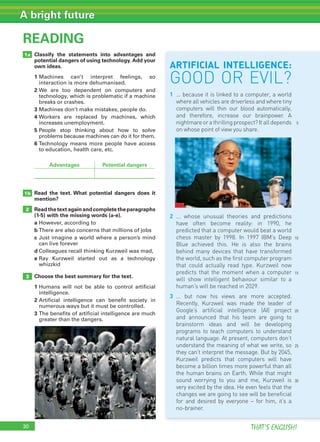
  • 188.
    187THAT’S ENGLISH! LANGUAGE STUDY(pages 76-77) Activity 1 Suggested answers: 2 I’d rather go on holiday to the beach. I love the sea and warm weather. 3 I’d rather be an ordinary person because I love my privacy, and I can’t stand being in the limelight. Activity 2 1 to have, go 3 walking, cycling 5 to be 2 study 4 be, work 6 playing, watching Activity 3a A landlady is explaining the rules of living in a shared flat to a new tenant. Activity 3b 1 I’d, didn’t 2 rather, didn’t 3 if, didn’t 4 it, didn’t Activity 4 2 I’d prefer it if you didn’t come tomorrow. 3 We’d rather you paid for the damage. 4 I’d prefer it if you didn’t play the drums. 5 They’d rather he told the truth. 6 I’d prefer it if you followed my instructions exactly. 7 He’d rather his ex-wife didn’t come to the party. Activity 5a Phil is upset because his wife has tidied his desk and thrown out his chair. Betty is upset because her husband doesn’t like the changes she’s made. Activity 5b 1 hadn’t done 2 had put 3 had asked 4 hadn’t Activity 6 2 They’d rather we hadn’t brought presents. 3 I’d prefer it if everyone had left by midnight. 4 She’d rather he hadn’t left all his belongings at her flat. 5 We’d prefer it if he had stayed longer. 6 I’d rather they had been more positive. 7 My mother would prefer it if I had studied law. Activity 7 2 I’d rather you hadn’t bought tickets to the theatre. / I’d rather you’d / had bought tickets to the cinema. I’d prefer it if you hadn’t bought tickets to the theatre. / I’d prefer it if you’d / had bought tickets to the cinema. 3 I’d rather you hadn’t arranged a blind date for me. I’d prefer it if you hadn’t arranged a blind date for me. 4 I’d rather you / he / she hadn’t offered me a new job. I’d prefer it if you / he / she hadn’t offered me a new job. Activity 8a 1f, 2c, 3e, 4a, 5b, 6d Activity 8b 1 would be, wasn’t 3 could have, wasn’t 2 would, found 4 would, lost Activity 9a 1 would’ve / have brought, ’d / had had 2 would never have succeeded, hadn’t encouraged 3 ‘d / had known, ‘d / would have saved 4 would’ve / would have been, had been 5 have done, had broken down 6 hadn’t missed, would’ve / would have got Activity 10a Zoe’s upset because she missed winning the lottery by one day. Activity 10b a1, b2 Activity 10c 1 had left 4 have left 7 were 2 would be 5 had listened 8 would have finished 3 weren’t 6 wouldn’t be Activity 11 1 have their pick of 2 start 3 to work 4 didn’t work 5 ran 6 would be 7 caught between a rock and a hard place 8 had realised 9 have weighed up all the options 10 wouldn’t have gone 11 hadn’t acquired 12 would be Difficult choices (page 78) Activity 1 Student’s own answers. Activity 2 1c, 2e, 3d, 4a, 5b Activity 3 1 ✗ David says the main choices relate to where they want to live and the budget available to them. 2 ✔ 3 ✗ Dawn is finding it difficult to choose because she has to consider the needs of her children and not just herself. 4 ✔ 5 ✔ 6 ✗ Dawn thinks the first house is exactly what she wants. 7 ✔ Activity 4 1e, 2c, 3a, 4d, 5f, 6b Activity 5 Suggested answer: I love shopping in malls. As there are so many shops, you have a great variety of choices and when you are hungry, you can stop at your favourite eatery. Activity 6 1 great bargain 4 modernist design 2 open air nature 5 pool parties, legendary 3 star attraction Activity 7 Suggested answer: I think we have a huge variety of choice of schools and college courses but nowhere near enough choice of housing. This is because no one is building enough new homes and I think people would benefit from having more new homes available because in some areas, such as the south, it’s almost impossible for teachers and nurses to afford to buy a home. SKILLS WORK (page 79) Activity 1a 2 Activity 1b 1 Jade enjoys shopping, but Megan and Damian don’t find it enjoyable at all. Frank doesn’t like going shopping, except at discount retailers.
  • 189.
    Answer Key THAT’S ENGLISH!188 2Jade: She really likes going shopping and looking for the latest most fashionable items. Damian: He doesn’t believe in consumerism. He thinks that it’s the things you can’t buy that will bring happiness. Megan: She doesn’t enjoy shopping anymore. It is more of a chore than a pleasure and the special offers drive her mad. Frank: He only enjoys going to discount retailers where there is less to choose from and it is cheaper. Activity 2a special offers, discount retailers, too much choice, spending on experiences Activity 2b 1 Some out-of-town stores are standing empty. 2 People have changed their habits and shop every couple of days closer to home. 3 They don’t do special offers, everything is cheaper and there’s less choice. 4 They can’t make a decision. 5 The ideal number of brands to choose from is six. 6 Spending on experiences rather than luxury goods. Activity 3 Suggested answers: A: I’d prefer it if stores didn’t have so many confusing special offers. B: Yes, I always spend a long time working out if I’m really saving money. A: Sometimes I buy two items for the price of one but in fact, I don’t really need two and one just gets thrown away. B: Why don’t they make the labels clearer so you can see what the real cost per kilo is? A: Yes, sometimes the price is per kilo and sometimes per 200 grams. I don’t want to spend the whole shopping trip doing maths! B: I’d be a happier consumer if stores were more honest and didn’t try and trick us into spending more. A: Me too. WRITING (pages 80-81) Activity 1a 1 Activity 1b anecdotes, a proposal Activity 2a 1c, 2a, 3d, 4b Activity 2b Paragraphs 1 and 2 support the statement; 3 and 4 are against it. Activity 3a 1c, 2a Activity 3b 1 moreover 2 however 3 consequently Activity 3c 1 furthermore 2 in spite of / although / nevertheless / even though / on the other hand 3 due to / therefore / as a result Activity 4 Summarising expression:To sum up. Summary of ideas: It is true that the Internet has brought many economic and educational benefits to a vast number of people. Better communication has united people as never before in history. Nevertheless, people can only use technology if they are fit and well, and antibiotics have greatly improved people’s health. Personal opinion: Personally, I believe that good health is the most important thing in life. Final conclusion: Without it, even if we have very advanced technology, we can achieve very little. Activity 5a Suggested answer: ‘I have a dream that my four little children will one day live in a nation where they will not be judged by the colour of their skin …,’ said Martin Luther King in 1963, but King never even mentioned his children’s gender.Today, such an omission would shock most people, who would argue that fighting gender and racial inequalities are inseparable. In this essay both aspects will be considered. Activity 5b Student’s own answers. Activity 6a 1b, 2a Activity 6b 2 It is known / It is undoubtedly true that men and women are equally intelligent. 3 It is believed / It is understood that different races benefit from having separate education. 4 It is known / It is claimed that women still experience difficulty getting top jobs in business. 5 It is said / It is thought that having a family means a woman is less committed to her career. 6 It’s a well-known fact / It is undoubtedly true that all human races are descended from a small group of ancestors. Activity 7 Suggested answer: Racial equality rather than gender equality should be the main priority for a world leader. ‘I have a dream that my four little children will one day live in a nation where they will not be judged by the colour of their skin …,’ said Martin Luther King in 1963, but King never even mentioned his children’s gender.Today, such an omission would shock most people, who would argue that fighting gender and racial inequalities are inseparable. In this essay both aspects will be considered. Apart from the moral arguments against racial discrimination, it is a well-known fact that racial equality promotes economic prosperity, and consequently many countries now offer equal legal protection to all races. It is also generally accepted that skin colour is not a justification for discrimination. So, clearly some progress has been made. On the other hand, although in many societies women have achieved a degree of equality in many aspects of life, it is undoubtedly true that gender inequality also affects all races. Therefore social discrimination is often effectively doubled for certain individuals. To sum up, I personally believe that we should only judge a person on their character and actions and that for this reason both racial and gender inequality should be addressed equally by any world leader. UNIT 8. I NEED A HERO! A fallen idol (pages 82-83) Activity 1 Student’s own answers. Activity 2 1 Jane used to be his secretary and now she feels disillusioned by his actions. 2 They lost all their savings. They felt devastated and Sheila’s husband got depressed.
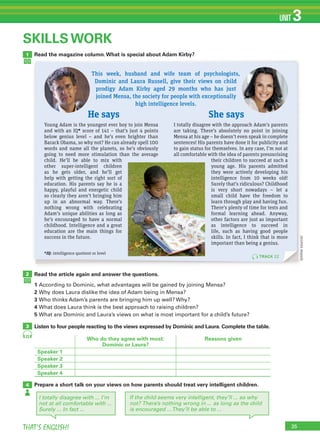
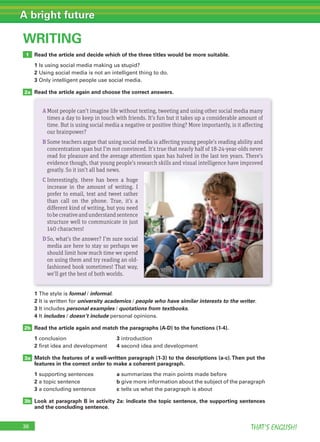
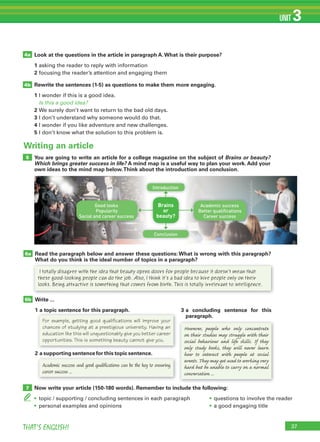
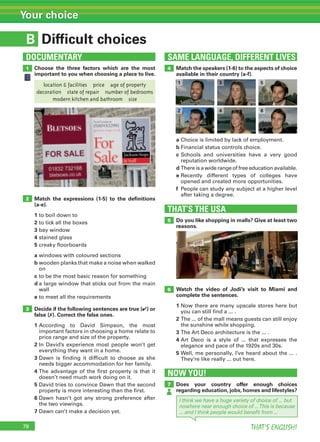
  • 190.
    189THAT’S ENGLISH! Activity 3 1Danny admires him a lot. 2 He does a lot for charity. He’s said to have set up a children’s foundation. 3 Danny thinks people are jealous of Graham’s success. 4 Karen wants to write an article about the truth about Graham Snow. 5 Jane thought Graham seemed charming and modest but now she has no respect for him. Activity 4 1 ✗ At first the scheme went very well. 2 ✔ 3 ✗ She says she knows he must be very disappointed. 4 ✔ 5 ✔ Activity 5 1b, 2b, 3a, 4b Activity 6 1 to pluck up the courage 3 worships him blindly 2 to make it 4 a self-made man Activity 7 Suggested answer: I’ve always admired Richard Branson, a self-made man who made it by the age of twenty when he started the Virgin music shops. He had dyslexia at school and all his teachers said he would never succeed in life but now he’s a billionaire. Activity 8 Suggested answer: Some of my heroes or heroines are firefighters. They put their lives on the line for other people and have to work in diverse conditions.They really deserve our respect. Activity 9a 1 Thierno 5 Kristen 2 Glenn 6 Dena 3 Nicholas 7 Gina 4 Cheryl and Robert Activity 9b 1 Kristen: He combines music and imagination for a wide range of audiences. 2 Cheryl and Robert: They were blessed by being in great families. 3 Dena: She is empowering women to do more and be independent, bold and brave. 4 Glenn: He admires pioneers and explorers, andArmstrong was the first man on the moon. 5 Gina: She came from nothing and wrote really great books. 6 Thierno: He was a wonderful human being and role model. 7 Nicholas: She’s a very popular person. She’s all the rage right now. Activity 10a 1b, 2a, 3a, 4b Activity 10b Suggested answers: 1 Someone who was the total package for me was my aunt because she was kind and generous and interested in all the things I enjoy. She gave me a lot of time and attention and many special holidays. 2 I idolised Michael Jackson when I was a child, and I used to have his posters all over my room and play his music non-stop. It’s strange now because I never play his music and I can’t understand why I admired him so much. 3 The person I strive to imitate is Nelson Mandela because he forgave injustice and brought peace to his country, so I try not to mind when people treat me unfairly. 4 At the moment, baking cakes is all the rage because there are several very popularTV baking programmes. Activity 10c 1 self-made man 5 total package 2 worshipped him blindly 6 striving 3 plucked up the courage 7 all the rage 4 made it 8 idolise Activity 11 Suggested answer: I really admire my best friend Tamara. She’s the total package because not only is she a loving mother and daughter but she also finds time to help out at the food bank regularly. Not only that, she’s also a self-made woman with her own beauty salon business. Her family idolise her and there’s always a great atmosphere at her house. She’s always there for me despite her busy life. I strive to be like her but I don’t think I can manage it. ‘Me’ time is all the rage these days but I don’t thinkTamara ever thinks like that. READING (pages 84-85) Activity 1a 3 carers, 4 refuse collector, 5 soldiers, 6 firefighters Activity 1b unsung heroes Activity 2a 2 Activity 2b 1d, 2a, 3e, 4f, 5c Activity 3 1 ✗ She was already a wealthy woman. 2 ✔ 3 ✗These injustices continued until quite recently. 4 ✗ None of her musical compositions survived. 5 ✔ 6 ✗ We should sing the praises of the women whose achievements were ignored in the past. Activity 4 1 put (someone) on a pedestal 2 put on a brave face 3 hall of fame 4 sunk into oblivion 5 claim to fame 6 sing the praises of (someone) 7 moment of glory 8 feet of clay Activity 5 1 moment of glory 5 sang his / her praises 2 hall of fame 6 put her on a pedestal 3 put on a brave face 7 feet of clay 4 claim to fame 8 sank into oblivion Activity 6 Suggested answers: 2 I had a moment of glory when I was interviewed on the street by a reporter from the BBC. For weeks people stopped me and asked me if I was the person they had seen onTV. 3 I took the most amazing photograph in my life and was sure I was going to win the award for best photograph of the year. However, it was given to someone else and I had to put on a brave face because I really believe I deserved it.
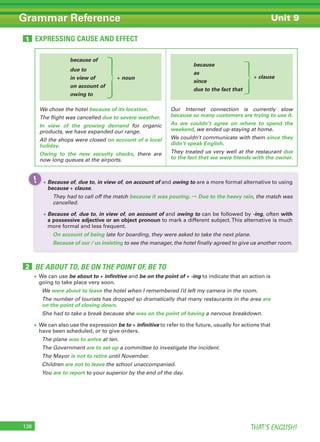
  • 191.
    Answer Key THAT’S ENGLISH!190 4I really looked up to Diego Maradona, but then I found out he had a drug problem. LANGUAGE STUDY (pages 86-87) Activity 1a 2 She’s such a talented artist that people pay thousands of pounds for her work. 3 The child was so brave that he didn’t even cry when he broke his leg. 4 He was so kind to the refugees that they thought he was an angel in disguise. 5 My favourite teacher is such a gentle and kind person that we think she’s the best teacher in the world. Activity 1b 2 Such a talented artist is she that people pay thousands of pounds for her work. 3 So brave was the child that he didn’t even cry when he broke his leg. 4 So kind was he to the refugees that they thought he was an angel in disguise. 5 Such a gentle and kind person is my favourite teacher that we think she’s the best teacher in the world. Activity 2a 1b, 2b Activity 2b 1 What was incredible was that he did it on his own. 2 What is amazing is that so many people want to help. 3 What I think is important is to try your best. 4 What they found was impossible was to do it all. 5 What is unbelievable is that no one knows what to do. 6 What was thrilling was that we raised so much money. Activity 3a 1 The judges think that whoever isn’t chosen will be shattered by the news because to be chosen is a dream come true. 2 Harry’s mother is upset because Harry is so fit and strong. 3 Sonia’s parents won’t be thrilled with the news because they think it is too dangerous. Activity 3b Adjective Preposition Positive interested thrilled overjoyed delighted glad pleased in with at, about about for about Negative depressed shattered devastated staggered about by by at Activity 3c 1, 2 at / about 5, 6 at / by 3, 4 in / with 7, 8, 9 at / about / with Activity 3d 1 in 2 on 3 in 4 in 5 about Activity 4a 1 PeoplesayBillGateshasgiven$10billiontomedicalcharities. 2 Bill Gates is said to have given $10 billion to medical charities. Sentence 2 best focuses the reader’s attention on the information. Activity 4b 1 present 2 past 3 present 4 past Activity 5 1 she is estimated to make 2 She is believed to be 3 She is thought to have had 4 She is said to have been rejected 5 her first publisher is known to have advised her 6 He is said to have told her 7 She is understood to have donated Activity 6 1 unsung heroes 2 is believed to have organised 3 sank into oblivion 4 So, was 5 at 6 Such 7 is known to have been showered 8 hall of fame Activity 7a It’s about heroes who fight against an oppressive government or regime, freedom fighters. Activity 7b 1 folk hero 3 freedom fighter 5 activist 2 rough diamond 4 icon 6 fallen idol Activity 7c 1 rough diamond 3 freedom fighter 5 fallen idol 2 icon 4 folk hero 6 activist Activity 8 Suggested answers: 1 I used to idolise Oscar Pistorius, the Paralympic runner, then he was accused of murdering his girlfriend and since then he is nothing but a fallen hero. 2 Davy Crockett was both a folk hero and real politician. Davy Crockett represented Tennessee in the House of Representatives and opposed many of the President’s policies especially the Indian RemovalAct. He also explored the wild frontier. He died at the Battle of the Alamo. 3 The modern icon that I most admire is OprahWinfrey. She donates a lot of her money to help others and is interested in making our world a better place. Global heroines (page 88) Activity 1 Student’s own answers. Activity 2 1c, 2a, 3d, 4b Activity 3 1 In the past some people became heroes on the battlefield. 2 Boudica was a female military heroine. She was a Celtic warrior whose army destroyed many Roman cities including London. 3 Queen Victoria identified herself with Boudica and strengthened her image as a powerful female monarch. 4 At times he was a hero and then a villain. 5 He saved his ship’s crew when their ship was trapped in ice. 6 She spoke out against the Taliban when very few others were doing so. 7 No, the nature of heroes has changed because the kinds of heroes we need have also changed.
  • 192.
    191THAT’S ENGLISH! Activities 4aand 4b Speaker Heroine Reasons for their choice 5 Katrina Kaif Highest great actress in India. 4 Flora McDonald Rescued Bonnie Prince Charlie from the British Army. 6 Princess Diana She did a lot of charity work. 7 Rosa Parks She fought for civil rights. 1 Portia Simpson She was Prime Minister twice. 2 NancyWake She was a famous spy from WW2 who fought against the Nazis. 3 KatieTaylor An Olympic gold medallist. Activity 5 Suggested answer: scuba diving, snorkeling, sailing and sunbathing Activity 6 1 ✗ Daytona has 23 miles of white sandy beaches. 2 ✗ Spring break is a holiday in the middle of the second semester of the school year. 3 ✔ 4 ✗ Stock cars may look like family cars but they are purpose- built racing machines. 5 ✔ 6 ✗ Richard Petty won the race seven times. Activity 7 Suggested answer: Emmeline Pankhurst is a national heroine that comes to mind and I believe it’s a well-deserved status. She is known to have gone to prison numerous times to highlight the cause of women getting the vote, and she was an inspiring leader to thousands of women. Her work succeeded as women over 30 got the right to vote in 1918. SKILLS WORK (page 89) Activity 1a 1B, 2A, 3C, 4D Activity 1b 1 Kathy Derwent 3 JohnnoTrevor 2 Gerry Phillips 4 Khadija Khan Activity 2a They don’t agree – Clare wants Gerry to win but Aiden wants Johnno to win. Activity 2b Gerry Phillips Kathy Derwent Khadija Johnno Trevor Clare saved teenagers from a life of crime knows 200 kids by name and she contributes a lot of time and money to the school Aiden’s opinion is unfair. a bit weird Aiden cool doesn’t need the award, gets satisfaction from what she does not an original idea revolutionary, a bit of a folk hero, a good guy, a breath of fresh air Activity 3 Suggested answer: My unsung heroine is my aunt Cristina. I want to sing her praises because she’s very modest and doesn’t tell people about what she does for others. She always has a positive attitude and she is always cheerful and ready to lend a hand – with cooking, homework, gardening or fixing things. She inspired me to start my own online business selling second-hand textbooks. What I find amazing is her enthusiasm for life and her desire to live. She’d be overjoyed at winning because she always loves a party! SPEAKING (pages 90-91) Activity 1 Student’s own answers. Activity 2a 1 Annie’s heroine completed the London marathon in a bionic suit as she is paralysed. 2 Yes, Zak shares Annie’s admiration. Activity 2b 1, 3, 4, 6, 7, 8, 10 Activity 4a 1, 3, 5 Activity 4b 1 said 5 was 2 letdown 6 absolutely shattering 3 true 7 so right 4 What Activity 4c 1c, 2b Activity 4d 1 letdown 4 most disappointing was … 2 true 5 shattering 3 so right 6 it Activity 5 1 So 6 actually 11 values 2 influenced 7 realise 12 admire 3 made 8 truthful 13 Definitely 4 realise 9 best 5 about 10 everything Activity 6a Suggested answers: courageous I idolised Billy Jakes, the mountaineer. He was so adventurous, climbing where no one else had succeeded. brave He never showed any fear and was always so positive and friendly. modest What’s more, he was never boastful about his achievements or thought he was the best mountaineer. Activity 6b Suggested answer: he betrayed a cause Well, it was devastating to realise that he had been using money raised for the expeditions to buy things for himself – expensive cars and hotels. What a letdown! Activity 7 Suggested answer: A: So who did you look up to when you were young? B: I idolised Billy Jakes, the mountaineer. He was so adventurous, climbing where no one else had succeeded.
  • 193.
    Answer Key THAT’S ENGLISH!192 Henever showed any fear and was always so positive and friendly. What’s more, he was never boastful about his achievements or thought he was the best mountaineer. A: Really! But come on, what made him so special? B: Well, he was an ordinary guy who did extraordinary things and I thought, ’If he can succeed, so can I’. A: So, why don’t you feel the same about him now? B: Well, it was devastating to realise that he had been using money raised for the expeditions to buy things for himself – expensive cars and hotels. What a letdown! A: You said it! What else do you know? B: What I found most disappointing was realising that his the cheerful personality was all turned on for the cameras and that actually he was a very arrogant and selfish person. He used to leave his wife and small children at home for months and without enough money. He was an idiot. A: Too right! Do you think you were influenced by him? B: Yes, I suppose he helped me believe in myself, but now I feel I want to be the opposite of him. Anyway, what about you? Who did you use to admire? UNIT 9. LET’S HIT THE ROAD Expand your horizons (pages 92-93) Activity 1 1 railway / trains 3 car travel 5 bike travel / cycling 2 aeroplanes / flying 4 boat / sea Activity 2 1 Anthony offers them a free weekend in a luxury hotel with a spa and golf course. 2 Roadworks are causing traffic jams on the M4 and there are delays of up to two hours. Activity 3 1 ✗ Anthony is rehearsing his presentation. 2 ✗ Anthony invites Danny because he knows about marketing. 3 ✗ Danny is excited about playing golf. 4 ✔ 5 ✔ Activity 4 1 Because there are roadworks causing traffic jams. 2 She says it is a lot of driving and there were floods there last year. 3 He says he was keeping watch for cars to make sure they didn’t get run over. 4 He decides to give up because the A4 between Marlborough and Avebury is closed owing to severe flooding. 5 They have to take the train. Activity 5 1d, 2b/e, 3b/e, 4c, 5a Activity 6 1 hit the road / set off 3 miss out 5 turning back 2 set off / hit the road 4 run over Activity 7 Suggested answer: My last trip from Malaga was a disaster. We’d decided to come back by car, but as soon as we set off, we got a flat tyre. I repaired it and we hit the road again. Shortly after this, the car overheated and we had to pull over and call for assistance. We didn’t get home until the next day. Activity 8 I think travel broadens the mind because you see outside your own environment and it allows you to stretch your wings and expand horizons. You experience different cultures, meet different people and hear different accents. All of these things help to broaden your mind. Activity 9 1 cocoon, butterfly 3 horizons 5 cultures 2 forget about, behind 4 understand Activity 10 1 culture 4 outside 2 art 5 environment 3 better idea 6 globe Activity 11 1S, 2D, 3S, 4D, 5S Activity 12 1 fasten 3 widening 5 board 2 took off 4 leave 6 block Activity 13 Suggested answer: I think travel broadens the mind because it takes you out of your normal, everyday environment and gives you new experiences. The more you travel, the more cultures you learn about. You also get to meet all kinds of people and experience all kinds of new things. READING (pages 94-95) Activity 1a Student’s own answers. Activity 1b Student’s own answers. Activity 2a 3 Activity 2b 1 ✔ 2 ✗ It’s hard on the human body and not good for your health. 3 ✔ 4 ✗ They have a lot of responsibility because they have to help lots of passengers get off the plane and stay calm. 5 ✗ He never stops being interested in people. 6 ✔ 7 ✔ Activity 3a 1 destination 6 runway 2 turbulence 7 Jet lag 3 Long-haul flights 8 Evacuating 4 food and beverage trolleys 9 on-board catering 5 Stopovers Activity 3b 1 runway 6 evacuated 2 long-haul flight 7 stopover 3 destination 8 on-board catering 4 turbulence 9 jet lag 5 food and beverage trolley Activity 4a 1 pick, up 3 stop over 5 get away 2 take off 4 drop, off 6 put, up Activity 4b 1 I try to get away at least once a month. I enjoy going to the country to relax, breathe fresh air and go for long relaxing walks. 2 I definitely prefer to be picked up and dropped off when I’m on holiday. It makes the trip much easier and that is one less thing to worry about.
  • 194.
    193THAT’S ENGLISH! 3 Idon’t enjoy putting people up in my home. I would rather they went to a hotel because I don’t feel comfortable having visitors spend the night at my home. LANGUAGE STUDY (pages 96-97) Activity 1a 1a, 2e, 3c, 4b, 5d Activity 1b 1 journey 3 journeys 5 voyage 2 trip 4 Travel 6 trip Activity 2a 1 She recommends train travel because trains go everywhere, they are really not very expensive and since everybody uses them, it’s a great way to meet people. 2 There are eight types of train tickets. 3 She recommends a 2AC ticket. Activity 2b 1 peak times 4 carriage 7 berths 2 platform 5 seats 8 compartment 3 fare 6 bunk Activity 2c 1 sleeper trains 3 bunk beds 5 platform 2 berth 4 fare 6 peak times Activity 3a 1b, 2d, 3c, 4a Flight number: BA852 Departure gate: 90 Boarding time: 11:45 Seat number: 16D Activity 3b 2 pack, bags.Yes 3 carry, board. No 4 left, luggage unattended. No 5 confirm, objects, explosive.Yes 6 hand.Yes 7 carrying, liquids. No Activity 3c 1 Can I ask you some security questions? 2 Did you pack your bags yourself? 3 Did anybody ask you to carry anything on board for them? 4 Have you left your luggage unattended at any time? Activity 4a 1f, 2g, 3c, 4b, 5a, 6d, 7e Activity 4b Suggested answers: 2 In view of the passenger’s unreasonable behaviour … she was banned from flying with the airline in future / she was escorted off the plane / she was fined €100. 3 Due to the lack of air conditioning in the train … we spent an uncomfortable night / some people became ill from the heat. 4 Owing to an accident this morning … the road is now closed until further notice / there are long delays between junction 12 and 13. 5 Because of the heavy traffic … we made slow progress / we arrived an hour late / we nearly missed our flight. Activity 5a 1 infinitive 2 gerund 3 infinitive Activity 5b 2 The flight was to take off at 10:30 and the crew were strapped into their seats. 3 She was about to get into her sleeping berth when she noticed someone had stolen her blankets. 4 He was on the point of asking the passengers to sit down when the captain made and announcement. 5 The aircraft is to make an emergency landing and we will have to evacuate the passengers immediately afterwards. 6 Theairportisonthepointofdeclaringastateofemergency. Off the beaten track (page 98) Activity 1 Student’s own answers. Activity 2 1 ✗There are more than a million motorcyclists in the UK, but they aren’t all members of the BFM. 2 ✔ 3 ✔ 4 ✗ It became popular after the Second World War. 5 ✔ 6 ✗ It was founded by people who had no association with the gangs. 7 ✔ 8 ✗ It has been a meeting place for motorcyclists since the 60s. Activity 3 Suggested answer: I would recommend people visit Granada because of the Alhambra. San Sebastian is amazing because of its beauty and food and Madrid because of the museums, the Royal Palace and the old part of the city. Activity 4 1c, 2b, 3f, 4a, 5d, 6e Activity 5 1, 3, 5, 6 Activity 6 1 Orlando was built around the citrus industry. 2 It’s called the Sky Coaster. 3 Miniland has replicas of the USA’s most celebrated cities and attractions. 4 A Master Model Builder is someone who works for Legoland that builds and designs Lego models. 5 Because it allows adults and kids alike the opportunity to use their imagination in ways they never would have. 6 They usually build them in sections and then assemble them on site. Activity 7 Student’s own answers. SKILLS WORK (page 99) Activity 1 Student’s own answers. Activity 2a The author seems to have a negative attitude towards the modern tourist industry overall although he/she does admit that it creates jobs and economic opportunities and is essential to the economy of many European countries. Activity 2b 1 To learn about culture and improve their foreign language skills. 2 The expansion of the railways in the 1840s and the first package tours byThomas Cook in the 1860s. 3 Because employers were obliged to give their workers paid holiday time. 4 Advantages: tourism creates jobs and economic opportunities. Disadvantages: it can also cause environmental problems, and break up traditional communities.
  • 195.
    Answer Key THAT’S ENGLISH!194 Activity3a Alba agrees that some areas were developed too fast but says that Tex should bear in mind that some of these were very poor at the time when tourism started developing and the industry gave the people opportunities that they had never had before. Activity 3b Tourism in Spain Contribution to the economy 1 60 billion Number of visitors to Spain last May 2 21.4 million Top four countries visitors come from 3 France 4 Italy 5 Britain 6 Germany Two strengths of the industry 7 good service 8 good value for money World leader in 9 spa and wellness tourism 10 eco-tourism 11 green initiatives Activity 4 Suggested answer: When I was younger, I preferred to travel on my own or with a small group of friends to exotic places, but now that I’m older, I’m actually starting to like more organised holidays because everything is organised for you and it makes travelling easier. All of the sightseeing trips are included in the price and the bus picks you up from the hotel, takes you to your destination and brings you back to the hotel safe and sound. I prefer 4-star hotels with an all inclusive package. You really don’t have to worry about money then. As I get older, I realise I like having holiday in small groups. I really don’t enjoy big groups and all the noise much anymore. WRITING (pages 100-101) Activity 1a A Thank you ever so much for … I really must apologise … please accept my apologies again … B Thanks for … Sorry for … sorry again for the inconvenience … Activity 1b The first version is better because it is more formal and sincere. Activity 1c 1 Both. Some of the group were supposed to return later to finish, but due to the fact that they overslept, they were late. 2 A. I take full responsibility and ask you to accept my apologies again on the group’s behalf. 3 A. I do assure you that this is not typical behaviour and it will not happen again. 4 A. If it is convenient, we can come back next Saturday and thoroughly clean the whole cottage. Activity 2a 1 sincere 2 even when it’s the other person’s fault 3 impolite 4 a different Activity 2b 1 awfully 5 apologise 9 thoughtful 2 do 6 just 10 shouldn’t 3 excuse 7 appreciate 11 should have 4 forgive 8 grateful 12 excuse Activity 3a A B polite not polite polite not polite Speaker 1 ✔ ✔ Speaker 2 ✔ ✔ Speaker 3 ✔ ✔ Activity 4a Suggested answer: Notes for shouting at receptionist tired after long journey − room unavailable – terrible shock − need to be at meeting in morning − receptionist – tried to be helpful – find another room in different hotel – she = polite and professional – I overreacted – shouldn’t have shouted at her − when home, realised mistake in dates mine − British system day first / American system month first − please accept apologies Notes for noise in hotel room was my birthday – wanted small party, too many people − please forgive me for not realising that music and voices too loud − didn’t know the person who opened door − wouldn’t be so rude myself but take responsibility for what happened − hope not spoil your evening too much − no excuse for such thoughtless behaviour Activity 4b Suggested answer: Dear Sir or Madam, I am writing to apologise for my unacceptable behaviour towards a member of your staff at your hotel last week. I arrived after a very long journey to find that the room I thought I had booked was unavailable, and I’m afraid I overreacted and took out my frustration on the receptionist. At the time I was convinced that I was in the right, but I have since realised that the mistake was in fact mine: I had used the British system when booking and put the day first, whereas the hotel uses the American system with the month first.Your receptionist was polite and professional at all times and did everything she could to find me an alternative place to sleep. Thanks to her I got a large discount at a nearby five-star hotel and enjoyed a very comfortable stay. There really was no excuse for my behaviour, so please accept my apologies and pass on my thanks to your employee. Yours faithfully, Tom Bartelman REVISION 2 LANGUAGE REVISION (pages 102-103) Activity 1 2 I wouldn’t be a doctor now if my parents hadn’t made me study hard. 3 If my mother had bought the newspaper, she wouldn’t have missed the news about the accident. 4 If John wasn’t afraid of heights, he would have gone up the EiffelTower when he was in Paris. 5 If we had arrived at the airport on time, we would be flying over the Atlantic now. 6 If I hadn’t left my coat at home, I wouldn’t have caught a cold. 7 If you make an effort, you’ll have a chance for promotion. (I think you might make an effort.) / If you made an effort,
  • 196.
    195THAT’S ENGLISH! you’d havea chance for promotion. (I don’t really think you will make an effort.) Activity 2 2 So sumptuous will the decoration of the dining room be that it will look like a palace. 3 So overjoyed were his parents to see him home safe that they couldn’t stop smiling. 4 So disappointed does she feel that she wants to cry. 5 Such a huge problem did it become that no one could deal with it. 6 Such an unwary traveller is he that he always gets robbed. Activity 3 1 criteria 3 passers-by 5 goods 2 means 4 diagnoses 6 cacti Activity 4 1 should I 3 can’t you 2 hasn’t she 4 will you will you / won’t you Activity 5 2 He’s known to be a difficult customer. 3 The actor is said to have given his best performance in that film. 4 The disease is thought to have come from a type of mosquito. 5 The situation is believed to be getting better. Activity 6 1 ’d rather you had chosen 2 proposed changing 3 was easy was 4 owing to 5 have fallen by 6 it if you didn’t 7 suggests taking / suggests we take 8 on the point of leaving 9 spite of being / spite of the fact that it was 10 ’d rather not Activity 7 1 up 2 off 3 out 4 off 5 over 6 up 7 up 8 away Activity 8 1 pick 5 betrayed 9 outstanding 2 praises 6 way 10 hasty 3 hour 7 destination 4 bribery 8 spoilt Activity 9 1 common ground 4 jet lag 2 cutting edge 5 fallen idol 3 rough diamond 6 peak time Activity 10 1 yellow 2 face 3 voyage 4 white 5 body 6 journey Activity 11 1 I met the most incredible woman. 2 These are the best results we’ve ever had. 3 Have you ever seen the real George Clooney? 4 You are just the greatest friend I’ve ever had. 5 He’s the major player in his category. SKILLS WORK (pages 104-105) Activity 1 3 Activity 2 2 Activity 3 1 ✗The plane had just taken off from La Guardia airport when the incident happened. 2 ✗ Sullenberger’s experience helped his decision to land on the river. 3 ✔ 4 ✔ 5 ✗ Some of the passengers changed their lives because of the crash. 6 ✔ Activity 4a 1c, 2e, 3b Activity 4b Dialogue What was the change? Was it good or bad? 1 He changed his manager. bad 2 He changed his career. good 3 She changed her hairstyle. bad Activity 5a 1b, 2a, 3a, 4d, 5c, 6d, 7b, 8c Activity 5b 1, 3, 4, 5, 8 (2 would be used by a salesperson; 6 and 7 are formal.) Activity 6 Suggested answer: A: Hi, ... You know I’m moving house this weekend. Could you lend me a hand? B: Mmm. What do you need? A: Well, first of all I was wondering if you could come over to my place on Friday and help me pack up my books. B: Well, I was going to see my mother that evening.You know she hasn’t been well.There’s no way I can put that off. A: Oh dear! I’m sorry to hear that. Anyway, what about Saturday morning? Perhaps you could make it then, and help me move some of the furniture. B: Oh, I’m so sorry. I have to go into the office for an emergency meeting on Saturday. A: What, all day? B: Yes, I’m afraid so. A: What a pity! I’ll have to try and persuade Joe to help me then. B: That’s a good idea! Activity 7 Cause Result Contrast Addition because of due to owing to as a result therefore although even though in spite of on the other hand instead (of) however furthermore moreover 1 because of / owing to / due to (= Teenagers can get into trouble because they are influenced by their peers.)
  • 197.
    Answer Key THAT’S ENGLISH!196 2As a result / Therefore (= Children can be overprotected and so / and that way they don’t learn to be independent.) 3 On the other hand (= Parents should make some rules, although / even though they should sometimes let their child decide what is best.) (= Parents should make some rules; however, / nevertheless, they should sometimes let their child decide what is best.) 4 Although / Even though / In spite of the fact that (= Parents want the best for their children, but sometimes they can make mistakes too.) 5 in spite of (= They can feel too pressured in spite of the fact that / although / even though their parents have good intentions.) 6 Furthermore / Moreover (= Discussing a choice is important; in addition, / besides, talking together builds a better relationship.) (= Discussing a choice is important, as well as talking together, which builds a better relationship.) Activity 8 1 I 2 I or C 3 I 4 I or C 5 I 6 C Activity 9 Suggested answer: We all know the story of Icarus, who ignored his father’s advice, flew too close to the sun and fell to his death. Some people say that parents should give children the freedom to make their own decisions, while others feel that important decisions have to be made for children, depending on their age. On the one hand, children can be overprotected. As a result, they don’t learn to be independent, so when they have to look after themselves they are incapable of making sensible decisions. Furthermore, parents sometimes put too much pressure on their children to choose a particular career or studies. For example, a family of lawyers may encourage their children to study law, when in fact they may be better at science subjects. On the other hand, children do need some guidance, especially when they are younger. Parents shouldn’t let them watch as much television as they want or eat only sweets. However, older children should be given more responsibility to decide for themselves. If they make a mistake, they can learn from the experience. In my opinion, parents should support and encourage their children, let them find their own path in life, but be there when they fall. EXAM STRATEGIES READING COMPREHENSION I (page 106) Activity 1a 2 the value of dreaming Activity 1b 1 a, b, c 2 a, b, c Activity 2 2a, 3g, 4b, 5e, 6f, 7d READING COMPREHENSION II (page 107) Activity 1a 1C, 2D, 3B Activity 1b 1c, 2b, 3a Activity 2 1 ✔ 2 ✗ Slow music makes shoppers move slowly through the shop and buy more. 3 ✗ Sometimes they are cheaper, but we may spend more because we feel we have saved on other things. 4 ✔ 5 ✗ Companies mainly use their customers’ loyalty cards to collect data about them. LISTENING COMPREHENSION I (page 108) Activity 1a 1c, 2a, 3e, 4b, 5d Activity 1b 1d, 2b, 3c, 4a, 5e Activity 1c 1 What I think is interesting is the new research into developing alternative energies. 2 There’s an association between smoking and lung disease. 3 In the same way, doing puzzles also helps keep the mind active. 4 They spend their free time working in the garden. 5 At the time when there was an explosion in the city centre. Activity 2 1 fascinated 2 a car crash 3 their upbringing and their genetic make-up 4 playing video games 5 working people / adults LISTENING COMPREHENSION II (page 108) Activity 1 expedition: party, course, meeting well: badly, terribly, quickly second: first, last, fifth day: week, morning, hour Activity 2 1b, 2a, 3b, 4b, 5b, 6a Activity 3 2 The moment the weather got better he felt excited relieved. 3 At first, he thought he would be setting up watching the balloons. 4 He found flying in a hot-air balloon a scary thrilling experience. 5 She felt especially upset when her dog died because he was with her son on his own. 6 She doesn’t want the expense responsibility of having another animal in the house. 7 In the afternoon, she had a written exam an interview. 8 After receiving the news about the job she had applied for, she was delighted went to pieces. WRITING I (page 109) Activity 1 1 the local authorities 2 to get a grant for setting up a small business 3 what the business is and how it will benefit the community Activity 2 Suggested answers: 1, 3, 7
  • 198.
    197THAT’S ENGLISH! Activity 3 1considerably more 3 much better 2 even fewer 4 far greater Activity 4 Suggested answer: Proposal Introduction The business that we would like to set up is a play centre for young children.We would aim to offer services at weekends, afternoons and peak holiday periods. Our team is composed of two paediatric nurses and a psychologist with experience in nursery schools. Description of the business Theserviceswewouldofferincludepre-schoolplaygroupsfor toddlers. Parents can leave their children on an hourly basis, simply visit the family areas such as the open playground area or take advantage of activities for older children such as music and drama groups.We would also organise events such as birthday parties or other celebrations. Benefits for the community There is a lack of support for parents with young children in the town. Since the supermarket was built in the park area, they have even fewer places to go with their children. In most families, both parents are working so there is a far greater need for childcare facilities than before, particularly in the school holiday periods. Our centre would give small children considerably more opportunities to be in contact with other children and provide a safe place for parents to leave them. WRITING II (page 109) Activity 1a 1c, 2a, 3c, 4d, 5f, 6e, 7b, 8d, 9d Activity 1b 1 However 2 Despite 3 apart from 4 due to 5 while Activity 2 Suggested answer: Online learning is becoming increasingly popular nowadays. Some people find this effective, while others prefer to go to face-to-face classes. In my opinion, the effectiveness of either method depends on the subject being taught. Online learning is suitable for academic study, while face-to-face classes are essential for more practical subjects. I followed a business management course online last year and found it very useful. I needed the flexibility of online study because I was working full-time. However, despite the fact that you can study when and where you want, you have to be self-disciplined to work on your own and this can be difficult for some people. On the other hand, learning to be a carpenter, for instance, must be very hard to do online without having access to machinery and hands-on practice. In this case, you need a teacher with you to observe your work and help in a practical way. In conclusion, I would say that there is no ideal method for all types of learning. Possibly a combination of both online study and occasional tutorials would be the best for busy working people and face-to-face classes for students who need more supervision. SPEAKING I (page 110) Activity 1a Persuading: 2, 3, 5, 7 Refusing: 1, 4, 6, 8 Activity 1b Student’s own answers. Activity 1c 1e, 2d, 3a, 4c, 5b Activity 2 Suggested answer: A: Good morning, I have to talk to you about the rent for the flat.You know I haven’t asked for an increase in the past two years. B: I know, but that’s really unfair! You know my salary has been cut from last year. A: Yes, but I’ve had a lot of expenses with the maintenance of the flat and the increase in local taxes. B: Well, I’ve always looked after the flat.You know I’ve never broken anything and it’s very clean. I think I’m a good tenant. A: I’d agree with that, but you know there are a lot of other people interested in renting the flat. B: Really? But there are other flats for rent in the same building that are cheaper than this one! A: Absolutely not!They’re not nearly as nice as this one. B: You’re right. I’ve got an idea! Why don’t I help out with the maintenance, you know, painting and decorating and you can keep the rent the same. A: OK.That’s a good idea. SPEAKING II (page 111) Activity 1 1 made 5 didn’t have 2 had just finished 6 was offering / offered 3 was 7 applied 4 decided Activity 2 1 hadn’t, have learnt 3 weren’t, wouldn’t be 2 had chosen, wouldn’t have met 4 had stayed, be Activity 3 1 That’s why 2 so that 3 As 4 thanks to 5 because of Activity 4 Suggested answer: A few years ago, I had to make an important decision. I had to decide if I wanted to study for a year in Dublin or stay in my home town to get a job and help out my mum. At the time the choice I made seemed very unimportant, but it ended up having a tremendous effect on my life. I chose to stay home and help out my mum because I felt it was the right thing to do. So, I got a job as a mechanic. One day a beautiful woman came to the garage to have her car repaired. I began talking to this woman and one thing led to another and we started going out. Today, we are married and have three gorgeous kids. Although if I hadn’t met my wife, I probably would have gone to Dublin and my life would be more adventurous than it is now. Who knows? SELF TEST UNITS 1-9 SELF TEST 1 (page 112) Activity 1 1d, 2a, 3e, 4b, 5f, 6c Activity 2 1 frustrating 3 disappointing 5 relieved 2 enraged 4 reassuring 6 delighted
  • 199.
    Answer Key THAT’S ENGLISH!198 Activity3 1 was moved to tears 5 gives, the creeps 2 pours, heart out 6 hurts, feelings 3 fell to pieces 7 is beside herself 4 hit, hard Activity 4 1e, 2f, 3d, 4a, 5c, 6b Activity 5 Suggested answers: 1 absolutely awful / terrible / dreadful 2 absolutely furious / irate 3 utterly hideous / repulsive 4 absolutely tiny 5 completely astounded / astonished 6 totally exhausted / shattered 7 absolutely gorgeous / beautiful 8 utterly saddened / distressed Activity 6 1 How far is it to Paris from here? 2 We take it that you don’t want to come with us. 3 We would appreciate it if you could turn off the lights when you leave. 4 I find it upsetting when you criticise me in front of other people. 5 It seems that there might be a problem. Activity 7 1 In the beginning 5 As 2 after a while 6 for a minute / for a while 3 Fortunately 7 Surprisingly 4 in the end SELFTEST 2 (page 113) Activity 1 1 self-deprecating 4 physically demonstrative 2 work ethic 5 culture shock 3 status symbol 6 stigma attached Activity 2 1 will turn it off 4 are, trying 2 will go 5 am, experimenting 3 won’t rise Activity 3 1c, 2e, 3a, 4d, 5b, 6f Activity 4 1 used to live 4 would save 2 didn’t use to have 5 used to like 3 would give 6 would never talk Activity 5 1 keep 4 laughed 2 ‘ll go 5 will go 3 carries 6 get used, was used Activity 6 2, 5, 6, 3, 8 1, 7, 4 SELFTEST 3 (page 114) Activity 1 1 definite arrangement 4 intention 2 definite arrangement 5 definite arrangement 3 intention Activity 2 1 is playing 2 ‘m getting / ’m going to get I’m going to get 3 I’m having 4 starts 5 ’ll tell 6 won’t mind 7 ’ll have finished 8 ’ll be waiting 9 ’ll look forward / I look forward to it / I’m looking forward Activity 3 1 remind 5 recollection / memory 2 souvenir 6 to retrieve 3 remembering 7 recall / remember 4 memory 8 recalling, remember Activity 4 1 whizzkid 5 brains behind 2 brainstorm 6 brainpower 3 a no-brainer 7 not rocket science 4 brainchild Activity 5 1 Teresa’s a terrible cook – she can’t even boil an egg! 2 I’ve just had some wonderful news – I got the job! / I’ve had some wonderful news – I’ve just got the job. 3 She just / only wants to explain what went wrong – it won’t take long. 4 These builders are so messy – they haven’t even taken their rubbish away. /These builders are (just) so messy – They haven’t (even) taken their rubbish away. 5 They only / just eat in very expensive restaurants so no fast food for them! 6 Can you just stop for a moment and listen to me? 7 Please – I only / just want to borrow it for a couple of minutes. Activity 6 4, 5, 3, 1, 2 SELFTEST 4 (page 115) Activity 1 1 to increase 4 attending 7 having 2 leaving 5 to aim 8 to cook, to order 3 to introduce 6 buying Activity 2 1 visiting 4 to take 7 driving 2 smelling 5 to communicate 8 to put 3 experiencing 6 to take 9 waiting Activity 3 1 would, mind 5 course 9 Will 2 Not 6 me, hand 10 please 3 are 7 would 11 All 4 possibly / please 8 problem Activity 4 1 Please forgive us / our making any noise last night. 2 The neighbours objected to his / him burning his rubbish. 3 We excused them / their leaving early because they were exhausted. 4 Do you mind my / me making a call? 5 He overlooked her forgetting to buy the flowers. 6 I don’t have problem with you / your using the car. Activity 5 1 ✗ He offers to sponsor her £20. 2 ✔ 3 ✔ 4 ✗ Steve says being sensitive is important.
  • 200.
    199THAT’S ENGLISH! 5 ✔ 6✗Their hands are tied. 7 ✗ He asks her to get involved and go to the food bank tomorrow. Activity 6 1 thoughts 5 misunderstood 9 Good 2 far 6 Fair 10 reasonable 3 concerned 7 Could 4 disagree 8 just SELFTEST 5 (page 116) Activity 1 1 seven billion (7,000,000,000) 2 three point one four one five nine. (3.14159) 3 three and three quarters (3 ¾) 4 nought / zero point six-six-six (0.666) 5 one billion, three hundred and ninety-nine million, four hundred and ninety-one thousand, one hundred and eighty-five (1,399,491,185) 6 three hundred and sixty-five (365) Activity 2 1 All 2 Both 3 neither 4 either 5 neither 6 None Activity 3 1 1 metre 63 5 5 foot 4 inches 9 6.26 2 50 6 2, 2 10 2,253.92 3 39.37 inches 7 110 4 12 8 360 Activity 4 1 crises 3 sisters-in-law 5 nuclei 2 media 4 analyses 6 phenomena Activity 5 1 The number of overseas students has doubled. 2 People say the price of building materials will increase by 33%. 3 Our sales figures have fallen by a quarter. 4 Its value has halved since we bought it. 5 It was approved by 70% of customers. 6 We are three times more successful. 7 Its speed has quadrupled. Activity 6 1 I recommend looking for a way to solve this problem. / I recommend you look for a way to solve this problem. 2 The chair proposes asking for government funding. / The chair proposes that we ask for government funding. 3 My parents have suggested that my sister applies for the job. / My parents have suggested my sister apply for the job. 4 The government proposed lowering the age for voting. / The government proposed the age for voting be lowered. 5 My boyfriend suggested celebrating my birthday with a huge party. / My boyfriend suggested that we celebrate my birthday with a huge party. 6 My uncle recommends listening to this new band. / My uncle recommends that we listen to this new band. SELFTEST 6 (page 117) Activity 1 1 built a rapport 5 inherently 2 find common ground 6 unwary 3 collective subconscious 7 advertising campaign, slogan 4 sales pitch Activity 2 1 bring him round to 5 won over 2 talk dad into doing 6 talk me out of doing 3 put you off 7 seduce you into doing 4 was Activity 3a 1 state-of-the-art 3 eye-catching 5 opulent 2 exquisite 4 up-to-the-minute 6 affordable Activity 4 1 turn 2 stylish 3 ultra 4 super 5 sunshine 6 sky 7 sumptuous 8 free Activity 5 1 Instead of enduring the discomfort of a cramped seat, you can sit back and relax. 2 I would advise against visiting that area of the city at night. 3 The sales assistant was able to guarantee that it was the cheapest model available. 4 The travel agent was able to assure us that we’d be delighted with the holiday we’d booked. 5 It’s a long way to walk. Might I suggest you take a taxi instead? 6 wouldn’t bother asking him. He’s only just started working here. Activity 6 Suggested answers: 1 Never / Not in a million years would I take up running. It’s much too tiring! 2 Over my dead body! I hate participating in group activities! 3 On no account will you get me a personal trainer. It’s very expensive 4 Don’t even think about it / getting me a bike. I’ll never / would never use it. SELFTEST 7 (page 118) Activity 1 1 to have 2 try 3 to walk 4 drive 5 not walk Activity 2 1 I‘d rather you hadn’t used my phone. 2 prefer it if he had helped earlier. 3 We‘d rather you had cleaned the room thoroughly. 4 His parents would prefer it if he hadn’t given up university. 5 They’d rather the thief had gone to prison. Activity 3 1 be 6 have chosen 2 hadn’t been invented 7 used 3 hadn’t existed 8 wouldn’t be 4 wouldn’t have decided 9 adopted 5 hadn’t used 10 would need Activity 4 1 no 4 weigh 7 minds 2 pick 5 options 8 caught 3 hasty 6 right 9 rock Activity 5 1 ✗ Maddy is in two minds about the job in Rome. 2 ✔ 3 ✔ 4 ✗ He’s really fed up with his job but he has no choice. 5 ✗There is no way he can pay back his course fees. 6 ✔ 7 ✔ Activity 6 1 Although / While 2 In addition / Furthermore / Moreover
  • 201.
    THAT’S ENGLISH!200 3 Asa result / Consequently 4 In addition / Furthermore / Moreover 5 However / Nevertheless / On the other hand 6 In addition / Furthermore / Moreover 7 To sum up / In conclusion /To summarise SELFTEST 8 (page 119) Activity 1 1 So (c) 2 Such (b) 3 Such (f) 4 So (a) 5 Such (d) 6 So (e) Activity 2 1 moment of glory 5 claim to fame 2 put on a brave face 6 sunk into oblivion 3 put her on a pedestal 7 feet of clay 4 sang her praises 8 the hall of fame Activity 3 1 Joseph Bazalgette is believed to have saved thousands by building London’s sewer system. 2 Mary Seacole is considered to have been a major influence on improving nursing. 3 The Red Cross is said to operate in 73 countries worldwide. 4 100 billion children are estimated to have been given vaccinations by the Red Cross. 5 Over 100 health workers are understood to have died in the Ebola crisis. Activity 4 1 incredible 4 dear 7 staggered 2 overjoyed 5 devastated 8 with 3 about 6 about Activity 5 1 ✗ She says he was too violent, and it can’t be justified. 2 ✔ 3 ✔ 4 ✔ 5 ✗They were just bank robbers and murderers. 6 ✗The proposed title is Fallen Idols. Activity 6 1 What I find most disappointing is that the whole team is under suspicion. 2 What was devastating was when the singer lost her beautiful voice. 3 What we discovered is that to win you have to work in a team. 4 What was thrilling was that we won first prize. 5 What she believed was that she could do it on her own. Activity 7 1 Really 6 amazing / incredible 2 incredible / amazing 7 letdown 3 have 8 said 4 extraordinary 9 true 5 the SELFTEST 9 (page 120) Activity 1 1 trip 2 journey 3 travel 4 voyage 5 travelling Activity 2 1e, 2a, 3d, 4c, 5b, 6f Activity 3 1 long-haul 4 turbulence 7 cabin crew 2 stopovers 5 landing 8 on-board catering 3 destination 6 evacuate 9 jet lag Activity 4 1 There was congestion on the M4 this morning due to an accident involving two lorries. 2 Owing to a mistake on the part of the airline, we had to travel first class. 3 The flight was delayed for five hours on account of the terrible weather. 4 In view of the circumstances, I think I owe you an apology. 5 Because of the bad flying conditions, we are going to make an emergency landing in Hong Kong. Activity 5 1 sleeper 5 carriage 2 fare 6 compartments 3 berth 7 platform 4 seat Activity 6 1 dropped, off 3 to pick, up 5 to take off 2 stopped over 4 put, up 6 to get away Activity 7 1 c apology 4 a apology 2 b gratitude 5 e apology 3 d gratitude Answer Key