IELTS SPEAKING                     04/05/12


Module: MA ELT (Materials Development)


Presented by: Leo (Liu Xianhui)
-principles
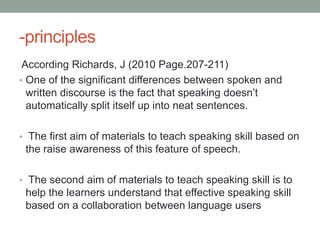
 According Richards, J (2010 Page.207-211)
• One of the significant differences between spoken and
  written discourse is the fact that speaking doesn’t
  automatically split itself up into neat sentences.

• The first aim of materials to teach speaking skill based on
 the raise awareness of this feature of speech.

• The second aim of materials to teach speaking skill is to
 help the learners understand that effective speaking skill
 based on a collaboration between language users
-principles
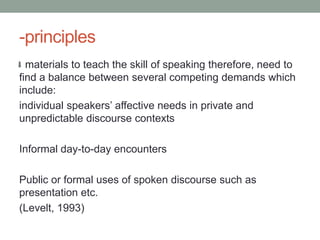
  materials to teach the skill of speaking therefore, need to
find a balance between several competing demands which
include:
individual speakers’ affective needs in private and
unpredictable discourse contexts

Informal day-to-day encounters

Public or formal uses of spoken discourse such as
presentation etc.
(Levelt, 1993)
-principles

communication should be seen as a process than products
( Nunan, 1989)

Subjective needs and Objective needs ( Brindley, 1989)
• Subjective needs: speaking proficiency, language
  awareness etc.
• Objective needs: emotion of speaking, interests of
  speaking.
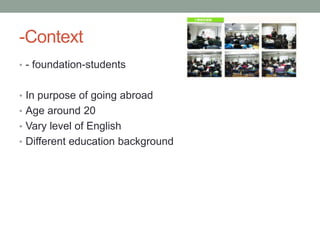
-Context
• - foundation-students


• In purpose of going abroad
• Age around 20
• Vary level of English
• Different education background
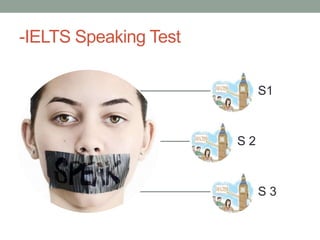
-IELTS Speaking Test

                            S1


                       S2


                            S3
-What’s in IELTS speaking?
• S1 Candidates answer general                          ( IELTS 6 Cambridge Books, 2007)
  questions

1 family/ home

2 studies/ job                                                   S3 Discussion between examiner
                                                                 and candidates
3 interests ( similar questions and a wide
range of similar familiar topic area)
                                                                 Features: with more abstract issues which
                                                                 theoretically link to S2

S2 Candidates is asked to talk a particular
topic

 eg. Describe your home town/ your favourite library/
your special experiences. ( 1mins prepare, 1-2mins
talking with questions afterwards.)
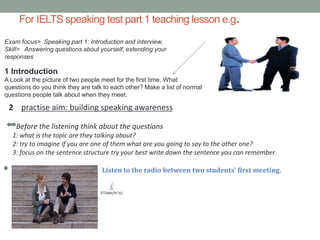
For IELTS speaking test part 1 teaching lesson e.g.
Exam focus> Speaking part 1: Introduction and interview.
Skill> Answering questions about yourself, extending your
responses

1 Introduction
A Look at the picture of two people meet for the first time. What
questions do you think they are talk to each other? Make a list of normal
questions people talk about when they meet.

 2 practise aim: building speaking awareness

    Before the listening think about the questions
  1: what is the topic are they talking about?
  2: try to imagine if you are one of them what are you going to say to the other one?
  3: focus on the sentence structure try your best write down the sentence you can remember.

                                    Listen to the radio between two students’ first meeting.


                                   IELTS Speaking Part 1.mp3
Speaking part 1
With your answers to the questions, and the basic sentence
structure in your mind, introduce yourself to your
classmates by following the structure such as:

             Hello everyone my name   I am from XXX
             is XXX
              My interest is XXX      Extra information you
                                      would like to talk
Try to take some useful notes from your partner, think
about what they said
1 is there any spoken mistakes they made?
2 are there any difficulties when they try to speak to you?
3 do you think they give enough information that you like?
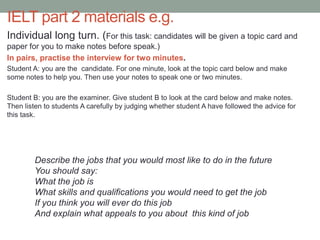
IELT part 2 materials e.g.
Individual long turn. (For this task: candidates will be given a topic card and
paper for you to make notes before speak.)
In pairs, practise the interview for two minutes.
Student A: you are the candidate. For one minute, look at the topic card below and make
some notes to help you. Then use your notes to speak one or two minutes.

Student B: you are the examiner. Give student B to look at the card below and make notes.
Then listen to students A carefully by judging whether student A have followed the advice for
this task.


        Describe the jobs that you would most like to do in the future
        You should say:
        What the job is
        What skills and qualifications you would need to get the job
        If you think you will ever do this job
        And explain what appeals to you about this kind of job
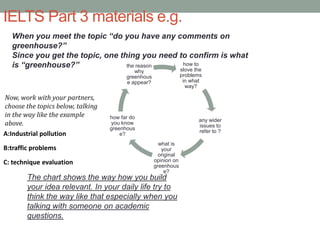
IELTS Part 3 materials e.g.
  When you meet the topic “do you have any comments on
  greenhouse?”
  Since you get the topic, one thing you need to confirm is what
  is “greenhouse?”               the reason    how to
                                              slove the
                                            why
                                         greenhous                problems
                                         e appear?                 in what
                                                                    way?

Now, work with your partners,
choose the topics below, talking
in the way like the example        how far do
                                                                        any wider
above.                             you know
                                                                        issues to
                                   greenhous
                                                                        refer to ?
A:Industrial pollution                 e?
                                                       what is
B:traffic problems                                      your
                                                       original
C: technique evaluation                              opinion on
                                                     greenhous
                                                          e?
        The chart shows the way how you build
        your idea relevant. In your daily life try to
        think the way like that especially when you
        talking with someone on academic
        questions.
Online-IELTS
• http://www.wix.com/leolovegir/leo-materials#!online-shop


Independent learning depends on students’ learning
motivation and learning strategy. ( Mayer et al, 2005)
References
• Richards,J (2010) English Language Teaching Materials Theory and Practice
 Cromwell Press.

• Bygate, M. (1987) Speaking. Oxford: Oxford University Press.

• Brindley, M.P. and Cadlin, C.N. (1987) “ Which MATERIALS?: a
consumer’s and designer’s guide”, in L.E.Sheldon (ed)

• Nunan, D. (1989) Syllabus Design. Oxford: Oxford University Press

• Tomlinson, B (2003) Developing Materials For Language Teaching Cromwell
 Press

• Levert, W. J.M. (1993). Speaking: From intention to articulation. Cambridge, MA:
 The MIT Press

• Mayer, R (2005) Multimedia Learning in second Language Acquisition
 Cambridge University Press

Ielts speaking ppt

  • 1.
    IELTS SPEAKING 04/05/12 Module: MA ELT (Materials Development) Presented by: Leo (Liu Xianhui)
  • 2.
    -principles According Richards,J (2010 Page.207-211) • One of the significant differences between spoken and written discourse is the fact that speaking doesn’t automatically split itself up into neat sentences. • The first aim of materials to teach speaking skill based on the raise awareness of this feature of speech. • The second aim of materials to teach speaking skill is to help the learners understand that effective speaking skill based on a collaboration between language users
  • 3.
    -principles materialsto teach the skill of speaking therefore, need to find a balance between several competing demands which include: individual speakers’ affective needs in private and unpredictable discourse contexts Informal day-to-day encounters Public or formal uses of spoken discourse such as presentation etc. (Levelt, 1993)
  • 4.
    -principles communication should beseen as a process than products ( Nunan, 1989) Subjective needs and Objective needs ( Brindley, 1989) • Subjective needs: speaking proficiency, language awareness etc. • Objective needs: emotion of speaking, interests of speaking.
  • 5.
    -Context • - foundation-students •In purpose of going abroad • Age around 20 • Vary level of English • Different education background
  • 6.
  • 7.
    -What’s in IELTSspeaking? • S1 Candidates answer general ( IELTS 6 Cambridge Books, 2007) questions 1 family/ home 2 studies/ job S3 Discussion between examiner and candidates 3 interests ( similar questions and a wide range of similar familiar topic area) Features: with more abstract issues which theoretically link to S2 S2 Candidates is asked to talk a particular topic eg. Describe your home town/ your favourite library/ your special experiences. ( 1mins prepare, 1-2mins talking with questions afterwards.)
  • 8.
    For IELTS speakingtest part 1 teaching lesson e.g. Exam focus> Speaking part 1: Introduction and interview. Skill> Answering questions about yourself, extending your responses 1 Introduction A Look at the picture of two people meet for the first time. What questions do you think they are talk to each other? Make a list of normal questions people talk about when they meet. 2 practise aim: building speaking awareness Before the listening think about the questions 1: what is the topic are they talking about? 2: try to imagine if you are one of them what are you going to say to the other one? 3: focus on the sentence structure try your best write down the sentence you can remember. Listen to the radio between two students’ first meeting. IELTS Speaking Part 1.mp3
  • 9.
    Speaking part 1 Withyour answers to the questions, and the basic sentence structure in your mind, introduce yourself to your classmates by following the structure such as: Hello everyone my name I am from XXX is XXX My interest is XXX Extra information you would like to talk Try to take some useful notes from your partner, think about what they said 1 is there any spoken mistakes they made? 2 are there any difficulties when they try to speak to you? 3 do you think they give enough information that you like?
  • 10.
    IELT part 2materials e.g. Individual long turn. (For this task: candidates will be given a topic card and paper for you to make notes before speak.) In pairs, practise the interview for two minutes. Student A: you are the candidate. For one minute, look at the topic card below and make some notes to help you. Then use your notes to speak one or two minutes. Student B: you are the examiner. Give student B to look at the card below and make notes. Then listen to students A carefully by judging whether student A have followed the advice for this task. Describe the jobs that you would most like to do in the future You should say: What the job is What skills and qualifications you would need to get the job If you think you will ever do this job And explain what appeals to you about this kind of job
  • 11.
    IELTS Part 3materials e.g. When you meet the topic “do you have any comments on greenhouse?” Since you get the topic, one thing you need to confirm is what is “greenhouse?” the reason how to slove the why greenhous problems e appear? in what way? Now, work with your partners, choose the topics below, talking in the way like the example how far do any wider above. you know issues to greenhous refer to ? A:Industrial pollution e? what is B:traffic problems your original C: technique evaluation opinion on greenhous e? The chart shows the way how you build your idea relevant. In your daily life try to think the way like that especially when you talking with someone on academic questions.
  • 12.
    Online-IELTS • http://www.wix.com/leolovegir/leo-materials#!online-shop Independent learningdepends on students’ learning motivation and learning strategy. ( Mayer et al, 2005)
  • 13.
    References • Richards,J (2010)English Language Teaching Materials Theory and Practice Cromwell Press. • Bygate, M. (1987) Speaking. Oxford: Oxford University Press. • Brindley, M.P. and Cadlin, C.N. (1987) “ Which MATERIALS?: a consumer’s and designer’s guide”, in L.E.Sheldon (ed) • Nunan, D. (1989) Syllabus Design. Oxford: Oxford University Press • Tomlinson, B (2003) Developing Materials For Language Teaching Cromwell Press • Levert, W. J.M. (1993). Speaking: From intention to articulation. Cambridge, MA: The MIT Press • Mayer, R (2005) Multimedia Learning in second Language Acquisition Cambridge University Press