Graft Materials used in Implant Dentistry
• With a rise in dental patients opting for implant dentistry the availability
and development of improved biomaterials for periodontal tissue
engineering has significantly improved the available treatment options and
their clinical results.
• Bone replacement graft materials is one of such products used to enhance
the treatment modality and is used efficiently by the dentists at Dr.
Sachdev’s Dental Clinic in Ashok Vihar.
What is Bone Graft?
• Bone grafts are used as a filler and support to facilitate bone formation and
promote wound healing.
• These grafts are bioresorbable and have no antigen-antibody reaction.
• These bone grafts act as a mineral reservoir which induces new bone formation.
• Bone grafts are commonly used in application of dental implants, to restore
edentulous area of a missing tooth.
• In general, bone grafts are either used in block (such as from chin or ascending
ramus area of lower jaw) or particulate, to be able to adapt it better to a defect.
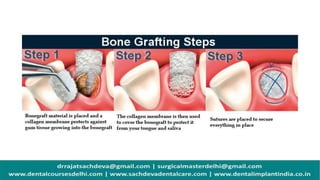
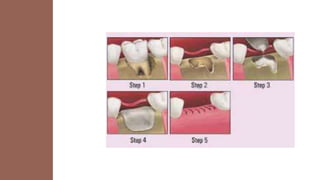
• Bone grafting is a surgical procedure that replaces missing bone with material
from patient′s own body, an artificial, synthetic, or natural substitute.
• Bone grafting is possible because bone tissue can regenerate completely if
provided the space into which it has to grow.
• As natural bone grows, it generally replaces the graft material completely,
resulting in a fully integrated region of new bone.
Classification
There are a range of bone replacement graft materials and are
classified as; natural transplants (autografts, allografts and xenografts)
and synthetic materials (alloplasts).
• Autografts: an autograft is used as the ‘gold standard’ for bone grafting. The
patient’s own bone is used in an autograft, which ensures the bone is sterile,
biocompatible, and easily manipulated.
• Allografts: Allografts such as demineralized freeze-dried bone are osteoinductive
and osteoconductive and may be cortical and/or trabecular in nature. Allografts
are tissues taken from genetically non-identical members of the same species, i.e.
from another human.
• Alloplasts: Alloplasts such as hydroxyapatite and tricalcium phosphate may be
synthetic or natural, vary in size, and are only osteoconductive. Alloplastic
grafting material is synthetically derived or made from natural materials. The
major advantages of alloplastic bone grafts include zero risk of disease
transmission and low antigenicity. They come in resorbable and non-resorbable
forms, allowing for customization according to pore sizes and porosity levels.
• Xenografts: A xenograft is bone harvested from a different species and is usually
bovine in origin. This type of bone graft can be very successful when used to
provide a framework for bone regeneration or when used in combination with an
autogenous graft. The bone is deproteinized, sterilized, and as all organic material
is removed, it is both physically and chemically the same as the mineral phase of
human bone.
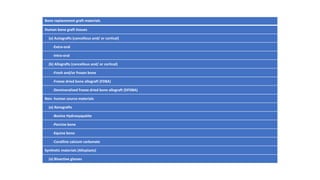
Bone replacement graft materials
Human bone graft tissues
(a) Autografts (cancellous and/ or cortical)
-Extra-oral
-Intra-oral
(b) Allografts (cancellous and/ or cortical)
-Fresh and/or frozen bone
-Freeze dried bone allograft (FDBA)
-Demineralized freeze dried bone allograft (DFDBA)
Non- human source materials
(a) Xenografts
-Bovine Hydroxyapatite
-Porcine bone
-Equine bone
-Coralline calcium carbonate
Synthetic materials (Alloplasts)
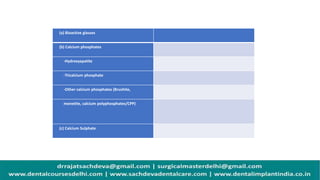
(a) Bioactive glasses
(b) Calcium phosphates
-Hydroxyapatite
-Tricalcium phosphate
-Other calcium phosphates (Brushite,
monetite, calcium polyphosphates/CPP)
(c) Calcium Sulphate
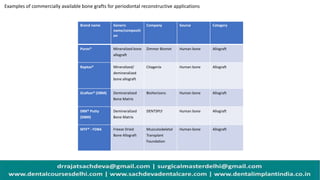
Brand name Generic
name/compositi
on
Company Source Category
Puros® Mineralized bone
allograft
Zimmer Biomet Human bone Allograft
Raptos® Mineralized/
demineralized
bone allograft
Citagenix Human bone Allograft
Grafton® (DBM) Demineralized
Bone Matrix
BioHorizons Human bone Allograft
DBX® Putty
(DBM)
Demineralized
Bone Matrix
DENTSPLY Human bone Allograft
MTF® - FDBA Freeze Dried
Bone Allograft
Musculoskeletal
Transplant
Foundation
Human bone Allograft
Examples of commercially available bone grafts for periodontal reconstructive applications
Conclusion
Dr. Sachdeva’s Dental Clinic ,the best implant dental clinic uses a
combination of these bone replacement materials and a combination of
least invasive techniques to provide the best suitable treatment to our
patients.
References
• https://blog.ddslab.com/bone-grafting-materials-in-implant-
dentistry
• https://www.researchgate.net/publication/15056191_Bone-
grafting_materials_in_implant_dentistry
• https://www.ncbi.nlm.nih.gov/pmc/articles/PMC3722694/
• https://biomaterialsres.biomedcentral.com/articles/10.1186/s4082
4-017-0095-5
For more information, you can book an appointment at
Dr Sachdeva's Dental Aesthetic And Implant Institute,
I 101, Ashok Vihar Phase 1, Delhi- 110052
Contact us at
Phone : +919818894041,01142464041
Our Websites:
www.sachdevadentalcare.com
www.dentalclinicindelhi.com
www.dentalimplantindia.co.in
www.dentalcoursesdelhi.com
www.facialaestheticsdelhi.com
Youtube link: https://goo.gl/mk7jfm
Linkedin link: https://goo.gl/PrPgpB
Slideshare link : http://goo.gl/0HY6ep
Twitter Page : https://goo.gl/tohkcI
Instagram page : https://goo.gl/OOGVig
•
Facebook link: https://goo.gl/tui98A
Google+ link: https://goo.gl/vqAmvr

Bone graft materials | Bone grafting in Implantation | Periodontal surgeries | types of bone grafts

  • 1.
    Graft Materials usedin Implant Dentistry
  • 2.
    • With arise in dental patients opting for implant dentistry the availability and development of improved biomaterials for periodontal tissue engineering has significantly improved the available treatment options and their clinical results. • Bone replacement graft materials is one of such products used to enhance the treatment modality and is used efficiently by the dentists at Dr. Sachdev’s Dental Clinic in Ashok Vihar.
  • 3.
    What is BoneGraft? • Bone grafts are used as a filler and support to facilitate bone formation and promote wound healing. • These grafts are bioresorbable and have no antigen-antibody reaction. • These bone grafts act as a mineral reservoir which induces new bone formation. • Bone grafts are commonly used in application of dental implants, to restore edentulous area of a missing tooth. • In general, bone grafts are either used in block (such as from chin or ascending ramus area of lower jaw) or particulate, to be able to adapt it better to a defect.
  • 5.
    • Bone graftingis a surgical procedure that replaces missing bone with material from patient′s own body, an artificial, synthetic, or natural substitute. • Bone grafting is possible because bone tissue can regenerate completely if provided the space into which it has to grow. • As natural bone grows, it generally replaces the graft material completely, resulting in a fully integrated region of new bone.
  • 7.
    Classification There are arange of bone replacement graft materials and are classified as; natural transplants (autografts, allografts and xenografts) and synthetic materials (alloplasts). • Autografts: an autograft is used as the ‘gold standard’ for bone grafting. The patient’s own bone is used in an autograft, which ensures the bone is sterile, biocompatible, and easily manipulated. • Allografts: Allografts such as demineralized freeze-dried bone are osteoinductive and osteoconductive and may be cortical and/or trabecular in nature. Allografts are tissues taken from genetically non-identical members of the same species, i.e. from another human.
  • 8.
    • Alloplasts: Alloplastssuch as hydroxyapatite and tricalcium phosphate may be synthetic or natural, vary in size, and are only osteoconductive. Alloplastic grafting material is synthetically derived or made from natural materials. The major advantages of alloplastic bone grafts include zero risk of disease transmission and low antigenicity. They come in resorbable and non-resorbable forms, allowing for customization according to pore sizes and porosity levels. • Xenografts: A xenograft is bone harvested from a different species and is usually bovine in origin. This type of bone graft can be very successful when used to provide a framework for bone regeneration or when used in combination with an autogenous graft. The bone is deproteinized, sterilized, and as all organic material is removed, it is both physically and chemically the same as the mineral phase of human bone.
  • 9.
    Bone replacement graftmaterials Human bone graft tissues (a) Autografts (cancellous and/ or cortical) -Extra-oral -Intra-oral (b) Allografts (cancellous and/ or cortical) -Fresh and/or frozen bone -Freeze dried bone allograft (FDBA) -Demineralized freeze dried bone allograft (DFDBA) Non- human source materials (a) Xenografts -Bovine Hydroxyapatite -Porcine bone -Equine bone -Coralline calcium carbonate Synthetic materials (Alloplasts) (a) Bioactive glasses
  • 10.
    (a) Bioactive glasses (b)Calcium phosphates -Hydroxyapatite -Tricalcium phosphate -Other calcium phosphates (Brushite, monetite, calcium polyphosphates/CPP) (c) Calcium Sulphate
  • 11.
    Brand name Generic name/compositi on CompanySource Category Puros® Mineralized bone allograft Zimmer Biomet Human bone Allograft Raptos® Mineralized/ demineralized bone allograft Citagenix Human bone Allograft Grafton® (DBM) Demineralized Bone Matrix BioHorizons Human bone Allograft DBX® Putty (DBM) Demineralized Bone Matrix DENTSPLY Human bone Allograft MTF® - FDBA Freeze Dried Bone Allograft Musculoskeletal Transplant Foundation Human bone Allograft Examples of commercially available bone grafts for periodontal reconstructive applications
  • 12.
    Conclusion Dr. Sachdeva’s DentalClinic ,the best implant dental clinic uses a combination of these bone replacement materials and a combination of least invasive techniques to provide the best suitable treatment to our patients.
  • 13.
    References • https://blog.ddslab.com/bone-grafting-materials-in-implant- dentistry • https://www.researchgate.net/publication/15056191_Bone- grafting_materials_in_implant_dentistry •https://www.ncbi.nlm.nih.gov/pmc/articles/PMC3722694/ • https://biomaterialsres.biomedcentral.com/articles/10.1186/s4082 4-017-0095-5
  • 14.
    For more information,you can book an appointment at Dr Sachdeva's Dental Aesthetic And Implant Institute, I 101, Ashok Vihar Phase 1, Delhi- 110052 Contact us at Phone : +919818894041,01142464041 Our Websites: www.sachdevadentalcare.com www.dentalclinicindelhi.com www.dentalimplantindia.co.in www.dentalcoursesdelhi.com www.facialaestheticsdelhi.com
  • 15.
    Youtube link: https://goo.gl/mk7jfm Linkedinlink: https://goo.gl/PrPgpB Slideshare link : http://goo.gl/0HY6ep Twitter Page : https://goo.gl/tohkcI Instagram page : https://goo.gl/OOGVig • Facebook link: https://goo.gl/tui98A Google+ link: https://goo.gl/vqAmvr