Fran Quintero Rawlings,
Designer, Health Commons Lab
Alana Boltwood
Consultant, Metimea Inc.
A Method to Include System Mapping
in Strategic Planning
RSD8 Activity Group
About us:
● Strategic Foresight & Innovation program at OCAD University in Toronto
● Systemic design consultants with experience in non-profits and government
Alana Boltwood:
Master’s Research
Project modelled
causes and effects of
urban poverty.
Visualizing patterns to
make sense of complex
social systems, and
thus strategize for
change.
Fran Quintero
Rawlings:
Master’s Research
Project on the
intersection of death,
grief and social
isolation.
Designer @ Health
Commons Lab.
Have you participated in
strategic planning?
https://namescon.com/news/hand-up-for-your-start-up-scholarship-contest/
A strategic plan is a process that
provides guidance in
fulfilling a mission with
maximum efficiency
and impact.1
What is a strategic plan?
1.https://www.tccgrp.com/wp-content/uploads/2018/09/Ten-Keys-to-Successful-Strategic-
Planning-for-Nonprofit-and-Foundation-Leaders.pdf
Strategic planning is like
designing an organization
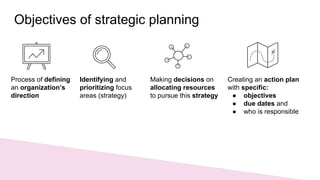
Process of defining
an organization’s
direction
Objectives of strategic planning
Identifying and
prioritizing focus
areas (strategy)
Making decisions on
allocating resources
to pursue this strategy
Creating an action plan
with specific:
● objectives
● due dates and
● who is responsible
Observation
Strategic planners don’t commonly use system mapping.
● 3 /10 guides to strategic planning mention Theory of Change.
○ None describe how to visualize a system.
● 3 interviews with well known strategic planners in Toronto: they don’t
do system mapping
Hypothesis
Hypothesis
In the social sector,
Hypothesis
In the social sector,
strategic planning
could benefit from
system mapping.
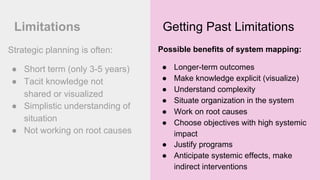
Limitations
Limitations
Strategic planning is often:
● Short term (only 3-5 years)
● Tacit knowledge not
shared or visualized
● Simplistic understanding of
situation
● Not working on root causes
Getting Past Limitations
Strategic planning is often:
● Short term (only 3-5 years)
● Tacit knowledge not
shared or visualized
● Simplistic understanding of
situation
● Not working on root causes
Possible benefits of system mapping:
● Longer-term outcomes
● Make knowledge explicit (visualize)
● Understand complexity
● Situate organization in the system
● Work on root causes
● Choose objectives with high systemic
impact
● Justify programs
● Anticipate systemic effects, make
indirect interventions
Limitations
Have you tried / participated in system mapping?
https://namescon.com/news/hand-up-for-your-start-up-scholarship-contest/
● Rich Pictures (Peter Checkland)
● Stakeholder mapping
● Causal Loop Diagram
● Root Causes: Fishbone or 9 Whys
● Theory of Change
● Logic Model
● Other system mapping methods?
Process of defining
an organization’s
direction
Objectives of strategic planning
Identifying and
prioritizing focus
areas (strategy)
Making decisions on
allocating resources
to pursue this strategy
Creating an action plan
with specific:
● objectives
● due dates and
● who is responsible
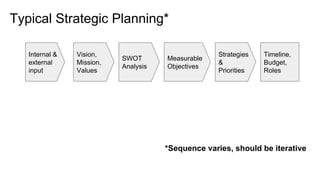
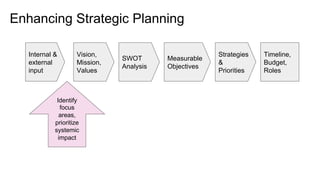
Typical Strategic Planning*
*Sequence varies, should be iterative
Vision,
Mission,
Values
SWOT
Analysis
Measurable
Objectives
Strategies
&
Priorities
Internal &
external
input
Timeline,
Budget,
Roles
Identify
focus
areas,
prioritize
systemic
impact
Enhancing Strategic Planning
Vision,
Mission,
Values
SWOT
Analysis
Measurable
Objectives
Strategies
&
Priorities
Internal &
external
input
Timeline,
Budget,
Roles
Identify
focus
areas,
prioritize
systemic
impact
Vision,
Mission,
Values
SWOT
Analysis
Measurable
Objectives
Strategies
&
Priorities
Internal &
external
input
Timeline,
Budget,
Roles
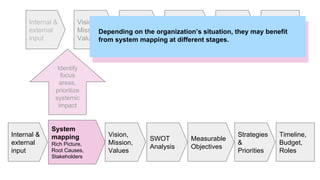
System
mapping
Rich Picture,
Root Causes,
Stakeholders
Vision,
Mission,
Values
SWOT
Analysis
Measurable
Objectives
Strategies
&
Priorities
Internal &
external
input
Timeline,
Budget,
Roles
Depending on the organization’s situation, they may benefit
from system mapping at different stages.
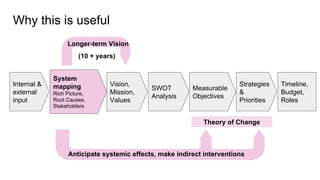
Why this is useful
Vision,
Mission,
Values
SWOT
Analysis
Measurable
Objectives
Strategies
&
Priorities
Internal &
external
input
Timeline,
Budget,
Roles
System
mapping
Rich Picture,
Root Causes,
Stakeholders
Longer-term Vision
Anticipate systemic effects, make indirect interventions
(10 + years)
Theory of Change
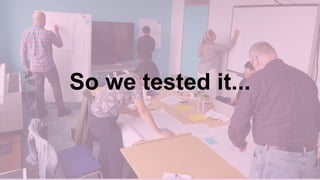
So we tested it...
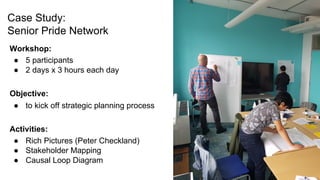
Case Study:
Senior Pride Network
Workshop:
● 5 participants
● 2 days x 3 hours each day
Objective:
● to kick off strategic planning process
Activities:
● Rich Pictures (Peter Checkland)
● Stakeholder Mapping
● Causal Loop Diagram
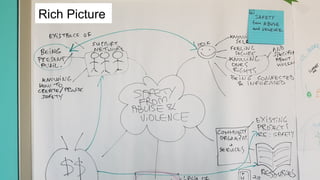
Rich Picture
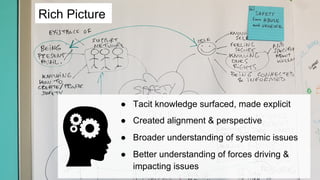
Rich Picture
● Tacit knowledge surfaced, made explicit
● Created alignment & perspective
● Broader understanding of systemic issues
● Better understanding of forces driving &
impacting issues
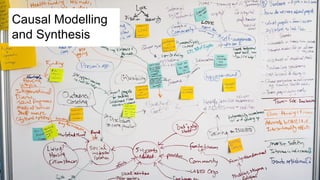
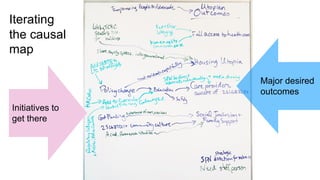
Causal Modelling
and Synthesis
Iterating
the causal
map
Major desired
outcomes
Initiatives to
get there
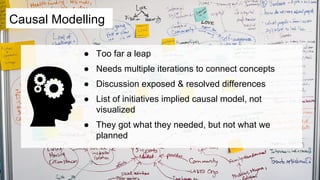
● Too far a leap
● Needs multiple iterations to connect concepts
● Discussion exposed & resolved differences
● List of initiatives implied causal model, not
visualized
● They got what they needed, but not what we
planned
Causal Modelling
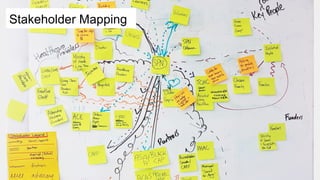
Stakeholder Mapping
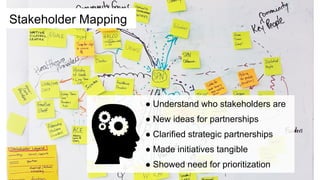
● Understand who stakeholders are
● New ideas for partnerships
● Clarified strategic partnerships
● Made initiatives tangible
● Showed need for prioritization
Stakeholder Mapping
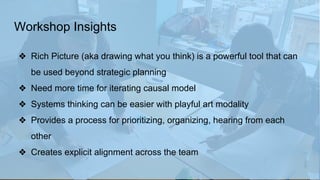
Workshop Insights
❖ Rich Picture (aka drawing what you think) is a powerful tool that can
be used beyond strategic planning
❖ Need more time for iterating causal model
❖ Systems thinking can be easier with playful art modality
❖ Provides a process for prioritizing, organizing, hearing from each
other
❖ Creates explicit alignment across the team
Insights From Participants
“The mapping used a
different dimension of
my brain”
“I gained some new insights
and challenged in my own
understanding in some of
the issues that SPN faces,
and how we might go about
advocating”
“Getting to know
each other
through
drawing”
“It brought more clarity to
the strategic planning
process to be on the
same page...or closer to
being on the same page”
Group Activity
Make and use a Rich Picture
Scenario
Imagine we are the Friendly Neighbour Association (FNA), founded 15 years ago
to reduce social isolation.
We are setting a strategic plan to renew the FNA after a period of difficulties and
conflicts. New leadership is open to changing the organization’s name, vision,
mission, goals and activities if needed.
FNA members agree that social isolation means: The absence of social
relationships and contact. People of all ages can be socially isolated if they
have little or no contact or support from family, friends and other people.
We need to discuss which kinds and aspects of social isolation the FNA could
work on, and how.
Rich Picture instructions (5 minutes)
1. Draw how you see the situation surrounding social isolation.
2. Include people, places, things, resources, issues and relationships between
them.
3. Tape your rich picture to the wall.
4. We’ll ask a few people to describe your rich picture for 60 seconds. Please
volunteer if you drew different things from others who have spoken.
Friendly Neighbour Association (FNA)
Founded to reduce social isolation. Open to
changing name, vision, mission, goals and
activities. Which kinds and aspects of social
isolation the FNA could work on, and how.
Social isolation means: The absence of
social relationships and contact. People of
all ages can be socially isolated if they have
little or no contact or support from family,
friends and other people.
Instructions:
Draw the situation
surrounding social
isolation:
● People
● Places
● Things
● Resources
● Issues
● Relationships
between them
Reflections...
Next Steps
● Test the method in a complete strategic planning process
● Find rapid facilitation method for cause-and-effect modelling
● Incorporate system mapping with large group consultation
● Test system mapping with organizations at different stages or
situations
Fran Quintero Rawlings
fran.rawlings@sinaihealthsystem.ca
Designer, Health Commons Lab
@frawlspace
Alana Boltwood, MDes
alana@metimea.ca
Certified Management Consultant

Boltwood Rawlings System Mapping for Planning

  • 1.
    Fran Quintero Rawlings, Designer,Health Commons Lab Alana Boltwood Consultant, Metimea Inc. A Method to Include System Mapping in Strategic Planning RSD8 Activity Group
  • 2.
    About us: ● StrategicForesight & Innovation program at OCAD University in Toronto ● Systemic design consultants with experience in non-profits and government Alana Boltwood: Master’s Research Project modelled causes and effects of urban poverty. Visualizing patterns to make sense of complex social systems, and thus strategize for change. Fran Quintero Rawlings: Master’s Research Project on the intersection of death, grief and social isolation. Designer @ Health Commons Lab.
  • 3.
    Have you participatedin strategic planning? https://namescon.com/news/hand-up-for-your-start-up-scholarship-contest/
  • 4.
    A strategic planis a process that provides guidance in fulfilling a mission with maximum efficiency and impact.1 What is a strategic plan? 1.https://www.tccgrp.com/wp-content/uploads/2018/09/Ten-Keys-to-Successful-Strategic- Planning-for-Nonprofit-and-Foundation-Leaders.pdf Strategic planning is like designing an organization
  • 5.
    Process of defining anorganization’s direction Objectives of strategic planning Identifying and prioritizing focus areas (strategy) Making decisions on allocating resources to pursue this strategy Creating an action plan with specific: ● objectives ● due dates and ● who is responsible
  • 6.
    Observation Strategic planners don’tcommonly use system mapping. ● 3 /10 guides to strategic planning mention Theory of Change. ○ None describe how to visualize a system. ● 3 interviews with well known strategic planners in Toronto: they don’t do system mapping
  • 7.
  • 8.
  • 9.
    Hypothesis In the socialsector, strategic planning could benefit from system mapping.
  • 10.
  • 11.
    Limitations Strategic planning isoften: ● Short term (only 3-5 years) ● Tacit knowledge not shared or visualized ● Simplistic understanding of situation ● Not working on root causes
  • 12.
    Getting Past Limitations Strategicplanning is often: ● Short term (only 3-5 years) ● Tacit knowledge not shared or visualized ● Simplistic understanding of situation ● Not working on root causes Possible benefits of system mapping: ● Longer-term outcomes ● Make knowledge explicit (visualize) ● Understand complexity ● Situate organization in the system ● Work on root causes ● Choose objectives with high systemic impact ● Justify programs ● Anticipate systemic effects, make indirect interventions Limitations
  • 13.
    Have you tried/ participated in system mapping? https://namescon.com/news/hand-up-for-your-start-up-scholarship-contest/ ● Rich Pictures (Peter Checkland) ● Stakeholder mapping ● Causal Loop Diagram ● Root Causes: Fishbone or 9 Whys ● Theory of Change ● Logic Model ● Other system mapping methods?
  • 14.
    Process of defining anorganization’s direction Objectives of strategic planning Identifying and prioritizing focus areas (strategy) Making decisions on allocating resources to pursue this strategy Creating an action plan with specific: ● objectives ● due dates and ● who is responsible
  • 15.
    Typical Strategic Planning* *Sequencevaries, should be iterative Vision, Mission, Values SWOT Analysis Measurable Objectives Strategies & Priorities Internal & external input Timeline, Budget, Roles
  • 16.
  • 17.
    Identify focus areas, prioritize systemic impact Vision, Mission, Values SWOT Analysis Measurable Objectives Strategies & Priorities Internal & external input Timeline, Budget, Roles System mapping Rich Picture, RootCauses, Stakeholders Vision, Mission, Values SWOT Analysis Measurable Objectives Strategies & Priorities Internal & external input Timeline, Budget, Roles Depending on the organization’s situation, they may benefit from system mapping at different stages.
  • 18.
    Why this isuseful Vision, Mission, Values SWOT Analysis Measurable Objectives Strategies & Priorities Internal & external input Timeline, Budget, Roles System mapping Rich Picture, Root Causes, Stakeholders Longer-term Vision Anticipate systemic effects, make indirect interventions (10 + years) Theory of Change
  • 19.
  • 20.
    Case Study: Senior PrideNetwork Workshop: ● 5 participants ● 2 days x 3 hours each day Objective: ● to kick off strategic planning process Activities: ● Rich Pictures (Peter Checkland) ● Stakeholder Mapping ● Causal Loop Diagram
  • 21.
  • 22.
    Rich Picture ● Tacitknowledge surfaced, made explicit ● Created alignment & perspective ● Broader understanding of systemic issues ● Better understanding of forces driving & impacting issues
  • 23.
  • 24.
  • 25.
    ● Too fara leap ● Needs multiple iterations to connect concepts ● Discussion exposed & resolved differences ● List of initiatives implied causal model, not visualized ● They got what they needed, but not what we planned Causal Modelling
  • 26.
  • 27.
    ● Understand whostakeholders are ● New ideas for partnerships ● Clarified strategic partnerships ● Made initiatives tangible ● Showed need for prioritization Stakeholder Mapping
  • 28.
    Workshop Insights ❖ RichPicture (aka drawing what you think) is a powerful tool that can be used beyond strategic planning ❖ Need more time for iterating causal model ❖ Systems thinking can be easier with playful art modality ❖ Provides a process for prioritizing, organizing, hearing from each other ❖ Creates explicit alignment across the team
  • 29.
    Insights From Participants “Themapping used a different dimension of my brain” “I gained some new insights and challenged in my own understanding in some of the issues that SPN faces, and how we might go about advocating” “Getting to know each other through drawing” “It brought more clarity to the strategic planning process to be on the same page...or closer to being on the same page”
  • 30.
    Group Activity Make anduse a Rich Picture
  • 31.
    Scenario Imagine we arethe Friendly Neighbour Association (FNA), founded 15 years ago to reduce social isolation. We are setting a strategic plan to renew the FNA after a period of difficulties and conflicts. New leadership is open to changing the organization’s name, vision, mission, goals and activities if needed. FNA members agree that social isolation means: The absence of social relationships and contact. People of all ages can be socially isolated if they have little or no contact or support from family, friends and other people. We need to discuss which kinds and aspects of social isolation the FNA could work on, and how.
  • 32.
    Rich Picture instructions(5 minutes) 1. Draw how you see the situation surrounding social isolation. 2. Include people, places, things, resources, issues and relationships between them. 3. Tape your rich picture to the wall. 4. We’ll ask a few people to describe your rich picture for 60 seconds. Please volunteer if you drew different things from others who have spoken.
  • 33.
    Friendly Neighbour Association(FNA) Founded to reduce social isolation. Open to changing name, vision, mission, goals and activities. Which kinds and aspects of social isolation the FNA could work on, and how. Social isolation means: The absence of social relationships and contact. People of all ages can be socially isolated if they have little or no contact or support from family, friends and other people. Instructions: Draw the situation surrounding social isolation: ● People ● Places ● Things ● Resources ● Issues ● Relationships between them
  • 34.
  • 35.
    Next Steps ● Testthe method in a complete strategic planning process ● Find rapid facilitation method for cause-and-effect modelling ● Incorporate system mapping with large group consultation ● Test system mapping with organizations at different stages or situations
  • 36.
    Fran Quintero Rawlings fran.rawlings@sinaihealthsystem.ca Designer,Health Commons Lab @frawlspace Alana Boltwood, MDes alana@metimea.ca Certified Management Consultant