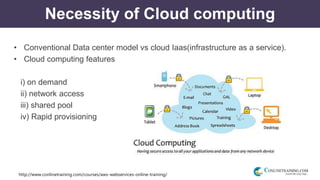
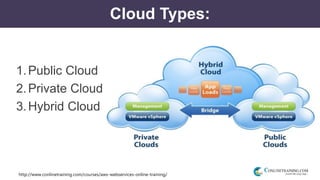
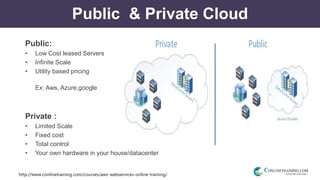
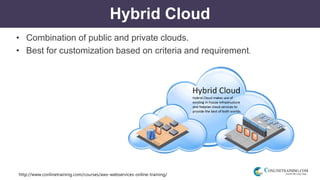
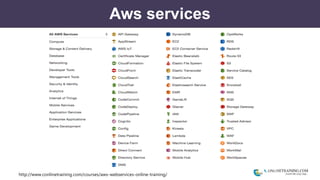
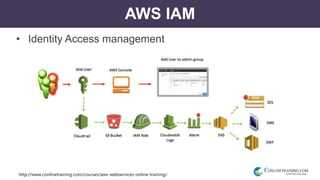
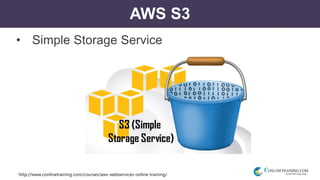
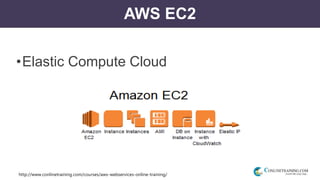
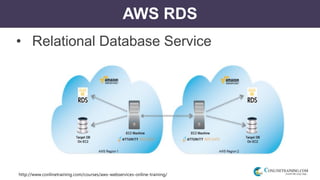
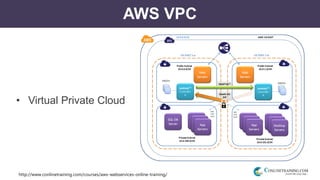
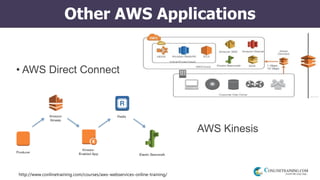
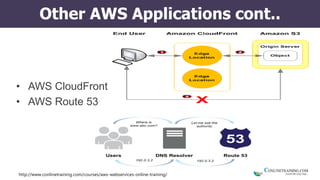
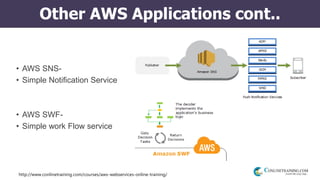
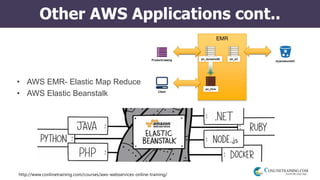
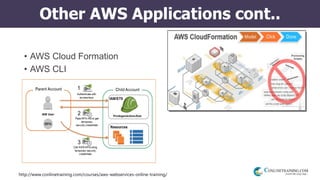
The document introduces cloud computing concepts like infrastructure as a service and the advantages of cloud computing like on-demand access and rapid provisioning. It describes the different types of clouds as public, private and hybrid and their characteristics. The document then lists and describes several Amazon Web Services (AWS) like S3 for storage, EC2 for compute, RDS for databases, VPC for networking, IAM for access management and others for services like notifications, workflows and analytics. It encourages attendees to learn more about AWS services and contact the training provider for courses.