Blue Ocean StrategySummarized by Vanessa YangAug 9, 2010
About the AuthorsW. Chan Kim is The Boston Consulting Group Bruce D. Henderson Chair Professor of Strategy and International Management at INSEAD. Renee Mauborgneis the INSEAD Distinguished Fellow and a professor of strategy and management at INSEAD in Fontainebleau, France, and Fellow of the World Economic Forum.
How to survive in the bloody “red ocean” of rivals fighting over a shrinking profit pool?In today’s head-to-head competition……And overcrowded industries…
Creating “blue oceans” of uncontested market space ripe for growth.
Creating Blue Oceans
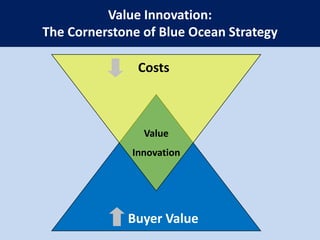
Value Innovation: The Cornerstone of Blue Ocean StrategyCostsValue InnovationBuyer Value
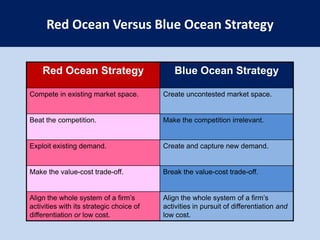
Red Ocean Versus Blue Ocean Strategy
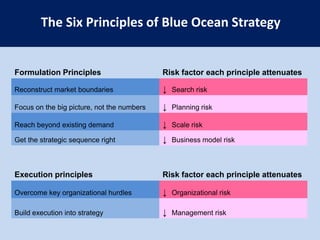
The Six Principles of Blue Ocean Strategy
Analytical Tools and Frameworks
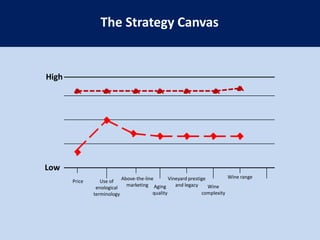
The Strategy CanvasHighLowWine rangeAbove-the-line marketingVineyard prestige and legacyPriceUse of enological terminologyAging qualityWine complexity
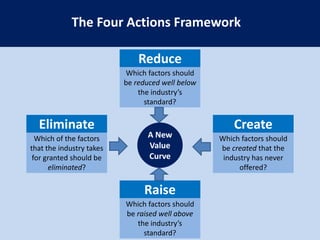
The Four Actions FrameworkReduceWhich factors should be reduced well below the industry’s standard? EliminateCreateA New Value CurveWhich of the factors that the industry takes for granted should be eliminated? Which factors should be created that the industry has never offered?RaiseWhich factors should be raised well above the industry’s standard?
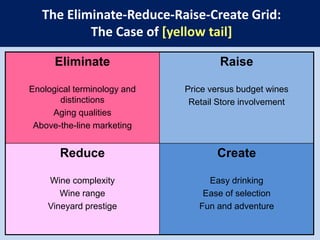
The Eliminate-Reduce-Raise-Create Grid:The Case of [yellow tail]
Three Characteristics of a Good StrategyFocusDivergenceCompelling Tagline3 Characteristics of a good strategy
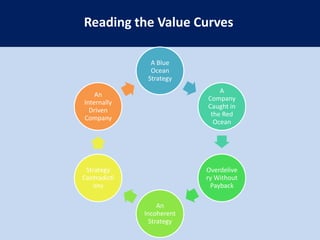
Reading the Value Curves
Reconstruct Market BoundariesFormulatingExecuting
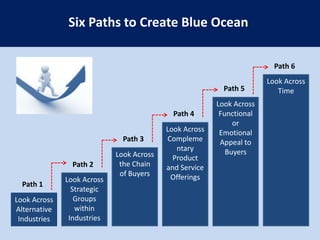
Six Paths to Create Blue OceanPath 6Look Across TimePath 5Look Across Functional or Emotional Appeal to BuyersPath 4Look Across Complementary Product and Service OfferingsPath 3Look Across the Chain of BuyersPath 2Look Across Strategic Groups within IndustriesPath 1Look Across Alternative Industries
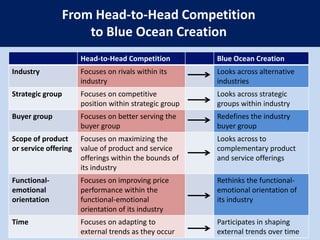
From Head-to-Head Competition to Blue Ocean Creation
Focus on the Big Picture,Not the NumbersFormulatingExecuting
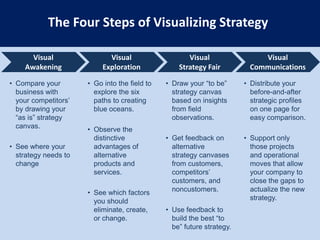
The Four Steps of Visualizing StrategyVisual AwakeningVisual ExplorationVisual Strategy FairVisual CommunicationsCompare your business with your competitors’ by drawing your “as is” strategy canvas.
See where your strategy needs to change
Go into the field to explore the six paths to creating blue oceans.
Observe the distinctive advantages of alternative products and services.
See which factors you should eliminate, create, or change.
Draw your “to be” strategy canvas based on insights from field observations.
Get feedback on alternative strategy canvases from customers, competitors’ customers, and noncustomers.
Use feedback to build the best “to be” future strategy.
Distribute your before-and-after strategic profiles on one page for easy comparison.
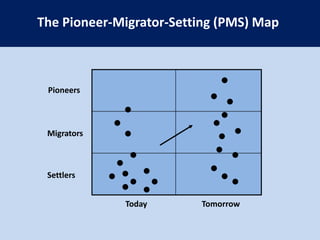
Support only those projects and operational moves that allow your company to close the gaps to actualize the new strategy.The Pioneer-Migrator-Setting (PMS) MapPioneersMigratorsSettlersTodayTomorrow
Reach Beyond Existing DemandFormulatingExecuting
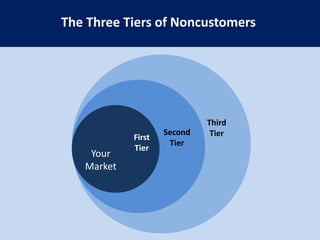
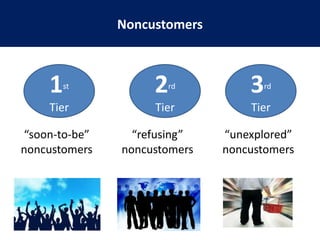
The Three Tiers of NoncustomersThird TierSecond TierFirst TierYour Market
Noncustomers1stTier2rdTier3rdTier“soon-to-be” noncustomers“refusing” noncustomers“unexplored” noncustomers
Get the Strategic Sequence RightFormulatingExecuting
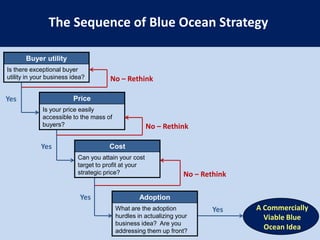
The Sequence of Blue Ocean StrategyNo – RethinkYesNo – RethinkYesNo – RethinkYesA Commercially Viable Blue Ocean IdeaYes
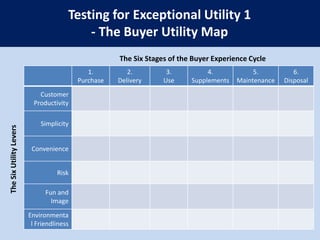
Testing for Exceptional Utility 1- The Buyer Utility MapThe Six Stages of the Buyer Experience CycleThe Six Utility Levers
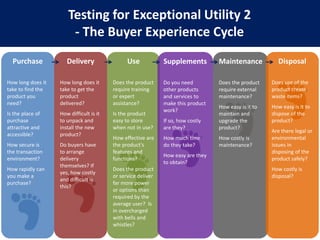
Testing for Exceptional Utility 2- The Buyer Experience CyclePurchaseHow long does it take to find the product you need?Is the place of purchase attractive and accessible?How secure is the transaction environment?How rapidly can you make a purchase?DeliveryHow long does it take to get the product delivered?How difficult is it to unpack and install the new product?Do buyers have to arrange delivery themselves? If yes, how costly and difficult is this?UseDoes the product require training or expert assistance?Is the product easy to store when not in use?How effective are the product’s features and functions?Does the product or service deliver far more power or options than required by the average user?  Is in overcharged with bells and whistles?SupplementsDo you need other products and services to make this product work?If so, how costly are they?How much time do they take?How easy are they to obtain?MaintenanceDoes the product require external maintenance?How easy is it to maintain and upgrade the product?How costly is maintenance?DisposalDoes use of the product create waste items?How easy is it to dispose of the product?Are there legal or environmental issues in disposing of the product safely?How costly is disposal?
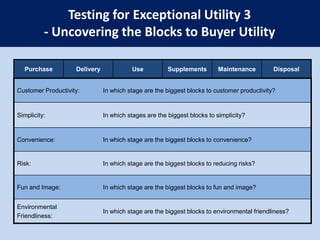
Testing for Exceptional Utility 3- Uncovering the Blocks to Buyer Utility
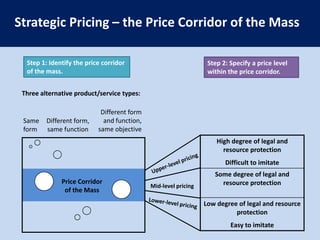
Strategic Pricing – the Price Corridor of the MassStep 1: Identify the price corridor of the mass.Step 2: Specify a price level within the price corridor.Three alternative product/service types:Different form and function, same objectiveSame formDifferent form, same functionUpper-level pricingPrice Corridor of the MassMid-level pricingLower-level pricing
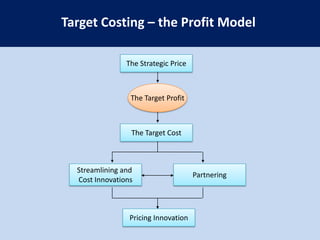
Target Costing – the Profit ModelThe Strategic PriceThe Target ProfitThe Target CostStreamlining and Cost InnovationsPartneringPricing Innovation
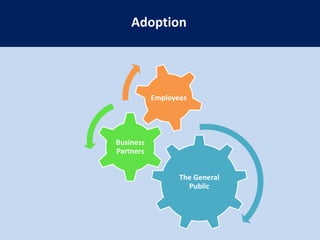
Adoption
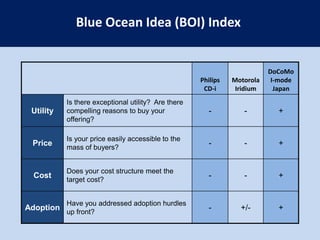
Blue Ocean Idea (BOI) Index
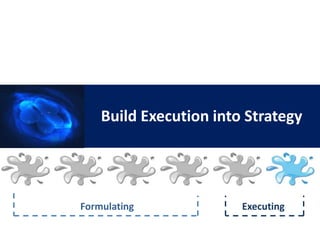
Overcome Key Organizational HurdlesFormulatingExecuting
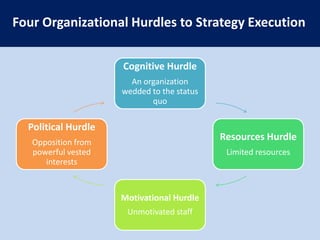
Four Organizational Hurdles to Strategy Execution
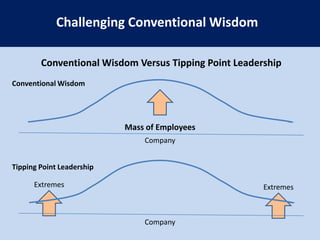
Challenging Conventional WisdomConventional Wisdom Versus Tipping Point LeadershipConventional WisdomMass of EmployeesCompanyTipping Point LeadershipExtremesExtremesCompany

Blue ocean strategy

  • 1.
    Blue Ocean StrategySummarizedby Vanessa YangAug 9, 2010
  • 2.
    About the AuthorsW.Chan Kim is The Boston Consulting Group Bruce D. Henderson Chair Professor of Strategy and International Management at INSEAD. Renee Mauborgneis the INSEAD Distinguished Fellow and a professor of strategy and management at INSEAD in Fontainebleau, France, and Fellow of the World Economic Forum.
  • 3.
    How to survivein the bloody “red ocean” of rivals fighting over a shrinking profit pool?In today’s head-to-head competition……And overcrowded industries…
  • 4.
    Creating “blue oceans”of uncontested market space ripe for growth.
  • 5.
  • 6.
    Value Innovation: TheCornerstone of Blue Ocean StrategyCostsValue InnovationBuyer Value
  • 7.
    Red Ocean VersusBlue Ocean Strategy
  • 8.
    The Six Principlesof Blue Ocean Strategy
  • 9.
  • 10.
    The Strategy CanvasHighLowWinerangeAbove-the-line marketingVineyard prestige and legacyPriceUse of enological terminologyAging qualityWine complexity
  • 11.
    The Four ActionsFrameworkReduceWhich factors should be reduced well below the industry’s standard? EliminateCreateA New Value CurveWhich of the factors that the industry takes for granted should be eliminated? Which factors should be created that the industry has never offered?RaiseWhich factors should be raised well above the industry’s standard?
  • 12.
  • 13.
    Three Characteristics ofa Good StrategyFocusDivergenceCompelling Tagline3 Characteristics of a good strategy
  • 14.
  • 15.
  • 16.
    Six Paths toCreate Blue OceanPath 6Look Across TimePath 5Look Across Functional or Emotional Appeal to BuyersPath 4Look Across Complementary Product and Service OfferingsPath 3Look Across the Chain of BuyersPath 2Look Across Strategic Groups within IndustriesPath 1Look Across Alternative Industries
  • 17.
    From Head-to-Head Competitionto Blue Ocean Creation
  • 18.
    Focus on theBig Picture,Not the NumbersFormulatingExecuting
  • 19.
    The Four Stepsof Visualizing StrategyVisual AwakeningVisual ExplorationVisual Strategy FairVisual CommunicationsCompare your business with your competitors’ by drawing your “as is” strategy canvas.
  • 20.
    See where yourstrategy needs to change
  • 21.
    Go into thefield to explore the six paths to creating blue oceans.
  • 22.
    Observe the distinctiveadvantages of alternative products and services.
  • 23.
    See which factorsyou should eliminate, create, or change.
  • 24.
    Draw your “tobe” strategy canvas based on insights from field observations.
  • 25.
    Get feedback onalternative strategy canvases from customers, competitors’ customers, and noncustomers.
  • 26.
    Use feedback tobuild the best “to be” future strategy.
  • 27.
    Distribute your before-and-afterstrategic profiles on one page for easy comparison.
  • 28.
    Support only thoseprojects and operational moves that allow your company to close the gaps to actualize the new strategy.The Pioneer-Migrator-Setting (PMS) MapPioneersMigratorsSettlersTodayTomorrow
  • 29.
    Reach Beyond ExistingDemandFormulatingExecuting
  • 30.
    The Three Tiersof NoncustomersThird TierSecond TierFirst TierYour Market
  • 31.
  • 32.
    Get the StrategicSequence RightFormulatingExecuting
  • 33.
    The Sequence ofBlue Ocean StrategyNo – RethinkYesNo – RethinkYesNo – RethinkYesA Commercially Viable Blue Ocean IdeaYes
  • 34.
    Testing for ExceptionalUtility 1- The Buyer Utility MapThe Six Stages of the Buyer Experience CycleThe Six Utility Levers
  • 35.
    Testing for ExceptionalUtility 2- The Buyer Experience CyclePurchaseHow long does it take to find the product you need?Is the place of purchase attractive and accessible?How secure is the transaction environment?How rapidly can you make a purchase?DeliveryHow long does it take to get the product delivered?How difficult is it to unpack and install the new product?Do buyers have to arrange delivery themselves? If yes, how costly and difficult is this?UseDoes the product require training or expert assistance?Is the product easy to store when not in use?How effective are the product’s features and functions?Does the product or service deliver far more power or options than required by the average user? Is in overcharged with bells and whistles?SupplementsDo you need other products and services to make this product work?If so, how costly are they?How much time do they take?How easy are they to obtain?MaintenanceDoes the product require external maintenance?How easy is it to maintain and upgrade the product?How costly is maintenance?DisposalDoes use of the product create waste items?How easy is it to dispose of the product?Are there legal or environmental issues in disposing of the product safely?How costly is disposal?
  • 36.
    Testing for ExceptionalUtility 3- Uncovering the Blocks to Buyer Utility
  • 37.
    Strategic Pricing –the Price Corridor of the MassStep 1: Identify the price corridor of the mass.Step 2: Specify a price level within the price corridor.Three alternative product/service types:Different form and function, same objectiveSame formDifferent form, same functionUpper-level pricingPrice Corridor of the MassMid-level pricingLower-level pricing
  • 38.
    Target Costing –the Profit ModelThe Strategic PriceThe Target ProfitThe Target CostStreamlining and Cost InnovationsPartneringPricing Innovation
  • 39.
  • 40.
    Blue Ocean Idea(BOI) Index
  • 41.
    Overcome Key OrganizationalHurdlesFormulatingExecuting
  • 42.
    Four Organizational Hurdlesto Strategy Execution
  • 43.
    Challenging Conventional WisdomConventionalWisdom Versus Tipping Point LeadershipConventional WisdomMass of EmployeesCompanyTipping Point LeadershipExtremesExtremesCompany