ASSESSMENT METHODS
• Testpapers (Objectives/ Short Answer/ Situation Type)- 20
Marks
• Assignments- 10 marks
• OSCE (BCLS/BLS competencies)- 20 marks
• Weightage to internal assessment- 10 marks.
4.
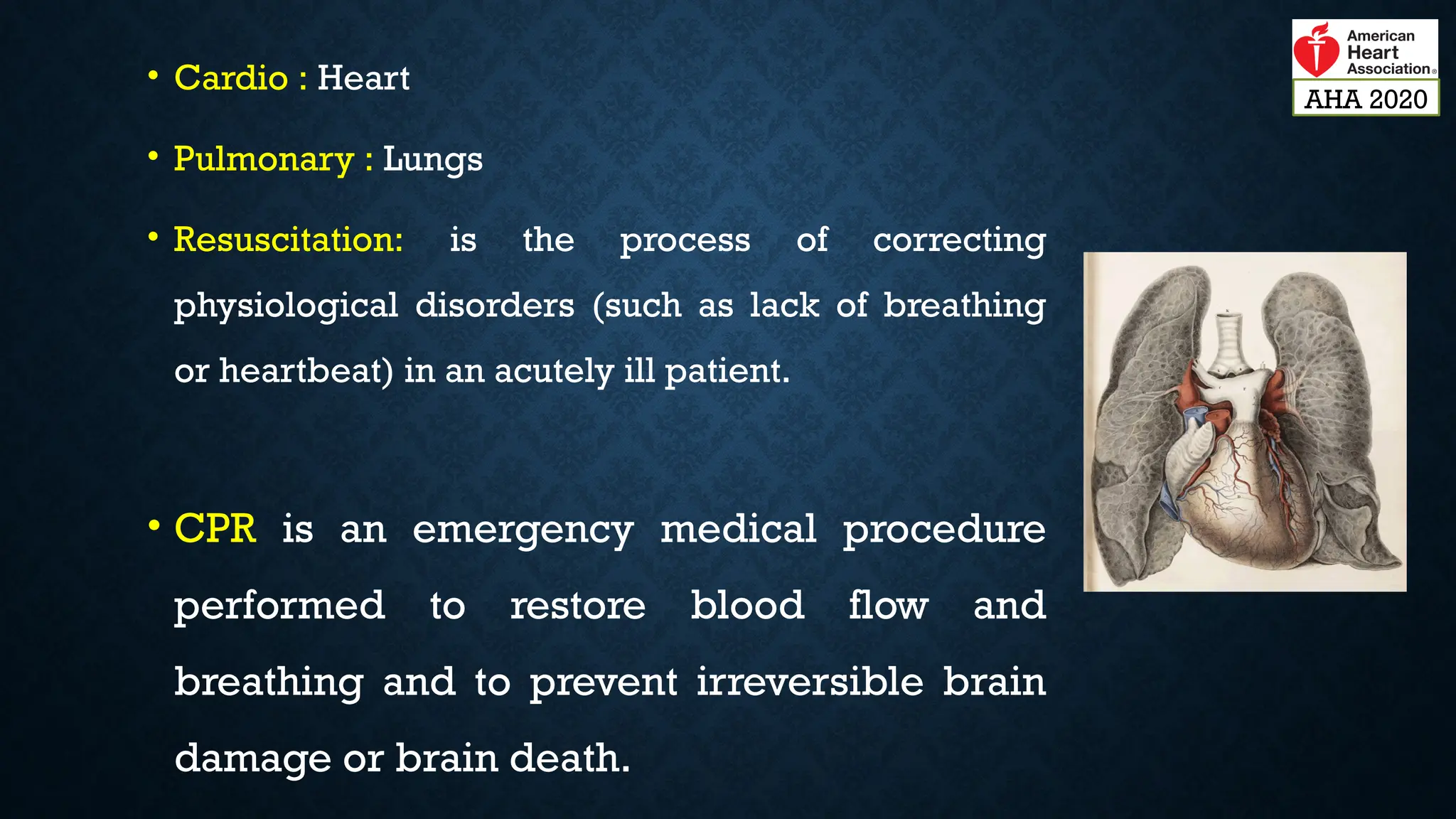
• Cardio :Heart
• Pulmonary : Lungs
• Resuscitation: is the process of correcting
physiological disorders (such as lack of breathing
or heartbeat) in an acutely ill patient.
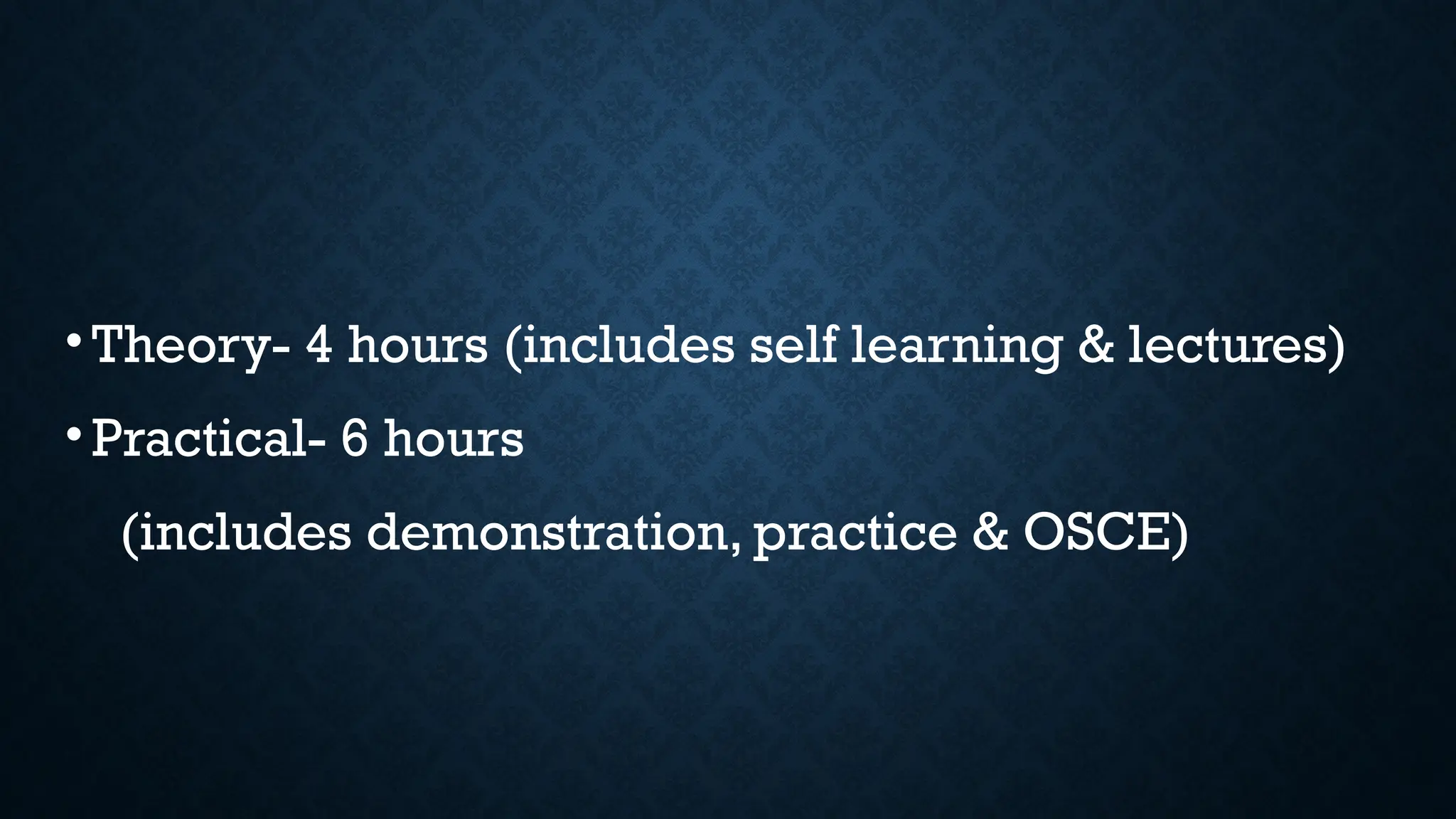
• CPR is an emergency medical procedure
performed to restore blood flow and
breathing and to prevent irreversible brain
damage or brain death.
AHA 2020
5.
MAINTAIN
PRINCIPLES OF FIRSTAID
• Don't panic. Panic clouds thinking and causes mistakes.
• Do no harm. This doesn't mean do nothing. It means make sure that if
you're going to do something you're confident it won't make matters worse.
• Time counts. The shorter that time, the more likely the best therapies can
be applied.
• Call for Medical assistance as soon as possible.
• Arrange for shifting of the victim to hospital without delay
AHA 2020
6.
CARDIAC ARREST
• CardiacArrest is the sudden loss of all heart activity due to
an irregular heart rhythm.
• Breathing stops.
• The person becomes unconscious.
• Without immediate treatment, can lead to death.
AHA 2020
7.
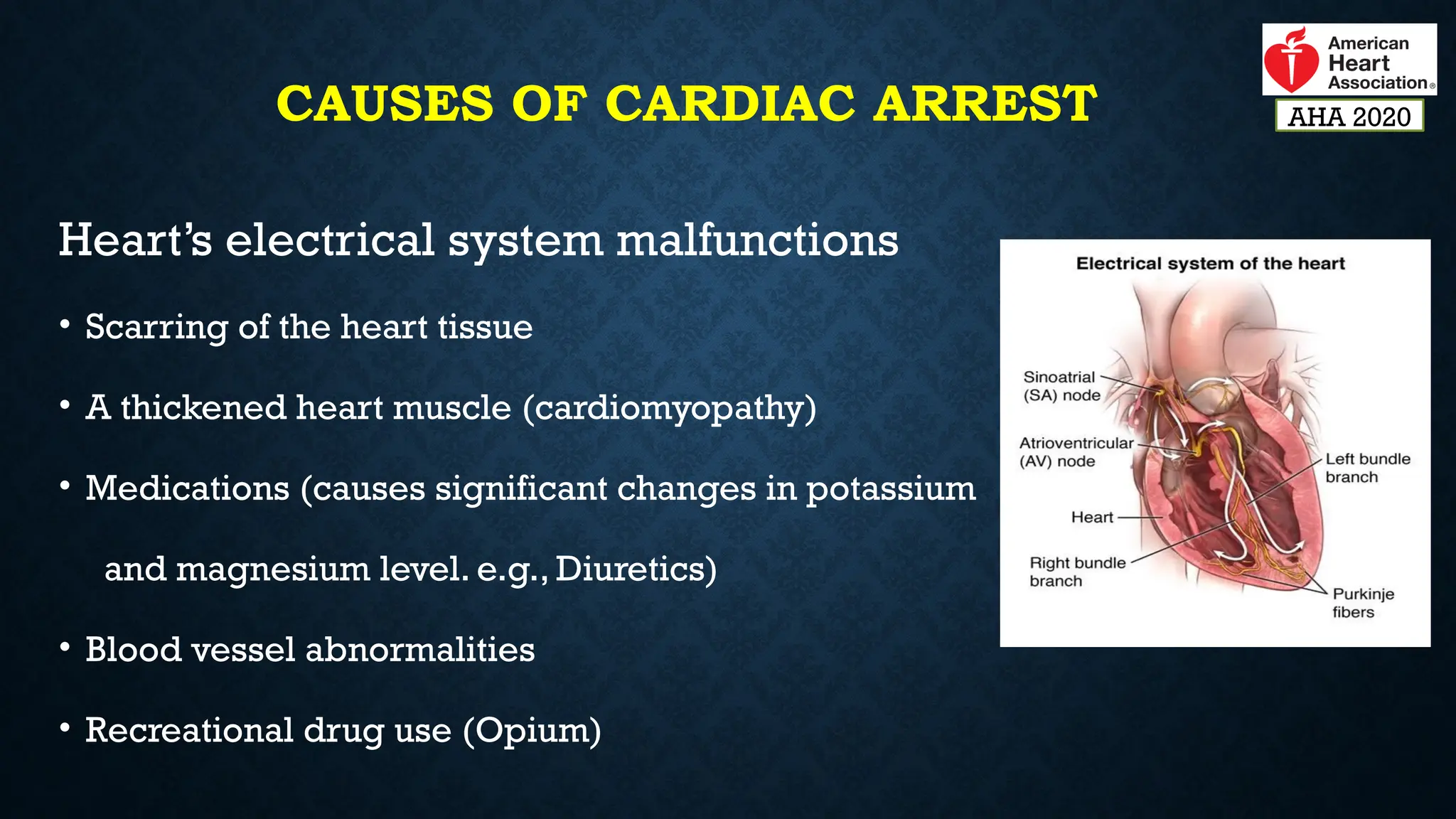
CAUSES OF CARDIACARREST
Heart’s electrical system malfunctions
• Scarring of the heart tissue
• A thickened heart muscle (cardiomyopathy)
• Medications (causes significant changes in potassium
and magnesium level. e.g., Diuretics)
• Blood vessel abnormalities
• Recreational drug use (Opium)
AHA 2020
8.
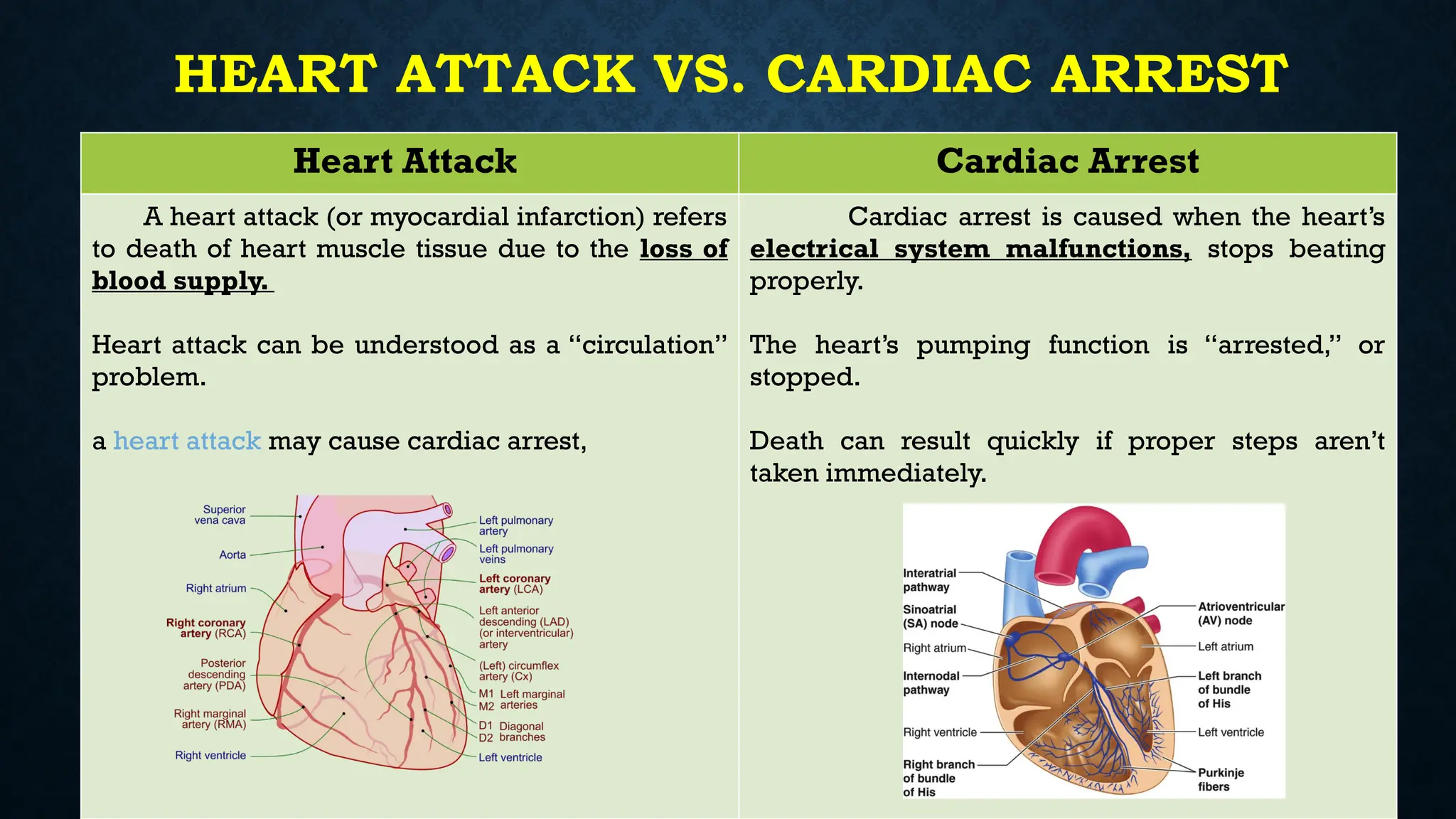
HEART ATTACK VS.CARDIAC ARREST
Heart Attack Cardiac Arrest
A heart attack (or myocardial infarction) refers
to death of heart muscle tissue due to the loss of
blood supply.
Heart attack can be understood as a “circulation”
problem.
a heart attack may cause cardiac arrest,
Cardiac arrest is caused when the heart’s
electrical system malfunctions, stops beating
properly.
The heart’s pumping function is “arrested,” or
stopped.
Death can result quickly if proper steps aren’t
taken immediately.
9.
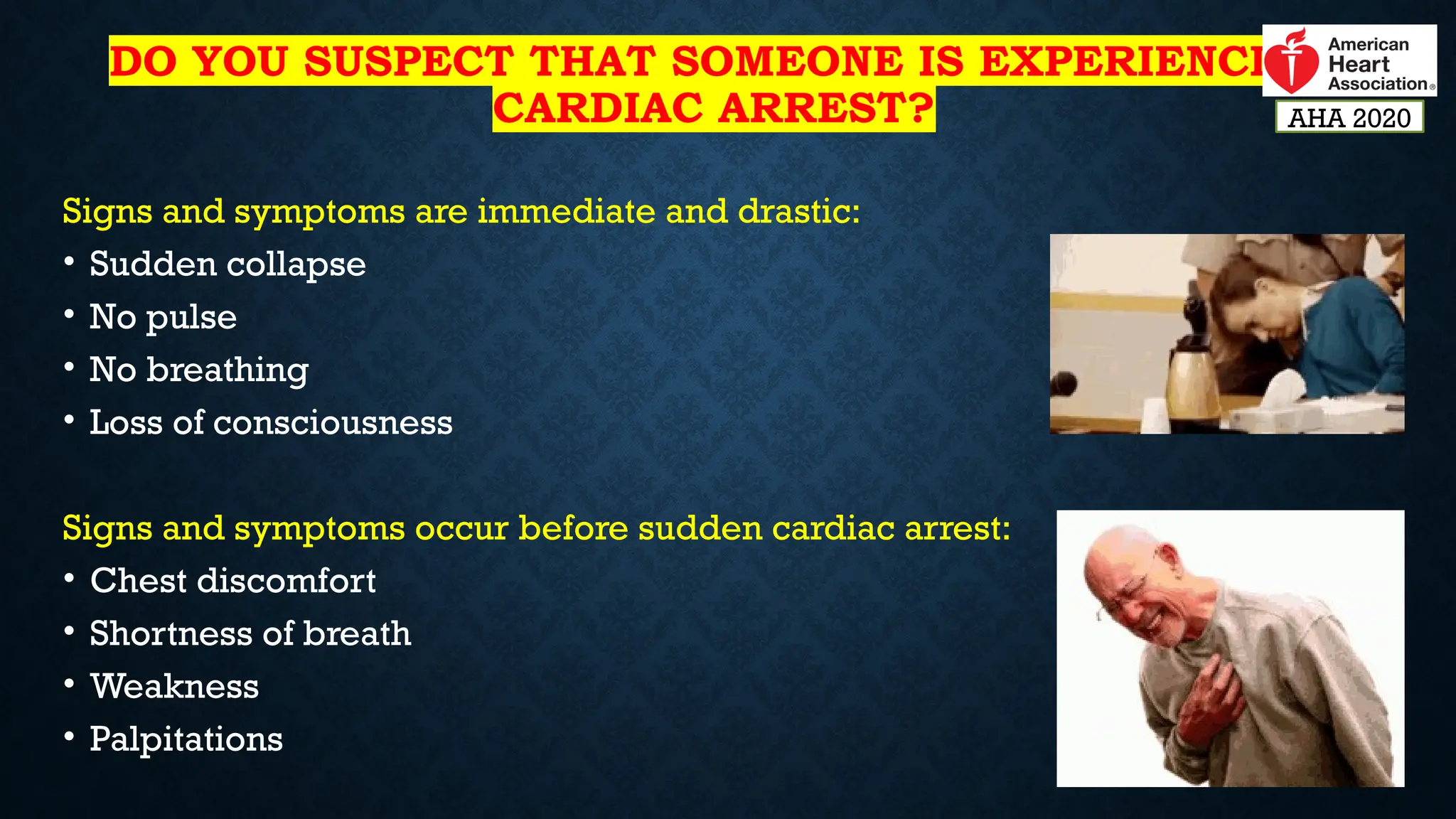
DO YOU SUSPECTTHAT SOMEONE IS EXPERIENCING
CARDIAC ARREST?
Signs and symptoms are immediate and drastic:
• Sudden collapse
• No pulse
• No breathing
• Loss of consciousness
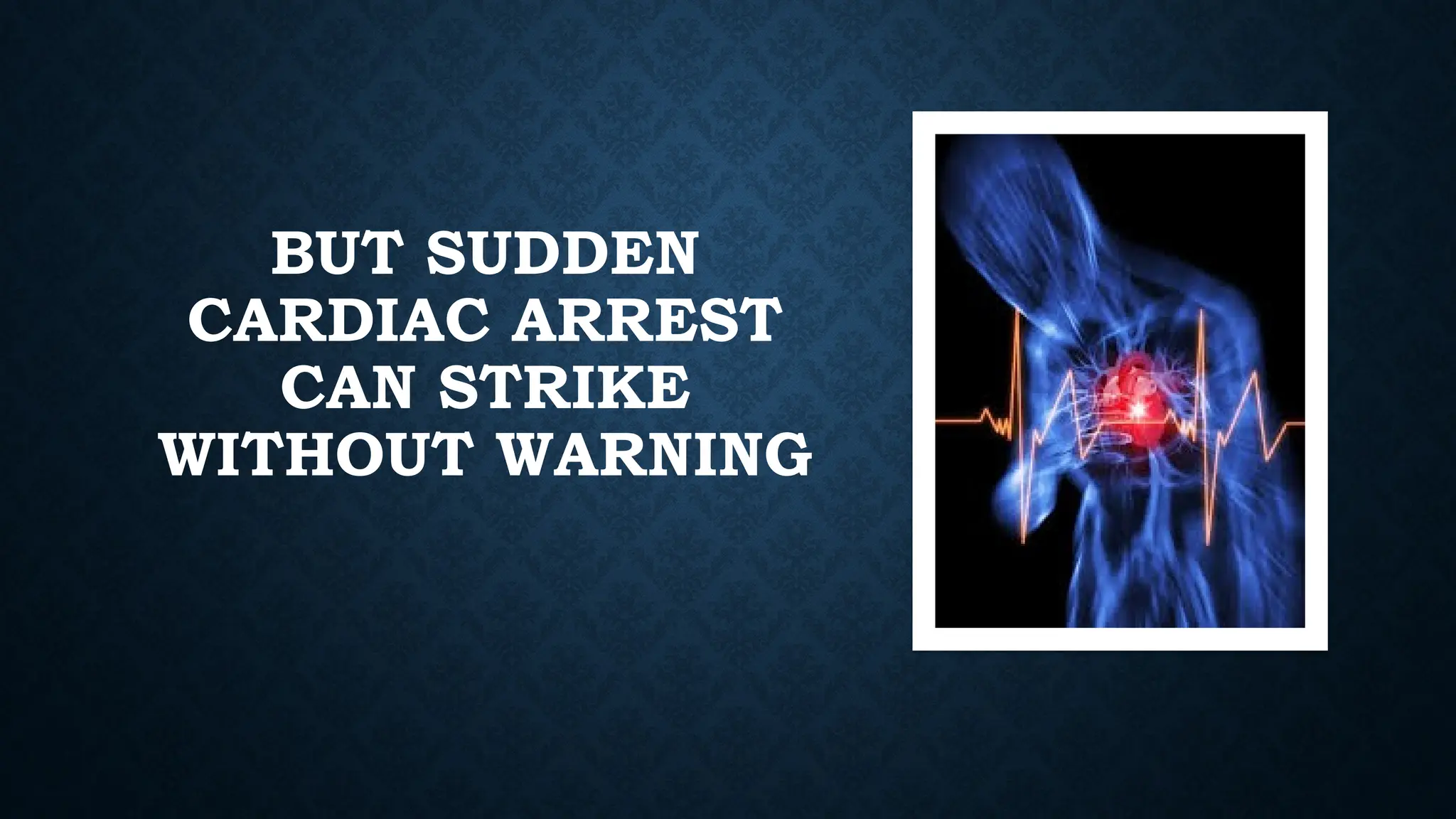
Signs and symptoms occur before sudden cardiac arrest:
• Chest discomfort
• Shortness of breath
• Weakness
• Palpitations
AHA 2020
CPR
• Basic LifeSupport (BLS)
- is performed to support the patient’s circulation and respiration through
the use of cardiopulmonary resuscitation (CPR) until advanced life support
arrives. Early and correct BLS intervention = more likely to respond to advanced
techniques = increasing their chance of survival.
• Advance Cardiac Life Support (ACLS)
- a set of clinical guidelines for cardiac arrest, using advanced medical
procedures, medications, and techniques/ advanced machines.
• Prolonged Life Support:
- Post-resuscitation brain- oriented therapy
AHA 2020
13.
BASIC LIFE SUPPORT(BLS)
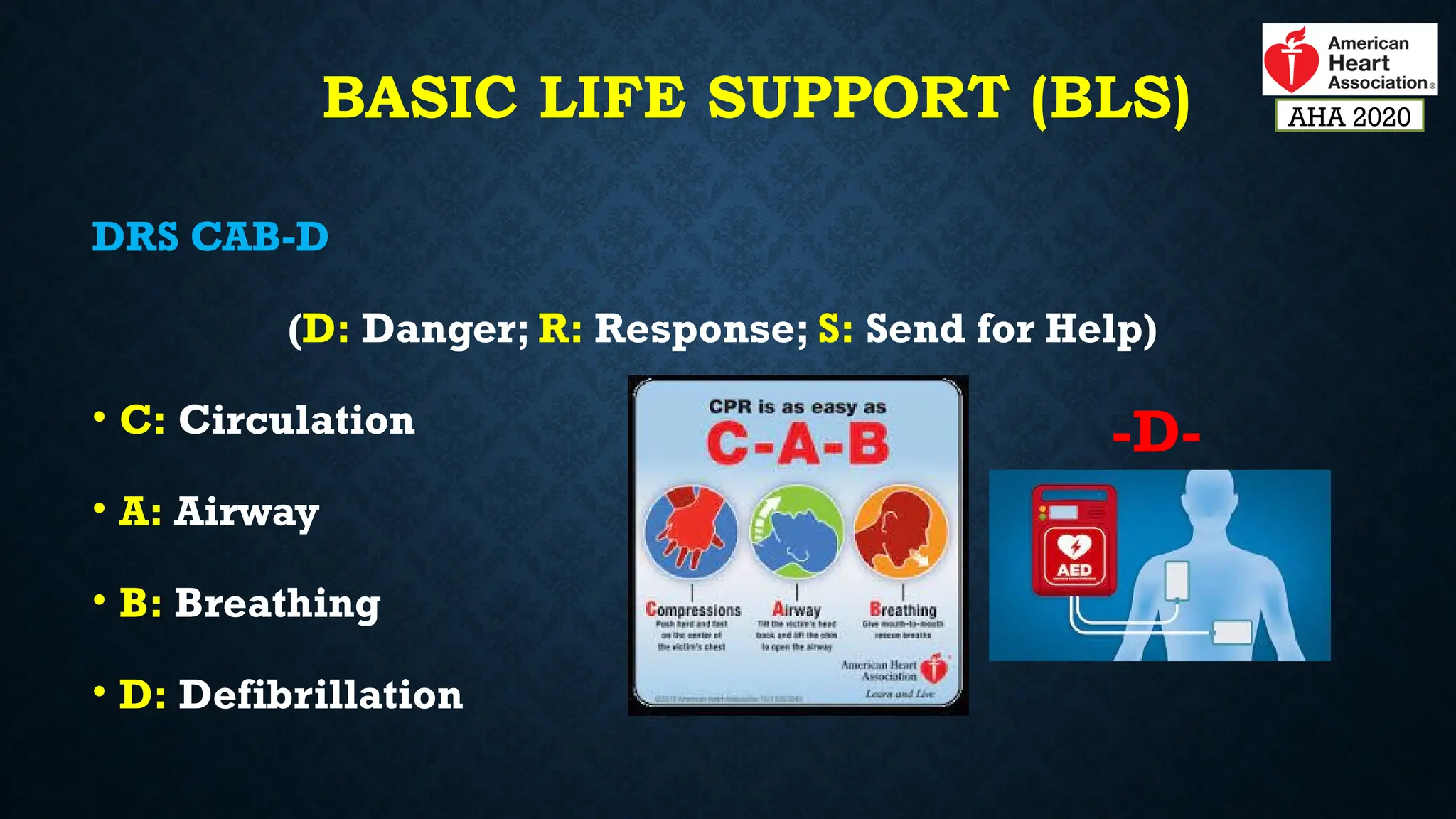
DRS CAB-D
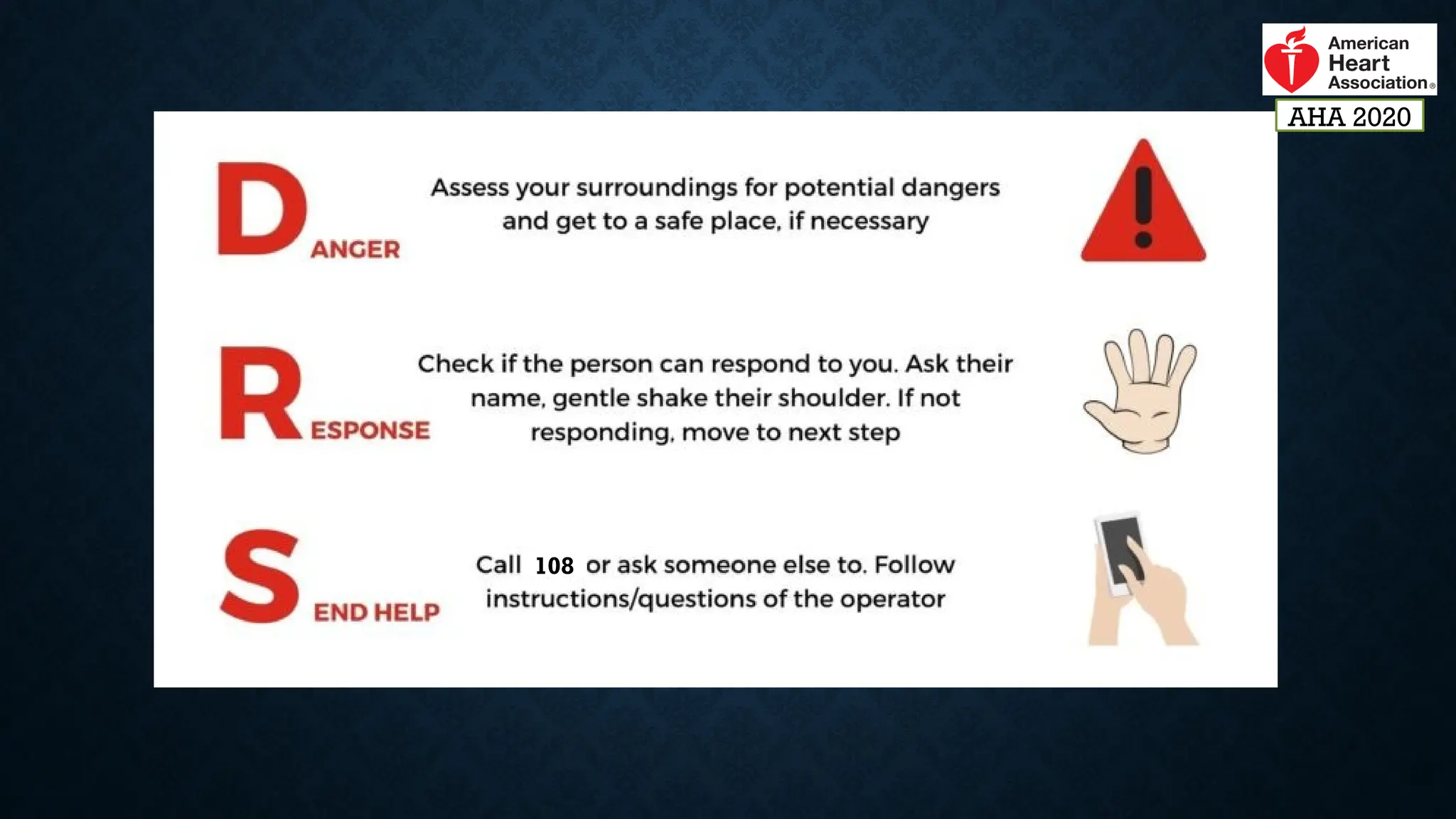
(D: Danger; R: Response; S: Send for Help)
• C: Circulation
• A: Airway
• B: Breathing
• D: Defibrillation
-D-
AHA 2020
-D-
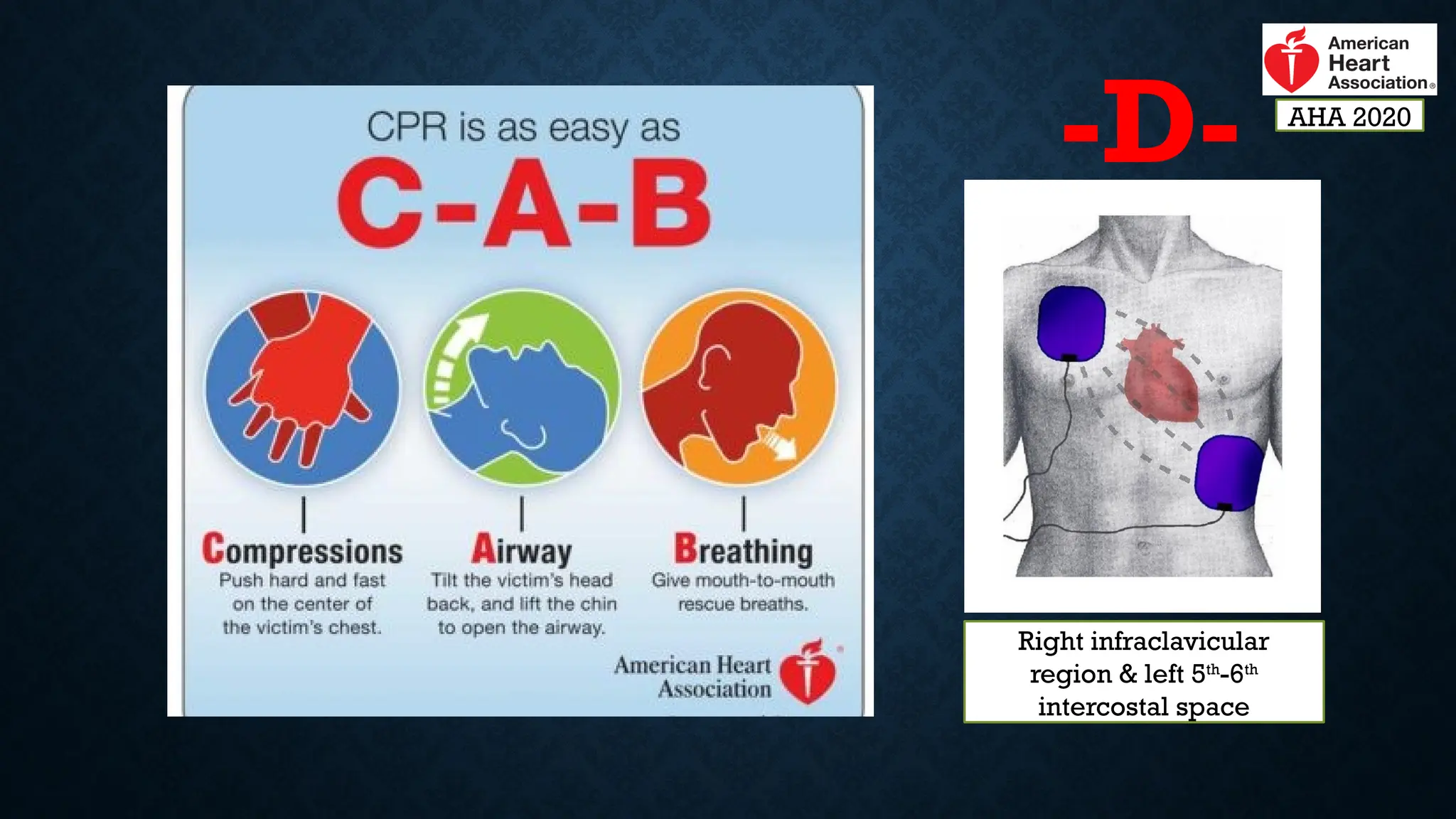
Right infraclavicular
region &left 5th
-6th
intercostal space
Right infraclavicular
region & left 5th
-6th
intercostal space
AHA 2020
17.
C- CIRCULATION
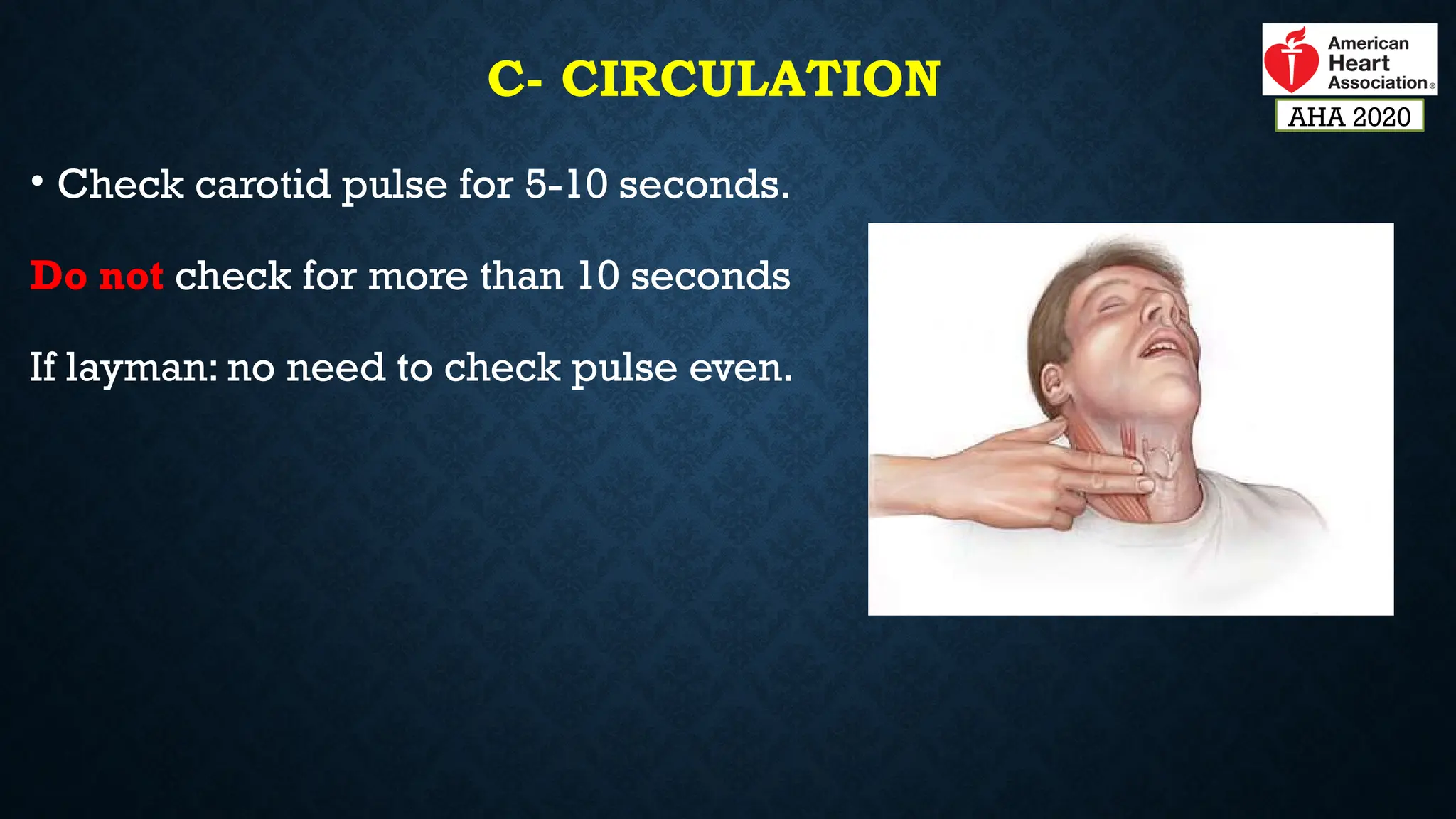
• Checkcarotid pulse for 5-10 seconds.
Do not check for more than 10 seconds
If layman: no need to check pulse even.
AHA 2020
18.
IF THE PATIENTHAS A PULSE:
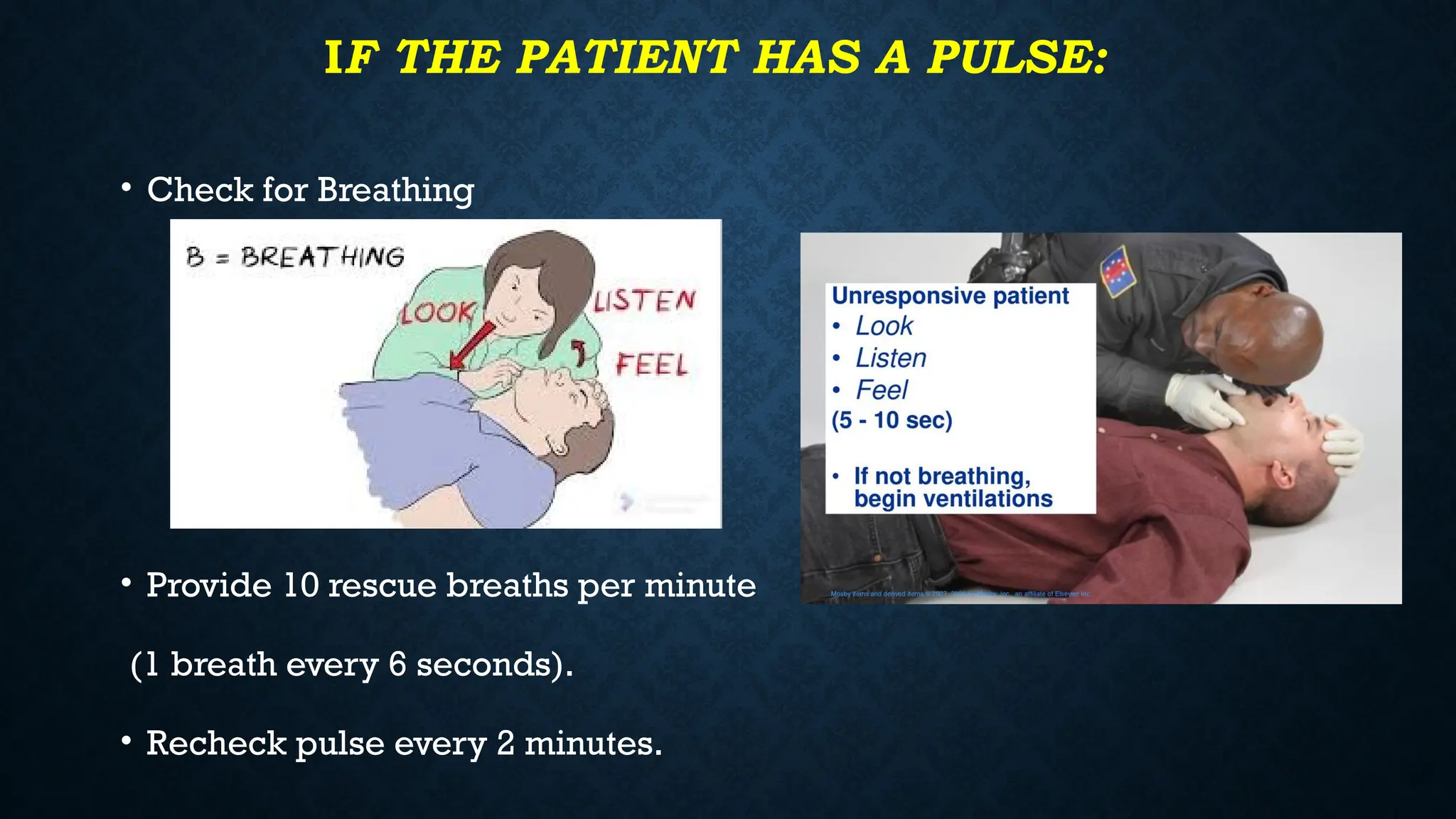
• Check for Breathing
• Provide 10 rescue breaths per minute
(1 breath every 6 seconds).
• Recheck pulse every 2 minutes.
19.
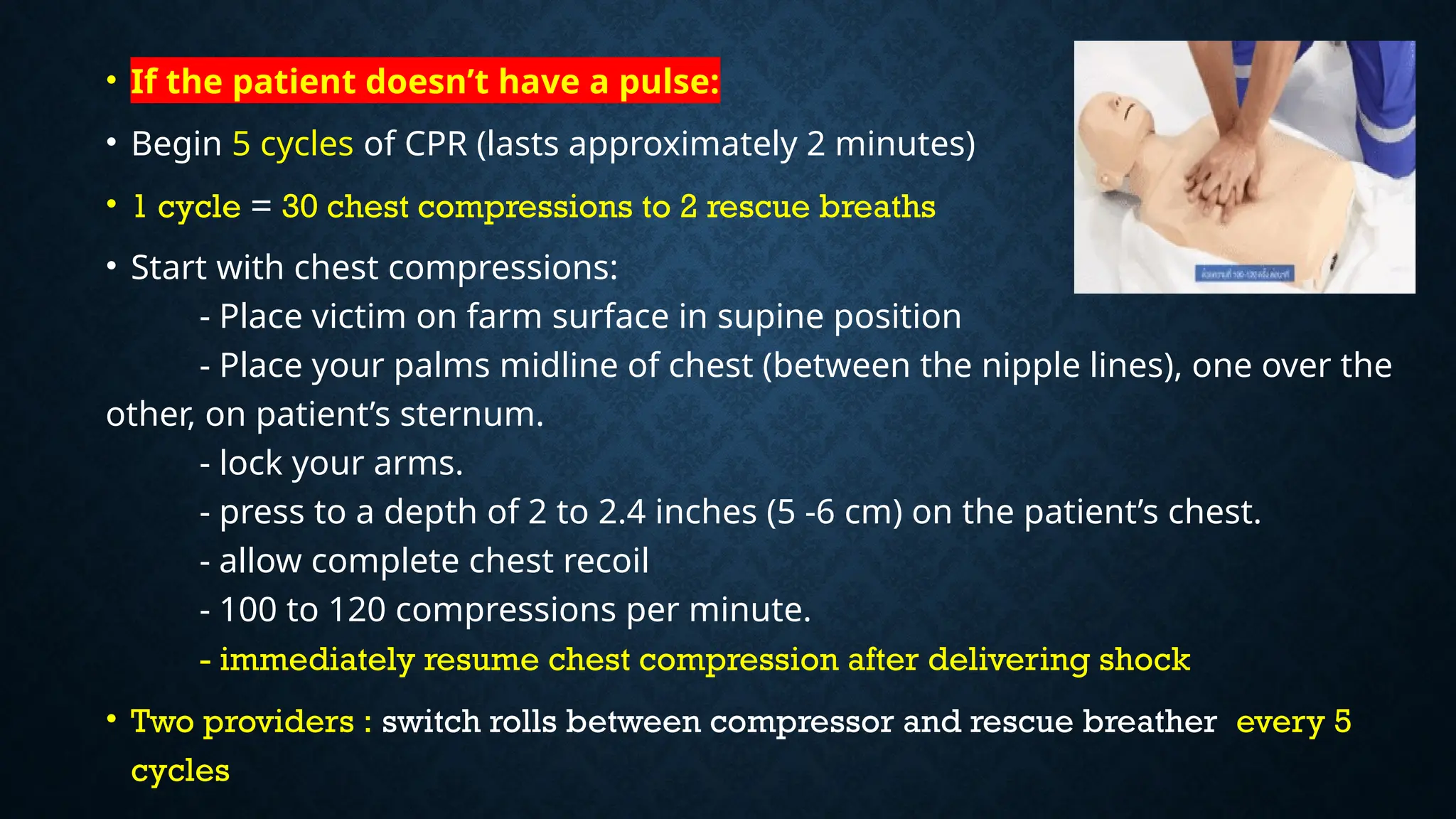
• If thepatient doesn’t have a pulse:
• Begin 5 cycles of CPR (lasts approximately 2 minutes)
• 1 cycle = 30 chest compressions to 2 rescue breaths
• Start with chest compressions:
- Place victim on farm surface in supine position
- Place your palms midline of chest (between the nipple lines), one over the
other, on patient’s sternum.
- lock your arms.
- press to a depth of 2 to 2.4 inches (5 -6 cm) on the patient’s chest.
- allow complete chest recoil
- 100 to 120 compressions per minute.
- immediately resume chest compression after delivering shock
• Two providers : switch rolls between compressor and rescue breather every 5
cycles
20.
FOR INFANTS ANDCHILDREN
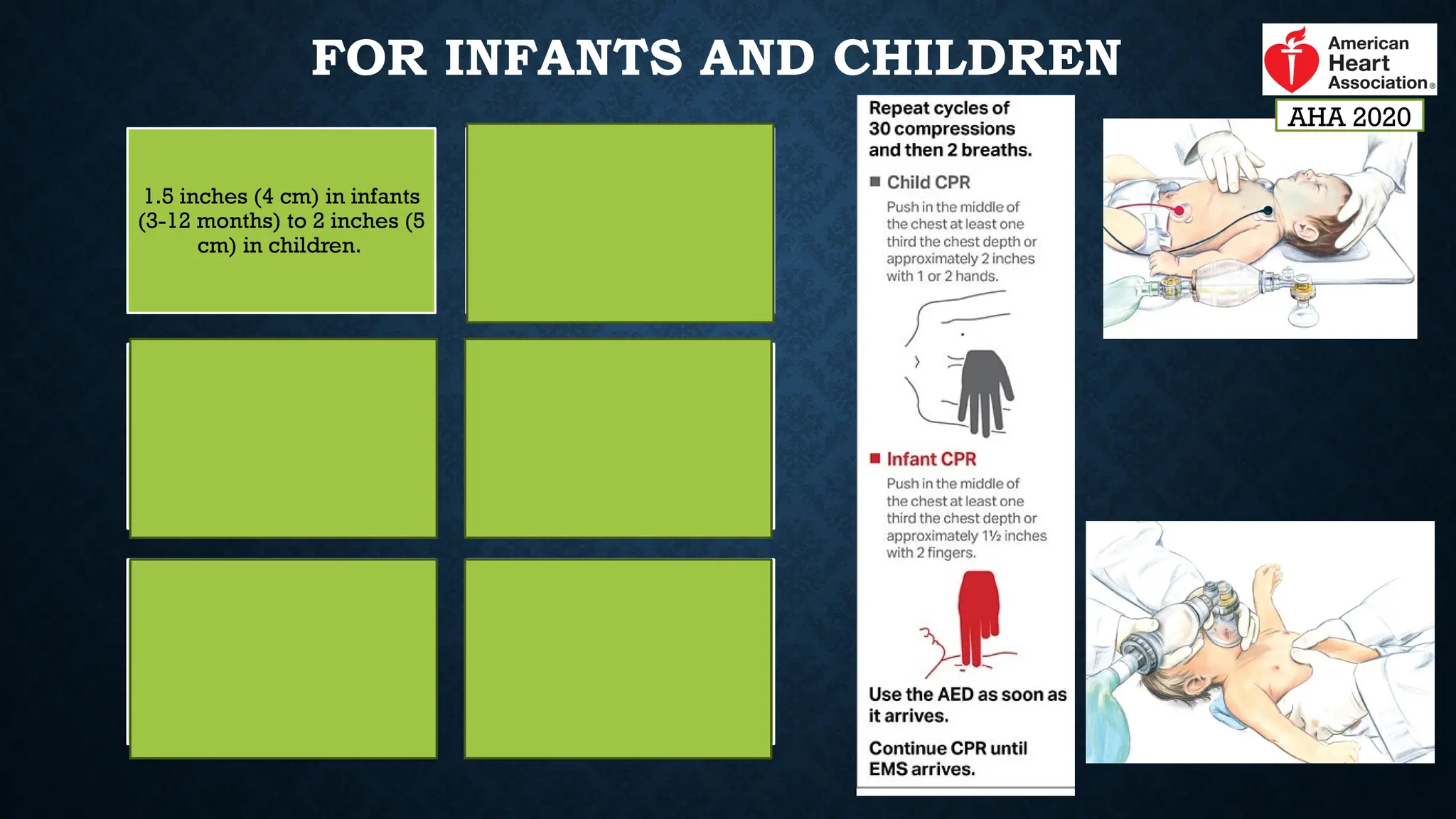
1.5 inches (4 cm) in infants
(3-12 months) to 2 inches (5
cm) in children.
Once children have
reached puberty (8 and 13
for girls and 9 and 14 for
boys), it is reasonable to use
the adult compression
depth of at least 5 cm but no
more than 6 cm
single rescuers to provide a
compression-to-ventilation
ratio of 30:2 and for 2
rescuers to provide a
compression-to-ventilation
ratio of 15:2
For infants, single rescuers
should compress the
sternum with 2 fingers
placed just below the
intermammary line. (if can
not press properly use heel
of 1 hand)
For infants, two rescuers:
use 2-thumb–encircling
hands technique
For children (More than 1 to
7 years), use either a 1- or
2-hand technique to
perform chest
compressions
AHA 2020
21.
• (One provider):If alone and collapse is un-witnessed:
First perform 2 minutes of CPR then call the emergency
response team and bring an AED to the patient.
• (One provider) If alone and collapse is witnessed: First
call the emergency response team and bring an AED,
then start CPR.
• (Two providers) Have someone near call the emergency
response team and bring the AED and you start CPR.
AHA 2020
22.
AIRWAY
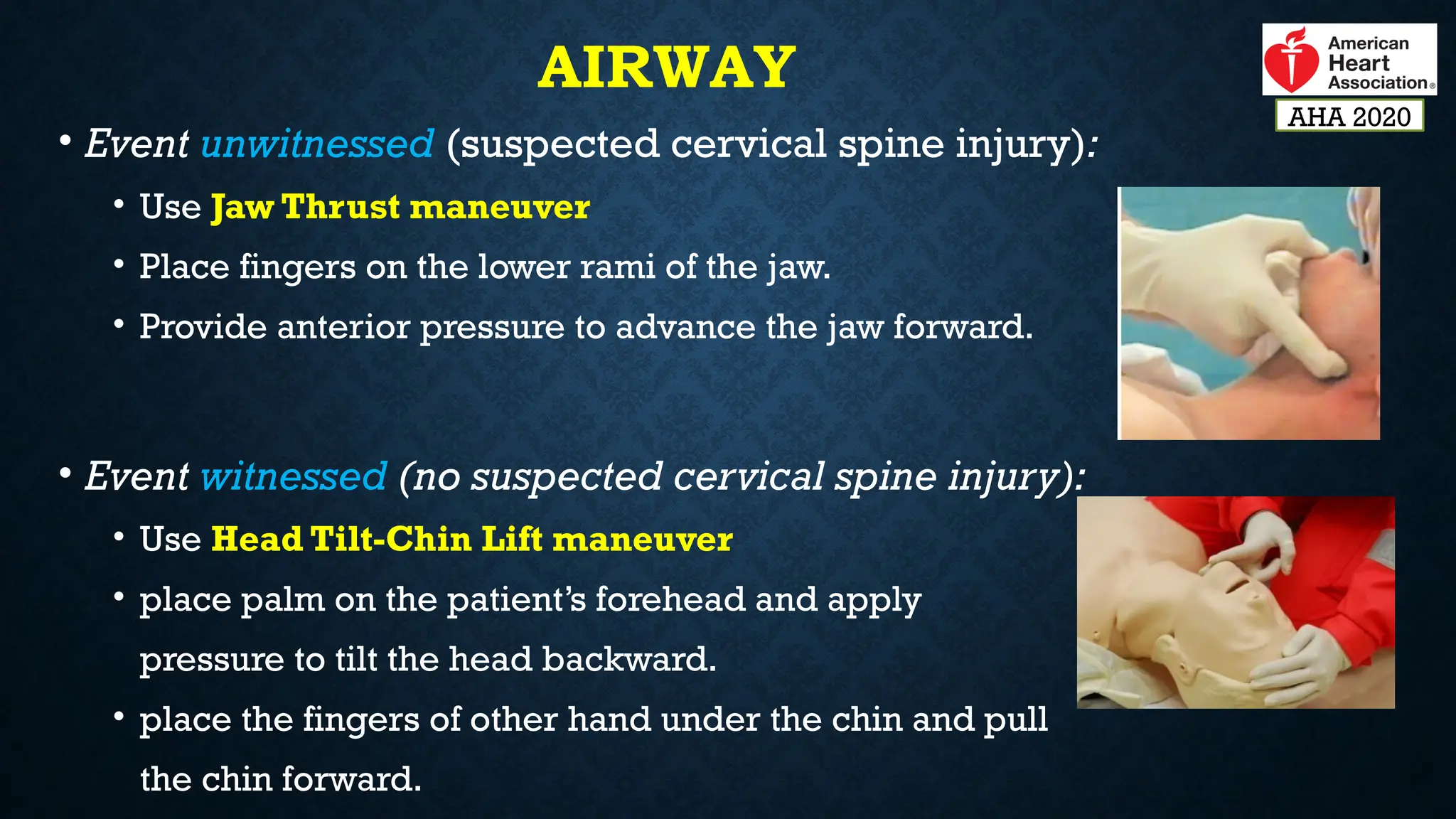
• Event unwitnessed(suspected cervical spine injury):
• Use Jaw Thrust maneuver
• Place fingers on the lower rami of the jaw.
• Provide anterior pressure to advance the jaw forward.
• Event witnessed (no suspected cervical spine injury):
• Use Head Tilt-Chin Lift maneuver
• place palm on the patient’s forehead and apply
pressure to tilt the head backward.
• place the fingers of other hand under the chin and pull
the chin forward.
AHA 2020
23.
BREATHING
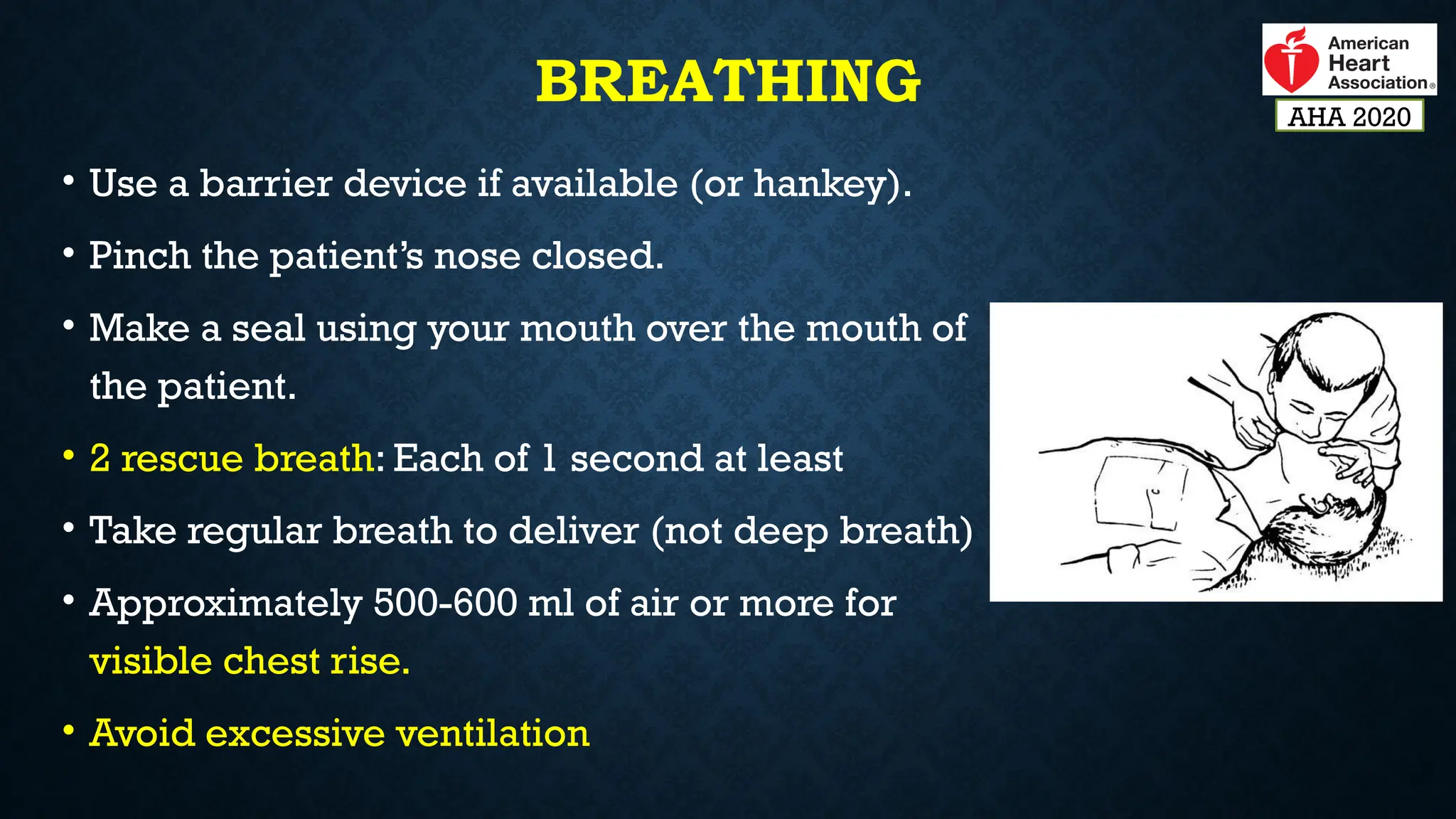
• Use abarrier device if available (or hankey).
• Pinch the patient’s nose closed.
• Make a seal using your mouth over the mouth of
the patient.
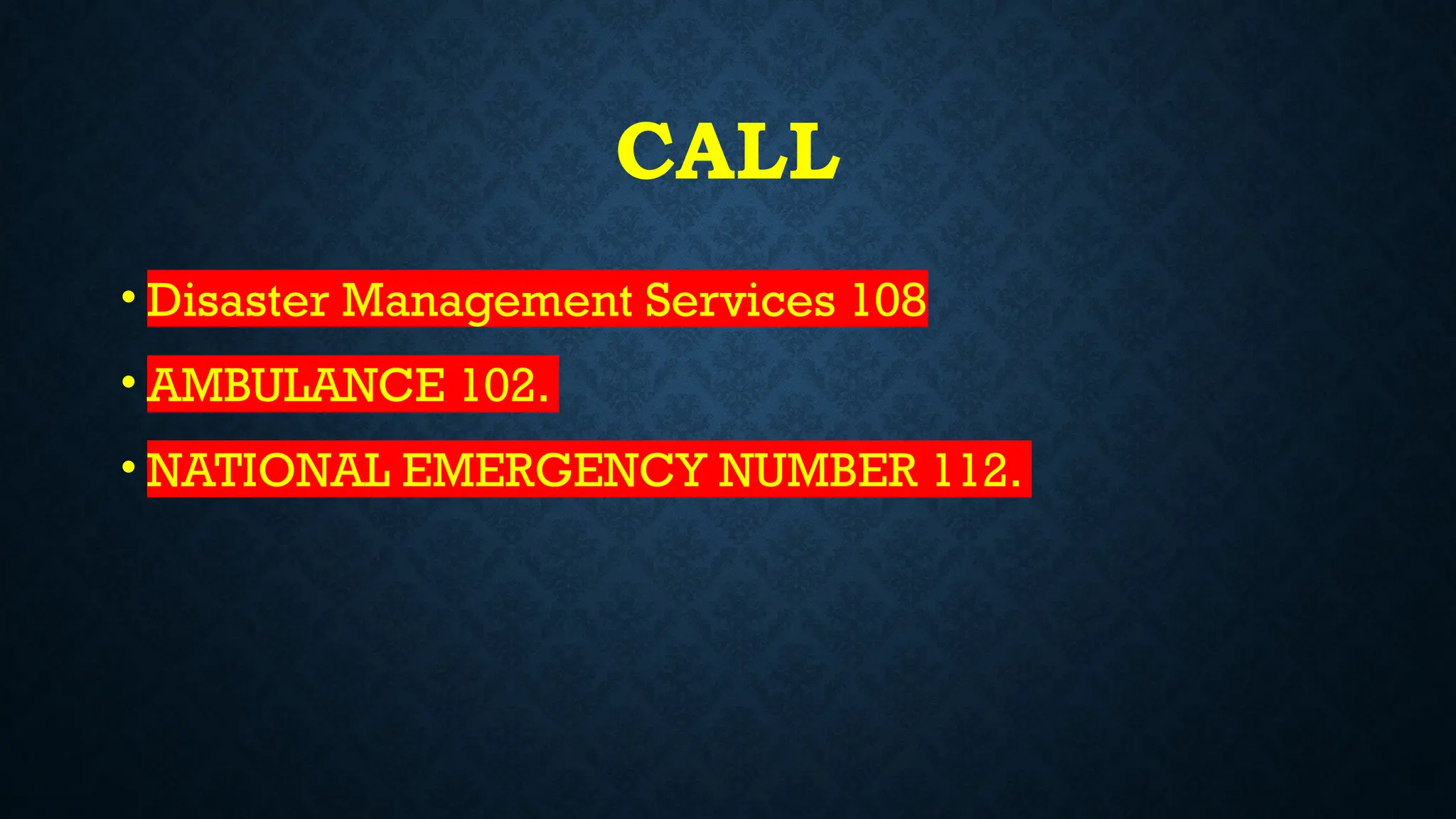
• 2 rescue breath: Each of 1 second at least
• Take regular breath to deliver (not deep breath)
• Approximately 500-600 ml of air or more for
visible chest rise.
• Avoid excessive ventilation
AHA 2020
24.
DEFIBRILLATE
• Immediate defibrillationis important
• Arrival of the AED (Automated External
Defibrillator)
• Turn AED On
• Follow verbal AED prompts
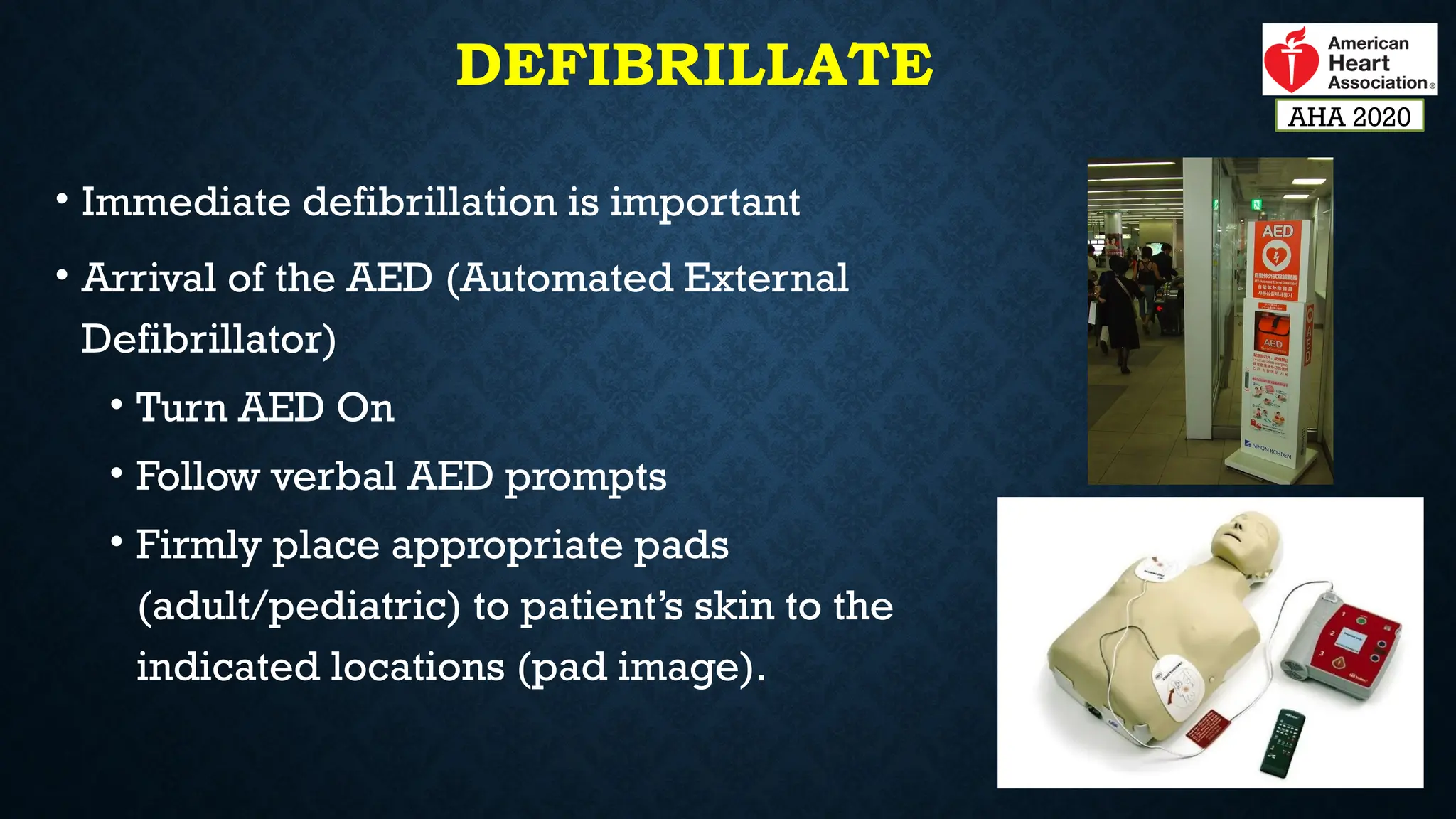
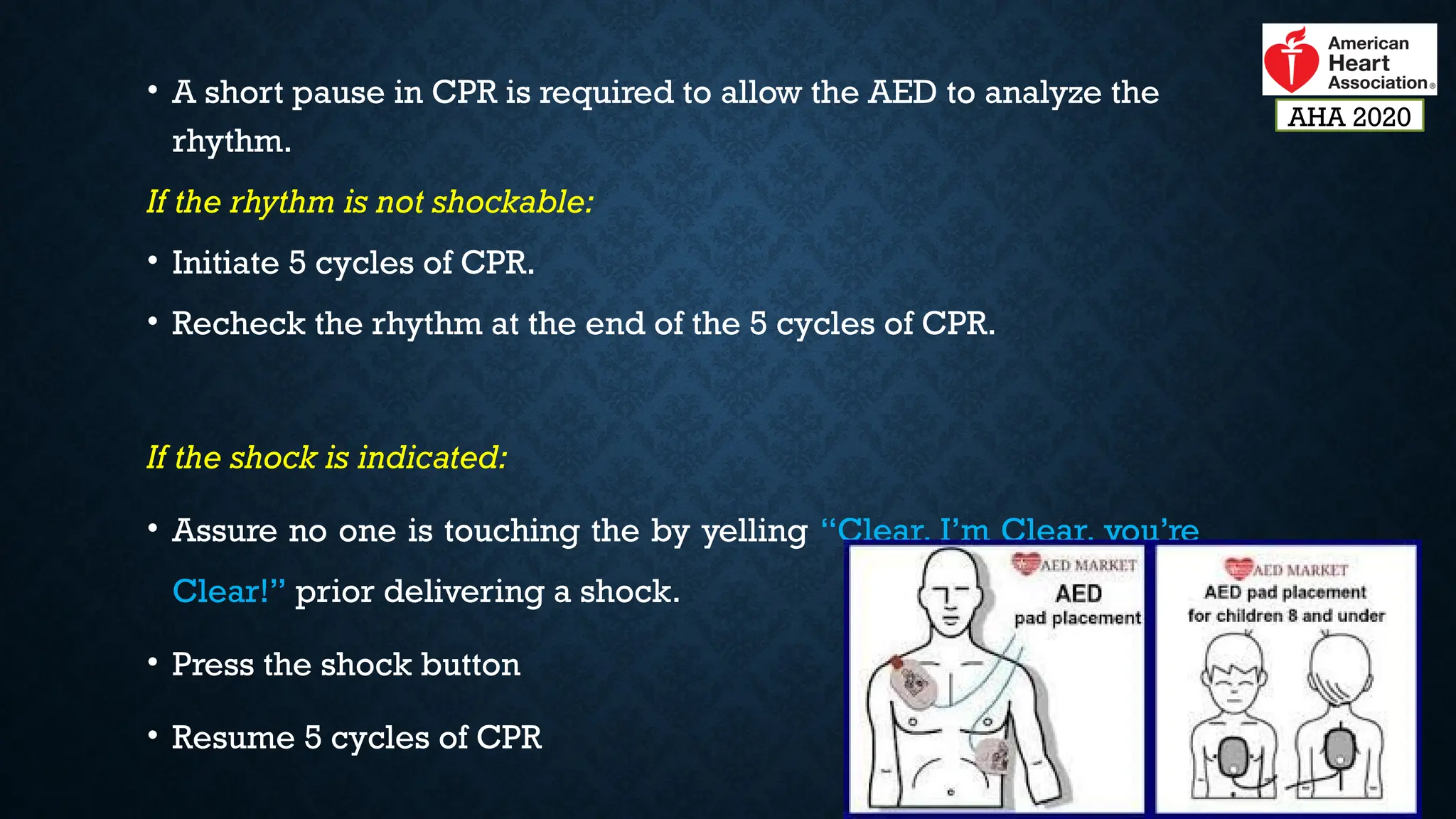
• Firmly place appropriate pads
(adult/pediatric) to patient’s skin to the
indicated locations (pad image).
AHA 2020
25.
• A shortpause in CPR is required to allow the AED to analyze the
rhythm.
If the rhythm is not shockable:
• Initiate 5 cycles of CPR.
• Recheck the rhythm at the end of the 5 cycles of CPR.
If the shock is indicated:
• Assure no one is touching the by yelling “Clear, I’m Clear, you’re
Clear!” prior delivering a shock.
• Press the shock button
• Resume 5 cycles of CPR
AHA 2020
26.
RECOVERY POSITION- ADULT
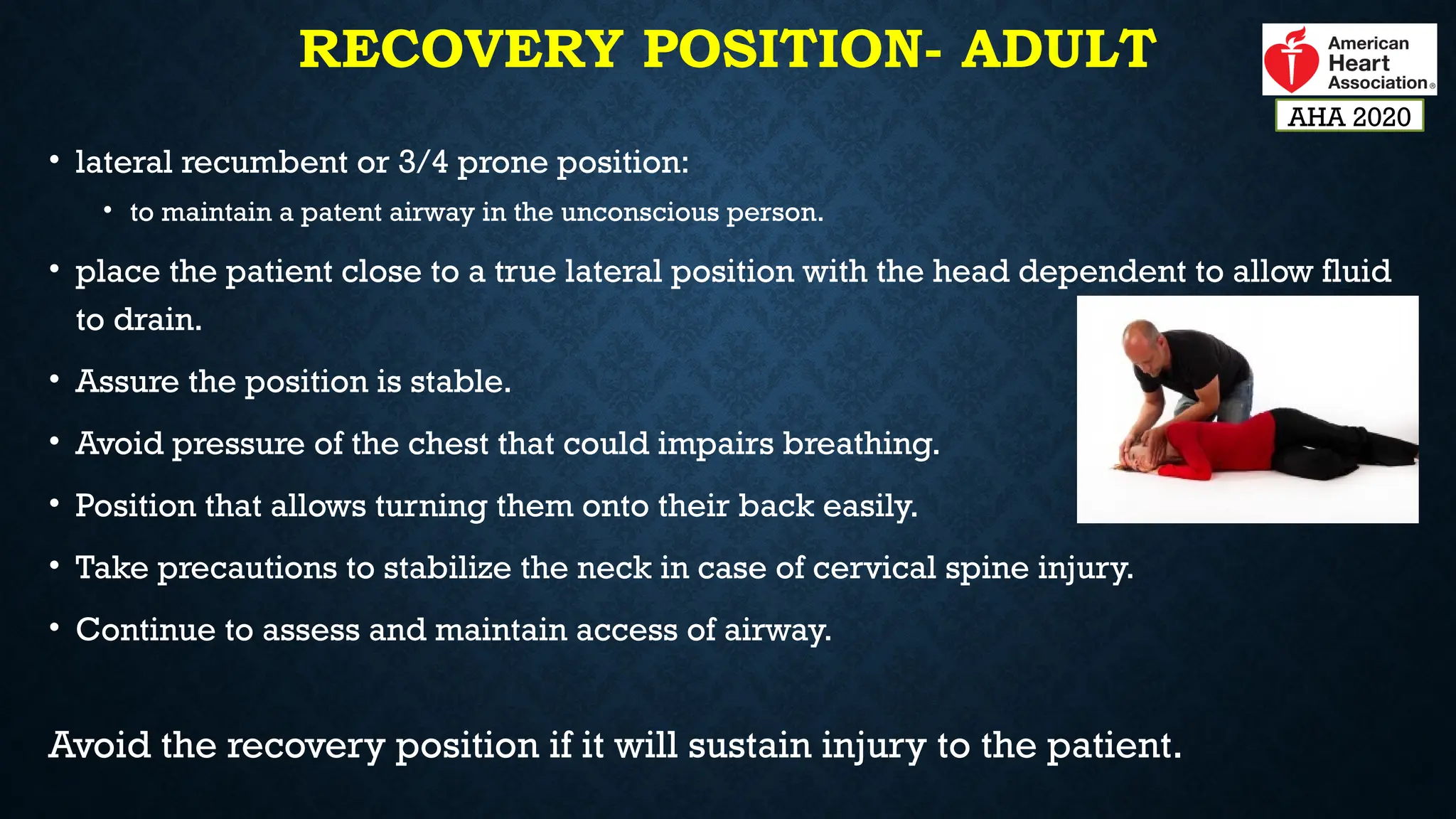
•lateral recumbent or 3/4 prone position:
• to maintain a patent airway in the unconscious person.
• place the patient close to a true lateral position with the head dependent to allow fluid
to drain.
• Assure the position is stable.
• Avoid pressure of the chest that could impairs breathing.
• Position that allows turning them onto their back easily.
• Take precautions to stabilize the neck in case of cervical spine injury.
• Continue to assess and maintain access of airway.
Avoid the recovery position if it will sustain injury to the patient.
AHA 2020
27.
RECOVERY POSITION FORINFANTS
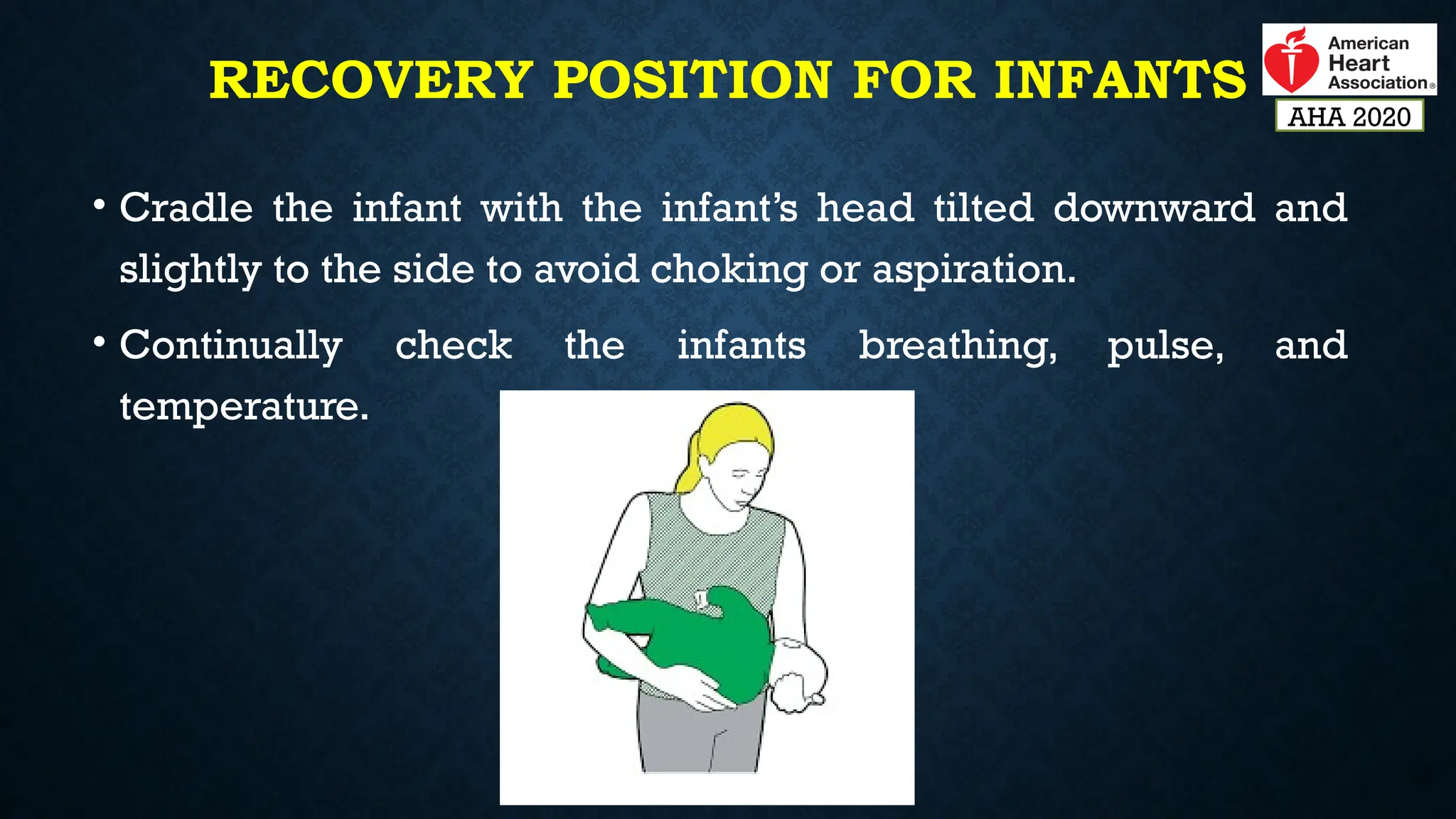
• Cradle the infant with the infant’s head tilted downward and
slightly to the side to avoid choking or aspiration.
• Continually check the infants breathing, pulse, and
temperature.
AHA 2020
28.
WHEN CAN YOUSTOP CPR?
• Victim revives
• Trained help arrives
• Unsafe scene
• Too exhausted to continue
AHA 2020
29.
COMPLICATIONS OF CPR
1.Multiple medical problems- impaired consciousness &
cognitive deficits
2. Punctured lungs, fractured ribs and sternum--caused by
improper chest compressions. reduced quality of life,
shortened life span
3. Functional recovery continues at least the first 12 months
4. Anxiety, depression, fatigue, post traumatic stress symptoms
AHA 2020