Component 1
Section A
Advertising & Marketing
Media Language &
Representation
Case Study 3:
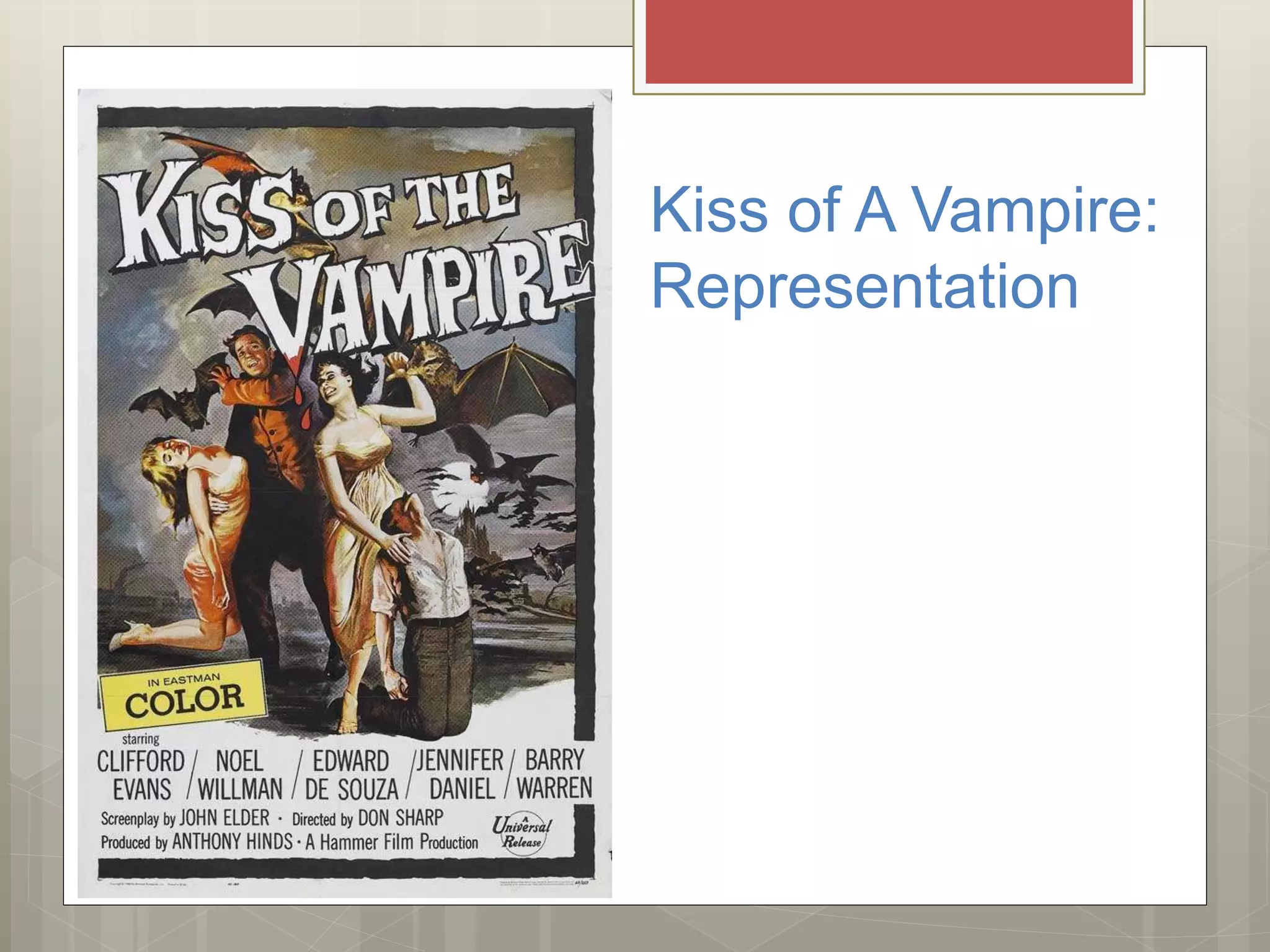
Kiss Of The Vampire
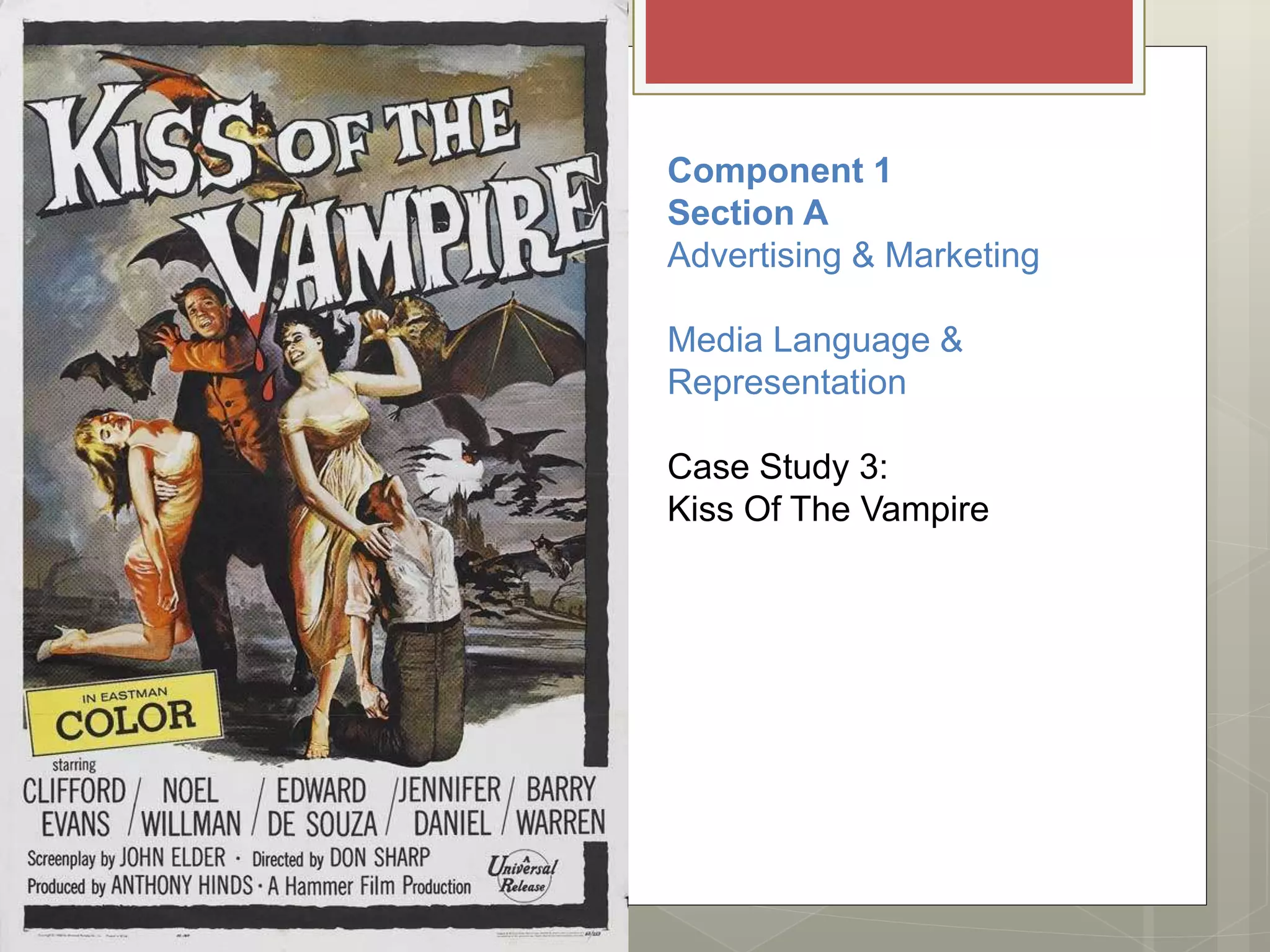
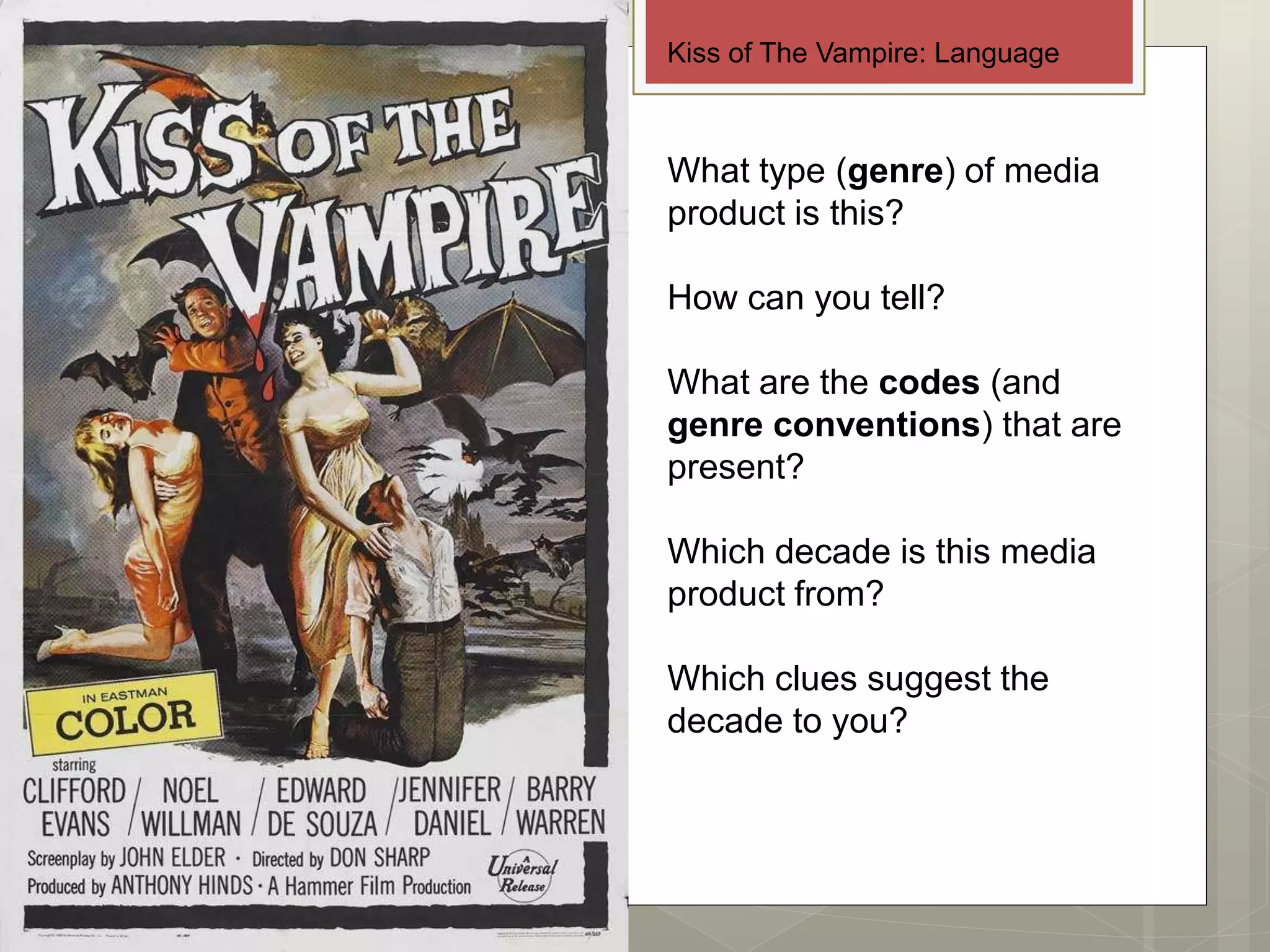
What type (genre) of media
product is this?
How can you tell?
What are the codes (and
genre conventions) that are
present?
Which decade is this media
product from?
Which clues suggest the
decade to you?
Kiss of The Vampire: Language
Kiss of A Vampire
Product Context,
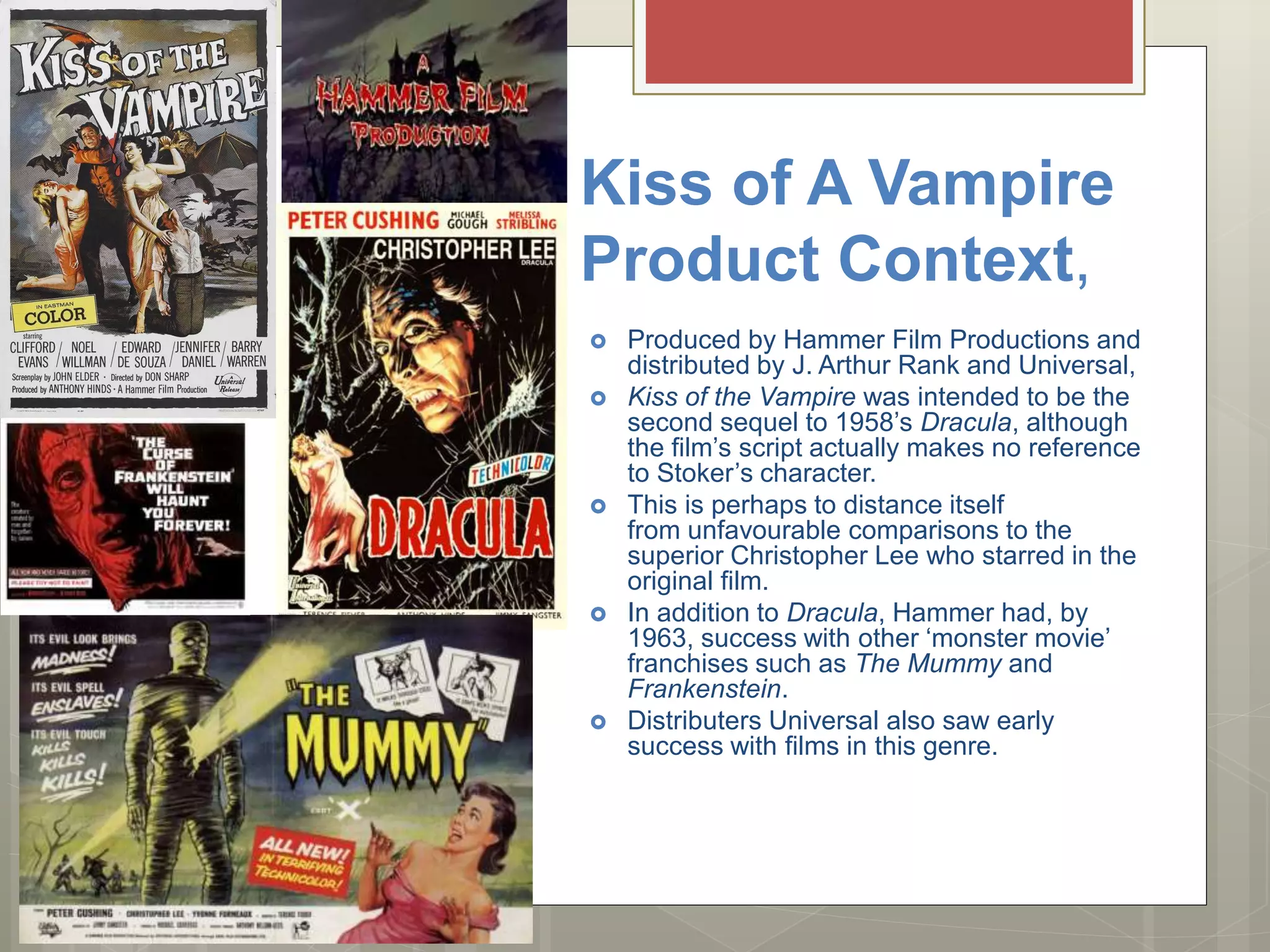
 Produced by Hammer Film Productions and
distributed by J. Arthur Rank and Universal,
 Kiss of the Vampire was intended to be the
second sequel to 1958’s Dracula, although
the film’s script actually makes no reference
to Stoker’s character.
 This is perhaps to distance itself
from unfavourable comparisons to the
superior Christopher Lee who starred in the
original film.
 In addition to Dracula, Hammer had, by
1963, success with other ‘monster movie’
franchises such as The Mummy and
Frankenstein.
 Distributers Universal also saw early
success with films in this genre.
Kiss of A Vampire: Historical
Context
The film was released in 1963.
What other significant cultural and social
developments were happening at this time?
Kiss of A Vampire: Historical
Context - 1963
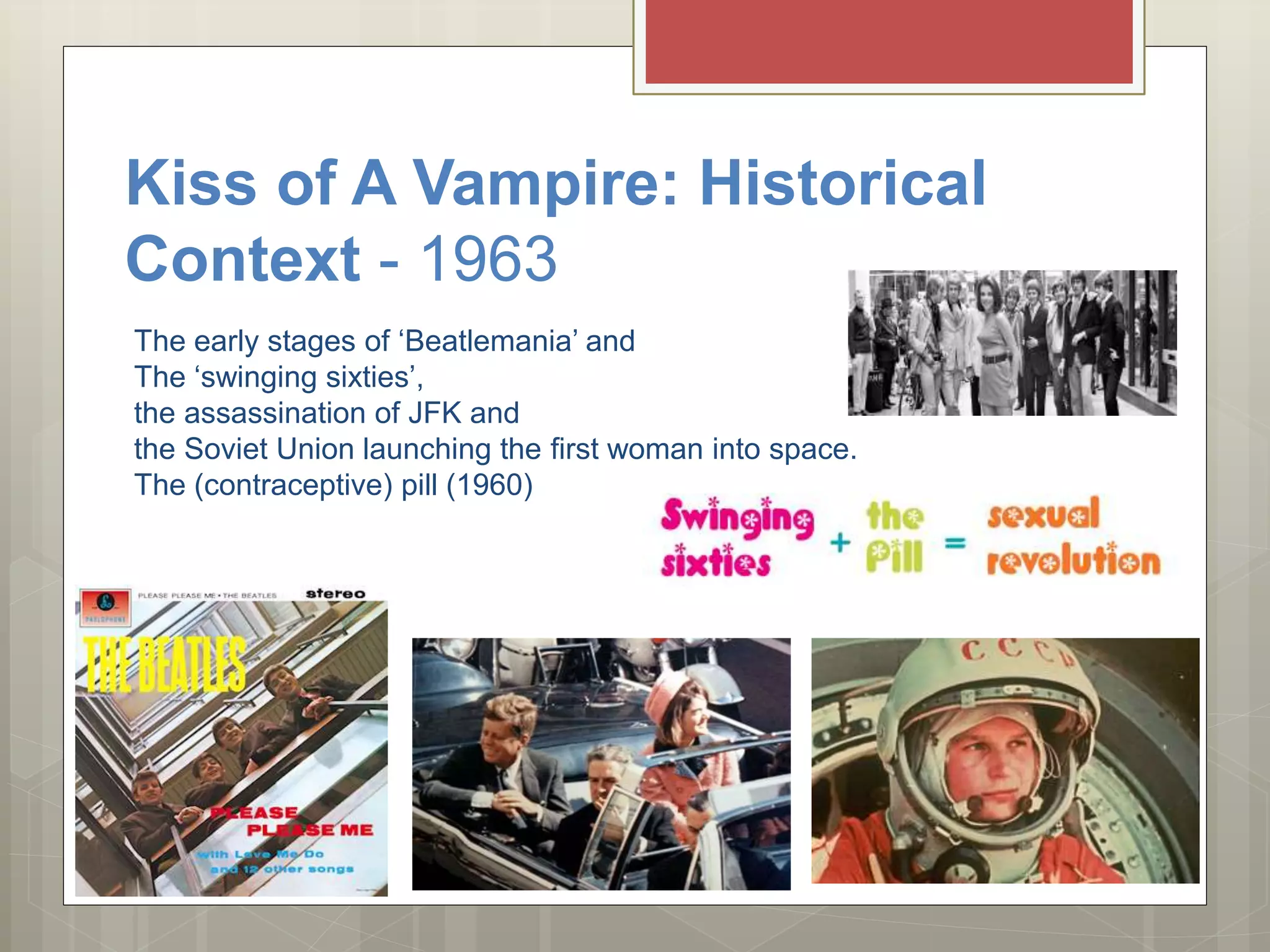
The early stages of ‘Beatlemania’ and
The ‘swinging sixties’,
the assassination of JFK and
the Soviet Union launching the first woman into space.
The (contraceptive) pill (1960)
Kiss of A Vampire
Cultural Context,
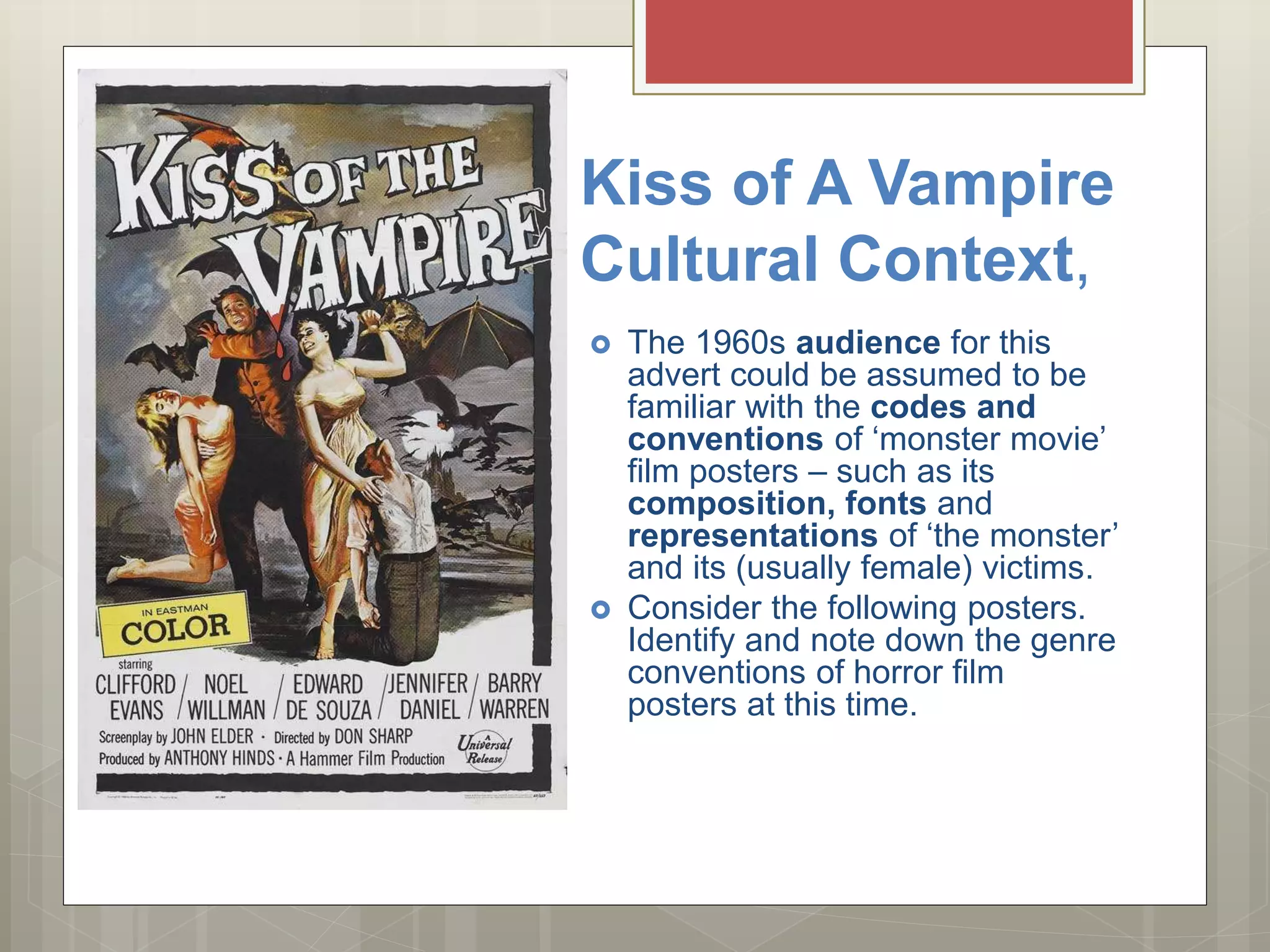
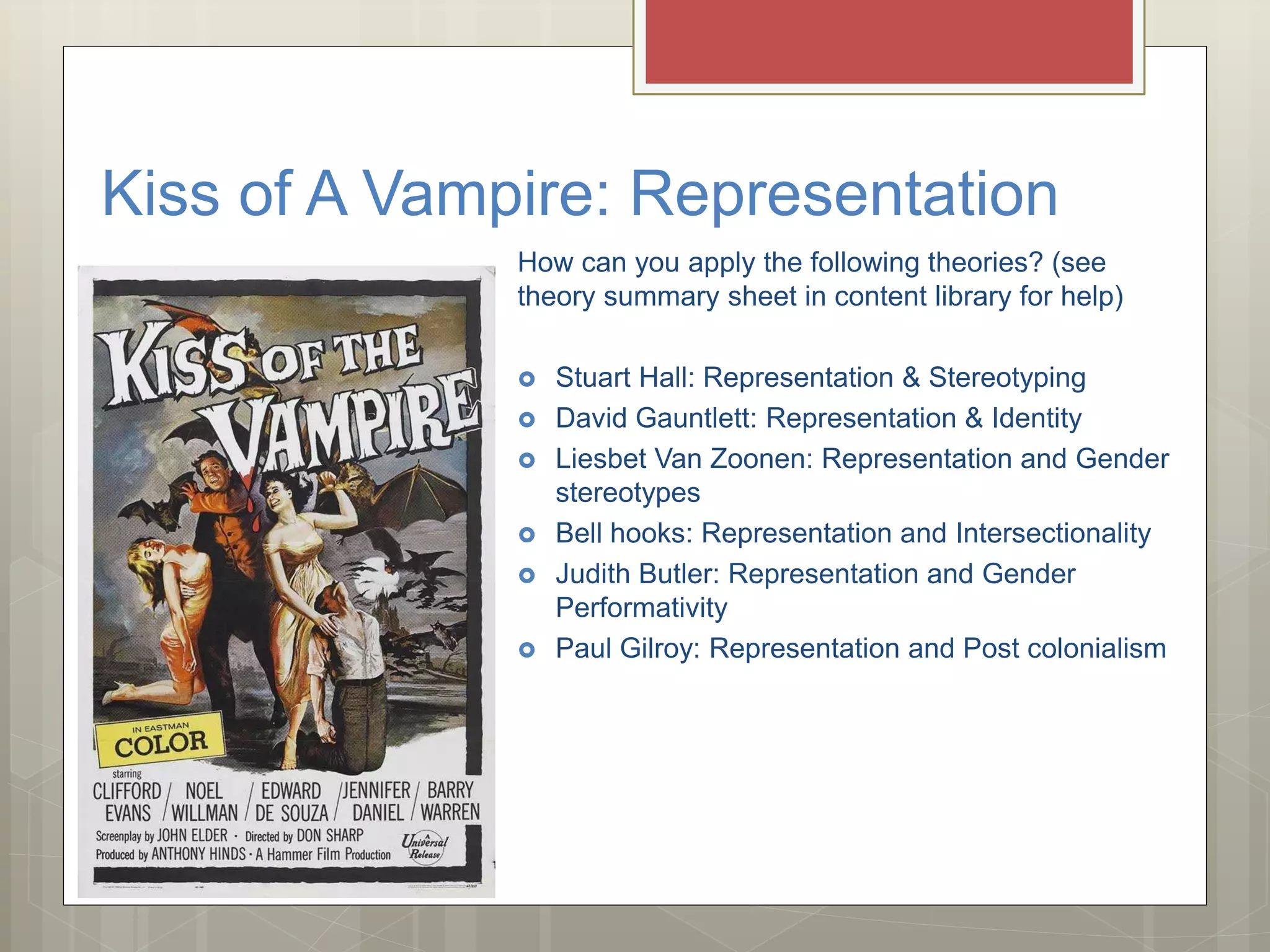
 The 1960s audience for this
advert could be assumed to be
familiar with the codes and
conventions of ‘monster movie’
film posters – such as its
composition, fonts and
representations of ‘the monster’
and its (usually female) victims.
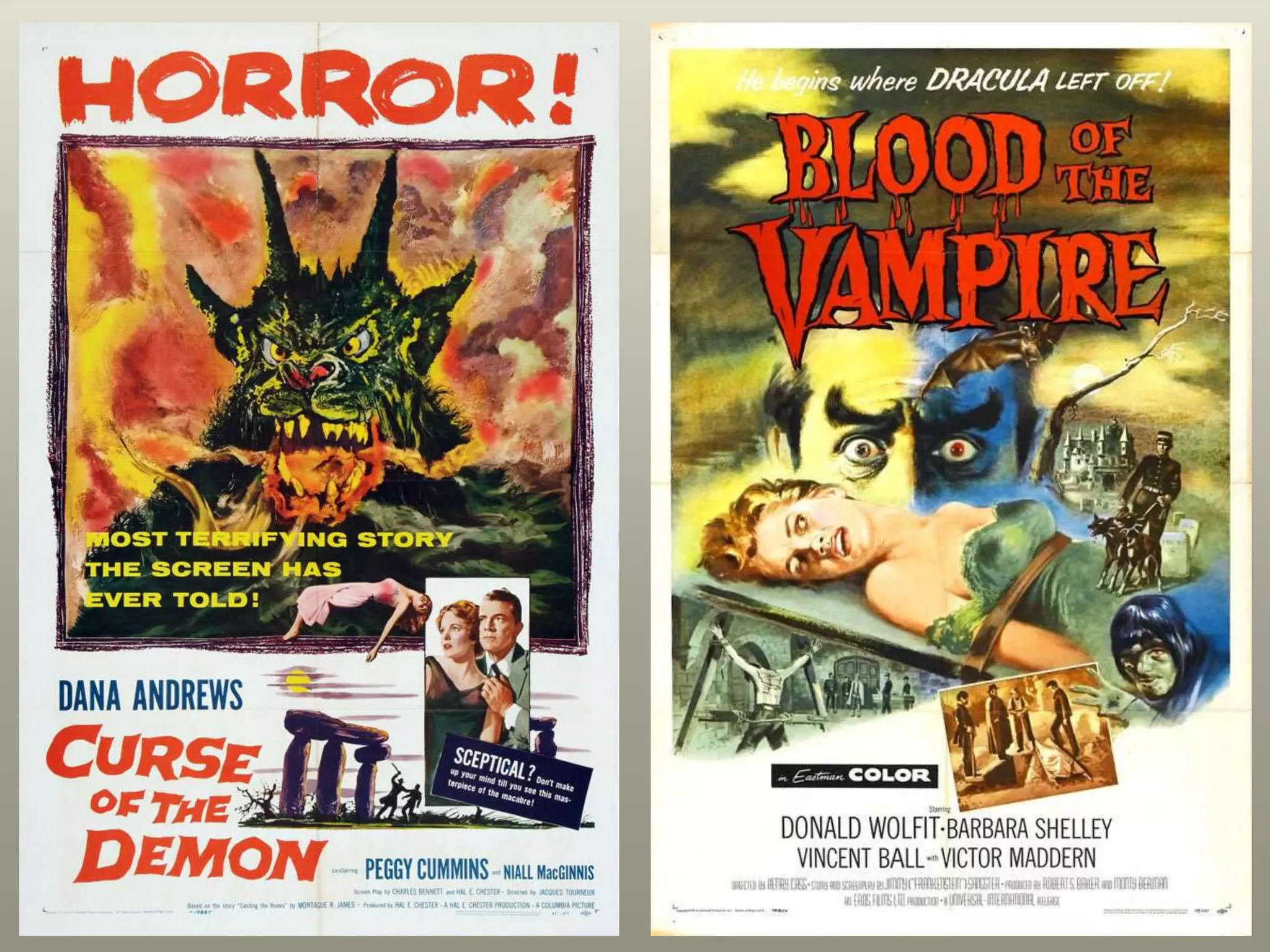
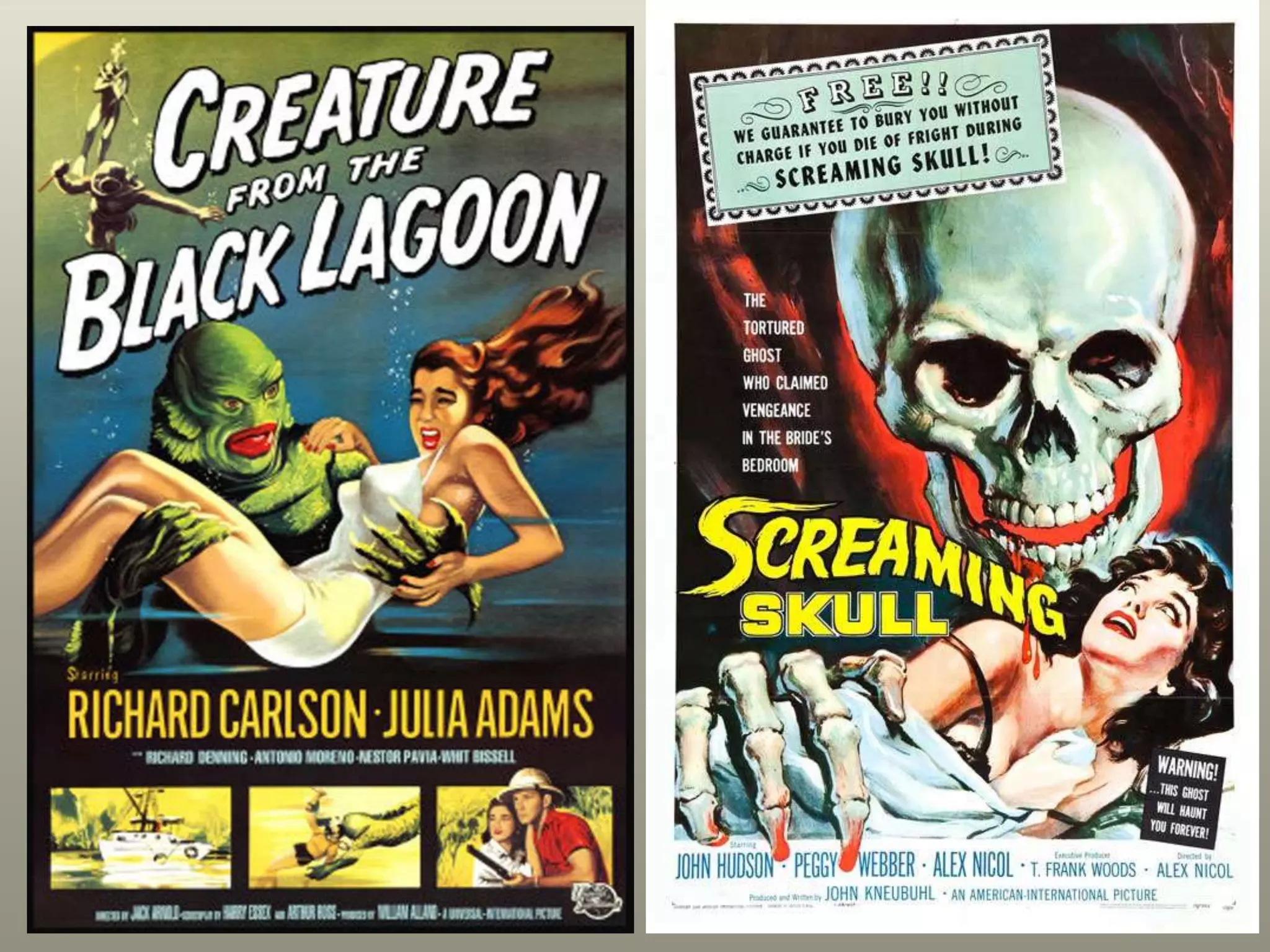
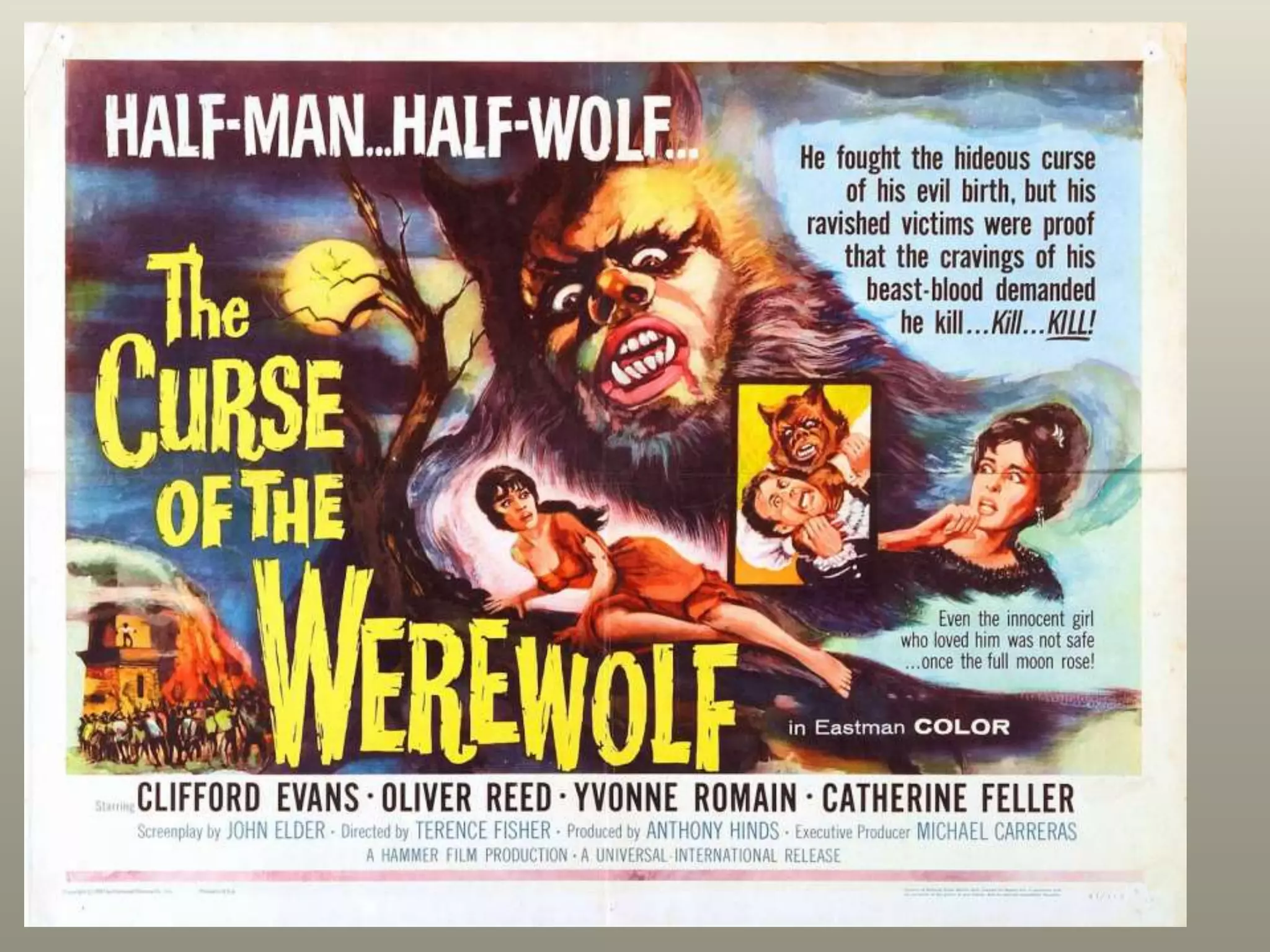
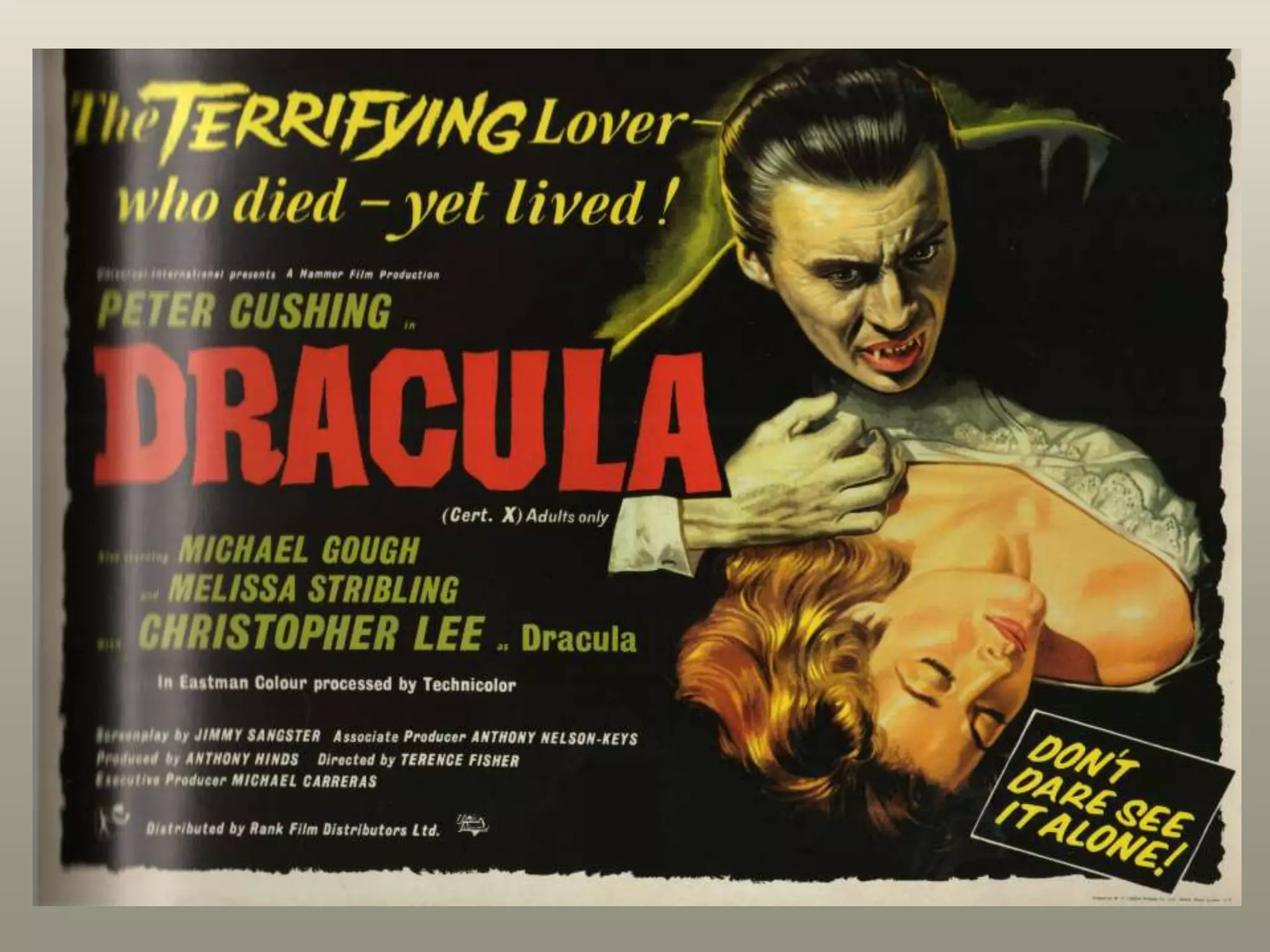
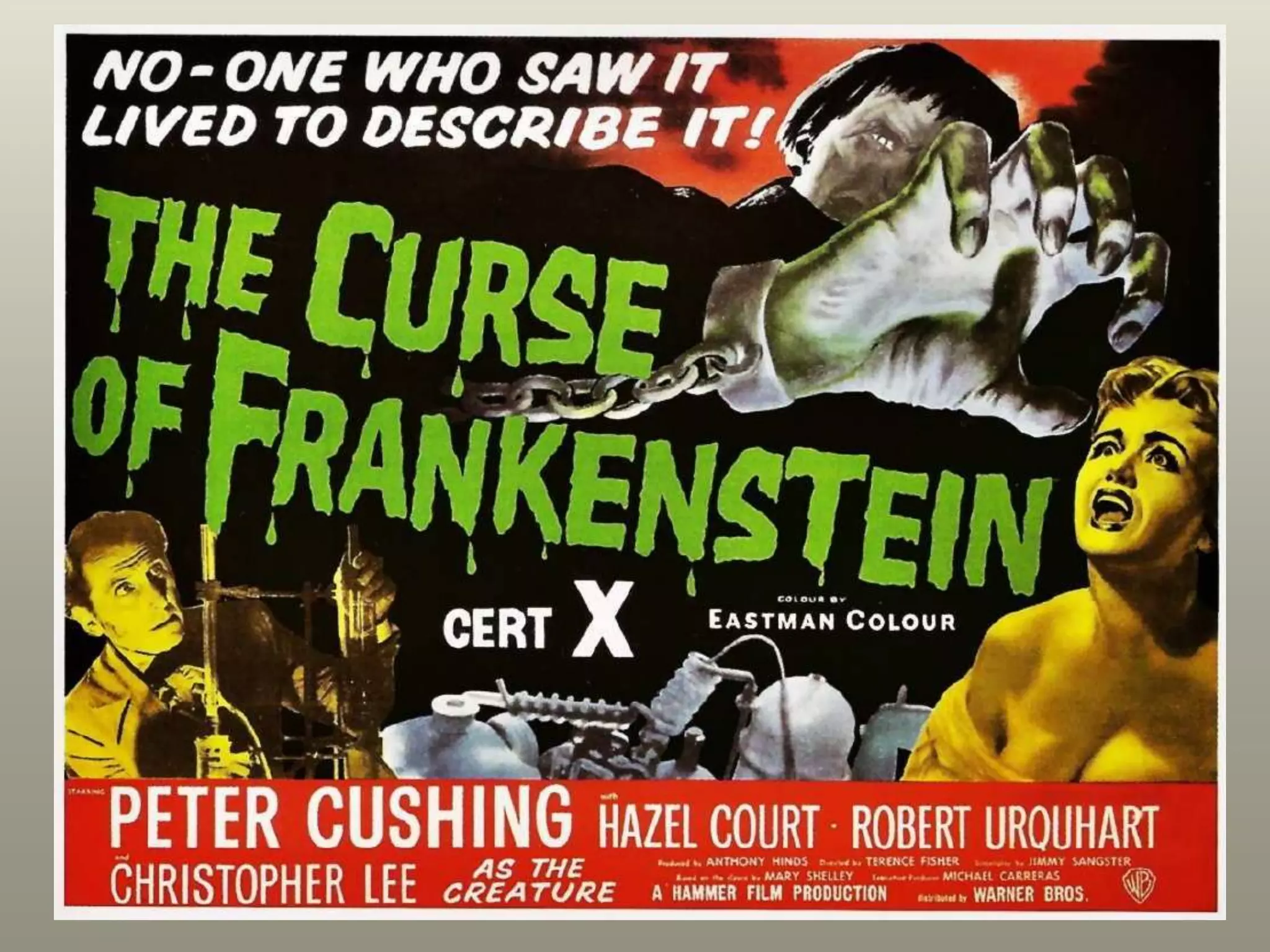
 Consider the following posters.
Identify and note down the genre
conventions of horror film
posters at this time.
Kiss of A Vampire:
Representation
Kiss of A Vampire:
Representation: Social and Cultural Context
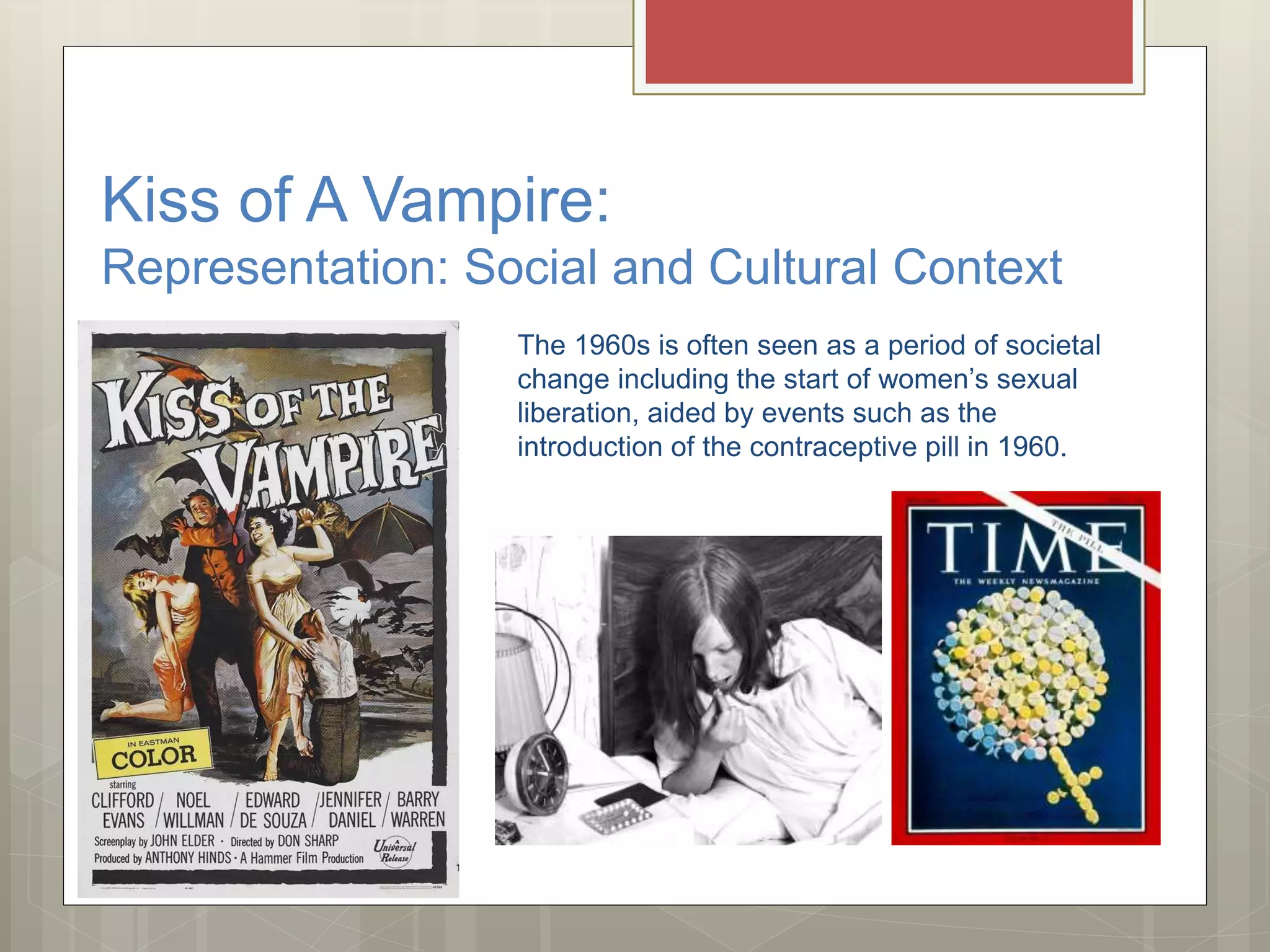
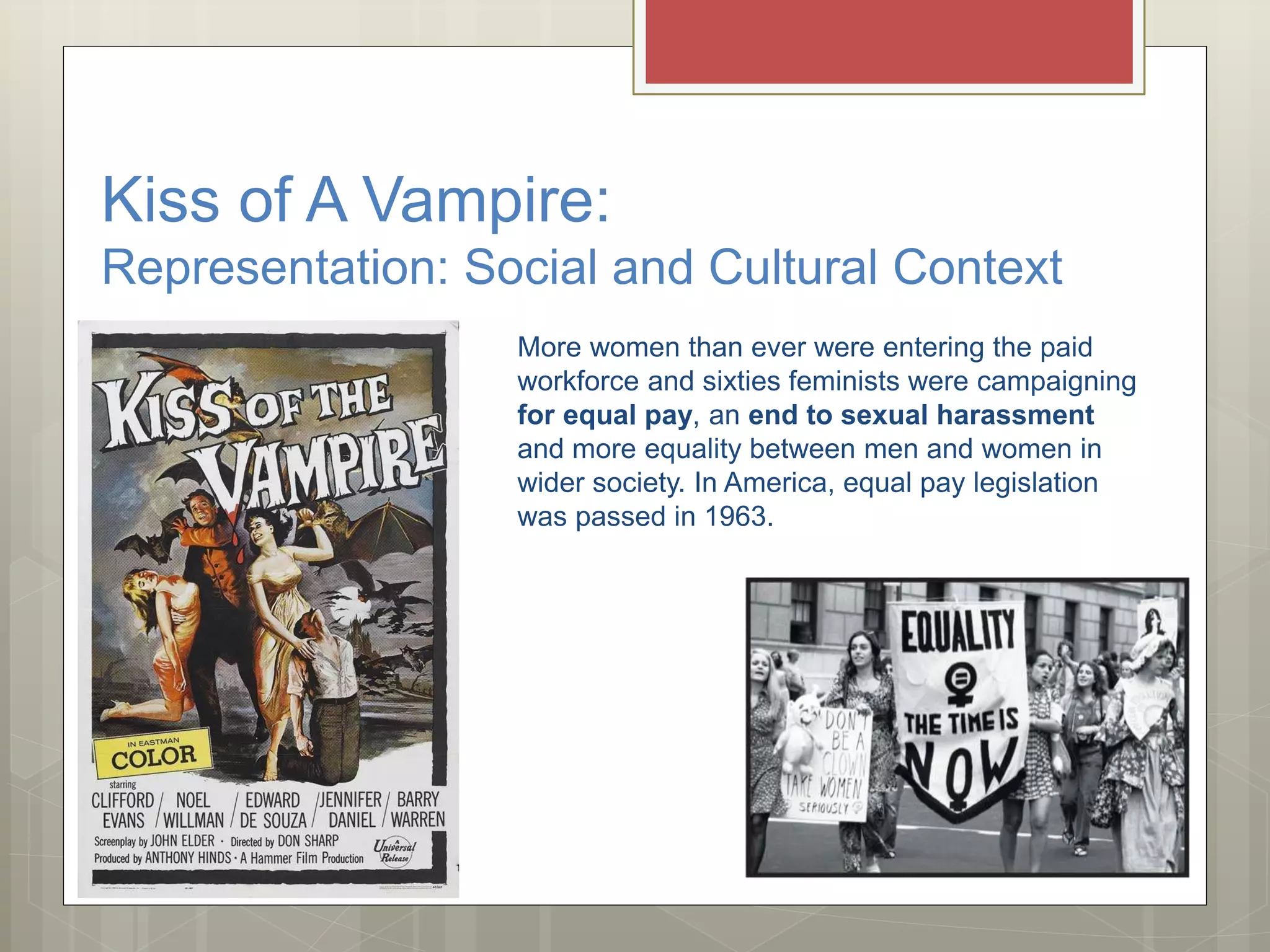
The 1960s is often seen as a period of societal
change including the start of women’s sexual
liberation, aided by events such as the
introduction of the contraceptive pill in 1960.
Kiss of A Vampire:
Representation: Social and Cultural Context
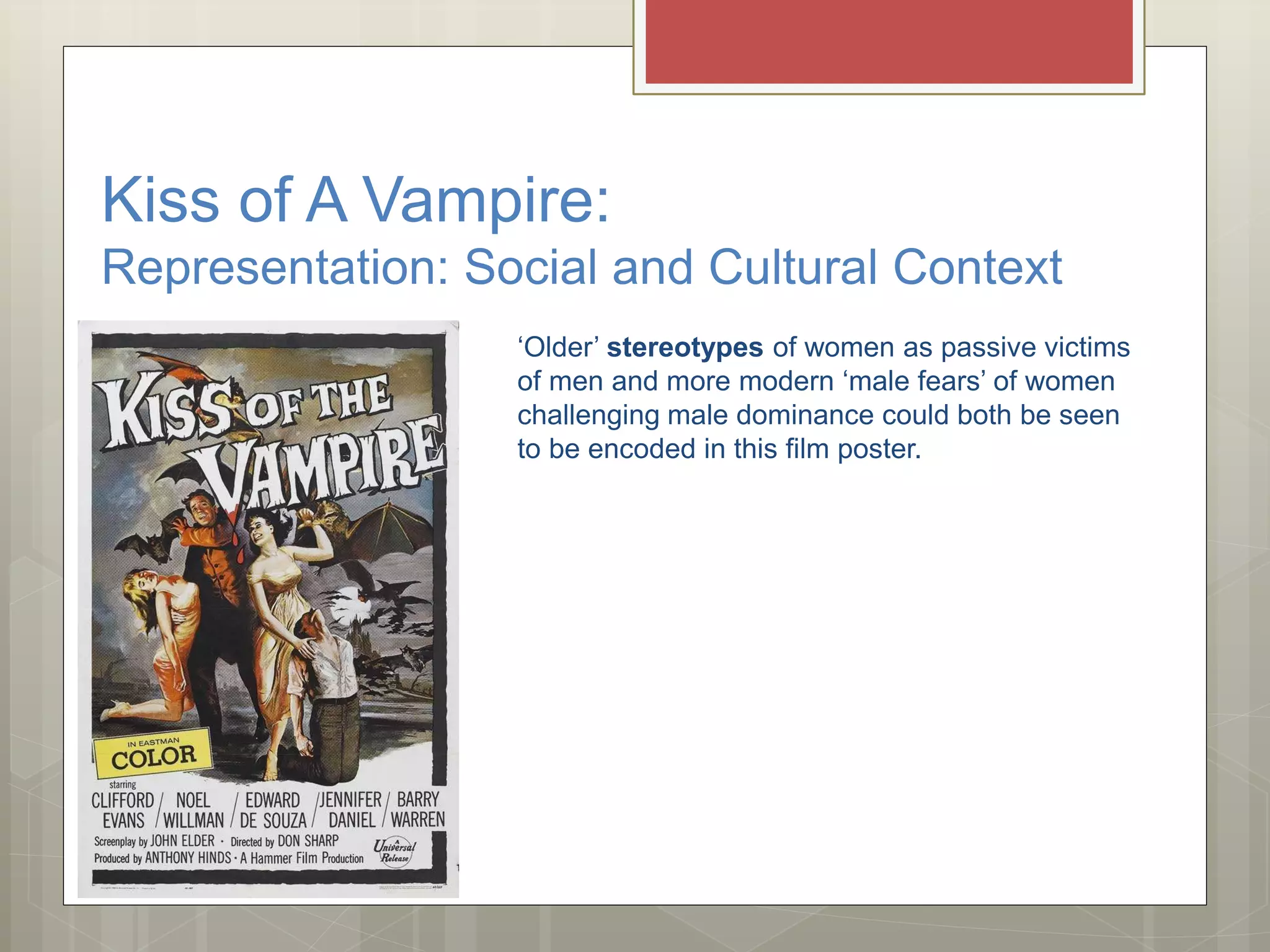
More women than ever were entering the paid
workforce and sixties feminists were campaigning
for equal pay, an end to sexual harassment
and more equality between men and women in
wider society. In America, equal pay legislation
was passed in 1963.
Kiss of A Vampire:
Representation: Social and Cultural Context
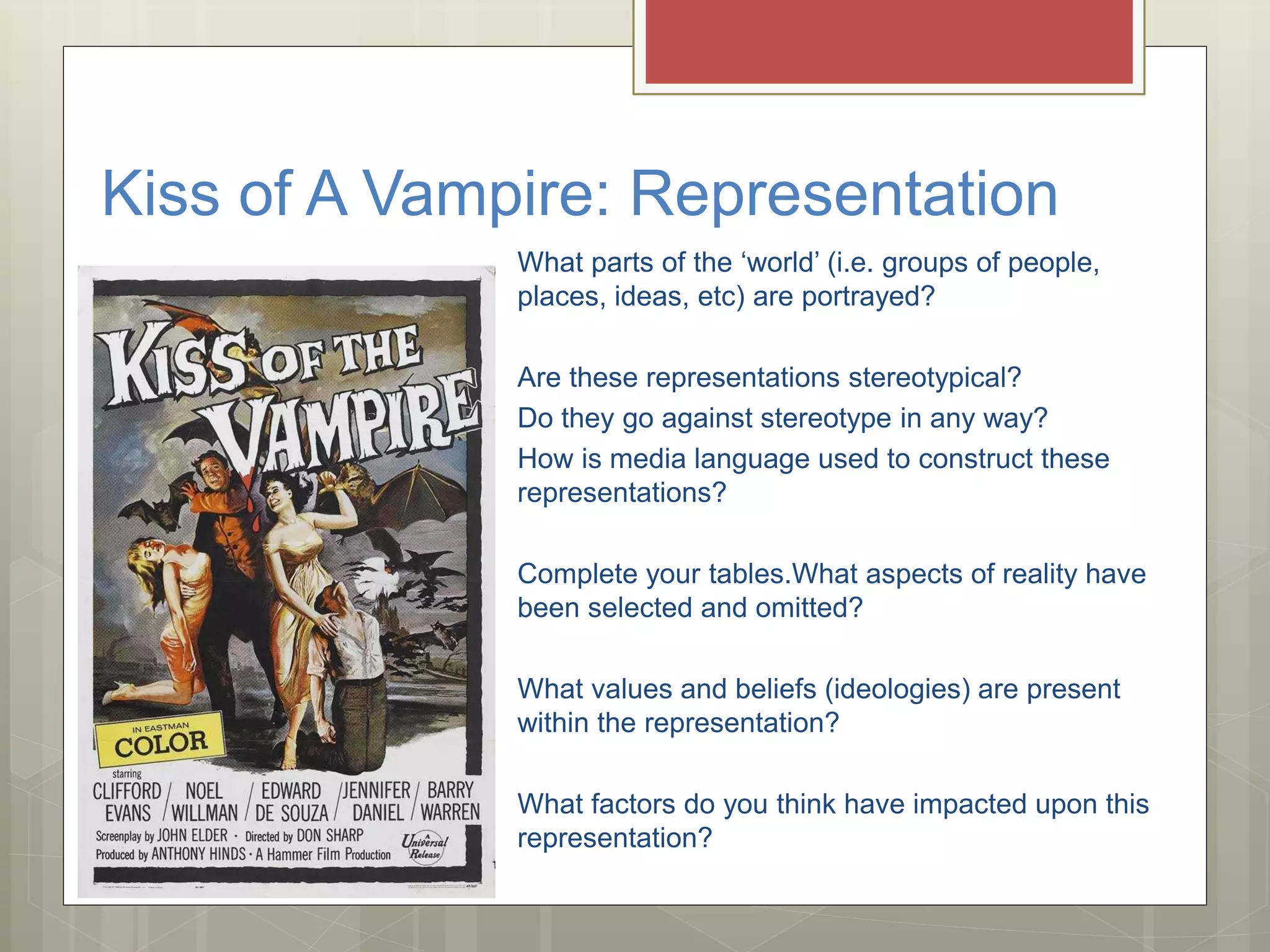
‘Older’ stereotypes of women as passive victims
of men and more modern ‘male fears’ of women
challenging male dominance could both be seen
to be encoded in this film poster.
Kiss of A Vampire: Representation
What parts of the ‘world’ (i.e. groups of people,
places, ideas, etc) are portrayed?
Are these representations stereotypical?
Do they go against stereotype in any way?
How is media language used to construct these
representations?
Complete your tables.What aspects of reality have
been selected and omitted?
What values and beliefs (ideologies) are present
within the representation?
What factors do you think have impacted upon this
representation?
Kiss of A Vampire: Representation
How can you apply the following theories? (see
theory summary sheet in content library for help)
 Stuart Hall: Representation & Stereotyping
 David Gauntlett: Representation & Identity
 Liesbet Van Zoonen: Representation and Gender
stereotypes
 Bell hooks: Representation and Intersectionality
 Judith Butler: Representation and Gender
Performativity
 Paul Gilroy: Representation and Post colonialism
Task:
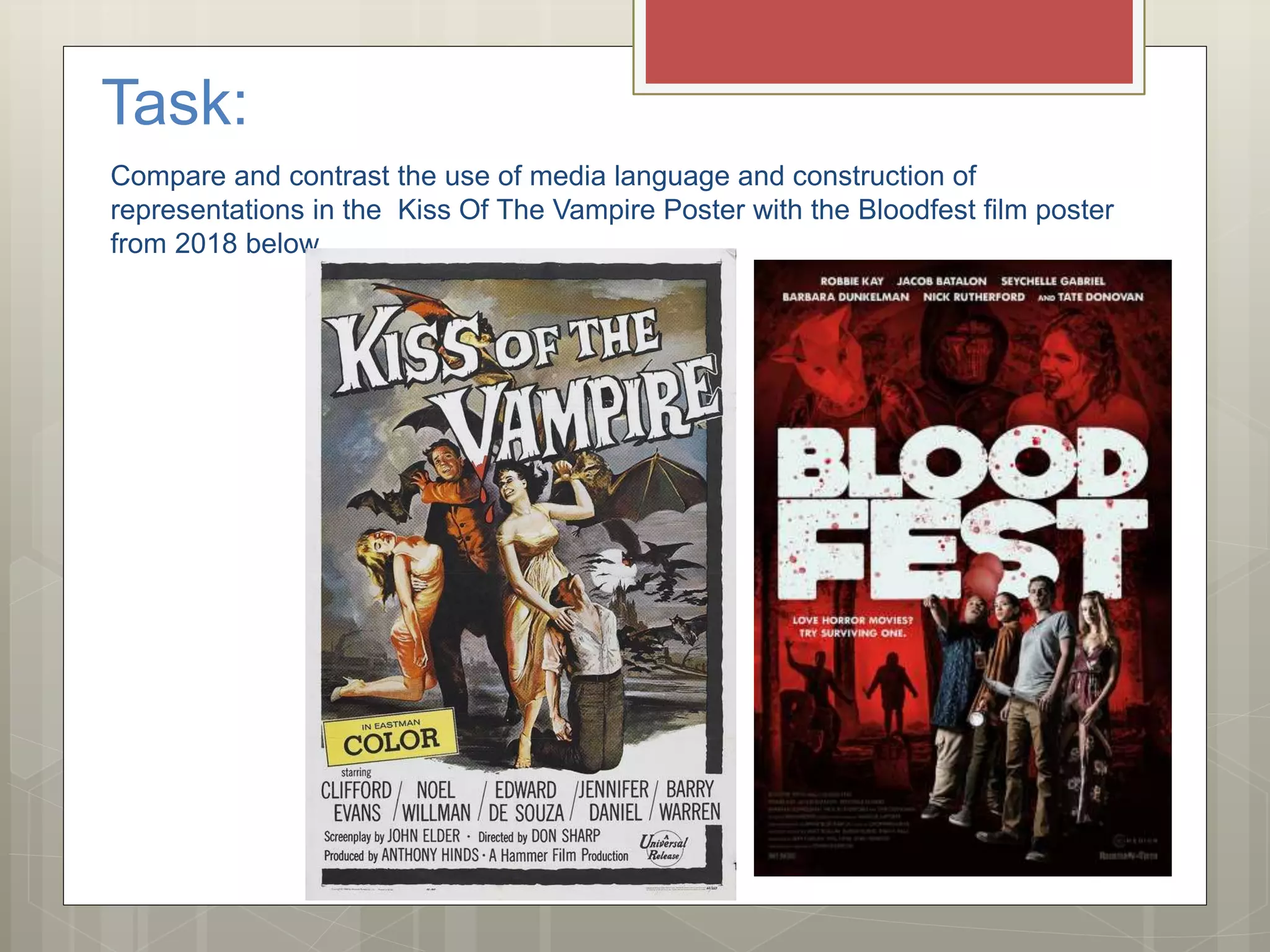
Compare and contrast the use of media language and construction of
representations in the Kiss Of The Vampire Poster with the Bloodfest film poster
from 2018 below.

A level media studies y2 C1SA Kiss of The Vampire media language and representation

  • 1.
    Component 1 Section A Advertising& Marketing Media Language & Representation Case Study 3: Kiss Of The Vampire
  • 2.
    What type (genre)of media product is this? How can you tell? What are the codes (and genre conventions) that are present? Which decade is this media product from? Which clues suggest the decade to you? Kiss of The Vampire: Language
  • 3.
    Kiss of AVampire Product Context,  Produced by Hammer Film Productions and distributed by J. Arthur Rank and Universal,  Kiss of the Vampire was intended to be the second sequel to 1958’s Dracula, although the film’s script actually makes no reference to Stoker’s character.  This is perhaps to distance itself from unfavourable comparisons to the superior Christopher Lee who starred in the original film.  In addition to Dracula, Hammer had, by 1963, success with other ‘monster movie’ franchises such as The Mummy and Frankenstein.  Distributers Universal also saw early success with films in this genre.
  • 4.
    Kiss of AVampire: Historical Context The film was released in 1963. What other significant cultural and social developments were happening at this time?
  • 5.
    Kiss of AVampire: Historical Context - 1963 The early stages of ‘Beatlemania’ and The ‘swinging sixties’, the assassination of JFK and the Soviet Union launching the first woman into space. The (contraceptive) pill (1960)
  • 6.
    Kiss of AVampire Cultural Context,  The 1960s audience for this advert could be assumed to be familiar with the codes and conventions of ‘monster movie’ film posters – such as its composition, fonts and representations of ‘the monster’ and its (usually female) victims.  Consider the following posters. Identify and note down the genre conventions of horror film posters at this time.
  • 12.
    Kiss of AVampire: Representation
  • 13.
    Kiss of AVampire: Representation: Social and Cultural Context The 1960s is often seen as a period of societal change including the start of women’s sexual liberation, aided by events such as the introduction of the contraceptive pill in 1960.
  • 14.
    Kiss of AVampire: Representation: Social and Cultural Context More women than ever were entering the paid workforce and sixties feminists were campaigning for equal pay, an end to sexual harassment and more equality between men and women in wider society. In America, equal pay legislation was passed in 1963.
  • 15.
    Kiss of AVampire: Representation: Social and Cultural Context ‘Older’ stereotypes of women as passive victims of men and more modern ‘male fears’ of women challenging male dominance could both be seen to be encoded in this film poster.
  • 16.
    Kiss of AVampire: Representation What parts of the ‘world’ (i.e. groups of people, places, ideas, etc) are portrayed? Are these representations stereotypical? Do they go against stereotype in any way? How is media language used to construct these representations? Complete your tables.What aspects of reality have been selected and omitted? What values and beliefs (ideologies) are present within the representation? What factors do you think have impacted upon this representation?
  • 17.
    Kiss of AVampire: Representation How can you apply the following theories? (see theory summary sheet in content library for help)  Stuart Hall: Representation & Stereotyping  David Gauntlett: Representation & Identity  Liesbet Van Zoonen: Representation and Gender stereotypes  Bell hooks: Representation and Intersectionality  Judith Butler: Representation and Gender Performativity  Paul Gilroy: Representation and Post colonialism
  • 18.
    Task: Compare and contrastthe use of media language and construction of representations in the Kiss Of The Vampire Poster with the Bloodfest film poster from 2018 below.