 http://www.arkive.org/american-black-
bear/ursus-americanus/video-00.html
 http://www.arkive.org/american-black-
bear/ursus-american us/video-17.html
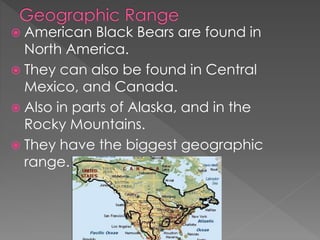
 American Black Bears are found in
North America.
 They can also be found in Central
Mexico, and Canada.
 Also in parts of Alaska, and in the
Rocky Mountains.
 They have the biggest geographic
range.
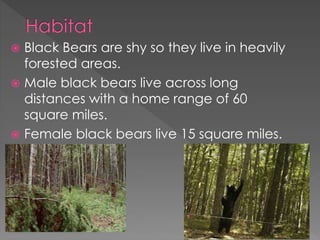
 Black Bears are shy so they live in heavily
forested areas.
 Male black bears live across long
distances with a home range of 60
square miles.
 Female black bears live 15 square miles.
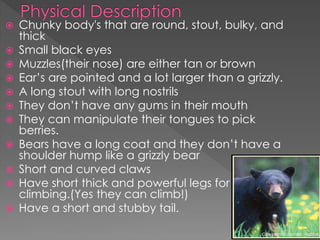
 Chunky body's that are round, stout, bulky, and
thick
 Small black eyes
 Muzzles(their nose) are either tan or brown
 Ear’s are pointed and a lot larger than a grizzly.
 A long stout with long nostrils
 They don’t have any gums in their mouth
 They can manipulate their tongues to pick
berries.
 Bears have a long coat and they don’t have a
shoulder hump like a grizzly bear
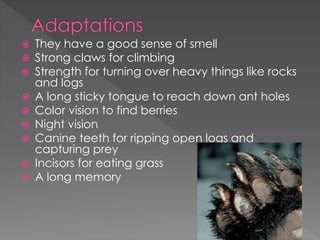
 Short and curved claws
 Have short thick and powerful legs for
climbing.(Yes they can climb!)
 Have a short and stubby tail.
 They have a good sense of smell
 Strong claws for climbing
 Strength for turning over heavy things like rocks
and logs
 A long sticky tongue to reach down ant holes
 Color vision to find berries
 Night vision
 Canine teeth for ripping open logs and
capturing prey
 Incisors for eating grass
 A long memory
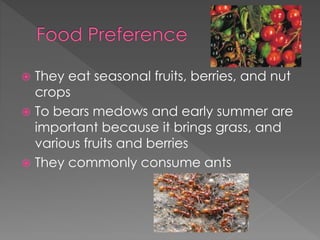
 They eat seasonal fruits, berries, and nut
crops
 To bears medows and early summer are
important because it brings grass, and
various fruits and berries
 They commonly consume ants
 Black bears mate in June and July
 If a female's cubs live before the breeding season,
she may mate that same year and produce cubs
the following year.
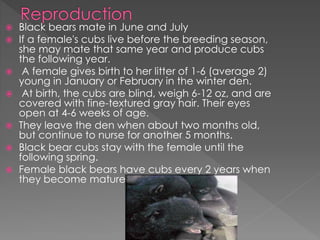
 A female gives birth to her litter of 1-6 (average 2)
young in January or February in the winter den.
 At birth, the cubs are blind, weigh 6-12 oz, and are
covered with fine-textured gray hair. Their eyes
open at 4-6 weeks of age.
 They leave the den when about two months old,
but continue to nurse for another 5 months.
 Black bear cubs stay with the female until the
following spring.
 Female black bears have cubs every 2 years when
they become mature
 Claws are great for climbing.
 Love to swim and hunt for fish.
 They have color vision
 Amazing sense of smell.
 Very smart- hikers put food in metal
containers and still break in.
 Hibernate up to 7 months, or skip it.
 They can come in many colors.
 They also love food very much(just look at
fat they are)
Brain’s encounter with the American
black bear was not so scary. Brain was
just picking berries and it just so happens
so was the bear. The bear didn’t want to
hurt Brian, all he wanted was food like
every other person or animal.
 Web.vic.ca/bear aware/bears-content.4.html
 www.defendore.org/black_bear/basic facts.com
 www.esf.edv/aec/adlks/mammals/black_bears.html
 The americanblackbear.weebly.com/adaptationsfun_facts.html
 www.bear.org/website/bearpages/adaptions.html
Our amazing book hatchet.

Black Bears

  • 2.
  • 3.
     American BlackBears are found in North America.  They can also be found in Central Mexico, and Canada.  Also in parts of Alaska, and in the Rocky Mountains.  They have the biggest geographic range.
  • 4.
     Black Bearsare shy so they live in heavily forested areas.  Male black bears live across long distances with a home range of 60 square miles.  Female black bears live 15 square miles.
  • 5.
     Chunky body'sthat are round, stout, bulky, and thick  Small black eyes  Muzzles(their nose) are either tan or brown  Ear’s are pointed and a lot larger than a grizzly.  A long stout with long nostrils  They don’t have any gums in their mouth  They can manipulate their tongues to pick berries.  Bears have a long coat and they don’t have a shoulder hump like a grizzly bear  Short and curved claws  Have short thick and powerful legs for climbing.(Yes they can climb!)  Have a short and stubby tail.
  • 6.
     They havea good sense of smell  Strong claws for climbing  Strength for turning over heavy things like rocks and logs  A long sticky tongue to reach down ant holes  Color vision to find berries  Night vision  Canine teeth for ripping open logs and capturing prey  Incisors for eating grass  A long memory
  • 7.
     They eatseasonal fruits, berries, and nut crops  To bears medows and early summer are important because it brings grass, and various fruits and berries  They commonly consume ants
  • 8.
     Black bearsmate in June and July  If a female's cubs live before the breeding season, she may mate that same year and produce cubs the following year.  A female gives birth to her litter of 1-6 (average 2) young in January or February in the winter den.  At birth, the cubs are blind, weigh 6-12 oz, and are covered with fine-textured gray hair. Their eyes open at 4-6 weeks of age.  They leave the den when about two months old, but continue to nurse for another 5 months.  Black bear cubs stay with the female until the following spring.  Female black bears have cubs every 2 years when they become mature
  • 9.
     Claws aregreat for climbing.  Love to swim and hunt for fish.  They have color vision  Amazing sense of smell.  Very smart- hikers put food in metal containers and still break in.  Hibernate up to 7 months, or skip it.  They can come in many colors.  They also love food very much(just look at fat they are)
  • 10.
    Brain’s encounter withthe American black bear was not so scary. Brain was just picking berries and it just so happens so was the bear. The bear didn’t want to hurt Brian, all he wanted was food like every other person or animal.
  • 11.
     Web.vic.ca/bear aware/bears-content.4.html www.defendore.org/black_bear/basic facts.com  www.esf.edv/aec/adlks/mammals/black_bears.html  The americanblackbear.weebly.com/adaptationsfun_facts.html  www.bear.org/website/bearpages/adaptions.html Our amazing book hatchet.