BIRTH
INJURY
Presented By
Supriya, SMVDCoN
Birth Injuries
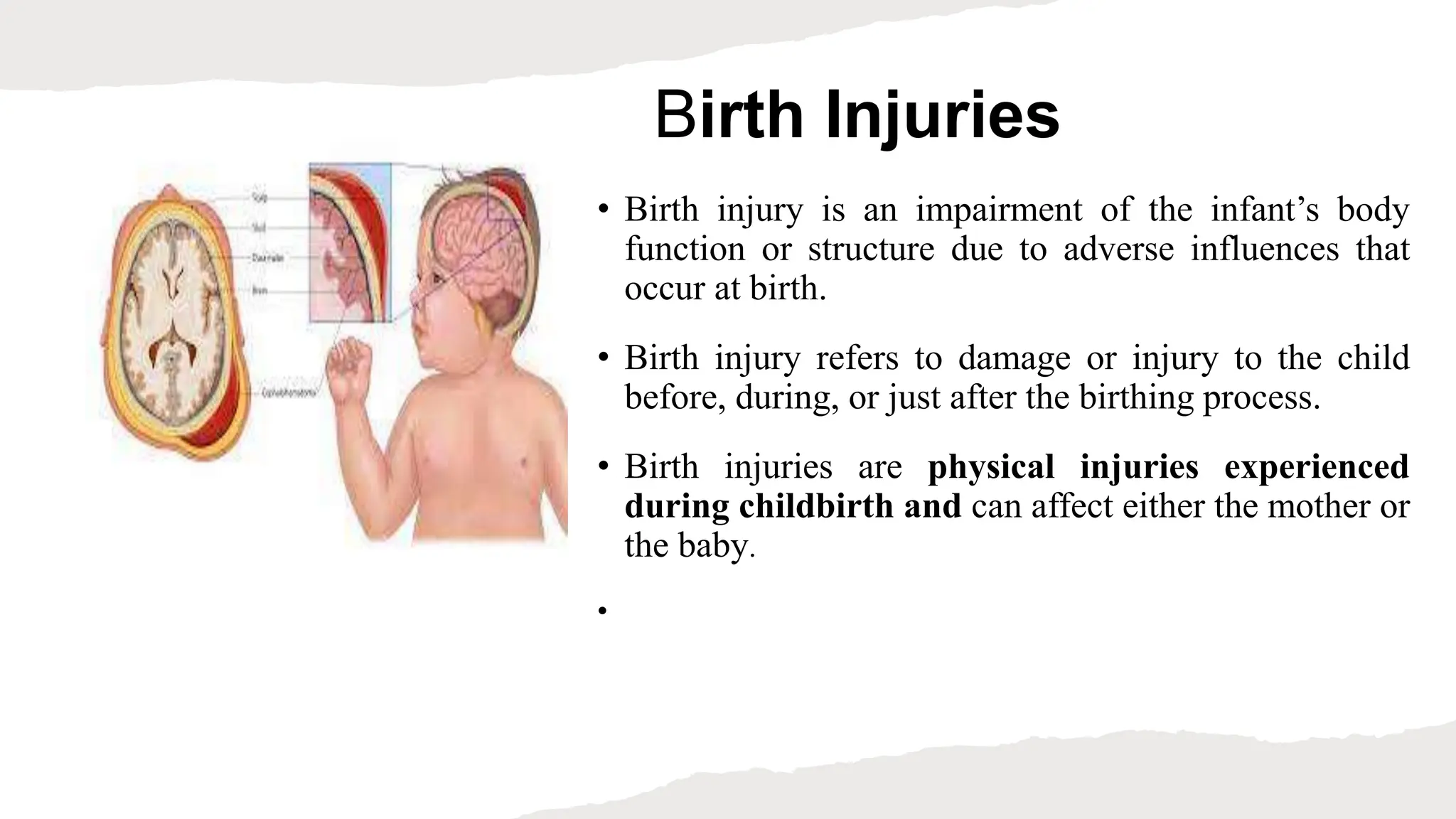
• Birth injury is an impairment of the infant’s body
function or structure due to adverse influences that
occur at birth.
• Birth injury refers to damage or injury to the child
before, during, or just after the birthing process.
• Birth injuries are physical injuries experienced
during childbirth and can affect either the mother or
the baby.
•
RISK
FACTORS
• Primiparity (a woman
is bearing a child for
the first time) and
Small maternal stature
• Maternal pelvic
anomalies
• Prolonged or unusually
rapid labor
• Oligohydramnios (
refers to amniotic fluid
volume that is less
than the minimum
expected for
gestational age)
• Malpresentation of the
fetus
• Use of mid forceps or
vaccum extraction
• Versions and
extractions
• Very low birth weight
or extreme
prematurity
• Fetal macrosomia
• Fetal anomalies
•
TYPES OF BIRTH
INJURIES
• Head and neck injuries
• Nerve injury
• Facial injuries
• Fractures
• Intra-abdominal injury
• Soft tissue injuries
EXTRACRANIAL
INJURIES
1.CAPUT SUCCEDANEUM
2.CEPHALHEMATOMA
CAPUT
SUCCEDANEUM
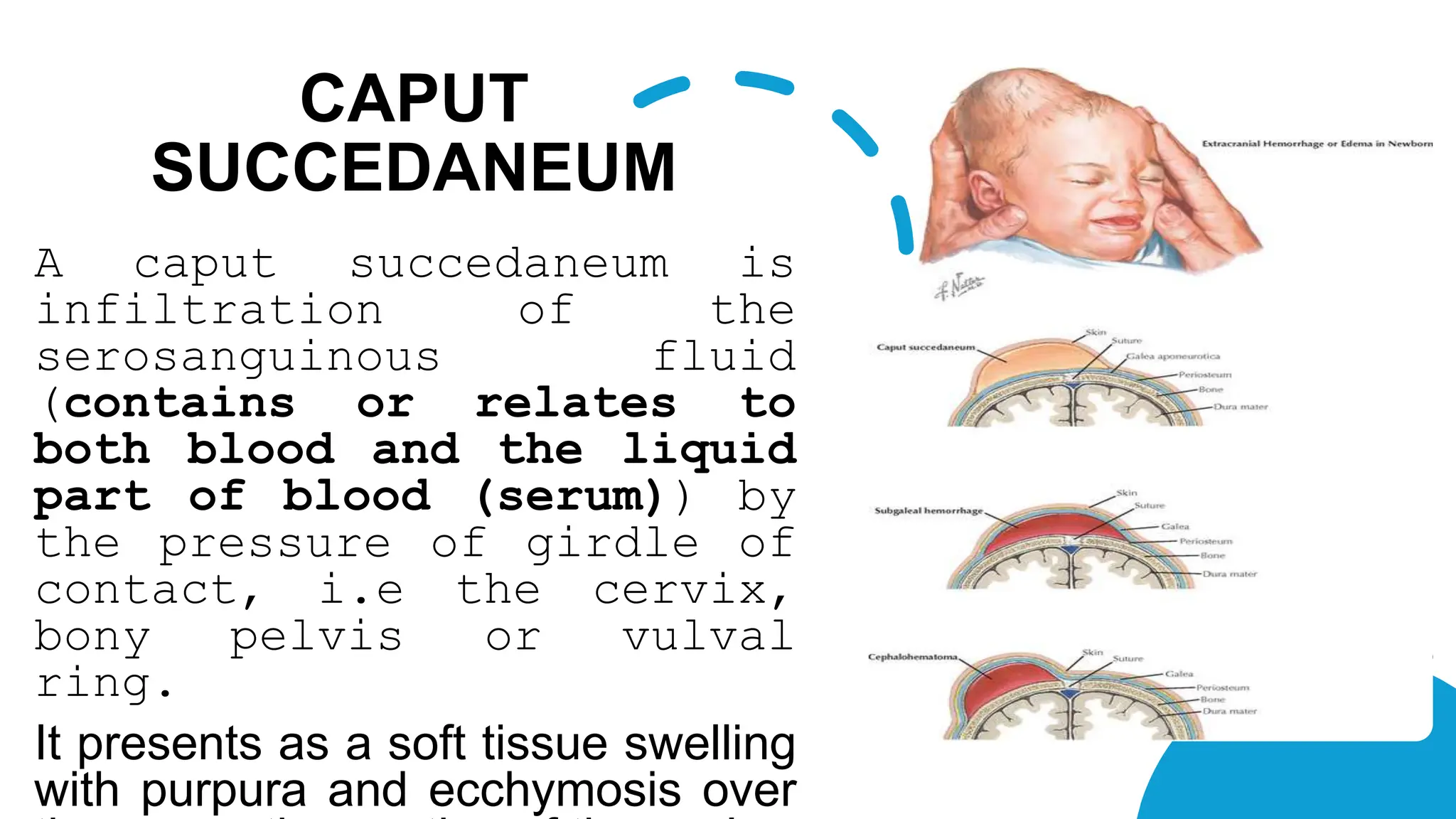
A caput succedaneum is
infiltration of the
serosanguinous fluid
(contains or relates to
both blood and the liquid
part of blood (serum)) by
the pressure of girdle of
contact, i.e the cervix,
bony pelvis or vulval
ring.
It presents as a soft tissue swelling
with purpura and ecchymosis over
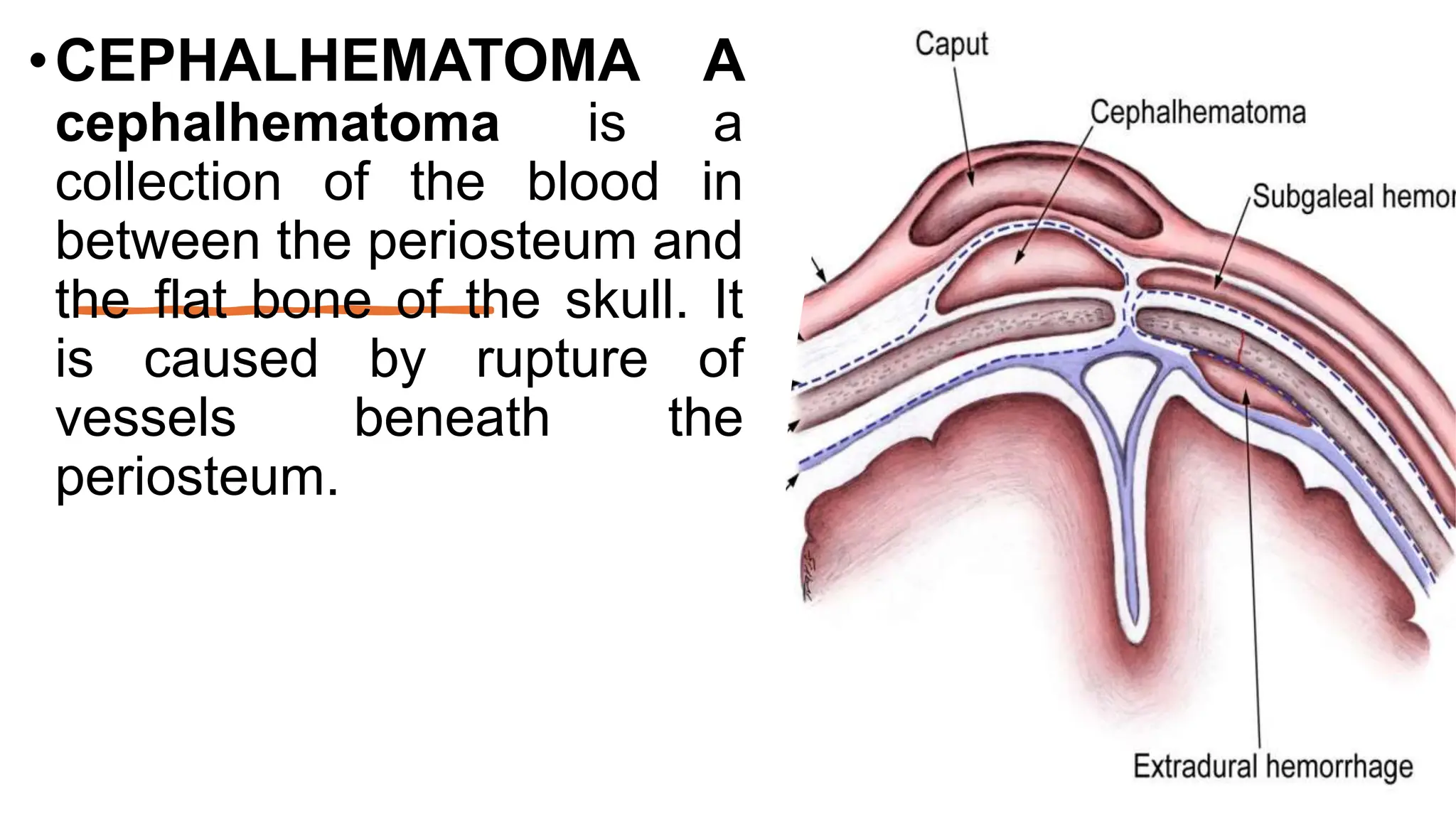
•CEPHALHEMATOMA A
cephalhematoma is a
collection of the blood in
between the periosteum and
the flat bone of the skull. It
is caused by rupture of
vessels beneath the
periosteum.
SUBGALEAL
HEMORRHAGE
A subgaleal hemorrhage is
bleeding between the galea
aponeurosis of the scalp and the
periosteum.
Hemorrhage occurs into the loose
connective tissue within the
subgaleal space and can cause
hypovolaemia.
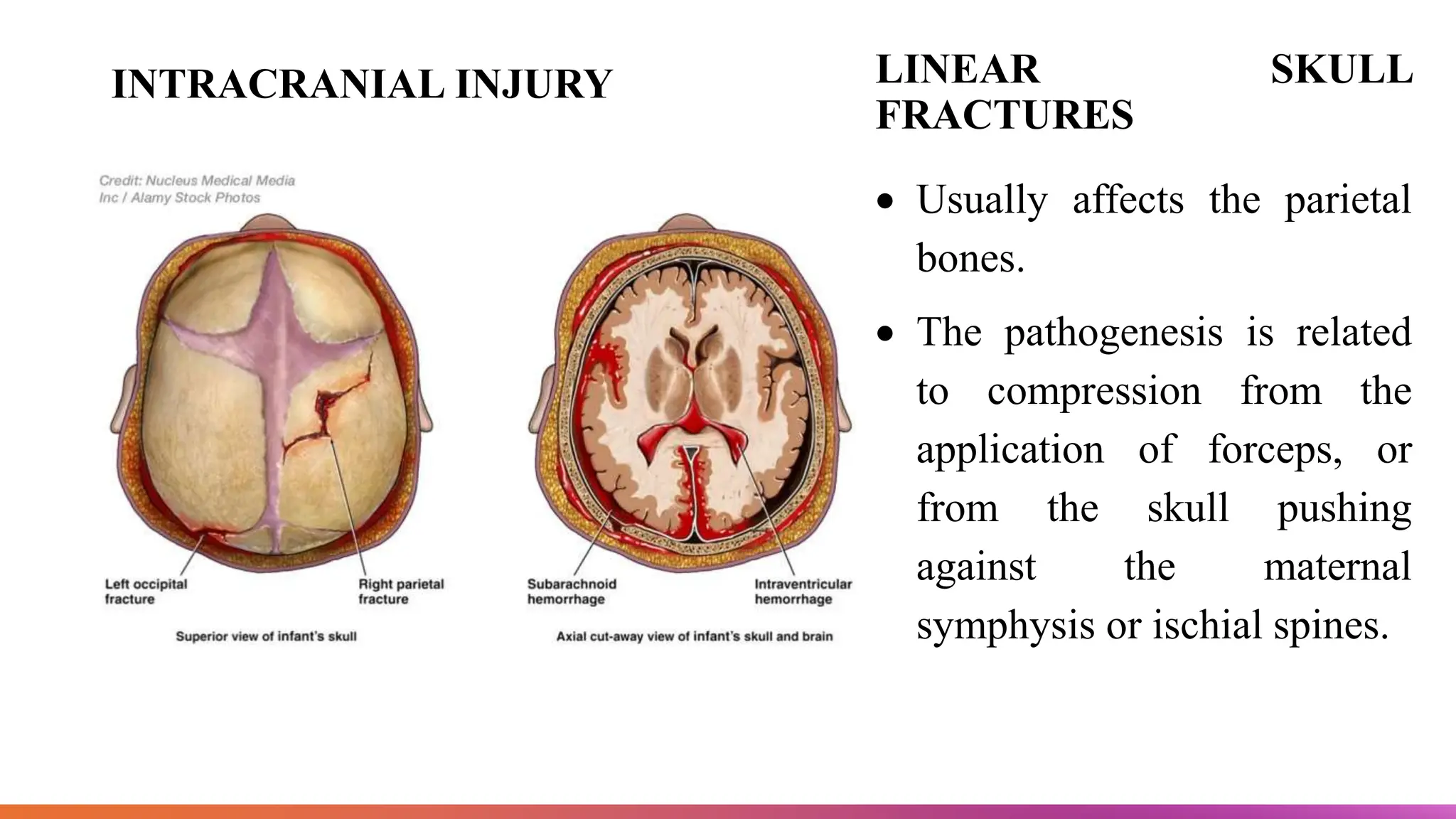
LINEAR SKULL
FRACTURES
 Usually affects the parietal
bones.
 The pathogenesis is related
to compression from the
application of forceps, or
from the skull pushing
against the maternal
symphysis or ischial spines.
INTRACRANIAL INJURY
DEPRESSED SKULL FRACTURES
NERVE INJURY
BRACHIAL PLEXUS INJURY the damage
occurs in the brachial nerve roots or in the trunk of
the brachial plexus due to stretching.
• Erb’s palsy this is the most common type
when upper cervical roots (C5, C6) are involved.
The paralysis causes the arm hangs limply
adduced and internally rotated with elbow
extended.
Klumpke’s Palsy
• It occurs due to damage of 7th and 8th
cervical or 1st thoracic nerve roots.
The feature are paralysis of the muscle
of the forearm with wrist drop a flaccid
digits. The arm flexed at the elbow, the
wrist extended with flaccid hands and
flexed fingers.
Facial palsy or Bell’s
Palsy.
• The facial nerve is injured by direct
pressure of forceps blades or
hemorrhage or edema around the nerve
during normal delivery. It may occur in
normal delivery with much pressure on
the ramus of mandible where the nerve
crosses superficially.
• The diagnostic features of facial palsy
are facial asymmetry, in ability to close
eye and absence of rooting reflex on
the affected side.
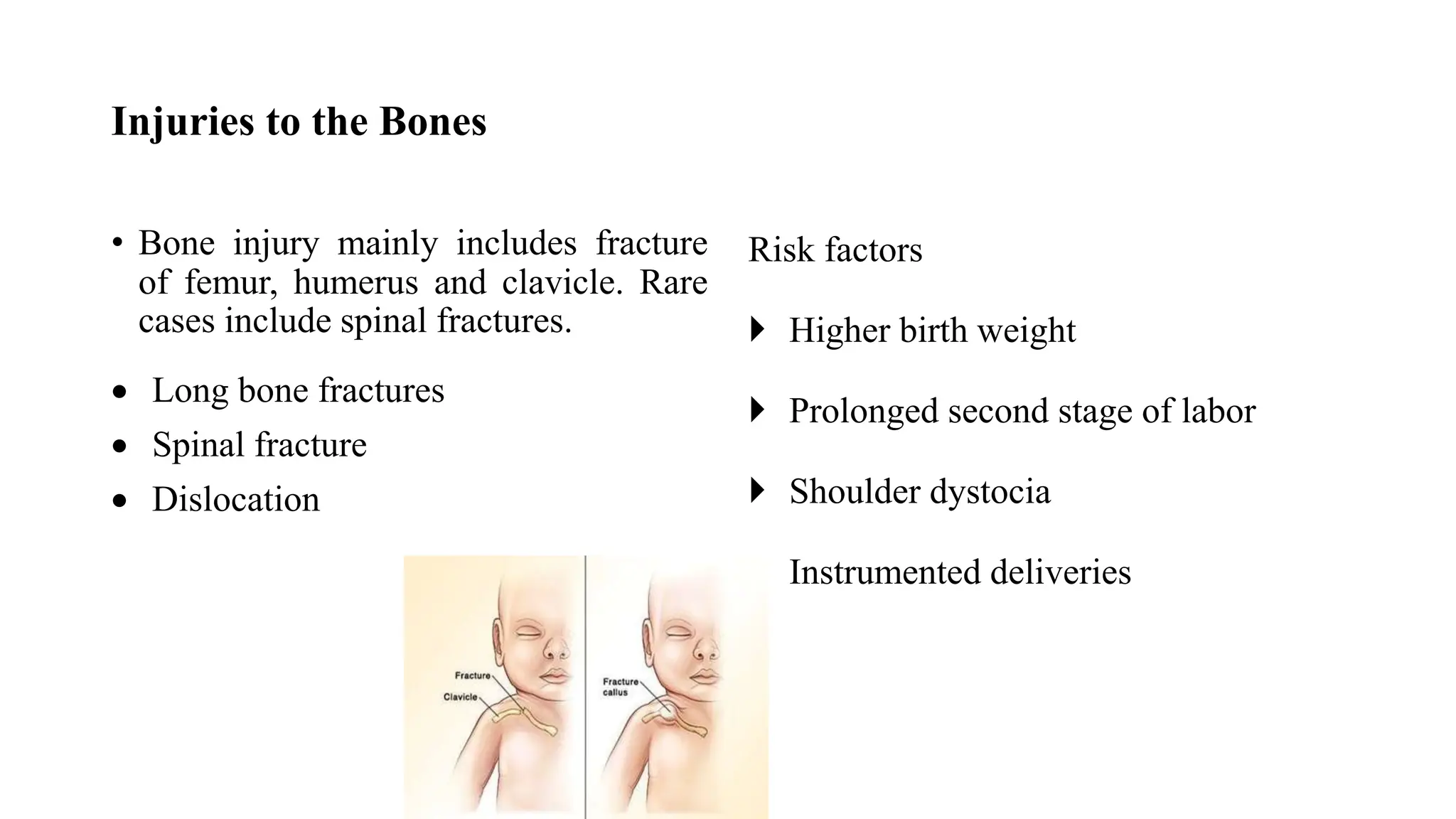
Injuries to the Bones
• Bone injury mainly includes fracture
of femur, humerus and clavicle. Rare
cases include spinal fractures.
 Long bone fractures
 Spinal fracture
 Dislocation
Risk factors
 Higher birth weight
 Prolonged second stage of labor
 Shoulder dystocia
 Instrumented deliveries
•
Injuries to the Muscle
• The sternomastoid muscles are commonly injured
in neonates due to difficult breech delivery, attempts
delivery following shoulder dystocia or excessive
lateral flexion of the neck in normal delivery.
• Injuries to the skin and subcutaneous tissue
 Superficial abrasions, petechiae and bruising may
be caused due to forceps delivery or prolonged
labor
 No specific treatment is required
 Condition resolves spontaneously within 2-3 days
 Antiseptics can be applied locally to prevent
infection
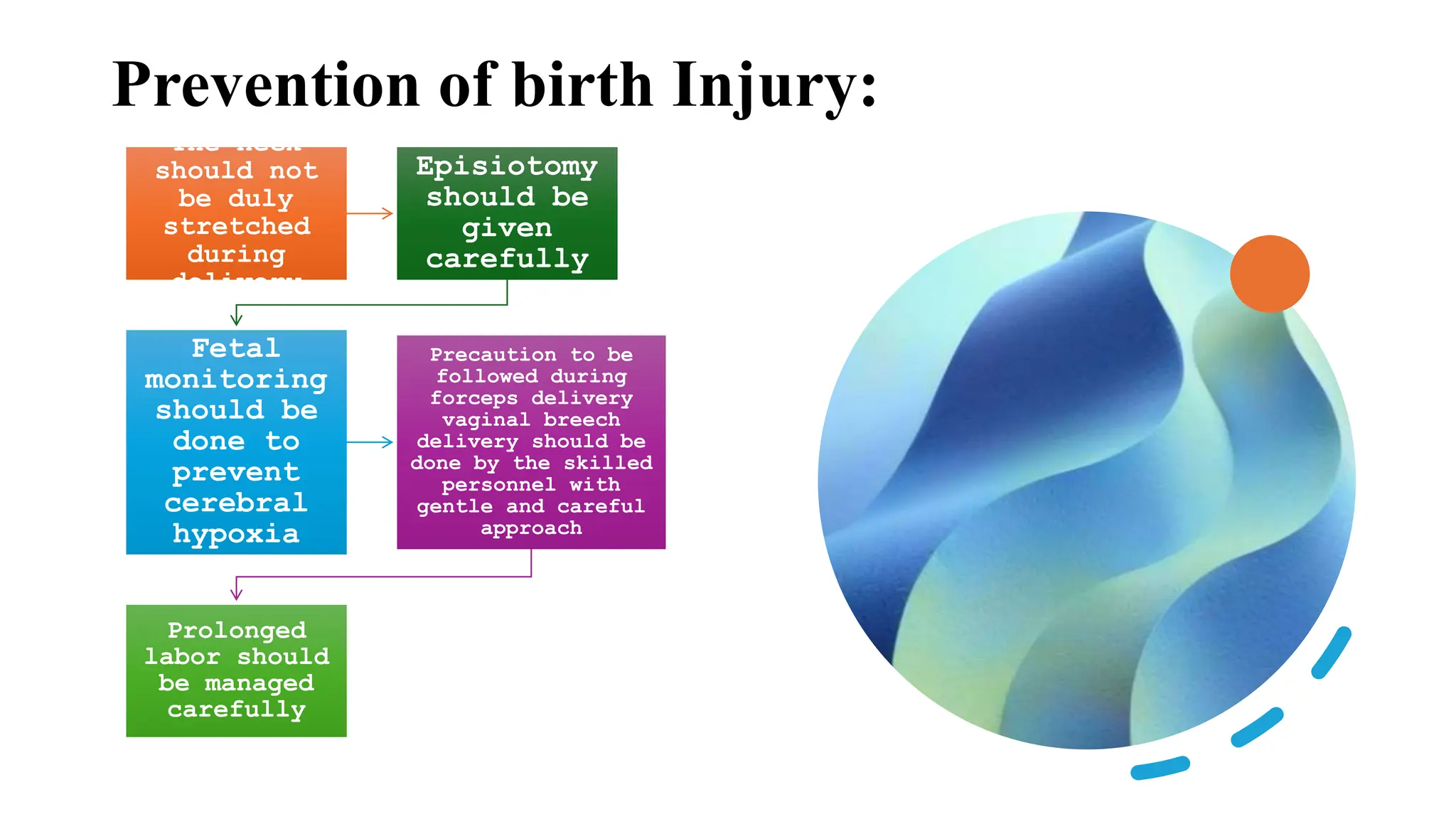
Prevention of birth Injury:
The neck
should not
be duly
stretched
during
delivery
Episiotomy
should be
given
carefully
Fetal
monitoring
should be
done to
prevent
cerebral
hypoxia
Precaution to be
followed during
forceps delivery
vaginal breech
delivery should be
done by the skilled
personnel with
gentle and careful
approach
Prolonged
labor should
be managed
carefully
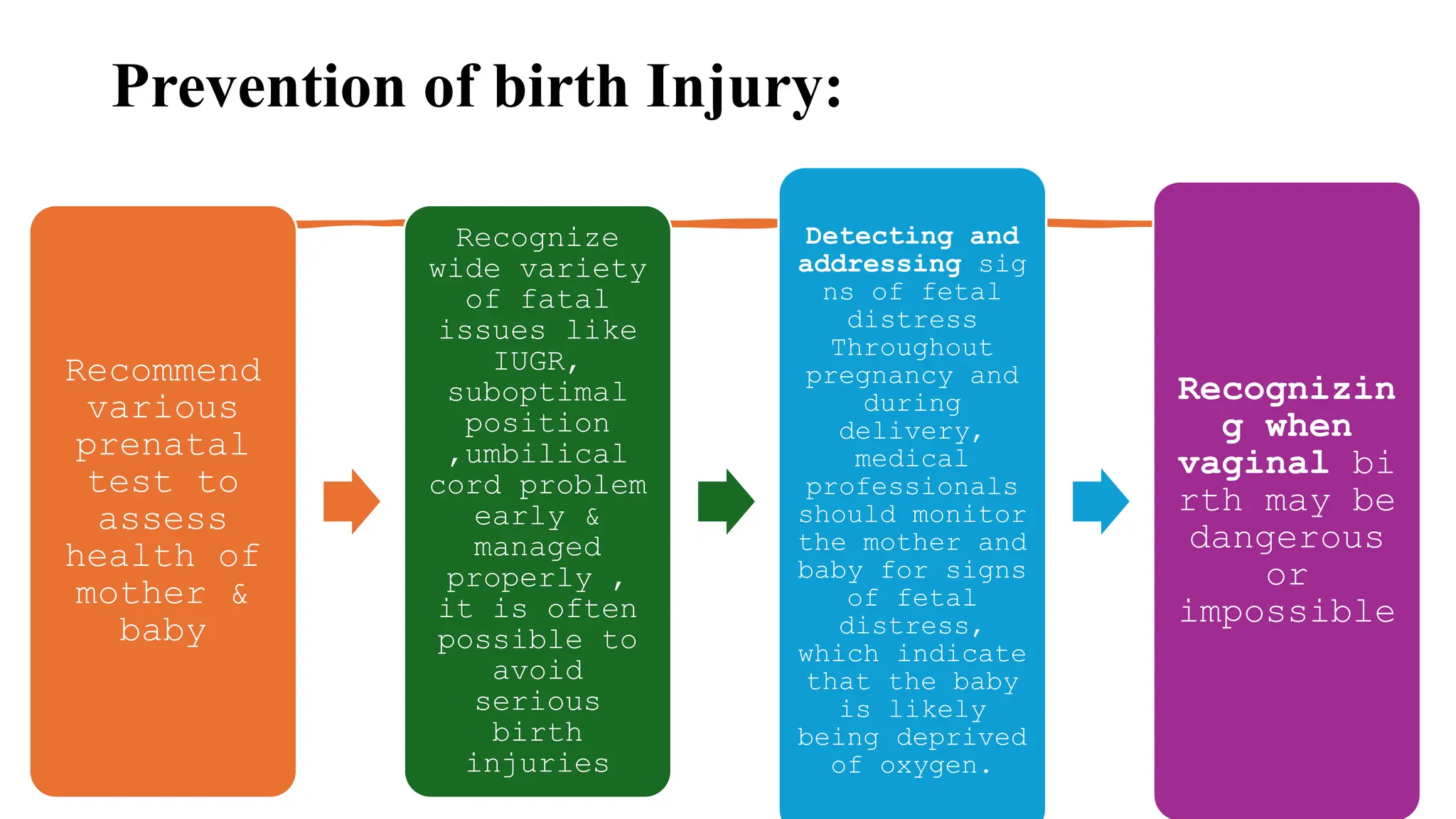
Prevention of birth Injury:
Recommend
various
prenatal
test to
assess
health of
mother &
baby
Recognize
wide variety
of fatal
issues like
IUGR,
suboptimal
position
,umbilical
cord problem
early &
managed
properly ,
it is often
possible to
avoid
serious
birth
injuries
Detecting and
addressing sig
ns of fetal
distress
Throughout
pregnancy and
during
delivery,
medical
professionals
should monitor
the mother and
baby for signs
of fetal
distress,
which indicate
that the baby
is likely
being deprived
of oxygen.
Recognizin
g when
vaginal bi
rth may be
dangerous
or
impossible
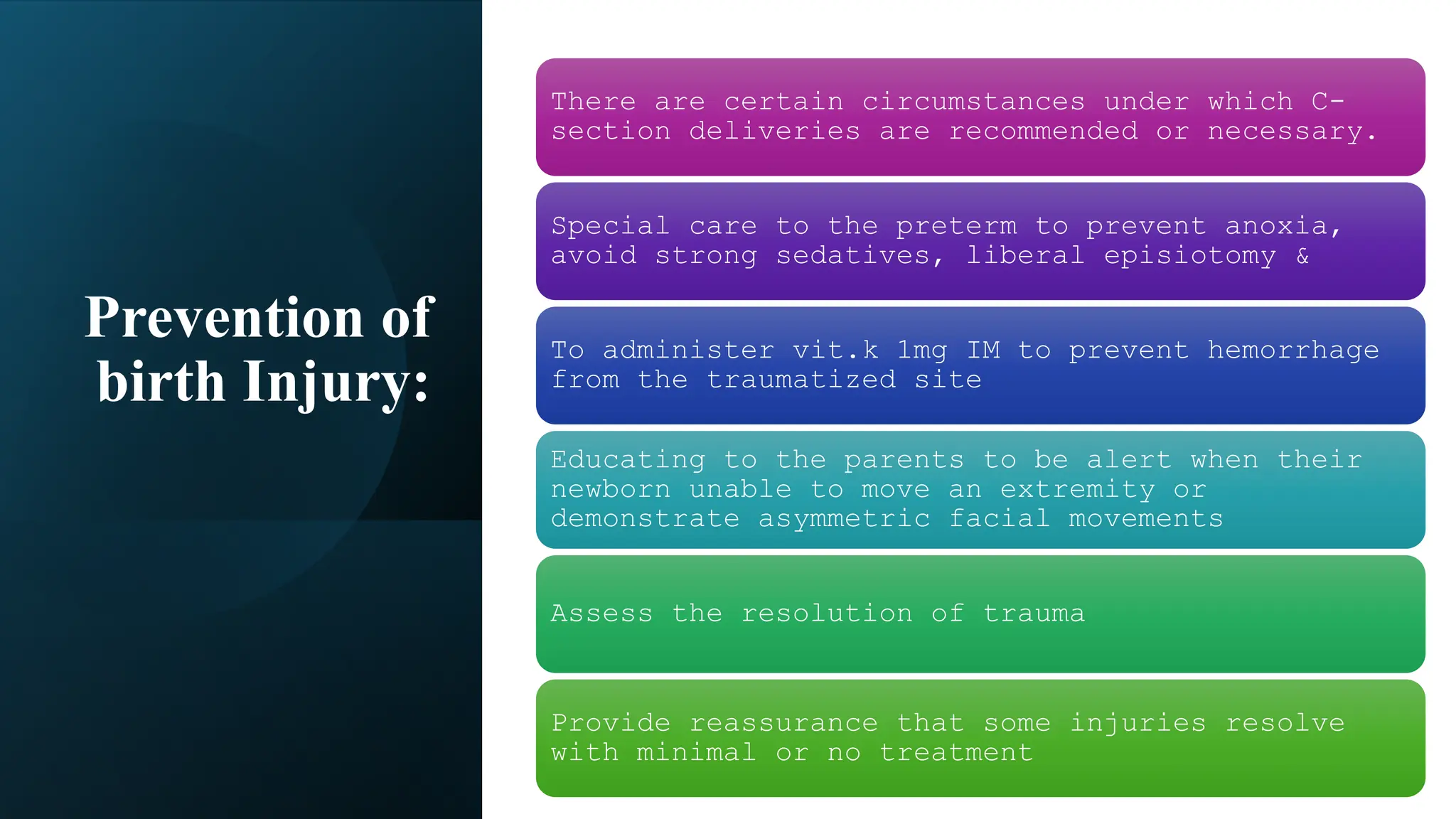
Prevention of
birth Injury:
There are certain circumstances under which C-
section deliveries are recommended or necessary.
Special care to the preterm to prevent anoxia,
avoid strong sedatives, liberal episiotomy &
To administer vit.k 1mg IM to prevent hemorrhage
from the traumatized site
Educating to the parents to be alert when their
newborn unable to move an extremity or
demonstrate asymmetric facial movements
Assess the resolution of trauma
Provide reassurance that some injuries resolve
with minimal or no treatment

BIRTH INJURY.pptx

  • 1.
  • 2.
    Birth Injuries • Birthinjury is an impairment of the infant’s body function or structure due to adverse influences that occur at birth. • Birth injury refers to damage or injury to the child before, during, or just after the birthing process. • Birth injuries are physical injuries experienced during childbirth and can affect either the mother or the baby. •
  • 3.
    RISK FACTORS • Primiparity (awoman is bearing a child for the first time) and Small maternal stature • Maternal pelvic anomalies • Prolonged or unusually rapid labor • Oligohydramnios ( refers to amniotic fluid volume that is less than the minimum expected for gestational age) • Malpresentation of the fetus • Use of mid forceps or vaccum extraction • Versions and extractions • Very low birth weight or extreme prematurity • Fetal macrosomia • Fetal anomalies •
  • 4.
    TYPES OF BIRTH INJURIES •Head and neck injuries • Nerve injury • Facial injuries • Fractures • Intra-abdominal injury • Soft tissue injuries
  • 5.
  • 6.
    CAPUT SUCCEDANEUM A caput succedaneumis infiltration of the serosanguinous fluid (contains or relates to both blood and the liquid part of blood (serum)) by the pressure of girdle of contact, i.e the cervix, bony pelvis or vulval ring. It presents as a soft tissue swelling with purpura and ecchymosis over
  • 7.
    •CEPHALHEMATOMA A cephalhematoma isa collection of the blood in between the periosteum and the flat bone of the skull. It is caused by rupture of vessels beneath the periosteum.
  • 8.
    SUBGALEAL HEMORRHAGE A subgaleal hemorrhageis bleeding between the galea aponeurosis of the scalp and the periosteum. Hemorrhage occurs into the loose connective tissue within the subgaleal space and can cause hypovolaemia.
  • 9.
    LINEAR SKULL FRACTURES  Usuallyaffects the parietal bones.  The pathogenesis is related to compression from the application of forceps, or from the skull pushing against the maternal symphysis or ischial spines. INTRACRANIAL INJURY
  • 10.
  • 11.
    NERVE INJURY BRACHIAL PLEXUSINJURY the damage occurs in the brachial nerve roots or in the trunk of the brachial plexus due to stretching. • Erb’s palsy this is the most common type when upper cervical roots (C5, C6) are involved. The paralysis causes the arm hangs limply adduced and internally rotated with elbow extended.
  • 12.
    Klumpke’s Palsy • Itoccurs due to damage of 7th and 8th cervical or 1st thoracic nerve roots. The feature are paralysis of the muscle of the forearm with wrist drop a flaccid digits. The arm flexed at the elbow, the wrist extended with flaccid hands and flexed fingers.
  • 13.
    Facial palsy orBell’s Palsy. • The facial nerve is injured by direct pressure of forceps blades or hemorrhage or edema around the nerve during normal delivery. It may occur in normal delivery with much pressure on the ramus of mandible where the nerve crosses superficially. • The diagnostic features of facial palsy are facial asymmetry, in ability to close eye and absence of rooting reflex on the affected side.
  • 14.
    Injuries to theBones • Bone injury mainly includes fracture of femur, humerus and clavicle. Rare cases include spinal fractures.  Long bone fractures  Spinal fracture  Dislocation Risk factors  Higher birth weight  Prolonged second stage of labor  Shoulder dystocia  Instrumented deliveries •
  • 15.
    Injuries to theMuscle • The sternomastoid muscles are commonly injured in neonates due to difficult breech delivery, attempts delivery following shoulder dystocia or excessive lateral flexion of the neck in normal delivery. • Injuries to the skin and subcutaneous tissue  Superficial abrasions, petechiae and bruising may be caused due to forceps delivery or prolonged labor  No specific treatment is required  Condition resolves spontaneously within 2-3 days  Antiseptics can be applied locally to prevent infection
  • 16.
    Prevention of birthInjury: The neck should not be duly stretched during delivery Episiotomy should be given carefully Fetal monitoring should be done to prevent cerebral hypoxia Precaution to be followed during forceps delivery vaginal breech delivery should be done by the skilled personnel with gentle and careful approach Prolonged labor should be managed carefully
  • 17.
    Prevention of birthInjury: Recommend various prenatal test to assess health of mother & baby Recognize wide variety of fatal issues like IUGR, suboptimal position ,umbilical cord problem early & managed properly , it is often possible to avoid serious birth injuries Detecting and addressing sig ns of fetal distress Throughout pregnancy and during delivery, medical professionals should monitor the mother and baby for signs of fetal distress, which indicate that the baby is likely being deprived of oxygen. Recognizin g when vaginal bi rth may be dangerous or impossible
  • 18.
    Prevention of birth Injury: Thereare certain circumstances under which C- section deliveries are recommended or necessary. Special care to the preterm to prevent anoxia, avoid strong sedatives, liberal episiotomy & To administer vit.k 1mg IM to prevent hemorrhage from the traumatized site Educating to the parents to be alert when their newborn unable to move an extremity or demonstrate asymmetric facial movements Assess the resolution of trauma Provide reassurance that some injuries resolve with minimal or no treatment