Biological Control of
Agriculture Insect Pests
PRESENTED BY:
UMAR HAYAT
Contents
Introduction
Agent for biocontrol?
Types of biocontrol
Safety concerns
Advantages & dis-advantages
Conclusions
Introduction
Pest
 A pest is any animal or plant which has a harmful effect on humans, their
food or their living conditions.
 How damage crops?
 First is direct injury by the feeding
 The second type is indirect by transmits an infection into a crop.
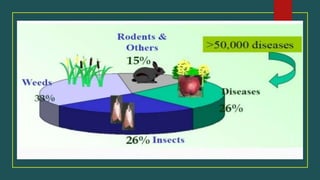
 About 25-30 % of loss in yield is due to pest.
Cont.
Drawbacks of chemical pesticides
 Are non-specific
 Long lasting effect
 Pesticide resistance
 Health effect on human and animals
 Environmental pollution
 On other hand Biocontrol is safe to plants, animals, humans and the
environment.
Cont.
 What is biocontrol?
The use of living organisms to suppress the population of a specific pest
organism, making it less abundant or less damaging.
 How control?
• Direct killing
• Competition
Agents for biocontrol
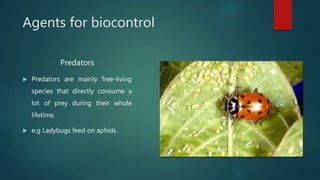
Predators
 Predators are mainly free-living
species that directly consume a
lot of prey during their whole
lifetime.
 e.g Ladybugs feed on aphids.
Cont.
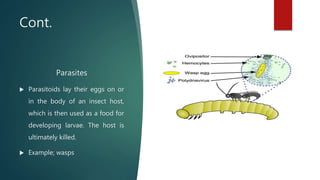
Parasites
 Parasitoids lay their eggs on or
in the body of an insect host,
which is then used as a food for
developing larvae. The host is
ultimately killed.
 Example; wasps
Cont.
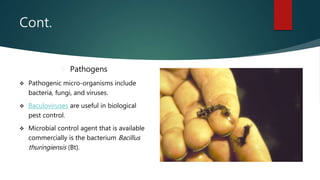
 Pathogens
 Pathogenic micro-organisms include
bacteria, fungi, and viruses.
 Baculoviruses are useful in biological
pest control.
 Microbial control agent that is available
commercially is the bacterium Bacillus
thuringiensis (Bt).
Cont.
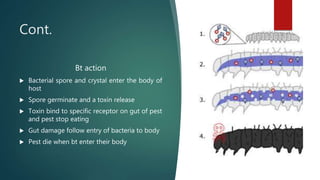
Bt action
 Bacterial spore and crystal enter the body of
host
 Spore germinate and a toxin release
 Toxin bind to specific receptor on gut of pest
and pest stop eating
 Gut damage follow entry of bacteria to body
 Pest die when bt enter their body
Cont.
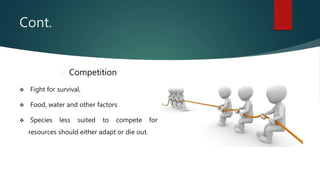
 Competition
 Fight for survival,
 Food, water and other factors
 Species less suited to compete for
resources should either adapt or die out.
Types of biocontrol
Importation:
 Importation involves the introduction of a pest's natural enemies to a new
locale where they do not occur naturally.
 Classical biological control is long lasting
 Poor adaptation to new environment.
 A beetle was imported from Australia to California in the 19th century.
Cont.
Augmentation
 Here large population of natural enemies are administered for quick pest
control
 Augmentation involves the supplemental release of natural enemies,
boosting the naturally occurring population.
 Fast-acting, short-term control.
Cont.
Conservation
 Conservation of existing natural enemies.
 Enhance conditions for existing natural enemy survival and reproduction.
 Natural enemies are already adapted to the habitat and to the target pest,
and their conservation can be simple and cost-effective.
 No need to purchase the organisms so, cost effective.
Safety concerns
 There are two main areas of safety issues that must be considered.
 First, the introduction of the biocontrol agent have adverse effects on non-
target organisms?
 The second concern is the strength and duration of the biocontrol agent
on the environment.
 Therefore the Biocontrol agents must be approved before they are
imported, marketed and applied.
Information required for safety
 A clear host range assessment must be undertaken.
 Understanding of the similarities between region of bioagent collection
and release.
 Knowledge of dispersal mechanisms of biocontrol agent.
 Potential direct or indirect effects on non-target organism.
Advantages
 Biocontrol agents are usually very specific.
 Absence of toxic effect to human or environment.
 No development of resistance in pest.
 Require little human effort, biological agents spread on their own.
 Less expensive compare to other control methods.
Dis-advantages
 Control is slow
 Possibility that the predator will switch to a different target - they might
decide eating your crops instead of the insects.
 Not complete wipe out the harmful pests but only reduce number
 While it is cheap in the long run, but A lot of money goes into developing
a successful system.
 Depend upon environmental conditions.
Cont.
 A famous example of this effect is the introduction of the cane toad into
Australia in 1935.
 The goal was for the toads to catch and eat the beetles that were attacking
the sugar cane crops.
 Not only was this plan unsuccessful but the cane toad has now become an
invasive species.
Conclusions
 Barrier to biocontrol is the necessity of management and planning.
 For optimum benefit, the user must understand the biology of both the
target pests and their natural enemies.
 The risks associated with biocontrol to human/animal health are very low.
 Agents main use crop as food source.
 There is no example of significant damage.
Thank you
Any question ?

Biocontrol

  • 1.
    Biological Control of AgricultureInsect Pests PRESENTED BY: UMAR HAYAT
  • 2.
    Contents Introduction Agent for biocontrol? Typesof biocontrol Safety concerns Advantages & dis-advantages Conclusions
  • 3.
    Introduction Pest  A pestis any animal or plant which has a harmful effect on humans, their food or their living conditions.  How damage crops?  First is direct injury by the feeding  The second type is indirect by transmits an infection into a crop.  About 25-30 % of loss in yield is due to pest.
  • 5.
    Cont. Drawbacks of chemicalpesticides  Are non-specific  Long lasting effect  Pesticide resistance  Health effect on human and animals  Environmental pollution  On other hand Biocontrol is safe to plants, animals, humans and the environment.
  • 7.
    Cont.  What isbiocontrol? The use of living organisms to suppress the population of a specific pest organism, making it less abundant or less damaging.  How control? • Direct killing • Competition
  • 8.
    Agents for biocontrol Predators Predators are mainly free-living species that directly consume a lot of prey during their whole lifetime.  e.g Ladybugs feed on aphids.
  • 9.
    Cont. Parasites  Parasitoids laytheir eggs on or in the body of an insect host, which is then used as a food for developing larvae. The host is ultimately killed.  Example; wasps
  • 10.
    Cont.  Pathogens  Pathogenicmicro-organisms include bacteria, fungi, and viruses.  Baculoviruses are useful in biological pest control.  Microbial control agent that is available commercially is the bacterium Bacillus thuringiensis (Bt).
  • 11.
    Cont. Bt action  Bacterialspore and crystal enter the body of host  Spore germinate and a toxin release  Toxin bind to specific receptor on gut of pest and pest stop eating  Gut damage follow entry of bacteria to body  Pest die when bt enter their body
  • 12.
    Cont.  Competition  Fightfor survival,  Food, water and other factors  Species less suited to compete for resources should either adapt or die out.
  • 13.
    Types of biocontrol Importation: Importation involves the introduction of a pest's natural enemies to a new locale where they do not occur naturally.  Classical biological control is long lasting  Poor adaptation to new environment.  A beetle was imported from Australia to California in the 19th century.
  • 14.
    Cont. Augmentation  Here largepopulation of natural enemies are administered for quick pest control  Augmentation involves the supplemental release of natural enemies, boosting the naturally occurring population.  Fast-acting, short-term control.
  • 15.
    Cont. Conservation  Conservation ofexisting natural enemies.  Enhance conditions for existing natural enemy survival and reproduction.  Natural enemies are already adapted to the habitat and to the target pest, and their conservation can be simple and cost-effective.  No need to purchase the organisms so, cost effective.
  • 16.
    Safety concerns  Thereare two main areas of safety issues that must be considered.  First, the introduction of the biocontrol agent have adverse effects on non- target organisms?  The second concern is the strength and duration of the biocontrol agent on the environment.  Therefore the Biocontrol agents must be approved before they are imported, marketed and applied.
  • 17.
    Information required forsafety  A clear host range assessment must be undertaken.  Understanding of the similarities between region of bioagent collection and release.  Knowledge of dispersal mechanisms of biocontrol agent.  Potential direct or indirect effects on non-target organism.
  • 18.
    Advantages  Biocontrol agentsare usually very specific.  Absence of toxic effect to human or environment.  No development of resistance in pest.  Require little human effort, biological agents spread on their own.  Less expensive compare to other control methods.
  • 19.
    Dis-advantages  Control isslow  Possibility that the predator will switch to a different target - they might decide eating your crops instead of the insects.  Not complete wipe out the harmful pests but only reduce number  While it is cheap in the long run, but A lot of money goes into developing a successful system.  Depend upon environmental conditions.
  • 20.
    Cont.  A famousexample of this effect is the introduction of the cane toad into Australia in 1935.  The goal was for the toads to catch and eat the beetles that were attacking the sugar cane crops.  Not only was this plan unsuccessful but the cane toad has now become an invasive species.
  • 21.
    Conclusions  Barrier tobiocontrol is the necessity of management and planning.  For optimum benefit, the user must understand the biology of both the target pests and their natural enemies.  The risks associated with biocontrol to human/animal health are very low.  Agents main use crop as food source.  There is no example of significant damage.
  • 22.
  • 23.