BY-ITIKA SAXENA
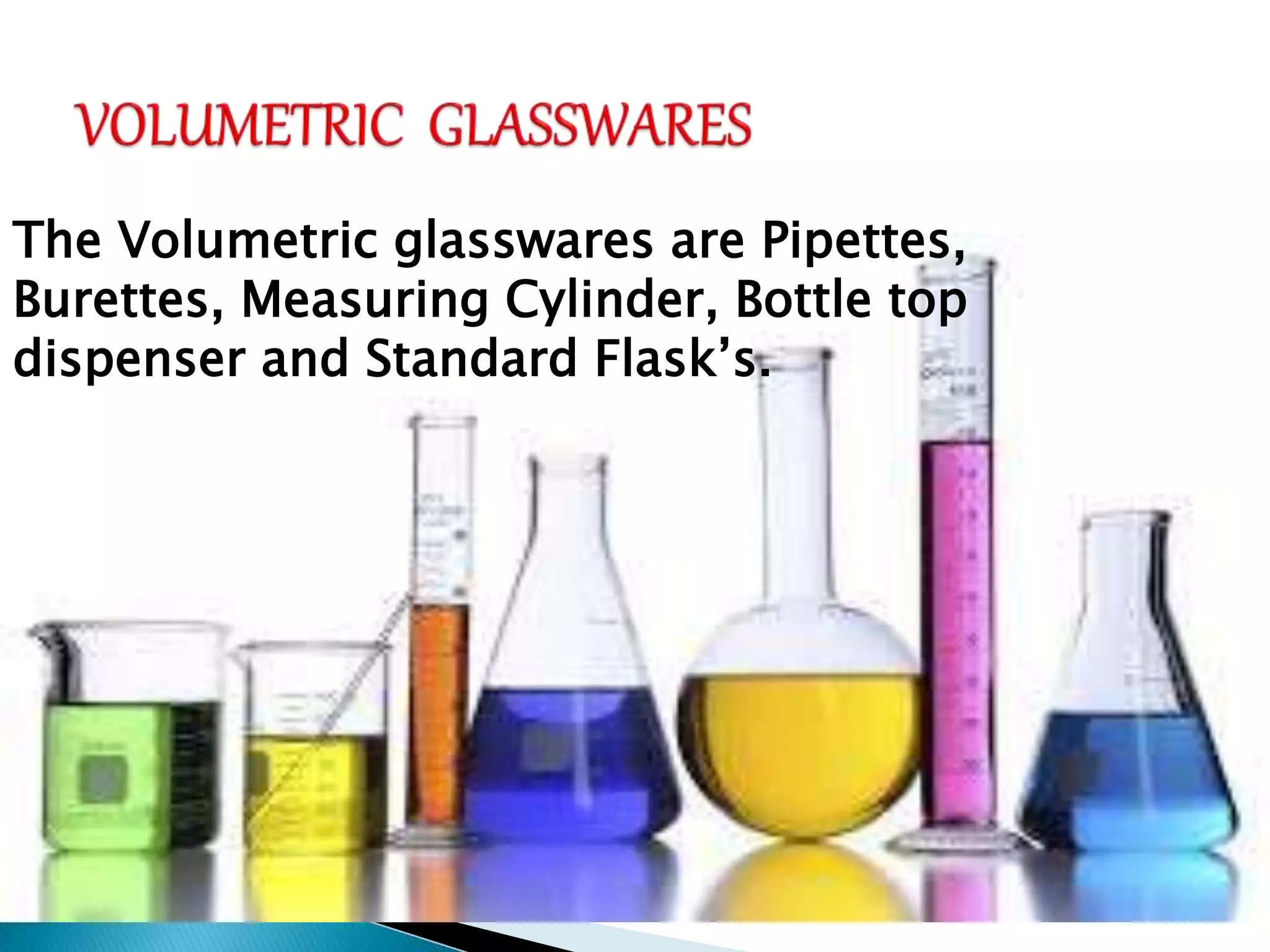
The Volumetric glasswares are Pipettes,
Burettes, Measuring Cylinder, Bottle top
dispenser and Standard Flask’s.
Commonly used for
the preparation of
reagents. This are
used to measure
greater volumes
like 50 mL, 100 mL,
500 mL, 1L, 2 L etc.
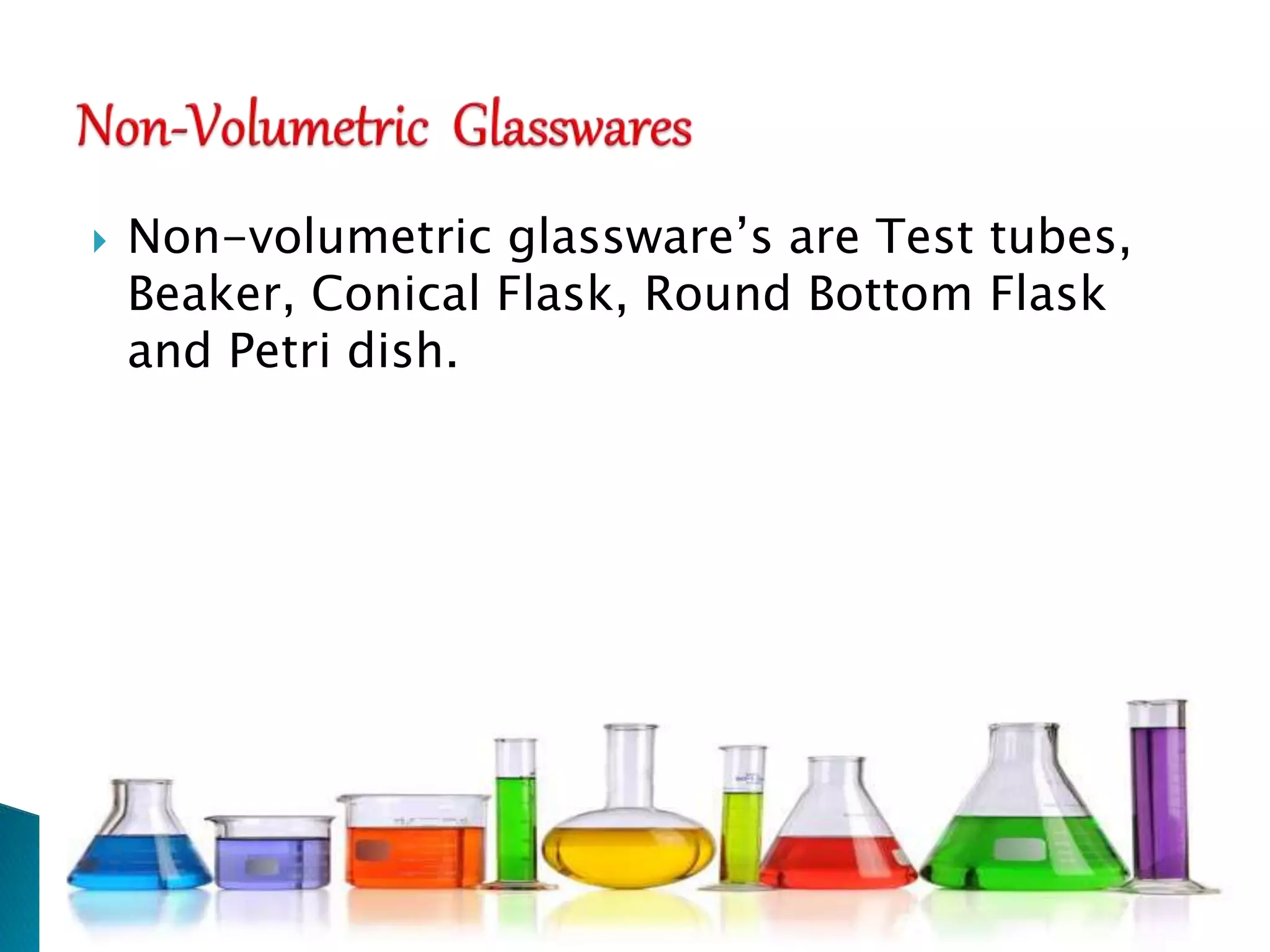
 Non-volumetric glassware’s are Test tubes,
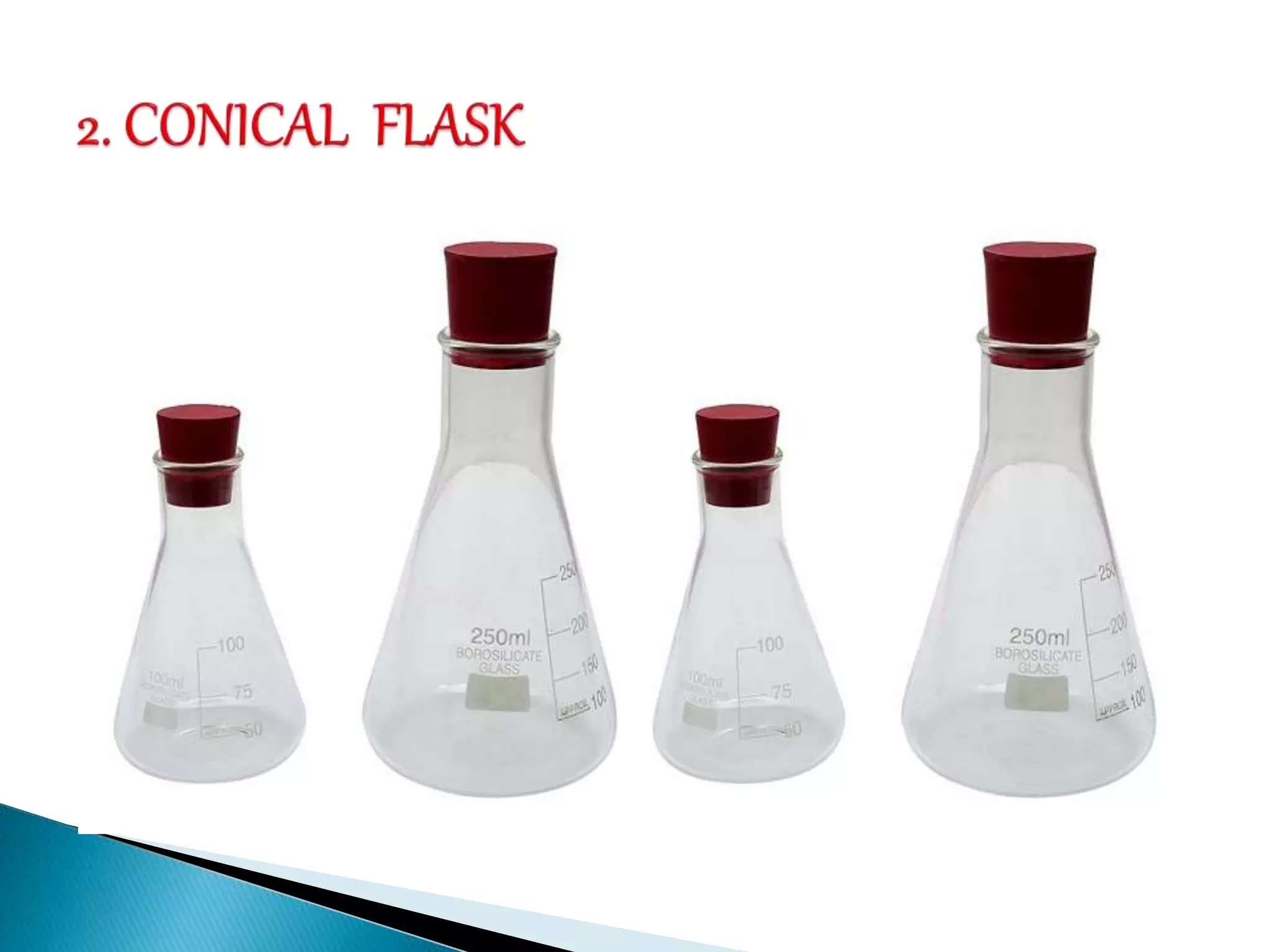
Beaker, Conical Flask, Round Bottom Flask
and Petri dish.
 Instrument is used to measure specific
gravity.
 It is calibrated for 20 ̊C temperature.
 For every 3 ̊C rise in temperature,
0.001 is added to reading.
 For every 3 ̊C fall in temperature,
0.001 is substracted to reading.
 No preservative/anticoagulant.
 Uses: usually for serum chemistry testing,
serology and blood bank testing
EDTA (Ethylene Diamine Tetra-Acetate) liquid:
EDTA acts as an anticoagulant, binding
the calcium ions.
These tubes are used primarily in
haematology procedures, assessing
complete blood count, bone marrow
Specimens, HbA1C ..
SST (Serum Separator Tube)
Contains a gel at the bottom to separate blood
cells from serum on centrifugation.
Uses: LFT, CRP, Urea, Electrolyte,
Immunology, and Serology.
 Contains two main agents, Sodium fluoride
acts as an antiglycolytic agent to ensure that
no further glucose breakdown occurs within
the sample after it is taken. Potassium
oxalate acts an anticoagulant.
Common Tests—
 Glucose—this can be fasting or non fasting,
or part of glucose tolerance test (GTT)
 Lactate
 Contains Anticoagulant Sodium citrate
 Uses:
Coagulation(clotting) studies and
platelet function.
 Sodium Heparin or Lithium Heparin
anticoagulant or ammonium heparin . Acts as
an Anticoagulant by inhibiting thrombin
formation.
 Uses: for collection of heparinized
plasma or whole blood for special
tests.
THANK YOU

BIOCHEMISTRY LAB INSTRUMENTS - Copy.pptx

  • 1.
  • 2.
    The Volumetric glasswaresare Pipettes, Burettes, Measuring Cylinder, Bottle top dispenser and Standard Flask’s.
  • 4.
    Commonly used for thepreparation of reagents. This are used to measure greater volumes like 50 mL, 100 mL, 500 mL, 1L, 2 L etc.
  • 5.
     Non-volumetric glassware’sare Test tubes, Beaker, Conical Flask, Round Bottom Flask and Petri dish.
  • 8.
     Instrument isused to measure specific gravity.  It is calibrated for 20 ̊C temperature.  For every 3 ̊C rise in temperature, 0.001 is added to reading.  For every 3 ̊C fall in temperature, 0.001 is substracted to reading.
  • 10.
     No preservative/anticoagulant. Uses: usually for serum chemistry testing, serology and blood bank testing
  • 11.
    EDTA (Ethylene DiamineTetra-Acetate) liquid: EDTA acts as an anticoagulant, binding the calcium ions. These tubes are used primarily in haematology procedures, assessing complete blood count, bone marrow Specimens, HbA1C ..
  • 12.
    SST (Serum SeparatorTube) Contains a gel at the bottom to separate blood cells from serum on centrifugation. Uses: LFT, CRP, Urea, Electrolyte, Immunology, and Serology.
  • 13.
     Contains twomain agents, Sodium fluoride acts as an antiglycolytic agent to ensure that no further glucose breakdown occurs within the sample after it is taken. Potassium oxalate acts an anticoagulant. Common Tests—  Glucose—this can be fasting or non fasting, or part of glucose tolerance test (GTT)  Lactate
  • 14.
     Contains AnticoagulantSodium citrate  Uses: Coagulation(clotting) studies and platelet function.
  • 15.
     Sodium Heparinor Lithium Heparin anticoagulant or ammonium heparin . Acts as an Anticoagulant by inhibiting thrombin formation.  Uses: for collection of heparinized plasma or whole blood for special tests.
  • 16.