INSTRUMENTS IN
PATHOLOGY
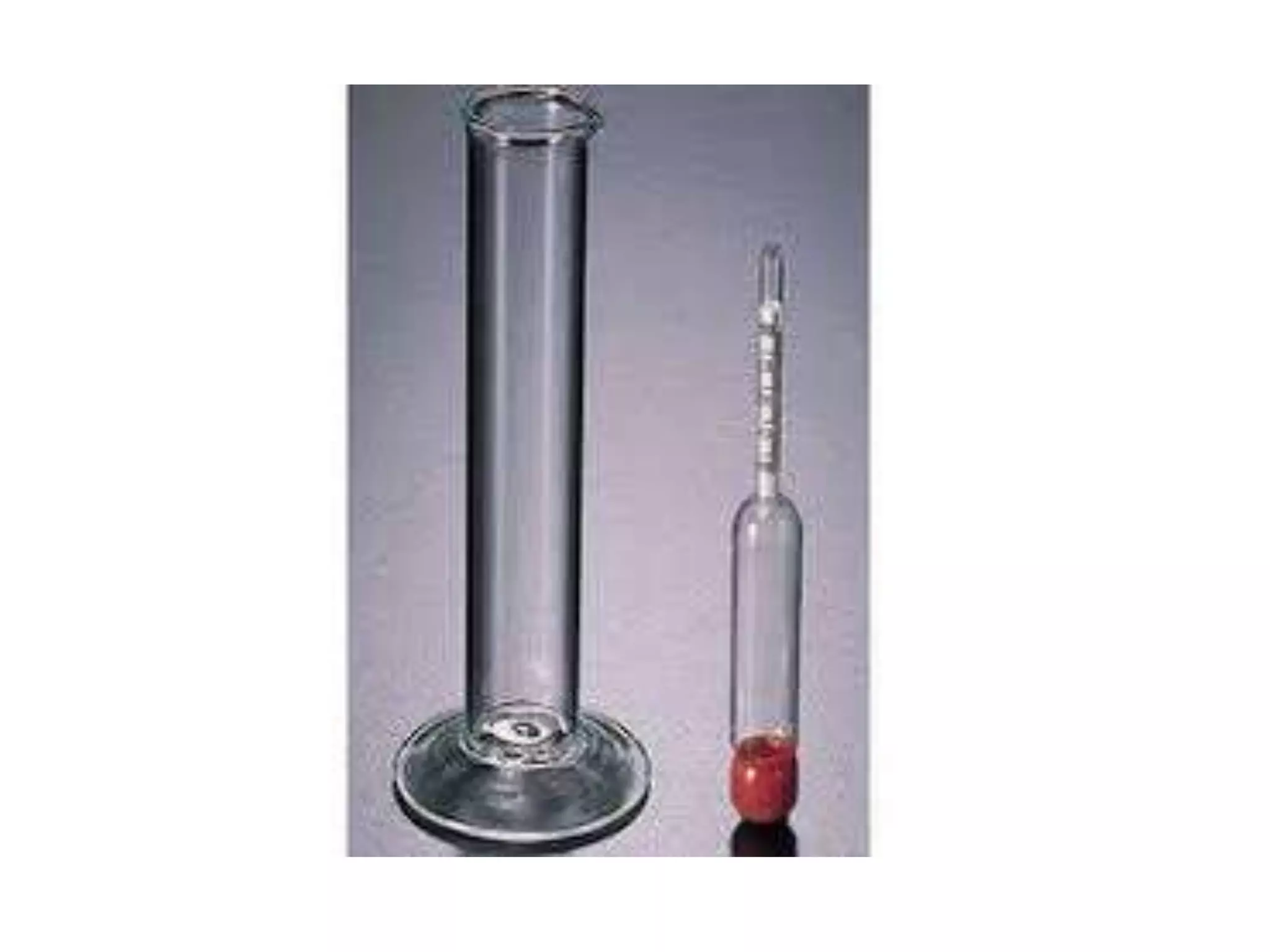
Urinometer
• It is used to measure the specific gravity of urine.
• Enough amount of urine is taken in the container.
• The urinometer is then allowed to float freely and then
specific gravity of urine is measured by reading graduation
on stem.
• Normal specific gravity 1.016 -1.022.
• Other methods of specific gravity-
• Falling drop method using chloroform and benzene
• Refractometer
• Multisticks
• Correction of specific gravity has to be done in
temperature, glucose and protein in urine.
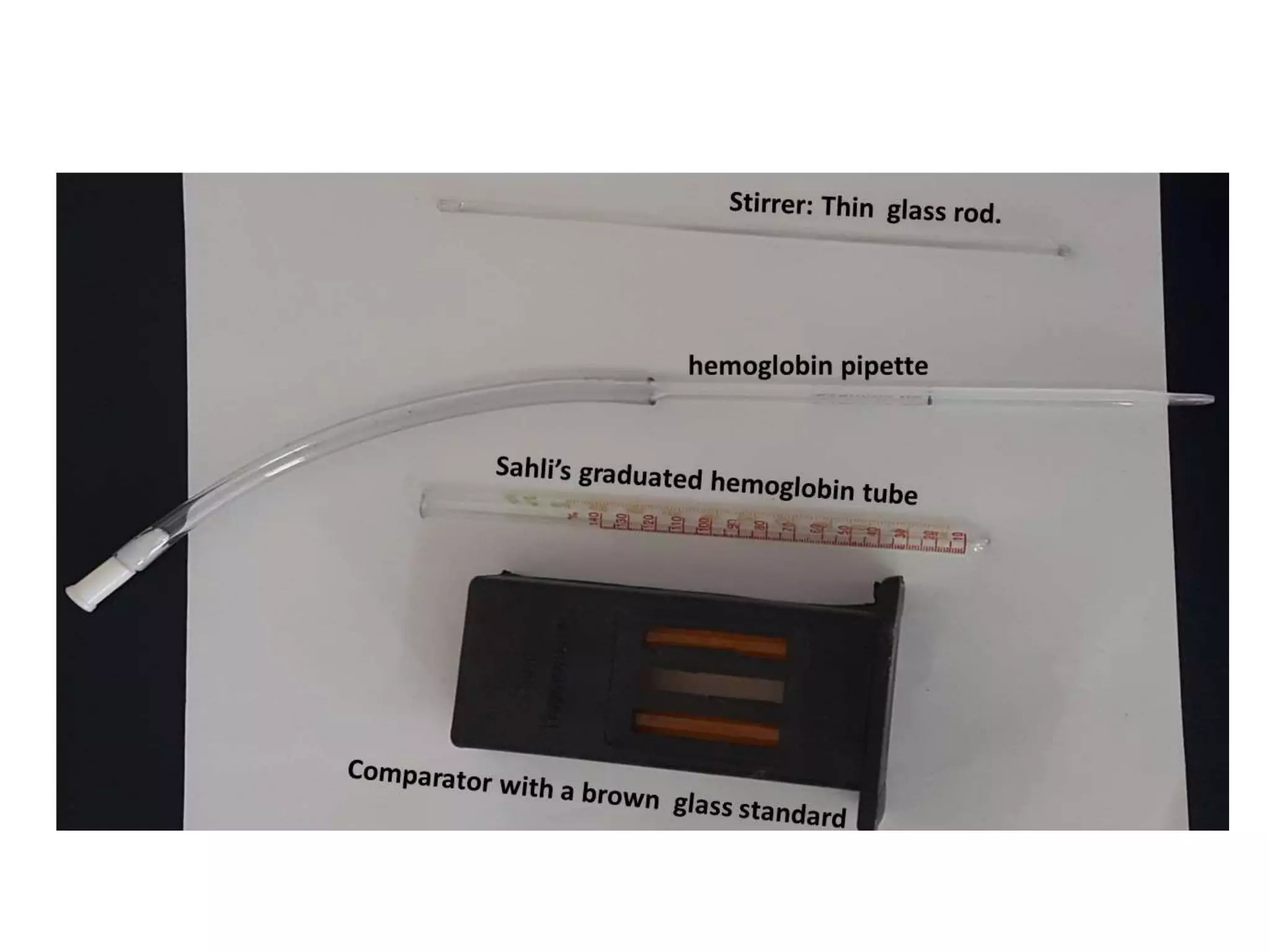
SAHLI’S
HAEMOGLOBINOMETER
• Uses: Estimation of Haemoglobin by Sahli’s Acid
Haematin Method.
Hb count by Sahli's haemoglobinometer (acid haematin method):
Principle: Anticoagulated blood is added to the 0.1 N HCl and kept for 5-7 minutes
to form acid haematin. The color of this acid haematin should be matched with the
solution, present in the calibration tube. Distilled water is added to the acid haematin
until the color matches and the final reading is directly noted from the graduation in
the calibration tube. [Please note that 100 percent on the scale corresponds to 14.5gm
% to 15gm
Requirements: Sahli's haemoglobinometer, Hydrochloric acid, distilled water.
Procedure: Place N/10 HCL in diluting tube up to the mark 20. Take blood in the
haemoglobin pipette up to 20-cubic-mm-mark and blow it into diluting tube and rinse
well. After 10 minutes add distilled water in drops and mix the tube until it has
exactly the same color as the comparison standards. Note the reading, which indicates
the percentage o
Result: The Hb estimation of the given sample is ..... g/100 ml of blood/.....g/dl of
blood/.....G%.
Precautions: i. Pipetting of blood should be done cautiously ii. Mix the blood
properly with HCl by using stirrer iii. Match the color cautiously.
ESBACH’S ALBUMINOMETER
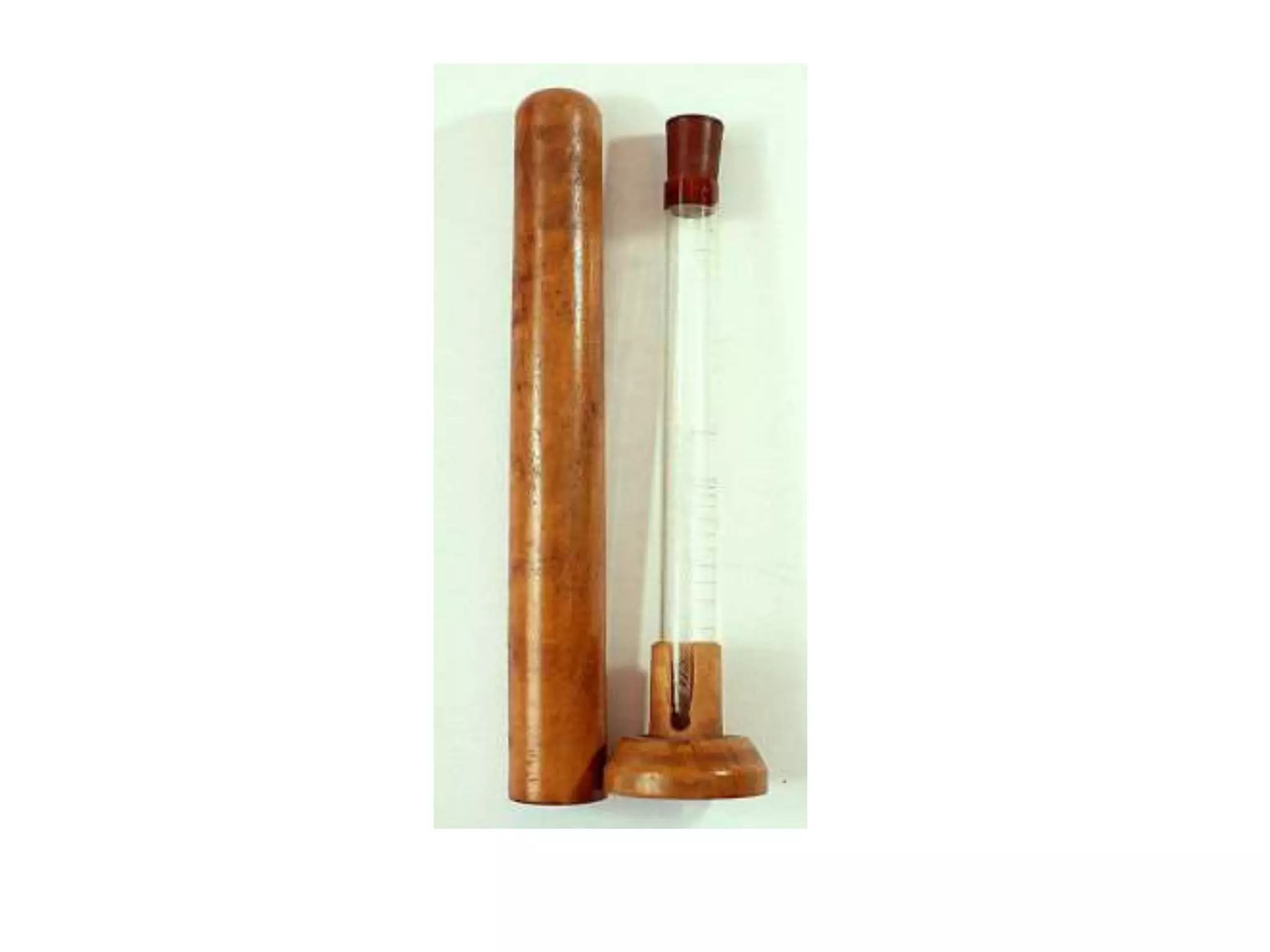
•Esbach's Albuminometer; for testing the albumen in urine.
•Esbach's albumenometer used a simple chemical test to
measure the amount of the protein albumen in urine.
•The instrument is made of glass and wood. It is contained
in a wooden case.
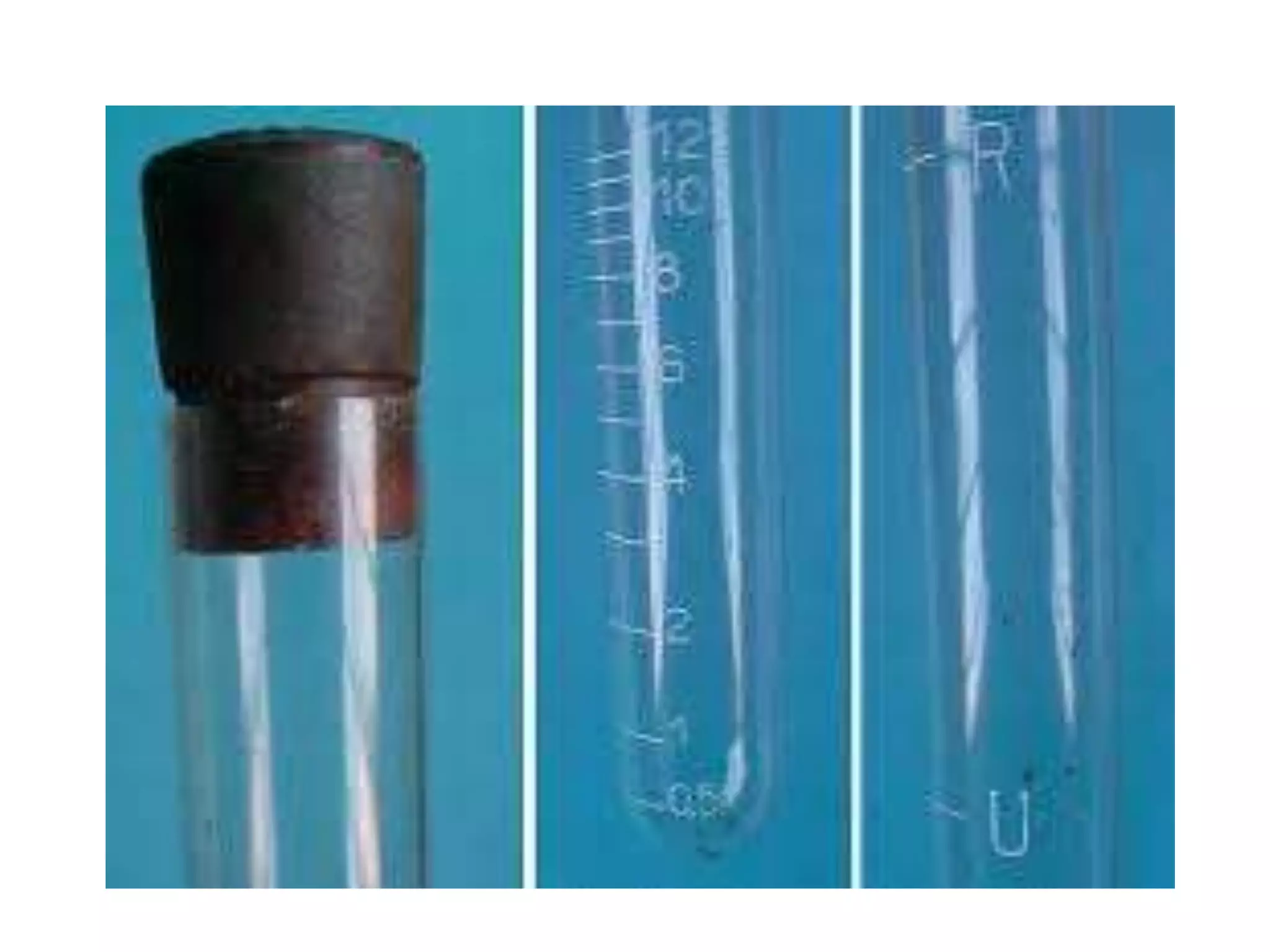
•Urine was filled to the ‘U’ mark and a chemical reagent to
the ‘R’ mark.
•The substance stood for 24 hours before the protein levels
were assessed.
•Unusual levels of albumen in the urine can indicate kidney
problems. It is named after its inventor, French physician,
G H Esbach (1843).
• It is mixed by inverting it at least 12 times.
• It is kept in cool and dark place to prevent the
precipitation of picrates.
• The protein precipates is settled down in the bottom.
• The amount of protein is read in gm/litre.
Composition of ESBACH’s Reagent
• Citric acid-20 gm
• Picric acid -10gm
• Distilled water-1litre
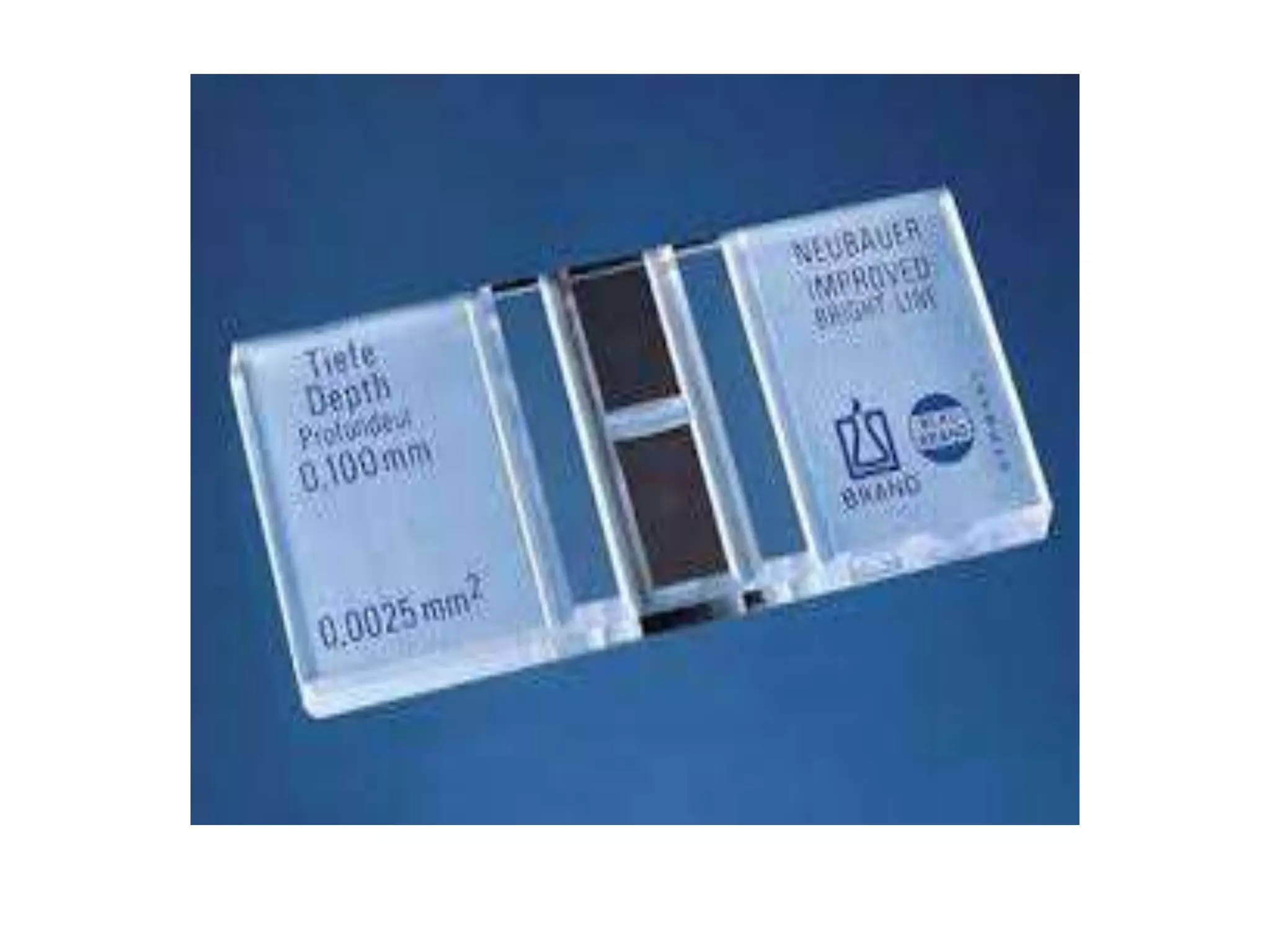
NEUBAUER’S CHAMBER
• The hemocytometer (or haemocytometer or counting
chamber) is a specimen slide which is used to
determine the concentration of cells in a liquid sample.
• It is frequently used to determine the concentration of
blood cells (hence the name “hemo-“) but also the
concentration of sperm cells in a sample.
• The cover glass, which is placed on the sample, does
not simply float on the liquid, but is held in place at a
specified height (usually 0.1mm).
• Additionally, a grid is etched into the glass of
the hemocytometer.
• This grid, an arrangement of squares of
different sizes, allows for an easy counting of
cells. This way it is possible to determine the
number of cells in a specified volume.
WBC PIPETTE and RBC PIPETTE
• RBC pipette consists of a red bead inside the
bulb, where as WBC pipette consists of a white bead
inside the bulb.
• RBC pipette is cleaned by rinsing with water, then alcohol
& then with acetone, where as WBC pipette is cleaned by
rinsing with 2% v/v acetic acid because it lyses RBC's
leaving only WBC visible
• WBC Diluting fluid: Ideal diluting fluid should dilute the
blood, destroy RBC but not WBCs and stain the nucleus
of WBCs
• Diluting fluid used is Turk’s fluid.
• Composition: Gentian violet - 0.025gm
• Glacial acetic acid - 2cc
• Distilled water upto – l00 mL
• Gentian violet stains the nucleus of WBCs. Glacial acetic
acid destroys the RBCs by hemolysis.
• Other uses of WBC pipette:
1. Cell count in C.S.F.
2. Sperm count
3. Absolute Eosinophil count
4. R.B.C. count in severe anaemia
• R.B.C diluting fluid: Hayem’s fluid is the commonly used
diluting fluid.
Composition:
 Sodium chloride 0.5 Gm
 Sodium sulphate 2.5 Gm
 Mercuric perchloride 0.25 Gm
 Distilled water 100 ml
• Sodium chloride and sodium sulphate together keeps the
isotonicity of fluid. Sodium sulphate also prevents
clumping of red cells. Mercuric perchloride fixes the cells
and acts as a preservative
Other uses of R.B.C. pipette:
1. WBC count in leukemias
2. Platelet counting
Uses of the bead in the bulb
1. For proper mixing
2. To know whether the pipette is dry
3. To identify the pipette
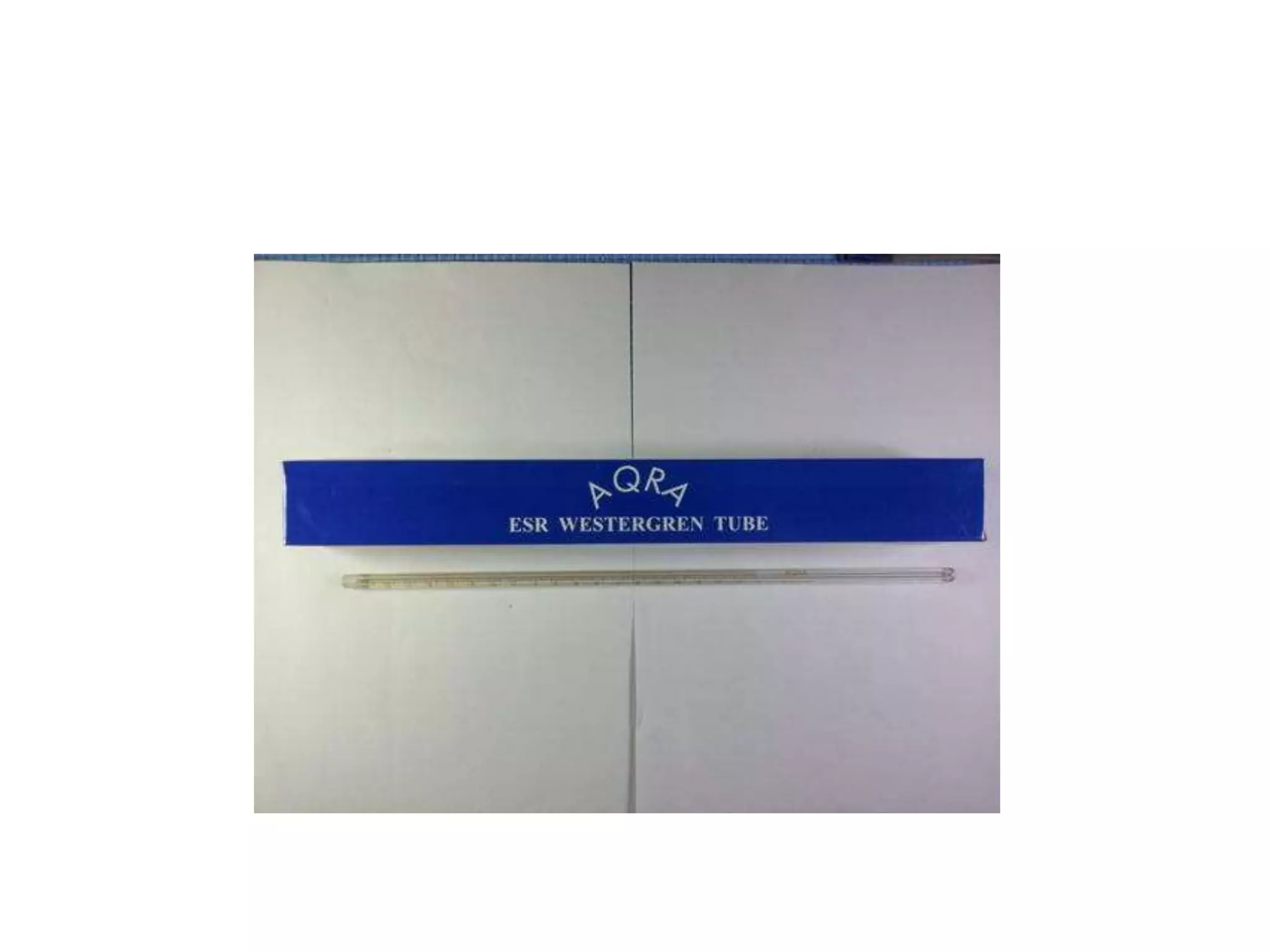
Westergreen’s Tube
• Westergreen’s Tube (pipette) is a long cylindrical thick
glass tube of 300 mm length and 2.5 mm bore diameter.
• It is open at both ends and is graduated from 0 to 200 in
mm scale from top to bottom.
• The markings are only over the lower 2/3rds of the tube.
• The anticoagulant used is sodium citrate of concentration
3.8%. Proportion of anticoagulant to blood is 1:4.
• Other methods
• Wintrobes’s method: Wintrobe’s heamatocrit tube is used
as in the other method, for determining ESR.
Wintrobe’s tube
• This is 11 cm long tube with 3mm bore
• It is closed at one end .It is graduated in two scales.It
is marked 0 at bottom and 10 at top for estimation of
PCV and 0 at top and 10 at bottom for estimation of
ESR.
• Anticoagulant EDTA used in ratio 1:4 .
• Used for estimation of ESR, PCV and preparation of
buffered coat.
WINTROBE TUBE
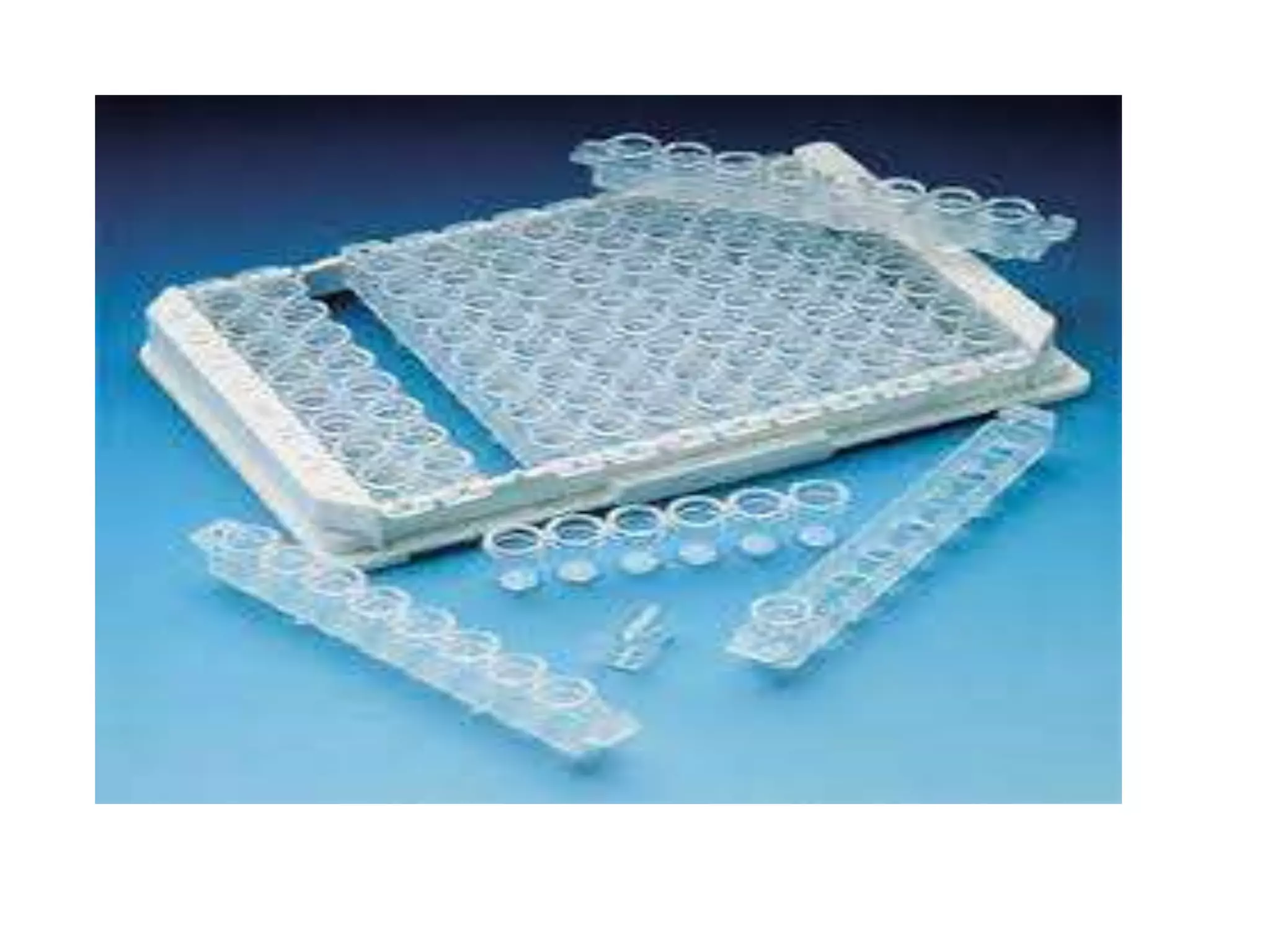
ELISA TRAY
• ELISA Microplate having 96 well.
• An ELISA test uses components of the immune system
and chemicals to detect immune responses in the body
(for example, to infectious microbes). The ELISA test
involves an enzyme (a protein that catalyzes a
biochemical reaction). It also involves an antibody or
antigen (immunologic molecules).
• ELISA tests are widely utilized to detect substances that
have antigenic properties, primarily proteins (as opposed
to small molecules and ions such as glucose and
potassium). The substances detected by ELISA tests
include hormones, bacterial antigens and antibodies.
BLOOD SAMPLE
COLLECTION VIALS
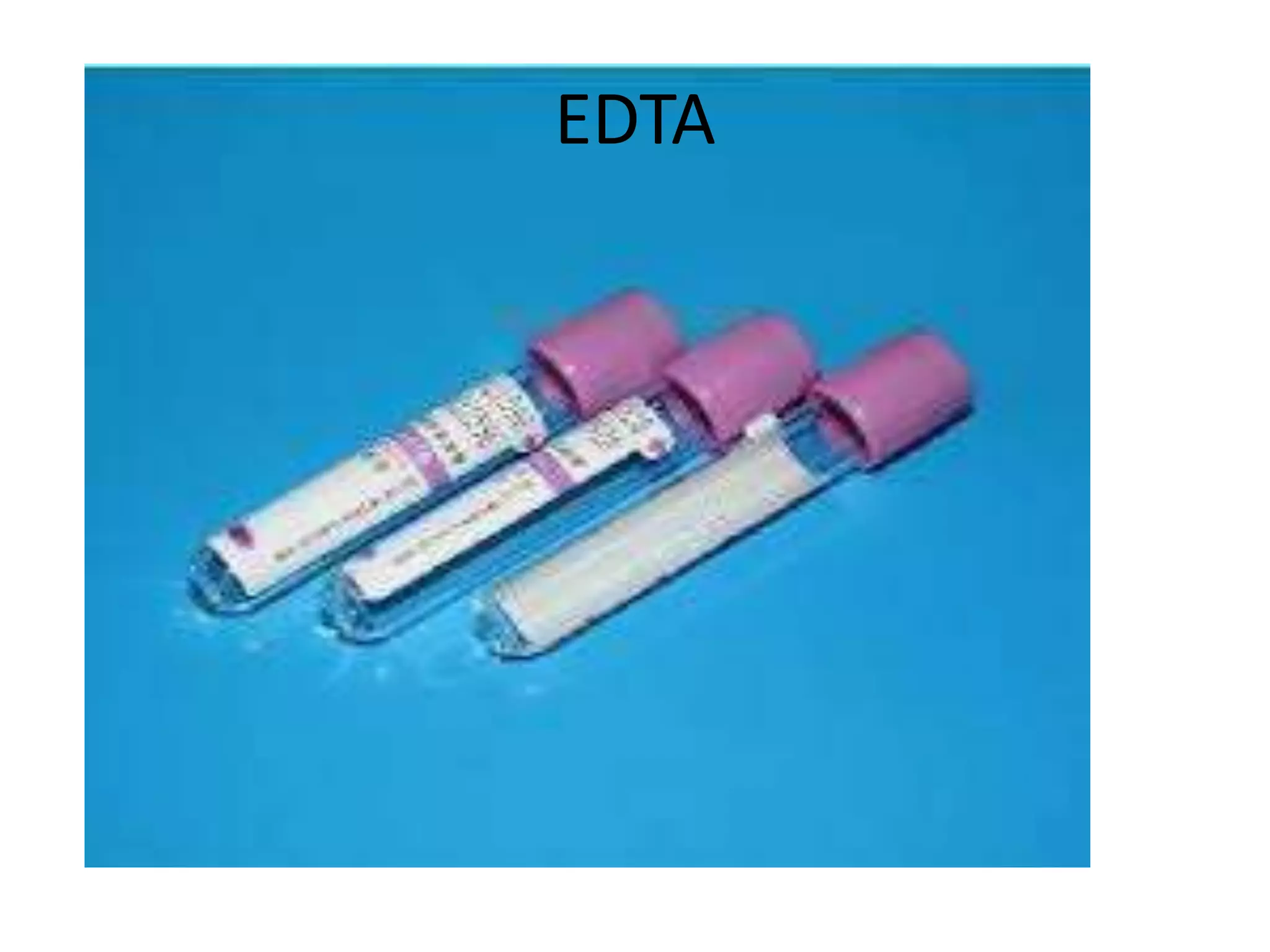
• Lavender /purple cap –EDTA used for estimation of
Blood counts, ESR, PCV.
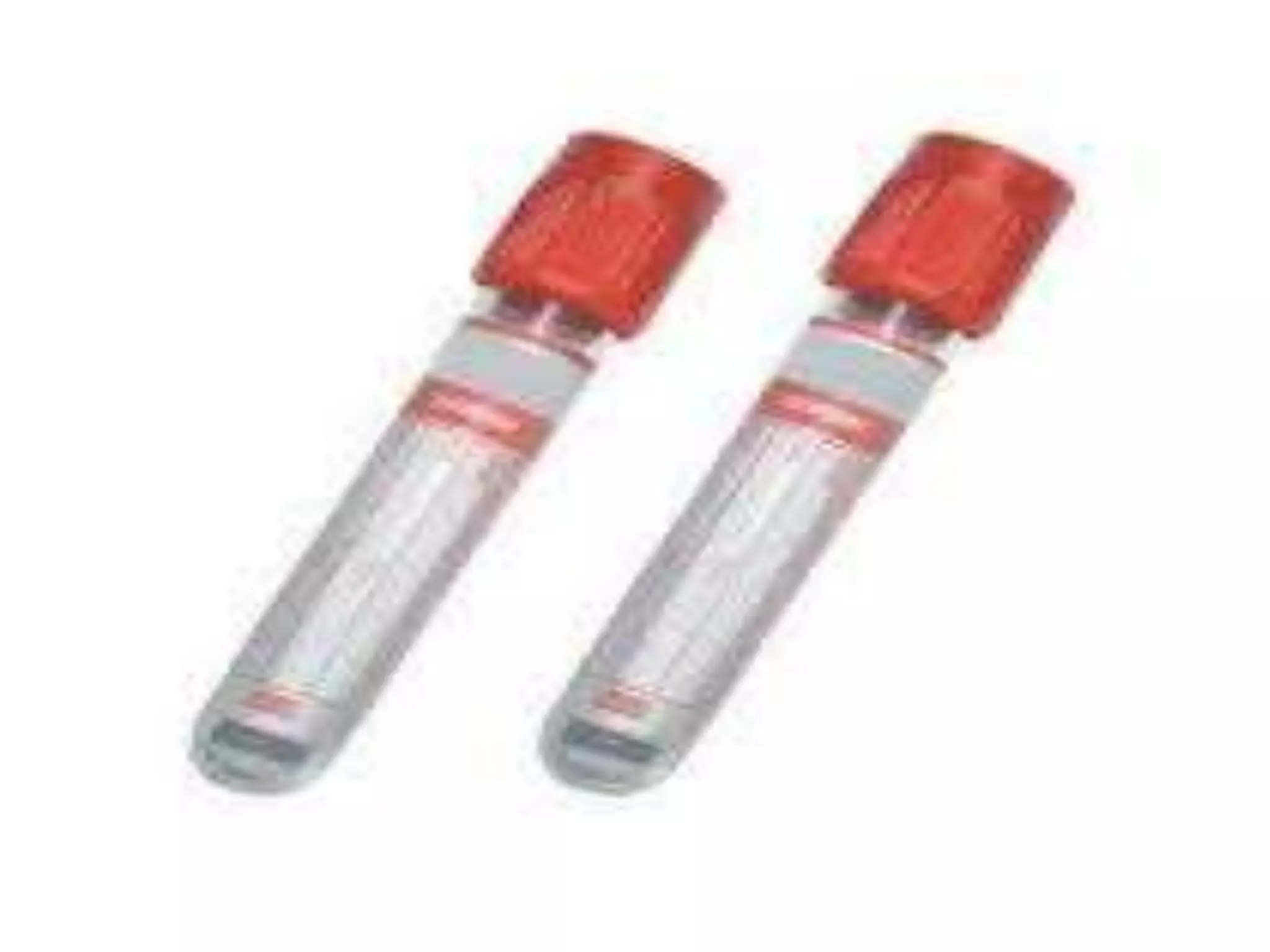
• Red cap –plain or no anticoagulant used for
immunology , serology
• Grey cap- sodium floride. Used in glucose estimation.
• Light blue- 3.8% tri-sodium citrate used for ESR and
coagulant studies.
• Green cap –Heparin tube .Used for osmotic fragility
test and immunophenotyping
• Yellow-contain citrate for blood culture.
EDTA
Red cell anticoagulants and
preservation
• Citrate
• Calcium-chelating agent
• Prevents coagulation by interfering with calcium-dependent
steps in the coagulation cascade
• Citrate-dextrose
• The dextrose provide nutrient for red cells
• Support the generation of ATP by glycolysis thus enhancing
red cell viability and extending shelf life upto 12 days
• Acid-citrate-dextrose
• Contains citric acid, sodium citrate, and dextrose
• Shelf life of 21 days and now no longer use for red cells as
other solution are available with extended shelf life of red
cells
• Acid pH does not help in maintaining 2,3-DPG levels
• Used in apheresis procedure
• Citrate-phosphate-dextrose (CPD)
• Alkaline pH helps in maintaining 2,3-DPG
• Shelf life is extended to 28 days
• CPD is not now commonly used
• Citrate-phosphate-dextrose-adenine (CPDA-1)
• Addition of adenine is associated with improved synthesis
of ATP, allowing longer shelf life (35 days)
BLOOD : ANTICOAGULANT RATIO
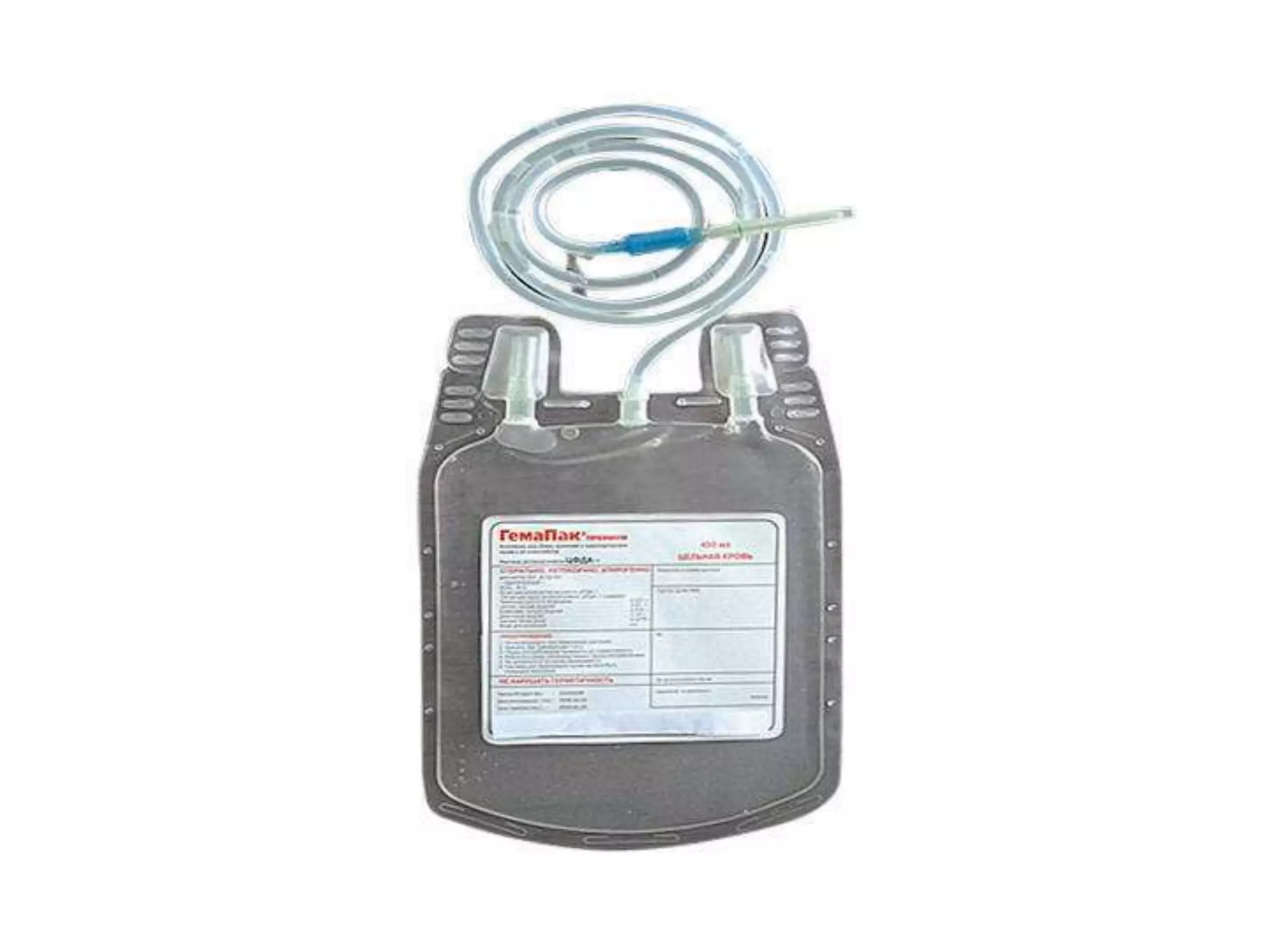
• Volume of anticoagulant –nutrient solution is
normally 1/7 volume of collected blood
– 14 ml of CPD/CPDA is used in preserving 100
ml blood
– 49 ml for a 350 ml collection
– 63 ml for a 450 ml collection
L.P. Needle
• Size-22 gauge (most commonly used)
• It is 90mm long needle
• Contains-needle and stylet
• Uses-
1. Collection of CSF
2. Guided FNAC of internal organ like lung
,liver,kidney etc.
BM Examination needle
1. Bone marrow aspiration needle- Salah, Klima
and Islam needle
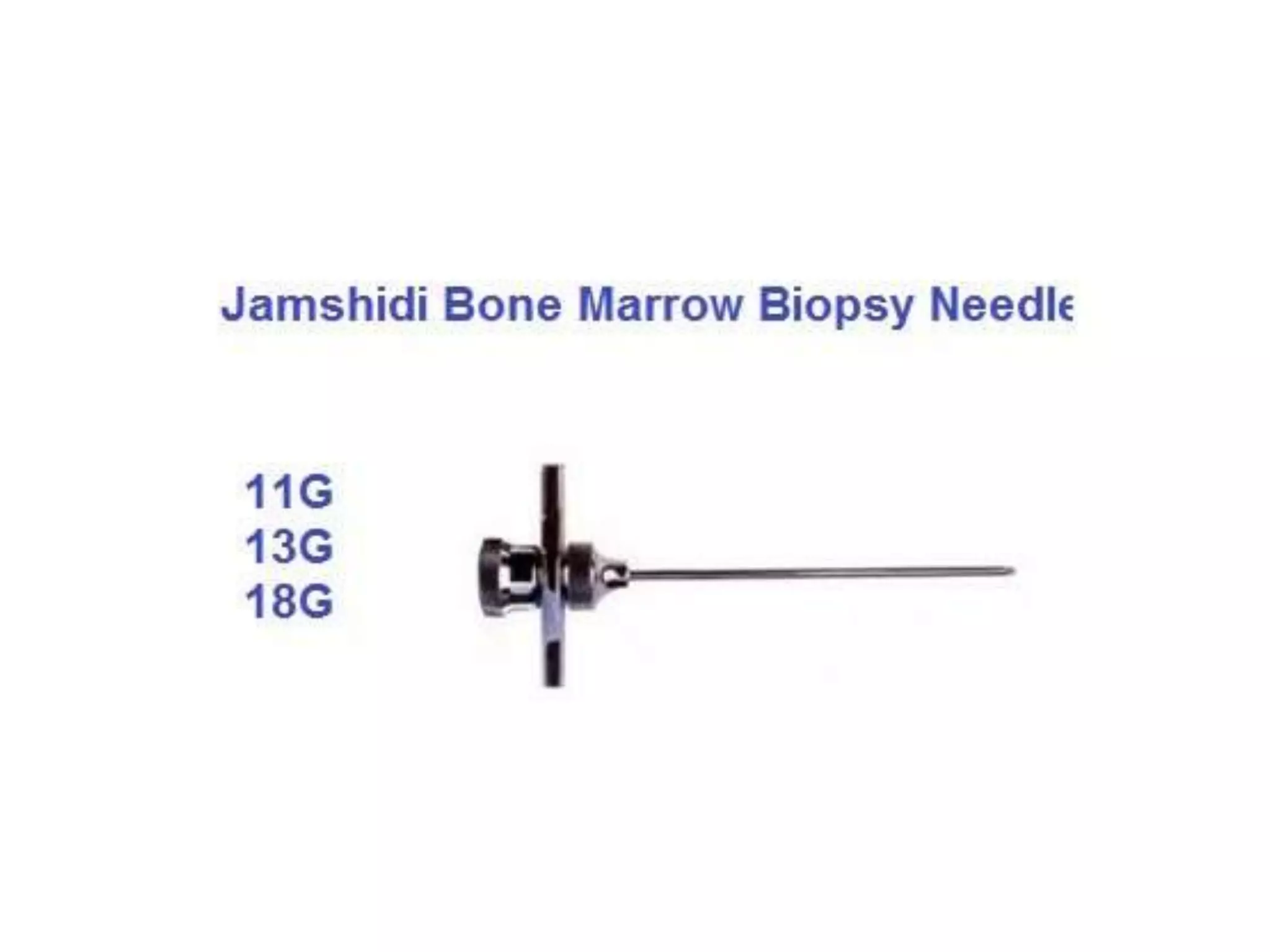
2. Bone marrow biopsy needle- Jamshidi
needle(6-12 gauge) –contains needle,
obturator and stylet
Use- Bone Marrow examination
• Salah needle-It has a guard with side screw.
• Klima needle –no Guard in this needle.
• Uses:
• Criteria of BM
• Unexplained cytopenia
• MDL
• Suspected myeloproliferative disorders
• Plasma cell dysplasia
• CLL
• Pyrexia of unknown origin
• Parasites
Thermometer
• Types
a) Liquid filled- Mercury/ alcohol
b) Liquid crystal
c) Electronic/digital
d) Basal thermometers
Cassetes
•Disposable plastic cassetes for biopsy processing
and embedding.
•Moulded from high density acetyl polymer
•A total 128 slots each measures 1x5 mm.
•Available in 11 colors
Microtome knife
1. Planar concave
2. Wedge shape
3. Chisel shape
Use- cutting of the tissue sections
Graduated Pipette
• Has a scale divided into one and of 1/10 of a
millilitre
• Used when taking volume of solutions where
much accuracy is not required.
Volumetric pipette
• Also known as bulb pipette-Allows extremely
accurate measurement of volume of solutions
• Has a large bulb with along narrow portion
above with a single graduation mark
• Typical volumes-10, 25, 50 ml
HAEMOGLOBIN PIPETTE
• It is a cylindrical specific pipette having only
one marking of 20 cumm and no bulb .
• Used for Estimation of Haemoglobin by
Sahli’s method.
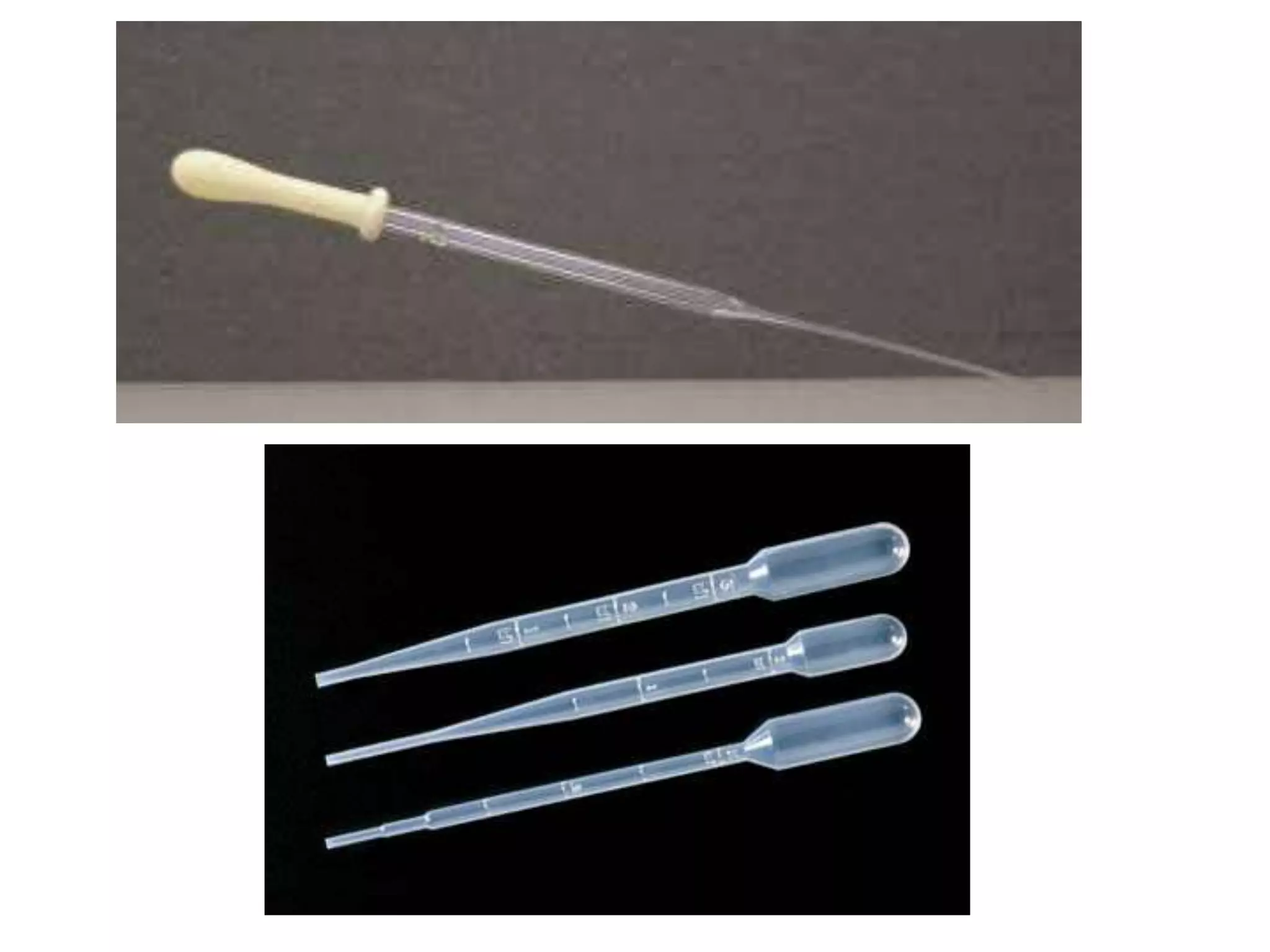
Pasteur pipette/Dropper
• Used to transfer small quantities of liquids
Disposable syringe
• Capacity- 5ml to 20ml
• Uses-for giving injection for administration of
drugs.
• For fine needle aspiration cytology.
Cervical Brush
• Used for taking samples screening of cervical
diseases

instruments in pathology.pptx

  • 1.
  • 2.
    Urinometer • It isused to measure the specific gravity of urine. • Enough amount of urine is taken in the container. • The urinometer is then allowed to float freely and then specific gravity of urine is measured by reading graduation on stem. • Normal specific gravity 1.016 -1.022. • Other methods of specific gravity- • Falling drop method using chloroform and benzene • Refractometer • Multisticks • Correction of specific gravity has to be done in temperature, glucose and protein in urine.
  • 4.
  • 7.
    • Uses: Estimationof Haemoglobin by Sahli’s Acid Haematin Method.
  • 8.
    Hb count bySahli's haemoglobinometer (acid haematin method): Principle: Anticoagulated blood is added to the 0.1 N HCl and kept for 5-7 minutes to form acid haematin. The color of this acid haematin should be matched with the solution, present in the calibration tube. Distilled water is added to the acid haematin until the color matches and the final reading is directly noted from the graduation in the calibration tube. [Please note that 100 percent on the scale corresponds to 14.5gm % to 15gm Requirements: Sahli's haemoglobinometer, Hydrochloric acid, distilled water. Procedure: Place N/10 HCL in diluting tube up to the mark 20. Take blood in the haemoglobin pipette up to 20-cubic-mm-mark and blow it into diluting tube and rinse well. After 10 minutes add distilled water in drops and mix the tube until it has exactly the same color as the comparison standards. Note the reading, which indicates the percentage o Result: The Hb estimation of the given sample is ..... g/100 ml of blood/.....g/dl of blood/.....G%. Precautions: i. Pipetting of blood should be done cautiously ii. Mix the blood properly with HCl by using stirrer iii. Match the color cautiously.
  • 9.
  • 10.
    •Esbach's Albuminometer; fortesting the albumen in urine. •Esbach's albumenometer used a simple chemical test to measure the amount of the protein albumen in urine. •The instrument is made of glass and wood. It is contained in a wooden case. •Urine was filled to the ‘U’ mark and a chemical reagent to the ‘R’ mark. •The substance stood for 24 hours before the protein levels were assessed. •Unusual levels of albumen in the urine can indicate kidney problems. It is named after its inventor, French physician, G H Esbach (1843).
  • 13.
    • It ismixed by inverting it at least 12 times. • It is kept in cool and dark place to prevent the precipitation of picrates. • The protein precipates is settled down in the bottom. • The amount of protein is read in gm/litre.
  • 14.
    Composition of ESBACH’sReagent • Citric acid-20 gm • Picric acid -10gm • Distilled water-1litre
  • 15.
  • 17.
    • The hemocytometer(or haemocytometer or counting chamber) is a specimen slide which is used to determine the concentration of cells in a liquid sample. • It is frequently used to determine the concentration of blood cells (hence the name “hemo-“) but also the concentration of sperm cells in a sample. • The cover glass, which is placed on the sample, does not simply float on the liquid, but is held in place at a specified height (usually 0.1mm).
  • 18.
    • Additionally, agrid is etched into the glass of the hemocytometer. • This grid, an arrangement of squares of different sizes, allows for an easy counting of cells. This way it is possible to determine the number of cells in a specified volume.
  • 19.
    WBC PIPETTE andRBC PIPETTE
  • 22.
    • RBC pipetteconsists of a red bead inside the bulb, where as WBC pipette consists of a white bead inside the bulb. • RBC pipette is cleaned by rinsing with water, then alcohol & then with acetone, where as WBC pipette is cleaned by rinsing with 2% v/v acetic acid because it lyses RBC's leaving only WBC visible
  • 23.
    • WBC Dilutingfluid: Ideal diluting fluid should dilute the blood, destroy RBC but not WBCs and stain the nucleus of WBCs • Diluting fluid used is Turk’s fluid. • Composition: Gentian violet - 0.025gm • Glacial acetic acid - 2cc • Distilled water upto – l00 mL • Gentian violet stains the nucleus of WBCs. Glacial acetic acid destroys the RBCs by hemolysis.
  • 24.
    • Other usesof WBC pipette: 1. Cell count in C.S.F. 2. Sperm count 3. Absolute Eosinophil count 4. R.B.C. count in severe anaemia
  • 25.
    • R.B.C dilutingfluid: Hayem’s fluid is the commonly used diluting fluid. Composition:  Sodium chloride 0.5 Gm  Sodium sulphate 2.5 Gm  Mercuric perchloride 0.25 Gm  Distilled water 100 ml • Sodium chloride and sodium sulphate together keeps the isotonicity of fluid. Sodium sulphate also prevents clumping of red cells. Mercuric perchloride fixes the cells and acts as a preservative
  • 26.
    Other uses ofR.B.C. pipette: 1. WBC count in leukemias 2. Platelet counting Uses of the bead in the bulb 1. For proper mixing 2. To know whether the pipette is dry 3. To identify the pipette
  • 27.
    Westergreen’s Tube • Westergreen’sTube (pipette) is a long cylindrical thick glass tube of 300 mm length and 2.5 mm bore diameter. • It is open at both ends and is graduated from 0 to 200 in mm scale from top to bottom. • The markings are only over the lower 2/3rds of the tube. • The anticoagulant used is sodium citrate of concentration 3.8%. Proportion of anticoagulant to blood is 1:4. • Other methods • Wintrobes’s method: Wintrobe’s heamatocrit tube is used as in the other method, for determining ESR.
  • 30.
    Wintrobe’s tube • Thisis 11 cm long tube with 3mm bore • It is closed at one end .It is graduated in two scales.It is marked 0 at bottom and 10 at top for estimation of PCV and 0 at top and 10 at bottom for estimation of ESR. • Anticoagulant EDTA used in ratio 1:4 . • Used for estimation of ESR, PCV and preparation of buffered coat.
  • 31.
  • 32.
  • 34.
    • ELISA Microplatehaving 96 well. • An ELISA test uses components of the immune system and chemicals to detect immune responses in the body (for example, to infectious microbes). The ELISA test involves an enzyme (a protein that catalyzes a biochemical reaction). It also involves an antibody or antigen (immunologic molecules). • ELISA tests are widely utilized to detect substances that have antigenic properties, primarily proteins (as opposed to small molecules and ions such as glucose and potassium). The substances detected by ELISA tests include hormones, bacterial antigens and antibodies.
  • 35.
  • 36.
    • Lavender /purplecap –EDTA used for estimation of Blood counts, ESR, PCV. • Red cap –plain or no anticoagulant used for immunology , serology • Grey cap- sodium floride. Used in glucose estimation. • Light blue- 3.8% tri-sodium citrate used for ESR and coagulant studies. • Green cap –Heparin tube .Used for osmotic fragility test and immunophenotyping • Yellow-contain citrate for blood culture.
  • 38.
  • 39.
    Red cell anticoagulantsand preservation • Citrate • Calcium-chelating agent • Prevents coagulation by interfering with calcium-dependent steps in the coagulation cascade • Citrate-dextrose • The dextrose provide nutrient for red cells • Support the generation of ATP by glycolysis thus enhancing red cell viability and extending shelf life upto 12 days • Acid-citrate-dextrose • Contains citric acid, sodium citrate, and dextrose • Shelf life of 21 days and now no longer use for red cells as other solution are available with extended shelf life of red cells • Acid pH does not help in maintaining 2,3-DPG levels • Used in apheresis procedure
  • 40.
    • Citrate-phosphate-dextrose (CPD) •Alkaline pH helps in maintaining 2,3-DPG • Shelf life is extended to 28 days • CPD is not now commonly used • Citrate-phosphate-dextrose-adenine (CPDA-1) • Addition of adenine is associated with improved synthesis of ATP, allowing longer shelf life (35 days)
  • 41.
    BLOOD : ANTICOAGULANTRATIO • Volume of anticoagulant –nutrient solution is normally 1/7 volume of collected blood – 14 ml of CPD/CPDA is used in preserving 100 ml blood – 49 ml for a 350 ml collection – 63 ml for a 450 ml collection
  • 45.
    L.P. Needle • Size-22gauge (most commonly used) • It is 90mm long needle • Contains-needle and stylet • Uses- 1. Collection of CSF 2. Guided FNAC of internal organ like lung ,liver,kidney etc.
  • 47.
    BM Examination needle 1.Bone marrow aspiration needle- Salah, Klima and Islam needle 2. Bone marrow biopsy needle- Jamshidi needle(6-12 gauge) –contains needle, obturator and stylet Use- Bone Marrow examination
  • 48.
    • Salah needle-Ithas a guard with side screw. • Klima needle –no Guard in this needle. • Uses: • Criteria of BM • Unexplained cytopenia • MDL • Suspected myeloproliferative disorders • Plasma cell dysplasia • CLL • Pyrexia of unknown origin • Parasites
  • 52.
    Thermometer • Types a) Liquidfilled- Mercury/ alcohol b) Liquid crystal c) Electronic/digital d) Basal thermometers
  • 53.
    Cassetes •Disposable plastic cassetesfor biopsy processing and embedding. •Moulded from high density acetyl polymer •A total 128 slots each measures 1x5 mm. •Available in 11 colors
  • 55.
    Microtome knife 1. Planarconcave 2. Wedge shape 3. Chisel shape Use- cutting of the tissue sections
  • 57.
    Graduated Pipette • Hasa scale divided into one and of 1/10 of a millilitre • Used when taking volume of solutions where much accuracy is not required.
  • 59.
    Volumetric pipette • Alsoknown as bulb pipette-Allows extremely accurate measurement of volume of solutions • Has a large bulb with along narrow portion above with a single graduation mark • Typical volumes-10, 25, 50 ml
  • 61.
    HAEMOGLOBIN PIPETTE • Itis a cylindrical specific pipette having only one marking of 20 cumm and no bulb . • Used for Estimation of Haemoglobin by Sahli’s method.
  • 63.
    Pasteur pipette/Dropper • Usedto transfer small quantities of liquids
  • 65.
    Disposable syringe • Capacity-5ml to 20ml • Uses-for giving injection for administration of drugs. • For fine needle aspiration cytology.
  • 67.
    Cervical Brush • Usedfor taking samples screening of cervical diseases