INTRODUCTION TO BIOCHEMISTRY

         What is Biochemistry?

Biochemistry -is the study of life on a
          molecular level.
Biochemistry can be divided into three areas
  of study

 Conformational-structure and three-
  dimensional arrangements of biomolecules.
 Metabolism–energy production and
  utilization
 Informational-language for
  communication inside and between cells
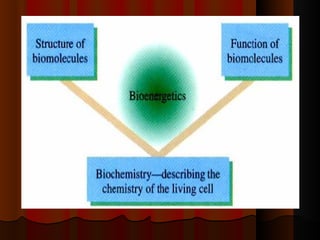
   Biochemistry seeks to describe the structure,
    organization, and function of living organisms in
    molecular terms

   In order to understand the life on the
    molecular level, you mustfirst have a:
        •Knowledge of the chemical structures of the biological molecules
        •Understanding of the biological function of the molecules

   •Understanding of bioenergetics –the study of energy
    flow in cells
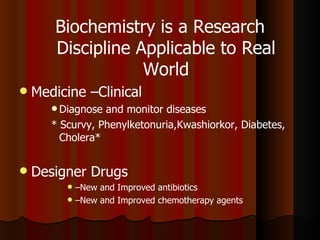
Biochemistry is a Research
       Discipline Applicable to Real
                   World
   Medicine –Clinical
        Diagnose and monitor diseases
       * Scurvy, Phenylketonuria,Kwashiorkor, Diabetes,
         Cholera*


   Designer Drugs
           –New and Improved antibiotics
           –New and Improved chemotherapy agents
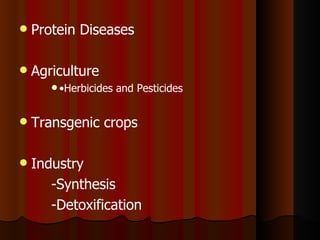
   Protein Diseases

   Agriculture
        •Herbicides   and Pesticides


   Transgenic crops

   Industry
       -Synthesis
       -Detoxification
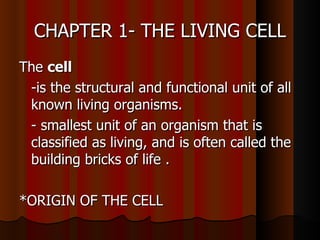
CHAPTER 1- THE LIVING CELL
The cell
 -is the structural and functional unit of all
 known living organisms.
 - smallest unit of an organism that is
 classified as living, and is often called the
 building bricks of life .

*ORIGIN OF THE CELL
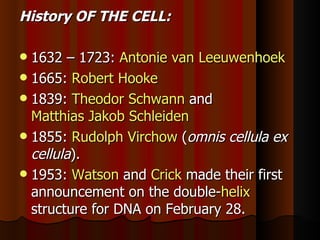
History OF THE CELL:

 1632 – 1723: Antonie van Leeuwenhoek
 1665: Robert Hooke
 1839: Theodor Schwann and
  Matthias Jakob Schleiden
 1855: Rudolph Virchow (omnis cellula ex
  cellula).
 1953: Watson and Crick made their first
  announcement on the double-helix
  structure for DNA on February 28.
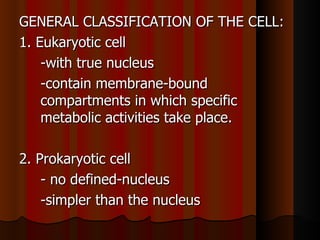
GENERAL CLASSIFICATION OF THE CELL:
1. Eukaryotic cell
    -with true nucleus
    -contain membrane-bound
    compartments in which specific
    metabolic activities take place.

2. Prokaryotic cell
    - no defined-nucleus
    -simpler than the nucleus
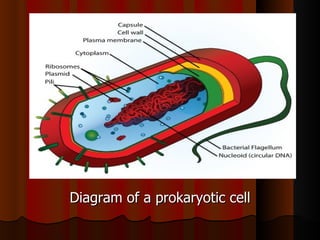
Diagram of a prokaryotic cell
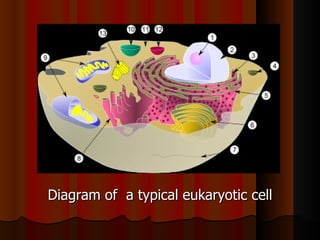
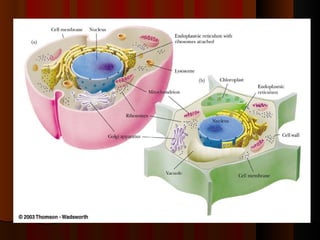
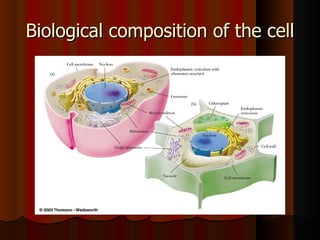
Diagram of a typical eukaryotic cell
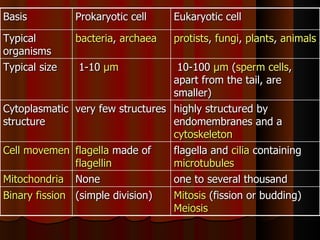
Basis          Prokaryotic cell    Eukaryotic cell

Typical        bacteria, archaea   protists, fungi, plants, animals
organisms
Typical size   1-10 µm             10-100 µm (sperm cells,
                                  apart from the tail, are
                                  smaller)
Cytoplasmatic very few structures highly structured by
structure                         endomembranes and a
                                  cytoskeleton
Cell movement flagella made of    flagella and cilia containing
               flagellin          microtubules
Mitochondria None                 one to several thousand
Binary fission (simple division)  Mitosis (fission or budding)
                                  Meiosis
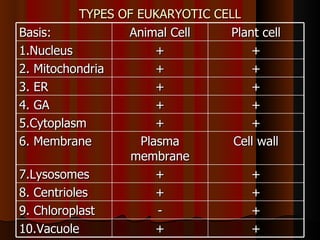
TYPES OF EUKARYOTIC CELL
Basis:             Animal Cell    Plant cell
1.Nucleus               +             +
2. Mitochondria         +             +
3. ER                   +             +
4. GA                   +             +
5.Cytoplasm             +             +
6. Membrane          Plasma        Cell wall
                    membrane
7.Lysosomes             +             +
8. Centrioles           +             +
9. Chloroplast          -             +
10.Vacuole              +             +
Biological composition of the cell
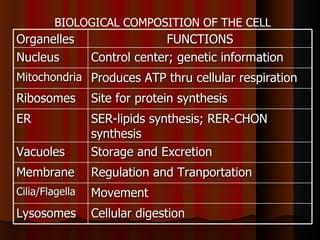
BIOLOGICAL COMPOSITION OF THE CELL
Organelles                     FUNCTIONS
Nucleus          Control center; genetic information
Mitochondria Produces ATP thru cellular respiration
Ribosomes        Site for protein synthesis
ER               SER-lipids synthesis; RER-CHON
                 synthesis
Vacuoles         Storage and Excretion
Membrane         Regulation and Tranportation
Cilia/Flagella   Movement
Lysosomes        Cellular digestion
CHEMICAL COMPOSITION OF THE LIVING
                 CELL
H, O, C and N make up 99+% of atoms in the human body
                  ELEMENT PERCENTAGE
                        Oxygen- 63
                      Hydrogen -25.2
                        Carbon- 9.5
                       Nitrogen -1.4
   •Hydrogen, Carbon, Oxygen and Nitrogen comprise over
   99% of the mass in most cells
   •These elements are the backbone of
   biomoleculesbecause they are capable of forming strong
   covalent bonds
 *Chemical Reactions that occur inside the cell are the same
                that occur outside the cell*
Biological Macromolecules of the living cells

4. Nucleic Acids-that store and transmit
   genetic information
5. Proteins- Transportation; Storage;
   Defense mechanisms
6. Polysaccharides-Insulation and
   Regulation of heat
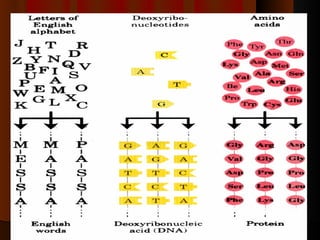
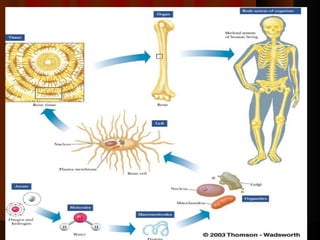
Biological Micromolecules

 Nucleotide (RNA/DNA)- Nucleic Acids
 Amino acid- Protein
 Simple sugars-Carbohydrates
 Fatty acids, Glycerol etc.- Lipids
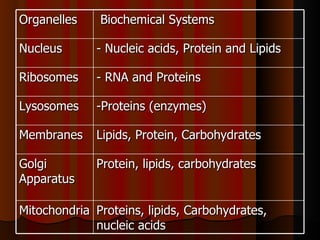
Organelles    Biochemical Systems

Nucleus       - Nucleic acids, Protein and Lipids

Ribosomes     - RNA and Proteins

Lysosomes     -Proteins (enzymes)

Membranes     Lipids, Protein, Carbohydrates

Golgi         Protein, lipids, carbohydrates
Apparatus

Mitochondria Proteins, lipids, Carbohydrates,
             nucleic acids
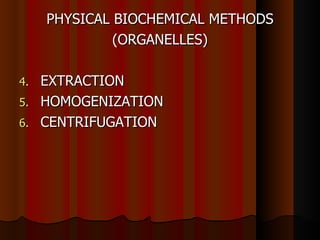
PHYSICAL BIOCHEMICAL METHODS
              (ORGANELLES)

4. EXTRACTION
5. HOMOGENIZATION
6. CENTRIFUGATION
Biochem1

Biochem1

  • 1.
    INTRODUCTION TO BIOCHEMISTRY What is Biochemistry? Biochemistry -is the study of life on a molecular level.
  • 2.
    Biochemistry can bedivided into three areas of study  Conformational-structure and three- dimensional arrangements of biomolecules.  Metabolism–energy production and utilization  Informational-language for communication inside and between cells
  • 3.
    Biochemistry seeks to describe the structure, organization, and function of living organisms in molecular terms  In order to understand the life on the molecular level, you mustfirst have a:  •Knowledge of the chemical structures of the biological molecules  •Understanding of the biological function of the molecules  •Understanding of bioenergetics –the study of energy flow in cells
  • 5.
    Biochemistry is aResearch Discipline Applicable to Real World  Medicine –Clinical  Diagnose and monitor diseases * Scurvy, Phenylketonuria,Kwashiorkor, Diabetes, Cholera*  Designer Drugs  –New and Improved antibiotics  –New and Improved chemotherapy agents
  • 6.
    Protein Diseases  Agriculture  •Herbicides and Pesticides  Transgenic crops  Industry -Synthesis -Detoxification
  • 7.
    CHAPTER 1- THELIVING CELL The cell -is the structural and functional unit of all known living organisms. - smallest unit of an organism that is classified as living, and is often called the building bricks of life . *ORIGIN OF THE CELL
  • 8.
    History OF THECELL:  1632 – 1723: Antonie van Leeuwenhoek  1665: Robert Hooke  1839: Theodor Schwann and Matthias Jakob Schleiden  1855: Rudolph Virchow (omnis cellula ex cellula).  1953: Watson and Crick made their first announcement on the double-helix structure for DNA on February 28.
  • 9.
    GENERAL CLASSIFICATION OFTHE CELL: 1. Eukaryotic cell -with true nucleus -contain membrane-bound compartments in which specific metabolic activities take place. 2. Prokaryotic cell - no defined-nucleus -simpler than the nucleus
  • 10.
    Diagram of aprokaryotic cell
  • 11.
    Diagram of atypical eukaryotic cell
  • 12.
    Basis Prokaryotic cell Eukaryotic cell Typical bacteria, archaea protists, fungi, plants, animals organisms Typical size 1-10 µm 10-100 µm (sperm cells, apart from the tail, are smaller) Cytoplasmatic very few structures highly structured by structure endomembranes and a cytoskeleton Cell movement flagella made of flagella and cilia containing flagellin microtubules Mitochondria None one to several thousand Binary fission (simple division) Mitosis (fission or budding) Meiosis
  • 13.
    TYPES OF EUKARYOTICCELL Basis: Animal Cell Plant cell 1.Nucleus + + 2. Mitochondria + + 3. ER + + 4. GA + + 5.Cytoplasm + + 6. Membrane Plasma Cell wall membrane 7.Lysosomes + + 8. Centrioles + + 9. Chloroplast - + 10.Vacuole + +
  • 15.
  • 16.
    BIOLOGICAL COMPOSITION OFTHE CELL Organelles FUNCTIONS Nucleus Control center; genetic information Mitochondria Produces ATP thru cellular respiration Ribosomes Site for protein synthesis ER SER-lipids synthesis; RER-CHON synthesis Vacuoles Storage and Excretion Membrane Regulation and Tranportation Cilia/Flagella Movement Lysosomes Cellular digestion
  • 17.
    CHEMICAL COMPOSITION OFTHE LIVING CELL H, O, C and N make up 99+% of atoms in the human body ELEMENT PERCENTAGE Oxygen- 63 Hydrogen -25.2 Carbon- 9.5 Nitrogen -1.4 •Hydrogen, Carbon, Oxygen and Nitrogen comprise over 99% of the mass in most cells •These elements are the backbone of biomoleculesbecause they are capable of forming strong covalent bonds *Chemical Reactions that occur inside the cell are the same that occur outside the cell*
  • 18.
    Biological Macromolecules ofthe living cells 4. Nucleic Acids-that store and transmit genetic information 5. Proteins- Transportation; Storage; Defense mechanisms 6. Polysaccharides-Insulation and Regulation of heat
  • 20.
    Biological Micromolecules  Nucleotide(RNA/DNA)- Nucleic Acids  Amino acid- Protein  Simple sugars-Carbohydrates  Fatty acids, Glycerol etc.- Lipids
  • 21.
    Organelles Biochemical Systems Nucleus - Nucleic acids, Protein and Lipids Ribosomes - RNA and Proteins Lysosomes -Proteins (enzymes) Membranes Lipids, Protein, Carbohydrates Golgi Protein, lipids, carbohydrates Apparatus Mitochondria Proteins, lipids, Carbohydrates, nucleic acids
  • 22.
    PHYSICAL BIOCHEMICAL METHODS (ORGANELLES) 4. EXTRACTION 5. HOMOGENIZATION 6. CENTRIFUGATION