Operative assignment
Bioactive materials in dentistry
Operative Assignment 1
Supervisor:
Dr. Inas AlAlem
Prepared by:
Lama El Banna
Marof Hamouda
Haneen Al Galiz
Dalia Al Siksik
Ayah Tbasi
Safa Abu Maqaseb
Bushrah Al Shaaer
Alaa Haboush
Why Use Bioactive materials in this
century?
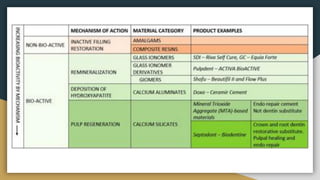
● Materials that remineralize
Glass Ionomer Cements
Giomers
● Materials that can regenerate live tissue
● Materials that deposit hydroxyapatite
Resin Modified Calcium Silicates
Calcium Silicates as Endodontic Sealers
Bioactivity In Restorative Dentistry
● Materials that remineralize
Glass Ionomer Cements
● Glass ionomers have a true chemical bond with dental tissue.
● They encourage remineralization of the surrounding tooth structure
and prevent bacterial microleakage through ion-exchange adhesion
with both enamel and dentin.
● A new, ion-enriched layer is created at the tooth-glass ionomer
interface. This layer contains phosphate and calcium ions from the
dental tissues, and calcium (or strontium), phosphate and aluminum
from the glass ionomer cement.
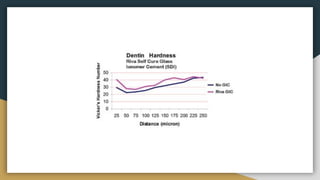
● The remineralization process creates a harder dentin surface.
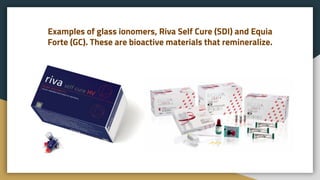
Examples of glass ionomers, Riva Self Cure (SDI) and Equia
Forte (GC). These are bioactive materials that remineralize.
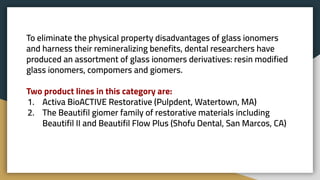
Two product lines in this category are:
Activa BioACTIVE Restorative (Pulpdent) is a bioactive
restorative material that remineralizes.
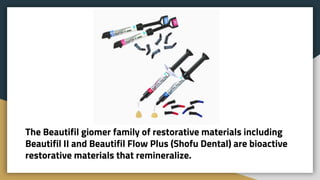
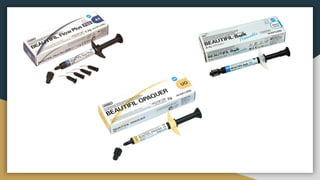
The Beautifil giomer family of restorative materials including
Beautifil II and Beautifil Flow Plus (Shofu Dental) are bioactive
restorative materials that remineralize.
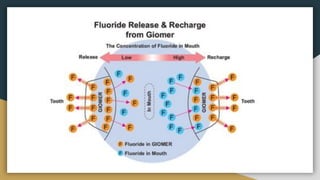
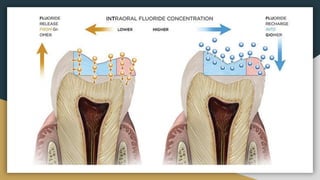
Giomers represent the hybridization of glass ionomer and composite
resin properties: the fluoride release and recharge of glass ionomers and
the esthetics, physical properties, and handling of composite resins.
The giomer concept in based on PRG (Pre-Reacted Glass) technology: a
glass core, surrounded by a glass ionomer phase enclosed within a
polyacid matrix. Studies show dentin remineralization occurs at the
preparation surface adjacent to the giomer.
● Materials that remineralize
Giomers
Some bioactive materials not only remineralize by adding
minerals to tooth structure but also create an apatite-like material
on their surfaces when immersed in body fluid or simulated body
fluid (SBF) over time.
There are two chemical classes of these bioactive restorative
materials: calcium silicates and calcium aluminates.
These materials are non-resin based. Both materials set with an
acid-base reaction, and produce an alkaline pH after setting. High
pH levels (7.5 or higher) appear to stimulate more active and
complete bioactivity.
● Materials that deposit hydroxyapatite
Ceramir (Doxa Dental)
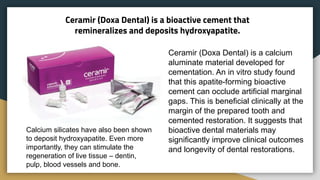
Ceramir (Doxa Dental) is a bioactive cement that
remineralizes and deposits hydroxyapatite.
Ceramir (Doxa Dental) is a calcium
aluminate material developed for
cementation. An in vitro study found
that this apatite-forming bioactive
cement can occlude artificial marginal
gaps. This is beneficial clinically at the
margin of the prepared tooth and
cemented restoration. It suggests that
bioactive dental materials may
significantly improve clinical outcomes
and longevity of dental restorations.
Calcium silicates have also been shown
to deposit hydroxyapatite. Even more
importantly, they can stimulate the
regeneration of live tissue – dentin,
pulp, blood vessels and bone.
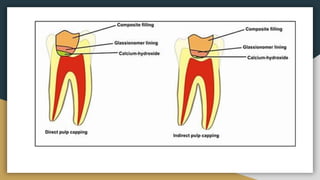
● MATERIALS THAT CAN REGENERATE LIVE TISSUE
Some bioactive materials not only remineralize and form hydroxyapatite but
also regenerate live tissue. This is crucial in many restorative as well as
pulp related treatments. One major example is vital pulp therapy where
the Treatment must maintain pulp vitality and function and restore dentin
continuity below the injury through hard tissue bridge formation.
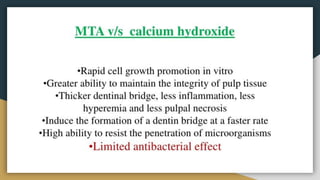
1. Calcium hydroxide
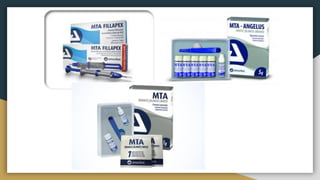
2. Mineral trioxide aggregate (MTA)
3. Biodentine
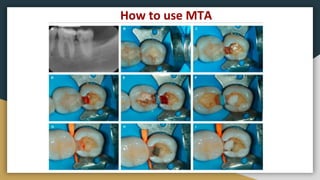
How to use MTA
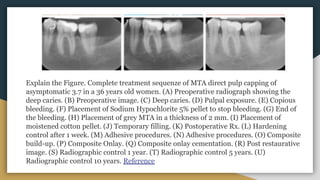
Explain the Figure. Complete treatment sequenze of MTA direct pulp capping of
asymptomatic 3.7 in a 36 years old women. (A) Preoperative radiograph showing the
deep caries. (B) Preoperative image. (C) Deep caries. (D) Pulpal exposure. (E) Copious
bleeding. (F) Placement of Sodium Hypochlorite 5% pellet to stop bleeding. (G) End of
the bleeding. (H) Placement of grey MTA in a thickness of 2 mm. (I) Placement of
moistened cotton pellet. (J) Temporary filling. (K) Postoperative Rx. (L) Hardening
control after 1 week. (M) Adhesive procedures. (N) Adhesive procedures. (O) Composite
build-up. (P) Composite Onlay. (Q) Composite onlay cementation. (R) Post restaurative
image. (S) Radiographic control 1 year. (T) Radiographic control 5 years. (U)
Radiographic control 10 years. Reference
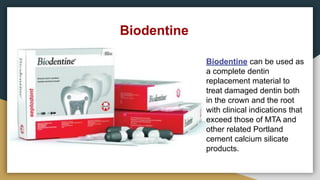
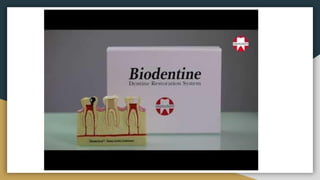
Biodentine
Biodentine can be used as
a complete dentin
replacement material to
treat damaged dentin both
in the crown and the root
with clinical indications that
exceed those of MTA and
other related Portland
cement calcium silicate
products.
●
● Materials that deposit hydroxyapatite
Calcium silicates are well suited to endodontic obturation due to the following properties:
• High pH (anti-bacterial)
• Hydrophilic (use moisture present in dentinal tubules to initiate set)
• Biocompatible
• Do not shrink or resorb
• Excellent seal (bond chemically and mechanically to dentin)
• Ease of use (can be used with many methods of condensation)
And they are bioactive:
• Remineralize hard tissue
• Deposit HA to improve the seal over time
• Regenerate and heal surrounding periapical tissue
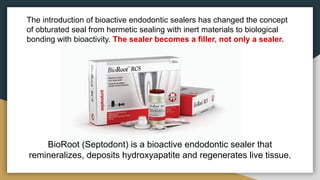
The introduction of bioactive endodontic sealers has changed the concept
of obturated seal from hermetic sealing with inert materials to biological
bonding with bioactivity. The sealer becomes a filler, not only a sealer.
BioRoot (Septodont) is a bioactive endodontic sealer that
remineralizes, deposits hydroxyapatite and regenerates live tissue.
Recourse
● https://cdeworld.com/courses/5083-proactive-intervention-dentistry-a-
model-for-oral-care-through-life
● https://www.oralhealthgroup.com/features/bioactivity-restorative-dent
istry-users-guide/
Bioactive materials Operative dentistry

Bioactive materials Operative dentistry

  • 1.
  • 2.
  • 3.
    Prepared by: Lama ElBanna Marof Hamouda Haneen Al Galiz Dalia Al Siksik Ayah Tbasi Safa Abu Maqaseb Bushrah Al Shaaer Alaa Haboush
  • 5.
    Why Use Bioactivematerials in this century?
  • 7.
    ● Materials thatremineralize Glass Ionomer Cements Giomers ● Materials that can regenerate live tissue ● Materials that deposit hydroxyapatite Resin Modified Calcium Silicates Calcium Silicates as Endodontic Sealers Bioactivity In Restorative Dentistry
  • 8.
    ● Materials thatremineralize Glass Ionomer Cements ● Glass ionomers have a true chemical bond with dental tissue. ● They encourage remineralization of the surrounding tooth structure and prevent bacterial microleakage through ion-exchange adhesion with both enamel and dentin. ● A new, ion-enriched layer is created at the tooth-glass ionomer interface. This layer contains phosphate and calcium ions from the dental tissues, and calcium (or strontium), phosphate and aluminum from the glass ionomer cement. ● The remineralization process creates a harder dentin surface.
  • 10.
    Examples of glassionomers, Riva Self Cure (SDI) and Equia Forte (GC). These are bioactive materials that remineralize.
  • 11.
    Two product linesin this category are:
  • 12.
    Activa BioACTIVE Restorative(Pulpdent) is a bioactive restorative material that remineralizes.
  • 13.
    The Beautifil giomerfamily of restorative materials including Beautifil II and Beautifil Flow Plus (Shofu Dental) are bioactive restorative materials that remineralize.
  • 14.
    Giomers represent thehybridization of glass ionomer and composite resin properties: the fluoride release and recharge of glass ionomers and the esthetics, physical properties, and handling of composite resins. The giomer concept in based on PRG (Pre-Reacted Glass) technology: a glass core, surrounded by a glass ionomer phase enclosed within a polyacid matrix. Studies show dentin remineralization occurs at the preparation surface adjacent to the giomer. ● Materials that remineralize Giomers
  • 18.
    Some bioactive materialsnot only remineralize by adding minerals to tooth structure but also create an apatite-like material on their surfaces when immersed in body fluid or simulated body fluid (SBF) over time. There are two chemical classes of these bioactive restorative materials: calcium silicates and calcium aluminates. These materials are non-resin based. Both materials set with an acid-base reaction, and produce an alkaline pH after setting. High pH levels (7.5 or higher) appear to stimulate more active and complete bioactivity. ● Materials that deposit hydroxyapatite Ceramir (Doxa Dental)
  • 19.
    Ceramir (Doxa Dental)is a bioactive cement that remineralizes and deposits hydroxyapatite. Ceramir (Doxa Dental) is a calcium aluminate material developed for cementation. An in vitro study found that this apatite-forming bioactive cement can occlude artificial marginal gaps. This is beneficial clinically at the margin of the prepared tooth and cemented restoration. It suggests that bioactive dental materials may significantly improve clinical outcomes and longevity of dental restorations. Calcium silicates have also been shown to deposit hydroxyapatite. Even more importantly, they can stimulate the regeneration of live tissue – dentin, pulp, blood vessels and bone.
  • 20.
    ● MATERIALS THATCAN REGENERATE LIVE TISSUE Some bioactive materials not only remineralize and form hydroxyapatite but also regenerate live tissue. This is crucial in many restorative as well as pulp related treatments. One major example is vital pulp therapy where the Treatment must maintain pulp vitality and function and restore dentin continuity below the injury through hard tissue bridge formation. 1. Calcium hydroxide 2. Mineral trioxide aggregate (MTA) 3. Biodentine
  • 24.
  • 26.
    Explain the Figure.Complete treatment sequenze of MTA direct pulp capping of asymptomatic 3.7 in a 36 years old women. (A) Preoperative radiograph showing the deep caries. (B) Preoperative image. (C) Deep caries. (D) Pulpal exposure. (E) Copious bleeding. (F) Placement of Sodium Hypochlorite 5% pellet to stop bleeding. (G) End of the bleeding. (H) Placement of grey MTA in a thickness of 2 mm. (I) Placement of moistened cotton pellet. (J) Temporary filling. (K) Postoperative Rx. (L) Hardening control after 1 week. (M) Adhesive procedures. (N) Adhesive procedures. (O) Composite build-up. (P) Composite Onlay. (Q) Composite onlay cementation. (R) Post restaurative image. (S) Radiographic control 1 year. (T) Radiographic control 5 years. (U) Radiographic control 10 years. Reference
  • 27.
    Biodentine Biodentine can beused as a complete dentin replacement material to treat damaged dentin both in the crown and the root with clinical indications that exceed those of MTA and other related Portland cement calcium silicate products.
  • 29.
    ● ● Materials thatdeposit hydroxyapatite Calcium silicates are well suited to endodontic obturation due to the following properties: • High pH (anti-bacterial) • Hydrophilic (use moisture present in dentinal tubules to initiate set) • Biocompatible • Do not shrink or resorb • Excellent seal (bond chemically and mechanically to dentin) • Ease of use (can be used with many methods of condensation) And they are bioactive: • Remineralize hard tissue • Deposit HA to improve the seal over time • Regenerate and heal surrounding periapical tissue
  • 30.
    The introduction ofbioactive endodontic sealers has changed the concept of obturated seal from hermetic sealing with inert materials to biological bonding with bioactivity. The sealer becomes a filler, not only a sealer. BioRoot (Septodont) is a bioactive endodontic sealer that remineralizes, deposits hydroxyapatite and regenerates live tissue.
  • 31.