Ally Bove, Laura Cox & Lindsey Richards
-Anchors plant                -Basic physical properties of soils and
-Fertilizer                   the factors that govern soil qualities.
-Helps retain water           -Why certain inorganic nutrients are
-Holds nutrition for plants   essential for plant function.
                              -Nutritional adaptations that have
                              evolved in plants, often in
                              relationships with other organisms.
Soil particles are classified
by size from largest to
smallest:
-Sand
-Silt
-Clay
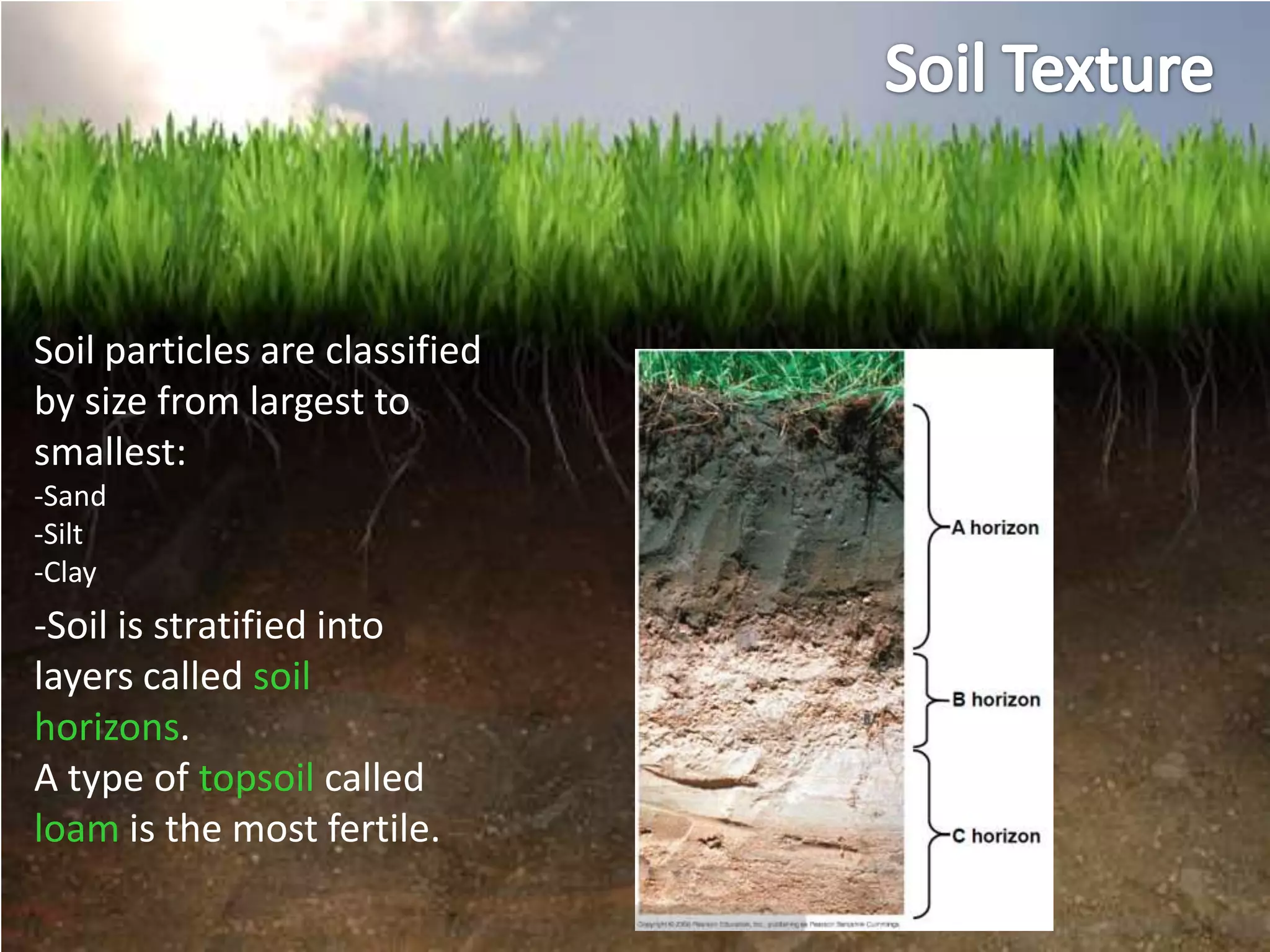
-Soil is stratified into
layers called soil
horizons.
A type of topsoil called
loam is the most fertile.
Inorganic Components


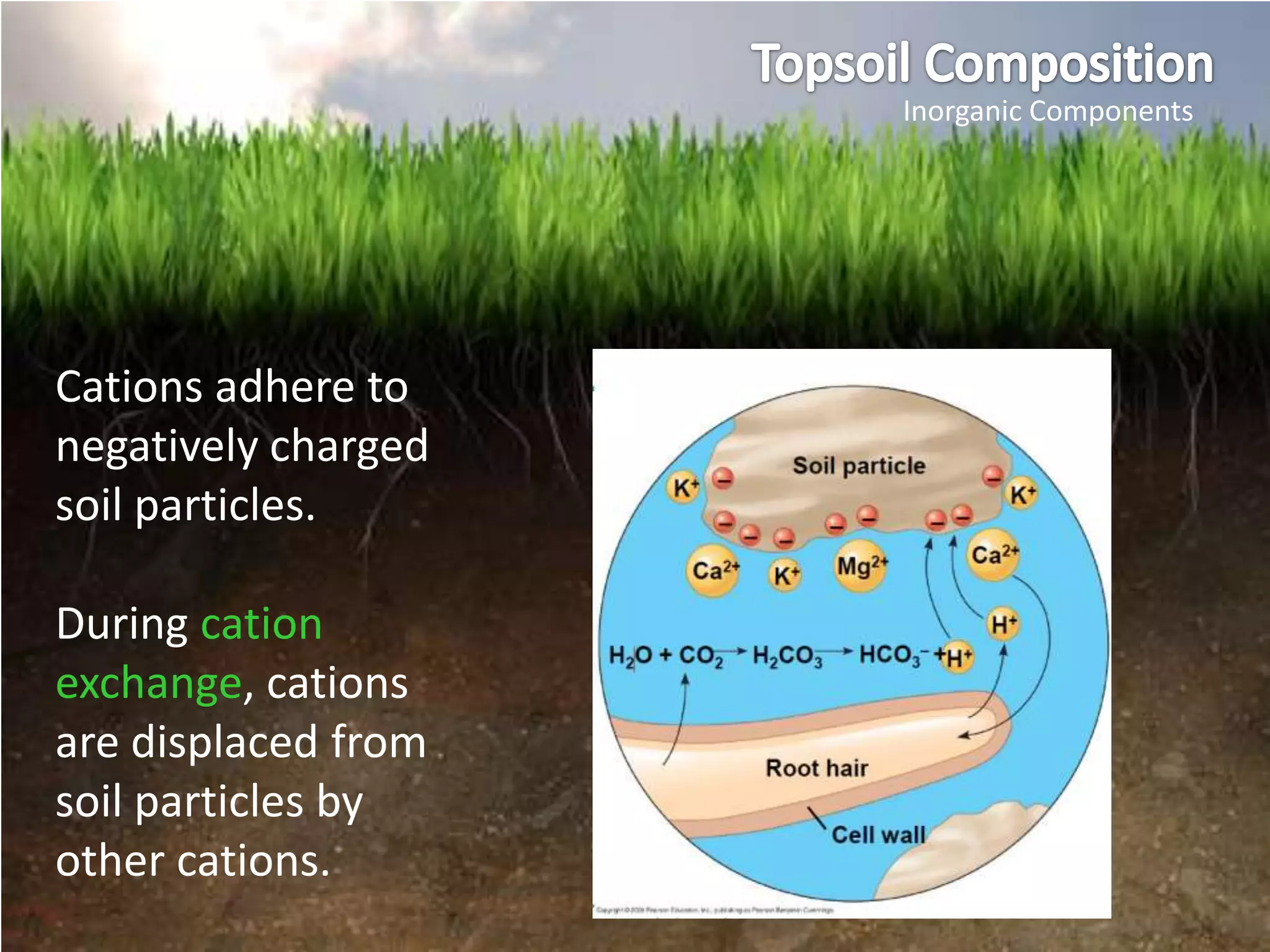
Cations adhere to
negatively charged
soil particles.

During cation
exchange, cations
are displaced from
soil particles by
other cations.
Organic Components


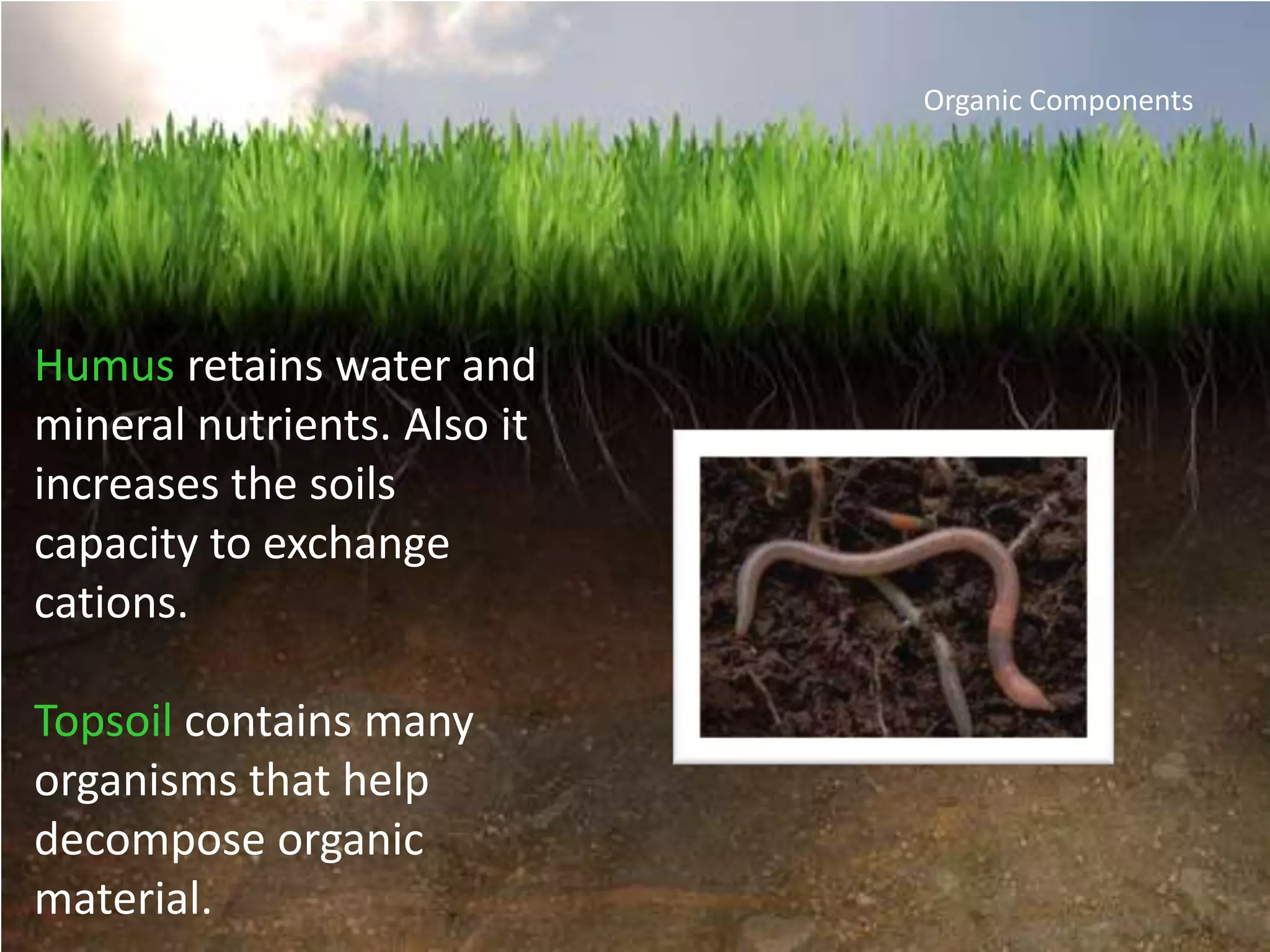
Humus retains water and
mineral nutrients. Also it
increases the soils
capacity to exchange
cations.

Topsoil contains many
organisms that help
decompose organic
material.
The goal of sustainable agriculture is to use faming methods that are
     conservation-minded, environmentally safe, and profitable.


                     Irrigation
                   Fertilization
                 Adjusting Soil pH
                Controlling Erosion
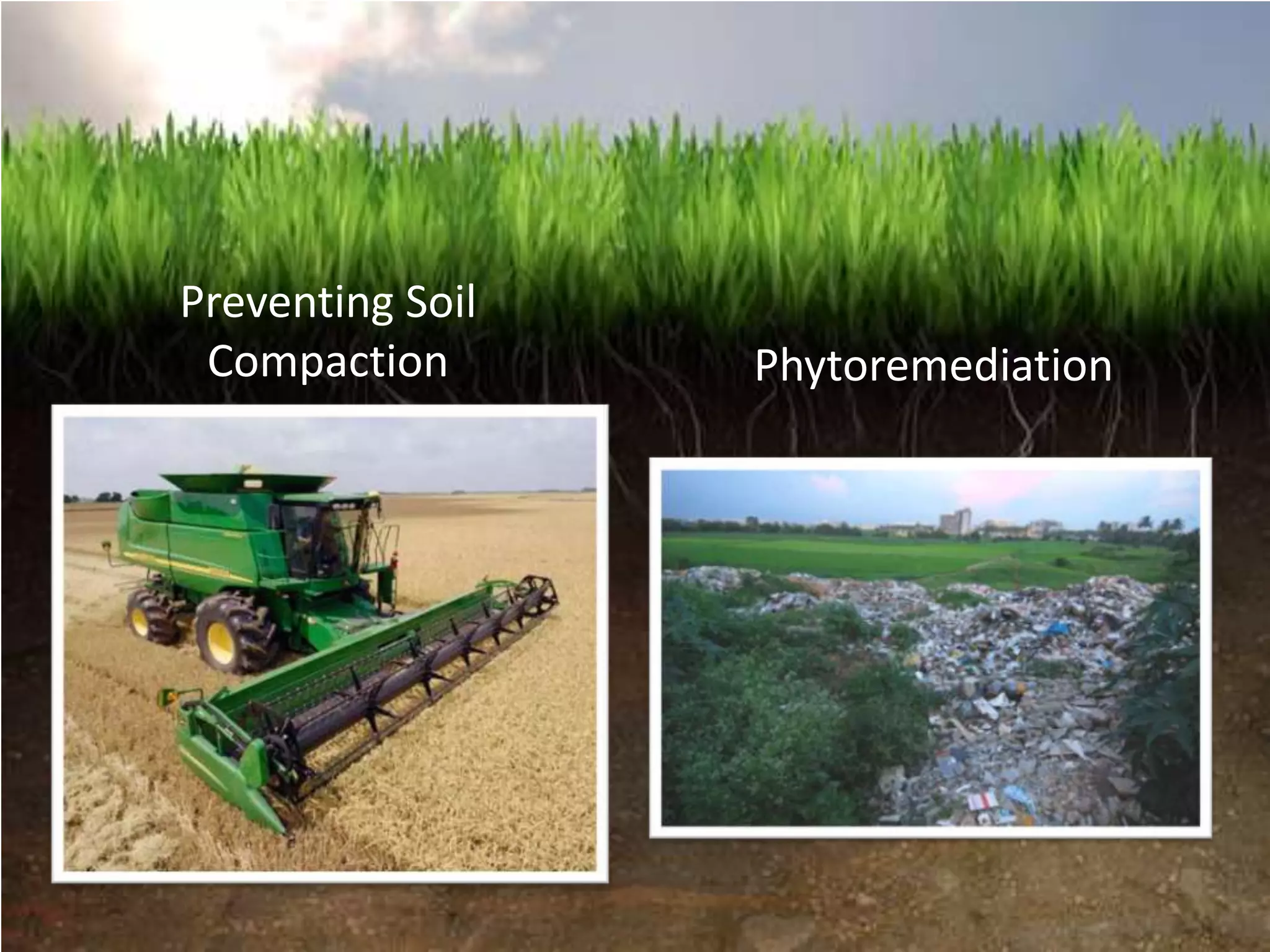
            Preventing Soil Compaction
                Phytoremediation
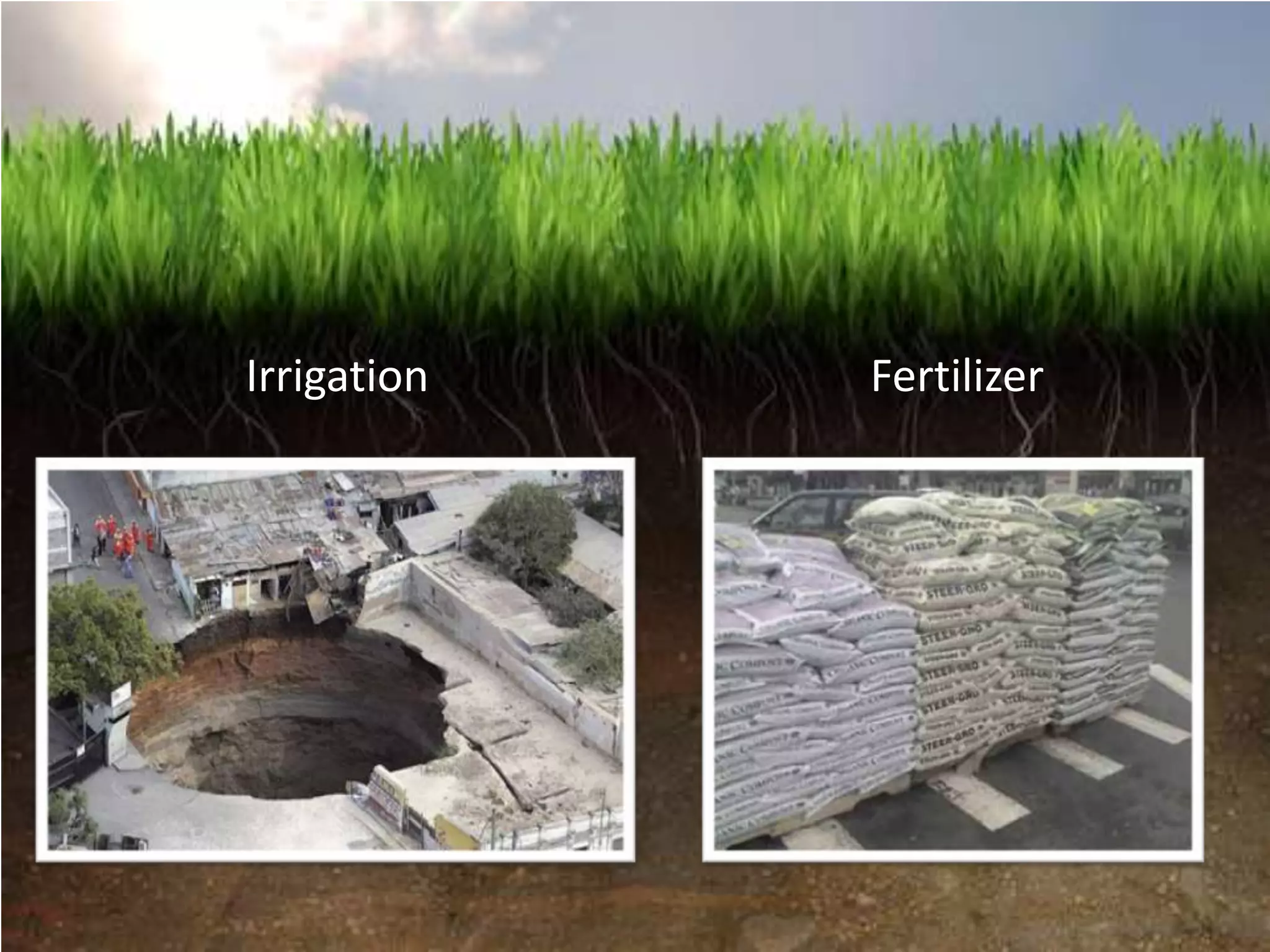
Irrigation   Fertilizer
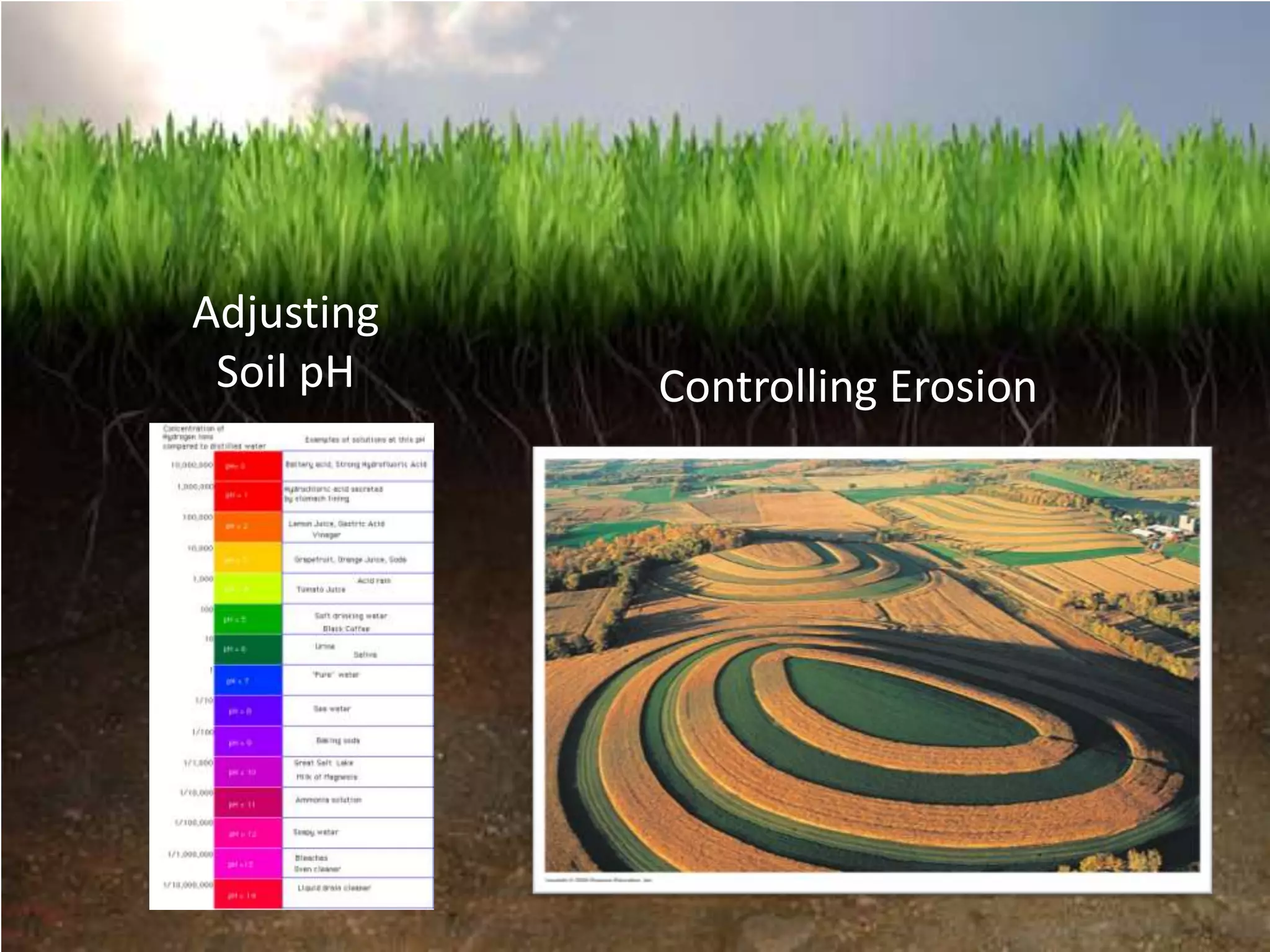
Adjusting
 Soil pH    Controlling Erosion
Preventing Soil
 Compaction       Phytoremediation
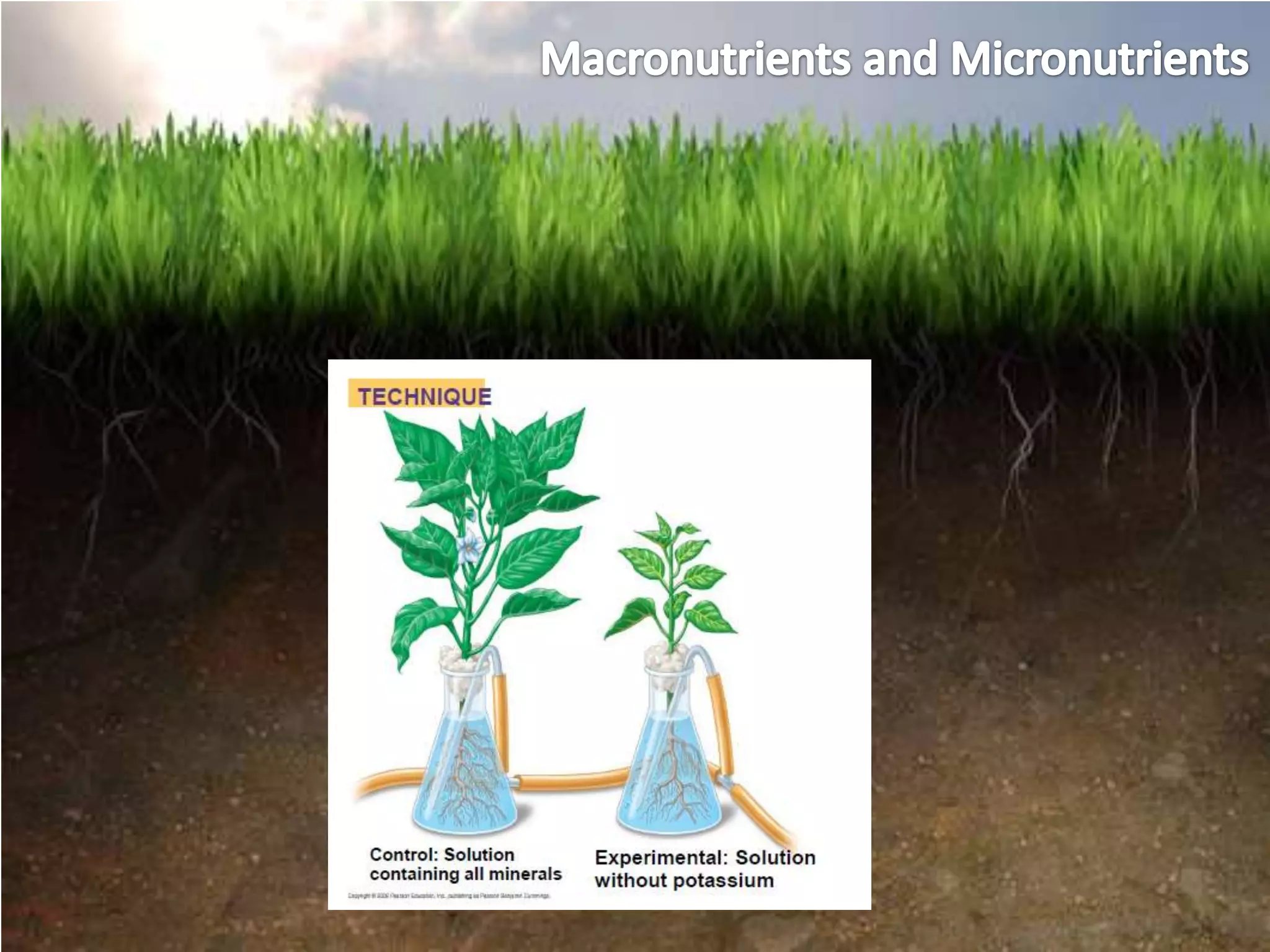
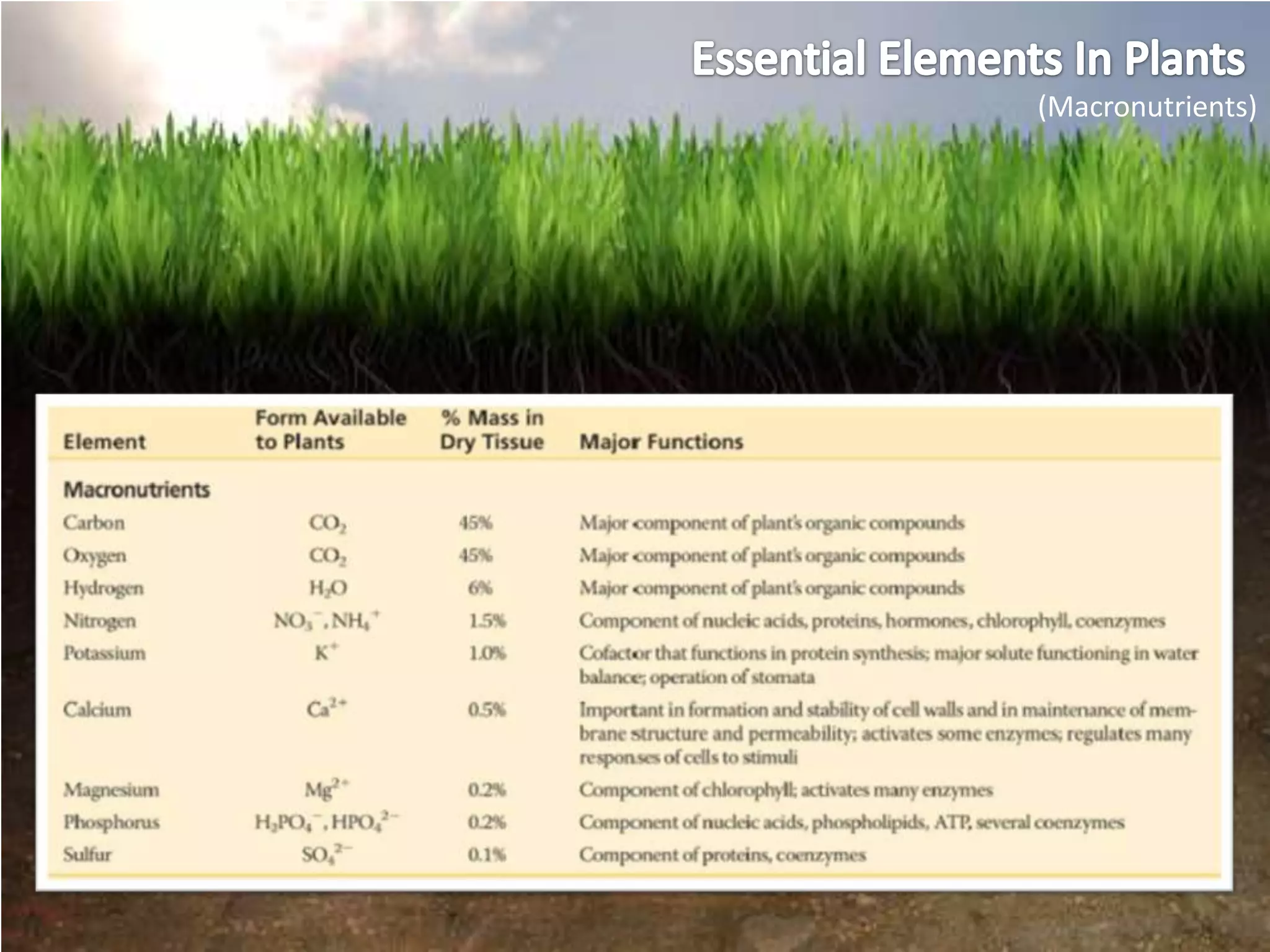
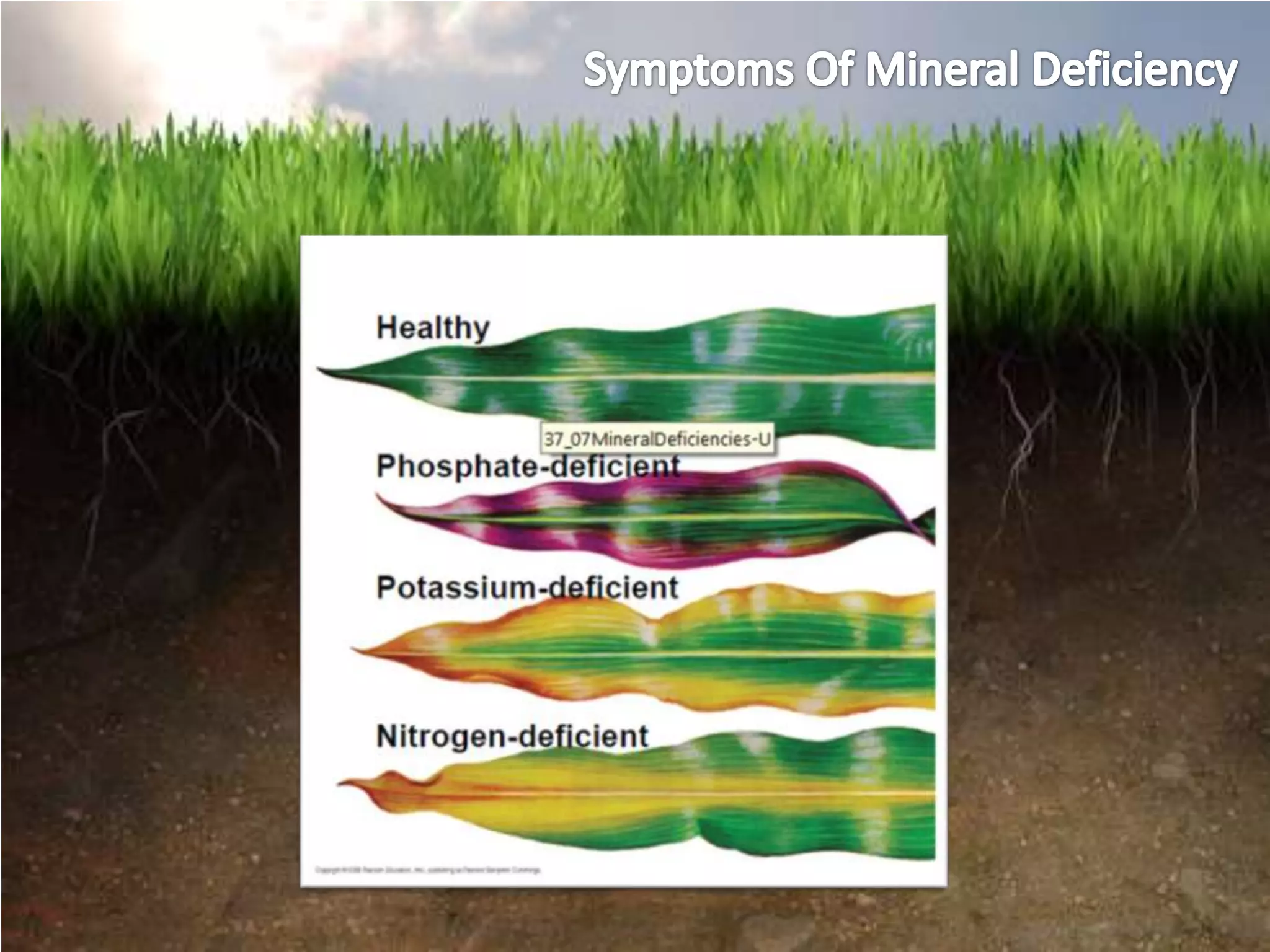
(Macronutrients)
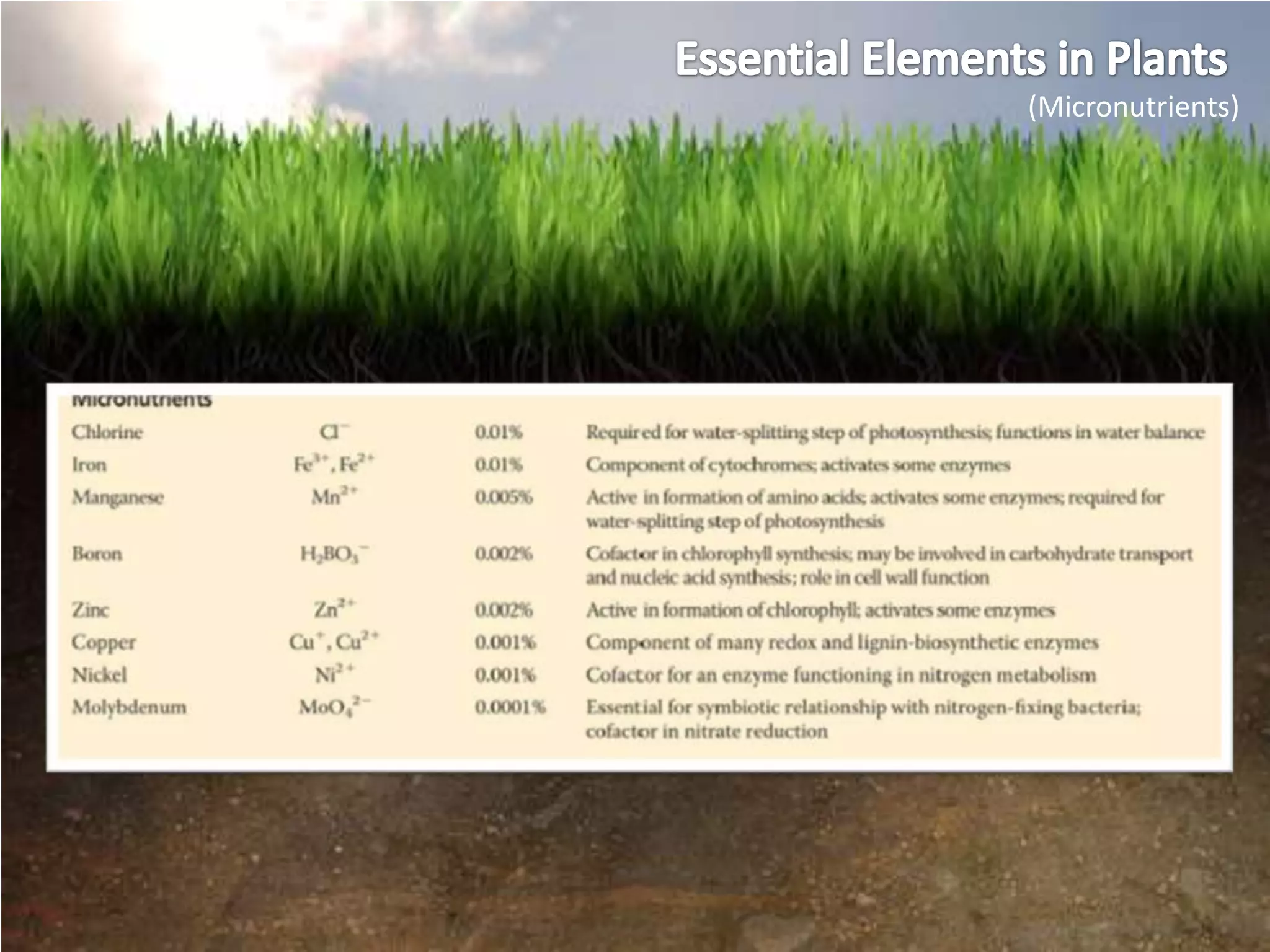
(Micronutrients)
-Plants & soil have two-way relationship
Many of the soil bacteria are called
saprobes-lives on decaying organic material
-Rhizobacteria-soil bacteria w/especially
large population in rhizosphere (soil layer
bound to plant roots)
   Some are called plant-growth-promoting rhizobacteria
   then enhance plant growth by a variety of mechanisms
-Nitrogen Cycle-describes transformations of
nitrogen & nitrogenous compounds in nature

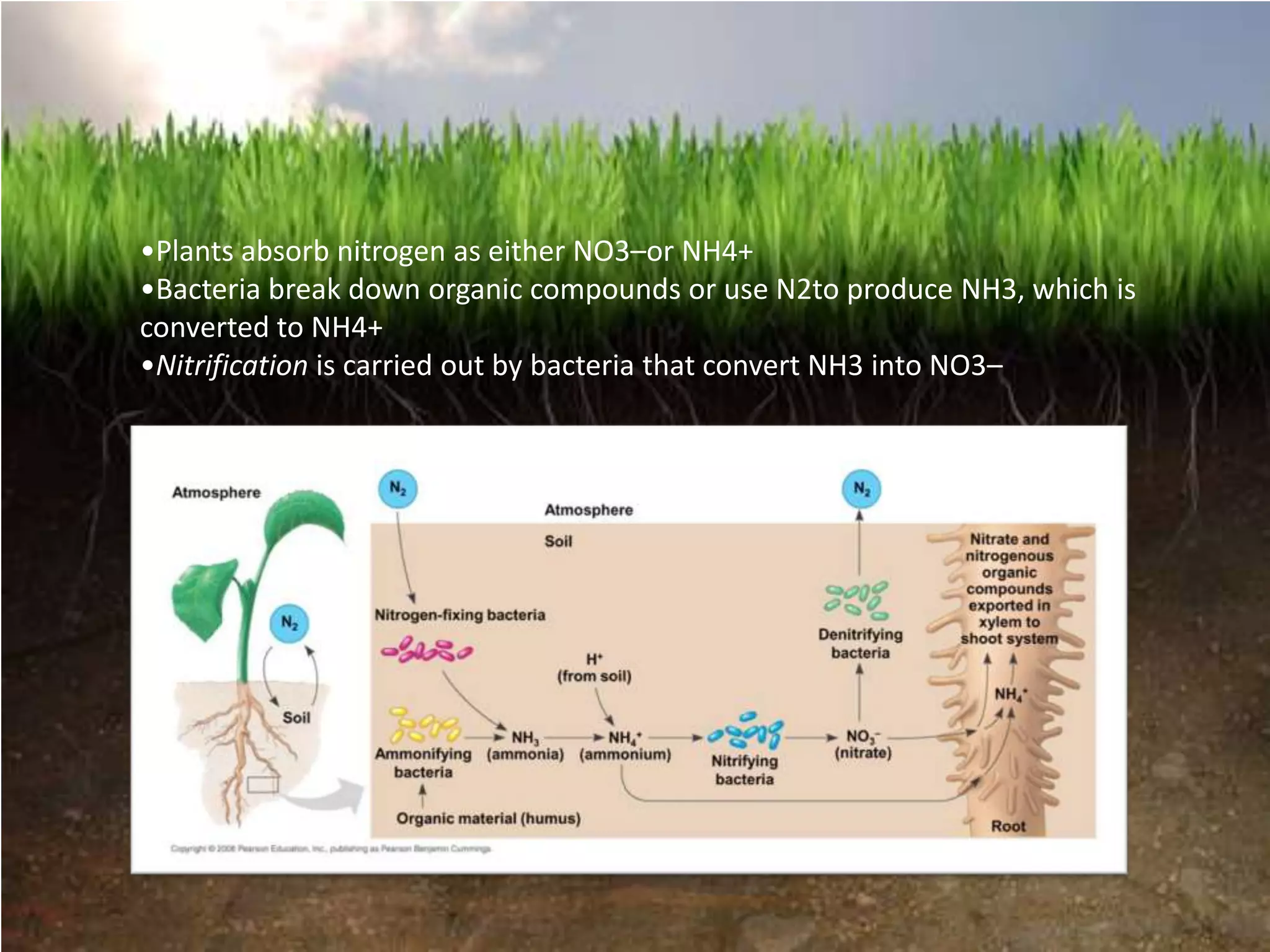
-Nitrogen-fixing bacteria converts atmospheric N2
to nitrogenous minerals that plants
•Plants absorb nitrogen as either NO3–or NH4+
•Bacteria break down organic compounds or use N2to produce NH3, which is
converted to NH4+
•Nitrification is carried out by bacteria that convert NH3 into NO3–
Nitrifying bacteriaadds free nitrogen or nitrates to the soil by the process of
nitrification.
Ammonifying bacteriaconverts ammonia into nitrates which is converted
into free soil nitrogen by nitrifying bacteria.
Denitrifying bacteriareduces nitrates or nitrogen gas; most are found in soil
Nitrogen fixing bacteriahas an association with bacteria which infect their
roots and in return for sugars from the plant, fix nitrogen which can be used by
the plant for growth.
-Nitrogen fixation: conversion of nitrogen
from N2to NH3
-The agricultural perks of mutualistic
nitrogen fixation underlies most types of
crop rotation
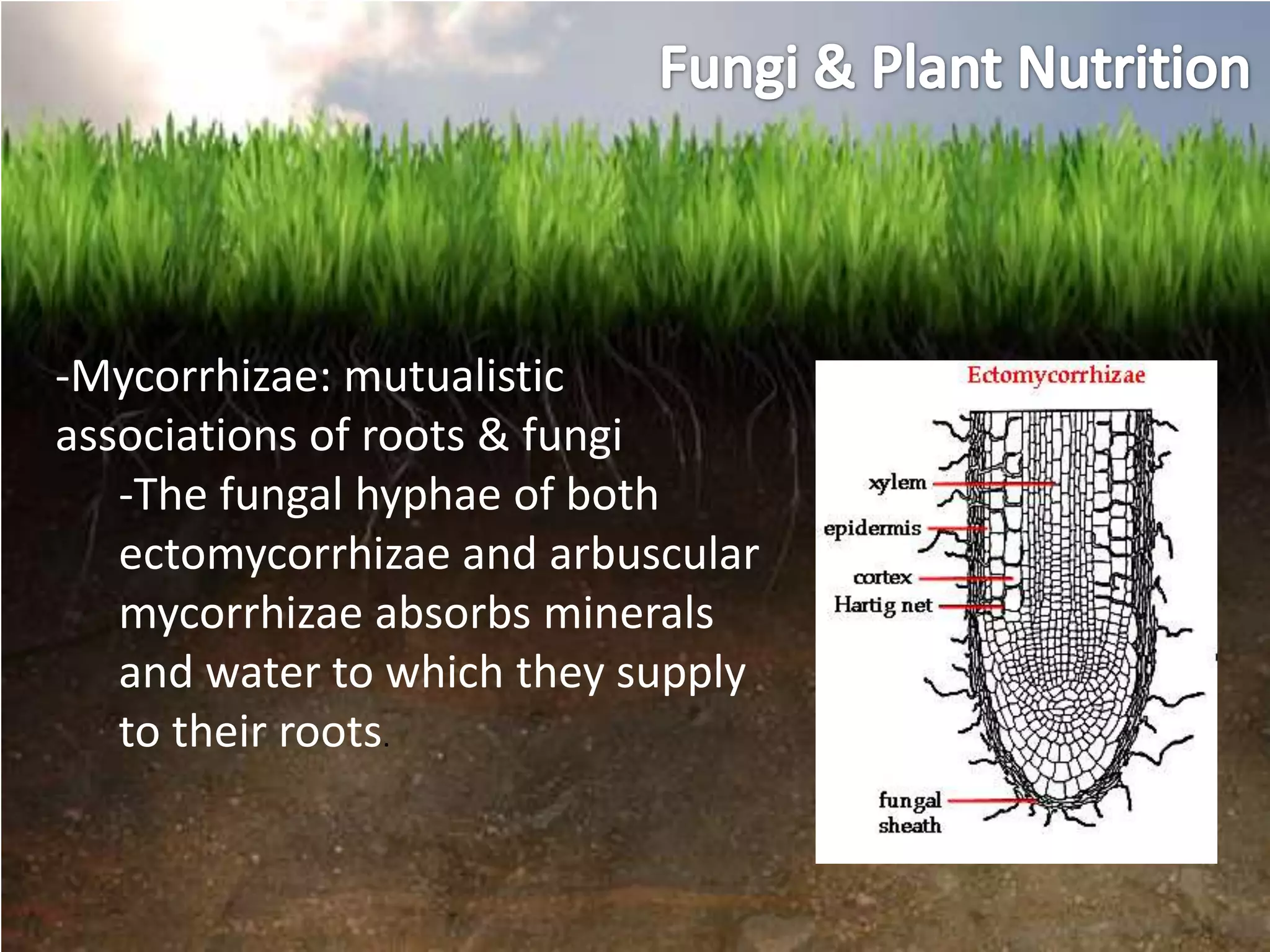
-Mycorrhizae: mutualistic
associations of roots & fungi
   -The fungal hyphae of both
   ectomycorrhizae and arbuscular
   mycorrhizae absorbs minerals
   and water to which they supply
   to their roots.
Epiphytes
   Absorb water & minerals from rain, mostly through leaves
   not roots. Ex: staghorn fern
Parasitic Plants
   Absorb sugars & minerals from living hosts, although some
   species are photosynthetic. Ex: mistletoe
Carniverous Plants
   Photosynthetic, but they obtain some of the minerals by
   killing & digesting insects & other small animals. Ex: venus fly
   trap
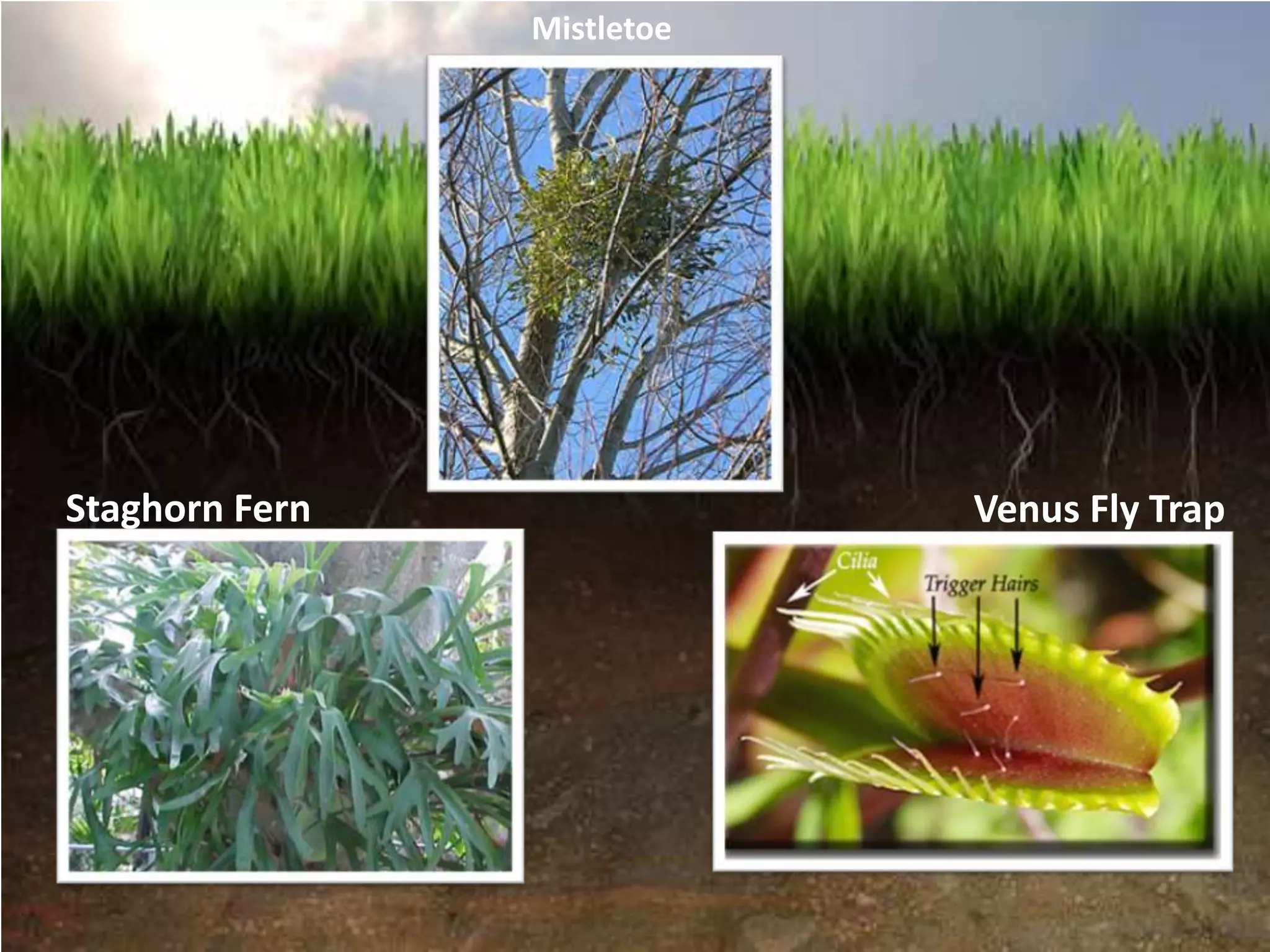
Mistletoe


Staghorn Fern               Venus Fly Trap

Bio chapter 37

  • 1.
    Ally Bove, LauraCox & Lindsey Richards
  • 2.
    -Anchors plant -Basic physical properties of soils and -Fertilizer the factors that govern soil qualities. -Helps retain water -Why certain inorganic nutrients are -Holds nutrition for plants essential for plant function. -Nutritional adaptations that have evolved in plants, often in relationships with other organisms.
  • 3.
    Soil particles areclassified by size from largest to smallest: -Sand -Silt -Clay -Soil is stratified into layers called soil horizons. A type of topsoil called loam is the most fertile.
  • 4.
    Inorganic Components Cations adhereto negatively charged soil particles. During cation exchange, cations are displaced from soil particles by other cations.
  • 5.
    Organic Components Humus retainswater and mineral nutrients. Also it increases the soils capacity to exchange cations. Topsoil contains many organisms that help decompose organic material.
  • 6.
    The goal ofsustainable agriculture is to use faming methods that are conservation-minded, environmentally safe, and profitable. Irrigation Fertilization Adjusting Soil pH Controlling Erosion Preventing Soil Compaction Phytoremediation
  • 7.
    Irrigation Fertilizer
  • 8.
    Adjusting Soil pH Controlling Erosion
  • 9.
    Preventing Soil Compaction Phytoremediation
  • 11.
  • 12.
  • 15.
    -Plants & soilhave two-way relationship Many of the soil bacteria are called saprobes-lives on decaying organic material -Rhizobacteria-soil bacteria w/especially large population in rhizosphere (soil layer bound to plant roots) Some are called plant-growth-promoting rhizobacteria then enhance plant growth by a variety of mechanisms
  • 16.
    -Nitrogen Cycle-describes transformationsof nitrogen & nitrogenous compounds in nature -Nitrogen-fixing bacteria converts atmospheric N2 to nitrogenous minerals that plants
  • 17.
    •Plants absorb nitrogenas either NO3–or NH4+ •Bacteria break down organic compounds or use N2to produce NH3, which is converted to NH4+ •Nitrification is carried out by bacteria that convert NH3 into NO3–
  • 18.
    Nitrifying bacteriaadds freenitrogen or nitrates to the soil by the process of nitrification. Ammonifying bacteriaconverts ammonia into nitrates which is converted into free soil nitrogen by nitrifying bacteria. Denitrifying bacteriareduces nitrates or nitrogen gas; most are found in soil Nitrogen fixing bacteriahas an association with bacteria which infect their roots and in return for sugars from the plant, fix nitrogen which can be used by the plant for growth.
  • 19.
    -Nitrogen fixation: conversionof nitrogen from N2to NH3 -The agricultural perks of mutualistic nitrogen fixation underlies most types of crop rotation
  • 20.
    -Mycorrhizae: mutualistic associations ofroots & fungi -The fungal hyphae of both ectomycorrhizae and arbuscular mycorrhizae absorbs minerals and water to which they supply to their roots.
  • 21.
    Epiphytes Absorb water & minerals from rain, mostly through leaves not roots. Ex: staghorn fern Parasitic Plants Absorb sugars & minerals from living hosts, although some species are photosynthetic. Ex: mistletoe Carniverous Plants Photosynthetic, but they obtain some of the minerals by killing & digesting insects & other small animals. Ex: venus fly trap
  • 22.