We’ll discuss the following Content today:
Binary Search Tree
Definition
Properties of Binary Tree
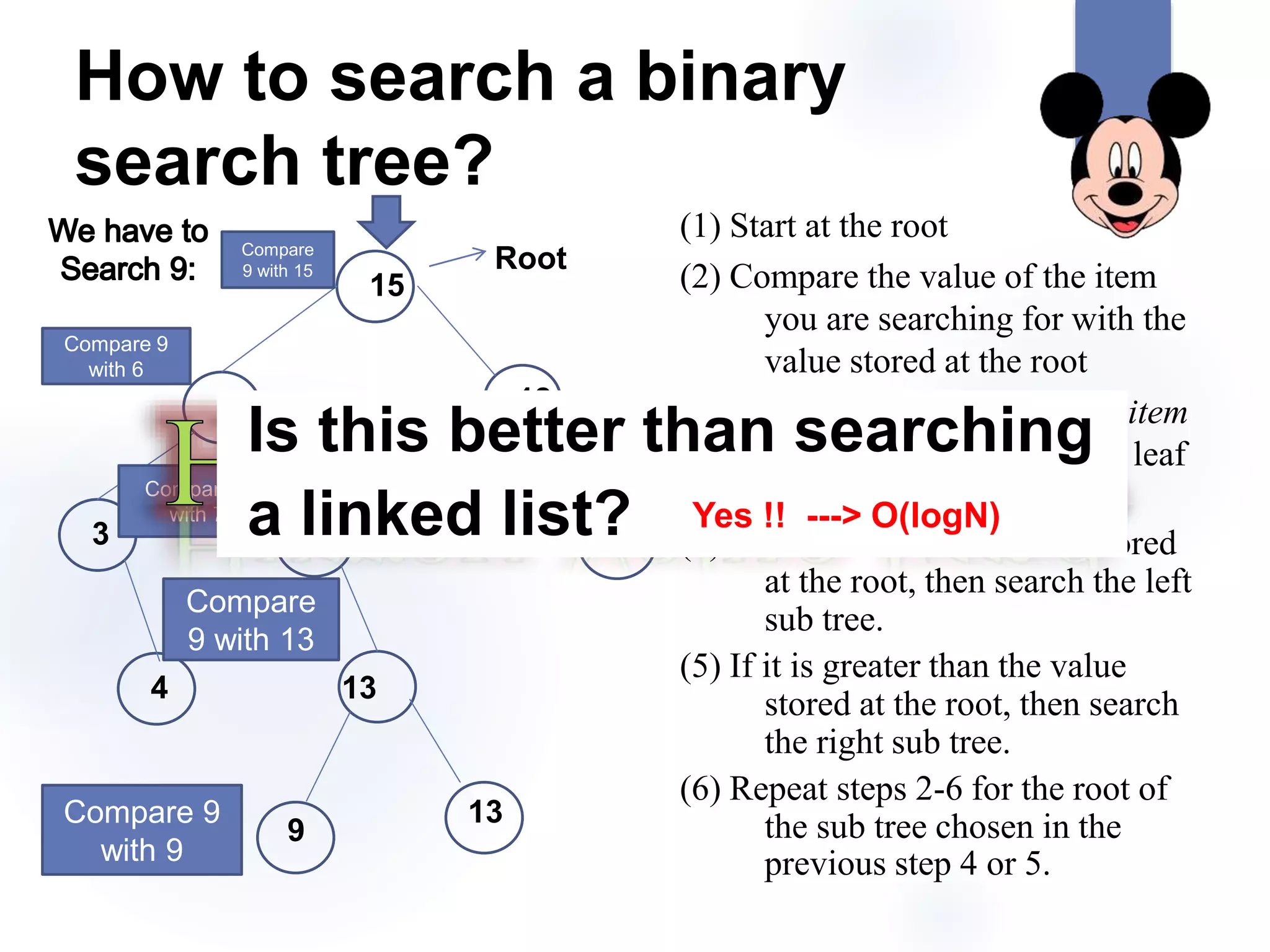
How to search a binary search tree?
• Pseudo code
• Complexities
• Examples
• Resources
Binary Search Tree
Definition
• The Binary Tree is a Tree. In which every parent
node have maximum two child nodes.
• A Binary Search Tree is a variation of Binary
Search Tree. The values in the Binary Search tree
can be stored in the specific sequence.
• It is called a search tree because it can be used to
search for the presence of a number in O(Log(n)
times.
• A Binary Search Tree is an ordered tree.
• There is no permission for duplicate nodes.
Properties of Binary
Search Tree
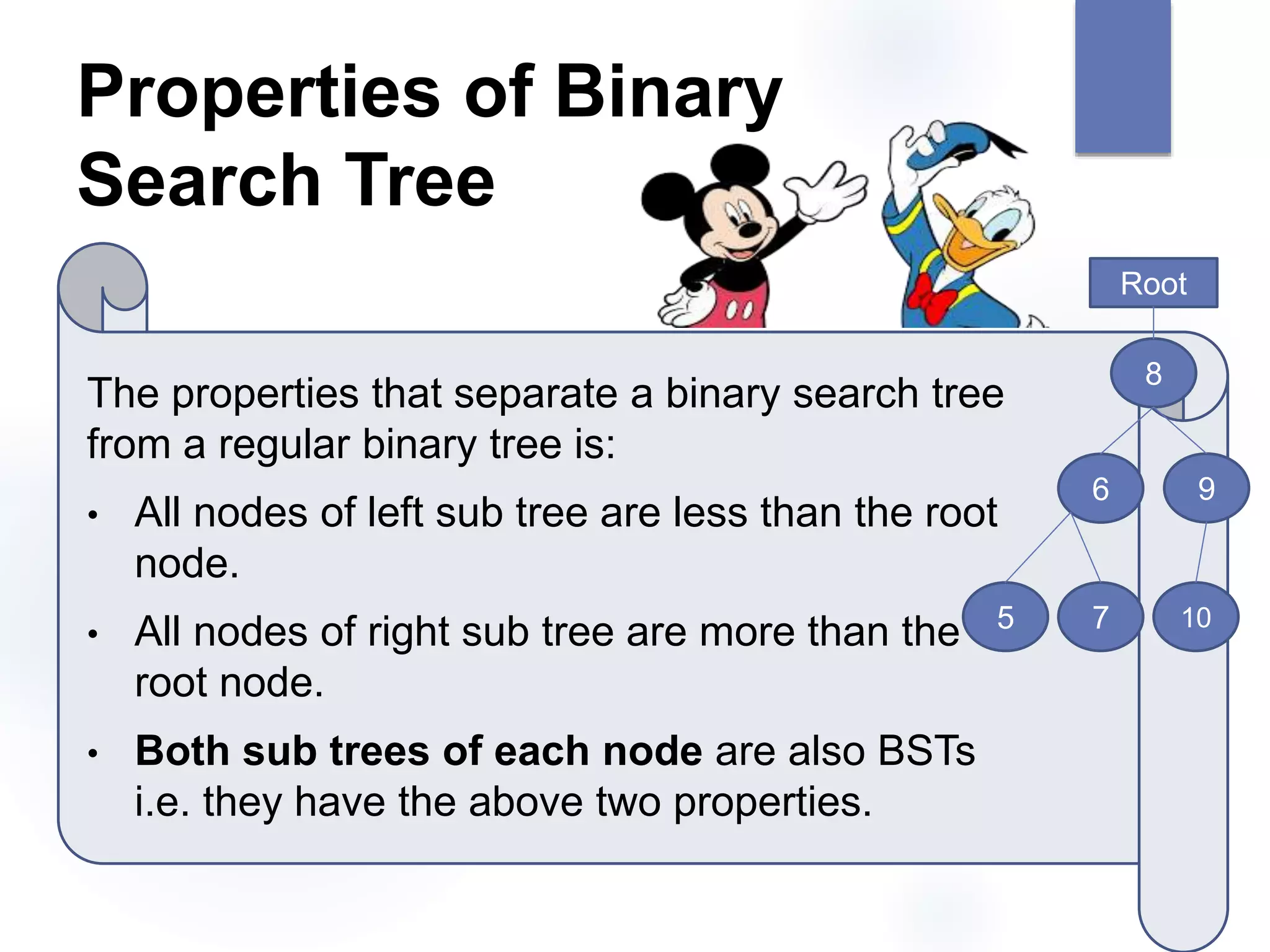
The properties that separate a binary search tree
from a regular binary tree is:
• All nodes of left sub tree are less than the root
node.
• All nodes of right sub tree are more than the
root node.
• Both sub trees of each node are also BSTs
i.e. they have the above two properties.
8
6
5
9
10
7
Root
Properties of Binary
Search Tree
8
3
1 6
4
8
3
1 6
2
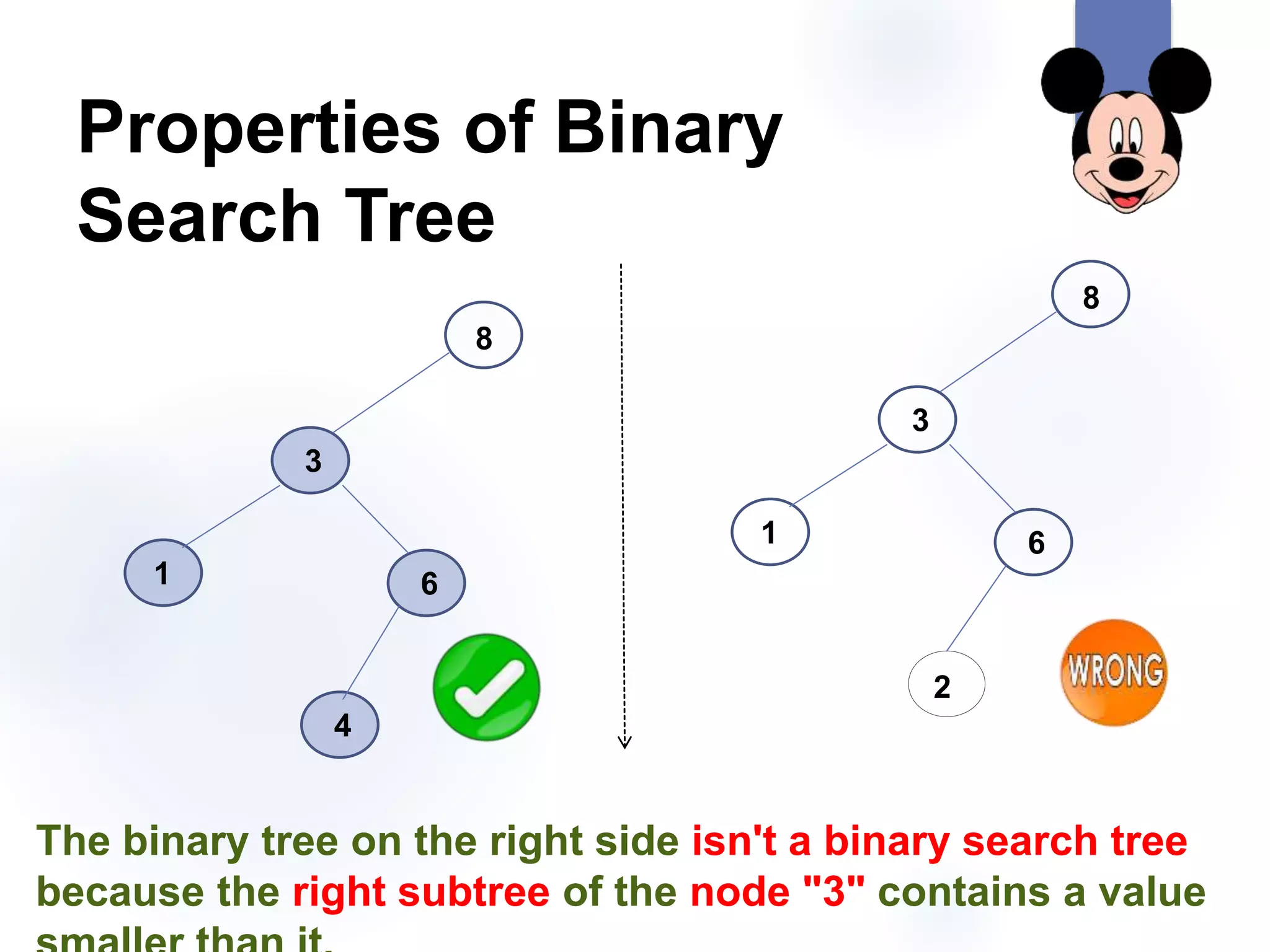
The binary tree on the right side isn't a binary search tree
because the right subtree of the node "3" contains a value
How to search a binary
search tree?
17
15
18
6
3 7
13
13
4
9
20
Root
(1) Start at the root
(2) Compare the value of the item
you are searching for with the
value stored at the root
(3) If the values are equal, then item
found; otherwise, if it is a leaf
node, then not found.
(4) If it is less than the value stored
at the root, then search the left
sub tree.
(5) If it is greater than the value
stored at the root, then search
the right sub tree.
(6) Repeat steps 2-6 for the root of
the sub tree chosen in the
previous step 4 or 5.
Compare
9 with 15
Compare 9
with 6
Compare 9
with 7
Compare
9 with 13
Compare 9
with 9
Is this better than searching
a linked list? Yes !! ---> O(logN)
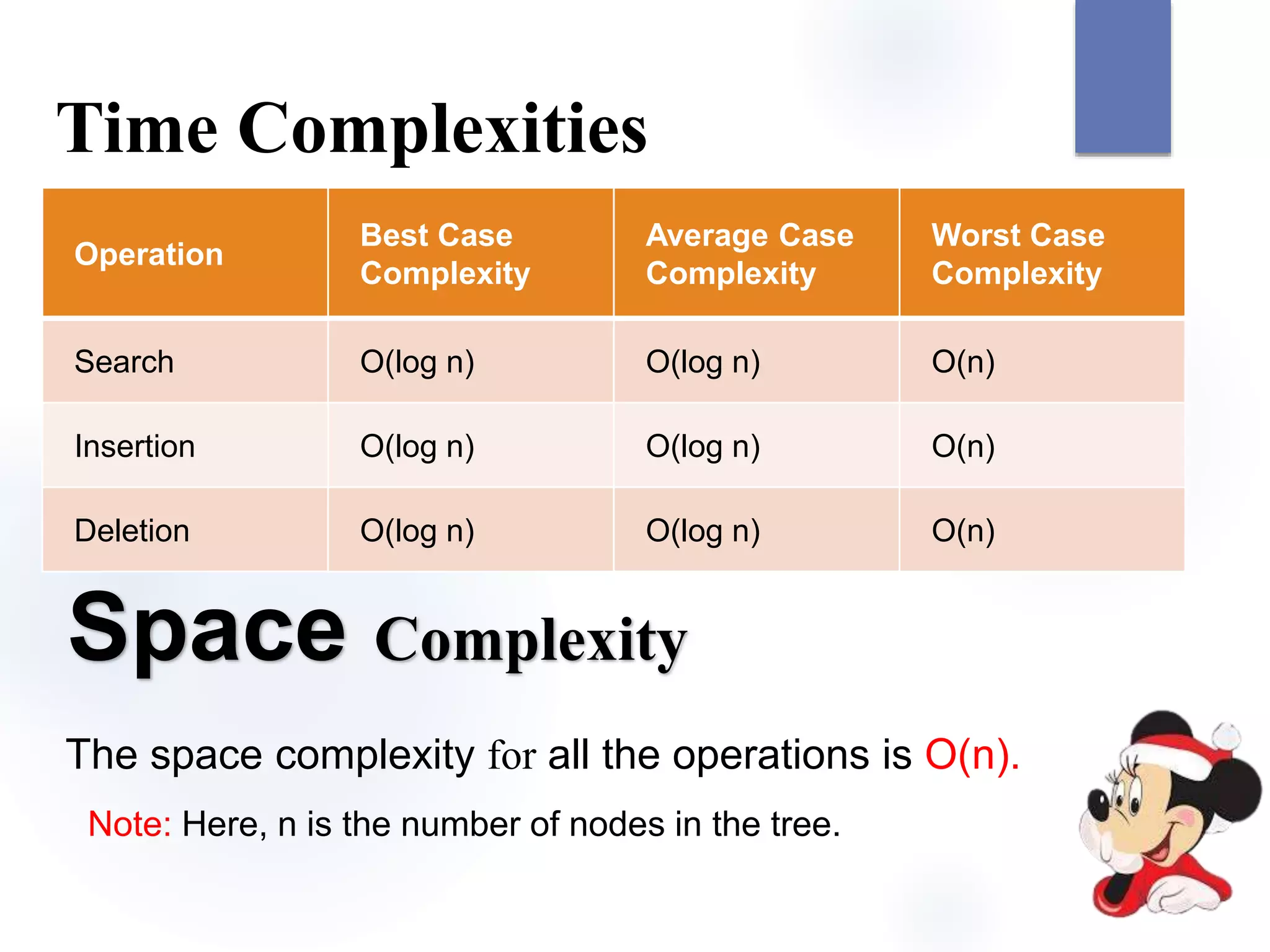
Time Complexities
Operation
Best Case
Complexity
Average Case
Complexity
Worst Case
Complexity
Search O(log n) O(log n) O(n)
Insertion O(log n) O(log n) O(n)
Deletion O(log n) O(log n) O(n)
Space Complexity
The space complexity for all the operations is O(n).
Note: Here, n is the number of nodes in the tree.
Applications
• In multilevel indexing in the database
• For dynamic sorting
• For managing virtual memory areas in Unix
kernel
• https://www.programiz.com/dsa/binary-search-tree
• https://en.wikipedia.org/wiki/Binary_search_tree
• https://www.upgrad.com/blog/difference-between-
binary-tree-and-binary-search-tree/
Resources
Thanks

Binary Search Tree

  • 2.
    We’ll discuss thefollowing Content today: Binary Search Tree Definition Properties of Binary Tree How to search a binary search tree? • Pseudo code • Complexities • Examples • Resources
  • 3.
    Binary Search Tree Definition •The Binary Tree is a Tree. In which every parent node have maximum two child nodes. • A Binary Search Tree is a variation of Binary Search Tree. The values in the Binary Search tree can be stored in the specific sequence. • It is called a search tree because it can be used to search for the presence of a number in O(Log(n) times. • A Binary Search Tree is an ordered tree. • There is no permission for duplicate nodes.
  • 4.
    Properties of Binary SearchTree The properties that separate a binary search tree from a regular binary tree is: • All nodes of left sub tree are less than the root node. • All nodes of right sub tree are more than the root node. • Both sub trees of each node are also BSTs i.e. they have the above two properties. 8 6 5 9 10 7 Root
  • 5.
    Properties of Binary SearchTree 8 3 1 6 4 8 3 1 6 2 The binary tree on the right side isn't a binary search tree because the right subtree of the node "3" contains a value
  • 6.
    How to searcha binary search tree? 17 15 18 6 3 7 13 13 4 9 20 Root (1) Start at the root (2) Compare the value of the item you are searching for with the value stored at the root (3) If the values are equal, then item found; otherwise, if it is a leaf node, then not found. (4) If it is less than the value stored at the root, then search the left sub tree. (5) If it is greater than the value stored at the root, then search the right sub tree. (6) Repeat steps 2-6 for the root of the sub tree chosen in the previous step 4 or 5. Compare 9 with 15 Compare 9 with 6 Compare 9 with 7 Compare 9 with 13 Compare 9 with 9 Is this better than searching a linked list? Yes !! ---> O(logN)
  • 7.
    Time Complexities Operation Best Case Complexity AverageCase Complexity Worst Case Complexity Search O(log n) O(log n) O(n) Insertion O(log n) O(log n) O(n) Deletion O(log n) O(log n) O(n) Space Complexity The space complexity for all the operations is O(n). Note: Here, n is the number of nodes in the tree.
  • 8.
    Applications • In multilevelindexing in the database • For dynamic sorting • For managing virtual memory areas in Unix kernel
  • 9.
    • https://www.programiz.com/dsa/binary-search-tree • https://en.wikipedia.org/wiki/Binary_search_tree •https://www.upgrad.com/blog/difference-between- binary-tree-and-binary-search-tree/ Resources
  • 10.