Quality From The Eye Of Business Intelligence
“Quality at the heart of BI”
By: Kamel Badawy
Agenda
 Introduction
 What Does Quality Means to BI?
 BI Data Quality Dimensions
 Current Standing &Where to?
 BI RoadmapTowards Data Quality
Introduction
Organizations are discovering that data quality deficiencies have
a significant impact on their most strategic business initiatives,
often holding them back from achieving:
 Growth
 Agility
 Competitiveness
 Transparency
 In addition to challenges with growth and agility, compliance
and transparency pressures increasingly bring DATAQUALITY
issues to the fore — it is no longer acceptable to ignore flaws in
data, and organizations must prove the accuracy of information
that they report internally to top management or to auditors,
regulators and the public
BI Objective:
Is to Build clean, accurate & reliable data warehouse
BI should deliver data that is necessary for decision-makers
What Does Quality Means to BI?
Quality is critical to DataWarehouse and
Business Intelligence. Better informed, more
reliable decisions come from using the right data
quality technology during the process of loading a
data warehouse. It is important the data is
accurate, complete, and consistent across data
sources.
Data Quality is a multi-dimensional measurement
of the adequacy of a particular datum or data
sets. In business, data quality is measured to
determine whether or not data can be used as a
basis for reliable Business Intelligence and for
making organizational decisions.
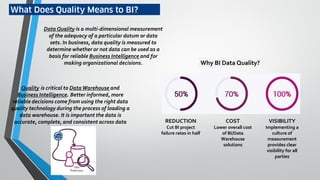
REDUCTION
Cut BI project
failure rates in half
COST
Lower overall cost
of BI/Data
Warehouse
solutions
VISIBILITY
Implementing a
culture of
measurement
provides clear
visibility for all
parties
Why BI Data Quality?
Numbers & Facts
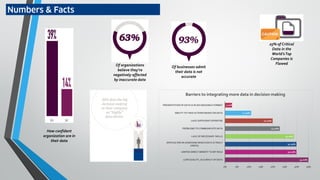
Of organizations
believe they’re
negatively affected
by inaccurate data
Of businesses admit
their data is not
accurate
35.00%
30.00%
30.00%
29.00%
23.00%
20.00%
11.00%
3.00%
0% 5% 10% 15% 20% 25% 30% 35%
LOW QUALITY, ACCURACY OF DATA
LIMITED DIRECT BENEFIT TO MY ROLE
DIFFICULTIES IN ASSESSING WHICH DATA IS TRULY
USEFUL
LACK OF NECESSARY SKILLS
PROBLEMS TO COMMUNICATE DATA
LACK SUFFICIENT EXPERTISE
ABILITY TO TAKE ACTIONS BASED ON DATA
PRESENTATION OF DATA IS IN AN UNUSABLE FORMAT
Barriers to integrating more data in decision making
25% of Critical
Data in the
World’sTop
Companies is
Flawed
How confident
organization are in
their data
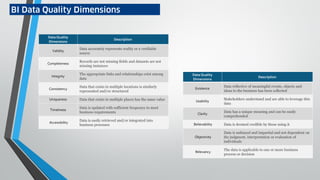
BI Data Quality Dimensions
Data Quality
Dimensions
Description
Validity
Data accurately represents reality or a verifiable
source
Completeness
Records are not missing fields and datasets are not
missing instances
Integrity
The appropriate links and relationships exist among
data
Consistency
Data that exists in multiple locations is similarly
represented and/or structured
Uniqueness Data that exists in multiple places has the same value
Timeliness
Data is updated with sufficient frequency to meet
business requirements
Accessibility
Data is easily retrieved and/or integrated into
business processes
Data Quality
Dimensions
Description
Existence
Data reflective of meaningful events, objects and
ideas to the business has been collected
Usability
Stakeholders understand and are able to leverage this
data
Clarity
Data has a unique meaning and can be easily
comprehended
Believability Data is deemed credible by those using it
Objectivity
Data is unbiased and impartial and not dependent on
the judgment, interpretation or evaluation of
individuals
Relevancy
The data is applicable to one or more business
process or decision
Current Standing & Where to?
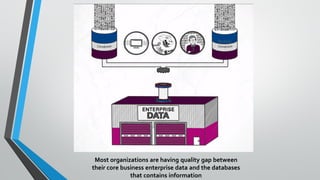
Most organizations are having quality gap between
their core business enterprise data and the databases
that contains information
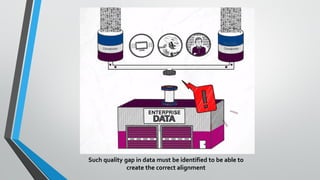
Such quality gap in data must be identified to be able to
create the correct alignment
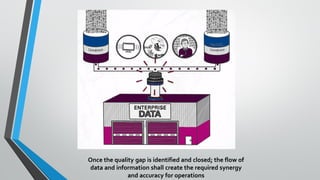
Once the quality gap is identified and closed; the flow of
data and information shall create the required synergy
and accuracy for operations
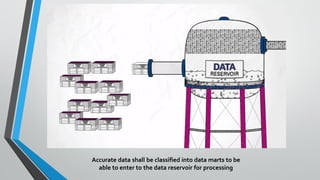
Accurate data shall be classified into data marts to be
able to enter to the data reservoir for processing
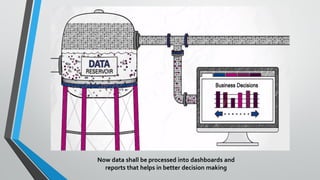
Now data shall be processed into dashboards and
reports that helps in better decision making
What’s new?!
Big DataVs. Business Intelligence
Creating Questions Vs. Answering Questions
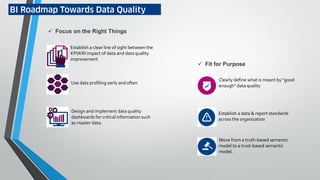
BI Roadmap Towards Data Quality
 Focus on the Right Things
Establish a clear line of sight between the
KPI/KRI impact of data and data quality
improvement
Use data profiling early and often
Design and implement data quality
dashboards for critical information such
as master data.
 Fit for Purpose
Clearly define what is meant by "good
enough" data quality
Establish a data & report standards
across the organization
Move from a truth-based semantic
model to a trust-based semantic
model.
ThankYou

BI Quality Presentation

  • 1.
    Quality From TheEye Of Business Intelligence “Quality at the heart of BI” By: Kamel Badawy
  • 2.
    Agenda  Introduction  WhatDoes Quality Means to BI?  BI Data Quality Dimensions  Current Standing &Where to?  BI RoadmapTowards Data Quality
  • 3.
    Introduction Organizations are discoveringthat data quality deficiencies have a significant impact on their most strategic business initiatives, often holding them back from achieving:  Growth  Agility  Competitiveness  Transparency  In addition to challenges with growth and agility, compliance and transparency pressures increasingly bring DATAQUALITY issues to the fore — it is no longer acceptable to ignore flaws in data, and organizations must prove the accuracy of information that they report internally to top management or to auditors, regulators and the public BI Objective: Is to Build clean, accurate & reliable data warehouse BI should deliver data that is necessary for decision-makers
  • 4.
    What Does QualityMeans to BI? Quality is critical to DataWarehouse and Business Intelligence. Better informed, more reliable decisions come from using the right data quality technology during the process of loading a data warehouse. It is important the data is accurate, complete, and consistent across data sources. Data Quality is a multi-dimensional measurement of the adequacy of a particular datum or data sets. In business, data quality is measured to determine whether or not data can be used as a basis for reliable Business Intelligence and for making organizational decisions. REDUCTION Cut BI project failure rates in half COST Lower overall cost of BI/Data Warehouse solutions VISIBILITY Implementing a culture of measurement provides clear visibility for all parties Why BI Data Quality?
  • 5.
    Numbers & Facts Oforganizations believe they’re negatively affected by inaccurate data Of businesses admit their data is not accurate 35.00% 30.00% 30.00% 29.00% 23.00% 20.00% 11.00% 3.00% 0% 5% 10% 15% 20% 25% 30% 35% LOW QUALITY, ACCURACY OF DATA LIMITED DIRECT BENEFIT TO MY ROLE DIFFICULTIES IN ASSESSING WHICH DATA IS TRULY USEFUL LACK OF NECESSARY SKILLS PROBLEMS TO COMMUNICATE DATA LACK SUFFICIENT EXPERTISE ABILITY TO TAKE ACTIONS BASED ON DATA PRESENTATION OF DATA IS IN AN UNUSABLE FORMAT Barriers to integrating more data in decision making 25% of Critical Data in the World’sTop Companies is Flawed How confident organization are in their data
  • 6.
    BI Data QualityDimensions Data Quality Dimensions Description Validity Data accurately represents reality or a verifiable source Completeness Records are not missing fields and datasets are not missing instances Integrity The appropriate links and relationships exist among data Consistency Data that exists in multiple locations is similarly represented and/or structured Uniqueness Data that exists in multiple places has the same value Timeliness Data is updated with sufficient frequency to meet business requirements Accessibility Data is easily retrieved and/or integrated into business processes Data Quality Dimensions Description Existence Data reflective of meaningful events, objects and ideas to the business has been collected Usability Stakeholders understand and are able to leverage this data Clarity Data has a unique meaning and can be easily comprehended Believability Data is deemed credible by those using it Objectivity Data is unbiased and impartial and not dependent on the judgment, interpretation or evaluation of individuals Relevancy The data is applicable to one or more business process or decision
  • 7.
  • 8.
    Most organizations arehaving quality gap between their core business enterprise data and the databases that contains information
  • 9.
    Such quality gapin data must be identified to be able to create the correct alignment
  • 10.
    Once the qualitygap is identified and closed; the flow of data and information shall create the required synergy and accuracy for operations
  • 11.
    Accurate data shallbe classified into data marts to be able to enter to the data reservoir for processing
  • 12.
    Now data shallbe processed into dashboards and reports that helps in better decision making
  • 13.
    What’s new?! Big DataVs.Business Intelligence Creating Questions Vs. Answering Questions
  • 14.
    BI Roadmap TowardsData Quality  Focus on the Right Things Establish a clear line of sight between the KPI/KRI impact of data and data quality improvement Use data profiling early and often Design and implement data quality dashboards for critical information such as master data.  Fit for Purpose Clearly define what is meant by "good enough" data quality Establish a data & report standards across the organization Move from a truth-based semantic model to a trust-based semantic model.
  • 15.