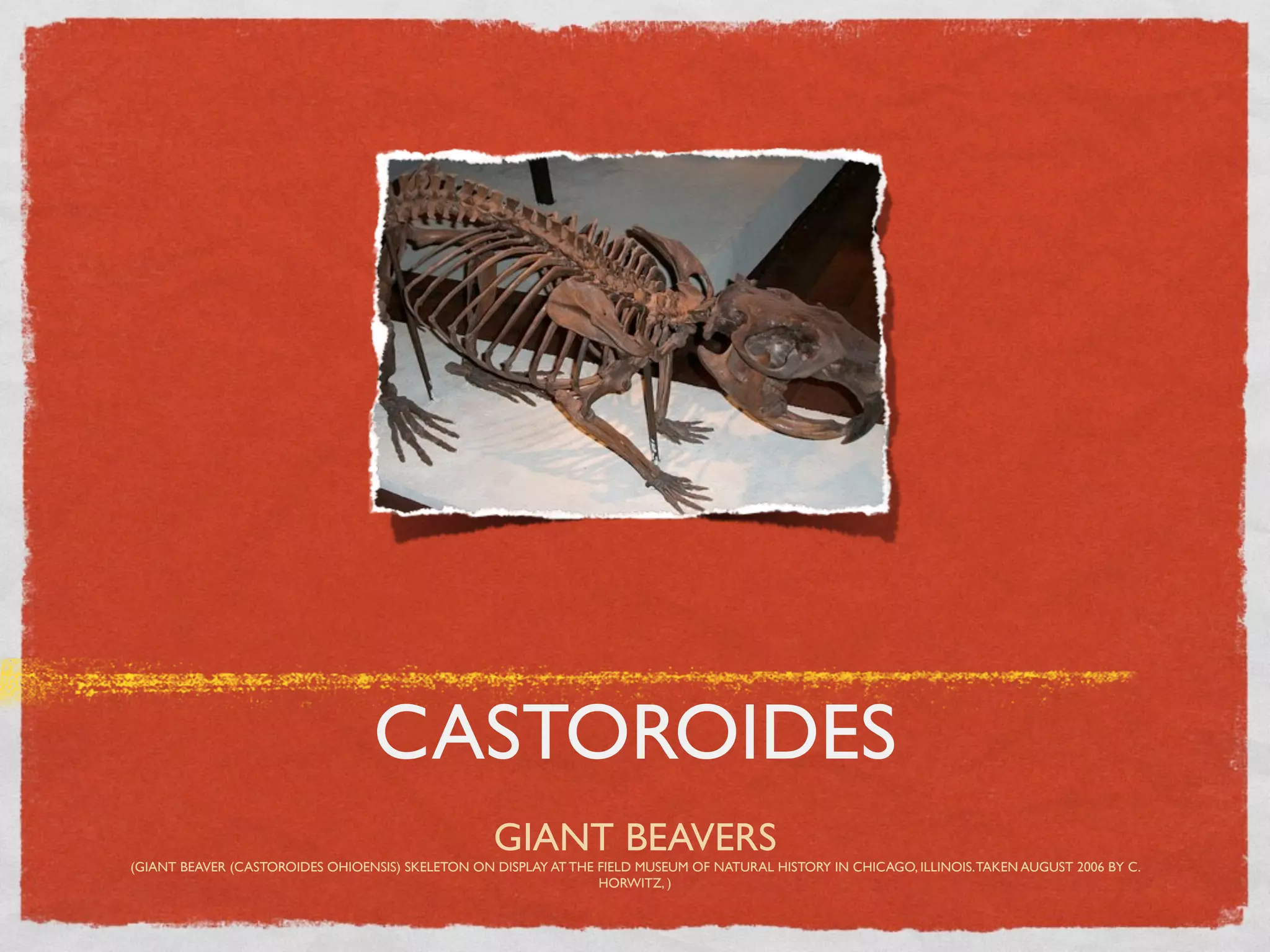
CASTOROIDES
                                                   GIANT BEAVERS
(GIANT BEAVER (CASTOROIDES OHIOENSIS) SKELETON ON DISPLAY AT THE FIELD MUSEUM OF NATURAL HISTORY IN CHICAGO, ILLINOIS. TAKEN AUGUST 2006 BY C.
                                                                 HORWITZ, )
TABLE OF CONTENTS

Introduction

Classification

Description of Beavers

Fossils

Closing

Resources
INTRODUCTION


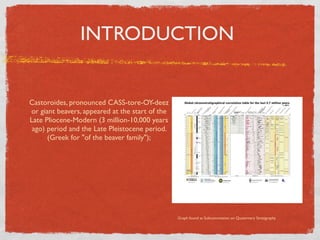
Castoroides, pronounced CASS-tore-OY-deez
or giant beavers, appeared at the start of the
Late Pliocene-Modern (3 million-10,000 years
 ago) period and the Late Pleistocene period.
      (Greek for "of the beaver family");


                                                 Graph found at Subcommission on Quaternary Stratigraphy
CLASSIFICATIONS

Only two known species:
Castoroides leiseyorum- Located in Florida
Known for shorter back legs, 6 inch incisors & narrow tail
Castoroides Ohioensis- Located in Canada and United
States
Known difference is molar teeth and premolor from the
Castoroides leiseyorum.
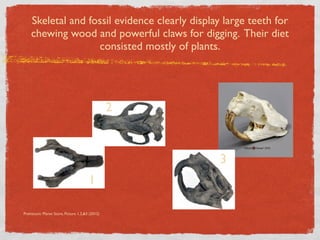
Skeletal and fossil evidence clearly display large teeth for
    chewing wood and powerful claws for digging. Their diet
                   consisted mostly of plants.


                                                  2


                                                      3
                                        1

Prehistoric Planet Store, Picture 1,2,&3 (2012)
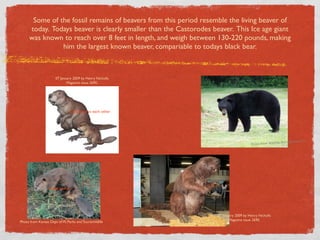
Some of the fossil remains of beavers from this period resemble the living beaver of
     today. Todays beaver is clearly smaller than the Castorodes beaver. This Ice age giant
     was known to reach over 8 feet in length, and weigh between 130-220 pounds, making
               him the largest known beaver, compariable to todays black bear.


                      07 January 2009 by Henry Nicholls
                             Magazine issue 2690.


                               Compared to each other


                                                                                                                    t Pro
                                                                                                      life Managemen
                                                                                      Photo from Wild


                  Todays beaver


                                                                  07 January 2009 by Henry Nicholls
                                                                         Magazine issue 2690.
Photo from Kansas Dept of W, Parks and Tourismildlife
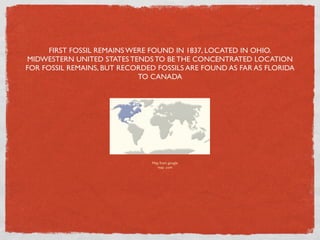
FIRST FOSSIL REMAINS WERE FOUND IN 1837, LOCATED IN OHIO.
MIDWESTERN UNITED STATES TENDS TO BE THE CONCENTRATED LOCATION
FOR FOSSIL REMAINS, BUT RECORDED FOSSILS ARE FOUND AS FAR AS FLORIDA
                             TO CANADA


                                Map from google
                                   map .com
EXTINCTION POSSIBILITIES

Mans hunting of the beaver, but there is no solid
evidence to show proof.

Ecological reconfiguring during the Pleistocene
period.

Castoroides perished 10,000 years ago.

Fossil dates show Castoides to be 1.4 million years
old to 130,000 years old.
MYTHS


Native Pocumtuck tribe had a giant spirit named
Hobomock who killed the beaver was cursed to sleep
for perpetually as a mountain side of the earth.

Native Mi’kmaq also had a very similar myth.

Cree people were also among the myth believers.
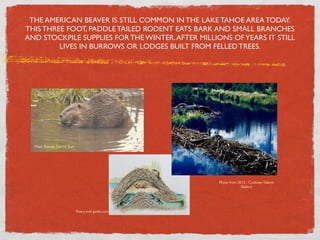
THE AMERICAN BEAVER IS STILL COMMON IN THE LAKE TAHOE AREA TODAY.
THIS THREE FOOT, PADDLE TAILED RODENT EATS BARK AND SMALL BRANCHES
AND STOCKPILE SUPPLIES FOR THE WINTER. AFTER MILLIONS OF YEARS IT STILL
         LIVES IN BURROWS OR LODGES BUILT FROM FELLED TREES.


  Matt Renda Sierra Sun


                                                   Photo from 2012 - Cooksey-Talbott
                                                                Gallery


                          Every trail guide.com
RESOURCES

Canadian Museum of Nature, Notebooks: Giant Beaver

Kurtén, B. and E. Anderson (1980). Pleistocene Mammals of North America. Columbia University Press. pp. 236–
237. ISBN 0-231-03733-3.

"Giant Beaver: Natural History Notebooks". Canadian Museum of Nature. 2011-05-02. Retrieved December 2011.

Paleobiology Database, Collection 20403 and 20400. Location Leisey's Shell Pits 1A and 3B, Hillsborough County,
Florida. Authorized and entered by Dr. John Alroy, on February 18, 1993 and Mark D. Uhen, Ph.D.

Harrington, C.R. (1996). "Yukon Beringia Interpretive Center – Giant Beaver". Archived from the original on
2007-09-14. Retrieved 2007-09-17.

Reynolds, P.S. (2002). "How big is a giant? The importance of methods in estimating body size of extinct
mammals". Journal of Mammalogy 83 (2): 321–332. DOI:10.1644/1545-1542(2002)083<0321:HBIAGT>2.0.CO;2.

Bever pres final

  • 1.
    CASTOROIDES GIANT BEAVERS (GIANT BEAVER (CASTOROIDES OHIOENSIS) SKELETON ON DISPLAY AT THE FIELD MUSEUM OF NATURAL HISTORY IN CHICAGO, ILLINOIS. TAKEN AUGUST 2006 BY C. HORWITZ, )
  • 2.
  • 3.
    INTRODUCTION Castoroides, pronounced CASS-tore-OY-deez orgiant beavers, appeared at the start of the Late Pliocene-Modern (3 million-10,000 years ago) period and the Late Pleistocene period. (Greek for "of the beaver family"); Graph found at Subcommission on Quaternary Stratigraphy
  • 4.
    CLASSIFICATIONS Only two knownspecies: Castoroides leiseyorum- Located in Florida Known for shorter back legs, 6 inch incisors & narrow tail Castoroides Ohioensis- Located in Canada and United States Known difference is molar teeth and premolor from the Castoroides leiseyorum.
  • 5.
    Skeletal and fossilevidence clearly display large teeth for chewing wood and powerful claws for digging. Their diet consisted mostly of plants. 2 3 1 Prehistoric Planet Store, Picture 1,2,&3 (2012)
  • 6.
    Some of thefossil remains of beavers from this period resemble the living beaver of today. Todays beaver is clearly smaller than the Castorodes beaver. This Ice age giant was known to reach over 8 feet in length, and weigh between 130-220 pounds, making him the largest known beaver, compariable to todays black bear. 07 January 2009 by Henry Nicholls Magazine issue 2690. Compared to each other t Pro life Managemen Photo from Wild Todays beaver 07 January 2009 by Henry Nicholls Magazine issue 2690. Photo from Kansas Dept of W, Parks and Tourismildlife
  • 7.
    FIRST FOSSIL REMAINSWERE FOUND IN 1837, LOCATED IN OHIO. MIDWESTERN UNITED STATES TENDS TO BE THE CONCENTRATED LOCATION FOR FOSSIL REMAINS, BUT RECORDED FOSSILS ARE FOUND AS FAR AS FLORIDA TO CANADA Map from google map .com
  • 8.
    EXTINCTION POSSIBILITIES Mans huntingof the beaver, but there is no solid evidence to show proof. Ecological reconfiguring during the Pleistocene period. Castoroides perished 10,000 years ago. Fossil dates show Castoides to be 1.4 million years old to 130,000 years old.
  • 9.
    MYTHS Native Pocumtuck tribehad a giant spirit named Hobomock who killed the beaver was cursed to sleep for perpetually as a mountain side of the earth. Native Mi’kmaq also had a very similar myth. Cree people were also among the myth believers.
  • 10.
    THE AMERICAN BEAVERIS STILL COMMON IN THE LAKE TAHOE AREA TODAY. THIS THREE FOOT, PADDLE TAILED RODENT EATS BARK AND SMALL BRANCHES AND STOCKPILE SUPPLIES FOR THE WINTER. AFTER MILLIONS OF YEARS IT STILL LIVES IN BURROWS OR LODGES BUILT FROM FELLED TREES. Matt Renda Sierra Sun Photo from 2012 - Cooksey-Talbott Gallery Every trail guide.com
  • 11.
    RESOURCES Canadian Museum ofNature, Notebooks: Giant Beaver Kurtén, B. and E. Anderson (1980). Pleistocene Mammals of North America. Columbia University Press. pp. 236– 237. ISBN 0-231-03733-3. "Giant Beaver: Natural History Notebooks". Canadian Museum of Nature. 2011-05-02. Retrieved December 2011. Paleobiology Database, Collection 20403 and 20400. Location Leisey's Shell Pits 1A and 3B, Hillsborough County, Florida. Authorized and entered by Dr. John Alroy, on February 18, 1993 and Mark D. Uhen, Ph.D. Harrington, C.R. (1996). "Yukon Beringia Interpretive Center – Giant Beaver". Archived from the original on 2007-09-14. Retrieved 2007-09-17. Reynolds, P.S. (2002). "How big is a giant? The importance of methods in estimating body size of extinct mammals". Journal of Mammalogy 83 (2): 321–332. DOI:10.1644/1545-1542(2002)083<0321:HBIAGT>2.0.CO;2.

Editor's Notes