Presented by:
Date:
Nurse Education in
Practice
Roger Watson, Editor-in-Chief
26 February 2021
Better writing techniques
@NepEdinPrac
Learn to write badly
Reviewing the above book by Michael Billig in THE,
Sandra Leatin Gray said:
…we train our postgraduates to use ever-lengthier words
and ever-clunkier concepts as a means of promoting their
work and, more importantly, to make ourselves look clever
and erudite. We hide sloppy research designs and
reporting behind the use of the passive tense.
Poor writing style
Poor presentation
More words than necessary
Longer words than necessary
Jargon
Clichés
Ambiguous and flowery language
Use clear, simple writing
Often the first word that comes to mind is the right one
Don’t seek to use polysyllabic words
Don’t use jargon
Use clear, simple writing
‘…it is the writer’s job to make the reader interested – no
reader owes us a reading….
Peter Barry (THE)
Style
The style has got to be invisible. If something jars, or if a
phrase is too flowery, suddenly the reader is aware that
someone is writing a book.
Ian Rankin
Style
Imperfection is the mother of style.
Orhan Pamuk
A guide to the style guides (from Sword, 2012)
Clarity, Coherence, Concision: Strive to produce sentences
that are clear, coherent, and concise.
Short or Mixed-length Sentences: Keep sentences short
and simple, or vary your rhythm by alternating longer
sentences with shorter ones.
Plain English: Avoid ornate, pompous, Latinate, or waffly
prose.
A guide to the style guides (from Sword, 2012)
Precision: Avoid vagueness and imprecision.
Active verbs: Avoid passive verb construction or use them
sparingly; active verbs should predominate.
Telling a story: Create a compelling narrative.
Style - example
Rarely is there an effective conceptual link between the
current understanding of the centrality of text to knowledge
production and student learning and the pragmatic
problems of policy imperatives in the name of efficiency
and capacity-building.
From Sword (2012)
George Orwell’s Five Rules for Effective Writing
1. Never use a metaphor, simile, or other figure of speech
which you are used to seeing in print.
This sounds incredibly easy but in practice is incredibly
difficult. Phrases such as toe the line, ride roughshod over,
stand shoulder to shoulder with, play into the hands of, an
axe to grind, Achilles’ heel, swan song and hotbed come to
mind quickly and feel comforting and melodic.
George Orwell’s Five Rules for Effective Writing
2. Never use a long word where a short one will do.
Longer words don’t make you sound intelligent unless
used skillfully. In the wrong situation they’ll have the
opposite effect, making you sound pretentious and
arrogant. They’re also less likely to be understood and
more awkward to read
George Orwell’s Five Rules for Effective Writing
3. If it is possible to cut a word out, always cut it out.
Great literature is simply language charged with meaning
to the utmost possible degree (Ezra Pound). Accordingly,
words that don’t contribute meaning to a passage dilute its
power. Less is always better. Always.
George Orwell’s Five Rules for Effective Writing
4. Never use the passive where you can use the active.
This one is frequently broken, probably because many
people don’t know the difference between active and
passive verbs. Example:
•The man was bitten by the dog (passive)
•The dog bit the man (active)
George Orwell’s Five Rules for Effective Writing
5. Never use a foreign phrase, a scientific word, or a jargon
word if you can think of an everyday English equivalent.
http://www.pickthebrain.com/blog/george-orwells-5-rules-for-effective-writing/
Presentation
Make your paper look like an academic paper
Paragraphs (not too short)
Sentence length (not too long)
Verbal signposts (eg I will argue that…in conclusion…etc)
Jargon
We need:
…to acknowledge the seductive power of jargon to
bamboozle, obfuscate, and impress.
(Sword 2012)
Clichés
•At the end of the day
•The bottom line
•Swept under the carpet
Ambiguous language
•To avoid pressure sores the patients were turned regularly
•The nurses were revolting
•We had the children for dinner
First or third person
Do not be afraid to use the first person
For example:
•‘We hypothesized that’ is better than ‘It was hypothesized’
•‘I recruited interviewees’ is better than ‘The researcher
recruited interviewees’
•‘We found that’ is better than ‘It was found that’
Other points
Dash: e.g. “The nursing process—whether you like it or
not—is now an accepted part of nursing care.” Is OK
Hyphens: e.g pre-operative or preoperative. Be consistent
Capital letters: e.g. Nursing Care. Not necessary
Apostrophe: e.g. it’s, don’t, can’t. Do not use!
Question mark?: Try to avoid asking your reader questions
Exclamation marks! No place in academic writing!!
Common mistakes
Use of for
compared to compared with
data is data are
which* that**
affect effect
between among
* unrestrictive (dogs, which bite, are dangerous)
** restrictive (dogs that bite are dangerous)
Shorter words
Use rather than
in within
on upon
use utilize
many numerous
show demonstrate
live reside
rest remainder
big, large voluminous
try endeavour
Fewer words
Use rather than
maintaining the maintenance of
developing the development of
about in relation to; with regard to etc
it seems that it would seem that
several/some a number of
to in order to
true true to say
- in which
think of the opinion
time period of time
most the majority of
Examples
Don’t use:
The ways in which this is achieved
Use:
The ways this is achieved
Don’t use:
…over a period of five years.
Use:
…over five years.
Examples
Don’t use:
…nevertheless, it is possible for anyone to…
Use:
…nevertheless, anyone can…
Examples
Don’t use:
In Smith’s (2003) study it was shown…
Use:
Smith (2003) showed…
Examples
Don’t use:
These results are in agreement with …
Use:
These results agree with …
Use plurals to avoid repetition in awkward phrases
For example:
Nurses should always ask patients to give their
consent before starting to give care.
is better than:
The nurse should always ask the patient to give
his/her consent before starting to give care.
Avoid ‘the’
For example:
Nurses developed good relationships with
patients.
is better than:
The nurses developed good relationships with the
patients
Avoid repetition
For example:
Women told us that their symptoms were improved and
those in the intervention group reported less fatigue.
is better than:
Women told us that their symptoms were improved and
women in the intervention group reported less fatigue.
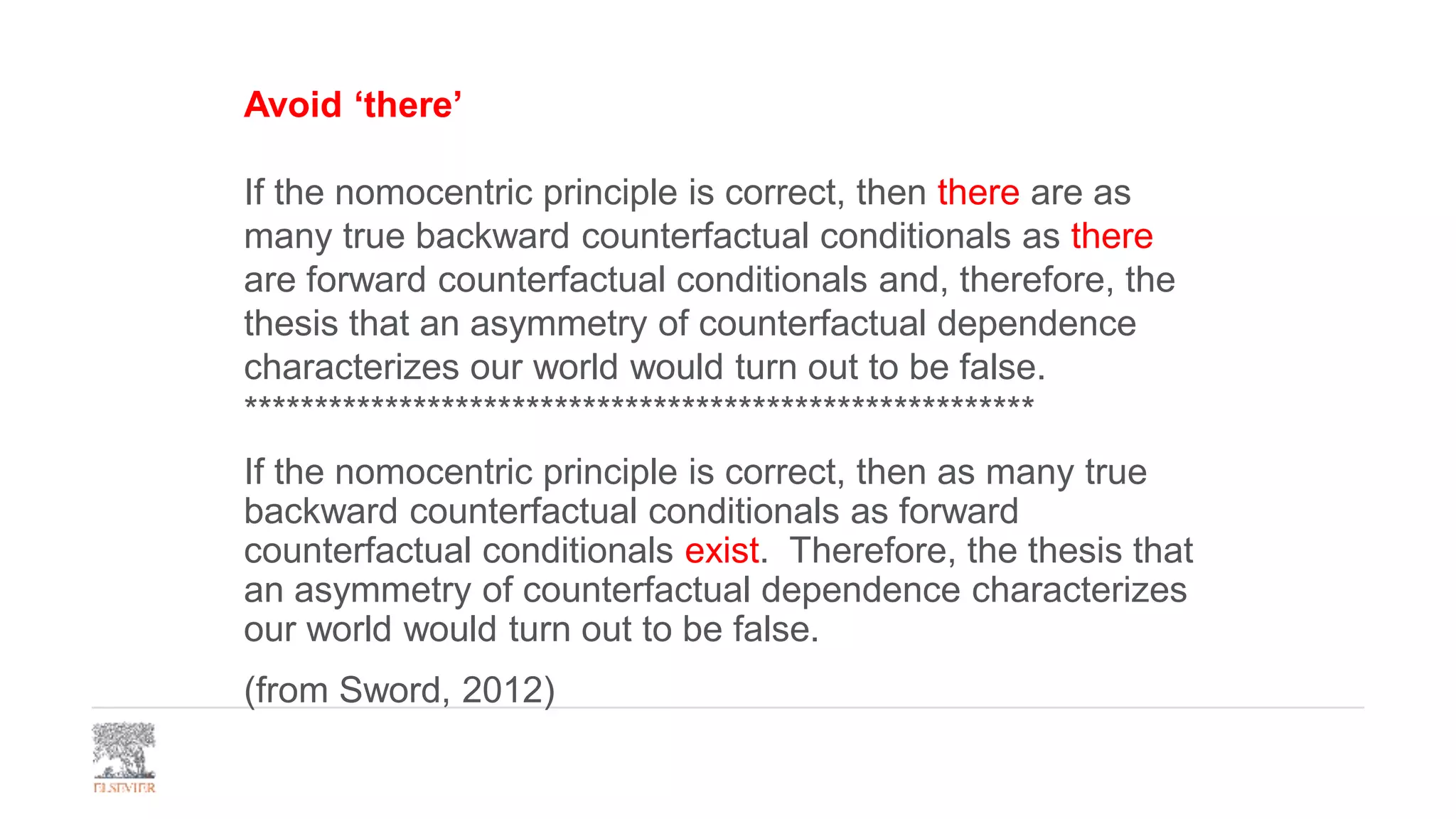
Avoid ‘there’
If the nomocentric principle is correct, then there are as
many true backward counterfactual conditionals as there
are forward counterfactual conditionals and, therefore, the
thesis that an asymmetry of counterfactual dependence
characterizes our world would turn out to be false.
********************************************************
If the nomocentric principle is correct, then as many true
backward counterfactual conditionals as forward
counterfactual conditionals exist. Therefore, the thesis that
an asymmetry of counterfactual dependence characterizes
our world would turn out to be false.
(from Sword, 2012)
Avoid ‘that’
In a series of important papers, John Broome has argued
that the only sense of “should” at work here is the one that
we use in saying what there is most reason, or decisive
reason, to do and that the apparent contradiction in the
example is removed when we make appropriate
distinctions of scope.
***********************
In a series of important papers, John Broome has argued,
the only sense of “should” at work here is the one we use
in saying what there is most reason, or decisive reason, to
do and the apparent contradiction in the example is
removed when we make appropriate distinctions of scope.
(from Sword, 2012)
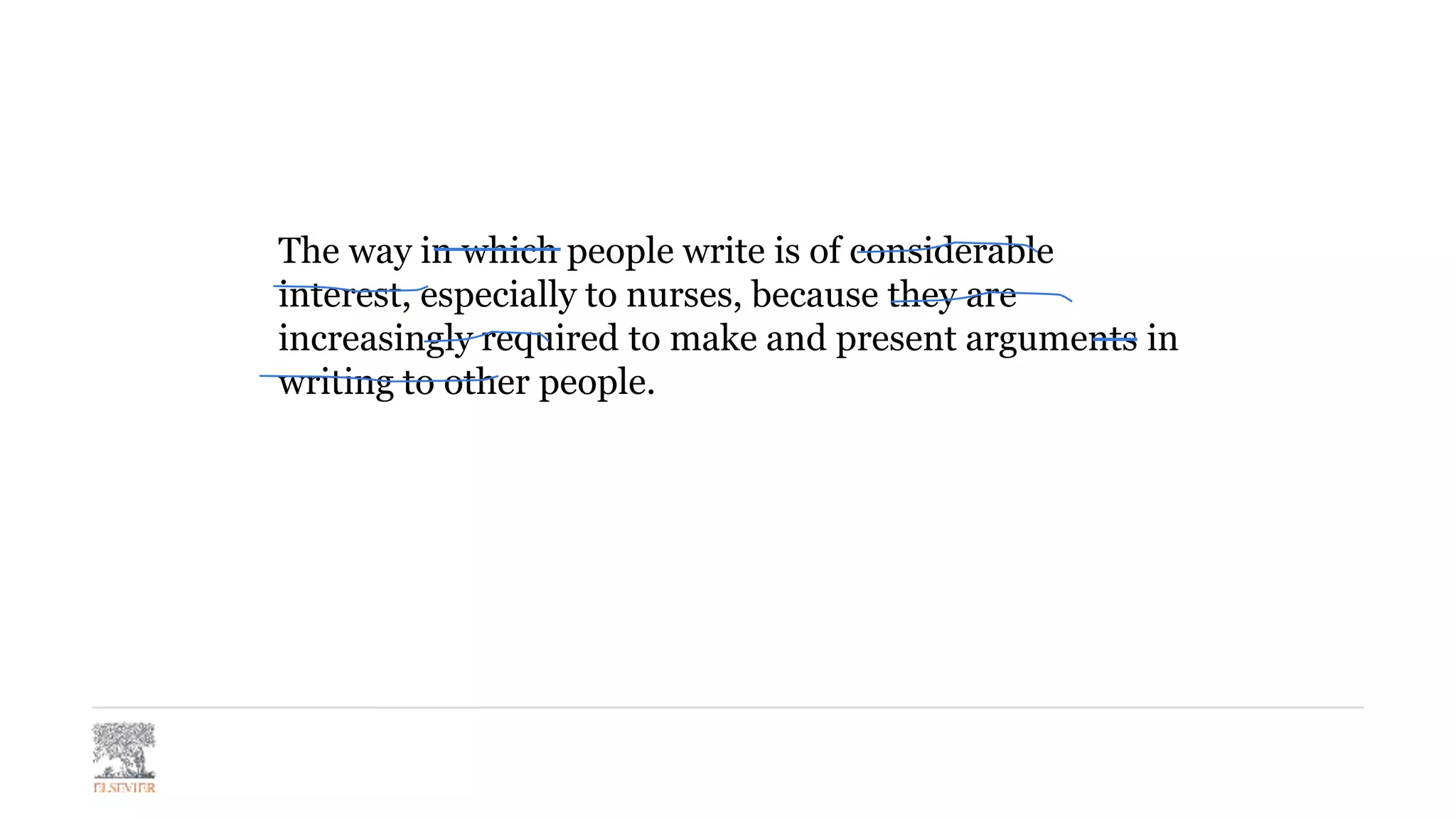
The way in which people write is of considerable
interest, especially to nurses, because they are
increasingly required to make and present arguments in
writing to other people.
28 words
The way in which people write is of considerable
interest, especially to nurses, because they are
increasingly required to make and present arguments in
writing to other people.
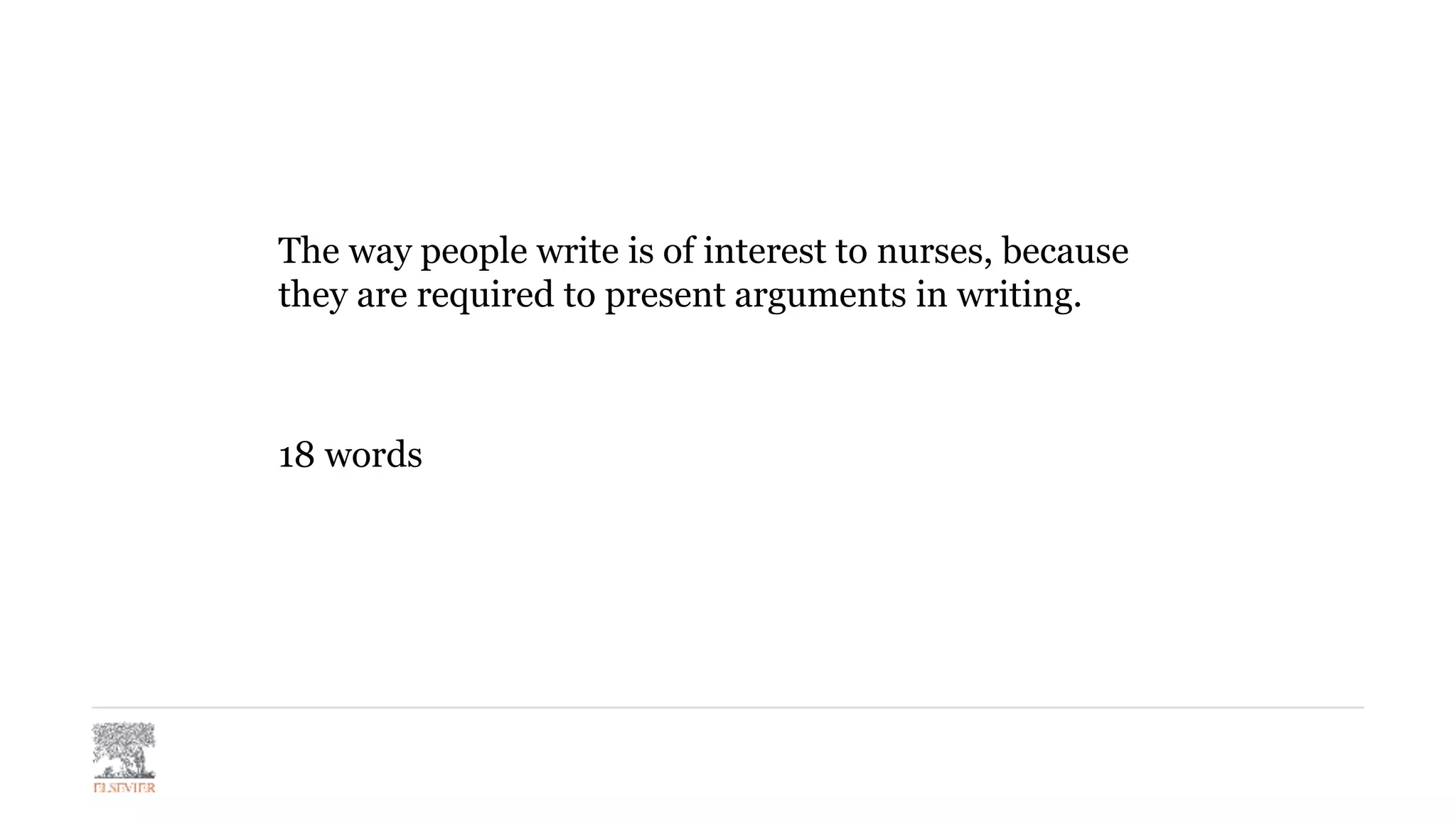
The way people write is of interest to nurses, because
they are required to present arguments in writing.
18 words
Nurses may be asked to write for a variety of different
purposes. They may be asked to write case notes, they
may be asked to write reports from their areas of clinical
responsibility, they may be asked to write a research
report, they may be asked to write for publication.
50 words
Nurses may be asked to write for a variety of different
purposes. They may be asked to write case notes, they
may be asked to write reports from their areas of clinical
responsibility, they may be asked to write a research
report, they may be asked to write for publication.
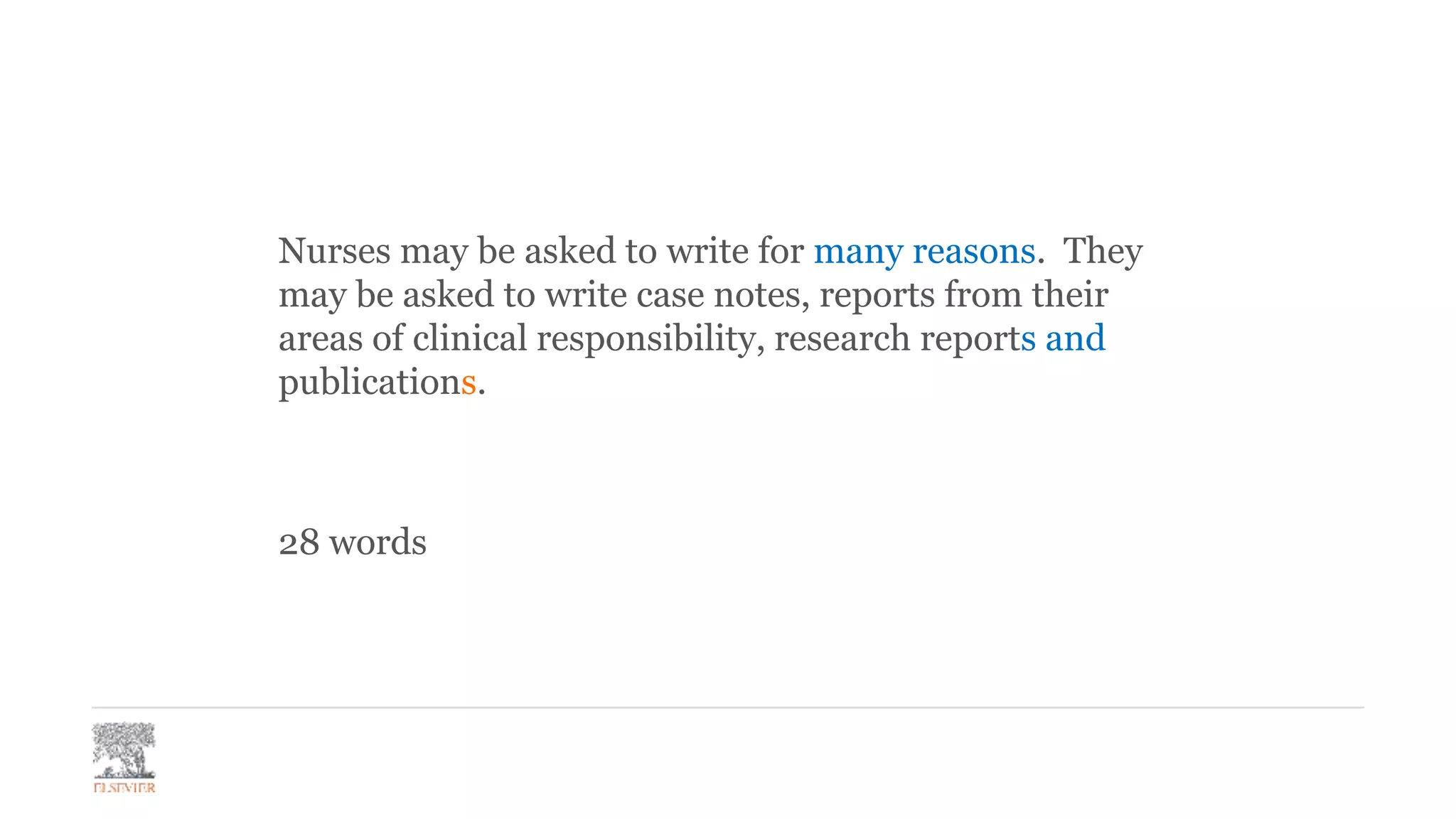
Nurses may be asked to write for many reasons. They
may be asked to write case notes, reports from their
areas of clinical responsibility, research reports and
publications.
28 words
One of the first problems encountered in writing by
those with poorly developed skills is the presentation of
relatively simplistic conceptual analyses in sentences
which are far too long and which try to encompass too
many ideas, including the use of bad grammar and poor
sentence construction, that by the time the reader has
got to the end of the sentence the point of the sentence
has been lost and it is also the case that long single
sentence paragraphs are a mistake which is often also
made.
88 words; 1 sentence
One of the first problems encountered in writing by
those with poorly developed skills is the presentation of
relatively simplistic conceptual analyses in sentences
which are far too long and which try to encompass too
many ideas, including the use of bad grammar and poor
sentence construction, that by the time the reader has
got to the end of the sentence the point of the sentence
has been lost and it is also the case that long single
sentence paragraphs are a mistake which is often also
made.
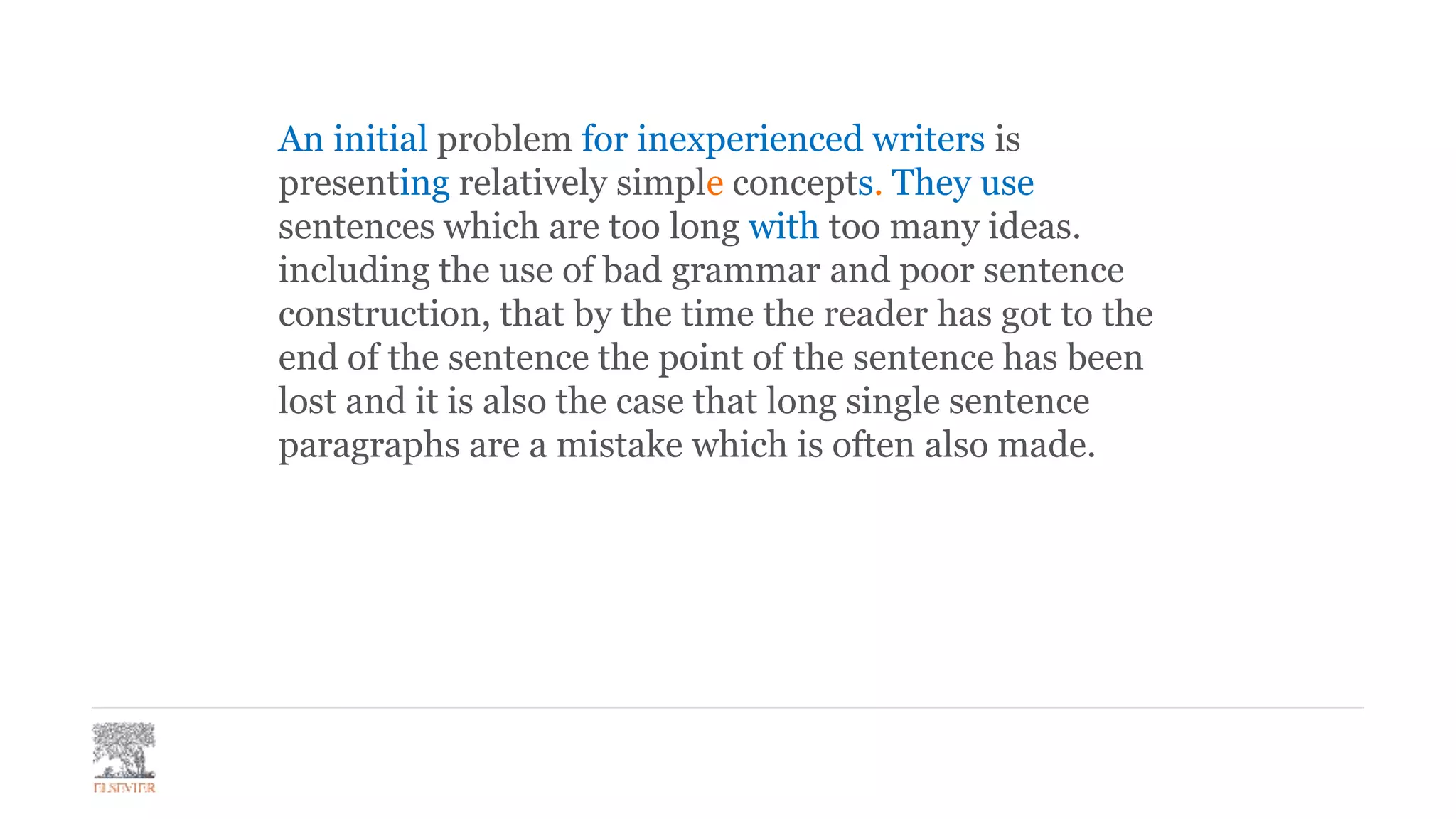
An initial problem for inexperienced writers is
presenting relatively simple concepts. sentences which
are far too long and which try to encompass too many
ideas, including the use of bad grammar and poor
sentence construction, that by the time the reader has
got to the end of the sentence the point of the sentence
has been lost and it is also the case that long single
sentence paragraphs are a mistake which is often also
made.
An initial problem for inexperienced writers is
presenting relatively simple concepts. They use
sentences which are far too long and which try to
encompass too many ideas, including the use of bad
grammar and poor sentence construction, that by the
time the reader has got to the end of the sentence the
point of the sentence has been lost and it is also the case
that long single sentence paragraphs are a mistake which
is often also made.
An initial problem for inexperienced writers is
presenting relatively simple concepts. They use
sentences which are too long with too many ideas.
including the use of bad grammar and poor sentence
construction, that by the time the reader has got to the
end of the sentence the point of the sentence has been
lost and it is also the case that long single sentence
paragraphs are a mistake which is often also made.
An initial problem for inexperienced writers is
presenting relatively simple concepts. They use
sentences which are too long with too many ideas.
including the use of bad grammar and poor sentence
construction, that by the time the reader has got to the
end of the sentence the point of the sentence has been
lost and it is also the case that long single sentence
paragraphs are a mistake which is often also made.
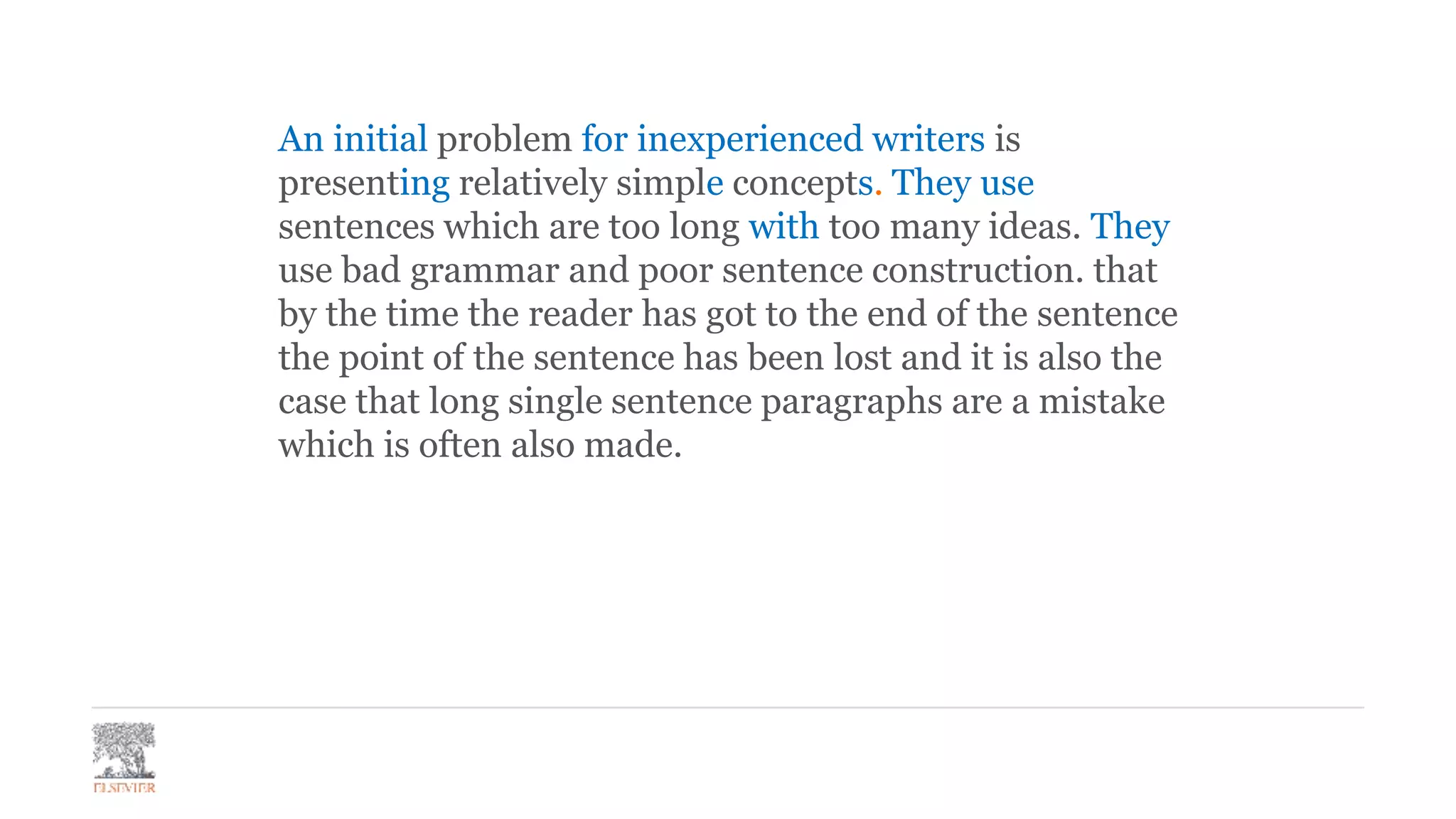
An initial problem for inexperienced writers is
presenting relatively simple concepts. They use
sentences which are too long with too many ideas. They
use bad grammar and poor sentence construction. that
by the time the reader has got to the end of the sentence
the point of the sentence has been lost and it is also the
case that long single sentence paragraphs are a mistake
which is often also made.
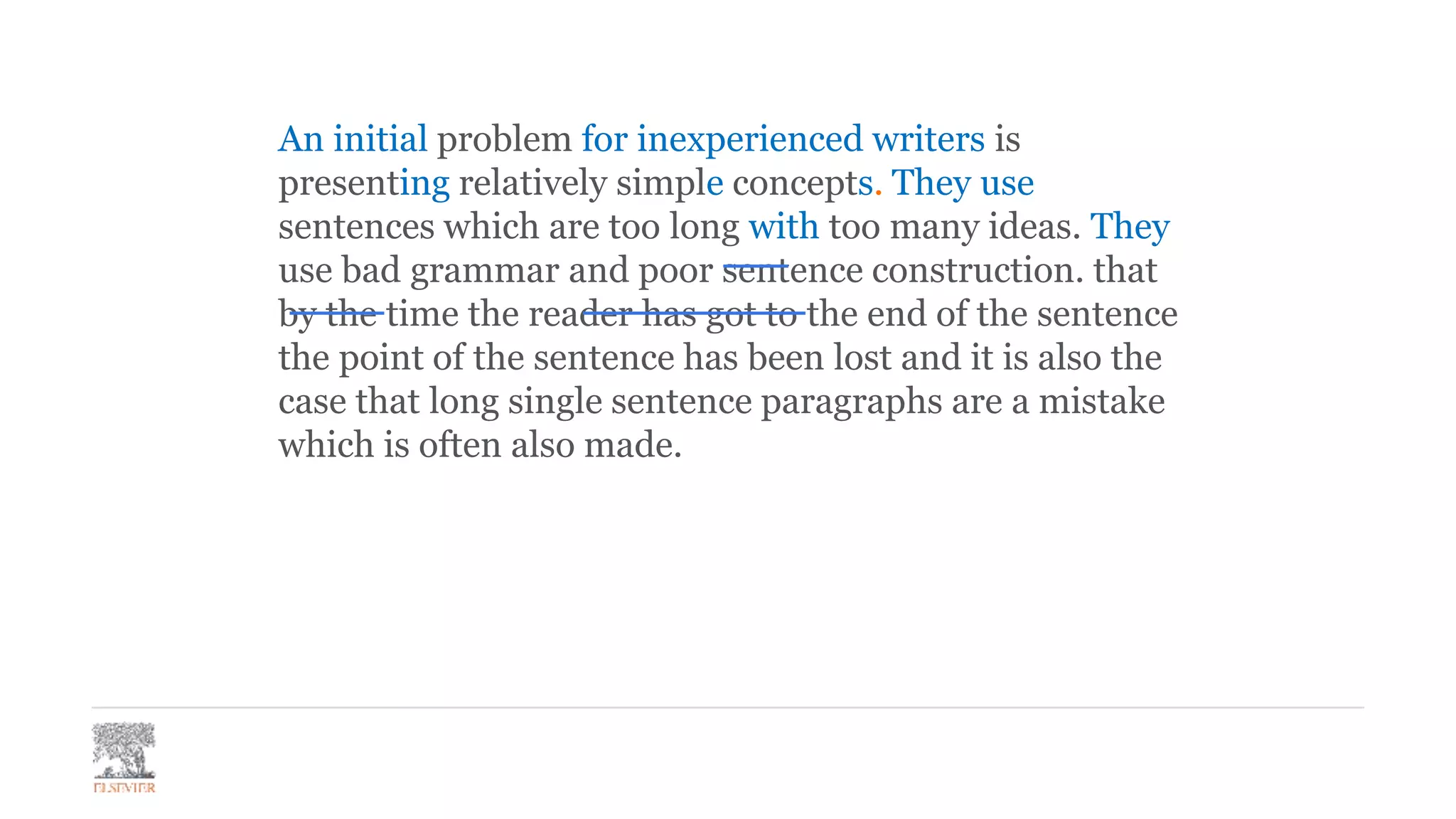
An initial problem for inexperienced writers is
presenting relatively simple concepts. They use
sentences which are too long with too many ideas. They
use bad grammar and poor sentence construction. that
by the time the reader has got to the end of the sentence
the point of the sentence has been lost and it is also the
case that long single sentence paragraphs are a mistake
which is often also made.
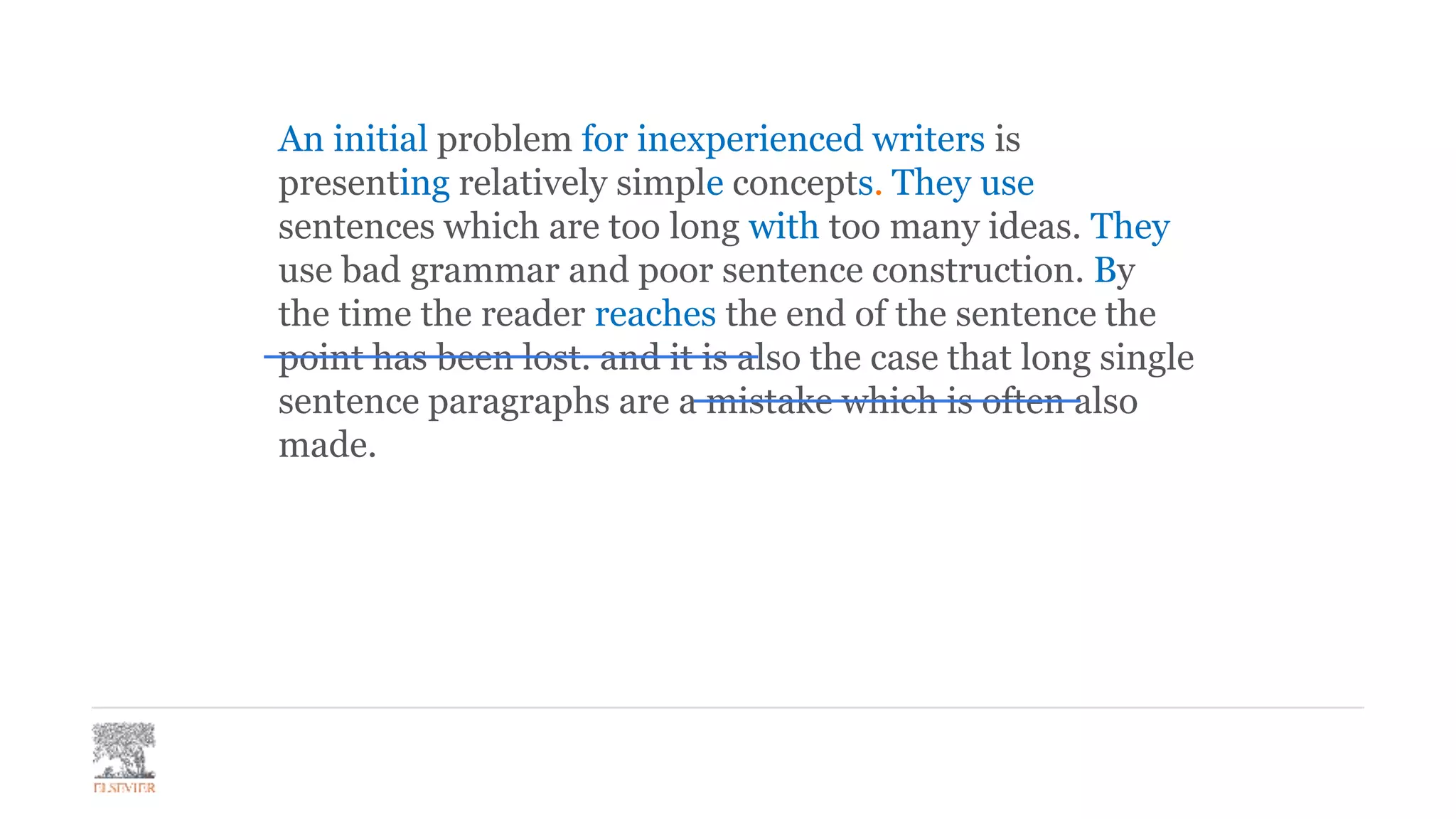
An initial problem for inexperienced writers is
presenting relatively simple concepts. They use
sentences which are too long with too many ideas. They
use bad grammar and poor sentence construction. By
the time the reader reaches the end of the sentence the
point has been lost. and it is also the case that long single
sentence paragraphs are a mistake which is often also
made.
An initial problem for inexperienced writers is
presenting relatively simple concepts. They use
sentences which are too long with too many ideas. They
use bad grammar and poor sentence construction. By
the time the reader reaches the end of the sentence the
point has been lost. and it is also the case that long single
sentence paragraphs are a mistake which is often also
made.
An initial problem for inexperienced writers is
presenting relatively simple concepts. They use
sentences which are too long with too many ideas. They
use bad grammar and poor sentence construction. By
the time the reader reaches the end of the sentence the
point has been lost. Single sentence paragraphs are also
a mistake.
52 words; 5 sentences
r.watson@hull.ac.uk
0000-0001-8040-7625
@rwatson1955

Better writing techniques

  • 1.
    Presented by: Date: Nurse Educationin Practice Roger Watson, Editor-in-Chief 26 February 2021 Better writing techniques @NepEdinPrac
  • 3.
    Learn to writebadly Reviewing the above book by Michael Billig in THE, Sandra Leatin Gray said: …we train our postgraduates to use ever-lengthier words and ever-clunkier concepts as a means of promoting their work and, more importantly, to make ourselves look clever and erudite. We hide sloppy research designs and reporting behind the use of the passive tense.
  • 4.
    Poor writing style Poorpresentation More words than necessary Longer words than necessary Jargon Clichés Ambiguous and flowery language
  • 5.
    Use clear, simplewriting Often the first word that comes to mind is the right one Don’t seek to use polysyllabic words Don’t use jargon
  • 6.
    Use clear, simplewriting ‘…it is the writer’s job to make the reader interested – no reader owes us a reading…. Peter Barry (THE)
  • 8.
    Style The style hasgot to be invisible. If something jars, or if a phrase is too flowery, suddenly the reader is aware that someone is writing a book. Ian Rankin
  • 9.
    Style Imperfection is themother of style. Orhan Pamuk
  • 11.
    A guide tothe style guides (from Sword, 2012) Clarity, Coherence, Concision: Strive to produce sentences that are clear, coherent, and concise. Short or Mixed-length Sentences: Keep sentences short and simple, or vary your rhythm by alternating longer sentences with shorter ones. Plain English: Avoid ornate, pompous, Latinate, or waffly prose.
  • 12.
    A guide tothe style guides (from Sword, 2012) Precision: Avoid vagueness and imprecision. Active verbs: Avoid passive verb construction or use them sparingly; active verbs should predominate. Telling a story: Create a compelling narrative.
  • 13.
    Style - example Rarelyis there an effective conceptual link between the current understanding of the centrality of text to knowledge production and student learning and the pragmatic problems of policy imperatives in the name of efficiency and capacity-building. From Sword (2012)
  • 14.
    George Orwell’s FiveRules for Effective Writing 1. Never use a metaphor, simile, or other figure of speech which you are used to seeing in print. This sounds incredibly easy but in practice is incredibly difficult. Phrases such as toe the line, ride roughshod over, stand shoulder to shoulder with, play into the hands of, an axe to grind, Achilles’ heel, swan song and hotbed come to mind quickly and feel comforting and melodic.
  • 15.
    George Orwell’s FiveRules for Effective Writing 2. Never use a long word where a short one will do. Longer words don’t make you sound intelligent unless used skillfully. In the wrong situation they’ll have the opposite effect, making you sound pretentious and arrogant. They’re also less likely to be understood and more awkward to read
  • 16.
    George Orwell’s FiveRules for Effective Writing 3. If it is possible to cut a word out, always cut it out. Great literature is simply language charged with meaning to the utmost possible degree (Ezra Pound). Accordingly, words that don’t contribute meaning to a passage dilute its power. Less is always better. Always.
  • 17.
    George Orwell’s FiveRules for Effective Writing 4. Never use the passive where you can use the active. This one is frequently broken, probably because many people don’t know the difference between active and passive verbs. Example: •The man was bitten by the dog (passive) •The dog bit the man (active)
  • 18.
    George Orwell’s FiveRules for Effective Writing 5. Never use a foreign phrase, a scientific word, or a jargon word if you can think of an everyday English equivalent. http://www.pickthebrain.com/blog/george-orwells-5-rules-for-effective-writing/
  • 19.
    Presentation Make your paperlook like an academic paper Paragraphs (not too short) Sentence length (not too long) Verbal signposts (eg I will argue that…in conclusion…etc)
  • 20.
    Jargon We need: …to acknowledgethe seductive power of jargon to bamboozle, obfuscate, and impress. (Sword 2012)
  • 22.
    Clichés •At the endof the day •The bottom line •Swept under the carpet
  • 23.
    Ambiguous language •To avoidpressure sores the patients were turned regularly •The nurses were revolting •We had the children for dinner
  • 24.
    First or thirdperson Do not be afraid to use the first person For example: •‘We hypothesized that’ is better than ‘It was hypothesized’ •‘I recruited interviewees’ is better than ‘The researcher recruited interviewees’ •‘We found that’ is better than ‘It was found that’
  • 25.
    Other points Dash: e.g.“The nursing process—whether you like it or not—is now an accepted part of nursing care.” Is OK Hyphens: e.g pre-operative or preoperative. Be consistent Capital letters: e.g. Nursing Care. Not necessary Apostrophe: e.g. it’s, don’t, can’t. Do not use! Question mark?: Try to avoid asking your reader questions Exclamation marks! No place in academic writing!!
  • 27.
    Common mistakes Use offor compared to compared with data is data are which* that** affect effect between among * unrestrictive (dogs, which bite, are dangerous) ** restrictive (dogs that bite are dangerous)
  • 28.
    Shorter words Use ratherthan in within on upon use utilize many numerous show demonstrate live reside rest remainder big, large voluminous try endeavour
  • 29.
    Fewer words Use ratherthan maintaining the maintenance of developing the development of about in relation to; with regard to etc it seems that it would seem that several/some a number of to in order to true true to say - in which think of the opinion time period of time most the majority of
  • 30.
    Examples Don’t use: The waysin which this is achieved Use: The ways this is achieved Don’t use: …over a period of five years. Use: …over five years.
  • 31.
    Examples Don’t use: …nevertheless, itis possible for anyone to… Use: …nevertheless, anyone can…
  • 32.
    Examples Don’t use: In Smith’s(2003) study it was shown… Use: Smith (2003) showed…
  • 33.
    Examples Don’t use: These resultsare in agreement with … Use: These results agree with …
  • 34.
    Use plurals toavoid repetition in awkward phrases For example: Nurses should always ask patients to give their consent before starting to give care. is better than: The nurse should always ask the patient to give his/her consent before starting to give care.
  • 35.
    Avoid ‘the’ For example: Nursesdeveloped good relationships with patients. is better than: The nurses developed good relationships with the patients
  • 36.
    Avoid repetition For example: Womentold us that their symptoms were improved and those in the intervention group reported less fatigue. is better than: Women told us that their symptoms were improved and women in the intervention group reported less fatigue.
  • 37.
    Avoid ‘there’ If thenomocentric principle is correct, then there are as many true backward counterfactual conditionals as there are forward counterfactual conditionals and, therefore, the thesis that an asymmetry of counterfactual dependence characterizes our world would turn out to be false. ******************************************************** If the nomocentric principle is correct, then as many true backward counterfactual conditionals as forward counterfactual conditionals exist. Therefore, the thesis that an asymmetry of counterfactual dependence characterizes our world would turn out to be false. (from Sword, 2012)
  • 38.
    Avoid ‘that’ In aseries of important papers, John Broome has argued that the only sense of “should” at work here is the one that we use in saying what there is most reason, or decisive reason, to do and that the apparent contradiction in the example is removed when we make appropriate distinctions of scope. *********************** In a series of important papers, John Broome has argued, the only sense of “should” at work here is the one we use in saying what there is most reason, or decisive reason, to do and the apparent contradiction in the example is removed when we make appropriate distinctions of scope. (from Sword, 2012)
  • 39.
    The way inwhich people write is of considerable interest, especially to nurses, because they are increasingly required to make and present arguments in writing to other people. 28 words
  • 40.
    The way inwhich people write is of considerable interest, especially to nurses, because they are increasingly required to make and present arguments in writing to other people.
  • 41.
    The way peoplewrite is of interest to nurses, because they are required to present arguments in writing. 18 words
  • 42.
    Nurses may beasked to write for a variety of different purposes. They may be asked to write case notes, they may be asked to write reports from their areas of clinical responsibility, they may be asked to write a research report, they may be asked to write for publication. 50 words
  • 43.
    Nurses may beasked to write for a variety of different purposes. They may be asked to write case notes, they may be asked to write reports from their areas of clinical responsibility, they may be asked to write a research report, they may be asked to write for publication.
  • 44.
    Nurses may beasked to write for many reasons. They may be asked to write case notes, reports from their areas of clinical responsibility, research reports and publications. 28 words
  • 45.
    One of thefirst problems encountered in writing by those with poorly developed skills is the presentation of relatively simplistic conceptual analyses in sentences which are far too long and which try to encompass too many ideas, including the use of bad grammar and poor sentence construction, that by the time the reader has got to the end of the sentence the point of the sentence has been lost and it is also the case that long single sentence paragraphs are a mistake which is often also made. 88 words; 1 sentence
  • 46.
    One of thefirst problems encountered in writing by those with poorly developed skills is the presentation of relatively simplistic conceptual analyses in sentences which are far too long and which try to encompass too many ideas, including the use of bad grammar and poor sentence construction, that by the time the reader has got to the end of the sentence the point of the sentence has been lost and it is also the case that long single sentence paragraphs are a mistake which is often also made.
  • 47.
    An initial problemfor inexperienced writers is presenting relatively simple concepts. sentences which are far too long and which try to encompass too many ideas, including the use of bad grammar and poor sentence construction, that by the time the reader has got to the end of the sentence the point of the sentence has been lost and it is also the case that long single sentence paragraphs are a mistake which is often also made.
  • 48.
    An initial problemfor inexperienced writers is presenting relatively simple concepts. They use sentences which are far too long and which try to encompass too many ideas, including the use of bad grammar and poor sentence construction, that by the time the reader has got to the end of the sentence the point of the sentence has been lost and it is also the case that long single sentence paragraphs are a mistake which is often also made.
  • 49.
    An initial problemfor inexperienced writers is presenting relatively simple concepts. They use sentences which are too long with too many ideas. including the use of bad grammar and poor sentence construction, that by the time the reader has got to the end of the sentence the point of the sentence has been lost and it is also the case that long single sentence paragraphs are a mistake which is often also made.
  • 50.
    An initial problemfor inexperienced writers is presenting relatively simple concepts. They use sentences which are too long with too many ideas. including the use of bad grammar and poor sentence construction, that by the time the reader has got to the end of the sentence the point of the sentence has been lost and it is also the case that long single sentence paragraphs are a mistake which is often also made.
  • 51.
    An initial problemfor inexperienced writers is presenting relatively simple concepts. They use sentences which are too long with too many ideas. They use bad grammar and poor sentence construction. that by the time the reader has got to the end of the sentence the point of the sentence has been lost and it is also the case that long single sentence paragraphs are a mistake which is often also made.
  • 52.
    An initial problemfor inexperienced writers is presenting relatively simple concepts. They use sentences which are too long with too many ideas. They use bad grammar and poor sentence construction. that by the time the reader has got to the end of the sentence the point of the sentence has been lost and it is also the case that long single sentence paragraphs are a mistake which is often also made.
  • 53.
    An initial problemfor inexperienced writers is presenting relatively simple concepts. They use sentences which are too long with too many ideas. They use bad grammar and poor sentence construction. By the time the reader reaches the end of the sentence the point has been lost. and it is also the case that long single sentence paragraphs are a mistake which is often also made.
  • 54.
    An initial problemfor inexperienced writers is presenting relatively simple concepts. They use sentences which are too long with too many ideas. They use bad grammar and poor sentence construction. By the time the reader reaches the end of the sentence the point has been lost. and it is also the case that long single sentence paragraphs are a mistake which is often also made.
  • 55.
    An initial problemfor inexperienced writers is presenting relatively simple concepts. They use sentences which are too long with too many ideas. They use bad grammar and poor sentence construction. By the time the reader reaches the end of the sentence the point has been lost. Single sentence paragraphs are also a mistake. 52 words; 5 sentences
  • 57.