Building Resilience of Communities in Dryland
Areas: Examples from CMDRR (ECHO-Funded) and
RAIN (OFDA-Funded) Projects
EU- USAID Stakeholders Experience Sharing/Dialogue
Forum
Teriessa Jalleta, Save the Children
6-7 December 2012, Dire Dawa
• Save the Children remained one of the key partners in
implementation of a number of food security/livelihood projects
in pastoral and agro-pastoral areas targeting drought and
affected and vulnerable households
• And a number of good practices and lessons documented and
shared as appropriate
• For the purpose of this workshop, only 4 examples were picked:
– Small Scale Development - EC/ECHO funded DRR
– Water Schemes Rehabilitation - EC/ECHO funded DRR
– Abattoir development – USAID/OFDA funded through MC
– Livestock/Milk Value Chain Development - USAID/OFDA
funded through MC
1.

Upgrading Small Scale Irrigation Scheme (ECHO
fund)

 
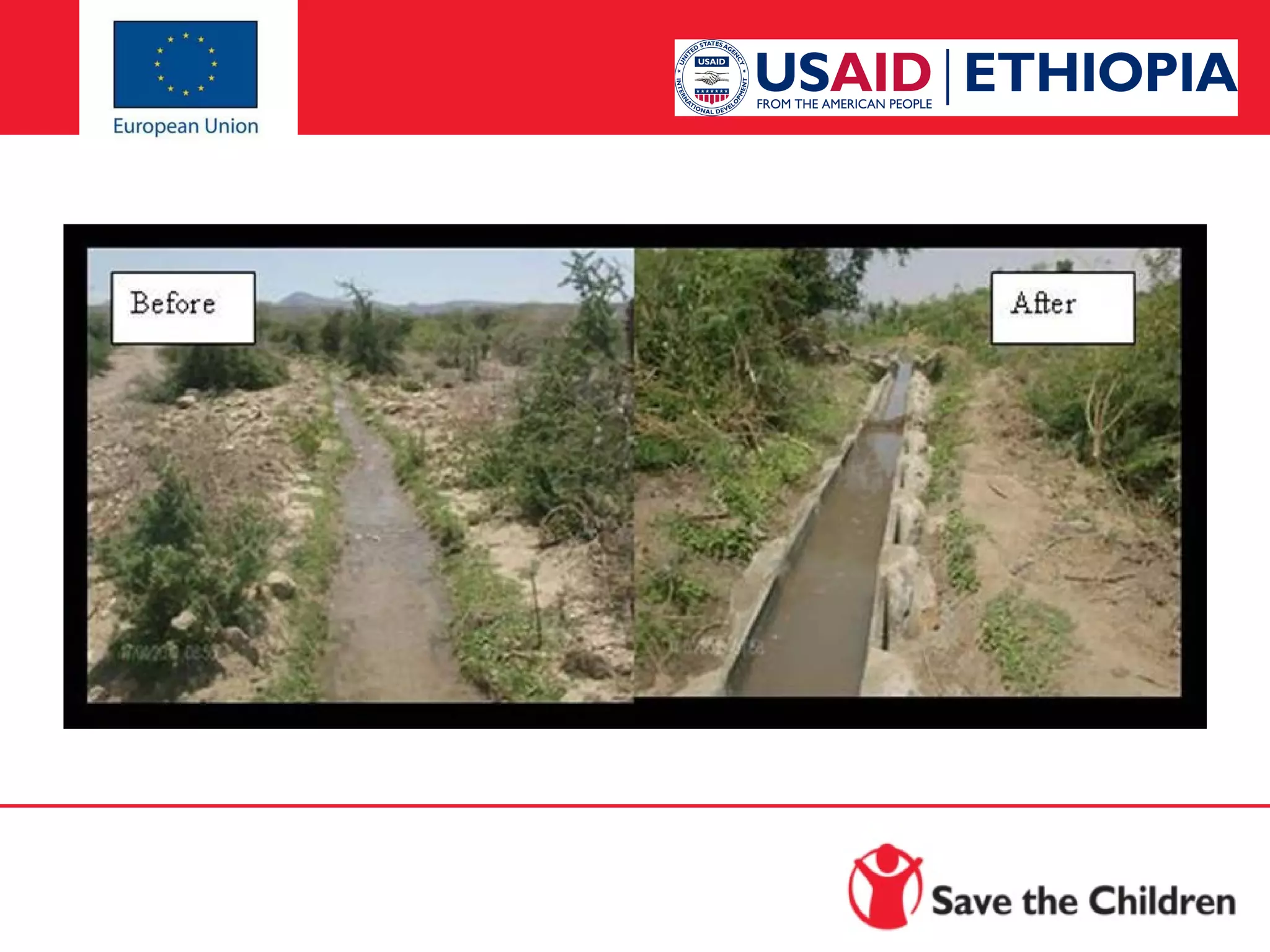
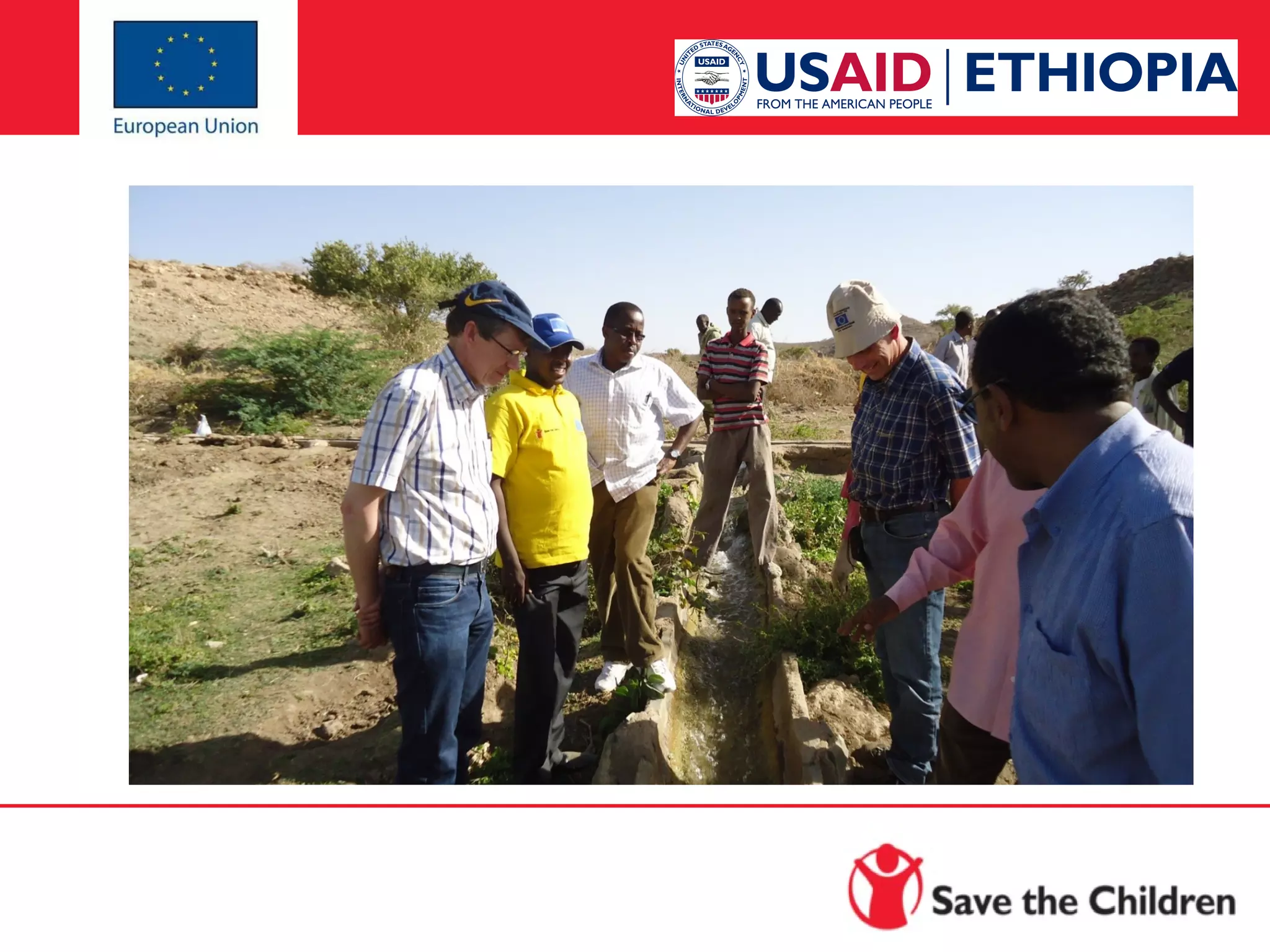
• SSI upgraded in Barak of Shinille woreda of Somali
Region as part of DRR
• Before the SSI upgrading, communities used traditional
irrigation to produce only sorghum and maize
• After upgrading, beneficiaries produce others
vegetables and fruits (potatoes, tomatoes, onions ,
mangos and bananas)
• Direct beneficiaries = 200 households.
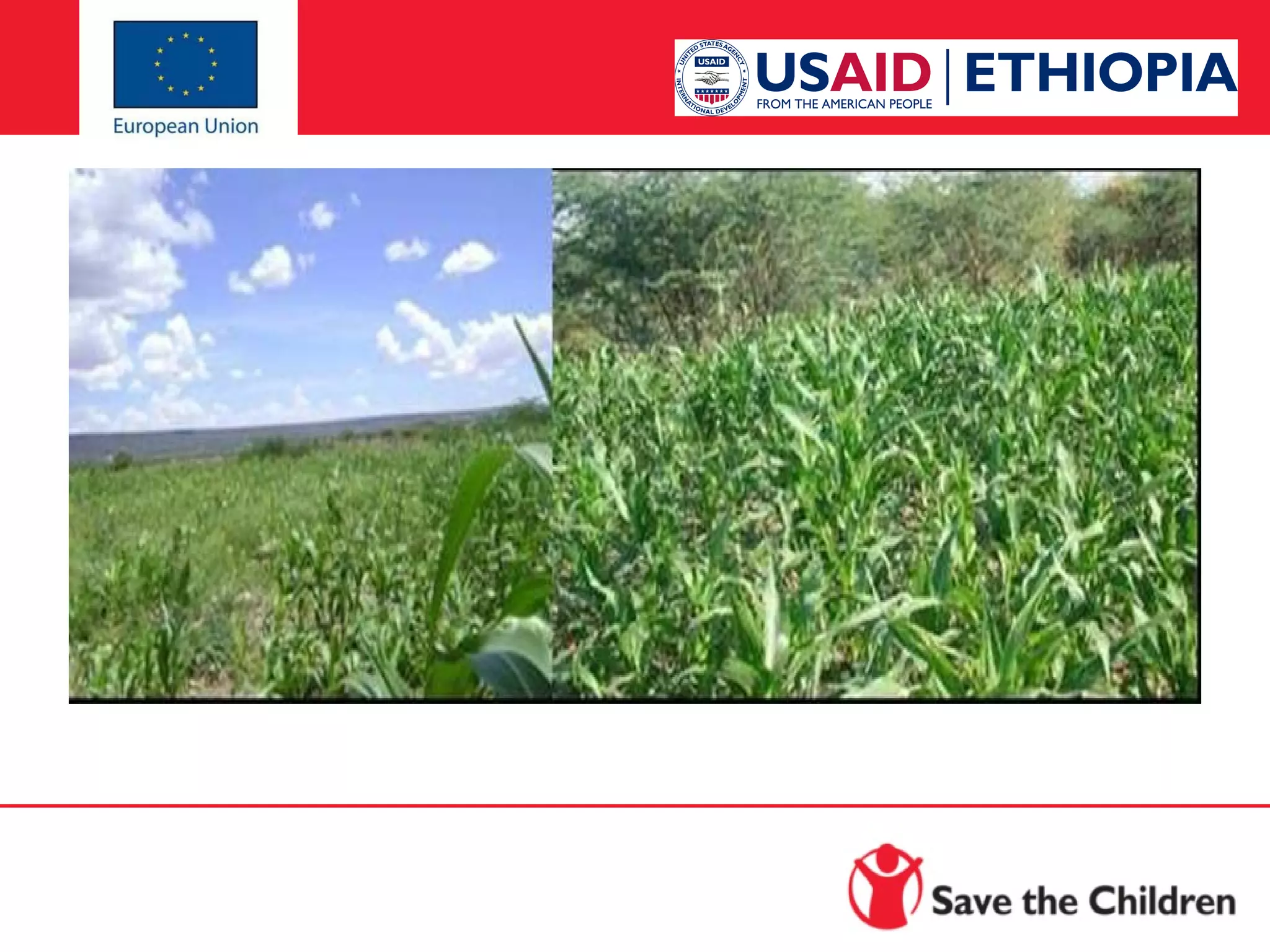
• The scheme has considerably changed the livelihoods
of targeted agro-pastoral households.
– The beneficiaries managed to lead settled/stable lives,
– Converted unproductive land to productive one,
– Diversified and improved income and bridged their six
months food gap that was common prior to the
intervention,
– The livelihood of beneficiaries is improving in comparison
with the non-beneficiaries,
– Crop productivity increased - 3qt/ha to 20qt/ha (sorghum)
– The household production increased by over 300%.
2.

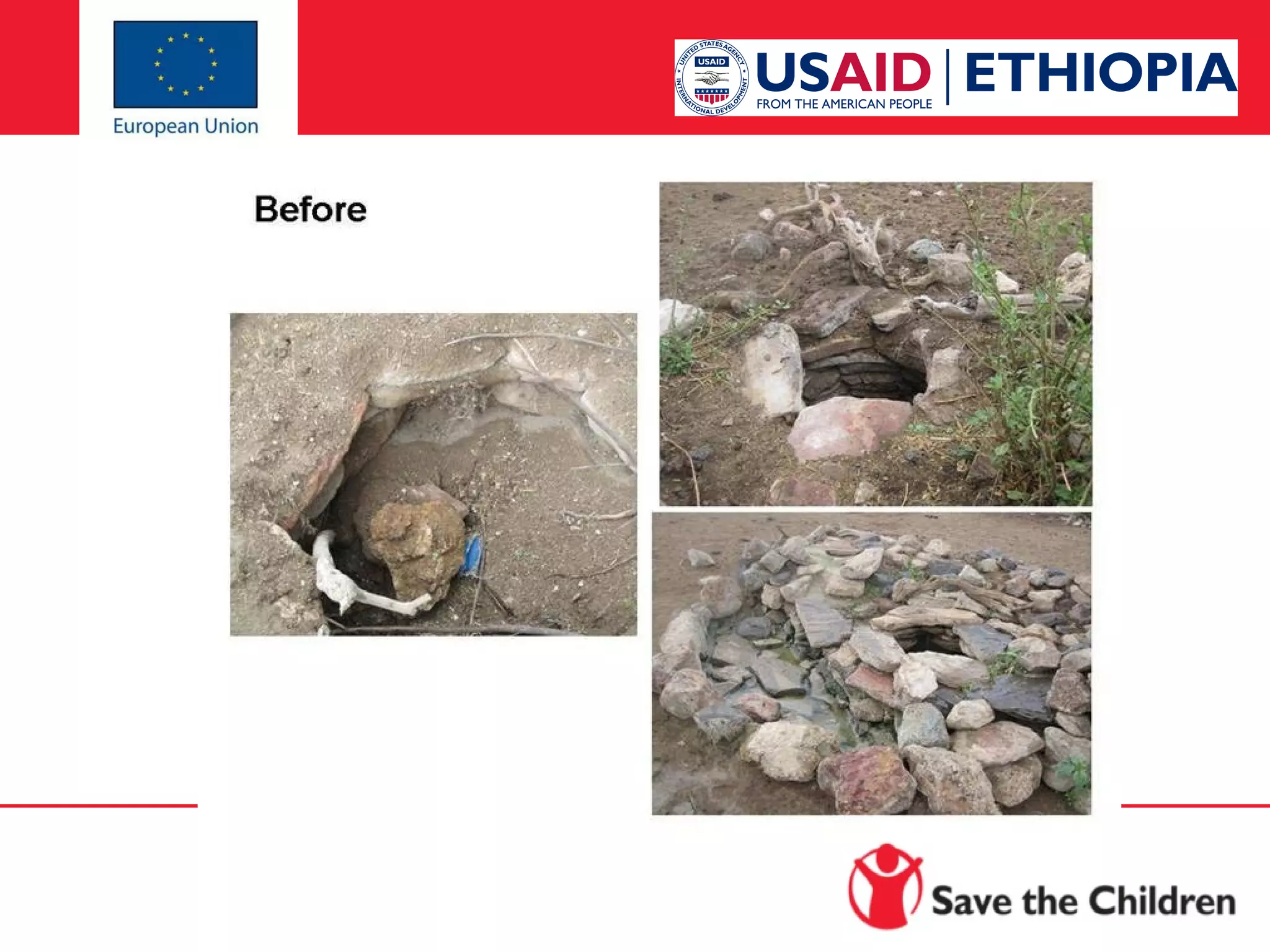
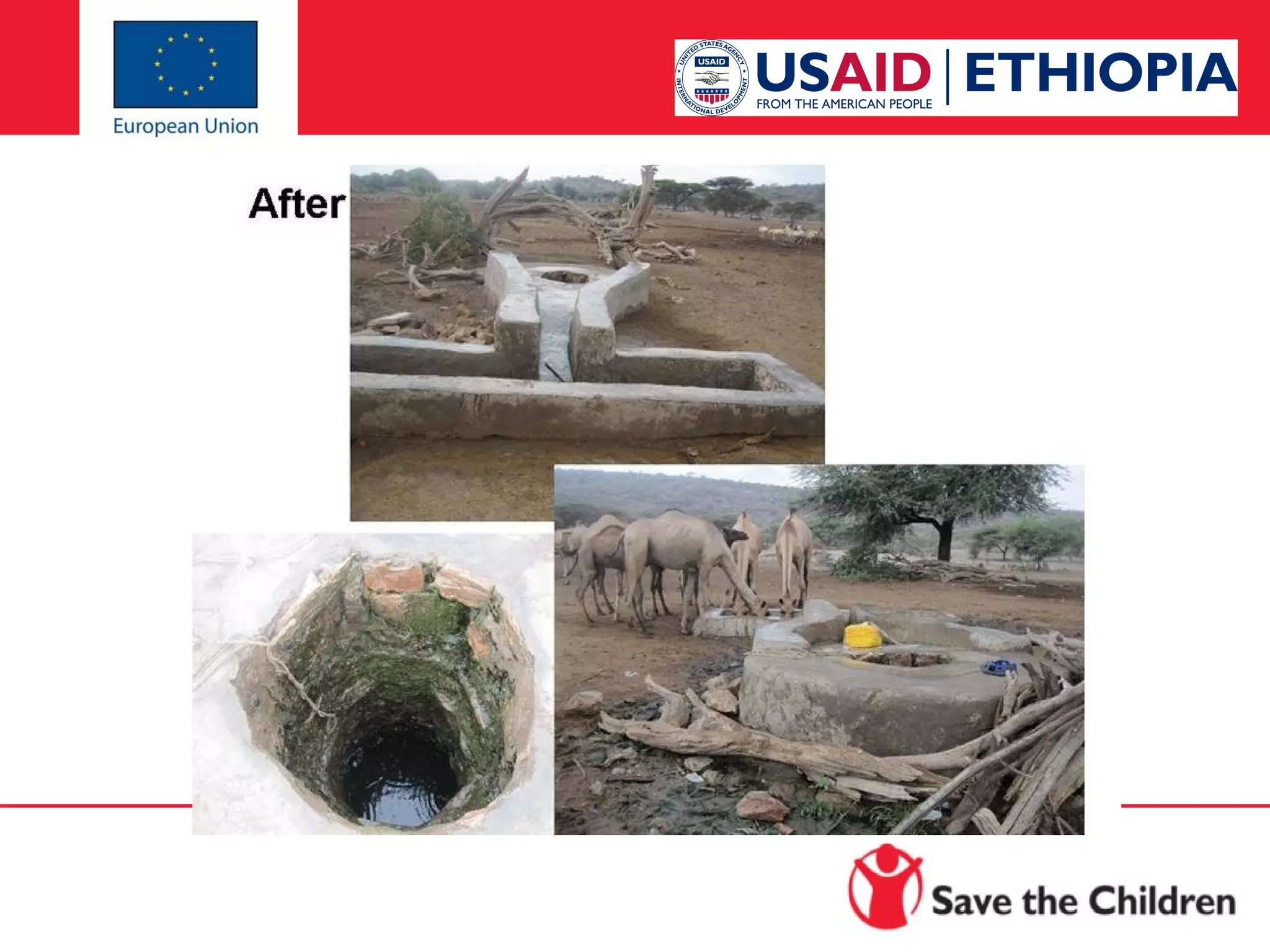
Water Points Rehabilitation (ECHO fund)

•  As per findings and recommendations of
various assessments and the community
action plan exercises, identified potential areas
(Regden of Ewa of Afar)
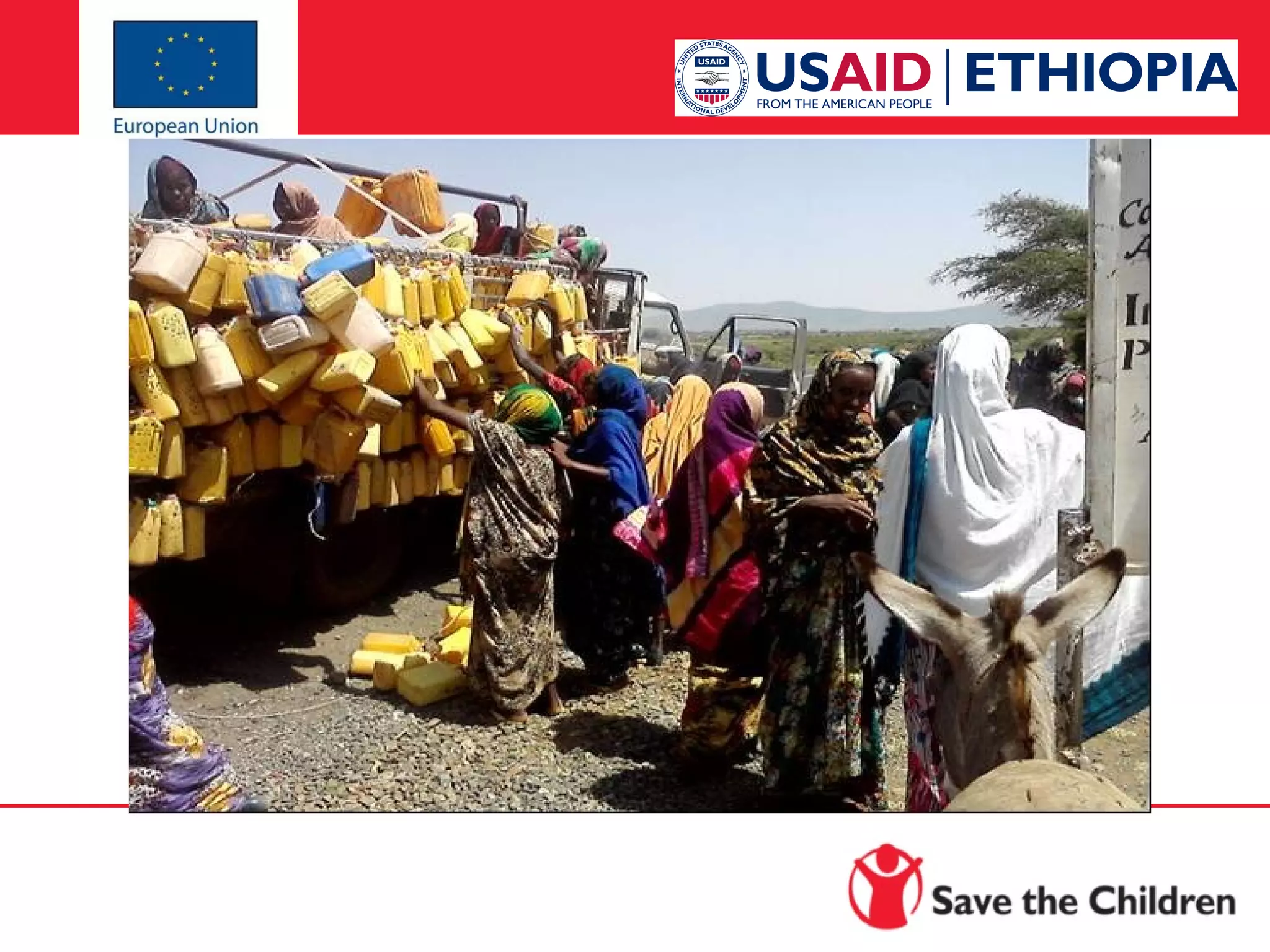
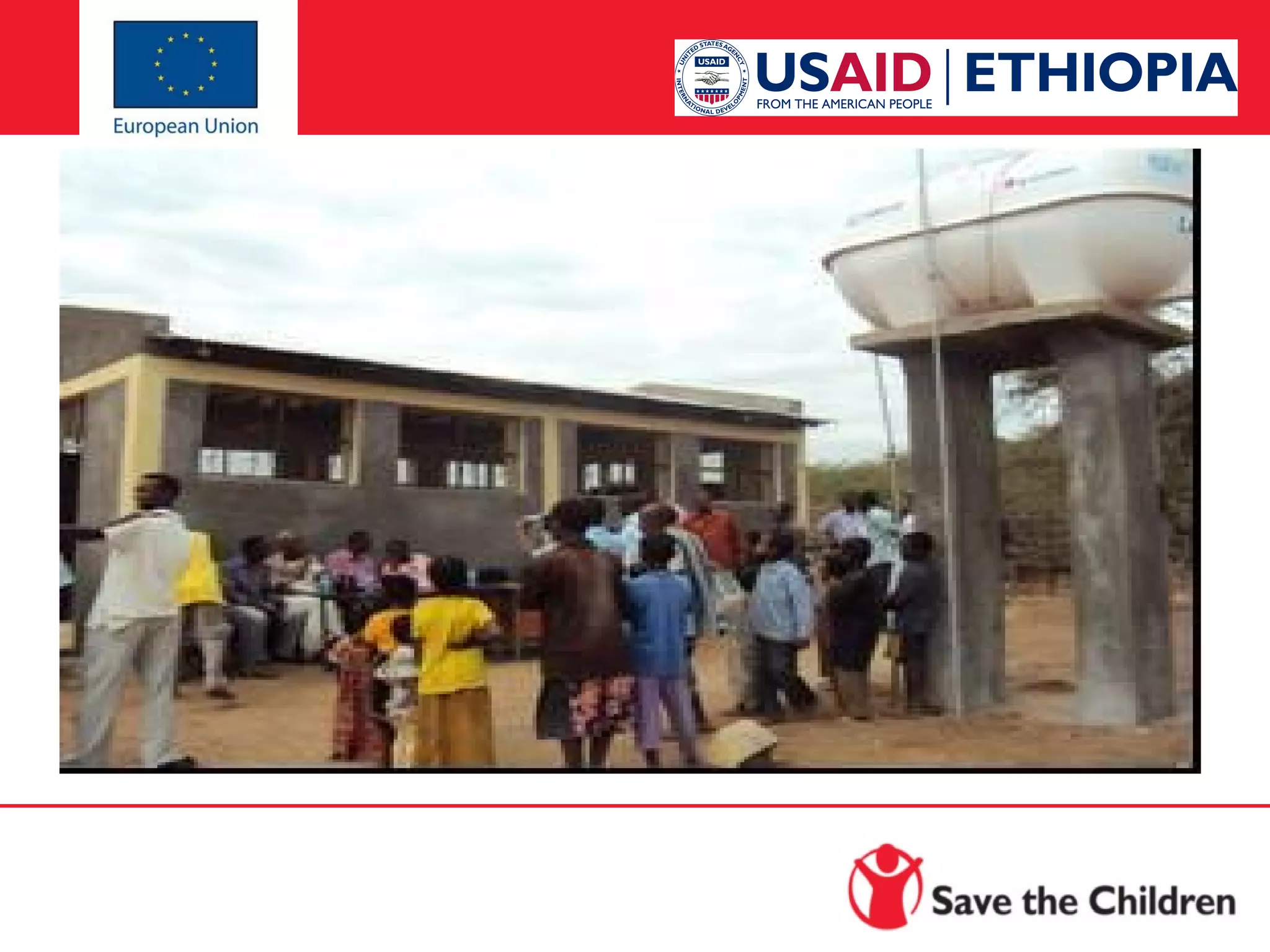
• The project supported rehabilitation of 10
water points, serving 2500 households.
• Rehabilitation of the water points increased
utilization efficiency and hygiene.
3.

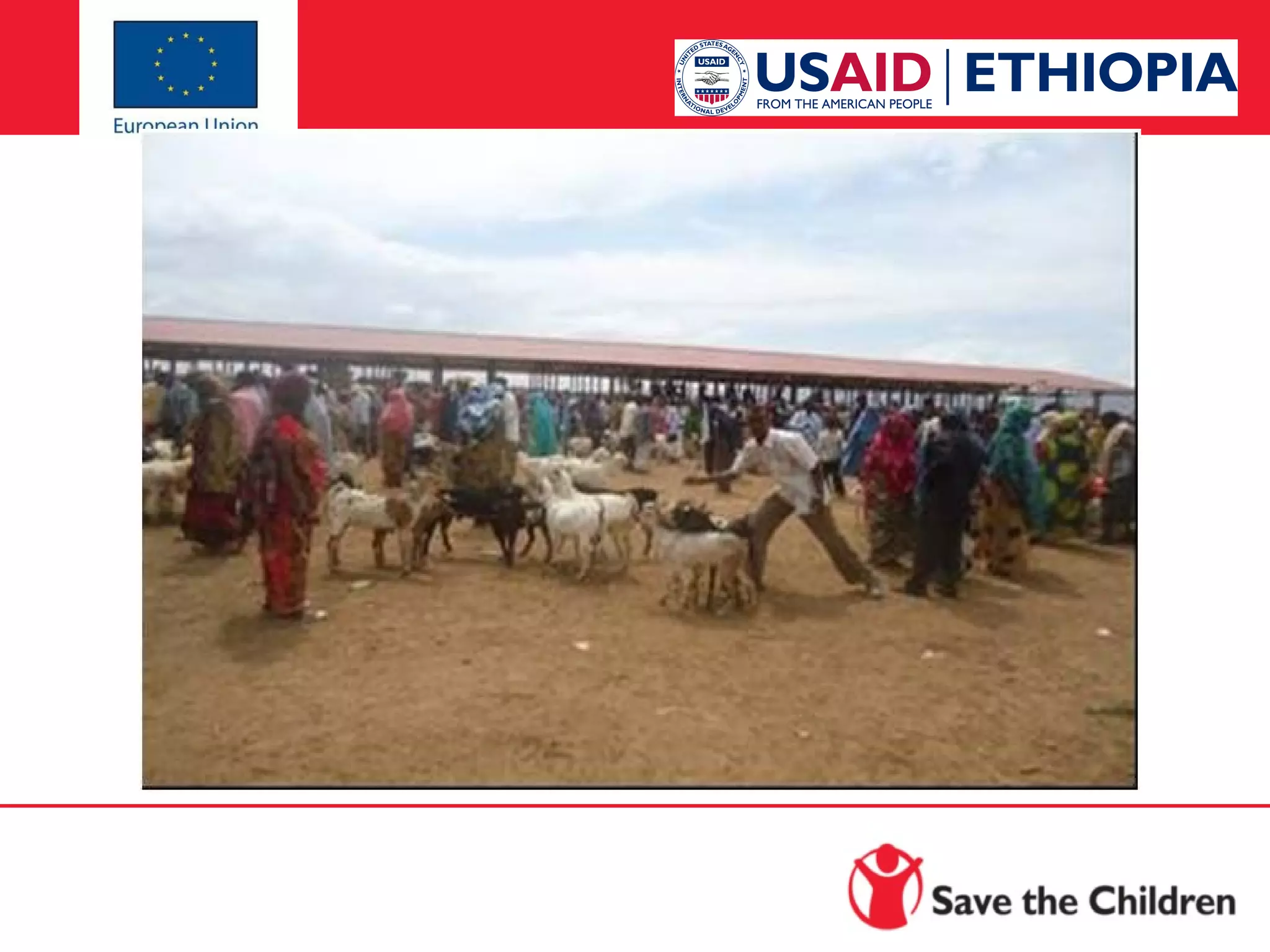
Livestock/Milk Value Chain (OFDA funded)

•  RAIN supported live animals and milk value chain:
– organizing producers and traders into formal traders’
cooperatives, (in Biki village of Afdem and Dhadhamane
village of Babile)
– linkage to market sources such as abattoirs at Mojo.
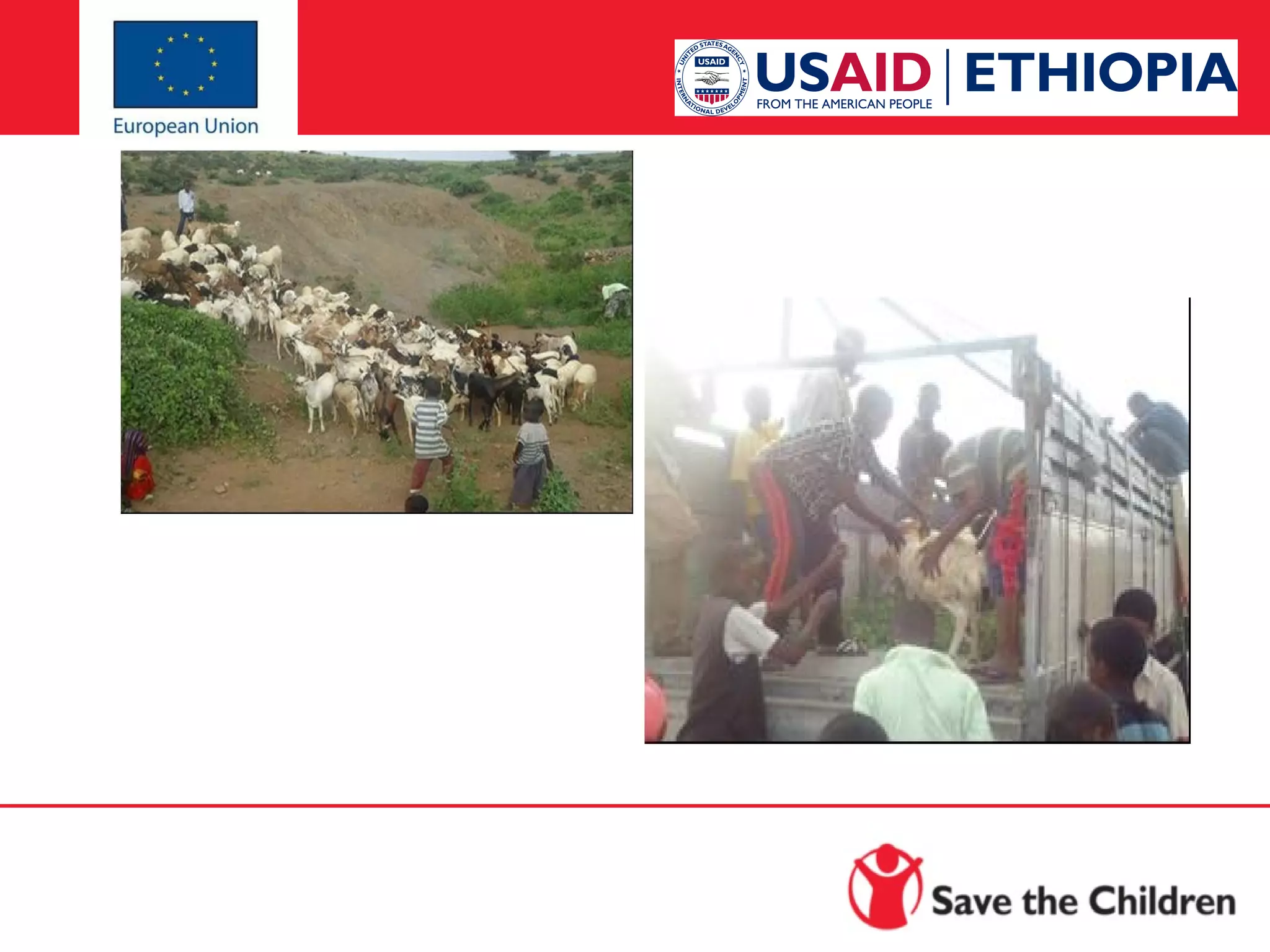
• Large number of live animals supplied (8750 shoats between
October 2011 and March 2012).
• The bargaining and negotiation power of the cooperative
improved and the price of live animals has increased from
time to time (from Birr 22.5/kg to Birr 29/kg).
• Brought about positive attitudes of producers and traders
4. Development of meat market hubs and slaughter
slabs (OFDA fund)

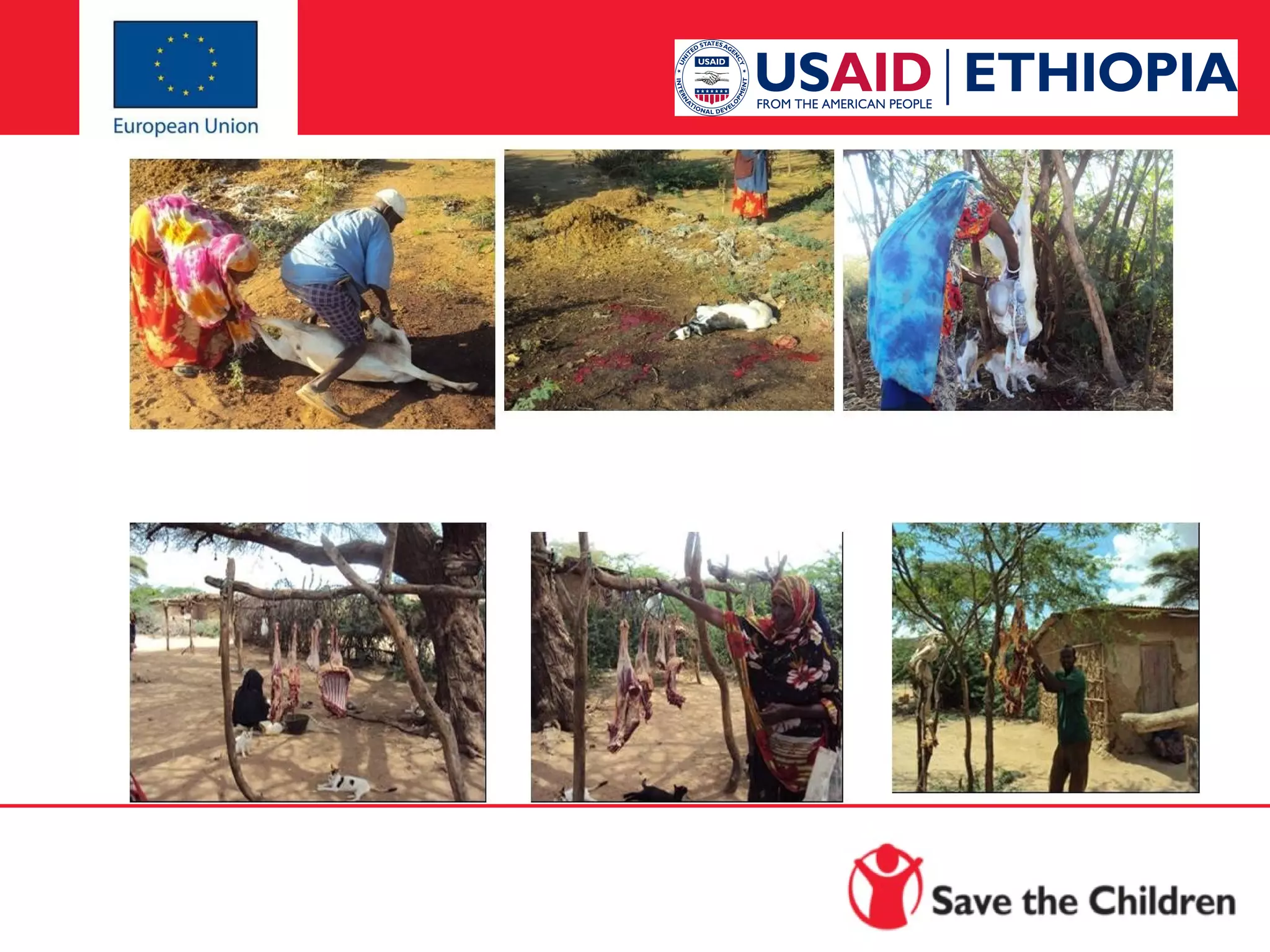
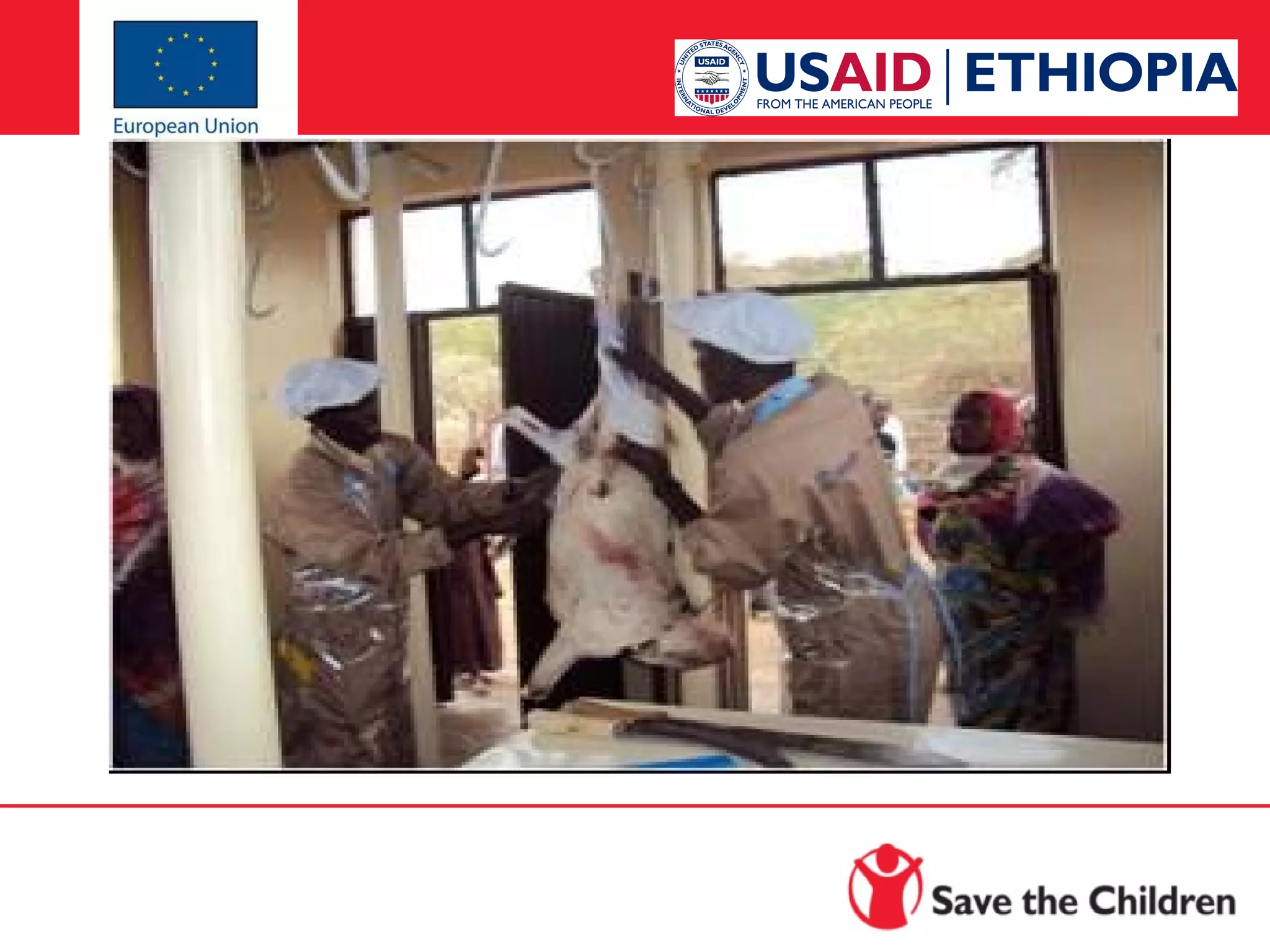
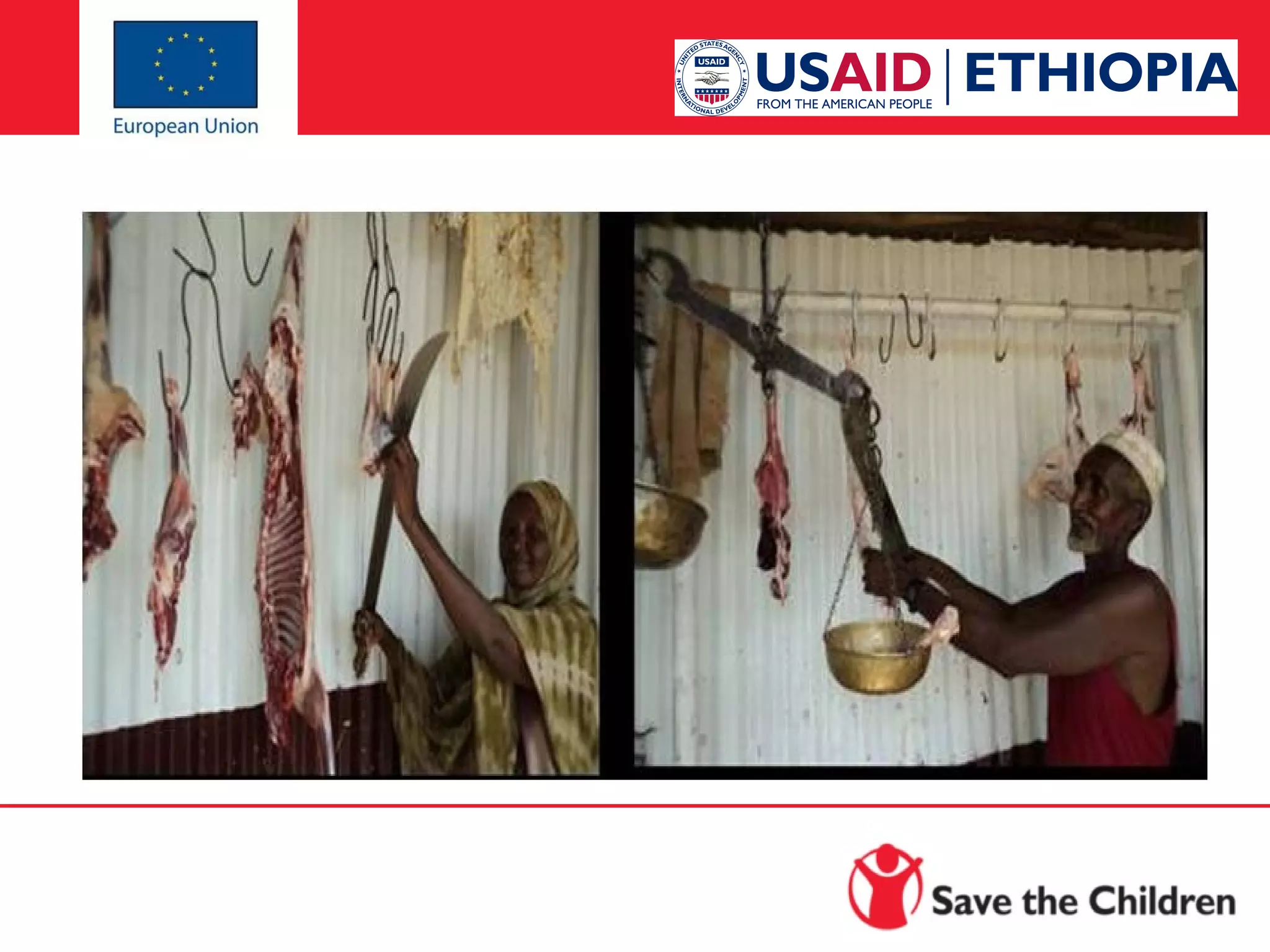
• Established slaughter slabs and market hubs
• The facilities resulted in improvement of hygiene and
quality of products,
• Stimulation of economic activities and longer term
employment opportunities.
• Its management is handed over to cooperatives
(member of 20, of which 16 are women)
– Supported construction of a slaughter slab.
– The centre providing proper services for the
surrounding community,
• at least for 500 clients from Shinille and Dire Dawa.
• Within a day, 15-20 shoats are slaughtered.
• The facilities well regarded by the government for
replication
• This experience is documented and widely shared for
replication to other areas of similar needs
Thanks

Best practices.ecusaid forum

  • 1.
    Building Resilience ofCommunities in Dryland Areas: Examples from CMDRR (ECHO-Funded) and RAIN (OFDA-Funded) Projects EU- USAID Stakeholders Experience Sharing/Dialogue Forum Teriessa Jalleta, Save the Children 6-7 December 2012, Dire Dawa
  • 2.
    • Save theChildren remained one of the key partners in implementation of a number of food security/livelihood projects in pastoral and agro-pastoral areas targeting drought and affected and vulnerable households • And a number of good practices and lessons documented and shared as appropriate • For the purpose of this workshop, only 4 examples were picked: – Small Scale Development - EC/ECHO funded DRR – Water Schemes Rehabilitation - EC/ECHO funded DRR – Abattoir development – USAID/OFDA funded through MC – Livestock/Milk Value Chain Development - USAID/OFDA funded through MC
  • 4.
    1. Upgrading Small ScaleIrrigation Scheme (ECHO fund)   • SSI upgraded in Barak of Shinille woreda of Somali Region as part of DRR • Before the SSI upgrading, communities used traditional irrigation to produce only sorghum and maize • After upgrading, beneficiaries produce others vegetables and fruits (potatoes, tomatoes, onions , mangos and bananas) • Direct beneficiaries = 200 households.
  • 7.
    • The schemehas considerably changed the livelihoods of targeted agro-pastoral households. – The beneficiaries managed to lead settled/stable lives, – Converted unproductive land to productive one, – Diversified and improved income and bridged their six months food gap that was common prior to the intervention, – The livelihood of beneficiaries is improving in comparison with the non-beneficiaries, – Crop productivity increased - 3qt/ha to 20qt/ha (sorghum) – The household production increased by over 300%.
  • 8.
    2. Water Points Rehabilitation(ECHO fund) •  As per findings and recommendations of various assessments and the community action plan exercises, identified potential areas (Regden of Ewa of Afar) • The project supported rehabilitation of 10 water points, serving 2500 households. • Rehabilitation of the water points increased utilization efficiency and hygiene.
  • 11.
    3. Livestock/Milk Value Chain(OFDA funded) •  RAIN supported live animals and milk value chain: – organizing producers and traders into formal traders’ cooperatives, (in Biki village of Afdem and Dhadhamane village of Babile) – linkage to market sources such as abattoirs at Mojo. • Large number of live animals supplied (8750 shoats between October 2011 and March 2012). • The bargaining and negotiation power of the cooperative improved and the price of live animals has increased from time to time (from Birr 22.5/kg to Birr 29/kg). • Brought about positive attitudes of producers and traders
  • 15.
    4. Development ofmeat market hubs and slaughter slabs (OFDA fund) • Established slaughter slabs and market hubs • The facilities resulted in improvement of hygiene and quality of products, • Stimulation of economic activities and longer term employment opportunities. • Its management is handed over to cooperatives (member of 20, of which 16 are women)
  • 16.
    – Supported constructionof a slaughter slab. – The centre providing proper services for the surrounding community, • at least for 500 clients from Shinille and Dire Dawa. • Within a day, 15-20 shoats are slaughtered. • The facilities well regarded by the government for replication • This experience is documented and widely shared for replication to other areas of similar needs
  • 21.