Effective Teambuilding For Entrepreneurs


                                           Gavin D. J. Harper
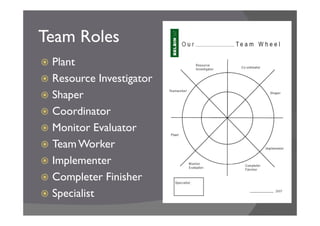
Team Roles
 Plant
 Resource Investigator
 Shaper
 Coordinator
 Monitor Evaluator
 Team Worker
 Implementer
    p
 Completer Finisher
 Specialist
 S i li
Action      • Shaper
Oriented     • Implementer
 Roles       • Completer Finisher


 People      • Co-ordinator
Oriented     • Teamworker
 Roles       • Resource Investigator


 Thought     • Monitor Evaluator
Orientated   • Specialist
  Roles      • Pl t
               Plant
http://www.learning-tech.co.uk/Belbin.html


© Philip Chambers’, 2000 City University Business School - Belbin 9 Team Roles Mind Map
Plant
  Creative & Unorthodox
  ‘Ideas Hamsters’
  Innovative solutions
  Clever f
  Cl      free thinkers
                hi k

  Disorganised
  Can t
  Can’t focus on one thing
  Can struggle communicating ideas
Resource Investigator
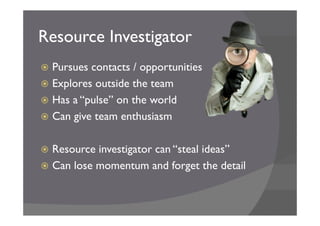
 Pursues contacts / opportunities
 Explores outside the team
   p
 Has a “pulse” on the world
 Can i
 C give team enthusiasm
                   h i

 Resource investigator can “steal ideas”
 Can lose momentum and forget the detail
Co-ordinator
Co ordinator
 Often the ‘chairman’
 Confident and mature
 Good at delegation
 Good
 G d at clarification, makes the team gel
           l ifi i       k h            l

 Can be manipulative
 Delegates all work and may do nothing but this
Shaper
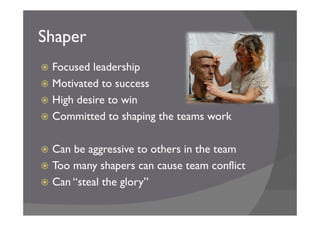
 Focused leadership
 Motivated to success
 High desire to win
 Committed to shaping the teams work
 C     i d       h i   h           k

 Can be aggressive to others in the team
 Too many shapers can cause team conflict
 Can “steal the glory”
Monitor Evaluator
 Detached from bias
 Good at ‘judging’ the team
          j g g
 Takes many things into account
 Moves slowly and precisely
 M      l l      d      i l
 Comes to the ‘right decision’
                 g

 Can be cynical and kill enthusiasm
 Can’t inspire others well
Completer Finisher
 Tidies up loose ends
 Sense for accuracyy
 Perfectionist
 Goes the extra distance
 G      h        di

 Can worry over small details
 Can be frustrating to work with
 Don’t trust others with tasks
Specialist
  Greatest depth of knowledge
  Brings discipline specific skills
      g       p      p
  Enjoys communicating their passion
  Passionate about their knowledge
  P i          b      h i k       l d

  Only makes a contribution to a narrow set
  of issues
  Uninterested in other ‘team business’
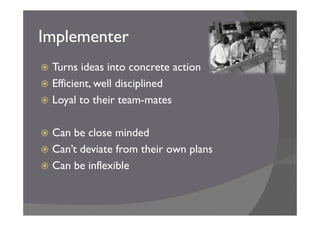
Implementer
 Turns ideas into concrete action
 Efficient, well disciplined
          ,           p
 Loyal to their team-mates

 Can be close minded
 Can’t deviate from their own plans
 Can be inflexible
Team Worker
 “The
 “Th grease that keeps
              h k
         the wheels turning”
 Good at listening to others in the group
 Can be very diplomatic and good at
 smoothing things over in team conflicts


 They
 Th won’t take sides!
          ’ k d !
 They aren’t noticed until they aren’t there!
Stages of Team Maturity

   Forming         Storming       Norming        Performing

                                            Coleman & Bush 1994


Forming – establishing roles of team members
Storming – leadership / approach / feasibility questioned
Norming – team identity established, mutual support
Performing – solutions / decisions / activities / outputs
References
 Belbin, R. M. (1981). Management Teams: Why
 They Succeed or Fail. Oxford: Butterworth
 Heinemann
 Coleman, M. and T Bush (1994). Managing
            M       T.      (1994)
 With Teams. In Bush, T. and West-Burnham, J.
 (eds.)
 (eds ) The Principles of Educational
 Management. Harlow, Essex: Longman.

Belbin Team Roles / Inventory

  • 1.
    Effective Teambuilding ForEntrepreneurs Gavin D. J. Harper
  • 2.
    Team Roles Plant Resource Investigator Shaper Coordinator Monitor Evaluator Team Worker Implementer p Completer Finisher Specialist S i li
  • 3.
    Action • Shaper Oriented • Implementer Roles • Completer Finisher People • Co-ordinator Oriented • Teamworker Roles • Resource Investigator Thought • Monitor Evaluator Orientated • Specialist Roles • Pl t Plant
  • 4.
    http://www.learning-tech.co.uk/Belbin.html © Philip Chambers’,2000 City University Business School - Belbin 9 Team Roles Mind Map
  • 5.
    Plant Creative& Unorthodox ‘Ideas Hamsters’ Innovative solutions Clever f Cl free thinkers hi k Disorganised Can t Can’t focus on one thing Can struggle communicating ideas
  • 6.
    Resource Investigator Pursuescontacts / opportunities Explores outside the team p Has a “pulse” on the world Can i C give team enthusiasm h i Resource investigator can “steal ideas” Can lose momentum and forget the detail
  • 7.
    Co-ordinator Co ordinator Oftenthe ‘chairman’ Confident and mature Good at delegation Good G d at clarification, makes the team gel l ifi i k h l Can be manipulative Delegates all work and may do nothing but this
  • 8.
    Shaper Focused leadership Motivated to success High desire to win Committed to shaping the teams work C i d h i h k Can be aggressive to others in the team Too many shapers can cause team conflict Can “steal the glory”
  • 9.
    Monitor Evaluator Detachedfrom bias Good at ‘judging’ the team j g g Takes many things into account Moves slowly and precisely M l l d i l Comes to the ‘right decision’ g Can be cynical and kill enthusiasm Can’t inspire others well
  • 10.
    Completer Finisher Tidiesup loose ends Sense for accuracyy Perfectionist Goes the extra distance G h di Can worry over small details Can be frustrating to work with Don’t trust others with tasks
  • 11.
    Specialist Greatestdepth of knowledge Brings discipline specific skills g p p Enjoys communicating their passion Passionate about their knowledge P i b h i k l d Only makes a contribution to a narrow set of issues Uninterested in other ‘team business’
  • 12.
    Implementer Turns ideasinto concrete action Efficient, well disciplined , p Loyal to their team-mates Can be close minded Can’t deviate from their own plans Can be inflexible
  • 13.
    Team Worker “The “Th grease that keeps h k the wheels turning” Good at listening to others in the group Can be very diplomatic and good at smoothing things over in team conflicts They Th won’t take sides! ’ k d ! They aren’t noticed until they aren’t there!
  • 14.
    Stages of TeamMaturity Forming Storming Norming Performing Coleman & Bush 1994 Forming – establishing roles of team members Storming – leadership / approach / feasibility questioned Norming – team identity established, mutual support Performing – solutions / decisions / activities / outputs
  • 15.
    References Belbin, R.M. (1981). Management Teams: Why They Succeed or Fail. Oxford: Butterworth Heinemann Coleman, M. and T Bush (1994). Managing M T. (1994) With Teams. In Bush, T. and West-Burnham, J. (eds.) (eds ) The Principles of Educational Management. Harlow, Essex: Longman.