Behaviorism
By Faith, Jessica, Nichole, Jonathan and Shantique
Key Points

• Behaviorism is the prediction and control of
  human behavior.

• Independent thought is not integrated into
  teaching methods.

• Learning is based on a system of positive and
  negative rewards.

• The learner is essentially passive.
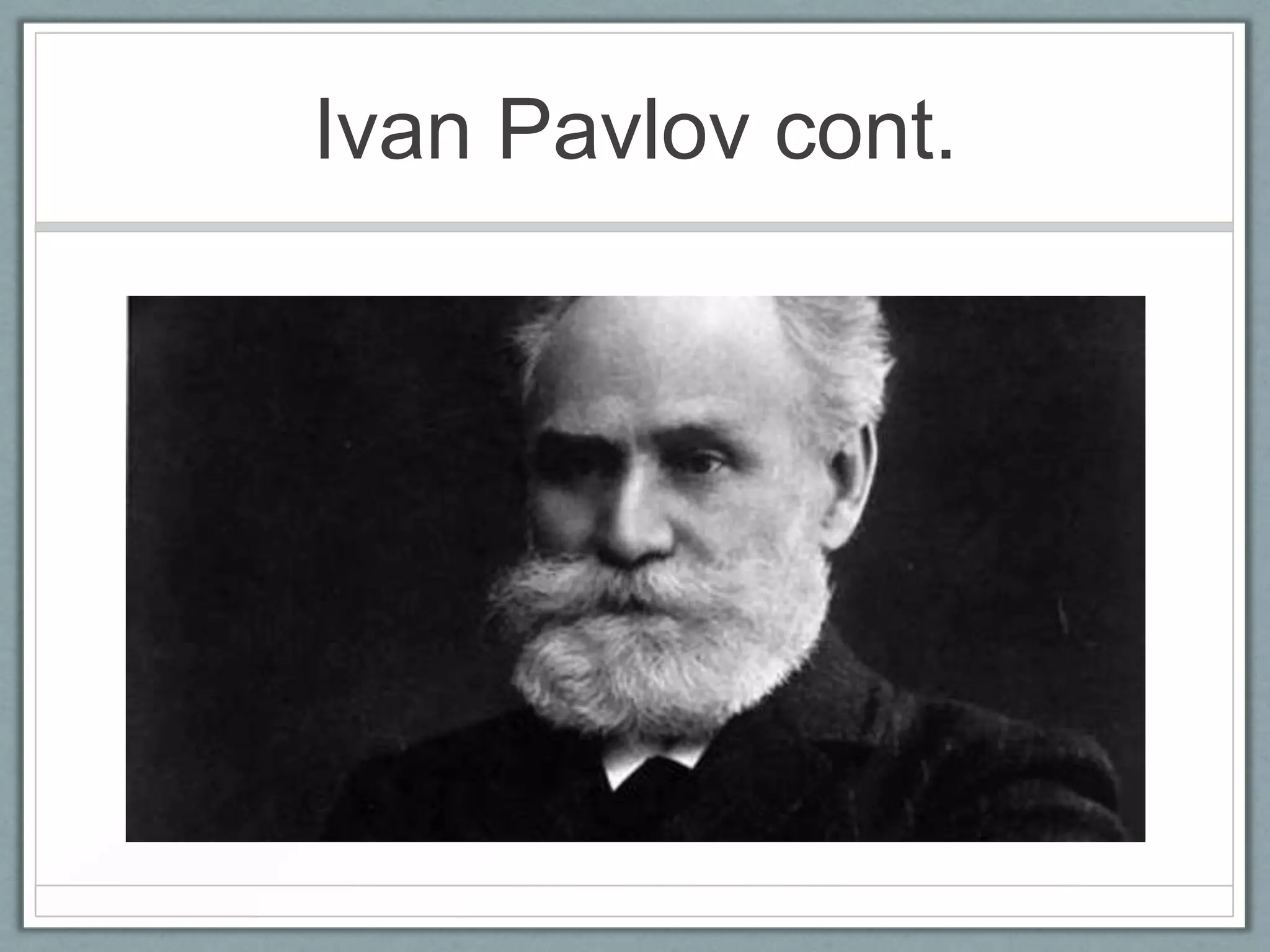
Ivan Pavlov (1849-1936)

• He taught dogs to emulate desired behaviors, and
  later applied his methods to human subjects.

• He achieved a desired reflex by providing a
  stimulus. This is now known as classic
  conditioning.

• The reflex is an involuntary response.

• Other behaviorist scientists studied his methods
  after his death.
Ivan Pavlov cont.
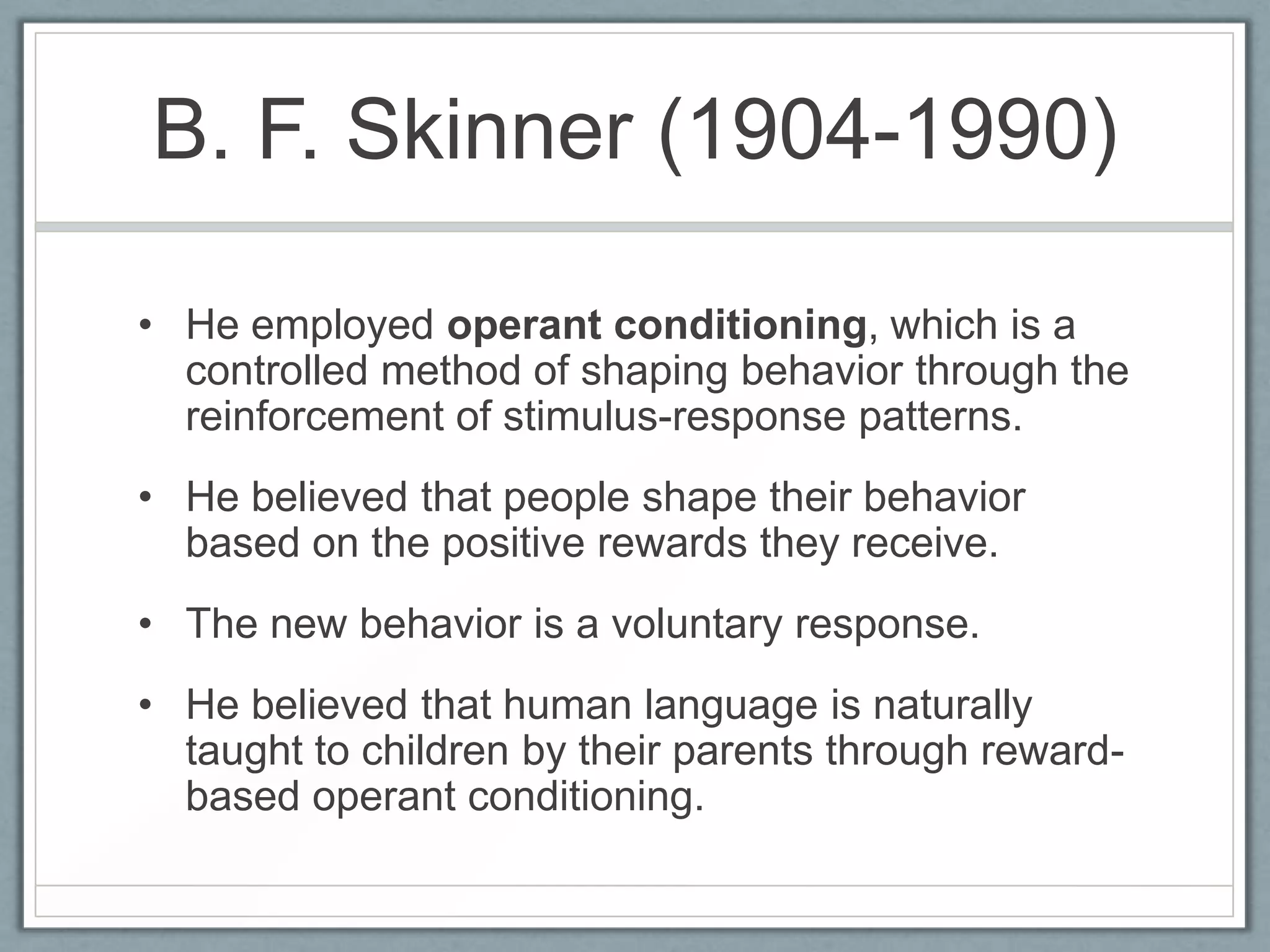
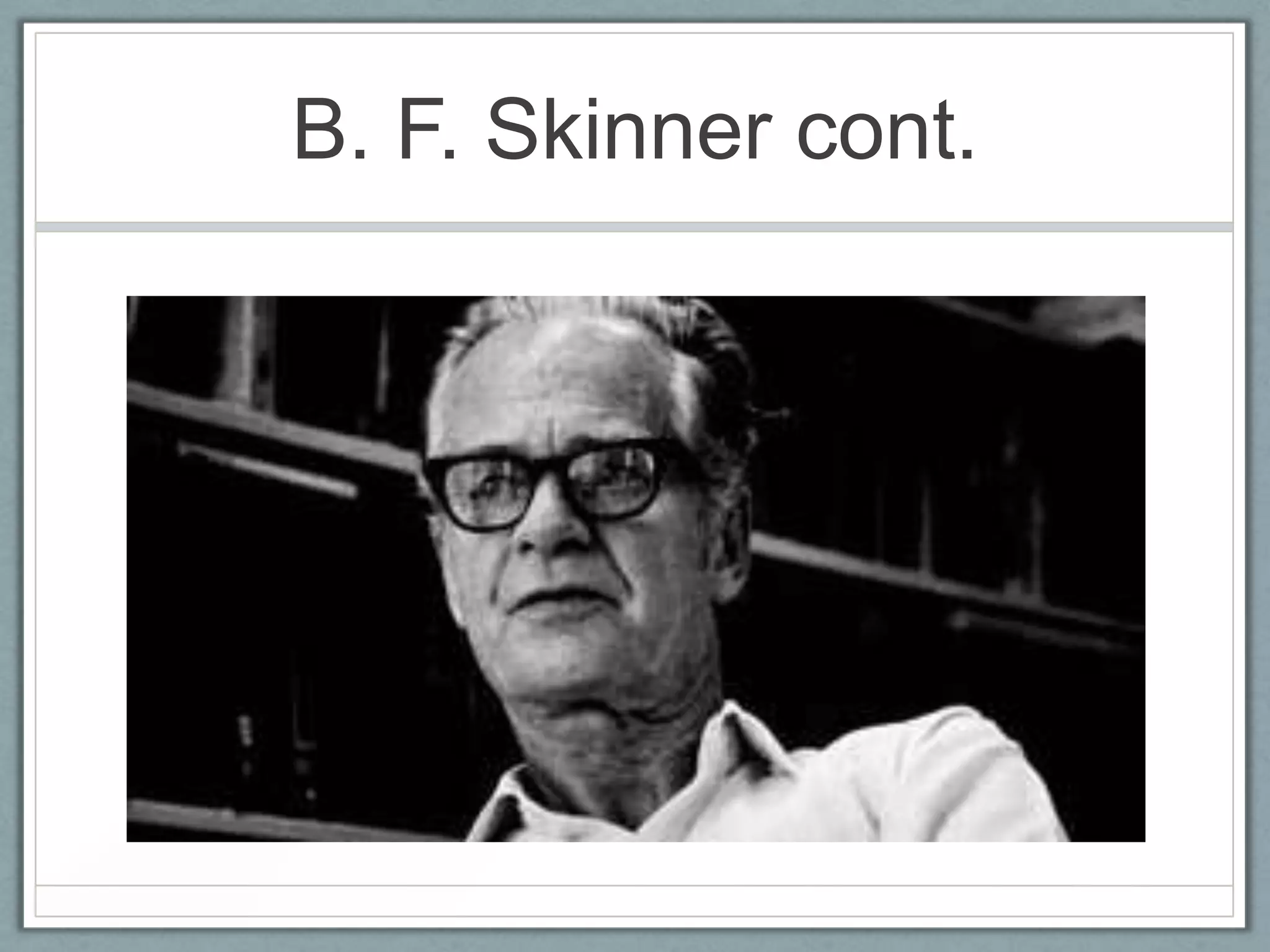
B. F. Skinner (1904-1990)

• He employed operant conditioning, which is a
  controlled method of shaping behavior through the
  reinforcement of stimulus-response patterns.
• He believed that people shape their behavior
  based on the positive rewards they receive.
• The new behavior is a voluntary response.
• He believed that human language is naturally
  taught to children by their parents through reward-
  based operant conditioning.
B. F. Skinner cont.
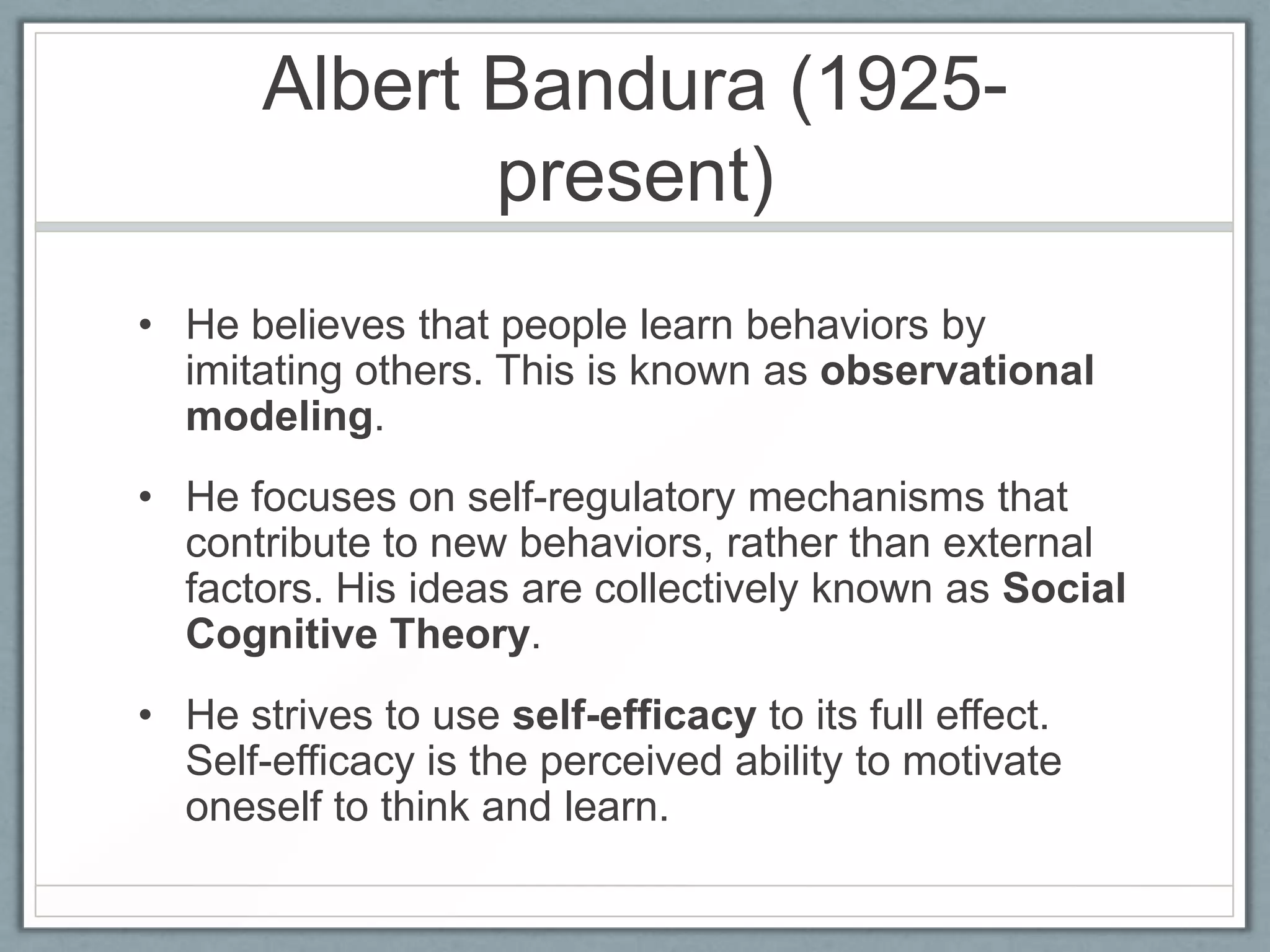
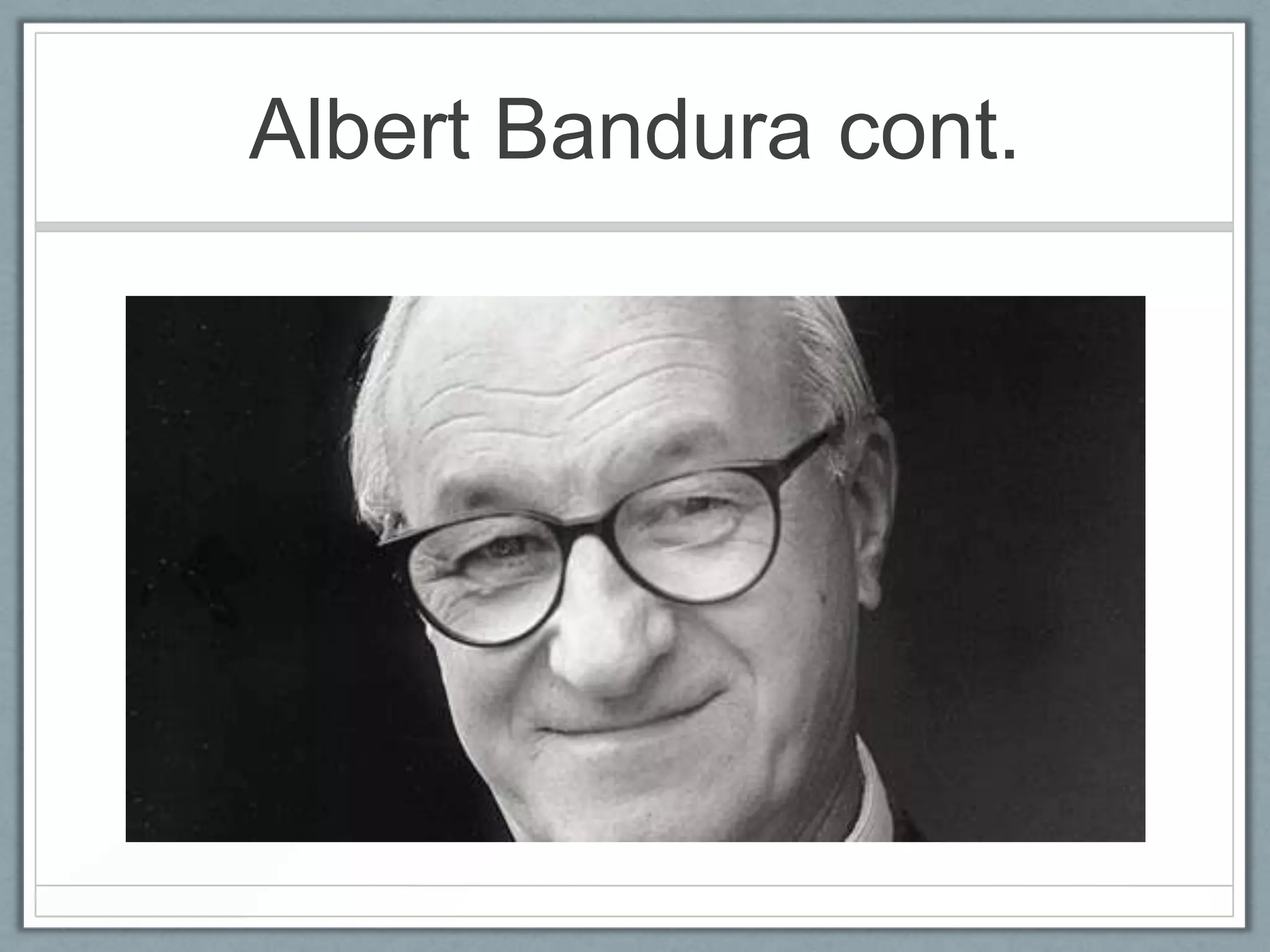
Albert Bandura (1925-
              present)
• He believes that people learn behaviors by
  imitating others. This is known as observational
  modeling.
• He focuses on self-regulatory mechanisms that
  contribute to new behaviors, rather than external
  factors. His ideas are collectively known as Social
  Cognitive Theory.
• He strives to use self-efficacy to its full effect.
  Self-efficacy is the perceived ability to motivate
  oneself to think and learn.
Albert Bandura cont.
Teacher Implications

• Teachers should first gain their students’ attention.

• Teachers should employ observational modeling
  by showing students what to do.

• Teachers should reward students for emulating a
  desired behavior and punish students for failing to
  emulate a desired behavior.
Student Implications

• Students should pay attention. Factors such as
  sensory capacities, arousal level, perceptual set and
  past reinforcement affect attention.
• Students should retain information. Retention is
  increased through mental images, cognitive
  organization, symbolic rehearsal and motor rehearsal.
• Students should emulate the desired behavior after
  observing the teacher’s example.
• Students should be motivated to imitate the desired
  behavior. Motivation is increased by imagining
  incentives and remembering the reinforced model.
What Do We Think???

•   Behaviorism isn’t always the control of students behavior.

•   As a teacher one should implement educational games that
    teaches students to reflect positive behaviorism in order to receive
    an reward that doesn’t always have to be physical, but a mental
    feeling of self-fulfillment.

•   Teachers should be a role model as well as mentor to their
    students . By doing so, students will apply the positive energy
    given from their teachers into their everyday tasks.

•   Behaviorism is essentially an important factor to analyze while
    teaching students, because you can find things about certain
    students that can help you eliminate negative behaviors, and
    replace them achieve self-efficacy.
Image Sources + Works
            Cited
• http://www.businessinsider.com/leap-year-history-
  february-29-2012-2?op=1

• http://kids.britannica.com/comptons/art-
  161287/BF-Skinner-in-1971

• http://www.davidsonfilms.com/index.php?main_pa
  ge=products_all&disp_order=2&page=6

• http://www.learning-theories.com/behaviorism.html

Behaviorism

  • 1.
    Behaviorism By Faith, Jessica,Nichole, Jonathan and Shantique
  • 2.
    Key Points • Behaviorismis the prediction and control of human behavior. • Independent thought is not integrated into teaching methods. • Learning is based on a system of positive and negative rewards. • The learner is essentially passive.
  • 3.
    Ivan Pavlov (1849-1936) •He taught dogs to emulate desired behaviors, and later applied his methods to human subjects. • He achieved a desired reflex by providing a stimulus. This is now known as classic conditioning. • The reflex is an involuntary response. • Other behaviorist scientists studied his methods after his death.
  • 4.
  • 5.
    B. F. Skinner(1904-1990) • He employed operant conditioning, which is a controlled method of shaping behavior through the reinforcement of stimulus-response patterns. • He believed that people shape their behavior based on the positive rewards they receive. • The new behavior is a voluntary response. • He believed that human language is naturally taught to children by their parents through reward- based operant conditioning.
  • 6.
  • 7.
    Albert Bandura (1925- present) • He believes that people learn behaviors by imitating others. This is known as observational modeling. • He focuses on self-regulatory mechanisms that contribute to new behaviors, rather than external factors. His ideas are collectively known as Social Cognitive Theory. • He strives to use self-efficacy to its full effect. Self-efficacy is the perceived ability to motivate oneself to think and learn.
  • 8.
  • 9.
    Teacher Implications • Teachersshould first gain their students’ attention. • Teachers should employ observational modeling by showing students what to do. • Teachers should reward students for emulating a desired behavior and punish students for failing to emulate a desired behavior.
  • 10.
    Student Implications • Studentsshould pay attention. Factors such as sensory capacities, arousal level, perceptual set and past reinforcement affect attention. • Students should retain information. Retention is increased through mental images, cognitive organization, symbolic rehearsal and motor rehearsal. • Students should emulate the desired behavior after observing the teacher’s example. • Students should be motivated to imitate the desired behavior. Motivation is increased by imagining incentives and remembering the reinforced model.
  • 11.
    What Do WeThink??? • Behaviorism isn’t always the control of students behavior. • As a teacher one should implement educational games that teaches students to reflect positive behaviorism in order to receive an reward that doesn’t always have to be physical, but a mental feeling of self-fulfillment. • Teachers should be a role model as well as mentor to their students . By doing so, students will apply the positive energy given from their teachers into their everyday tasks. • Behaviorism is essentially an important factor to analyze while teaching students, because you can find things about certain students that can help you eliminate negative behaviors, and replace them achieve self-efficacy.
  • 12.
    Image Sources +Works Cited • http://www.businessinsider.com/leap-year-history- february-29-2012-2?op=1 • http://kids.britannica.com/comptons/art- 161287/BF-Skinner-in-1971 • http://www.davidsonfilms.com/index.php?main_pa ge=products_all&disp_order=2&page=6 • http://www.learning-theories.com/behaviorism.html