WORLD ENVIRONMENT DAY
2018
WELCOME
To
POWER POINT PRESENTATION
By
K.K.Gupta
University Dept. of Zoology
VBU
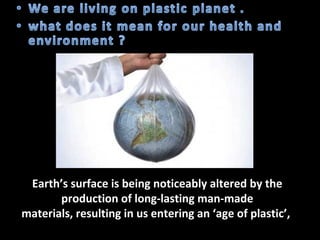
Earth’s surface is being noticeably altered by the
production of long-lasting man-made
materials, resulting in us entering an ‘age of plastic’,
Age of Human Civilization
Since the days of human civilization ( about 200,000 yrs
ago) , Human has explored many materials for their use
and accordingly we have evidences
Of
• Stone Age – 8700 BC-2000 BC (Pashan
Yuga)
• Bronze Age-3300 BC -1200 BC -(kans Yuga)
• Iron Age ( Loh yuga)-1200-1000 BC & Now
• Plastic Yuga (1862-continuing ……………?
Uses of Plastic
• Domestic Purpose- Toys, Furniture , Door , Door
mates , Water bottles Utensils, Plastic bags and
many more ,
• Medicals – Syringe . Wrappers , surgical gloves,
Plastic surgery etc
• Automobiles – Pipes ,Tyres , Vehicles body parts
• Agriculture – Green house construction, Seed
packaging bags
• Electrical gadgets – Wire, plugs, sockets, fan
blades etc.
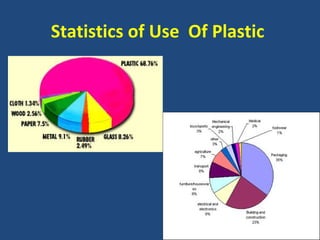
Statistics of Use Of Plastic
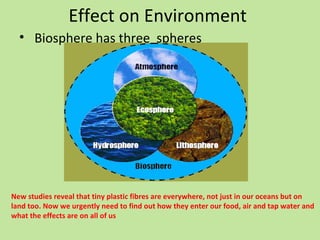
Effect on Environment
• Biosphere has three spheres
New studies reveal that tiny plastic fibres are everywhere, not just in our oceans but on
land too. Now we urgently need to find out how they enter our food, air and tap water and
what the effects are on all of us
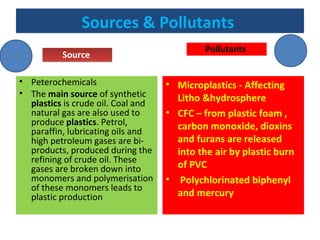
Sources & Pollutants
SourceSource
• Peterochemicals
• The main source of synthetic
plastics is crude oil. Coal and
natural gas are also used to
produce plastics. Petrol,
paraffin, lubricating oils and
high petroleum gases are bi-
products, produced during the
refining of crude oil. These
gases are broken down into
monomers and polymerisation
of these monomers leads to
plastic production
Pollutants
• Microplastics - Affecting
Litho &hydrosphere
• CFC – from plastic foam ,
carbon monoxide, dioxins
and furans are released
into the air by plastic burn
of PVC
• Polychlorinated biphenyl
and mercury
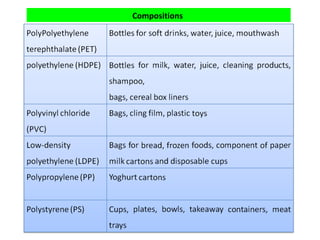
Compositions
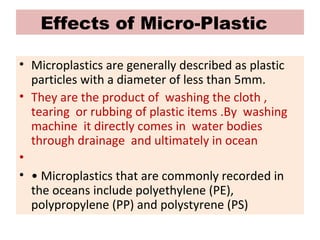
Effects of Micro-Plastic
• Microplastics are generally described as plastic
particles with a diameter of less than 5mm.
• They are the product of washing the cloth ,
tearing or rubbing of plastic items .By washing
machine it directly comes in water bodies
through drainage and ultimately in ocean
•
• • Microplastics that are commonly recorded in
the oceans include polyethylene (PE),
polypropylene (PP) and polystyrene (PS)
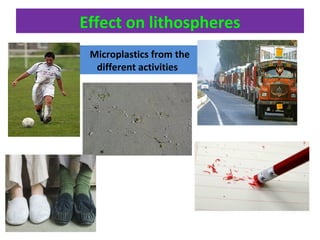
Effect on lithospheres
Microplastics from the
different activities
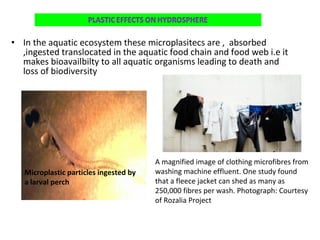
• In the aquatic ecosystem these microplasitecs are , absorbed
,ingested translocated in the aquatic food chain and food web i.e it
makes bioavailbilty to all aquatic organisms leading to death and
loss of biodiversity
Microplastic particles ingested by
a larval perch
A magnified image of clothing microfibres from
washing machine effluent. One study found
that a fleece jacket can shed as many as
250,000 fibres per wash. Photograph: Courtesy
of Rozalia Project
Plastic & water pollution
• Between 5 million and 13 million tonnes of
plastic leak into the world’s oceans every year.
Which is more than the combined weight of
every single blue whale on Earth
• Plastic pollution in our oceans poses a real threat
to 56% of whales and dolphins. Who are filter
feeders and mistakenly ingest plastic as food
• The bathrooms are one of the worst places for
plastic packaging – shampoo and conditioner
bottles, toothpaste tubes and shower gel
dispensers are all made from single use plastic –
Thus Up to 95% of litter that makes its way into the oceans
comes from our towns and cities.
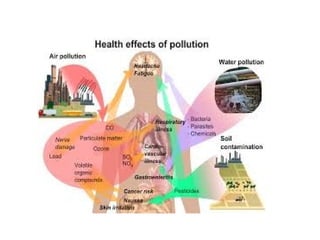
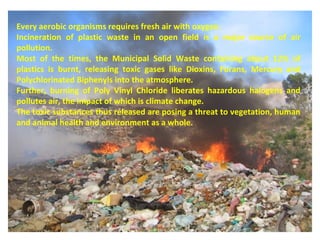
Every aerobic organisms requires fresh air with oxygen.
Incineration of plastic waste in an open field is a major source of air
pollution.
Most of the times, the Municipal Solid Waste containing about 12% of
plastics is burnt, releasing toxic gases like Dioxins, Furans, Mercury and
Polychlorinated Biphenyls into the atmosphere.
Further, burning of Poly Vinyl Chloride liberates hazardous halogens and
pollutes air, the impact of which is climate change.
The toxic substances thus released are posing a threat to vegetation, human
and animal health and environment as a whole.
Effects of plastic pollution
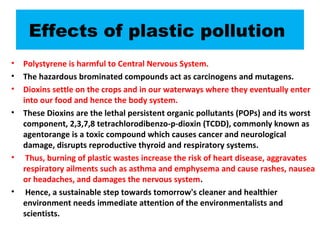
• Polystyrene is harmful to Central Nervous System.
• The hazardous brominated compounds act as carcinogens and mutagens.
• Dioxins settle on the crops and in our waterways where they eventually enter
into our food and hence the body system.
• These Dioxins are the lethal persistent organic pollutants (POPs) and its worst
component, 2,3,7,8 tetrachlorodibenzo-p-dioxin (TCDD), commonly known as
agentorange is a toxic compound which causes cancer and neurological
damage, disrupts reproductive thyroid and respiratory systems.
• Thus, burning of plastic wastes increase the risk of heart disease, aggravates
respiratory ailments such as asthma and emphysema and cause rashes, nausea
or headaches, and damages the nervous system.
• Hence, a sustainable step towards tomorrow's cleaner and healthier
environment needs immediate attention of the environmentalists and
scientists.
Solution
• Either BAN or search for BAN
Better alternative Now
Like
• Awareness of Hazards of plastic
• Use of Bioplastics
• Alternative use of packaging materials can
minimize 67% of plastic pollution
• Use of Plastic degrading enzyme like
Researchers from Britain's University of Portsmouth and the US Department of Energy's
National Renewable Energy Laboratory (NREL) made the discovery while examining the
structure of a natural enzyme found in a waste recycling centre a few years ago in Japan,.
Enzyme, Ideonella sakaiensis 201-F6, is able to "eat" polyethylene terephthalate, PET,
which was patented as a plastic in the 1940s and is used in millions of tonnes of plastic
bottles.
By protein engineering it can be further modified
THANKS FOR GIVING THE
PLATEFORM
&
LISTENING PATIENTLY

beat plastic pollution Ppt (2)

  • 1.
    WORLD ENVIRONMENT DAY 2018 WELCOME To POWERPOINT PRESENTATION By K.K.Gupta University Dept. of Zoology VBU
  • 2.
    Earth’s surface isbeing noticeably altered by the production of long-lasting man-made materials, resulting in us entering an ‘age of plastic’,
  • 3.
    Age of HumanCivilization Since the days of human civilization ( about 200,000 yrs ago) , Human has explored many materials for their use and accordingly we have evidences Of • Stone Age – 8700 BC-2000 BC (Pashan Yuga) • Bronze Age-3300 BC -1200 BC -(kans Yuga) • Iron Age ( Loh yuga)-1200-1000 BC & Now • Plastic Yuga (1862-continuing ……………?
  • 4.
    Uses of Plastic •Domestic Purpose- Toys, Furniture , Door , Door mates , Water bottles Utensils, Plastic bags and many more , • Medicals – Syringe . Wrappers , surgical gloves, Plastic surgery etc • Automobiles – Pipes ,Tyres , Vehicles body parts • Agriculture – Green house construction, Seed packaging bags • Electrical gadgets – Wire, plugs, sockets, fan blades etc.
  • 5.
  • 6.
    Effect on Environment •Biosphere has three spheres New studies reveal that tiny plastic fibres are everywhere, not just in our oceans but on land too. Now we urgently need to find out how they enter our food, air and tap water and what the effects are on all of us
  • 7.
    Sources & Pollutants SourceSource •Peterochemicals • The main source of synthetic plastics is crude oil. Coal and natural gas are also used to produce plastics. Petrol, paraffin, lubricating oils and high petroleum gases are bi- products, produced during the refining of crude oil. These gases are broken down into monomers and polymerisation of these monomers leads to plastic production Pollutants • Microplastics - Affecting Litho &hydrosphere • CFC – from plastic foam , carbon monoxide, dioxins and furans are released into the air by plastic burn of PVC • Polychlorinated biphenyl and mercury
  • 8.
  • 9.
    Effects of Micro-Plastic •Microplastics are generally described as plastic particles with a diameter of less than 5mm. • They are the product of washing the cloth , tearing or rubbing of plastic items .By washing machine it directly comes in water bodies through drainage and ultimately in ocean • • • Microplastics that are commonly recorded in the oceans include polyethylene (PE), polypropylene (PP) and polystyrene (PS)
  • 10.
    Effect on lithospheres Microplasticsfrom the different activities
  • 11.
    • In theaquatic ecosystem these microplasitecs are , absorbed ,ingested translocated in the aquatic food chain and food web i.e it makes bioavailbilty to all aquatic organisms leading to death and loss of biodiversity Microplastic particles ingested by a larval perch A magnified image of clothing microfibres from washing machine effluent. One study found that a fleece jacket can shed as many as 250,000 fibres per wash. Photograph: Courtesy of Rozalia Project
  • 12.
    Plastic & waterpollution • Between 5 million and 13 million tonnes of plastic leak into the world’s oceans every year. Which is more than the combined weight of every single blue whale on Earth • Plastic pollution in our oceans poses a real threat to 56% of whales and dolphins. Who are filter feeders and mistakenly ingest plastic as food • The bathrooms are one of the worst places for plastic packaging – shampoo and conditioner bottles, toothpaste tubes and shower gel dispensers are all made from single use plastic – Thus Up to 95% of litter that makes its way into the oceans comes from our towns and cities.
  • 14.
    Every aerobic organismsrequires fresh air with oxygen. Incineration of plastic waste in an open field is a major source of air pollution. Most of the times, the Municipal Solid Waste containing about 12% of plastics is burnt, releasing toxic gases like Dioxins, Furans, Mercury and Polychlorinated Biphenyls into the atmosphere. Further, burning of Poly Vinyl Chloride liberates hazardous halogens and pollutes air, the impact of which is climate change. The toxic substances thus released are posing a threat to vegetation, human and animal health and environment as a whole.
  • 15.
    Effects of plasticpollution • Polystyrene is harmful to Central Nervous System. • The hazardous brominated compounds act as carcinogens and mutagens. • Dioxins settle on the crops and in our waterways where they eventually enter into our food and hence the body system. • These Dioxins are the lethal persistent organic pollutants (POPs) and its worst component, 2,3,7,8 tetrachlorodibenzo-p-dioxin (TCDD), commonly known as agentorange is a toxic compound which causes cancer and neurological damage, disrupts reproductive thyroid and respiratory systems. • Thus, burning of plastic wastes increase the risk of heart disease, aggravates respiratory ailments such as asthma and emphysema and cause rashes, nausea or headaches, and damages the nervous system. • Hence, a sustainable step towards tomorrow's cleaner and healthier environment needs immediate attention of the environmentalists and scientists.
  • 16.
    Solution • Either BANor search for BAN Better alternative Now Like • Awareness of Hazards of plastic • Use of Bioplastics • Alternative use of packaging materials can minimize 67% of plastic pollution • Use of Plastic degrading enzyme like Researchers from Britain's University of Portsmouth and the US Department of Energy's National Renewable Energy Laboratory (NREL) made the discovery while examining the structure of a natural enzyme found in a waste recycling centre a few years ago in Japan,. Enzyme, Ideonella sakaiensis 201-F6, is able to "eat" polyethylene terephthalate, PET, which was patented as a plastic in the 1940s and is used in millions of tonnes of plastic bottles. By protein engineering it can be further modified
  • 17.
    THANKS FOR GIVINGTHE PLATEFORM & LISTENING PATIENTLY