AMEY R. PANDIT
ROLL NO. : 13
M.SC ANALYTICAL CHEMISTRY
NES RATNAM COLLEGE OF SCIENCE
What is Plastic?
 Plastic is basically a formless material which can be moulded under heat and
 Most plastics are made from natural resources like Petroleum, Coal and Cellu
 Plastic can be moulded into a variety of shapes and sizes as they have excell
mechanical strength (tensile properties, tear resistance and impact resistanc
 Plastics can either be non-biodegradable or degrade very slowly.
 Plastics are flammable and release toxic fumes when burned.
Plastic as a Pollutant.
 Plastic is one of the toxic non-biodegradable pollutants, which pollutes land
and water.
 The manufacture of plastics in industries releases huge quantity of carbon m
dioxin, hydrogen cyanide and VOCs.
 Plastic causes serious damage to the environment both during its manufactu
disposal.
 According to an estimate about 100 million tonnes of plastics is produced e
all over the world.
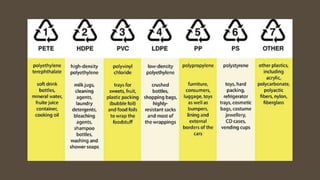
Categories of Plastic.
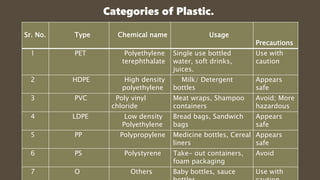
Sr. No. Type Chemical name Usage
Precautions
1 PET Polyethylene
terephthalate
Single use bottled
water, soft drinks,
juices.
Use with
caution
2 HDPE High density
polyethylene
Milk/ Detergent
bottles
Appears
safe
3 PVC Poly vinyl
chloride
Meat wraps, Shampoo
containers
Avoid; More
hazardous
4 LDPE Low density
Polyethylene
Bread bags, Sandwich
bags
Appears
safe
5 PP Polypropylene Medicine bottles, Cereal
liners
Appears
safe
6 PS Polystyrene Take- out containers,
foam packaging
Avoid
7 O Others Baby bottles, sauce Use with
Cradle-to-grave Toxicity
 The major chemicals used in the manufacture of plastics are highly toxic.
 Plastic which is made from petroleum, is a material that the Earth itself cann
 These toxic chemicals (benzene, vinyl chloride, xylems and bisphenol A) po
threat to living beings of all species on Earth.
 In the environment, plastic breaks down into smaller and smaller particles,
toxic chemicals which are ingested by wildlife on land and in ocean and ent
food chain.
Negative Impacts of Plastic production
 Plastic resins are made by using non-renewable natural resources.
 Approximately 8% of world’s oil production is used to make plastics.
 Over exploitation results in depletion of natural resources.
 Plastic production on such large scale negatively impacts more on land, air,
bodies, marine environment and human health.
Major impacts of Plastic on Environment
 Plastic pollution on land is both chemical and physical which results in
reduced soil
fertility.
 Plastic in landfills emit hazardous VOCs during incineration and can
cause landslides.
 Plastic spoils environmental aesthetics and hygiene.
 Industries emit large amount of carbon monoxide, dioxin, and
hydrogen cyanide; these
gaseous pollutants contaminate air and cause respiratory diseases,
nervous system
disorders and immune suppression.
 Plastic wastes dumped in water sources contaminate and poisons freshwater
 Plastic debris clog the sewage drains and create stagnant water which will be
habitat for mosquitos and other parasites.
 Effects of plastic on marine life include the entanglement and ingestion of p
by marine vertebrates.
 Plastic is mistaken for food and is eaten up by birds, turtles, seals and whale
choke them, poison them, or impede digestion causing starvation.
Major impacts of Plastic on Human beings
 Toxic chemicals present in plastics cause neurological problems, cancer, birt
hormonal changes, gastric ulcer, thyroid problems and cardiovascular diseas
 The Endocrine disrupting chemicals (EDCs) in plastics contribute to obesity a
 The plastic bottles may leach cancer- causing chemicals such as phthalates (
that makes plastic pliable) and Bis-phenol A (BPA) (a component that harden
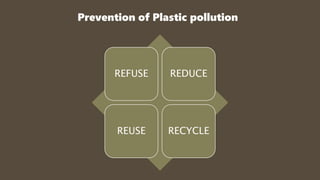
Prevention of Plastic pollution
REFUSE REDUCE
REUSE RECYCLE
Thank You!

Plastic and its effects as a pollutant

  • 1.
    AMEY R. PANDIT ROLLNO. : 13 M.SC ANALYTICAL CHEMISTRY NES RATNAM COLLEGE OF SCIENCE
  • 2.
    What is Plastic? Plastic is basically a formless material which can be moulded under heat and  Most plastics are made from natural resources like Petroleum, Coal and Cellu  Plastic can be moulded into a variety of shapes and sizes as they have excell mechanical strength (tensile properties, tear resistance and impact resistanc  Plastics can either be non-biodegradable or degrade very slowly.  Plastics are flammable and release toxic fumes when burned.
  • 3.
    Plastic as aPollutant.  Plastic is one of the toxic non-biodegradable pollutants, which pollutes land and water.  The manufacture of plastics in industries releases huge quantity of carbon m dioxin, hydrogen cyanide and VOCs.  Plastic causes serious damage to the environment both during its manufactu disposal.  According to an estimate about 100 million tonnes of plastics is produced e all over the world.
  • 4.
    Categories of Plastic. Sr.No. Type Chemical name Usage Precautions 1 PET Polyethylene terephthalate Single use bottled water, soft drinks, juices. Use with caution 2 HDPE High density polyethylene Milk/ Detergent bottles Appears safe 3 PVC Poly vinyl chloride Meat wraps, Shampoo containers Avoid; More hazardous 4 LDPE Low density Polyethylene Bread bags, Sandwich bags Appears safe 5 PP Polypropylene Medicine bottles, Cereal liners Appears safe 6 PS Polystyrene Take- out containers, foam packaging Avoid 7 O Others Baby bottles, sauce Use with
  • 6.
    Cradle-to-grave Toxicity  Themajor chemicals used in the manufacture of plastics are highly toxic.  Plastic which is made from petroleum, is a material that the Earth itself cann  These toxic chemicals (benzene, vinyl chloride, xylems and bisphenol A) po threat to living beings of all species on Earth.  In the environment, plastic breaks down into smaller and smaller particles, toxic chemicals which are ingested by wildlife on land and in ocean and ent food chain.
  • 7.
    Negative Impacts ofPlastic production  Plastic resins are made by using non-renewable natural resources.  Approximately 8% of world’s oil production is used to make plastics.  Over exploitation results in depletion of natural resources.  Plastic production on such large scale negatively impacts more on land, air, bodies, marine environment and human health.
  • 8.
    Major impacts ofPlastic on Environment  Plastic pollution on land is both chemical and physical which results in reduced soil fertility.  Plastic in landfills emit hazardous VOCs during incineration and can cause landslides.  Plastic spoils environmental aesthetics and hygiene.  Industries emit large amount of carbon monoxide, dioxin, and hydrogen cyanide; these gaseous pollutants contaminate air and cause respiratory diseases, nervous system disorders and immune suppression.
  • 9.
     Plastic wastesdumped in water sources contaminate and poisons freshwater  Plastic debris clog the sewage drains and create stagnant water which will be habitat for mosquitos and other parasites.  Effects of plastic on marine life include the entanglement and ingestion of p by marine vertebrates.  Plastic is mistaken for food and is eaten up by birds, turtles, seals and whale choke them, poison them, or impede digestion causing starvation.
  • 10.
    Major impacts ofPlastic on Human beings  Toxic chemicals present in plastics cause neurological problems, cancer, birt hormonal changes, gastric ulcer, thyroid problems and cardiovascular diseas  The Endocrine disrupting chemicals (EDCs) in plastics contribute to obesity a  The plastic bottles may leach cancer- causing chemicals such as phthalates ( that makes plastic pliable) and Bis-phenol A (BPA) (a component that harden
  • 11.
    Prevention of Plasticpollution REFUSE REDUCE REUSE RECYCLE
  • 12.