The lean start-up G. Tendayi Viki School of Psychology University of Kent twitter: @gtviki
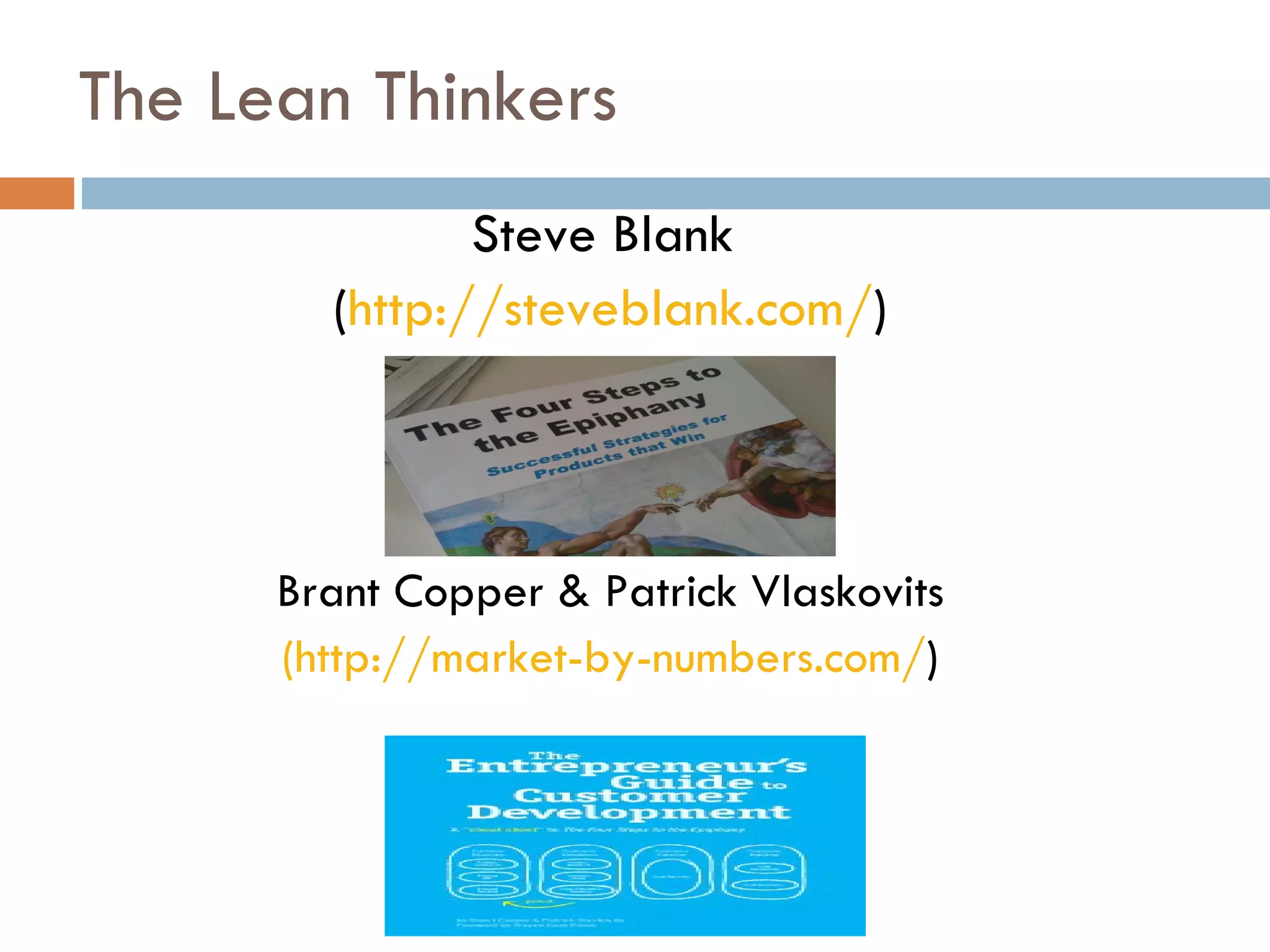
The Lean Thinkers Steve Blank  ( http://steveblank.com/ ) Brant Copper & Patrick Vlaskovits (http://market-by-numbers.com/ )
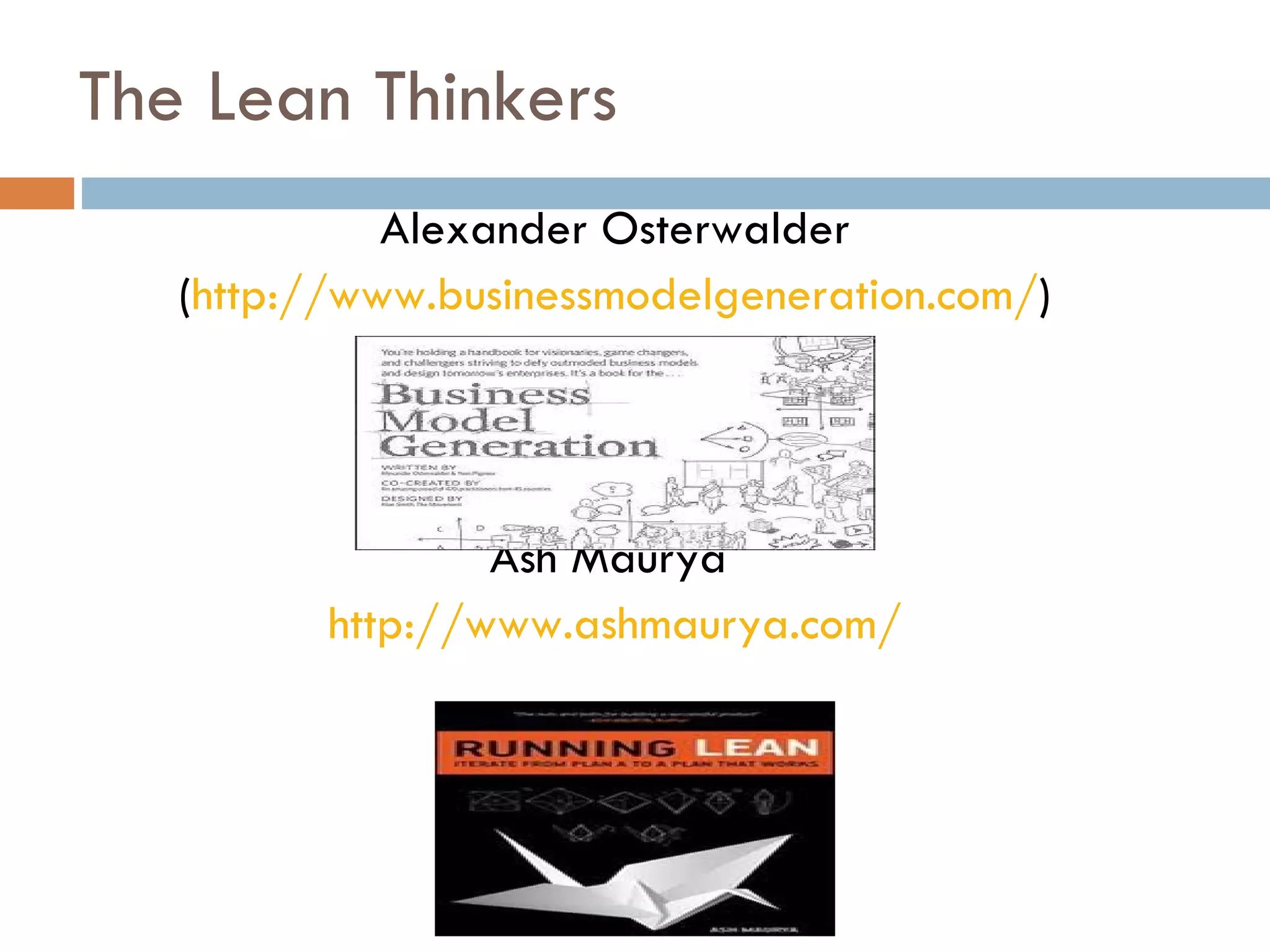
The Lean Thinkers Alexander Osterwalder ( http://www.businessmodelgeneration.com/ ) Ash Maurya  http://www.ashmaurya.com/
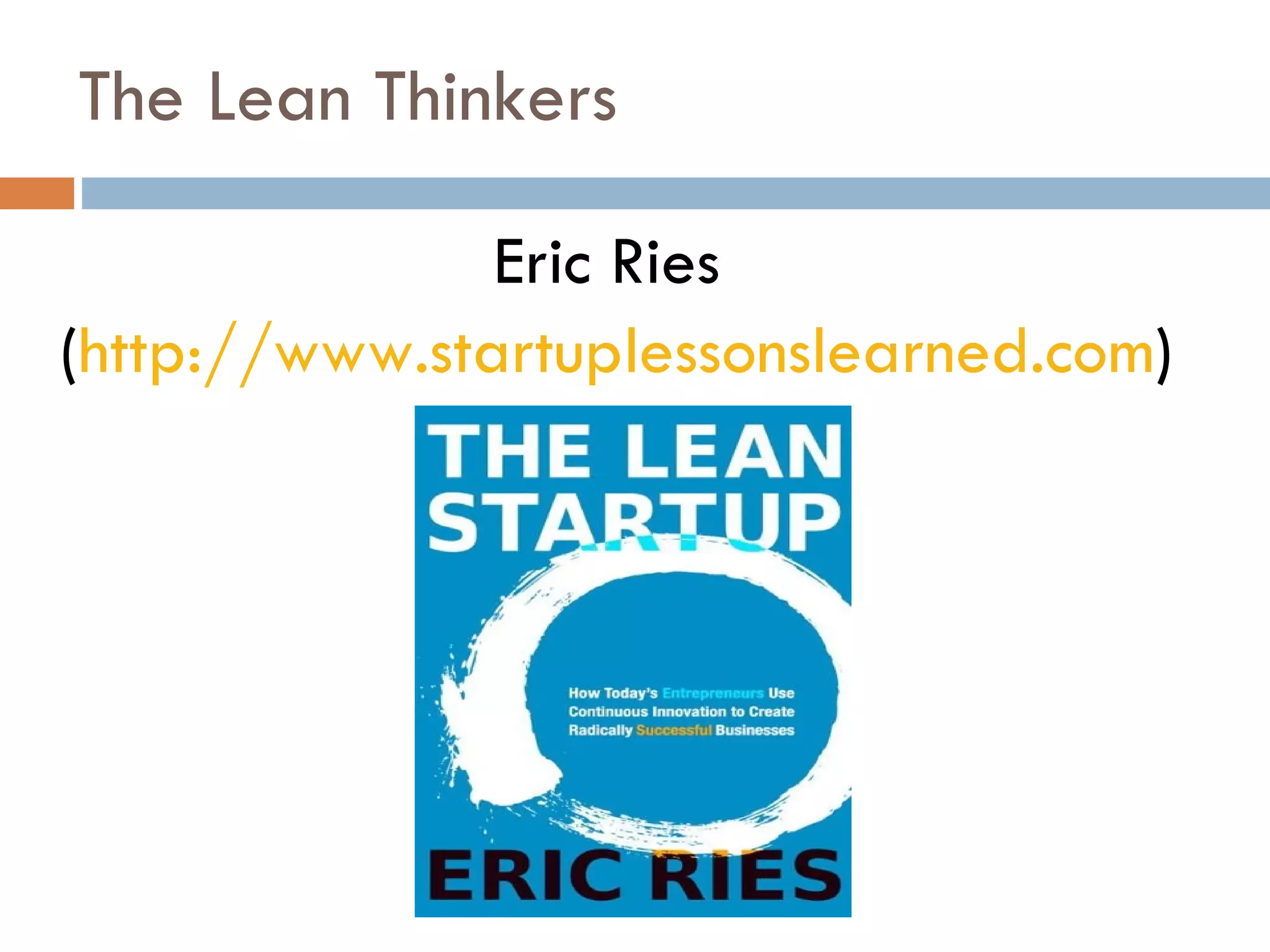
The Lean Thinkers Eric Ries  ( http://www.startuplessonslearned.com )
Entrepreneurship is a Great Calling
 
Your Business Idea  SUCKS Your Start-Up Will  Fail p<.05
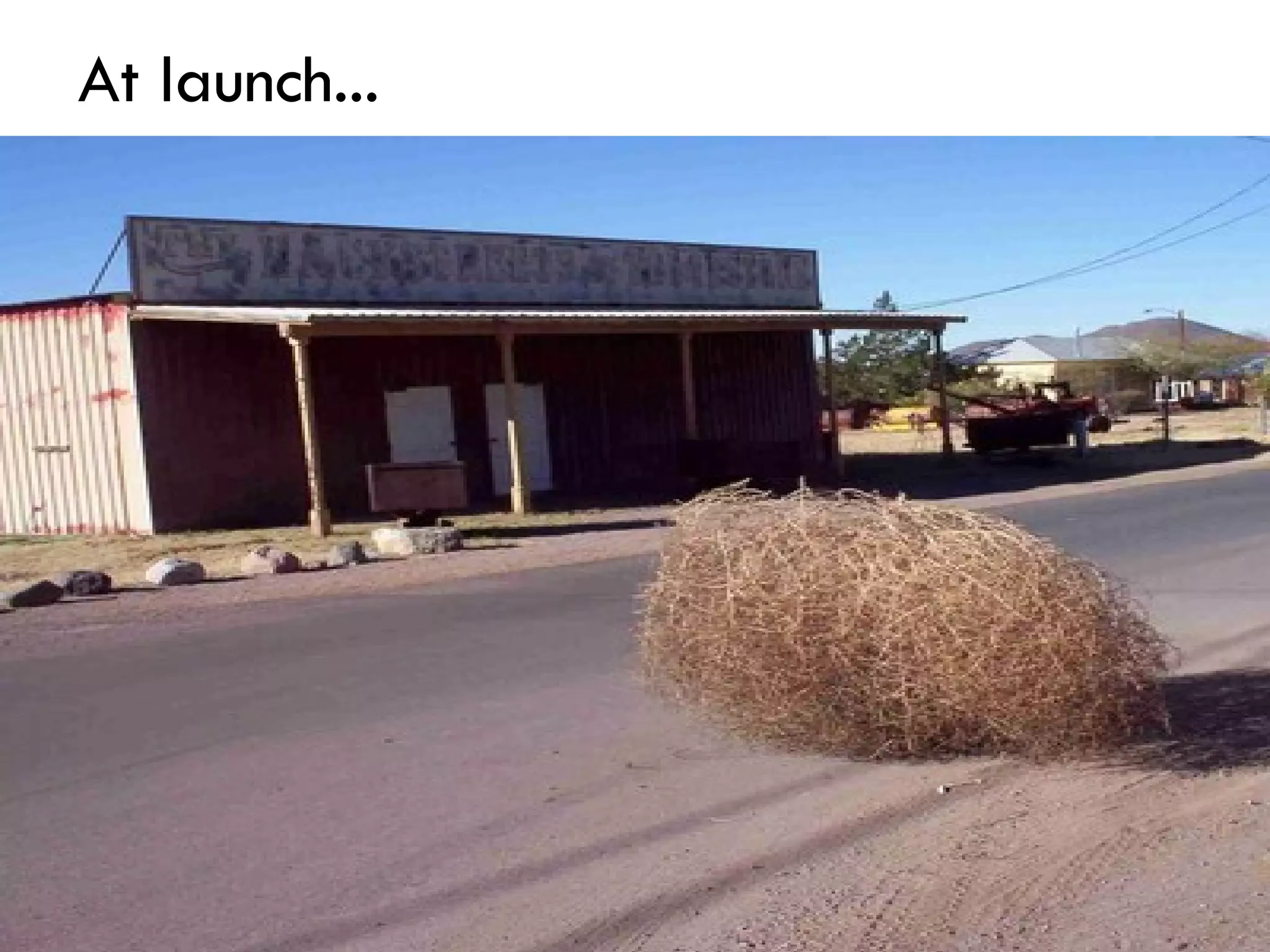
At launch...
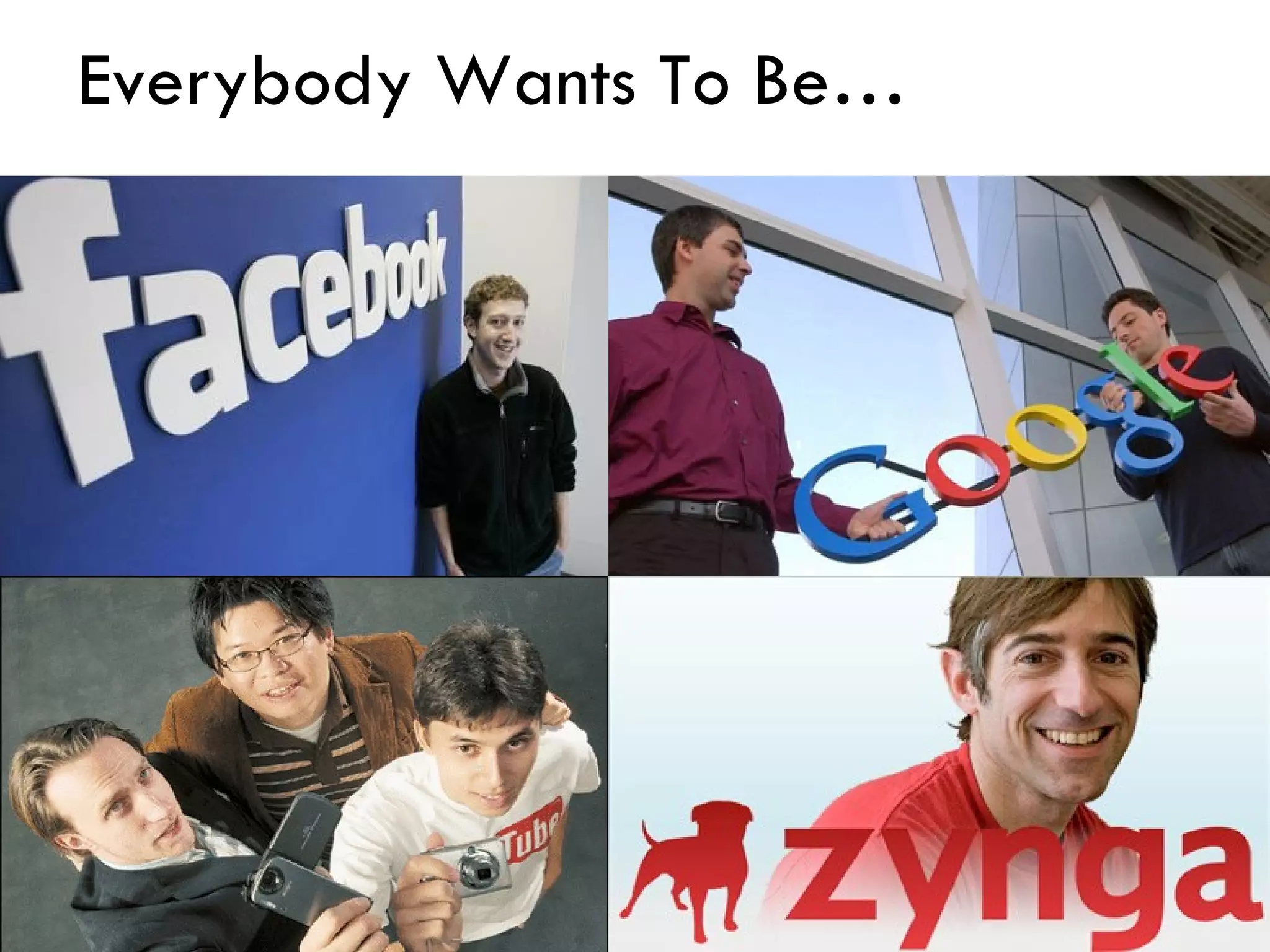
Everybody Wants To Be…
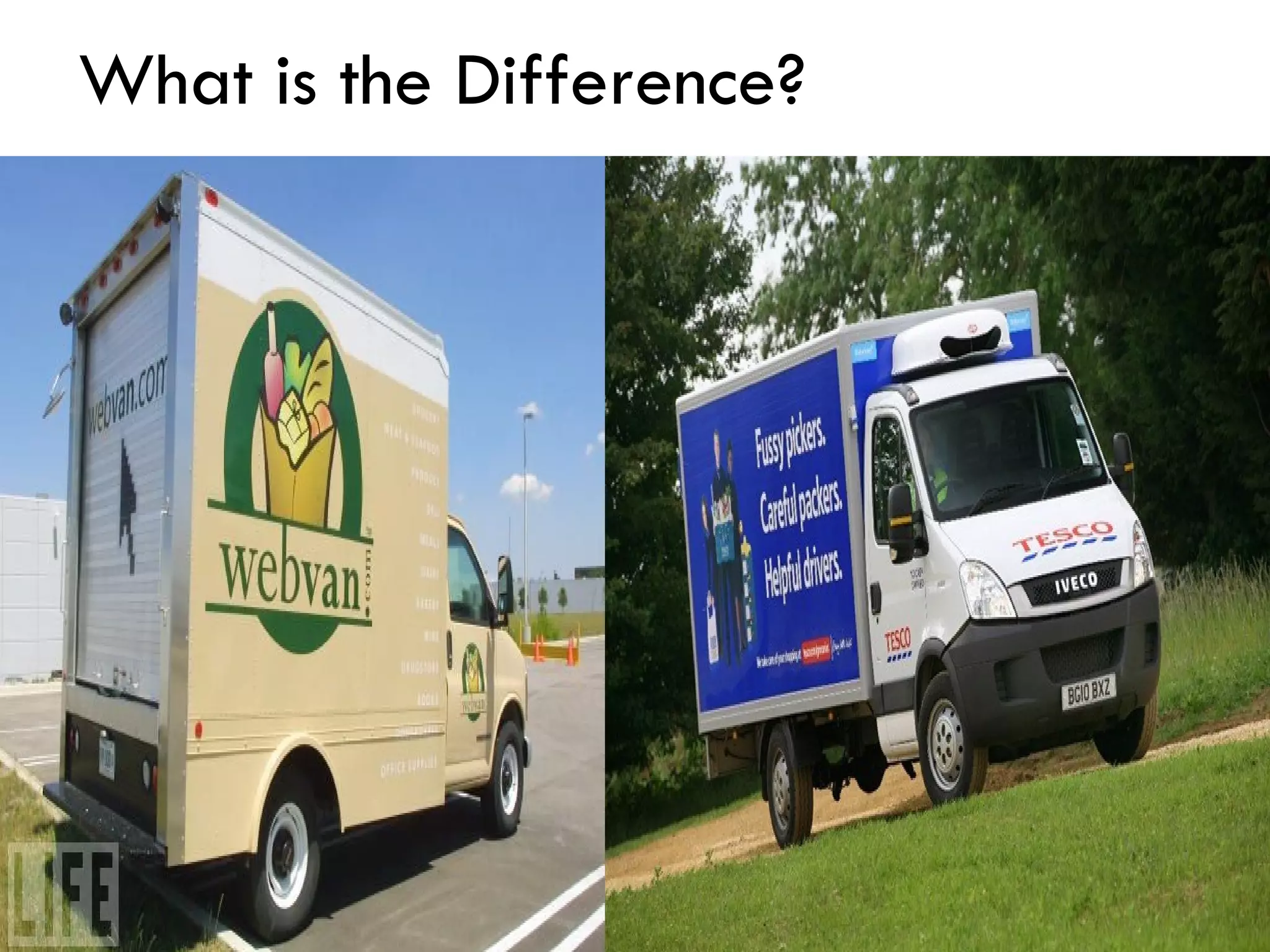
What is the Difference?
The Difference Is…. Most start-ups fail because they don ’ t have a sustainable business model… Building something nobody wants! There is no amount of leadership, team work and marketing that can save a start-up selling stuff that nobody wants! Engineers can sometimes can too focused on how cool their ideas/inventions are:  In a technological, rather than commercial sense
The Difference Is… Sometimes it is because of bad technology (only 10%).  But often there is no sustainable business model (90%).
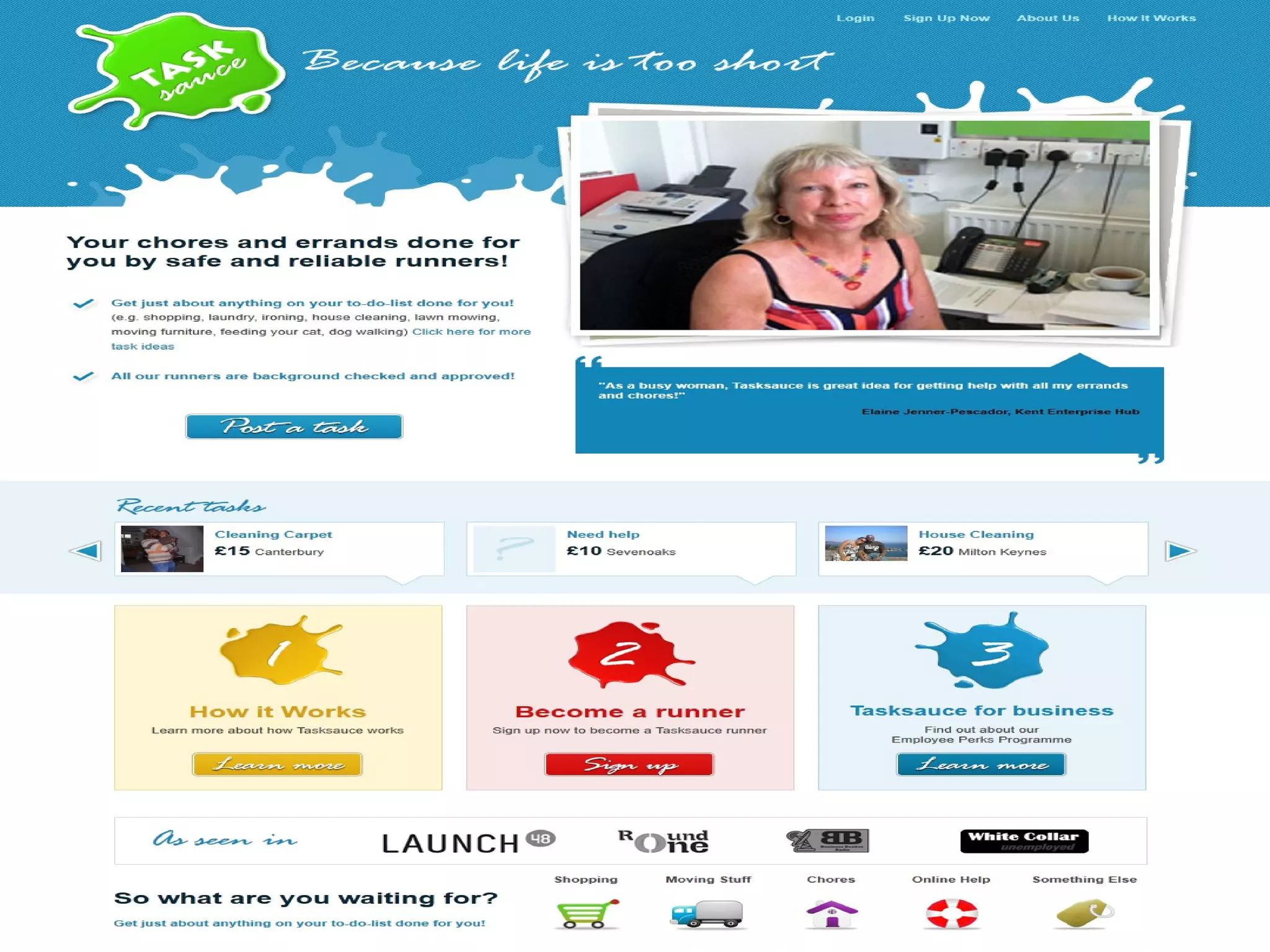
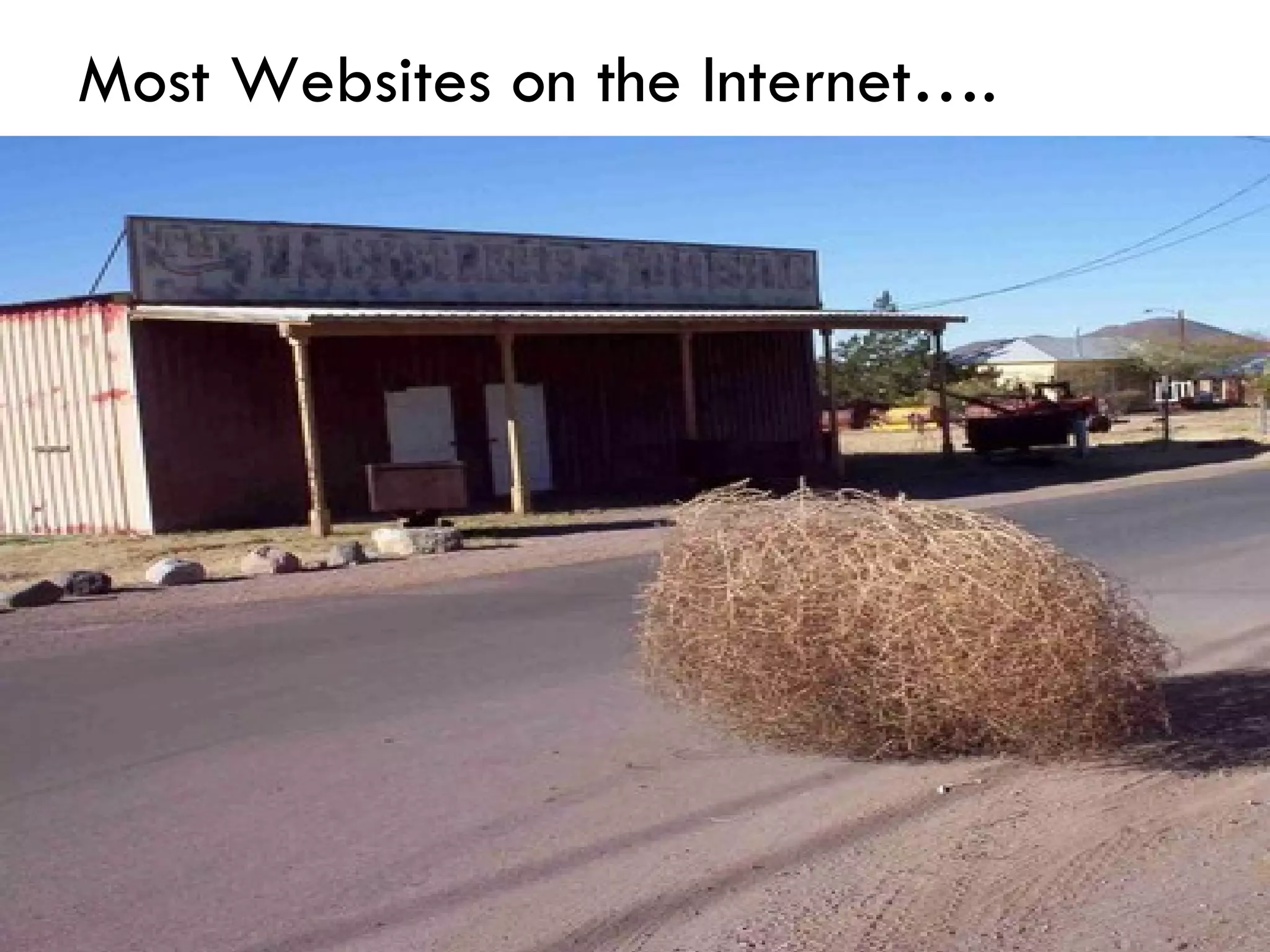
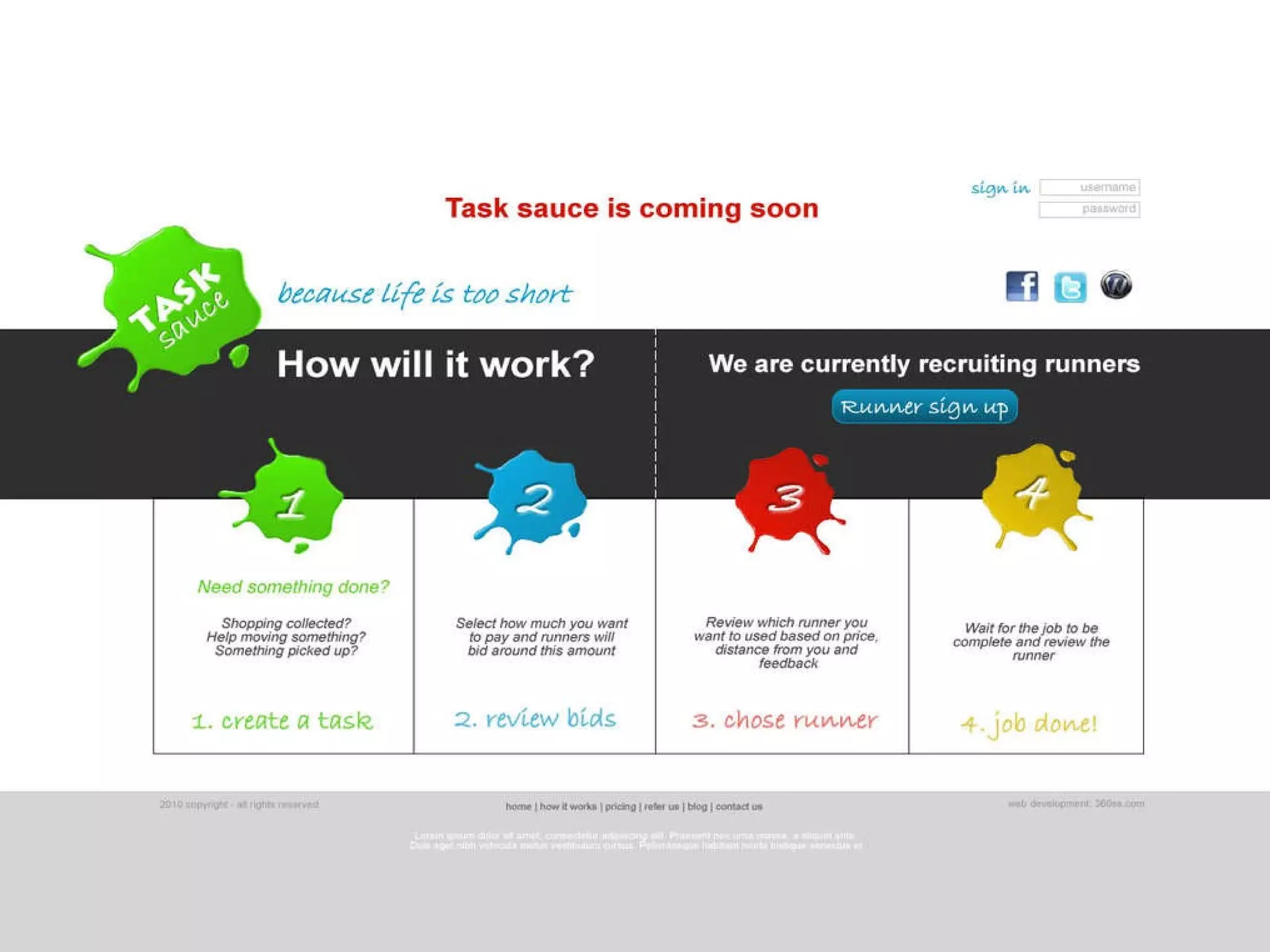
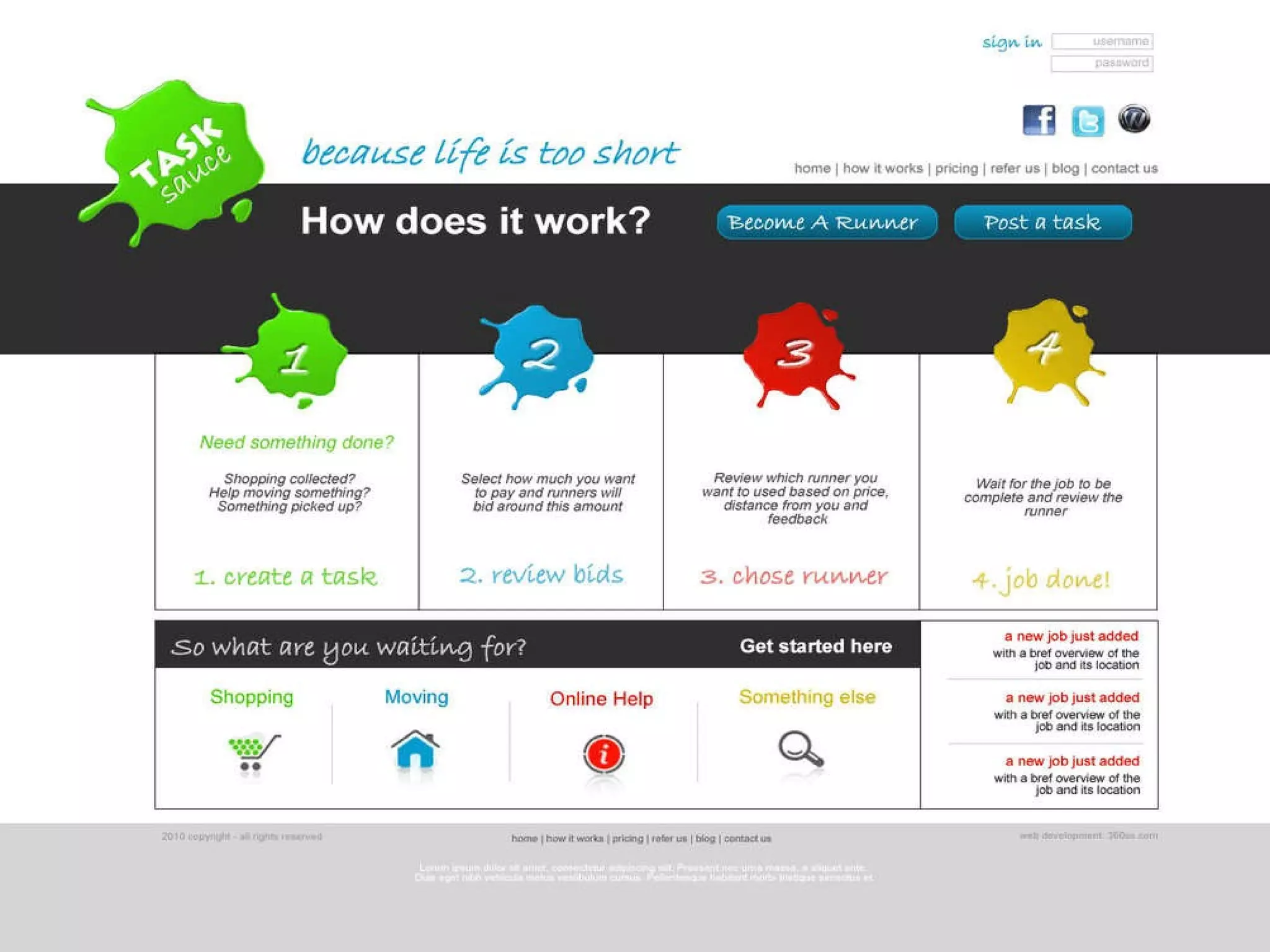
Most Websites on the Internet….
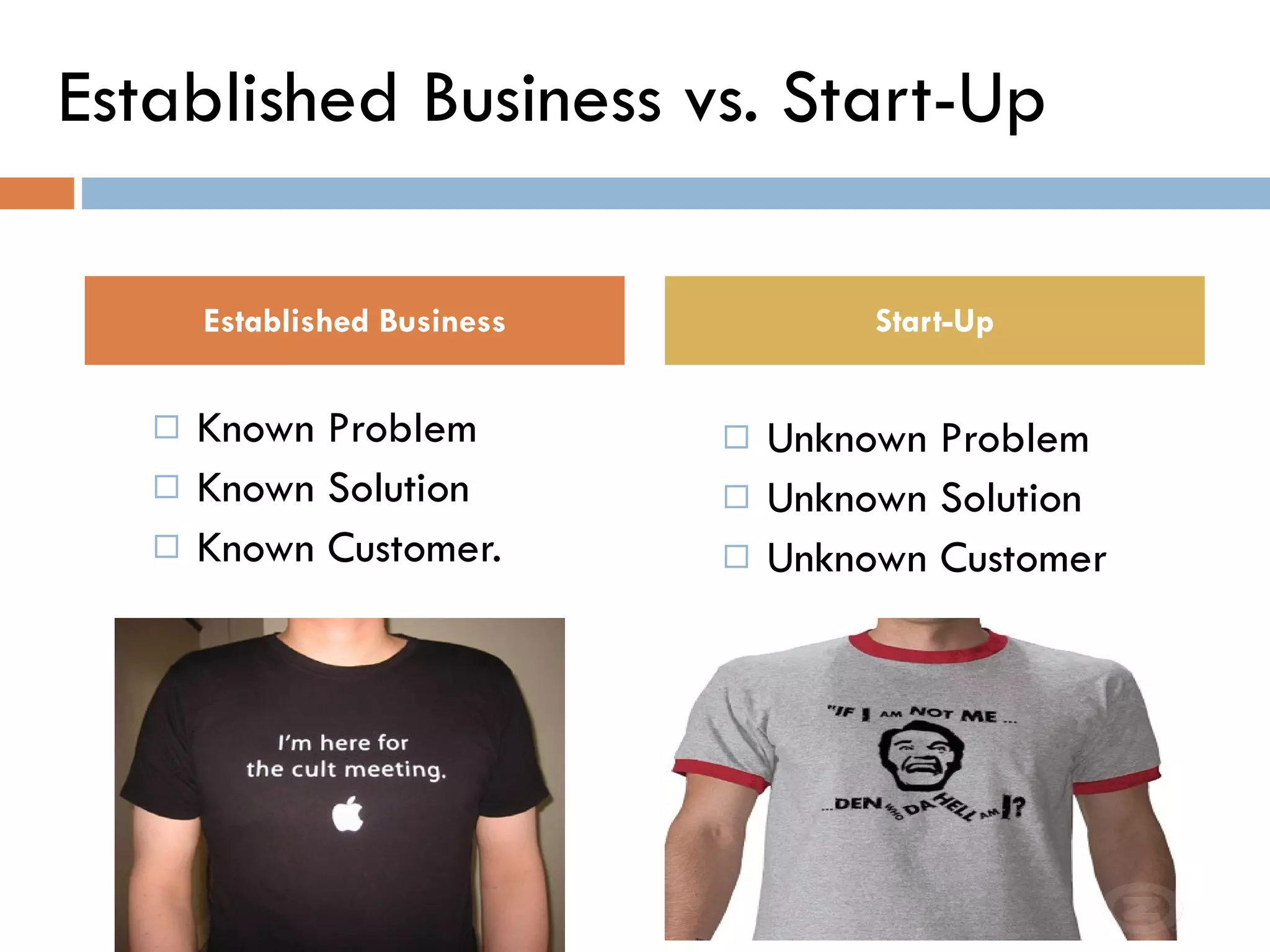
Established Business vs. Start-Up Known Problem Known Solution Known Customer.  Unknown Problem  Unknown Solution Unknown Customer Established Business Start-Up
A Start-up Is An Experiment This means a start-up is an experiment: The founders ’  vision is the hypothesis.  Validating this hypothesis is the task for a start-up.  The goal is to find a sustainable business model. Only when the business model is validated, should money be invested in scaling the start-up.
A Start-up Is An Experiment In other words….
A Start-up Is An Experiment The business plan, in its conventional form is not a good idea for start-ups.  Remember, a Start-Up is:  Unknown problem, Unknown Solution, Unknown Customer.  So lets just call it what it is…  A Business Guess!
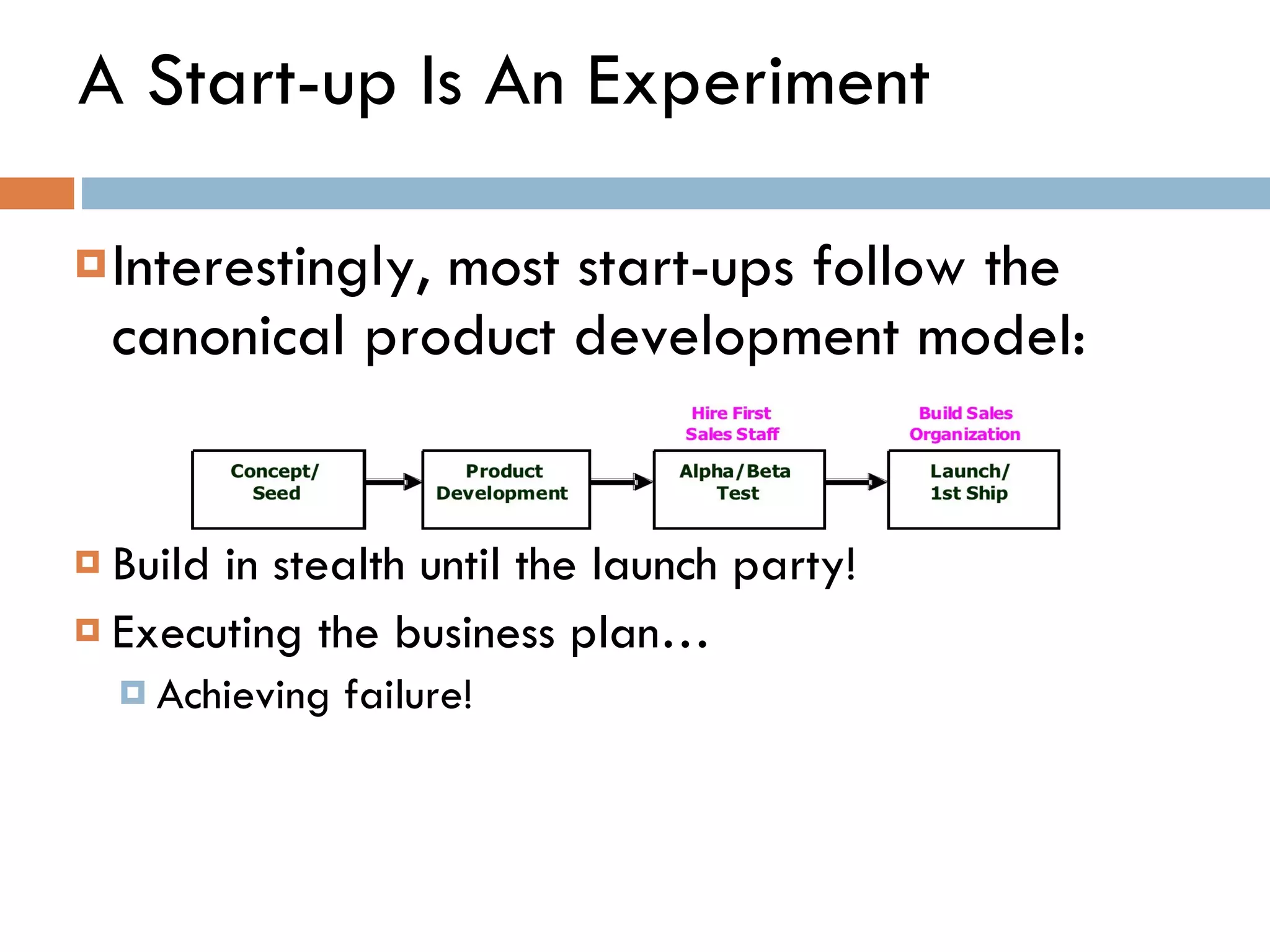
A Start-up Is An Experiment Interestingly, most start-ups follow the canonical product development model: Build in stealth until the launch party! Executing the business plan… Achieving failure!
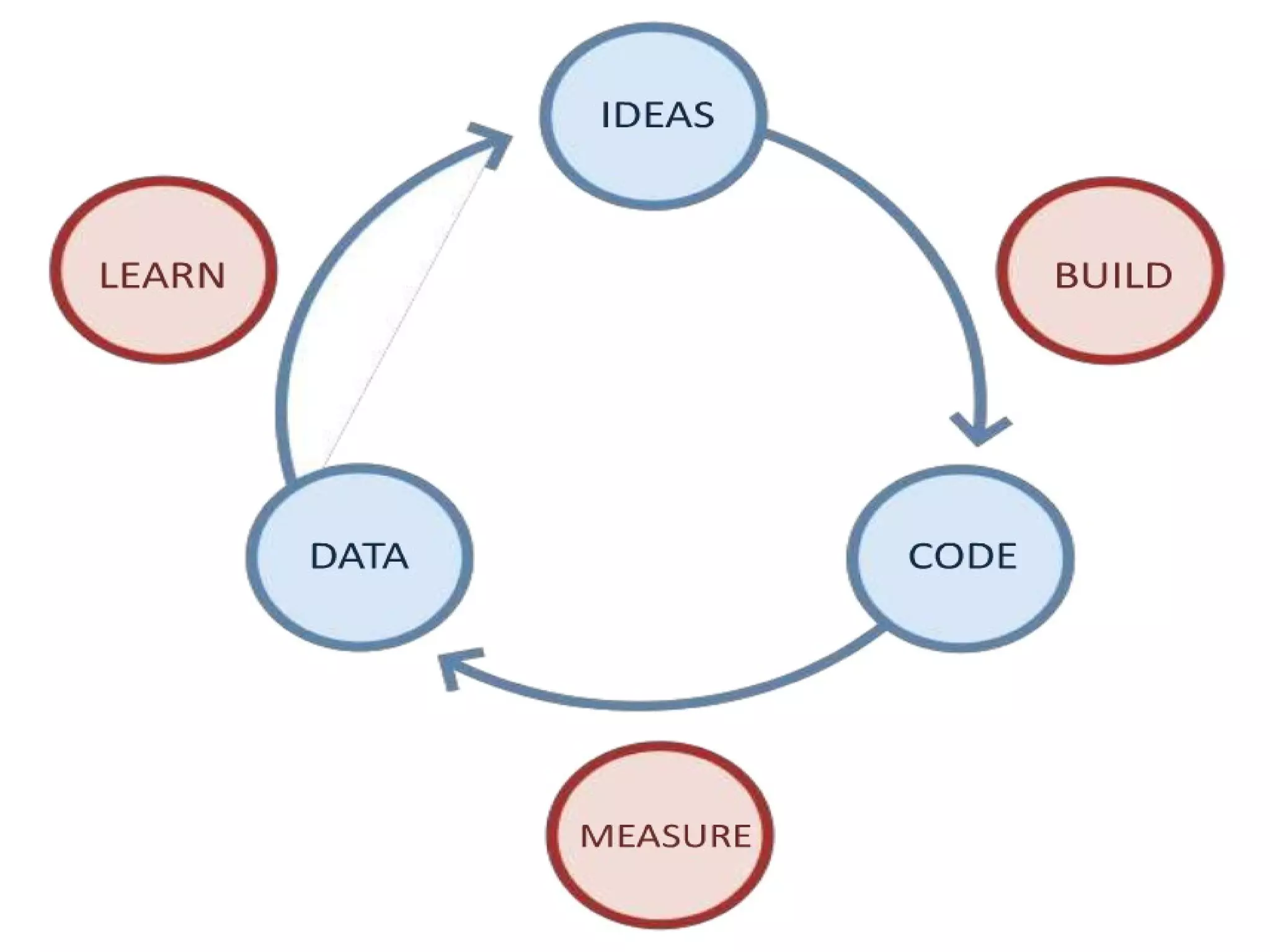
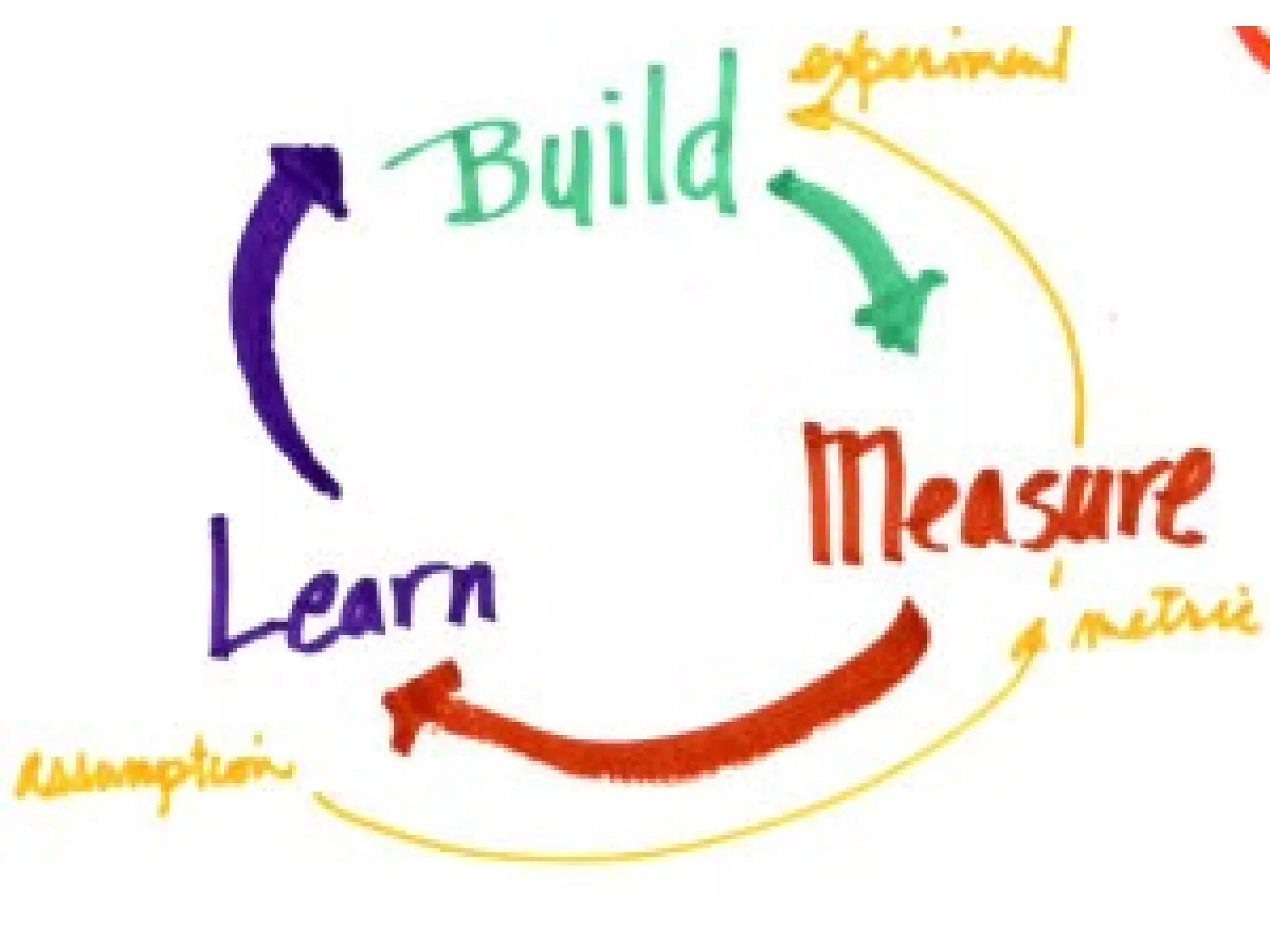
Is there a better way?  Start-ups need different management principles from established businesses. What if we made it explicit that your business idea is a guess?  Then developed a rigorous method for testing this.  This is what the Lean Startup is about:  It is a method for iterating from  Plan A , to  a plan that works .
After Customer Development
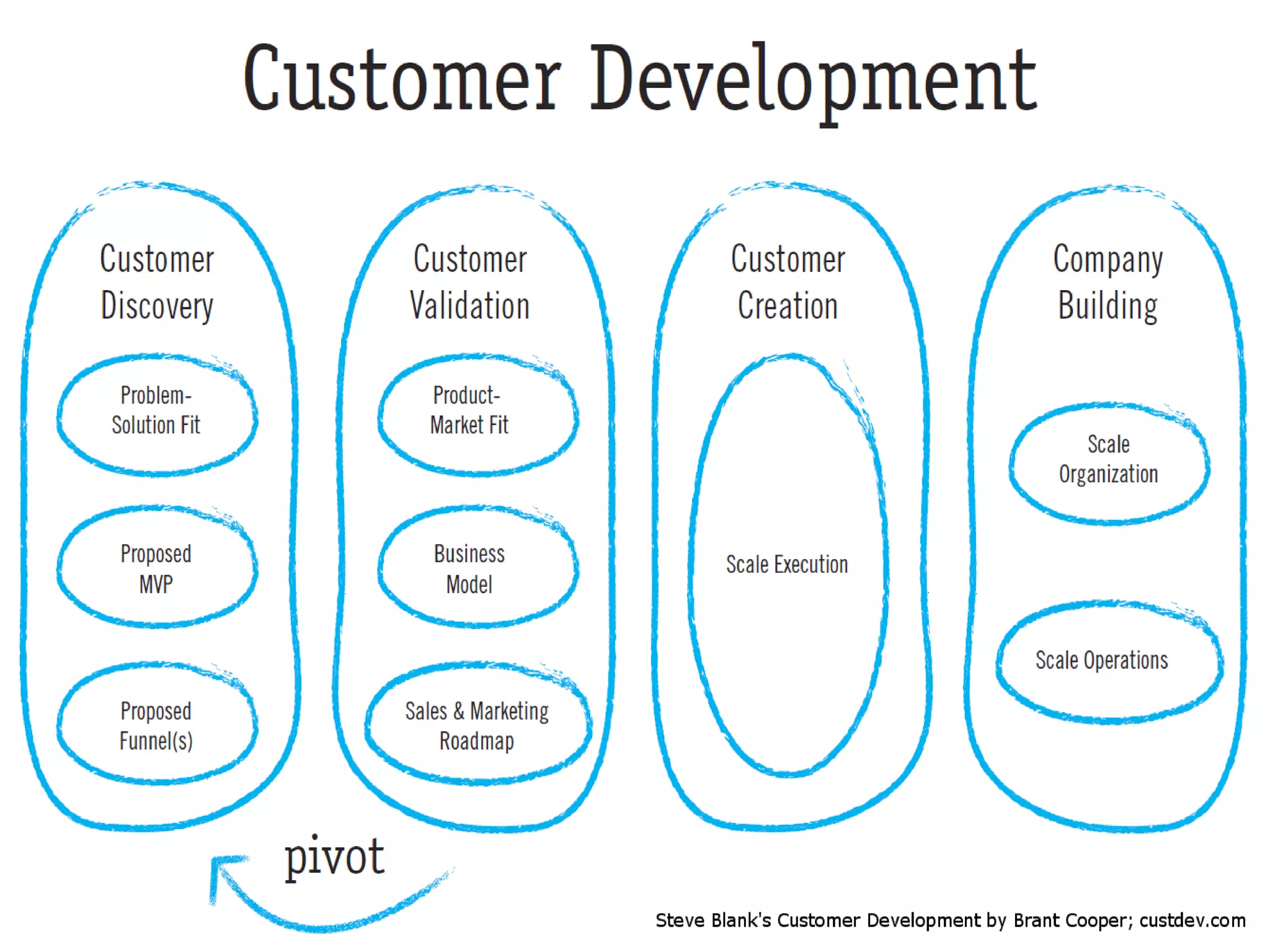
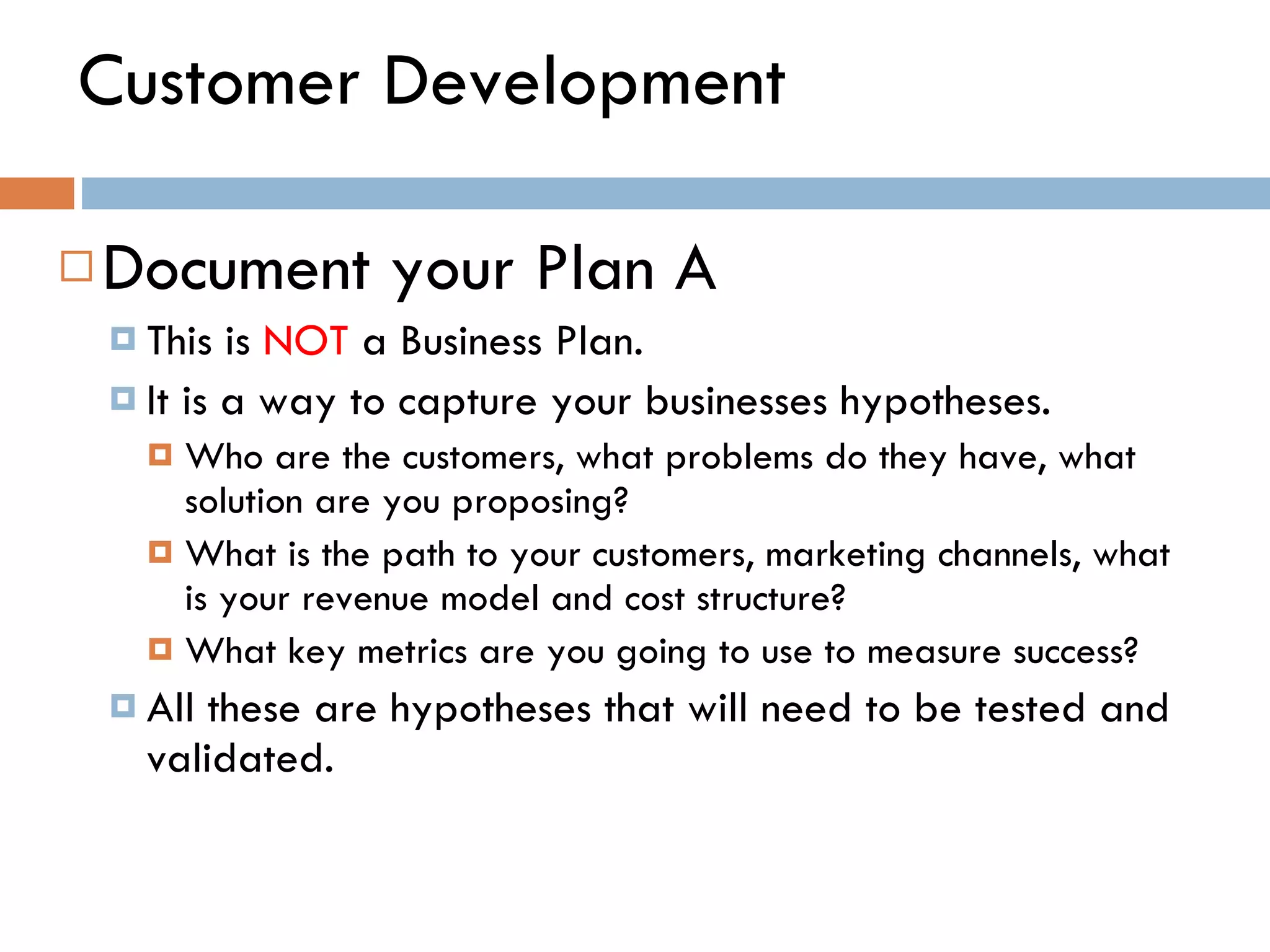
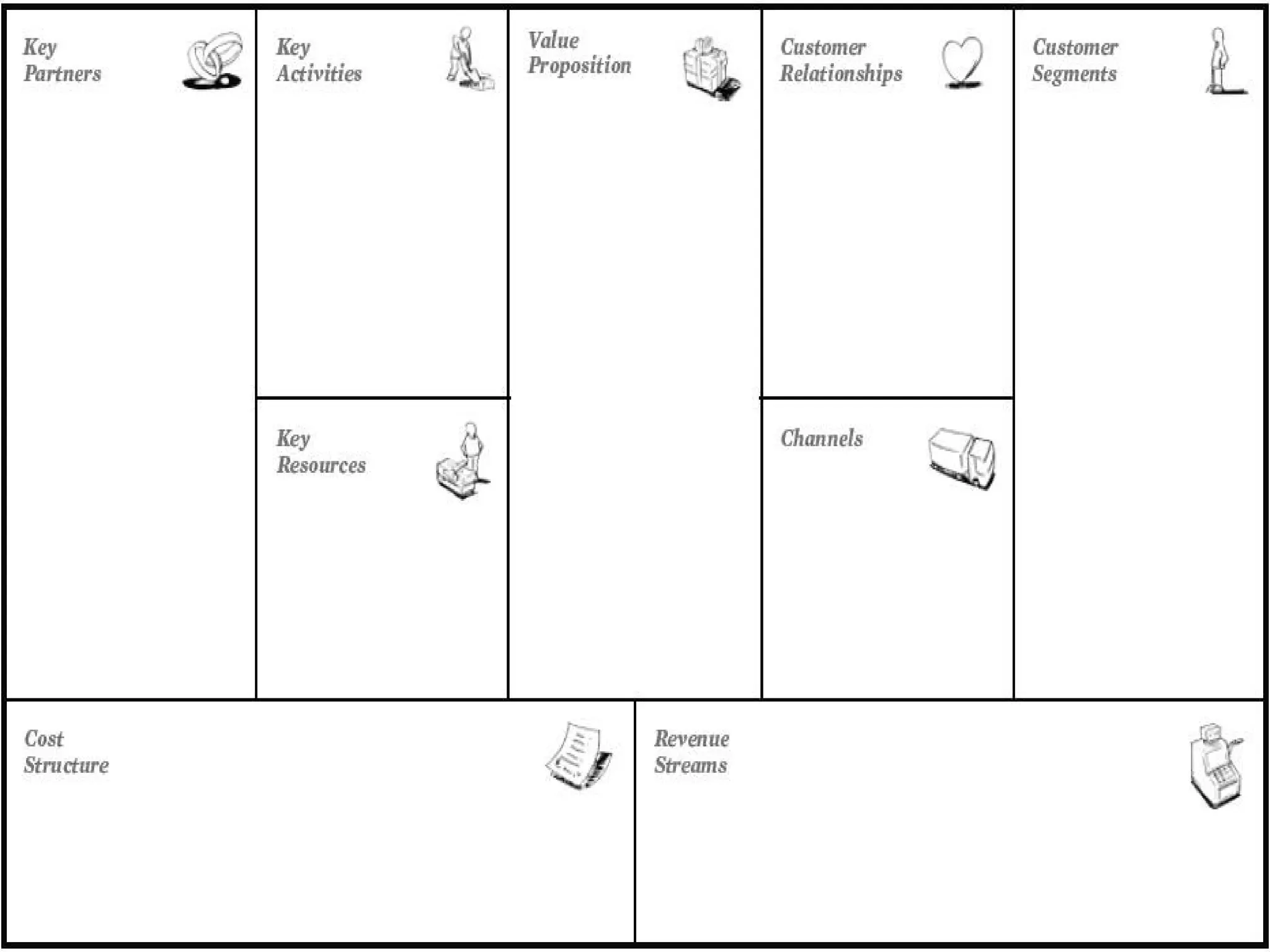
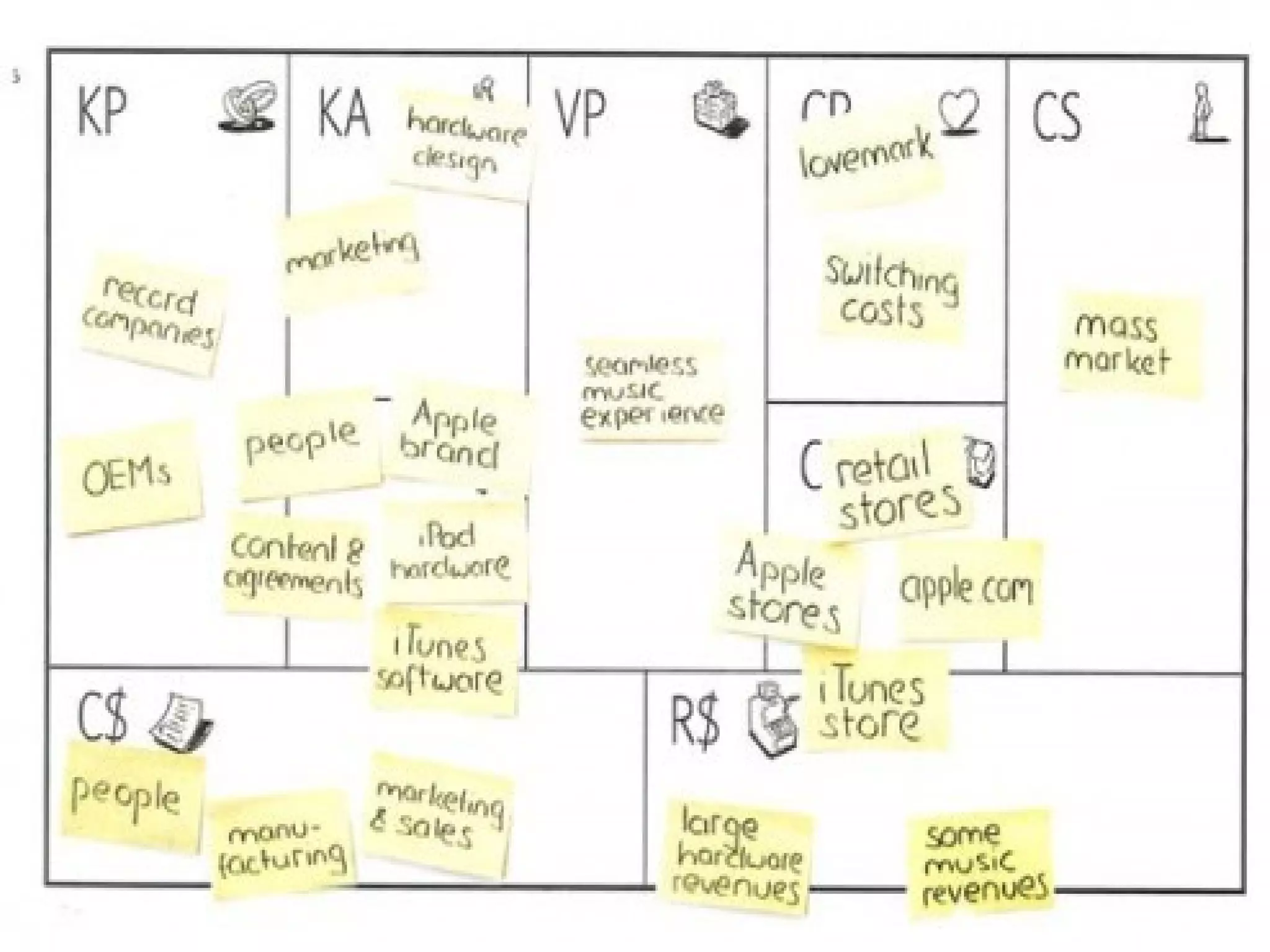
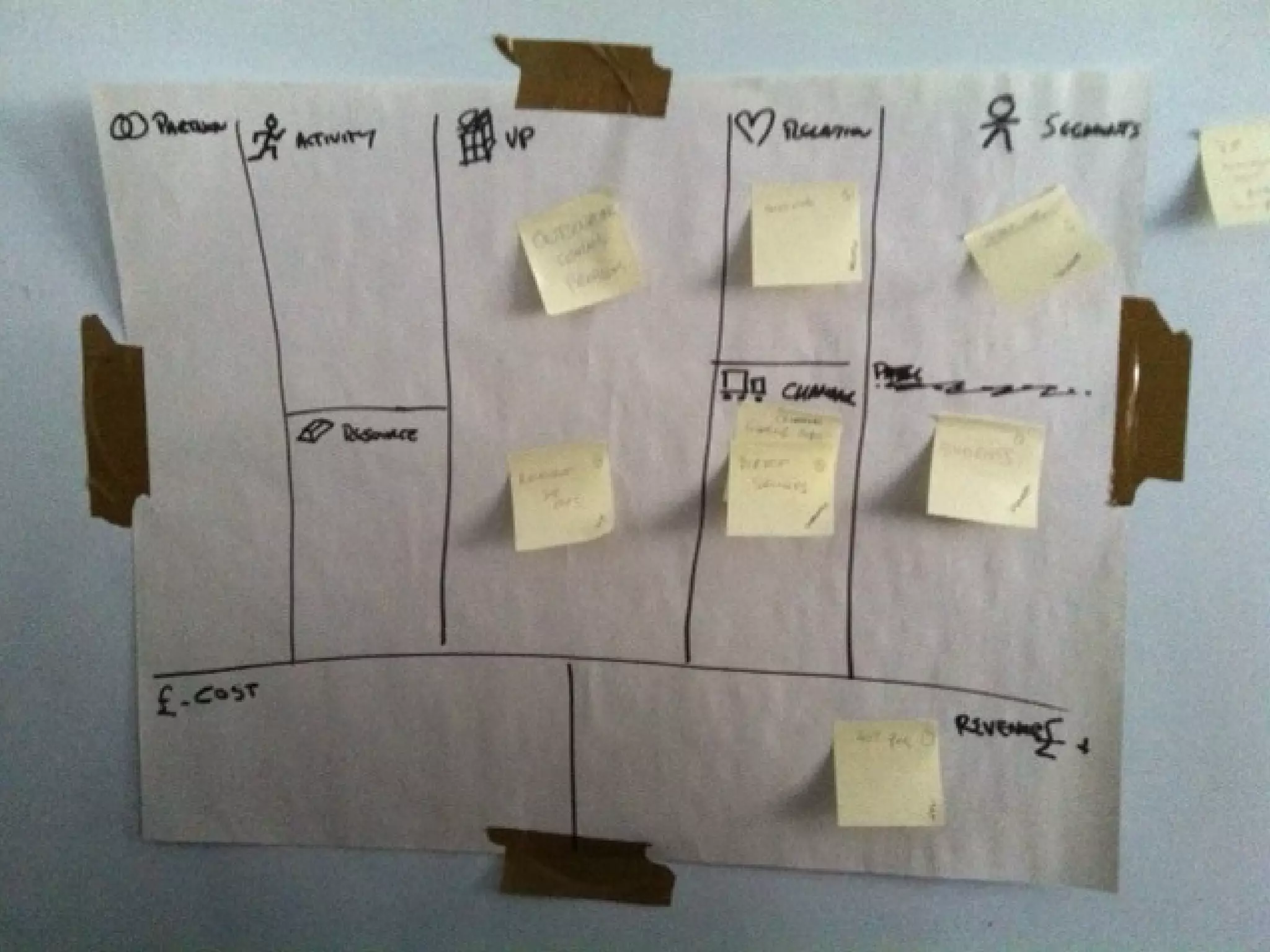
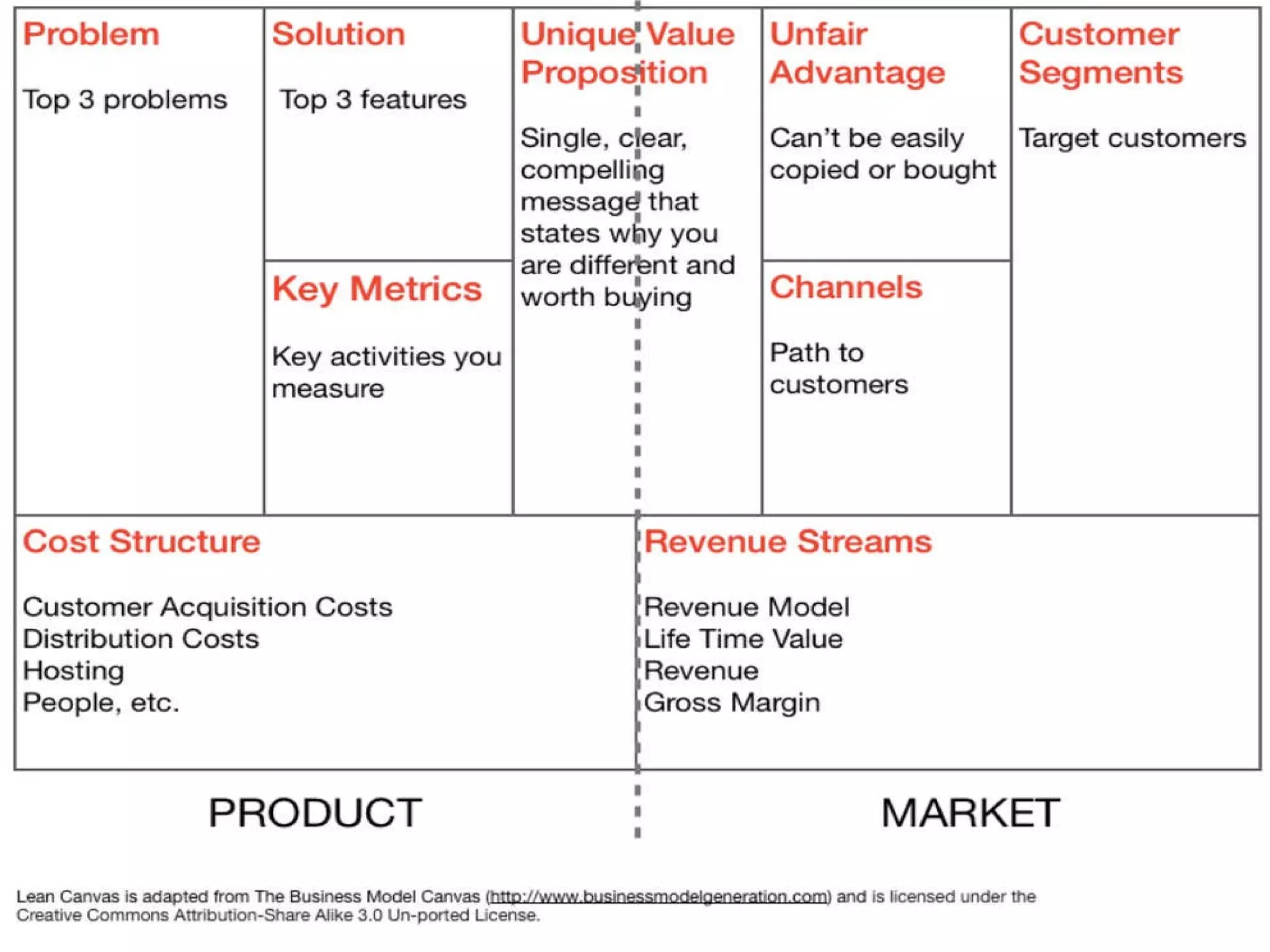
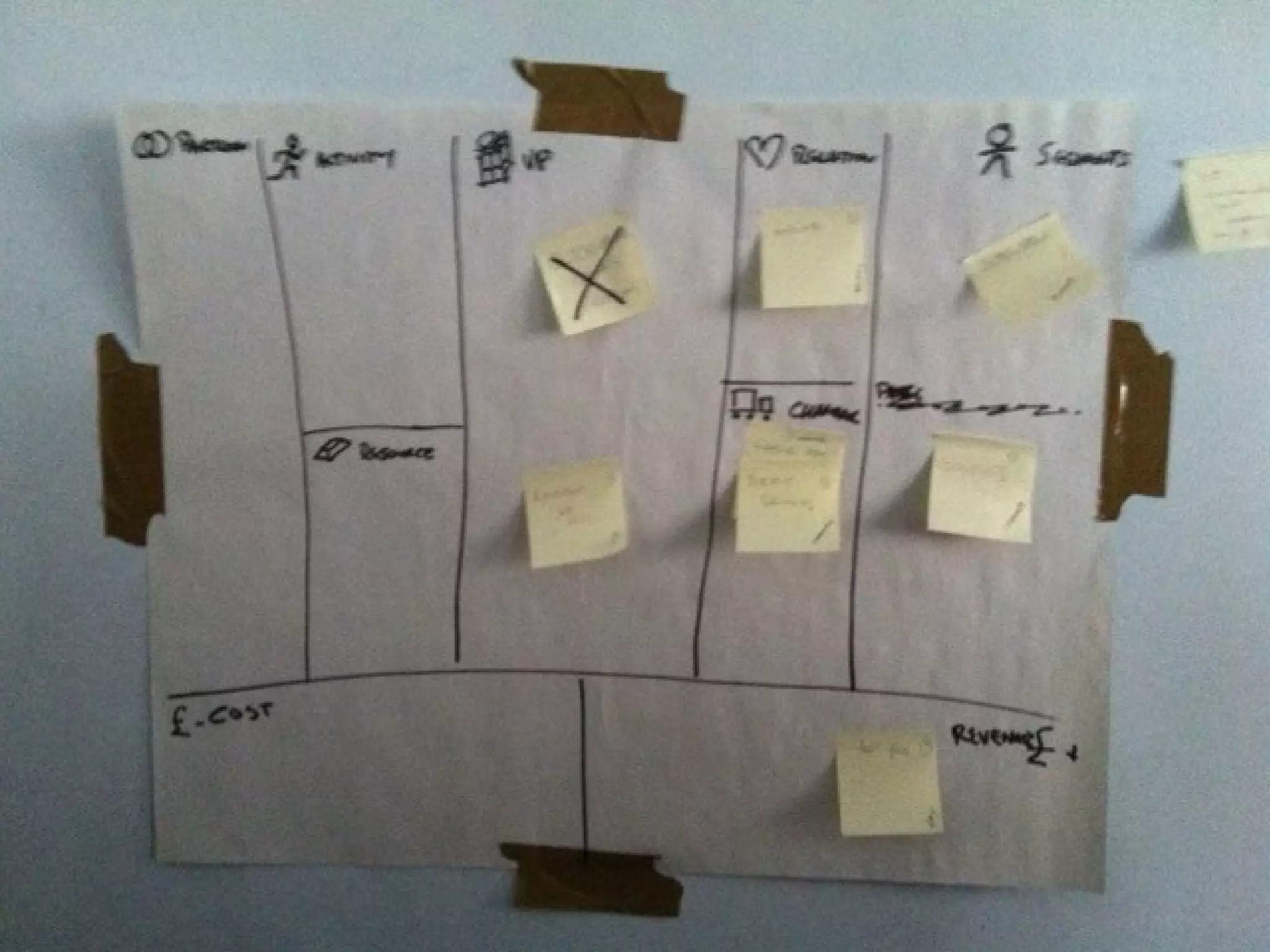
Customer Development Document your Plan A  This is  NOT  a Business Plan. It is a way to capture your businesses hypotheses.  Who are the customers, what problems do they have, what solution are you proposing? What is the path to your customers, marketing channels, what is your revenue model and cost structure? What key metrics are you going to use to measure success?  All these are hypotheses that will need to be tested and validated.


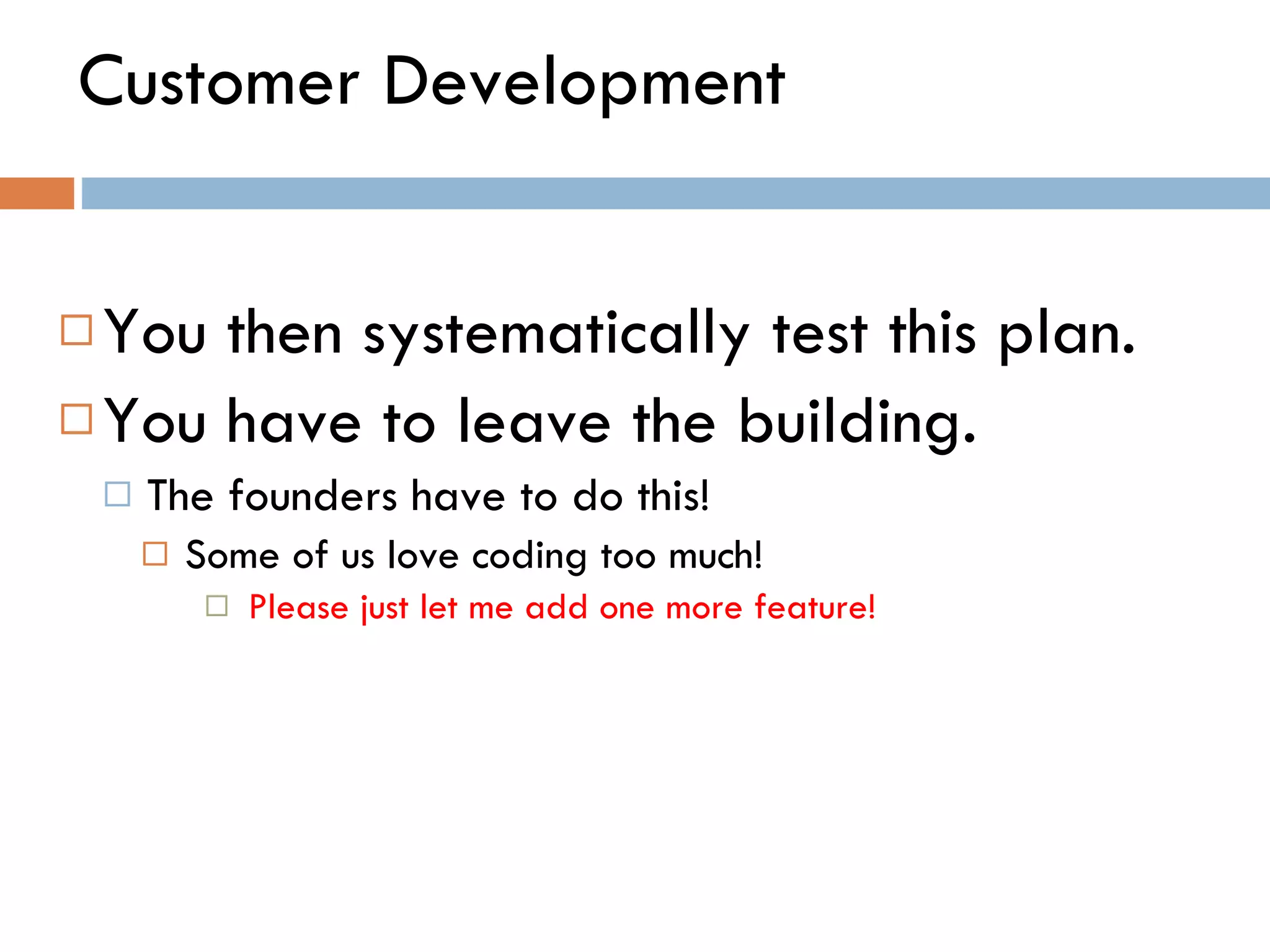
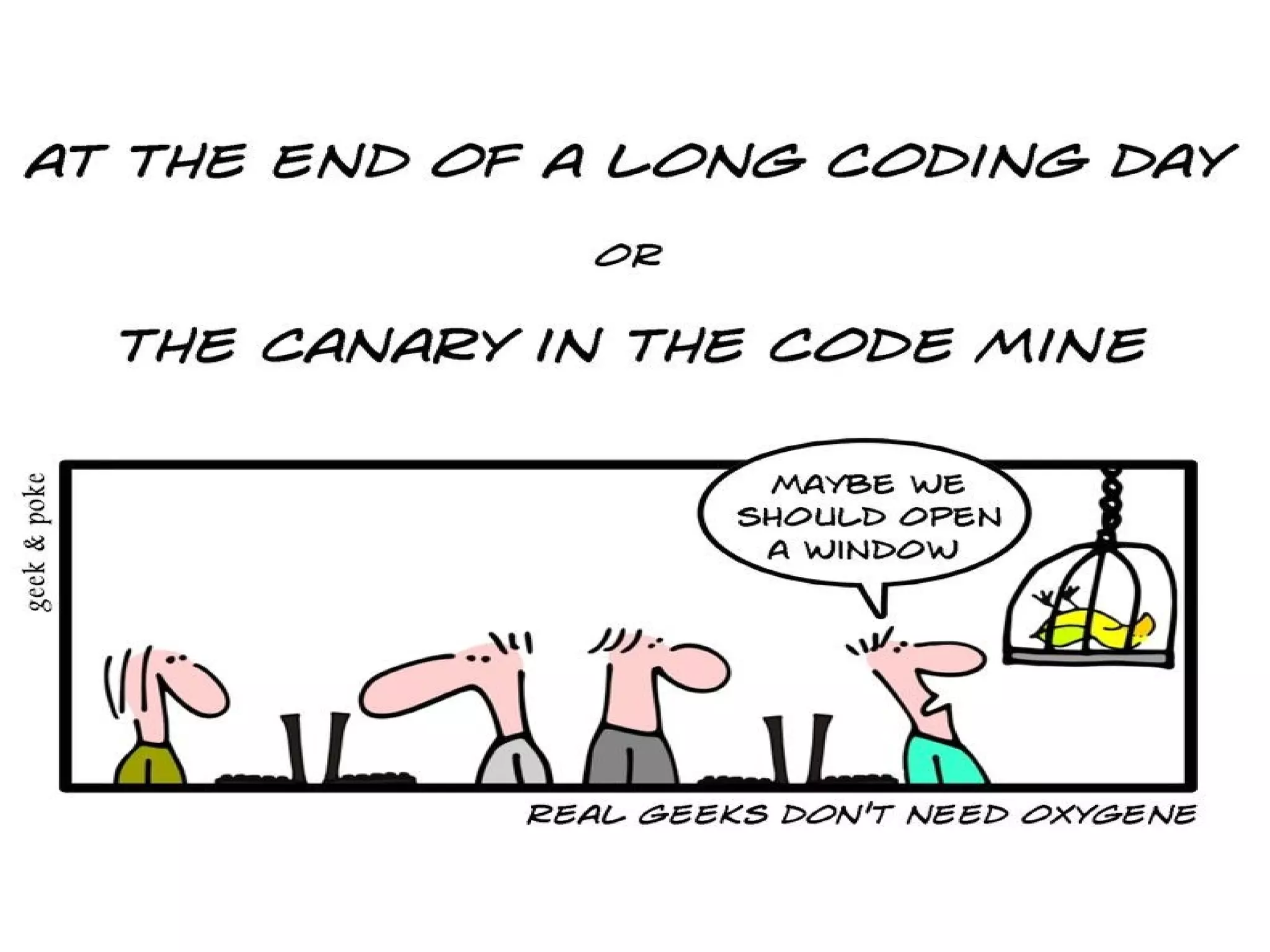
Customer Development You then systematically test this plan. You have to leave the building.  The founders have to do this! Some of us love coding too much!  Please just let me add one more feature!
 
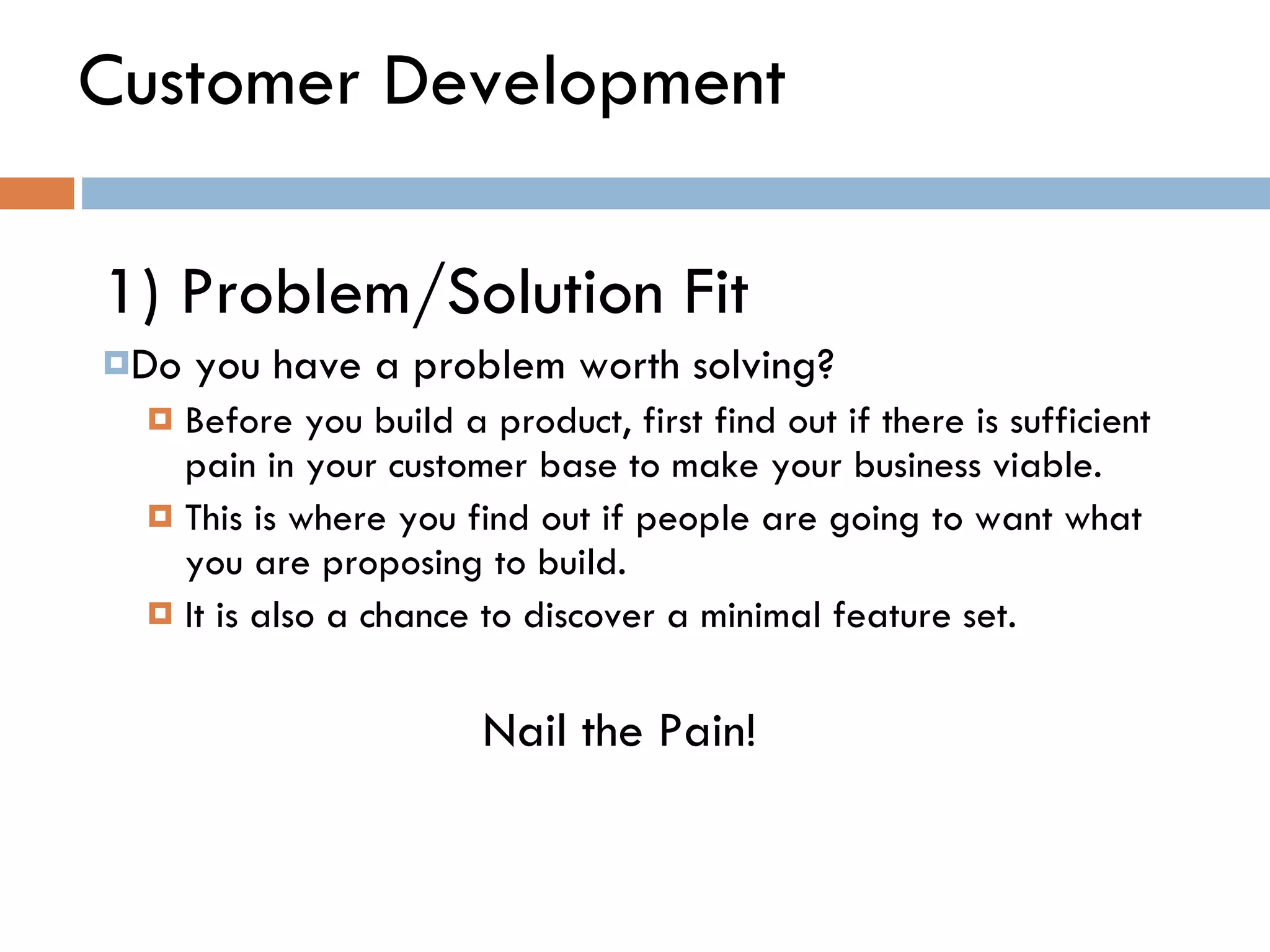
Customer Development 1) Problem/Solution Fit  Do you have a problem worth solving?  Before you build a product, first find out if there is sufficient pain in your customer base to make your business viable.  This is where you find out if people are going to want what you are proposing to build.  It is also a chance to discover a minimal feature set.  Nail the Pain!
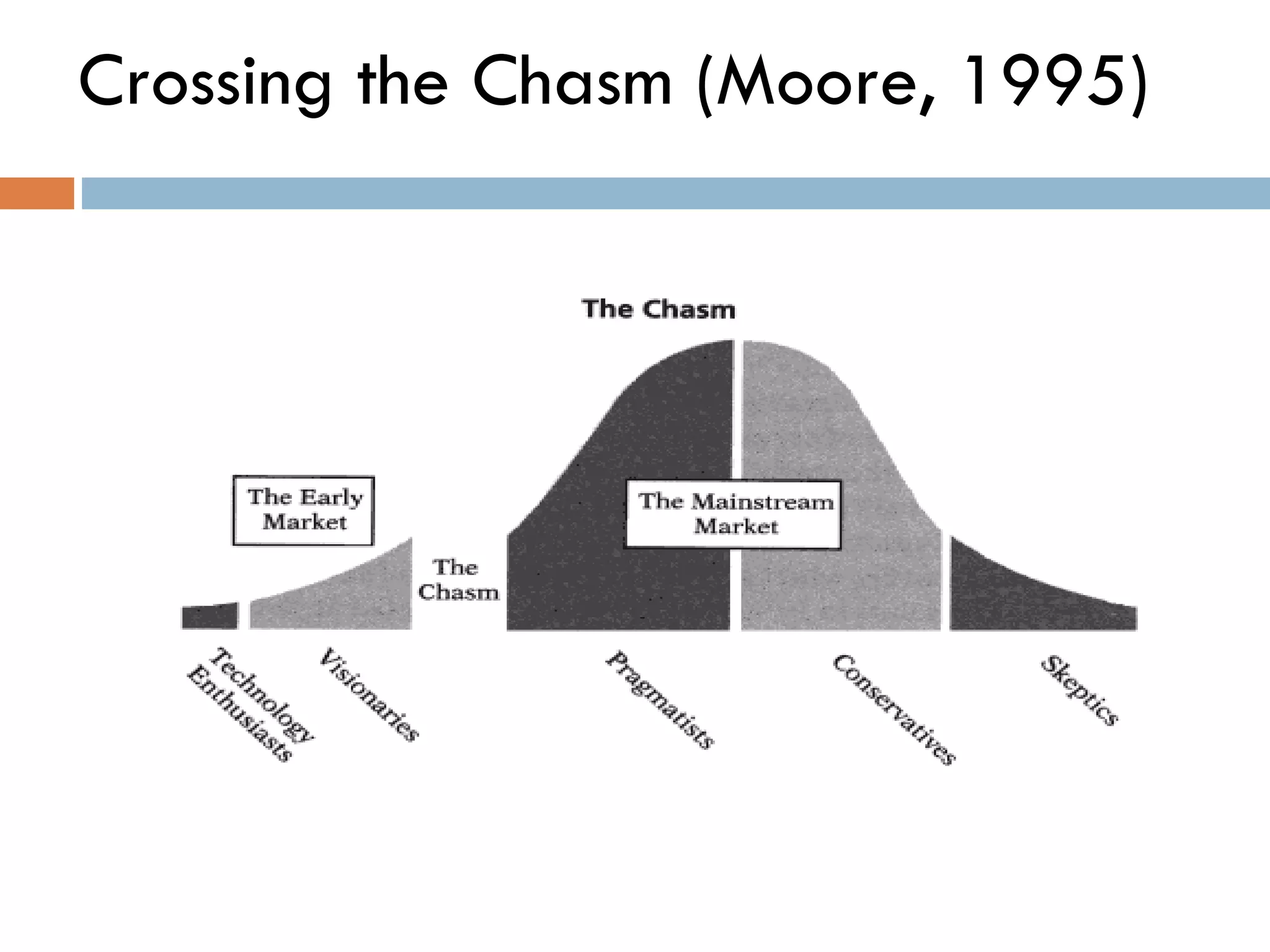
Crossing the Chasm (Moore, 1995)
 
Customer Development 2a) Product/Market Fit  Have you built something people want?  Once you have a problem worth solving, you can start building the product.  You have to take this product,  as you are building it , to customers for their feedback.  It is recommended that you build an MVP. Not the bells and whistles version.  Nail the solution!!
Customer Development 2b) Product/Market Fit  This is the time to also test whether your path to customers is scalable. This is also the point to test pricing, and actually ask customer to pay for the product.  Nail the go-to-market strategy Nail the business model!
Problems Remember that at any point in customer development you might run into problems.  People don ’ t have the problem you were hypothesising. People don ’ t like the solution you built. People don ’ t want to pay for the solution you developed.  People use the product once and don ’ t come back.
The Pivot If you run into any of these problems you don ’ t quit!  Also don ’ t just persevere  “ the plane into the ground ” . You can do a PIVOT.  Keep one foot in what you have learnt and then change one other thing and test again! This is why the companies that can run these tests quickly and get to a plan that works quickly, are more likely to succeed.
 
Challenging Myths Hero myth:  Believing in your product can lead to failure.   All too often, founders fall in love with their products or technology, ignore negative feedback from customers, and spend years building a product based on a vision that no one else shares. Directly Quoted From: Martin Zwilling, Forbes.com http://ow.ly/6zlYL
Challenging Myths Process myth:  Why building a product leads to failure.   Conventional wisdom is that after a great idea, the next steps are raise some money, build a product, then go sell the product.  This doesn ’ t work when attacking unknown problems with untested solutions. Directly Quoted From: Martin Zwilling, Forbes.com http://ow.ly/6zlYL
Challenging Myths Money myth:  Why having too much money leads to failure.   The old saying that  “ it takes money to make money ”  isn ’ t so simple.  Money allows entrepreneurs to execute a flawed business plan far too long, rather than stay focused on the market and adapt. Directly Quoted From: Martin Zwilling, Forbes.com http://ow.ly/6zlYL
What About Vision? So are we saying vision is unnecessary?  Vision is actually critical…  Customers often don ’ t know what they what.  Entrepreneurship should be based on vision.  Don ’ t just ship and see what happens… You must make explicit your initial assumptions. But these have to be validated, before vast resources are poured into scaling.
What About Vision? Methods of validation should be business relevant.  Get customers to use the product and see what they struggle with. It doesn ’ t have to be perfect before you show it to customers.  Avoid vanity metrics… The number one test is get customers to start paying you for the solution.  This is when you find out if you really have a business!
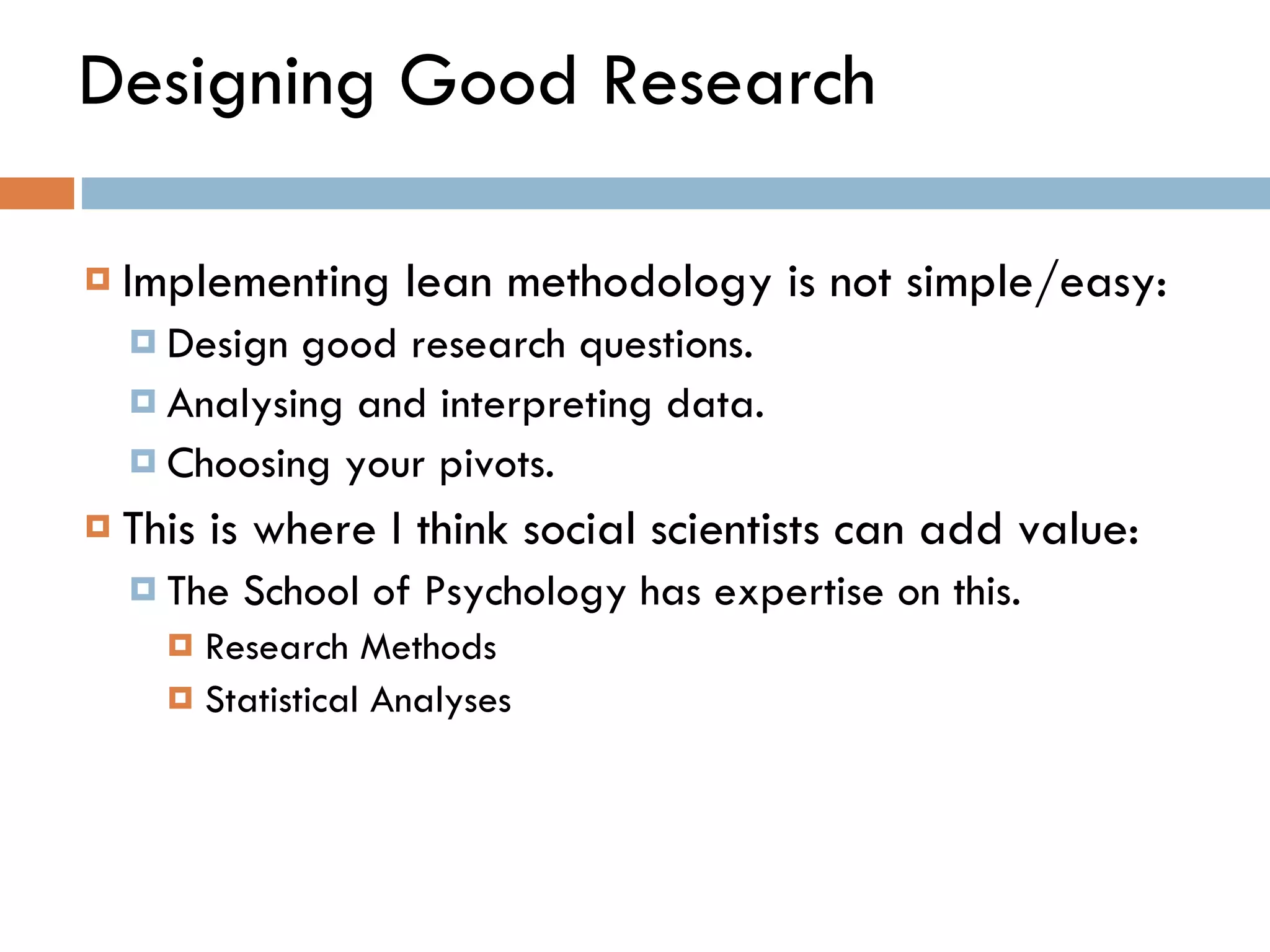
Designing Good Research Implementing lean methodology is not simple/easy:  Design good research questions. Analysing and interpreting data. Choosing your pivots.  This is where I think social scientists can add value: The School of Psychology has expertise on this.  Research Methods  Statistical Analyses


Thank you! Q&A twitter: @gtviki
The Places to Get More… Steve Blank  ( http://steveblank.com/ ) Eric Ries  ( http://www.startuplessonslearned.com ) Ash Maurya  http://www.ashmaurya.com/ Brant Copper (http://market-by-numbers.com/ ) Alexander Osterwalder ( http://www.businessmodelgeneration.com/ )

Lean Startup - Dr. Tendayi Viki - BCS Kent Branch Event [AUDIO]

  • 1.
    The lean start-upG. Tendayi Viki School of Psychology University of Kent twitter: @gtviki
  • 2.
    The Lean ThinkersSteve Blank ( http://steveblank.com/ ) Brant Copper & Patrick Vlaskovits (http://market-by-numbers.com/ )
  • 3.
    The Lean ThinkersAlexander Osterwalder ( http://www.businessmodelgeneration.com/ ) Ash Maurya http://www.ashmaurya.com/
  • 4.
    The Lean ThinkersEric Ries ( http://www.startuplessonslearned.com )
  • 5.
    Entrepreneurship is aGreat Calling
  • 6.
  • 7.
    Your Business Idea SUCKS Your Start-Up Will Fail p<.05
  • 8.
  • 9.
  • 10.
    What is theDifference?
  • 11.
    The Difference Is….Most start-ups fail because they don ’ t have a sustainable business model… Building something nobody wants! There is no amount of leadership, team work and marketing that can save a start-up selling stuff that nobody wants! Engineers can sometimes can too focused on how cool their ideas/inventions are: In a technological, rather than commercial sense
  • 12.
    The Difference Is…Sometimes it is because of bad technology (only 10%). But often there is no sustainable business model (90%).
  • 13.
    Most Websites onthe Internet….
  • 14.
    Established Business vs.Start-Up Known Problem Known Solution Known Customer. Unknown Problem Unknown Solution Unknown Customer Established Business Start-Up
  • 15.
    A Start-up IsAn Experiment This means a start-up is an experiment: The founders ’ vision is the hypothesis. Validating this hypothesis is the task for a start-up. The goal is to find a sustainable business model. Only when the business model is validated, should money be invested in scaling the start-up.
  • 16.
    A Start-up IsAn Experiment In other words….
  • 17.
    A Start-up IsAn Experiment The business plan, in its conventional form is not a good idea for start-ups. Remember, a Start-Up is: Unknown problem, Unknown Solution, Unknown Customer. So lets just call it what it is… A Business Guess!
  • 18.
    A Start-up IsAn Experiment Interestingly, most start-ups follow the canonical product development model: Build in stealth until the launch party! Executing the business plan… Achieving failure!
  • 19.
    Is there abetter way? Start-ups need different management principles from established businesses. What if we made it explicit that your business idea is a guess? Then developed a rigorous method for testing this. This is what the Lean Startup is about: It is a method for iterating from Plan A , to a plan that works .
  • 20.
  • 21.
    Customer Development Documentyour Plan A This is NOT a Business Plan. It is a way to capture your businesses hypotheses. Who are the customers, what problems do they have, what solution are you proposing? What is the path to your customers, marketing channels, what is your revenue model and cost structure? What key metrics are you going to use to measure success? All these are hypotheses that will need to be tested and validated.
  • 22.
  • 23.
  • 24.
  • 25.
  • 26.
    Customer Development Youthen systematically test this plan. You have to leave the building. The founders have to do this! Some of us love coding too much! Please just let me add one more feature!
  • 27.
  • 28.
    Customer Development 1)Problem/Solution Fit Do you have a problem worth solving? Before you build a product, first find out if there is sufficient pain in your customer base to make your business viable. This is where you find out if people are going to want what you are proposing to build. It is also a chance to discover a minimal feature set. Nail the Pain!
  • 29.
    Crossing the Chasm(Moore, 1995)
  • 30.
  • 31.
    Customer Development 2a)Product/Market Fit Have you built something people want? Once you have a problem worth solving, you can start building the product. You have to take this product, as you are building it , to customers for their feedback. It is recommended that you build an MVP. Not the bells and whistles version. Nail the solution!!
  • 32.
    Customer Development 2b)Product/Market Fit This is the time to also test whether your path to customers is scalable. This is also the point to test pricing, and actually ask customer to pay for the product. Nail the go-to-market strategy Nail the business model!
  • 33.
    Problems Remember thatat any point in customer development you might run into problems. People don ’ t have the problem you were hypothesising. People don ’ t like the solution you built. People don ’ t want to pay for the solution you developed. People use the product once and don ’ t come back.
  • 34.
    The Pivot Ifyou run into any of these problems you don ’ t quit! Also don ’ t just persevere “ the plane into the ground ” . You can do a PIVOT. Keep one foot in what you have learnt and then change one other thing and test again! This is why the companies that can run these tests quickly and get to a plan that works quickly, are more likely to succeed.
  • 35.
  • 36.
    Challenging Myths Heromyth: Believing in your product can lead to failure.   All too often, founders fall in love with their products or technology, ignore negative feedback from customers, and spend years building a product based on a vision that no one else shares. Directly Quoted From: Martin Zwilling, Forbes.com http://ow.ly/6zlYL
  • 37.
    Challenging Myths Processmyth: Why building a product leads to failure.   Conventional wisdom is that after a great idea, the next steps are raise some money, build a product, then go sell the product. This doesn ’ t work when attacking unknown problems with untested solutions. Directly Quoted From: Martin Zwilling, Forbes.com http://ow.ly/6zlYL
  • 38.
    Challenging Myths Moneymyth: Why having too much money leads to failure.   The old saying that “ it takes money to make money ” isn ’ t so simple. Money allows entrepreneurs to execute a flawed business plan far too long, rather than stay focused on the market and adapt. Directly Quoted From: Martin Zwilling, Forbes.com http://ow.ly/6zlYL
  • 39.
    What About Vision?So are we saying vision is unnecessary? Vision is actually critical… Customers often don ’ t know what they what. Entrepreneurship should be based on vision. Don ’ t just ship and see what happens… You must make explicit your initial assumptions. But these have to be validated, before vast resources are poured into scaling.
  • 40.
    What About Vision?Methods of validation should be business relevant. Get customers to use the product and see what they struggle with. It doesn ’ t have to be perfect before you show it to customers. Avoid vanity metrics… The number one test is get customers to start paying you for the solution. This is when you find out if you really have a business!
  • 41.
    Designing Good ResearchImplementing lean methodology is not simple/easy: Design good research questions. Analysing and interpreting data. Choosing your pivots. This is where I think social scientists can add value: The School of Psychology has expertise on this. Research Methods Statistical Analyses
  • 42.
  • 43.
  • 44.
  • 45.
  • 46.
    Thank you! Q&Atwitter: @gtviki
  • 47.
    The Places toGet More… Steve Blank ( http://steveblank.com/ ) Eric Ries ( http://www.startuplessonslearned.com ) Ash Maurya http://www.ashmaurya.com/ Brant Copper (http://market-by-numbers.com/ ) Alexander Osterwalder ( http://www.businessmodelgeneration.com/ )

Editor's Notes