Transforming Learning, Training and the CollegeStephen Murgatroyd, PhD FBPsS FRSAChief Innovation Officer, Contact North | Contact Nord
“Prediction is very difficult, especially about the future” Niels Bohr
“The future will be better tomorrow..”Dan Quayle
“The future is here. It just isn’t widely distributed yet..”William Gibson
Setting the contextBefore we get going…
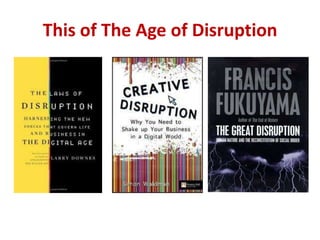
This of The Age of Disruption
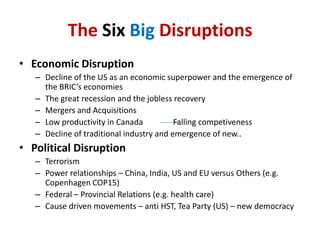
The SixBig DisruptionsEconomic DisruptionDecline of the US as an economic superpower and the emergence of the BRIC’s economiesThe great recession and the jobless recoveryMergers and AcquisitionsLow productivity in Canada               Falling competivenessDecline of traditional industry and emergence of new..Political DisruptionTerrorismPower relationships – China, India, US and EU versus Others (e.g. Copenhagen COP15)Federal – Provincial Relations (e.g. health care)Cause driven movements – anti HST, Tea Party (US) – new democracy
Social DisruptionDecline of democracy as a form of governanceGlobalization and social networksDemographic DisruptionsLow level of birth replacement for many northern countriesHigh level of birth for aboriginal peoples, India, AsiaChallenges for literacy and numeracyGlobal war for talent
Environmental DisruptionClimate changeWater as a challenge – Eau CanadaEnergy and stewardshipNatural resource economies and environmental concernsThe Disruption of Personal IdentityBlurring the line between connection and connectivity – marriage, family, communityShifting identities in the workplace – the multigenerational workplace
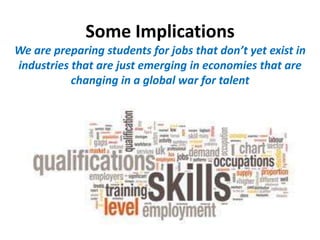
Some Implications We are preparing students for jobs that don’t yet exist in industries that are just emerging in economies that are changing in a global war for talent
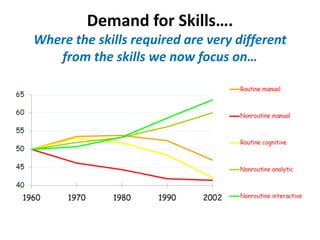
Demand for Skills….Where the skills required are very different from the skills we now focus on…
andProductivity and competitiveness are imperatives – its all about the economyMoney will become increasingly scarce–– lean will be keyTimeis the new frontier for innovation – 2 year degrees (UK), 3,5,6,and 8 week courses based on outcomes (Kentucky), self-paced (Athabasca).
Drivers for New DevelopmentsWhat YOU Need to be Able to SayWe’re “glocal”– global organizations offering local connectivityWe’re partners– with business, community and non profitsWe’re technological savvy– connected, engaged and wired to the worldWe’re effective and efficient – more learning in less timeWe’re affordable – you cant afford not to be here
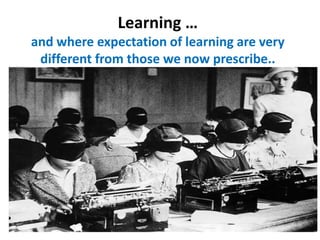
Learning …and where expectation of learning are very different from those we now prescribe..
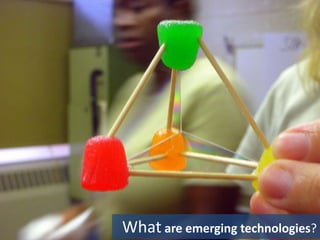
Technology, Real Learning and the FutureWhatare emerging technologies?
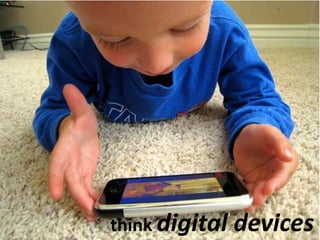
think digital devices
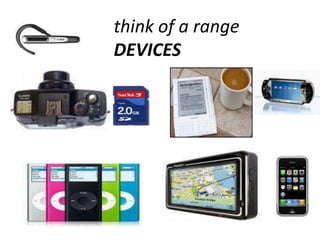
think of a range DEVICES
devices are getting smaller
and are increasingly disruptive
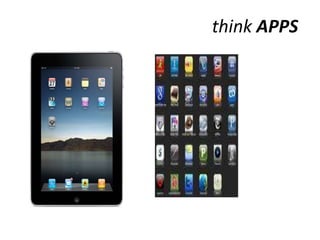
think APPS
think SOCIAL NETWORKS
think intelligent WEB
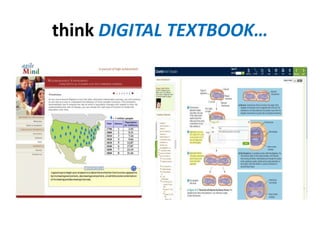
think DIGITAL TEXTBOOK…
Think New Skillsabout 20-20 learnersSkills for the 21st Century
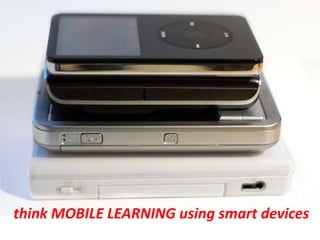
embracedigital toolsthink MOBILE LEARNING using smart devices
Mobile LearningAnytime, anywhere engagementVideo, audio, text and group work through handheld devices (iPad, Smart-Phone) – growing volume of smart “apps” to enable learningStrong focus on trades
constantlyconnected
highly personalized experiences
producers+consumersprosumers
break down classroom walls
The Implications
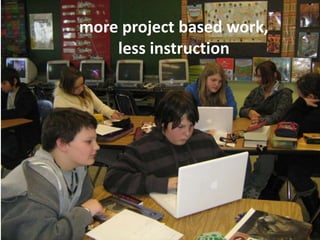
more project based work, less instruction
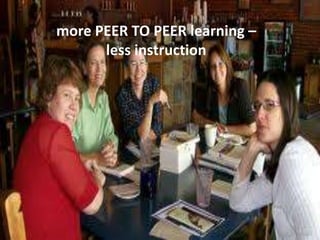
more PEER TO PEER learning – less instruction
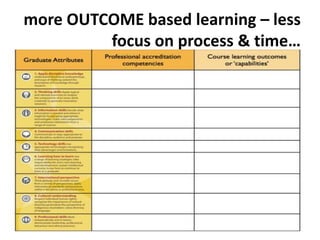
more OUTCOME based learning – less focus on process & time…
Kentucky College and Technical System (KCTS)Courses based on outcomes, not time3, 5,6 and 8 week coursesOnline plus some experiential sessionsStudents start on any Monday for 48 weeks of the yearAll have individual mentors plus academic coachingMaterials online partnered with PearsonDigital textbooks
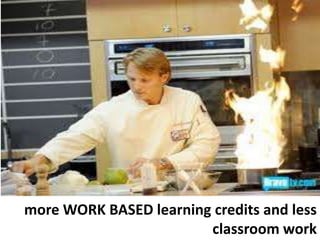
more WORK BASED learning credits and less classroom work
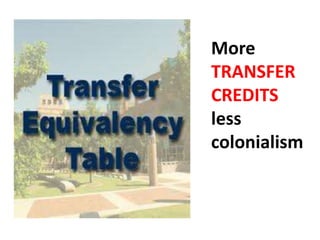
MoreTRANSFER CREDITSless colonialism
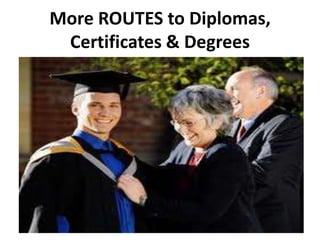
More ROUTES to Diplomas, Certificates & Degrees
Six Suggestions for New LearningMore project based work, less instructionMore peer learning, less instructionMore outcome based learning, less focus on process (especially time in class)More work based learning credits and less instructional creditsMore transferable credits and less colonialism More routes to Certificates, Degrees and Diplomas – less the one lane highway..
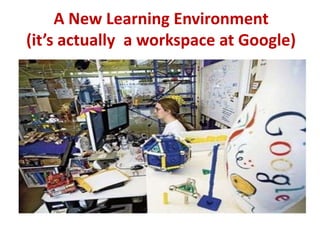
A New Learning Environment(it’s actually  a workspace at Google)
The New CollegeWill have individual work spaces  and some rooms for team work..Will have grand challenge based courses and programsWill have a requirement for peer, social and networked learningWill have few residency requirementsWill focus on outcomes not timeWill be wired to work, community and non profits
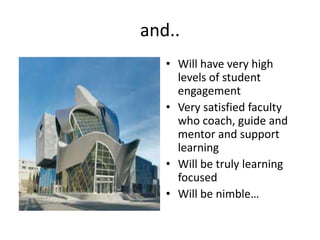
and..Will have very high levels of student engagementVery satisfied faculty who coach, guide and mentor and support learningWill be truly learning focusedWill be nimble…
“the future isn’t what it used to be..”Yogi Berra
stephen@contactnorth.ca(780) 993 7784

Bc colleges nov 2010

  • 1.
    Transforming Learning, Trainingand the CollegeStephen Murgatroyd, PhD FBPsS FRSAChief Innovation Officer, Contact North | Contact Nord
  • 2.
    “Prediction is verydifficult, especially about the future” Niels Bohr
  • 3.
    “The future willbe better tomorrow..”Dan Quayle
  • 4.
    “The future ishere. It just isn’t widely distributed yet..”William Gibson
  • 5.
  • 6.
    This of TheAge of Disruption
  • 7.
    The SixBig DisruptionsEconomicDisruptionDecline of the US as an economic superpower and the emergence of the BRIC’s economiesThe great recession and the jobless recoveryMergers and AcquisitionsLow productivity in Canada Falling competivenessDecline of traditional industry and emergence of new..Political DisruptionTerrorismPower relationships – China, India, US and EU versus Others (e.g. Copenhagen COP15)Federal – Provincial Relations (e.g. health care)Cause driven movements – anti HST, Tea Party (US) – new democracy
  • 8.
    Social DisruptionDecline ofdemocracy as a form of governanceGlobalization and social networksDemographic DisruptionsLow level of birth replacement for many northern countriesHigh level of birth for aboriginal peoples, India, AsiaChallenges for literacy and numeracyGlobal war for talent
  • 9.
    Environmental DisruptionClimate changeWateras a challenge – Eau CanadaEnergy and stewardshipNatural resource economies and environmental concernsThe Disruption of Personal IdentityBlurring the line between connection and connectivity – marriage, family, communityShifting identities in the workplace – the multigenerational workplace
  • 10.
    Some Implications Weare preparing students for jobs that don’t yet exist in industries that are just emerging in economies that are changing in a global war for talent
  • 11.
    Demand for Skills….Wherethe skills required are very different from the skills we now focus on…
  • 12.
    andProductivity and competitivenessare imperatives – its all about the economyMoney will become increasingly scarce–– lean will be keyTimeis the new frontier for innovation – 2 year degrees (UK), 3,5,6,and 8 week courses based on outcomes (Kentucky), self-paced (Athabasca).
  • 13.
    Drivers for NewDevelopmentsWhat YOU Need to be Able to SayWe’re “glocal”– global organizations offering local connectivityWe’re partners– with business, community and non profitsWe’re technological savvy– connected, engaged and wired to the worldWe’re effective and efficient – more learning in less timeWe’re affordable – you cant afford not to be here
  • 14.
    Learning …and whereexpectation of learning are very different from those we now prescribe..
  • 15.
    Technology, Real Learningand the FutureWhatare emerging technologies?
  • 16.
  • 17.
    think of arange DEVICES
  • 18.
  • 19.
  • 20.
  • 21.
  • 22.
  • 23.
  • 24.
    Think New Skillsabout20-20 learnersSkills for the 21st Century
  • 25.
    embracedigital toolsthink MOBILELEARNING using smart devices
  • 26.
    Mobile LearningAnytime, anywhereengagementVideo, audio, text and group work through handheld devices (iPad, Smart-Phone) – growing volume of smart “apps” to enable learningStrong focus on trades
  • 27.
  • 28.
  • 29.
  • 30.
  • 31.
  • 32.
    more project basedwork, less instruction
  • 33.
    more PEER TOPEER learning – less instruction
  • 34.
    more OUTCOME basedlearning – less focus on process & time…
  • 35.
    Kentucky College andTechnical System (KCTS)Courses based on outcomes, not time3, 5,6 and 8 week coursesOnline plus some experiential sessionsStudents start on any Monday for 48 weeks of the yearAll have individual mentors plus academic coachingMaterials online partnered with PearsonDigital textbooks
  • 36.
    more WORK BASEDlearning credits and less classroom work
  • 37.
  • 38.
    More ROUTES toDiplomas, Certificates & Degrees
  • 39.
    Six Suggestions forNew LearningMore project based work, less instructionMore peer learning, less instructionMore outcome based learning, less focus on process (especially time in class)More work based learning credits and less instructional creditsMore transferable credits and less colonialism More routes to Certificates, Degrees and Diplomas – less the one lane highway..
  • 41.
    A New LearningEnvironment(it’s actually a workspace at Google)
  • 42.
    The New CollegeWillhave individual work spaces and some rooms for team work..Will have grand challenge based courses and programsWill have a requirement for peer, social and networked learningWill have few residency requirementsWill focus on outcomes not timeWill be wired to work, community and non profits
  • 43.
    and..Will have veryhigh levels of student engagementVery satisfied faculty who coach, guide and mentor and support learningWill be truly learning focusedWill be nimble…
  • 44.
    “the future isn’twhat it used to be..”Yogi Berra
  • 45.

Editor's Notes