BIOLOGY FOR ENGINEERS
MODULE -I
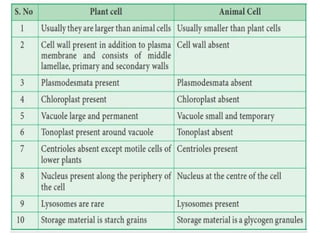
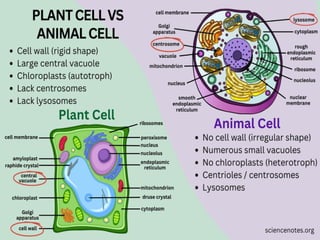
INTRODUCTION TO BIOLOGY: The cell: the basic unit of life, Structure, and functions of a
cell. The Plant Cell and animal cell, Prokaryotic and Eukaryotic cells, Stem cells and their
application. Biomolecules: Properties and functions of Carbohydrates, Nucleic acids,
proteins, lipids. Importance of special biomolecules; Enzymes (Classification with one
example each), Properties and functions), vitamins, and hormones.
THE CELL
The cell is the basic unit of Life. The cell provides minimum requirements to perform
essential life properties such as organization, metabolism, responsiveness, movements, and
reproduction to live independently. Hence, it ensures 1. Independent existence
2. Performing the vital functions of life.
Robert Hooke discovered the cell in 1665, later Anton Van Leeuwenhoek discovered free
living algae Spirogyra cells in water in the pond in 1674. Robert Brown later discovered the
nucleus.
Cells are built from Biomolecules such as carbohydrates, Lipids, Proteins, and Nucleic acids.
They exhibit variations in their size (In the Human body, the Largest cell is the ovum and the
smallest cell is the sperm), shape (round, spherical or elongated), life span (white blood
cells only live for about 13 days, whereas red blood cells live for about 120 days) and
function (Organ specific). Cells that have a similar structure and function form tissues. A cell
can form a whole organism as in unicellular like bacteria, or it may be part of the
multicellular like Humans.
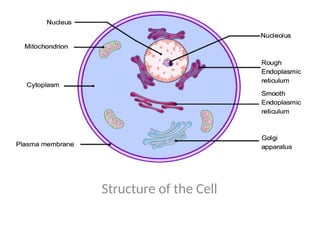
STRUCTURE AND FUNCTIONS OF A CELL
Understanding cell structure and functions is key to understanding life
processes. Structure:
1.Plasma Membrane: Surrounds the cell, regulating the passage of
substances.
2.Cytoplasm: Jelly-like substance filling the cell, containing organelles.
3.Nucleus: Houses genetic material (DNA), controlling cell activities.
For preliminary reference
4. Organelles: Specialized structures:
a. Endoplasmic Reticulum: Involved in protein and lipid metabolism.
b. Golgi Apparatus: Modifies, sorts, and packages molecules.
c. Mitochondria: Generates energy through respiration.
d. Lysosomes: Break down waste materials.
e. Ribosomes: Sites of protein synthesis.
f. Centrioles (in animals): Assist in cell division.
g.Cytoskeleton: Provides structural support and aids in cell movement.
Structure of the Cell
Functions:
1. Respiration: Converts glucose into ATP for energy.
2. Protein Synthesis: Translates genetic information
into proteins.
3. Storage and Processing: Synthesizes, modifies, and
transports molecules.
4. Cellular Communication: Signals between cells via
various molecules.
5. Waste Management: Breaks down and recycles
cellular waste.
6. Cell Division: Replicates cells for growth, repair, and
reproduction
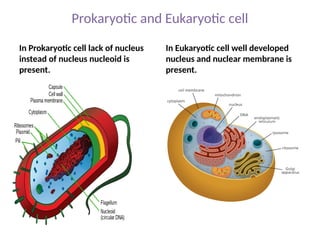
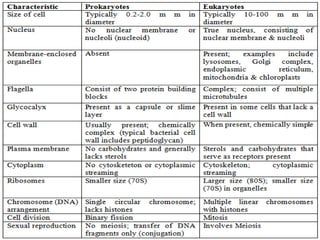
Prokaryotic and Eukaryotic cell
In Prokaryotic cell lack of nucleus
instead of nucleus nucleoid is
present.
In Eukaryotic cell well developed
nucleus and nuclear membrane is
present.
Stem Cells and their Application
Introduction
Stem cells are unique cells with the remarkable ability to develop
into various specialized cell types in the body.
They play a crucial role in growth, tissue repair, and maintaining the
body's overall health.
Types of Stem Cells
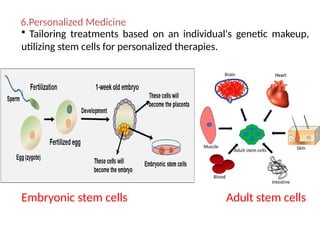
1. Embryonic Stem Cells: Derived from embryos, these cells have
the potential to become any cell type in the body.
2. Adult or Somatic Stem Cells: Found in various tissues, they
specialize in generating cells specific to their tissue of origin.
They possess two main characteristics
1.Self-Renewal: The ability to divide and produce more stem cells,
maintaining a renewable source for further differentiation.
2.Differentation: The potential to differentiate into various cell types
depending on their environment and the signals they receive.
Applications
1. Regenerative Medicine
 Tissue Repair: Stem cells are used to regenerate damaged or diseased tissues, aiding
in organ repair.
 Orthopedic Treatments: Applied in bone and joint disorders for enhanced healing.
2. Treatment of Diseases
 Blood Disorders: Stem cells are used in treating conditions like leukemia and
anemia.
 Neurological Disorders: Research explores their potential for treating conditions like
Parkinson's and Alzheimer's.
3. Drug Development and Testing
 Stem cells serve as a valuable model for testing new drugs, predicting their effects
on human cells.
4. Understanding Disease Mechanisms
 Studying stem cells provides insights into the development and progression of
diseases.
5. Cell-Based Therapies
 Stem cells offer a foundation for developing cell-based therapies, addressing various
medical conditions.
6.Personalized Medicine
 Tailoring treatments based on an individual's genetic makeup,
utilizing stem cells for personalized therapies.
Embryonic stem cells Adult stem cells
Introduction and Importance of Biomolecules
Introduction to Biomolecules:
Biomolecules are essential molecules that make up the building blocks of life.
These diverse compounds play crucial roles in the structure and functioning of
living organisms.
Among the key biomolecules are carbohydrates, nucleic acids, proteins, and lipids,
each contributing uniquely to the intricate tapestry of life.
Importance of Biomolecules:
1. Carbohydrates: They play a vital role in fueling various cellular processes,
supporting growth, and facilitating quick energy release.
2. Nucleic Acids: They are fundamental for inheritance, genetic diversity, and the
synthesis of proteins essential for life processes.
3. Proteins: They contribute to the regulation of biological processes, cellular
structure, and the catalysis of biochemical reactions.
4. Lipids: They are crucial for maintaining cell integrity, providing a protective
barrier, and serving as reserve energy sources.
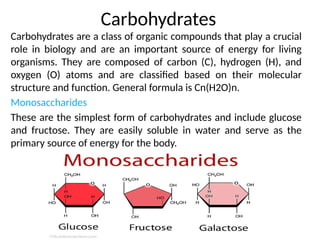
Carbohydrates
Carbohydrates are a class of organic compounds that play a crucial
role in biology and are an important source of energy for living
organisms. They are composed of carbon (C), hydrogen (H), and
oxygen (O) atoms and are classified based on their molecular
structure and function. General formula is Cn(H2O)n.
Monosaccharides
These are the simplest form of carbohydrates and include glucose
and fructose. They are easily soluble in water and serve as the
primary source of energy for the body.
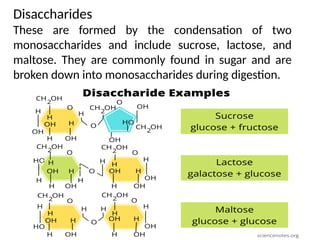
Disaccharides
These are formed by the condensation of two
monosaccharides and include sucrose, lactose, and
maltose. They are commonly found in sugar and are
broken down into monosaccharides during digestion.
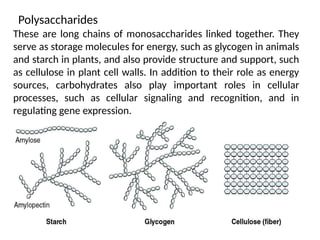
Polysaccharides
These are long chains of monosaccharides linked together. They
serve as storage molecules for energy, such as glycogen in animals
and starch in plants, and also provide structure and support, such
as cellulose in plant cell walls. In addition to their role as energy
sources, carbohydrates also play important roles in cellular
processes, such as cellular signaling and recognition, and in
regulating gene expression.
Industrial Applications of Carbohydrates
Carbohydrates have a wide range of applications in various industries,
including:
Food and Beverage: Carbohydrates are widely used as sweeteners, thickeners,
and stabilizers in food and beverage products. They are also used as energy
sources in sports drinks and energy bars.
Pharmaceuticals: Carbohydrates are used as excipients in pharmaceutical
formulations to improve the stability, solubility, and bioavailability of drugs.
They are also used as a source of energy in medical nutrition products.
Cosmetics: Carbohydrates are used in cosmetic products, such as moisturizers,
shampoos, and conditioners, to provide hydration and improve skin and hair
health.
Biotechnology: Carbohydrates are widely used in the production of
biodegradable plastics, biofuels, and other renewable energy sources.
Research: Carbohydrates are widely used as research tools in the fields of
immunology, virology, and cellular biology. They are used as ligands in protein-
carbohydrate interactions and as probes to study cellular signaling pathways.
Nucleic Acids
Nucleic acids are biopolymers that play a crucial role in the storage
and transfer of genetic information in all living organisms.
There are two types of nucleic acids:
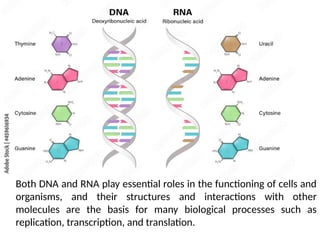
Deoxyribonucleic acid (DNA): DNA is the genetic material that
carries the instructions for the development, functioning, and
reproduction of all living organisms. DNA is a double-stranded helix
structure composed of(deoxyribose), a phosphate group, and a
nitrogenous base (adenine, guanine, cytosine, or thymine).
Ribonucleic acid (RNA): RNA is involved in the expression of the
genetic information stored in DNA by carrying the message from
the DNA to the ribosome, where it is used to build proteins. RNA is
a single-stranded molecule composed of nucleotides, which consist
of a sugar (ribose), a phosphate group, and a nitrogenous base
(adenine, guanine, cytosine, or uracil).
Both DNA and RNA play essential roles in the functioning of cells and
organisms, and their structures and interactions with other
molecules are the basis for many biological processes such as
replication, transcription, and translation.
Proteins
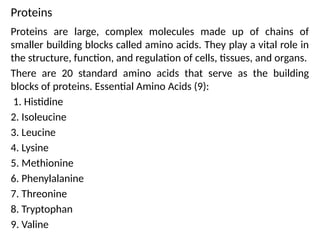
Proteins are large, complex molecules made up of chains of
smaller building blocks called amino acids. They play a vital role in
the structure, function, and regulation of cells, tissues, and organs.
There are 20 standard amino acids that serve as the building
blocks of proteins. Essential Amino Acids (9):
1. Histidine
2. Isoleucine
3. Leucine
4. Lysine
5. Methionine
6. Phenylalanine
7. Threonine
8. Tryptophan
9. Valine
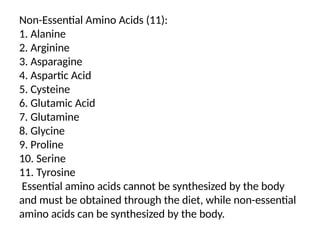
Non-Essential Amino Acids (11):
1. Alanine
2. Arginine
3. Asparagine
4. Aspartic Acid
5. Cysteine
6. Glutamic Acid
7. Glutamine
8. Glycine
9. Proline
10. Serine
11. Tyrosine
Essential amino acids cannot be synthesized by the body
and must be obtained through the diet, while non-essential
amino acids can be synthesized by the body.
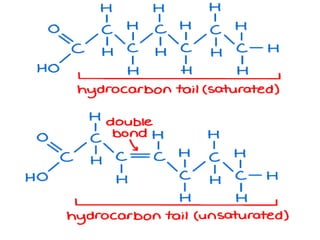
Lipids
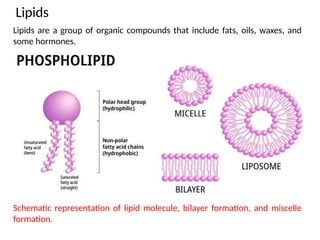
Lipids are a group of organic compounds that include fats, oils, waxes, and
some hormones.
Schematic representation of lipid molecule, bilayer formation, and miscelle
formation.
Properties and Functions of Carbohydrates
Properties
1.Chemical Composition:
Composition: Carbohydrates are organic compounds composed
of carbon, hydrogen, and oxygen in a ratio of 1:2:1.
Monomers: The basic building blocks of carbohydrates are
monosaccharides, such as glucose and fructose.
2. Solubility:
Water Solubility: Most carbohydrates are soluble in water due to
their hydrophilic nature.
3. Classification:
Simple and Complex: Carbohydrates are classified into simple
sugars (monosaccharides and disaccharides) and complex
carbohydrates (polysaccharides).
Functions
1. Energy Source:
 Primary Role: Carbohydrates serve as a primary source of energy for living
organisms.
 Conversion: Monosaccharides are converted into ATP, the energy currency of
cells.
2. Energy Storage:
 Glycogen (in Animals): Excess glucose is stored in the form of glycogen in
animals, primarily in the liver and muscles.
 Starch (in Plants): Plants store surplus glucose as starch in various plant tissues.
3. Structural Support:
Cellulose (in Plants): Carbohydrates contribute to the structural support of plant
cell walls through the formation of cellulose.
4. Transport of Energy:
Sucrose: Carbohydrates like sucrose facilitate the transport of energy in the form
of sugars within plants.
5. Quick Energy Release:
Glucose: Rapid breakdown of glucose provides quick energy for cellular processes.
6. Metabolic Regulation:
Blood Sugar Regulation: Carbohydrates play a role in regulating
blood sugar levels, ensuring a steady energy supply.
Properties and Functions of Nucleic Acids
Understanding the properties and functions of nucleic acids is
fundamental to comprehending the mechanisms of heredity,
genetic disorders, and cellular processes.
Properties of Nucleic Acids
1. Polymer Structure: Nucleic acids are polymers composed of
nucleotide monomers linked together.
2. Nucleotide Composition: Each nucleotide consists of a sugar
molecule, a phosphate group, and a nitrogenous base.
3. Sequence Specificity: The sequence of nitrogenous bases along
the nucleic acid chain is specific and carries genetic
information.
4.Double Helix (DNA):
DNA has a double-helix structure, where two strands wind around
each other.
5. Single-Stranded (RNA):
RNA is usually single-stranded, with various types like mRNA,
tRNA, and rRNA.
6. Genetic Code:
Nucleic acids encode the genetic information that determines the
traits and characteristics of living organisms.
7. Complementary Base Pairing:
In DNA, adenine pairs with thymine, and guanine pairs with
cytosine, forming complementary base pairs.
8. Role in Protein Synthesis:
Nucleic acids facilitate protein synthesis by carrying and
translating genetic instructions.
9. Essential for Heredity:
Nucleic acids are vital for the inheritance of genetic traits from one
generation to the next.
10. Cellular Regulation:
They participate in regulating cellular processes, gene expression, and
various metabolic activities.
Functions of Nucleic Acids
1. Genetic Information Storage: Nucleic acids, particularly DNA, store and
carry genetic information that dictates the hereditary characteristics of
living organisms.
2. Protein Synthesis: Nucleic acids, through the process of transcription and
translation, play a crucial role in the synthesis of proteins, the building
blocks of cells.
3. Cellular Regulation: They participate in the regulation of various cellular
processes, controlling gene expression and influencing the overall
functioning of cells
4.Hereditary Transmission:
Nucleic acids are responsible for transmitting hereditary traits from parents to offspring,
ensuring the continuity of genetic information.
5. Transfer of Genetic Code:
RNA, a type of nucleic acid, carries the genetic code from DNA to the ribosomes, where
protein synthesis occurs.
6. Enzymatic Activities:
Some nucleic acids, like ribozymes, exhibit enzymatic activities, participating in biochemical
reactions within cells.
7. Energy Transfer:
Nucleic acids contribute to the transfer and storage of energy in the form of adenosine
triphosphate (ATP), a molecule crucial for cellular energy currency.
8. Cellular Signaling:
Certain nucleic acids are involved in cellular signaling pathways, influencing responses to
external stimuli and environmental changes.
9. Maintenance of Cell Structure:
Nucleic acids contribute to the maintenance and integrity of cell structures, influencing cell
division and growth.
10. Synthesis of Biomolecules:
They are involved in the synthesis of various biomolecules, contributing to the overall
structure and function of living organisms.
Properties and Functions of Proteins
Properties of Proteins
1. Structure:
Proteins exhibit a complex three-dimensional structure determined by their amino
acid sequence.
They have primary, secondary (alpha helix, beta sheet), tertiary, and quaternary
structural levels.
2. Amino Acid Composition:
Proteins are composed of amino acids linked by peptide bonds.
The specific arrangement of amino acids dictates the protein's structure and function.
3. Solubility:
Proteins can vary in solubility, with some being soluble in water (hydrophilic) and
others in lipids (hydrophobic).
4. Denaturation:
Proteins can undergo denaturation due to factors like heat, pH changes, or chemicals,
resulting in loss of structure and function.
5. Specificity:
Proteins exhibit specificity in their interactions, with each type designed for a
particular function or molecular interaction.
6. Biological Functions:
Proteins serve diverse biological roles, including enzymes for
catalysis, antibodies for immune response, and structural proteins
for support.
7. Flexibility:
Proteins can change their conformation to adapt to different
biological environments and perform their functions.
8. Binding and Recognition:
Proteins can bind to other molecules, facilitating cellular processes
such as signaling and transport.
9. Catalytic Activity:
Many proteins act as enzymes, accelerating biochemical reactions
within cells.
10. Diversity:
The diversity of proteins allows them to carry out a wide range of
functions critical to cellular life.
Functions of Proteins with Examples
1.Enzymatic Activity:
Example: Catalase is an enzyme that catalyzes the breakdown of hydrogen
peroxide into water and oxygen.
2. Structural Support:
Example: Collagen provides structural support to connective tissues in skin, bones,
and tendons.
3. Transportation:
Example: Hemoglobin transports oxygen from the lungs to tissues and carries
carbon dioxide back to the lungs.
4. Defense and Immunity:
Example: Antibodies defend against pathogens by recognizing and neutralizing
foreign substances.
5. Cell Signaling:
Example: Insulin is a signaling protein that regulates glucose uptake by cells.
6. Motion and Contraction:
Example: Actin and myosin are proteins involved in muscle contraction and cell
movement.
7. Hormonal Regulation:
Example: Insulin and glucagon are hormones that regulate blood sugar levels.
8. Storage of Molecules:
Example: Ferritin stores iron in a soluble and non-toxic form in cells.
9. Catalysis of Metabolic Reactions:
Example: Lipase is an enzyme that catalyzes the breakdown of lipids during
digestion.
10. Regulation of Gene Expression:
Example: Transcription factors regulate the expression of genes during protein
synthesis.
11. Sensory Response:
Example: Rhodopsin is a light-sensitive protein involved in vision.
12. Blood Clotting:
Example: Fibrinogen is a protein involved in the blood clotting cascade.
13. Buffering and pH Regulation:
Example: Hemoglobin helps maintain the pH balance in red blood cells.
14. Energy Source:
Example: In starvation, proteins can be broken down into amino acids for energy
production.
Properties of Lipids
1.Hydrophobicity
Lipids are characterized by their hydrophobic nature, meaning they are
insoluble in water but soluble in nonpolar solvents such as chloroform,
ether, or benzene. This property arises from the nonpolar hydrocarbon
chains of fatty acids and the hydrophobic regions of other lipid molecules,
making them inherently repellant to water molecular.
2. Structural Diversity
Common lipid classes include fatty acids, triglycerides, phospholipids,
sterols, and sphingolipids, each with unique molecular structures and
properties that contribute to their biological functions.
3. Amphipathicity
Some lipids display amphipathic properties, containing both hydrophilic
(water-attracting) and hydrophobic (water-repelling) regions within the
same molecule. Phospholipids, for example, have hydrophilic phosphate
heads and hydrophobic fatty acid tails, allowing them to form lipid bilayers
in aqueous environments such as cell membranes.
4.Energy Storage
Triglycerides, the primary storage form of lipids, accumulate in
adipose tissue and can be mobilized and oxidized to generate ATP,
providing a long-term reservoir of energy for cellular metabolism
and physical activity.
5.Insulation
Lipids act as insulators, helping to maintain body temperature and
protect vital organs from temperature fluctuations and mechanical
damage. Adipose tissue, composed primarily of fat cells, serves as
an insulating layer beneath the skin, providing thermal insulation
and cushioning for organs.
6.Lubrication
Lipid-based lubricants coat surfaces, preventing them from drying
out and reducing wear and tear caused by friction between tissues,
such as in joints or between skin surface.
Functions of Lipids
1.Energy Storage
Lipids serve as a concentrated energy reserve in the body, providing more than
twice the energy per gram compared to carbohydrates or proteins.
Triglycerides, the most common form of dietary fat, are stored in adipose
tissue and can be mobilized and oxidized to generate ATP, the primary energy
currency of cells.
2.Structural Role
Lipids contribute to the structural integrity of cell membranes, forming a lipid
bilayer that encloses and protects the contents of cells. Phospholipids,
cholesterol, and glycolipids are key components of cell membranes, regulating
membrane fluidity, permeability, and signaling processes essential for cellular
function and communication.
3.Hormone
Regulation Lipids play a crucial role in hormone synthesis and regulation,
serving as precursors for steroid hormones such as estrogen, testosterone, and
cortisol. These hormones regulate various physiological processes, including
metabolism, growth, reproduction, and stress responses, exerting widespread
effects on the body's functions.
4.Cell Signaling
Lipids function as signaling molecules in intercellular communication
pathways, modulating cellular responses to environmental cues and stimuli.
Lipid-derived signaling molecules, such as prostaglandins, leukotrienes, and
sphingolipids, mediate inflammatory responses, immune function, and
neuronal signaling, influencing diverse physiological processes.
5.Absorption of Nutrients
Lipids facilitate the absorption and transport of fat-soluble vitamins (A, D, E,
and K) and other hydrophobic nutrients in the digestive system. Bile acids
and lipases emulsify and break down dietary fats into absorbable forms,
allowing for the For preliminary reference efficient uptake of essential
nutrients across the intestinal epithelium and into the bloodstream.
6.Insulation
Lipids act as insulators, helping to maintain body temperature and protect
vital organs from temperature fluctuations and mechanical damage.
Adipose tissue, composed primarily of fat cells, serves as an insulating layer
beneath the skin, providing thermal insulation and cushioning for organs.
ENZYMES
Enzymes are biological catalysts that accelerate biochemical
reactions by lowering the activation energy required for the
conversion of substrates into products. They are classified into six
main classes based on the type of reaction they catalyze and the
nature of their substrates.
Such as Oxidoreductases, Transferases, Hydrolases, Lyases ,
Isomerases , Ligases,
Classification of enzymes
Oxidoreductases- Oxidoreductases catalyze oxidation-reduction
reactions, involving the transfer of electrons between substrates.
These enzymes typically utilize cofactors such as NAD+ or FAD as
electron carriers.
Transferases- Transferases facilitate the transfer of functional groups,
such as methyl, acetyl, or phosphate groups, between substrates.
These enzymes play essential roles in metabolic pathways and signal
transduction.
Hydrolases
Hydrolases catalyze hydrolysis reactions, cleaving chemical bonds by adding
water molecules. These enzymes are involved in the breakdown of
macromolecules such as proteins, carbohydrates, and lipids.
Lyases
Lyases catalyze the addition or removal of groups to double bonds or the
cleavage of bonds without hydrolysis or oxidation-reduction. These enzymes
participate in diverse metabolic pathways and biosynthesis.
Isomerases
Isomerases catalyze the rearrangement of atoms within a molecule, resulting
in the conversion between isomeric forms. These enzymes play crucial roles
in maintaining metabolic equilibrium and generating biological diversity.
Ligases (Synthetases)
Ligases, also known as synthetases, catalyze the formation of bonds between
molecules, often using energy from ATP hydrolysis. These enzymes are
involved in DNA replication, RNA synthesis, and protein synthesis.
Properties of Enzymes
Specificity
Enzymes exhibit specificity in substrate recognition and catalytic activity, interacting
with specific substrates to facilitate particular biochemical reactions. This specificity
arises from the complementary shapes and chemical properties of the enzyme's active
site and the substrate molecule.
Catalytic
Enzymes are catalysts that accelerate biochemical reactions by lowering the activation
energy required for the conversion of substrates into products. By stabilizing the
transition state of the reaction, enzymes facilitate the formation of product molecules
more rapidly and efficiently.
Efficiency
Enzymes are highly efficient catalysts, often capable of increasing reaction rates by
millions to billions of times compared to uncatalyzed reactions. This high efficiency
allows cells to carry out metabolic processes at rates compatible with life despite
relatively mild physiological conditions.
Regulation
Enzyme activity is regulated by various factors, including substrate concentration, pH,
temperature, and the presence of inhibitors or activators. These regulatory
mechanisms ensure that enzyme activity is finely tuned to meet the changing
metabolic demand of the cell and maintain homeostatics.
Reusability
Enzymes are reusable catalysts that can catalyze multiple rounds of
substrate the conversion without being consumed in the reaction.
After facilitating a reaction, enzymes remain unchanged and
available to catalyze subsequent reactions, making them highly
economical and efficient components of cellular metabolism.
Sensitivity
Enzyme activity is sensitive to changes in environmental conditions,
such as temperature and pH, which can influence enzyme structure
and function. Small deviations from optimal conditions can
significantly affect enzyme activity, leading to alterations in
metabolic pathways and cellular function.
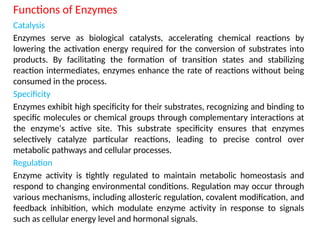
Functions of Enzymes
Catalysis
Enzymes serve as biological catalysts, accelerating chemical reactions by
lowering the activation energy required for the conversion of substrates into
products. By facilitating the formation of transition states and stabilizing
reaction intermediates, enzymes enhance the rate of reactions without being
consumed in the process.
Specificity
Enzymes exhibit high specificity for their substrates, recognizing and binding to
specific molecules or chemical groups through complementary interactions at
the enzyme's active site. This substrate specificity ensures that enzymes
selectively catalyze particular reactions, leading to precise control over
metabolic pathways and cellular processes.
Regulation
Enzyme activity is tightly regulated to maintain metabolic homeostasis and
respond to changing environmental conditions. Regulation may occur through
various mechanisms, including allosteric regulation, covalent modification, and
feedback inhibition, which modulate enzyme activity in response to signals
such as cellular energy level and hormonal signals.
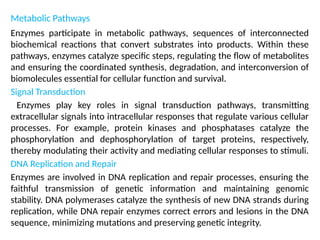
Metabolic Pathways
Enzymes participate in metabolic pathways, sequences of interconnected
biochemical reactions that convert substrates into products. Within these
pathways, enzymes catalyze specific steps, regulating the flow of metabolites
and ensuring the coordinated synthesis, degradation, and interconversion of
biomolecules essential for cellular function and survival.
Signal Transduction
Enzymes play key roles in signal transduction pathways, transmitting
extracellular signals into intracellular responses that regulate various cellular
processes. For example, protein kinases and phosphatases catalyze the
phosphorylation and dephosphorylation of target proteins, respectively,
thereby modulating their activity and mediating cellular responses to stimuli.
DNA Replication and Repair
Enzymes are involved in DNA replication and repair processes, ensuring the
faithful transmission of genetic information and maintaining genomic
stability. DNA polymerases catalyze the synthesis of new DNA strands during
replication, while DNA repair enzymes correct errors and lesions in the DNA
sequence, minimizing mutations and preserving genetic integrity.
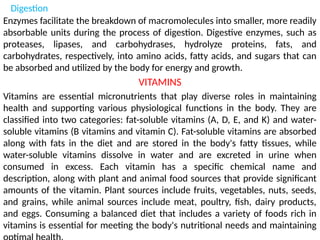
Digestion
Enzymes facilitate the breakdown of macromolecules into smaller, more readily
absorbable units during the process of digestion. Digestive enzymes, such as
proteases, lipases, and carbohydrases, hydrolyze proteins, fats, and
carbohydrates, respectively, into amino acids, fatty acids, and sugars that can
be absorbed and utilized by the body for energy and growth.
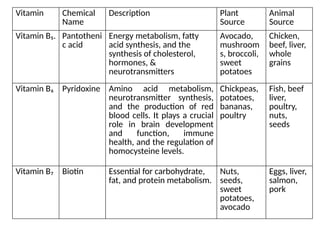
VITAMINS
Vitamins are essential micronutrients that play diverse roles in maintaining
health and supporting various physiological functions in the body. They are
classified into two categories: fat-soluble vitamins (A, D, E, and K) and water-
soluble vitamins (B vitamins and vitamin C). Fat-soluble vitamins are absorbed
along with fats in the diet and are stored in the body's fatty tissues, while
water-soluble vitamins dissolve in water and are excreted in urine when
consumed in excess. Each vitamin has a specific chemical name and
description, along with plant and animal food sources that provide significant
amounts of the vitamin. Plant sources include fruits, vegetables, nuts, seeds,
and grains, while animal sources include meat, poultry, fish, dairy products,
and eggs. Consuming a balanced diet that includes a variety of foods rich in
vitamins is essential for meeting the body's nutritional needs and maintaining
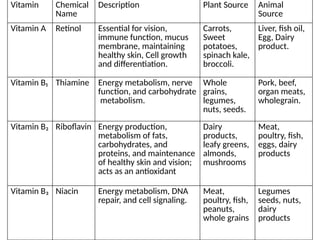
Vitamin Chemical
Name
Description Plant Source Animal
Source
Vitamin A Retinol Essential for vision,
immune function, mucus
membrane, maintaining
healthy skin, Cell growth
and differentiation.
Carrots,
Sweet
potatoes,
spinach kale,
broccoli.
Liver, fish oil,
Egg, Dairy
product.
Vitamin B₁ Thiamine Energy metabolism, nerve
function, and carbohydrate
metabolism.
Whole
grains,
legumes,
nuts, seeds.
Pork, beef,
organ meats,
wholegrain.
Vitamin B₂ Riboflavin Energy production,
metabolism of fats,
carbohydrates, and
proteins, and maintenance
of healthy skin and vision;
acts as an antioxidant
Dairy
products,
leafy greens,
almonds,
mushrooms
Meat,
poultry, fish,
eggs, dairy
products
Vitamin B₃ Niacin Energy metabolism, DNA
repair, and cell signaling.
Meat,
poultry, fish,
peanuts,
whole grains
Legumes
seeds, nuts,
dairy
products
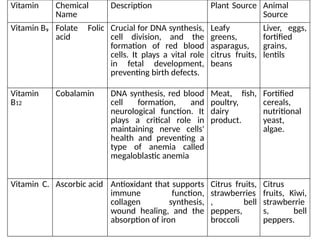
Vitamin Chemical
Name
Description Plant
Source
Animal
Source
Vitamin B₅. Pantotheni
c acid
Energy metabolism, fatty
acid synthesis, and the
synthesis of cholesterol,
hormones, &
neurotransmitters
Avocado,
mushroom
s, broccoli,
sweet
potatoes
Chicken,
beef, liver,
whole
grains
Vitamin B₆ Pyridoxine Amino acid metabolism,
neurotransmitter synthesis,
and the production of red
blood cells. It plays a crucial
role in brain development
and function, immune
health, and the regulation of
homocysteine levels.
Chickpeas,
potatoes,
bananas,
poultry
Fish, beef
liver,
poultry,
nuts,
seeds
Vitamin B₇ Biotin Essential for carbohydrate,
fat, and protein metabolism.
Nuts,
seeds,
sweet
potatoes,
avocado
Eggs, liver,
salmon,
pork
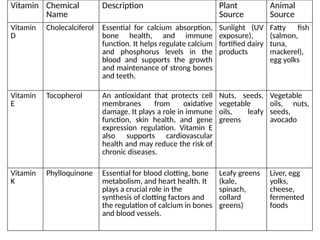
Vitamin Chemical
Name
Description Plant Source Animal
Source
Vitamin B₉ Folate Folic
acid
Crucial for DNA synthesis,
cell division, and the
formation of red blood
cells. It plays a vital role
in fetal development,
preventing birth defects.
Leafy
greens,
asparagus,
citrus fruits,
beans
Liver, eggs,
fortified
grains,
lentils
Vitamin
B12
Cobalamin DNA synthesis, red blood
cell formation, and
neurological function. It
plays a critical role in
maintaining nerve cells'
health and preventing a
type of anemia called
megaloblastic anemia
Meat, fish,
poultry,
dairy
product.
Fortified
cereals,
nutritional
yeast,
algae.
Vitamin C. Ascorbic acid Antioxidant that supports
immune function,
collagen synthesis,
wound healing, and the
absorption of iron
Citrus fruits,
strawberries
, bell
peppers,
broccoli
Citrus
fruits, Kiwi,
strawberrie
s, bell
peppers.
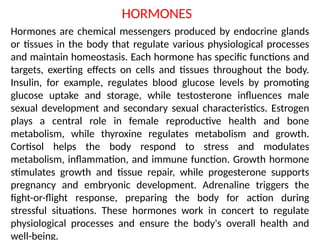
Vitamin Chemical
Name
Description Plant
Source
Animal
Source
Vitamin
D
Cholecalciferol Essential for calcium absorption,
bone health, and immune
function. It helps regulate calcium
and phosphorus levels in the
blood and supports the growth
and maintenance of strong bones
and teeth.
Sunlight (UV
exposure),
fortified dairy
products
Fatty fish
(salmon,
tuna,
mackerel),
egg yolks
Vitamin
E
Tocopherol An antioxidant that protects cell
membranes from oxidative
damage. It plays a role in immune
function, skin health, and gene
expression regulation. Vitamin E
also supports cardiovascular
health and may reduce the risk of
chronic diseases.
Nuts, seeds,
vegetable
oils, leafy
greens
Vegetable
oils, nuts,
seeds,
avocado
Vitamin
K
Phylloquinone Essential for blood clotting, bone
metabolism, and heart health. It
plays a crucial role in the
synthesis of clotting factors and
the regulation of calcium in bones
and blood vessels.
Leafy greens
(kale,
spinach,
collard
greens)
Liver, egg
yolks,
cheese,
fermented
foods
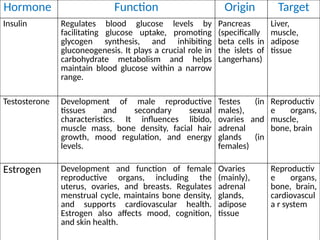
HORMONES
Hormones are chemical messengers produced by endocrine glands
or tissues in the body that regulate various physiological processes
and maintain homeostasis. Each hormone has specific functions and
targets, exerting effects on cells and tissues throughout the body.
Insulin, for example, regulates blood glucose levels by promoting
glucose uptake and storage, while testosterone influences male
sexual development and secondary sexual characteristics. Estrogen
plays a central role in female reproductive health and bone
metabolism, while thyroxine regulates metabolism and growth.
Cortisol helps the body respond to stress and modulates
metabolism, inflammation, and immune function. Growth hormone
stimulates growth and tissue repair, while progesterone supports
pregnancy and embryonic development. Adrenaline triggers the
fight-or-flight response, preparing the body for action during
stressful situations. These hormones work in concert to regulate
physiological processes and ensure the body's overall health and
well-being.
Hormone Function Origin Target
Insulin Regulates blood glucose levels by
facilitating glucose uptake, promoting
glycogen synthesis, and inhibiting
gluconeogenesis. It plays a crucial role in
carbohydrate metabolism and helps
maintain blood glucose within a narrow
range.
Pancreas
(specifically
beta cells in
the islets of
Langerhans)
Liver,
muscle,
adipose
tissue
Testosterone Development of male reproductive
tissues and secondary sexual
characteristics. It influences libido,
muscle mass, bone density, facial hair
growth, mood regulation, and energy
levels.
Testes (in
males),
ovaries and
adrenal
glands (in
females)
Reproductiv
e organs,
muscle,
bone, brain
Estrogen Development and function of female
reproductive organs, including the
uterus, ovaries, and breasts. Regulates
menstrual cycle, maintains bone density,
and supports cardiovascular health.
Estrogen also affects mood, cognition,
and skin health.
Ovaries
(mainly),
adrenal
glands,
adipose
tissue
Reproductiv
e organs,
bone, brain,
cardiovascul
a r system
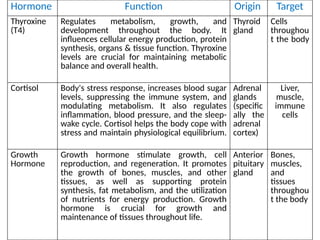
Hormone Function Origin Target
Thyroxine
(T4)
Regulates metabolism, growth, and
development throughout the body. It
influences cellular energy production, protein
synthesis, organs & tissue function. Thyroxine
levels are crucial for maintaining metabolic
balance and overall health.
Thyroid
gland
Cells
throughou
t the body
Cortisol Body's stress response, increases blood sugar
levels, suppressing the immune system, and
modulating metabolism. It also regulates
inflammation, blood pressure, and the sleep-
wake cycle. Cortisol helps the body cope with
stress and maintain physiological equilibrium.
Adrenal
glands
(specific
ally the
adrenal
cortex)
Liver,
muscle,
immune
cells
Growth
Hormone
Growth hormone stimulate growth, cell
reproduction, and regeneration. It promotes
the growth of bones, muscles, and other
tissues, as well as supporting protein
synthesis, fat metabolism, and the utilization
of nutrients for energy production. Growth
hormone is crucial for growth and
maintenance of tissues throughout life.
Anterior
pituitary
gland
Bones,
muscles,
and
tissues
throughou
t the body
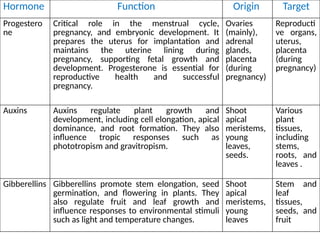
Hormone Function Origin Target
Progestero
ne
Critical role in the menstrual cycle,
pregnancy, and embryonic development. It
prepares the uterus for implantation and
maintains the uterine lining during
pregnancy, supporting fetal growth and
development. Progesterone is essential for
reproductive health and successful
pregnancy.
Ovaries
(mainly),
adrenal
glands,
placenta
(during
pregnancy)
Reproducti
ve organs,
uterus,
placenta
(during
pregnancy)
Auxins Auxins regulate plant growth and
development, including cell elongation, apical
dominance, and root formation. They also
influence tropic responses such as
phototropism and gravitropism.
Shoot
apical
meristems,
young
leaves,
seeds.
Various
plant
tissues,
including
stems,
roots, and
leaves .
Gibberellins Gibberellins promote stem elongation, seed
germination, and flowering in plants. They
also regulate fruit and leaf growth and
influence responses to environmental stimuli
such as light and temperature changes.
Shoot
apical
meristems,
young
leaves
Stem and
leaf
tissues,
seeds, and
fruit
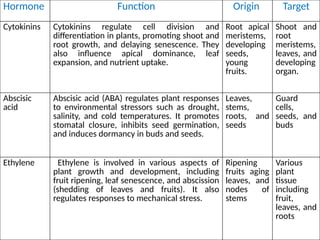
Hormone Function Origin Target
Cytokinins Cytokinins regulate cell division and
differentiation in plants, promoting shoot and
root growth, and delaying senescence. They
also influence apical dominance, leaf
expansion, and nutrient uptake.
Root apical
meristems,
developing
seeds,
young
fruits.
Shoot and
root
meristems,
leaves, and
developing
organ.
Abscisic
acid
Abscisic acid (ABA) regulates plant responses
to environmental stressors such as drought,
salinity, and cold temperatures. It promotes
stomatal closure, inhibits seed germination,
and induces dormancy in buds and seeds.
Leaves,
stems,
roots, and
seeds
Guard
cells,
seeds, and
buds
Ethylene Ethylene is involved in various aspects of
plant growth and development, including
fruit ripening, leaf senescence, and abscission
(shedding of leaves and fruits). It also
regulates responses to mechanical stress.
Ripening
fruits aging
leaves, and
nodes of
stems
Various
plant
tissue
including
fruit,
leaves, and
roots

BBOC407 BIOLOGY FOR ENGINEERS. Model 1pptx.pptx

  • 1.
    BIOLOGY FOR ENGINEERS MODULE-I INTRODUCTION TO BIOLOGY: The cell: the basic unit of life, Structure, and functions of a cell. The Plant Cell and animal cell, Prokaryotic and Eukaryotic cells, Stem cells and their application. Biomolecules: Properties and functions of Carbohydrates, Nucleic acids, proteins, lipids. Importance of special biomolecules; Enzymes (Classification with one example each), Properties and functions), vitamins, and hormones. THE CELL The cell is the basic unit of Life. The cell provides minimum requirements to perform essential life properties such as organization, metabolism, responsiveness, movements, and reproduction to live independently. Hence, it ensures 1. Independent existence 2. Performing the vital functions of life. Robert Hooke discovered the cell in 1665, later Anton Van Leeuwenhoek discovered free living algae Spirogyra cells in water in the pond in 1674. Robert Brown later discovered the nucleus. Cells are built from Biomolecules such as carbohydrates, Lipids, Proteins, and Nucleic acids. They exhibit variations in their size (In the Human body, the Largest cell is the ovum and the smallest cell is the sperm), shape (round, spherical or elongated), life span (white blood cells only live for about 13 days, whereas red blood cells live for about 120 days) and function (Organ specific). Cells that have a similar structure and function form tissues. A cell can form a whole organism as in unicellular like bacteria, or it may be part of the multicellular like Humans.
  • 2.
    STRUCTURE AND FUNCTIONSOF A CELL Understanding cell structure and functions is key to understanding life processes. Structure: 1.Plasma Membrane: Surrounds the cell, regulating the passage of substances. 2.Cytoplasm: Jelly-like substance filling the cell, containing organelles. 3.Nucleus: Houses genetic material (DNA), controlling cell activities. For preliminary reference 4. Organelles: Specialized structures: a. Endoplasmic Reticulum: Involved in protein and lipid metabolism. b. Golgi Apparatus: Modifies, sorts, and packages molecules. c. Mitochondria: Generates energy through respiration. d. Lysosomes: Break down waste materials. e. Ribosomes: Sites of protein synthesis. f. Centrioles (in animals): Assist in cell division. g.Cytoskeleton: Provides structural support and aids in cell movement.
  • 3.
  • 4.
    Functions: 1. Respiration: Convertsglucose into ATP for energy. 2. Protein Synthesis: Translates genetic information into proteins. 3. Storage and Processing: Synthesizes, modifies, and transports molecules. 4. Cellular Communication: Signals between cells via various molecules. 5. Waste Management: Breaks down and recycles cellular waste. 6. Cell Division: Replicates cells for growth, repair, and reproduction
  • 7.
    Prokaryotic and Eukaryoticcell In Prokaryotic cell lack of nucleus instead of nucleus nucleoid is present. In Eukaryotic cell well developed nucleus and nuclear membrane is present.
  • 9.
    Stem Cells andtheir Application Introduction Stem cells are unique cells with the remarkable ability to develop into various specialized cell types in the body. They play a crucial role in growth, tissue repair, and maintaining the body's overall health. Types of Stem Cells 1. Embryonic Stem Cells: Derived from embryos, these cells have the potential to become any cell type in the body. 2. Adult or Somatic Stem Cells: Found in various tissues, they specialize in generating cells specific to their tissue of origin. They possess two main characteristics 1.Self-Renewal: The ability to divide and produce more stem cells, maintaining a renewable source for further differentiation. 2.Differentation: The potential to differentiate into various cell types depending on their environment and the signals they receive.
  • 10.
    Applications 1. Regenerative Medicine Tissue Repair: Stem cells are used to regenerate damaged or diseased tissues, aiding in organ repair.  Orthopedic Treatments: Applied in bone and joint disorders for enhanced healing. 2. Treatment of Diseases  Blood Disorders: Stem cells are used in treating conditions like leukemia and anemia.  Neurological Disorders: Research explores their potential for treating conditions like Parkinson's and Alzheimer's. 3. Drug Development and Testing  Stem cells serve as a valuable model for testing new drugs, predicting their effects on human cells. 4. Understanding Disease Mechanisms  Studying stem cells provides insights into the development and progression of diseases. 5. Cell-Based Therapies  Stem cells offer a foundation for developing cell-based therapies, addressing various medical conditions.
  • 11.
    6.Personalized Medicine  Tailoringtreatments based on an individual's genetic makeup, utilizing stem cells for personalized therapies. Embryonic stem cells Adult stem cells
  • 12.
    Introduction and Importanceof Biomolecules Introduction to Biomolecules: Biomolecules are essential molecules that make up the building blocks of life. These diverse compounds play crucial roles in the structure and functioning of living organisms. Among the key biomolecules are carbohydrates, nucleic acids, proteins, and lipids, each contributing uniquely to the intricate tapestry of life. Importance of Biomolecules: 1. Carbohydrates: They play a vital role in fueling various cellular processes, supporting growth, and facilitating quick energy release. 2. Nucleic Acids: They are fundamental for inheritance, genetic diversity, and the synthesis of proteins essential for life processes. 3. Proteins: They contribute to the regulation of biological processes, cellular structure, and the catalysis of biochemical reactions. 4. Lipids: They are crucial for maintaining cell integrity, providing a protective barrier, and serving as reserve energy sources.
  • 13.
    Carbohydrates Carbohydrates are aclass of organic compounds that play a crucial role in biology and are an important source of energy for living organisms. They are composed of carbon (C), hydrogen (H), and oxygen (O) atoms and are classified based on their molecular structure and function. General formula is Cn(H2O)n. Monosaccharides These are the simplest form of carbohydrates and include glucose and fructose. They are easily soluble in water and serve as the primary source of energy for the body.
  • 14.
    Disaccharides These are formedby the condensation of two monosaccharides and include sucrose, lactose, and maltose. They are commonly found in sugar and are broken down into monosaccharides during digestion.
  • 15.
    Polysaccharides These are longchains of monosaccharides linked together. They serve as storage molecules for energy, such as glycogen in animals and starch in plants, and also provide structure and support, such as cellulose in plant cell walls. In addition to their role as energy sources, carbohydrates also play important roles in cellular processes, such as cellular signaling and recognition, and in regulating gene expression.
  • 16.
    Industrial Applications ofCarbohydrates Carbohydrates have a wide range of applications in various industries, including: Food and Beverage: Carbohydrates are widely used as sweeteners, thickeners, and stabilizers in food and beverage products. They are also used as energy sources in sports drinks and energy bars. Pharmaceuticals: Carbohydrates are used as excipients in pharmaceutical formulations to improve the stability, solubility, and bioavailability of drugs. They are also used as a source of energy in medical nutrition products. Cosmetics: Carbohydrates are used in cosmetic products, such as moisturizers, shampoos, and conditioners, to provide hydration and improve skin and hair health. Biotechnology: Carbohydrates are widely used in the production of biodegradable plastics, biofuels, and other renewable energy sources. Research: Carbohydrates are widely used as research tools in the fields of immunology, virology, and cellular biology. They are used as ligands in protein- carbohydrate interactions and as probes to study cellular signaling pathways.
  • 17.
    Nucleic Acids Nucleic acidsare biopolymers that play a crucial role in the storage and transfer of genetic information in all living organisms. There are two types of nucleic acids: Deoxyribonucleic acid (DNA): DNA is the genetic material that carries the instructions for the development, functioning, and reproduction of all living organisms. DNA is a double-stranded helix structure composed of(deoxyribose), a phosphate group, and a nitrogenous base (adenine, guanine, cytosine, or thymine). Ribonucleic acid (RNA): RNA is involved in the expression of the genetic information stored in DNA by carrying the message from the DNA to the ribosome, where it is used to build proteins. RNA is a single-stranded molecule composed of nucleotides, which consist of a sugar (ribose), a phosphate group, and a nitrogenous base (adenine, guanine, cytosine, or uracil).
  • 18.
    Both DNA andRNA play essential roles in the functioning of cells and organisms, and their structures and interactions with other molecules are the basis for many biological processes such as replication, transcription, and translation.
  • 19.
    Proteins Proteins are large,complex molecules made up of chains of smaller building blocks called amino acids. They play a vital role in the structure, function, and regulation of cells, tissues, and organs. There are 20 standard amino acids that serve as the building blocks of proteins. Essential Amino Acids (9): 1. Histidine 2. Isoleucine 3. Leucine 4. Lysine 5. Methionine 6. Phenylalanine 7. Threonine 8. Tryptophan 9. Valine
  • 20.
    Non-Essential Amino Acids(11): 1. Alanine 2. Arginine 3. Asparagine 4. Aspartic Acid 5. Cysteine 6. Glutamic Acid 7. Glutamine 8. Glycine 9. Proline 10. Serine 11. Tyrosine Essential amino acids cannot be synthesized by the body and must be obtained through the diet, while non-essential amino acids can be synthesized by the body.
  • 21.
    Lipids Lipids are agroup of organic compounds that include fats, oils, waxes, and some hormones. Schematic representation of lipid molecule, bilayer formation, and miscelle formation.
  • 23.
    Properties and Functionsof Carbohydrates Properties 1.Chemical Composition: Composition: Carbohydrates are organic compounds composed of carbon, hydrogen, and oxygen in a ratio of 1:2:1. Monomers: The basic building blocks of carbohydrates are monosaccharides, such as glucose and fructose. 2. Solubility: Water Solubility: Most carbohydrates are soluble in water due to their hydrophilic nature. 3. Classification: Simple and Complex: Carbohydrates are classified into simple sugars (monosaccharides and disaccharides) and complex carbohydrates (polysaccharides).
  • 24.
    Functions 1. Energy Source: Primary Role: Carbohydrates serve as a primary source of energy for living organisms.  Conversion: Monosaccharides are converted into ATP, the energy currency of cells. 2. Energy Storage:  Glycogen (in Animals): Excess glucose is stored in the form of glycogen in animals, primarily in the liver and muscles.  Starch (in Plants): Plants store surplus glucose as starch in various plant tissues. 3. Structural Support: Cellulose (in Plants): Carbohydrates contribute to the structural support of plant cell walls through the formation of cellulose. 4. Transport of Energy: Sucrose: Carbohydrates like sucrose facilitate the transport of energy in the form of sugars within plants. 5. Quick Energy Release: Glucose: Rapid breakdown of glucose provides quick energy for cellular processes.
  • 25.
    6. Metabolic Regulation: BloodSugar Regulation: Carbohydrates play a role in regulating blood sugar levels, ensuring a steady energy supply. Properties and Functions of Nucleic Acids Understanding the properties and functions of nucleic acids is fundamental to comprehending the mechanisms of heredity, genetic disorders, and cellular processes. Properties of Nucleic Acids 1. Polymer Structure: Nucleic acids are polymers composed of nucleotide monomers linked together. 2. Nucleotide Composition: Each nucleotide consists of a sugar molecule, a phosphate group, and a nitrogenous base. 3. Sequence Specificity: The sequence of nitrogenous bases along the nucleic acid chain is specific and carries genetic information.
  • 26.
    4.Double Helix (DNA): DNAhas a double-helix structure, where two strands wind around each other. 5. Single-Stranded (RNA): RNA is usually single-stranded, with various types like mRNA, tRNA, and rRNA. 6. Genetic Code: Nucleic acids encode the genetic information that determines the traits and characteristics of living organisms. 7. Complementary Base Pairing: In DNA, adenine pairs with thymine, and guanine pairs with cytosine, forming complementary base pairs. 8. Role in Protein Synthesis: Nucleic acids facilitate protein synthesis by carrying and translating genetic instructions.
  • 27.
    9. Essential forHeredity: Nucleic acids are vital for the inheritance of genetic traits from one generation to the next. 10. Cellular Regulation: They participate in regulating cellular processes, gene expression, and various metabolic activities. Functions of Nucleic Acids 1. Genetic Information Storage: Nucleic acids, particularly DNA, store and carry genetic information that dictates the hereditary characteristics of living organisms. 2. Protein Synthesis: Nucleic acids, through the process of transcription and translation, play a crucial role in the synthesis of proteins, the building blocks of cells. 3. Cellular Regulation: They participate in the regulation of various cellular processes, controlling gene expression and influencing the overall functioning of cells
  • 28.
    4.Hereditary Transmission: Nucleic acidsare responsible for transmitting hereditary traits from parents to offspring, ensuring the continuity of genetic information. 5. Transfer of Genetic Code: RNA, a type of nucleic acid, carries the genetic code from DNA to the ribosomes, where protein synthesis occurs. 6. Enzymatic Activities: Some nucleic acids, like ribozymes, exhibit enzymatic activities, participating in biochemical reactions within cells. 7. Energy Transfer: Nucleic acids contribute to the transfer and storage of energy in the form of adenosine triphosphate (ATP), a molecule crucial for cellular energy currency. 8. Cellular Signaling: Certain nucleic acids are involved in cellular signaling pathways, influencing responses to external stimuli and environmental changes. 9. Maintenance of Cell Structure: Nucleic acids contribute to the maintenance and integrity of cell structures, influencing cell division and growth. 10. Synthesis of Biomolecules: They are involved in the synthesis of various biomolecules, contributing to the overall structure and function of living organisms.
  • 29.
    Properties and Functionsof Proteins Properties of Proteins 1. Structure: Proteins exhibit a complex three-dimensional structure determined by their amino acid sequence. They have primary, secondary (alpha helix, beta sheet), tertiary, and quaternary structural levels. 2. Amino Acid Composition: Proteins are composed of amino acids linked by peptide bonds. The specific arrangement of amino acids dictates the protein's structure and function. 3. Solubility: Proteins can vary in solubility, with some being soluble in water (hydrophilic) and others in lipids (hydrophobic). 4. Denaturation: Proteins can undergo denaturation due to factors like heat, pH changes, or chemicals, resulting in loss of structure and function. 5. Specificity: Proteins exhibit specificity in their interactions, with each type designed for a particular function or molecular interaction.
  • 30.
    6. Biological Functions: Proteinsserve diverse biological roles, including enzymes for catalysis, antibodies for immune response, and structural proteins for support. 7. Flexibility: Proteins can change their conformation to adapt to different biological environments and perform their functions. 8. Binding and Recognition: Proteins can bind to other molecules, facilitating cellular processes such as signaling and transport. 9. Catalytic Activity: Many proteins act as enzymes, accelerating biochemical reactions within cells. 10. Diversity: The diversity of proteins allows them to carry out a wide range of functions critical to cellular life.
  • 31.
    Functions of Proteinswith Examples 1.Enzymatic Activity: Example: Catalase is an enzyme that catalyzes the breakdown of hydrogen peroxide into water and oxygen. 2. Structural Support: Example: Collagen provides structural support to connective tissues in skin, bones, and tendons. 3. Transportation: Example: Hemoglobin transports oxygen from the lungs to tissues and carries carbon dioxide back to the lungs. 4. Defense and Immunity: Example: Antibodies defend against pathogens by recognizing and neutralizing foreign substances. 5. Cell Signaling: Example: Insulin is a signaling protein that regulates glucose uptake by cells. 6. Motion and Contraction: Example: Actin and myosin are proteins involved in muscle contraction and cell movement.
  • 32.
    7. Hormonal Regulation: Example:Insulin and glucagon are hormones that regulate blood sugar levels. 8. Storage of Molecules: Example: Ferritin stores iron in a soluble and non-toxic form in cells. 9. Catalysis of Metabolic Reactions: Example: Lipase is an enzyme that catalyzes the breakdown of lipids during digestion. 10. Regulation of Gene Expression: Example: Transcription factors regulate the expression of genes during protein synthesis. 11. Sensory Response: Example: Rhodopsin is a light-sensitive protein involved in vision. 12. Blood Clotting: Example: Fibrinogen is a protein involved in the blood clotting cascade. 13. Buffering and pH Regulation: Example: Hemoglobin helps maintain the pH balance in red blood cells. 14. Energy Source: Example: In starvation, proteins can be broken down into amino acids for energy production.
  • 33.
    Properties of Lipids 1.Hydrophobicity Lipidsare characterized by their hydrophobic nature, meaning they are insoluble in water but soluble in nonpolar solvents such as chloroform, ether, or benzene. This property arises from the nonpolar hydrocarbon chains of fatty acids and the hydrophobic regions of other lipid molecules, making them inherently repellant to water molecular. 2. Structural Diversity Common lipid classes include fatty acids, triglycerides, phospholipids, sterols, and sphingolipids, each with unique molecular structures and properties that contribute to their biological functions. 3. Amphipathicity Some lipids display amphipathic properties, containing both hydrophilic (water-attracting) and hydrophobic (water-repelling) regions within the same molecule. Phospholipids, for example, have hydrophilic phosphate heads and hydrophobic fatty acid tails, allowing them to form lipid bilayers in aqueous environments such as cell membranes.
  • 34.
    4.Energy Storage Triglycerides, theprimary storage form of lipids, accumulate in adipose tissue and can be mobilized and oxidized to generate ATP, providing a long-term reservoir of energy for cellular metabolism and physical activity. 5.Insulation Lipids act as insulators, helping to maintain body temperature and protect vital organs from temperature fluctuations and mechanical damage. Adipose tissue, composed primarily of fat cells, serves as an insulating layer beneath the skin, providing thermal insulation and cushioning for organs. 6.Lubrication Lipid-based lubricants coat surfaces, preventing them from drying out and reducing wear and tear caused by friction between tissues, such as in joints or between skin surface.
  • 35.
    Functions of Lipids 1.EnergyStorage Lipids serve as a concentrated energy reserve in the body, providing more than twice the energy per gram compared to carbohydrates or proteins. Triglycerides, the most common form of dietary fat, are stored in adipose tissue and can be mobilized and oxidized to generate ATP, the primary energy currency of cells. 2.Structural Role Lipids contribute to the structural integrity of cell membranes, forming a lipid bilayer that encloses and protects the contents of cells. Phospholipids, cholesterol, and glycolipids are key components of cell membranes, regulating membrane fluidity, permeability, and signaling processes essential for cellular function and communication. 3.Hormone Regulation Lipids play a crucial role in hormone synthesis and regulation, serving as precursors for steroid hormones such as estrogen, testosterone, and cortisol. These hormones regulate various physiological processes, including metabolism, growth, reproduction, and stress responses, exerting widespread effects on the body's functions.
  • 36.
    4.Cell Signaling Lipids functionas signaling molecules in intercellular communication pathways, modulating cellular responses to environmental cues and stimuli. Lipid-derived signaling molecules, such as prostaglandins, leukotrienes, and sphingolipids, mediate inflammatory responses, immune function, and neuronal signaling, influencing diverse physiological processes. 5.Absorption of Nutrients Lipids facilitate the absorption and transport of fat-soluble vitamins (A, D, E, and K) and other hydrophobic nutrients in the digestive system. Bile acids and lipases emulsify and break down dietary fats into absorbable forms, allowing for the For preliminary reference efficient uptake of essential nutrients across the intestinal epithelium and into the bloodstream. 6.Insulation Lipids act as insulators, helping to maintain body temperature and protect vital organs from temperature fluctuations and mechanical damage. Adipose tissue, composed primarily of fat cells, serves as an insulating layer beneath the skin, providing thermal insulation and cushioning for organs.
  • 37.
    ENZYMES Enzymes are biologicalcatalysts that accelerate biochemical reactions by lowering the activation energy required for the conversion of substrates into products. They are classified into six main classes based on the type of reaction they catalyze and the nature of their substrates. Such as Oxidoreductases, Transferases, Hydrolases, Lyases , Isomerases , Ligases, Classification of enzymes Oxidoreductases- Oxidoreductases catalyze oxidation-reduction reactions, involving the transfer of electrons between substrates. These enzymes typically utilize cofactors such as NAD+ or FAD as electron carriers. Transferases- Transferases facilitate the transfer of functional groups, such as methyl, acetyl, or phosphate groups, between substrates. These enzymes play essential roles in metabolic pathways and signal transduction.
  • 38.
    Hydrolases Hydrolases catalyze hydrolysisreactions, cleaving chemical bonds by adding water molecules. These enzymes are involved in the breakdown of macromolecules such as proteins, carbohydrates, and lipids. Lyases Lyases catalyze the addition or removal of groups to double bonds or the cleavage of bonds without hydrolysis or oxidation-reduction. These enzymes participate in diverse metabolic pathways and biosynthesis. Isomerases Isomerases catalyze the rearrangement of atoms within a molecule, resulting in the conversion between isomeric forms. These enzymes play crucial roles in maintaining metabolic equilibrium and generating biological diversity. Ligases (Synthetases) Ligases, also known as synthetases, catalyze the formation of bonds between molecules, often using energy from ATP hydrolysis. These enzymes are involved in DNA replication, RNA synthesis, and protein synthesis.
  • 39.
    Properties of Enzymes Specificity Enzymesexhibit specificity in substrate recognition and catalytic activity, interacting with specific substrates to facilitate particular biochemical reactions. This specificity arises from the complementary shapes and chemical properties of the enzyme's active site and the substrate molecule. Catalytic Enzymes are catalysts that accelerate biochemical reactions by lowering the activation energy required for the conversion of substrates into products. By stabilizing the transition state of the reaction, enzymes facilitate the formation of product molecules more rapidly and efficiently. Efficiency Enzymes are highly efficient catalysts, often capable of increasing reaction rates by millions to billions of times compared to uncatalyzed reactions. This high efficiency allows cells to carry out metabolic processes at rates compatible with life despite relatively mild physiological conditions. Regulation Enzyme activity is regulated by various factors, including substrate concentration, pH, temperature, and the presence of inhibitors or activators. These regulatory mechanisms ensure that enzyme activity is finely tuned to meet the changing metabolic demand of the cell and maintain homeostatics.
  • 40.
    Reusability Enzymes are reusablecatalysts that can catalyze multiple rounds of substrate the conversion without being consumed in the reaction. After facilitating a reaction, enzymes remain unchanged and available to catalyze subsequent reactions, making them highly economical and efficient components of cellular metabolism. Sensitivity Enzyme activity is sensitive to changes in environmental conditions, such as temperature and pH, which can influence enzyme structure and function. Small deviations from optimal conditions can significantly affect enzyme activity, leading to alterations in metabolic pathways and cellular function.
  • 41.
    Functions of Enzymes Catalysis Enzymesserve as biological catalysts, accelerating chemical reactions by lowering the activation energy required for the conversion of substrates into products. By facilitating the formation of transition states and stabilizing reaction intermediates, enzymes enhance the rate of reactions without being consumed in the process. Specificity Enzymes exhibit high specificity for their substrates, recognizing and binding to specific molecules or chemical groups through complementary interactions at the enzyme's active site. This substrate specificity ensures that enzymes selectively catalyze particular reactions, leading to precise control over metabolic pathways and cellular processes. Regulation Enzyme activity is tightly regulated to maintain metabolic homeostasis and respond to changing environmental conditions. Regulation may occur through various mechanisms, including allosteric regulation, covalent modification, and feedback inhibition, which modulate enzyme activity in response to signals such as cellular energy level and hormonal signals.
  • 42.
    Metabolic Pathways Enzymes participatein metabolic pathways, sequences of interconnected biochemical reactions that convert substrates into products. Within these pathways, enzymes catalyze specific steps, regulating the flow of metabolites and ensuring the coordinated synthesis, degradation, and interconversion of biomolecules essential for cellular function and survival. Signal Transduction Enzymes play key roles in signal transduction pathways, transmitting extracellular signals into intracellular responses that regulate various cellular processes. For example, protein kinases and phosphatases catalyze the phosphorylation and dephosphorylation of target proteins, respectively, thereby modulating their activity and mediating cellular responses to stimuli. DNA Replication and Repair Enzymes are involved in DNA replication and repair processes, ensuring the faithful transmission of genetic information and maintaining genomic stability. DNA polymerases catalyze the synthesis of new DNA strands during replication, while DNA repair enzymes correct errors and lesions in the DNA sequence, minimizing mutations and preserving genetic integrity.
  • 43.
    Digestion Enzymes facilitate thebreakdown of macromolecules into smaller, more readily absorbable units during the process of digestion. Digestive enzymes, such as proteases, lipases, and carbohydrases, hydrolyze proteins, fats, and carbohydrates, respectively, into amino acids, fatty acids, and sugars that can be absorbed and utilized by the body for energy and growth. VITAMINS Vitamins are essential micronutrients that play diverse roles in maintaining health and supporting various physiological functions in the body. They are classified into two categories: fat-soluble vitamins (A, D, E, and K) and water- soluble vitamins (B vitamins and vitamin C). Fat-soluble vitamins are absorbed along with fats in the diet and are stored in the body's fatty tissues, while water-soluble vitamins dissolve in water and are excreted in urine when consumed in excess. Each vitamin has a specific chemical name and description, along with plant and animal food sources that provide significant amounts of the vitamin. Plant sources include fruits, vegetables, nuts, seeds, and grains, while animal sources include meat, poultry, fish, dairy products, and eggs. Consuming a balanced diet that includes a variety of foods rich in vitamins is essential for meeting the body's nutritional needs and maintaining
  • 44.
    Vitamin Chemical Name Description PlantSource Animal Source Vitamin A Retinol Essential for vision, immune function, mucus membrane, maintaining healthy skin, Cell growth and differentiation. Carrots, Sweet potatoes, spinach kale, broccoli. Liver, fish oil, Egg, Dairy product. Vitamin B₁ Thiamine Energy metabolism, nerve function, and carbohydrate metabolism. Whole grains, legumes, nuts, seeds. Pork, beef, organ meats, wholegrain. Vitamin B₂ Riboflavin Energy production, metabolism of fats, carbohydrates, and proteins, and maintenance of healthy skin and vision; acts as an antioxidant Dairy products, leafy greens, almonds, mushrooms Meat, poultry, fish, eggs, dairy products Vitamin B₃ Niacin Energy metabolism, DNA repair, and cell signaling. Meat, poultry, fish, peanuts, whole grains Legumes seeds, nuts, dairy products
  • 45.
    Vitamin Chemical Name Description Plant Source Animal Source VitaminB₅. Pantotheni c acid Energy metabolism, fatty acid synthesis, and the synthesis of cholesterol, hormones, & neurotransmitters Avocado, mushroom s, broccoli, sweet potatoes Chicken, beef, liver, whole grains Vitamin B₆ Pyridoxine Amino acid metabolism, neurotransmitter synthesis, and the production of red blood cells. It plays a crucial role in brain development and function, immune health, and the regulation of homocysteine levels. Chickpeas, potatoes, bananas, poultry Fish, beef liver, poultry, nuts, seeds Vitamin B₇ Biotin Essential for carbohydrate, fat, and protein metabolism. Nuts, seeds, sweet potatoes, avocado Eggs, liver, salmon, pork
  • 46.
    Vitamin Chemical Name Description PlantSource Animal Source Vitamin B₉ Folate Folic acid Crucial for DNA synthesis, cell division, and the formation of red blood cells. It plays a vital role in fetal development, preventing birth defects. Leafy greens, asparagus, citrus fruits, beans Liver, eggs, fortified grains, lentils Vitamin B12 Cobalamin DNA synthesis, red blood cell formation, and neurological function. It plays a critical role in maintaining nerve cells' health and preventing a type of anemia called megaloblastic anemia Meat, fish, poultry, dairy product. Fortified cereals, nutritional yeast, algae. Vitamin C. Ascorbic acid Antioxidant that supports immune function, collagen synthesis, wound healing, and the absorption of iron Citrus fruits, strawberries , bell peppers, broccoli Citrus fruits, Kiwi, strawberrie s, bell peppers.
  • 47.
    Vitamin Chemical Name Description Plant Source Animal Source Vitamin D CholecalciferolEssential for calcium absorption, bone health, and immune function. It helps regulate calcium and phosphorus levels in the blood and supports the growth and maintenance of strong bones and teeth. Sunlight (UV exposure), fortified dairy products Fatty fish (salmon, tuna, mackerel), egg yolks Vitamin E Tocopherol An antioxidant that protects cell membranes from oxidative damage. It plays a role in immune function, skin health, and gene expression regulation. Vitamin E also supports cardiovascular health and may reduce the risk of chronic diseases. Nuts, seeds, vegetable oils, leafy greens Vegetable oils, nuts, seeds, avocado Vitamin K Phylloquinone Essential for blood clotting, bone metabolism, and heart health. It plays a crucial role in the synthesis of clotting factors and the regulation of calcium in bones and blood vessels. Leafy greens (kale, spinach, collard greens) Liver, egg yolks, cheese, fermented foods
  • 48.
    HORMONES Hormones are chemicalmessengers produced by endocrine glands or tissues in the body that regulate various physiological processes and maintain homeostasis. Each hormone has specific functions and targets, exerting effects on cells and tissues throughout the body. Insulin, for example, regulates blood glucose levels by promoting glucose uptake and storage, while testosterone influences male sexual development and secondary sexual characteristics. Estrogen plays a central role in female reproductive health and bone metabolism, while thyroxine regulates metabolism and growth. Cortisol helps the body respond to stress and modulates metabolism, inflammation, and immune function. Growth hormone stimulates growth and tissue repair, while progesterone supports pregnancy and embryonic development. Adrenaline triggers the fight-or-flight response, preparing the body for action during stressful situations. These hormones work in concert to regulate physiological processes and ensure the body's overall health and well-being.
  • 49.
    Hormone Function OriginTarget Insulin Regulates blood glucose levels by facilitating glucose uptake, promoting glycogen synthesis, and inhibiting gluconeogenesis. It plays a crucial role in carbohydrate metabolism and helps maintain blood glucose within a narrow range. Pancreas (specifically beta cells in the islets of Langerhans) Liver, muscle, adipose tissue Testosterone Development of male reproductive tissues and secondary sexual characteristics. It influences libido, muscle mass, bone density, facial hair growth, mood regulation, and energy levels. Testes (in males), ovaries and adrenal glands (in females) Reproductiv e organs, muscle, bone, brain Estrogen Development and function of female reproductive organs, including the uterus, ovaries, and breasts. Regulates menstrual cycle, maintains bone density, and supports cardiovascular health. Estrogen also affects mood, cognition, and skin health. Ovaries (mainly), adrenal glands, adipose tissue Reproductiv e organs, bone, brain, cardiovascul a r system
  • 50.
    Hormone Function OriginTarget Thyroxine (T4) Regulates metabolism, growth, and development throughout the body. It influences cellular energy production, protein synthesis, organs & tissue function. Thyroxine levels are crucial for maintaining metabolic balance and overall health. Thyroid gland Cells throughou t the body Cortisol Body's stress response, increases blood sugar levels, suppressing the immune system, and modulating metabolism. It also regulates inflammation, blood pressure, and the sleep- wake cycle. Cortisol helps the body cope with stress and maintain physiological equilibrium. Adrenal glands (specific ally the adrenal cortex) Liver, muscle, immune cells Growth Hormone Growth hormone stimulate growth, cell reproduction, and regeneration. It promotes the growth of bones, muscles, and other tissues, as well as supporting protein synthesis, fat metabolism, and the utilization of nutrients for energy production. Growth hormone is crucial for growth and maintenance of tissues throughout life. Anterior pituitary gland Bones, muscles, and tissues throughou t the body
  • 51.
    Hormone Function OriginTarget Progestero ne Critical role in the menstrual cycle, pregnancy, and embryonic development. It prepares the uterus for implantation and maintains the uterine lining during pregnancy, supporting fetal growth and development. Progesterone is essential for reproductive health and successful pregnancy. Ovaries (mainly), adrenal glands, placenta (during pregnancy) Reproducti ve organs, uterus, placenta (during pregnancy) Auxins Auxins regulate plant growth and development, including cell elongation, apical dominance, and root formation. They also influence tropic responses such as phototropism and gravitropism. Shoot apical meristems, young leaves, seeds. Various plant tissues, including stems, roots, and leaves . Gibberellins Gibberellins promote stem elongation, seed germination, and flowering in plants. They also regulate fruit and leaf growth and influence responses to environmental stimuli such as light and temperature changes. Shoot apical meristems, young leaves Stem and leaf tissues, seeds, and fruit
  • 52.
    Hormone Function OriginTarget Cytokinins Cytokinins regulate cell division and differentiation in plants, promoting shoot and root growth, and delaying senescence. They also influence apical dominance, leaf expansion, and nutrient uptake. Root apical meristems, developing seeds, young fruits. Shoot and root meristems, leaves, and developing organ. Abscisic acid Abscisic acid (ABA) regulates plant responses to environmental stressors such as drought, salinity, and cold temperatures. It promotes stomatal closure, inhibits seed germination, and induces dormancy in buds and seeds. Leaves, stems, roots, and seeds Guard cells, seeds, and buds Ethylene Ethylene is involved in various aspects of plant growth and development, including fruit ripening, leaf senescence, and abscission (shedding of leaves and fruits). It also regulates responses to mechanical stress. Ripening fruits aging leaves, and nodes of stems Various plant tissue including fruit, leaves, and roots