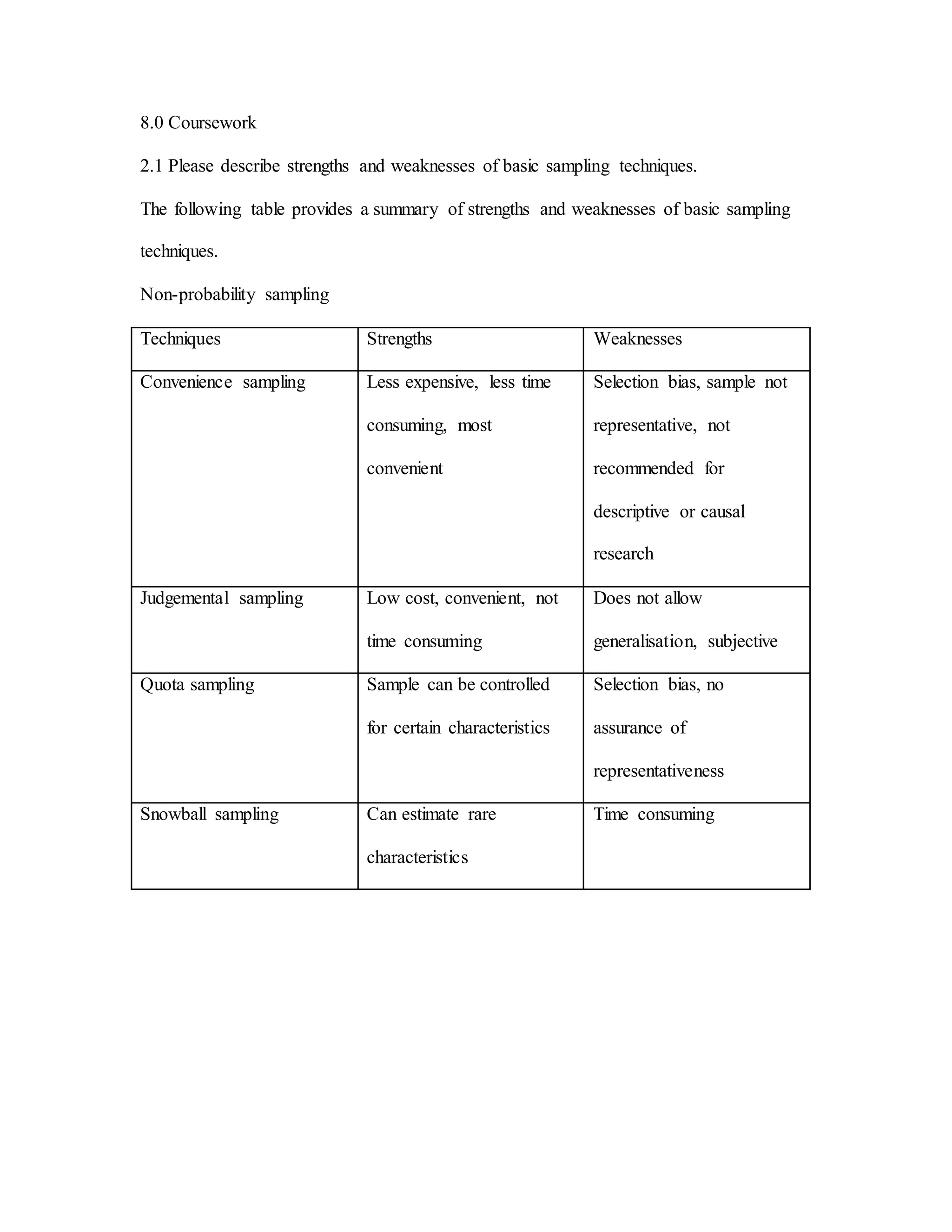
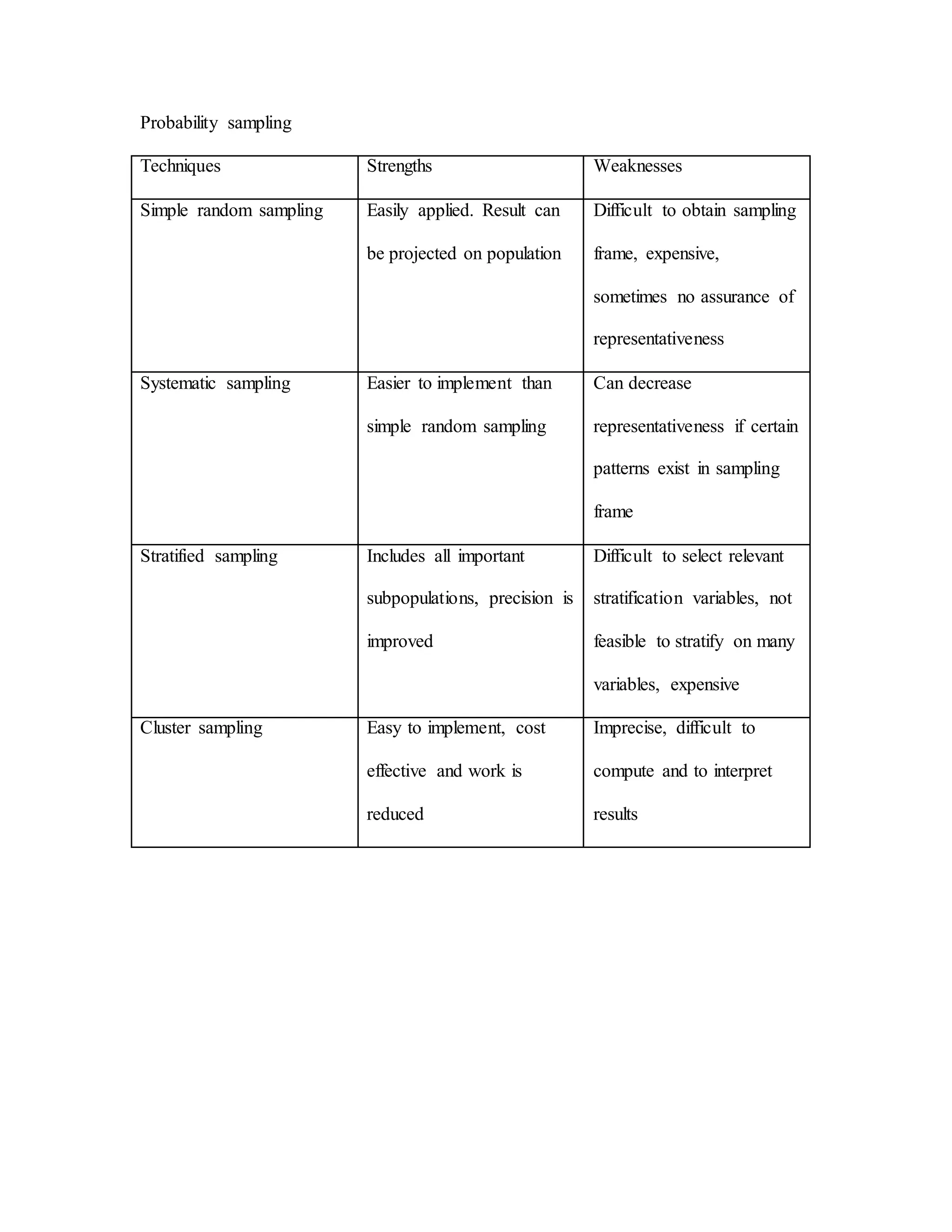
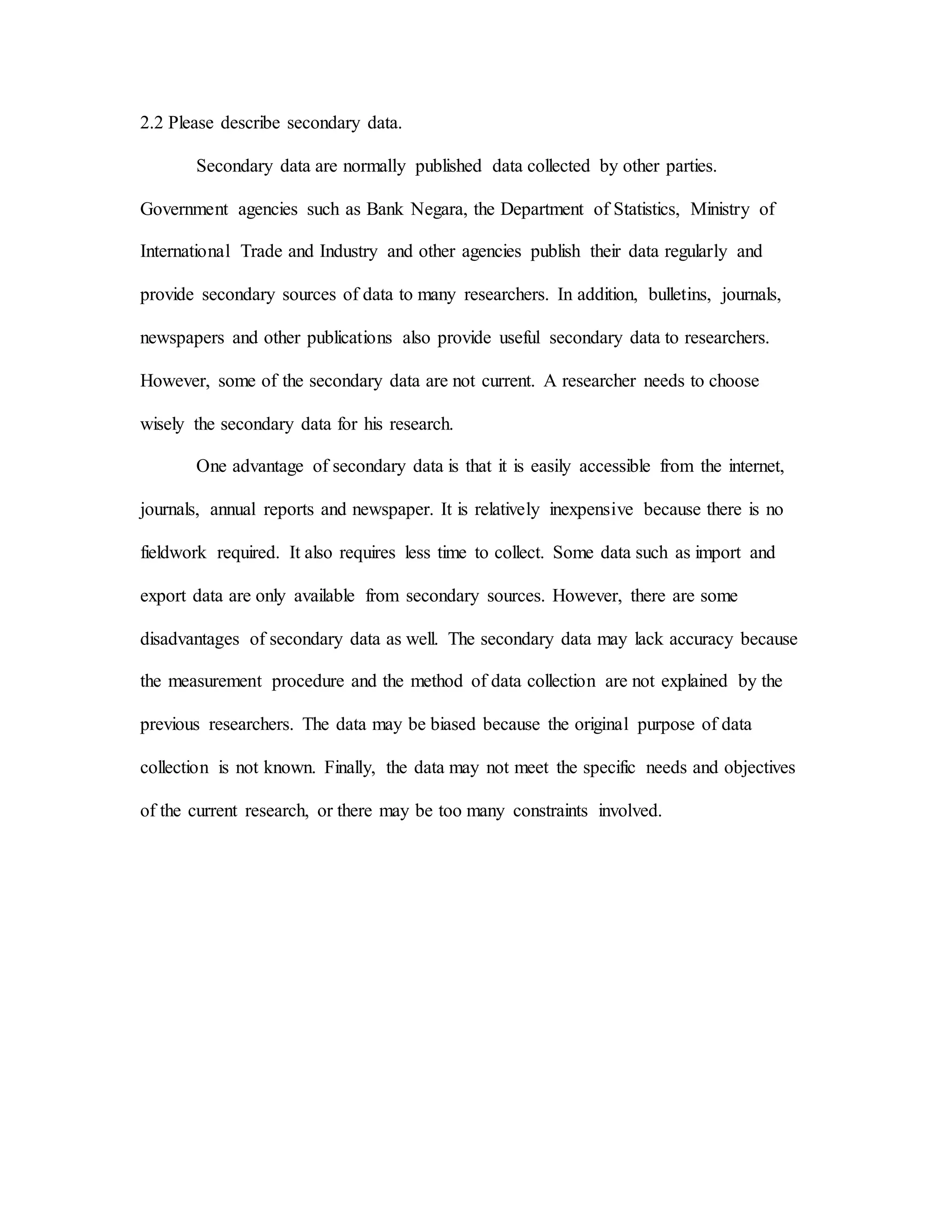
This document summarizes the strengths and weaknesses of basic sampling techniques for probability and non-probability sampling. For non-probability sampling, convenience sampling, judgement sampling, and quota sampling are described as having strengths such as low cost and convenience but weaknesses such as selection bias and lack of representativeness. Snowball sampling can estimate rare characteristics but is time consuming. For probability sampling, simple random sampling, systematic sampling, and stratified sampling are outlined with strengths like representativeness but also weaknesses including difficulties in implementation and costs. The document also briefly describes secondary data as data collected by other parties that is available from sources like government agencies and publications, and notes advantages like easy accessibility but also limitations such as potential lack of accuracy, bias, and