Implementing Point-of-Care Patient
Reported Outcomes (PROs): Did
Someone Say This Would Be Easy?
SAFTINet Convocation
May 19th, 2011
Overview
• PRO definition and background
• Impact on workflow: In a busy, resource-drained
environment
• Electronic data capture: Within the
EMR? Outside of the EMR?
• Data coding: Making sense of the data
• Use of the data: Real-time data capture with
incorporation into decision tools
Overview
• PRO definition and background
• Impact on workflow: In a busy, resource-drained
environment
• Electronic data capture: Within the
EMR? Outside of the EMR?
• Data coding: Making sense of the data
• Use of the data: Real-time data capture with
incorporation into decision tools
PRO Definition
• A patient-reported outcome or PRO is a
questionnaire used in a clinical trial or a clinical
setting, where the responses are collected
directly from the patient.
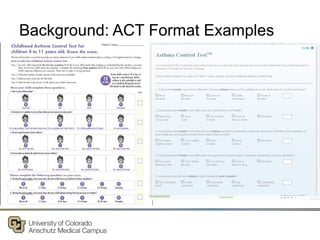
• Example in SAFTINet: Asthma Control Test
(ACT, C-ACT)
Background: Process of Selecting ACT
• Assessed SAFTINet Partner Requirements for a
PRO tool
– Simplicity
– Does not interfere with workflow
– Appropriate for literacy level and language of patient
populations
– Alignment with other organizational efforts and
initiatives
• Assessed SAFTINet PRO experience
– Diverse
– 1 partner already uses an asthma PRO (ACT)
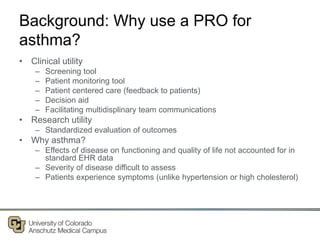
Background: Why use a PRO for
asthma?
• Clinical utility
– Screening tool
– Patient monitoring tool
– Patient centered care (feedback to patients)
– Decision aid
– Facilitating multidisplinary team communications
• Research utility
– Standardized evaluation of outcomes
• Why asthma?
– Effects of disease on functioning and quality of life not accounted for in
standard EHR data
– Severity of disease difficult to assess
– Patients experience symptoms (unlike hypertension or high cholesterol)
Background: ACT Format Examples
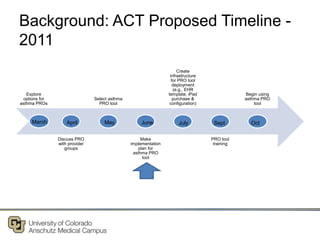
Background: ACT Proposed Timeline -
2011
Explore
options for
asthma PROs
Discuss PRO
with provider
groups
Select asthma
PRO tool
Make
implementation
plan for
asthma PRO
tool
Create
infrastructure
for PRO tool
deployment
(e.g., EHR
template, iPad
purchase &
configuration)
PRO tool
training
Begin using
asthma PRO
tool
March April May June July Sept Oct
Background: Process for making
implementation plan for asthma PRO
• PEC-led structured interviews with partners
• Topics covered in interviews are in following
slides
Resources
• Manpower
• Information systems and technical support
• Space
• Financial investment (SAFTINet funds available)
Selecting patients to complete the tool
• Ambulatory patients with asthma
– How would they be identified?
• How often would they complete the tool?
– Every ambulatory visit?
• When does the patient complete the tool?
– Beginning of visit?
Mode of administration
• Person completing the tool
• Self-administration
• Interviewer administration
• Medium for presentation of tool and data
collection
• Pencil and paper survey
• EHR template
• Portable devices (e.g., iPad)
• Web-based
• Telephony-based
Scoring
• Who will score the results?
• Patient
• Member of the health care team
• What tools are available to assist with scoring?
Presentation of results
• Are results presented to patient/provider?
• If yes:
• When are results presented?
• At time of visit?
• Where are results presented?
• Part of workflow?
• How are results presented?
• Numeric or graphical presentation
Data entry
• How will data be entered?
• Depends on mode of administration
Interpreting and responding to scores
• Algorithms (Asthma APGAR)
• Meaningful scores (ACT)
• Linking to clinical guidelines
Evaluation
• Plans for evaluating use of tool on:
• Process/workflow
• Quality of care
Barriers
• Clinicians
– Lack of familiarity with the instruments
– Doubt about the ability of pros to modify outcomes
– Time and resource constraints
– Disagreements over impact on patient-clinician relationship
• Patients
– Literacy
– Being too sick to complete questionnaires
– Concern about impact on relationship with clinician
• Health system
– Reimbursement
– Fit within the clinical workflow
Anticipated barriers
• Generate list of perceived barriers and potential
solutions
Process for selecting a tool and an
implementation strategy
• Provider meetings?
• IT conversations?
• Decision making?
• Trainings?
Overview
• PRO definition and background
• Impact on workflow: In a busy, resource-drained
environment
• Electronic data capture: Within the
EMR? Outside of the EMR?
• Data coding: Making sense of the data
• Use of the data: Real-time data capture with
incorporation into decision tools

Implementing Point-of-Care PROMs

  • 1.
    Implementing Point-of-Care Patient ReportedOutcomes (PROs): Did Someone Say This Would Be Easy? SAFTINet Convocation May 19th, 2011
  • 2.
    Overview • PRO definitionand background • Impact on workflow: In a busy, resource-drained environment • Electronic data capture: Within the EMR? Outside of the EMR? • Data coding: Making sense of the data • Use of the data: Real-time data capture with incorporation into decision tools
  • 3.
    Overview • PRO definitionand background • Impact on workflow: In a busy, resource-drained environment • Electronic data capture: Within the EMR? Outside of the EMR? • Data coding: Making sense of the data • Use of the data: Real-time data capture with incorporation into decision tools
  • 4.
    PRO Definition • Apatient-reported outcome or PRO is a questionnaire used in a clinical trial or a clinical setting, where the responses are collected directly from the patient. • Example in SAFTINet: Asthma Control Test (ACT, C-ACT)
  • 5.
    Background: Process ofSelecting ACT • Assessed SAFTINet Partner Requirements for a PRO tool – Simplicity – Does not interfere with workflow – Appropriate for literacy level and language of patient populations – Alignment with other organizational efforts and initiatives • Assessed SAFTINet PRO experience – Diverse – 1 partner already uses an asthma PRO (ACT)
  • 6.
    Background: Why usea PRO for asthma? • Clinical utility – Screening tool – Patient monitoring tool – Patient centered care (feedback to patients) – Decision aid – Facilitating multidisplinary team communications • Research utility – Standardized evaluation of outcomes • Why asthma? – Effects of disease on functioning and quality of life not accounted for in standard EHR data – Severity of disease difficult to assess – Patients experience symptoms (unlike hypertension or high cholesterol)
  • 7.
  • 8.
    Background: ACT ProposedTimeline - 2011 Explore options for asthma PROs Discuss PRO with provider groups Select asthma PRO tool Make implementation plan for asthma PRO tool Create infrastructure for PRO tool deployment (e.g., EHR template, iPad purchase & configuration) PRO tool training Begin using asthma PRO tool March April May June July Sept Oct
  • 9.
    Background: Process formaking implementation plan for asthma PRO • PEC-led structured interviews with partners • Topics covered in interviews are in following slides
  • 10.
    Resources • Manpower • Informationsystems and technical support • Space • Financial investment (SAFTINet funds available)
  • 11.
    Selecting patients tocomplete the tool • Ambulatory patients with asthma – How would they be identified? • How often would they complete the tool? – Every ambulatory visit? • When does the patient complete the tool? – Beginning of visit?
  • 12.
    Mode of administration •Person completing the tool • Self-administration • Interviewer administration • Medium for presentation of tool and data collection • Pencil and paper survey • EHR template • Portable devices (e.g., iPad) • Web-based • Telephony-based
  • 13.
    Scoring • Who willscore the results? • Patient • Member of the health care team • What tools are available to assist with scoring?
  • 14.
    Presentation of results •Are results presented to patient/provider? • If yes: • When are results presented? • At time of visit? • Where are results presented? • Part of workflow? • How are results presented? • Numeric or graphical presentation
  • 15.
    Data entry • Howwill data be entered? • Depends on mode of administration
  • 16.
    Interpreting and respondingto scores • Algorithms (Asthma APGAR) • Meaningful scores (ACT) • Linking to clinical guidelines
  • 17.
    Evaluation • Plans forevaluating use of tool on: • Process/workflow • Quality of care
  • 18.
    Barriers • Clinicians – Lackof familiarity with the instruments – Doubt about the ability of pros to modify outcomes – Time and resource constraints – Disagreements over impact on patient-clinician relationship • Patients – Literacy – Being too sick to complete questionnaires – Concern about impact on relationship with clinician • Health system – Reimbursement – Fit within the clinical workflow
  • 19.
    Anticipated barriers • Generatelist of perceived barriers and potential solutions
  • 20.
    Process for selectinga tool and an implementation strategy • Provider meetings? • IT conversations? • Decision making? • Trainings?
  • 21.
    Overview • PRO definitionand background • Impact on workflow: In a busy, resource-drained environment • Electronic data capture: Within the EMR? Outside of the EMR? • Data coding: Making sense of the data • Use of the data: Real-time data capture with incorporation into decision tools

Editor's Notes

  • #17 What tools are available to aid in interpretation and how will scores requiring follow-up be determined?