PRIMARY & SECONDARY DATA
COLLECTION METHODS
PRESENTED BY
B.THANIGAIVEL
21MBA037
INTRODUCTION
• Data collection is a term used to describe a process of
preparing and collecting data
• Systematic gathering of data for a particular purpose from
various sources, that has been systematically observed,
recorded, organized.
• Data are the basic inputs to any decision making process in
business
PURPOSE OF DATA
COLLECTION
The purpose of data collection is -
 To obtain information
To keep on record
To make decisions about important issues,
To pass information on to others
CLASSIFICATION OF
DATA
TYPES
PRIMARY DATA
SECONDARY DATA
PRIMARY DATA
• The data which are collected from the field under the control and
supervision of an investigator.
• Primary data means original data that has been collected specially
for the purpose in mind.
• This type of data are generally afresh and collected for the first
time.
• It is useful for current studies as well as for future studies.
• For example: your own questionnaire.
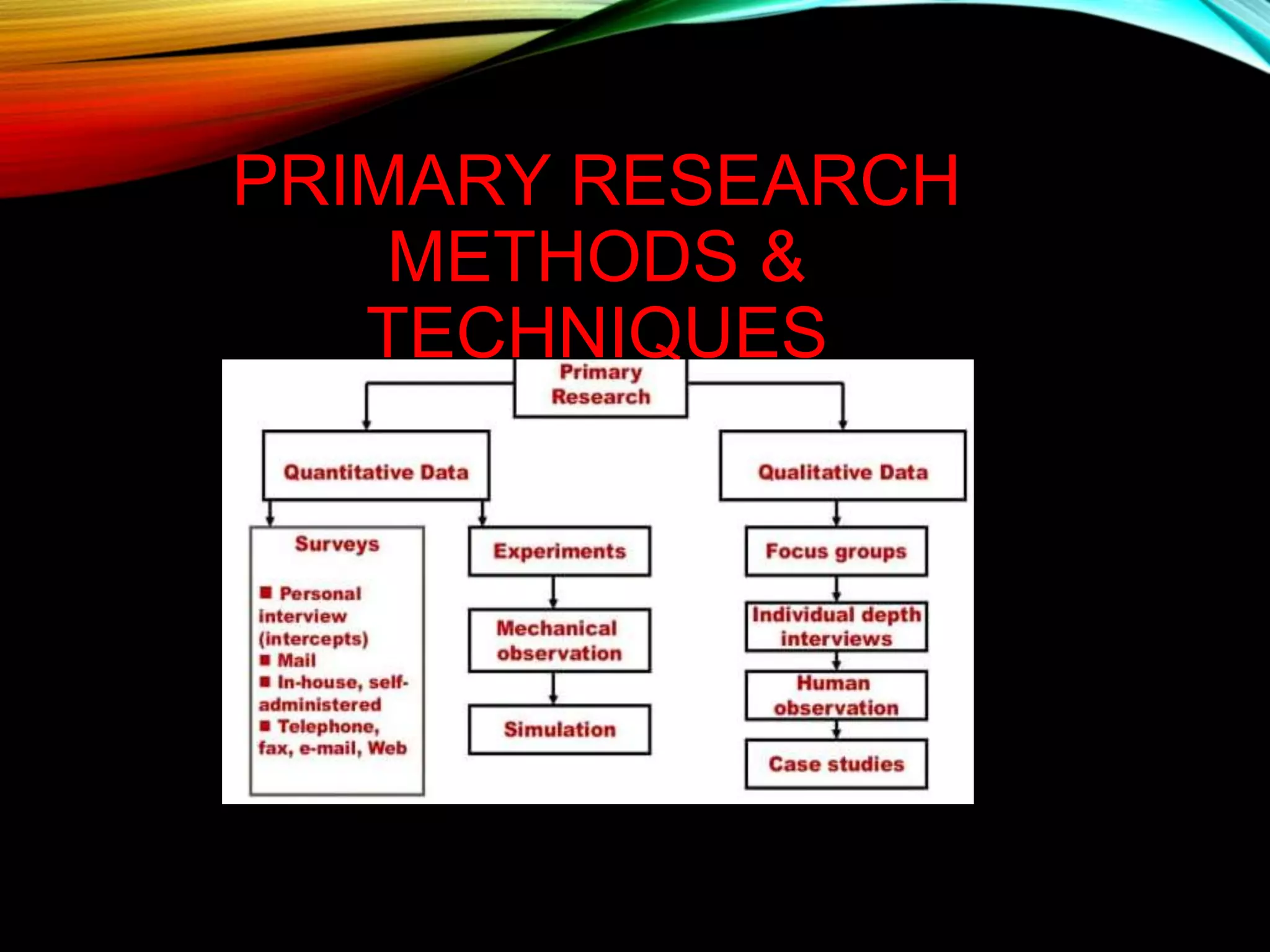
PRIMARY RESEARCH
METHODS &
TECHNIQUES
ADVANTAGES &
DISADVANTAGES OF
PRIMARY DATA
ADVANTAGES
Targeted Issues are addressed.
 Data interpretation is better.
Efficient Spending for Information.
Decency of Data.
 Proprietary Issues.
 Addresses Specific Research Issues.
Greater Control.
DISADVANTAGES
High Cost
 Time Consuming
 Inaccurate Feed-backs
 More number of resources is required
SECONDARY DATA
Data gathered and recorded by someone else prior to and for
a purpose other than the current project
Secondary data is data that has been collected for another
purpose.
 It involves less cost, time and effort
Secondary data is data that is being reused. Usually in a
different context.
For example: data from a book.
SOURCES
INTERNAL SOURCES
Internal sources of secondary data are usually for marketing
application-
 Sales Records
 Marketing Activity
 Cost Information
 Distributor reports and feedback
 Customer feedback
EXTERNAL SOURCES
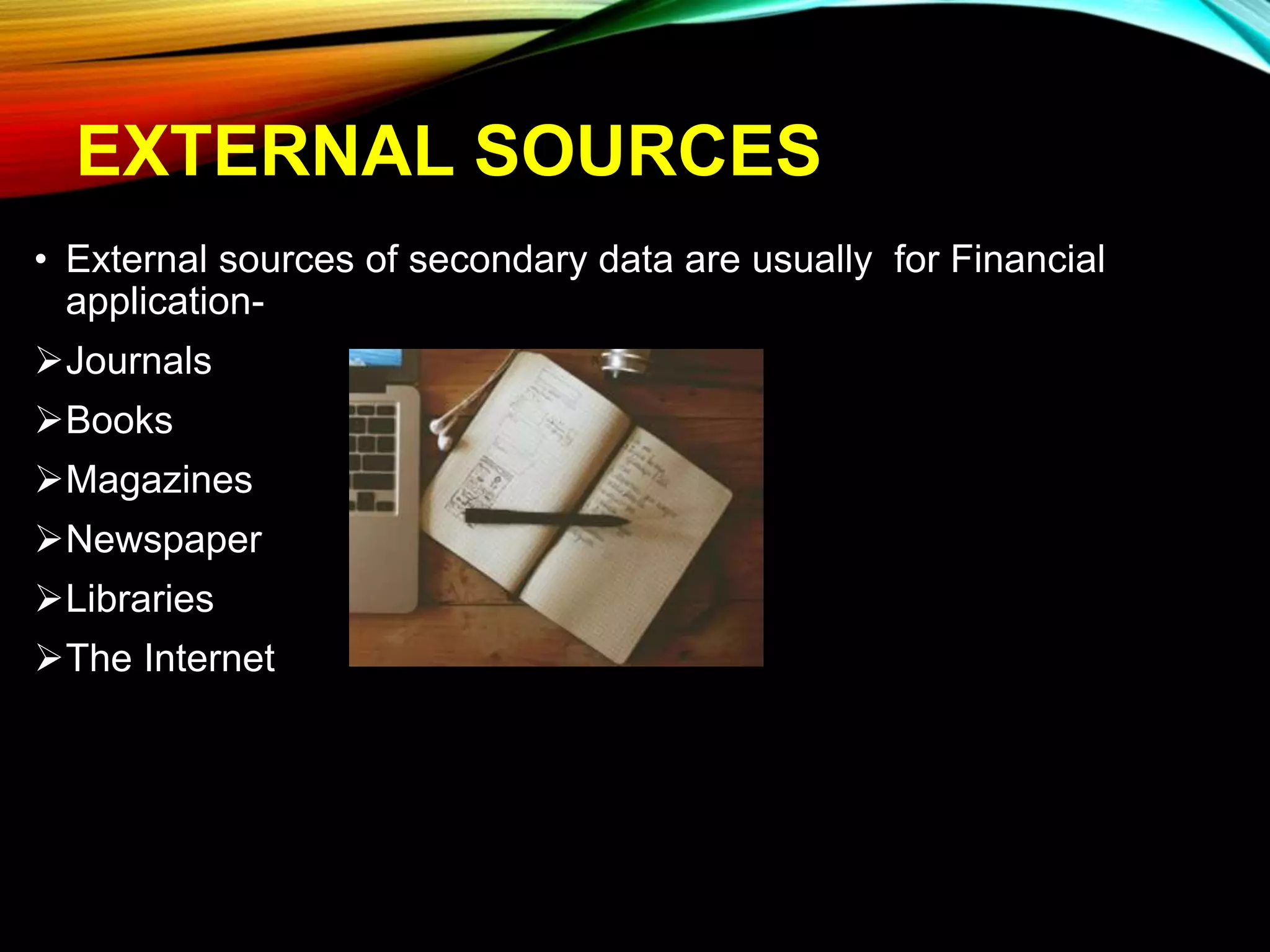
• External sources of secondary data are usually for Financial
application-
Journals
Books
Magazines
Newspaper
Libraries
The Internet
ADVANTAGES &
DISADVANTAGES OF
SECONDARY DATA
ADVANTAGES
 Ease of Access.
 Low Cost to Acquire.
 Clarification of Research Question.
 May Answer Research Question.
DISADVANTAGES
 Quality of Research.
 Li Not Specific to Researcher's Needs.
 Incomplete Information.
 Not Timely.
Primary & Secondary  Data Collection Methods.pptx

Primary & Secondary Data Collection Methods.pptx

  • 1.
    PRIMARY & SECONDARYDATA COLLECTION METHODS PRESENTED BY B.THANIGAIVEL 21MBA037
  • 2.
    INTRODUCTION • Data collectionis a term used to describe a process of preparing and collecting data • Systematic gathering of data for a particular purpose from various sources, that has been systematically observed, recorded, organized. • Data are the basic inputs to any decision making process in business
  • 3.
    PURPOSE OF DATA COLLECTION Thepurpose of data collection is -  To obtain information To keep on record To make decisions about important issues, To pass information on to others
  • 4.
  • 5.
    PRIMARY DATA • Thedata which are collected from the field under the control and supervision of an investigator. • Primary data means original data that has been collected specially for the purpose in mind. • This type of data are generally afresh and collected for the first time. • It is useful for current studies as well as for future studies. • For example: your own questionnaire.
  • 6.
  • 7.
    ADVANTAGES & DISADVANTAGES OF PRIMARYDATA ADVANTAGES Targeted Issues are addressed.  Data interpretation is better. Efficient Spending for Information. Decency of Data.  Proprietary Issues.  Addresses Specific Research Issues. Greater Control.
  • 8.
    DISADVANTAGES High Cost  TimeConsuming  Inaccurate Feed-backs  More number of resources is required
  • 9.
    SECONDARY DATA Data gatheredand recorded by someone else prior to and for a purpose other than the current project Secondary data is data that has been collected for another purpose.  It involves less cost, time and effort Secondary data is data that is being reused. Usually in a different context. For example: data from a book.
  • 10.
    SOURCES INTERNAL SOURCES Internal sourcesof secondary data are usually for marketing application-  Sales Records  Marketing Activity  Cost Information  Distributor reports and feedback  Customer feedback
  • 11.
    EXTERNAL SOURCES • Externalsources of secondary data are usually for Financial application- Journals Books Magazines Newspaper Libraries The Internet
  • 12.
    ADVANTAGES & DISADVANTAGES OF SECONDARYDATA ADVANTAGES  Ease of Access.  Low Cost to Acquire.  Clarification of Research Question.  May Answer Research Question.
  • 13.
    DISADVANTAGES  Quality ofResearch.  Li Not Specific to Researcher's Needs.  Incomplete Information.  Not Timely.