Basics of
Email Drip
Campaigns
What are email
drip
campaigns?
Series of automated emails
sent to your subscribers
over a period of time to
nurture your leads and
convert them into
customers
Craft content that
is short and to the
point
Helps prevent
your emails
from landing
into spam
folders
Avoid jargon,
use language
your audience
likes
Keep your content sharp
Craft content that
is short and to the
point
Helps prevent
your emails
from landing
into spam
folders
Avoid jargon,
use language
your audience
likes
Keep your content sharp
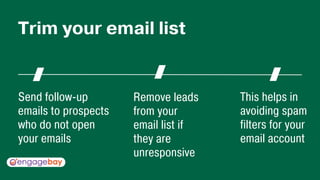
Send follow-up
emails to prospects
who do not open
your emails
This helps in
avoiding spam
filters for your
email account
Remove leads
from your
email list if
they are
unresponsive
Trim your email list
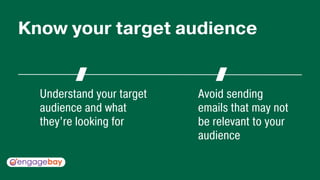
Understand your target
audience and what
they’re looking for
Avoid sending
emails that may not
be relevant to your
audience
Know your target audience
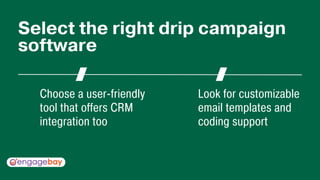
Choose a user-friendly
tool that offers CRM
integration too
Look for customizable
email templates and
coding support
Select the right drip campaign
software
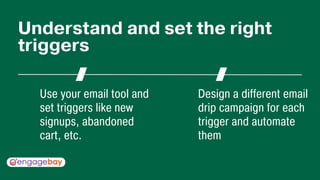
Use your email tool and
set triggers like new
signups, abandoned
cart, etc.
Design a different email
drip campaign for each
trigger and automate
them
Understand and set the right
triggers
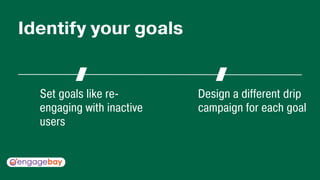
Set goals like re-
engaging with inactive
users
Design a different drip
campaign for each goal
Identify your goals
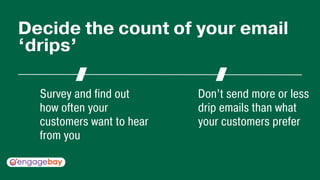
Survey and find out
how often your
customers want to hear
from you
Don’t send more or less
drip emails than what
your customers prefer
Decide the count of your email
‘drips’
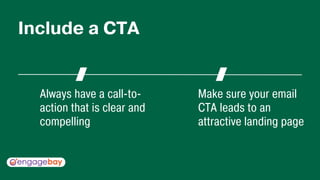
Always have a call-to-
action that is clear and
compelling
Make sure your email
CTA leads to an
attractive landing page
Include a CTA

Basics of email drip campaigns

  • 1.
  • 2.
    What are email drip campaigns? Seriesof automated emails sent to your subscribers over a period of time to nurture your leads and convert them into customers
  • 3.
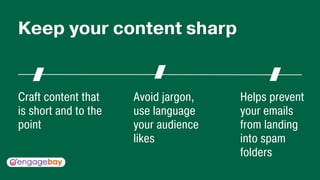
    Craft content that isshort and to the point Helps prevent your emails from landing into spam folders Avoid jargon, use language your audience likes Keep your content sharp
  • 4.
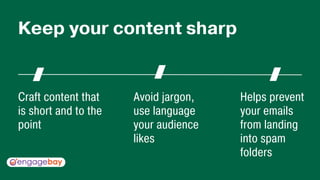
    Craft content that isshort and to the point Helps prevent your emails from landing into spam folders Avoid jargon, use language your audience likes Keep your content sharp
  • 5.
    Send follow-up emails toprospects who do not open your emails This helps in avoiding spam filters for your email account Remove leads from your email list if they are unresponsive Trim your email list
  • 6.
    Understand your target audienceand what they’re looking for Avoid sending emails that may not be relevant to your audience Know your target audience
  • 7.
    Choose a user-friendly toolthat offers CRM integration too Look for customizable email templates and coding support Select the right drip campaign software
  • 8.
    Use your emailtool and set triggers like new signups, abandoned cart, etc. Design a different email drip campaign for each trigger and automate them Understand and set the right triggers
  • 9.
    Set goals likere- engaging with inactive users Design a different drip campaign for each goal Identify your goals
  • 10.
    Survey and findout how often your customers want to hear from you Don’t send more or less drip emails than what your customers prefer Decide the count of your email ‘drips’
  • 11.
    Always have acall-to- action that is clear and compelling Make sure your email CTA leads to an attractive landing page Include a CTA