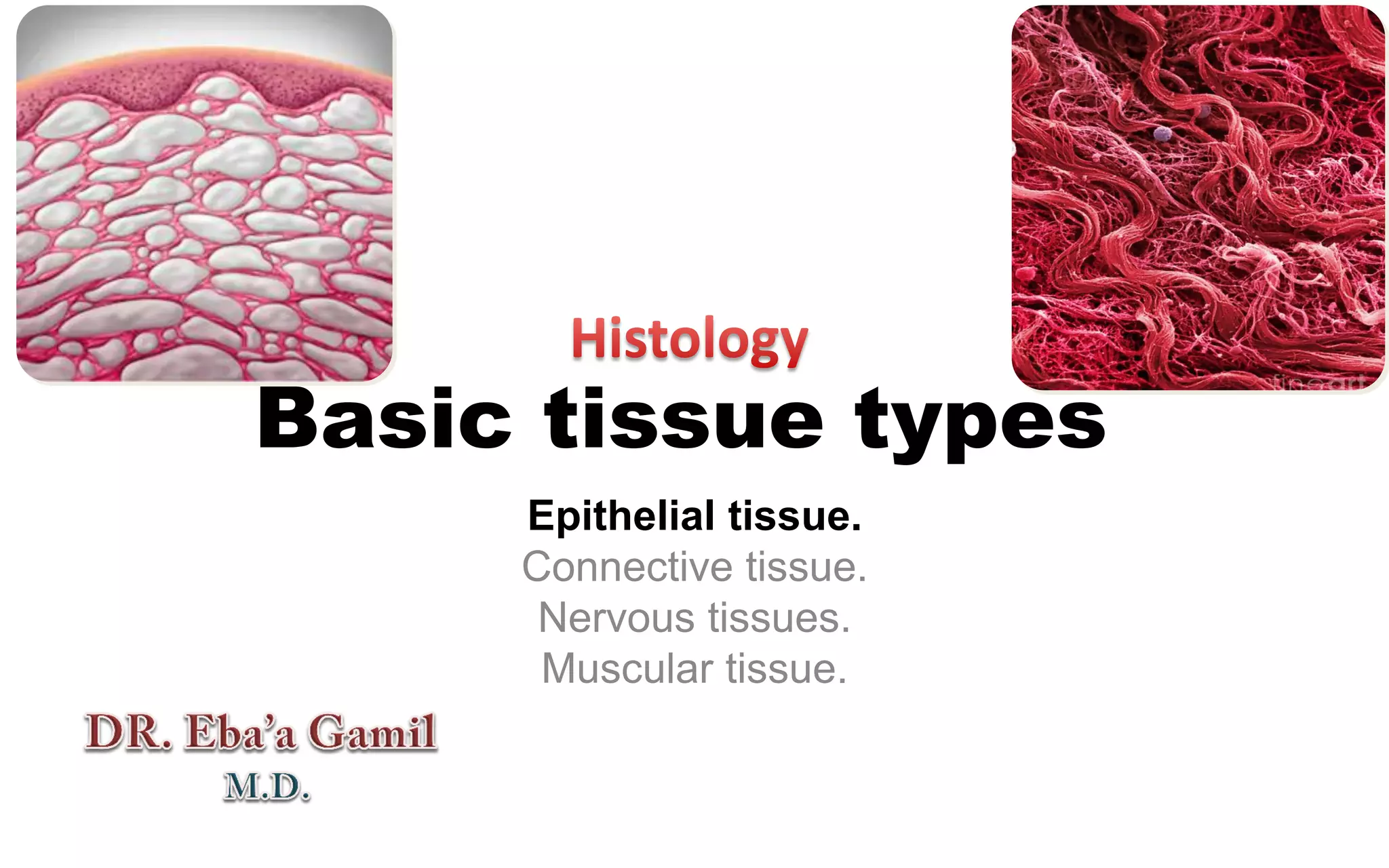
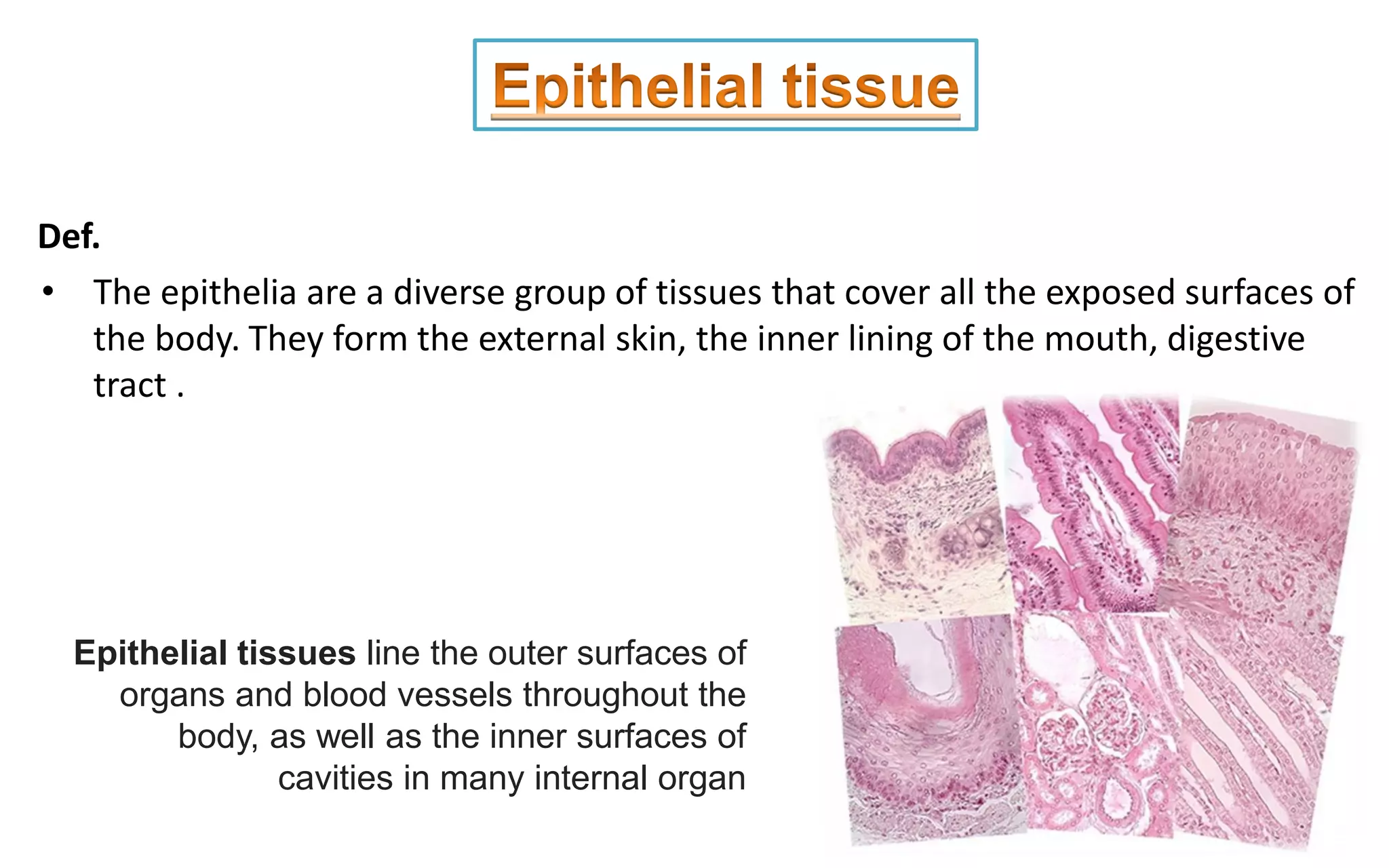
Basic tissue types
Epithelial tissue.
Connective tissue.
Nervous tissues.
Muscular tissue.
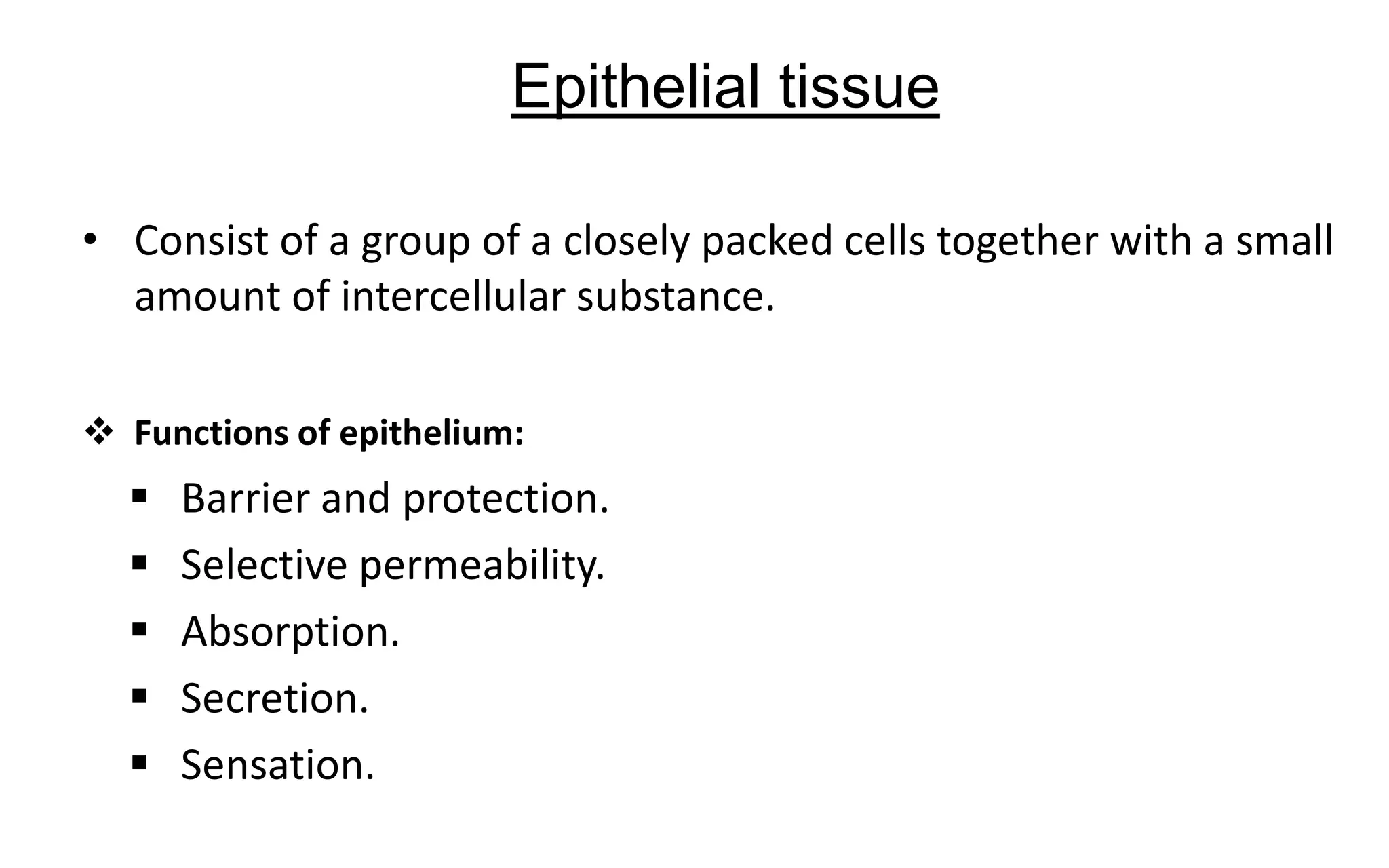
• The epithelia are a diverse group of tissues that cover all the exposed surfaces of
the body. They form the external skin, the inner lining of the mouth, digestive
tract .
Epithelial tissues line the outer surfaces of
organs and blood vessels throughout the
body, as well as the inner surfaces of
cavities in many internal organ
Def.
• Consist of a group of a closely packed cells together with a small
amount of intercellular substance.
Epithelial tissue
 Functions of epithelium:
 Barrier and protection.
 Selective permeability.
 Absorption.
 Secretion.
 Sensation.
Characteristics of epithelium:
1. Highly cellular.
2. Polarized.
3. Has apical surface specializations as:
a. microvilli.
b. stereocilia.
c. cilia.
d. flagella.
4. Rests on basement membrane.
5. Has specialized cell contact on the lateral surface:
a. tight junctions.
b. gap junctions.
c. desmosomes.
6. avascular.
7. Can undergo self renewal.
Basal Lamina & Basement Membrane
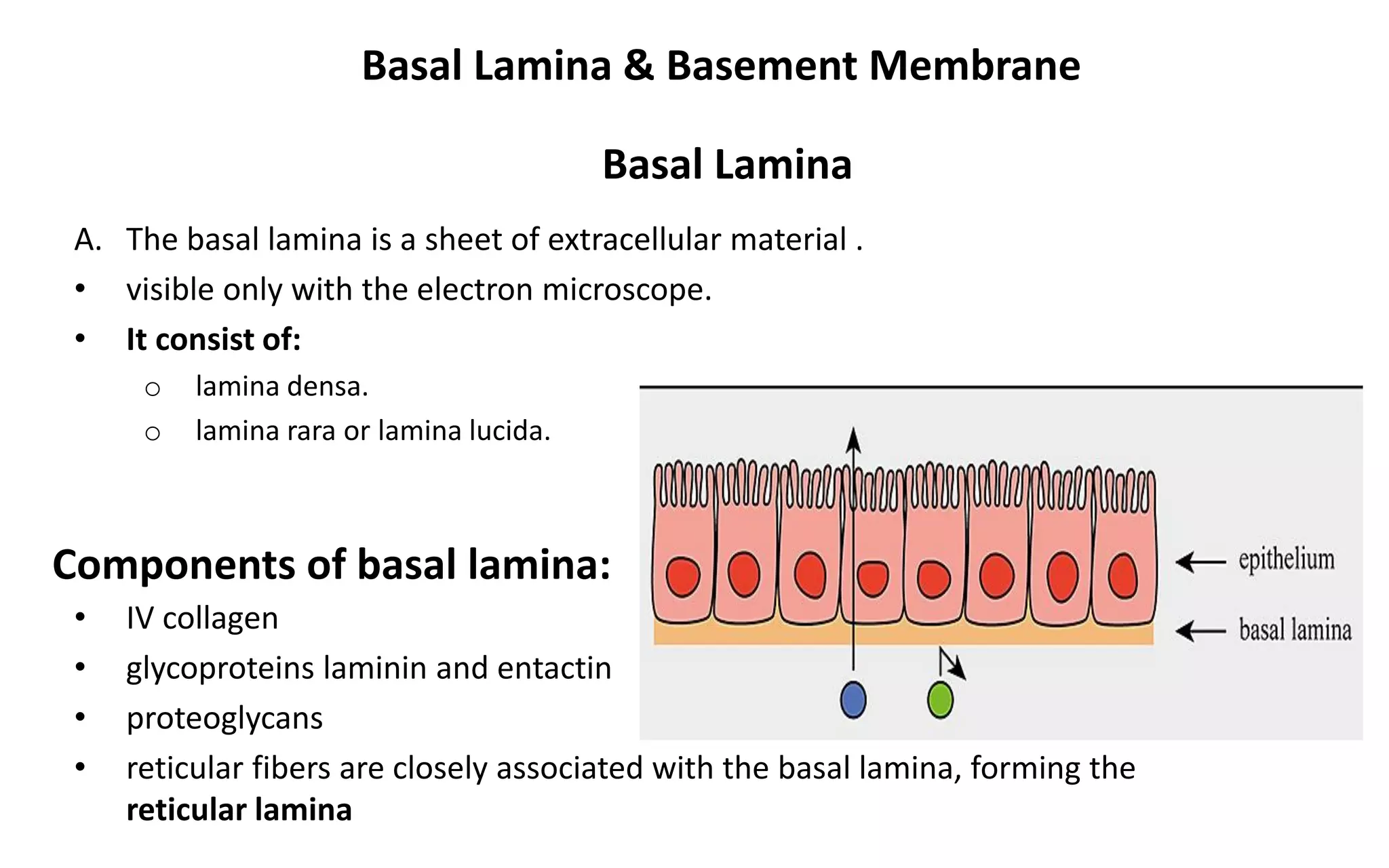
A. The basal lamina is a sheet of extracellular material .
• visible only with the electron microscope.
• It consist of:
o lamina densa.
o lamina rara or lamina lucida.
Components of basal lamina:
Basal Lamina
• IV collagen
• glycoproteins laminin and entactin
• proteoglycans
• reticular fibers are closely associated with the basal lamina, forming the
reticular lamina
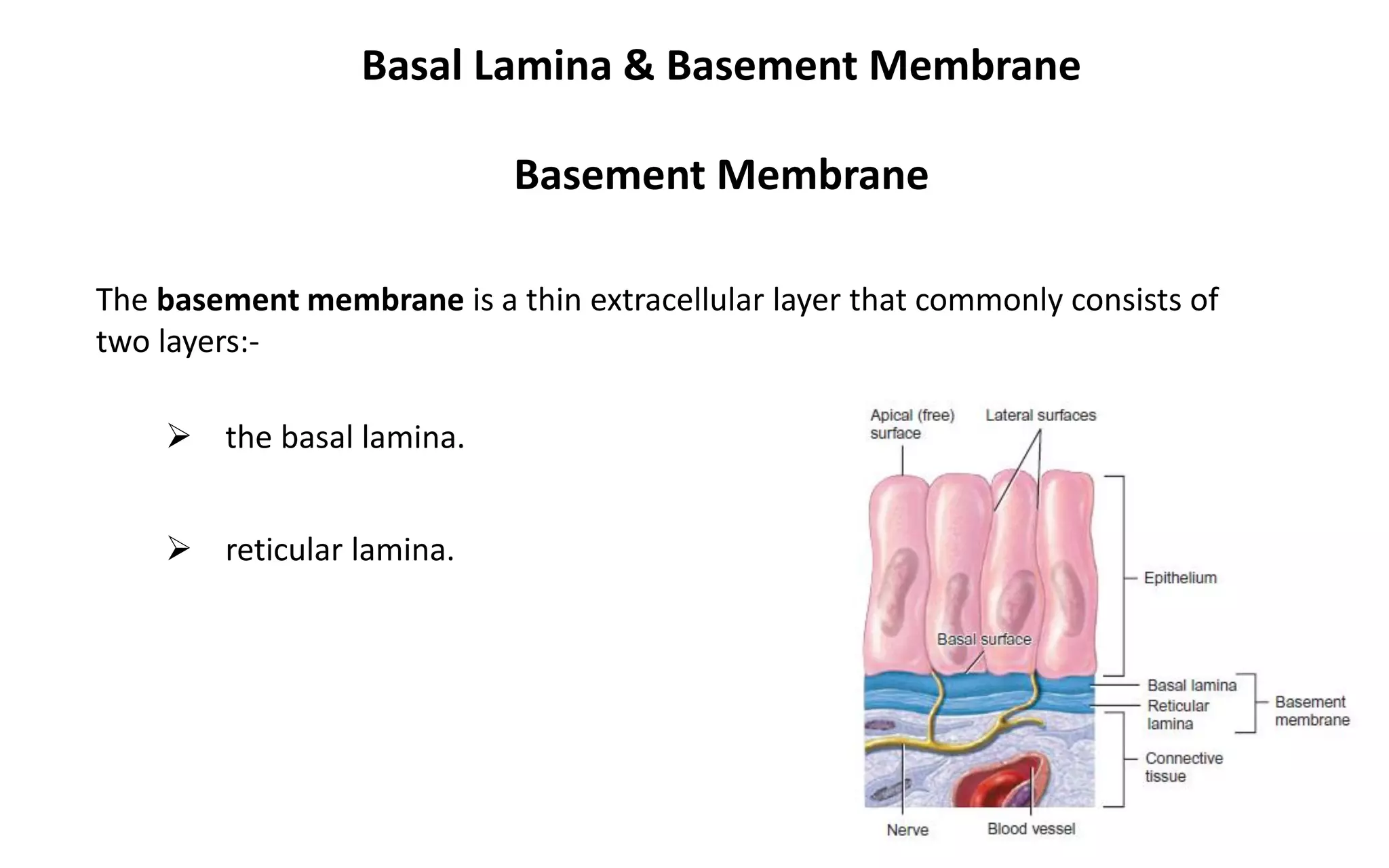
Basement Membrane
The basement membrane is a thin extracellular layer that commonly consists of
two layers:-
 the basal lamina.
 reticular lamina.
Basal Lamina & Basement Membrane
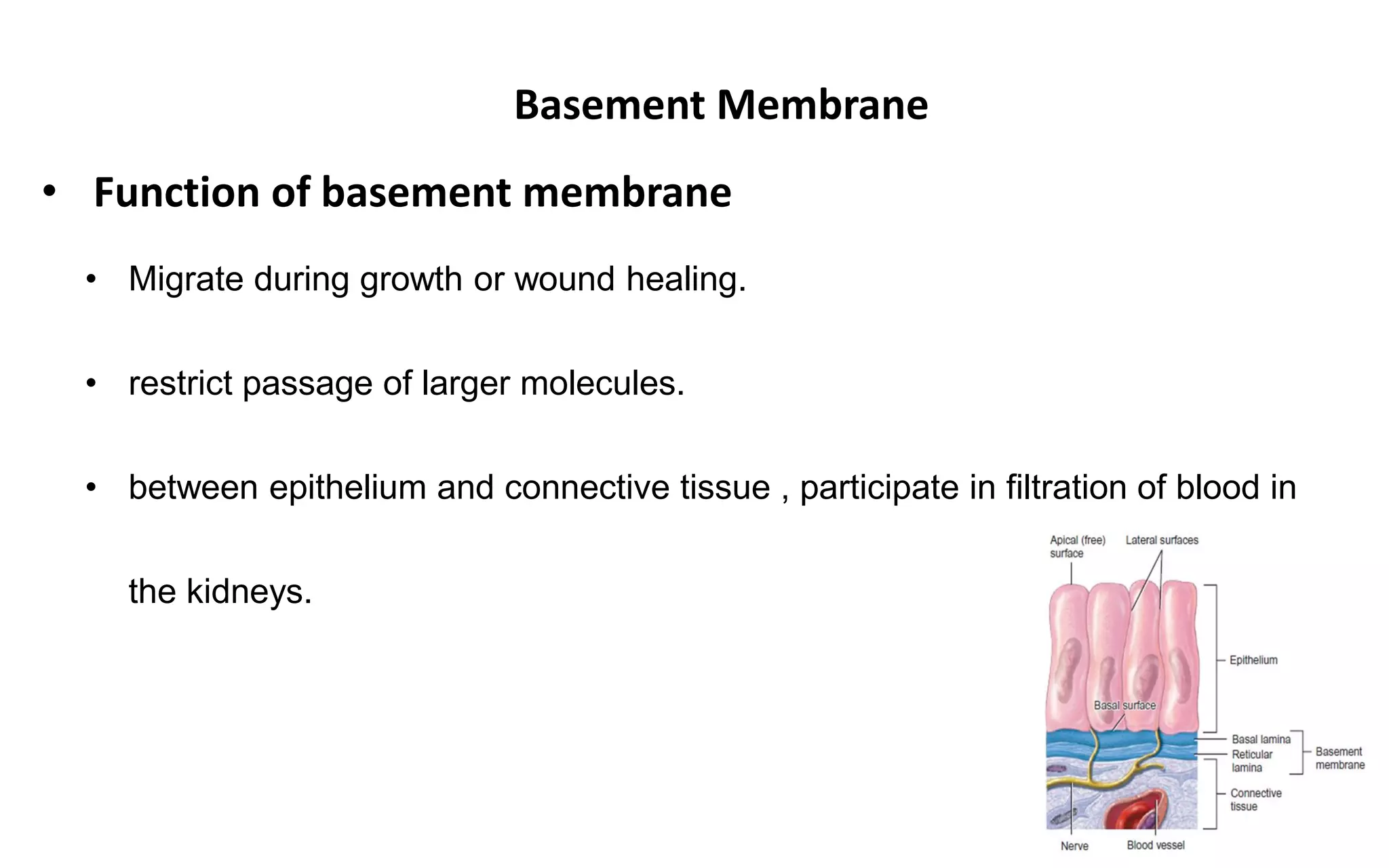
• Function of basement membrane
• Migrate during growth or wound healing.
• restrict passage of larger molecules.
• between epithelium and connective tissue , participate in filtration of blood in
the kidneys.
Basement Membrane
Classification of Epithelial Tissues
 Types of epithelial tissues are classified according to two
characteristics:-
1. The arrangement of cells into layers .
A. Simple (unilaminar) epithelium
B. Pseudostratified epithelium
C. Stratified (multilaminar) epithelium
2. The shapes of the cells .
A. Squamous
B. Cuboidal
C. Columnar
D. Transitional
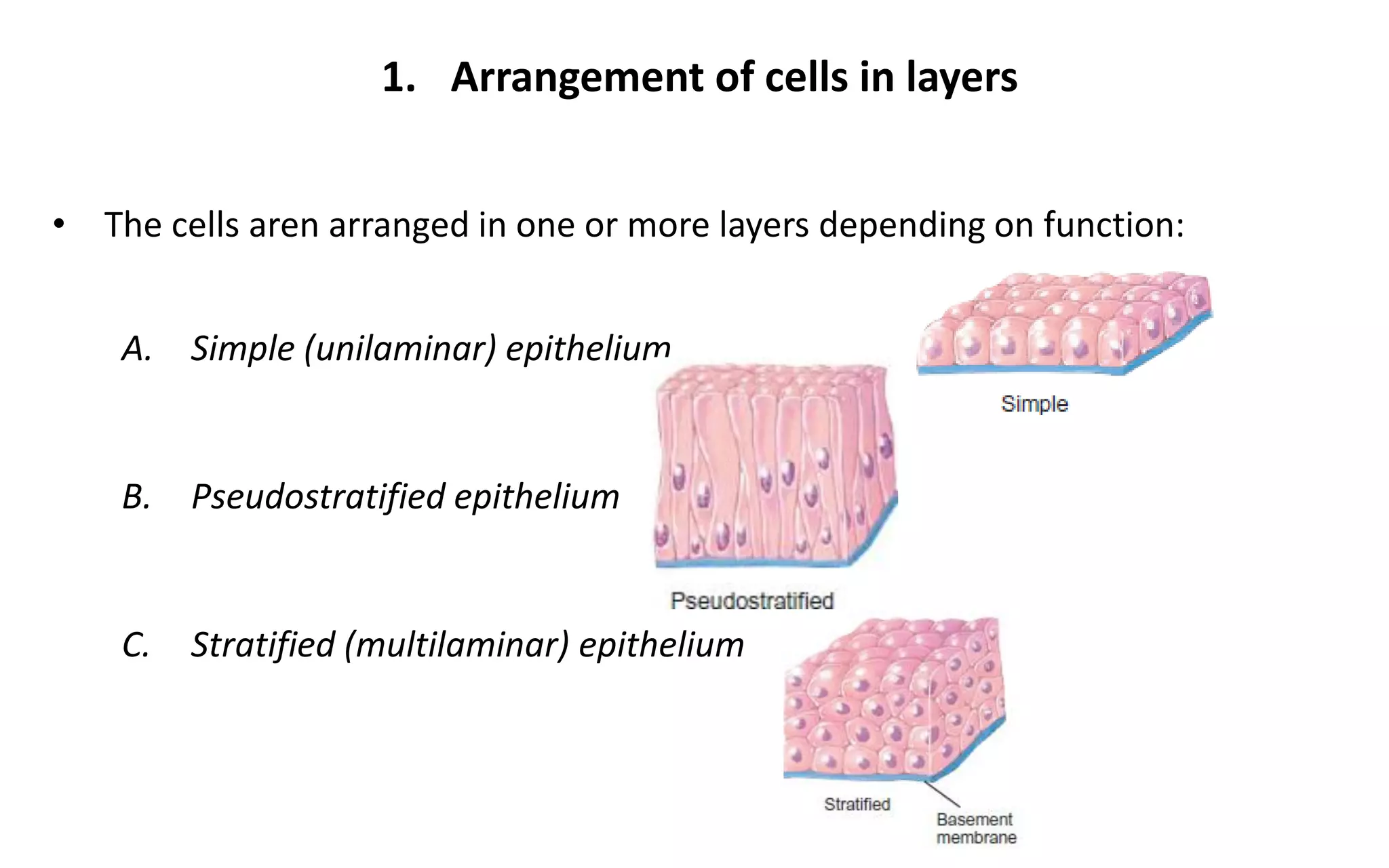
1. Arrangement of cells in layers
• The cells aren arranged in one or more layers depending on function:
A. Simple (unilaminar) epithelium
B. Pseudostratified epithelium
C. Stratified (multilaminar) epithelium
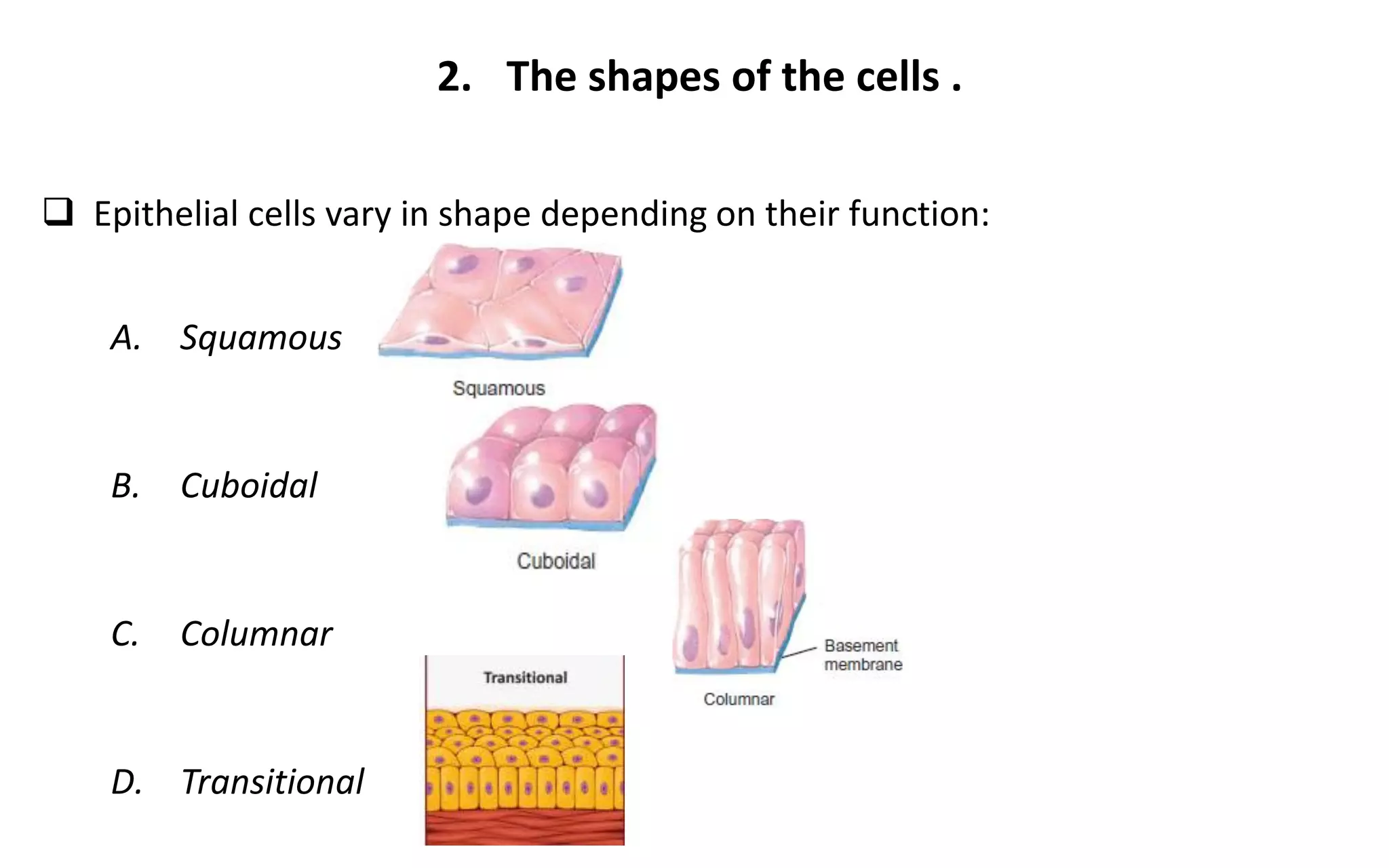
2. The shapes of the cells .
 Epithelial cells vary in shape depending on their function:
A. Squamous
B. Cuboidal
C. Columnar
D. Transitional
Type of epithelium
1. Simple Squamous Epithelium
2. Simple Cuboidal Epithelium
3. Simple Columnar Epithelium
4. Pseudostratified Columnar Epithelium
5. Stratified Squamous Epithelium
6. Stratified Cuboidal Epithelium
7. Stratified Columnar Epithelium
8. Transitional Epithelium
9. Glandular Epithelium
Type of epithelium
• Description: Single layer of flat cells that nucleus oval or spherical in shape.
• Location: serous cavity , vessels
• Function: filtration , diffusion , secretion .
SIMPLE SQUAMOUS EPITHELIUM
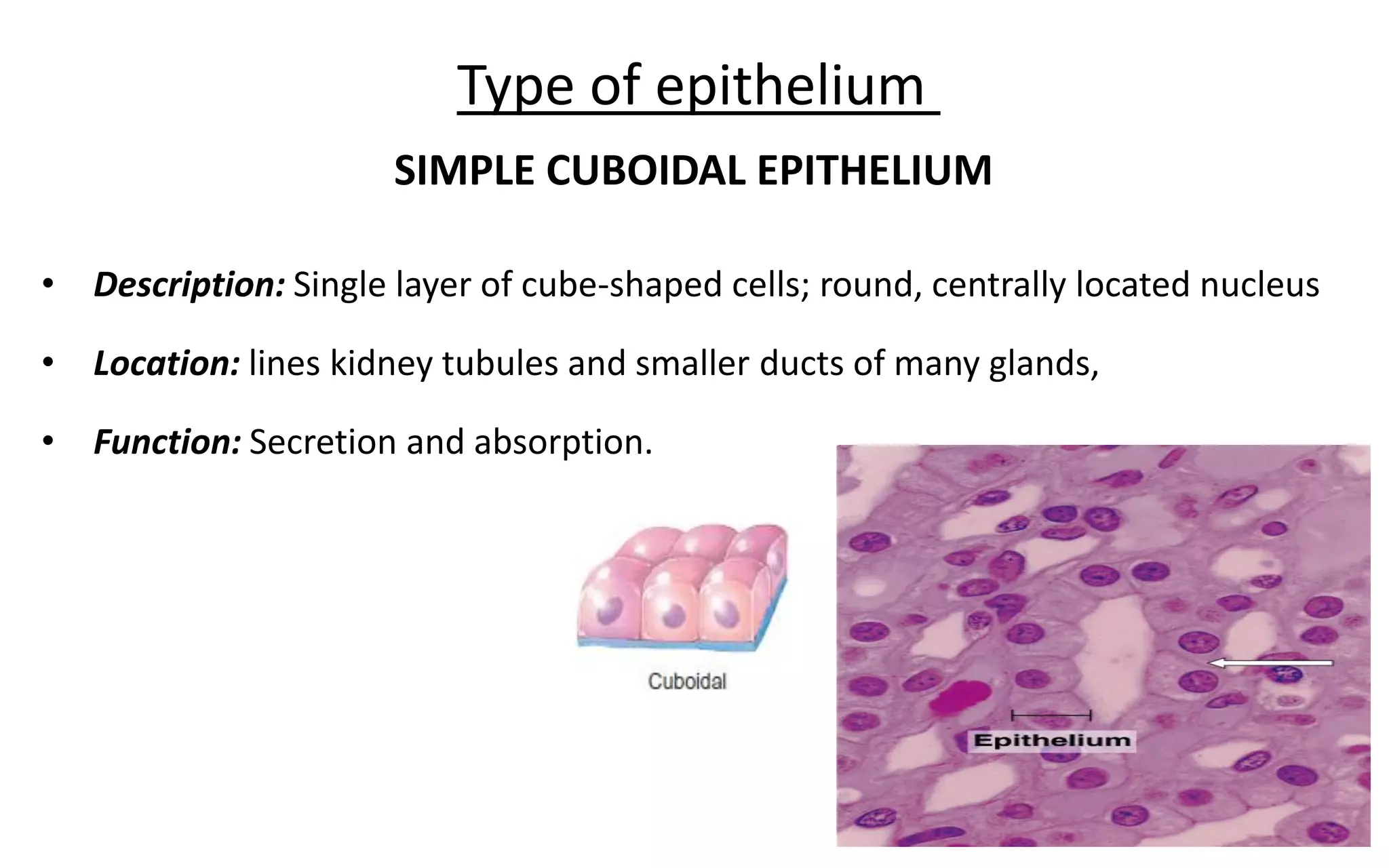
SIMPLE CUBOIDAL EPITHELIUM
Type of epithelium
• Description: Single layer of cube-shaped cells; round, centrally located nucleus
• Location: lines kidney tubules and smaller ducts of many glands,
• Function: Secretion and absorption.
Type of epithelium
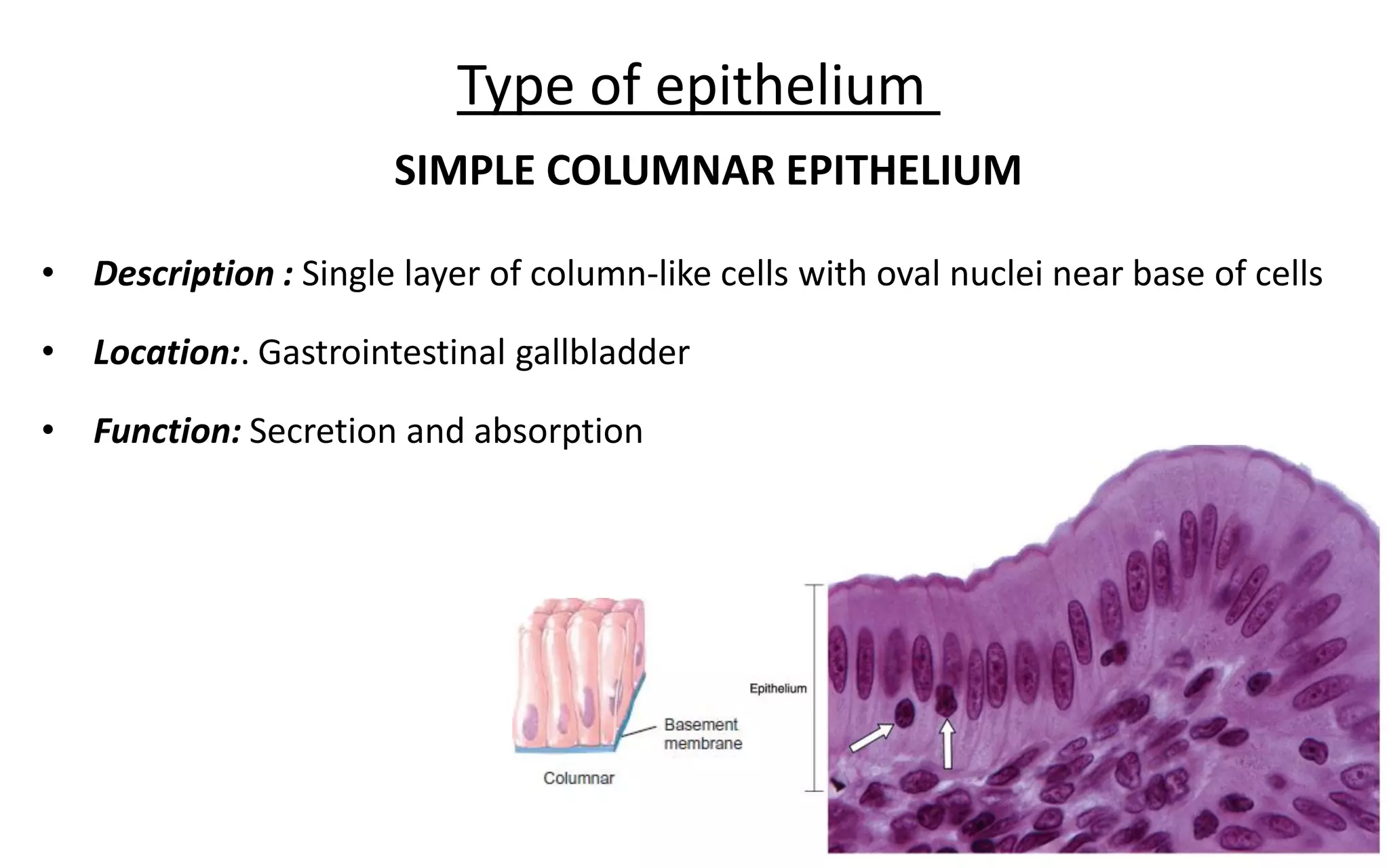
SIMPLE COLUMNAR EPITHELIUM
• Description : Single layer of column-like cells with oval nuclei near base of cells
• Location:. Gastrointestinal gallbladder
• Function: Secretion and absorption
Type of epithelium
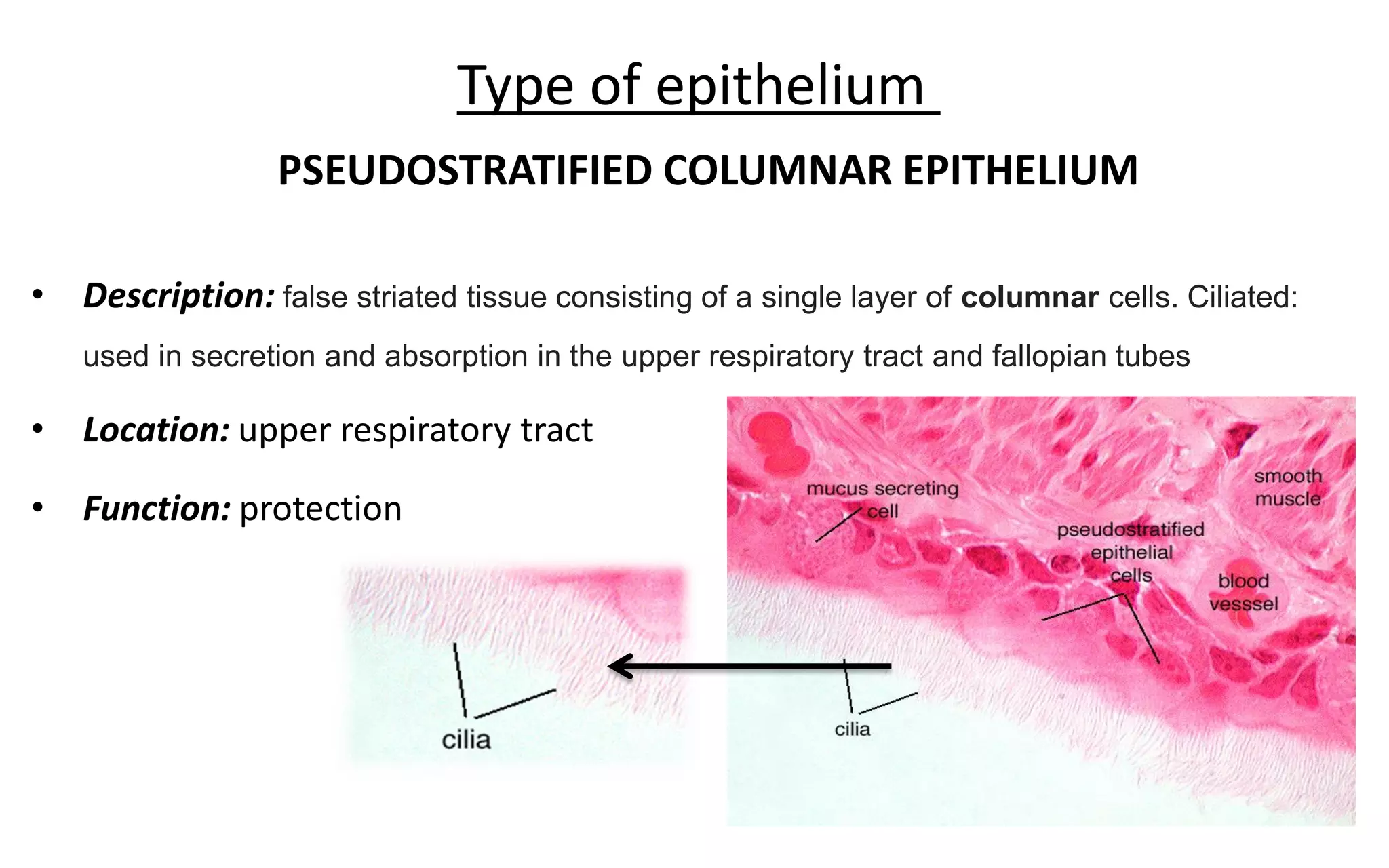
PSEUDOSTRATIFIED COLUMNAR EPITHELIUM
• Description: false striated tissue consisting of a single layer of columnar cells. Ciliated:
used in secretion and absorption in the upper respiratory tract and fallopian tubes
• Location: upper respiratory tract
• Function: protection
Type of epithelium
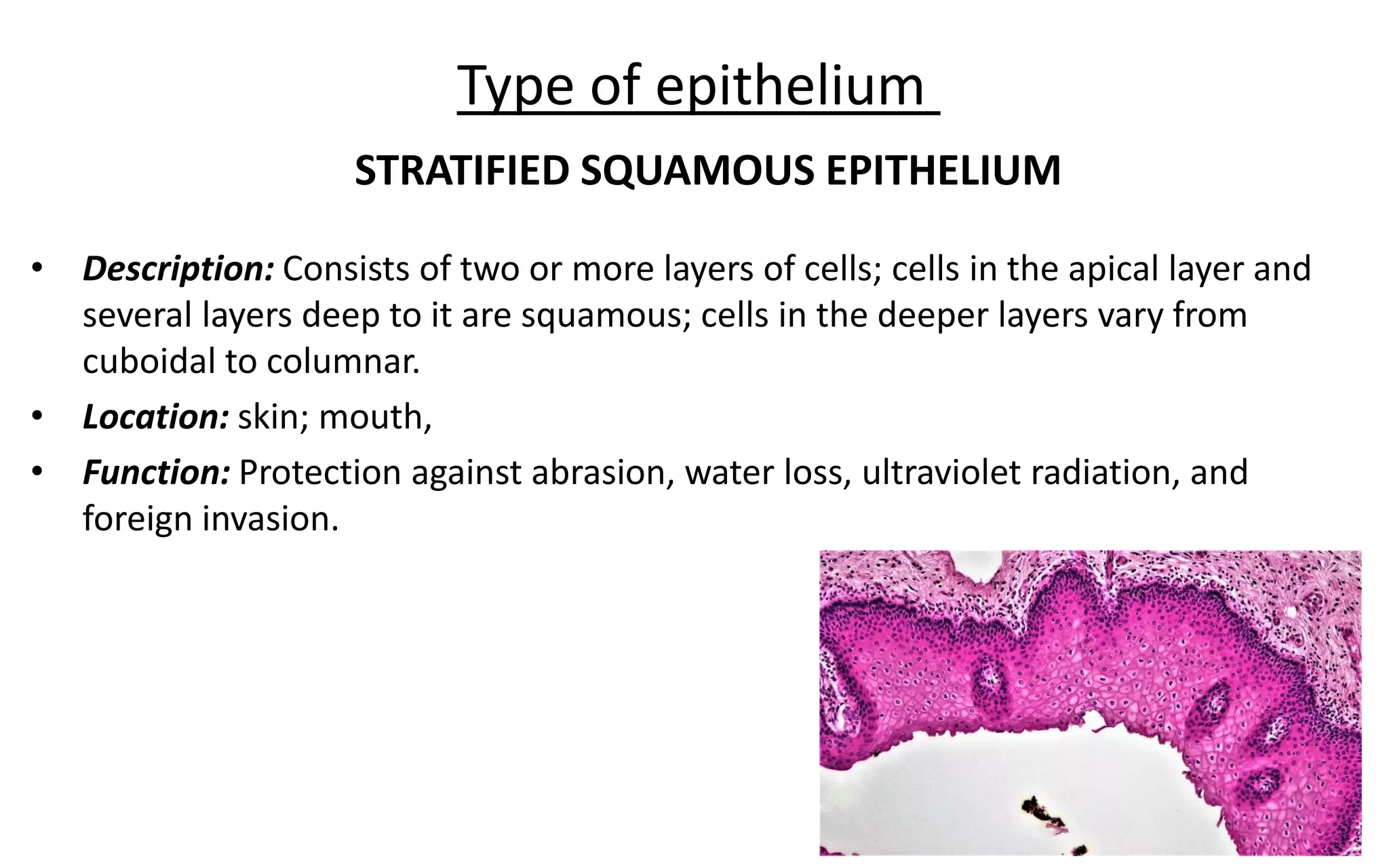
STRATIFIED SQUAMOUS EPITHELIUM
• Description: Consists of two or more layers of cells; cells in the apical layer and
several layers deep to it are squamous; cells in the deeper layers vary from
cuboidal to columnar.
• Location: skin; mouth,
• Function: Protection against abrasion, water loss, ultraviolet radiation, and
foreign invasion.
Type of epithelium
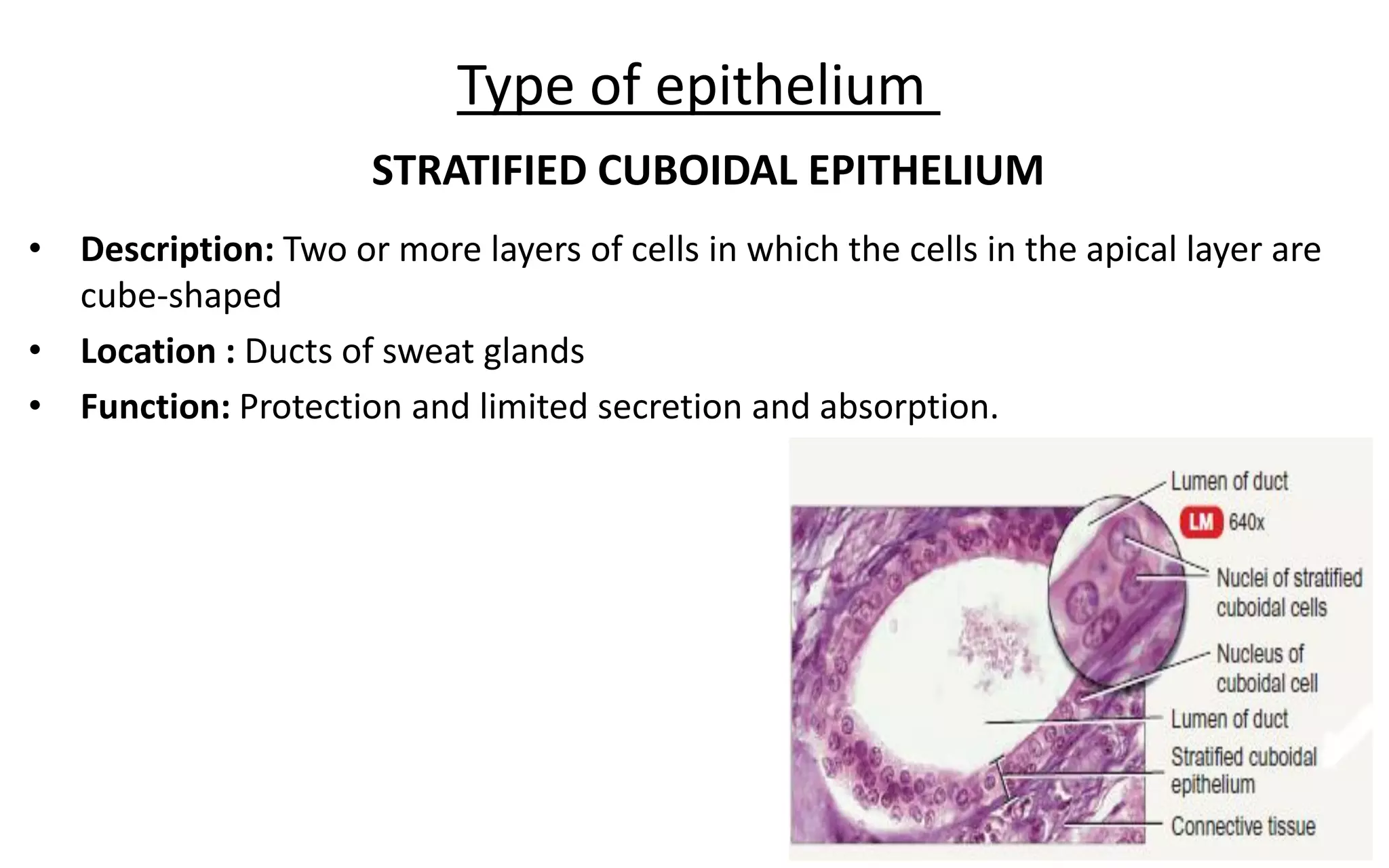
STRATIFIED CUBOIDAL EPITHELIUM
• Description: Two or more layers of cells in which the cells in the apical layer are
cube-shaped
• Location : Ducts of sweat glands
• Function: Protection and limited secretion and absorption.
Type of epithelium
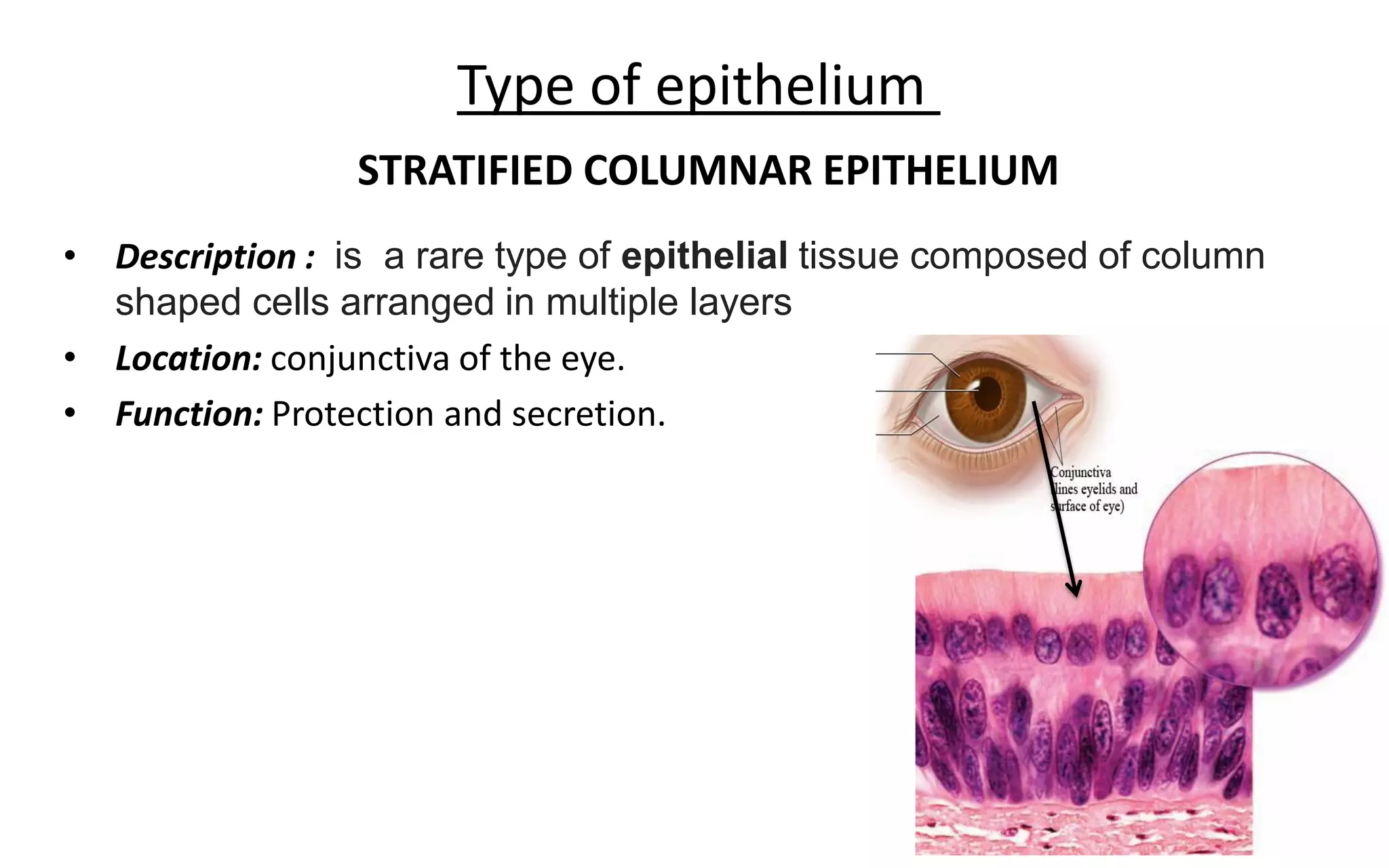
STRATIFIED COLUMNAR EPITHELIUM
• Description : is a rare type of epithelial tissue composed of column
shaped cells arranged in multiple layers
• Location: conjunctiva of the eye.
• Function: Protection and secretion.
Type of epithelium
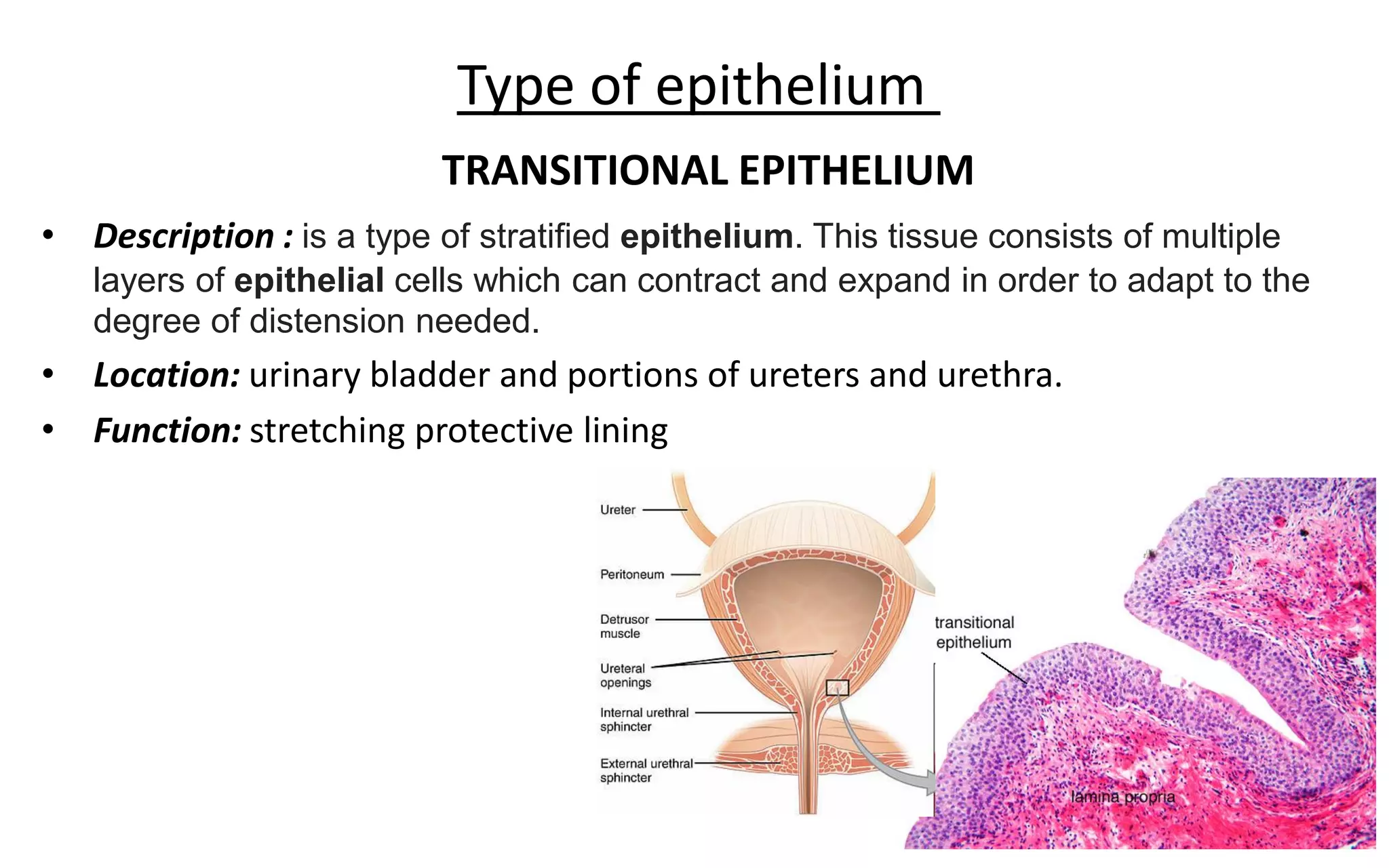
TRANSITIONAL EPITHELIUM
• Description : is a type of stratified epithelium. This tissue consists of multiple
layers of epithelial cells which can contract and expand in order to adapt to the
degree of distension needed.
• Location: urinary bladder and portions of ureters and urethra.
• Function: stretching protective lining
Type of epithelium
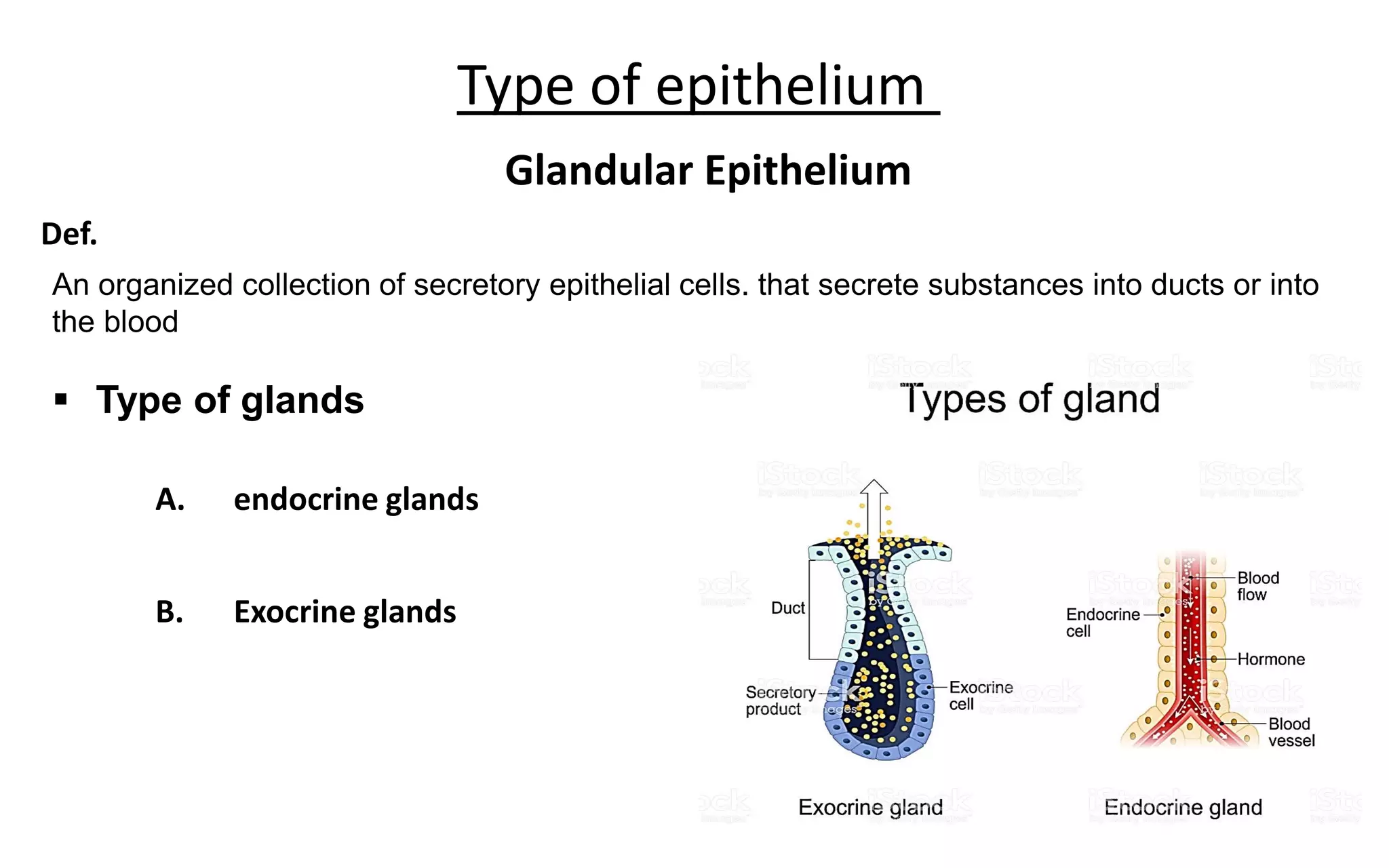
Glandular Epithelium
 Type of glands
A. endocrine glands
B. Exocrine glands
Def.
An organized collection of secretory epithelial cells. that secrete substances into ducts or into
the blood
Exocrine Glands
Glandular Epithelium
Type of epithelium
Exocrine glands have ducts - and they secrete onto a surface.
examples of exocrine glands are:
 sebaceous glands (in the skin)
 sweat glands (in the skin)
 salivary glands (oral)
Exocrine glands can be :
 Unicellular - Goblet cells .
 Multicellular - alivary glands, sweat glands, sebaceous glands …
Type of epithelium
Glandular Epithelium
endocrine glands
are ductless glands of the endocrine system that secrete their products, hormones,
directly into the blood.
Def.

Basic tissue types 1( Epithelial tissue )

  • 1.
    Basic tissue types Epithelialtissue. Connective tissue. Nervous tissues. Muscular tissue.
  • 2.
    • The epitheliaare a diverse group of tissues that cover all the exposed surfaces of the body. They form the external skin, the inner lining of the mouth, digestive tract . Epithelial tissues line the outer surfaces of organs and blood vessels throughout the body, as well as the inner surfaces of cavities in many internal organ Def.
  • 3.
    • Consist ofa group of a closely packed cells together with a small amount of intercellular substance. Epithelial tissue  Functions of epithelium:  Barrier and protection.  Selective permeability.  Absorption.  Secretion.  Sensation.
  • 4.
    Characteristics of epithelium: 1.Highly cellular. 2. Polarized. 3. Has apical surface specializations as: a. microvilli. b. stereocilia. c. cilia. d. flagella. 4. Rests on basement membrane. 5. Has specialized cell contact on the lateral surface: a. tight junctions. b. gap junctions. c. desmosomes. 6. avascular. 7. Can undergo self renewal.
  • 5.
    Basal Lamina &Basement Membrane A. The basal lamina is a sheet of extracellular material . • visible only with the electron microscope. • It consist of: o lamina densa. o lamina rara or lamina lucida. Components of basal lamina: Basal Lamina • IV collagen • glycoproteins laminin and entactin • proteoglycans • reticular fibers are closely associated with the basal lamina, forming the reticular lamina
  • 6.
    Basement Membrane The basementmembrane is a thin extracellular layer that commonly consists of two layers:-  the basal lamina.  reticular lamina. Basal Lamina & Basement Membrane
  • 7.
    • Function ofbasement membrane • Migrate during growth or wound healing. • restrict passage of larger molecules. • between epithelium and connective tissue , participate in filtration of blood in the kidneys. Basement Membrane
  • 8.
    Classification of EpithelialTissues  Types of epithelial tissues are classified according to two characteristics:- 1. The arrangement of cells into layers . A. Simple (unilaminar) epithelium B. Pseudostratified epithelium C. Stratified (multilaminar) epithelium 2. The shapes of the cells . A. Squamous B. Cuboidal C. Columnar D. Transitional
  • 9.
    1. Arrangement ofcells in layers • The cells aren arranged in one or more layers depending on function: A. Simple (unilaminar) epithelium B. Pseudostratified epithelium C. Stratified (multilaminar) epithelium
  • 10.
    2. The shapesof the cells .  Epithelial cells vary in shape depending on their function: A. Squamous B. Cuboidal C. Columnar D. Transitional
  • 11.
    Type of epithelium 1.Simple Squamous Epithelium 2. Simple Cuboidal Epithelium 3. Simple Columnar Epithelium 4. Pseudostratified Columnar Epithelium 5. Stratified Squamous Epithelium 6. Stratified Cuboidal Epithelium 7. Stratified Columnar Epithelium 8. Transitional Epithelium 9. Glandular Epithelium
  • 12.
    Type of epithelium •Description: Single layer of flat cells that nucleus oval or spherical in shape. • Location: serous cavity , vessels • Function: filtration , diffusion , secretion . SIMPLE SQUAMOUS EPITHELIUM
  • 13.
    SIMPLE CUBOIDAL EPITHELIUM Typeof epithelium • Description: Single layer of cube-shaped cells; round, centrally located nucleus • Location: lines kidney tubules and smaller ducts of many glands, • Function: Secretion and absorption.
  • 14.
    Type of epithelium SIMPLECOLUMNAR EPITHELIUM • Description : Single layer of column-like cells with oval nuclei near base of cells • Location:. Gastrointestinal gallbladder • Function: Secretion and absorption
  • 15.
    Type of epithelium PSEUDOSTRATIFIEDCOLUMNAR EPITHELIUM • Description: false striated tissue consisting of a single layer of columnar cells. Ciliated: used in secretion and absorption in the upper respiratory tract and fallopian tubes • Location: upper respiratory tract • Function: protection
  • 16.
    Type of epithelium STRATIFIEDSQUAMOUS EPITHELIUM • Description: Consists of two or more layers of cells; cells in the apical layer and several layers deep to it are squamous; cells in the deeper layers vary from cuboidal to columnar. • Location: skin; mouth, • Function: Protection against abrasion, water loss, ultraviolet radiation, and foreign invasion.
  • 17.
    Type of epithelium STRATIFIEDCUBOIDAL EPITHELIUM • Description: Two or more layers of cells in which the cells in the apical layer are cube-shaped • Location : Ducts of sweat glands • Function: Protection and limited secretion and absorption.
  • 18.
    Type of epithelium STRATIFIEDCOLUMNAR EPITHELIUM • Description : is a rare type of epithelial tissue composed of column shaped cells arranged in multiple layers • Location: conjunctiva of the eye. • Function: Protection and secretion.
  • 19.
    Type of epithelium TRANSITIONALEPITHELIUM • Description : is a type of stratified epithelium. This tissue consists of multiple layers of epithelial cells which can contract and expand in order to adapt to the degree of distension needed. • Location: urinary bladder and portions of ureters and urethra. • Function: stretching protective lining
  • 20.
    Type of epithelium GlandularEpithelium  Type of glands A. endocrine glands B. Exocrine glands Def. An organized collection of secretory epithelial cells. that secrete substances into ducts or into the blood
  • 21.
    Exocrine Glands Glandular Epithelium Typeof epithelium Exocrine glands have ducts - and they secrete onto a surface. examples of exocrine glands are:  sebaceous glands (in the skin)  sweat glands (in the skin)  salivary glands (oral) Exocrine glands can be :  Unicellular - Goblet cells .  Multicellular - alivary glands, sweat glands, sebaceous glands …
  • 22.
    Type of epithelium GlandularEpithelium endocrine glands are ductless glands of the endocrine system that secrete their products, hormones, directly into the blood. Def.