OXYGEN THERAPY
NUR 422
OVERVIEW
 Introduction
 Indications
 Oxygen delivery systems
 Complications of oxygen therapy
Goal of oxygen therapy
To maintain adequate tissue oxygenation while
minimizing cardiopulmonary work
O2 Therapy : CLINICAL OBJECTIVES
1. Correct documented or suspected hypoxemia
2. Decrease the symptoms associated with chronic
hypoxemia
3. Decrease the workload hypoxemia imposes on the
cardiopulmonary system
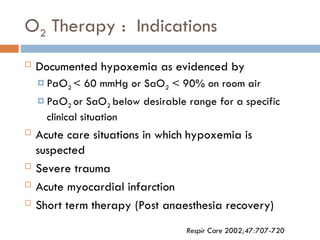
O2 Therapy : Indications
 Documented hypoxemia as evidenced by
 PaO2 < 60 mmHg or SaO2 < 90% on room air
 PaO2 or SaO2 below desirable range for a specific
clinical situation
 Acute care situations in which hypoxemia is
suspected
 Severe trauma
 Acute myocardial infarction
 Short term therapy (Post anaesthesia recovery)
Respir Care 2002;47:707-720
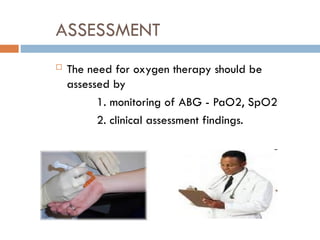
ASSESSMENT
 The need for oxygen therapy should be
assessed by
1. monitoring of ABG - PaO2, SpO2
2. clinical assessment findings.
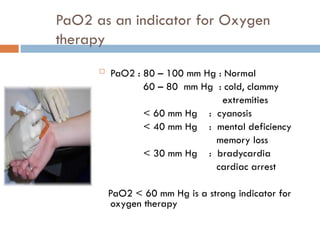
PaO2 as an indicator for Oxygen
therapy
 PaO2 : 80 – 100 mm Hg : Normal
60 – 80 mm Hg : cold, clammy
extremities
< 60 mm Hg : cyanosis
< 40 mm Hg : mental deficiency
memory loss
< 30 mm Hg : bradycardia
cardiac arrest
PaO2 < 60 mm Hg is a strong indicator for
oxygen therapy
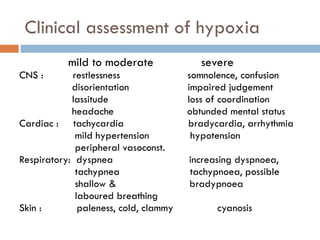
Clinical assessment of hypoxia
mild to moderate severe
CNS : restlessness somnolence, confusion
disorientation impaired judgement
lassitude loss of coordination
headache obtunded mental status
Cardiac : tachycardia bradycardia, arrhythmia
mild hypertension hypotension
peripheral vasoconst.
Respiratory: dyspnea increasing dyspnoea,
tachypnea tachypnoea, possible
shallow & bradypnoea
laboured breathing
Skin : paleness, cold, clammy cyanosis
MONITORING
 Physical examination for C/F of hypoxemia
 Pulse oximetry
 ABG analysis
 pH
 pO2
 pCO2
 Mixed venous blood oxygenation
O2 Delivery systems
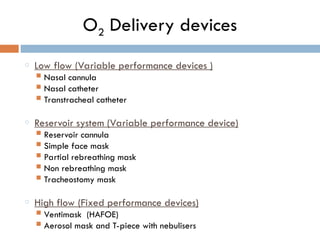
O2 Delivery devices
o Low flow (Variable performance devices )
 Nasal cannula
 Nasal catheter
 Transtracheal catheter
o Reservoir system (Variable performance device)
 Reservoir cannula
 Simple face mask
 Partial rebreathing mask
 Non rebreathing mask
 Tracheostomy mask
o High flow (Fixed performance devices)
 Ventimask (HAFOE)
 Aerosol mask and T-piece with nebulisers
Complications of Oxygen therapy
1. Oxygen toxicity
2. Depression of ventilation
3. Retinopathy of Prematurity
4. Absorption atelectasis
5. Fire hazard
1. O2 Toxicity
 Primarily affects lung and CNS.
 2 factors: PaO2 & exposure time
 CNS O2 toxicity (Paul Bert effect)
 occurs on breathing O2 at pressure > 1 atm
 tremors, twitching, convulsions
How much O2 is safe?
100% - not more than 12hrs
80% - not more than 24hrs
60% - not more than 36hrs
Goal should be to use lowest possible FiO2
compatible with adequate tissue oxygenation
Indications for 70% - 100% oxygen
therapy
1. Resuscitation
2. Periods of acute cardiopulmonary instability
3. Patient transport
Oxygen is a drug.
When appropriately used, it is extremely beneficial
When misused or abused, it is potentially harmful
THANK YOU….

Basic oxygen-therapy for nursingstudents.ppt

  • 1.
  • 2.
    OVERVIEW  Introduction  Indications Oxygen delivery systems  Complications of oxygen therapy
  • 3.
    Goal of oxygentherapy To maintain adequate tissue oxygenation while minimizing cardiopulmonary work
  • 4.
    O2 Therapy :CLINICAL OBJECTIVES 1. Correct documented or suspected hypoxemia 2. Decrease the symptoms associated with chronic hypoxemia 3. Decrease the workload hypoxemia imposes on the cardiopulmonary system
  • 5.
    O2 Therapy :Indications  Documented hypoxemia as evidenced by  PaO2 < 60 mmHg or SaO2 < 90% on room air  PaO2 or SaO2 below desirable range for a specific clinical situation  Acute care situations in which hypoxemia is suspected  Severe trauma  Acute myocardial infarction  Short term therapy (Post anaesthesia recovery) Respir Care 2002;47:707-720
  • 6.
    ASSESSMENT  The needfor oxygen therapy should be assessed by 1. monitoring of ABG - PaO2, SpO2 2. clinical assessment findings.
  • 7.
    PaO2 as anindicator for Oxygen therapy  PaO2 : 80 – 100 mm Hg : Normal 60 – 80 mm Hg : cold, clammy extremities < 60 mm Hg : cyanosis < 40 mm Hg : mental deficiency memory loss < 30 mm Hg : bradycardia cardiac arrest PaO2 < 60 mm Hg is a strong indicator for oxygen therapy
  • 8.
    Clinical assessment ofhypoxia mild to moderate severe CNS : restlessness somnolence, confusion disorientation impaired judgement lassitude loss of coordination headache obtunded mental status Cardiac : tachycardia bradycardia, arrhythmia mild hypertension hypotension peripheral vasoconst. Respiratory: dyspnea increasing dyspnoea, tachypnea tachypnoea, possible shallow & bradypnoea laboured breathing Skin : paleness, cold, clammy cyanosis
  • 9.
    MONITORING  Physical examinationfor C/F of hypoxemia  Pulse oximetry  ABG analysis  pH  pO2  pCO2  Mixed venous blood oxygenation
  • 10.
  • 11.
    O2 Delivery devices oLow flow (Variable performance devices )  Nasal cannula  Nasal catheter  Transtracheal catheter o Reservoir system (Variable performance device)  Reservoir cannula  Simple face mask  Partial rebreathing mask  Non rebreathing mask  Tracheostomy mask o High flow (Fixed performance devices)  Ventimask (HAFOE)  Aerosol mask and T-piece with nebulisers
  • 12.
  • 13.
    Complications of Oxygentherapy 1. Oxygen toxicity 2. Depression of ventilation 3. Retinopathy of Prematurity 4. Absorption atelectasis 5. Fire hazard
  • 14.
    1. O2 Toxicity Primarily affects lung and CNS.  2 factors: PaO2 & exposure time  CNS O2 toxicity (Paul Bert effect)  occurs on breathing O2 at pressure > 1 atm  tremors, twitching, convulsions
  • 15.
    How much O2is safe? 100% - not more than 12hrs 80% - not more than 24hrs 60% - not more than 36hrs Goal should be to use lowest possible FiO2 compatible with adequate tissue oxygenation
  • 16.
    Indications for 70%- 100% oxygen therapy 1. Resuscitation 2. Periods of acute cardiopulmonary instability 3. Patient transport
  • 17.
    Oxygen is adrug. When appropriately used, it is extremely beneficial When misused or abused, it is potentially harmful
  • 18.