Objectives:
1. Students will be able to
differentiate the kinds of Basic
Learning Theories .
2. Students will be able to define the
effects of Basic Learning Theories
to learning process.
Basic Learning
Theories vis a vis
Technology
Application
A.Constructivist
Theory
B. Cognitive Learning
Theory
C. Systematic Behavior
Theory
A. Constructivist Theory
Constructivism started as a theory
in Russian Art during the Middle Ages
where students in the Arts build their
own ideas and concepts about an
issue or phenomenon and they
reflect them in their art works.
 Students were free to select the
themes of their paintings based
upon their past experiences and
those which their consider relevant
to their own views or how they
perceive what the world should be.
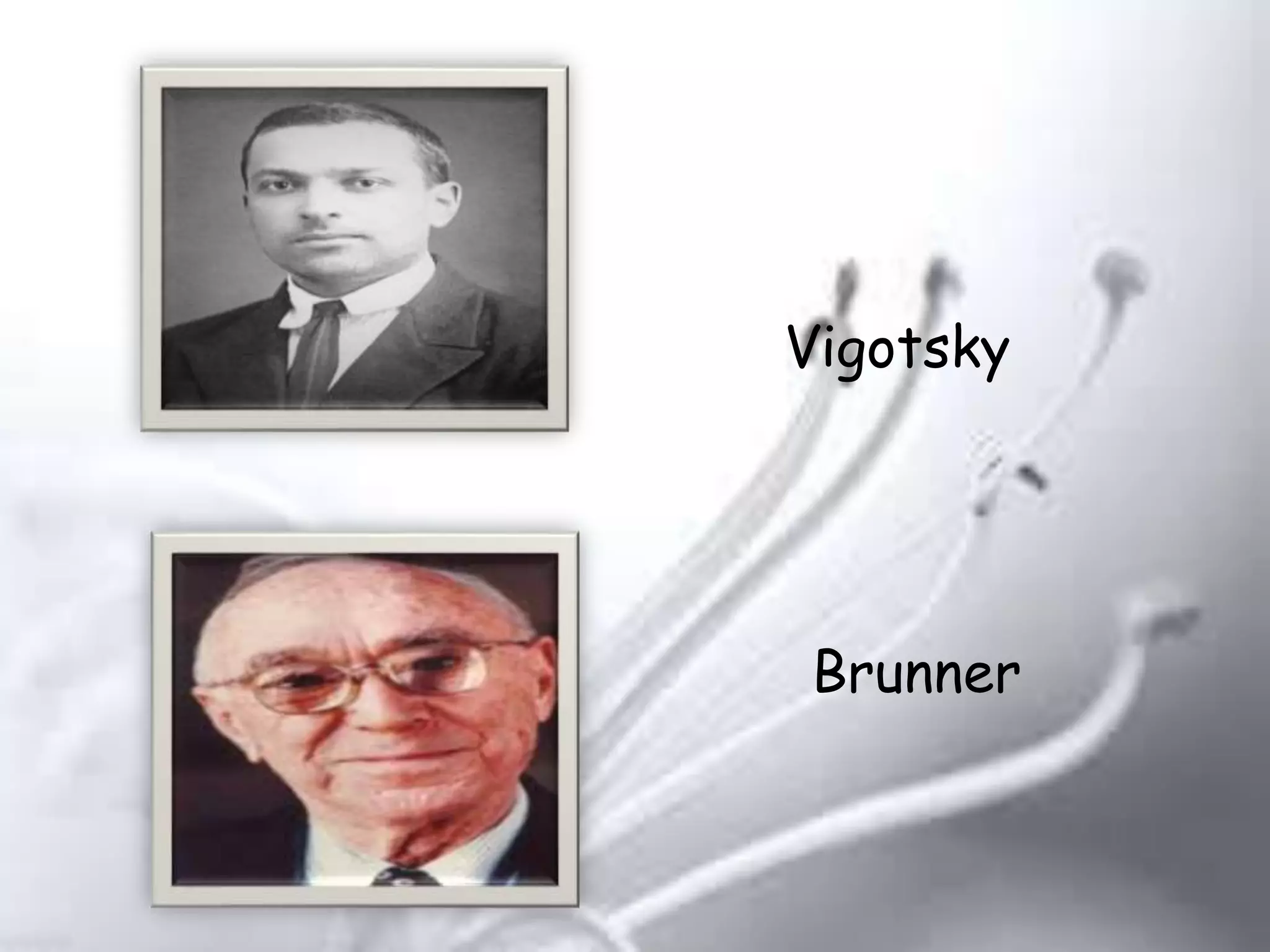
Vigotsky
Brunner
Constructivist Theory
underscored that learning is an active
process where learners acquire and
construct new ideas or concepts based
on their past or current knowledge and
experiences.
 in perspective of Ora’a, to learn is to
experience, that is interact with one’s
environment; to do, to feel, to sense, to
handle and to perceive the
opportunities that present themselves
to the learners.
Constructivist Theory
 to state it simply the previous
knowledge, concepts and views of
students about an issues are the starting
point of learning. They are not
disregarded but are enriched through
inquiry.
Constructivist Theory
 this is where critical analysis and
information processing are put to work.
The students are free to choose the
information which can serve their own
purpose best.
Constructivist Theory
 for learning to be more impressive and
permanent, outputs or projects should be the
result of inquiry. This is where educational
technology comes in. INTEL Teach Curriculum,
a technology-based learning initiative
prescribes the inquiry approach and the
project-based learning approach to ensure
that the promise of technology in education,
which is to enhance learning, shall be realized.
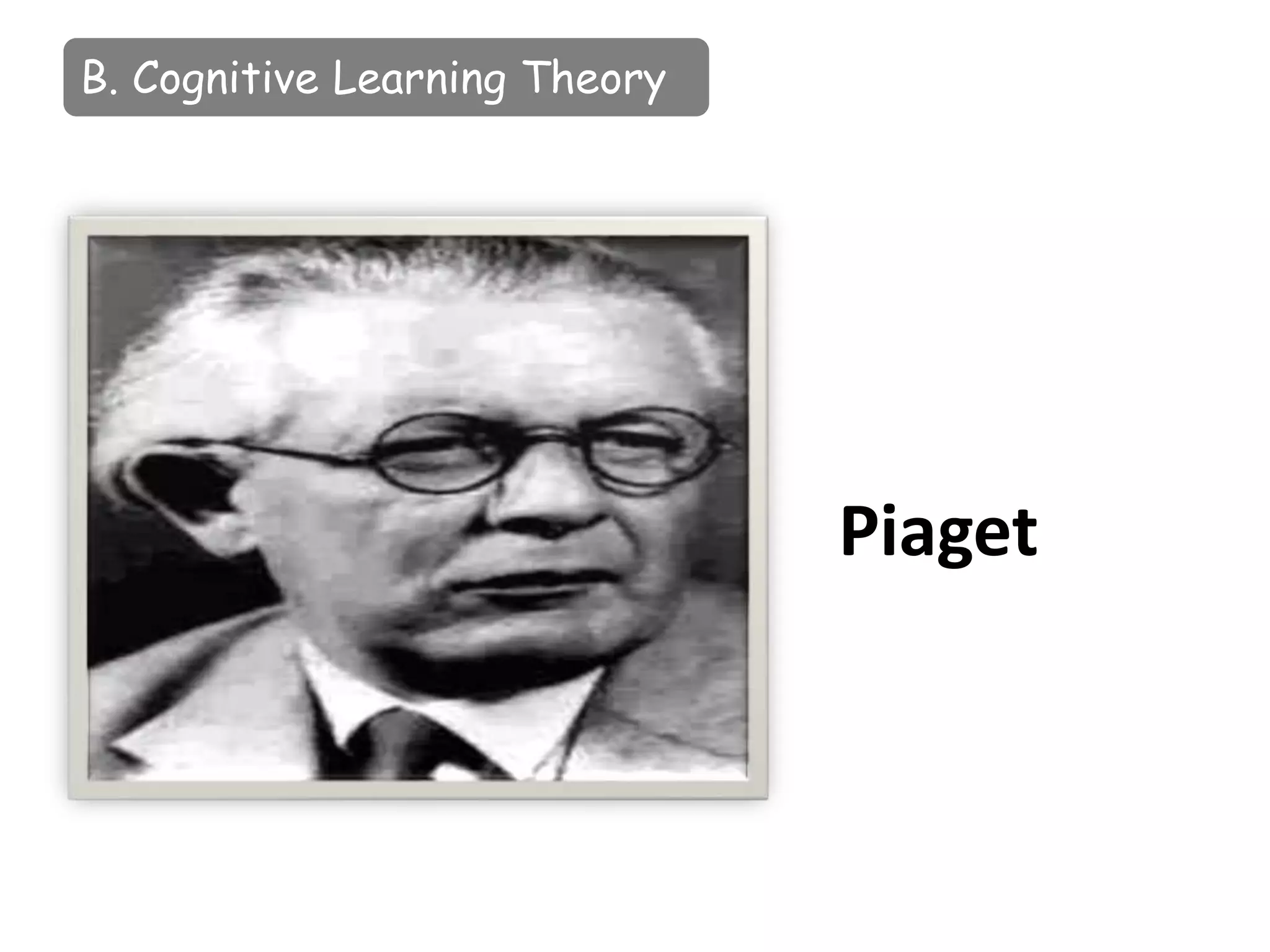
B. Cognitive Learning Theory
Piaget
Cognitive Learning Theory
 This was popularized by Piaget. The term
cognitive comes from the Latin word
cognoscere, which means
the act or process of knowing.
Cognition therefore involves
the higher mental processes like thinking,
reasoning, judging, inferring, interpreting,
classifying and the like.
Cognitive Learning Theory
Organization is the systematic arranging
of perceptual and cognitive information into
meaningful patterns called cognitive
structures. It is actually putting the
information, concepts and ideas gained
together and relating them into internally
organized wholes.
Two Fundamentals characteristics
Adaptation is the process thru which the
person seeks an equilibrium or balance
between what he/she perceives, knows and
understands. This involves assimilation,
which is the process of fitting what is
perceived and experienced into existing
cognitive structures.
assimilation- the process of fitting what is
perceived and experience into existing
cognitive structures.
accommodation- learning can be seen as
students or learners start to form new mental
structure, modify or redefine the previous
ones.
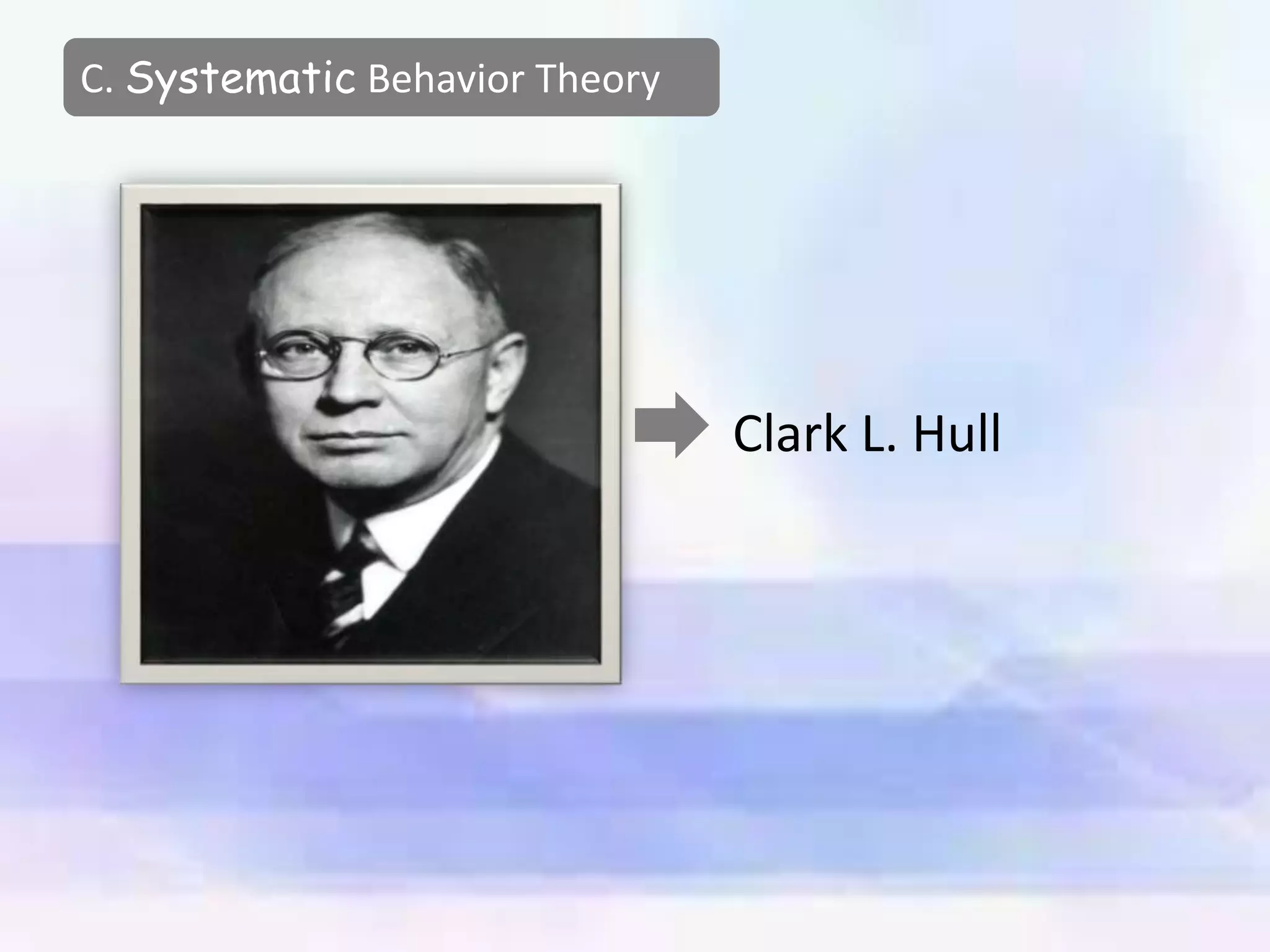
C. Systematic Behavior Theory
Clark L. Hull
Behavior involves an interaction between stimuli
in the environment and the responses which the
organism makes towards the stimuli. This is the
reinforcement which means that any set of
condition which when applied properly
reinforces learning. This is especially true if they
are actively involved in all experiences.
How does each theories
affects learning process?
EVALUATION

Basic Learning Theory

  • 2.
    Objectives: 1. Students willbe able to differentiate the kinds of Basic Learning Theories . 2. Students will be able to define the effects of Basic Learning Theories to learning process.
  • 3.
    Basic Learning Theories visa vis Technology Application
  • 4.
  • 5.
    A. Constructivist Theory Constructivismstarted as a theory in Russian Art during the Middle Ages where students in the Arts build their own ideas and concepts about an issue or phenomenon and they reflect them in their art works.
  • 6.
     Students werefree to select the themes of their paintings based upon their past experiences and those which their consider relevant to their own views or how they perceive what the world should be.
  • 7.
  • 8.
    Constructivist Theory underscored thatlearning is an active process where learners acquire and construct new ideas or concepts based on their past or current knowledge and experiences.
  • 9.
     in perspectiveof Ora’a, to learn is to experience, that is interact with one’s environment; to do, to feel, to sense, to handle and to perceive the opportunities that present themselves to the learners. Constructivist Theory
  • 10.
     to stateit simply the previous knowledge, concepts and views of students about an issues are the starting point of learning. They are not disregarded but are enriched through inquiry. Constructivist Theory
  • 11.
     this iswhere critical analysis and information processing are put to work. The students are free to choose the information which can serve their own purpose best.
  • 12.
    Constructivist Theory  forlearning to be more impressive and permanent, outputs or projects should be the result of inquiry. This is where educational technology comes in. INTEL Teach Curriculum, a technology-based learning initiative prescribes the inquiry approach and the project-based learning approach to ensure that the promise of technology in education, which is to enhance learning, shall be realized.
  • 13.
    B. Cognitive LearningTheory Piaget
  • 14.
    Cognitive Learning Theory This was popularized by Piaget. The term cognitive comes from the Latin word cognoscere, which means the act or process of knowing. Cognition therefore involves the higher mental processes like thinking, reasoning, judging, inferring, interpreting, classifying and the like.
  • 15.
    Cognitive Learning Theory Organizationis the systematic arranging of perceptual and cognitive information into meaningful patterns called cognitive structures. It is actually putting the information, concepts and ideas gained together and relating them into internally organized wholes. Two Fundamentals characteristics
  • 16.
    Adaptation is theprocess thru which the person seeks an equilibrium or balance between what he/she perceives, knows and understands. This involves assimilation, which is the process of fitting what is perceived and experienced into existing cognitive structures.
  • 17.
    assimilation- the processof fitting what is perceived and experience into existing cognitive structures. accommodation- learning can be seen as students or learners start to form new mental structure, modify or redefine the previous ones.
  • 18.
    C. Systematic BehaviorTheory Clark L. Hull
  • 19.
    Behavior involves aninteraction between stimuli in the environment and the responses which the organism makes towards the stimuli. This is the reinforcement which means that any set of condition which when applied properly reinforces learning. This is especially true if they are actively involved in all experiences.
  • 20.
    How does eachtheories affects learning process? EVALUATION