Caroline Richardson & Simon Du
ff
y | 19 August 2021
Basic Income Plus
BIEN 2021: Basic Income and Disability
Basic Income Plus (UBI+)
What we are proposing
The problem we are trying to solve - Simon

• simple versus sufficient

• fears and hopes in the disability communities

• UK context today

The shape of the solution - Caroline

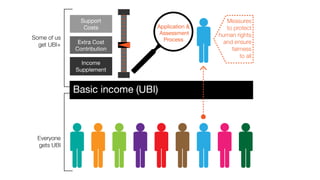
• UBI and bolt-ons

• Using MIS

• The cost of it all
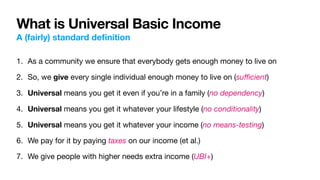
What is Universal Basic Income
A (fairly) standard de
fi
nition
1. As a community we ensure that everybody gets enough money to live on

2. So, we give every single individual enough money to live on (su
ffi
cient)

3. Universal means you get it even if you’re in a family (no dependency)

4. Universal means you get it whatever your lifestyle (no conditionality)

5. Universal means you get it whatever your income (no means-testing)

6. We pay for it by paying taxes on our income (et al.)

7. We give people with higher needs extra income (UBI+)
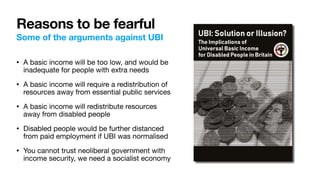
Reasons to be fearful
Some of the arguments against UBI
• A basic income will be too low, and would be
inadequate for people with extra needs

• A basic income will require a redistribution of
resources away from essential public services

• A basic income will redistribute resources
away from disabled people

• Disabled people would be further distanced
from paid employment if UBI was normalised

• You cannot trust neoliberal government with
income security, we need a socialist economy
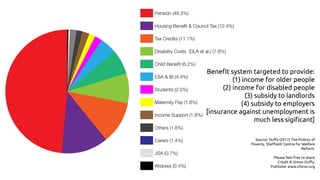
What is the current UK context
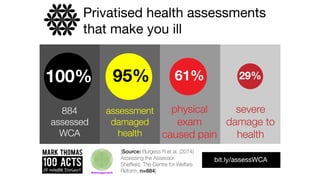
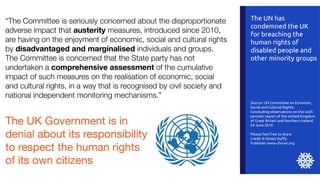
Growing disregard for human rights and well being
1. Lower bene
fi
ts and higher taxes have moved impact towards zero

2. Stigma, sanctions and skiver rhetoric have eroded public support

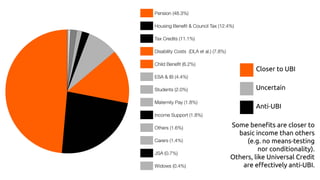
3. Some bene
fi
ts are quite close to forms of UBI

4. Some are quite the opposite

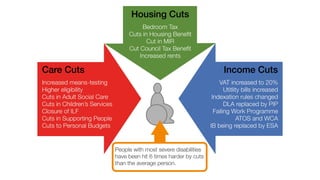
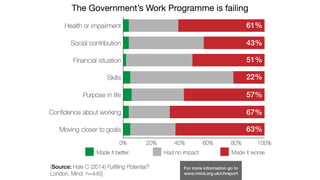
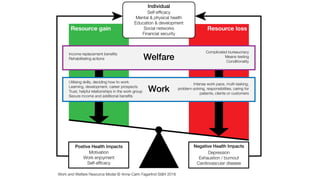
5. Disabled people have been targeted for harmful ‘welfare reforms’

6. UK has been subject to severe criticism by United Nations
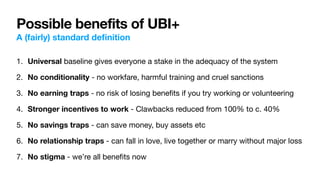
Possible benefits of UBI+
A (fairly) standard de
fi
nition
1. Universal baseline gives everyone a stake in the adequacy of the system

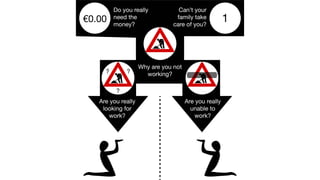
2. No conditionality - no workfare, harmful training and cruel sanctions

3. No earning traps - no risk of losing bene
fi
ts if you try working or volunteering

4. Stronger incentives to work - Clawbacks reduced from 100% to c. 40%

5. No savings traps - can save money, buy assets etc

6. No relationship traps - can fall in love, live together or marry without major loss

7. No stigma - we’re all bene
fi
ts now
This paper is available on the Citizen
Network website and sets out our main
arguments and speci
fi
c proposal.


The paper is still out for consultation and we
are particularly interested in the views of
disabled people on whether this offers a
positive way forward that integrates the
principles of UBI with those of the
Independent Living Movement.
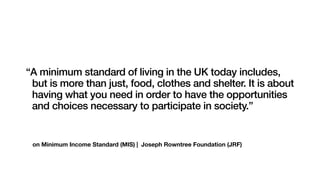
on Minimum Income Standard (MIS) | Joseph Rowntree Foundation (JRF)
“A minimum standard of living in the UK today includes,
but is more than just, food, clothes and shelter. It is about
having what you need in order to have the opportunities
and choices necessary to participate in society.”
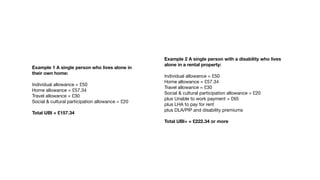
Example 2 A single person with a disability who lives
alone in a rental property:

Individual allowance = £50

Home allowance = £57.34

Travel allowance = £30

Social & cultural participation allowance = £20

plus Unable to work payment = £65

plus LHA to pay for rent

plus DLA/PIP and disability premiums


Total UBI+ = £222.34 or more
Example 1 A single person who lives alone in
their own home:

Individual allowance = £50

Home allowance = £57.34

Travel allowance = £30

Social & cultural participation allowance = £20

Total UBI = £157.34
Other publications
www.citizen-network.org

Basic Income Plus (Talk at BIEN 2021)

  • 1.
    Caroline Richardson &Simon Du ff y | 19 August 2021 Basic Income Plus BIEN 2021: Basic Income and Disability
  • 2.
    Basic Income Plus(UBI+) What we are proposing The problem we are trying to solve - Simon • simple versus sufficient • fears and hopes in the disability communities • UK context today The shape of the solution - Caroline • UBI and bolt-ons • Using MIS • The cost of it all
  • 3.
    What is UniversalBasic Income A (fairly) standard de fi nition 1. As a community we ensure that everybody gets enough money to live on 2. So, we give every single individual enough money to live on (su ffi cient) 3. Universal means you get it even if you’re in a family (no dependency) 4. Universal means you get it whatever your lifestyle (no conditionality) 5. Universal means you get it whatever your income (no means-testing) 6. We pay for it by paying taxes on our income (et al.) 7. We give people with higher needs extra income (UBI+)
  • 5.
    Reasons to befearful Some of the arguments against UBI • A basic income will be too low, and would be inadequate for people with extra needs • A basic income will require a redistribution of resources away from essential public services • A basic income will redistribute resources away from disabled people • Disabled people would be further distanced from paid employment if UBI was normalised • You cannot trust neoliberal government with income security, we need a socialist economy
  • 6.
    What is thecurrent UK context Growing disregard for human rights and well being 1. Lower bene fi ts and higher taxes have moved impact towards zero 2. Stigma, sanctions and skiver rhetoric have eroded public support 3. Some bene fi ts are quite close to forms of UBI 4. Some are quite the opposite 5. Disabled people have been targeted for harmful ‘welfare reforms’ 6. UK has been subject to severe criticism by United Nations
  • 17.
    Possible benefits ofUBI+ A (fairly) standard de fi nition 1. Universal baseline gives everyone a stake in the adequacy of the system 2. No conditionality - no workfare, harmful training and cruel sanctions 3. No earning traps - no risk of losing bene fi ts if you try working or volunteering 4. Stronger incentives to work - Clawbacks reduced from 100% to c. 40% 5. No savings traps - can save money, buy assets etc 6. No relationship traps - can fall in love, live together or marry without major loss 7. No stigma - we’re all bene fi ts now
  • 18.
    This paper isavailable on the Citizen Network website and sets out our main arguments and speci fi c proposal. The paper is still out for consultation and we are particularly interested in the views of disabled people on whether this offers a positive way forward that integrates the principles of UBI with those of the Independent Living Movement.
  • 19.
    on Minimum IncomeStandard (MIS) | Joseph Rowntree Foundation (JRF) “A minimum standard of living in the UK today includes, but is more than just, food, clothes and shelter. It is about having what you need in order to have the opportunities and choices necessary to participate in society.”
  • 20.
    Example 2 Asingle person with a disability who lives alone in a rental property:
 Individual allowance = £50 Home allowance = £57.34 Travel allowance = £30 Social & cultural participation allowance = £20 plus Unable to work payment = £65 plus LHA to pay for rent plus DLA/PIP and disability premiums 
 Total UBI+ = £222.34 or more Example 1 A single person who lives alone in their own home:
 Individual allowance = £50 Home allowance = £57.34 Travel allowance = £30 Social & cultural participation allowance = £20 Total UBI = £157.34
  • 21.