The Case for Basic Income
Presentation for Café Economique


by Dr Simon Duffy
in a nutshell
1. There are many things people need to live a good life


2. Economic security is essential to our well being


3. Basic income is the best solution for providing this security


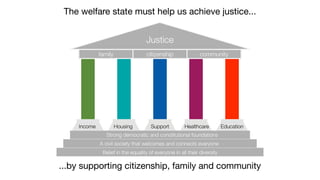
4. Basic income is only one part of a just welfare state


5. The welfare state is only one part of a just society


6. UBI Lab Network is a highly effective anti-poverty campaign
The great sin of economics is
to value what we count


instead of what really counts.
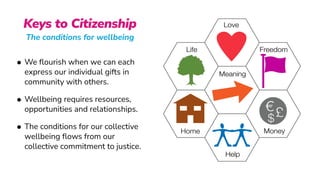
The conditions for wellbeing
• We
fl
ourish when we can each
express our individual gifts in
community with others.


• Wellbeing requires resources,
opportunities and relationships.


• The conditions for our collective
wellbeing
fl
ows from our
collective commitment to justice.
Keys to Citizenship
Money doesn’t ensure a
good life,


but poverty does ensure
a hard life.
Africans want to be paid a living wage. Africans want to perform work which they are
capable of doing, and not work which the Government declares them to be capable of.
Africans want to be allowed to live where they obtain work, and not be endorsed out
of an area because they were not born there. Africans want to be allowed to own land
in places where they work, and not be obliged to live in rented houses which they can
never call their own. Africans want to be part of the general population, and not
con
fi
ned to living in their own ghettos…. Africans want a just share in the whole of
South Africa, they want security and a stake in society. Above all, we want equal
political rights, because without them our disabilities will be permanent.


[Nelson Mandela, 1978]
Our freedom, economic security and
political rights cannot be disentangled
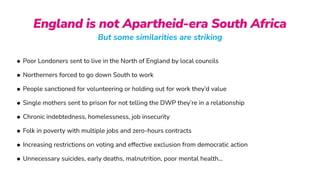
England is not Apartheid-era South Africa
But some similarities are striking
• Poor Londoners sent to live in the North of England by local councils


• Northerners forced to go down South to work


• People sanctioned for volunteering or holding out for work they’d value


• Single mothers sent to prison for not telling the DWP they’re in a relationship


• Chronic indebtedness, homelessness, job insecurity


• Folk in poverty with multiple jobs and zero-hours contracts


• Increasing restrictions on voting and effective exclusion from democratic action


• Unnecessary suicides, early deaths, malnutrition, poor mental health…
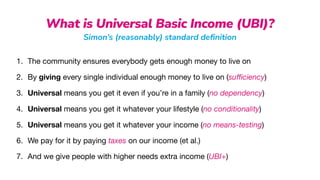
What is Universal Basic Income (UBI)?
Simon’s (reasonably) standard de
fi
nition
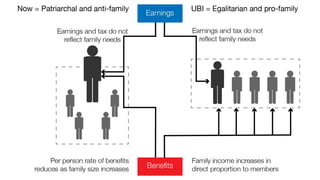
1. The community ensures everybody gets enough money to live on

2. By giving every single individual enough money to live on (su
ffi
ciency)

3. Universal means you get it even if you’re in a family (no dependency)

4. Universal means you get it whatever your lifestyle (no conditionality)

5. Universal means you get it whatever your income (no means-testing)

6. We pay for it by paying taxes on our income (et al.)

7. And we give people with higher needs extra income (UBI+)
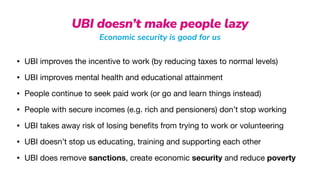
UBI doesn’t make people lazy
Economic security is good for us
• UBI improves the incentive to work (by reducing taxes to normal levels)

• UBI improves mental health and educational attainment

• People continue to seek paid work (or go and learn things instead)

• People with secure incomes (e.g. rich and pensioners) don’t stop working

• UBI takes away risk of losing bene
fi
ts from trying to work or volunteering

• UBI doesn’t stop us educating, training and supporting each other

• UBI does remove sanctions, create economic security and reduce poverty
Why UBI is affordable
The redistributional logic of UBI
• If we pay for UBI though income tax then UBI redistributes resources from people
above the mean income to people below the mean income. In the UK that means
taking money away from the richest 15% and redistributing it to the poorest 85%.

• In fact it is equivalent to all of us receiving a fair share of the nation’s GDP, by all paying
into the pot a fair share of our income in taxes. Currently the mean per capita income
is (at least) £29,600, and 25% of that is £7,400 (although the full picture is more
complex if we adjust for age and ability).

• This is NOT government spending and it doesn’t stop us paying for public services.

• Equality is generally good for the health of the economy.

• It is a
ff
ordable if we choose it - and there are good reasons to choose it.
Other benefits of UBI include:
From multiple pilots or quasi UBI systems
• Reduces poverty

• Reduces child mortality

• Improves physical health

• Improves mental health

• Improves quality of work life

• Increases entrepreneurship

• Increases home ownership

• Ends bene
fi
t stigma

• Reduces suicides

• Reduces bureaucracy

• Increases solidarity and trust

• Increases citizen action

• Improves life for carers

• Improves life for disabled people

• Reduces domestic violence

• Improves learning and education

• Increases political engagement
There is nothing natural about radical
economic insecurity. Humans were not
made, by God or Nature, to live in fear of
not having the basic means to live. It has
taken over 100 of years of “economic
development” to leave most people with
no secure form of income, no property and
diminishing access to shared resources.
Join us

The Case for UBI (and Services!)

  • 1.
    The Case forBasic Income Presentation for Café Economique 
 by Dr Simon Duffy
  • 2.
    in a nutshell 1.There are many things people need to live a good life 2. Economic security is essential to our well being 3. Basic income is the best solution for providing this security 4. Basic income is only one part of a just welfare state 5. The welfare state is only one part of a just society 6. UBI Lab Network is a highly effective anti-poverty campaign
  • 3.
    The great sinof economics is to value what we count instead of what really counts.
  • 4.
    The conditions forwellbeing • We fl ourish when we can each express our individual gifts in community with others. • Wellbeing requires resources, opportunities and relationships. • The conditions for our collective wellbeing fl ows from our collective commitment to justice. Keys to Citizenship
  • 5.
    Money doesn’t ensurea good life, 
 but poverty does ensure a hard life.
  • 6.
    Africans want tobe paid a living wage. Africans want to perform work which they are capable of doing, and not work which the Government declares them to be capable of. Africans want to be allowed to live where they obtain work, and not be endorsed out of an area because they were not born there. Africans want to be allowed to own land in places where they work, and not be obliged to live in rented houses which they can never call their own. Africans want to be part of the general population, and not con fi ned to living in their own ghettos…. Africans want a just share in the whole of South Africa, they want security and a stake in society. Above all, we want equal political rights, because without them our disabilities will be permanent. 
 
 [Nelson Mandela, 1978] Our freedom, economic security and political rights cannot be disentangled
  • 7.
    England is notApartheid-era South Africa But some similarities are striking • Poor Londoners sent to live in the North of England by local councils • Northerners forced to go down South to work • People sanctioned for volunteering or holding out for work they’d value • Single mothers sent to prison for not telling the DWP they’re in a relationship • Chronic indebtedness, homelessness, job insecurity • Folk in poverty with multiple jobs and zero-hours contracts • Increasing restrictions on voting and effective exclusion from democratic action • Unnecessary suicides, early deaths, malnutrition, poor mental health…
  • 8.
    What is UniversalBasic Income (UBI)? Simon’s (reasonably) standard de fi nition 1. The community ensures everybody gets enough money to live on 2. By giving every single individual enough money to live on (su ffi ciency) 3. Universal means you get it even if you’re in a family (no dependency) 4. Universal means you get it whatever your lifestyle (no conditionality) 5. Universal means you get it whatever your income (no means-testing) 6. We pay for it by paying taxes on our income (et al.) 7. And we give people with higher needs extra income (UBI+)
  • 9.
    UBI doesn’t makepeople lazy Economic security is good for us • UBI improves the incentive to work (by reducing taxes to normal levels) • UBI improves mental health and educational attainment • People continue to seek paid work (or go and learn things instead) • People with secure incomes (e.g. rich and pensioners) don’t stop working • UBI takes away risk of losing bene fi ts from trying to work or volunteering • UBI doesn’t stop us educating, training and supporting each other • UBI does remove sanctions, create economic security and reduce poverty
  • 10.
    Why UBI isaffordable The redistributional logic of UBI • If we pay for UBI though income tax then UBI redistributes resources from people above the mean income to people below the mean income. In the UK that means taking money away from the richest 15% and redistributing it to the poorest 85%. • In fact it is equivalent to all of us receiving a fair share of the nation’s GDP, by all paying into the pot a fair share of our income in taxes. Currently the mean per capita income is (at least) £29,600, and 25% of that is £7,400 (although the full picture is more complex if we adjust for age and ability). • This is NOT government spending and it doesn’t stop us paying for public services. • Equality is generally good for the health of the economy. • It is a ff ordable if we choose it - and there are good reasons to choose it.
  • 16.
    Other benefits ofUBI include: From multiple pilots or quasi UBI systems • Reduces poverty • Reduces child mortality • Improves physical health • Improves mental health • Improves quality of work life • Increases entrepreneurship • Increases home ownership • Ends bene fi t stigma • Reduces suicides • Reduces bureaucracy • Increases solidarity and trust • Increases citizen action • Improves life for carers • Improves life for disabled people • Reduces domestic violence • Improves learning and education • Increases political engagement
  • 18.
    There is nothingnatural about radical economic insecurity. Humans were not made, by God or Nature, to live in fear of not having the basic means to live. It has taken over 100 of years of “economic development” to leave most people with no secure form of income, no property and diminishing access to shared resources.
  • 24.