CLINICAL SCENARIO
You arewaiting for a bus in bus stop, suddenly a person beside you becomes
unresponsive and falls down
25 year male patient admitted with dengue fever in your ward with a platelet
count of 40000, goes to washroom becomes unresponsive and falls down
30 year male smoker, COPD admitted with a CAP four days back intubated in
ER itself and started on BL/BLI and macrolide combination. Clinical condition
improved was planned for a discharge next morning. Suddenly patient
becomes unresponsive in the early morning at 5am
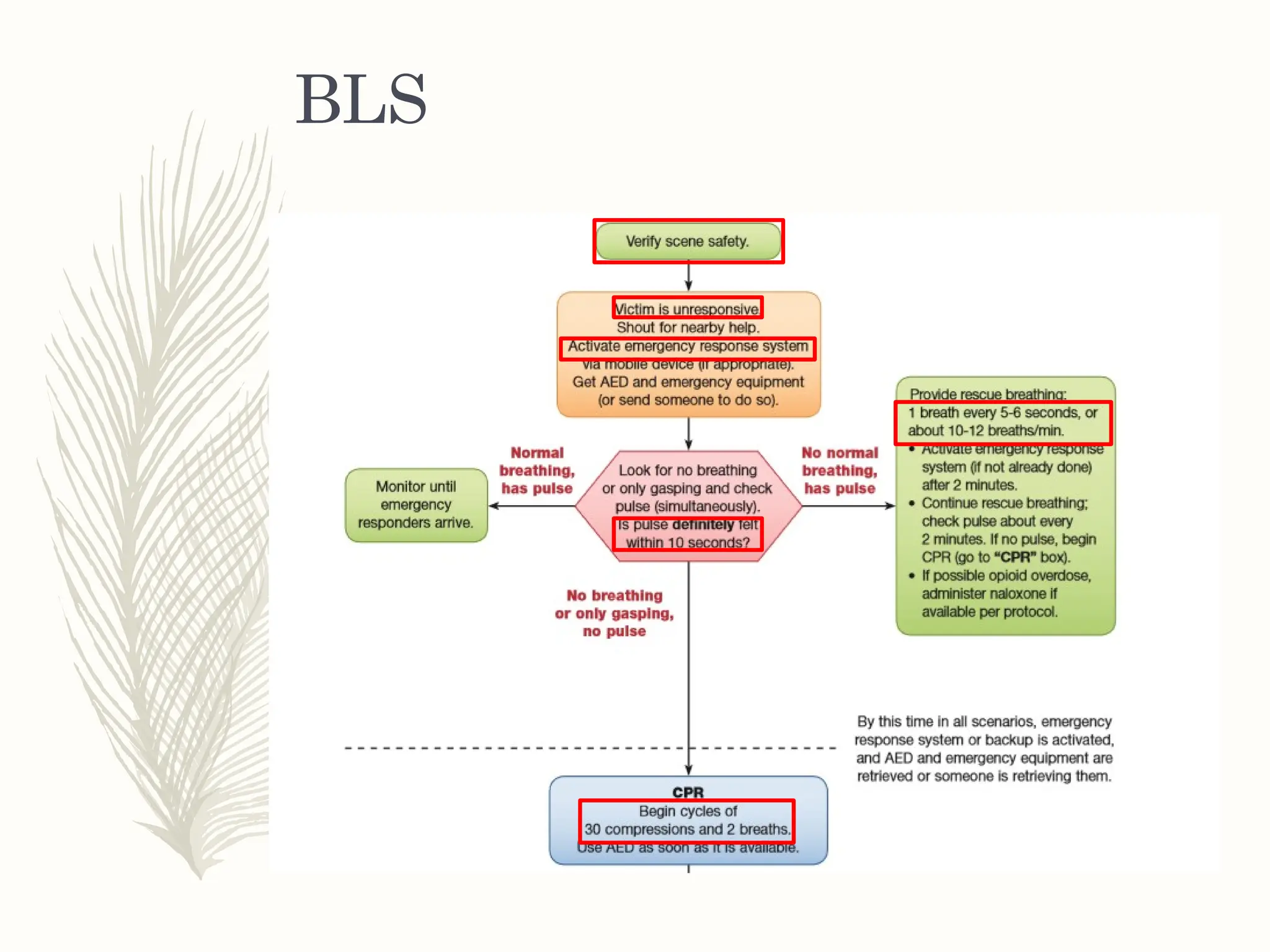
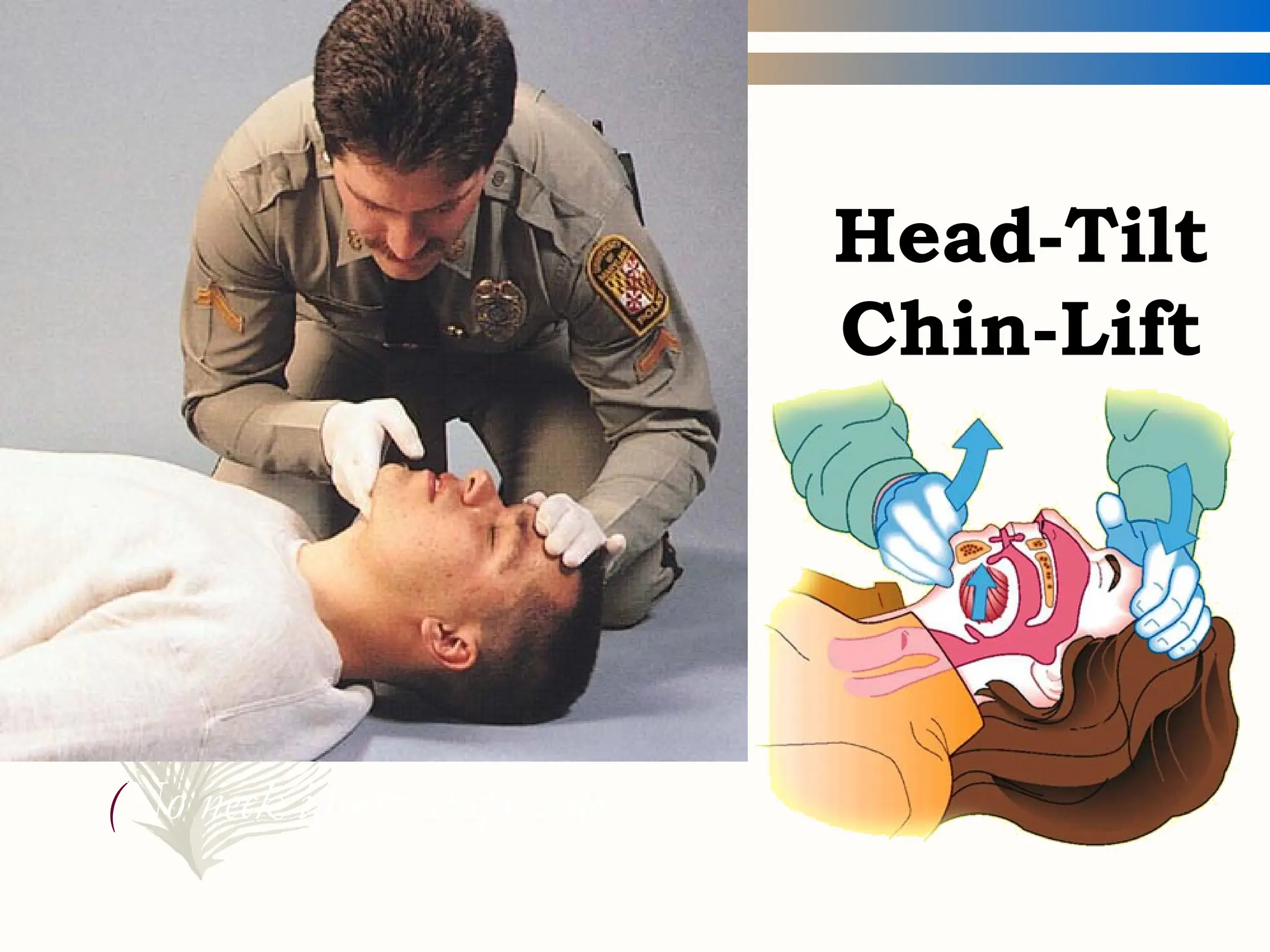
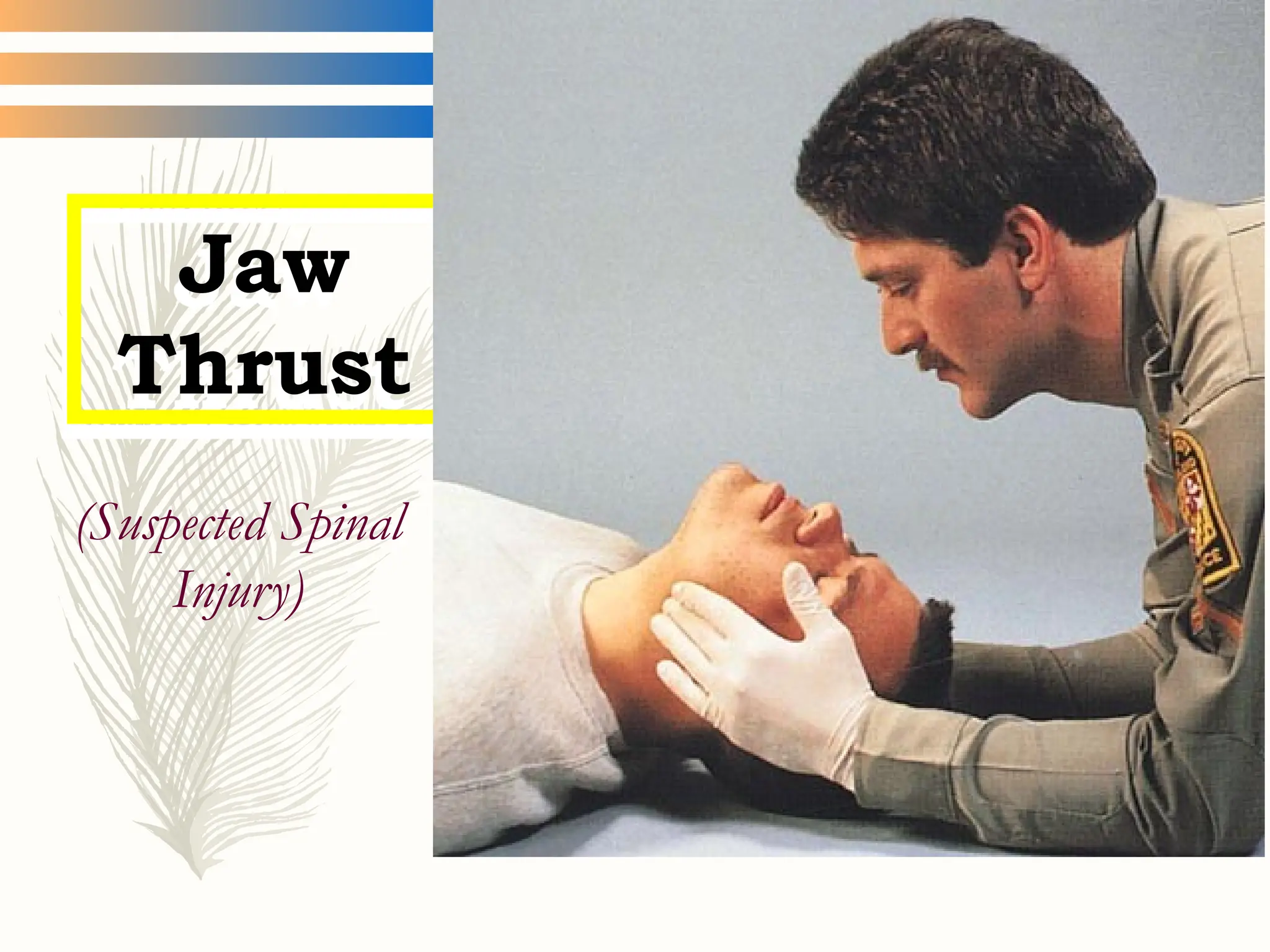
BLS
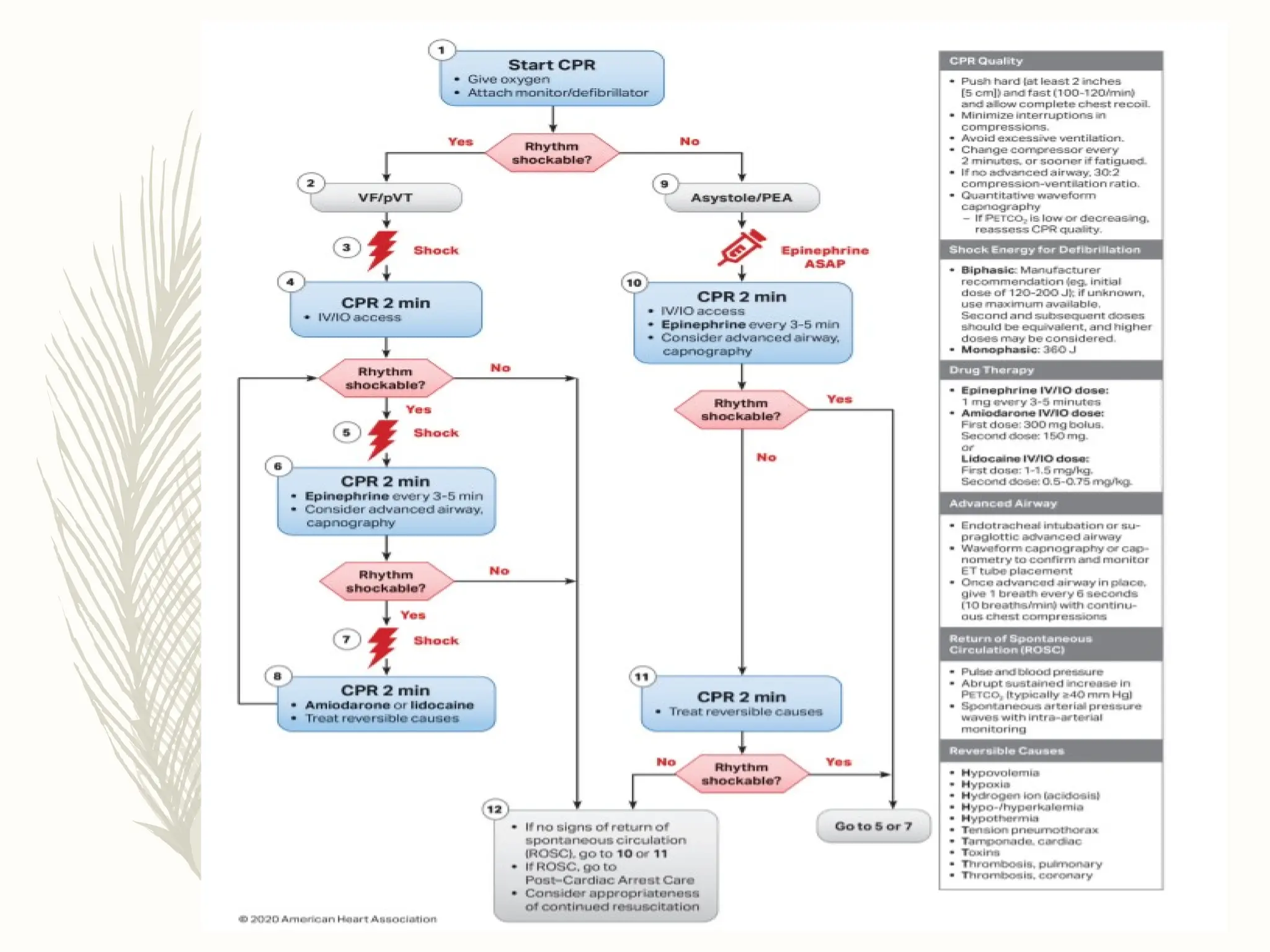
ACLS
DRUGS
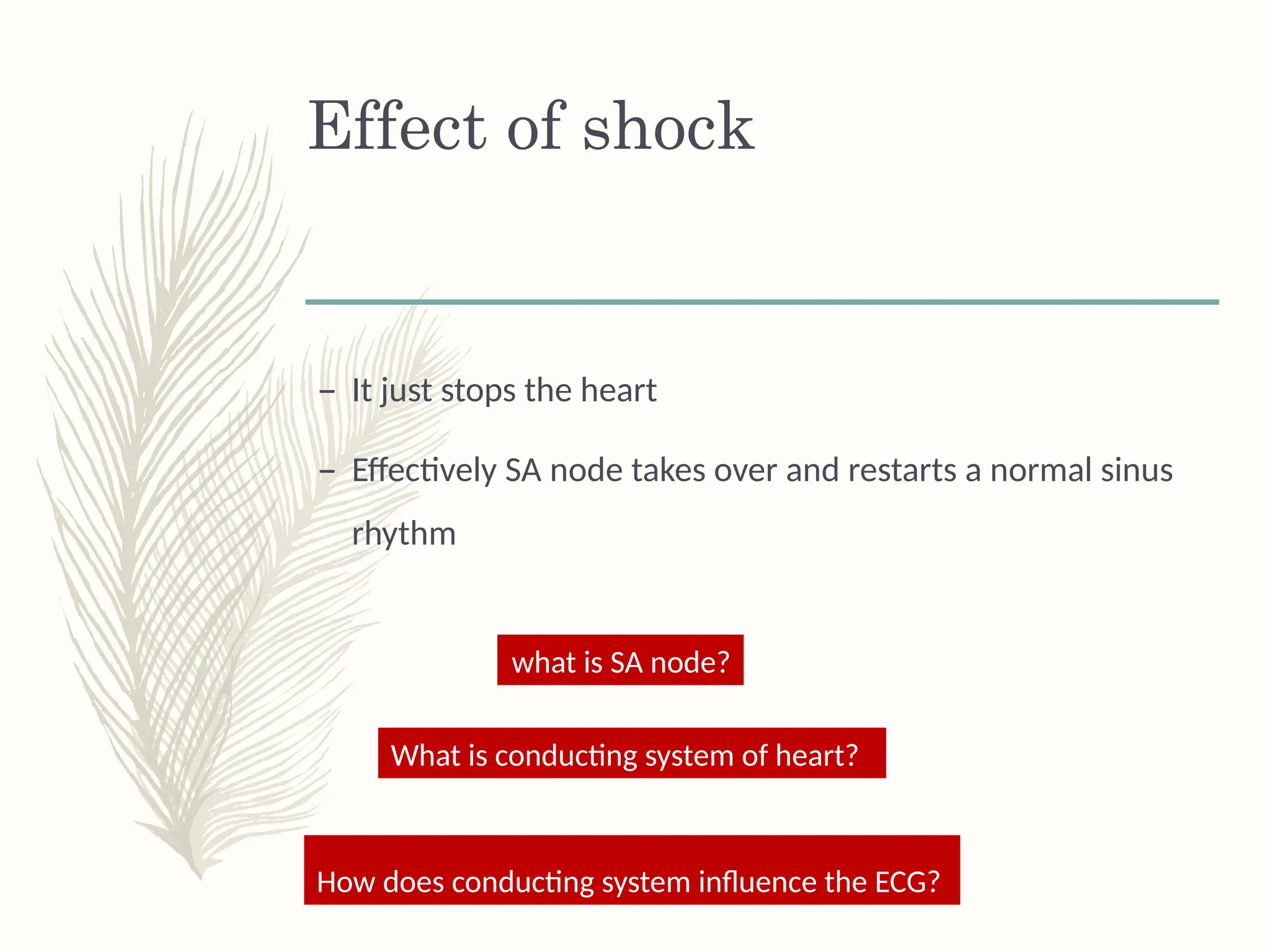
Effect of shock
–It just stops the heart
– Effectively SA node takes over and restarts a normal sinus
rhythm
what is SA node?
What is conducting system of heart?
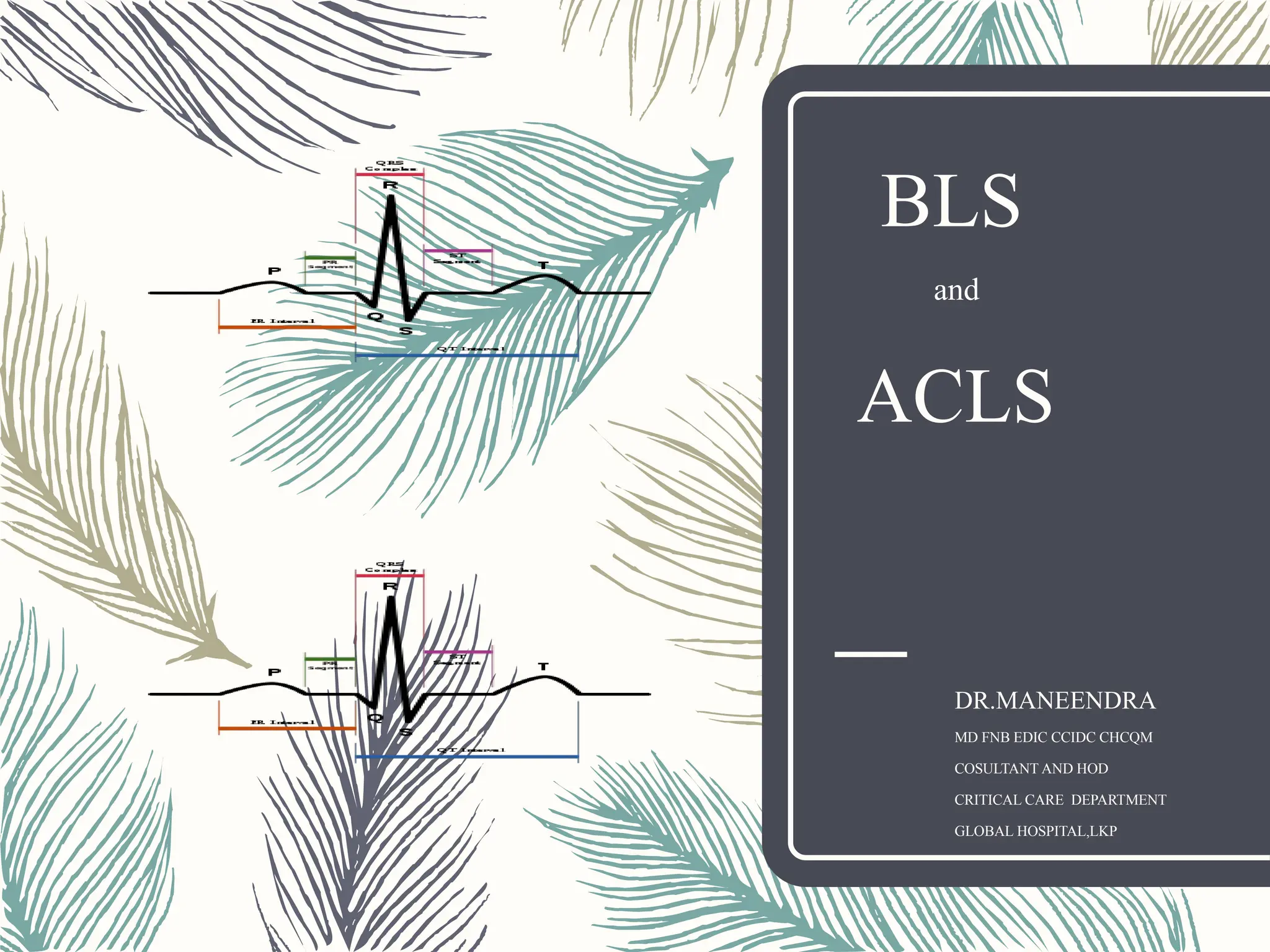
How does conducting system influence the ECG?
11.
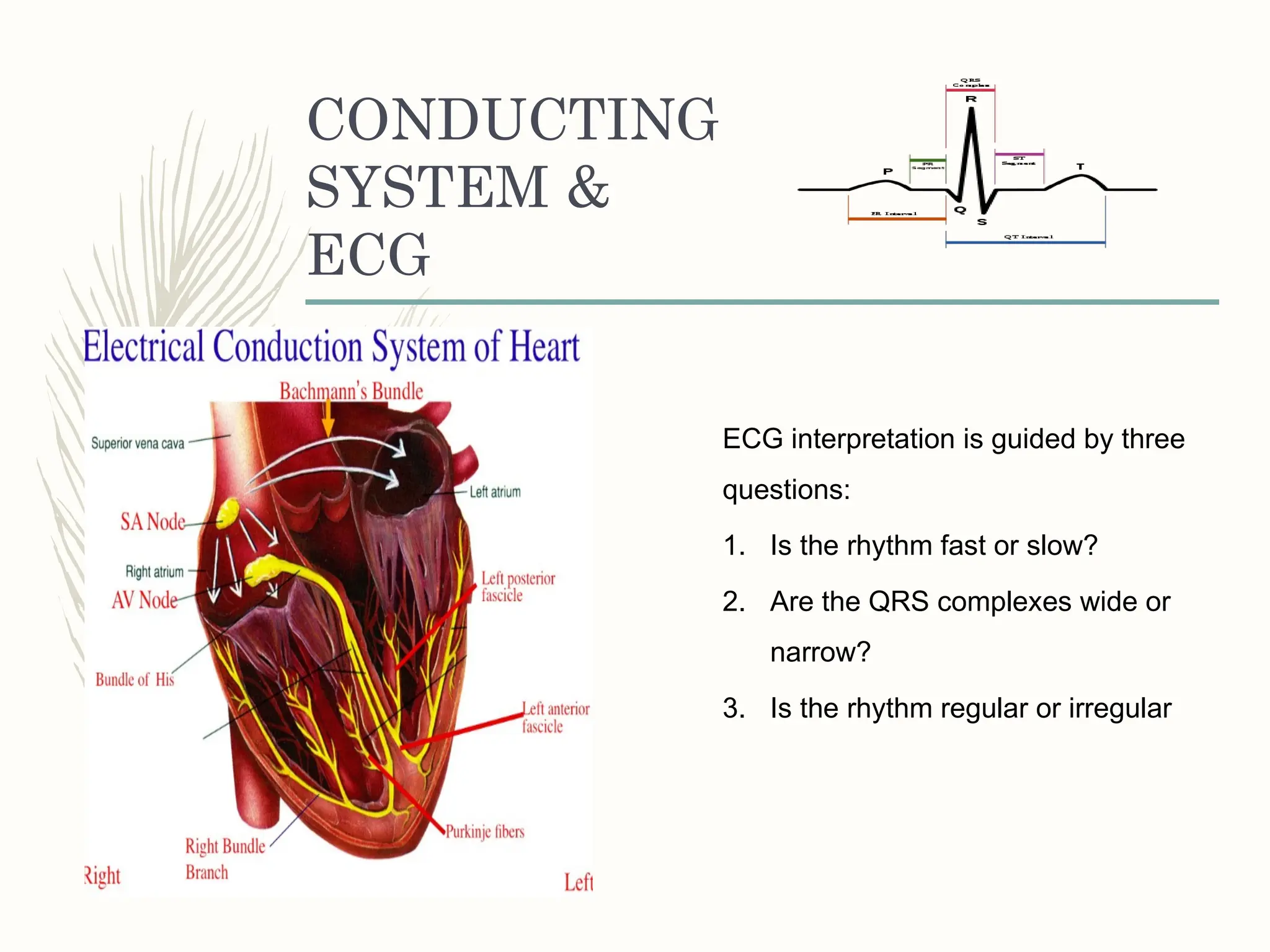
CONDUCTING
SYSTEM &
ECG
ECG interpretationis guided by three
questions:
1. Is the rhythm fast or slow?
2. Are the QRS complexes wide or
narrow?
3. Is the rhythm regular or irregular
13.
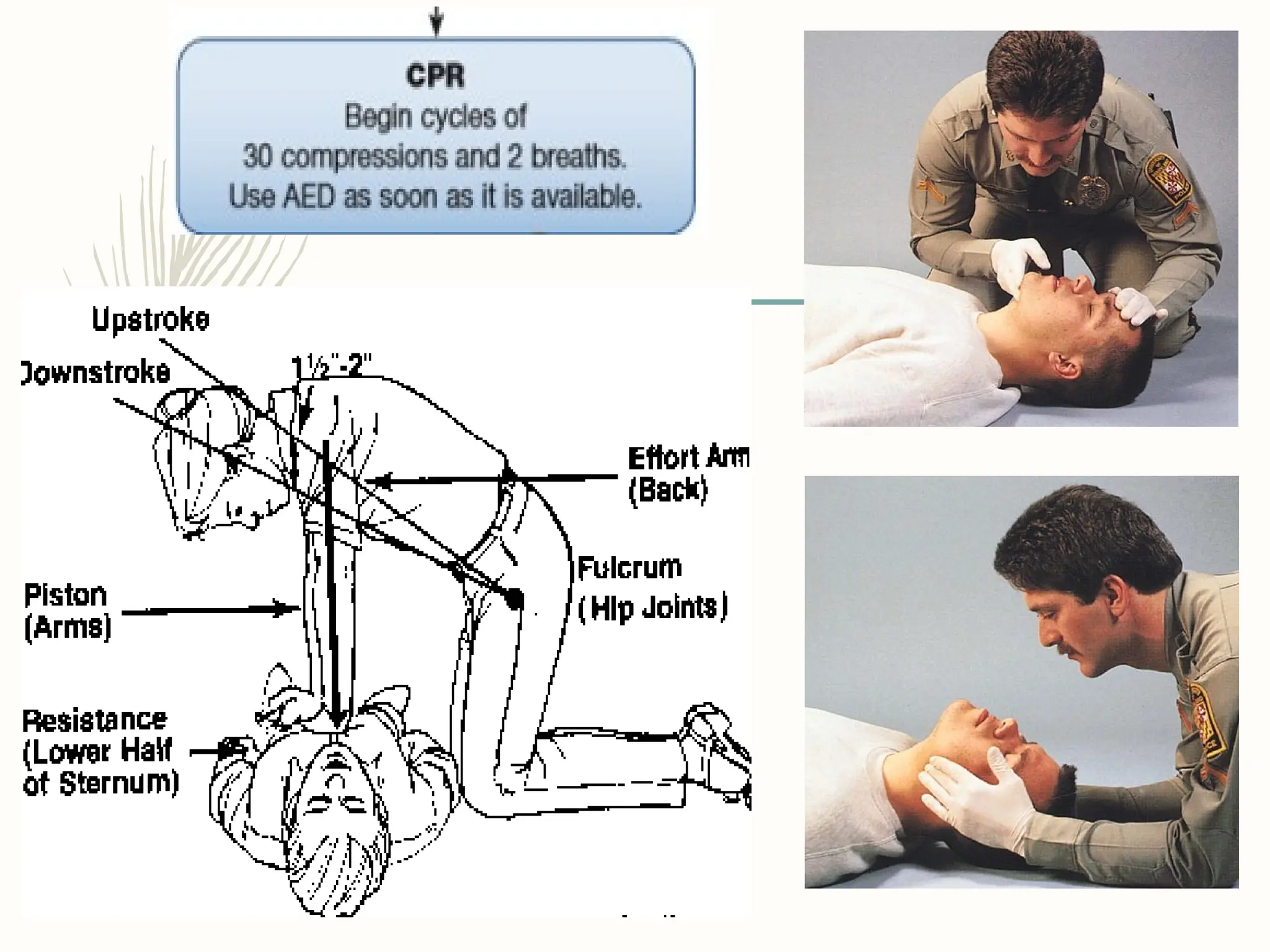
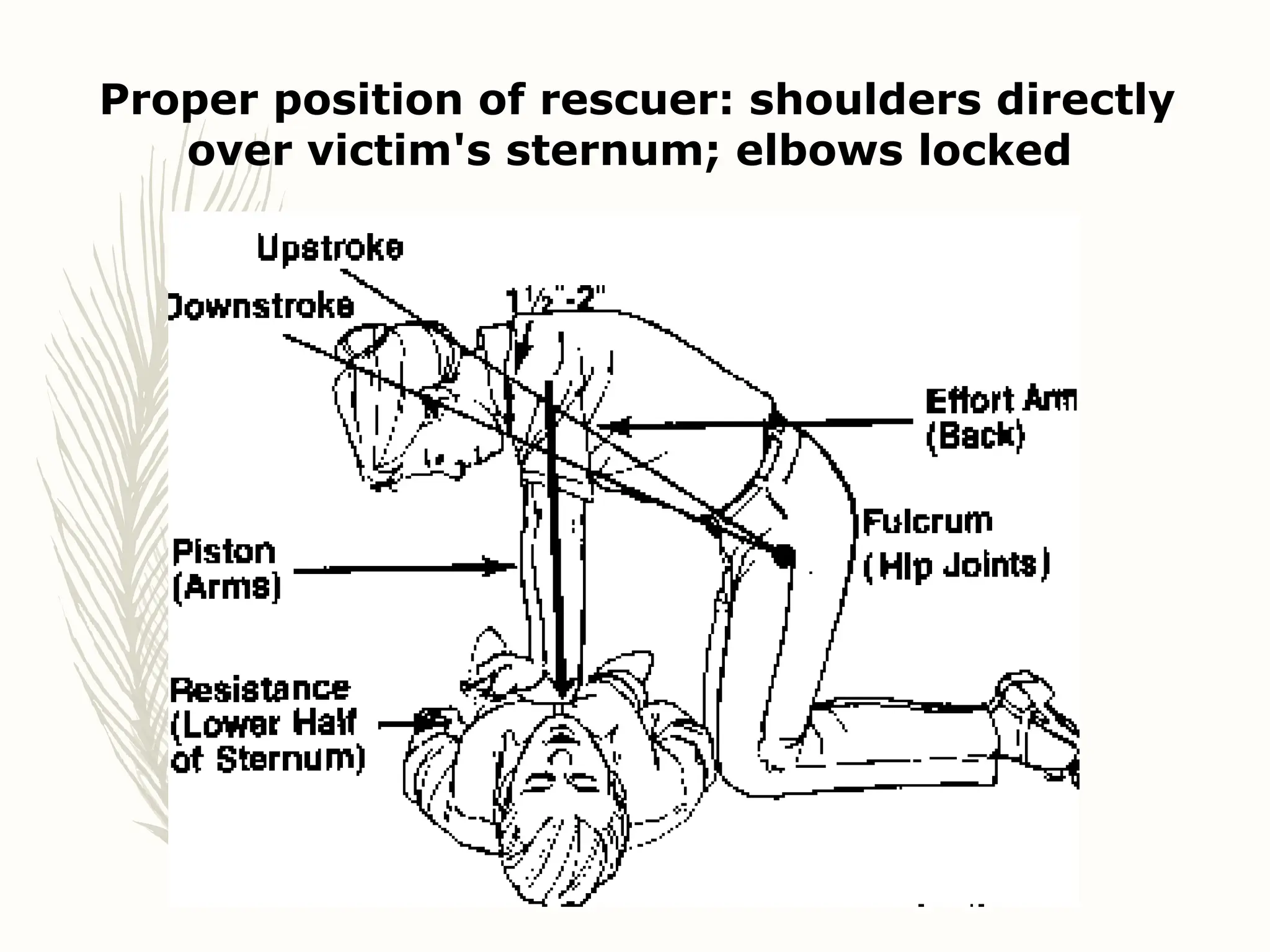
Proper position ofrescuer: shoulders directly
over victim's sternum; elbows locked
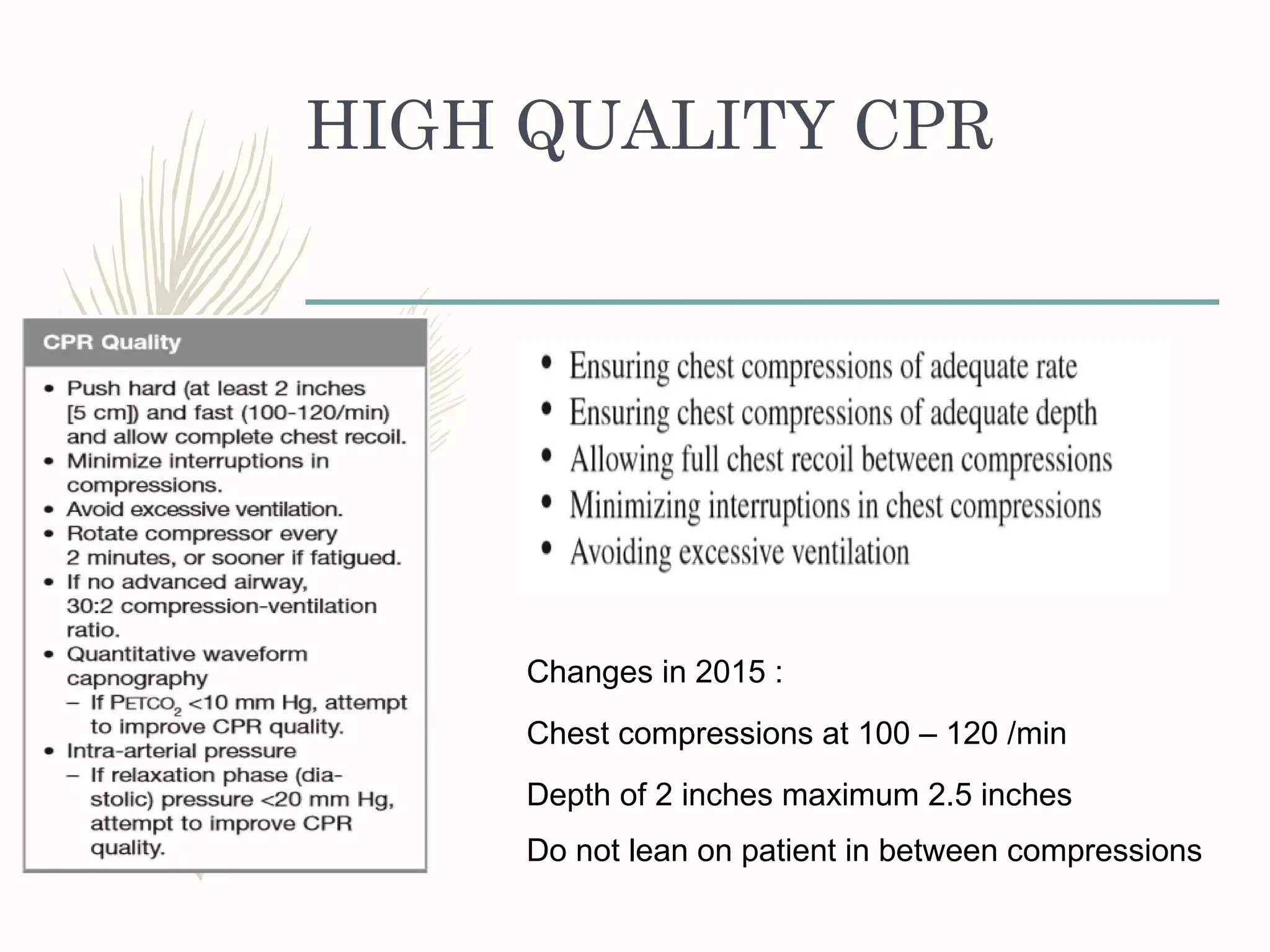
HIGH QUALITY CPR
Changesin 2015 :
Chest compressions at 100 – 120 /min
Depth of 2 inches maximum 2.5 inches
Do not lean on patient in between compressions
17.
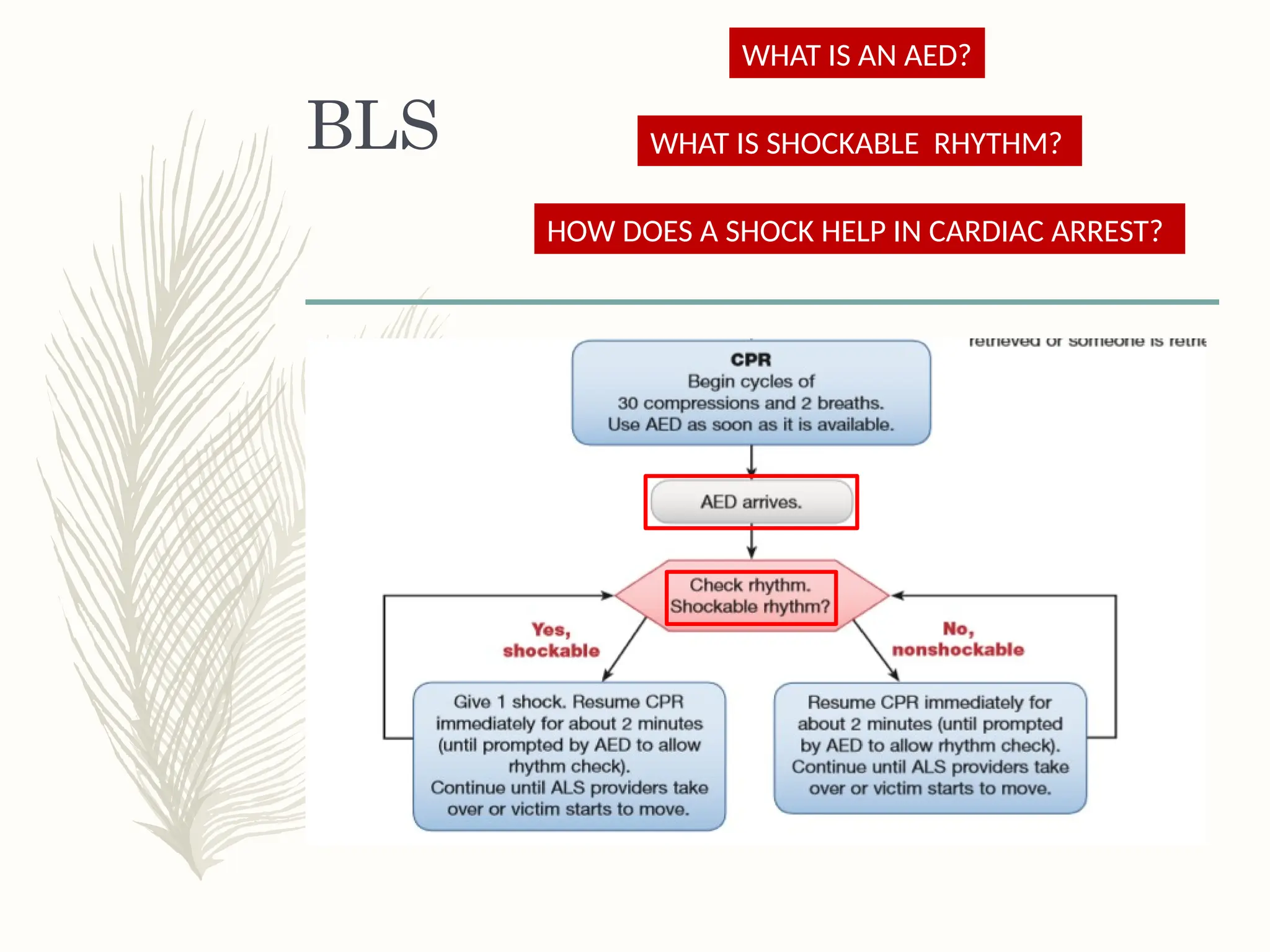
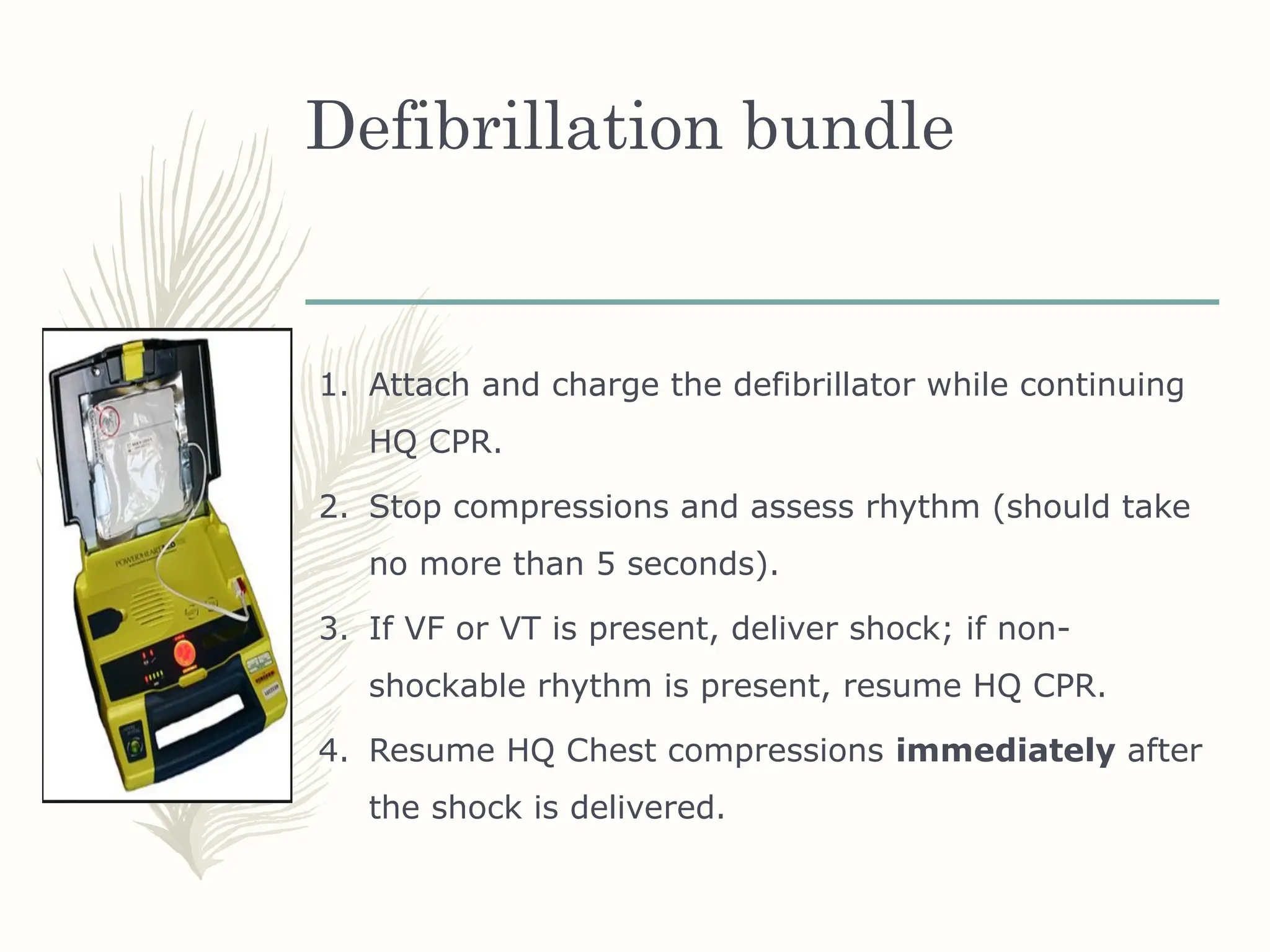
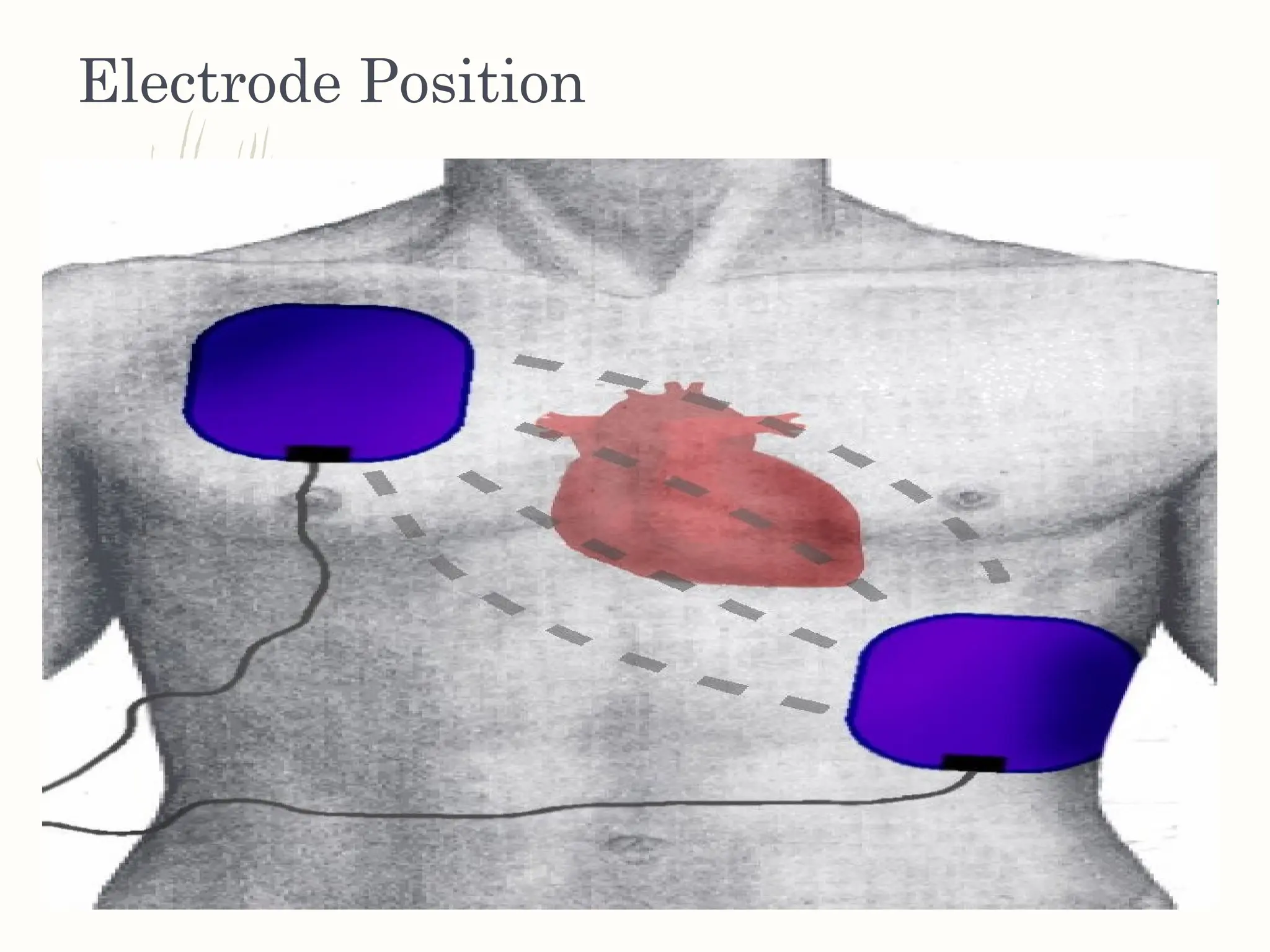
Defibrillation bundle
1. Attachand charge the defibrillator while continuing
HQ CPR.
2. Stop compressions and assess rhythm (should take
no more than 5 seconds).
3. If VF or VT is present, deliver shock; if non-
shockable rhythm is present, resume HQ CPR.
4. Resume HQ Chest compressions immediately after
the shock is delivered.
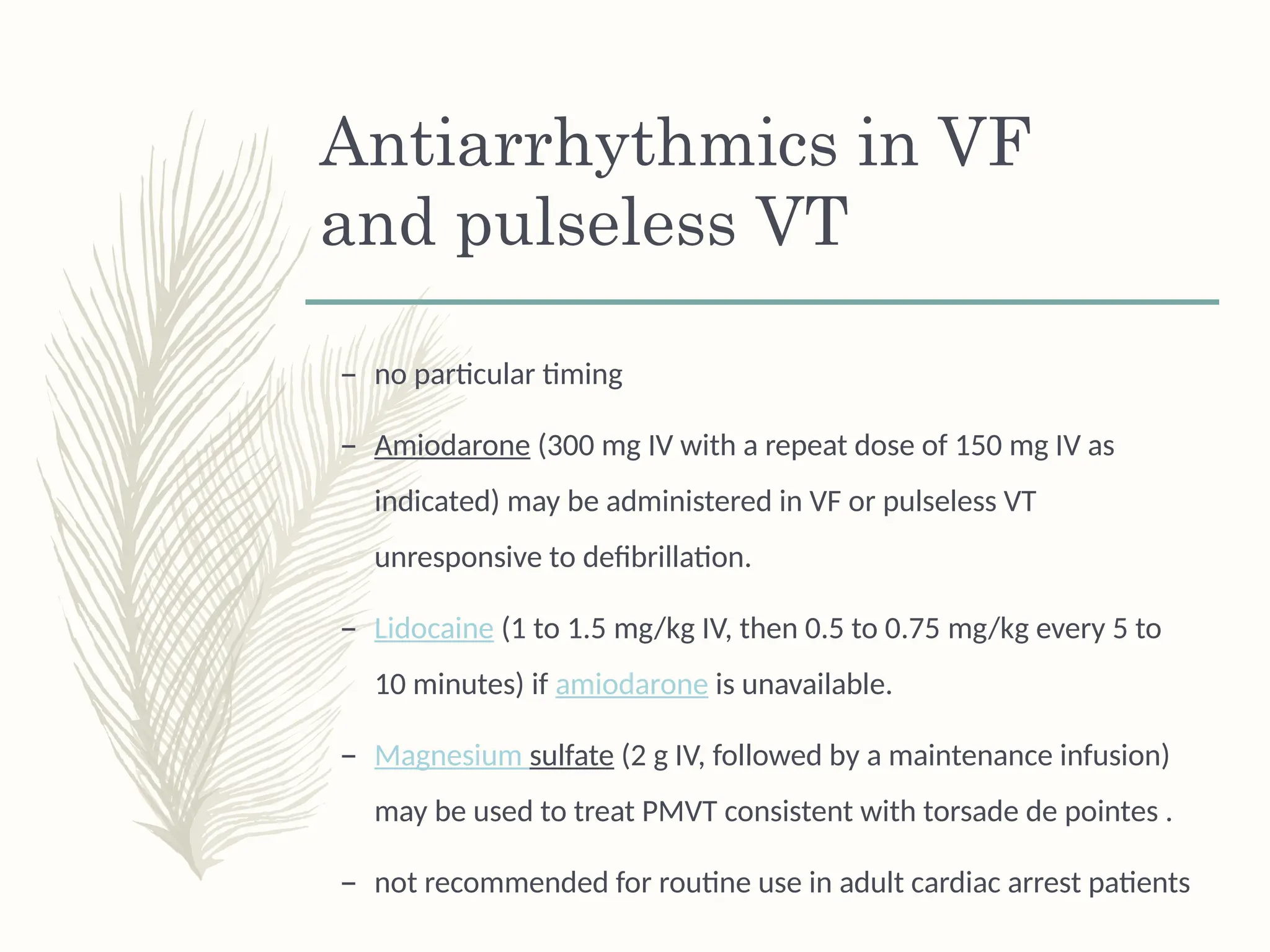
Antiarrhythmics in VF
andpulseless VT
– no particular timing
– Amiodarone (300 mg IV with a repeat dose of 150 mg IV as
indicated) may be administered in VF or pulseless VT
unresponsive to defibrillation.
– Lidocaine (1 to 1.5 mg/kg IV, then 0.5 to 0.75 mg/kg every 5 to
10 minutes) if amiodarone is unavailable.
– Magnesium sulfate (2 g IV, followed by a maintenance infusion)
may be used to treat PMVT consistent with torsade de pointes .
– not recommended for routine use in adult cardiac arrest patients
5Hs and 5Tsof ACLS
Hypoxia Tension pneumothorax
Hypovolemia Tamponade
Hydrogen ions
(acidosis)
Toxins
Hypo/hyper
kalemia
Thrombosis - MI
hypothermia Thrombosis - PE
27.
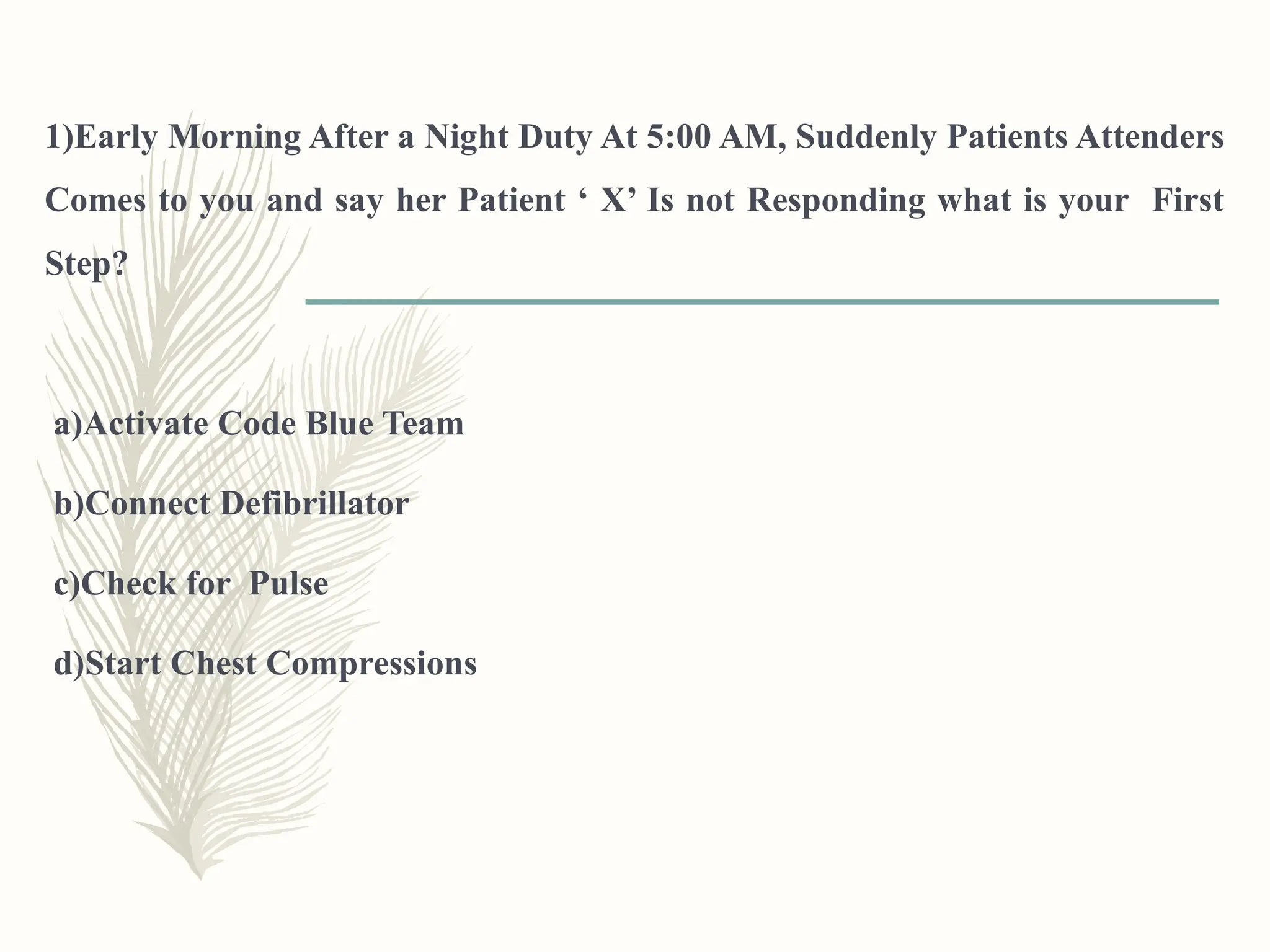
1)Early Morning Aftera Night Duty At 5:00 AM, Suddenly Patients Attenders
Comes to you and say her Patient ‘ X’ Is not Responding what is your First
Step?
a)Activate Code Blue Team
b)Connect Defibrillator
c)Check for Pulse
d)Start Chest Compressions
28.
2. when yousee a Patient unresponsive, you should palpable for carotid
pulse. What is recommended duration for palpating pulse?
a) < 5 sec
b) <10sec
c) <15 sec
d) <20 sec
29.
3.An adult patientin respiratory arrest with a pulse is ventilated via bag valve
mask ?
a)8 to 10 times per minute
b)10 to 12 times per minute
c)12 to 14 times per minute
d)14 to 16 times per minute
30.
4. Chest compressionsfor an adult are performed ?
a)At a rate between 60 and 80 compressions
b)At a rate of at least 80 compressions per minute
c)At a rate between 80 and 100 compressions per minute
d)At a rate between 100 and 120 compressions per minute
31.
5.The ratio ofcompressions to breaths in adults is ?
a)15:1
b)10:2
c)20:2
d)30:2
32.
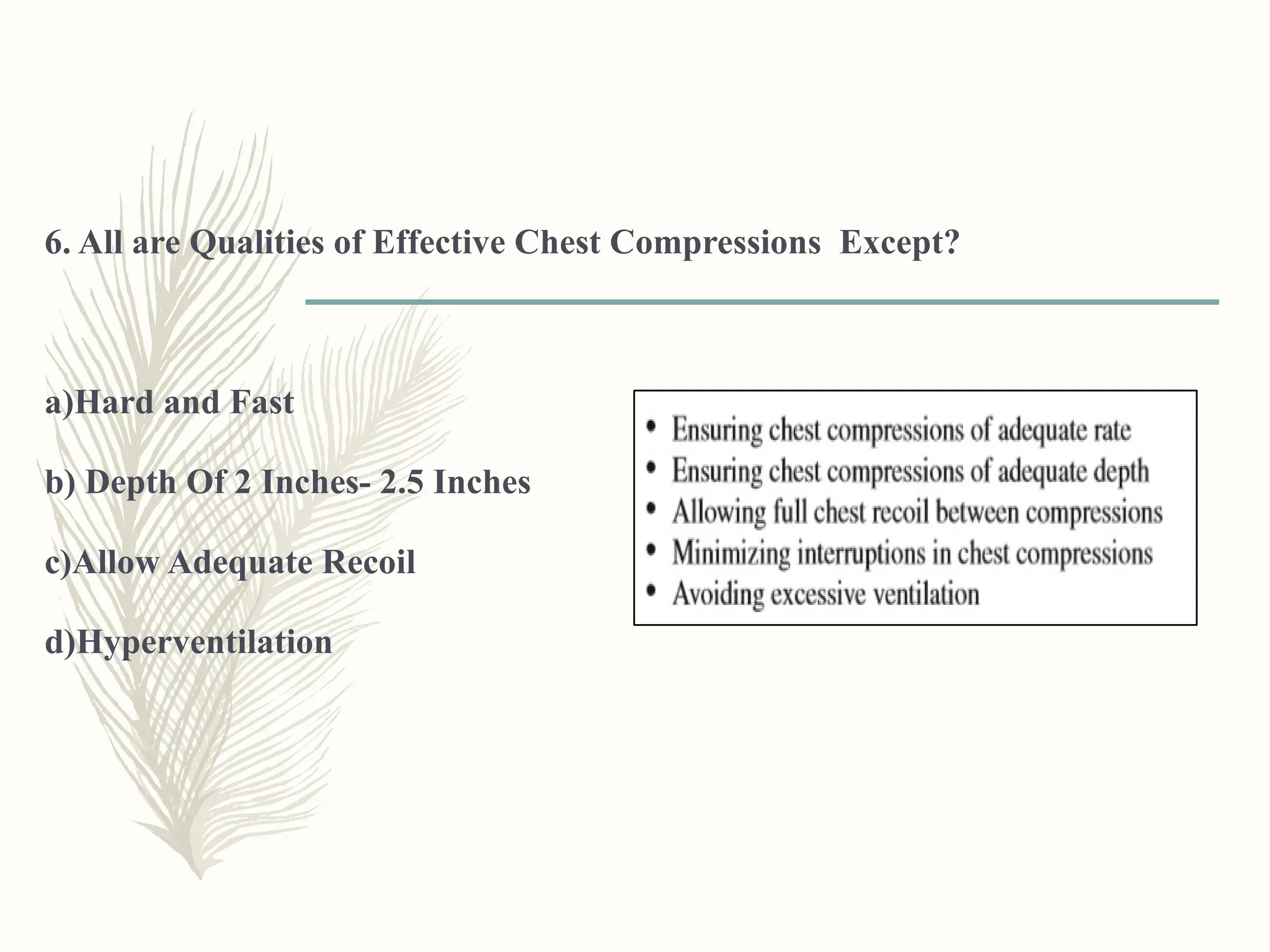
6. All areQualities of Effective Chest Compressions Except?
a)Hard and Fast
b) Depth Of 2 Inches- 2.5 Inches
c)Allow Adequate Recoil
d)Hyperventilation
33.
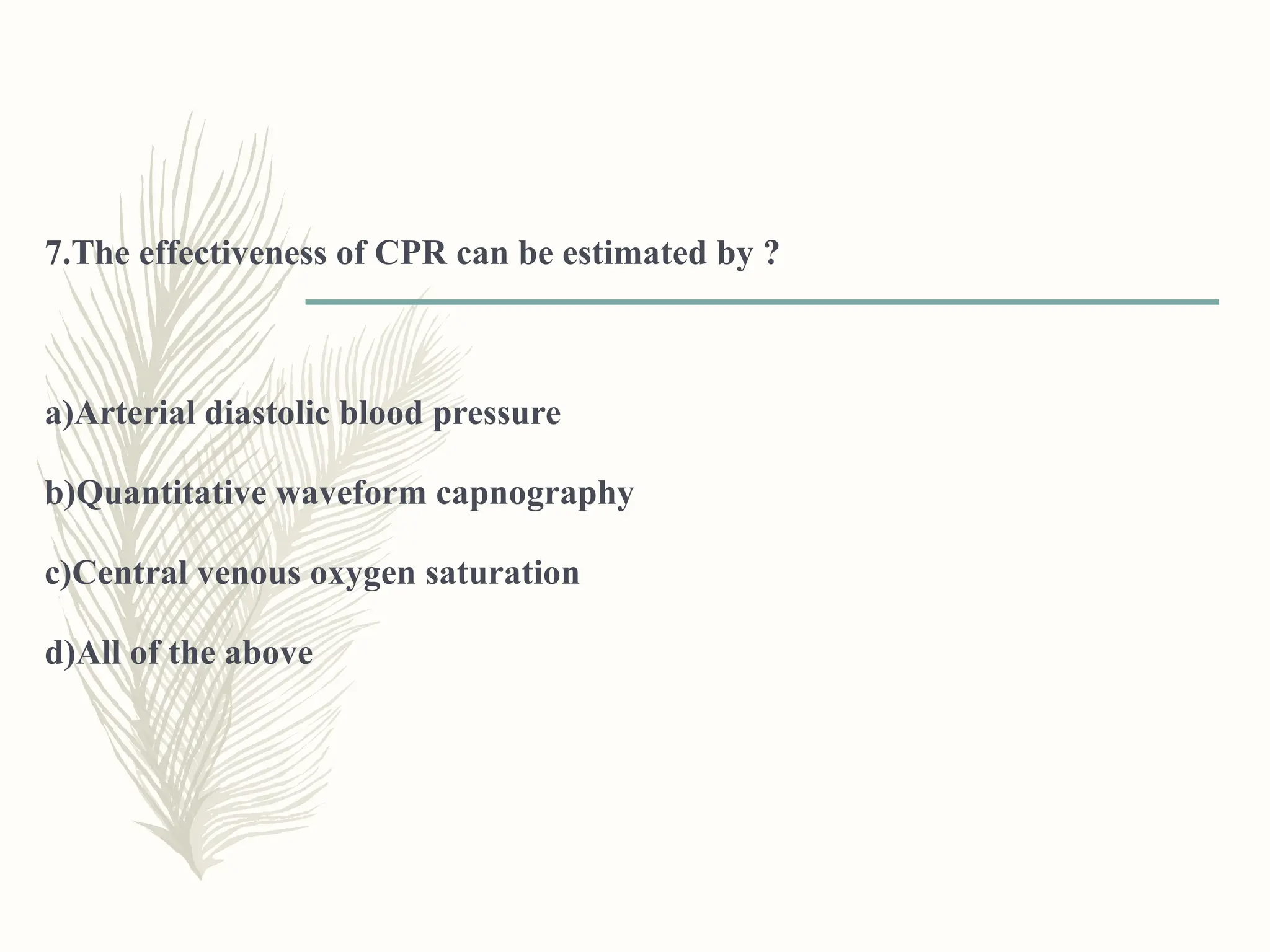
7.The effectiveness ofCPR can be estimated by ?
a)Arterial diastolic blood pressure
b)Quantitative waveform capnography
c)Central venous oxygen saturation
d)All of the above
34.
10. Which ofFollowing is a Shockable Rhythm?
a) PEA
b) VT
c) Asystole
D) VF
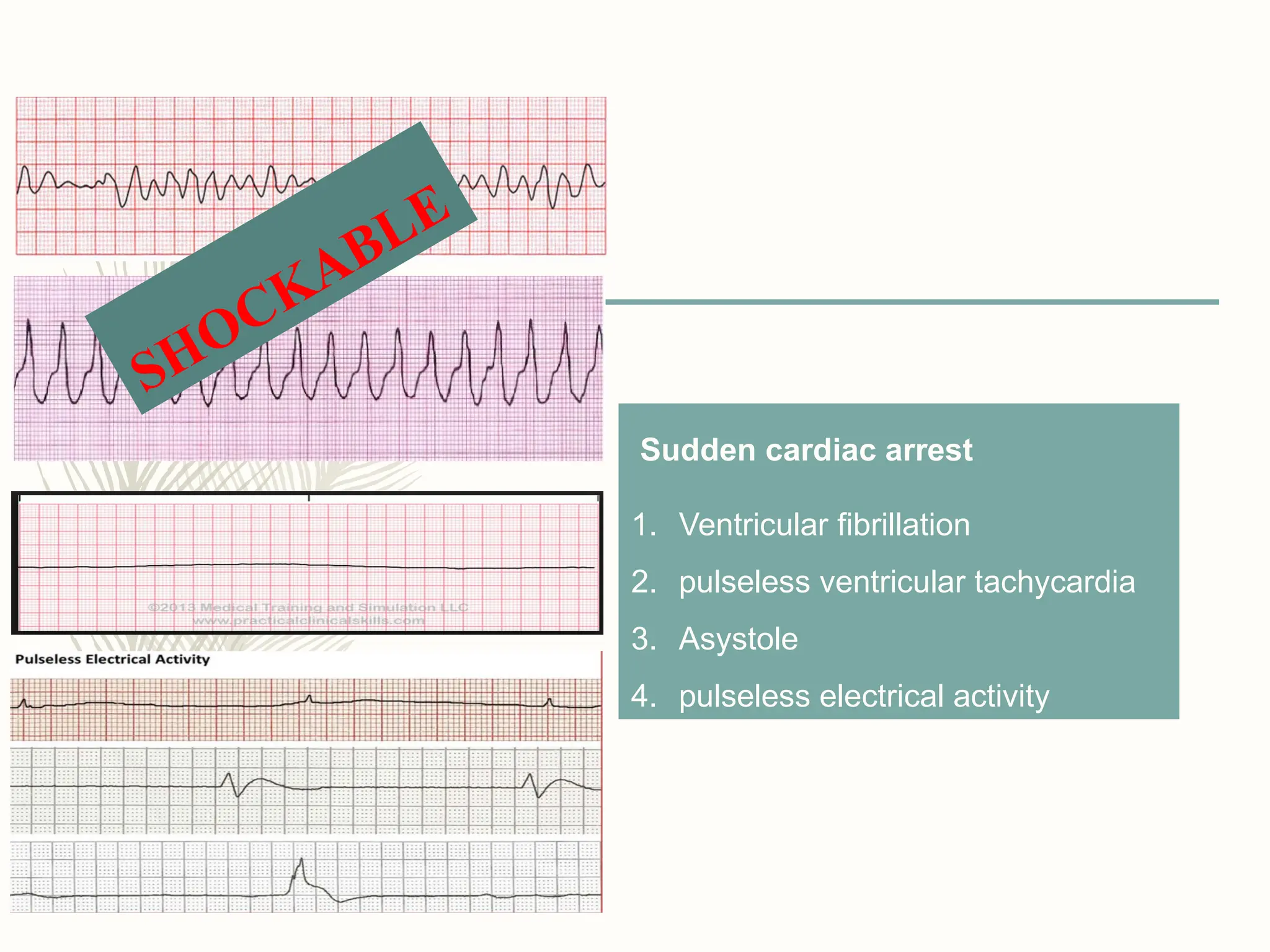
Sudden cardiac arrest
1. Ventricular fibrillation
2. pulseless ventricular tachycardia
3. Asystole
4. pulseless electrical activity
35.
11. What arethe types of shock
a) Cardioversion
b) Defibrillation
c) Both
d) None of the above
36.
12. What willshock do to the heart
a) Restarts the heart
b) Stops the heart
c) Improves contractility
d) None of the above
37.
13. What isCardio-Version ?
A)Synchronized Defibrillation
B) Asynchronized Defibrillation
C) Any of Above
D) None of Above
38.
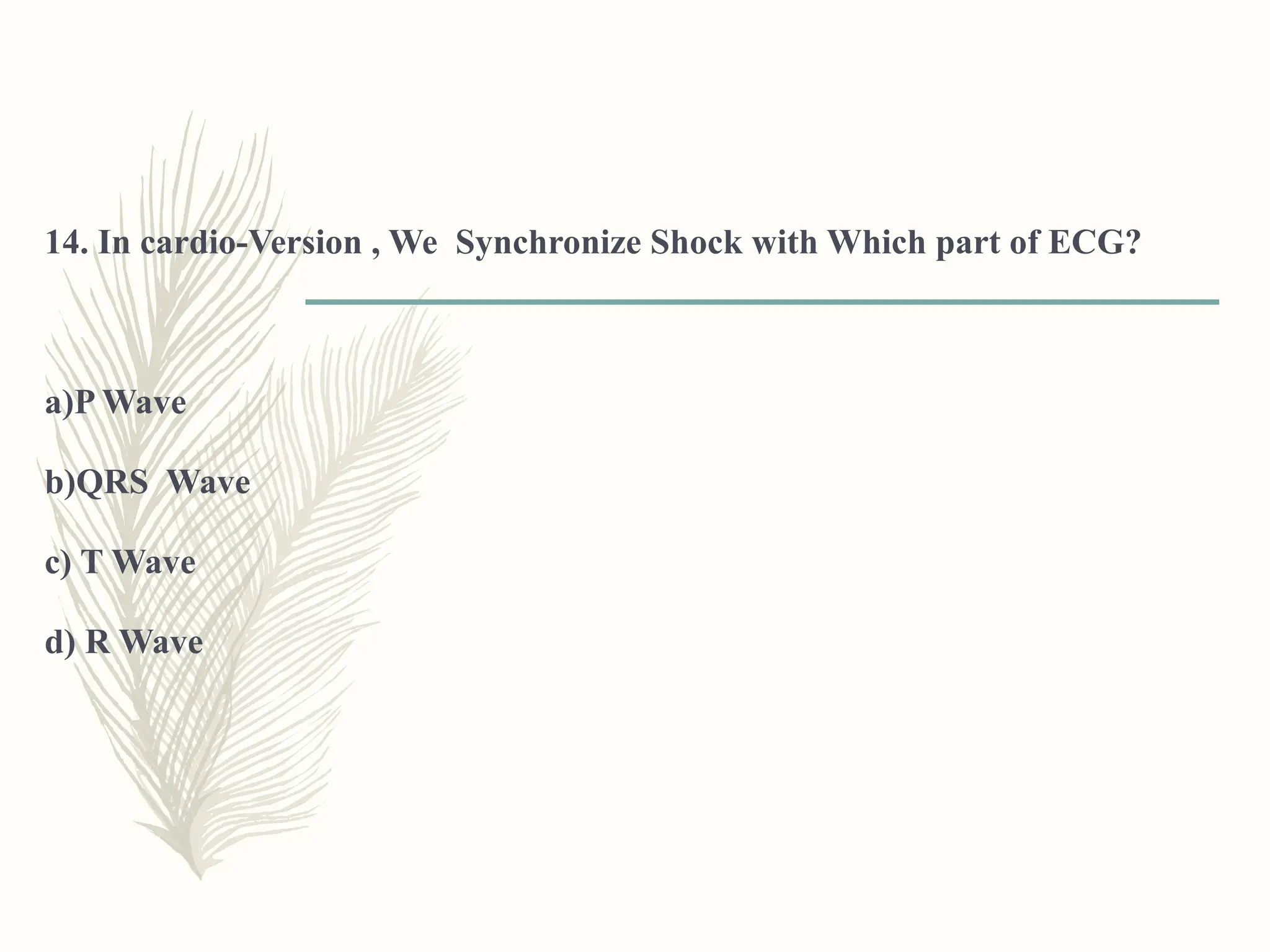
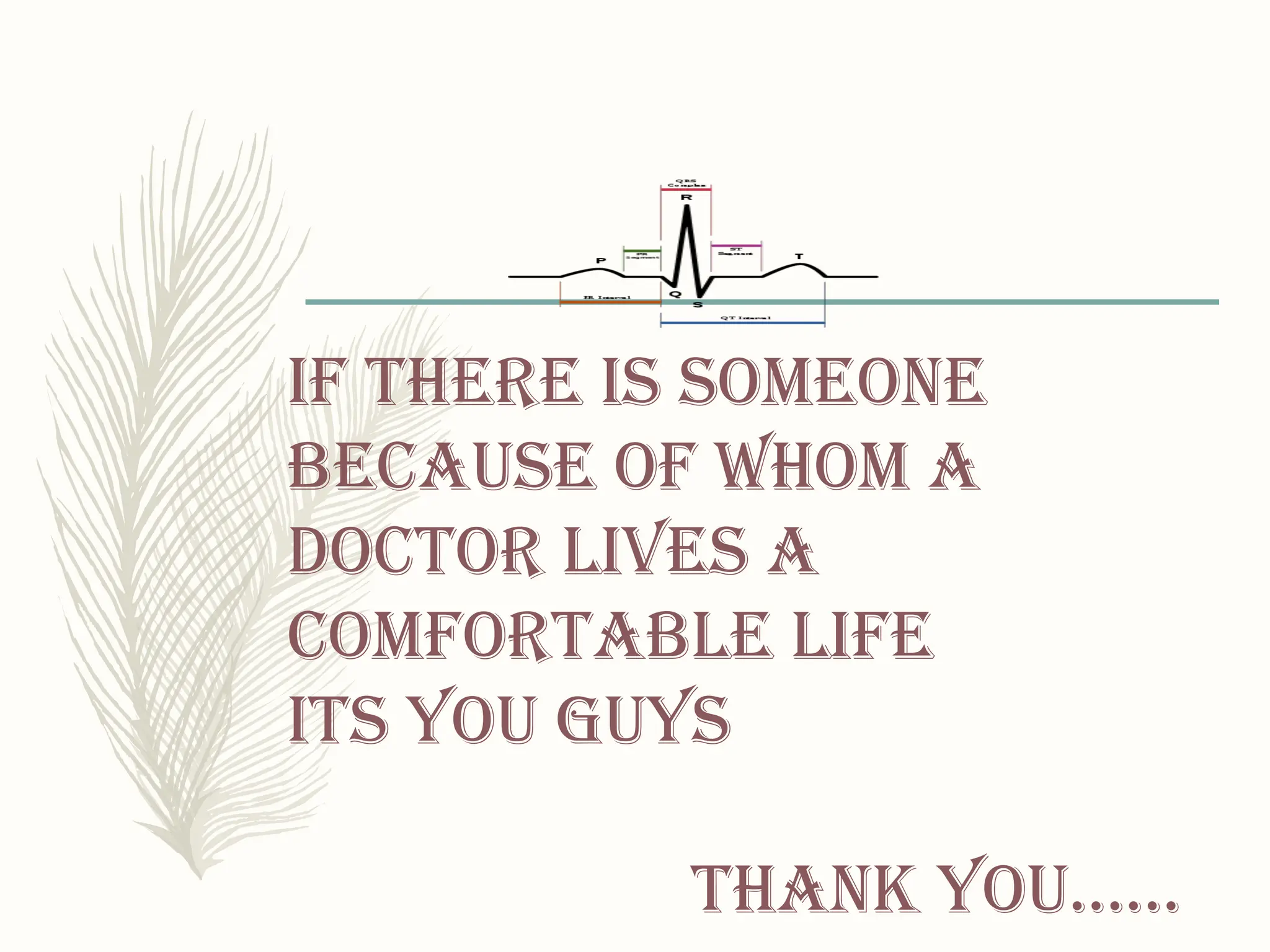
14. In cardio-Version, We Synchronize Shock with Which part of ECG?
a)P Wave
b)QRS Wave
c) T Wave
d) R Wave
39.
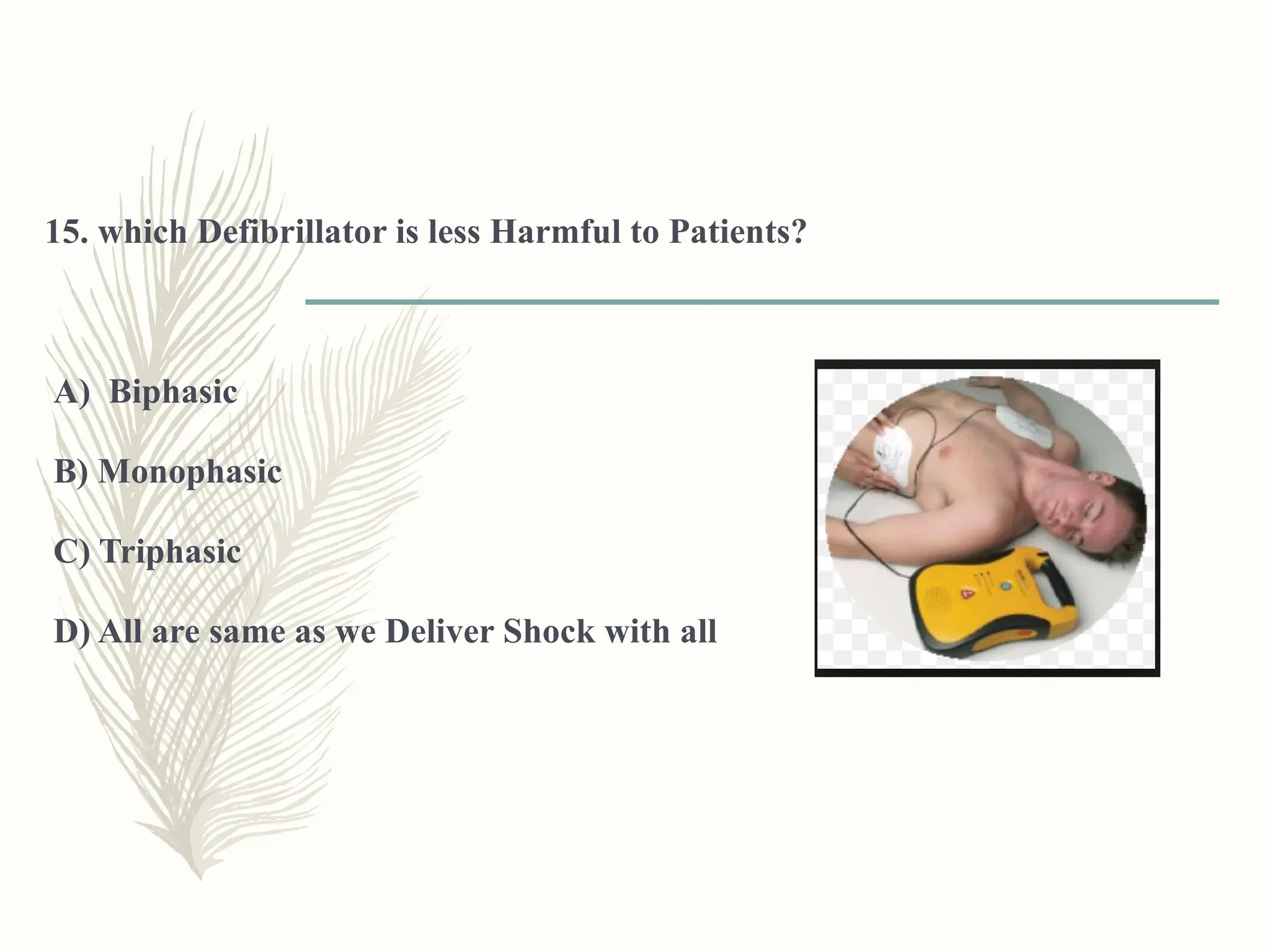
15. which Defibrillatoris less Harmful to Patients?
A) Biphasic
B) Monophasic
C) Triphasic
D) All are same as we Deliver Shock with all
40.
16. Which offollowing Drugs is Not used for cardiac arrest patient as per
Latest AHA Guidelines?
a)Atropine
b)Vasopressin
c) Both
d) None
ATROPINE IN 2013
VASOPRESSIN IN 2015
41.
17. The correctsequence for basic life support is ?
A)ABC - Airway, Breathing, Compressions
B)ACB - Airway, Compressions, Breathing
C)BCA - Breathing, Compressions, Airway
D)CAB - Compressions, Airway, Breathing
42.
18. Pulse lesselectrical activity is treated with _______?
a)Epinephrine
b)Magnesium
c)Atropine
d) Unsynchronized cardio version
43.
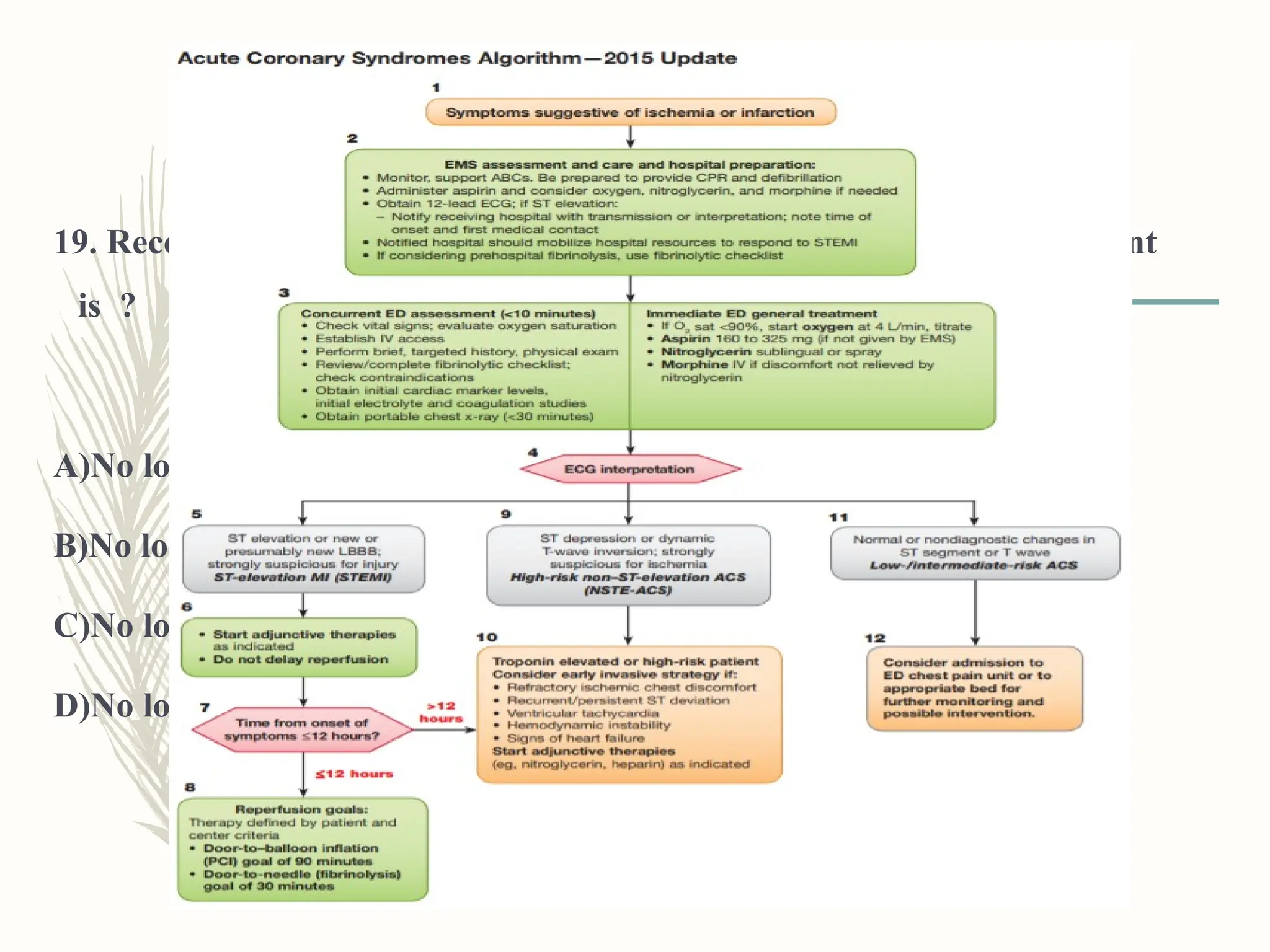
19. Recommended EDdoor to balloon inflation time for a STEMI patient
is ?
A)No longer than 15 minutes
B)No longer than 30 minutes
C)No longer than 60 minutes
D)No longer than 90 minutes
44.
20. An EMTdiscovers STEMI on a 12-lead ECG in the ambulance. The best
option is to?
a) Take the patient to a hospital capable of providing open-heart surgery,
regardless of fibrinolysis or PCI capability
b) Take the patient to a hospital capable of providing fibrinolysis only (not
PCI), 5 minutes away
c) Provide fibrinolysis in the ambulance then take the patient to a hospital
capable of providing PCI, 15 minutes away
d) Take the patient to a hospital capable of providing PCI, 15 minutes away.
45.
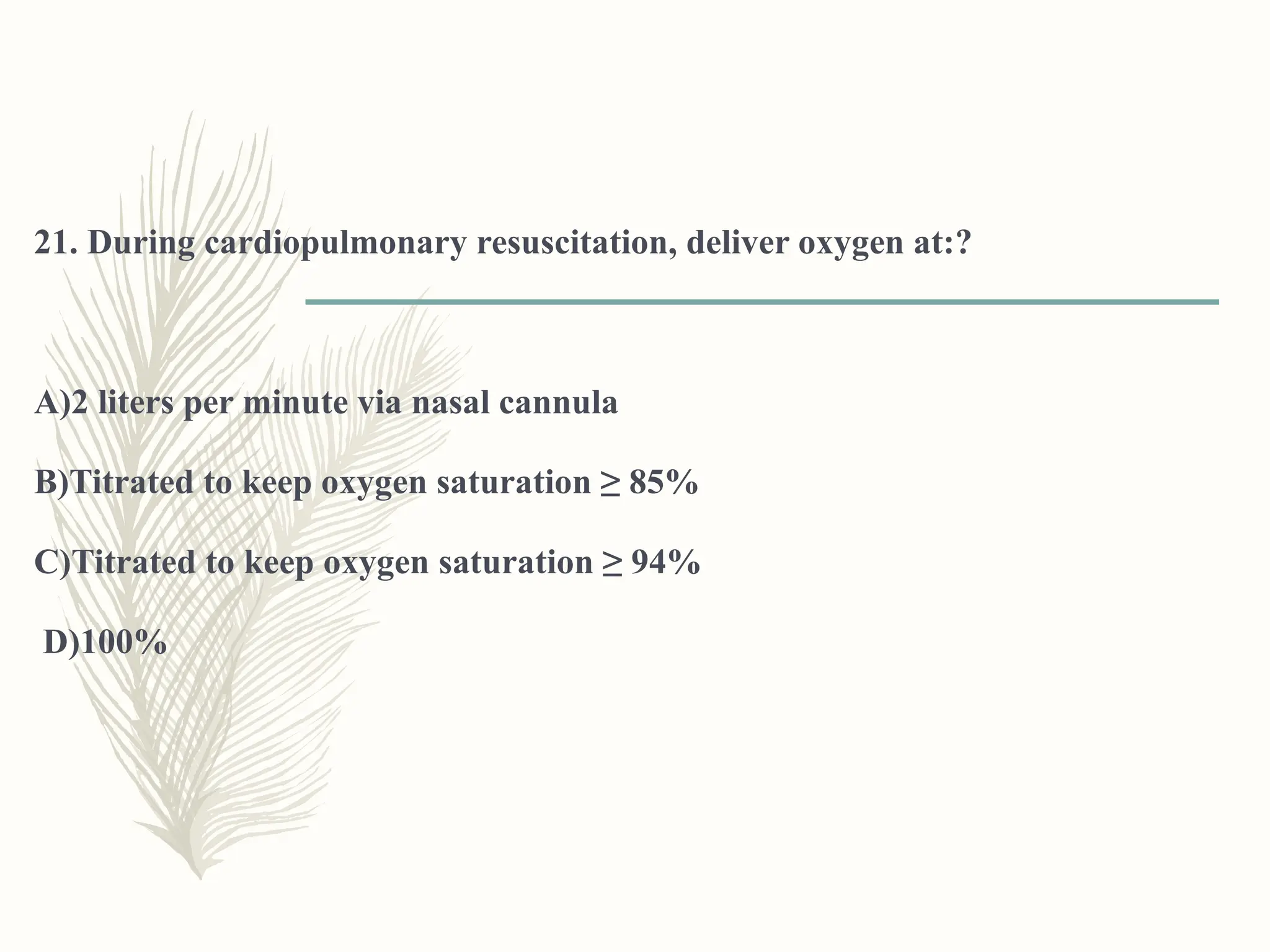
21. During cardiopulmonaryresuscitation, deliver oxygen at:?
A)2 liters per minute via nasal cannula
B)Titrated to keep oxygen saturation ≥ 85%
C)Titrated to keep oxygen saturation ≥ 94%
D)100%
46.
22. You arethe paramedic on an ambulance transporting a 65-year-old
female. The patient is connected to the monitor and you see this rhythm;
she has a palpable pulse. What is the rhythm?
A)Sinus bradycardia
B)Sinus rhythm
C)PEA
D)Second degree heart block
47.
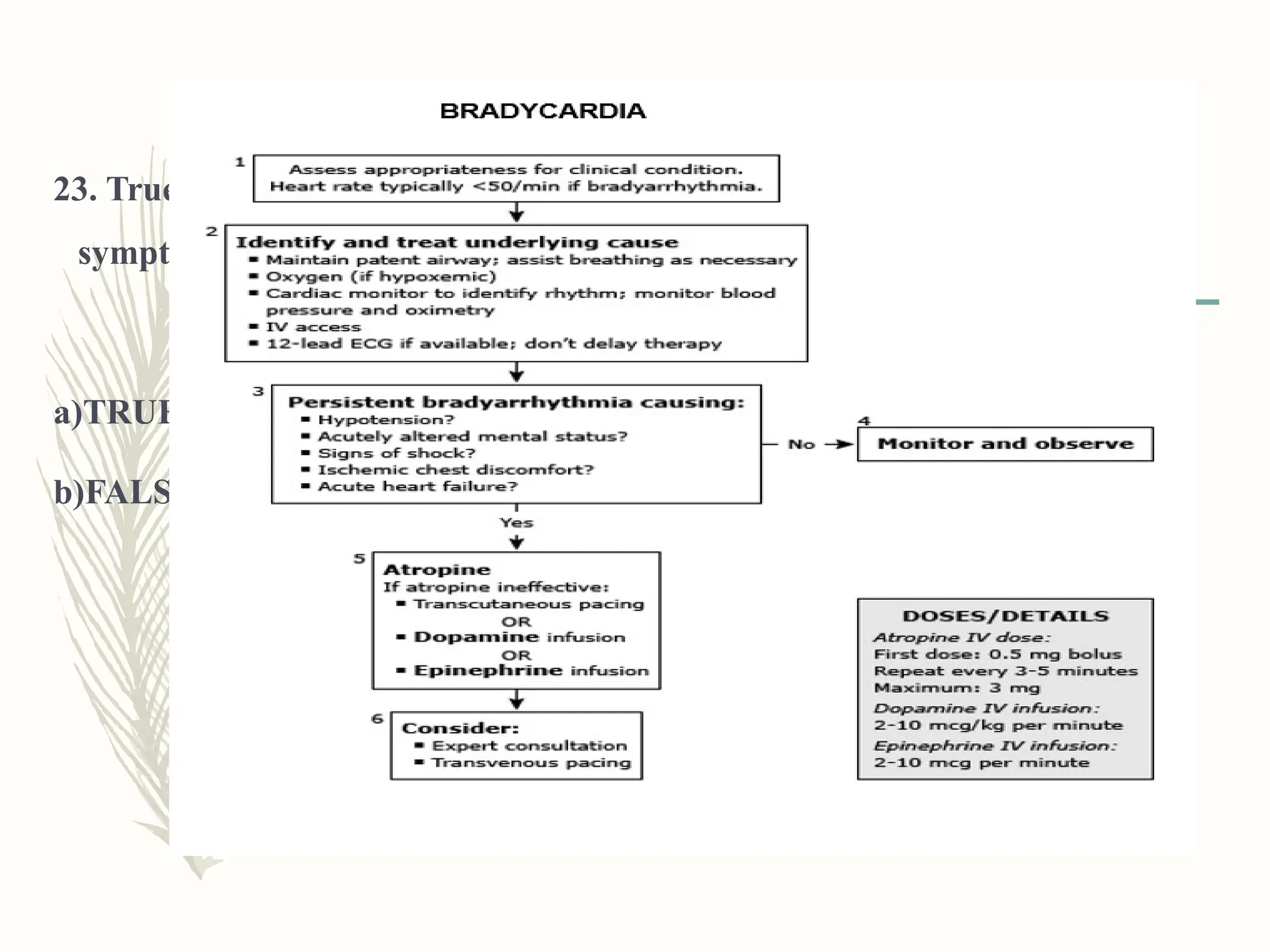
23. True orFalse: The initial recommended dosage of atropine for
symptomatic bradycardia is 0.5 mg IV.?
a)TRUE
b)FALSE
48.
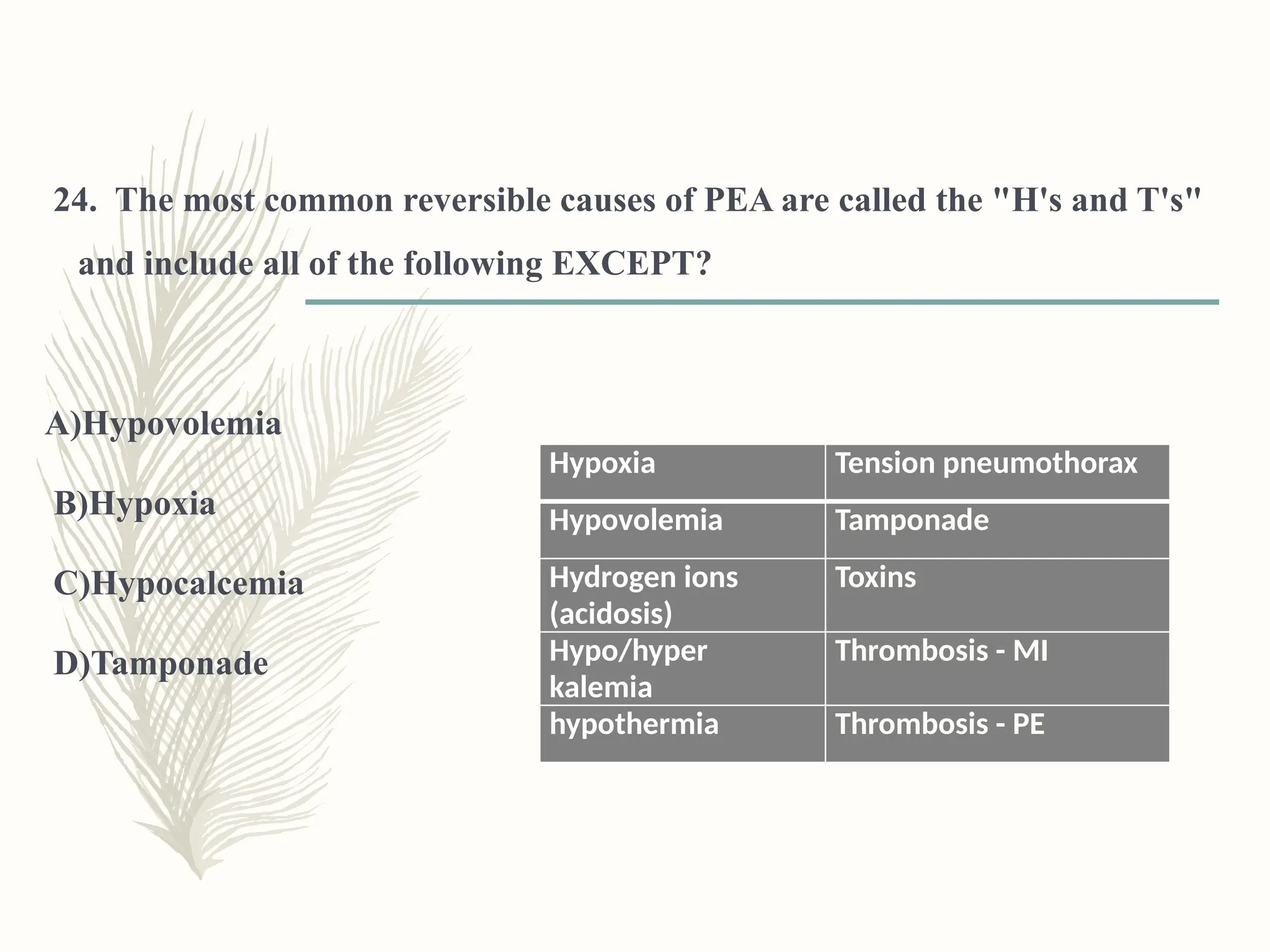
24. The mostcommon reversible causes of PEA are called the "H's and T's"
and include all of the following EXCEPT?
A)Hypovolemia
B)Hypoxia
C)Hypocalcemia
D)Tamponade
Hypoxia Tension pneumothorax
Hypovolemia Tamponade
Hydrogen ions
(acidosis)
Toxins
Hypo/hyper
kalemia
Thrombosis - MI
hypothermia Thrombosis - PE
49.
25. The goalfor initiation of fibrinolytic therapy in appropriate stroke
patients is?
a)Within 4 hours of arrival to the ED
b) Within 6 hours of arrival to the ED
c) Within 3 hours of arrival to the ED
d)Within 1 hour of arrival to the ED
50.
26. Hypotension followingcardiac arrest is NOT treated with ?
a)IV calcium infusion
b)IV dopamine infusion
c)IV epinephrine infusion
d)IV Ringer’s lactate or IV normal saline
51.
27. The leaderin team resuscitation must ?
a)Be able to perform all the skills if needed
b)Be certified as a leader
c)Be a physician
d)Undergo leadership training
52.
IF THERE ISSOMEONE
BECAUSE OF WHOM A
DOCTOR LIVES A
COMFORTABLE LIFE
ITS YOU GUYS
THANK YOU……