BARRIERS TO
ETHICAL
PRACTICE
by/ Dr. Inas Ebeid
Taibah University
LEARNING OBJECTIVES
Up on completion of this lecture the student nurse will
be able to
1- define ethical practice
2- identify common barriers to ethical practice
INTRODUCTION
While Bioethics is now taught at all medical and
nursing colleges, there are increasing difference
between what we are teaching what has been faced in
daily practice. we shall discuss some of barriers to
ethical practice and haw the nurse cane overcome it.
DEFINITION OF ETHICAL
PRACTICE
Ethical practice refers to the standards of
professional conduct that any professional is
expected to uphold.
THERE ARE SOME BARRIERS TO THE
ETHICAL PRACTICE. THEY ARE:
1. Lack of knowledge of Ethical Standards
2. Financial Incentives
3. Perfectionism
4. Fear of Criticism/Scrutiny by Others
5. High Affiliation Needs
To be continued
6- Personal and/or Professional Immaturity
7- Lack of Personal Values Clarification
8- Biases
9- Rationalizing immoral action by deciding that morality
just isn’t all that important:
10-perception that we have little influence over events
To be continued
11- Limitations of Codes of Ethics and Conduct
12- Slippery Slope
13- Lack of a Decision Making Model
1- LACK OF KNOWLEDGE OF
ETHICAL STANDARDS
Nursing profession is fast paced and ever
changing. nurses are obliged to remain committed
to ongoing learning and development within the
profession. This includes continuing awareness of
relevant ethical codes and standards.
To be continued
It also incorporates knowledge of legal
standards and laws. Ignorance is not a
defense. nurses can overcome this obstacle
through personal commitment to professional
development of their knowledge of legal
standards.
2- FINANCIAL INCENTIVES
Ethical dilemmas often present in the form of gifts or rewards
offered to the nurses by the client.
Nurses may justify the acceptance of such gifts/rewards by
undervaluing the monetary value of their role.
Nurses may rationalize this behavior by telling themselves that
they are underpaid and deserve it.
Reaffirming the situation may assist the nurse in overcoming this
obstacle.
3 - PERFECTIONISM
A large barrier of the ethical problem solving
process is the nurse’s fear of not making a
good decision.
Nurse may become over concerned with ‘doing
the right thing’, so much so that they are
unable to put the decision into practice
4 - FEAR OF CRITICISM
- No one likes to be criticized and nurses
are not different.
- To overcome the fear, a nurse needs to
accept that the choice they have made is
the correct one for the situation and that
not everyone will be pleased.
5 - HIGH AFFILIATION NEEDS
- This barrier often accompanies perfectionism.
- Many nurses have a need to be liked and accepted and ethical
decisions may be affected.
- This need can leave the nurse to use manipulation.
- Personal awareness can help the nurse overcome this barrier.
PERSONAL AND/OR PROFESSIONAL
IMMATURITY
1. Immaturity can be defined as acting impulsively
without any conviction.
2. Immaturity involves acting on and implementing
decisions that satisfy the nurses’ first, often without
any consideration to the client.
3. The use of an ethical problem solving process can
assist in overcoming this barrier.
LACK OF PERSONAL VALUES
CLARIFICATION
nurses also need to assess their awareness of self and self
values.
Nurses frequently need to increase self awareness by several
methods…….
- BIASES
A- Biases about other people:
-we often trust in the experience of authority
Figures(Obedience to Authority), but occasionally this
trust is misplaced.
B- Biases about ourselves
-We have illusions of superiority (we’re morally better
people than others).
To overcome this : Be mindful of these biases and avoid
them. you are ultimately responsible for your own actions
RATIONALIZING IMMORAL ACTION BY
DECIDING THAT MORALITY JUST ISN’T
ALL THAT IMPORTANT.
To overcome this obstacle:
• Be mindful of this tendency – ask
yourself whether it is something you truly
believe, or merely an excuse for self-
serving action.
- perception that we have little
influence over events:
- the more control we believe we have over an event,
the more we tend to perceive ourselves as
responsible for the events we bring about or allow
to happen.
- To overcome this obstacle: Be mindful of the
tendency to minimize the importance of your
action – particularly in situations where the impact
of your actions is not immediately evident.
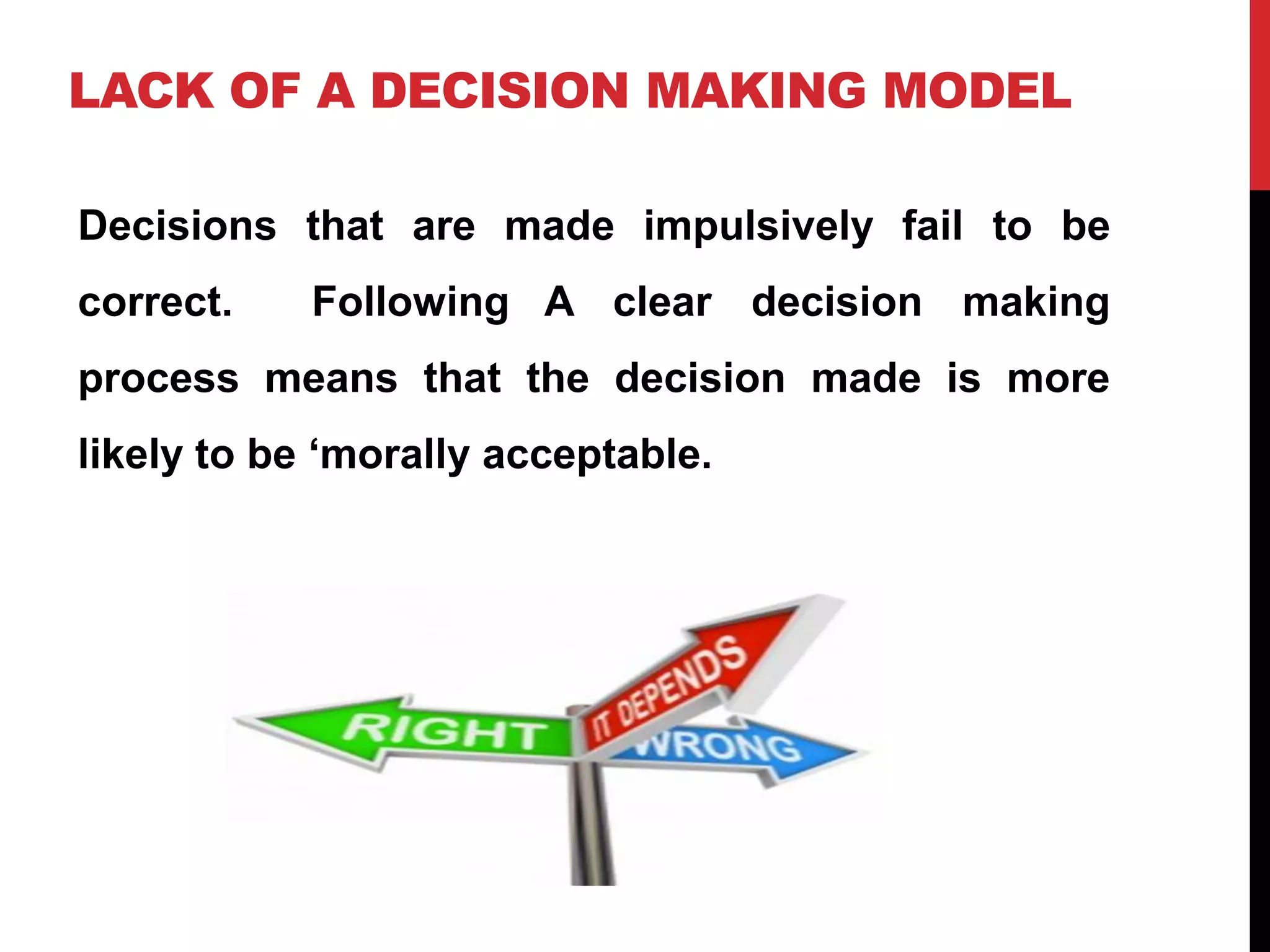
LACK OF A DECISION MAKING MODEL
Decisions that are made impulsively fail to be
correct. Following A clear decision making
process means that the decision made is more
likely to be ‘morally acceptable.
LIMITATIONS OF CODES OF
ETHICS AND CONDUCT
Written in broad, general terms not specific to
any one particular situation.
Silent or blind to some situations/problems
Vital to remain alert to the Ethical Codes offered by
professional memberships and acknowledge limits.
SLIPPERY SLOPE
- People are willing to do unethical things because
they have already done smaller, less extreme acts
that make the bigger choice appear less or not at
all unethical.
To overcome this obstacle: Break down your
challenges into smaller, immediately actionable
steps ,and you can tackle larger problems.
Barriers to ethical practice

Barriers to ethical practice

  • 1.
    BARRIERS TO ETHICAL PRACTICE by/ Dr.Inas Ebeid Taibah University
  • 2.
    LEARNING OBJECTIVES Up oncompletion of this lecture the student nurse will be able to 1- define ethical practice 2- identify common barriers to ethical practice
  • 3.
    INTRODUCTION While Bioethics isnow taught at all medical and nursing colleges, there are increasing difference between what we are teaching what has been faced in daily practice. we shall discuss some of barriers to ethical practice and haw the nurse cane overcome it.
  • 4.
    DEFINITION OF ETHICAL PRACTICE Ethicalpractice refers to the standards of professional conduct that any professional is expected to uphold.
  • 5.
    THERE ARE SOMEBARRIERS TO THE ETHICAL PRACTICE. THEY ARE: 1. Lack of knowledge of Ethical Standards 2. Financial Incentives 3. Perfectionism 4. Fear of Criticism/Scrutiny by Others 5. High Affiliation Needs To be continued
  • 6.
    6- Personal and/orProfessional Immaturity 7- Lack of Personal Values Clarification 8- Biases 9- Rationalizing immoral action by deciding that morality just isn’t all that important: 10-perception that we have little influence over events To be continued
  • 7.
    11- Limitations ofCodes of Ethics and Conduct 12- Slippery Slope 13- Lack of a Decision Making Model
  • 8.
    1- LACK OFKNOWLEDGE OF ETHICAL STANDARDS Nursing profession is fast paced and ever changing. nurses are obliged to remain committed to ongoing learning and development within the profession. This includes continuing awareness of relevant ethical codes and standards. To be continued
  • 9.
    It also incorporatesknowledge of legal standards and laws. Ignorance is not a defense. nurses can overcome this obstacle through personal commitment to professional development of their knowledge of legal standards.
  • 10.
    2- FINANCIAL INCENTIVES Ethicaldilemmas often present in the form of gifts or rewards offered to the nurses by the client. Nurses may justify the acceptance of such gifts/rewards by undervaluing the monetary value of their role. Nurses may rationalize this behavior by telling themselves that they are underpaid and deserve it. Reaffirming the situation may assist the nurse in overcoming this obstacle.
  • 11.
    3 - PERFECTIONISM Alarge barrier of the ethical problem solving process is the nurse’s fear of not making a good decision. Nurse may become over concerned with ‘doing the right thing’, so much so that they are unable to put the decision into practice
  • 12.
    4 - FEAROF CRITICISM - No one likes to be criticized and nurses are not different. - To overcome the fear, a nurse needs to accept that the choice they have made is the correct one for the situation and that not everyone will be pleased.
  • 13.
    5 - HIGHAFFILIATION NEEDS - This barrier often accompanies perfectionism. - Many nurses have a need to be liked and accepted and ethical decisions may be affected. - This need can leave the nurse to use manipulation. - Personal awareness can help the nurse overcome this barrier.
  • 14.
    PERSONAL AND/OR PROFESSIONAL IMMATURITY 1.Immaturity can be defined as acting impulsively without any conviction. 2. Immaturity involves acting on and implementing decisions that satisfy the nurses’ first, often without any consideration to the client. 3. The use of an ethical problem solving process can assist in overcoming this barrier.
  • 15.
    LACK OF PERSONALVALUES CLARIFICATION nurses also need to assess their awareness of self and self values. Nurses frequently need to increase self awareness by several methods…….
  • 16.
    - BIASES A- Biasesabout other people: -we often trust in the experience of authority Figures(Obedience to Authority), but occasionally this trust is misplaced. B- Biases about ourselves -We have illusions of superiority (we’re morally better people than others). To overcome this : Be mindful of these biases and avoid them. you are ultimately responsible for your own actions
  • 17.
    RATIONALIZING IMMORAL ACTIONBY DECIDING THAT MORALITY JUST ISN’T ALL THAT IMPORTANT. To overcome this obstacle: • Be mindful of this tendency – ask yourself whether it is something you truly believe, or merely an excuse for self- serving action.
  • 18.
    - perception thatwe have little influence over events: - the more control we believe we have over an event, the more we tend to perceive ourselves as responsible for the events we bring about or allow to happen. - To overcome this obstacle: Be mindful of the tendency to minimize the importance of your action – particularly in situations where the impact of your actions is not immediately evident.
  • 19.
    LACK OF ADECISION MAKING MODEL Decisions that are made impulsively fail to be correct. Following A clear decision making process means that the decision made is more likely to be ‘morally acceptable.
  • 20.
    LIMITATIONS OF CODESOF ETHICS AND CONDUCT Written in broad, general terms not specific to any one particular situation. Silent or blind to some situations/problems Vital to remain alert to the Ethical Codes offered by professional memberships and acknowledge limits.
  • 21.
    SLIPPERY SLOPE - Peopleare willing to do unethical things because they have already done smaller, less extreme acts that make the bigger choice appear less or not at all unethical. To overcome this obstacle: Break down your challenges into smaller, immediately actionable steps ,and you can tackle larger problems.