Ethical issue
Sara M Aljanabi
King Abdul-Aziz University
outline
 Means of ethics and Cod of ethics
 American nurses association code of ethics and professional standards
 Ethical principles
 Moral problem
 Common Nursing Ethics Dilemmas
 Clarified the ethical decisions
 Nurse executive behaviours
 Ethical power
Ethical dilemma
Means of ethics
Discipline in the judgment of rightness or wrongness, unfairness or fairness with moral
duty and obligation.
Professional codes of ethics function as a guide to the highest standards of ethical practice
for nurses. They are not legally binding.
A professional code of ethics is a set of principles, established by a profession, to guide
the individual practitioner.
Code of Ethics
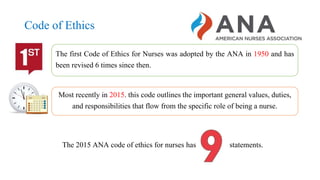
The 2015 ANA code of ethics for nurses has nine statements.
The first Code of Ethics for Nurses was adopted by the ANA in 1950 and has
been revised 6 times since then.
Most recently in 2015. this code outlines the important general values, duties,
and responsibilities that flow from the specific role of being a nurse.
Code of Ethics
clients rights and safety
health work cultures and self-care
The social issues relates to the
nurses obligations to society
and the profession
American nurses association code of ethics and
professional standards
1. The nurse practices with respect for the inherent dignity, worth, and uniqueness of
every individual, unrestricted by considerations of social or economic status, personal
attributes, or the nature of health problems.
2. The nurse’s primary commitment is to the patient, whether an individual, family,
group, or community.
3. The nurse promotes, advocates for, and protect the health, safety, and rights of the
patient.
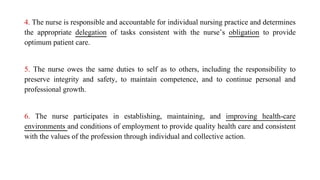
4. The nurse is responsible and accountable for individual nursing practice and determines
the appropriate delegation of tasks consistent with the nurse’s obligation to provide
optimum patient care.
5. The nurse owes the same duties to self as to others, including the responsibility to
preserve integrity and safety, to maintain competence, and to continue personal and
professional growth.
6. The nurse participates in establishing, maintaining, and improving health-care
environments and conditions of employment to provide quality health care and consistent
with the values of the profession through individual and collective action.
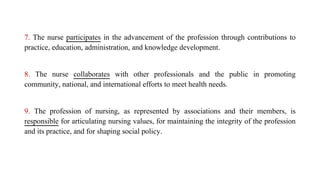
7. The nurse participates in the advancement of the profession through contributions to
practice, education, administration, and knowledge development.
8. The nurse collaborates with other professionals and the public in promoting
community, national, and international efforts to meet health needs.
9. The profession of nursing, as represented by associations and their members, is
responsible for articulating nursing values, for maintaining the integrity of the profession
and its practice, and for shaping social policy.
Ethical issue and clinical practice
 The increase the sophistication of medical science and technology
 Inter-professional relationship
 Organ donations and transplants
 Special concerns relating to patient with AIDS, high-risk neonates,
 Concerns about practical limits on financial resources for health care
 Change in society
 Growing emphasis on the autonomy of the individual
Ethics has always been significant in professional nursing practice. Ethical becoming
more important since the 1990
… why
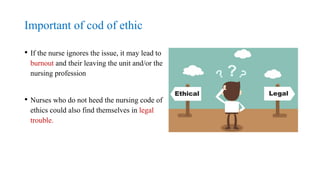
Important of cod of ethic
• If the nurse ignores the issue, it may lead to
burnout and their leaving the unit and/or the
nursing profession
• Nurses who do not heed the nursing code of
ethics could also find themselves in legal
trouble.
Scope and standards
Scope and standards for nurse administrators describes the decisions and actions made by
nurse administrators that are based on ethical principles.
This standard provide a framework for decision making and managing healthcare system.
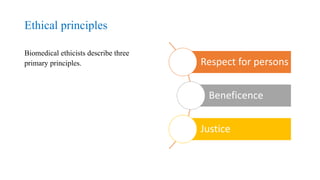
Ethical principles
Biomedical ethicists describe three
primary principles. Respect for persons
Beneficence
Justice
Ethical principles
The principle of Respect for persons describes individuals ability to take rational action
and make moral choices. Autonomy, veracity, confidentiality, and informed consent
evolve from the principle of respect for persons
The principle of Beneficence has two purposes:
 Do no harm
 Promote good
The principle of Justice involved fairness, rights, and obligation
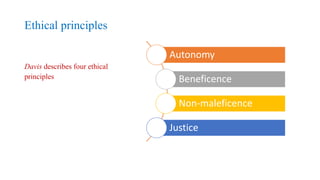
Ethical principles
Davis describes four ethical
principles
Autonomy
Beneficence
Non-maleficence
Justice
Ethical principles
• Autonomy: personal freedom of action is an ethical principle to be applied by nurse
managers toward professional nurses.
o The professional nurse is given autonomy to deliberate about nursing action
o The professional nurse becomes an advocate agent for patient rights.
o The patient is responsible for making decisions about his/her care
o The family may be involved with the patients consent
Ethical principles
Non-maleficence: is define as the avoidance of intentional harm or the risk of inflicting
harm on some one.
Beneficence: is the principle of viewing persons as autonomous not harming them and
contributing to their health and welfare.
Justice: justice involves giving people what is deserved, or legitimately claimed.
Moral problem
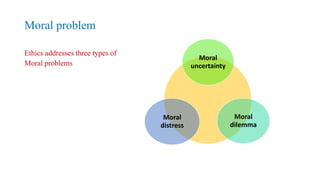
Ethics addresses three types of
Moral problems
Moral
uncertainty
Moral
dilemma
Moral
distress
Moral problem
Moral uncertainty : doubt about moral principles or rules that may apply or the nature of
the ethical problem itself
Moral distress : inability to take the action known to be right because of external
constraints.
Ethical dilemma
Ethical dilemmas, are situations in which there is a choice to be made between two
options, neither of which resolves the situation in an ethically acceptable fashion.
Ethical dilemmas assume that the chooser will abide by societal norms, such as codes of
law or religious teachings, in order to make the choice ethically impossible.
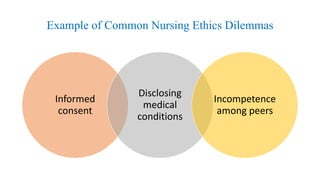
Example of Common Nursing Ethics Dilemmas
Informed
consent
Disclosing
medical
conditions
Incompetence
among peers
Nursing ethics and the work environment
Nurses report communication difficulties and workplace bullying and
violence as serious work environment ethical dilemmas
Patient safety and staffing issues also fall into the work environment
category.
Patient safety and social media .
Nursing ethics and
diversity
• Cultural diversity and caring for
people with different values and
traditions, and accepting their
rituals, can present challenges in
the practice setting
Clarified the ethical decisions
• It is legal ?
• Is it balance?
• How will it make me feel about myself ?
Nurse executive behaviors
• Advocates for patients, consumers, personal who are recipients of services.
• Identify ethical issues and dilemmas designs human resource management policies to
make employment satisfying to employees and to facilitate open communication among
employees and managers.
• Facilitates a framework for professional nursing practice based vision, mission,
philosophy, EBP and standards of practice.
Ethical power
• Nurse managers should plan for persistence by spending more time following up on
education and activities that build commitment of personnel.
• Nurse managers should promote perspective by giving their staff time to think.
• Nursing service managers should consider developing an organization-specific code of
ethics expressed in observable and measurable behaviours
Ethical power
• Nurse managers should build an organization to succeed, thereby building up
employees through pride in their organization.
• Nurse managers should work to sustain patience and continuity through a long-term
effect on the organization
References
L. Marquis and Carol J. (2015) Leadership Roles and Management Functions in Nursing Theory
and Application, Bessie Lippincott Williams.
Roussel, l. (2006). management and leadership for nurse administrators (4th edition ed.)

Ethical issues

  • 1.
    Ethical issue Sara MAljanabi King Abdul-Aziz University
  • 2.
    outline  Means ofethics and Cod of ethics  American nurses association code of ethics and professional standards  Ethical principles  Moral problem  Common Nursing Ethics Dilemmas  Clarified the ethical decisions  Nurse executive behaviours  Ethical power
  • 3.
  • 5.
    Means of ethics Disciplinein the judgment of rightness or wrongness, unfairness or fairness with moral duty and obligation.
  • 6.
    Professional codes ofethics function as a guide to the highest standards of ethical practice for nurses. They are not legally binding. A professional code of ethics is a set of principles, established by a profession, to guide the individual practitioner.
  • 7.
    Code of Ethics The2015 ANA code of ethics for nurses has nine statements. The first Code of Ethics for Nurses was adopted by the ANA in 1950 and has been revised 6 times since then. Most recently in 2015. this code outlines the important general values, duties, and responsibilities that flow from the specific role of being a nurse.
  • 8.
    Code of Ethics clientsrights and safety health work cultures and self-care The social issues relates to the nurses obligations to society and the profession
  • 9.
    American nurses associationcode of ethics and professional standards 1. The nurse practices with respect for the inherent dignity, worth, and uniqueness of every individual, unrestricted by considerations of social or economic status, personal attributes, or the nature of health problems. 2. The nurse’s primary commitment is to the patient, whether an individual, family, group, or community. 3. The nurse promotes, advocates for, and protect the health, safety, and rights of the patient.
  • 10.
    4. The nurseis responsible and accountable for individual nursing practice and determines the appropriate delegation of tasks consistent with the nurse’s obligation to provide optimum patient care. 5. The nurse owes the same duties to self as to others, including the responsibility to preserve integrity and safety, to maintain competence, and to continue personal and professional growth. 6. The nurse participates in establishing, maintaining, and improving health-care environments and conditions of employment to provide quality health care and consistent with the values of the profession through individual and collective action.
  • 11.
    7. The nurseparticipates in the advancement of the profession through contributions to practice, education, administration, and knowledge development. 8. The nurse collaborates with other professionals and the public in promoting community, national, and international efforts to meet health needs. 9. The profession of nursing, as represented by associations and their members, is responsible for articulating nursing values, for maintaining the integrity of the profession and its practice, and for shaping social policy.
  • 12.
    Ethical issue andclinical practice  The increase the sophistication of medical science and technology  Inter-professional relationship  Organ donations and transplants  Special concerns relating to patient with AIDS, high-risk neonates,  Concerns about practical limits on financial resources for health care  Change in society  Growing emphasis on the autonomy of the individual Ethics has always been significant in professional nursing practice. Ethical becoming more important since the 1990 … why
  • 13.
    Important of codof ethic • If the nurse ignores the issue, it may lead to burnout and their leaving the unit and/or the nursing profession • Nurses who do not heed the nursing code of ethics could also find themselves in legal trouble.
  • 14.
    Scope and standards Scopeand standards for nurse administrators describes the decisions and actions made by nurse administrators that are based on ethical principles.
  • 15.
    This standard providea framework for decision making and managing healthcare system.
  • 16.
    Ethical principles Biomedical ethicistsdescribe three primary principles. Respect for persons Beneficence Justice
  • 17.
    Ethical principles The principleof Respect for persons describes individuals ability to take rational action and make moral choices. Autonomy, veracity, confidentiality, and informed consent evolve from the principle of respect for persons The principle of Beneficence has two purposes:  Do no harm  Promote good The principle of Justice involved fairness, rights, and obligation
  • 18.
    Ethical principles Davis describesfour ethical principles Autonomy Beneficence Non-maleficence Justice
  • 19.
    Ethical principles • Autonomy:personal freedom of action is an ethical principle to be applied by nurse managers toward professional nurses. o The professional nurse is given autonomy to deliberate about nursing action o The professional nurse becomes an advocate agent for patient rights. o The patient is responsible for making decisions about his/her care o The family may be involved with the patients consent
  • 20.
    Ethical principles Non-maleficence: isdefine as the avoidance of intentional harm or the risk of inflicting harm on some one. Beneficence: is the principle of viewing persons as autonomous not harming them and contributing to their health and welfare. Justice: justice involves giving people what is deserved, or legitimately claimed.
  • 21.
    Moral problem Ethics addressesthree types of Moral problems Moral uncertainty Moral dilemma Moral distress
  • 22.
    Moral problem Moral uncertainty: doubt about moral principles or rules that may apply or the nature of the ethical problem itself Moral distress : inability to take the action known to be right because of external constraints.
  • 23.
    Ethical dilemma Ethical dilemmas,are situations in which there is a choice to be made between two options, neither of which resolves the situation in an ethically acceptable fashion. Ethical dilemmas assume that the chooser will abide by societal norms, such as codes of law or religious teachings, in order to make the choice ethically impossible.
  • 24.
    Example of CommonNursing Ethics Dilemmas Informed consent Disclosing medical conditions Incompetence among peers
  • 25.
    Nursing ethics andthe work environment Nurses report communication difficulties and workplace bullying and violence as serious work environment ethical dilemmas Patient safety and staffing issues also fall into the work environment category. Patient safety and social media .
  • 26.
    Nursing ethics and diversity •Cultural diversity and caring for people with different values and traditions, and accepting their rituals, can present challenges in the practice setting
  • 27.
    Clarified the ethicaldecisions • It is legal ? • Is it balance? • How will it make me feel about myself ?
  • 28.
    Nurse executive behaviors •Advocates for patients, consumers, personal who are recipients of services. • Identify ethical issues and dilemmas designs human resource management policies to make employment satisfying to employees and to facilitate open communication among employees and managers. • Facilitates a framework for professional nursing practice based vision, mission, philosophy, EBP and standards of practice.
  • 29.
    Ethical power • Nursemanagers should plan for persistence by spending more time following up on education and activities that build commitment of personnel. • Nurse managers should promote perspective by giving their staff time to think. • Nursing service managers should consider developing an organization-specific code of ethics expressed in observable and measurable behaviours
  • 30.
    Ethical power • Nursemanagers should build an organization to succeed, thereby building up employees through pride in their organization. • Nurse managers should work to sustain patience and continuity through a long-term effect on the organization
  • 31.
    References L. Marquis andCarol J. (2015) Leadership Roles and Management Functions in Nursing Theory and Application, Bessie Lippincott Williams. Roussel, l. (2006). management and leadership for nurse administrators (4th edition ed.)