BARRIERS OF IPR
and
METHODS OF
OVERCOMING
PART- 1
BY,
VEDANTHAVINOD
ASSISTANT LECTURER
CCON-MYSORE
BARRIERS OF INTERPERSONAL RELATIONSHIP
AND HOWTO OVERCOMETHEM :-
•Therapeutic impasses are the blocks/barriers in
the progress of the nurse-patient relationship.
•The therapeutic impasses, even though arise
due to different reasons but tend to impede
the therapeutic relationship.
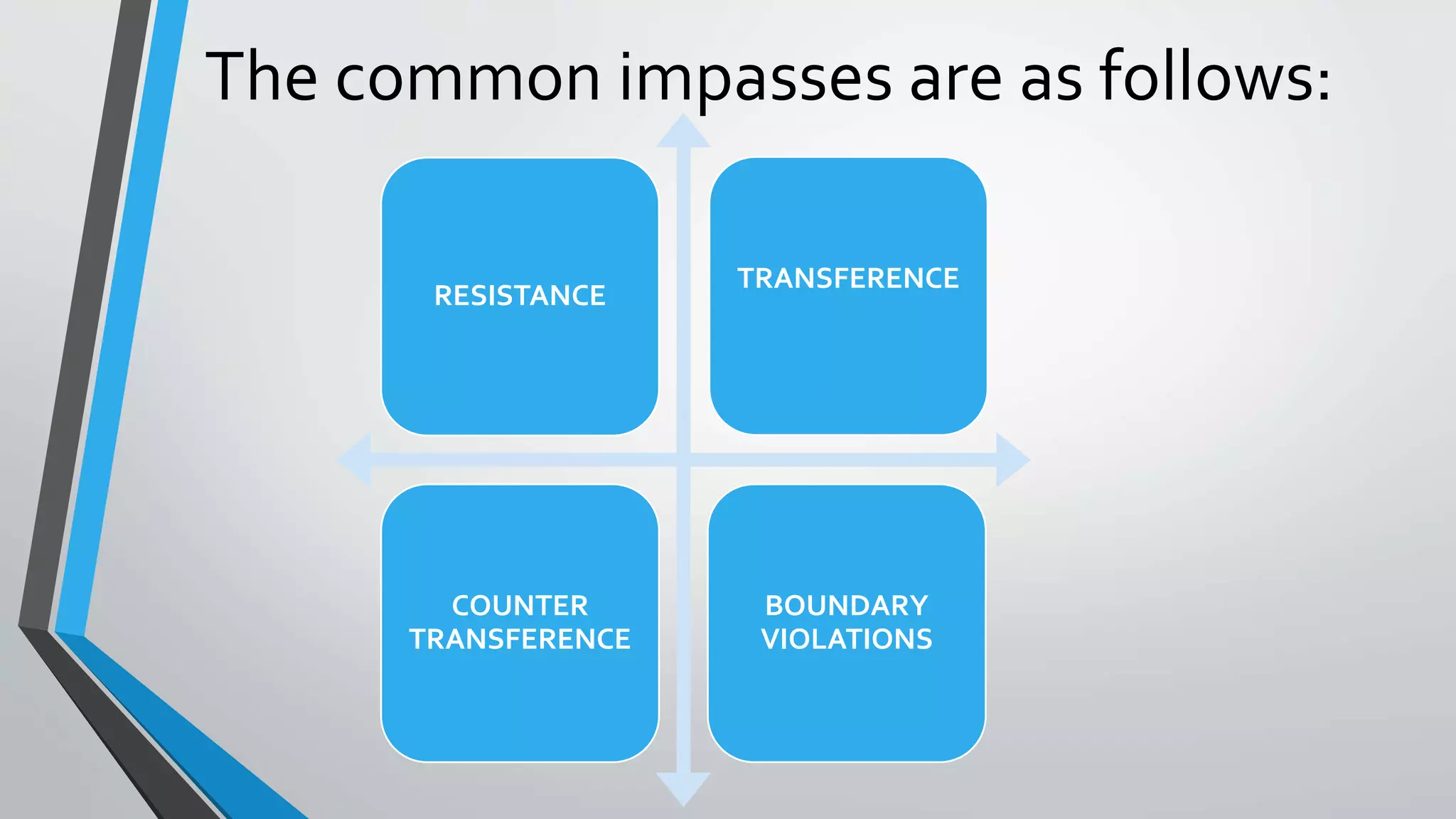
The common impasses are as follows:
RESISTANCE
TRANSFERENCE
COUNTER
TRANSFERENCE
BOUNDARY
VIOLATIONS
RESISTANCE
Resistance is the patient's reluctance or
avoidance while talking about or experiencing
troubling aspects of oneself.
Causes:-
• Because the nurse moved too quickly into the
patient's feelings which makes them shrink
•Because of intentional or unintentionally
conveyed lack of respect Secondary If a
psychiatric patient exhibits resistance in
nurse patient relationship .
•it is better to provide him with related
benefits such as avoiding responsibilities, etc.
OVERCOMING RESISTANCE
•Active listening :- Improving clarification in the
information provided to the patient.
• Reflect the feelings of the patient so that
patient can understand and be aware of what is
going on in his/her mind.
•Explore the behavior to find the possible
reason for resistance.
• Maintain open communication with the
supervisor.Thus supervisor can help in
facilitating the communication.
TRANSFERENCE
Transference is an unconscious response
in which patients experience feelings and
attitudes toward the nurse that were
originally associated with other significant
persons of their life.
•This causes inappropriate intensity of the
patient's response.
•Transference reduces the self awareness by
allowing the patient to maintain an inaccurate
view of the world in which all people are seen
in a similar way.
•Transference responses are harmful to the
therapeutic process only if they were ignored
and unexamined.
TYPES
There are two types of transference:
1. Hostile transference
2. Dependent reaction transference
HOSTILETRANSFERENCE
• Hostile transference is the one in which the
patient internalizes the anger and hostility.
This may be expressed in the patient's
behavior as depression and discouragement.
DEPENDENT REACTION
TRANSFERENCE
•This is characterized by patients who are
submissive, subordinate and ingratiating; and
those who regard the nurse as god like figure.
•In this type of transference patient continues to
demand more from the nurse and when these
needs are not met, the patient is filled with
hostility and contempt.
OVERCOMINGTRANSFERENCE
•The relationship has to be maintained unless
otherwise it poses a serious barrier to therapy
or safety.
•The nurse should assist the client in sorting out
their past from the present.
•Assist the patient in identifying the
transference and reassign a new appropriate
meaning to the current nurse-patient
relationship.
•The goal is to guide the independence by
teaching them to assume responsibility of their
own behaviors, feeling and thoughts, and
•To assign the correct meaning to the
relationship based on the present
circumstances rather than corroborating to
the past.
ANY DOUBTS??
THANKYOU

Barriers of interpersonal relationship part 1

  • 1.
    BARRIERS OF IPR and METHODSOF OVERCOMING PART- 1 BY, VEDANTHAVINOD ASSISTANT LECTURER CCON-MYSORE
  • 2.
    BARRIERS OF INTERPERSONALRELATIONSHIP AND HOWTO OVERCOMETHEM :- •Therapeutic impasses are the blocks/barriers in the progress of the nurse-patient relationship. •The therapeutic impasses, even though arise due to different reasons but tend to impede the therapeutic relationship.
  • 3.
    The common impassesare as follows: RESISTANCE TRANSFERENCE COUNTER TRANSFERENCE BOUNDARY VIOLATIONS
  • 4.
    RESISTANCE Resistance is thepatient's reluctance or avoidance while talking about or experiencing troubling aspects of oneself. Causes:- • Because the nurse moved too quickly into the patient's feelings which makes them shrink
  • 5.
    •Because of intentionalor unintentionally conveyed lack of respect Secondary If a psychiatric patient exhibits resistance in nurse patient relationship . •it is better to provide him with related benefits such as avoiding responsibilities, etc.
  • 6.
    OVERCOMING RESISTANCE •Active listening:- Improving clarification in the information provided to the patient. • Reflect the feelings of the patient so that patient can understand and be aware of what is going on in his/her mind.
  • 7.
    •Explore the behaviorto find the possible reason for resistance. • Maintain open communication with the supervisor.Thus supervisor can help in facilitating the communication.
  • 8.
    TRANSFERENCE Transference is anunconscious response in which patients experience feelings and attitudes toward the nurse that were originally associated with other significant persons of their life.
  • 9.
    •This causes inappropriateintensity of the patient's response. •Transference reduces the self awareness by allowing the patient to maintain an inaccurate view of the world in which all people are seen in a similar way. •Transference responses are harmful to the therapeutic process only if they were ignored and unexamined.
  • 10.
    TYPES There are twotypes of transference: 1. Hostile transference 2. Dependent reaction transference
  • 11.
    HOSTILETRANSFERENCE • Hostile transferenceis the one in which the patient internalizes the anger and hostility. This may be expressed in the patient's behavior as depression and discouragement.
  • 12.
    DEPENDENT REACTION TRANSFERENCE •This ischaracterized by patients who are submissive, subordinate and ingratiating; and those who regard the nurse as god like figure. •In this type of transference patient continues to demand more from the nurse and when these needs are not met, the patient is filled with hostility and contempt.
  • 13.
    OVERCOMINGTRANSFERENCE •The relationship hasto be maintained unless otherwise it poses a serious barrier to therapy or safety. •The nurse should assist the client in sorting out their past from the present.
  • 14.
    •Assist the patientin identifying the transference and reassign a new appropriate meaning to the current nurse-patient relationship. •The goal is to guide the independence by teaching them to assume responsibility of their own behaviors, feeling and thoughts, and
  • 15.
    •To assign thecorrect meaning to the relationship based on the present circumstances rather than corroborating to the past.
  • 16.
  • 17.