According to Banking Regulations
Act 1949,mean “accepting for the
purpose of lending or investment of
deposits of money from the public
repayable on demand or otherwise
and may be withdrawn by cheque
or otherwise”
A bank is a financial institution which
is primarily engaged in receiving
money from the public by way of
deposits and provides the same to
those who are in need of it as loans
and advances.
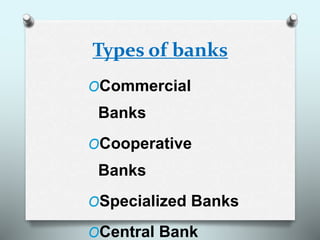
Types of banks
OCommercial
Banks
OCooperative
Banks
OSpecialized Banks
OCentral Bank
Banks dealing in money and credit
Governed by Indian Banking Regulation Act
1949
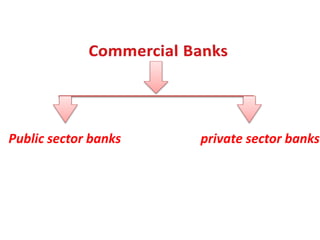
Public sector banks private sector banks
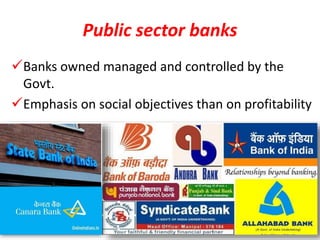
Public sector banks
Banks owned managed and controlled by the
Govt.
Emphasis on social objectives than on profitability
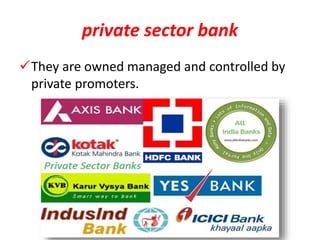
private sector bank
They are owned managed and controlled by
private promoters.
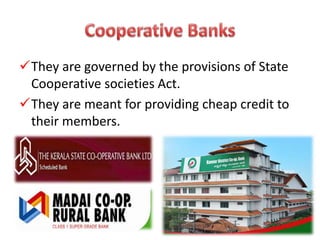
They are governed by the provisions of State
Cooperative societies Act.
They are meant for providing cheap credit to
their members.
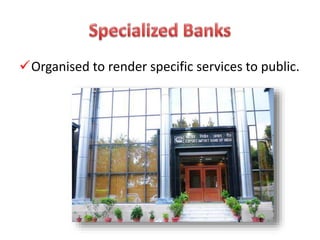
Organised to render specific services to public.
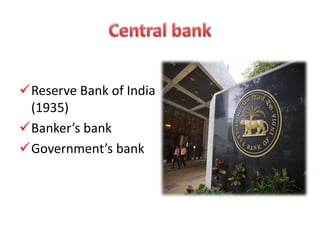
Reserve Bank of India
(1935)
Banker’s bank
Government’s bank
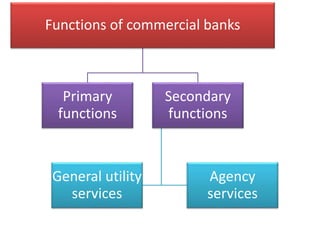
Functions of commercial banks
Primary
functions
Secondary
functions
Agency
services
General utility
services
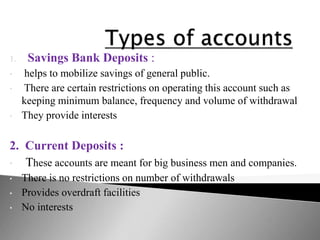
1. Savings Bank Deposits :
• helps to mobilize savings of general public.
• There are certain restrictions on operating this account such as
keeping minimum balance, frequency and volume of withdrawal
• They provide interests
2. Current Deposits :
• These accounts are meant for big business men and companies.
• There is no restrictions on number of withdrawals
• Provides overdraft facilities
• No interests
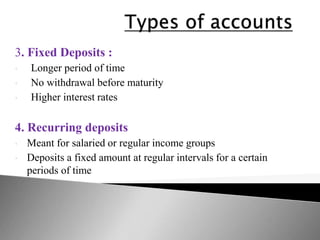
3. Fixed Deposits :
• Longer period of time
• No withdrawal before maturity
• Higher interest rates
4. Recurring deposits
• Meant for salaried or regular income groups
• Deposits a fixed amount at regular intervals for a certain
periods of time
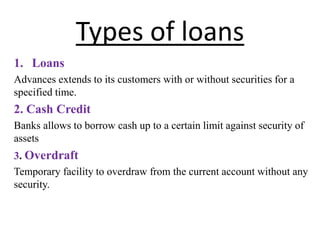
Types of loans
1. Loans
Advances extends to its customers with or without securities for a
specified time.
2. Cash Credit
Banks allows to borrow cash up to a certain limit against security of
assets
3. Overdraft
Temporary facility to overdraw from the current account without any
security.
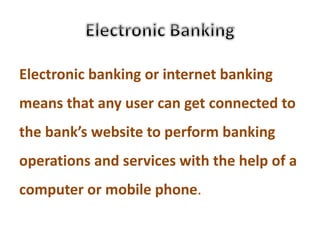
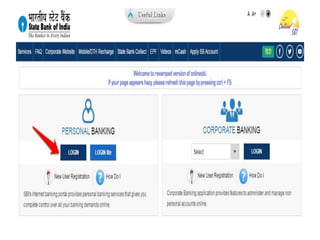
Electronic banking or internet banking
means that any user can get connected to
the bank’s website to perform banking
operations and services with the help of a
computer or mobile phone.
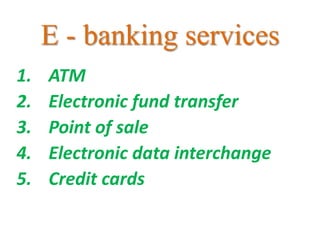
E - banking services
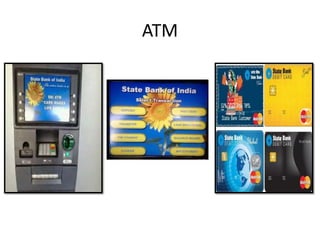
1. ATM
2. Electronic fund transfer
3. Point of sale
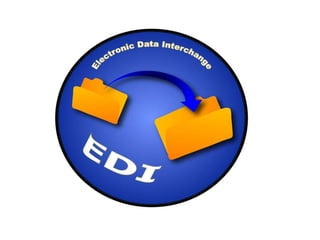
4. Electronic data interchange
5. Credit cards
ATM
Point of sale
Credit cards
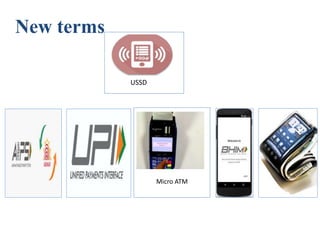
New terms
USSD
Micro ATM
introduction to banking-SHALU Tbanking in india, banking-types of banking-functions of banking-e-ba, benefits of e banking, commercial banks, internet banking, types of deposits, types of loans

introduction to banking-SHALU Tbanking in india, banking-types of banking-functions of banking-e-ba, benefits of e banking, commercial banks, internet banking, types of deposits, types of loans

  • 2.
    According to BankingRegulations Act 1949,mean “accepting for the purpose of lending or investment of deposits of money from the public repayable on demand or otherwise and may be withdrawn by cheque or otherwise”
  • 3.
    A bank isa financial institution which is primarily engaged in receiving money from the public by way of deposits and provides the same to those who are in need of it as loans and advances.
  • 4.
  • 5.
    Banks dealing inmoney and credit Governed by Indian Banking Regulation Act 1949
  • 6.
    Public sector banksprivate sector banks
  • 7.
    Public sector banks Banksowned managed and controlled by the Govt. Emphasis on social objectives than on profitability
  • 8.
    private sector bank Theyare owned managed and controlled by private promoters.
  • 9.
    They are governedby the provisions of State Cooperative societies Act. They are meant for providing cheap credit to their members.
  • 10.
    Organised to renderspecific services to public.
  • 11.
    Reserve Bank ofIndia (1935) Banker’s bank Government’s bank
  • 13.
    Functions of commercialbanks Primary functions Secondary functions Agency services General utility services
  • 15.
    1. Savings BankDeposits : • helps to mobilize savings of general public. • There are certain restrictions on operating this account such as keeping minimum balance, frequency and volume of withdrawal • They provide interests 2. Current Deposits : • These accounts are meant for big business men and companies. • There is no restrictions on number of withdrawals • Provides overdraft facilities • No interests
  • 16.
    3. Fixed Deposits: • Longer period of time • No withdrawal before maturity • Higher interest rates 4. Recurring deposits • Meant for salaried or regular income groups • Deposits a fixed amount at regular intervals for a certain periods of time
  • 18.
    Types of loans 1.Loans Advances extends to its customers with or without securities for a specified time. 2. Cash Credit Banks allows to borrow cash up to a certain limit against security of assets 3. Overdraft Temporary facility to overdraw from the current account without any security.
  • 24.
    Electronic banking orinternet banking means that any user can get connected to the bank’s website to perform banking operations and services with the help of a computer or mobile phone.
  • 26.
    E - bankingservices 1. ATM 2. Electronic fund transfer 3. Point of sale 4. Electronic data interchange 5. Credit cards
  • 27.
  • 29.
  • 31.
  • 39.