SHIPPING
Madli Kopti
31.05.2016 Jurmala
Central Baltic Stakeholder Conference
Thank you for all persons who have contributed, especially:
Kristine Kedo
Linus Hammar
Mapping team
Requirements, current and future use
of shipping in CBC
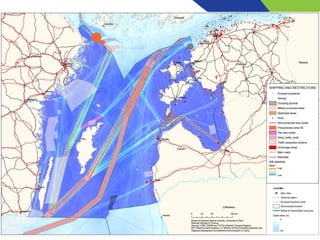
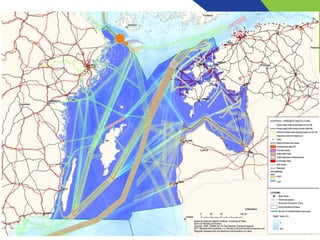
Requirements of the sector Current shipping activities in the Central
Baltic
• Safe and economically efficient
shipping routes
• The most intensive shipping is in the
Swedish waters passing the island
Gotland and heading to the Gulf of
Finland.
• Shipping to the port of Riga plays also
an important role by having heavy
traffic in a context of CBC area
• Narrow Irbe strait and intensive
shipping
Requirements, current and
future use of shipping in CBC
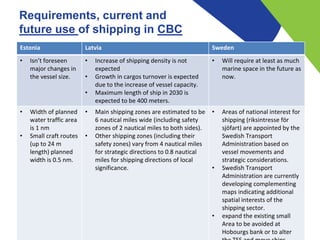
Estonia Latvia Sweden
• Isn’t foreseen
major changes in
the vessel size.
• Increase of shipping density is not
expected
• Growth in cargos turnover is expected
due to the increase of vessel capacity.
• Maximum length of ship in 2030 is
expected to be 400 meters.
• Will require at least as much
marine space in the future as
now.
• Width of planned
water traffic area
is 1 nm
• Small craft routes
(up to 24 m
length) planned
width is 0.5 nm.
• Main shipping zones are estimated to be
6 nautical miles wide (including safety
zones of 2 nautical miles to both sides).
• Other shipping zones (including their
safety zones) vary from 4 nautical miles
for strategic directions to 0.8 nautical
miles for shipping directions of local
significance.
• Areas of national interest for
shipping (riksintresse för
sjöfart) are appointed by the
Swedish Transport
Administration based on
vessel movements and
strategic considerations.
• Swedish Transport
Administration are currently
developing complementing
maps indicating additional
spatial interests of the
shipping sector.
• expand the existing small
Area to be avoided at
Hobourgs bank or to alter
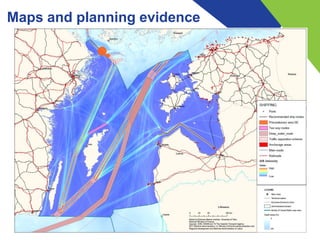
Maps and planning evidence
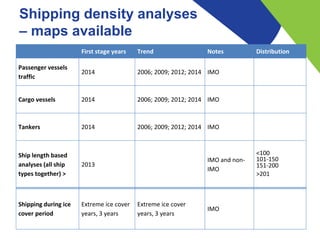
Shipping density analyses
– maps available
First stage years Trend Notes Distribution
Passenger vessels
traffic
2014 2006; 2009; 2012; 2014 IMO
Cargo vessels 2014 2006; 2009; 2012; 2014 IMO
Tankers 2014 2006; 2009; 2012; 2014 IMO
Ship length based
analyses (all ship
types together) >
2013
IMO and non-
IMO
<100
101-150
151-200
>201
Shipping during ice
cover period
Extreme ice cover
years, 3 years
Extreme ice cover
years, 3 years
IMO
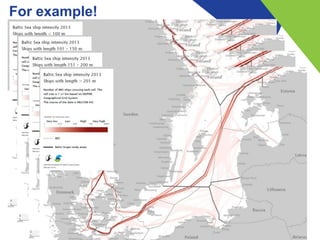
For example!
Needed research
• Socio-economic research that would mirror the shipping
importance in the marine space
• Feasibility studies about the risk assessment and risk
management plans based on the shipping safety and security
and other new sea uses (for example windmill parks,
underwater energy etc versus safe and secure shipping).
• Research about small crafts actual routes of the use to find
out the most frequent small crafts sailing areas.
• Within the Swedish MSP actions are now taken to further
investigate the ecological impact of the ship routes and the
potential consequences of action in line with offshore banks
Södra midsjöbanken, Norra midsjöbanken and Hobourgs
bank located south of Gotland and Öland. In the first drafts of
Swedish MSP the area around the banks will likely be treated
as a case for further investigation (utredningsområde).
Recommendations
• Safety at sea and navigation requirements are adequately
addressed during preparation and planning.
• In case of potential changes shipping consequence analyses
should be carried out
• Recognised risk assessment methods should be used (incl.
the risk of ice conditions)
• Potential changes of international main routes (Deep water
route T, transit traffic flow in connection with TSSs through the
area) are necessary to carry out through IMO.
• Centre lines of planned shipping routes should be connected
between different countries.
Questions in the workshop!
Paldies! Aitäh! Tack!

Baltic SCOPE stakeholder workshop on SHIPPING - current and future use*

  • 1.
    SHIPPING Madli Kopti 31.05.2016 Jurmala CentralBaltic Stakeholder Conference Thank you for all persons who have contributed, especially: Kristine Kedo Linus Hammar Mapping team
  • 2.
    Requirements, current andfuture use of shipping in CBC Requirements of the sector Current shipping activities in the Central Baltic • Safe and economically efficient shipping routes • The most intensive shipping is in the Swedish waters passing the island Gotland and heading to the Gulf of Finland. • Shipping to the port of Riga plays also an important role by having heavy traffic in a context of CBC area • Narrow Irbe strait and intensive shipping
  • 3.
    Requirements, current and futureuse of shipping in CBC Estonia Latvia Sweden • Isn’t foreseen major changes in the vessel size. • Increase of shipping density is not expected • Growth in cargos turnover is expected due to the increase of vessel capacity. • Maximum length of ship in 2030 is expected to be 400 meters. • Will require at least as much marine space in the future as now. • Width of planned water traffic area is 1 nm • Small craft routes (up to 24 m length) planned width is 0.5 nm. • Main shipping zones are estimated to be 6 nautical miles wide (including safety zones of 2 nautical miles to both sides). • Other shipping zones (including their safety zones) vary from 4 nautical miles for strategic directions to 0.8 nautical miles for shipping directions of local significance. • Areas of national interest for shipping (riksintresse för sjöfart) are appointed by the Swedish Transport Administration based on vessel movements and strategic considerations. • Swedish Transport Administration are currently developing complementing maps indicating additional spatial interests of the shipping sector. • expand the existing small Area to be avoided at Hobourgs bank or to alter
  • 4.
  • 7.
    Shipping density analyses –maps available First stage years Trend Notes Distribution Passenger vessels traffic 2014 2006; 2009; 2012; 2014 IMO Cargo vessels 2014 2006; 2009; 2012; 2014 IMO Tankers 2014 2006; 2009; 2012; 2014 IMO Ship length based analyses (all ship types together) > 2013 IMO and non- IMO <100 101-150 151-200 >201 Shipping during ice cover period Extreme ice cover years, 3 years Extreme ice cover years, 3 years IMO
  • 8.
  • 9.
    Needed research • Socio-economicresearch that would mirror the shipping importance in the marine space • Feasibility studies about the risk assessment and risk management plans based on the shipping safety and security and other new sea uses (for example windmill parks, underwater energy etc versus safe and secure shipping). • Research about small crafts actual routes of the use to find out the most frequent small crafts sailing areas. • Within the Swedish MSP actions are now taken to further investigate the ecological impact of the ship routes and the potential consequences of action in line with offshore banks Södra midsjöbanken, Norra midsjöbanken and Hobourgs bank located south of Gotland and Öland. In the first drafts of Swedish MSP the area around the banks will likely be treated as a case for further investigation (utredningsområde).
  • 10.
    Recommendations • Safety atsea and navigation requirements are adequately addressed during preparation and planning. • In case of potential changes shipping consequence analyses should be carried out • Recognised risk assessment methods should be used (incl. the risk of ice conditions) • Potential changes of international main routes (Deep water route T, transit traffic flow in connection with TSSs through the area) are necessary to carry out through IMO. • Centre lines of planned shipping routes should be connected between different countries.
  • 11.
    Questions in theworkshop! Paldies! Aitäh! Tack!